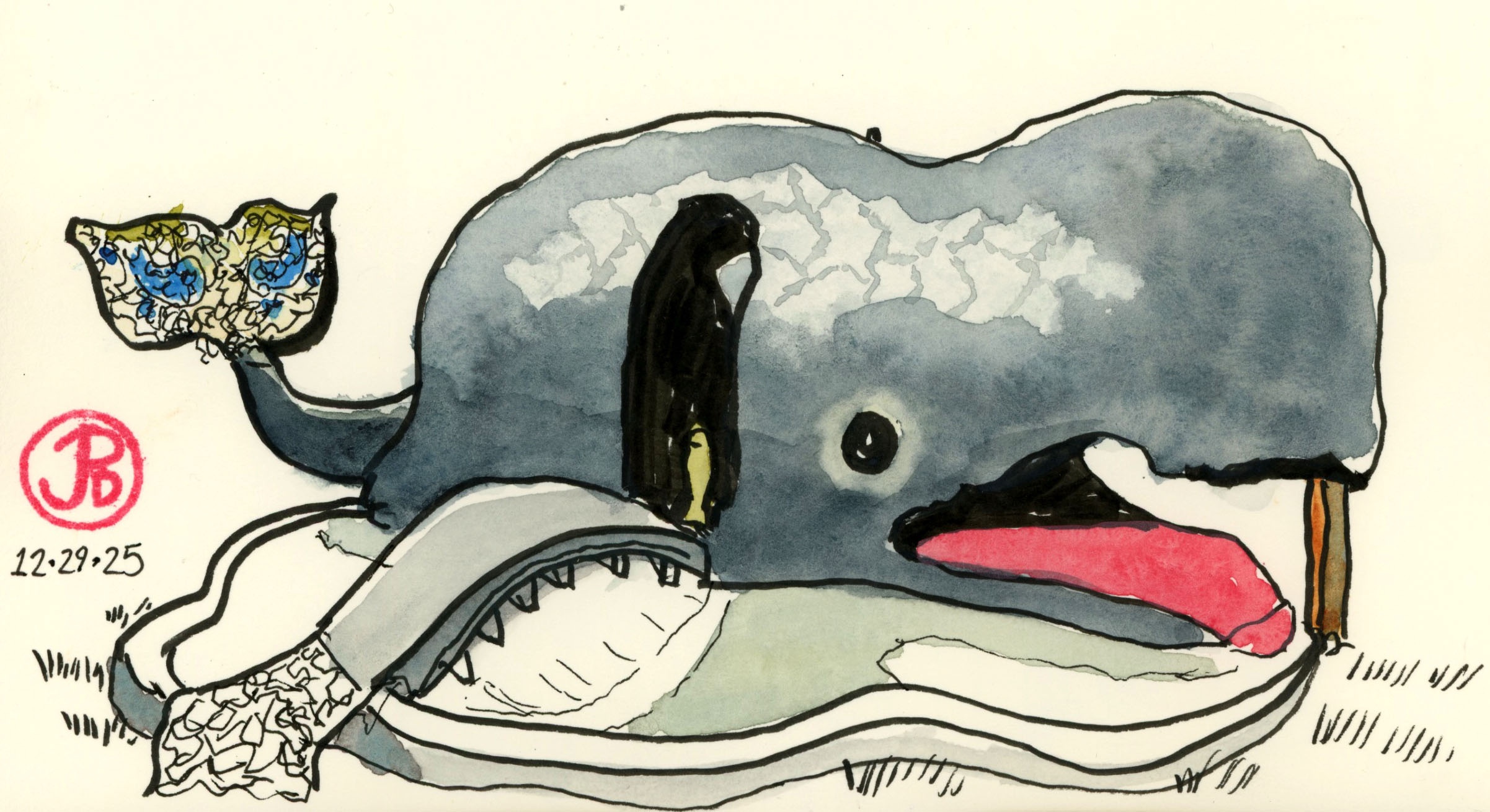
I found plenty of sketching subjects on a Monday morning drive north from my Caspar digs on the Mendocino Coast: two whales and a rock shaped like an elephant.
My first “whale” was to be found in Westport (population 299) about 15 miles north of Fort Bragg on Highway One.
If you build a whale, they will come. At least that’s what I think the sculpture/creator thought and I did come to sketch it. At onetime you could enter the belly of the whale and recline and watch television. Now it seemed closed to the public with a sign on the white picket fence warning of the Dalmatian. I didn’t see the Dalmatian, so I guessed I would be safe.
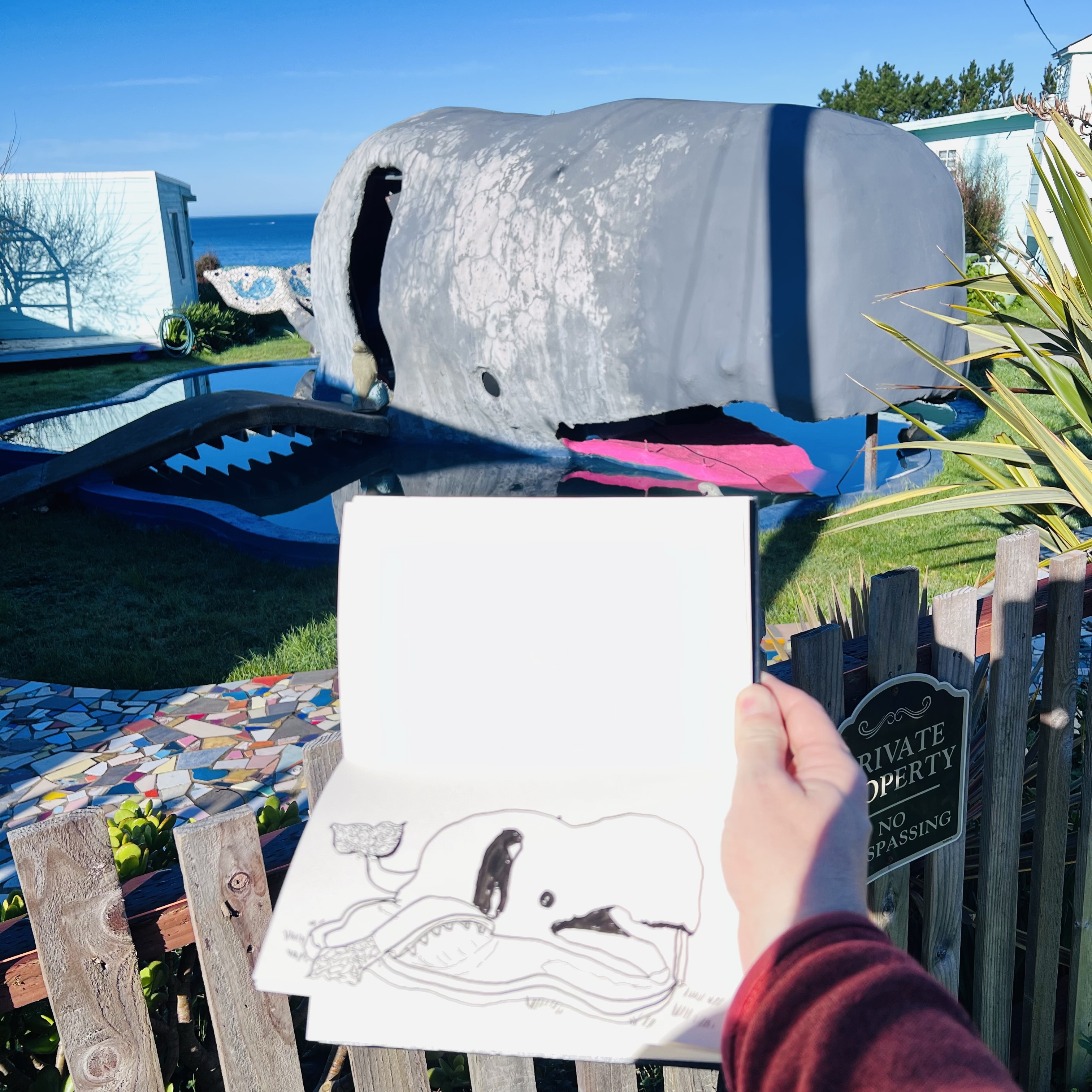
Some things are beyond the realm of understanding such is the gray sperm whale in the front yard in Westport. Everyone knows that gray whales are the stars of the Mendocino Coast whale migration not Moby Dick!
Roadside attraction gone bad or failed hotel room, who knows! I sketched it anyway.
I retraced by way south to Blues Beach. My next sketching subject was a large rock which, if your squinted, looked like a pachyderm, hence the name Elephant Rock.

My final whale sketch was alas, a real whale. At least a former one. This was to found at MacKerricher State Park just north of Fort Bragg.
Near the visitors center is a collection of whale bones. The 32 foot gray whale skeleton was what caught my sketcher’s eye.
I seated myself on a nearby picnic table and started to sketch the jigsaw bones of the gray whale.
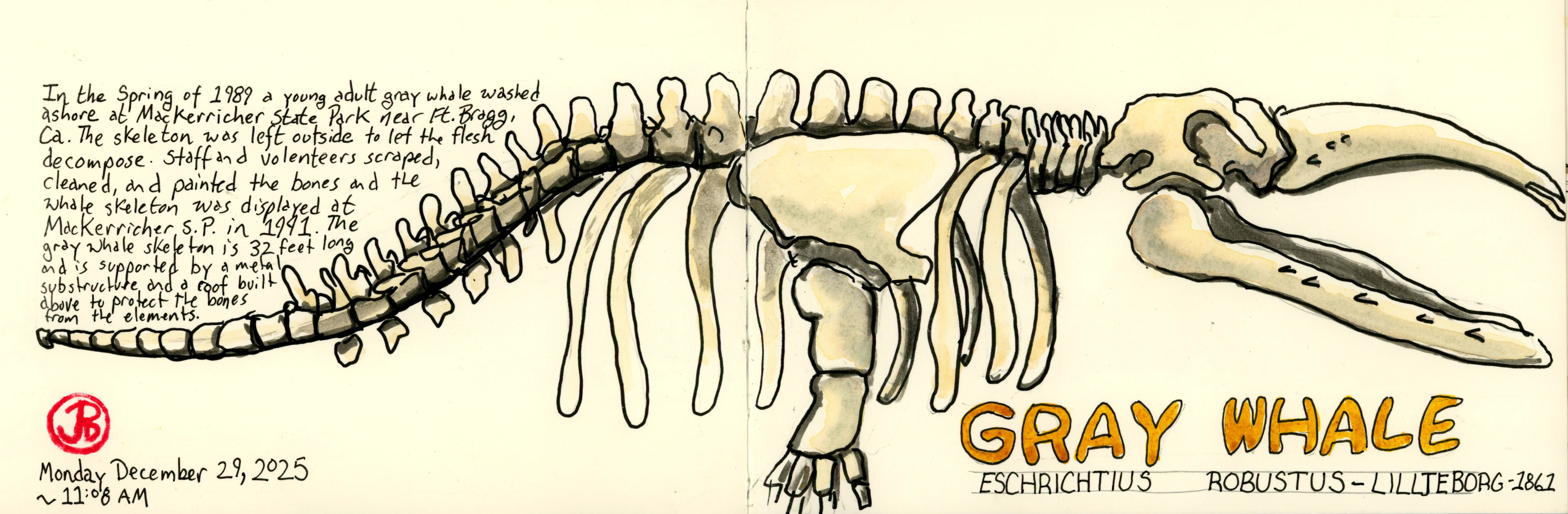
The gray whale migration should begin in earnest in February as adults would be heading south to their birthing lagoons in Baja California.
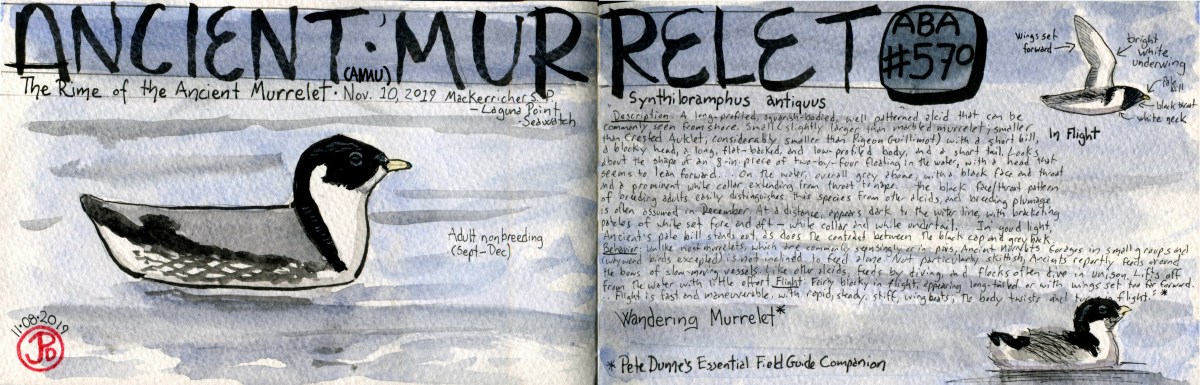
 Scoping the Pacific. There was lots of southerly movement at Laguna Point. Mostly loons and surf scoters and the alcid I wanted to see: the ancient murrelet. Does this hat make me look ancient?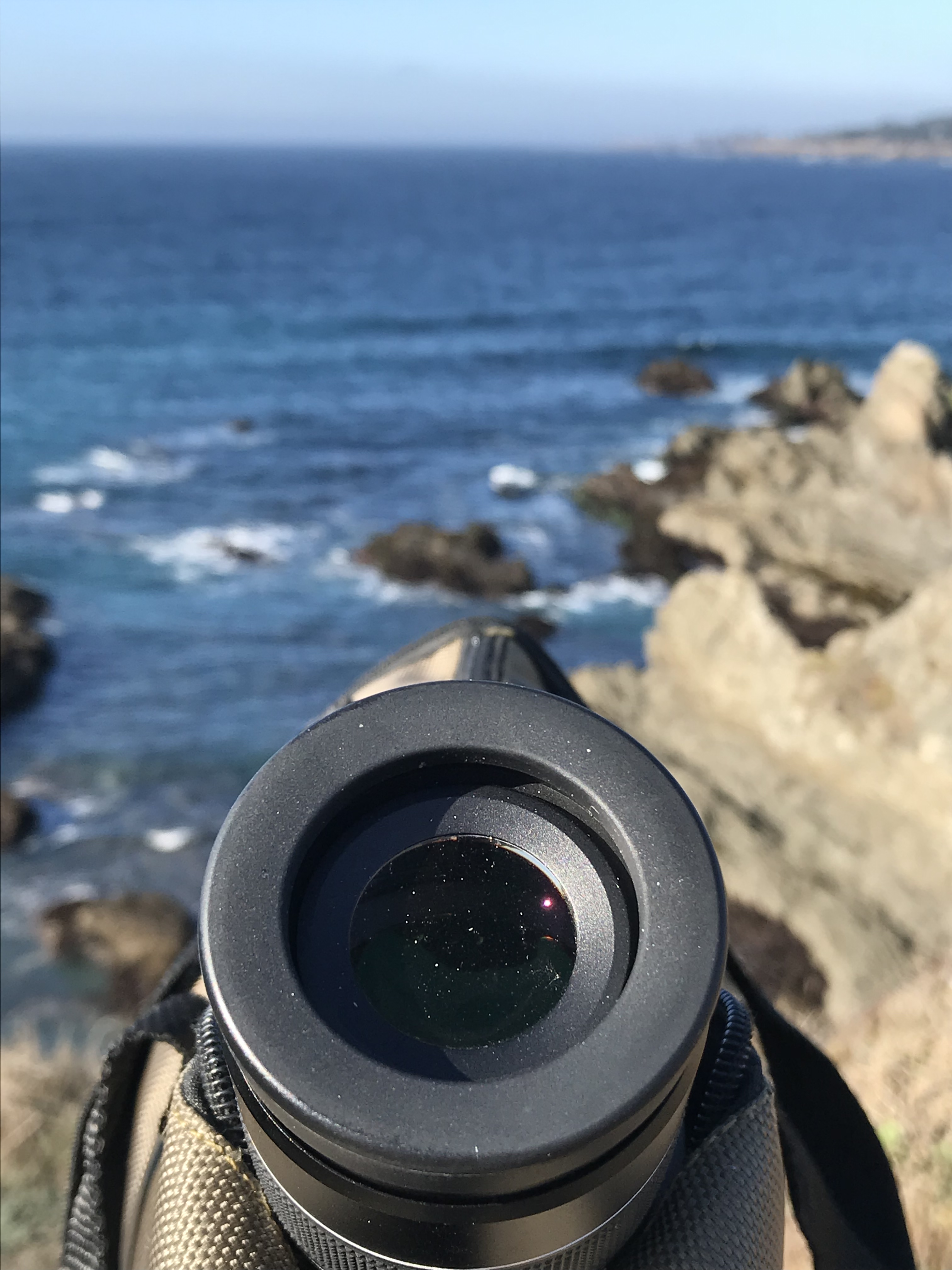

 Corvid Sketcher