
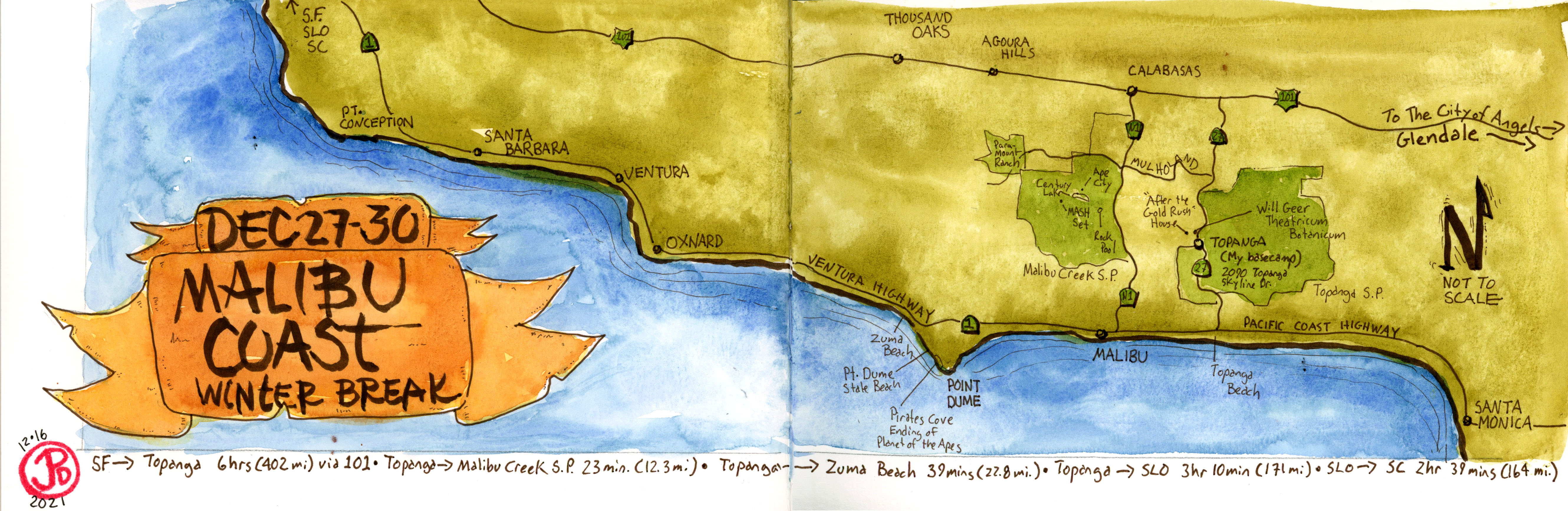
After my visit to Malibu Creek State Park, I headed south on Malibu Canyon Road and then turned west on the Pacific Coast Highway to the filming location of one of the best and perhaps most shocking endings of any film.
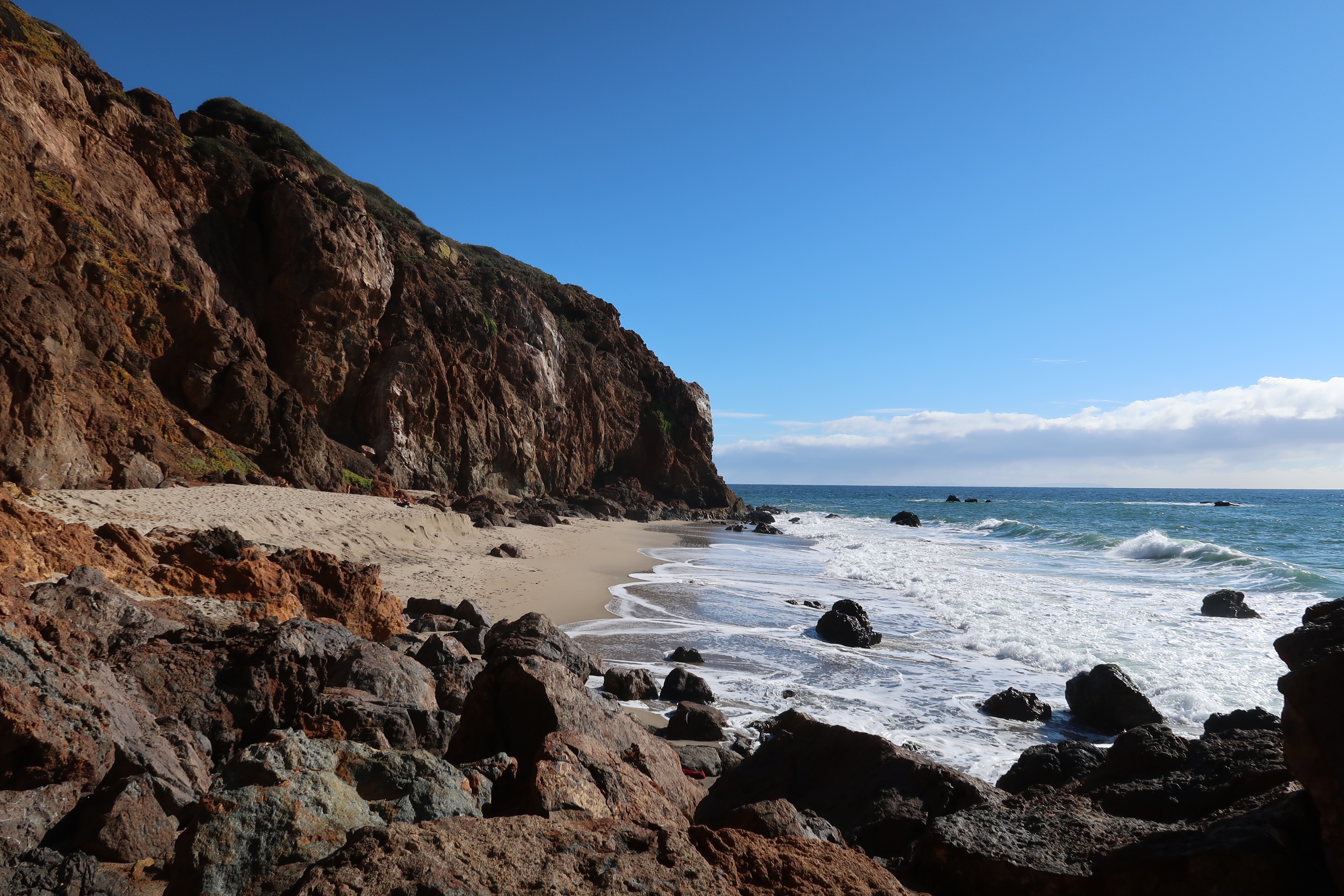
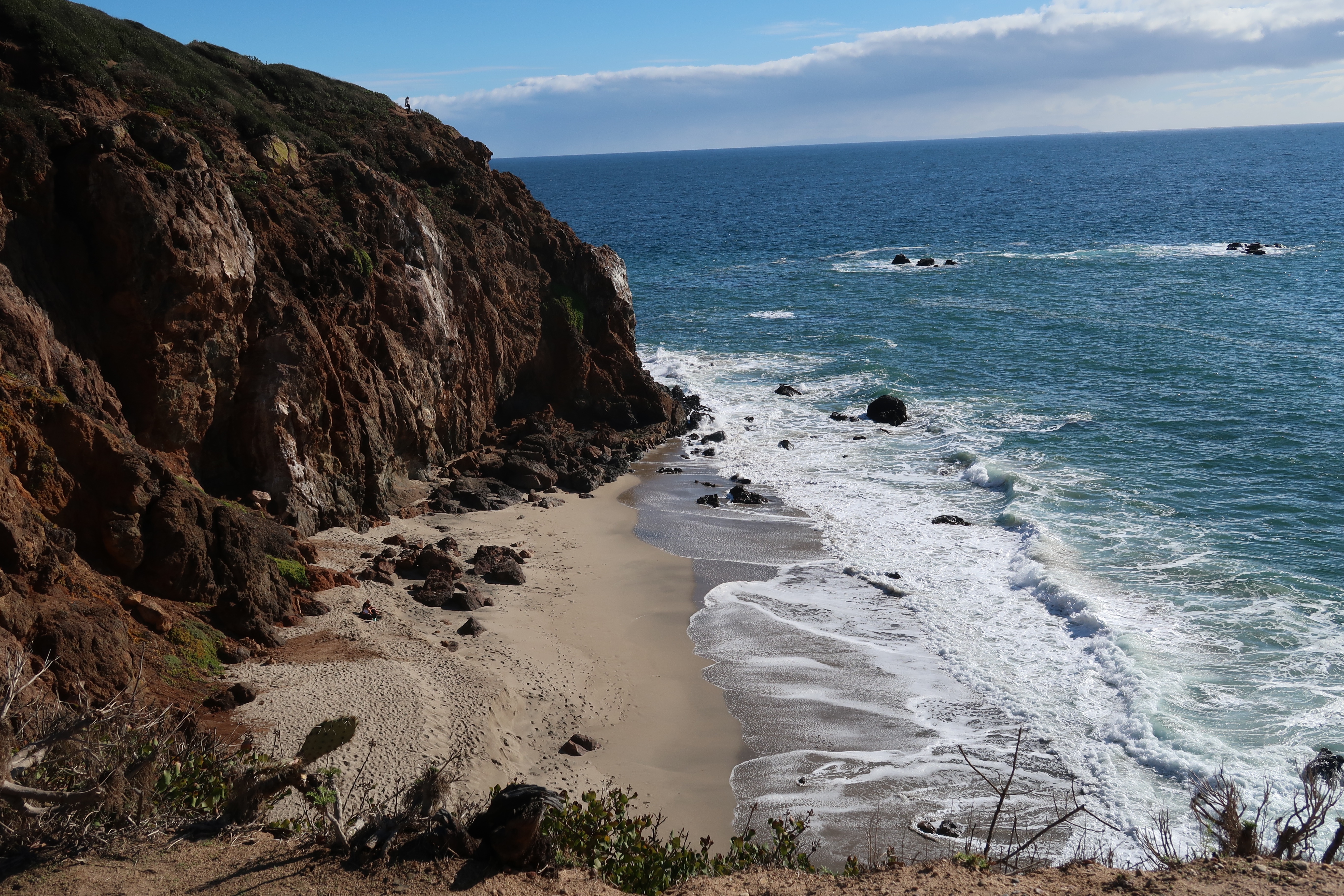
This is Point Dume State Beach and a little cove, named Pirate’s Cove, hidden away from the main beach by rocks that reached out into the Pacific. To get there, you had to time the tides (low tide is best) and then scrabble up and over some rocks to get to the secluded beach.
When I got down to Pirate’s Cove, I almost had the beach to myself, except for an amorous couple at the other end of the beach. I picked a location that was close to the camera position in the final scene of Planet of the Apes and I began to sketch in the forms with my dark sepia brush pen. It was a glorious day after a heavy downpour the day before and is relished the sun and the view before me.
Warning: what follows is a description of the ending of Planet of the Apes (1968) and it will spoil the surprise ending of the film so if you have not seen this film, please stop reading and watch Planet of the Apes (1968) ASAP!
The last scene of Planet of the Apes was filmed at this little cove and the true reveal is shocking, even to this day. Taylor looks up and sees the ruined, half buried Statue of Liberty and realizes that he has been on planet Earth the whole time. Earth has become dominated by apes. The final shot was accomplished by shooting in the real location and adding a matte painting of the ruined Statue of Liberty.
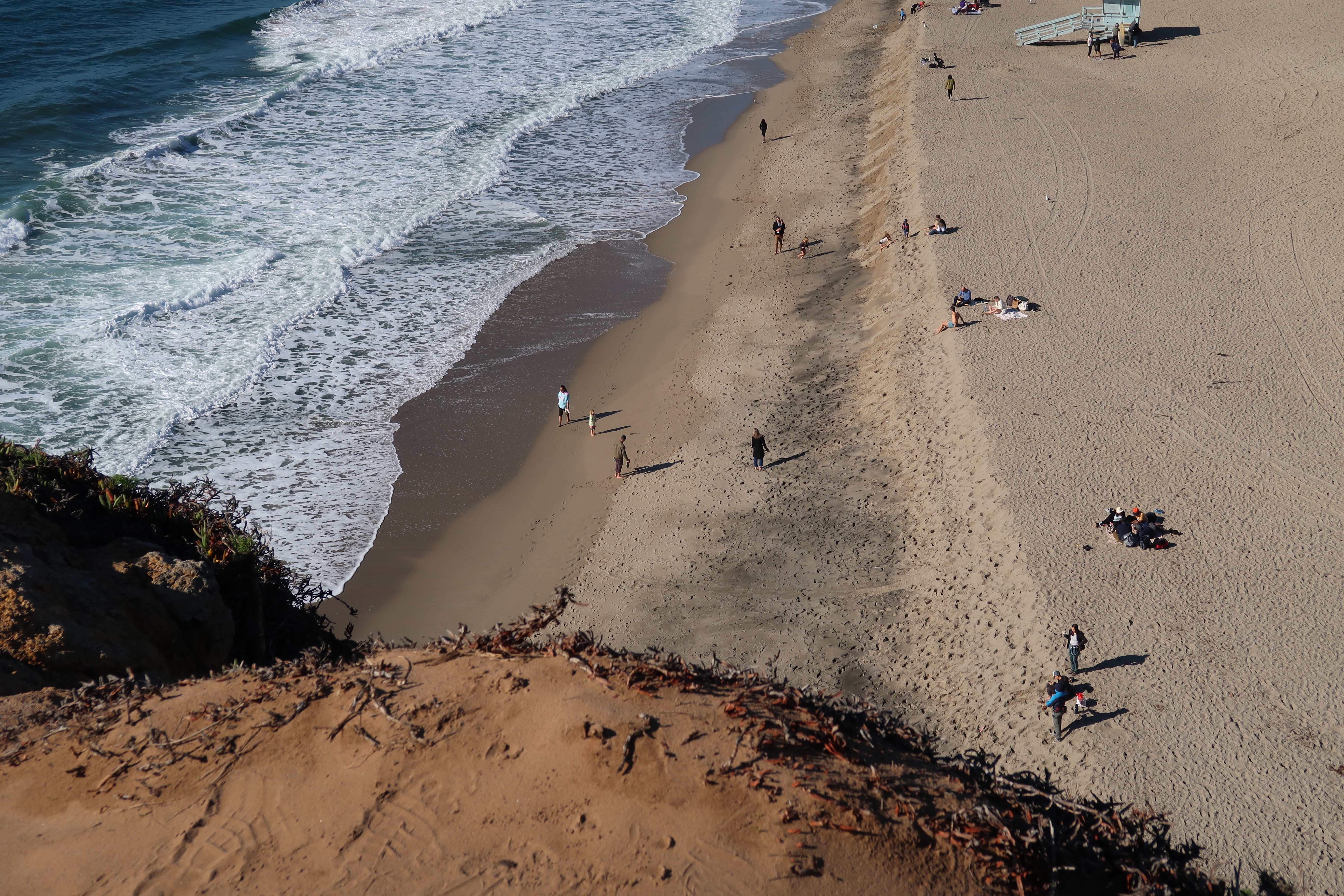
On the other side of the cove, at the southeastern end of Pt. Dume State Beach, the epic scene, just before the final shot, where the camera pans to the left, from a high angle. In the foreground view comes the torch and then the pointed crown of the Statue of Liberty. These where scale mock ups and where filmed from a 70 foot scaffolding built for the film. It was on this stretch of beach where Charlton Heston utters the famous final lines of Planet of the Apes, “They blew it up! God, damn you! Dawn you all to hell!”
This final scene can be viewed on so many levels and this is one reason that this film is seen as a classic of the science fiction genre to this day. What does this ending say about the state of the United States or the world in 1968? What does it say about the plight of freedom, liberty, and democracy today? Like all great films, Planet of the Apes does not simply serve up easy answers but like any great work of art, it is thought provoking and lets the viewer decide for themselves, what the film, and it’s ending, ultimately means.

Point Dume Beach was also used in one other Apes Film: Escape From the Planet of the Apes (1971). The wonderful beginning of the film was filmed here. A spacecraft is just offshore and the military stages at the beach to attempt a rescue of the astronauts. The general order the spacecraft open and he salutes and then falls into silence. The three astronauts have every appearance of being human, until they take off their helmets!

 Corvid Sketcher