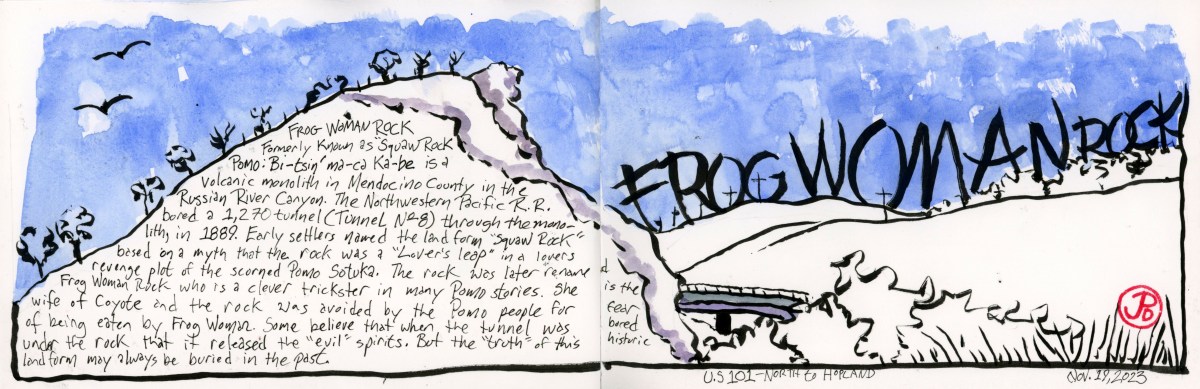
An imposing landmark on Highway 101, just south of Hopland is Frog Woman Rock (formerly known as Squaw Rock).
This was a barrier to the progress of the railroad that was following the Russian River on it’s West Bank. They could not go around the monolith so they had to tunnel through it.
This became the 1,270 foot Tunnel No. 8 on the Northwestern Pacific Railroad (NWP). While this monolith was a new delay to the railroad’s northern progress, the local Pomo people knew this location very well.
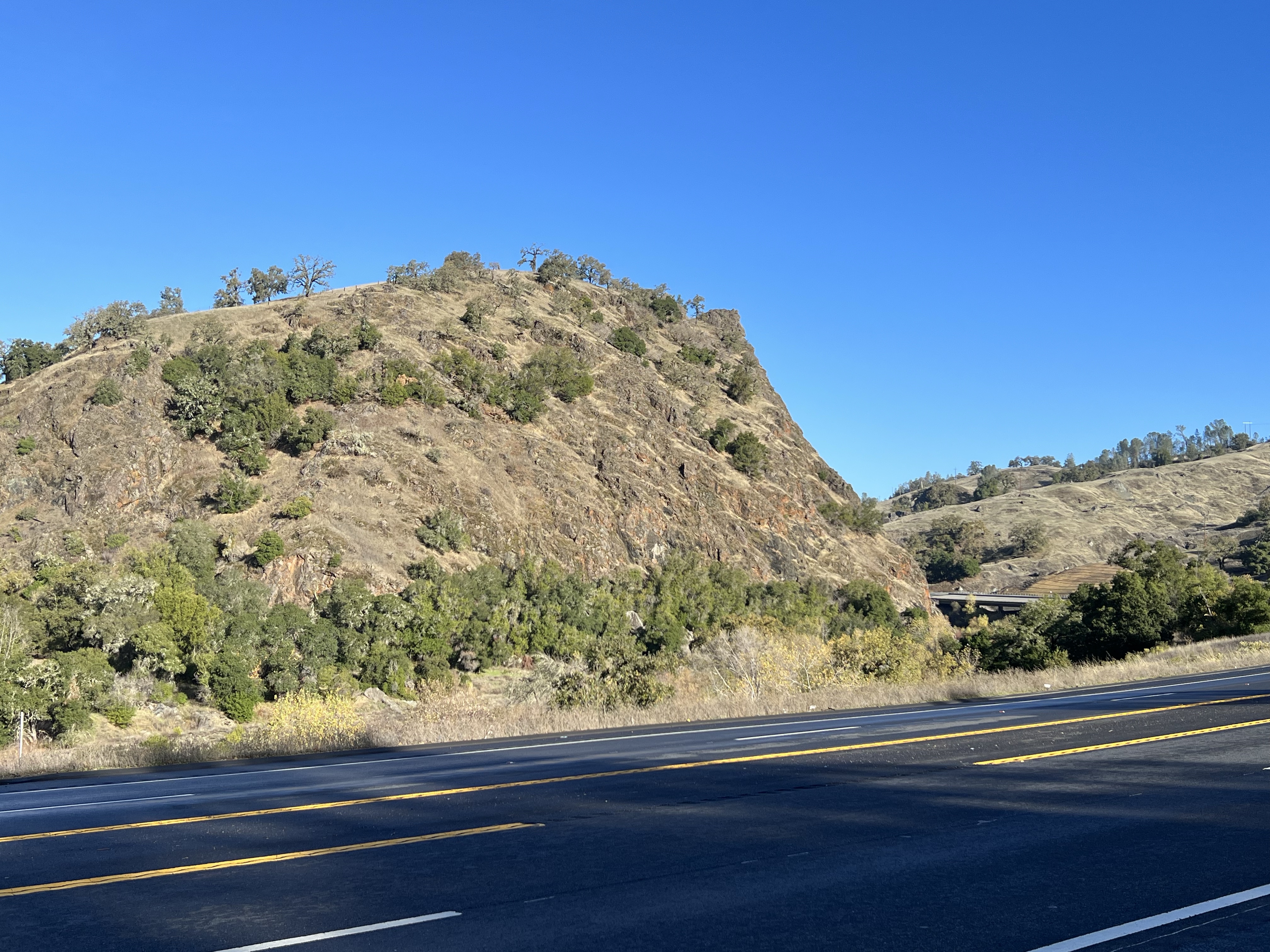
Frog Woman Rock with Highway 101 in the foreground.
To them it was know as Bi-tsin’ ma-ca Ka-be, Frog Woman Rock.
There are various legends of how the rock got its name. One Pomo story, filtered through early settlers, is that the rock was a sort of “Lover’s Leap” featuring in a lover revenge quarrel of the scorned Sotuka. Other say Sotuka is the wife of Coyote the trickster and the Pomo people avoided the rock. While others believe when the railroad tunnels through Frog Woman Rock, it released evil spirits.
Whatever the “truth” behind the legend of the rock, it was always be hidden in the past.
In 2024, Frog Woman Rock was designated California Historical Landmark No. 549. The plaque reads:
Since time immemorial, this monolith has been revered by Pomo people as the home of Frog Woman, the consort of coyote, and a special being in her own right. For native people it is a place of sacred power and a reminder of the connection we still have with our spirituality and natural environment. The presence of this great rock on the local landscape is a solemn witness that will forever be a local symbol of our indigenous collective conscience, strength, and perseverance.
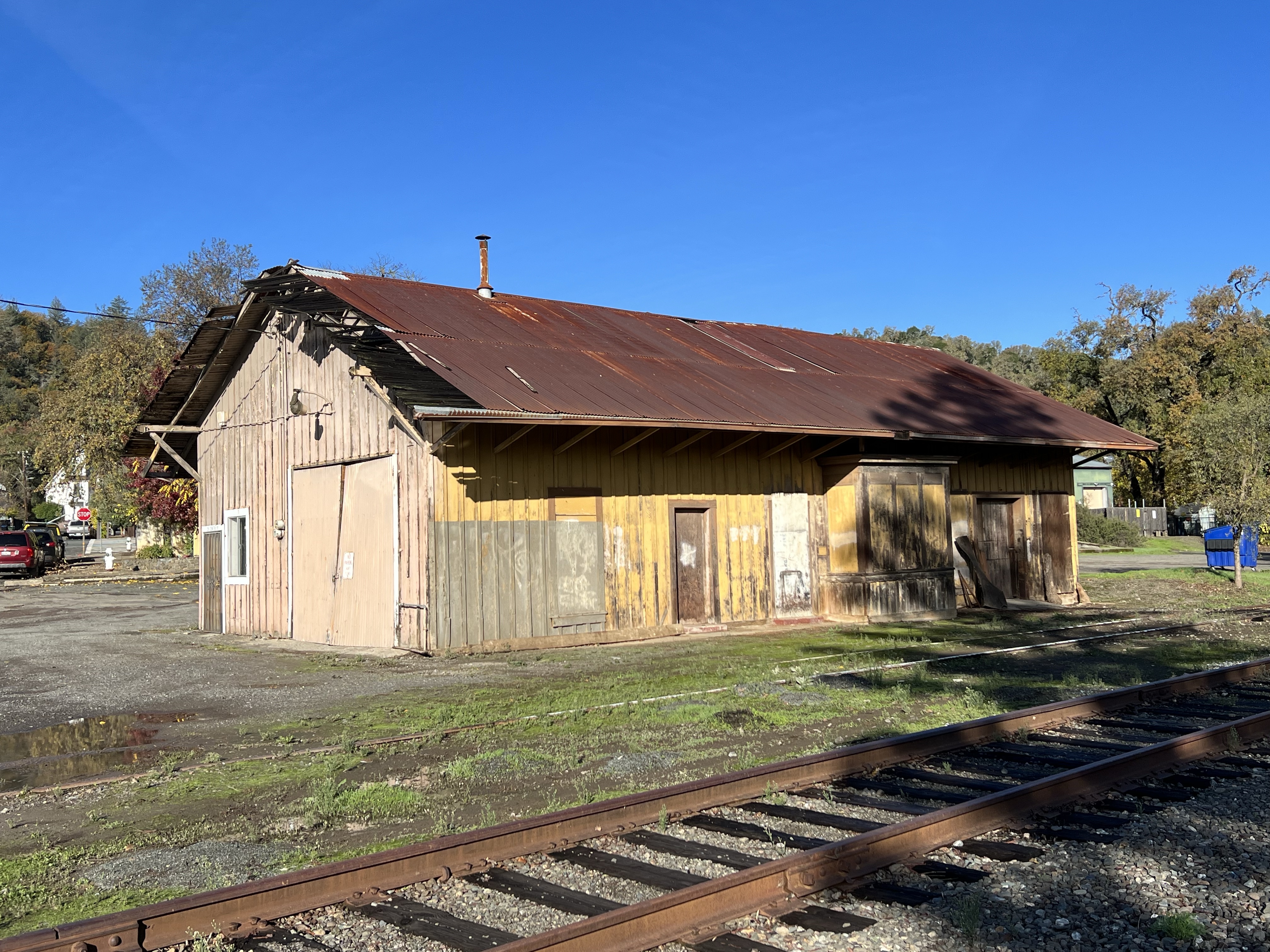
The abandoned NWP train station at Hopland, six miles north of Frog Woman Rock, with rusted rail leading north (to the right) to Willits and Eureka.
On the evening of March 1, 1980, Steven Stayner made one of the biggest decisions of his 14 year old life.
He had to choose to turn his back on the former identity (a forced identity) he had been assuming over the last seven years and four months and help to save a young boy from going through the abuse he had gone through.
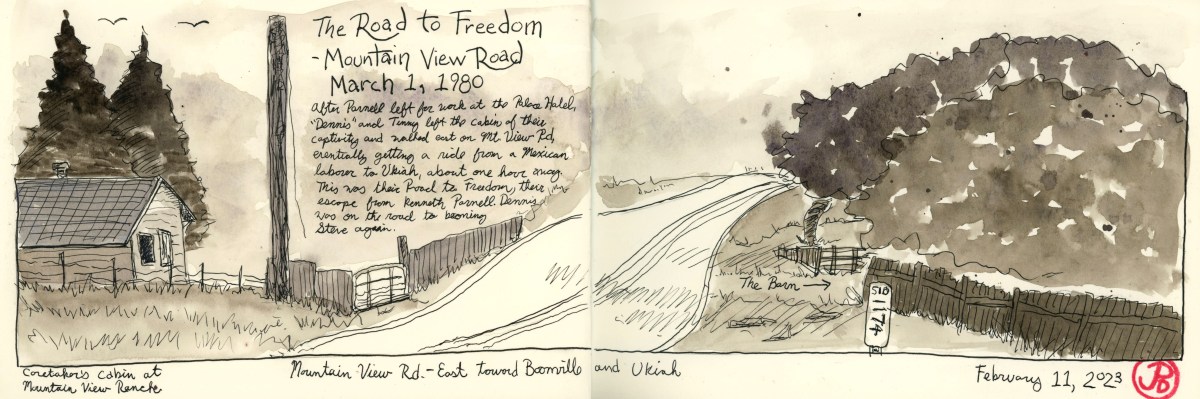
It is said that every journey begins with a single step, and their first step out of the one room cabin on Mountain View Road was monumental.
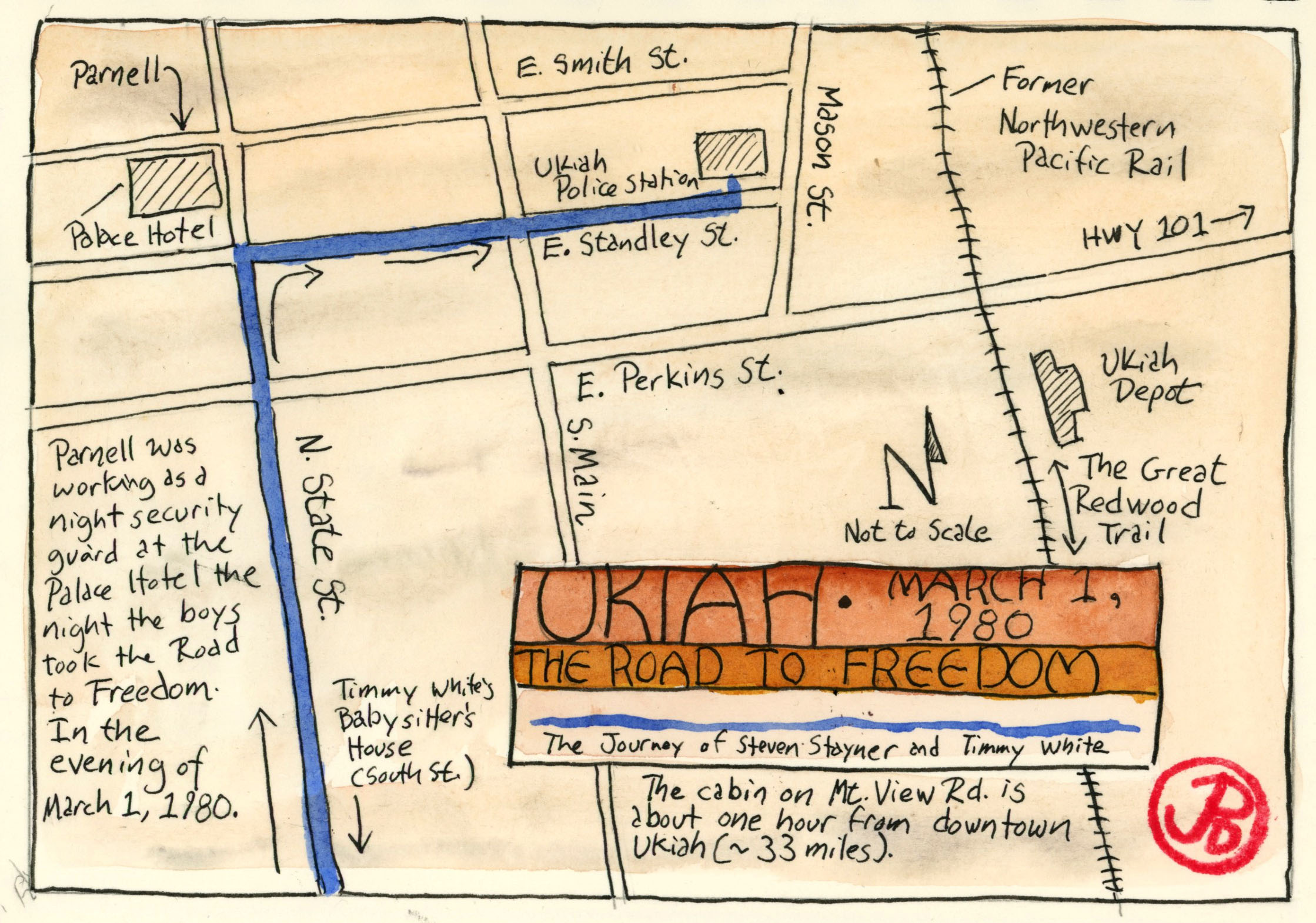
They headed east on Mountain View Road for a quarter of a mile when a car pulled over to give them a ride. The truck was driven by a Mexican laborer and he took the boys down the mountain into the Anderson Valley and then over the hill into the Mendocino County seat of Ukiah.
Timmy couldn’t remember where his parents lived so they went to his babysitter’s house instead. No one was home so the boys walked north on South State Street towards the Ukiah Police Station.
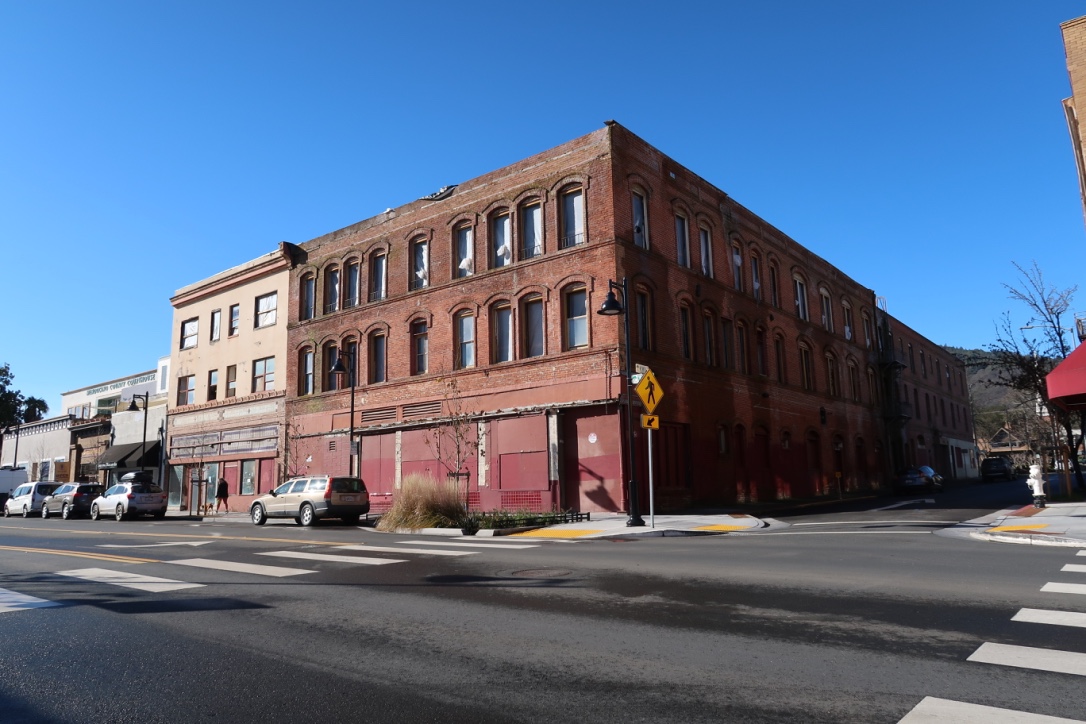
They passed within a block of the Palace Hotel, where Parnell was working as a night security guard. They turned right onto East Standley Street and walked the two blocks to the police station.
The boys passed within a block of the Palace Hotel. Parnell was working as a night security guard at the time of their journey to the Ukiah Police Station. This once majestic hotel is now boarded up and closed.
Steven sent Timmy to the police station alone. He opened the door to the station, got scared, and then turned back and recrossed the street to Steven. This caught the attention of the officer on duty (Offiicer Warner) and the police caught both boys and returned them to the station.
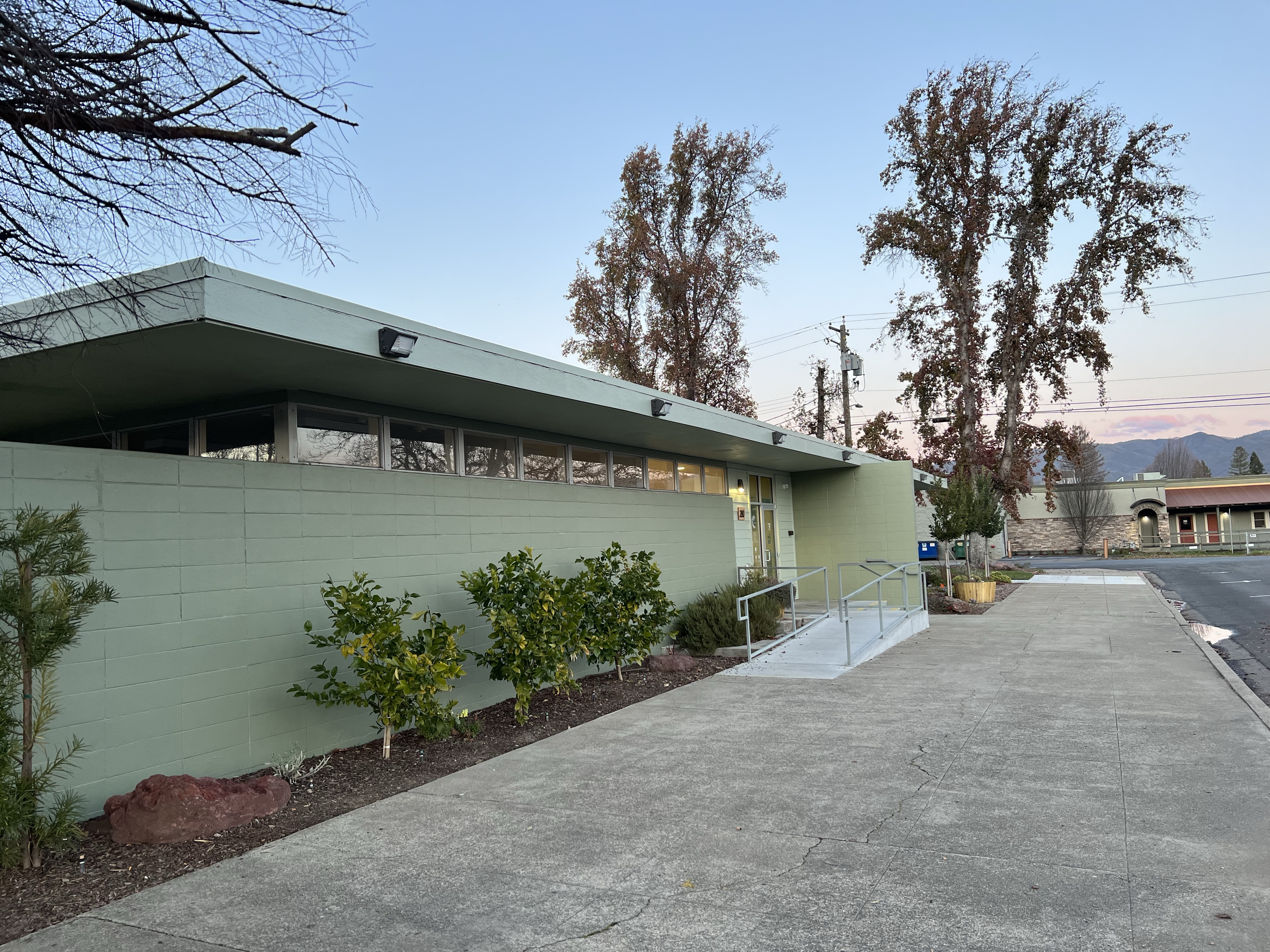
The view of the former police station coming from the direction the two boys traveled, east from State Street.
It was in one of the interrogation rooms at the Ukiah Police Station that Dennis Parnell became Steven Stayner. Uttering the now famous words: “I know my first name is Steven”.
While preparing for Parnell’s trial, a psychiatrist named Robert Wald wrote in his evaluation of Steven about the pivotal moment at the Ukiah Police Station : “It is my absolute belief that with the acknowledgement of his true identity, Steven Stayner freed himself from his state of being kidnapped . From a psychological point of view, he was still in a state of kidnap until he spoke his name, thus ending a psychic capture that lasted two thousand, six hundred forty-four days.”
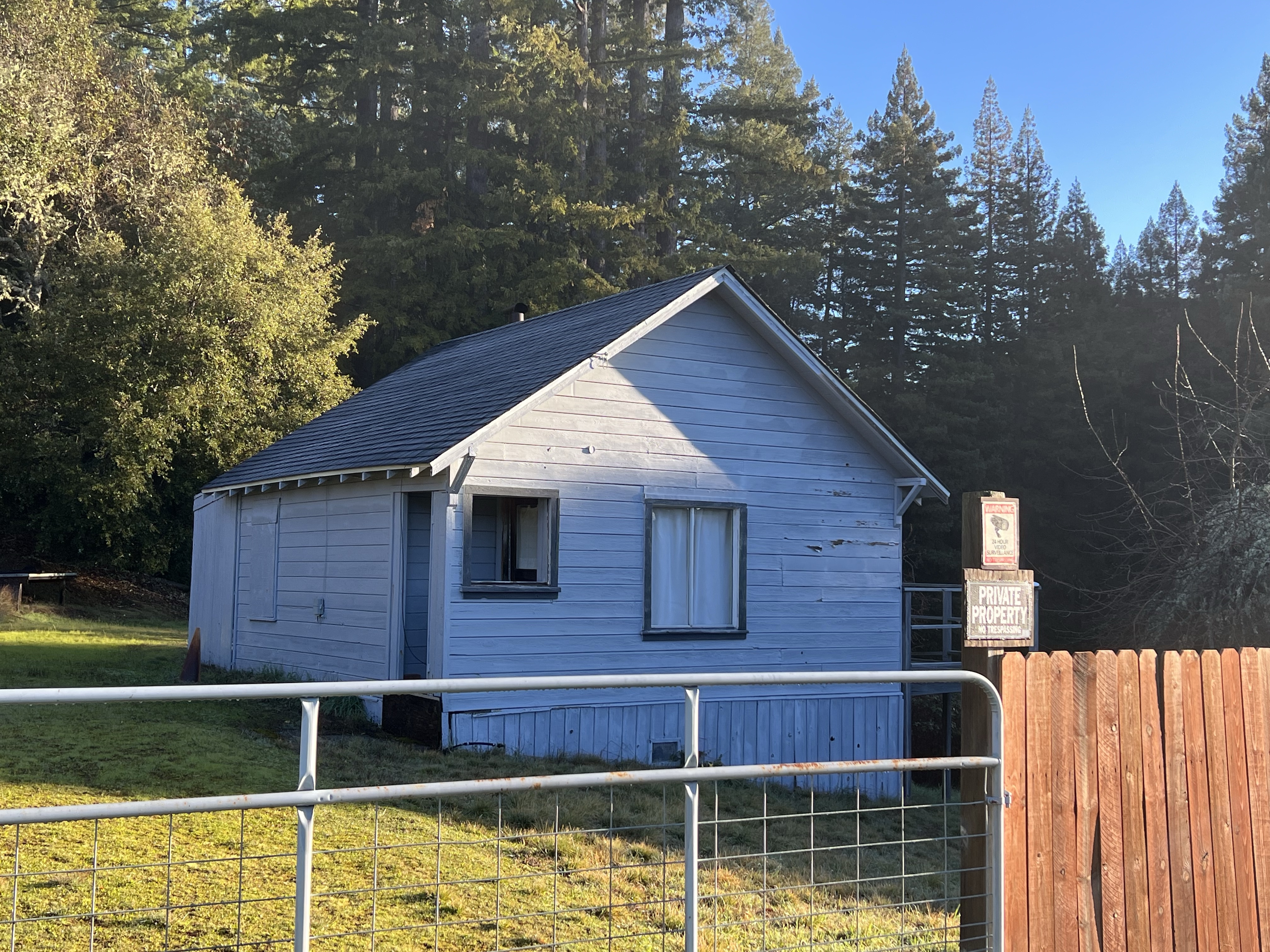
Sketching notes: The featured spread is a field sketch from the shoulder of Mountain View Road of the one room cabin that was the last dwelling Steven shared with Parnell. While I was reading the account of Steven’s travails I thought that this cabin surely no longer existed and if it did, it must be so far off the road on private property making a sketch impossible. With a short search on Google maps, I found that, indeed the cabin still existed and in plain sight 15 yards from the road.
Before me was a bucolic country road and a rustic cabin surrounded by oaks and conifers. The morning was cold but a clear winter’s day. It seemed a perfect start to the day. The only ominous undercurrent was the presence of the cabin and the knowledge of what happen here in 1979 and 1980. It symbolized Steven’s prison as well as the start of his road to freedom.
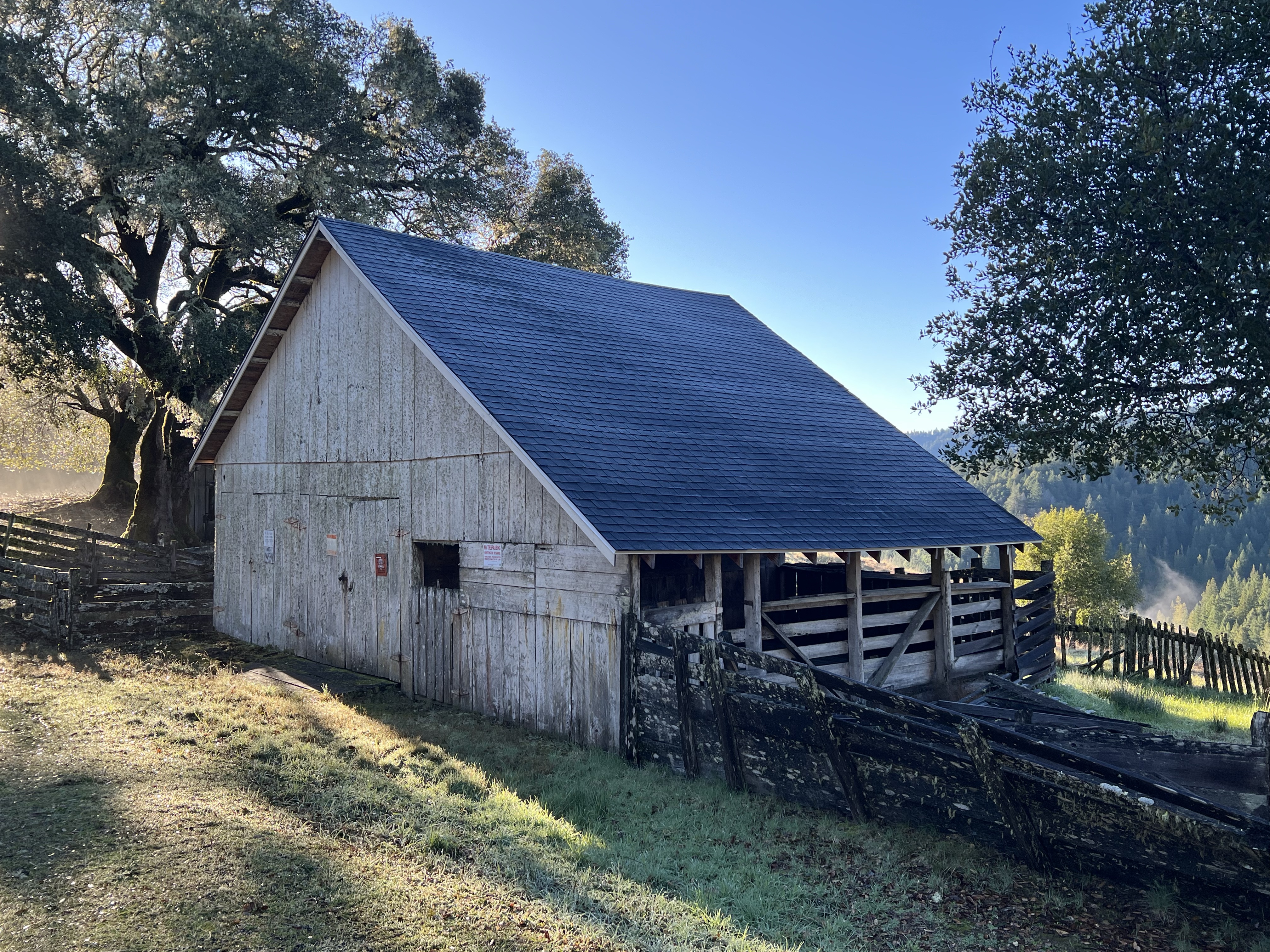
The barn across the road from the cabin on Mt. View Road where Steven spent time and raised animals.
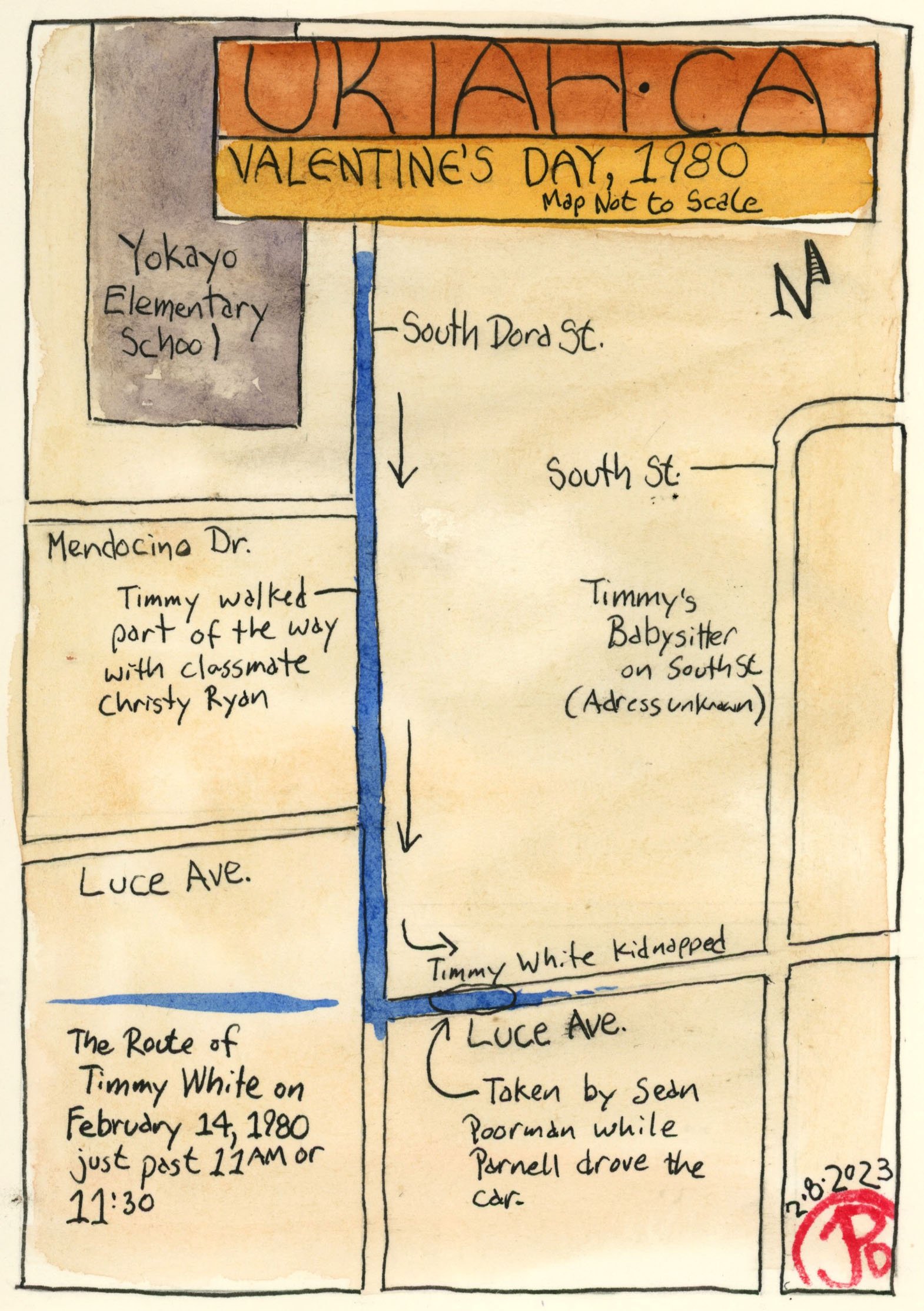
Five year old Timmy White left Yokayo Elementary School in Ukiah, California, on Valentine’s Day, 1980 at about 11:30 AM.
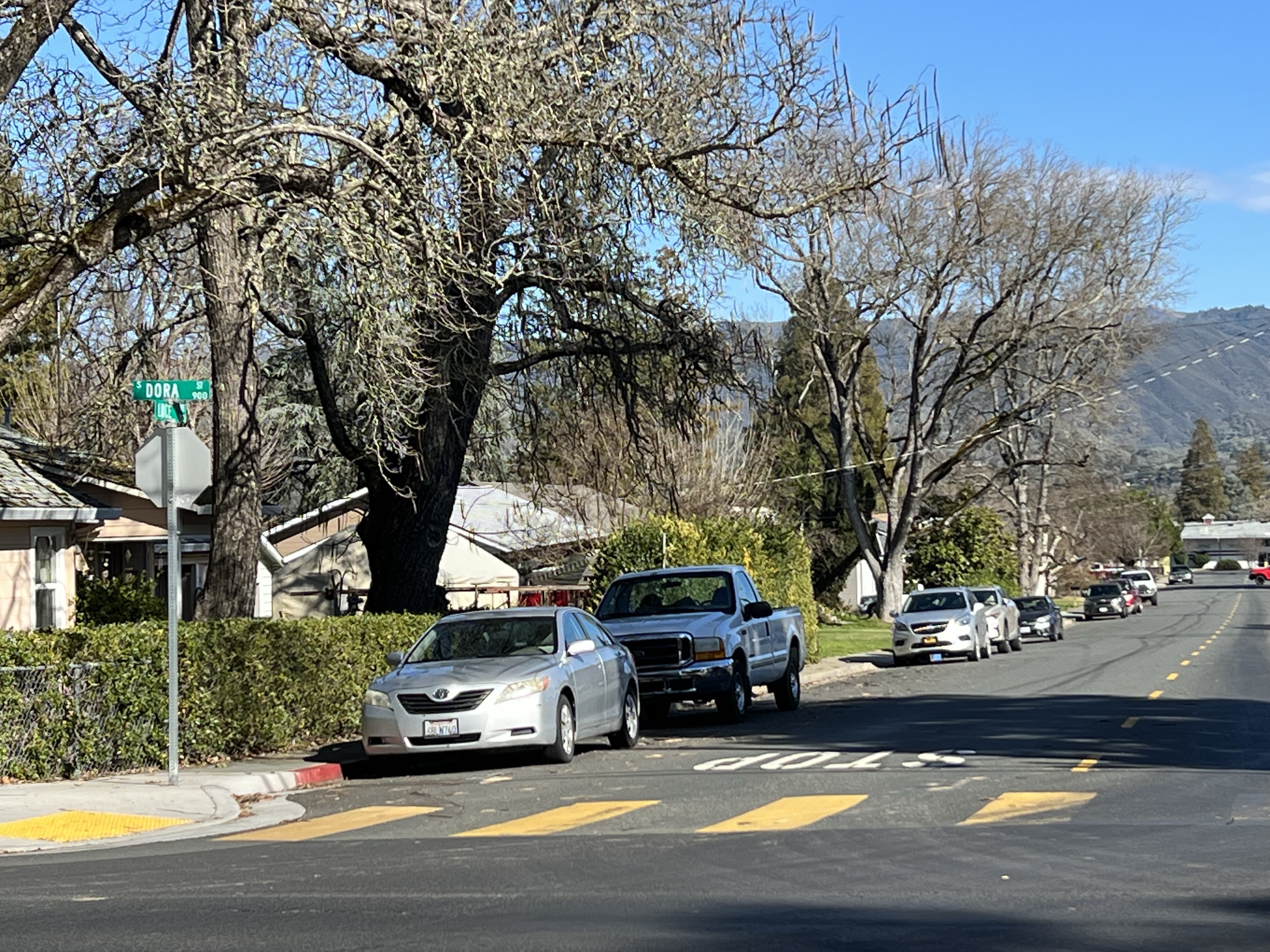
The kindergartener walked south down South Dora Road with a classmate. His destination was his babysitter’s home on South Street. He parted ways with his classmate and crossed the street and turned left down Luce Street.
No one witnessed or heard Timmy White’s kidnapping on Luce Street. It was as if he had disappeared into thin air.
The layers of time: while this looks like a quiet residential street in a small town, this is where Timmy White was kidnapped by Kenneth Parnell.
Timmy was the kidnap victim of sex offender Kenneth Parnell who enlisted the help of a teenager named Sean Poorman to assist with the kidnapping.
Timmy was taken to Parnell’s one room cabin at Mountain View Ranch, about an hour away from Ukiah. The cabin did not have electricity or indoor plumbing. Timmy’s first “home” away from home was very Spartan.
The cabin in rural Mendocino County where Timothy White was help captive for two weeks.
Luckily Timmy’s stay with his new “dad” was only two weeks. His savior was another boy that Parnell had kidnapped as he was walking home from school in Merced seven years previously. This was Timmy’s new “brother” Dennis. Dennis acted as Timmy’s protector and never left the five year old alone with Parnell. He was not going to allow what happened to him happen to his new purloined “brother”.
Coda: WhenTimothy White grew up, he relocated to Southern California where he gave presentations to students about the dangers of kidnapping. He became a sheriff with the Los Angeles County Sheriff’s Department. He married and had two children. White died at the age of 35 on April 1, 2010 of a pulmonary embolism.
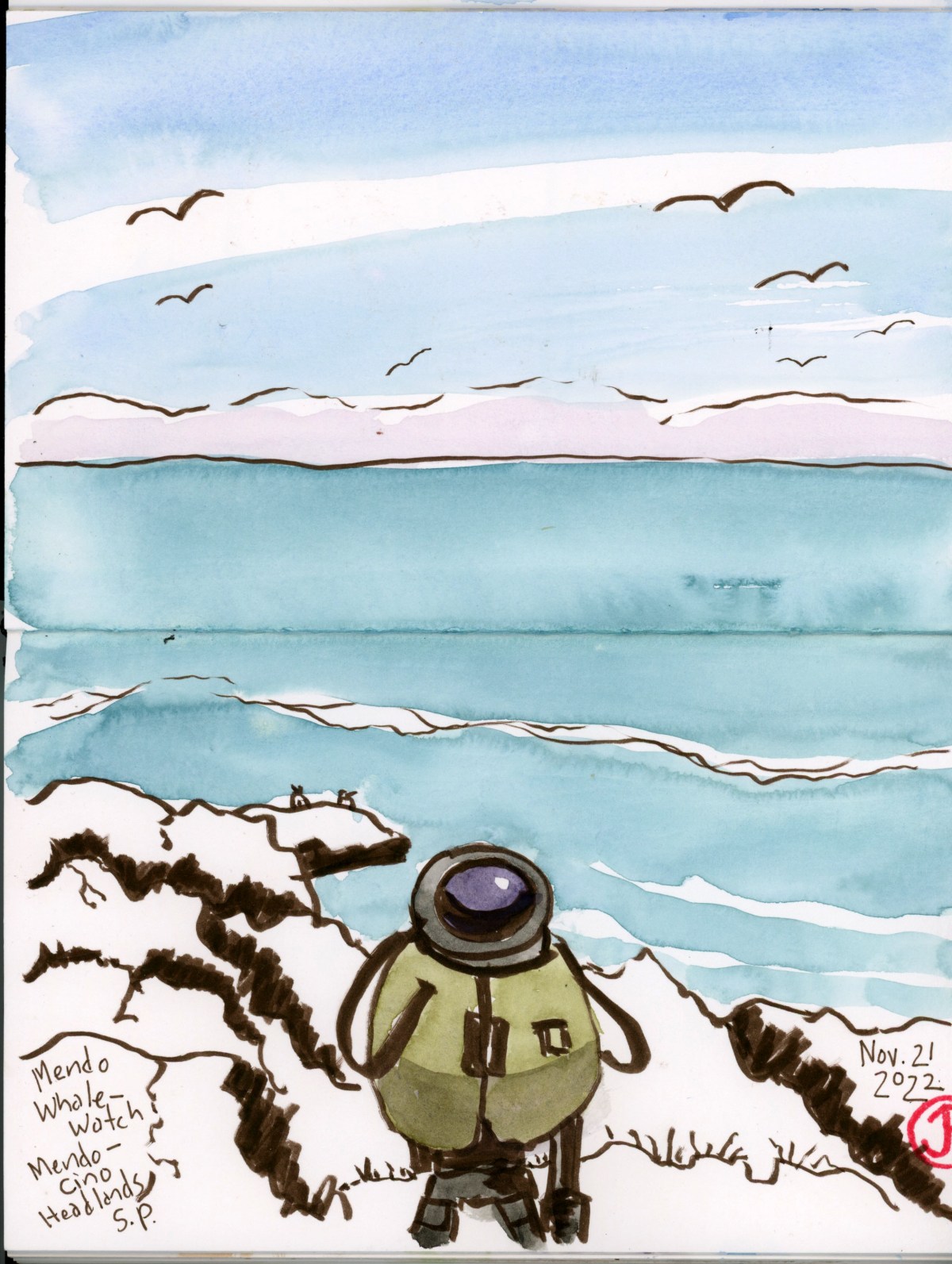
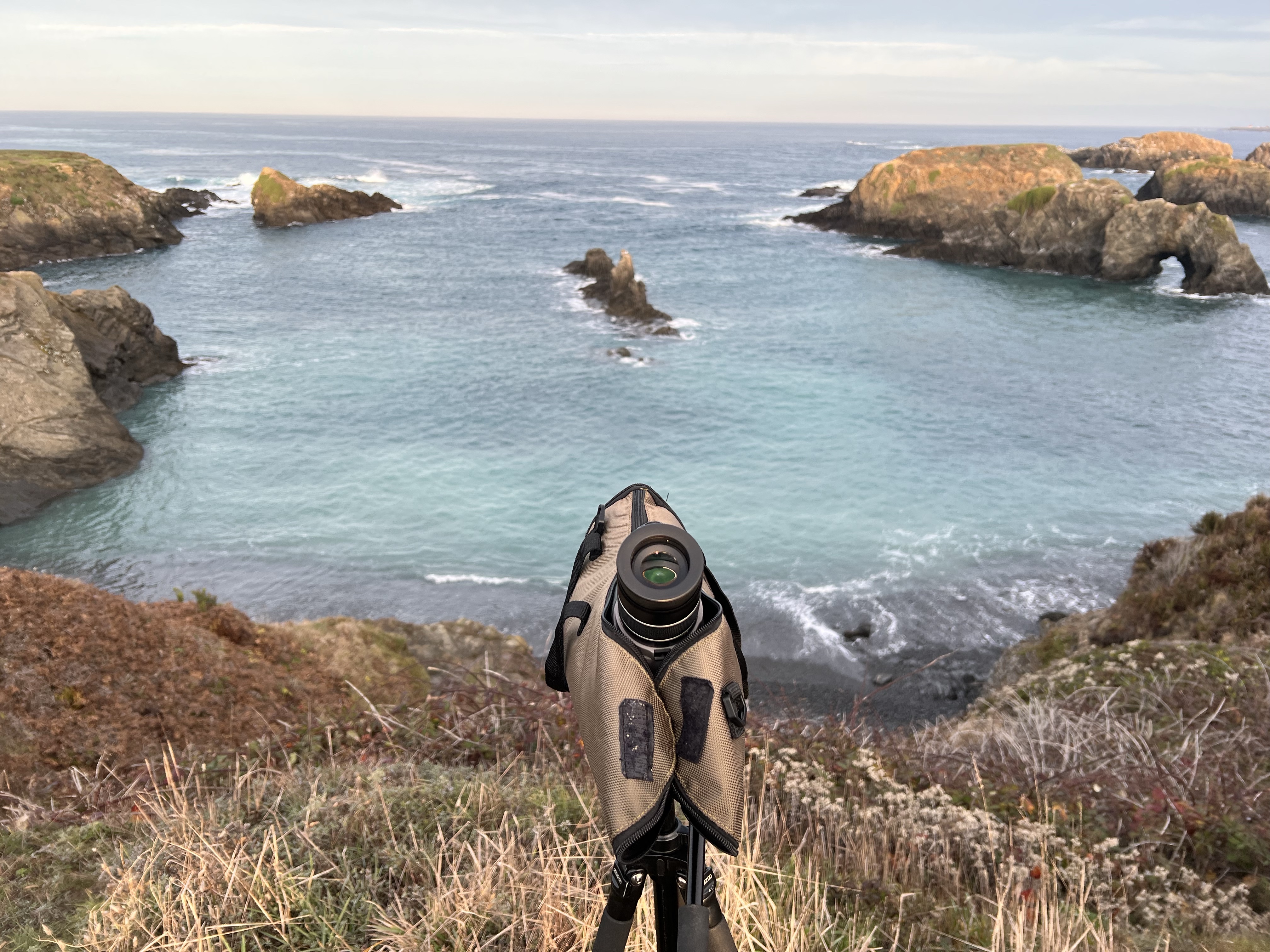
I started my whale watch just down the street from my digs at the Mendocino Art Center at the Mendocino Headlands State Park.
I set up my scope at 7:45 AM and looked for blows just below the horizon.
I looked and I looked. I looked at gulls and I looked at oystercatchers and I looked at the constant stream of common murres heading south.
But no blows.
I looked at a bottling harbor seal and I looked at the lone snow goose on a bluff to the north, and I even turned around to look at the perched white-tail kite and harrier.
Where were the migrating gray whales? Perhaps I was too early.
Perhaps there was a gap in the southern stream of pregnant females on their journey to the birthing lagoons of Baja California. Or maybe they were farther off, just on the other side of the curvature of the earth. But whatever it was, after two mornings of whale watching, I saw zero whales.
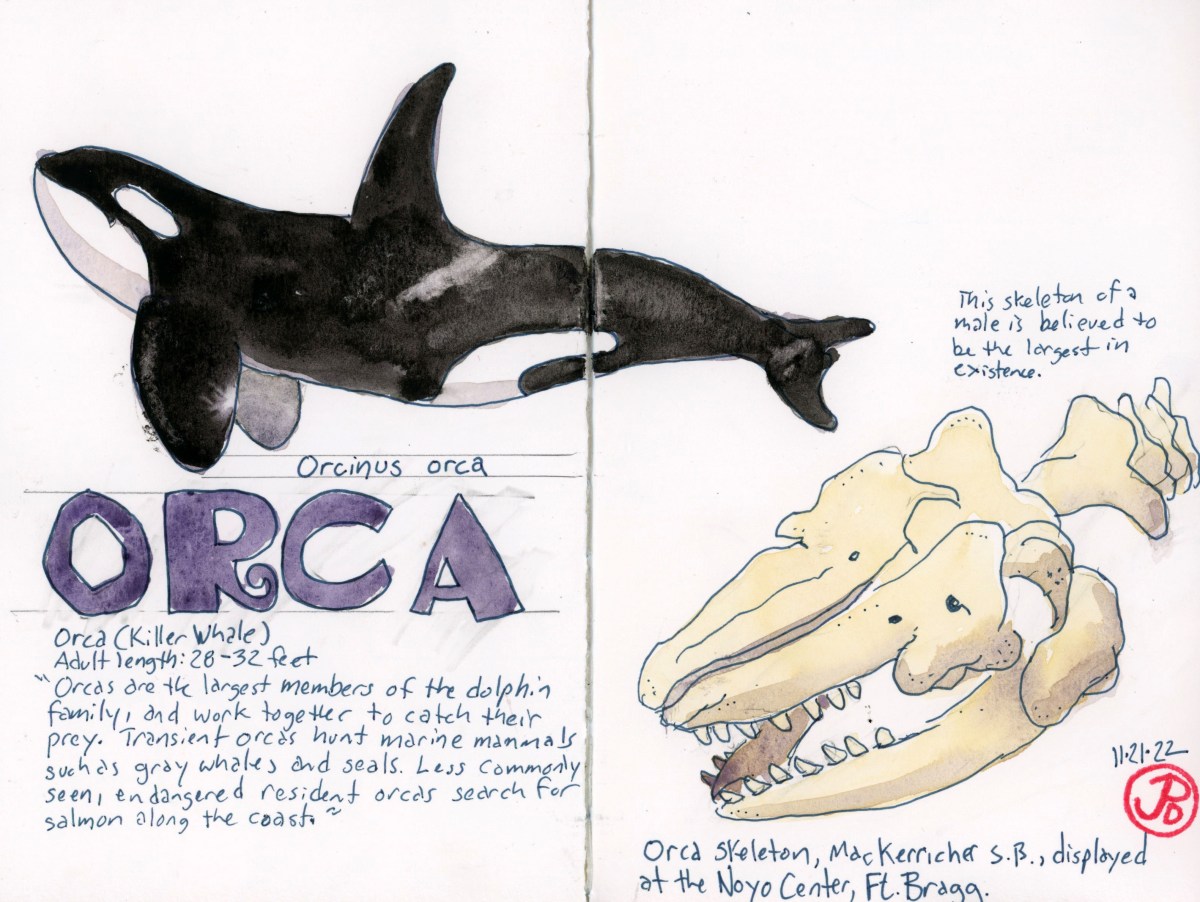
The plus of being a sketcher is that you are never bored, and if you have a pen and sketchbook handy, you can pass the time with a sketch (featured sketch).
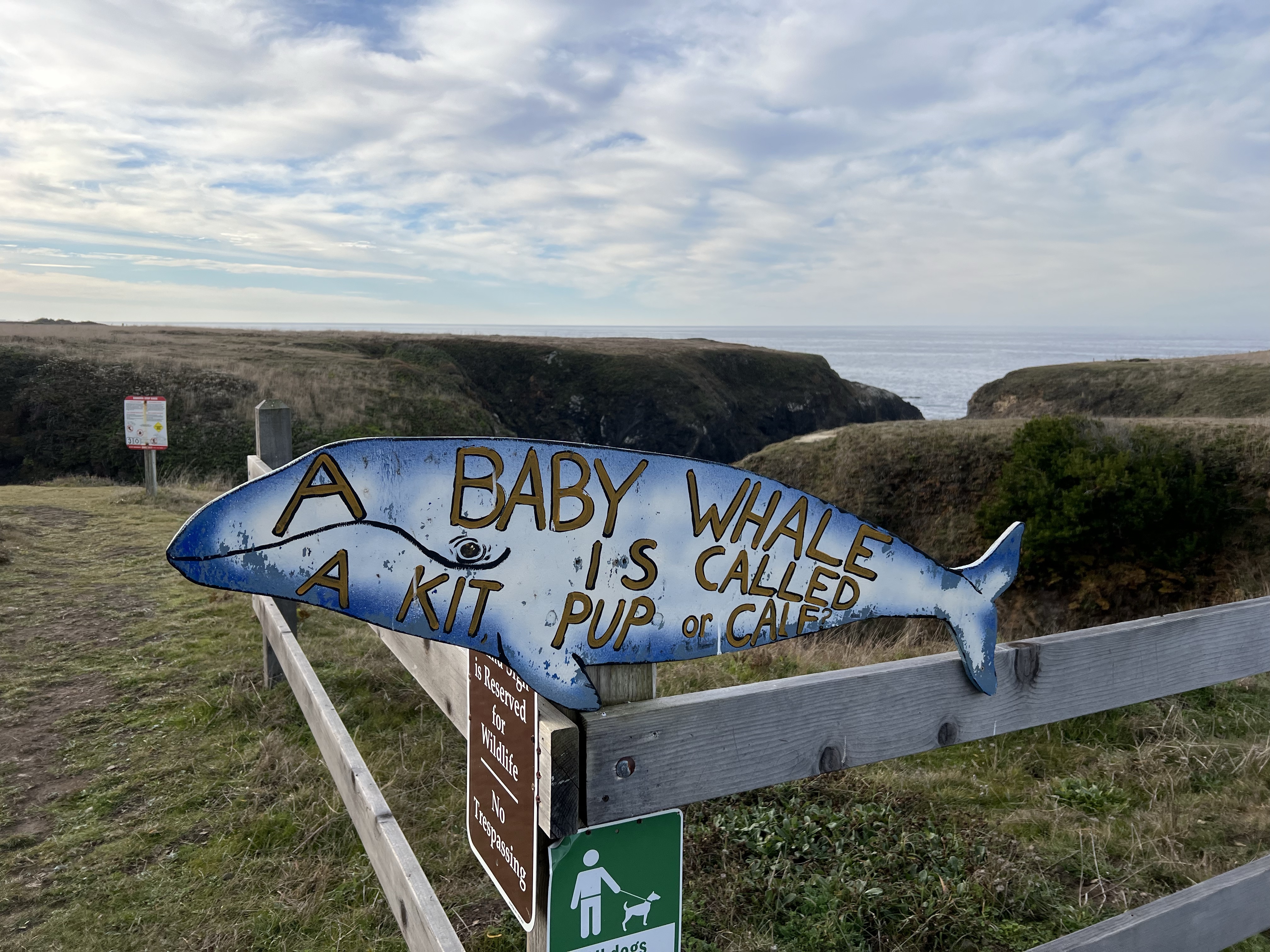
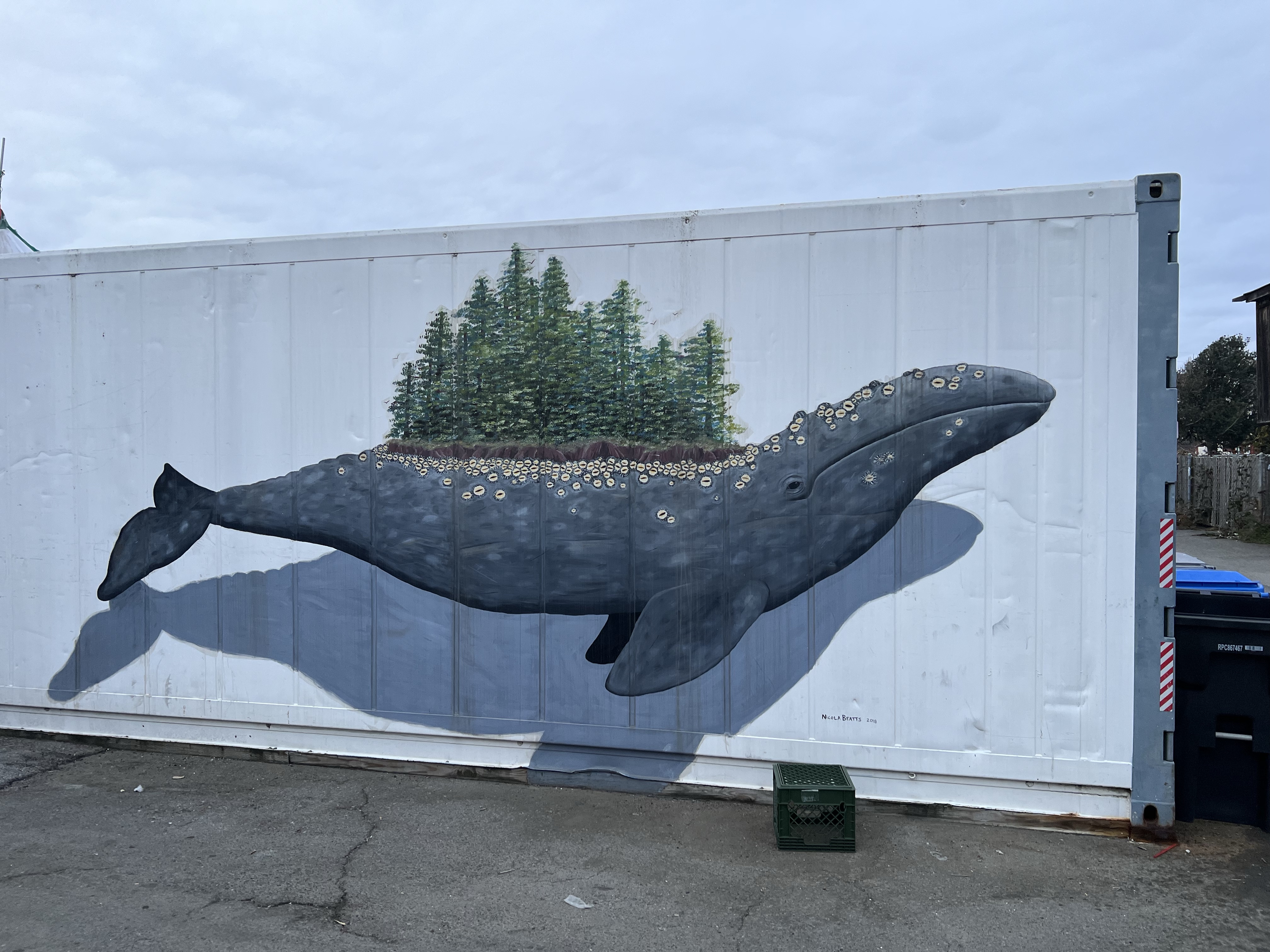
This sign at Point Carrillo Light Station was one of my better “whale” sightings. This gray whale mural in a back alley in Fort Bragg was probably the “best” whale sighting of the trip!
After a whale watch, sans whales (let’s just call it a sea watch), I headed a few minutes north on Highway One to a lighthouse.
I parked and walked west for half a mile and the lighthouse came into view.
This is the Point Cabrillo Light Station. The lighthouse, which looks more like a house with a light attached it, was built in 1909. The building houses the foghorn but is not in use today.
I walked around the lighthouse and started a sketch. I didn’t like it so I moved to another angle, changed pens and I produced one of my favorite sketches of my Mendo trip. 
Sometimes changing position and pens can propel you on a different direction, a different perspective, and a better sketch. Sometimes it make a difference to pass and move!
The great thing about sketching bones is that they don’t move.
And there is a set of bones that I wanted to sketch in Fort Bragg. These are the bones of a male orca or killer whale. The orca (Orcinus orca) is not a whale but the world’s largest dolphin and these bones are from one of the largest specimen.
These impressive bones are to be found at the Noyo Center for Marine Science on Main Street (Highway One), in Fort Bragg, across the street from the Guest House Museum.
This orca was trapped in some netting off the Mendocino County Coast. In the summer of 2017, the skeleton was articulated or put together by experts ranging as far away as Alaska and Canada who came to Ft. Bragg to give the orca skeleton “life”. It’s the impressive centerpiece of the museum’s collection.
An orca sighting at Point Cabrillo Light Station. And the answer is “Yes!” The male orca skeleton at the Noyo Center in historic downtown Fort Bragg. This is one killer dolphin!!






 Corvid Sketcher