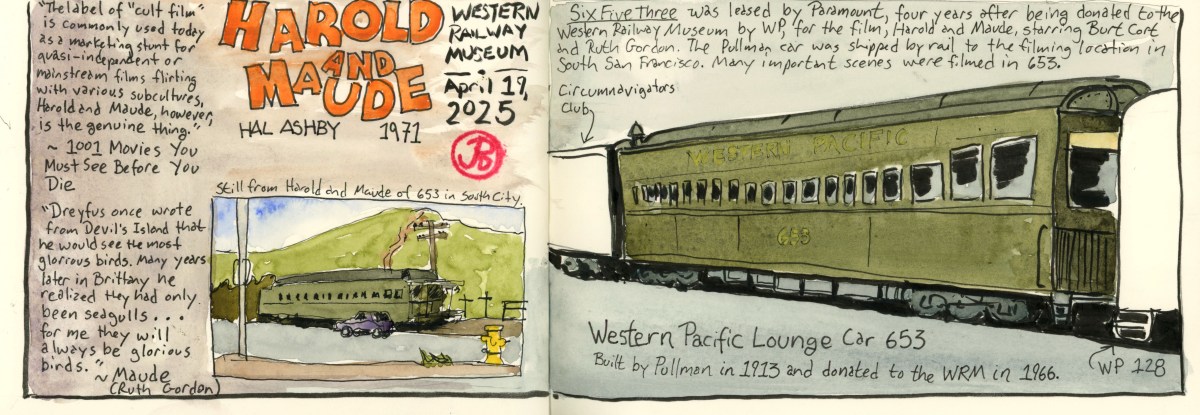
One of my favorite movies of all time is Hal Ashby’s Harold and Maude (1971).
It is a great cult classic and is a very quirky and eccentric film that is now widely praised while being panned and ignored during its initial release.
One other reason I really enjoy this film is that it was filmed on location in the San Francisco Bay Area and the Santa Cruz Boardwalk and Wharf.
This film provides a snapshot of what the Bay Area looked like in the early 1970s, back when I came into the world. The area has changed a lot over the last 50 years, yet some things do remain the same.
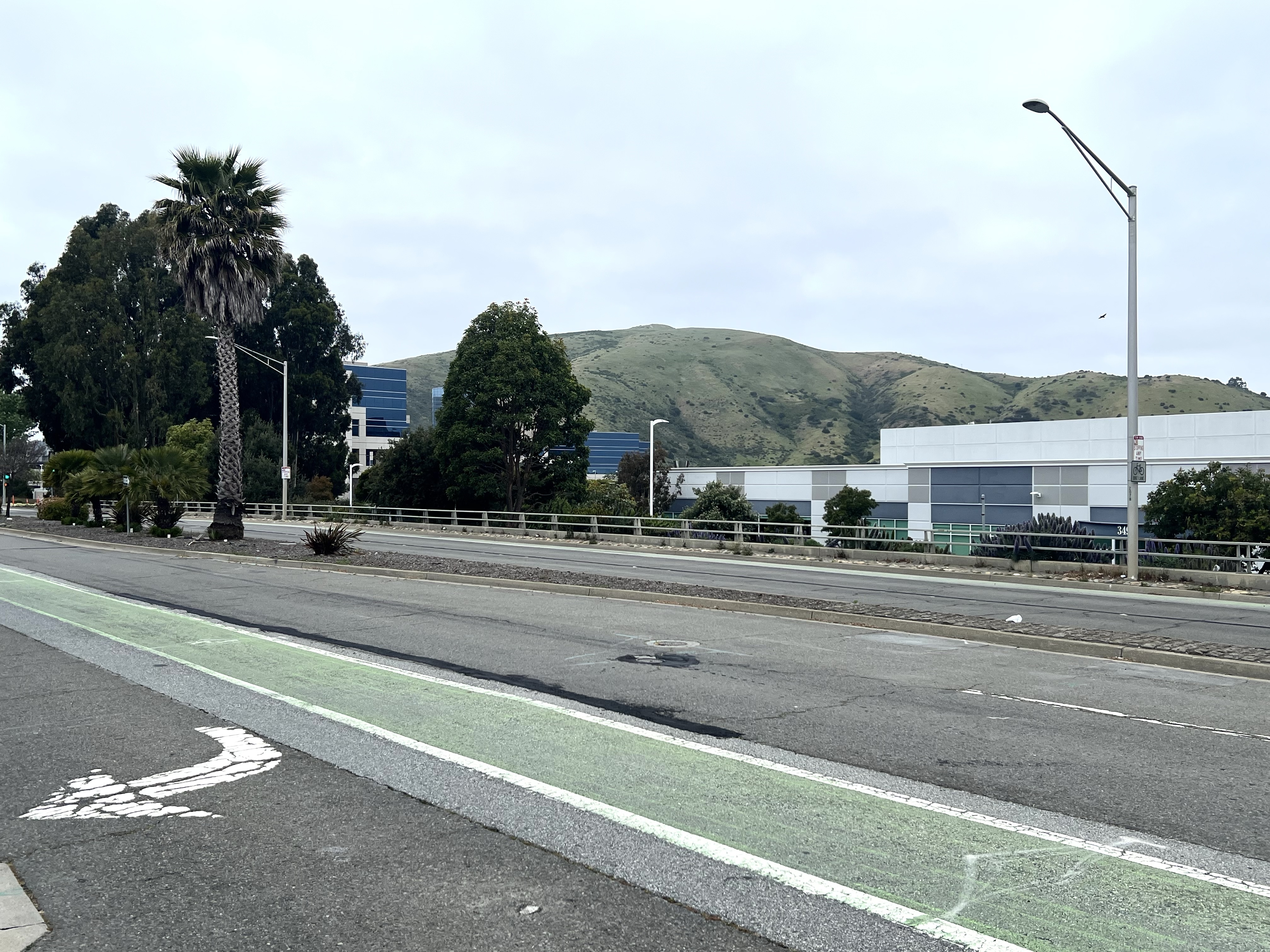
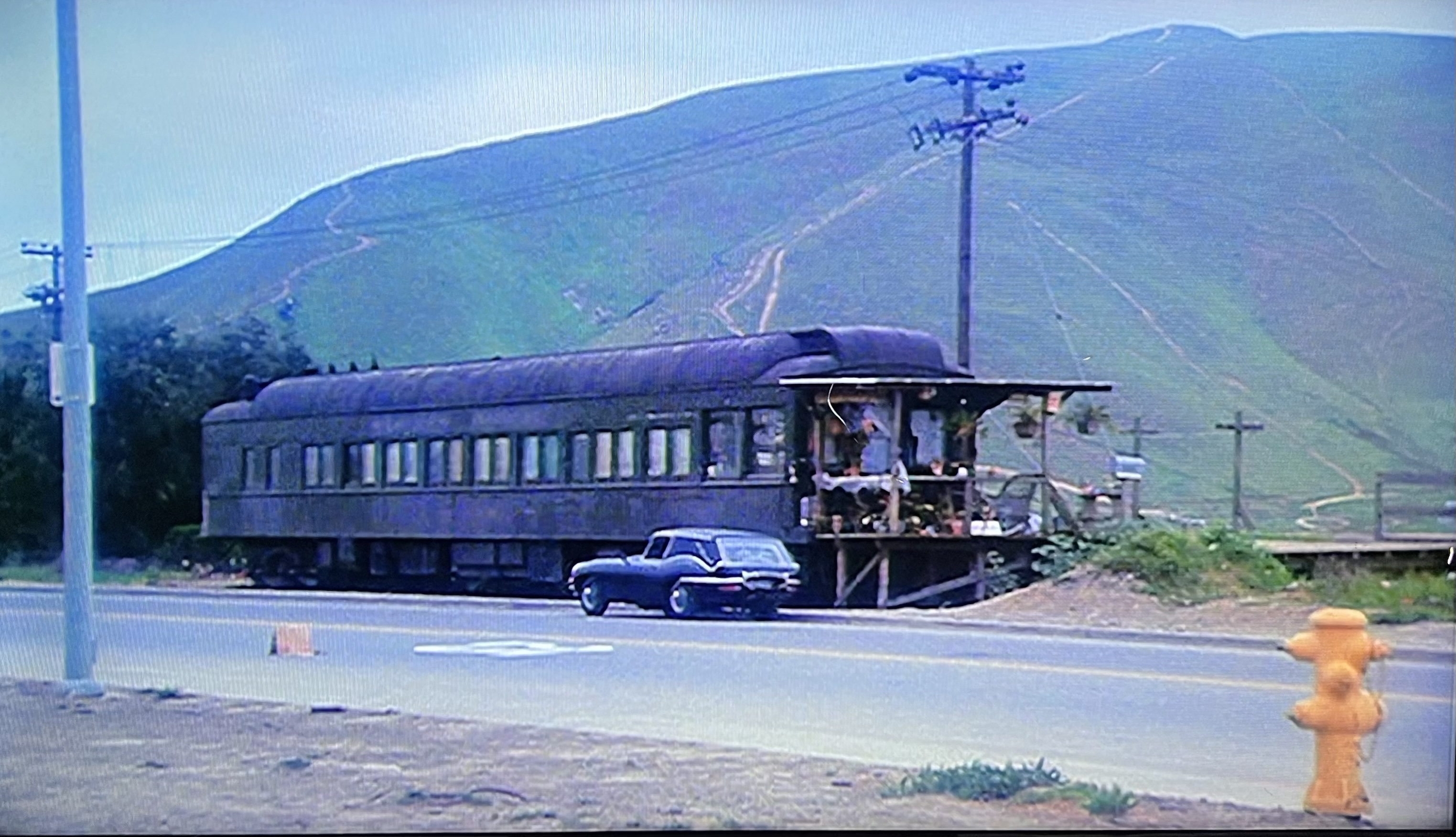
This is Oyster Point Boulevard between Eccles Avenue and Gull Drive in South San Francisco. There was once a rail siding here and this is location of Maude’s railcar home. The rails are now gone, they were taken up when the street was widened. The green hills in the background are still there but the foreground is much changed and are now blocked by biotech buildings and taller trees. (South City prides itself as the “Home of Biotech”).
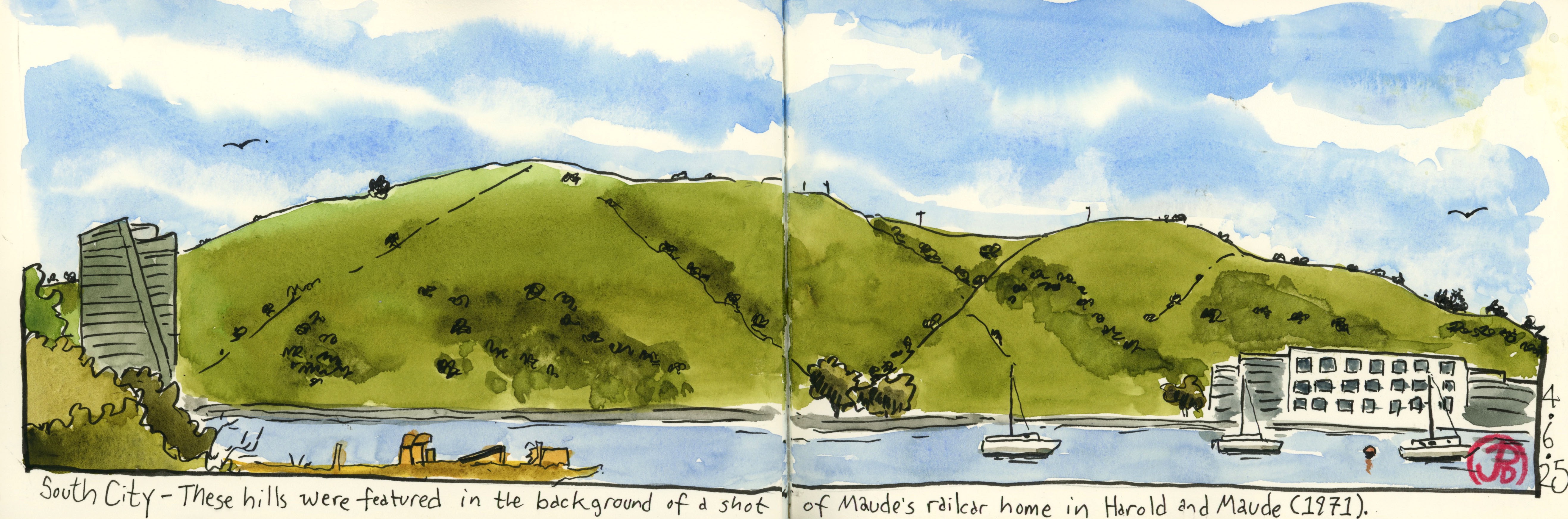
I headed behind the biotech buildings to the San Francisco Bay Trail to get a view of the green hills that were the background to the shot. The hills look much the same as they did in the early 1970s. I found a bench and started a sketch in my panoramic sketchbook.
Maude’s Pullman
The passenger car used in the filming of Harold and Maude is Western Pacific’s lounge car 653.
The car was built by Pullman in 1913. It was originally built as a sleeper car and later converted to a buffet lounge car in 1931.
In 1939 Western Pacific used the car on the “Exposition Flyer” from Oakland to Chicago. WP operated the passenger service from Salt Lake City to Oakland through the famed Feather River Canyon. The route was later replaced by the California Zephyr in 1949.
Western Pacific donated the car to the Western Railway Museum (then named the California Railway Museum) in 1966.
Universal leased the car from the museum and it was shipped by rail to the filming location: a rail siding in South San Francisco. Filming took place in 1970/71.
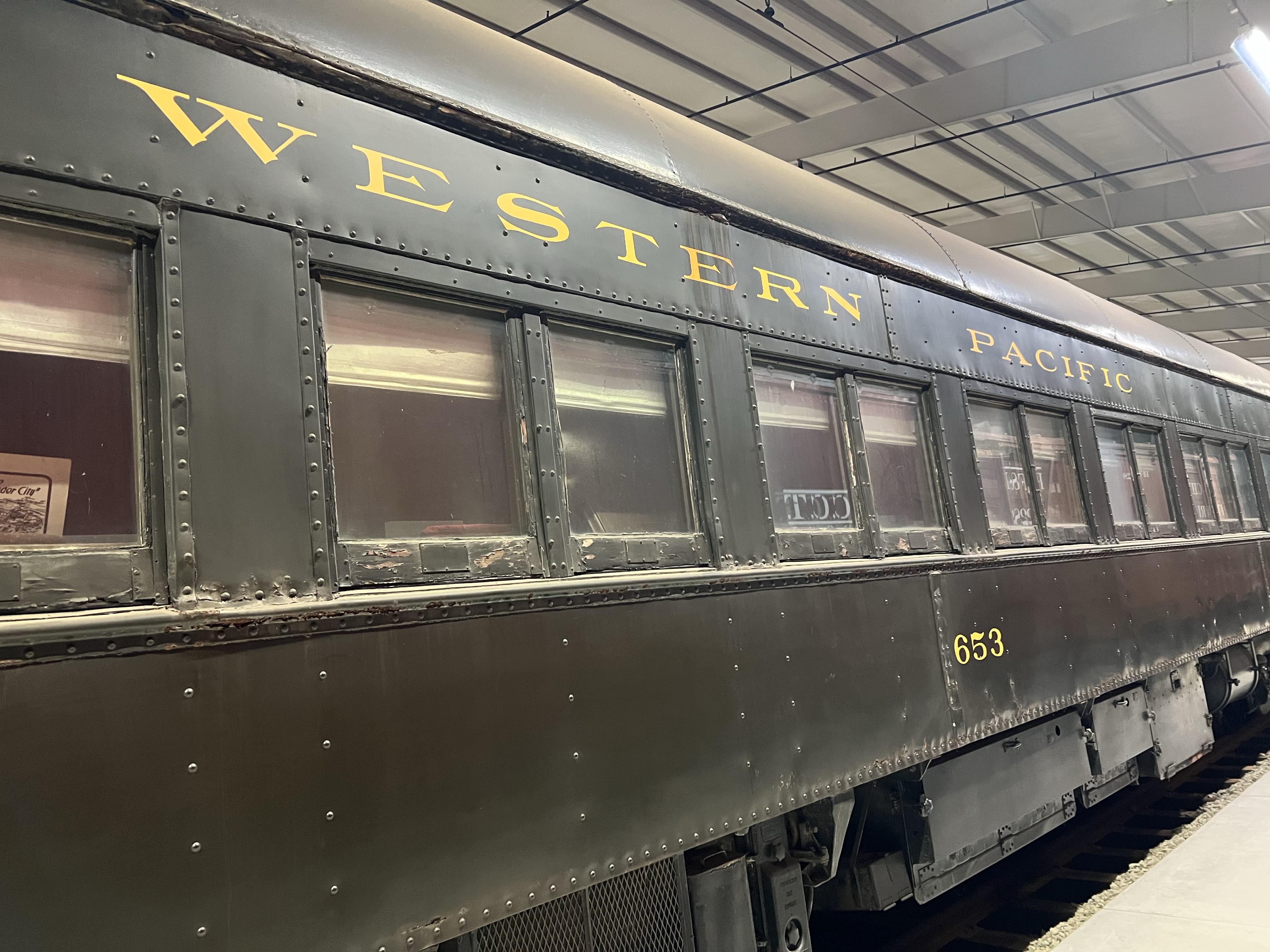
The exterior of 653 is featured in the film but many important scenes where filmed inside the Pullman car, such as when Maude (Ruth Gordon) sings “If You Want to Sing Out” (by Cat Stevens), at the piano.
I was delighted to find that this piece of rail and film history still exists and is perverse in the Jensen Carhouse at the Western Railway Museum at Rio Vista Junction.
I was able to enter the carhouse on a tour and get a sketch from the same perspective seen in the above movie still (featured sketch). The nearest end of the car from my sketching perspective served as Maude’s entrance.
 Corvid Sketcher