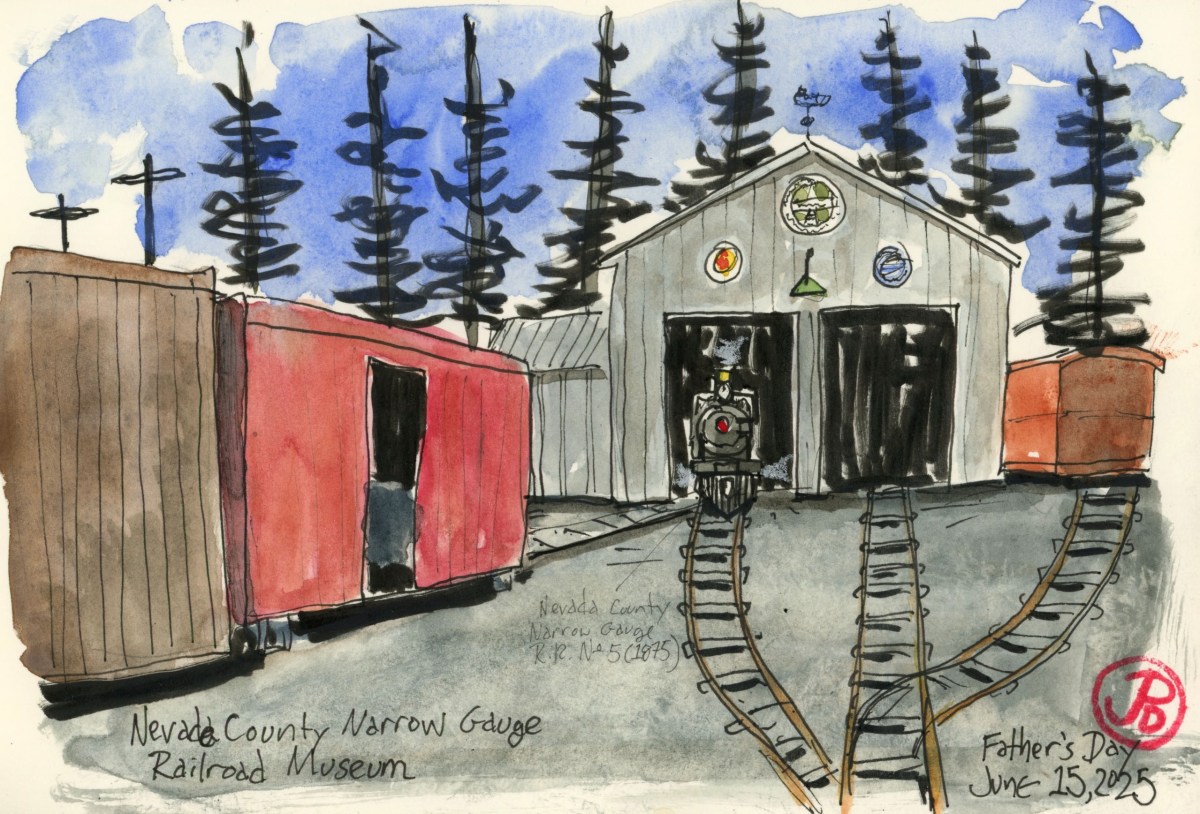
One sketching target in Nevada City is the Nevada Hose Company No. 1. (Just to avoid confusion, Nevada City is in California.) I have always wanted to sketch this historic building but had not gotten around to it.
This firehouse is very detailed and complex and it seemed like the perfect subject for a continuous-line sketch. I suppose this method can become an excuse if the sketch turns out all wrong! But there are no mistakes in sketching.
The historic firehouse was opened May 30, 1861 and was in use until 1938. Throughout its history the hose carts were under different motive power: human, horse, and combustion engine.
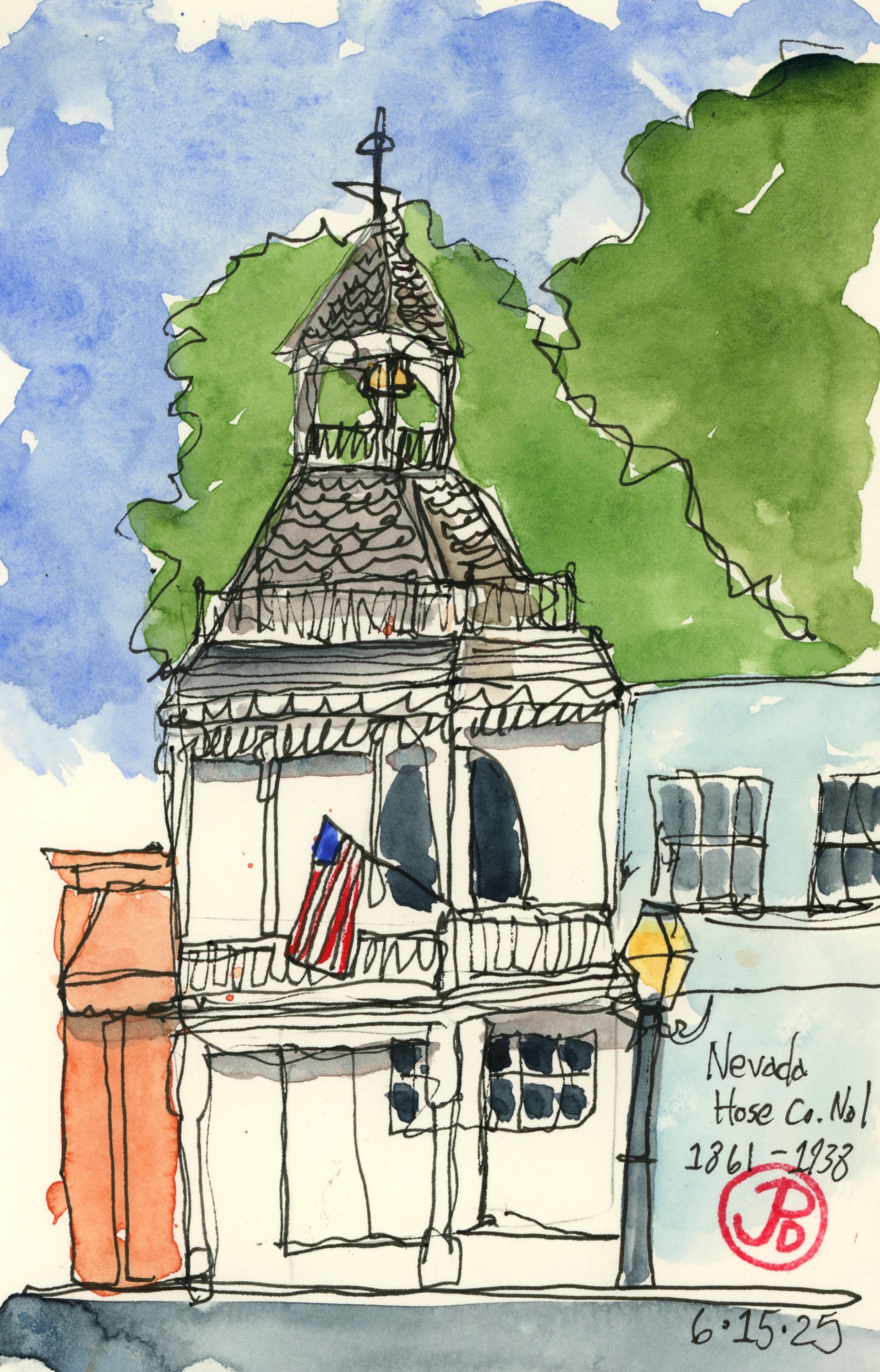
What’s surprising about this building is that it exists at all. Most wooden structures in Gold Rush towns were destroyed by fire. That would certainly be ironic, a firehouse destroyed by fire.
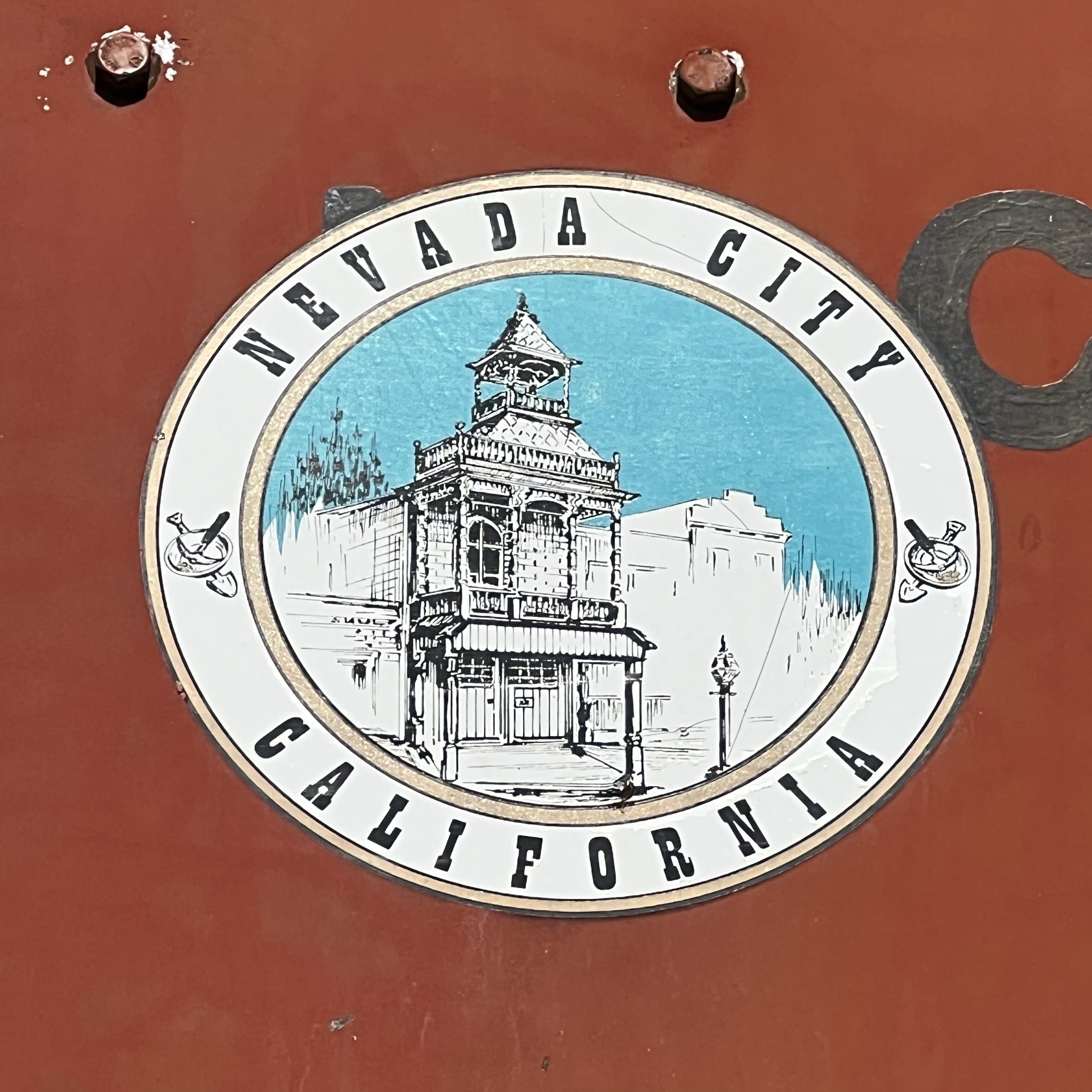
After my morning’s sketch I drove off to look for other Nevada City sites to add to my sketchbook. I settled on a flat car on static display from the Nevada County Narrow Gauge Railroad.
The railroad ended near here, the depot was destroyed in a fire, and the opposite terminus ended parallel to the mainline in Colfax.
I rendered the car in a loose broken continuous-line sketch.
While reading the interpretive signs for the narrow gauge railroad I read a notice of the upcoming Steam Days at the Nevada County Narrow Gauge Railroad Museum where two of the locomotives in the museum’s collection would be under steam!
One of these days would be today, Father’s Day, and the museum would be opening in 45 minutes. So I knew where I would be next sketching next!
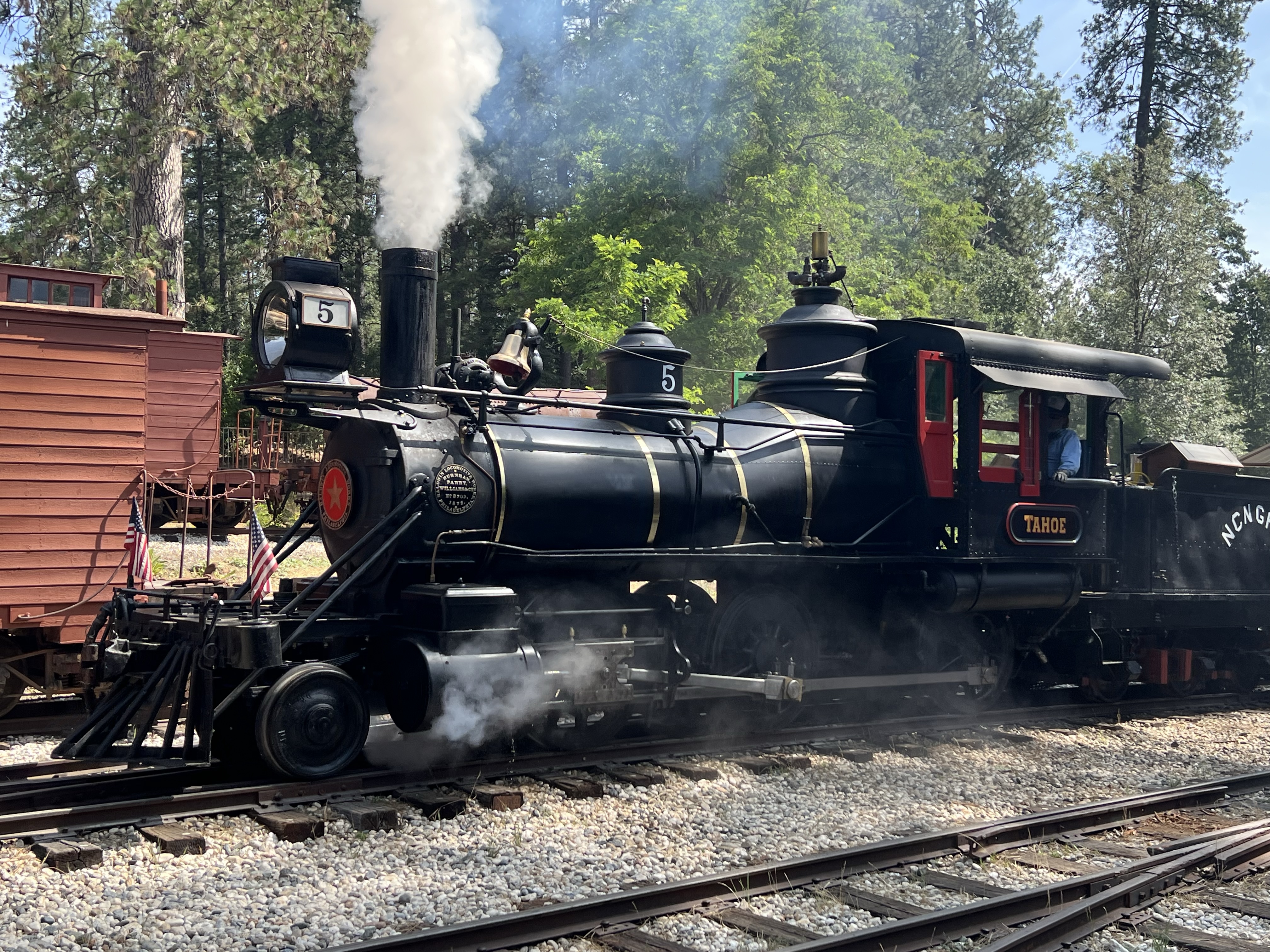
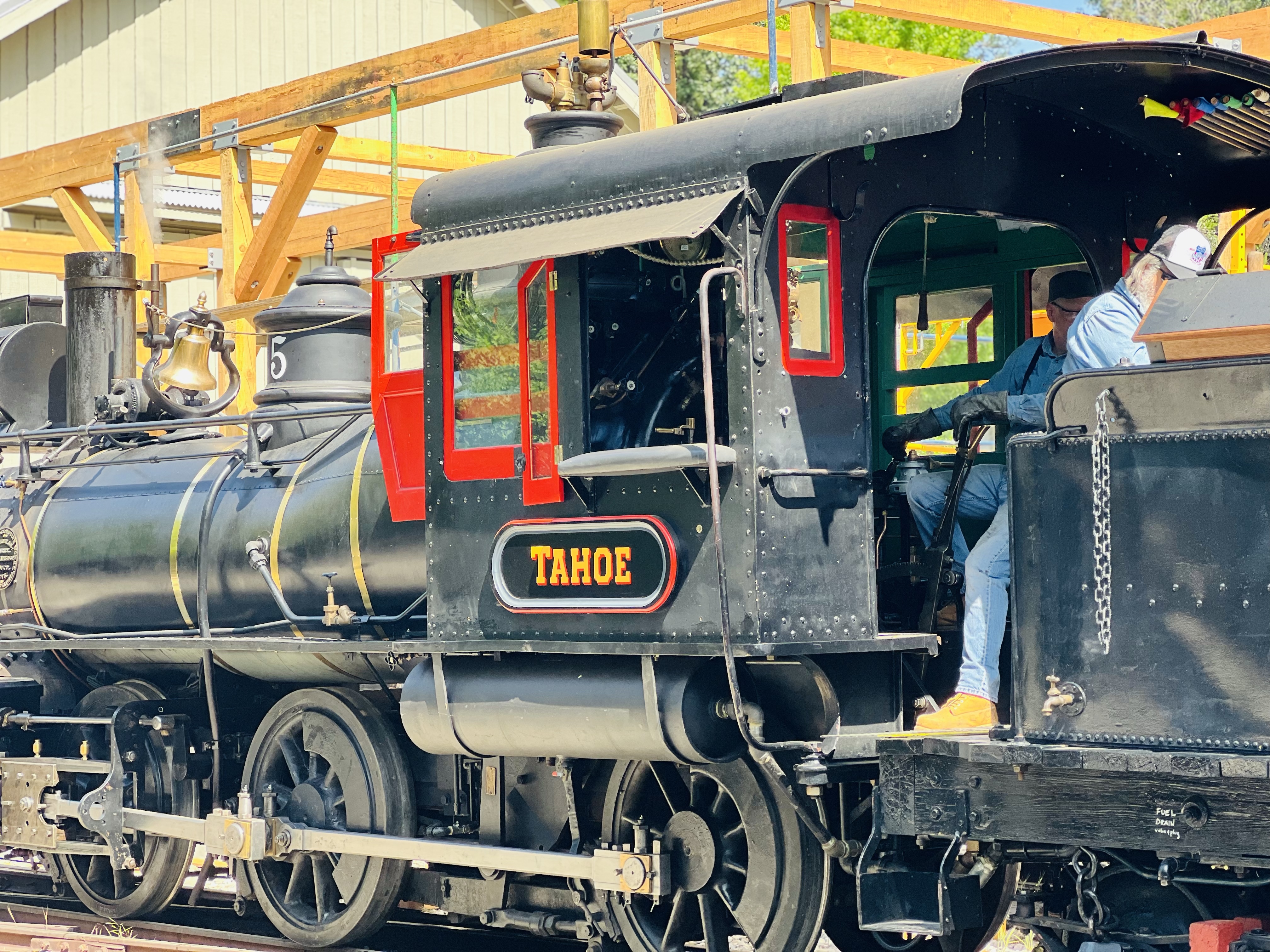
The star of the museum’s collection is the “Tahoe” No. 5. This 2-6-0 Mogul type is a narrow gauge steam locomotive that hauled freight and passengers on the line. The locomotive was built by Baldwin Locomotive Works in 1875 for the Carson Tahoe Logging & Fluming Company.
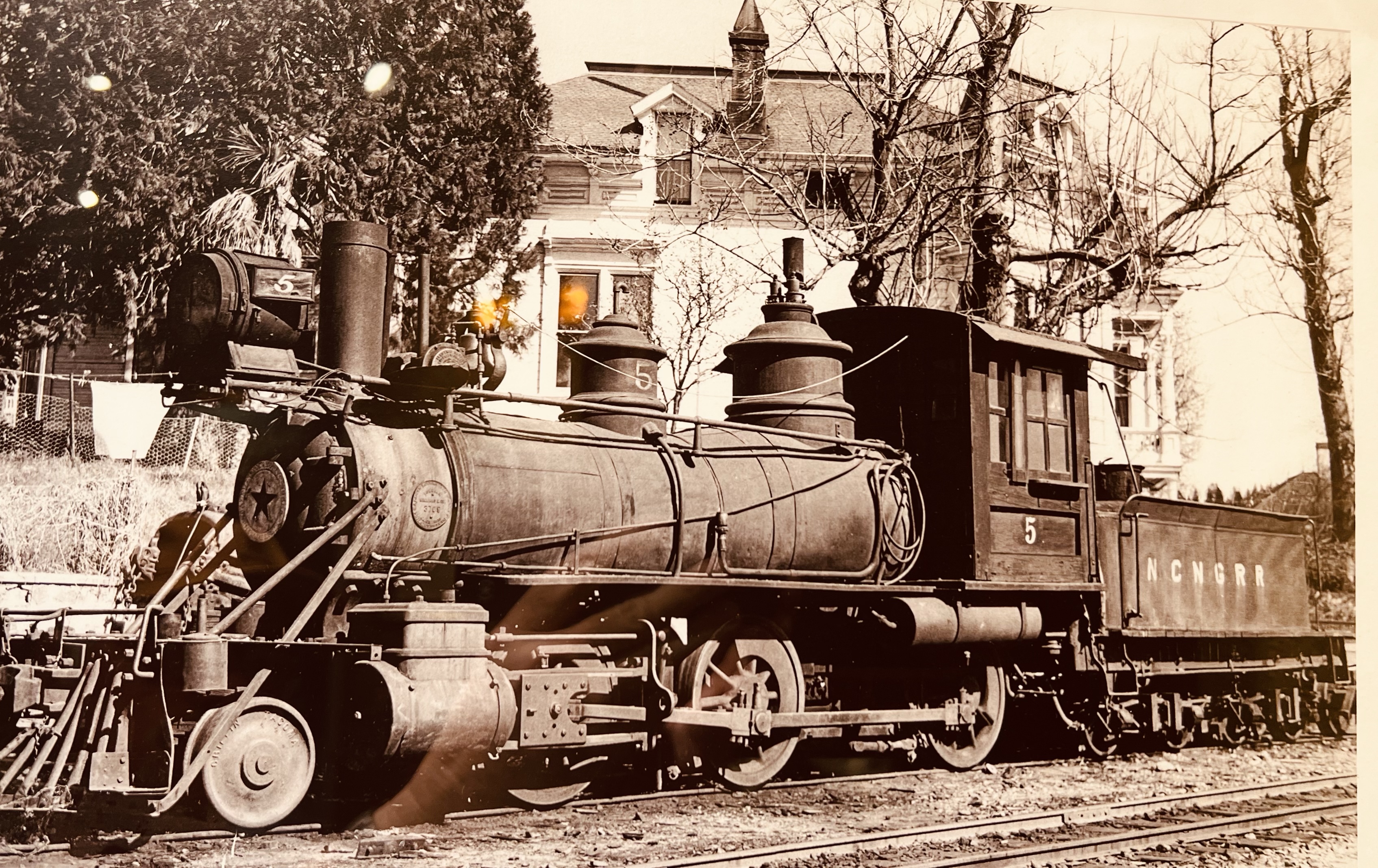
The locomotive was purchased by the NCNGRR in 1899 where it was in service until the 1940s when it was purchased by the Frank Lloyd Productions to become a Hollywood locomotive. No. 5 was first featured in the John Wayne film, “The Spoilers” (1942).
By the 1970s the locomotive was sitting neglected on the Denver Street back lot at Universal. No. 5 was last featured in the doomed film, “The Twilight Zone”, in 1979. No. 5 was briefly featured in the first segment of the film, featuring actor Vic Morrow who was killed with two child actors in a helicopter accident.
The museum leased the locomotive from Universal and it returned to Nevada City in 1985.
When I first visited the museum with my stepfather, the No. 5 was on static display, having been a movie locomotive for Universal Studios. The locomotive had been electrified and pushed during movie production, and had not been under steam for a really long time. The locomotive was featured in about 100 film productions. So I was excited to see this 1875 locomotive under its own steam power.


 There are no maintenance vehicles in the parking lot of a building that needs lots of maintenance. All the windows of the former hospital are boarded up.
 Corvid Sketcher