Image

The Virginia Museum of Transportation, Roanoke

A Roanoke location on my sketch list is the Virginia Museum of Transportation.

The museum is housed in the old Norfolk and Western Freight Depot and parallels the current high iron of Norfolk Southern.

The city of Roanoke was the epicenter of the Norfolk and Western Railroad where the business offices where located downtown and the eastern shops produced some of the most advanced steam locomotives ever built. While the N & W was a small railroad, compared to giants like Southern and Union Pacific, at it’s height the railroad operated 7,803 miles of rail. The railroad merged with Southern Railroad in 1990 creating a new railroad, Norfolk Southern.
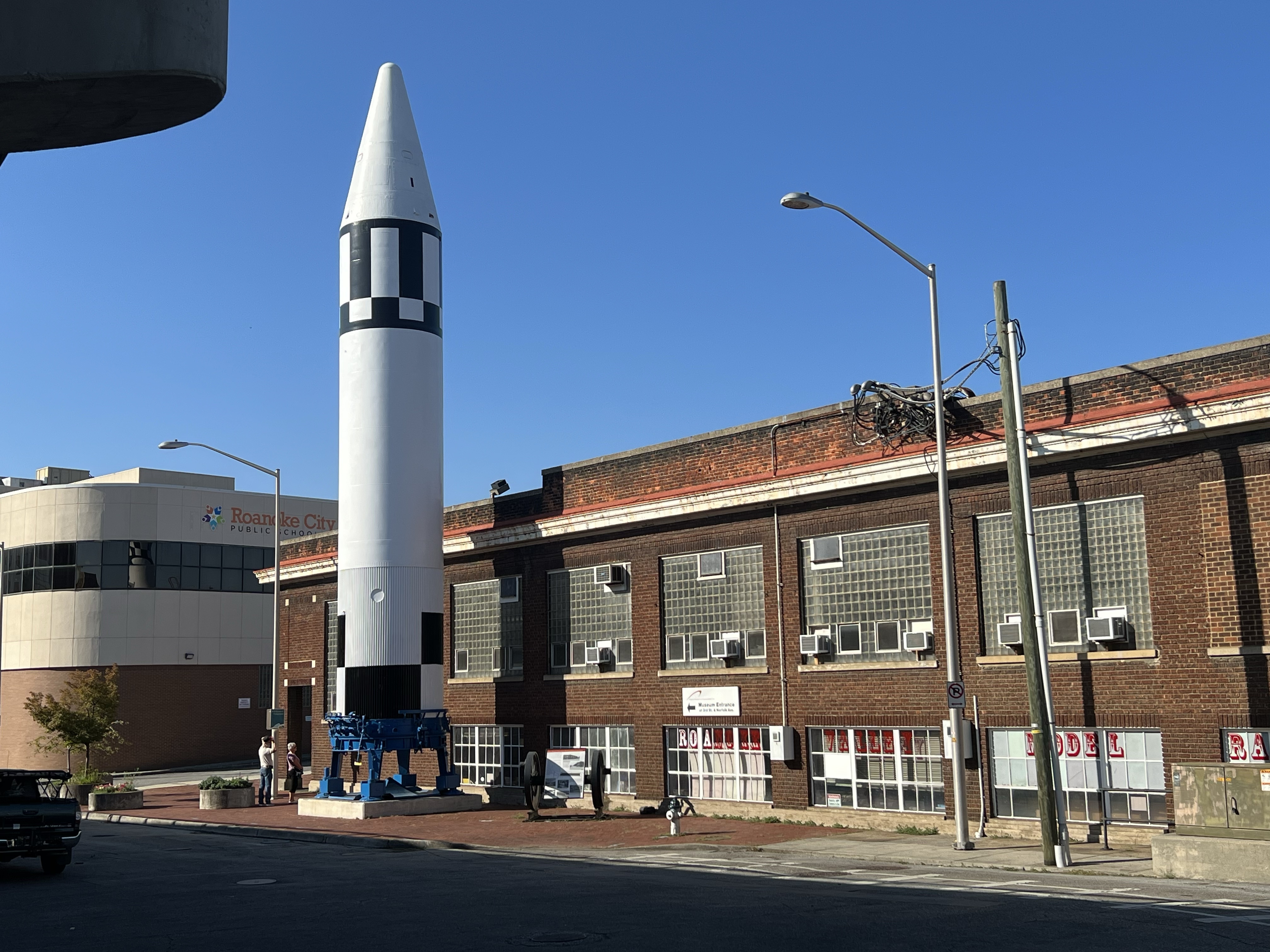
The Virginia Museum of Transportation, housed in the former Norfolk and Western freight depot. The rocket to the left is not for human transportation, it is a Jupiter Missile.

While the museum has a large collection of automobiles, I was here for the locomotives and rolling stock.

And because they were on static display, meaning they weren’t moving anytime soon, they were ideal sketching subjects.
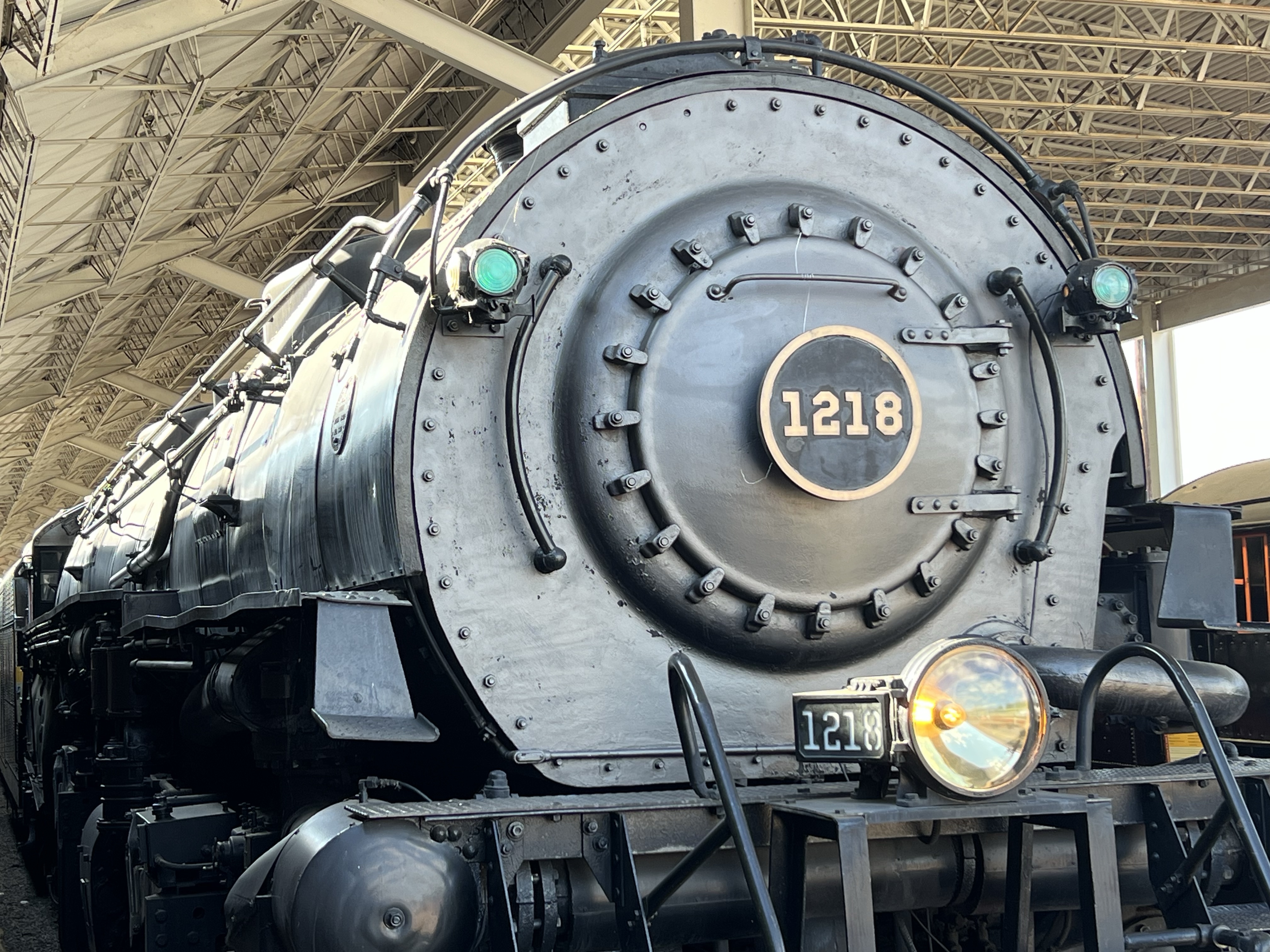
The impressive 2-6-6-4 Class A No. 1218. For a time, this was the most powerful excursion steam locomotive in the world. Big Boy No. 4014 put 1218 firmly in second. 1218 is now retired from active service.

The Norfolk and Western Railroad has three iconic classes of steam locomotives: Class A, J, and Y. All three were built by the railroad at their Roanoke Shops, just east of the museum. All three are now owned by the museum. The Y6 Class No. 2156 is on loan to the National Museum of Transportation in St. Louis, Missouri.

The Norfolk and Western Roanoke Shops still stands, long after the railroad disappeared in a merger with Southern Railroad in 1990.
The 70 inch drivers of 1218.

The Class J No. 611 was not at the museum but was off two hours north on excursion service. (More about 611 in future posts).

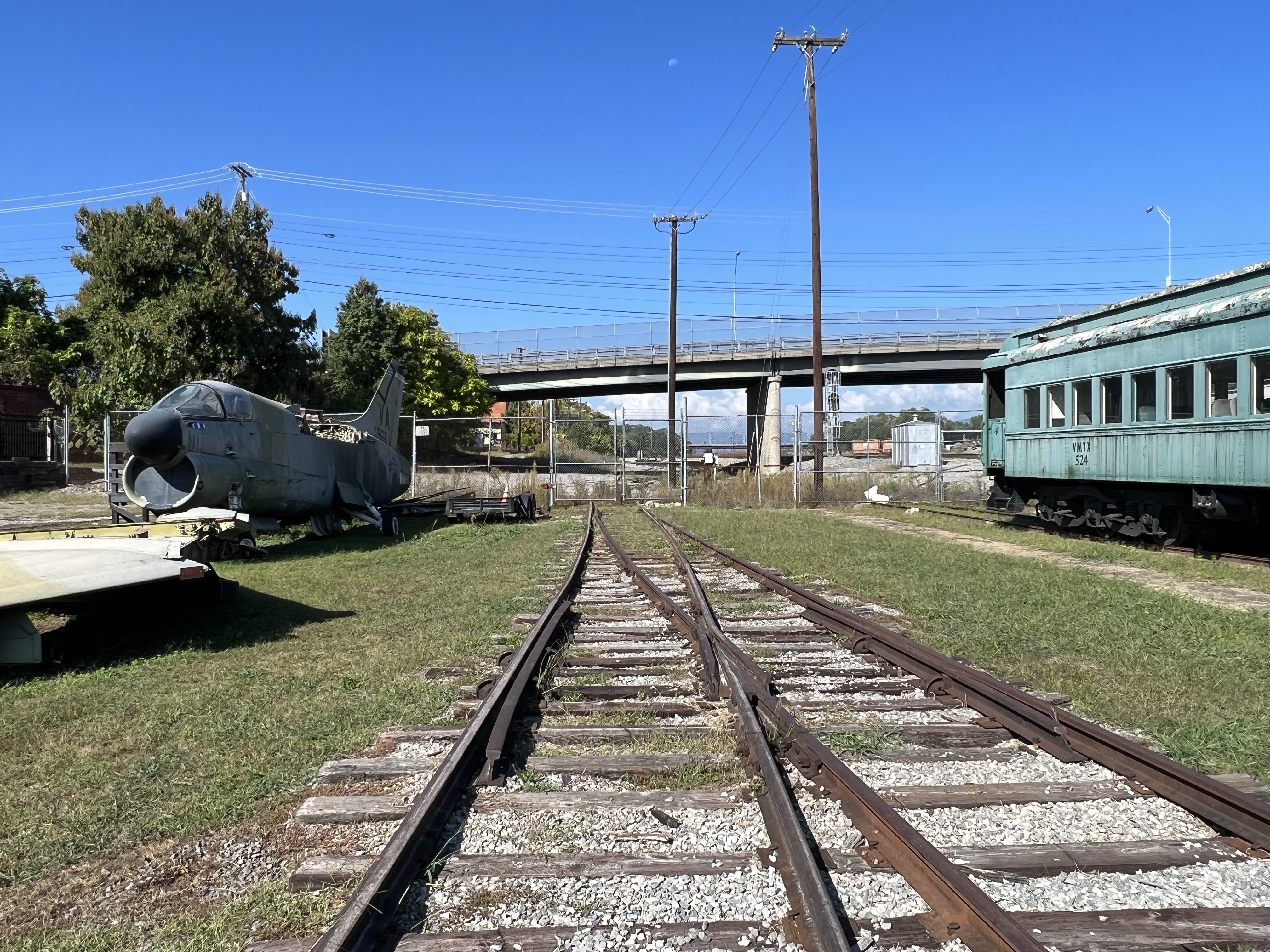
It’s not all about trains at the VMT. Here is a vintage Tucker Sno-Cat.
The spur leading east out to the Norfolk Southern mainline. This is track that No. 611 uses to head out for excursions.

A big draw for visitors to the VMT is Norfolk and Western Class J steam locomotive No. 611. But she was not here, hence the void in my spread (featured sketch). There was some wall space devoted to the museum’s most famous occupant. On the wall was a plaque, very similar to a plaque I had seen the week before at the California State Railroad Museum in Sacramento.

The plaque designated No. 611 as a National Historic Mechanical Engineering Landmark. 611 attained this designation in 1984, noting, “The last survivor of US coal-fired passenger locomotives, considered among the most advanced of any 4-8-4.”

Image

Norfolk and Western No. 611

As far as surviving steam locomotives go, Norfolk & Western’s No. 611 is a baby. She’s only 70 years old.

She was built in May of 1950, very late in the age of steam when diesels when rapidly replacing the labor intensive steam locomotives. No. 611 was built in the shops of the Norfolk & Western and was at the cutting edge of steam technology at the end of an age.

No. 611, known as “Spirit of the Roanoke”, is one of the most powerful Northern type (4-8-4) locomotives ever built with a tractive effort of 84,981 pounds. Tractive effort is the theoretical figure of how much a locomotive can pull. As a comparison to other northerns in existence, Union Pacific’s 844 tractive effort is 63,800 pounds and Southern Pacific’s 4449 is 64,800 pounds. 611is clearly in another tractive power league.

This Norfolk & Western locomotive was also very innovation is a way to decrease the labor it took to maintain these beasts. The locomotive used roller bearing and many of the 200 other bearings were self lubricating which cut down of man-hours of maintenance. The locomotive could be run 15,000 miles a month and only need servicing ever one and a half years.

Unfortunately No. 611 was in service for a short time, she was retire in 1959, giving Norfolk and Western just under ten years of service.

The locomotive was dormant, placed on static display in Roanoke Transportation Museum in Roanoke, Virginia. She was restored in the early 1980’s and returned to steam on August 14, 1982.