One location I wanted to visit was about 20 minutes from Keflavik International Airport but without a car, it seemed a remote possibility that I would see the island where the last great auk lived.
As it turns out, we had some extra time on the last day of my WINGS Iceland tour and our guide thought we would spend some time at the volcanic bit of land closest to Eldey Island.
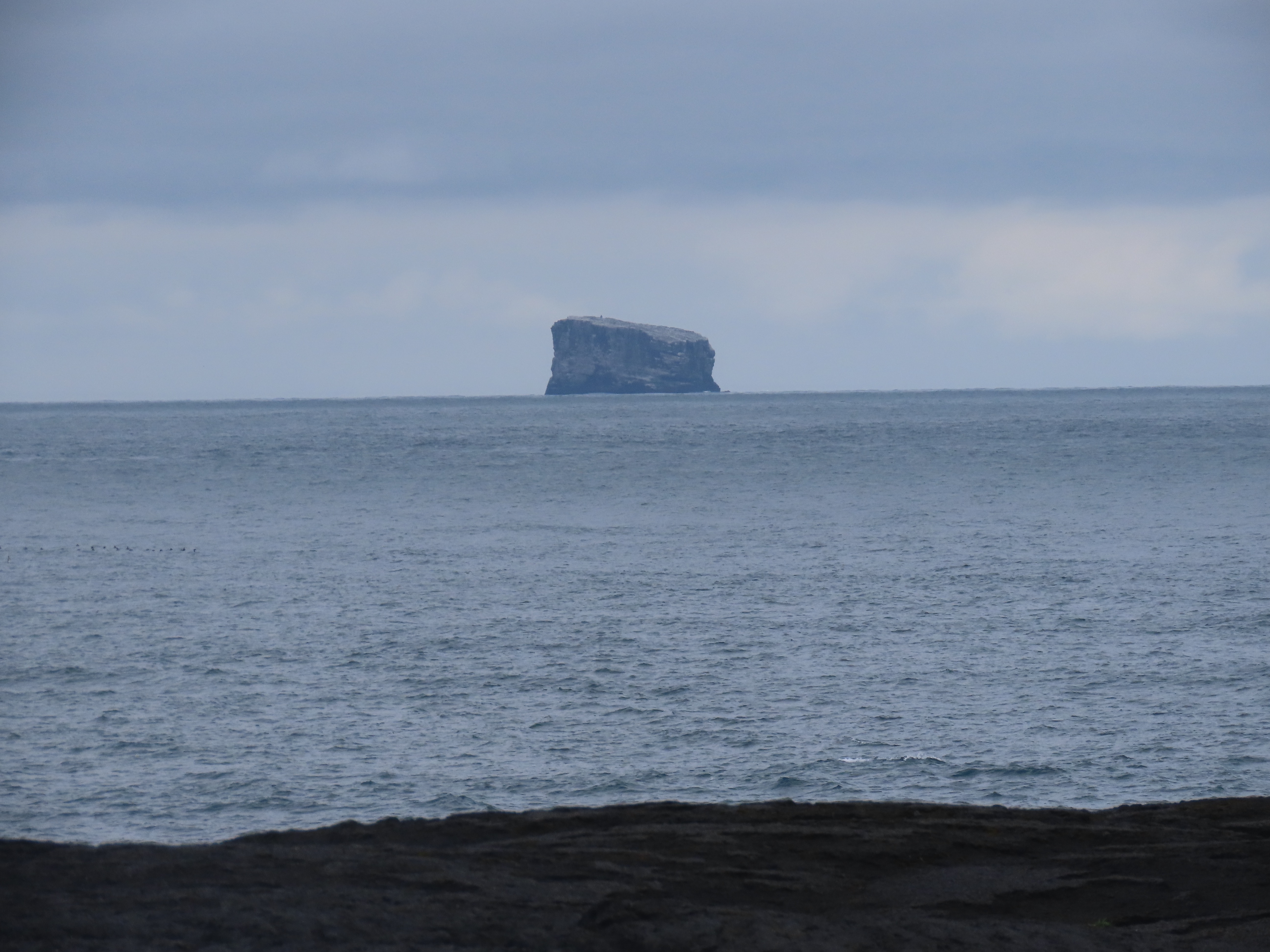
We pulled into the black sand parking lot between a lighthouse and the Atlantic. Near and just off shore are large kittiwake breeding colonies. A little further off shore were lines of murres, razorbills, and puffins. Add to that, there were a movement of Manx shearwaters heading north. And beyond the bird movement, nine miles from shore, is Eldey Island.
Eldey Island, nine miles off the coast of Iceland.
This is the last place the great auk (Pinguinus impennis) occurred on Planet Earth. This large flightless auk once lived on both sides of the northern Atlantic.
By the early 19th century, the auk population had been severely reduced because of predation by humans.
Because the auk was becoming so rare, naturalists wanted to collect the auk before it disappeared from the earth, paradoxically pushing the great auk to extinction.
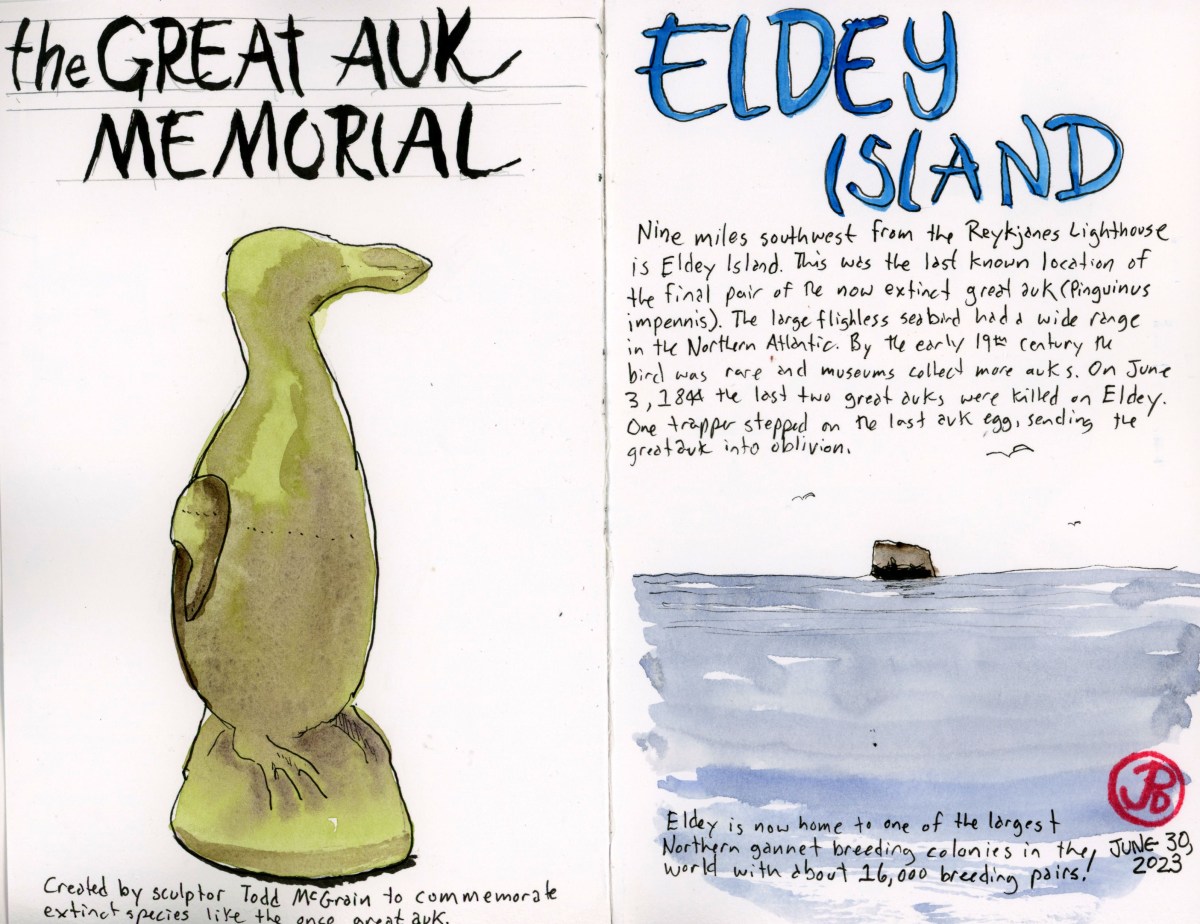
One of the last bastions of the great auk was Eldey. It was here on June 3, 1844 that the last two great auks were killed and one of the captors stepped back and crushed the last great auk egg sending the large flightless seabird into oblivion.
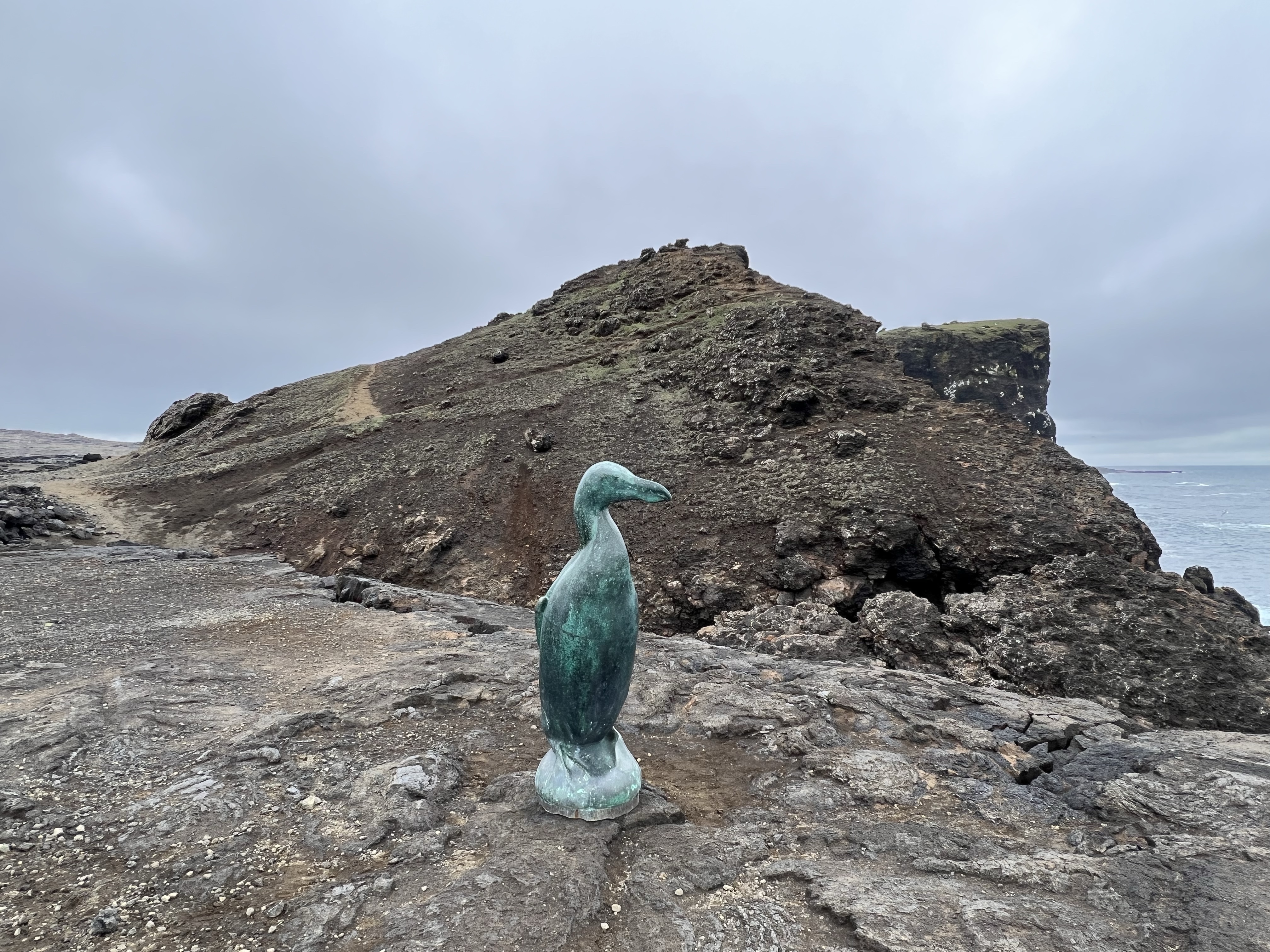
The extinction of the great auk is commemorated by a large sculpture by Todd McGrain, which I sketched (featured sketch).
The white on top of the island are all northern gannets. This is Europe’s largest gannet breeding colony.
It’s always nice to the start the new year of with a life bird. So much better if the bird is a mega rarity!
This was the Eurasian chat the red-flanked bluetail (Tarsiger cyanurus).
The bird was the sixth California record and only the second chasible bird (that is if you have an ocean going vessel), the other four records are from the Farallon Islands. It was found on December 28, 2022 in a park near the Santa Cruz Lighthouse on West Cliff Drive.
I had planned to head down on New Year’s Day to Lighthouse Field State Beach in Santa Cruz with Grasshopper but on December 31, after record heavy rains, a large cypress tree at the park fell and killed a 72 year old man. The park was closed for safety concerns.
So our Plan B was to bird the San Mateo County coast and have a go at the continuing northern gannet at Pillar Point Harbor.
Highway 92 was closed because of the intense rainfall so it was Highway One down the line to Pillar Point.
We checked the breakwater for a large white bird. No gannet. Heading south, the beaches seemed devoid of gulls. The historic rains had washed away large parts of the beaches, the creeks were flowing at a high capacity turning near shore waters a muddy brown. Not a great day for birding, well not yet anyway.
We reached as far south as Pescadero State Beach, looked out at few roosting gulls (it was still too early for kittiwakes) and returned north to try again for the consolation gannet
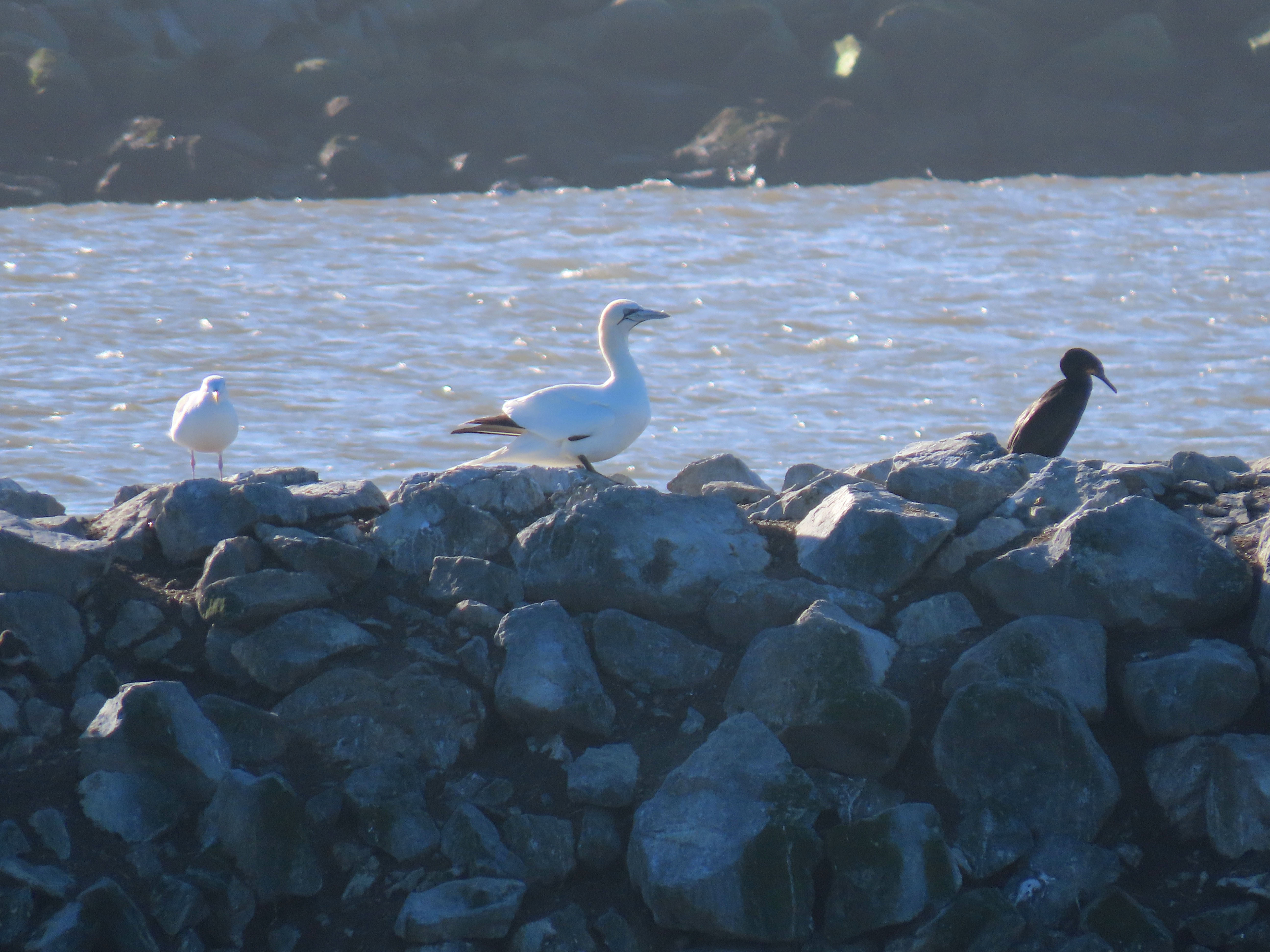
Johnson Pier was now crowed with people buying fresh crab and cod from fishing boats in the harbor. We weaved our way out to the end of the pier to look for an out-of-place big white seabird. Grasshopper spotted the gannet, named “Morris” by locals, immediately. The gannet, the only one on the west coast, was preening and the local gulls and cormorants were giving Morris a wide berth.
The much larger northern gannet sticks out like a sore thumb.
After getting good looks and a few photos, we saw a report that the bluetail had been seen and heard earlier in the morning. So some birders where getting access to the park. After a quick ponder we knew what we had to do: head south and retrace our journey and not stop until we where parked next to Lighthouse Field State Beach.
About an hour later, we parked on a side street, geared up, and entered the park. Still unsure of the location, we knew we had to find the semicircle of birders, intently gazing into the bramble. We began to head east on the trail, dodging puddles that were not far from being ponds, when we spotted the large cypress tree that had fallen across the path in front of us.
The cypress was over 100 feet tall, the papers put the tree at 120 feet, and just beyond the tree and to the left we saw a some birders looking off to the left. The only way to get over the tree was to climb over. Other had already trampled down a path through branches that were now facing upward. Once we got to the location of the bluetail, there were already about 35 to 40 birders in attendance, with more arriving as we searched.
This bird was going to be tough because it was sulky and shy, so patience and perseverance would be needed. Good thing I’m an elementary school teacher!
The bird was being seen among the grasses and branches and the bluetail was moving quickly, not pausing for long. I saw movement a few times which I thought was the bluetail but I wanted better diagnostic looks before I added the bluetail to my list. After about 30 minutes, I finally got a good look at the tail of the bluetail, which was blue and I noted how the bird frequently jerked it’s tail downward like a flycatcher. World life bird number 1,707!
Once I got my views, I stepped aside to let others from the back start their search. I started my anchor sketch of the downed cypress tree and reflected on the tragedy of a man’s death, while not far away, birders chortled in ecstasy.


 Corvid Sketcher