Image

Norwegian Life Birds

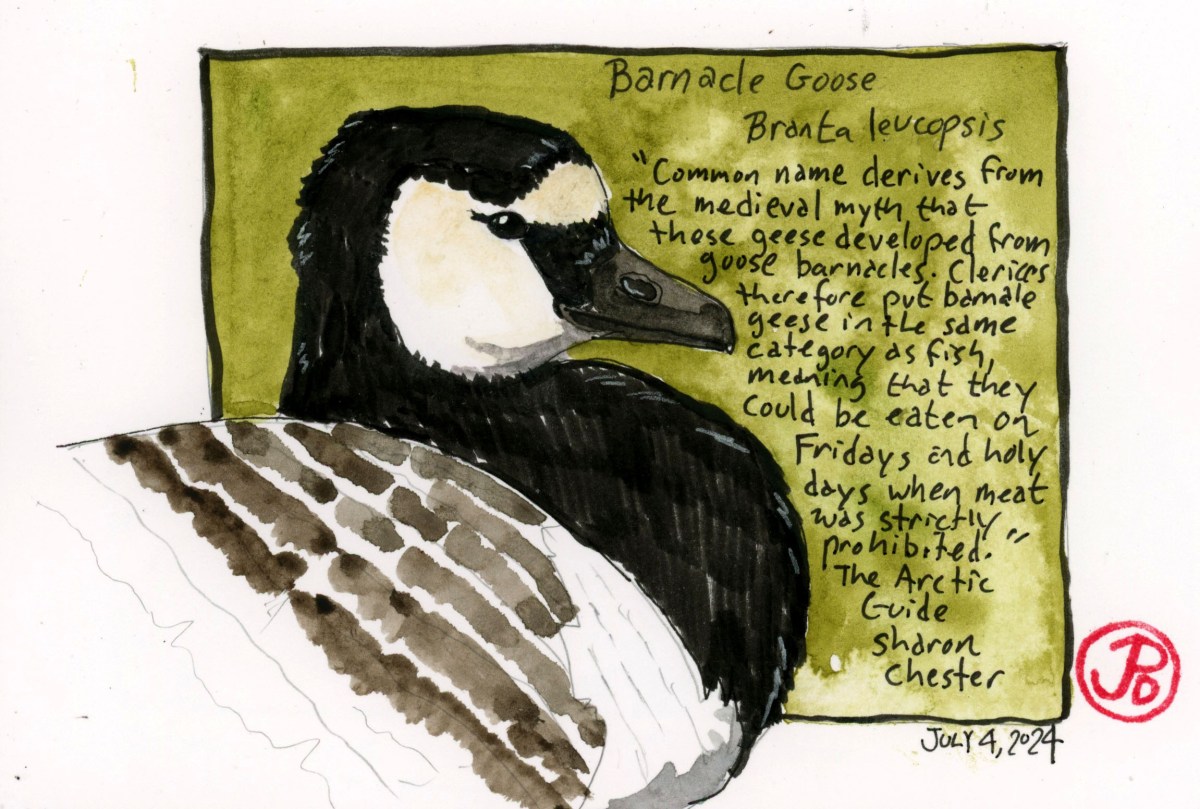
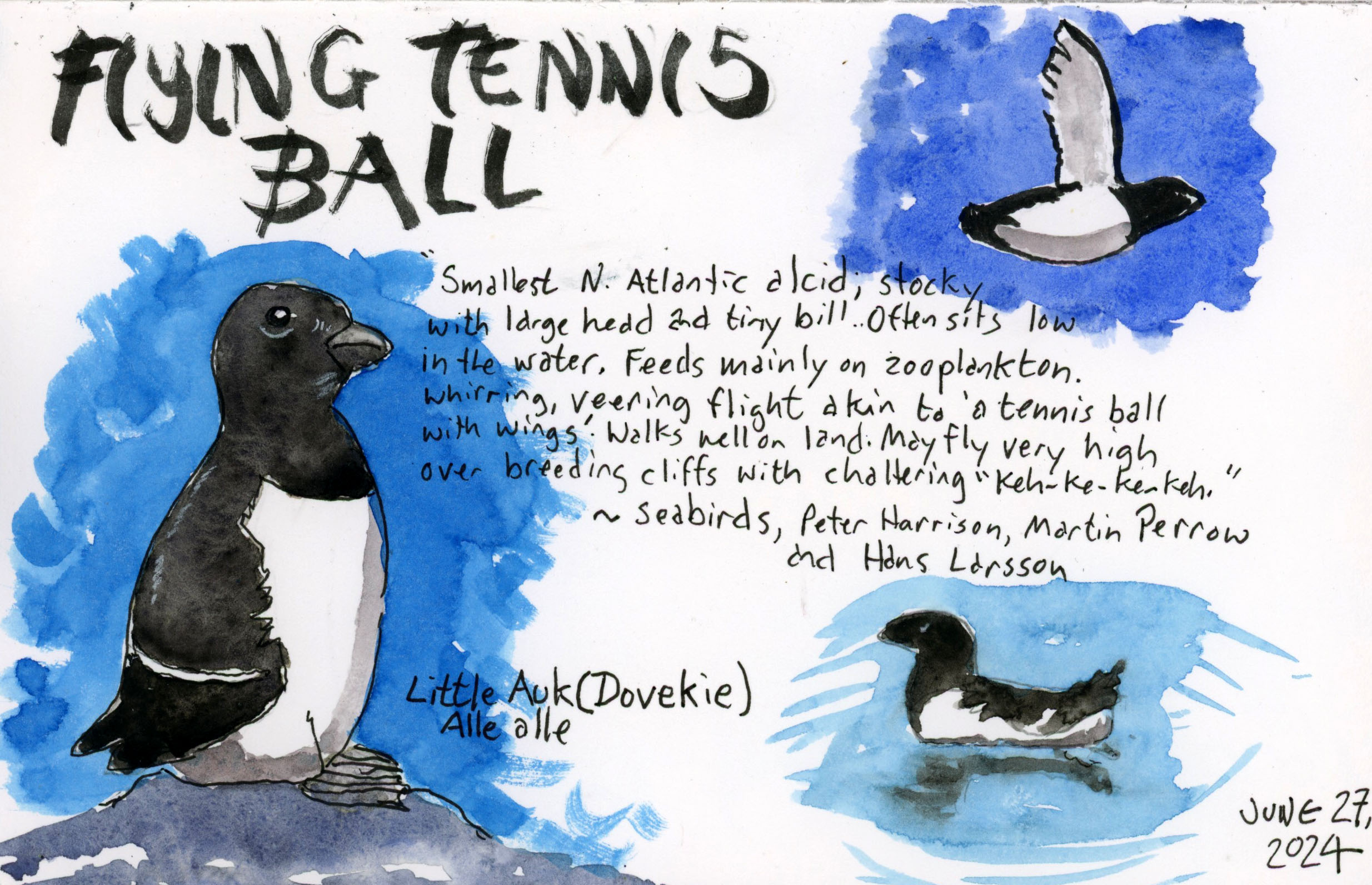
I had three target lifers for my Scandinavian summer adventures: barnacle goose, dovekie (little auk), and ivory gull.

The hardest to get was the ivory gull which was only to be found on the pack ice sometimes in the company of polar bears.

Perhaps the easiest was the barnacle goose and dovekie. I had four geese in the harbor near the Munch Museum in Oslo. I saw many more in Longyearbyen in Svalbard.
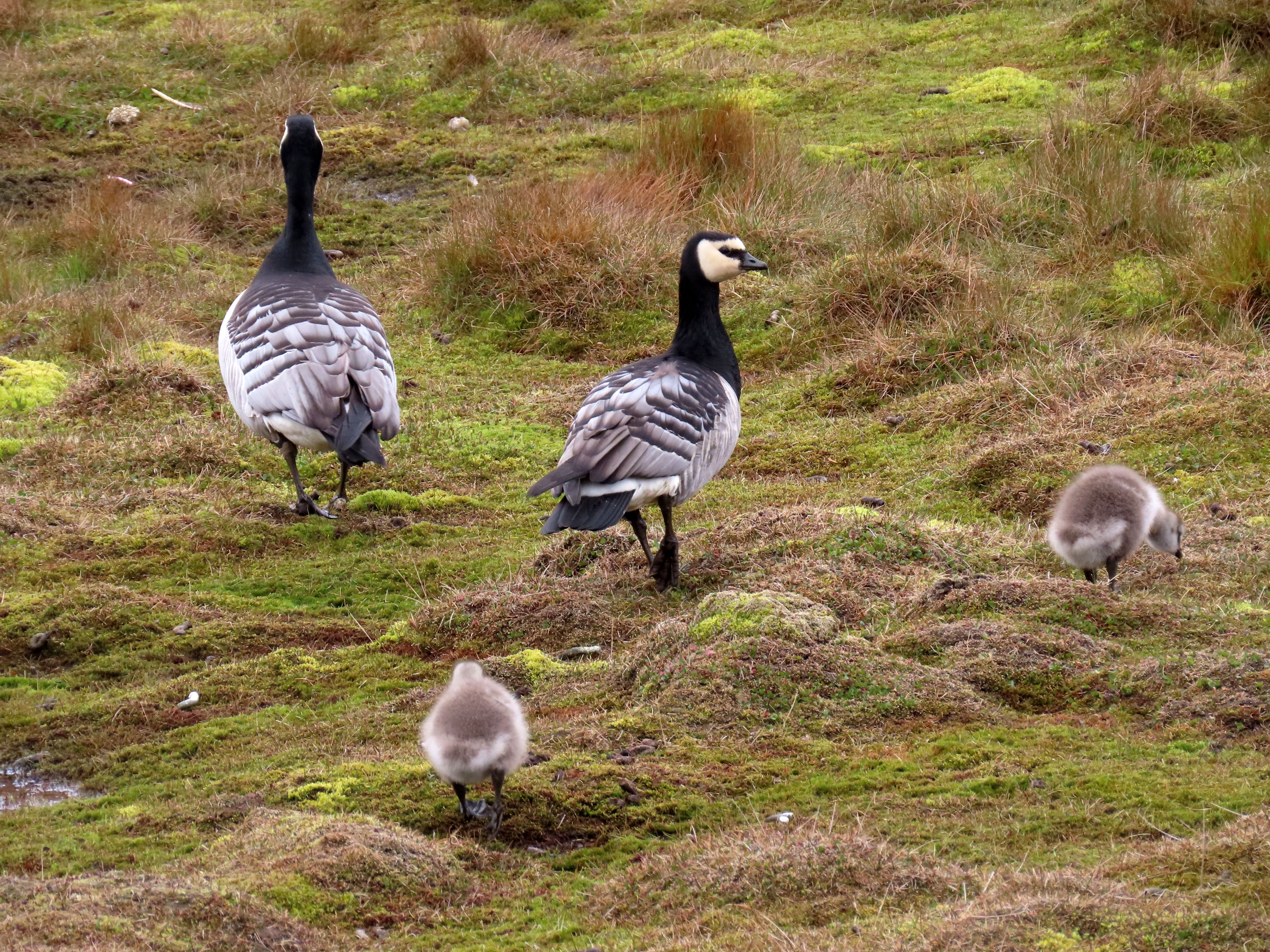
Barnacle goose family in Longyearbyen.

Dovekie or as it’s known in Europe, little auk, was also plentiful around the southern and eastern side of Spitsbergen. I saw many from the decks of the Plancius.
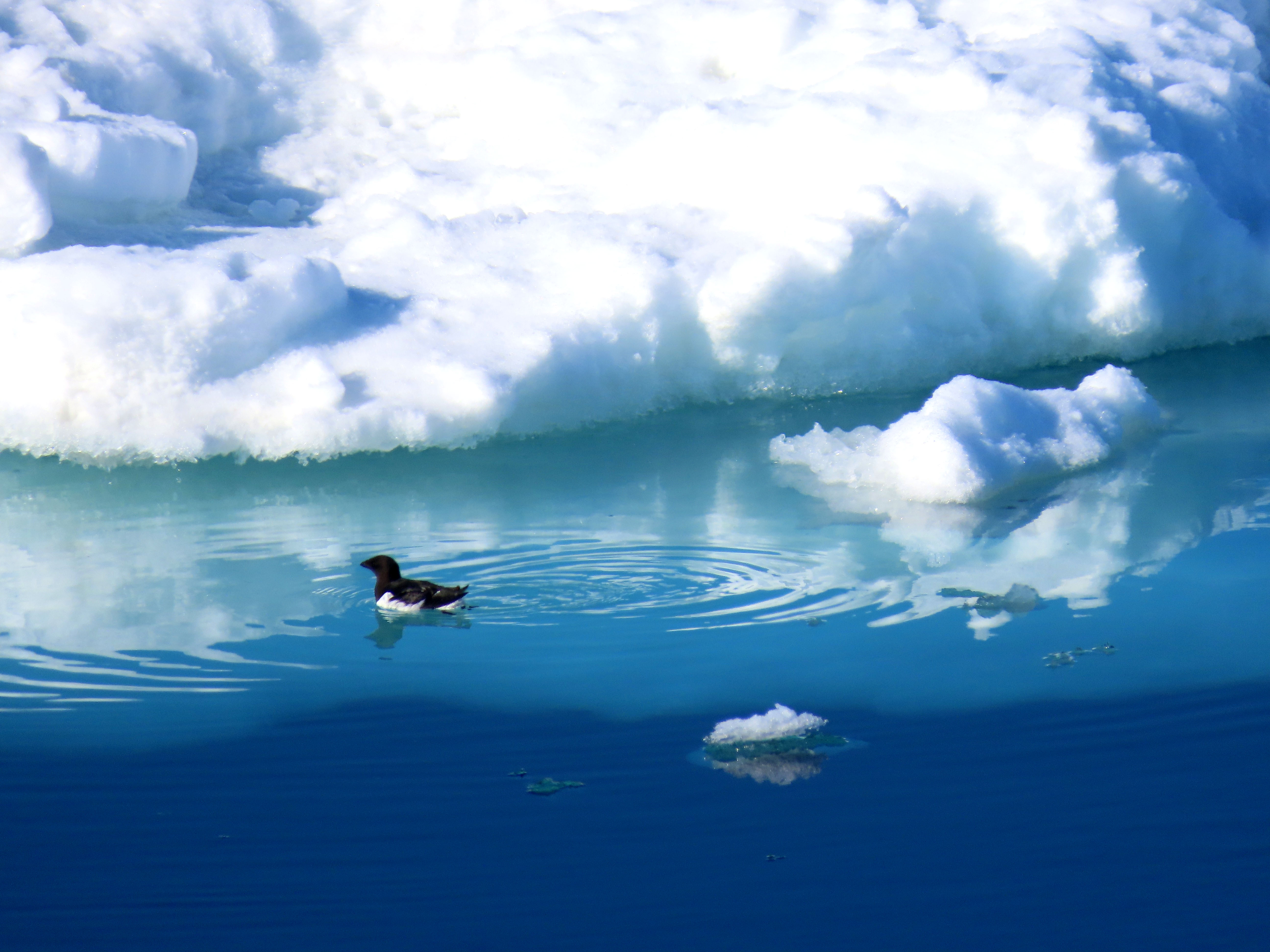
Little auk in its icy summer habitat.

So what’s in a name? Common names vary in different regions and in different languages. For instance Phalaropus fulicarius is known as the red phalarope in North America but on the other side of the Atlantic it is the grey phalarope. Our guide didn’t even know this, falsely claiming that the common name had been changed.

One of the dubious common bird names is barnacle goose. You would think this goose eats barnacles. Nope. The name comes from Medieval times when it was thought that the goose came from goose-necked barnacles. The bird was even considered a fish so it could be eaten on religious holidays such as Lent. Such were the times when folklore trumped scientific learning.
Image

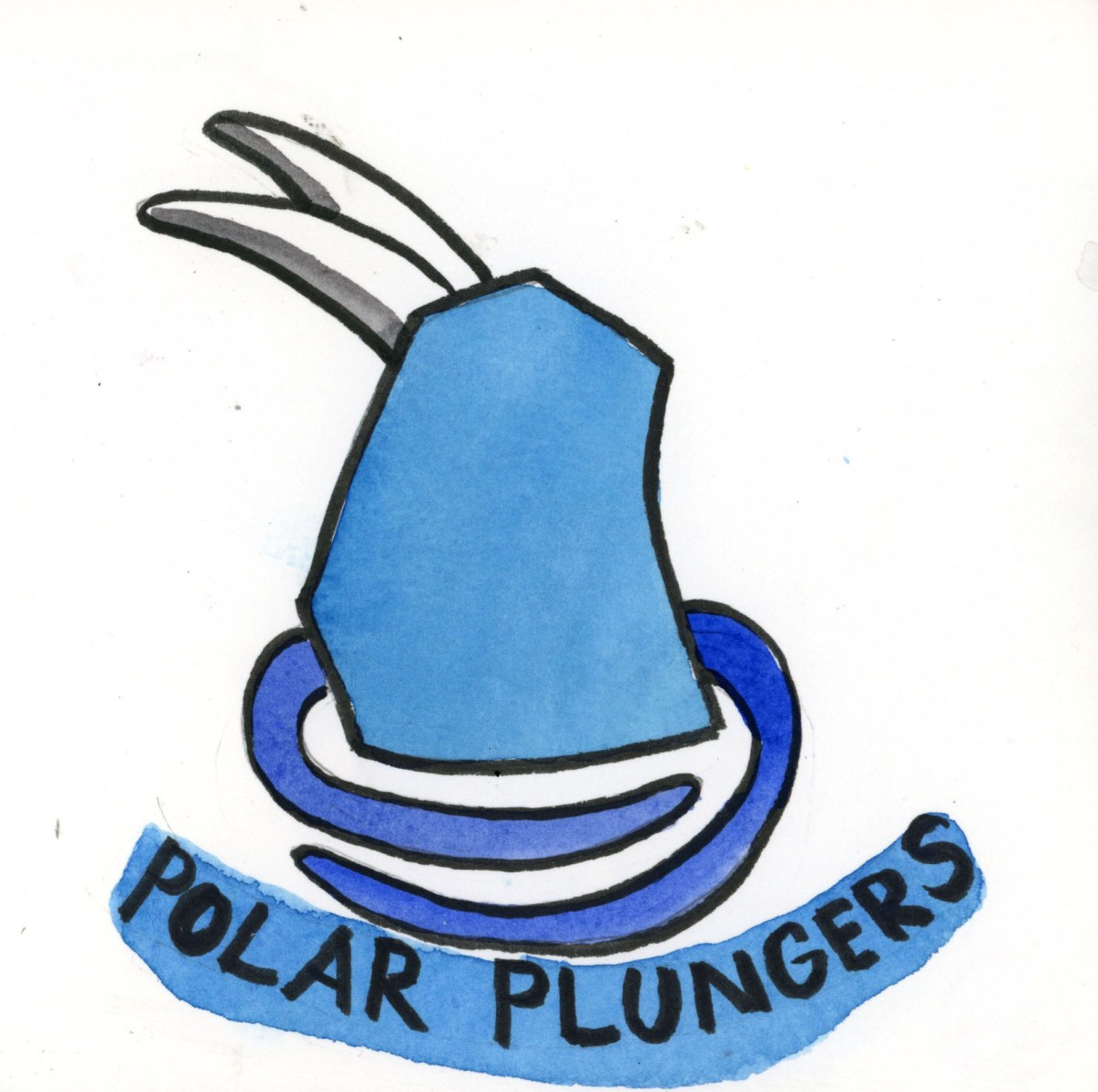
Polar Plungers

An impromptu group developed on board the Plancius.

The group was started by our Chairman and President, an Australian travel blogger. He asked around who would be willing to plunge into the Arctic Ocean and started gathering names, including mine.

He asked our expedition leader about the possibility of a Polar Plunge and we got the green light.

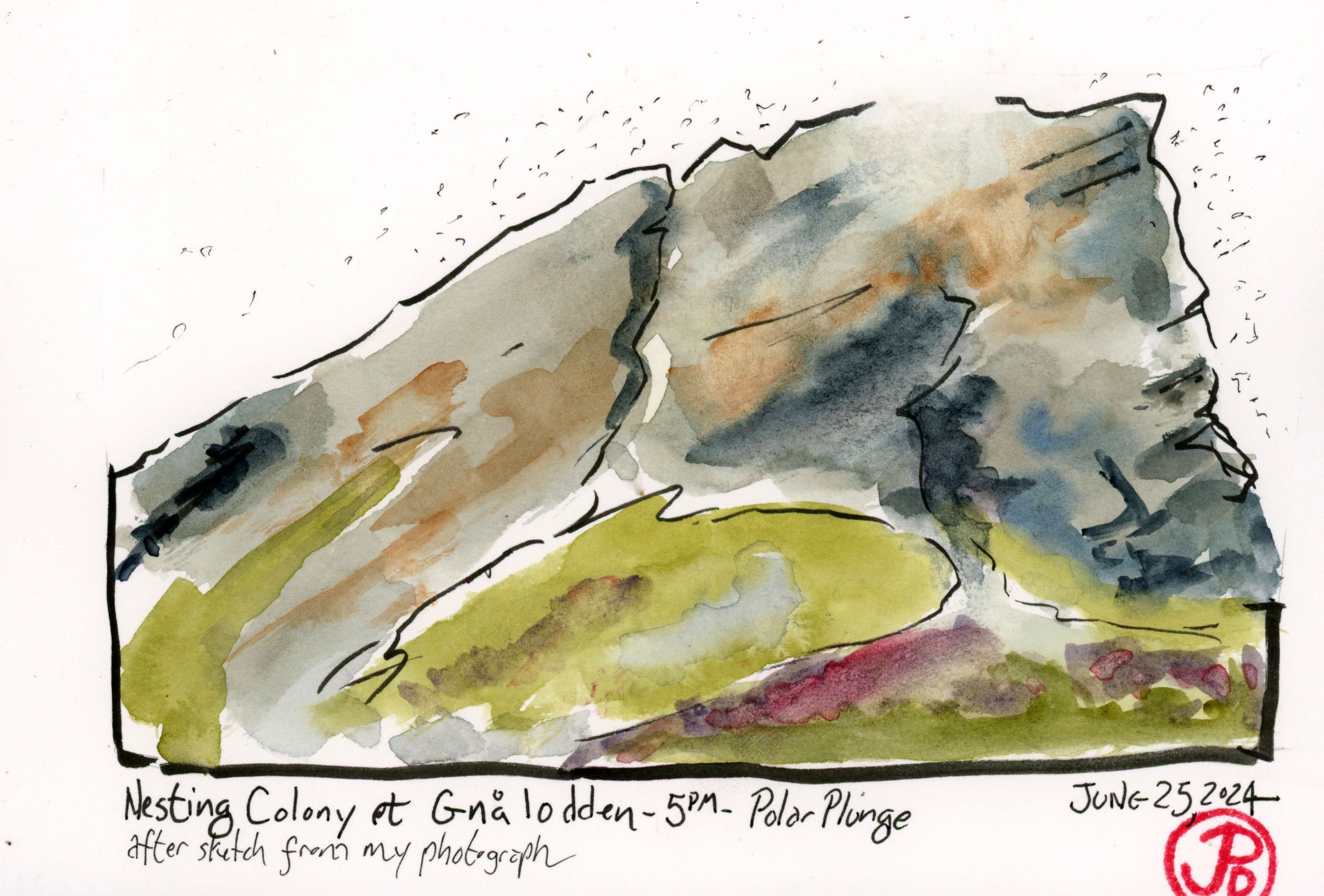
So at the end of our visit to the bird cliffs at Hornsund, at 5 (17:00) the self-chosen few gathered on the rocky beach to begin this Polar right of passage.

The bird cliffs at Horsund.

Those who have plunged in both the Arctic and Antarctic are known as Bi-Polar Plungers.

A light drizzle stared and the temperature hovered around 34 degrees.

My body and mind said “no” but if Dr. Rock was going in, then so was I. My biggest concern was not the plunge, you had to put your head under to make it official, but undressing and dressing with my multi layers in the wind, rain, and cold. And then there was the Zodiac ride back to the Plancius. The sloped rocky beach didn’t make walking to the water in bare feet any easier.

As I was contemplating the cold waters a Dutch member of our tribe (let’s call her Mary), stripped off, ran towards the water, jumped in, and started doing laps.

Well this was a challenge. Bring it on! I divested myself of four layers and hobbled down the pebble beach to the Arctic waters.

Up to the ankle it wasn’t so bad but I wasn’t sure if I could feel my toes. I turned to the crowds on the beach and Christlike, fell backwards for the full immersion.

I’m not sure if I really did a lap but it was more a splashing Polar paddle and before I knew it I was hobbling up the rocky beach to my now damp towel.

After the plunge, Dr. Jon (Ship’s Doctor), gave me a certificate that reads:

This is to certify that

Corvidsketcher

Defied death by surviving a swim in the frigid Arctic waters in Hornsund, Svalbard

This twenty fifth day of June, 2024

Witnessed and certified as still living by

Dr. Jon

Ship’s Doctor

MV Plancius

Footnote: Dr. Jon also joined us as a member of the Polar Plungers!

I self-elected myself with the task of designing the Polar Pluggers logo. I thought the walrus would be a good mascot for the group, albeit an icy blue one!

Image

Arctic Fox And Svalbard Reindeer

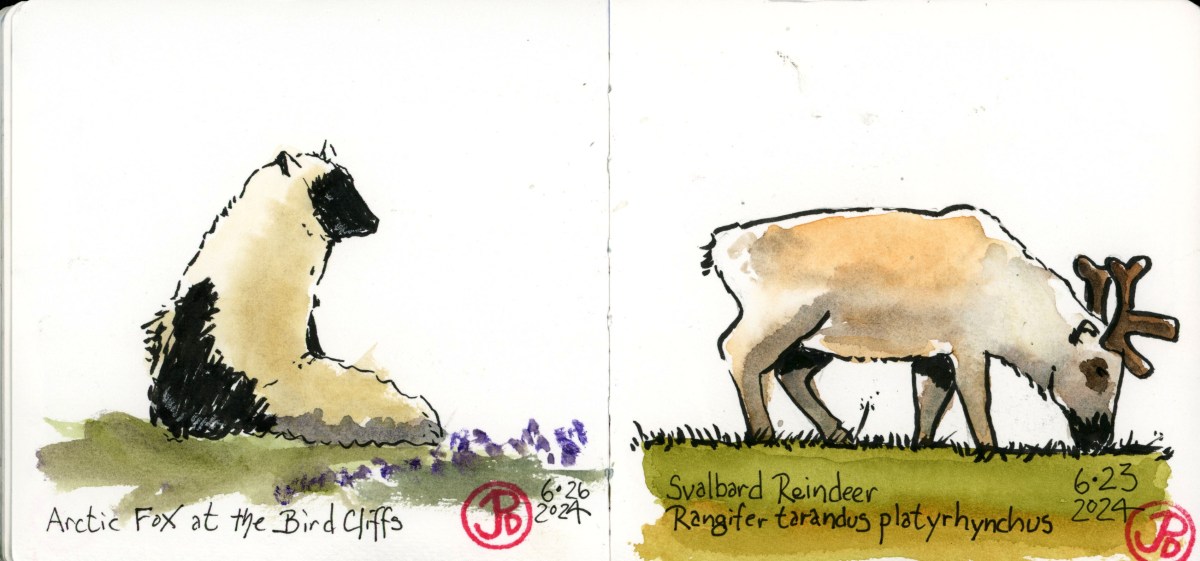
A key arctic mammal that I had missed out on in Iceland last summer was the fox of the north, the Arctic Fox. I know that I would have good chances of seeing this species in Svalbard.

Another mammal that I was also hoping to see was the reindeer subspecies, the Svalbard Reindeer, which is the smallest subspecies or reindeer or caribou.

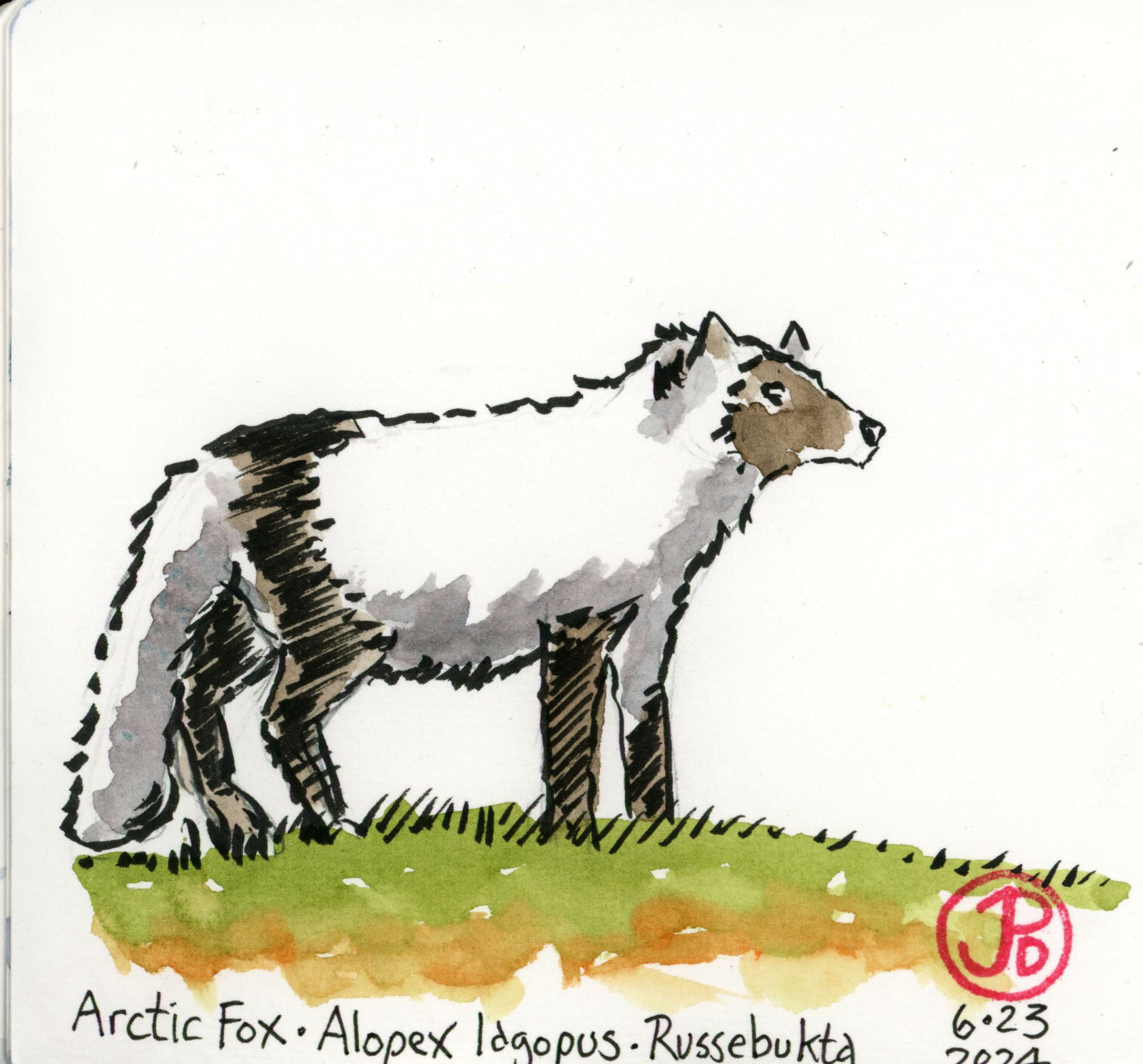
And on a landing to Russebukta, I had the chance to see both. On our landing I chose to join the medium hiking group that was led by our expedition leader Phillipp. It always pays to be near the leader because he has the knowledge of the land and the rifle (poplar bear protection).

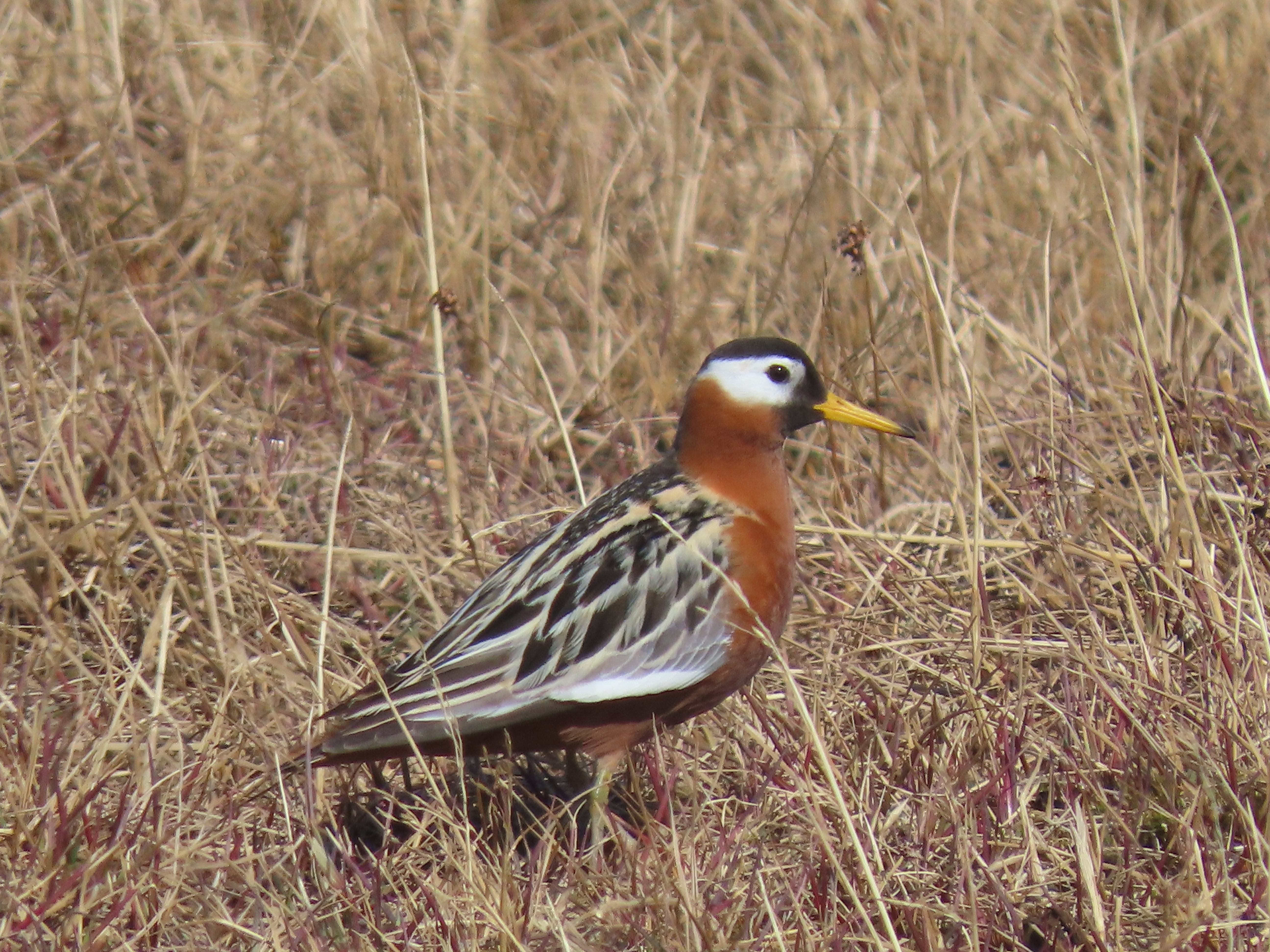
We walked by some ponds that yielded some avian Arctic breeders: the stunning king eider, pink-footed geese, purple sandpiper, snow bunting, and red phalarope. I pointed out red phalarope and Phillipp told me that is now known as the gray phalarope, red in breeding season and grey in non-breeding. Of course this is what the phalarope is called in Europe (grey) but is called red in North America. There is is only one name we can agree on, it’s scientific name: Phalaropus fulicarius, which does not change, unlike there varied common name.

The stunning breeding plumage of the red or gray phalarope.

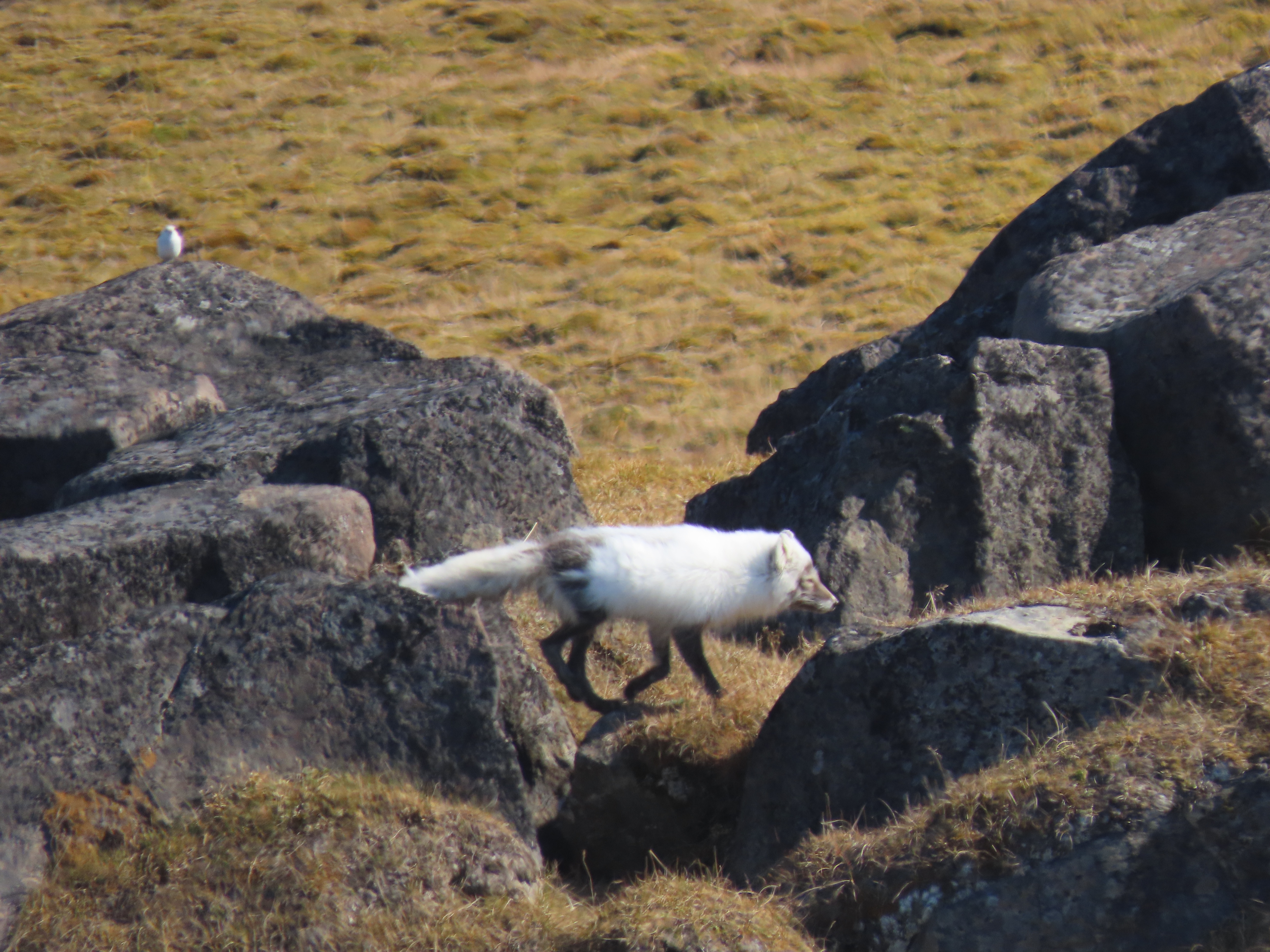
We crested a rise and on the tundra I saw my first Svalbard reindeer! After taking a few pictures we hiked on. At one stop, we were waiting for the camera horde to catch up, I spotted what I thought was a far off reindeer. But it was moving like a reindeer that had had one too many espressos. What I was looking at was not a reindeer, but an Arctic fox! Our guide noted that it was great to have a birder in the group because we are so good at spotting wildlife, even the mammalian variety.

The fox was not clearly visible to the naked eye so we turned back to shore and the Planicus. We were at the crest of a small rise near a line of rock. We were stopped again waiting for our photo stragglers. I looked off to my right and a fox appeared among the rocks, “Arctic Fox!” I exclaimed.

An Arctic fox with most of it’s winter plumage. A snow bunting above for scale.

The fox’s body was white with a darker face and legs. It superficially looked like a wolf in sheep’s clothing!

Image

The Great Auks and the Natural History Museum

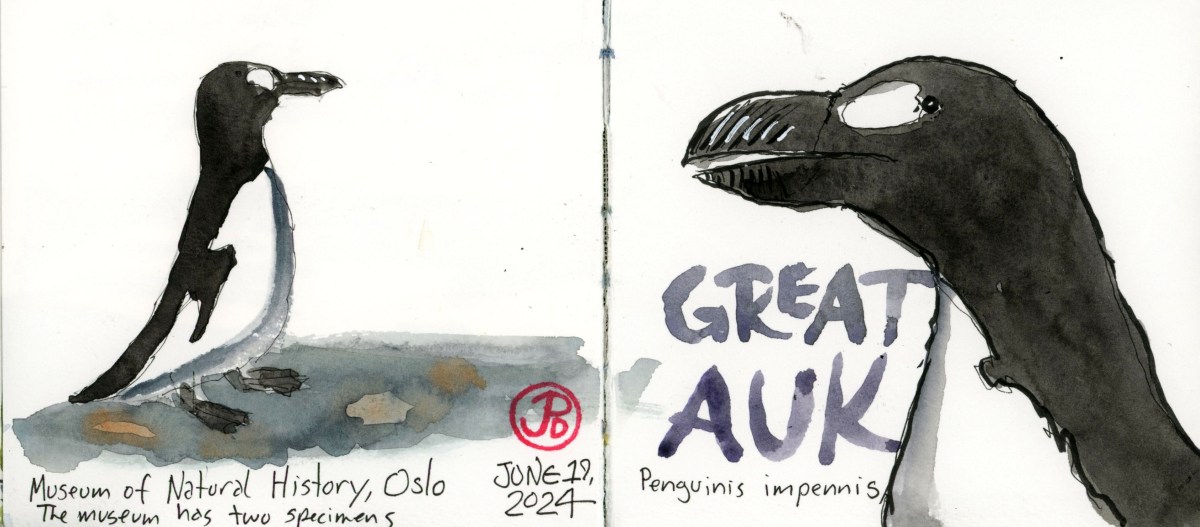
In Iceland last summer I saw the last domain of the now extinct great auk. I have never seen a specimen before and Oslo’s Natural History Museum had two. But the irony is that once 19th Century naturalists knew that the great auk was nearing extinction, there was a mad rush to add a specimen to their museum’s collection thus pushing the auk to full extinction.

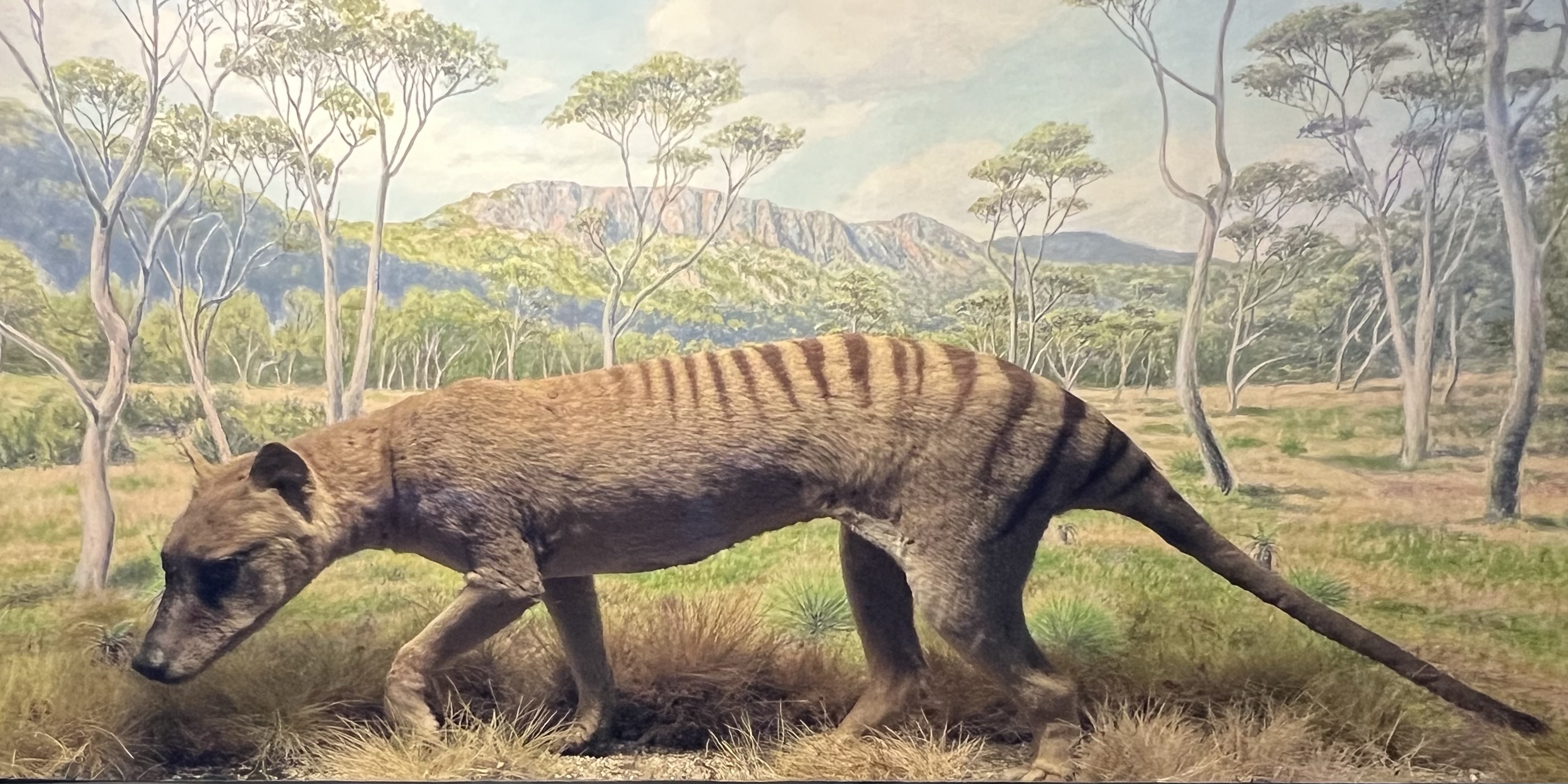
The museum had an extensive collection of mounts featuring animals from around the world. One mount caught my attention, it was an animal from Tasmania. This was the extinct Thylacine or Tasmanian Tiger.

Unfortunately a natural history museum is one of the only places to see extinct animals such as the great auk and thylacine.

Another part of the museum that I was drawn to was the Svalbard section, featuring animals that I was looking forward to seeing.

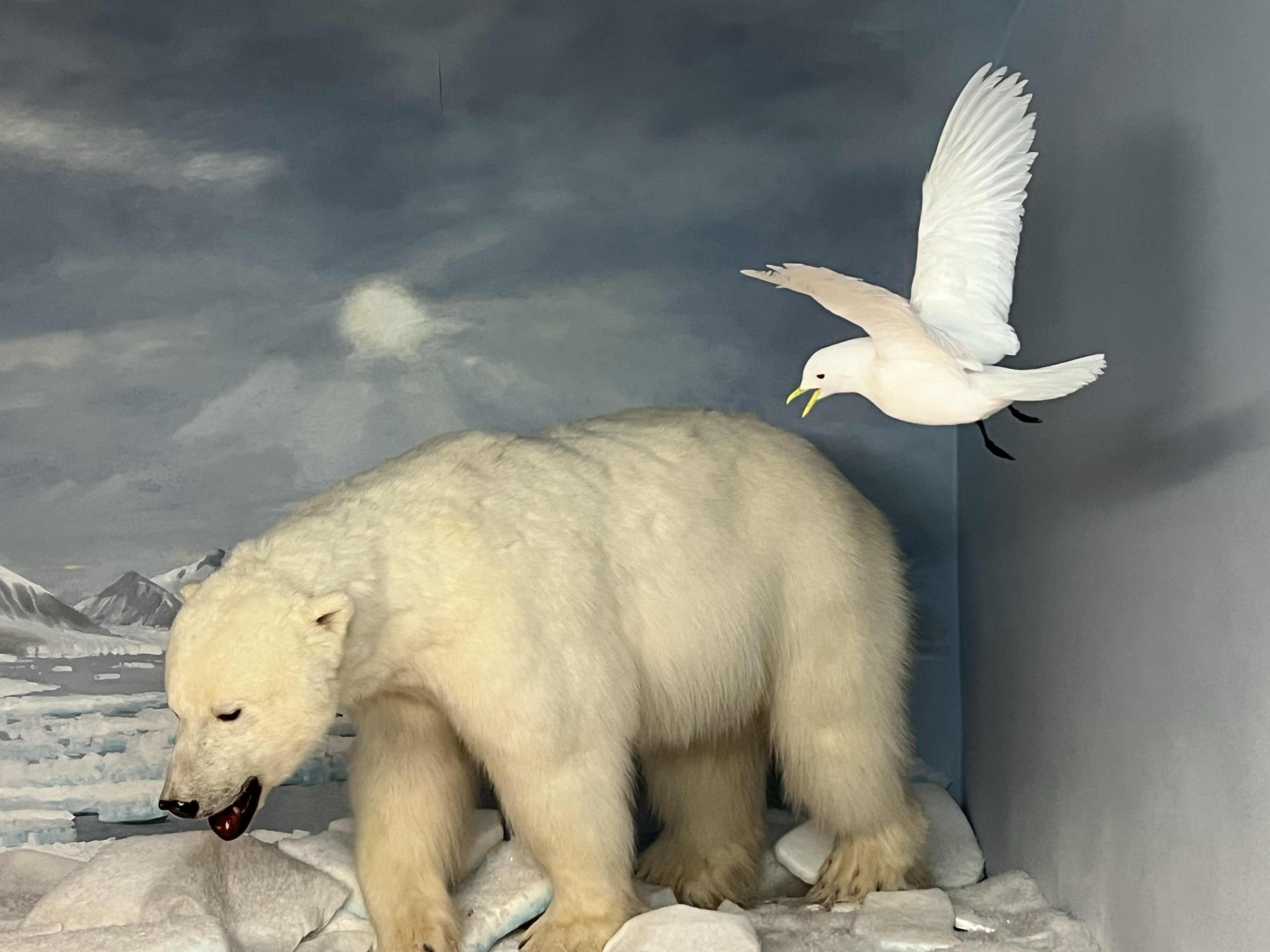
Two species topping my list: ivory gull and polar bear.

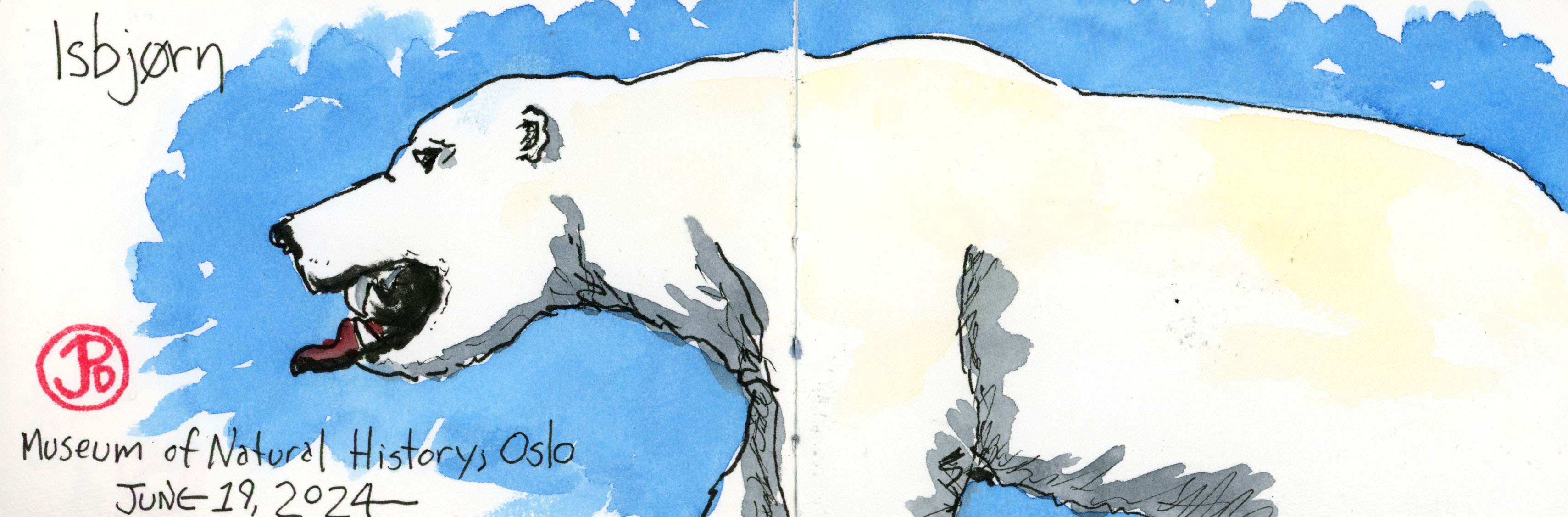
I sketched one of the two polar bear mounts in my small sketchbook, and yes the bear’s tongue was really sticking out.

Unfortunately polar bear mounts are all over Scandinavia and I saw many in museums. There was even one in the Longyearbyen Airport baggage claim. Finding a real live bear, outside of a zoo, proved to be a real challenge.

Image

Holmenkollen Ski Jump

On Wednesday morning I took the T-Bane (the subway) out to see and sketch the Holmenkollen Ski Jump.

Public transportation in Oslo is so easy to use and you can get anywhere you need to go in or around Oslo. A few stops after Central Station we were no longer underground. Our train was not even on elevated tracks like the Bay Area’s BART. Indeed the 1 train was running at grade level with an exposed third rail! You got to love a people that can deal with accessible high voltage without doing something stupid.

The ride was pleasant with even crossing gates (for a subway!!) and as we climbed the hill towards Holmenkollen, the views of Oslo Fjord were stunning.
The little suburban stations that passed by reminded me of British branch line stations, small but homey. After about a 20 minute ride, I detained at the station and then walked 10 minutes up hill to the ski jump.

In someway this journey was a pilgrimage for my father, he introduced me to skiing and some of the best memories of my life are skiing with him over fresh powder. I really own my life to skiing because my parents met at the South Bay Ski Club.

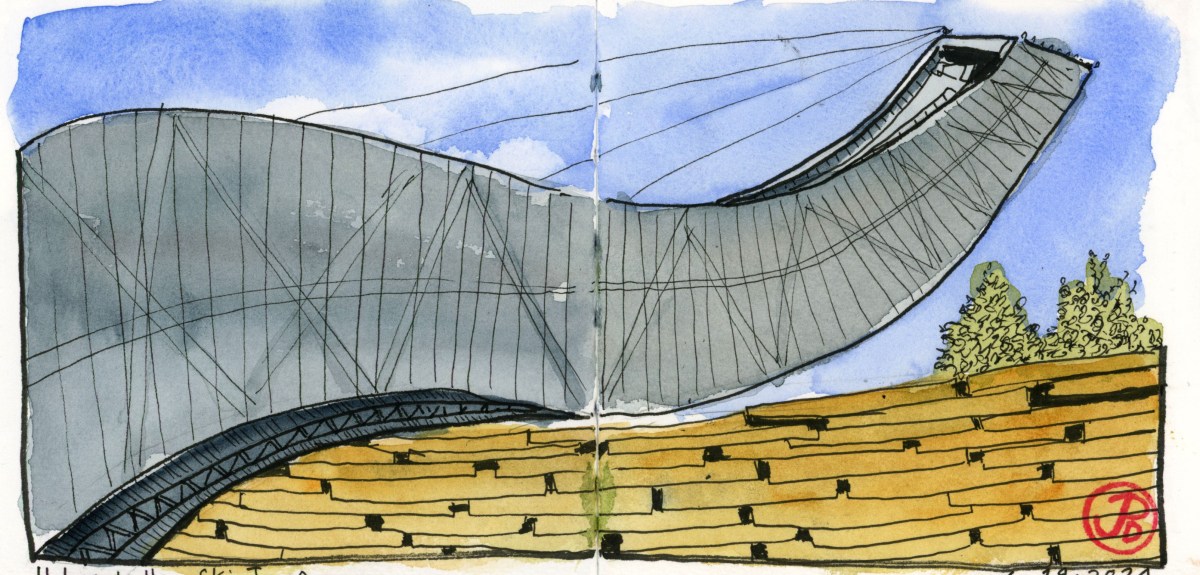
The Holmenkollen Ski Jump is a functional work of art. When I first found a vantage point I had to add its serpentine curves to my sketchbook. (Featured sketch).

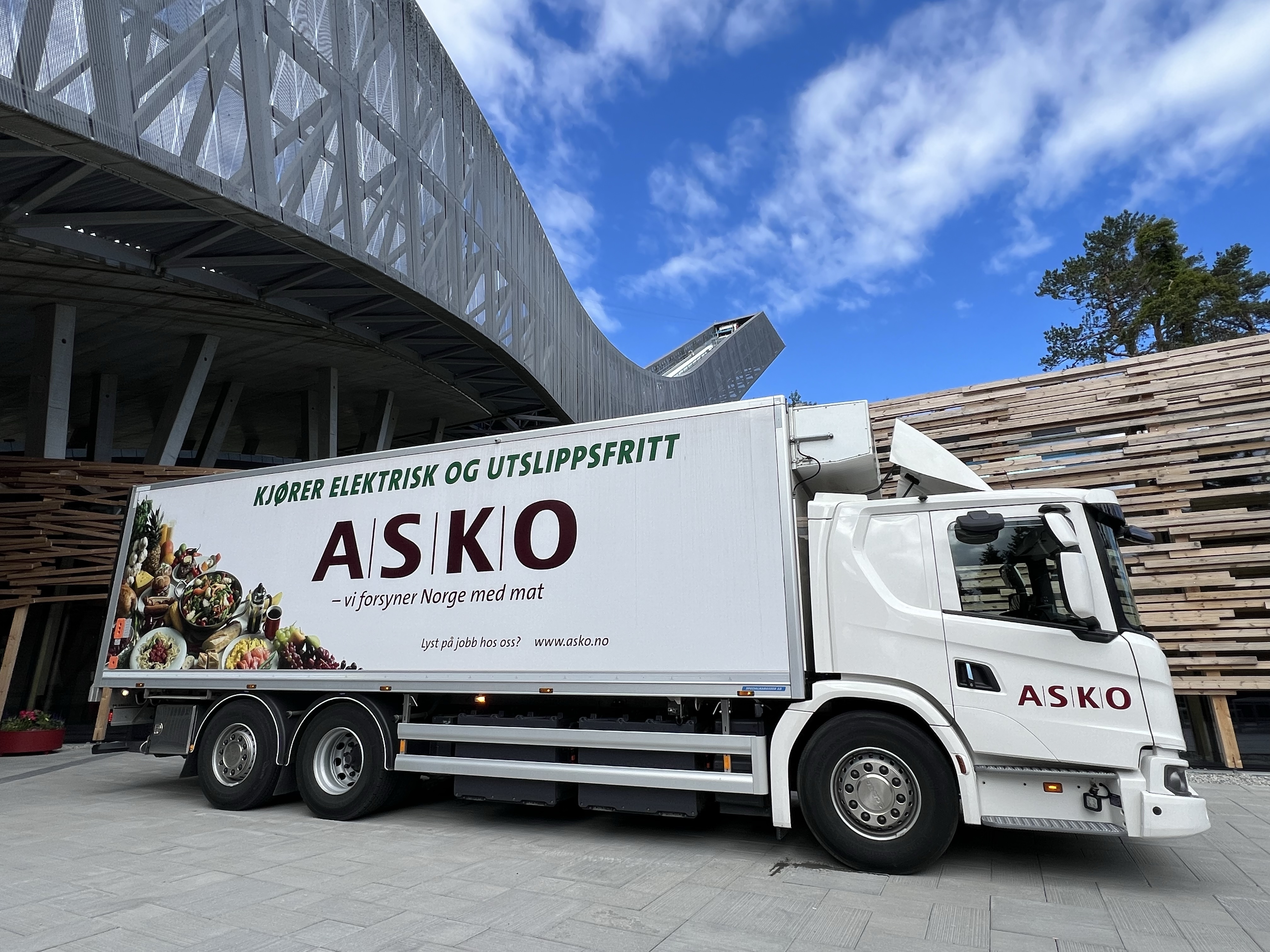
Best laid plans: this truck backed into my sketch so I had to patiently wait to finish my sketch.

After my sketch I visited the oldest ski museum in the world. For some reason it was under-lit as if the museum was in the possession of copies of the First Folio. It did not make for good sketching light.

Can’t beat the view!

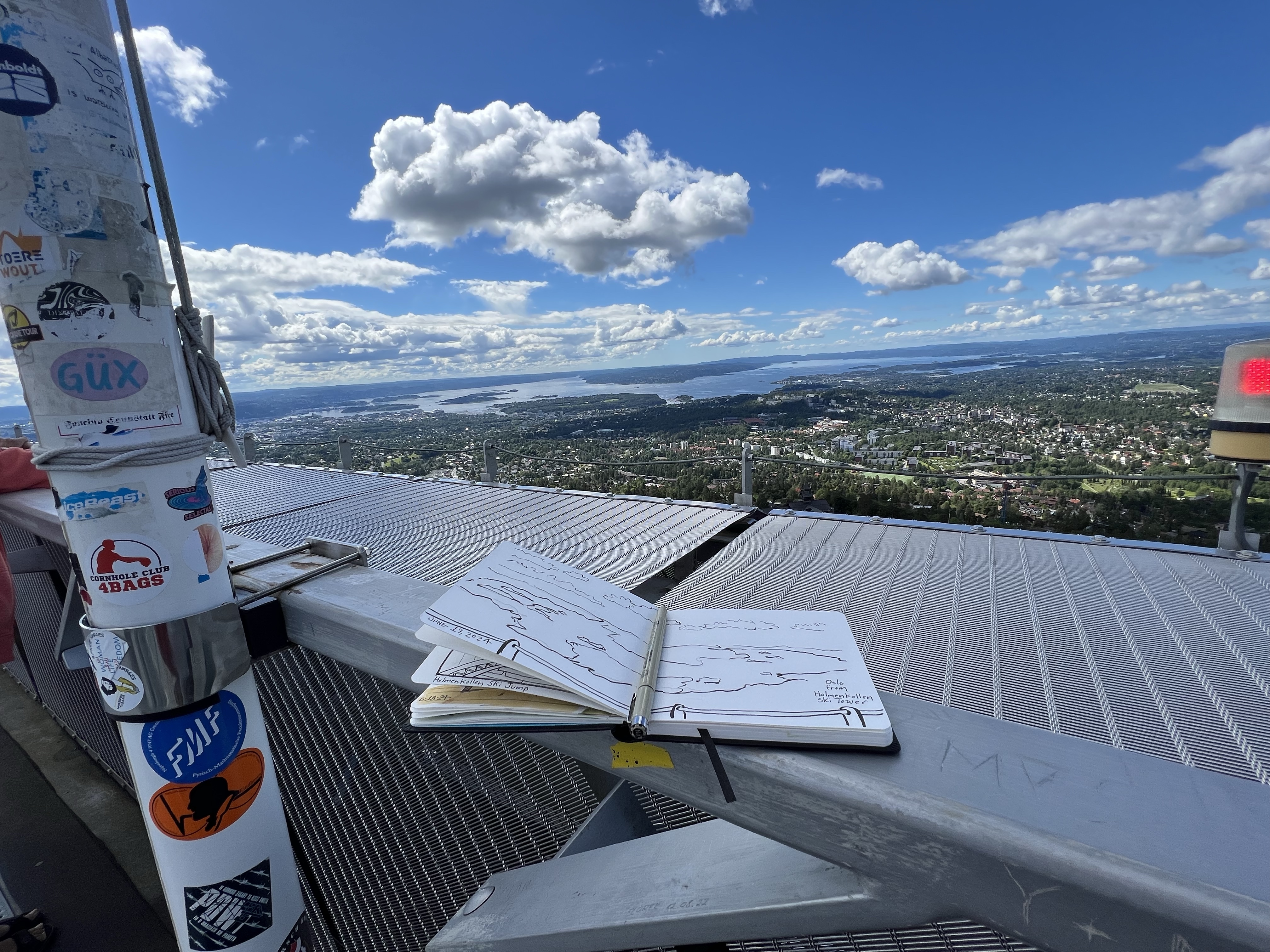
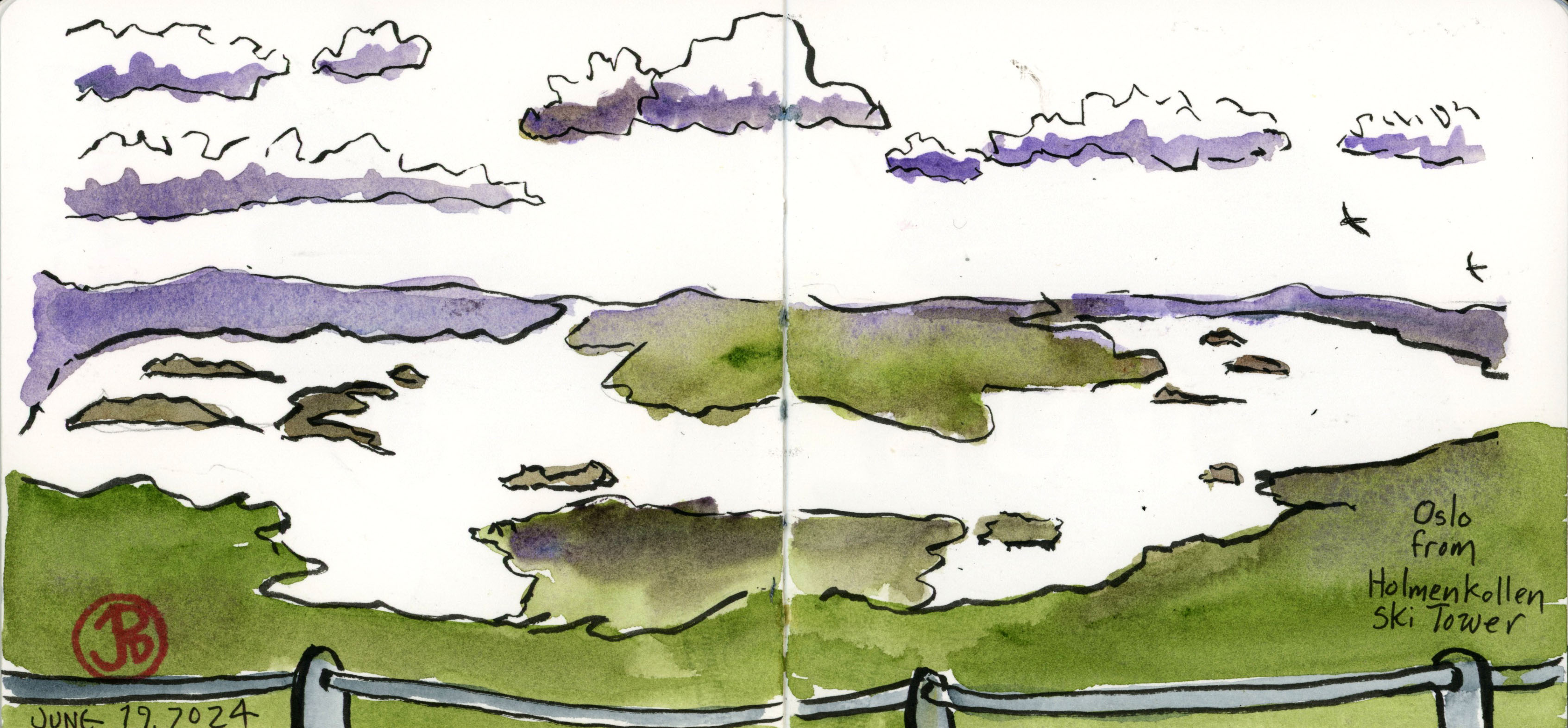
I took the elevator to the top of the ski jump and the views of Oslo Fjord were stunning. So I had to sketch it of course.

A lot of sketcher’s shorthand was involved in this one. I left out all of the buildings, as I was really just trying to focus on capturing the form of the fjord and islands. This is a landscape not a cityscape.

Image

Vigeland Park

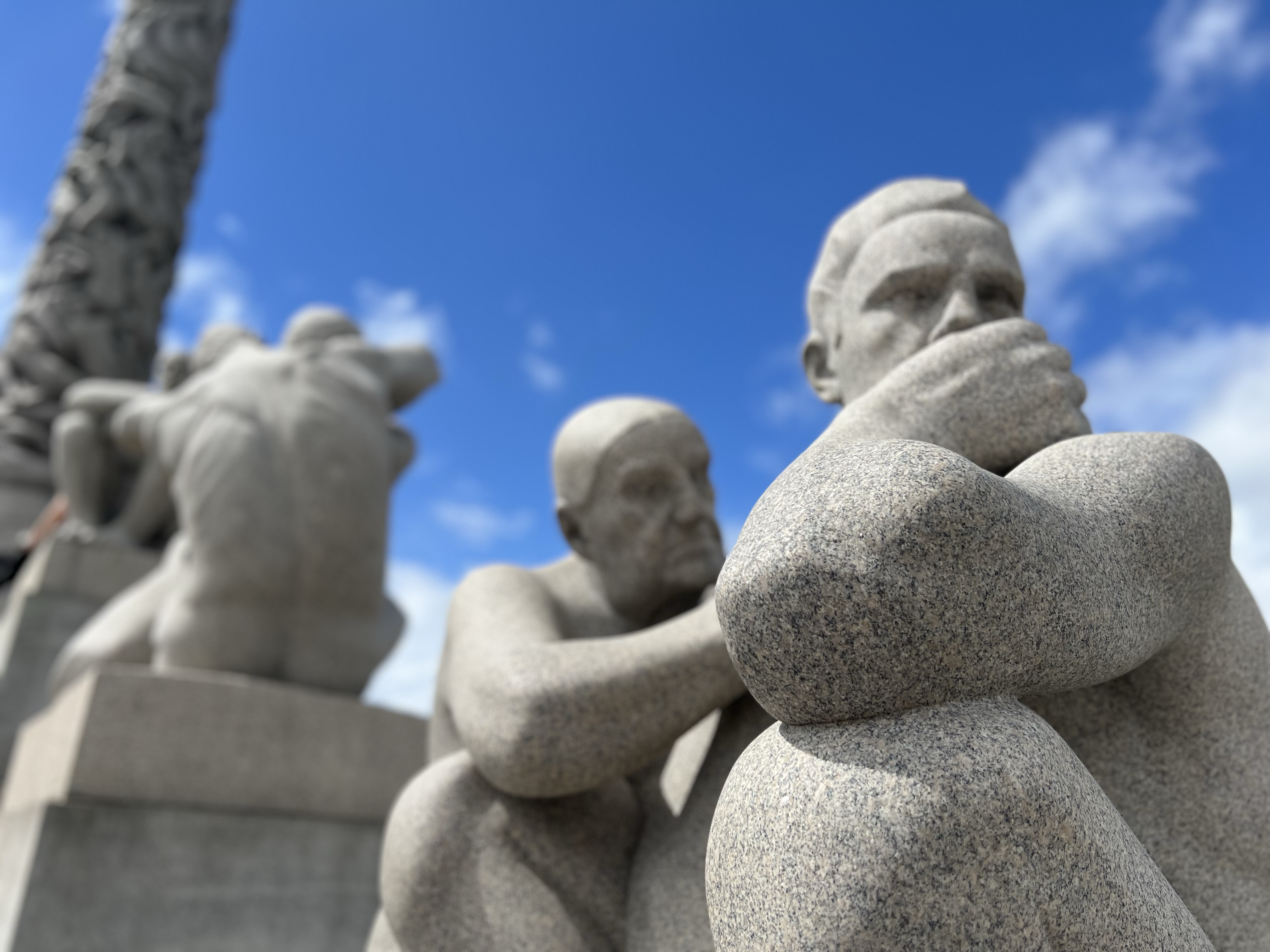
Vigeland park is one of the largest outdoor sculpture parks in the world. All of the sculptures are by Norway’s Gustav Vigeland.

This park is not for the prudish as it’s pure nudity in stone. There are over 200 of Vigeland’s sculptures and it can be an overwhelming place to visit for two reasons: first the sheer size of the collection, the unclothed human form in all sorts of poses and positions and secondly, Vigeland Park is one of Oslo’s top tourist sites. Tour buses disgorge camera-snapping hordes into the park and it’s hard to spend quality time with the art as you can be preoccupied with dodging selfie takers while trying not no wander into someone shot, well maybe I did a few times with purpose!

The plus side of sketching is that you don’t have to wait for the groups to get out of the way to do a sketch. Sometimes I even include them, for scale of course, in my sketch.

Vigeland Park is really a sketcher’s paradise. So many unmoving subjects everywhere you point your sketchbook.

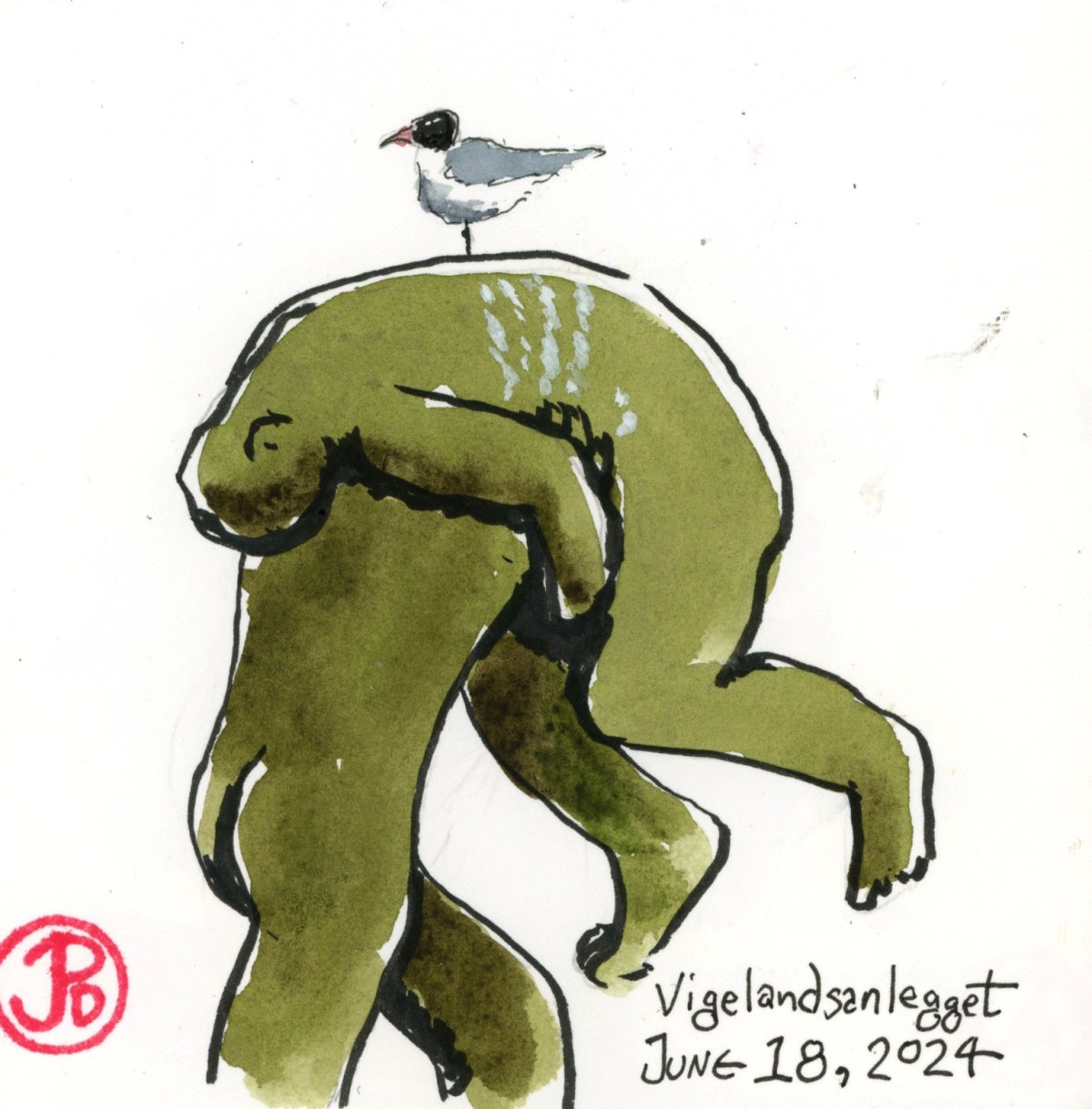
I did three sketches in my two visits. Your constant companion is the park is the black-headed gull (more brown-headed). So I felt I had to include one in a sketch. To these gulls, this elevated art is simply a nice perch and the level of white-wash on the sculptures also turns the gulls into art critics.

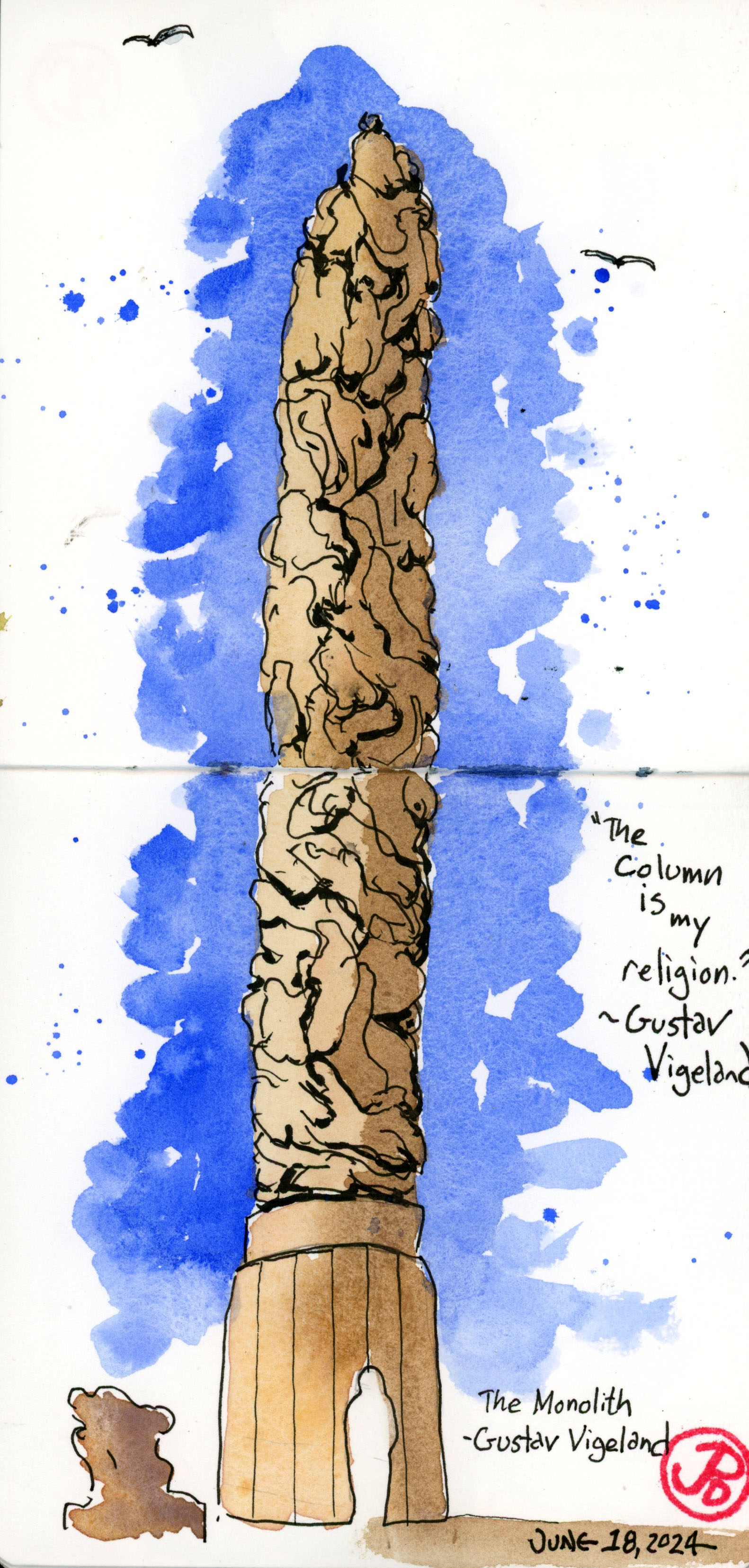
At the highest point is the Monolith. This tower humans was carved out of a single piece of granite and two 20 years to finish.

While sketching the Monolith, I kept it loose, knowing that I was not going to draw every single human figure in the column. I just want to make a suggestion to the viewer without filling in every detail. In the end I am happy with the approach.

Some of the sculptures around the Monolith are very moving; so very human. I could sketch in this park for years and always find new subjects.

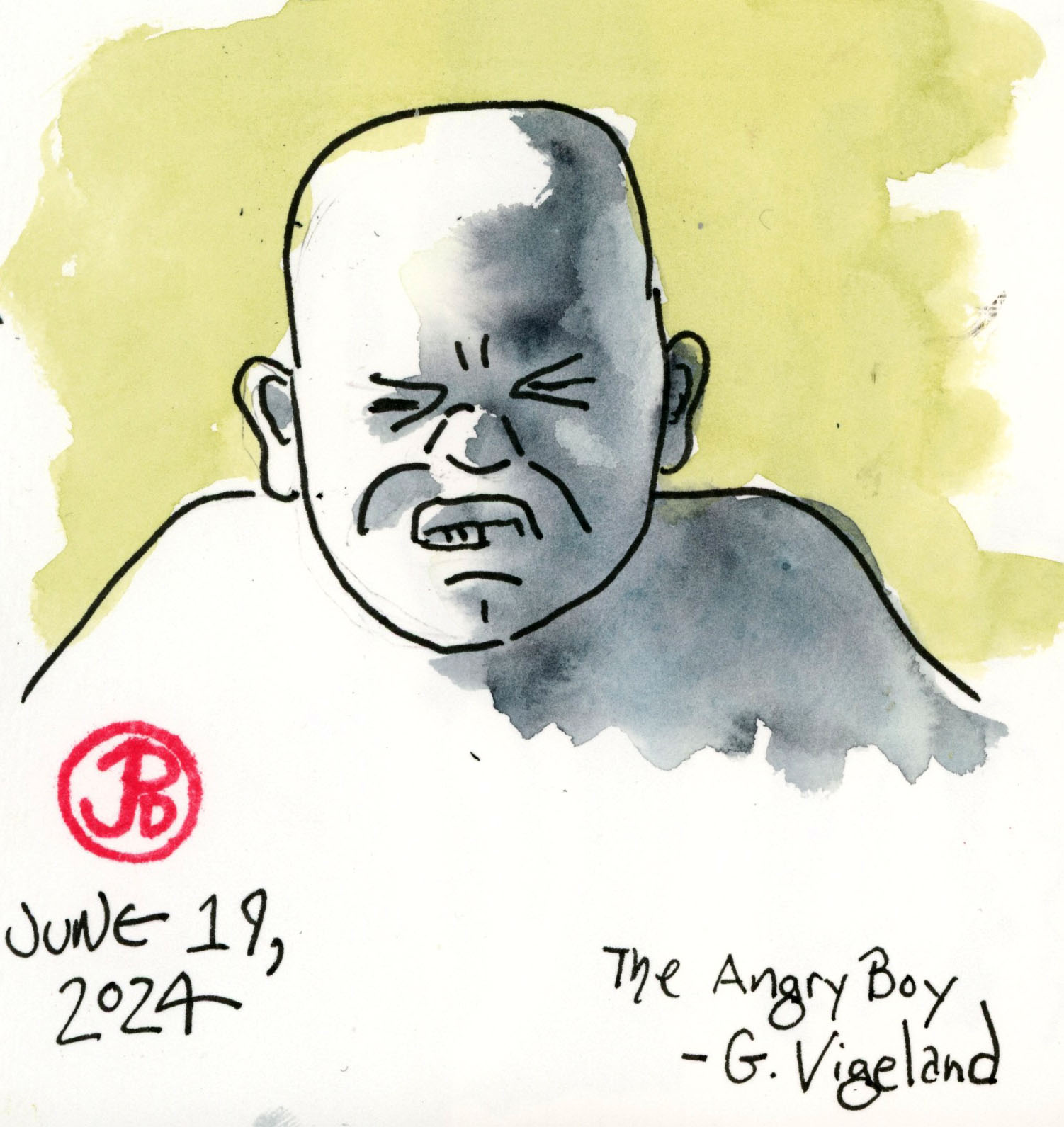
One of the most popular sculptures in the park, the number one sculptures most visitors want a selfie with is the Angry Boy. I sketch a version of the sculpture at the Vigeland Museum, near the park. This Angry Boy is not have a line in front of it so I was able to get a sketch in.

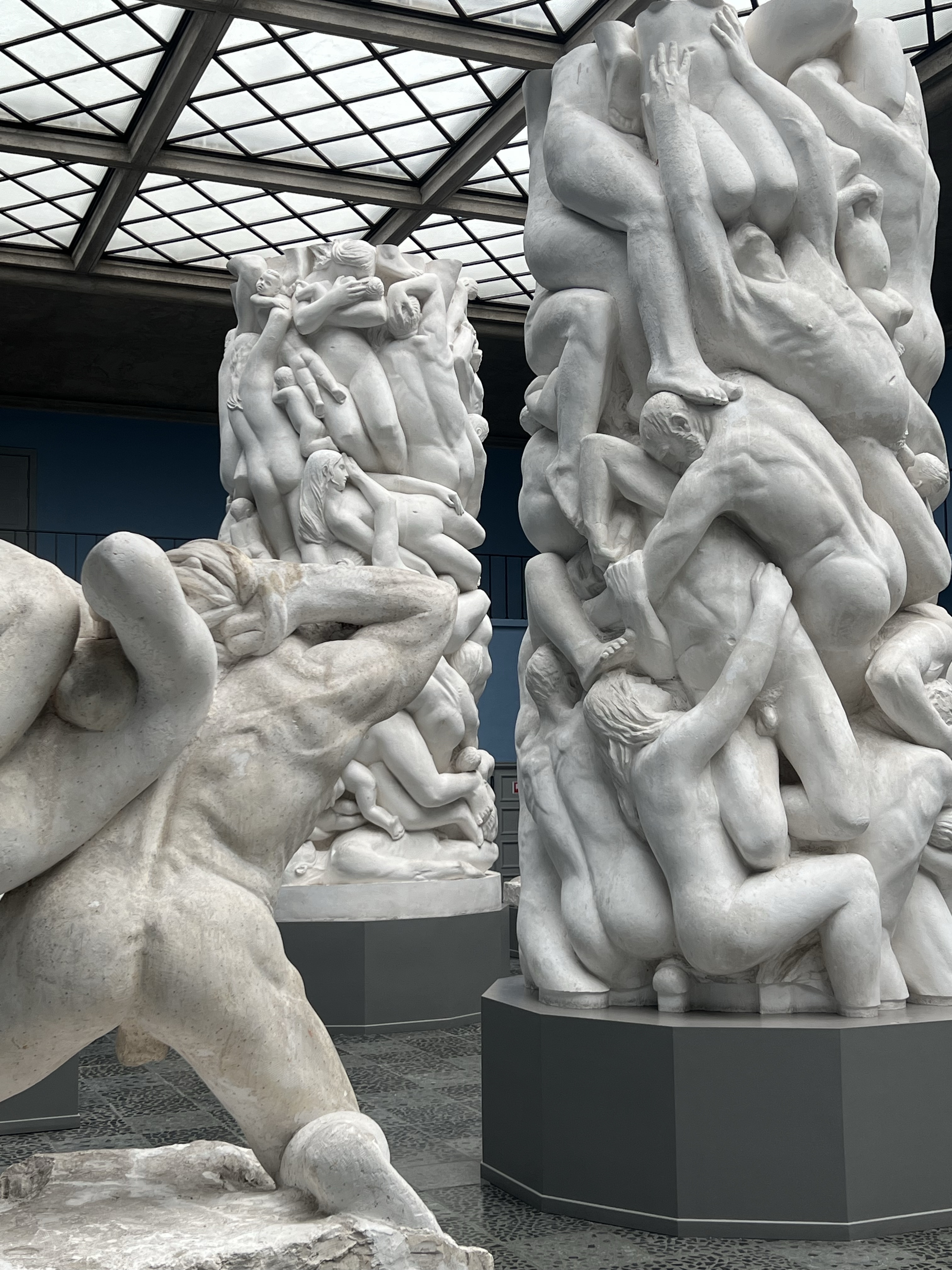
Sections of Monolith at the Vigeland Museum in Oslo. This museum gets much less visitors that the adjacent park.
Image

Norsk Folkemuseum

High on my sketch list was the traditional stave church at the Norwegian Folk Museum.

I took the first Bygdoy Ferry to the peninsula to visit this very popular outdoor museum, which is Norway’s largest outdoor museum.

The museum has over 140 buildings from different regions of Norway spanning an impressive span of time.

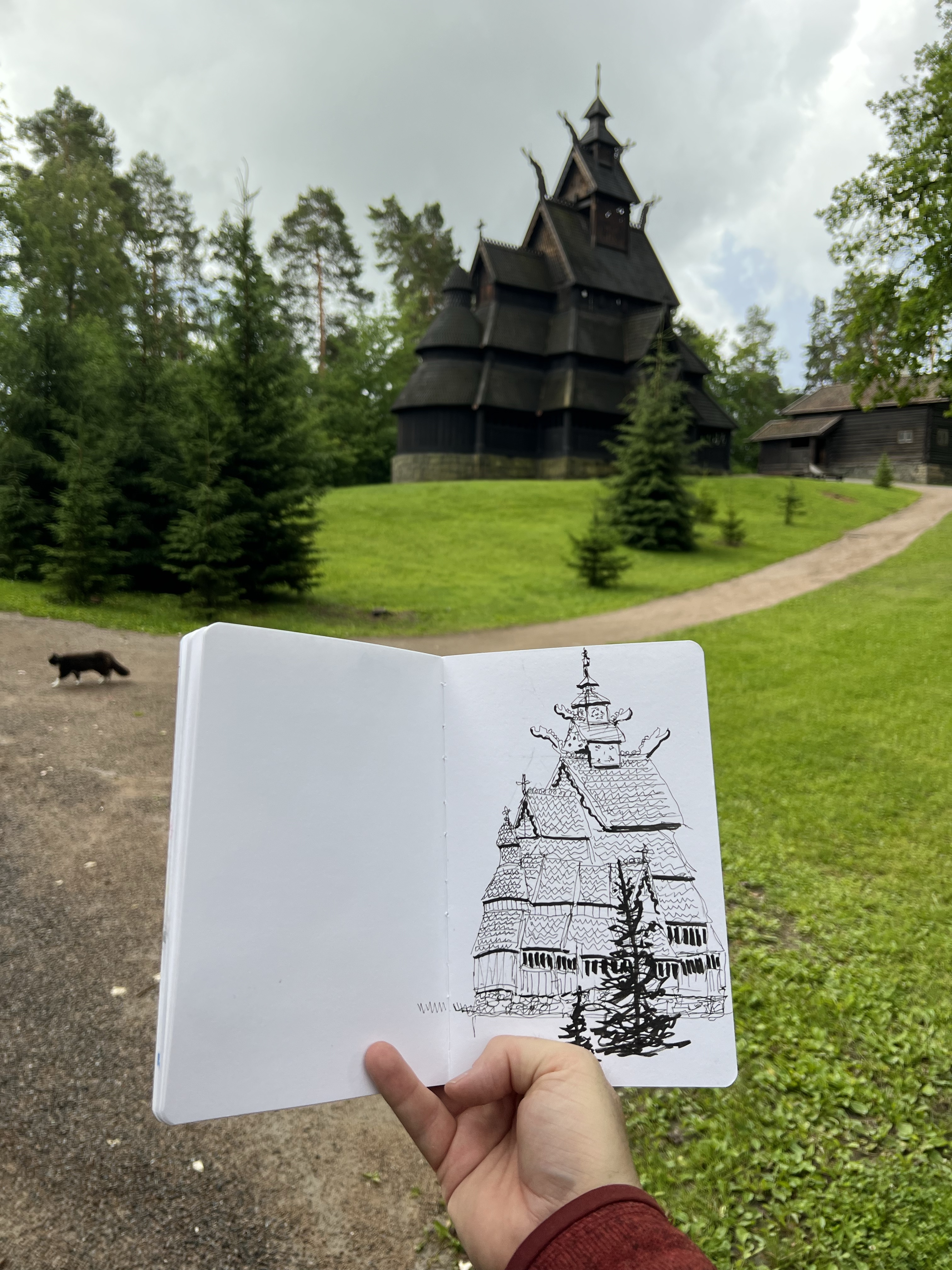
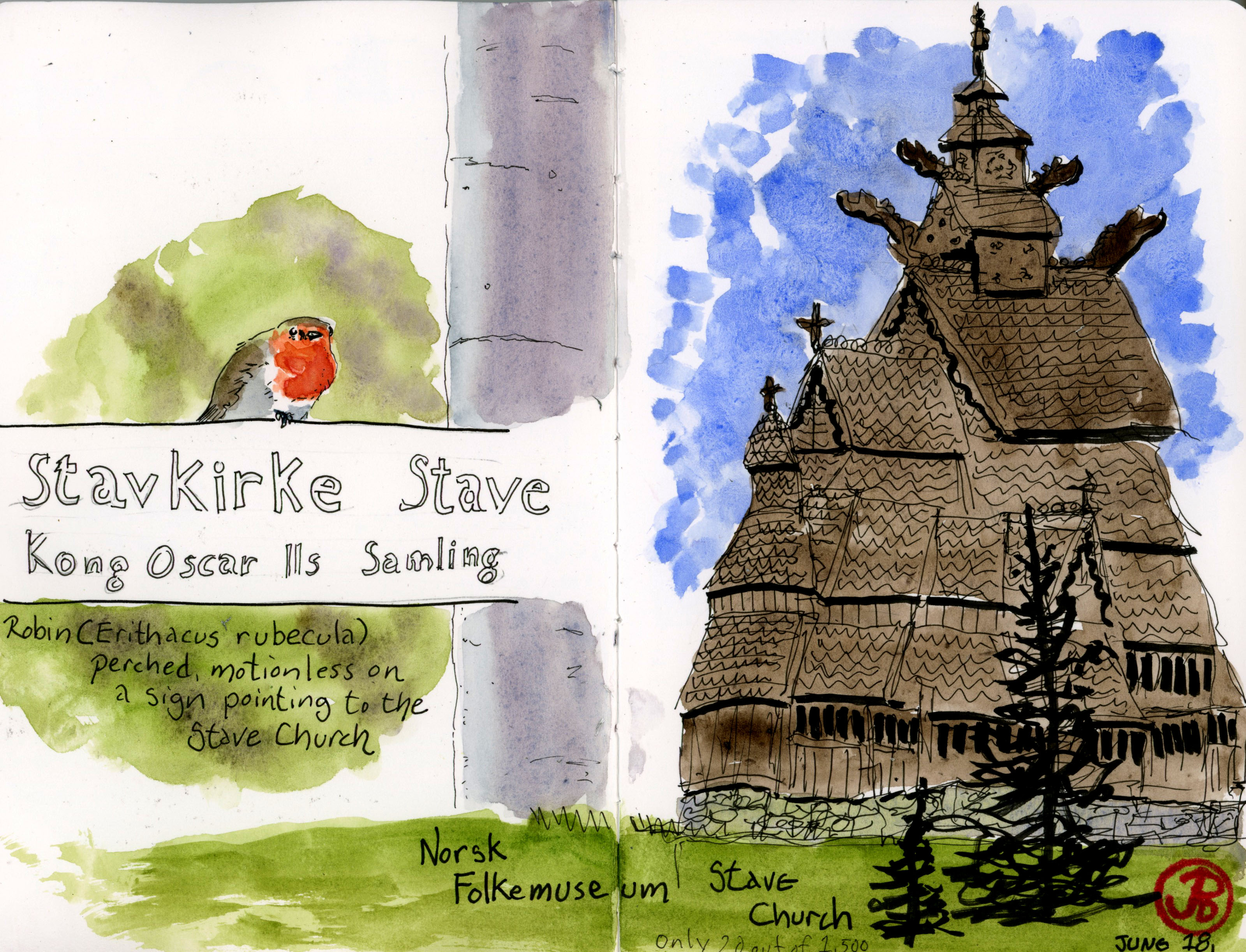
Once the gates opened at 10, I made my way to the stave church, using the map to navigate the large trail system. The church was so full of detail that I went with a very loose style, not focusing on every single shingle but choosing the form of the church.

Church, sketch, and a photobombing cat.

After my sketch I headed to another section and on the way I passed a robin statue-still on a sign. I was almost fooled into believing that this was a wooden carving until the red breast burst into life and shot off to forage in the underbrush. I add this experience to the other side of my spread.

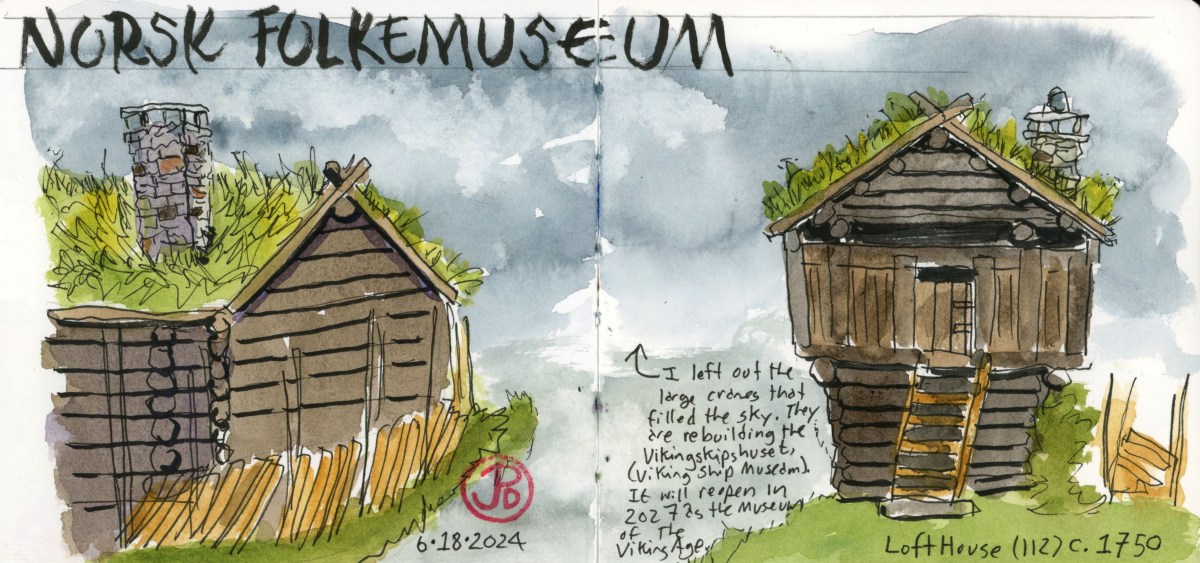
I found a collection of house farmsteads with a living roof of green so I found a bench and started sketching. My sketch was interrupted by rain so I had to finish my sketch in stages while retreating to a nearby house.

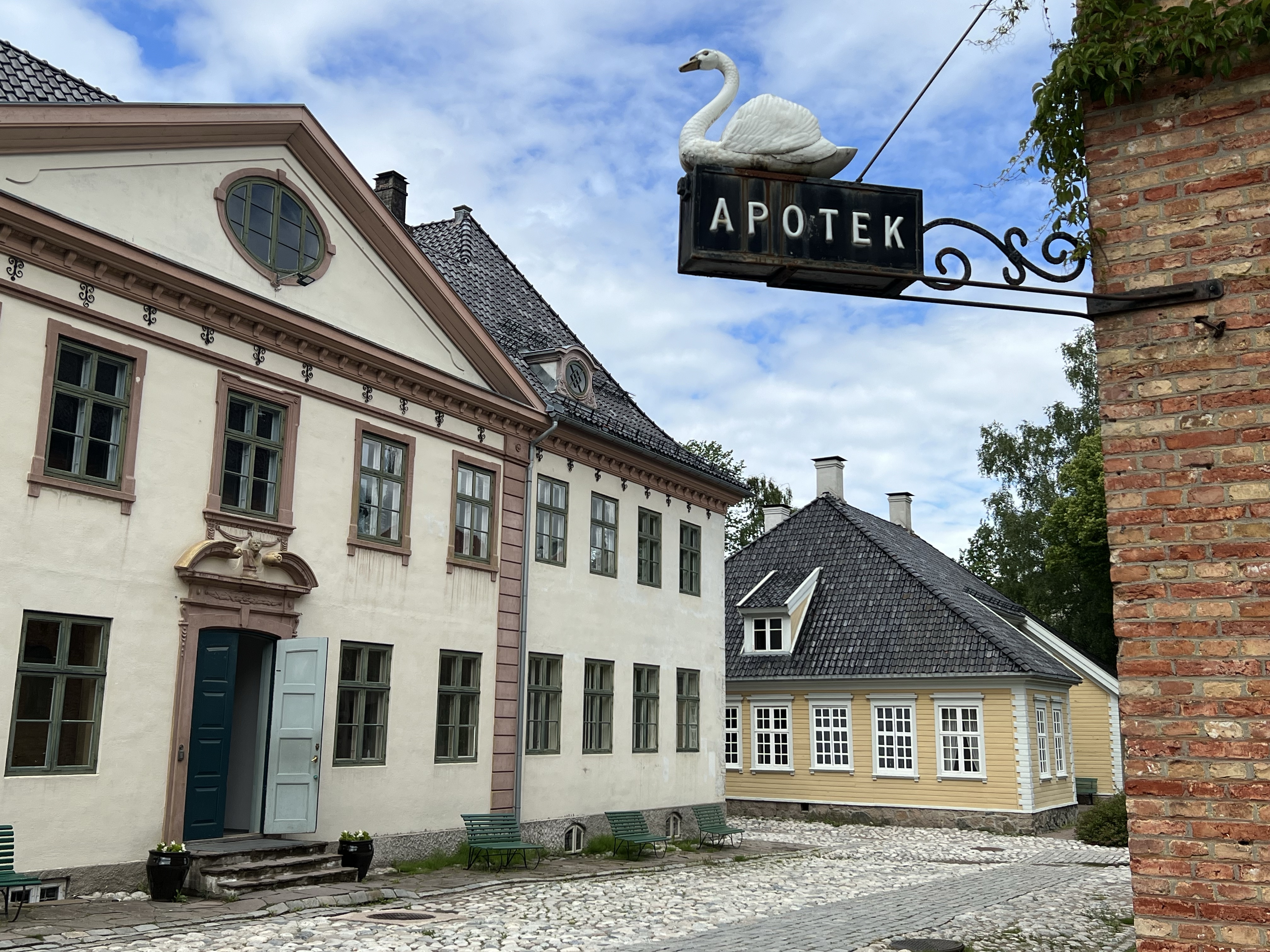
For this sketch, featured sketch, I used a little real-time editing. Behind the buildings, huge cranes reached into the air, shattering the feeling of time travel and firmly placing me back in the 21 Century. The cranes where above the site of the Vikingshipshuset (Viking Ship Museum). This museum has one of the most iconic preserved Viking ships in existence, the Oseburg Ship. The museum was closed in September 2021 for a complete renovation. The new museum will reopen in 2027.

This section of the museum felt like I had travelled forward in time from the last two buildings I sketched. I was traveling from Norway’s rural countryside to more developed towns.

Sounds like I need to make another visit to the Bygdoy Peninsula some time in the future!

Image

Bygdoy Peninsula: Kon-Tiki

I waited at the dock for the 9:10 ferry to Bygdoy.

There are three museums that focus on maritime history and I was really looking forward to seeing and sketching a balsa wood raft that was captained by a famous Norwegian.

While I spent some time at the Fram and the Norwegian Martime Museums, I was really here to see the Kon-Tiki!

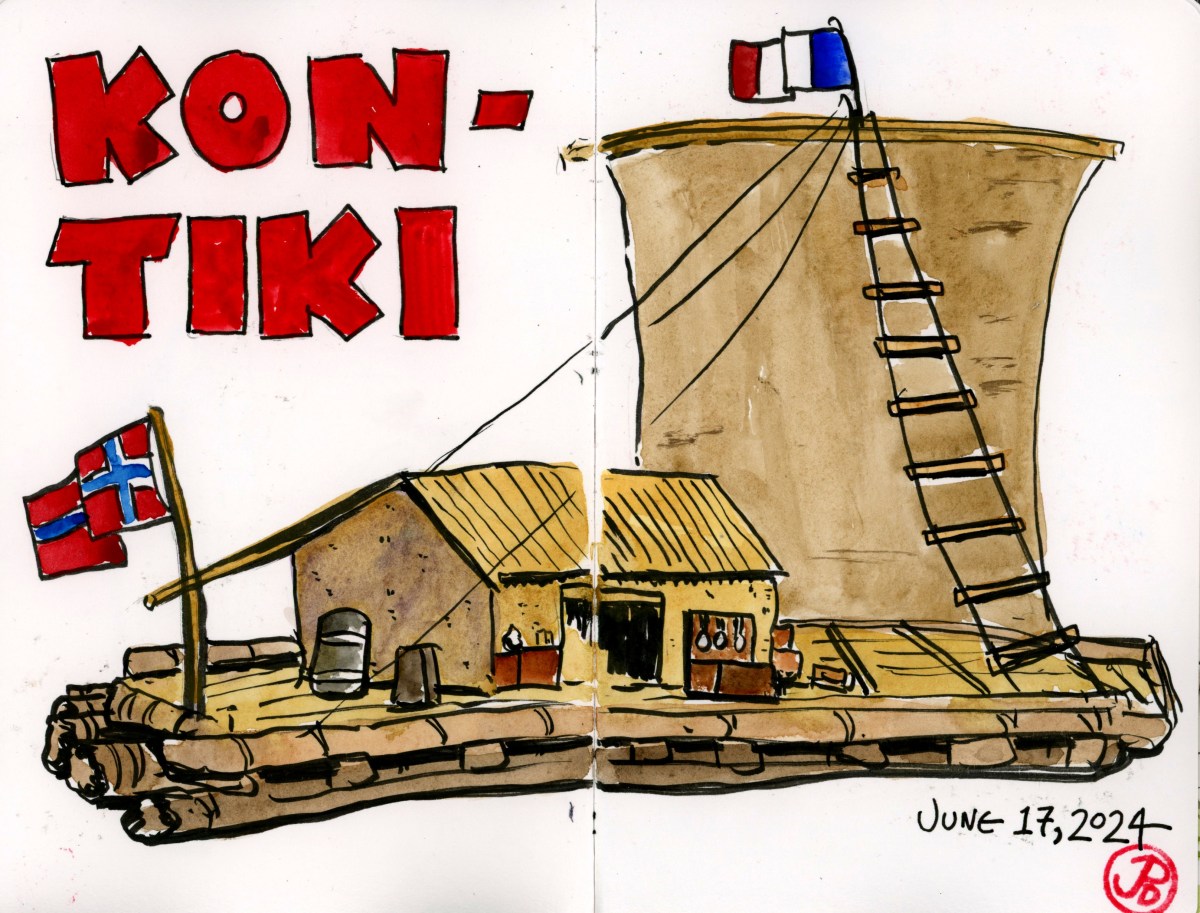
Before my trip I had read Thor Heyerdahl’s book about the adventure, seen two movies about the trip, including the Oscar winning documentary by Heyerdahl. I had done sketches about the raft and its captain and now I was about to see the actual vessel.

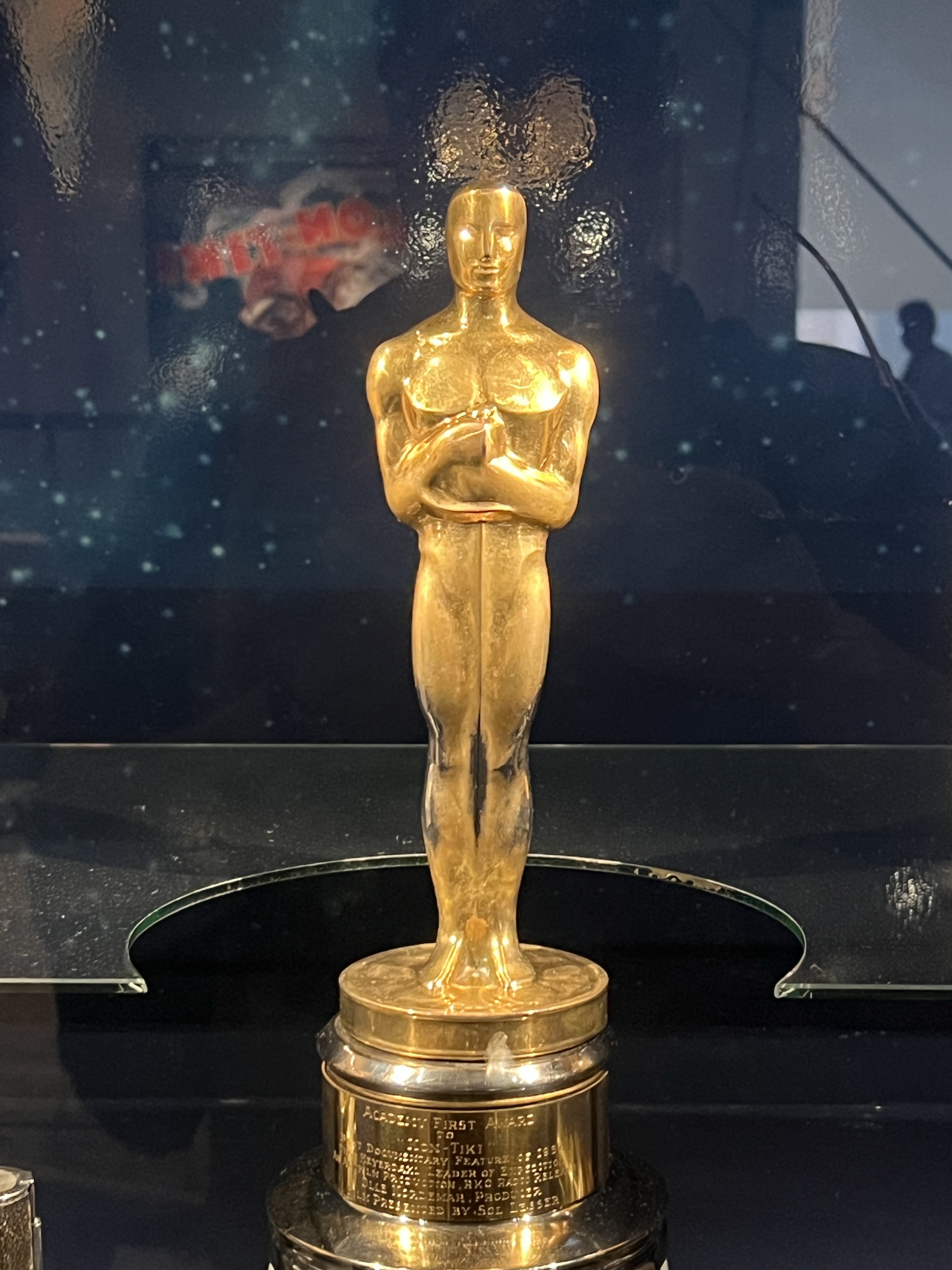
Heyerdahl’s Academy Award for best documentary.

The first time I remember reading about the Kon-Tiki was from a Time-Life book called Dangerous Sea Creatures. In the book was an excerpt from Heyerdahl’s massively popular account of the voyage. The passage was about the crews first encounter with a whale shark (this certainly is not a dangerous sea creature!).

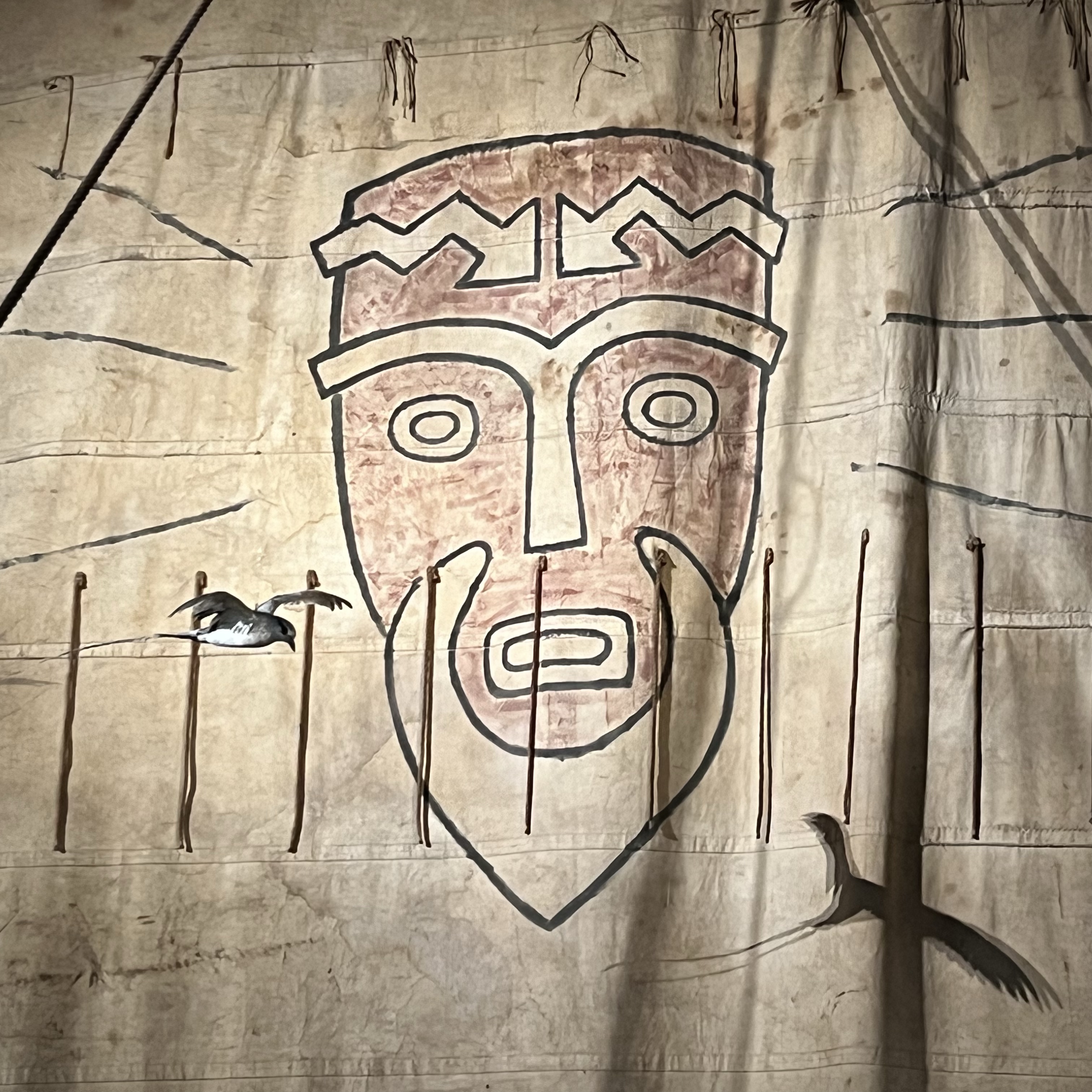
The sail with Kon-Tiki painted on it.

It was amazing to see the famous balsa raft in person that I had read about and which was also featured in the Oscar winning documentary about the voyage. The story of the Kon-Tiki is almost unbelievable had it not been documented. The heroism that the crew engendered on a journey that could very well have ended their lives and at a time when there had very rudimentary forms (ham radio) of communicating with the mainland.

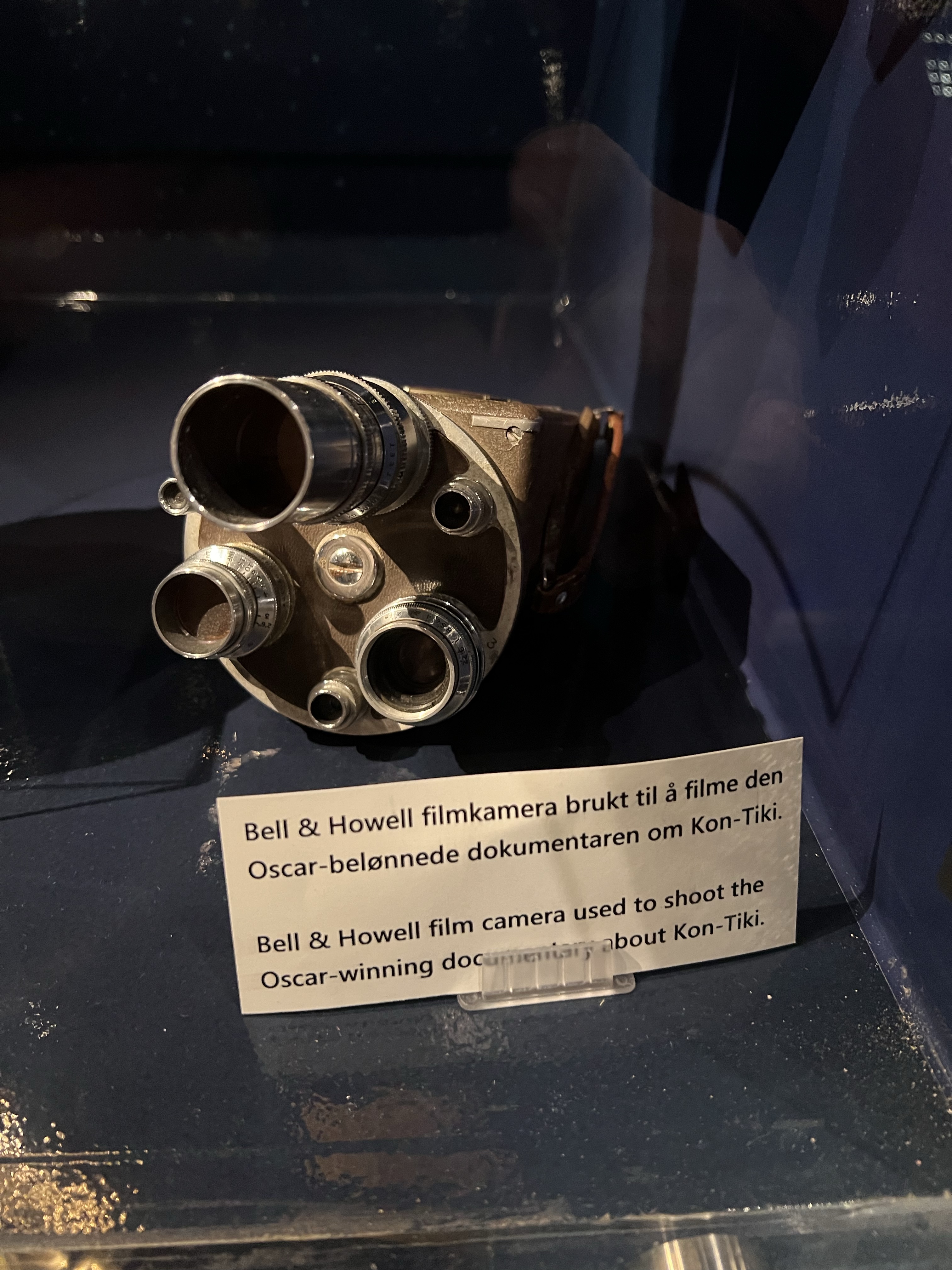
The Bell & Howell film camera Heyerdahl used to film the documentary.

I started a sketch of the Kon-Tiki head on and was not pleased with progress so I aborted the sketch and picked a different perspective. I choose a seat on the starboard side near the stern. With a change of perspective, I was able to add the mythic raft from my childhood to my journal (featured sketch).

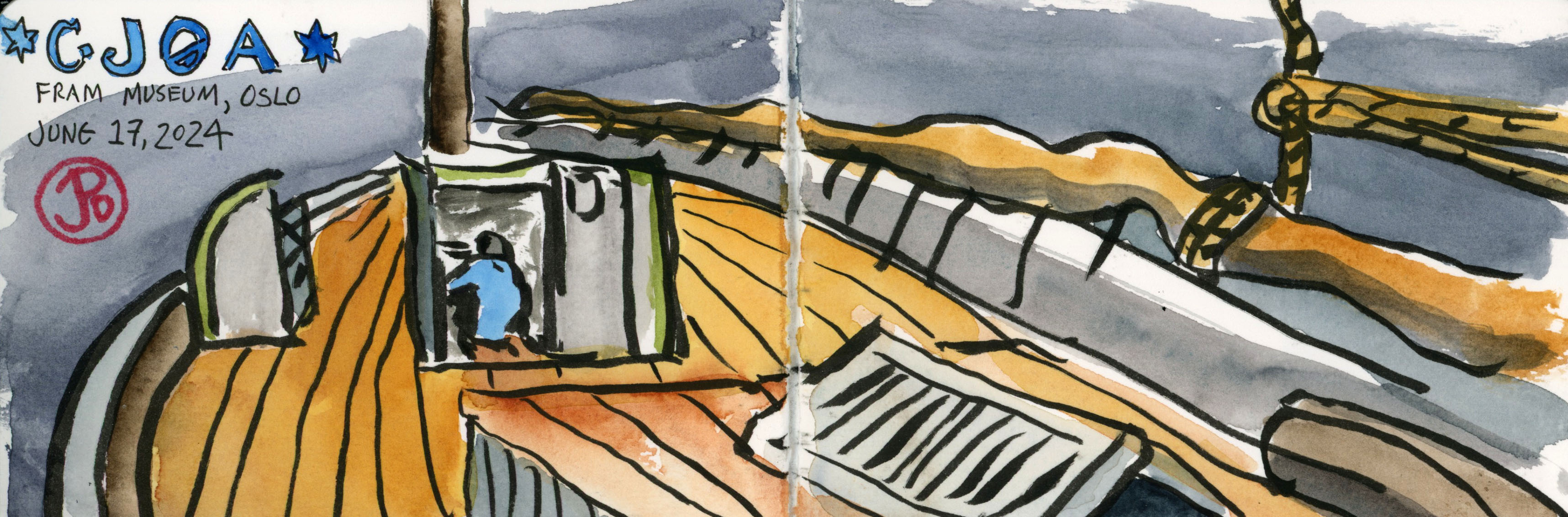
Another ship on the Bygdoy Peninsula was to be found at the Fram Museum. This was the ship that Roald Amundsen sailed through the Northwest Passage named the Gjoa. In 1909, the ship was donated to the city of San Francisco where it was on display at the western edge of Golden Gate Park until 1972. The ship was then given back to Norway where it is now on display in a large A-frame building at the Fram Museum.

Sketching the Gjoa was a bit of a challenge as I could get far enough away from the ship to capture the hull and mast so I sketched the deck from the port side stern.
Image

Polar Shades

Protecting your eyes is very important in the Land of the Midnight Sun. In the summer the Polar day can last for 24 hours.

The sun is intense and extreme in the Polar regions in the summer, with rays being reflected from snow, ice, and water into your naked eyeballs.

That’s why you need to clothe your eyes in Polar shades!

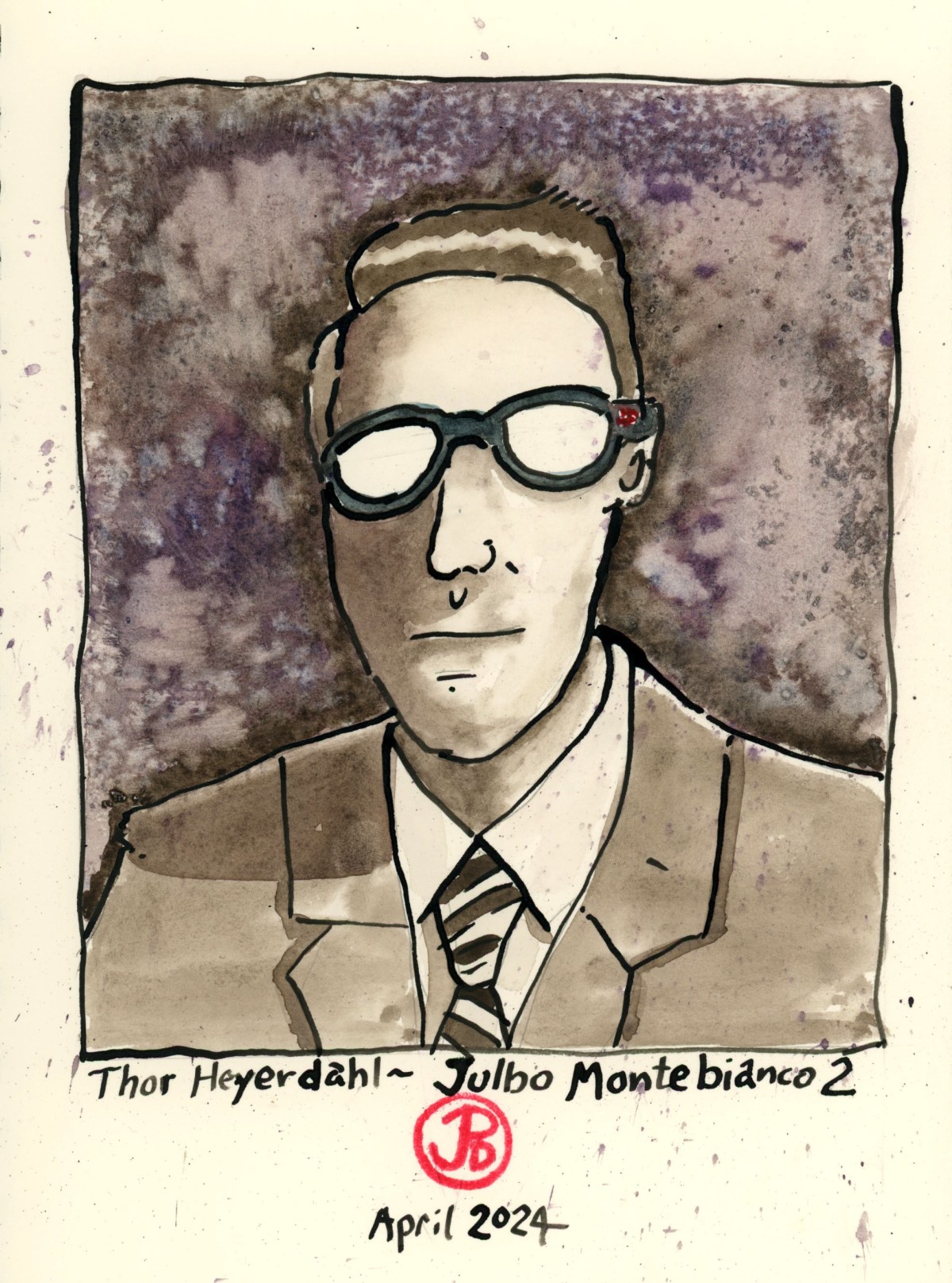
I chose to dress my eyes with the Julbo Montebianco 2.

These French glasses are made for high altitudes and snow sports. The Spectron 4 lens blocks out 100% UV rays as well as a, b, & c rays. The glasses also come with removable side shields which protects your peripheral from intense blinding light.

I also like the fact that Julbo has been making eyewear for explorers and adventurers since 1888. And I would be carrying on with the explorer’s tradition.

With so many hours of daylight, you need a different type of eyewear to get some shuteye during the summer Polar “night”.

I found this out on my summer of 2023 birding trip to Iceland. High up on a summer Scandinavian packing list is a quality sleep mask. Most of my accommodations had blackout shutters but a few did not and having a sleep mask gave me much needed shut eye.

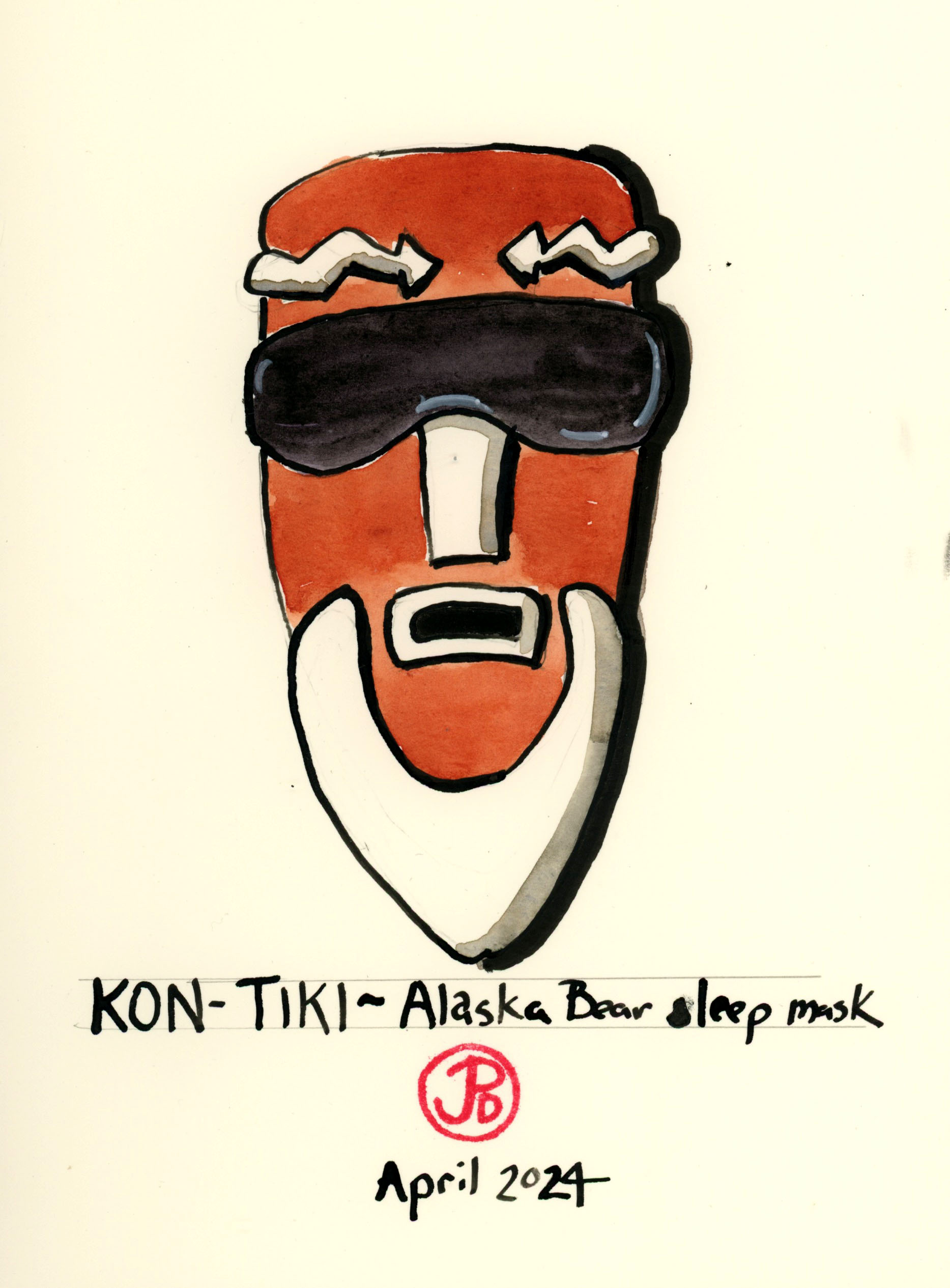
My sleep mask of choice for Scandinavian is the Alaska Bear (could it be a polar bear?!) sleep mask. This mask is comfortable and does it was it designed to do: keep out the light.

Image

Beginnings: Point and Shoot Journals

A new adventure means a new sketchbook.

In the past few years my “go to” travel sketchbooks has always been Stillman & Birn Beta or Delta Series. I love the paper and the different sizes in both soft and hard covers.

Now I wanted to try a new sketchbook so I settled on Hahnemulhe’s 100% cotton cold press sketchbook. This is a hardcover book with very high quality paper for watercolor.

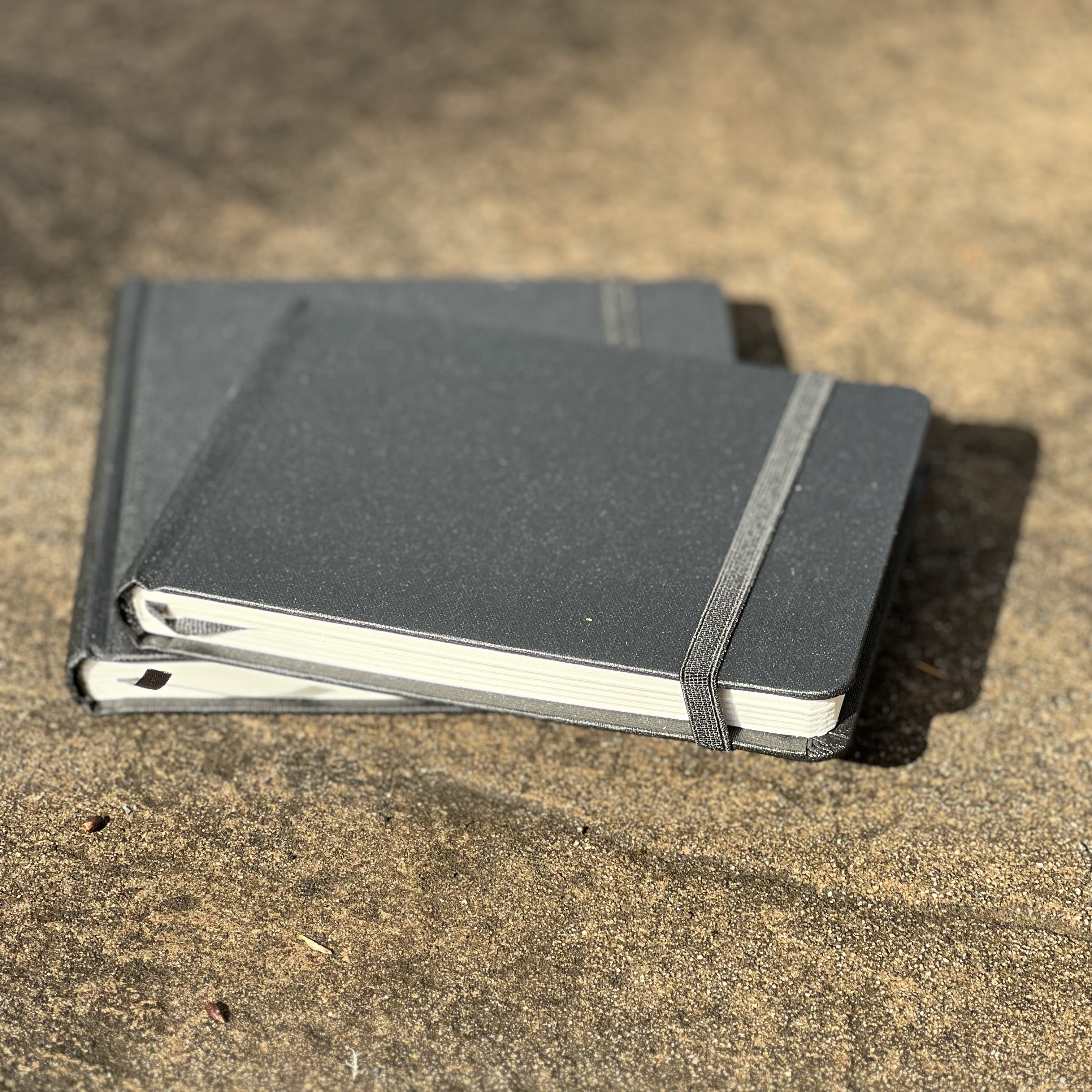
For Svalbard I want to downsize, so I chose two journals: a 4″ by 5.5″ panoramic journal and a 5.5″ by 5.5″ square journal. These would fit in well with my lighter one-bag travel ethic and, I thought, if you use a smaller journal, you are encouraged to sketch more because you have less paper to cover. I figured a smaller journal would be easier to do quick, gestural-loose sketches while on my polar cruise. I think of them as my “point and shoot” journals. I still could do detailed sketches with many watercolor washes, but I like the versatility of these journals and I can’t wait to take them to Scandinavia and sketch!

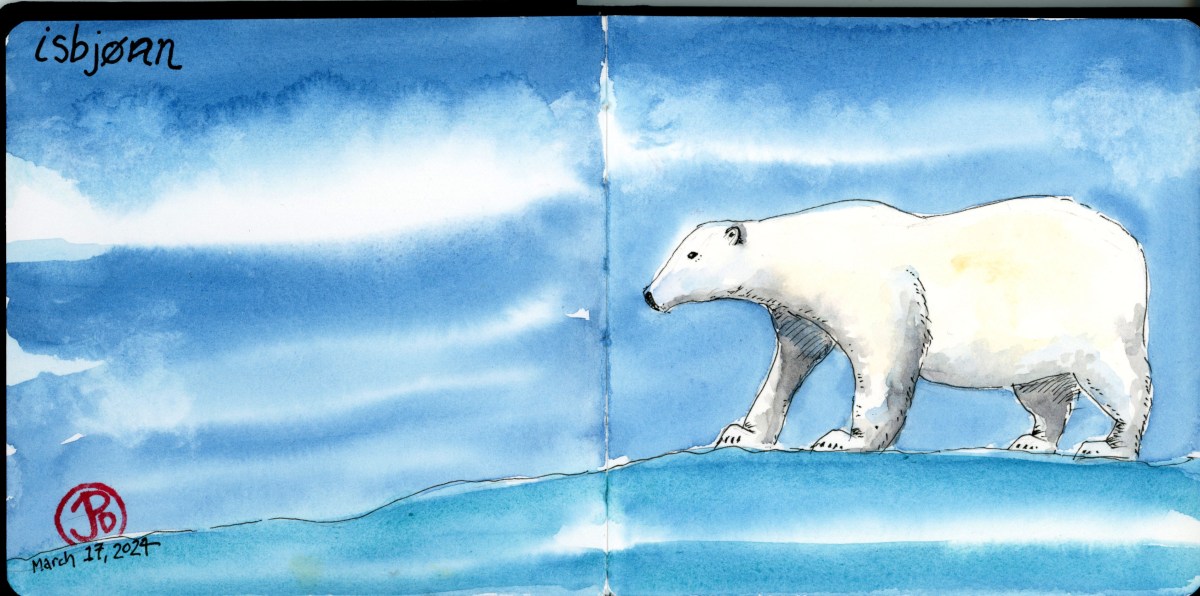
For my opening sketch in the square journal, I chose to paint across the gutter giving me a panoramic spread of 5.5″ by 11″. The spread is the isbjorn (Norwegian for polar bear). This is the number one target mammal on any Svalbard cruise. I loved the way the 100% cotton paper handled the washes (featured sketch).

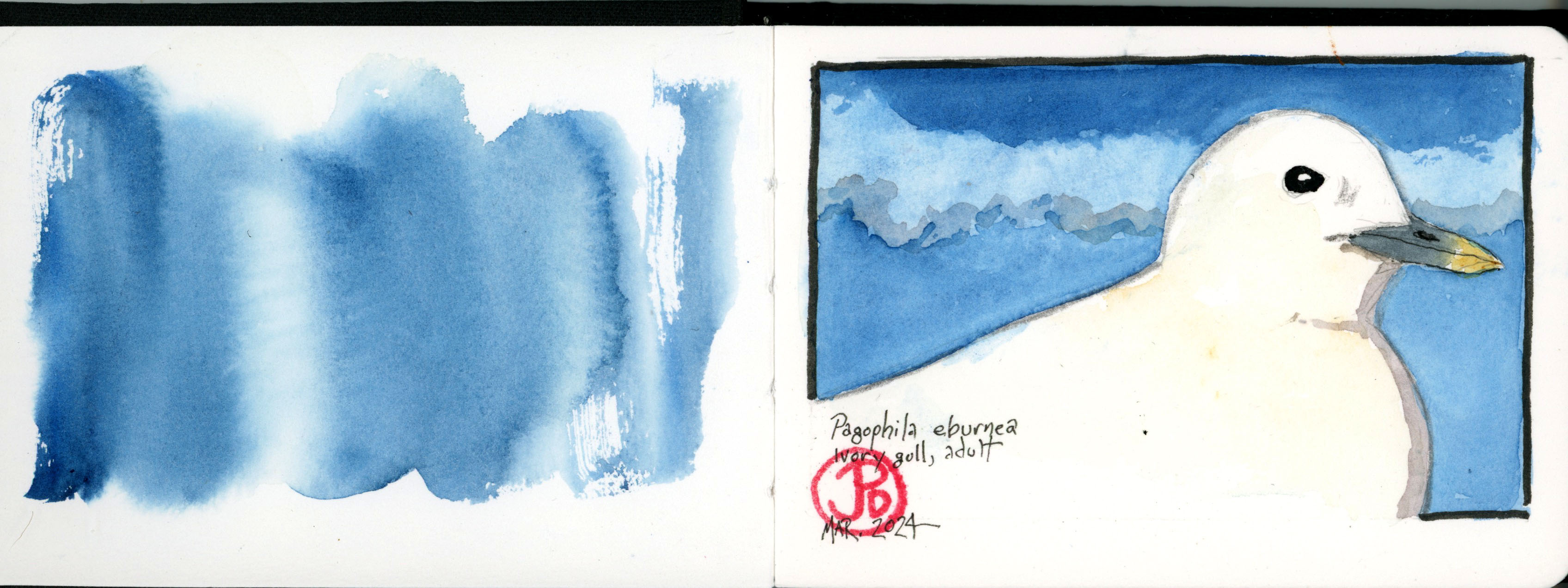
The introductory sketch of my smaller panoramic journal was the number one target on my bird list: the much sought after ivory gull. This all white gull is only found in the Arctic Polar region. Finding an all white gull in an all white landscape was going to be a challenge! But I was up for it (Bring it on!)

Point and Shoot Watercolor Journals.