Image

Norwegian Life Birds

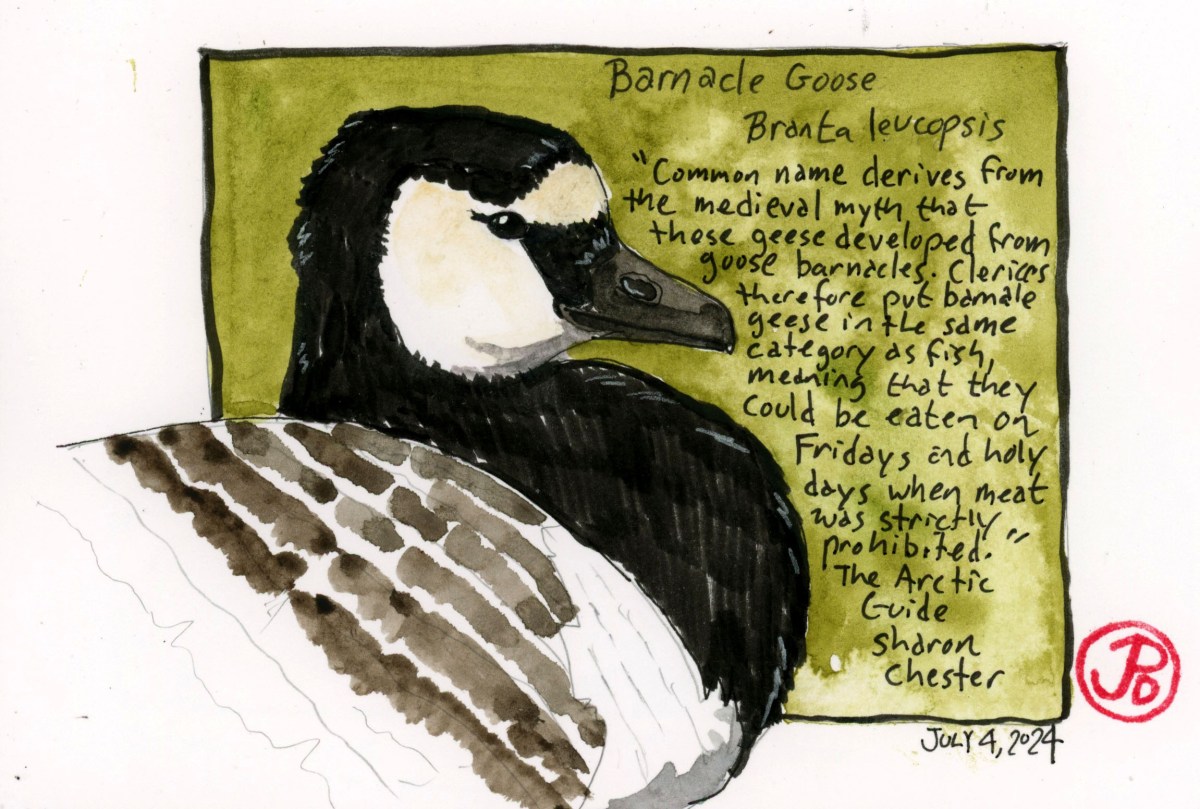
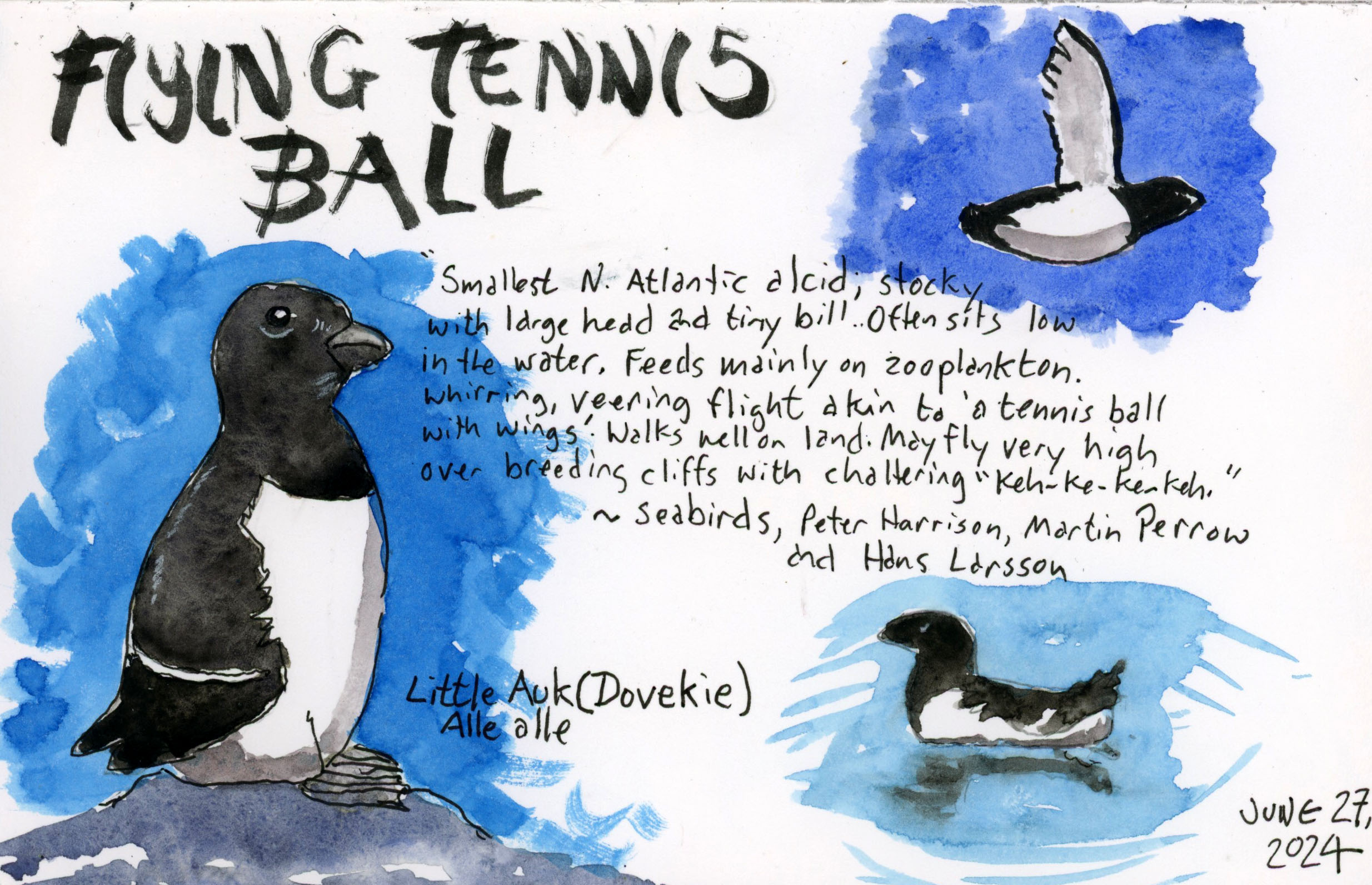
I had three target lifers for my Scandinavian summer adventures: barnacle goose, dovekie (little auk), and ivory gull.

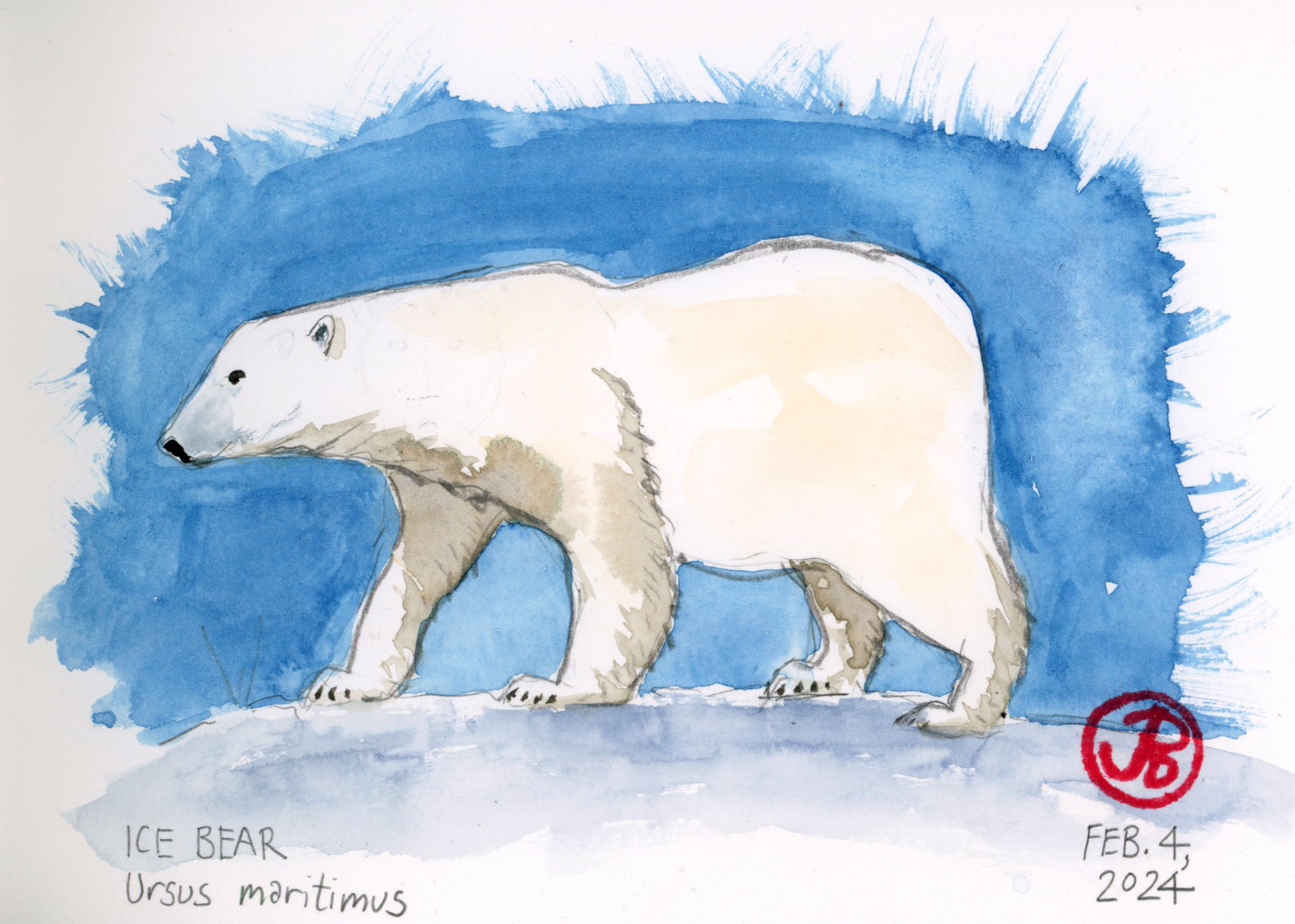
The hardest to get was the ivory gull which was only to be found on the pack ice sometimes in the company of polar bears.

Perhaps the easiest was the barnacle goose and dovekie. I had four geese in the harbor near the Munch Museum in Oslo. I saw many more in Longyearbyen in Svalbard.
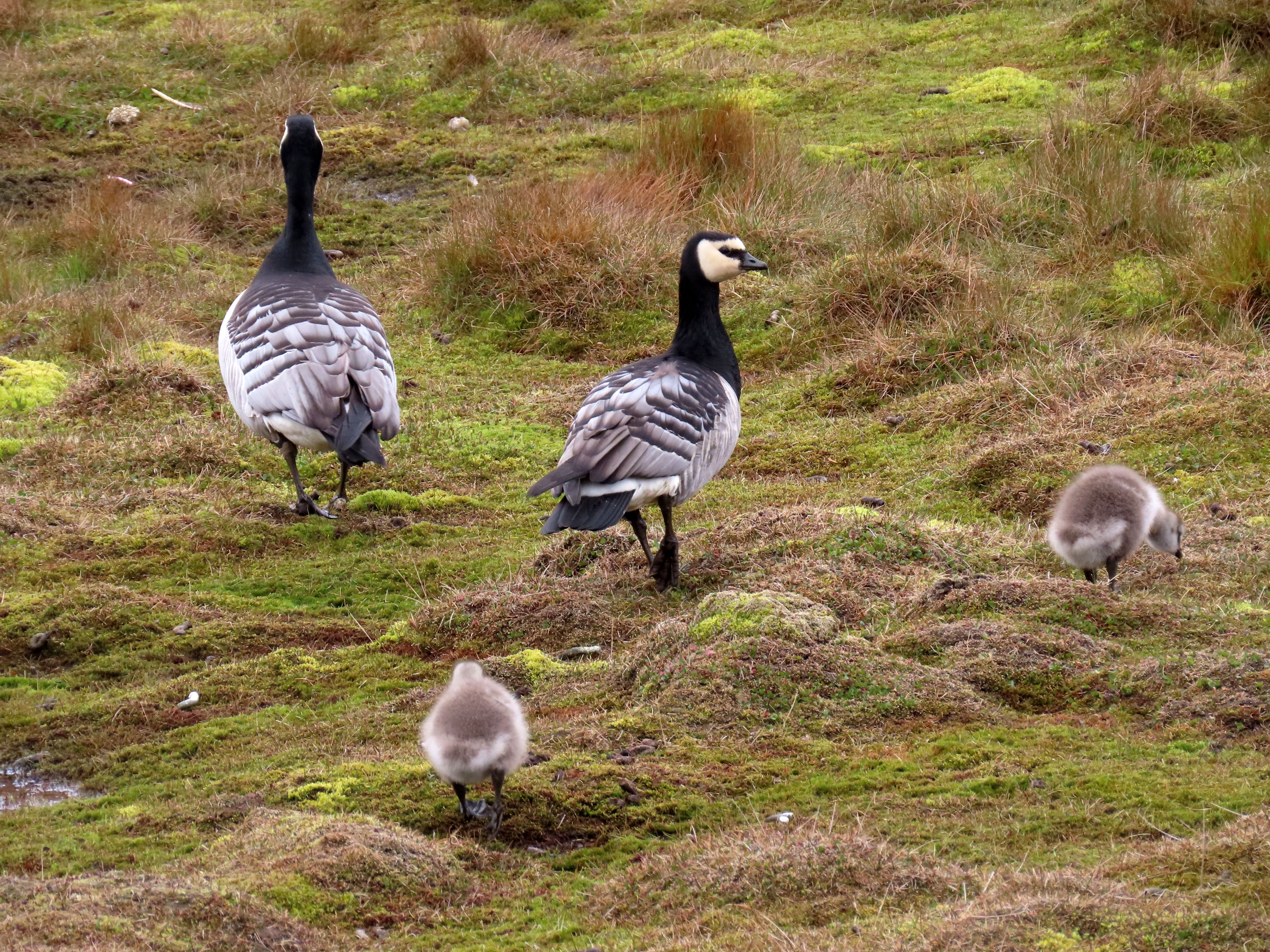
Barnacle goose family in Longyearbyen.

Dovekie or as it’s known in Europe, little auk, was also plentiful around the southern and eastern side of Spitsbergen. I saw many from the decks of the Plancius.
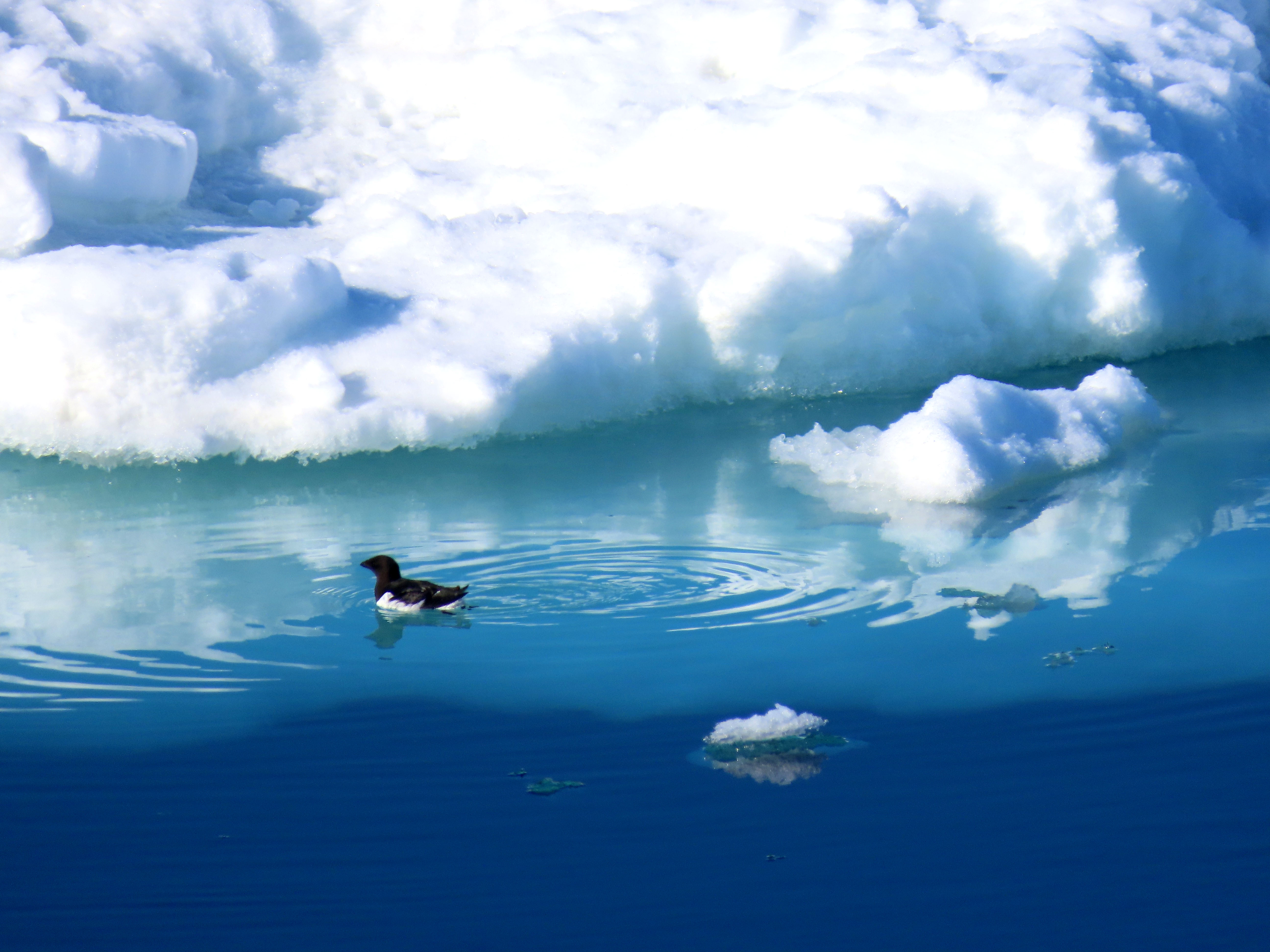
Little auk in its icy summer habitat.

So what’s in a name? Common names vary in different regions and in different languages. For instance Phalaropus fulicarius is known as the red phalarope in North America but on the other side of the Atlantic it is the grey phalarope. Our guide didn’t even know this, falsely claiming that the common name had been changed.

One of the dubious common bird names is barnacle goose. You would think this goose eats barnacles. Nope. The name comes from Medieval times when it was thought that the goose came from goose-necked barnacles. The bird was even considered a fish so it could be eaten on religious holidays such as Lent. Such were the times when folklore trumped scientific learning.
Image

Polar Plungers

An impromptu group developed on board the Plancius.

The group was started by our Chairman and President, an Australian travel blogger. He asked around who would be willing to plunge into the Arctic Ocean and started gathering names, including mine.

He asked our expedition leader about the possibility of a Polar Plunge and we got the green light.

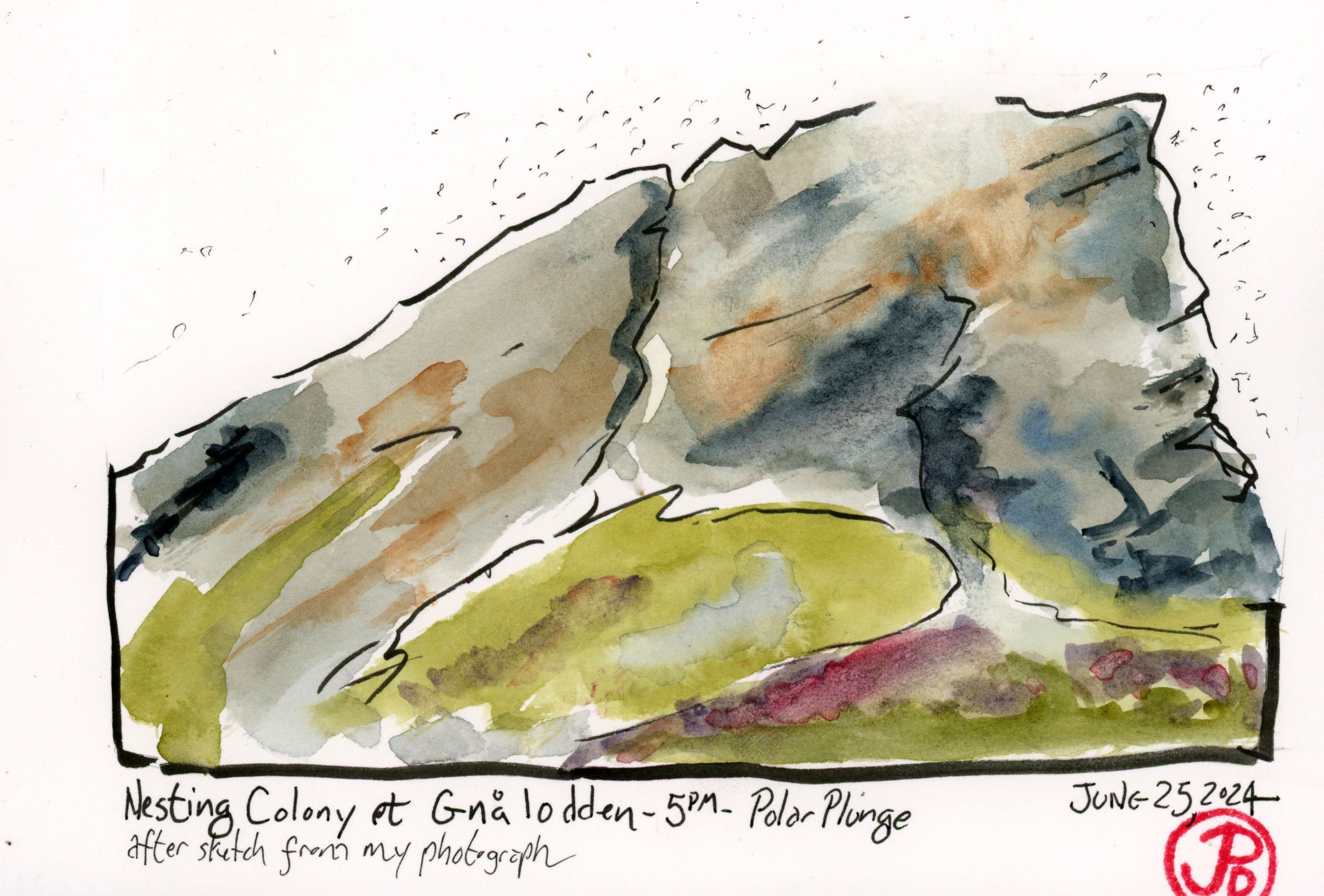
So at the end of our visit to the bird cliffs at Hornsund, at 5 (17:00) the self-chosen few gathered on the rocky beach to begin this Polar right of passage.

The bird cliffs at Horsund.

Those who have plunged in both the Arctic and Antarctic are known as Bi-Polar Plungers.

A light drizzle stared and the temperature hovered around 34 degrees.

My body and mind said “no” but if Dr. Rock was going in, then so was I. My biggest concern was not the plunge, you had to put your head under to make it official, but undressing and dressing with my multi layers in the wind, rain, and cold. And then there was the Zodiac ride back to the Plancius. The sloped rocky beach didn’t make walking to the water in bare feet any easier.

As I was contemplating the cold waters a Dutch member of our tribe (let’s call her Mary), stripped off, ran towards the water, jumped in, and started doing laps.

Well this was a challenge. Bring it on! I divested myself of four layers and hobbled down the pebble beach to the Arctic waters.

Up to the ankle it wasn’t so bad but I wasn’t sure if I could feel my toes. I turned to the crowds on the beach and Christlike, fell backwards for the full immersion.

I’m not sure if I really did a lap but it was more a splashing Polar paddle and before I knew it I was hobbling up the rocky beach to my now damp towel.

After the plunge, Dr. Jon (Ship’s Doctor), gave me a certificate that reads:

This is to certify that

Corvidsketcher

Defied death by surviving a swim in the frigid Arctic waters in Hornsund, Svalbard

This twenty fifth day of June, 2024

Witnessed and certified as still living by

Dr. Jon

Ship’s Doctor

MV Plancius

Footnote: Dr. Jon also joined us as a member of the Polar Plungers!

I self-elected myself with the task of designing the Polar Pluggers logo. I thought the walrus would be a good mascot for the group, albeit an icy blue one!

Image

Arctic Fox And Svalbard Reindeer

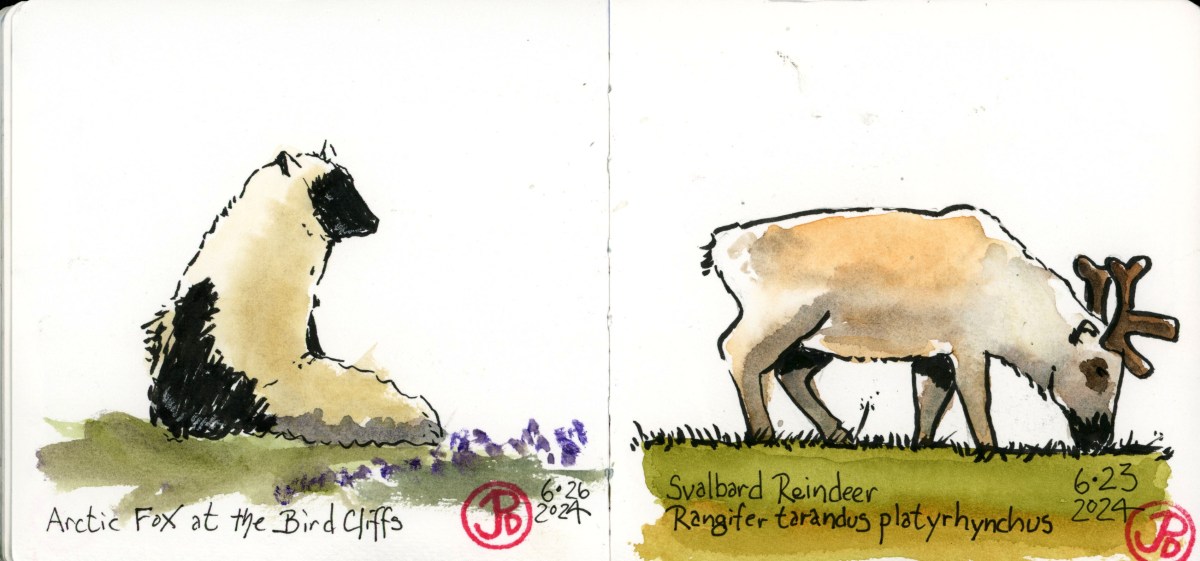
A key arctic mammal that I had missed out on in Iceland last summer was the fox of the north, the Arctic Fox. I know that I would have good chances of seeing this species in Svalbard.

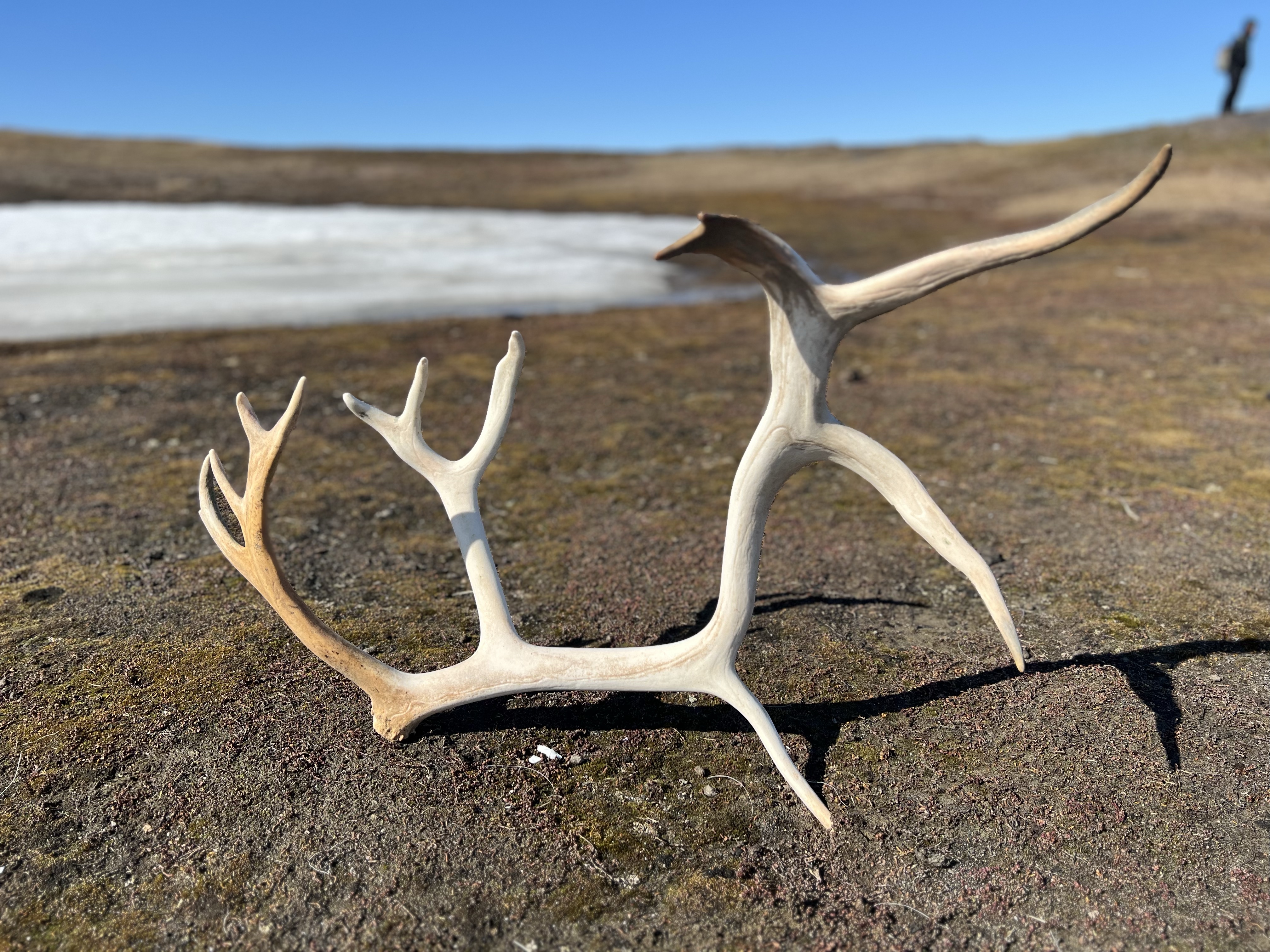
Another mammal that I was also hoping to see was the reindeer subspecies, the Svalbard Reindeer, which is the smallest subspecies or reindeer or caribou.

And on a landing to Russebukta, I had the chance to see both. On our landing I chose to join the medium hiking group that was led by our expedition leader Phillipp. It always pays to be near the leader because he has the knowledge of the land and the rifle (poplar bear protection).

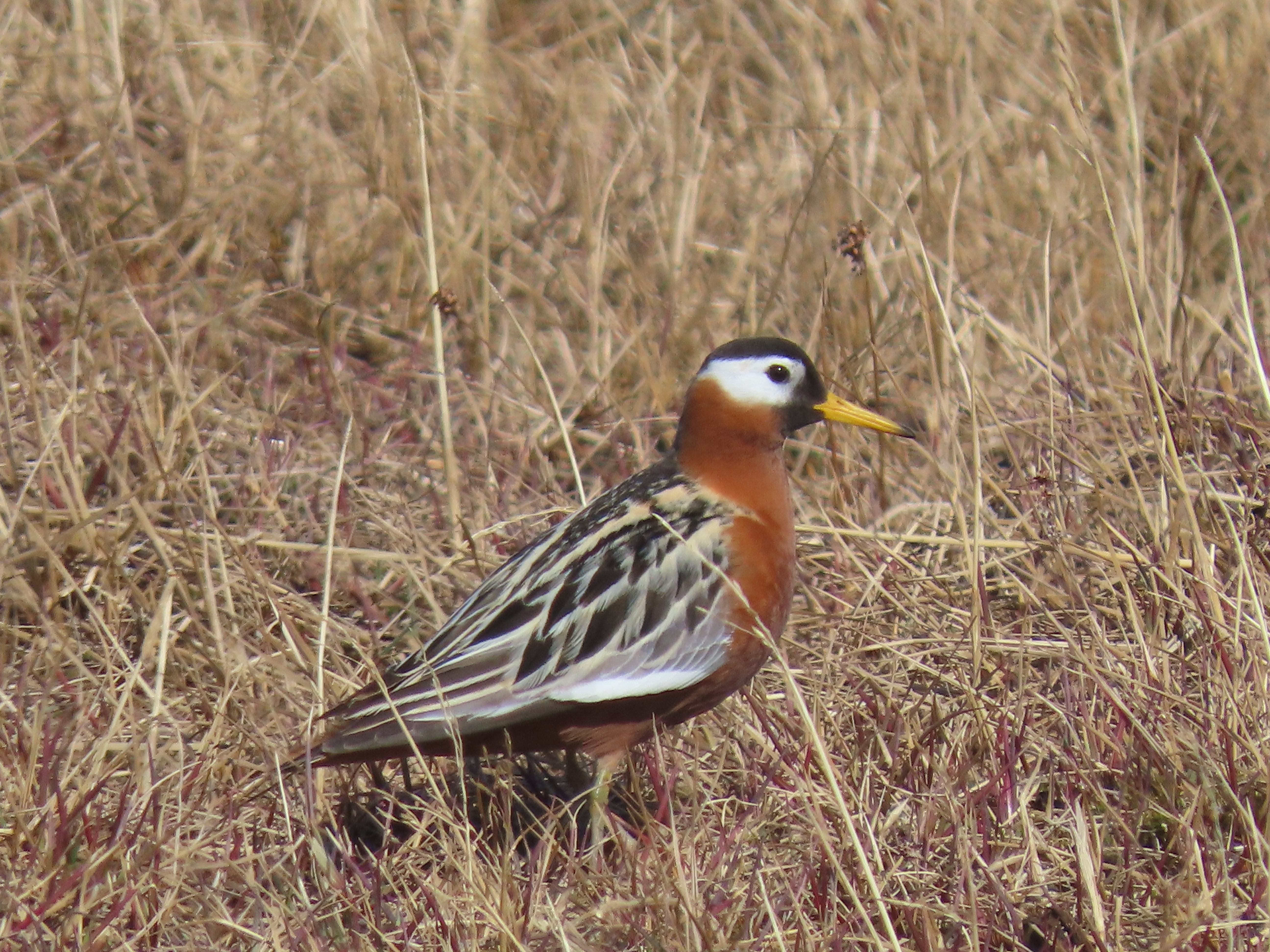
We walked by some ponds that yielded some avian Arctic breeders: the stunning king eider, pink-footed geese, purple sandpiper, snow bunting, and red phalarope. I pointed out red phalarope and Phillipp told me that is now known as the gray phalarope, red in breeding season and grey in non-breeding. Of course this is what the phalarope is called in Europe (grey) but is called red in North America. There is is only one name we can agree on, it’s scientific name: Phalaropus fulicarius, which does not change, unlike there varied common name.

The stunning breeding plumage of the red or gray phalarope.

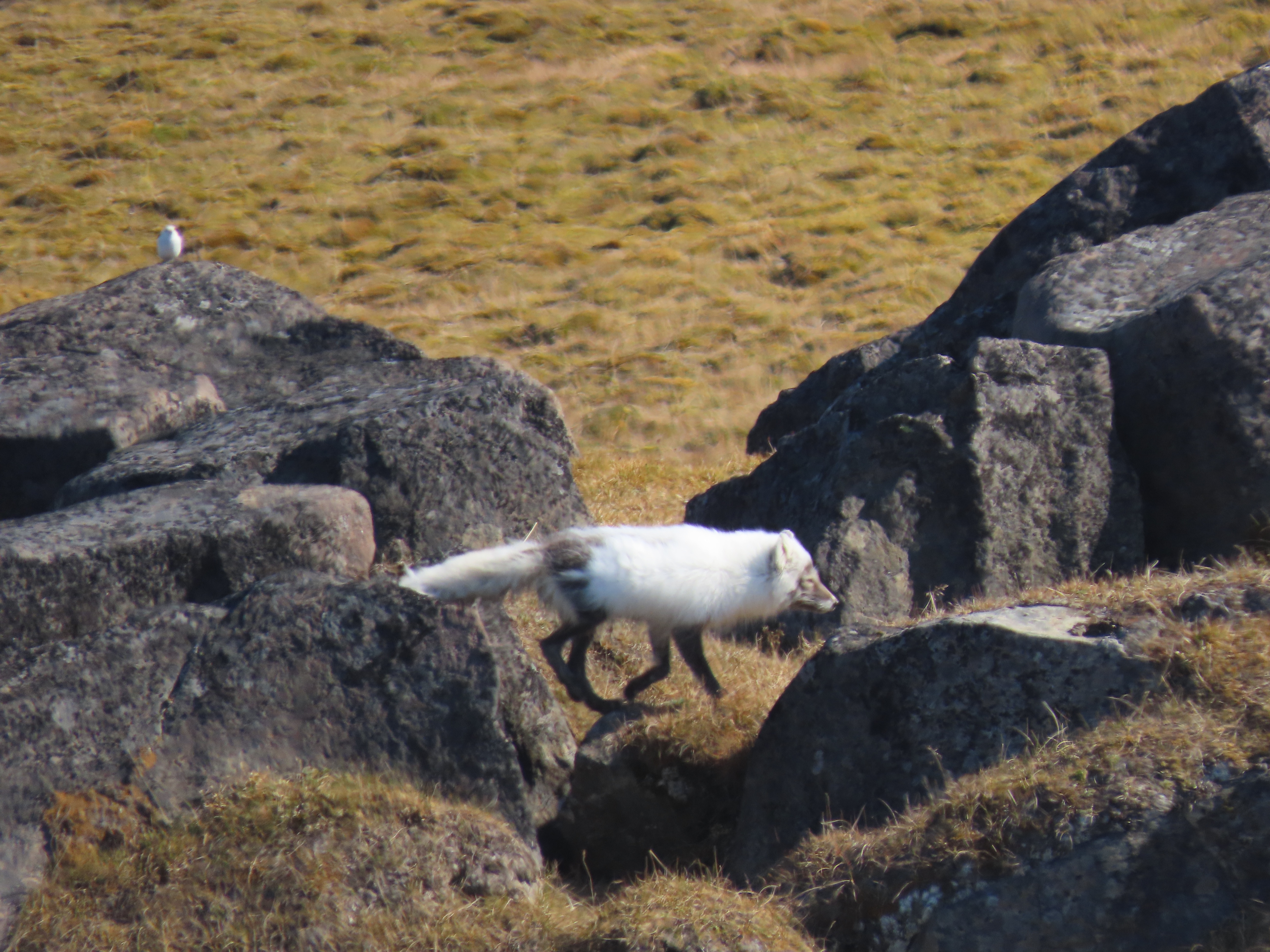
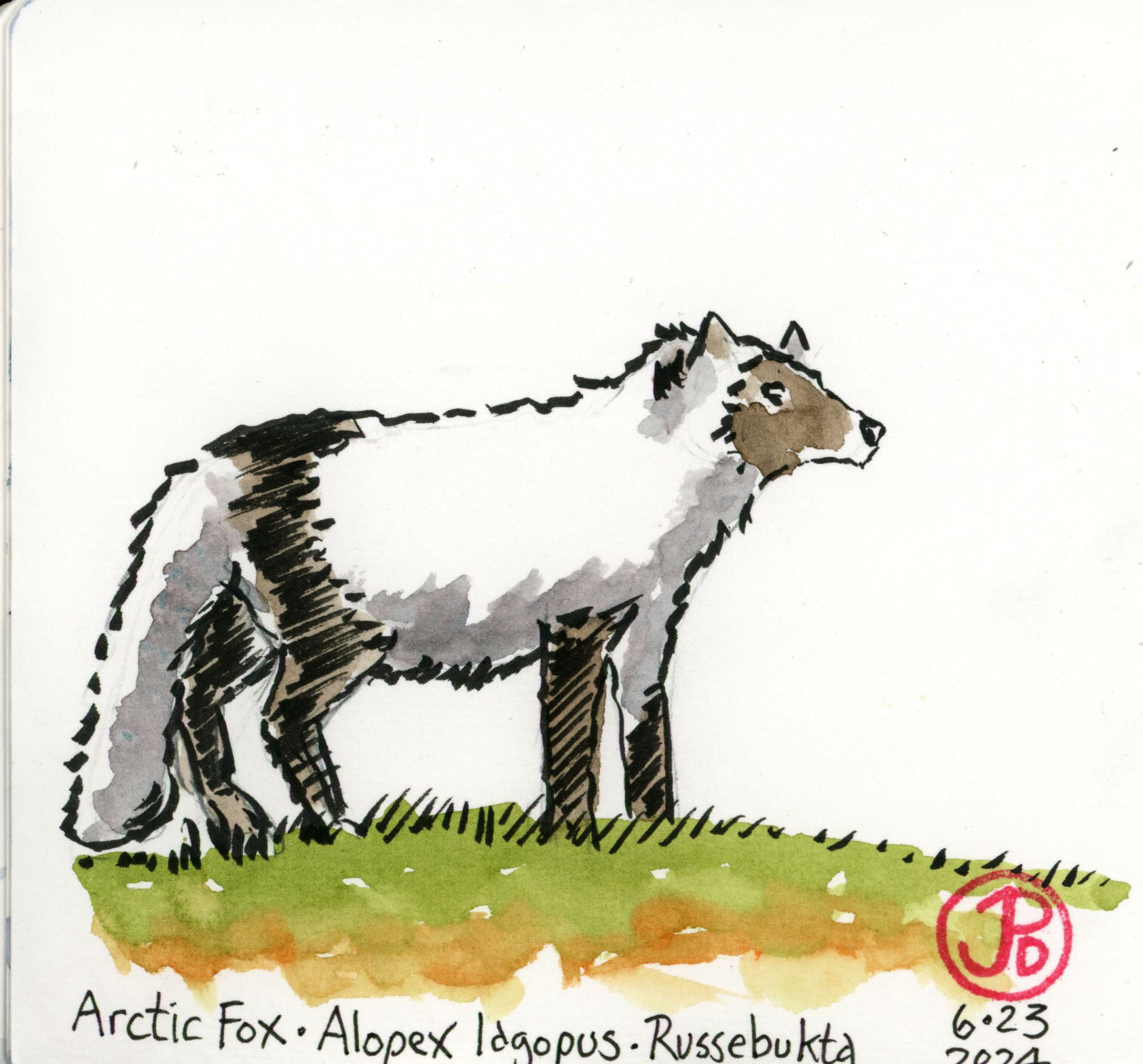
We crested a rise and on the tundra I saw my first Svalbard reindeer! After taking a few pictures we hiked on. At one stop, we were waiting for the camera horde to catch up, I spotted what I thought was a far off reindeer. But it was moving like a reindeer that had had one too many espressos. What I was looking at was not a reindeer, but an Arctic fox! Our guide noted that it was great to have a birder in the group because we are so good at spotting wildlife, even the mammalian variety.

The fox was not clearly visible to the naked eye so we turned back to shore and the Planicus. We were at the crest of a small rise near a line of rock. We were stopped again waiting for our photo stragglers. I looked off to my right and a fox appeared among the rocks, “Arctic Fox!” I exclaimed.

An Arctic fox with most of it’s winter plumage. A snow bunting above for scale.

The fox’s body was white with a darker face and legs. It superficially looked like a wolf in sheep’s clothing!

Image

Sketching the Plancius, Part 2

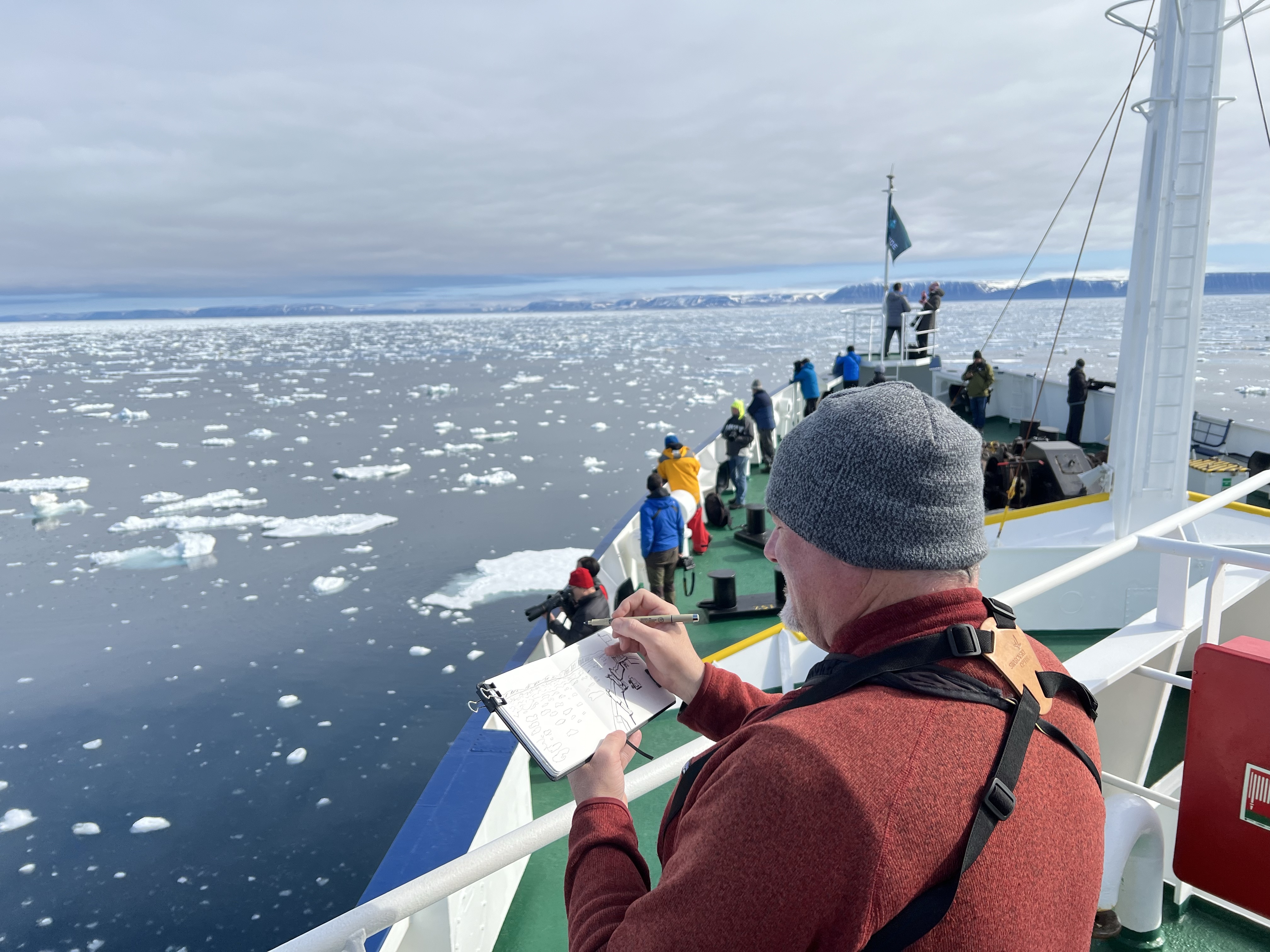
There was plenty of free time and unlimited polar daylight to sketch while aboard the Plancius.

There were two sketches I pre visualize before the trip. Sketching the bow-view of the Plancius and sketching from the bridge.

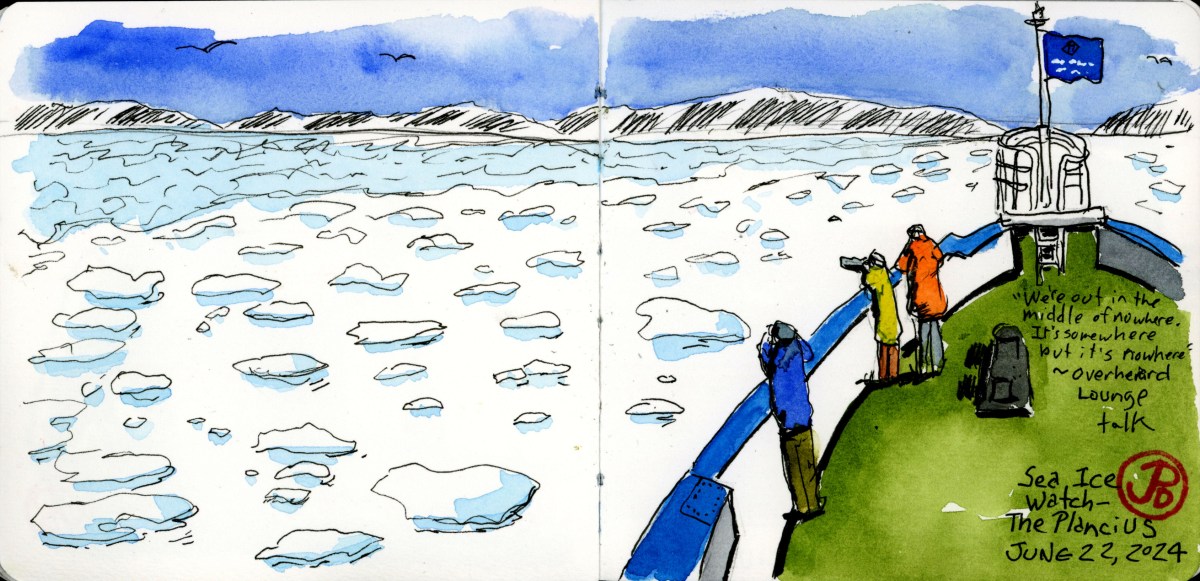
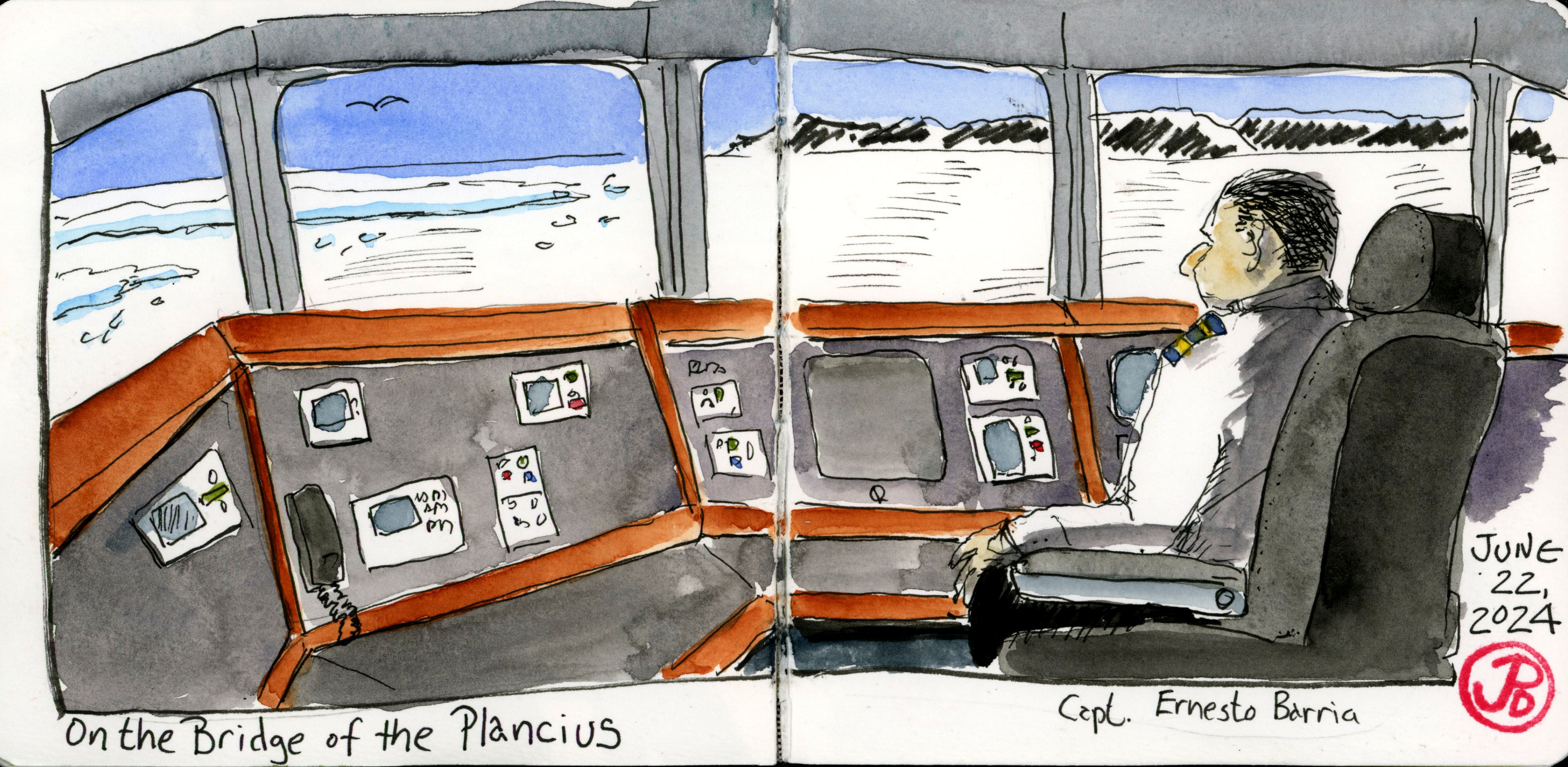
I sketched the bow view while we were moving through the pack ice. On the Plancius they have an open bridge policy which means you are invited to visit the bridge and enjoy the views. I used this time to sketch the bridge and our captain.

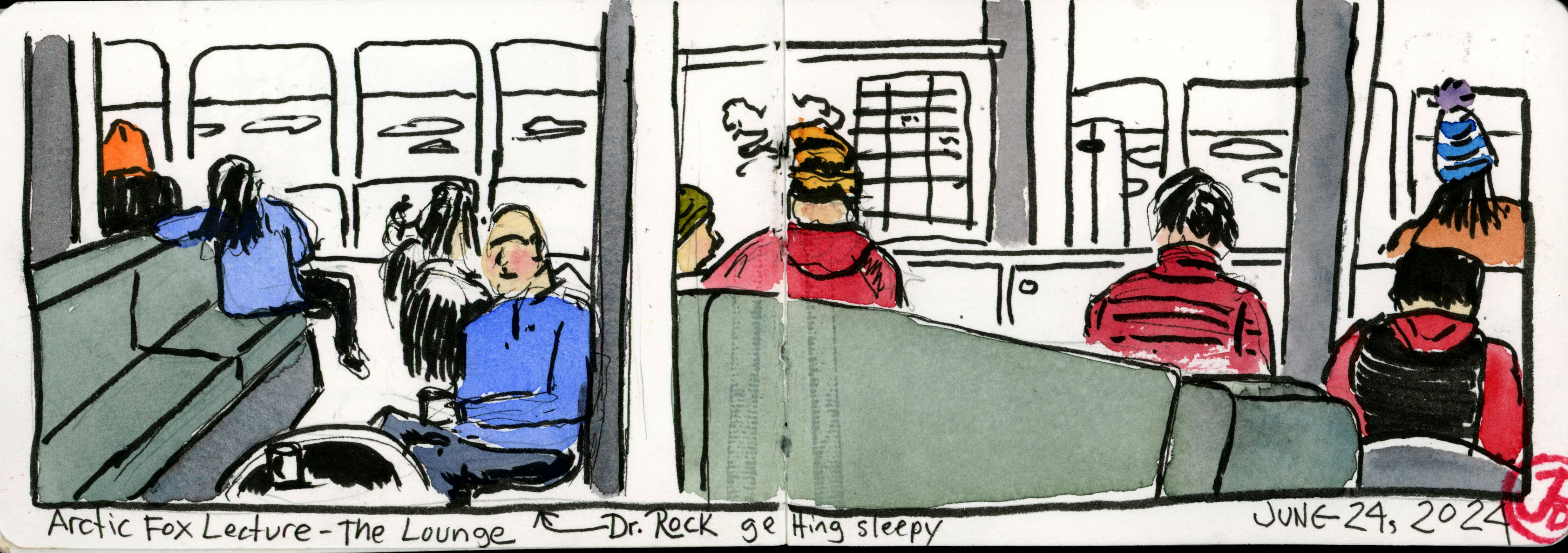
Aside from my berth, there was one part of the ship that I spent most of my time: the lounge. Here was 24 hour coffee, the bar, the library, and amazing views. This was a great place to mingle with other passengers.

It was also where the guide’s lectures were held, ranging in topics such as Svalbard reindeer, Arctic fox, walrus, geology, history, Polar mirages, and sea ice. It was also here where we were briefed about the previous day’s landings.

Before the Arctic Fox lecture I sketched a view of the lounge and its inhabitants.

Image

High Arctic Dreams

“I felt a calmness birds can bring to people; and, quieted, I sensed here the outlines of the oldest mysteries: the nature and extent of space, the fall of light from the heavens, the pooling of time in the present, as if it were water.”

― Barry López, Arctic Dreams

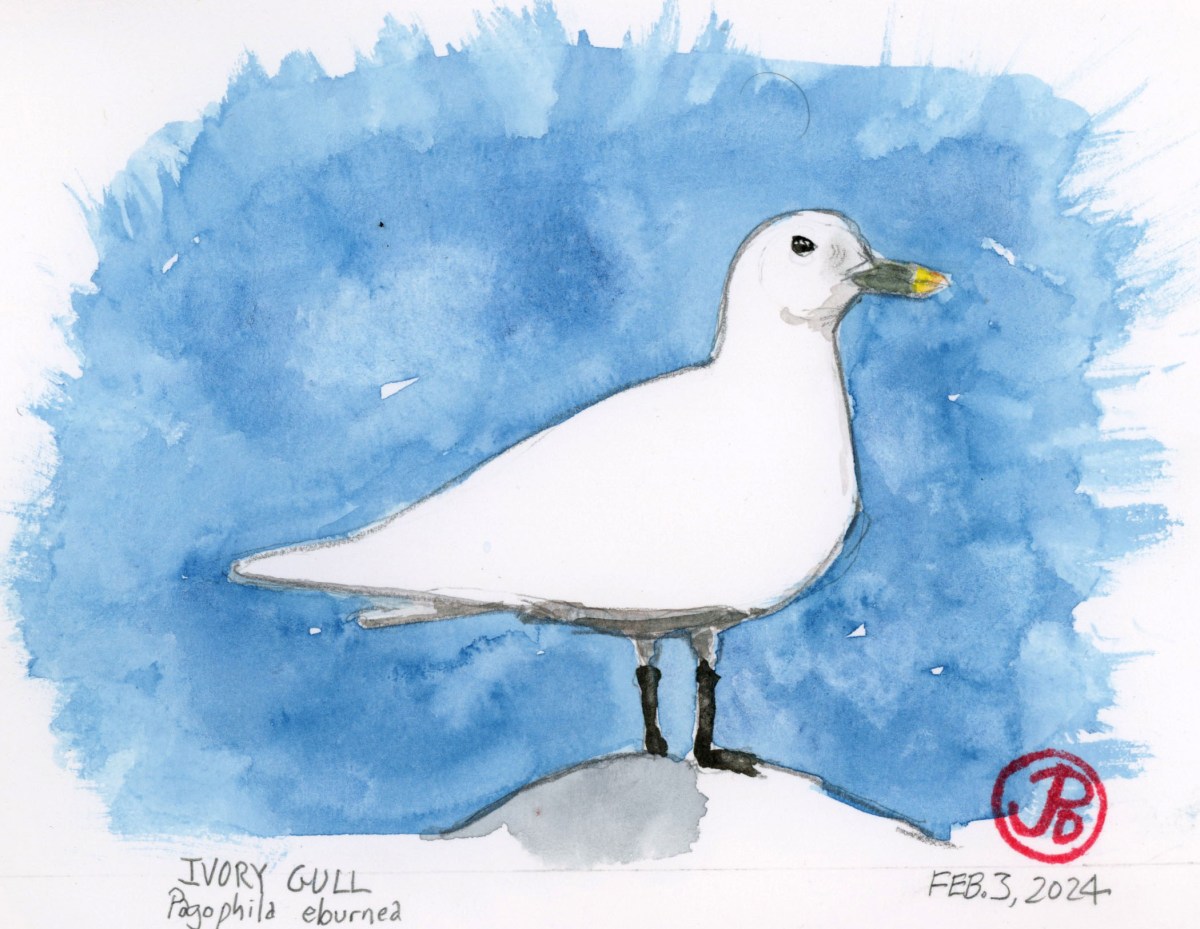
The major avian draw for traveling to the High Arctic is Pagophila eburnea, the “the ice-loving ivory-colored gull”. This would be an incredible lifer and the major totem for any birder visiting the top of the world.

Some cetaceans on my wishlist are the white whale (also known as the beluga whale), minke whale and fin whale.

I was also hoping to see some pinnepeds for the first time. They included: walrus and harp, ringed, and bearded seals.