One of the places I wanted to visit on my Trails, Roads & Rails Roadtrip was Ogden’s Union Station. Ogden, Utah is at an important point where the Central Pacific (later to become the Southern Pacific) and the Union Pacific met. There are many other “Union” stations in the United States and it is an indicator that more that one railroad used the building as a passenger station. In Salt Lake City, for example, Union Pacific and the Rio Grande have separate stations (both are no longer used as station but the building still stand). Unfortunately, Ogden’s Union Station is no longer in service as a passenger station.
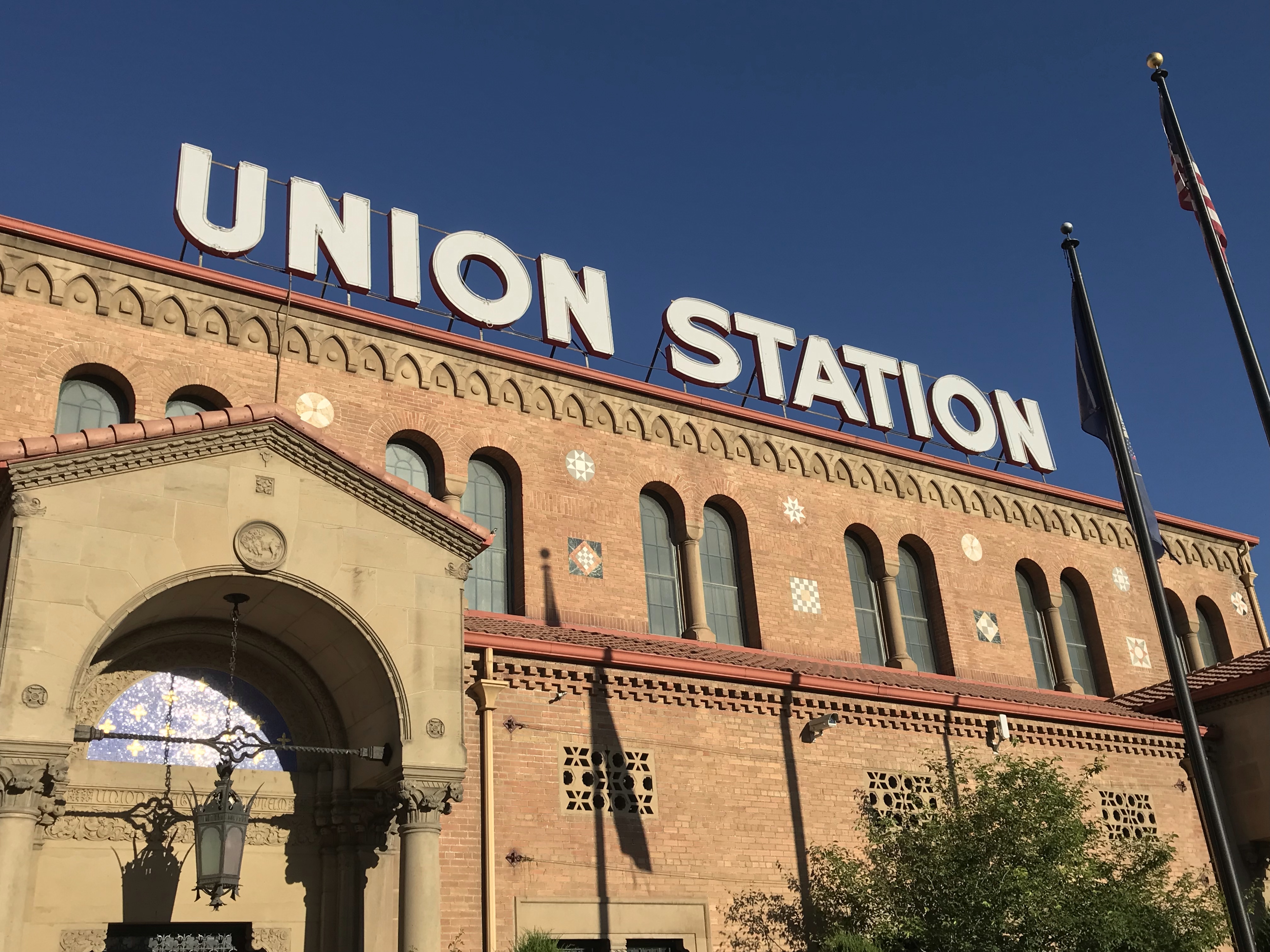
But the good news is that the building still stands and contains a cowboy, gun, art, and railroad museum. What they have outside is what really attracted me to Ogden: the locomotives and rails cars on static display! Because they were static and not going anywhere, anytime soon, made them great subjects for my sketch books.
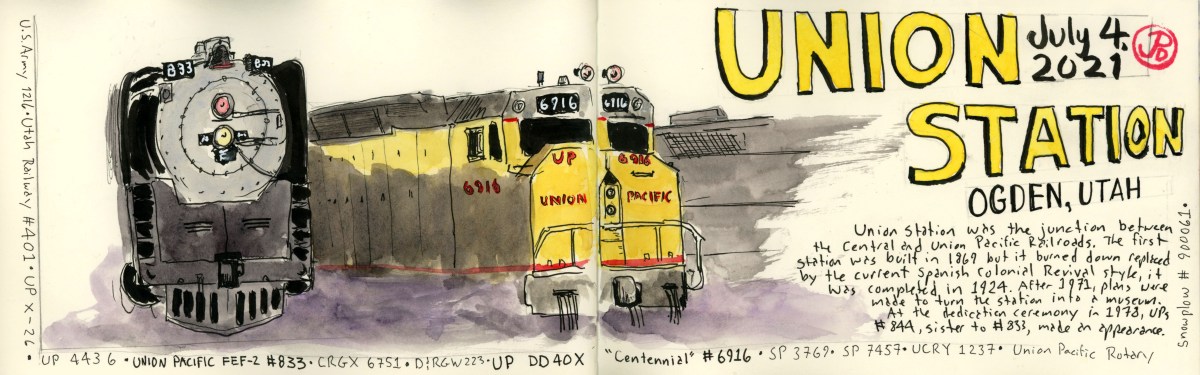
When I arrived in Ogden on July 4, the museum was closed but this didn’t stop me from doing my first sketch of Union Pacific’s passenger locomotive, a 4-8-4 FEF-2 # 833 (a sister to the more well known #844) and UP DD40X “Centennial” #6916 (featured sketch). I set up my sketching chair in the shade provided by Union Station and sketched these two locomotives. #6916 is one of the “Centennial” class and is the largest and most powerful diesel/electric locomotive ever produced. UP always does everything a bit bigger to tackle the steep grades on it’s network, like the Wasatch Range from Ogden to Green River, Wyoming.
I have posted some of the other sketches from my time at Union Station. I returned on another day when the museums were open.
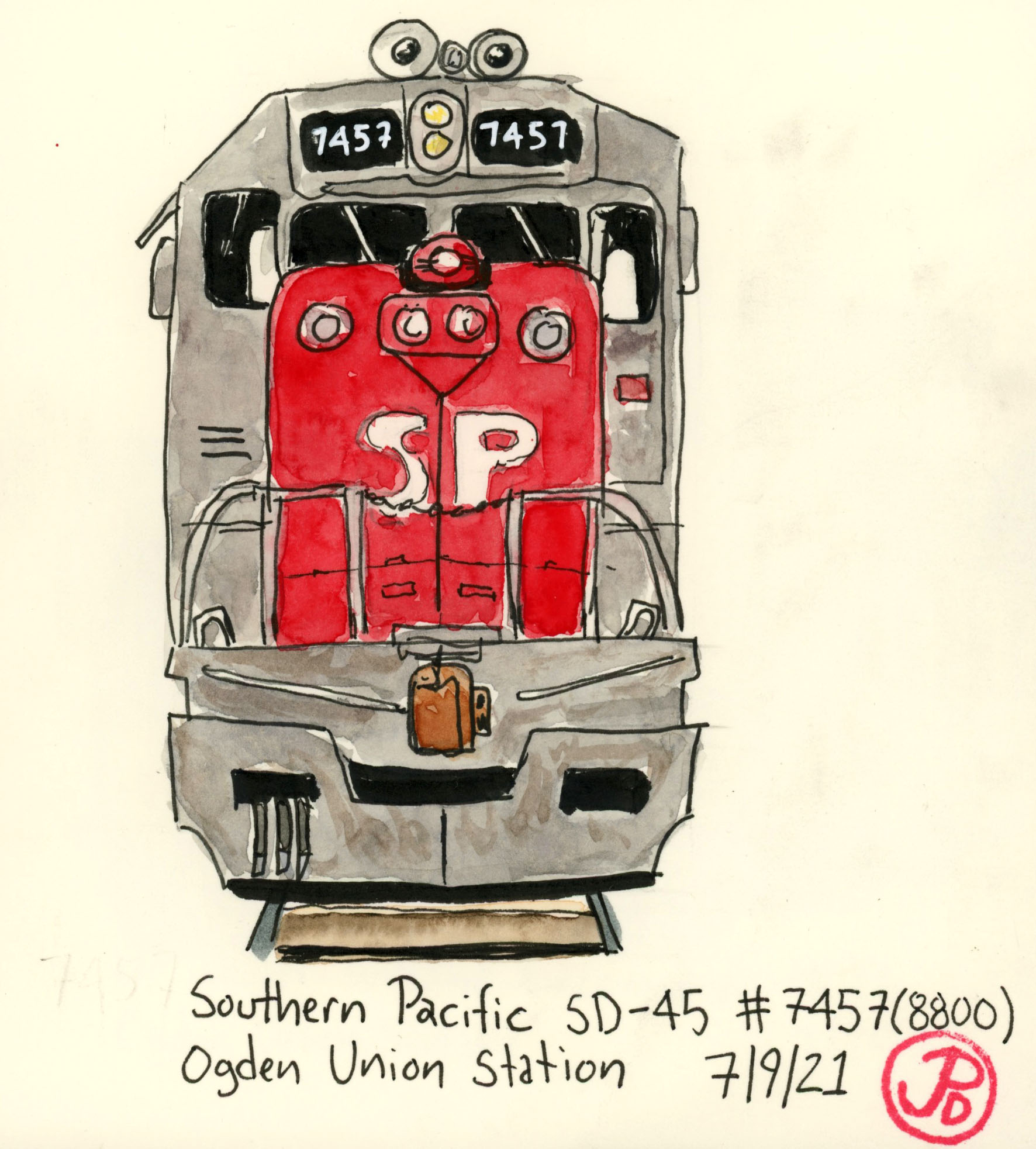
Above is a field sketch of the front of a Southern Pacific SD-45 #7457. Southern Pacific will always have a special place in my heart because this was the most likely livery to be seen where I grew up in the Bay Area. This paint scheme is known as the “Bloody Nose” livery because of it’s red front. #7457 worked from Ogden into California, pulling freight over the fabled Donner Pass.
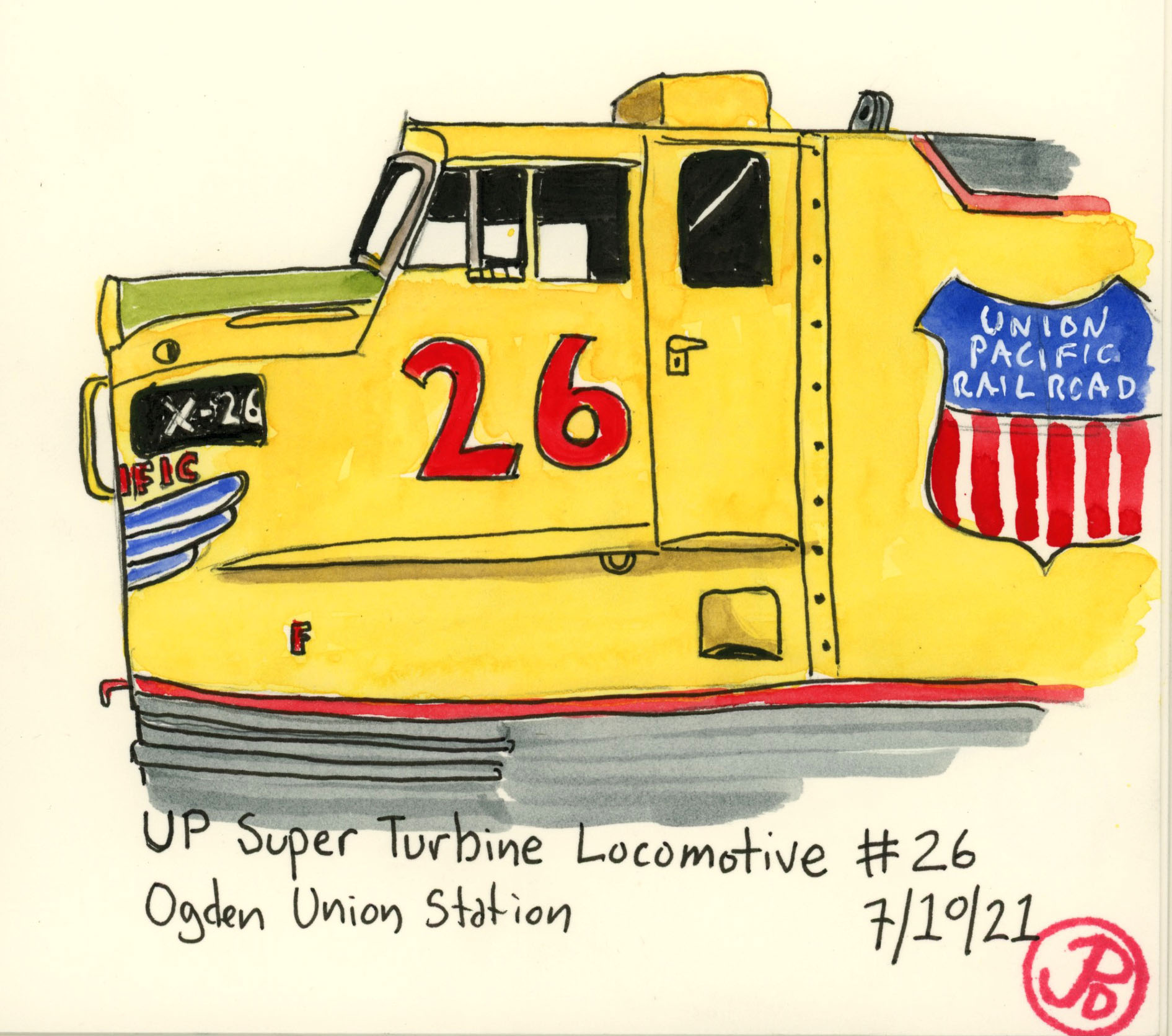
Keeping with Union Pacific’s mantra “bigger is better” I sketched the Super Gas Turbine locomotive #26. This locomotive is basically a jet engine on rails and is also known as the “Big Blow” for the loud noise it generated in operation. This was the class that was designed to replace the world’s largest steam locomotive, UP’s Big Boy. Union Pacific owned 55 of these locomotives, the only railroad in the country to own and operate these powerful beasts. Thirty locomotives (Numbers 1-30) where ordered from 1958 to 1961. These were the most powerful locomotives ever produced, generating 8,500 horsepower! That much horsepower also means an excessive amount of fuel to operate and they were last used in 1970. Number 26 is one of only two of these powerful locomotives to survive.
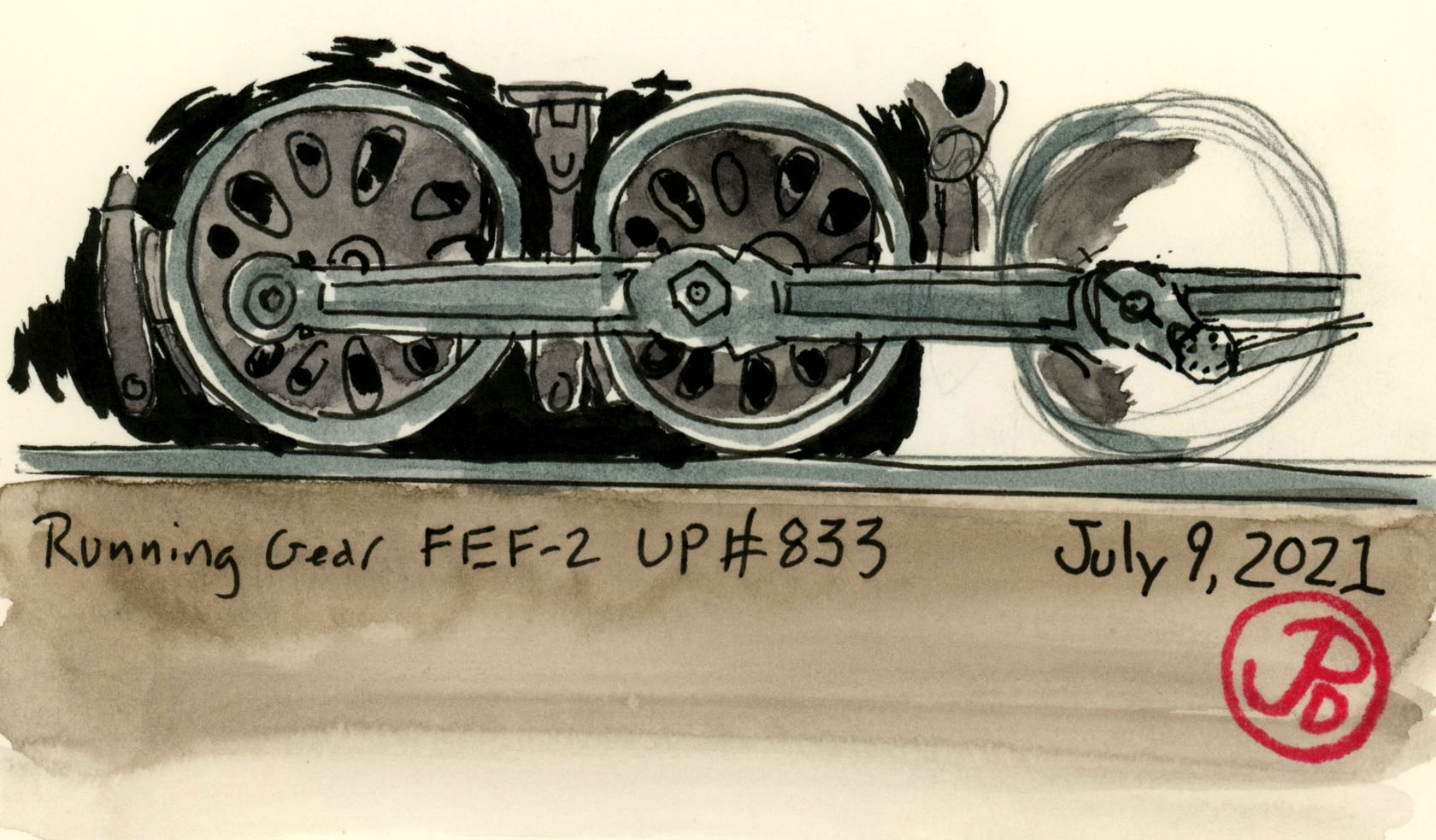
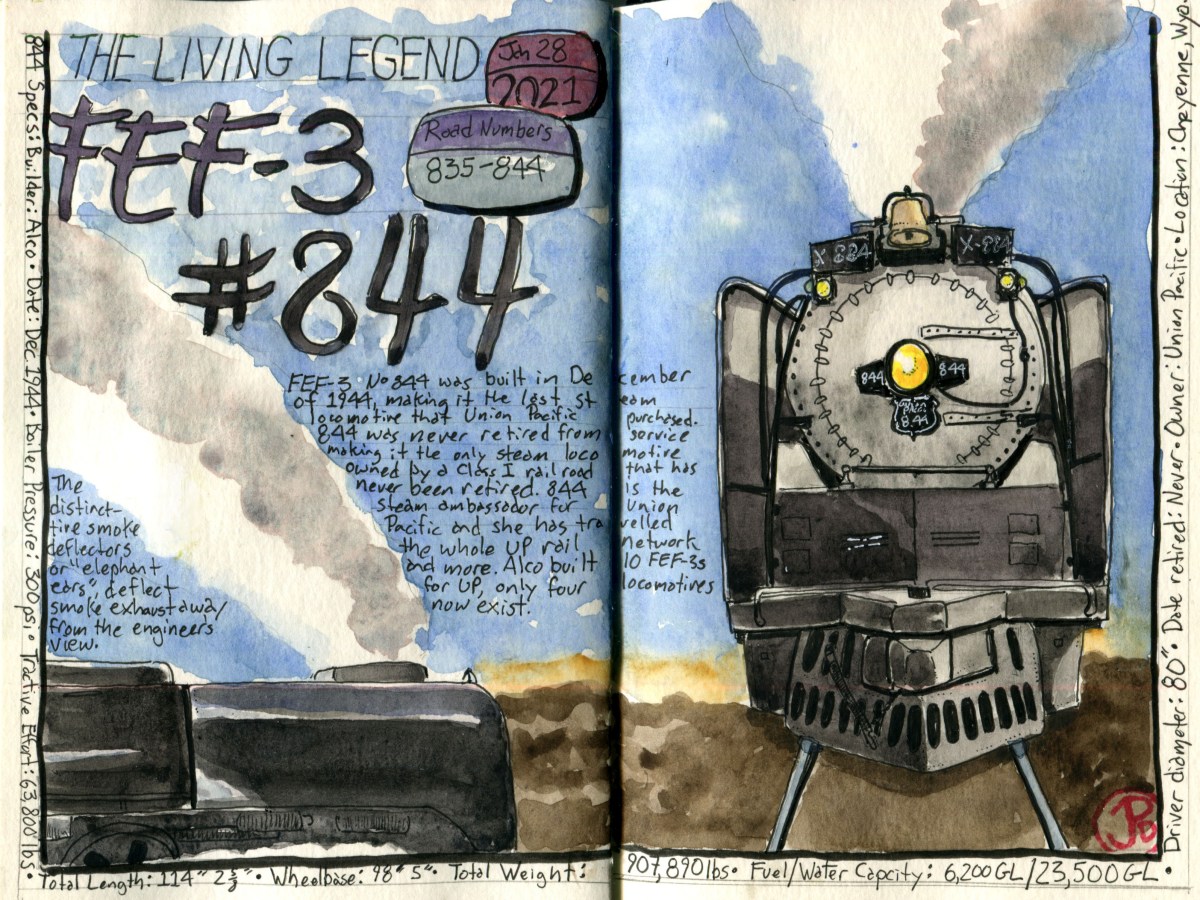
This field sketch is of the running gear of a class of successful passenger locomotives. Union Pacific FEF-2 #833 is the sister to the Living Legend, 844. 844 was the last steam locomotive purchased by Union Pacific and it is also notable as having never been retired from UP’s roster. Number 833 was put on display in a park in Salt Lake City and it was purchased by the Ogden Railroad Museum and it is the largest locomotive ever transported by truck.

 Corvid Sketcher