Image

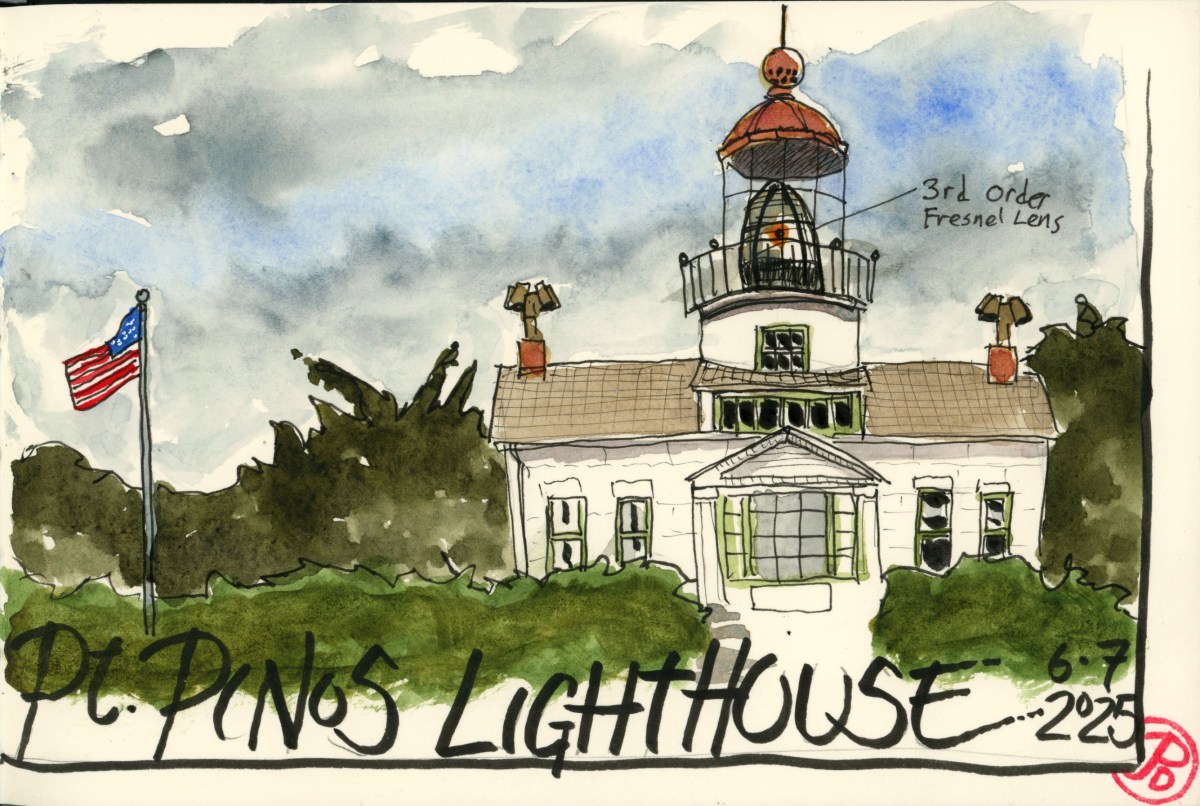
Point Pinos Lighthouse

On NPR I heard a report on the Newshour about lighthouses and their women keepers.

One lighthouse featured was the Point Pinos Lighthouse in Pacific Grove, just northwest of Monterey. What I didn’t know but learned from the report was that the lighthouse is the oldest light in continuous use on the West Coast. So it seemed like a great Saturday morning sketch adventure.
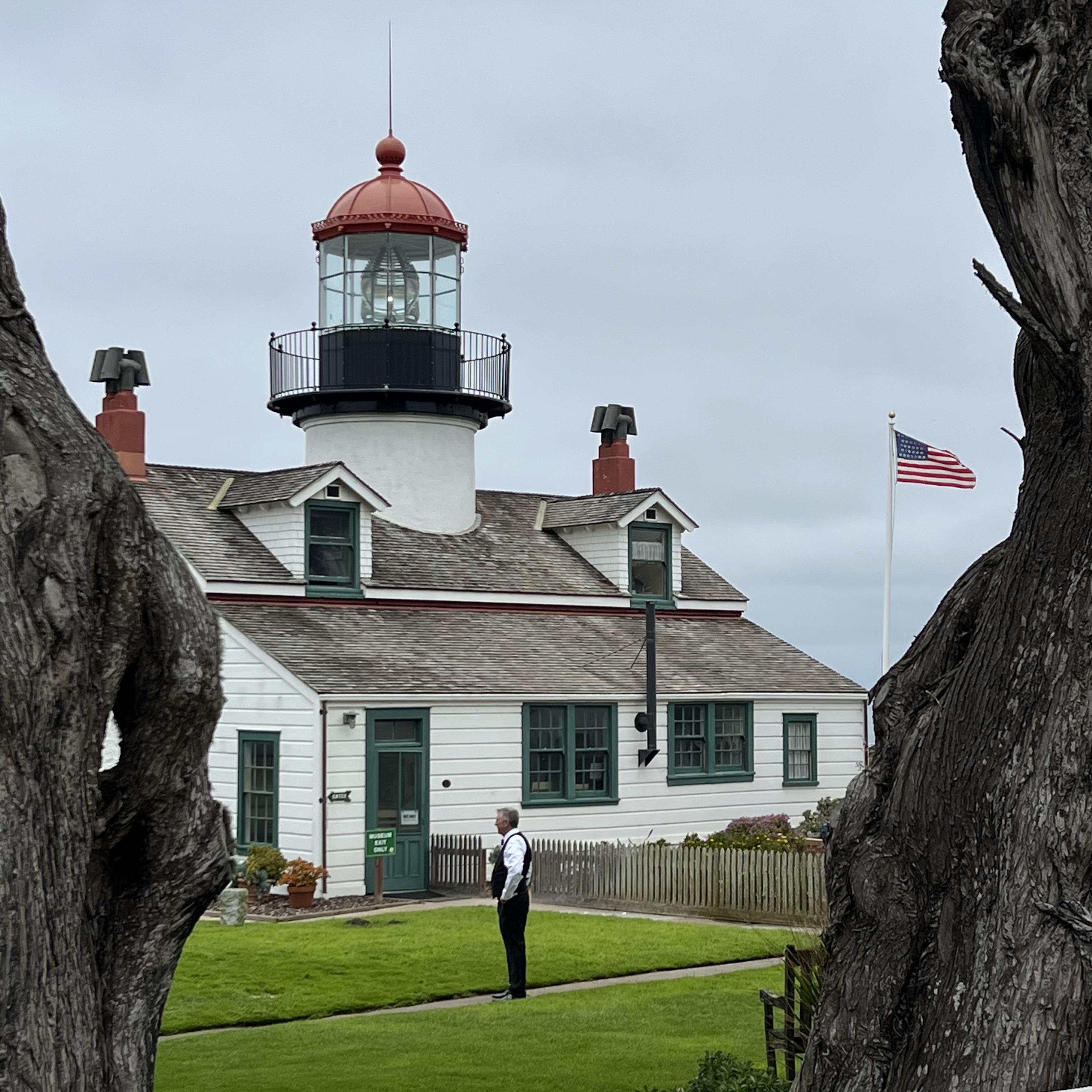
The light first shown its beam on February 1, 1855. The current lens is a 3rd-order Fresnel Lens that was built in Paris, France in 1853 which is the lighthouse’s original lens. In clear weather the light can be seen from 17 miles at sea. In dense fog the foghorns are activated.

The first woman lighthouse keeper was Charlotte Layton. She became keeper when her husband, the first keeper at Point Pinos, was murdered by while taking part in a posse to capture the bandit Anastasio Garcia. Garcia got Layton first. She was the keeper from 1856-1860.

Perhaps the lighthouse’s most famous female keeper is Emily Fish, known as the “Socialite Keeper” for her entertaining at the lighthouse. She served as keeper from 1893 to 1914. While she was not the first woman lighthouse keeper at Pt. Pinos, she was the last.
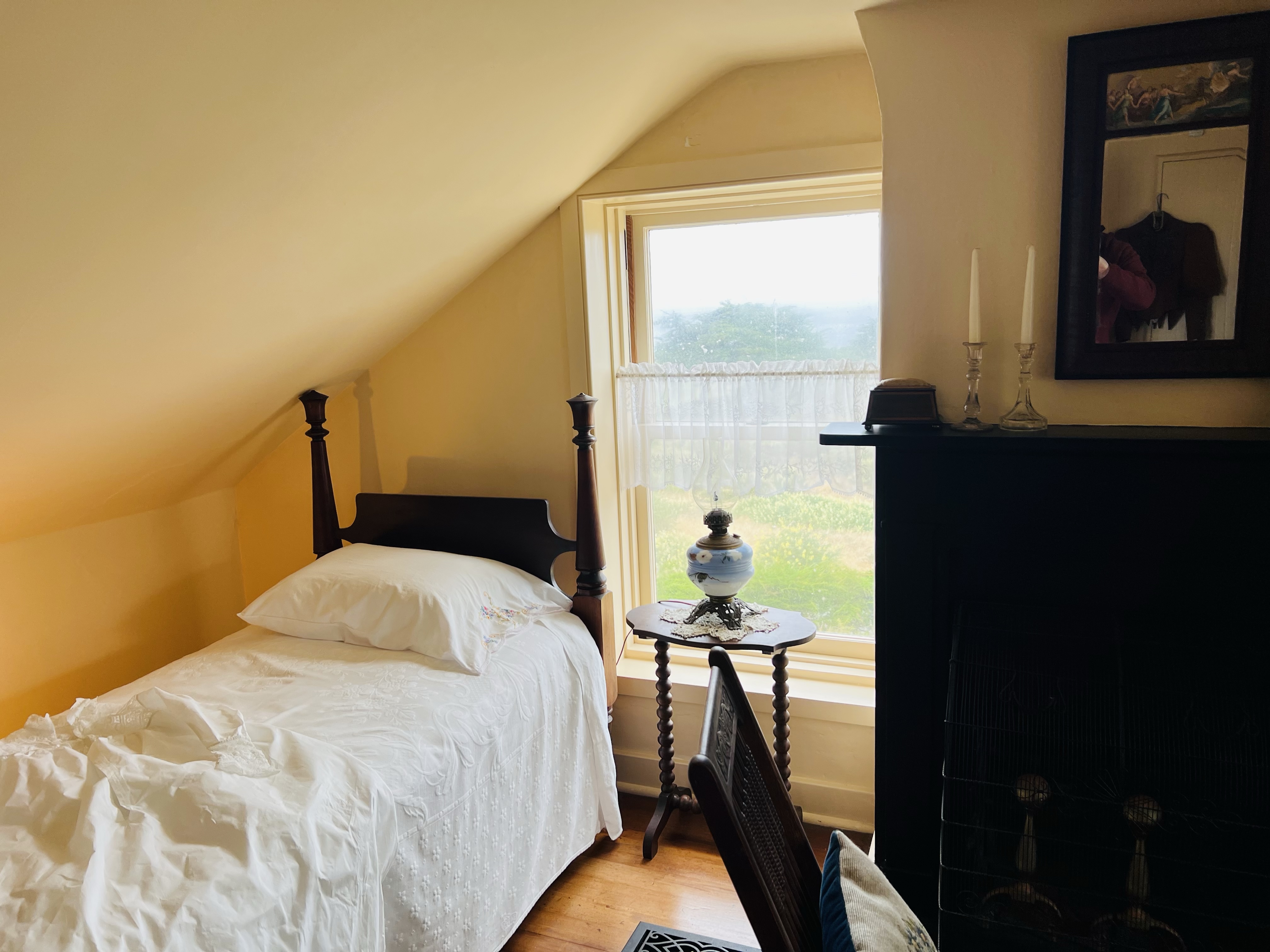
Emily Fish’s bedroom at the lighthouse.

When I arrived at the lighthouse just after 11, I was greeted by Nancy, the docent interviewed on the Newshour. I told her I was here because of seeing the lighthouse featured on the news.

I jokingly asked her if she had signed many autographs yet.
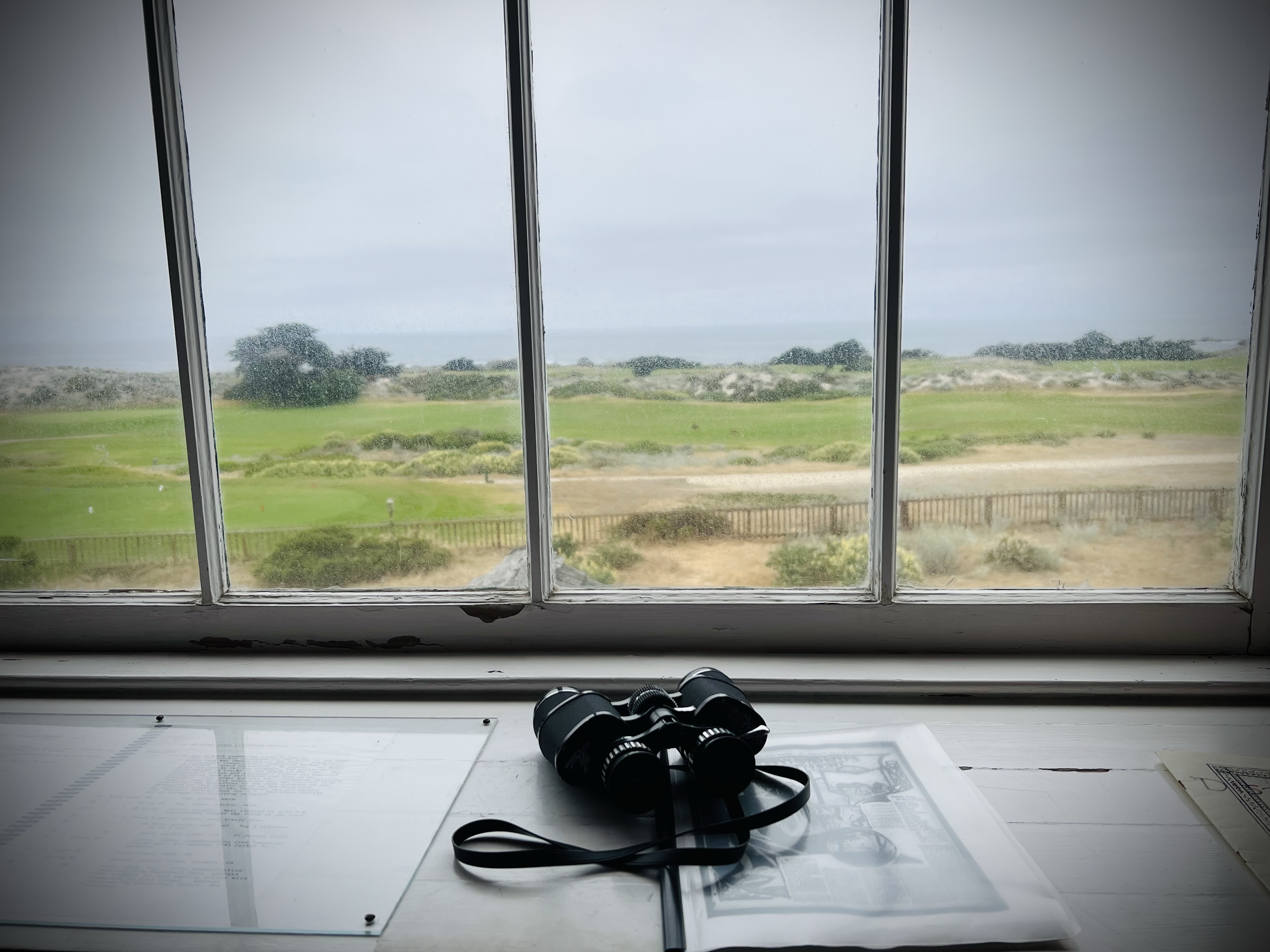
The observation room with great views of the Pacific Ocean. You feel this was a room where Emily Fish spent time filling out the keeper logs.

I walked around the lighthouse to look for a sketching perspective and thought the view from the front would do just fine (featured sketch).
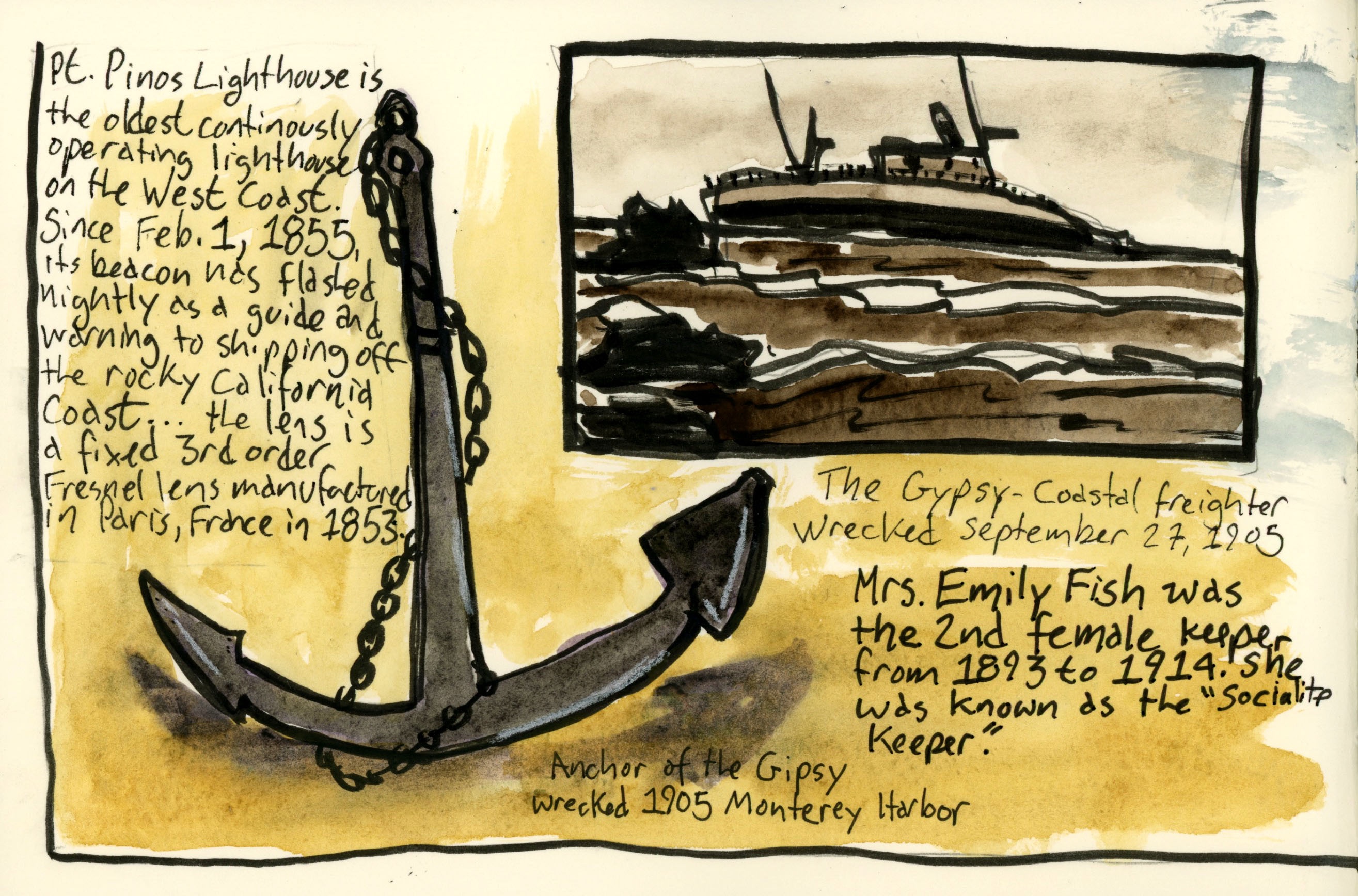
On the lighthouse grounds is the only remainder of the freighter Gipsy: her anchor. This is a reminder of why lighthouses exist, to let sailors at sea know where they are and that land is near. And hopefully the two shall not meet, well not at speed anyway.

The Gipsy hauled freight and people up and down the California Coast from San Francisco to San Diego. The ship was known as “Old Perpetual Motion”. On a foggy night on September 27, 1905, the ship was going from San Francisco to Monterey when the inexperienced relief captain mistook a red marker construction light for the marker at the end of Monterey wharf. The ship was wrecked on the rocks near McAbee Beach. The ship was a total loss.
Image

Pacific Grove Museum of Natural History

On my first full day of summer I headed 50 minutes south of Santa Cruz to Pacific Grove on the Monterey Peninsula.

This is a return trip (it had been a while) to the Pacific Grove Museum of Natural History.

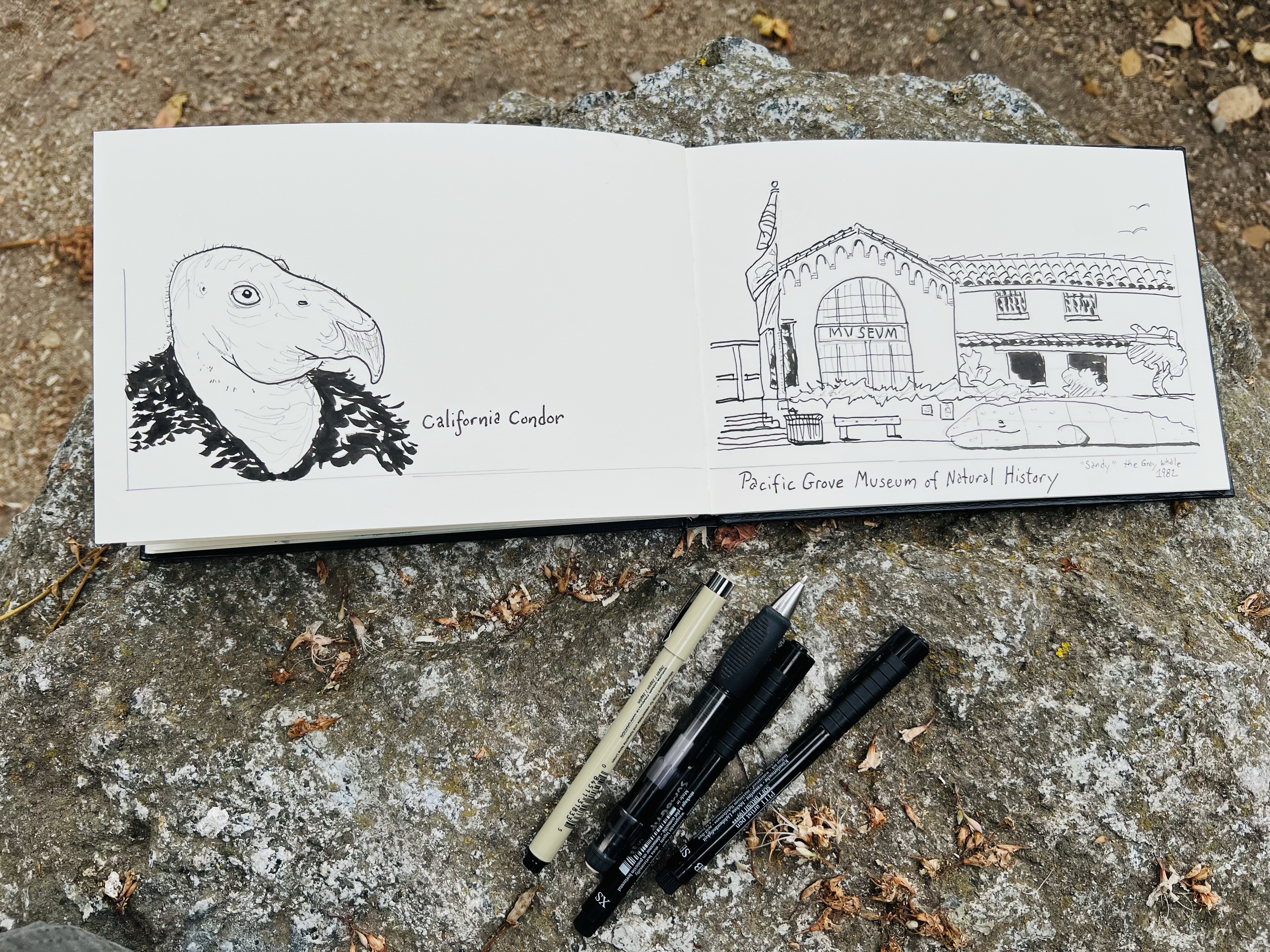
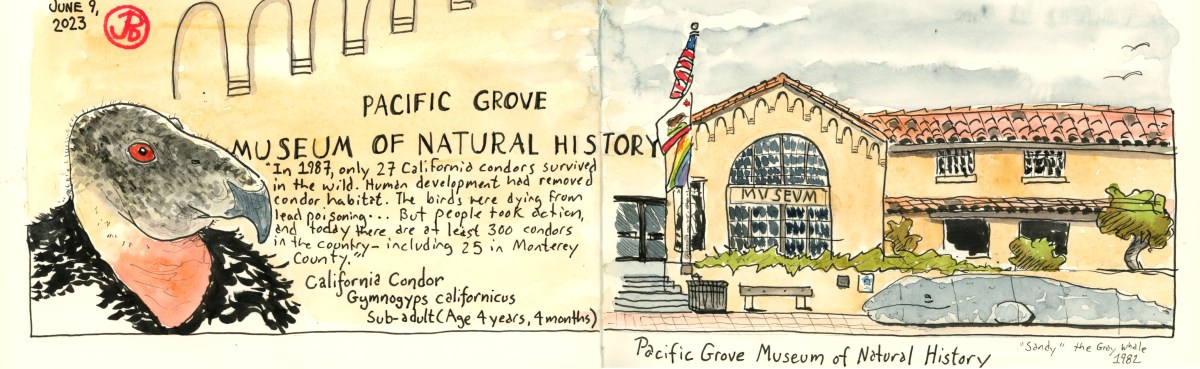
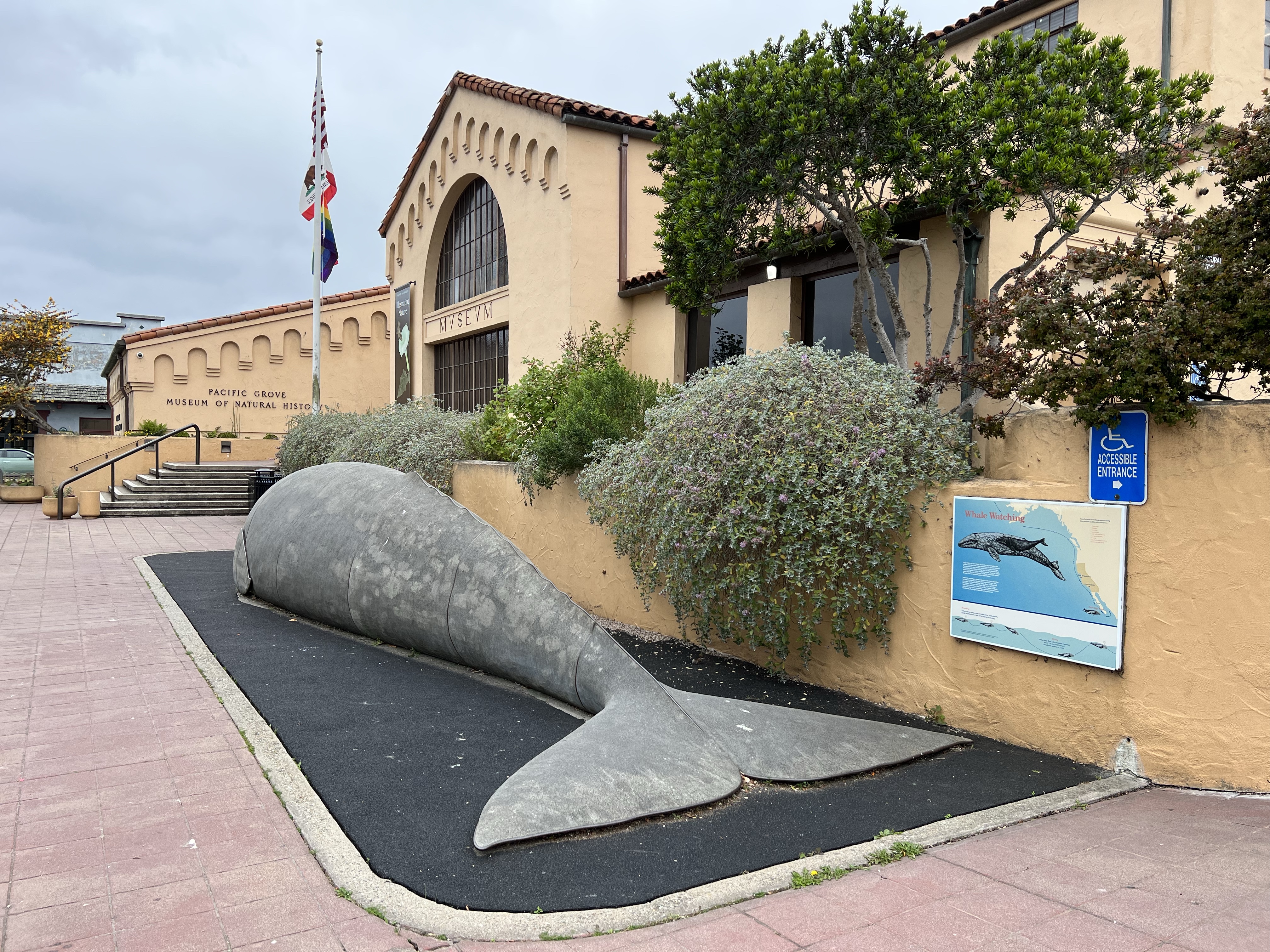
I arrived early and sat in the park across the street to sketch the 1932 Spanish Mission Revival museum. To the right was a statue of a female gray whale named “Sandy”, built in 1982.

“Sandy” in the foreground and the museum in the background.

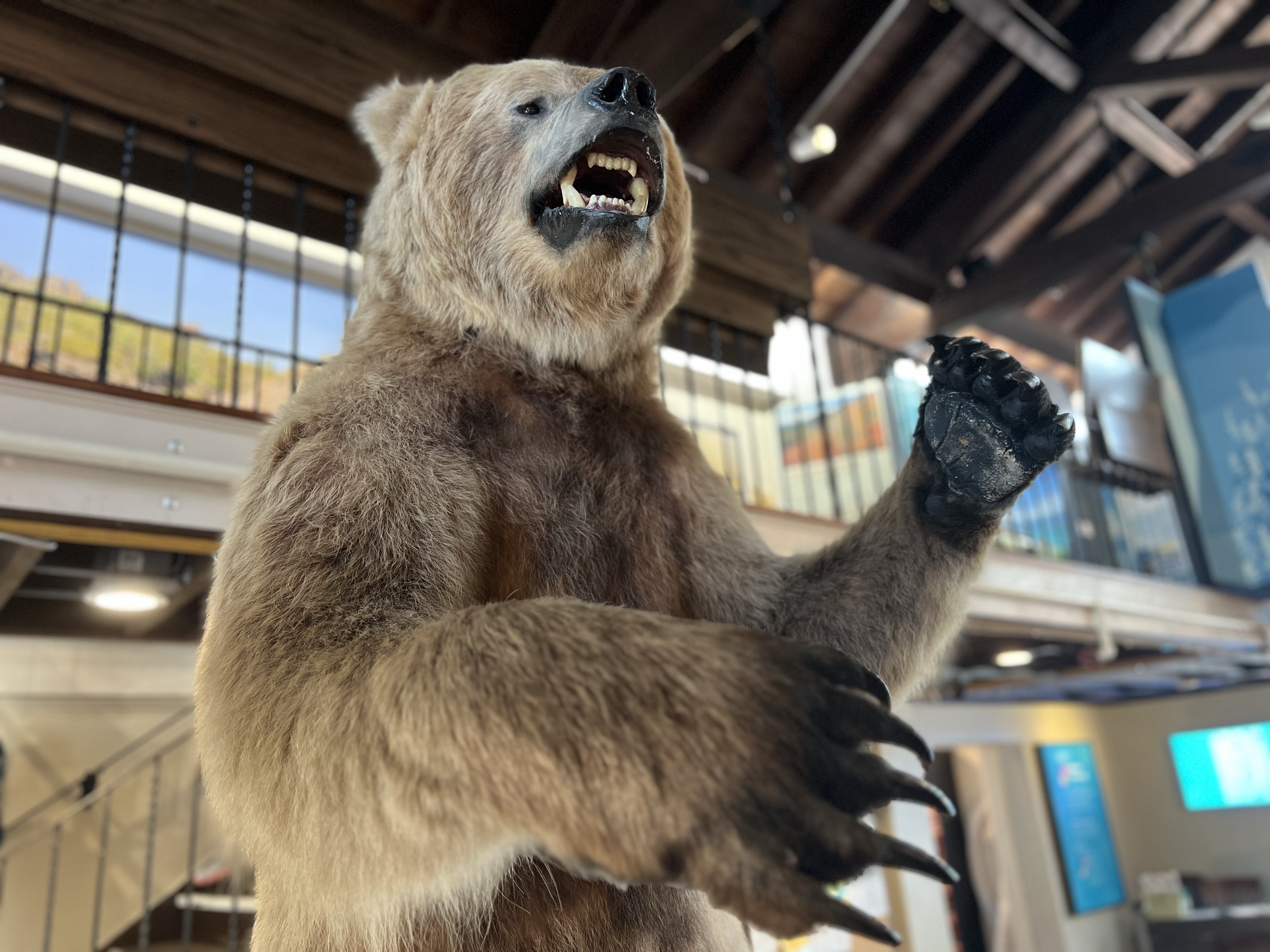
The museum opened at ten and after paying my $10 admission I walked into the gallery, greeted by a grizzly bear standing up on it’s hind legs. The grizzly is the extinct State Mammal of California. This specimen came from Alaska.

The Pacific Grove Museum of Natural History is full of animals: insects, amphibians, reptiles, fish, mammals, and birds, lots of birds. But all of them are dead. This is a mount museum where the visitor are surrounded by taxidermy. Some very lifelike but others a little comical.

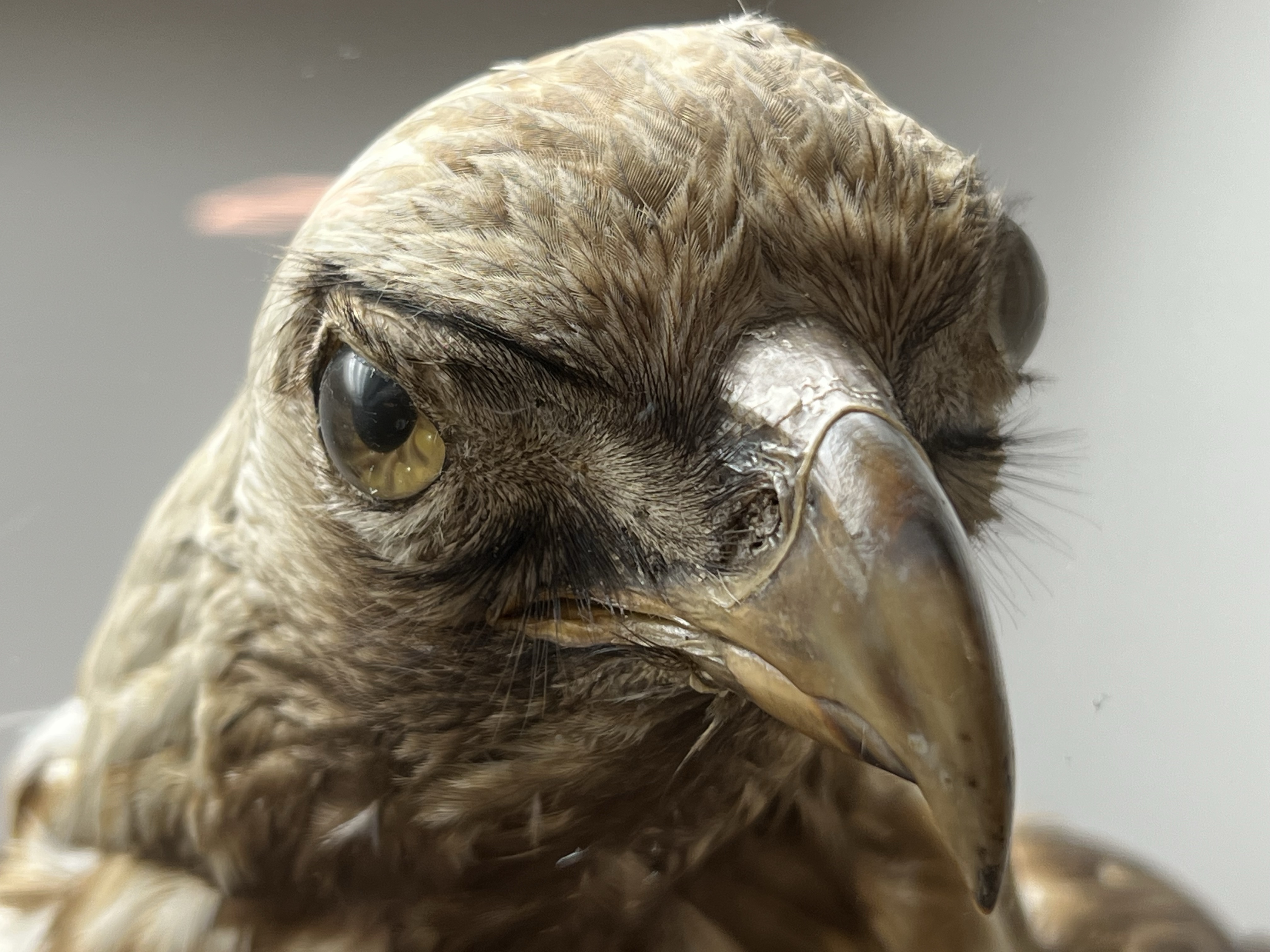
This taxidermy golden eagle looks like someone squeezed it a little too hard.

This is a sketchers paradise because it provides lots of subjects, none of which are moving anytime soon. After sketching the exterior of the museum, I added a California condor from the bird hall. These magnificent and rare birds can be seen a short distance from PG on the coast of Big Sur.

My spread in progress from the Monterey Native Plant Garden in the back of the museum.
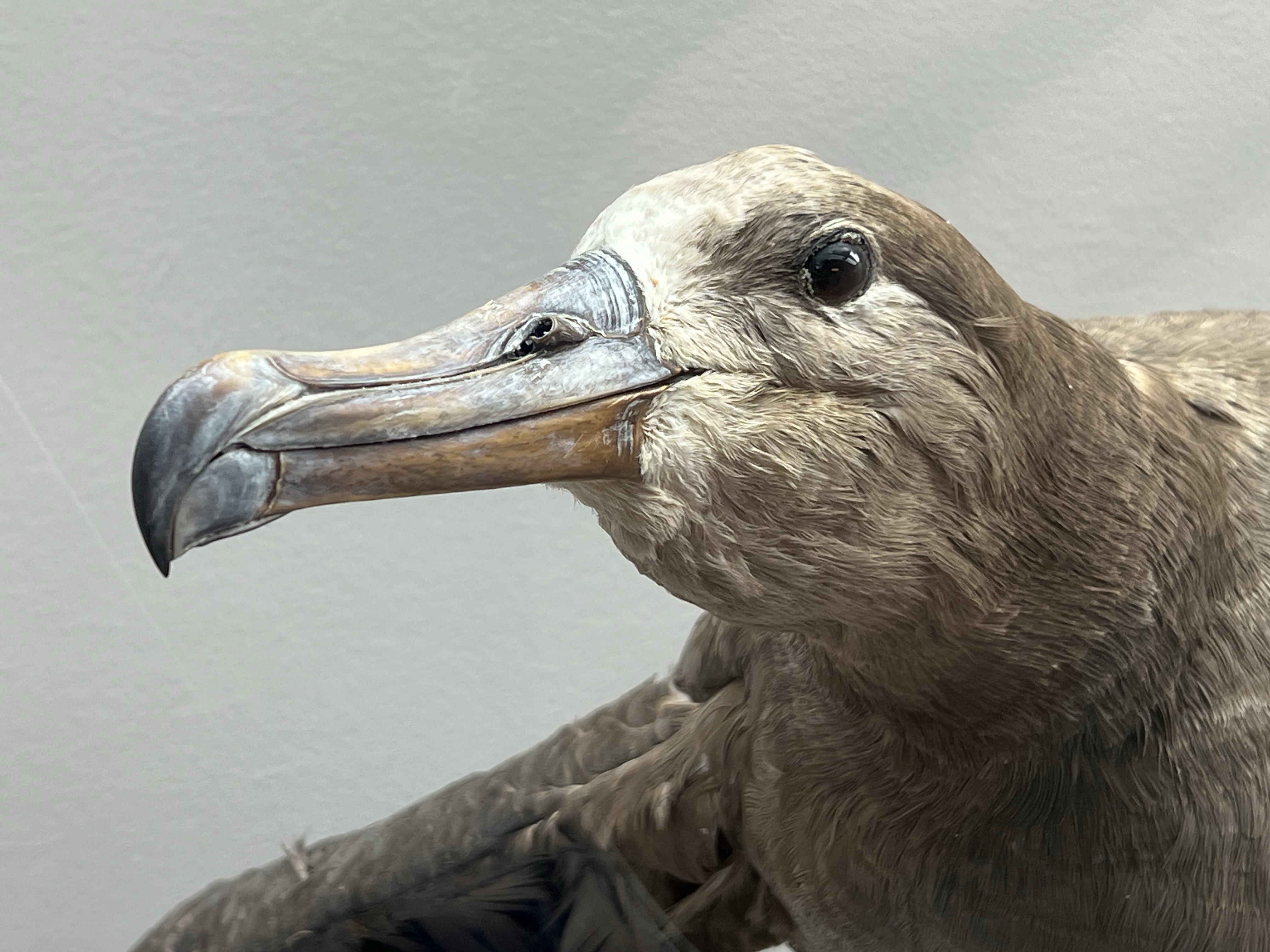
The black-footed albatross can be seen in the Monterey Bay, usually on a pelagic boat trip. A Northern California coast pelagic trip is not the same without a sighting of this iconic species.

One avian mount that I was looking forward to sketching was the extinct passenger pigeon. In Washington I had seen “Martha”, the last passenger pigeon at the Smithsonian Museum of Natural History so I was looking forward to sketching PG’s pigeon.

I looked and looked but I could not find the passenger pigeon. I thought it might be in the pigeon cabinet between band-tailed pigeon and rock dove. Nope. I even asked the lady at the desk and I got a blank stare. You think such a noteworthy mount would be well known to museum staff. Nope. None of the docents knew where it was nor what it was.

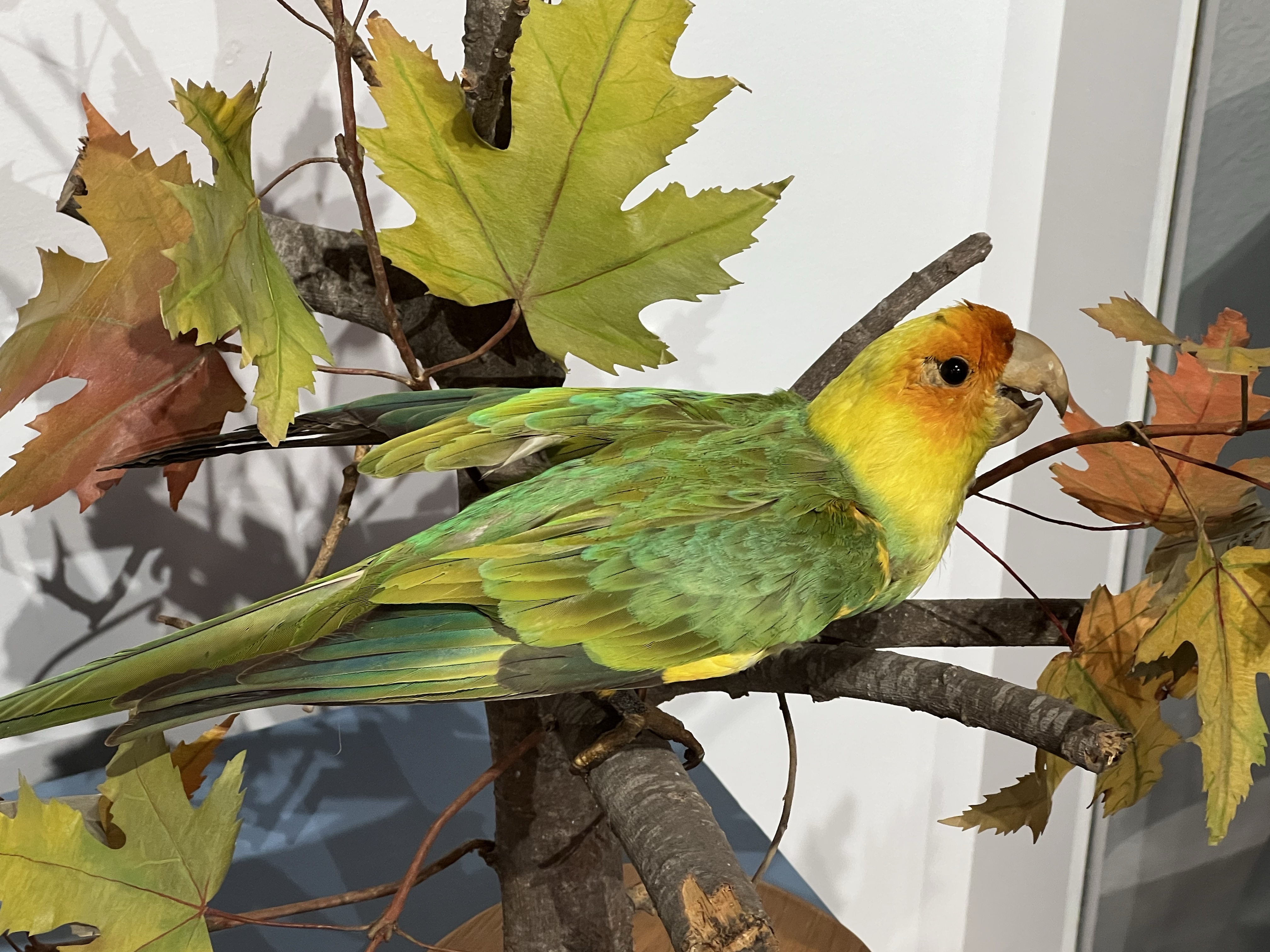
A consolidation was the mount of the Carolina parakeet, long extinct. The last individual died in 1918 at the Cincinnati Zoo.