Image

M*A*S*H, Malibu Creek State Park, Part 1

I headed out early from my Topanga Canyon digs on a 23 minutes drive to Malibu Creek State Park.

I would be hiking just over two miles (2.37 miles to be exact), on a fireroad called Crags Road, to the location set for the popular television series M*A*S*H (1972-1983). This state park was once the filming backlot for 20th Century Fox and many other tv shows and films where also filmed here, including the original Planet of the Apes. More on that film in a later post.

The level trail, which paralleled the rain-swollen Malibu Creek, was muddy from the rain over the past few days. Mist hung below the beautiful mountainous peaks of the Goat Buttes. The buttes are part of the Santa Monica Mountains, the only mountain range in California that runs west to east. I felt I was already in the “Korean” landscape of M*A*S*H. This landscape looked very familiar.

After I passed the side trail to Rock Pool, Crags Road began to climb upward in a muddy assent. The trail briefly leveled out and I headed down towards the former location of Ape City, built in the late 1960s for the sci-fi classic Planet of the Apes. But more about that in another post.

The fireroad now narrowed as it continued to parallel Malibu Creek. At this point I had not encountered a single person on my hike. I hoped that I would have the M*A*S*H site all to myself! The early bird, indeed gets the worm!
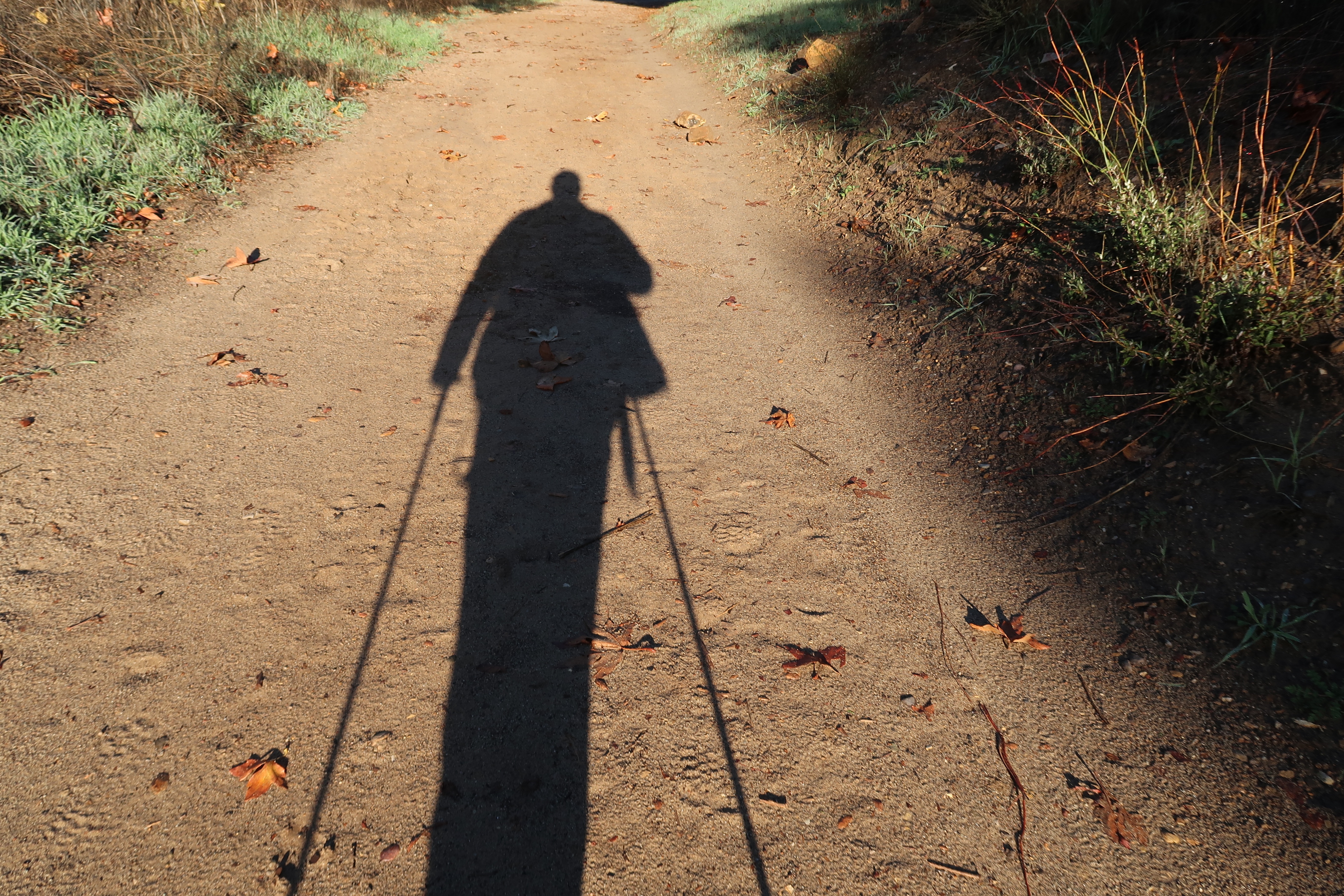
The beautiful long shadows of winter sun. On Crags Road less than 0.8 mile from the M*A*S*H site. But first I had to cross the creek.

I followed the sign to the creek crossing only to find a wooden staircase the led into the waters of Malibu Creek! The creek was impassable here, unless I was willing to swim. I looked upstream and I could just make out a makeshift “bridge” constructed of logs and tree limbs. Perhaps “constructed” is too much of word to describe the crossing but I had to chance it to get to the M*A*S*H site, which was on the opposite side of the creek.

I started across the “bridge”, carefully choosing each footfall on wobbly and far too thin sticks and logs. Here having trekking poles helped afford two more points of balance during the crossing. One pole slipped off a log and I attempted to put the pole down on the bottom of the creek, only to find that it was so deep that my pole was suspended in midwater. I made it to the opposite bank without becoming fully or partial immersion. I made sure my journals were safely stowed in a dry bag.

I now bushwacked to find the trail, which at this point did not resemble a fireroad but a single track trail. I was now very close, perhaps 0.5 of a mile and I was waiting, with childlike anticipation, for my first glimpse of the filming site. As I rounded a corner, I saw a Korean War era ambulance by the side of the trail. This marked the edge of the filming set.
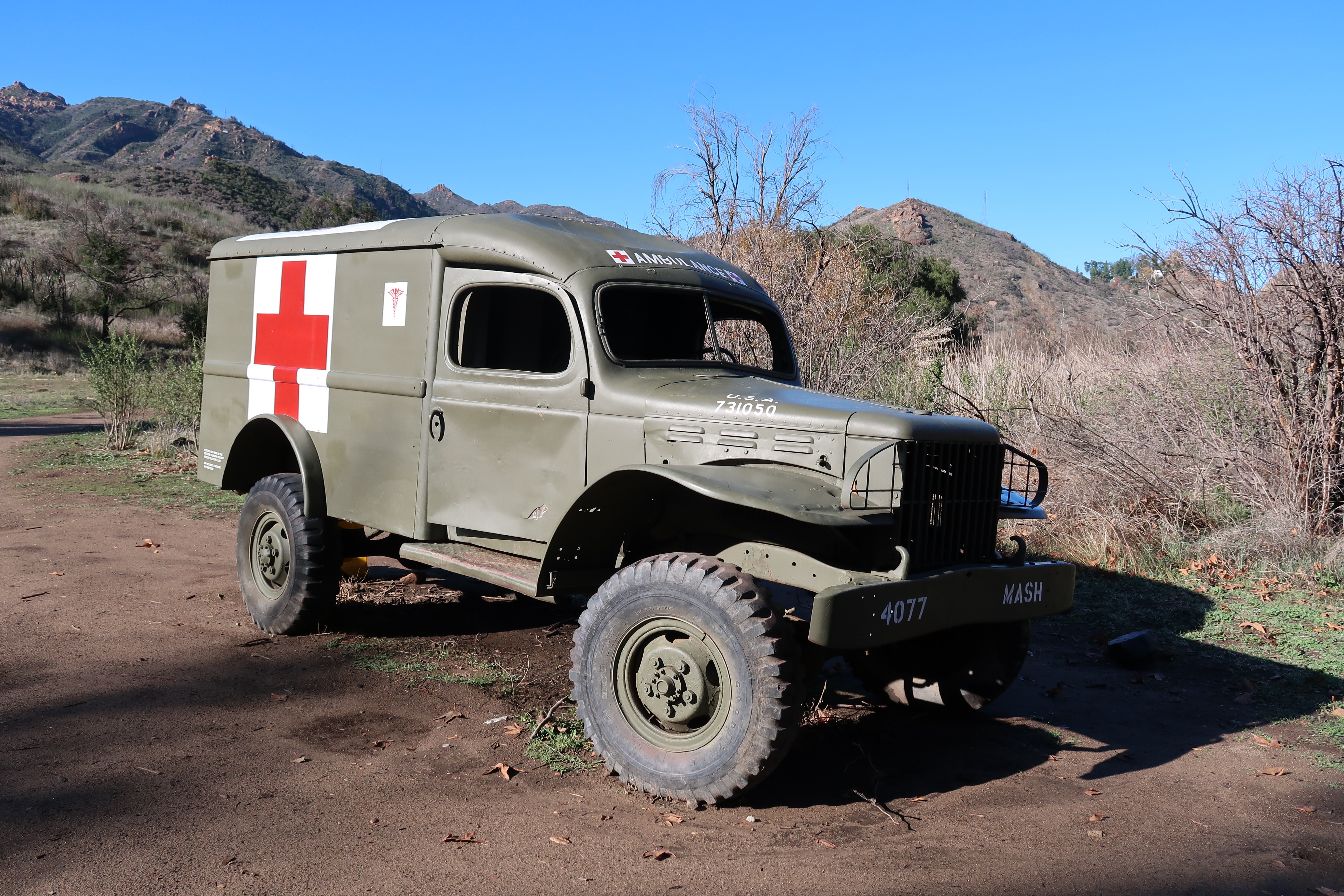
This is a restored Dodge WC54 ambulance, which, despite what other have stated online, was not actually used during the filming of M*A*S*H. When you come up this vehicle, you know you about to enter the set.

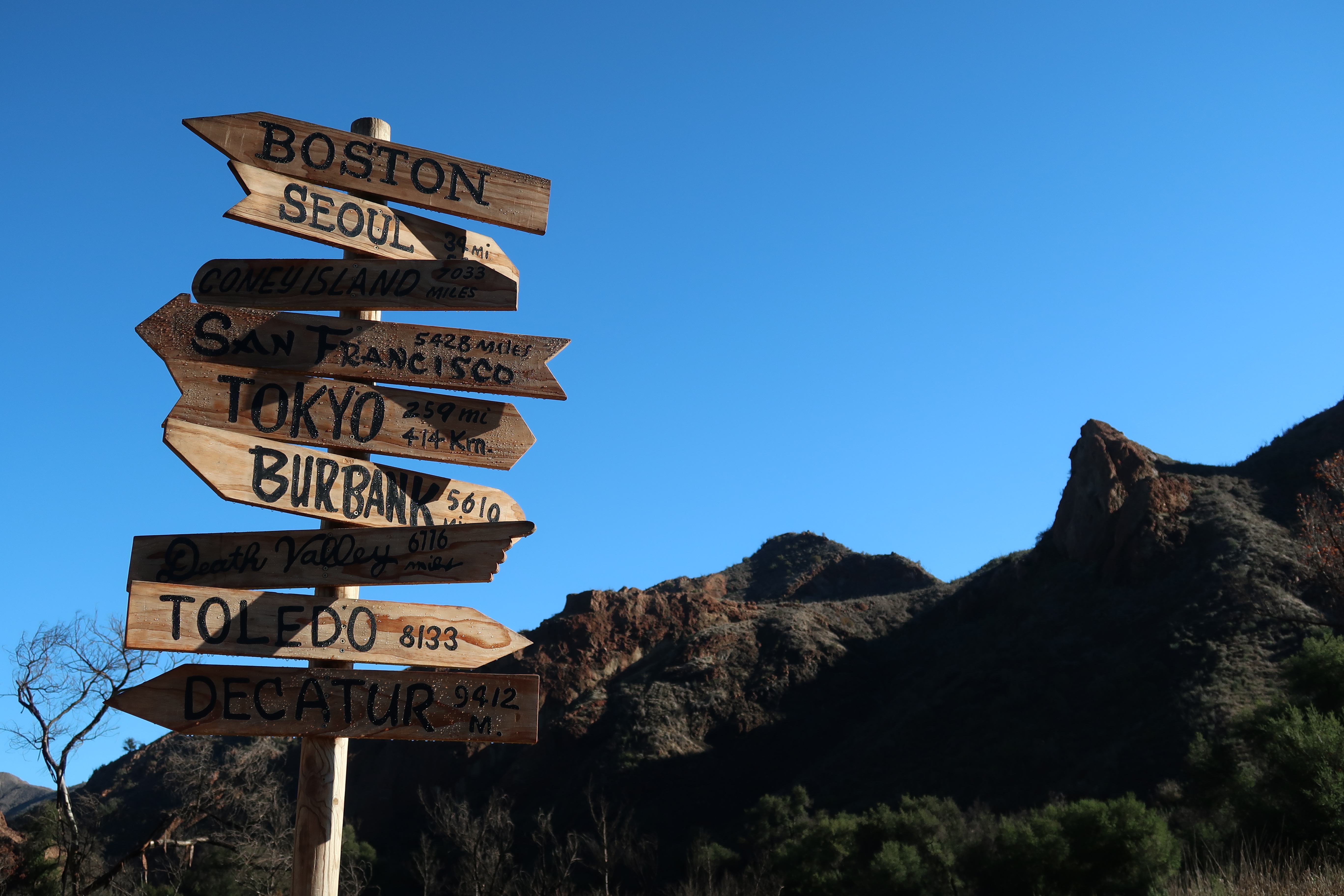
I briefly scanned the site, which included three interruptive signs, two burnt out vehicles (a jeep and an ambulance) from the series, picnic benches, and a replica of the iconic signpost that was placed just outside of The Swamp. But before I explored the site properly, I headed up to the helipad to do some sketching. And yes, I had the site to myself, in beautiful clear winter weather!
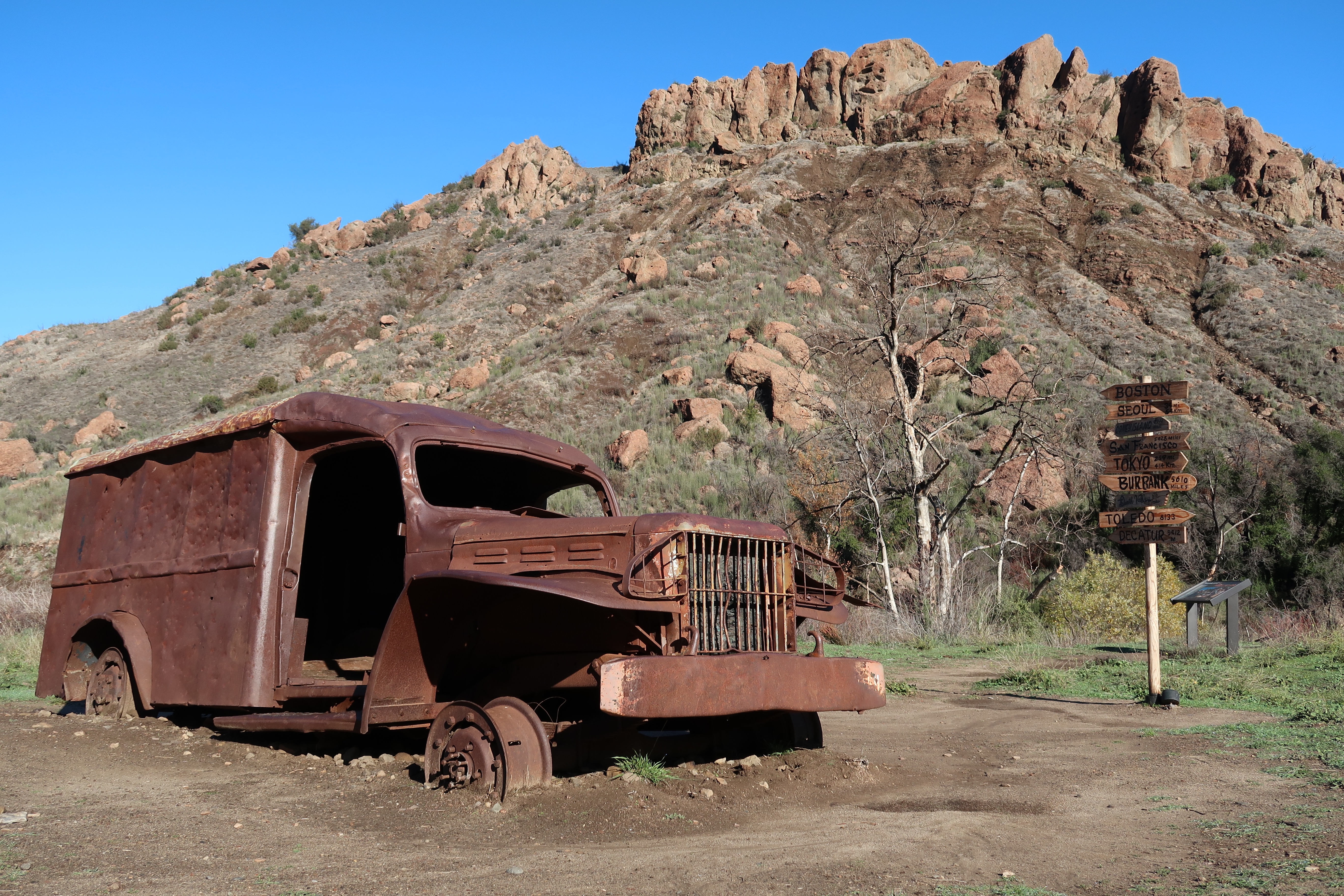
This burnt out ambulance was used in the series. An ambulance similar to this is featured in the opening credits. A brush fire burnt the set during the final episode in 1983 and the fire was written into the script.
The replica signpost with the distinctive outline of the Goat Buttes.

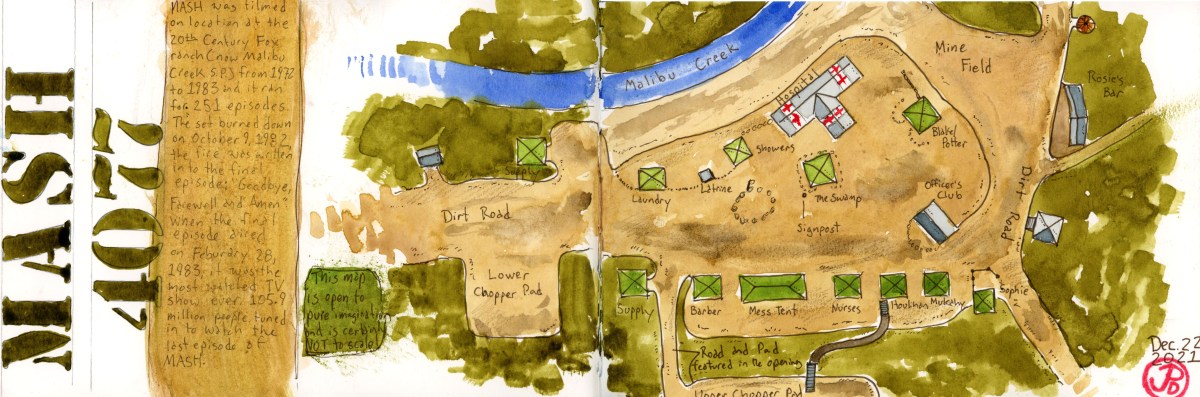
The featured sketch is a map of the M*A*S*H site. I drew this before I head down to Malibu and it helped orient me when I was visiting the location for the first time.

Image

Planet of the Apes, Pt. Dume, Part 2

After my visit to Malibu Creek State Park, I headed south on Malibu Canyon Road and then turned west on the Pacific Coast Highway to the filming location of one of the best and perhaps most shocking endings of any film.

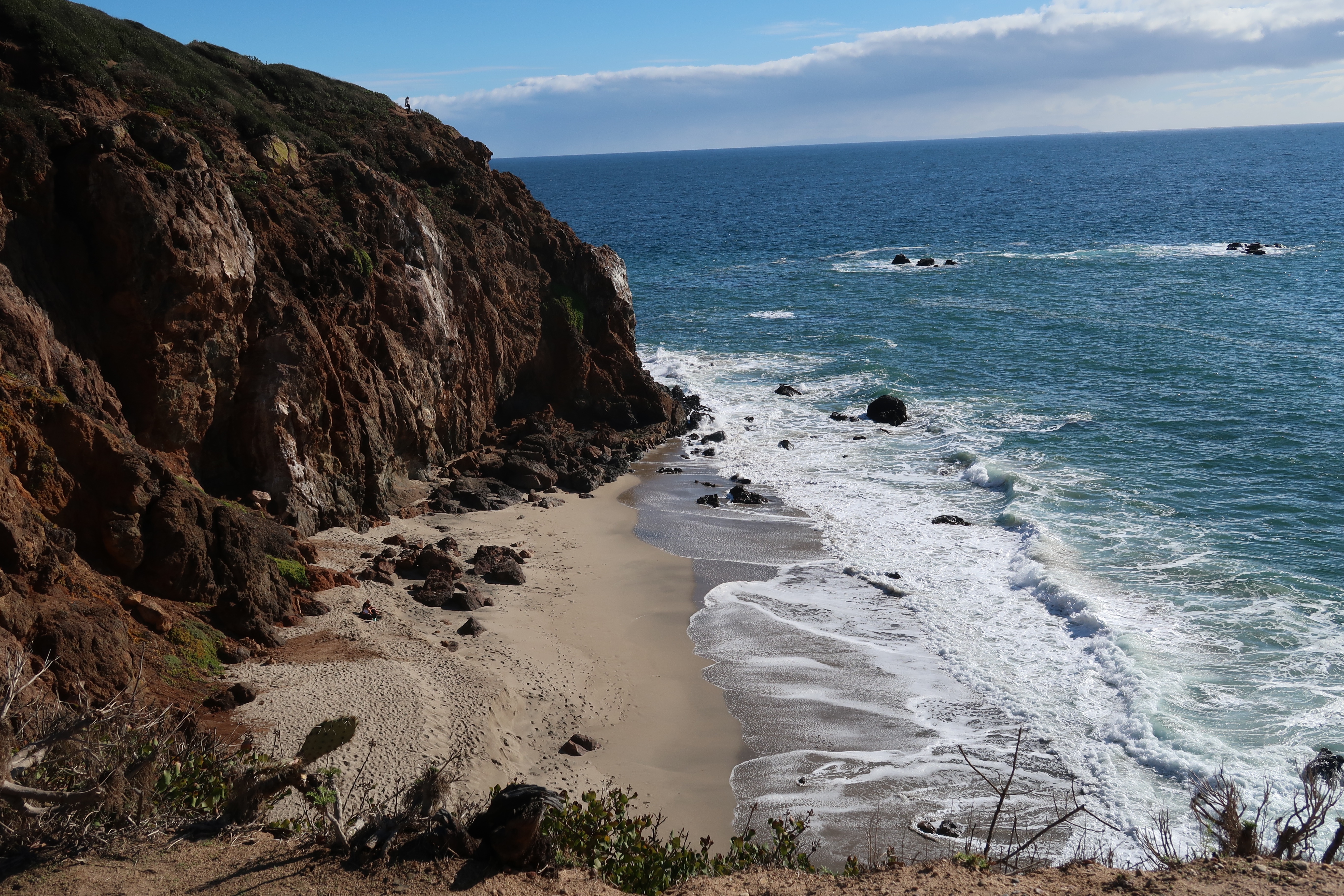
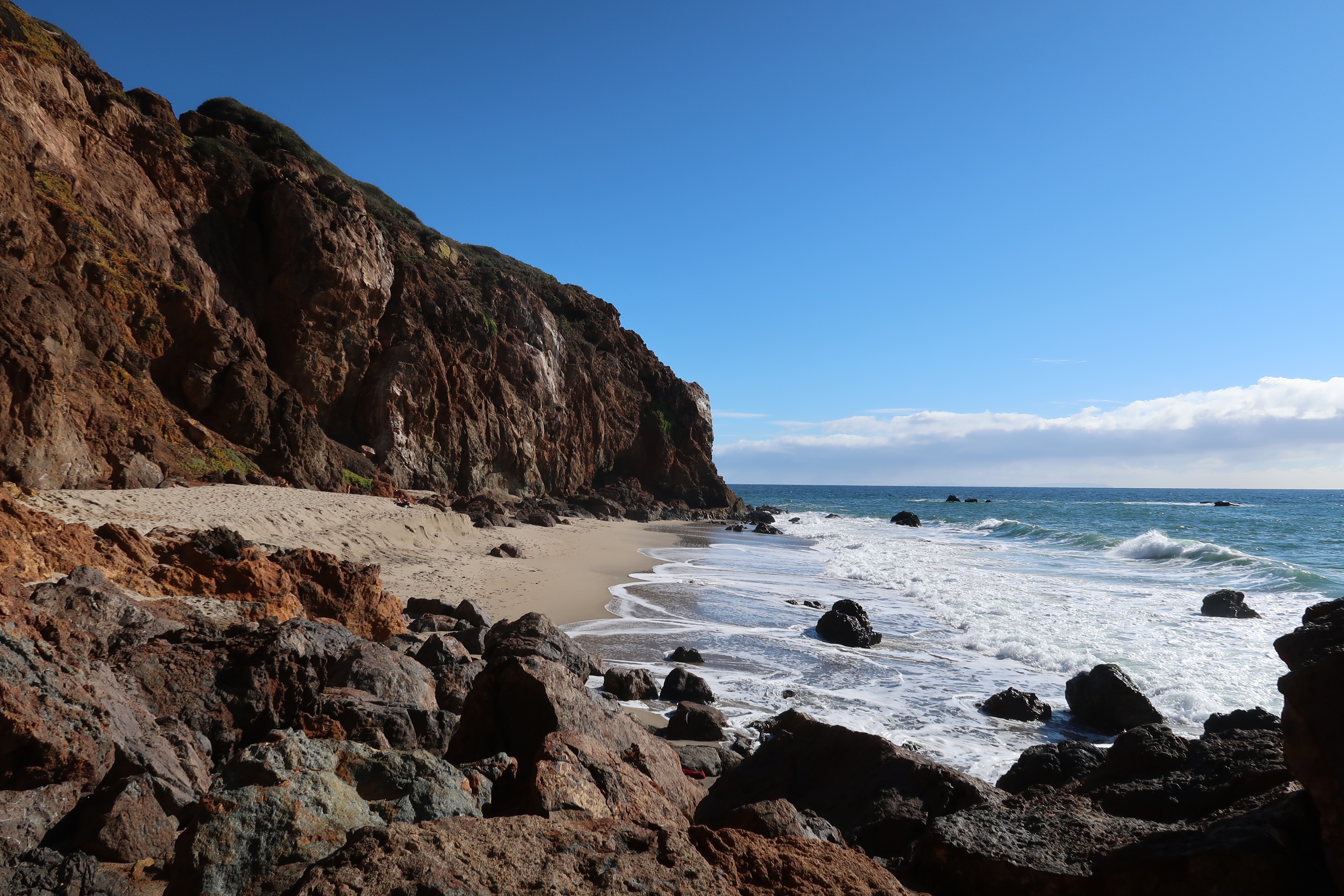
This is Point Dume State Beach and a little cove, named Pirate’s Cove, hidden away from the main beach by rocks that reached out into the Pacific. To get there, you had to time the tides (low tide is best) and then scrabble up and over some rocks to get to the secluded beach.

When I got down to Pirate’s Cove, I almost had the beach to myself, except for an amorous couple at the other end of the beach. I picked a location that was close to the camera position in the final scene of Planet of the Apes and I began to sketch in the forms with my dark sepia brush pen. It was a glorious day after a heavy downpour the day before and is relished the sun and the view before me.

Warning: what follows is a description of the ending of Planet of the Apes (1968) and it will spoil the surprise ending of the film so if you have not seen this film, please stop reading and watch Planet of the Apes (1968) ASAP!

The last scene of Planet of the Apes was filmed at this little cove and the true reveal is shocking, even to this day. Taylor looks up and sees the ruined, half buried Statue of Liberty and realizes that he has been on planet Earth the whole time. Earth has become dominated by apes. The final shot was accomplished by shooting in the real location and adding a matte painting of the ruined Statue of Liberty.

A view of Pirate’s Cove from the cliffs above.

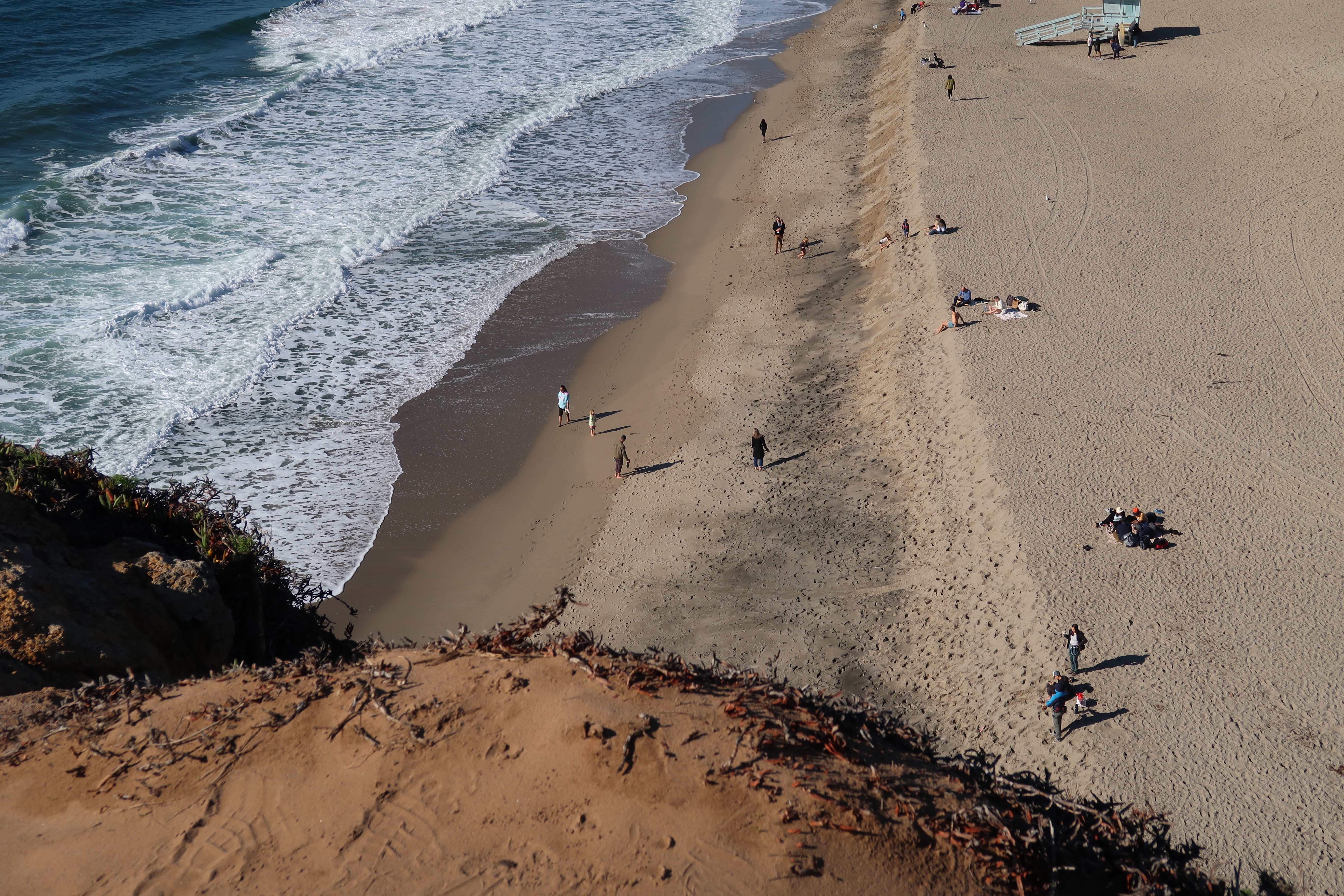
On the other side of the cove, at the southeastern end of Pt. Dume State Beach, the epic scene, just before the final shot, where the camera pans to the left, from a high angle. In the foreground view comes the torch and then the pointed crown of the Statue of Liberty. These where scale mock ups and where filmed from a 70 foot scaffolding built for the film. It was on this stretch of beach where Charlton Heston utters the famous final lines of Planet of the Apes, “They blew it up! God, damn you! Dawn you all to hell!”

This is approximately the angle seen in the film as the camera pans across the mock up of the Statue of Liberty. And this is where Heston spoke the final lines in the film. Maybe right where the lady in a light blue shirt is walking.

This final scene can be viewed on so many levels and this is one reason that this film is seen as a classic of the science fiction genre to this day. What does this ending say about the state of the United States or the world in 1968? What does it say about the plight of freedom, liberty, and democracy today? Like all great films, Planet of the Apes does not simply serve up easy answers but like any great work of art, it is thought provoking and lets the viewer decide for themselves, what the film, and it’s ending, ultimately means.

The final shot of Planet of the Apes.

Point Dume Beach was also used in one other Apes Film: Escape From the Planet of the Apes (1971). The wonderful beginning of the film was filmed here. A spacecraft is just offshore and the military stages at the beach to attempt a rescue of the astronauts. The general order the spacecraft open and he salutes and then falls into silence. The three astronauts have every appearance of being human, until they take off their helmets!

Image

Suicide is Painless, It Brings on Many Changes

The hugely popular television series MASH, had it’s initial run from 1972 to 1983, spanning the first eleven years or so of my life.

The series became a backdrop or soundtrack to my life. While my family did not watch the show religiously, I knew the theme song (“Suicide is Painless”), the iconography, and characters of the show. Today, it seems like somewhere, around the world, one of the 256 episodes of MASH is being aired somewhere as a rerun.

The dramatic/comic series follows the doctors, nurses, soldiers, and patients of the MASH (Mobile Army Service Hospital) Unit number 4077 during the Korean War. Often in conflict are the civilian doctors (Hawkeye Pierce, Trapper John, and later B. J. Hunicutt) with the enlisted officers of the unit. The popular series ran for 11 years while the Korean War lasted for just three.

On my winter break, I planned to head to the southland to do some field sketching of one of the most iconic locations using during the MASH movie and the television series. This was the former 20th Century Fox backlot used from many films (Planet of the Apes) and television series (MASH) which is now Malibu Creek State Park.

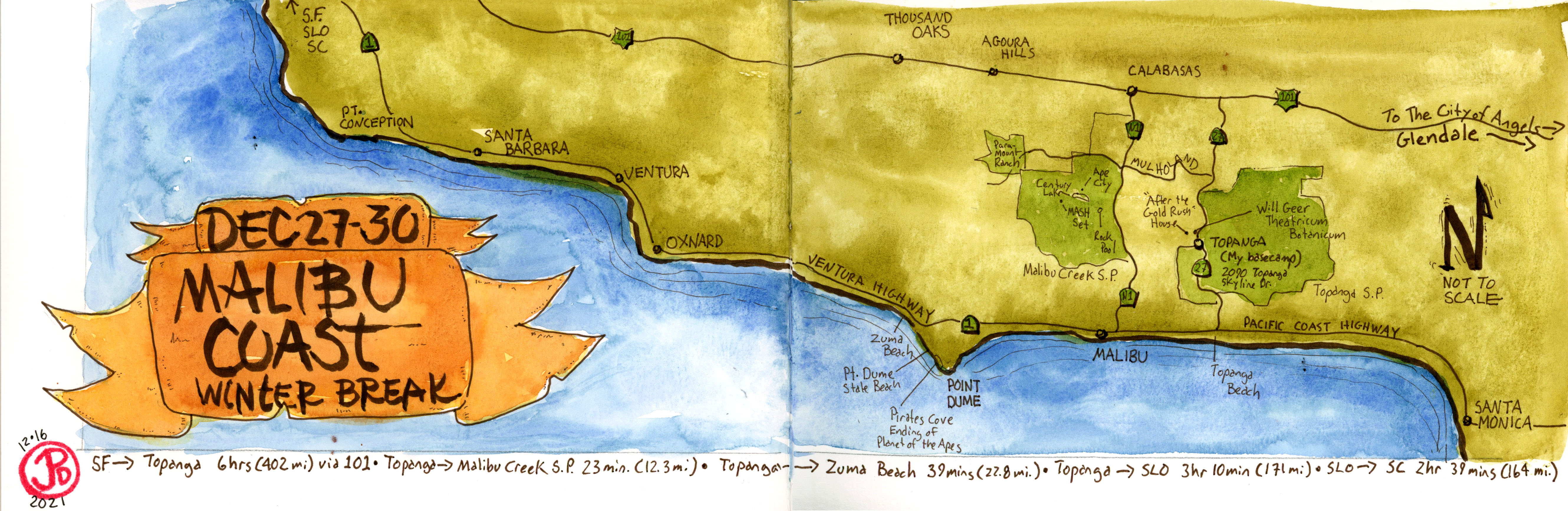
Of course I started my planning with a map. In this case, a map of the Malibu Coast covering Topanga, Malibu, Zuma Beach. and Malibu Creek State Park.

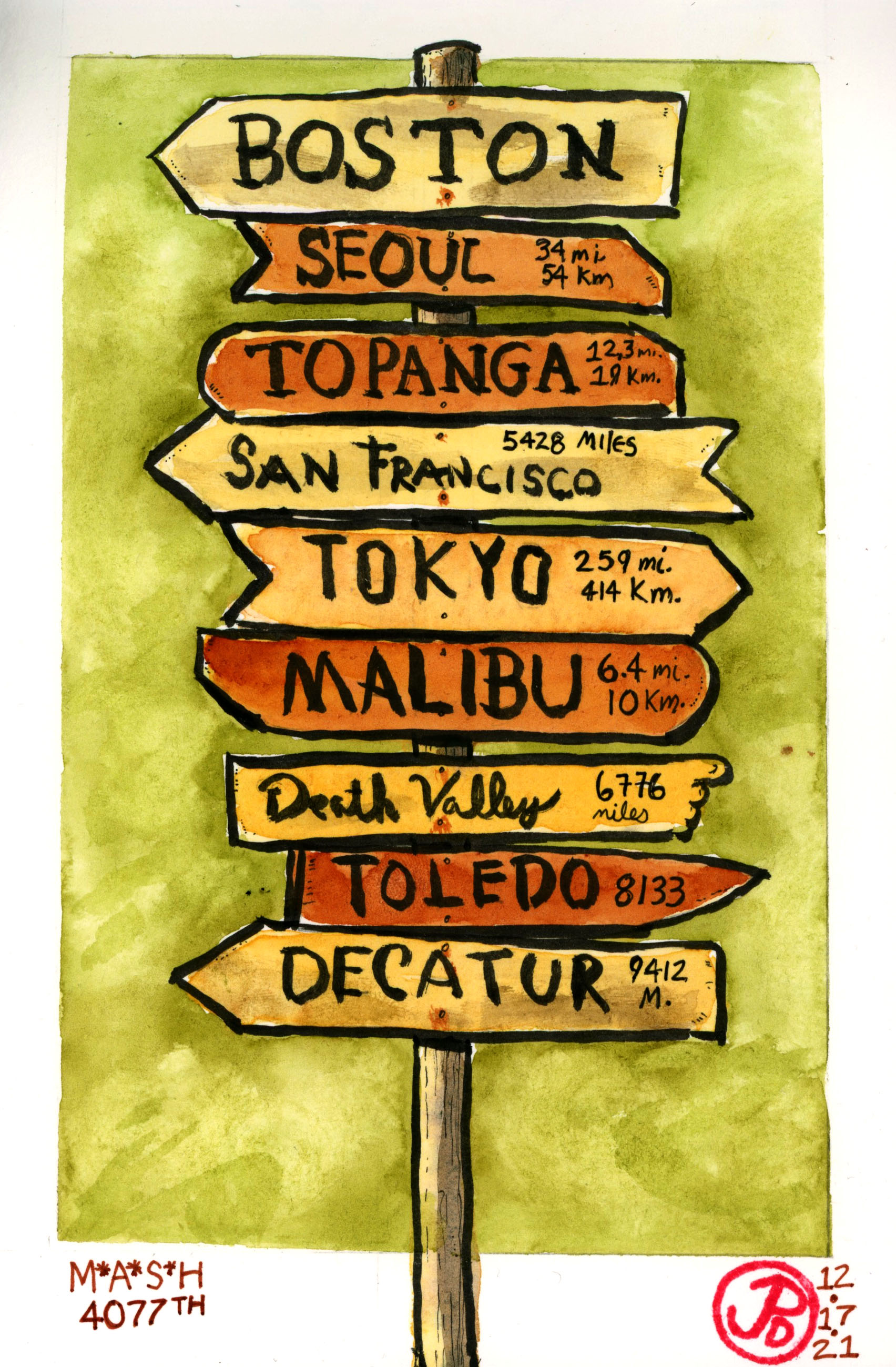
I often like to do some sketches before I leave on a trip to put my mind’s eye into the location. The featured sketch is based on a screen shot of the pilot episode of MASH, the television series showing the iconic opening as Radar looks on as two helicopter fly towards the helipad with wounded soldiers. The second sketch is of the famous MASH signpost. This was based on a photo of a replica of the sign. The original signpost is in the Smithsonian in Washington DC. I used a little artist license as I changed two of the locations to reflect the real location of the set: Malibu and Topanga (where I would be staying).