Image

The Jensen Carhouse

On Saturday I headed out to the Western Railway Museum, and I was hoping that they had enough volunteers to open the Jensen Carhouse.

The impressively large carhouse was built between 2004 and 2008 at an expense of $2.5 million. The indoor storage facility is the most ambitious project the museum has ever undertaken. It allows some of the museum’s vintage cars, locomotives, and streetcars to be stored and protected from the sun, rain, and wind of Solano County.

The only problem: if they do not have enough volunteers, the carhouse does not open to the public.

On my past two visits, the doors remained locked and closed.
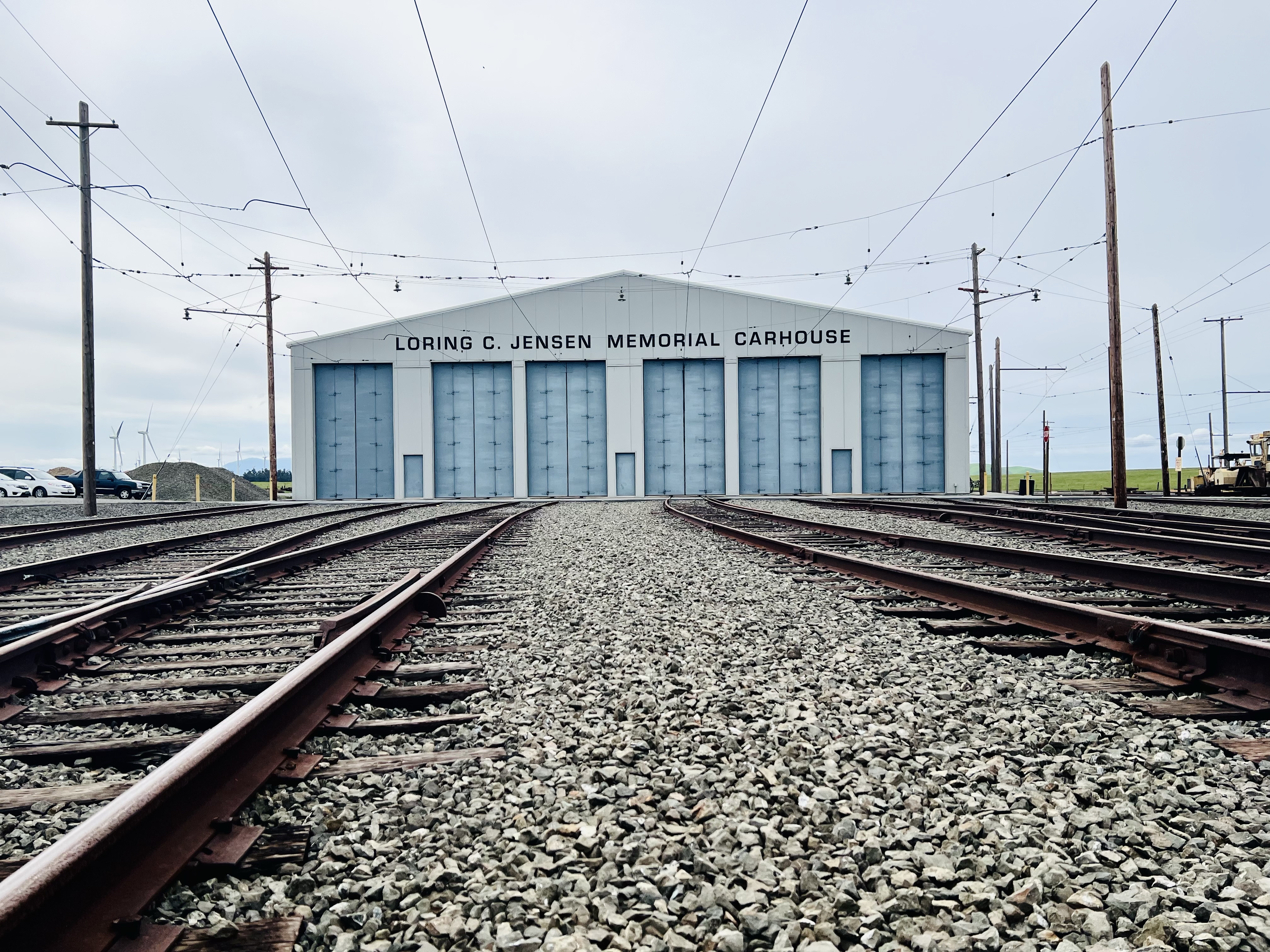
The six bays of the Jenson Carhouse.

This Saturday, the carhouse would be open! And I had a few residents that I wanted to sketch!

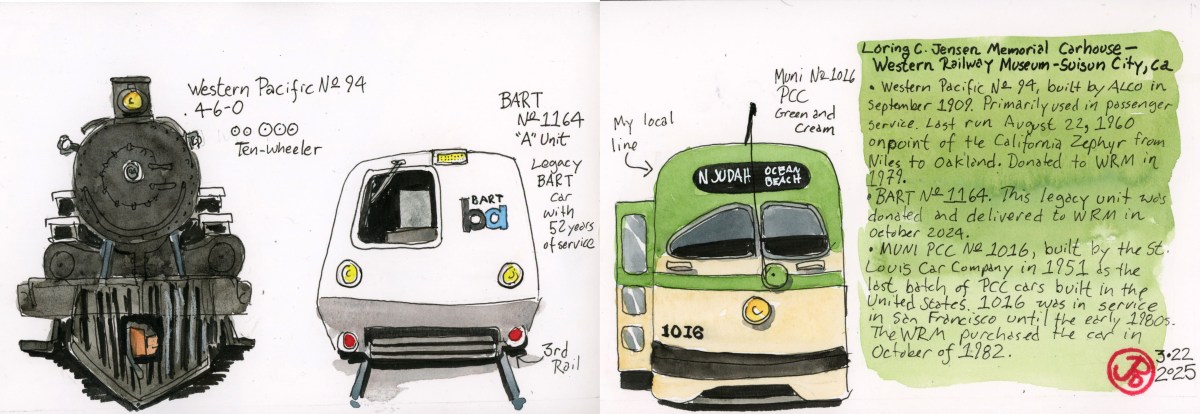
The number one resident I wanted to sketch was the Western Pacific 4-6-0 steam locomotive No. 94.
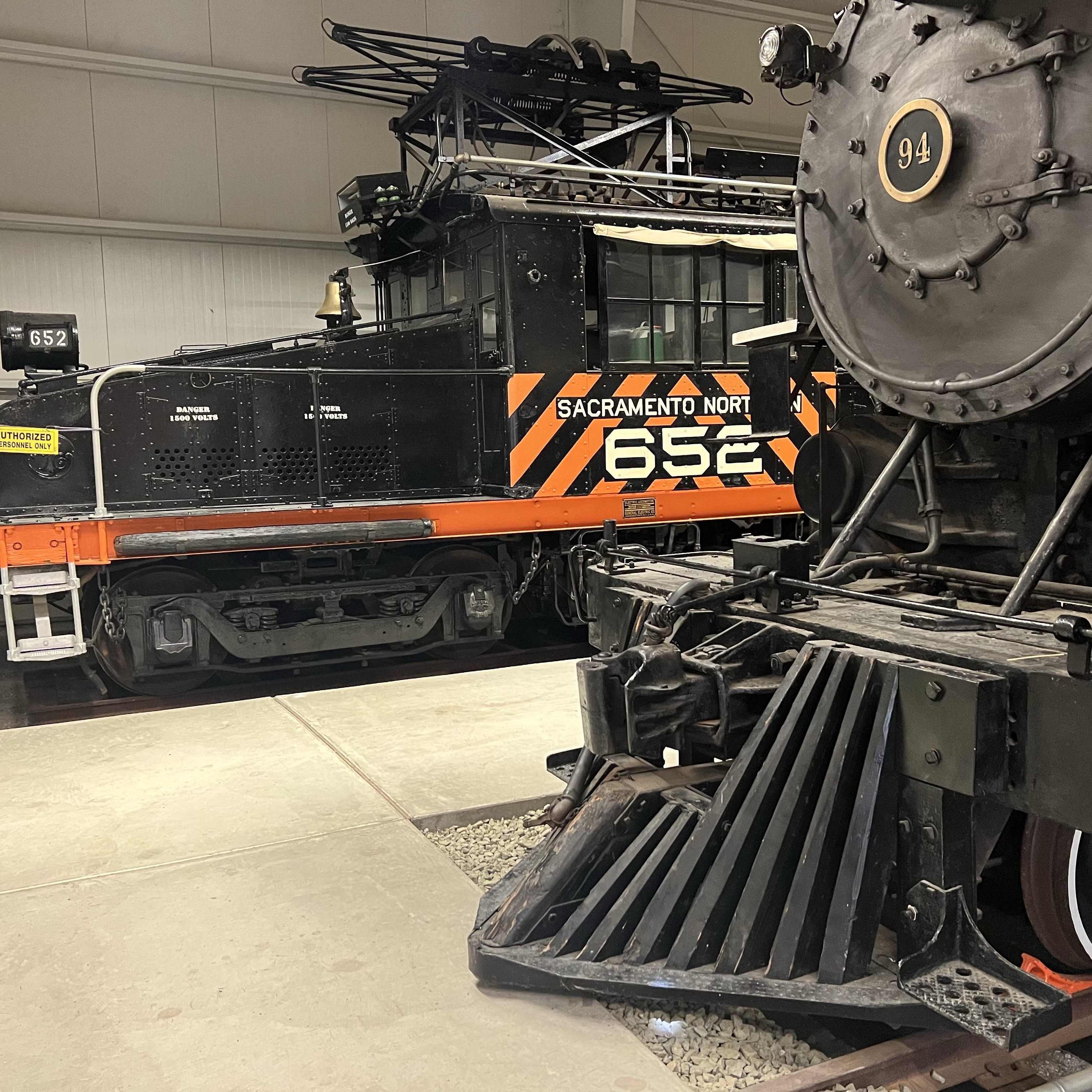
Two ends of the transit spectrum: steam and electric. Western Pacific’s No. 94 and Sacramento Northern’s No. 652.

Western Pacific 94 was built by American Locomotive Company in 1909. The twenty locomotives in this class were used for passenger service. WP was an early adopter of diesel power and steam ended on the WP in April of 1953. 94 was kept for excursion service. The locomotive was last operated on August 22, 1960 when it was on point of the California Zephyr between Niles and Oakland as part of the 50th anniversary of the passenger service. 94 was donated to the museum in 1979.

The next piece of transit history I sketched was the newly arrived BART legacy A Unit No. 1164. Three units were delivered to the museum in October of 2024 and are now stored in the Jensen Carhouse. BART went into service September 11, 1972 and the original legacy fleet was retired after 52 years of service. The three units donated to WRM have logged more than 15 million miles while in service.
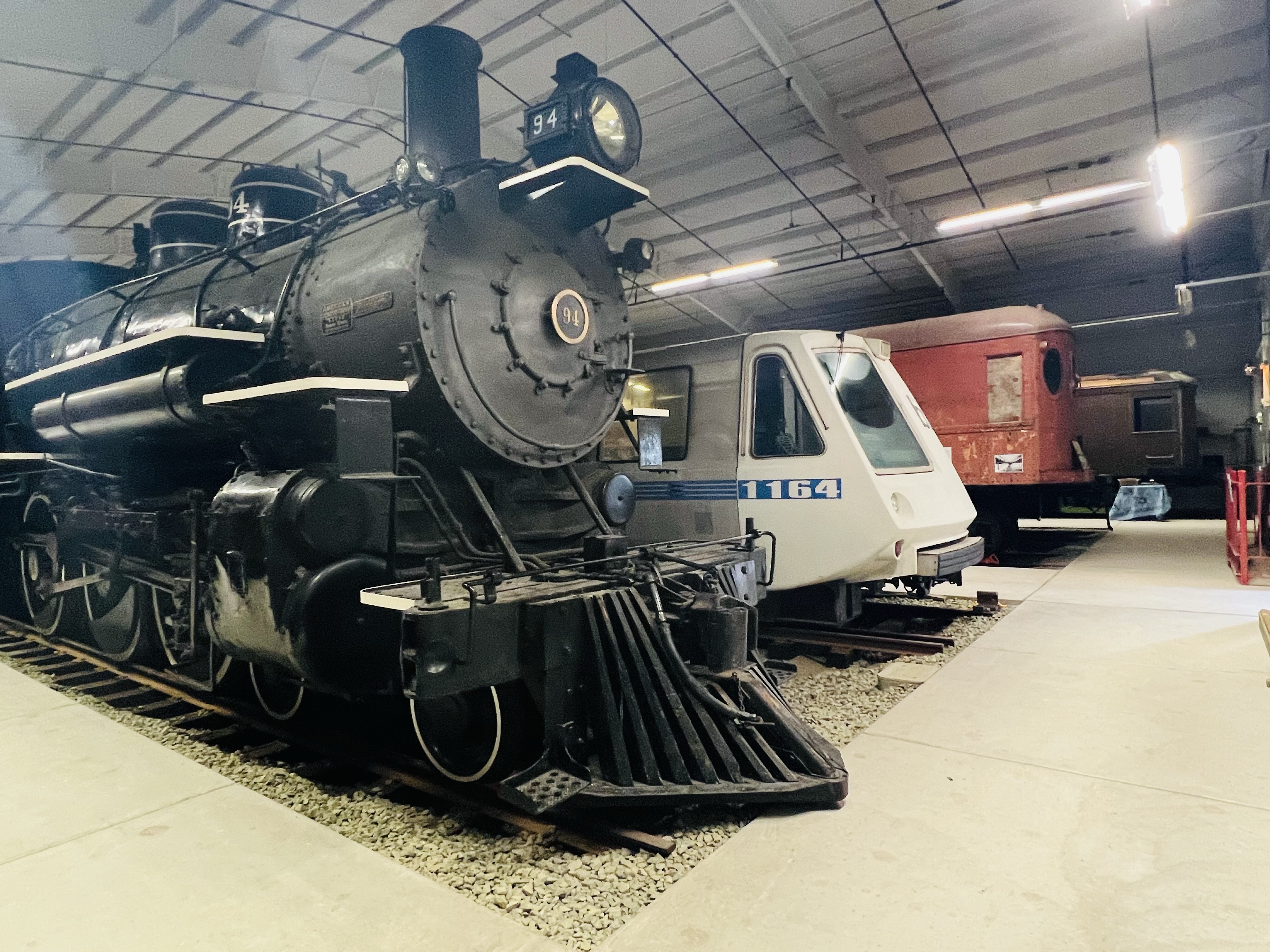
No. 94 seems to dwarf the BART A Unit.

The last denizen I sketched in the carhouse is perhaps my favorite. It is San Francisco’s MUNI PCC car No. 1016. This PCC was built in 1951 by the St. Louis Car Company as part of the last batch of PCCs built in the United States.
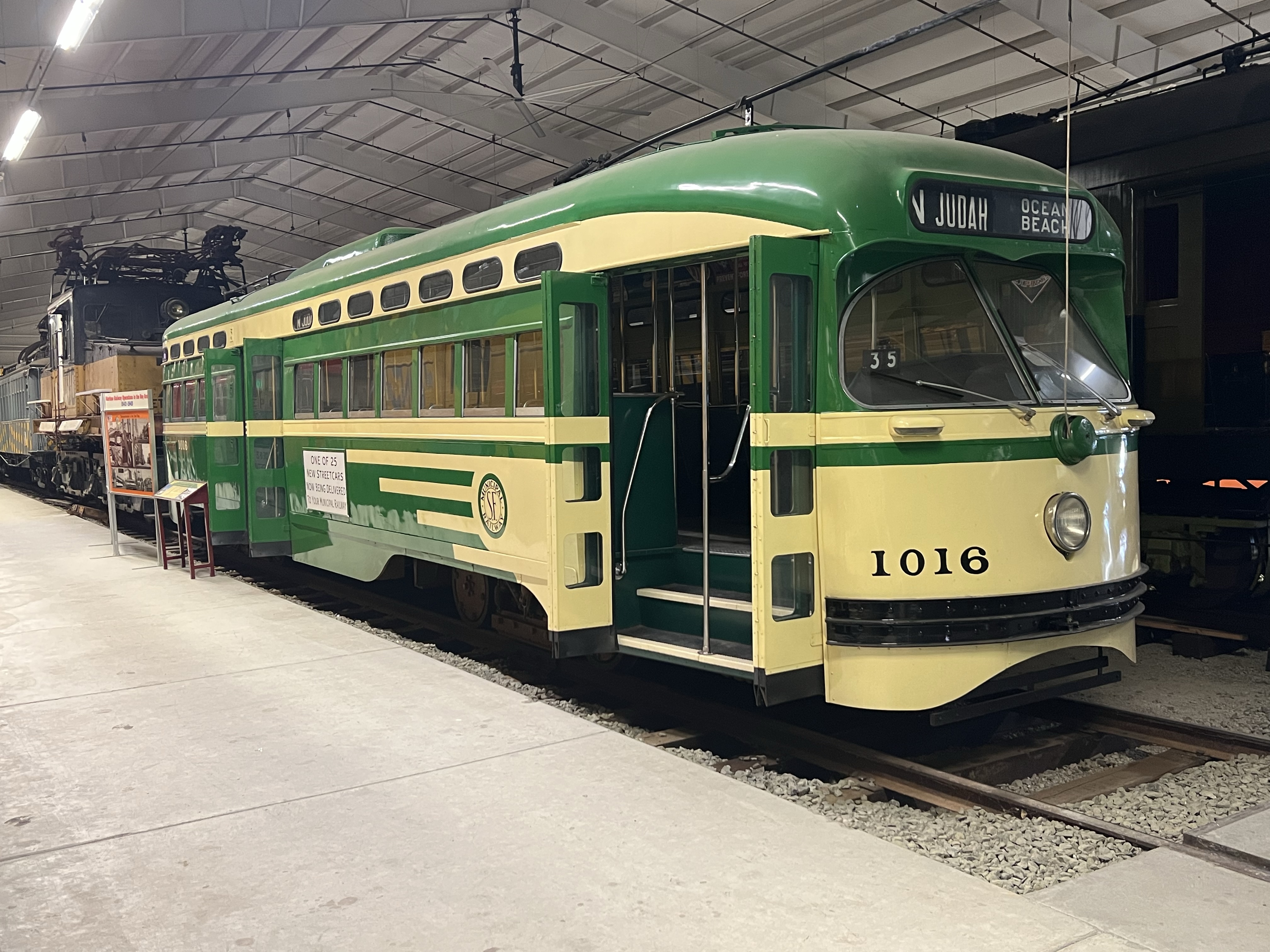
I have always loved the rounded streamlined design of PCC cars and the green and cream livery is my favorite paint scheme. This livery was developed in 1946 and features the MUNI wings.
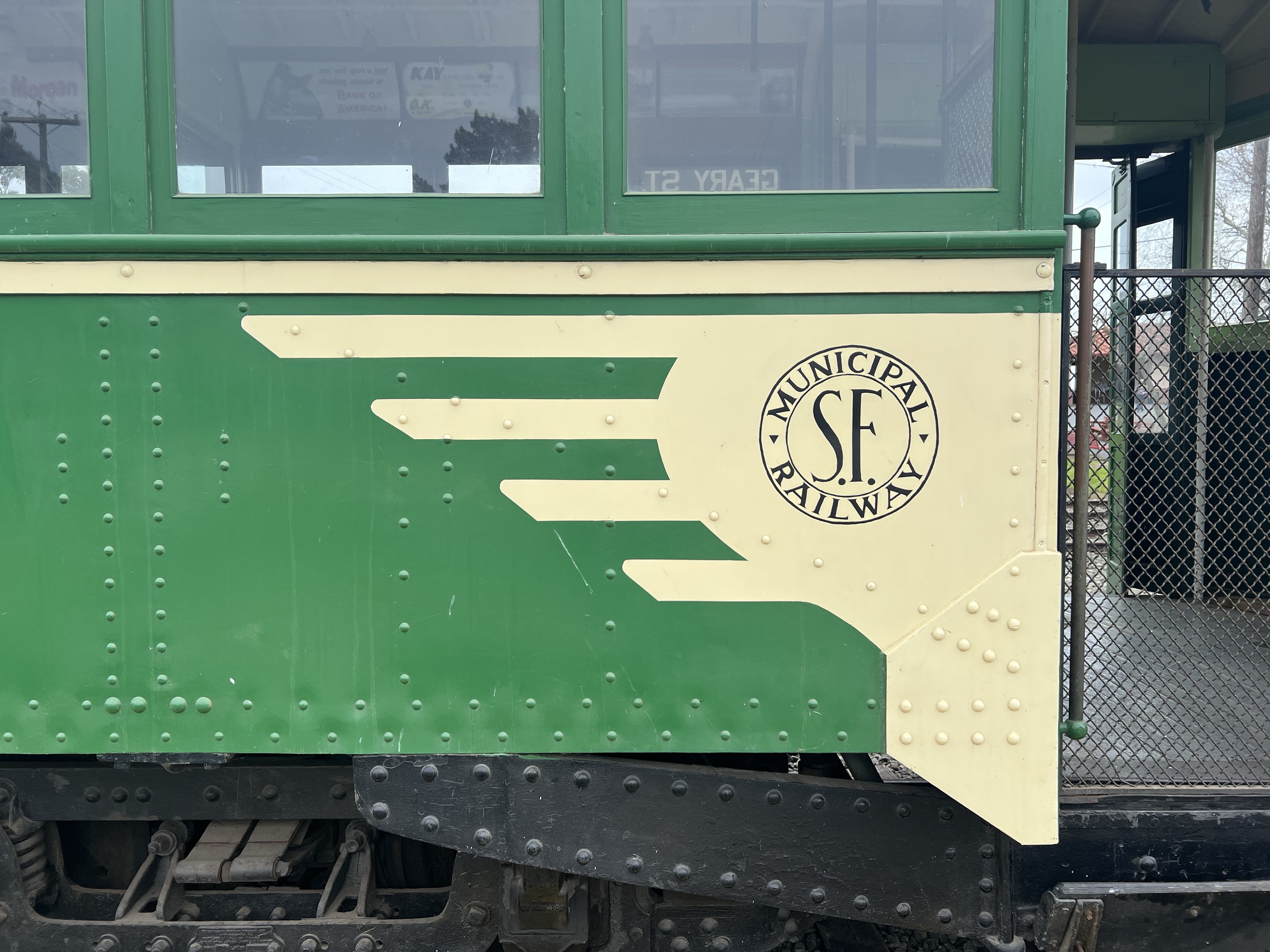
MUNI’s famous wings on K-type car No. 178. This car type is affectionately known as an “iron monster”.
Image

Western Railway Museum

I have memories that stretch back over 40 years of visiting Rio Vista Junction as a child, now called the Western Railway Museum.

The museum was not as polished and a little more threadbare back then. Lot of passion for trains and streetcars but perhaps without the funds.

My father grew up as an only child in San Francisco during the age of steam, streetcars, and streamlined buses.

Dad spent much of his youthful free time riding the streetcars into the dunes before the Sunset District was developed. He told me that the operators, always Irish, would let my father take the controls while the operator ate his lunch. Such scenes are unthinkable now in the age of lawsuits, codification, and over parenting.

When I was growing up, my dad shared his passion for transit. And the active rolling stock of the museum of Rio Vista was one of my classrooms.

And when I return to the Western Railway Museum, I feel my dad’s presence.

It’s not hard to find evidence of my father at the Western Railway Museum. Just inside the front door, his name is listed as a primary donor.

The old visitors center and gift shop has been replaced by a grand building reminiscent of a train depot that has a gift shop, displays, a cafe, and a research library. The new visitors center was dedicated in 2001.

When I visited the research library, there were many cardboard boxes with my father’s name on it. He was quite the collector. I was told that so far, 12,000 items from my father’s collection had been catalogued.

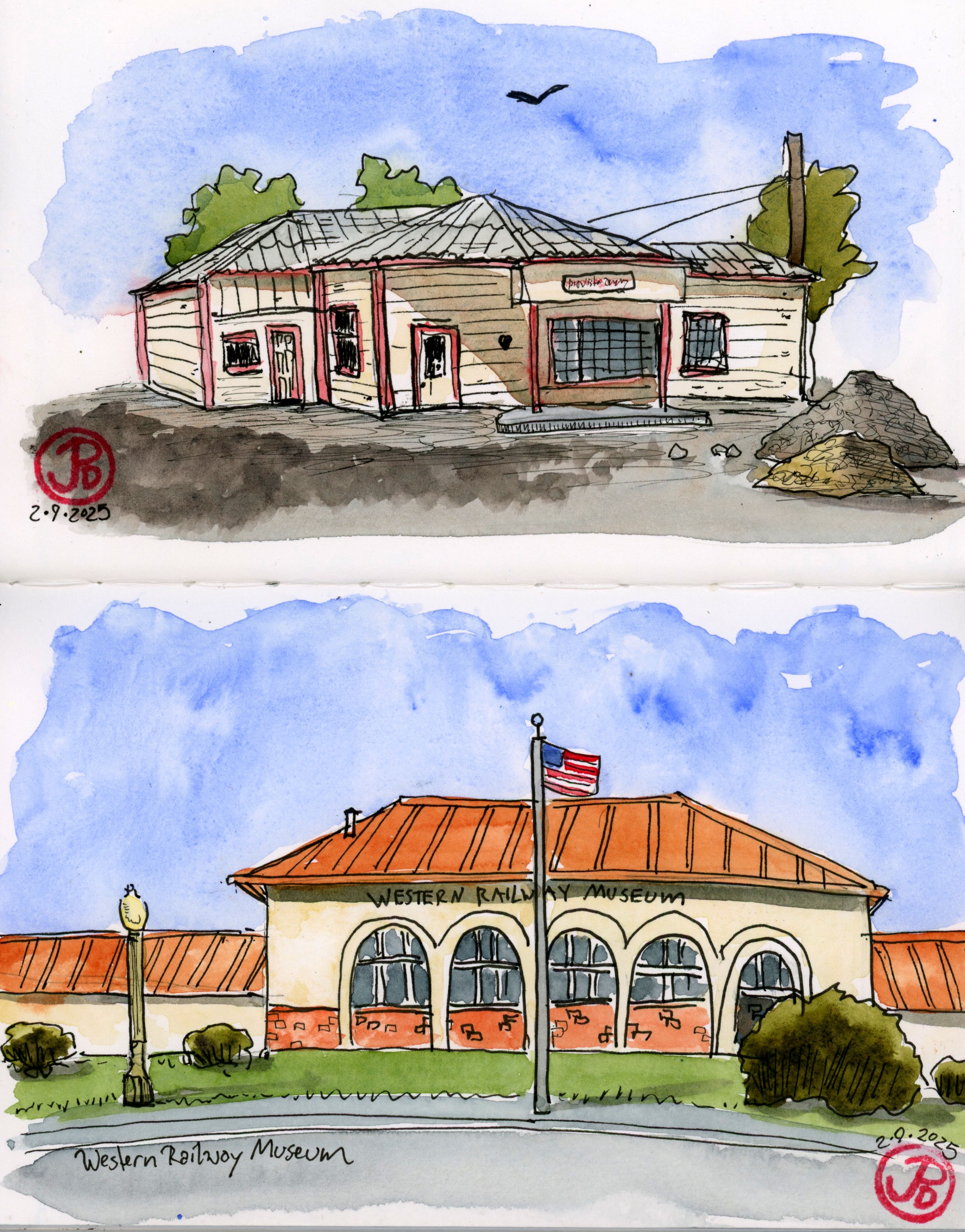
Both centers are still in existence and I sketched both as a contrast to the growth of the museum.

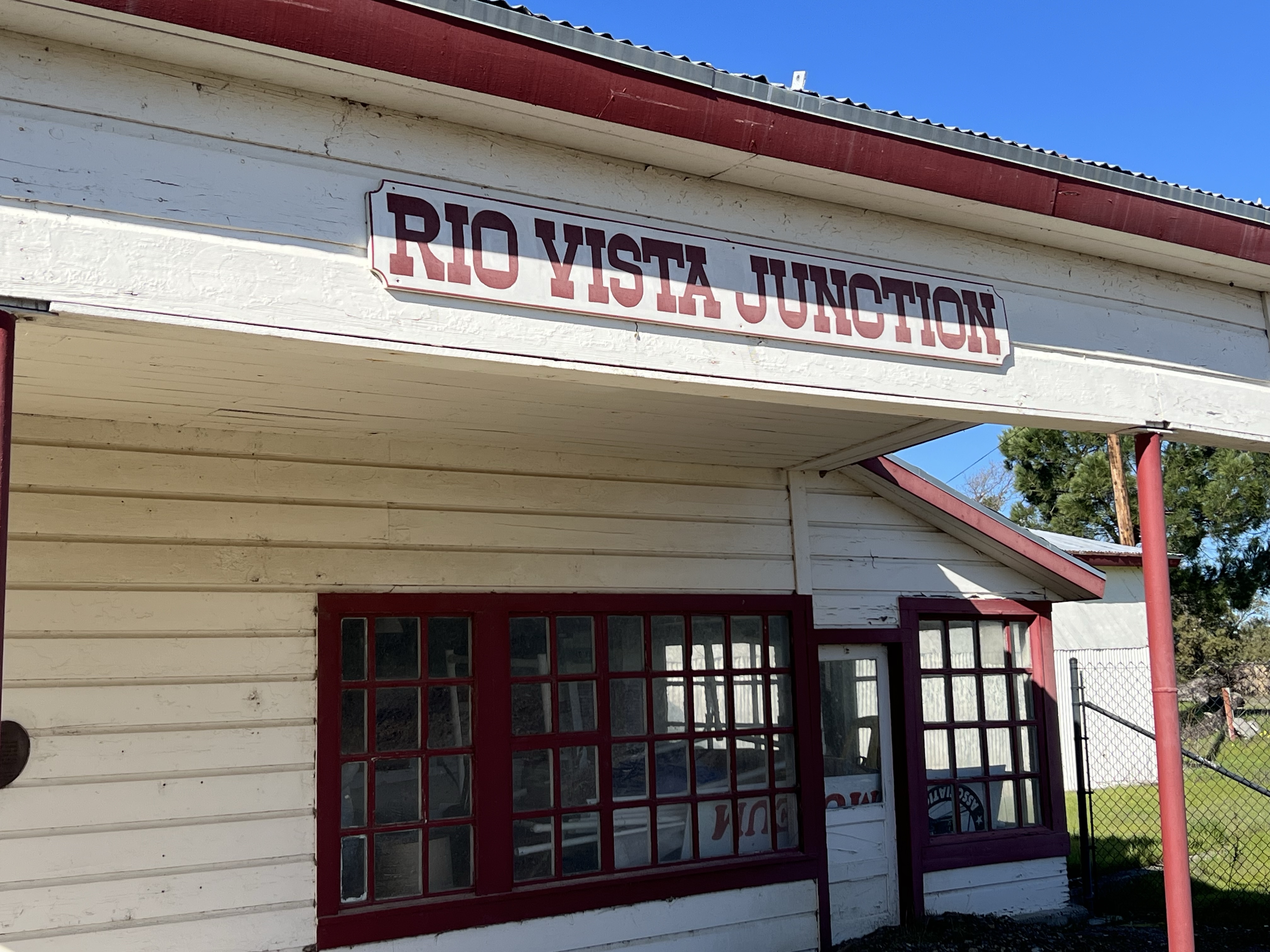
The former visitors center and service station.

The old visitor center is close to Highway 12 and the Sacramento Northern mainline and was formerly a service station. I assume this is where passengers caught buses to Rio Vista to the east.

And it seems gasoline was not the only service offered at the station. An E Clampus Vitus plaque near the front entrance reads, “Here between 1942 and 1948, the painted ladies serviced the needs of our men from Travis AFB. Closed by order of an unsympathetic sheriff.”

The old and the new, sketched in one spread.

The museum was founded as the California Railway Museum in 1960 on property at Rio Vista Junction by the rails of the Sacramento Northern Railway (the museum purchased 22 miles of the Sacramento Northern in the mid-1990s.)

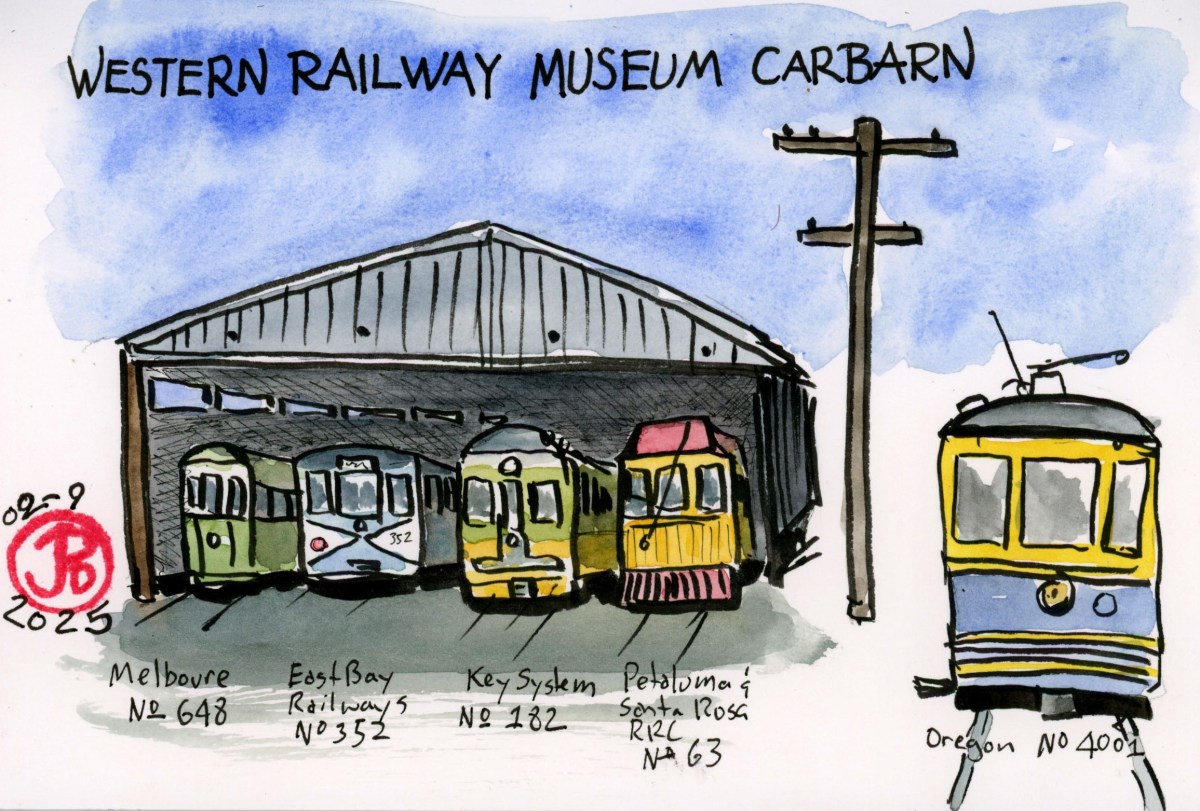
After sketching the two visitors centers from two different eras, I sketched the old carbarn.

The cars facing out (left to right) are a Melbourne car No. 648, East Bay Street Railways No. 352, Key System No. 182, and Petaluma and Santa Rosa No. 63. In the foreground to the right is Portland Traction Company No. 4001. 4001 was waiting for passengers to board.

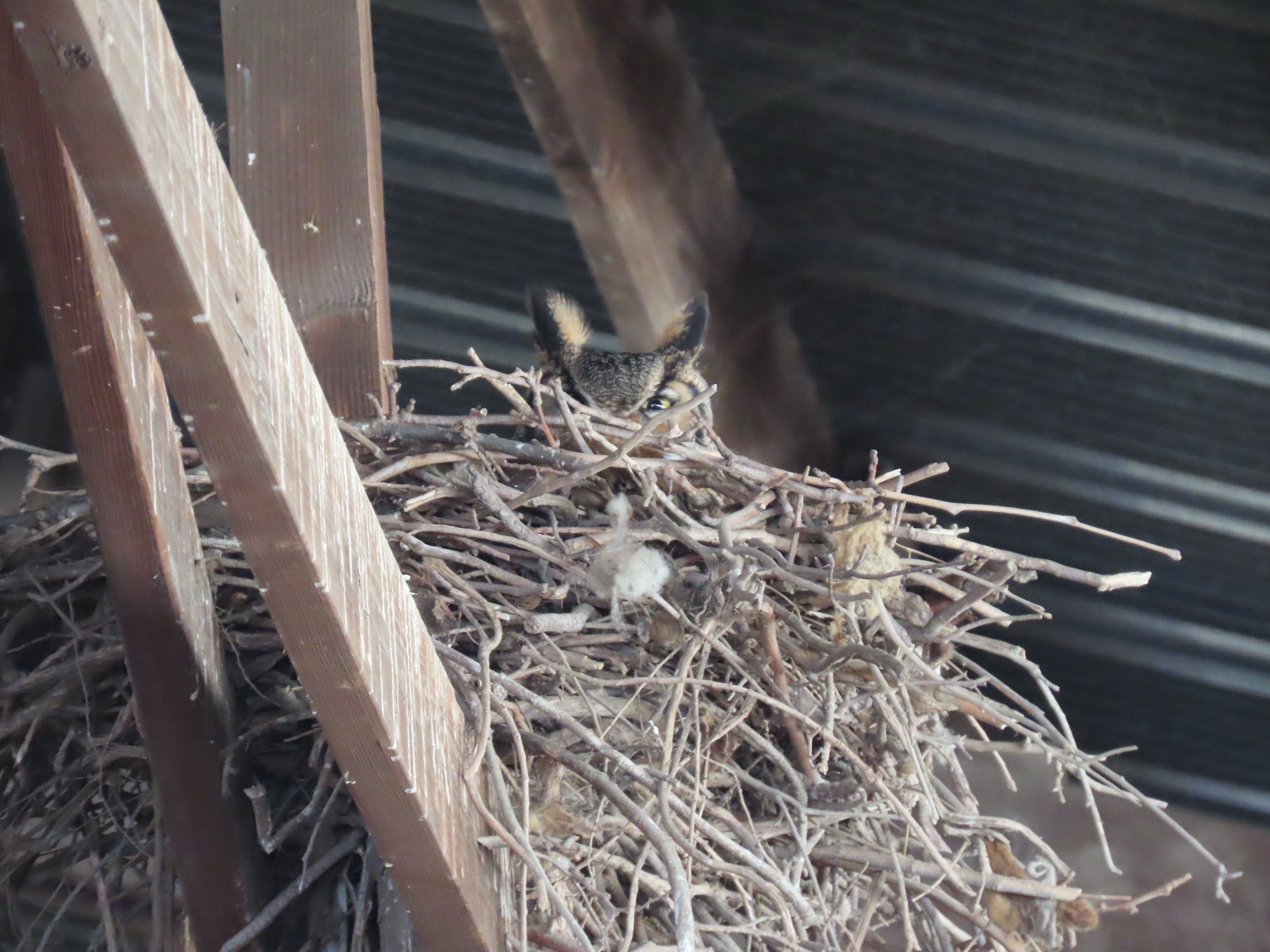
There was one other surprise in the open air carbarn. Earlier I had seen a great horned owl fly from the barn and head to the eucalyptus grove in the picnic area. While I was walking inside the barn I had noticed a very messy nest, it looked like ravens. As I walked near the nest I realized I was being watched.

This was nest was occupied by a great horned owl.