I got to the California State Railroad Museum in Sacramento a little early so I walked over to sketch the replica of the Central Pacific passenger depot. (The former stations had burned down.)
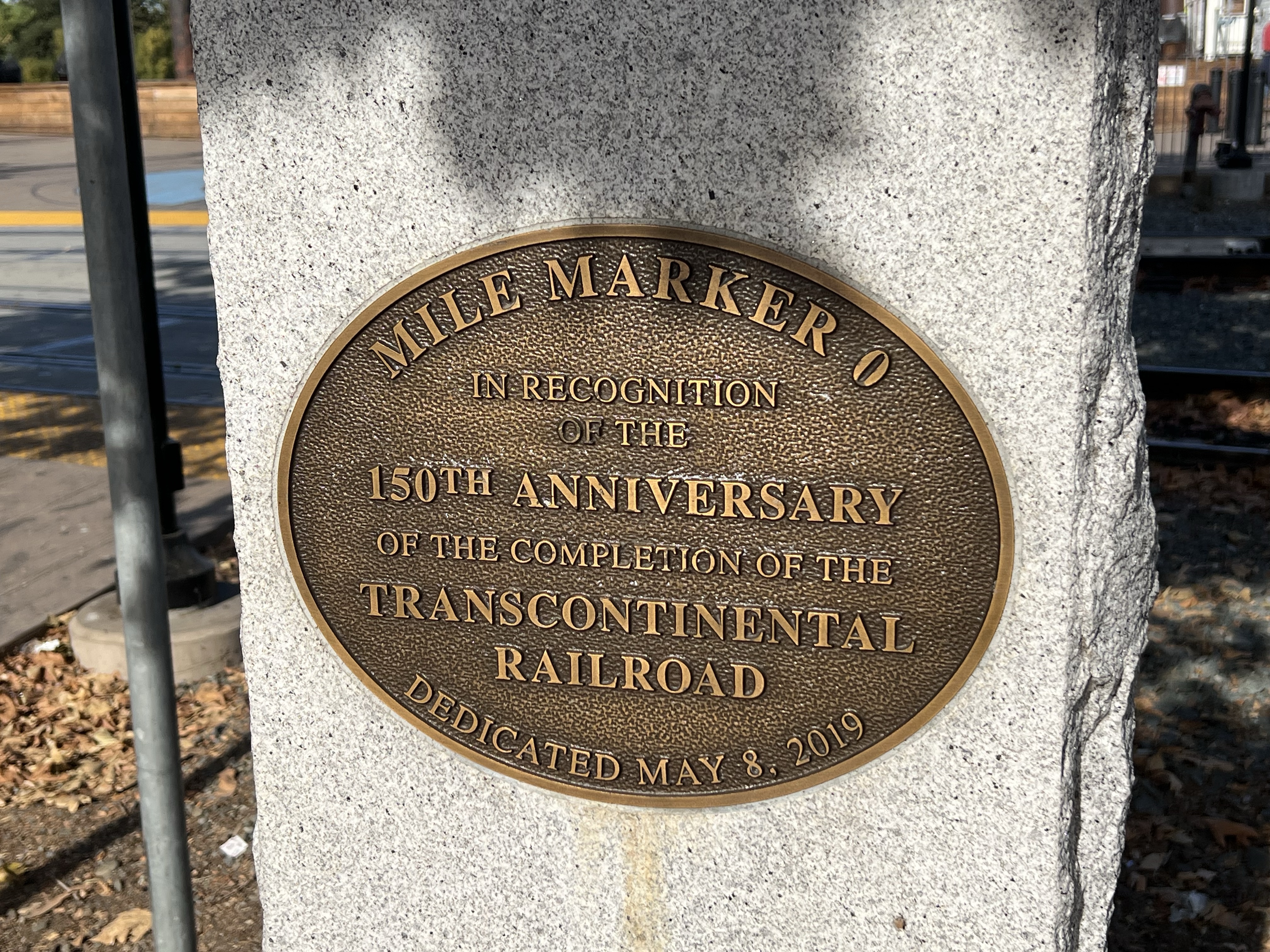
This station is at ground zero from where Central Pacific started the Transcontinental Railroad. Mile Marker 0 was a hundred feet behind me as I sketched.
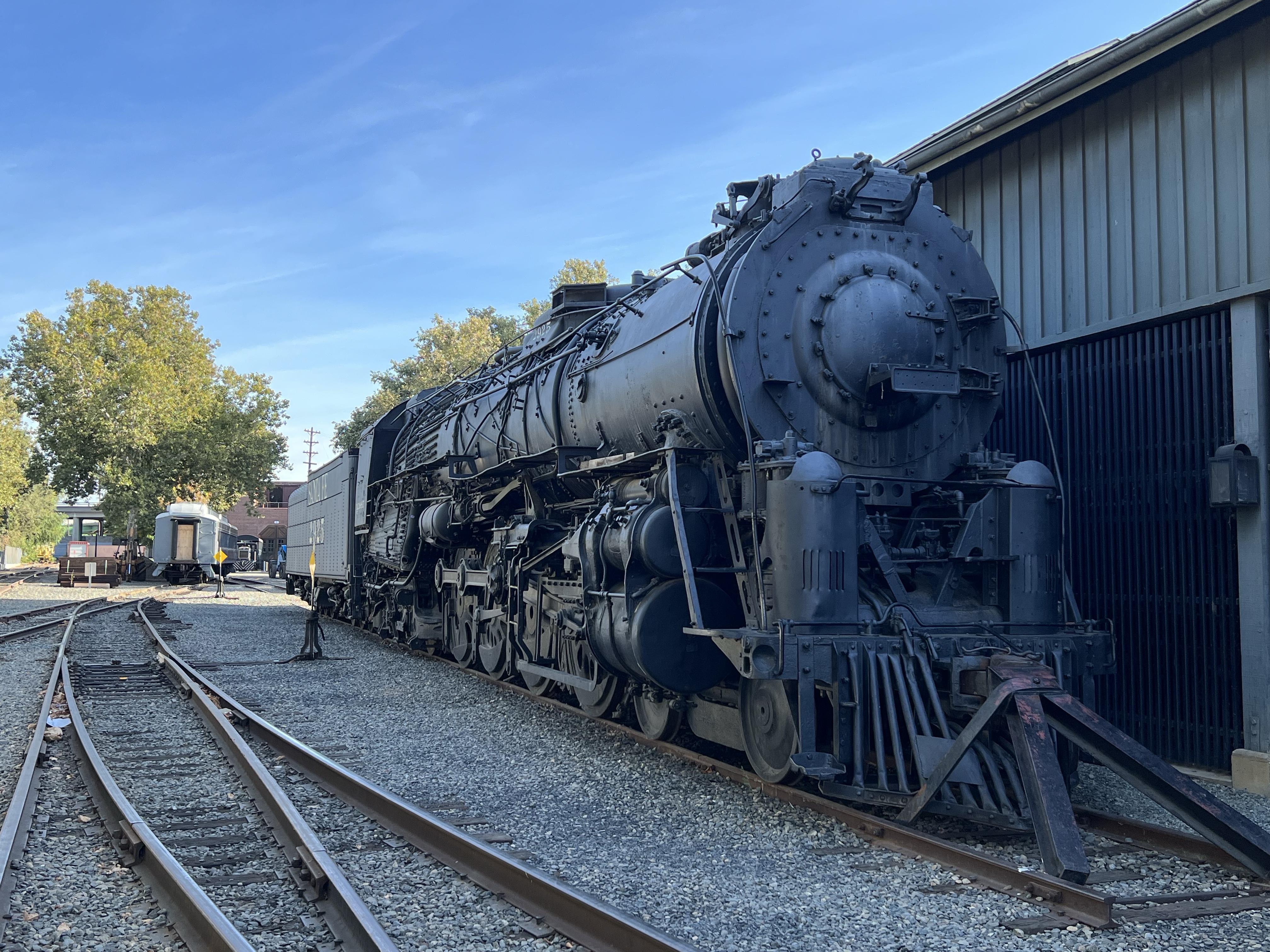
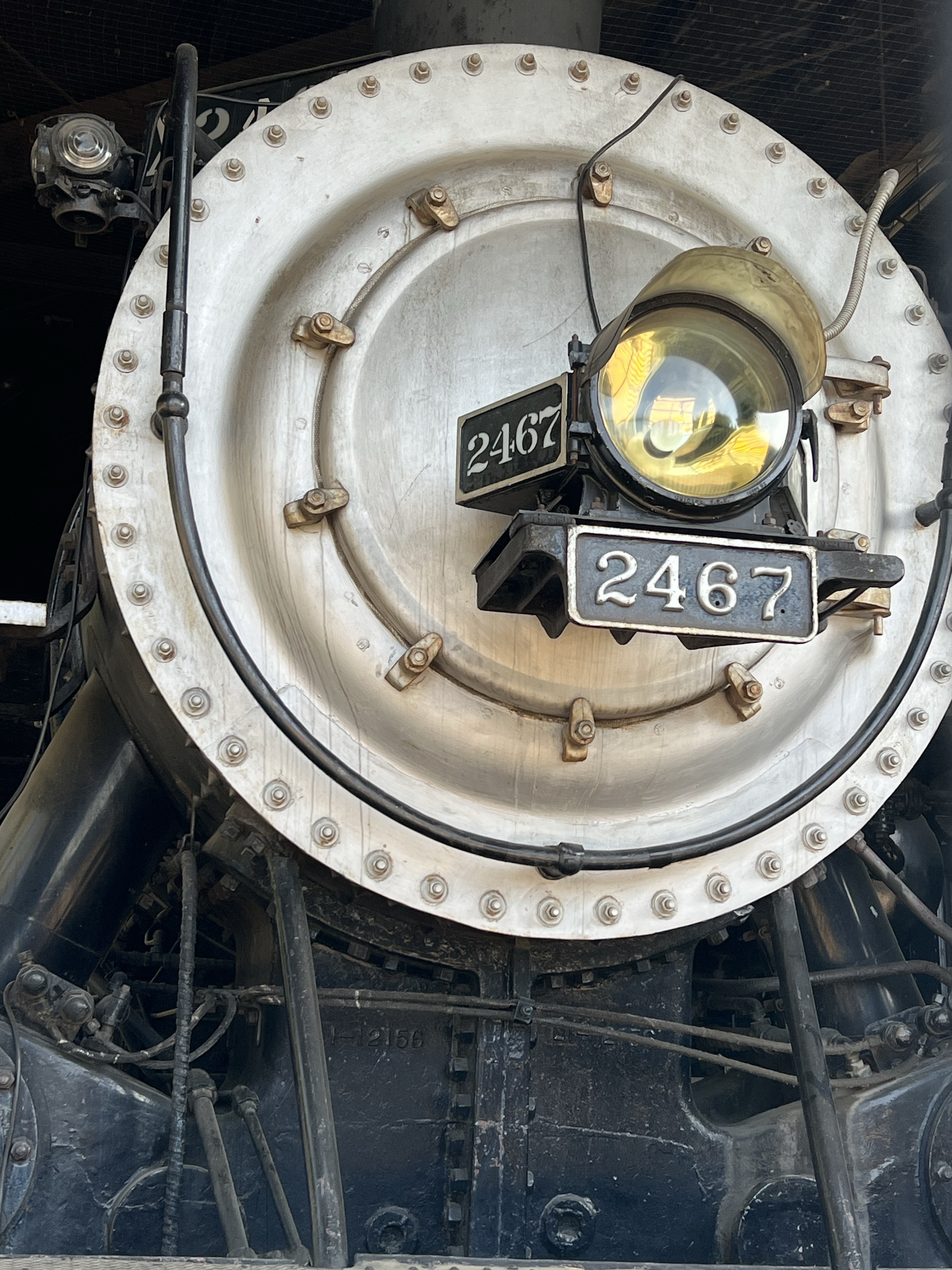
I walked around the depot and looked at two amazing Santa Fe steam locomotives that where sitting on sidings in static display. Both of them had come from New Mexico and both where not in great shape, needing some cosmetic restoration.
Santa Fe No. 2925 is a 4-8-4 passenger locomotive. This is one of the heaviest 4-8-4 Northerns ever built. Today only five of the 30 produced survive. SP No. 2467 is a 4-6-2 Pacific type build in 1921. She pulled passenger trains and was retired in 1956. The locomotive was restored to working order in the 1990s and is still operational.
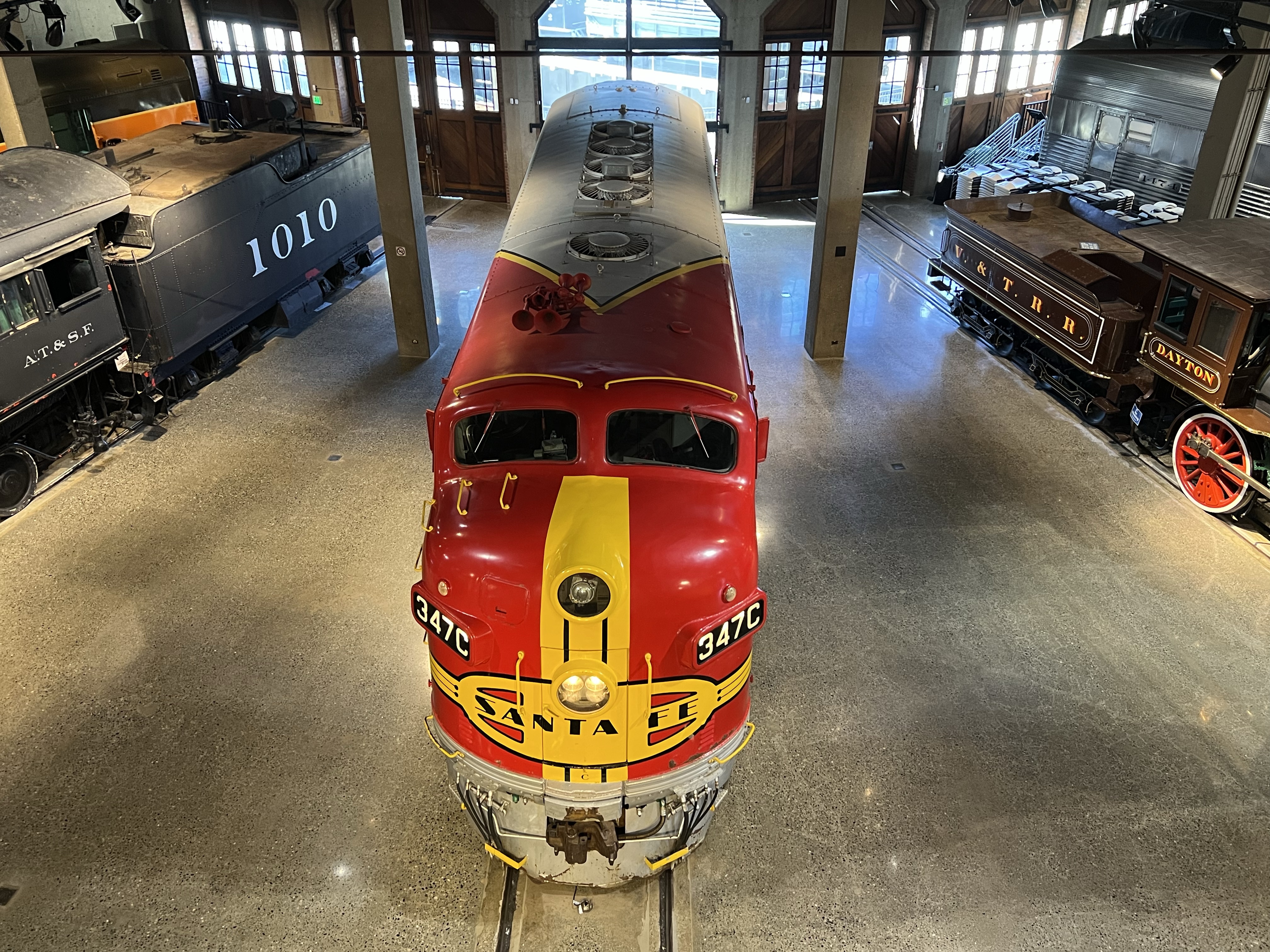
Once in the museum, one locomotive on my sketch list was an EMD diesel-electric F7 painted in the iconic Santa Fe Warbonnet livery.
When I was a child my dad used to take me to the tracks to see passing passenger trains. And one Christmas he got me my first HO train and it was a smaller version of the classic Santa Fe passenger locomotive.
This paint scheme is so famous that if you Google EMD F7, a picture of the Warbonnet F7 comes up.
The iconic Santa Fe units where on point of the 2,227 mile route from Chicago to Los Angeles called the Super Chief. This was one of the first all streamlined diesel cross country route.
I wanted to add another night to stay at the Railroad Park Resort in Dunsmuir but the SP Caboose # 17 was booked, so I booked one of the popular Santa Fe cabooses.
I spent my last night at the Resort in Caboose # 28 a former Santa Fe cupola caboose.
This CE-2 caboose was built by the Atchison, Topeka & Santa Fe railway in 1942. It was rebuilt in 1970 and renumbered as ATSF 999448. It came to the resort in the late 1980’s.
A caboose is a uniquely bit of United States railroading. At one time all freight trains had a caboose (usually red) at the end of each train. A caboose came at the time when train crews were larger than they are today, during the age of steam. Each locomotive had an engineer and fireman but the conductor was in charge of the train. The conductor’s office was on rails, this was the caboose.
From the caboose, the conductor could throw switches, aid in backing up, check the train for safety, and fill out paperwork. From the view in the cupola, or later the bay window, he could oversee the train to make sure no loads were shifting on freight cars. He could also monitor the train for overheated axels called “hot boxes”.
Most cabooses where fitted with a desk, bathroom, bed, and storage closets. It really was a home-office on wheels, reflecting the long work days and may miles on the railroad.
Laws where in place that all freight train had to contain a caboose for safety reasons. This changed as technology improved and railroad cuts made more with smaller crews. The new, modern diesel-electric engines had larger cabs which means that the conductor could ride up front.
The technology railroads use to replace cabooses are called an end-of-train device. These devices are fitted to the last car of a freight train and monitors air brake pressure and over heated axels. There is also a blinking safely light that warns other trains behind..
By the early 1980’s, laws were changing that no longer required trains to have cabooses. By the mid-1980’s most freight trains no longer ended with a caboose. The era of the red, cupolaed caboose was over.
Whenever I watch a long freight train pass by, I hopefully expect to find a caboose at the end of the train. This comes from seeing so many cabooses on freight trains when I was a young rail fan. In my mind, some how, the blinking, oblong box at the end of a train will never really replace a caboose
This 1972 built Southern Pacific bay window caboose, #1886, was one of the last cabooses in service on the railroad. It was last in service on November 15, 1995 on Southern Pacific’s Lompoc White Hills branch line. I was told the reason for this was that there was a part of the line where the train had to back over a road crossing and the caboose was required for safety reasons. It is now restored and on exhibit at the San Luis Obispo Railroad Museum.



 Corvid Sketcher