Image

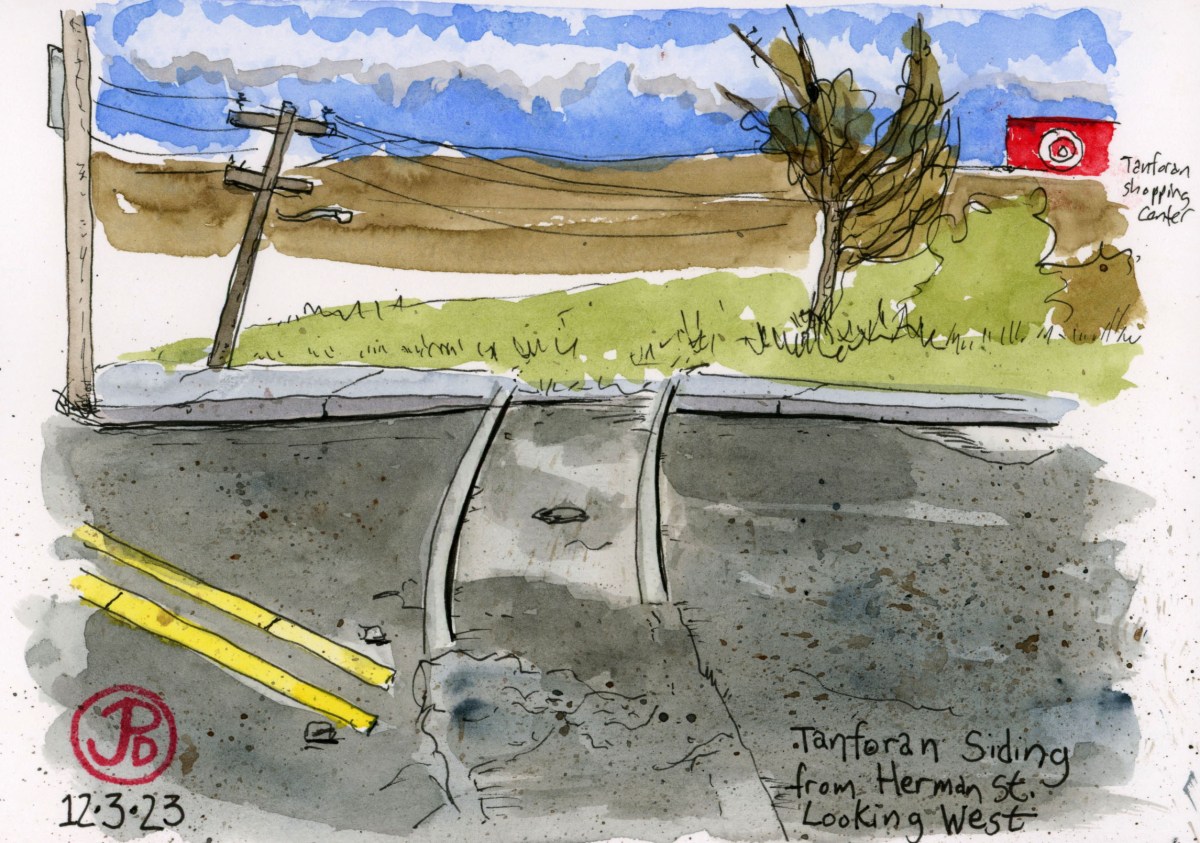
Tanforan Siding

The former racetrack at Tanforan is bordered on one side by the former Southern Pacific mainline (currently used by the passenger service Caltrain).

Heading south, the line joins the wider rail network at Santa Clara and San Jose and on to all points on the National railroad compass.
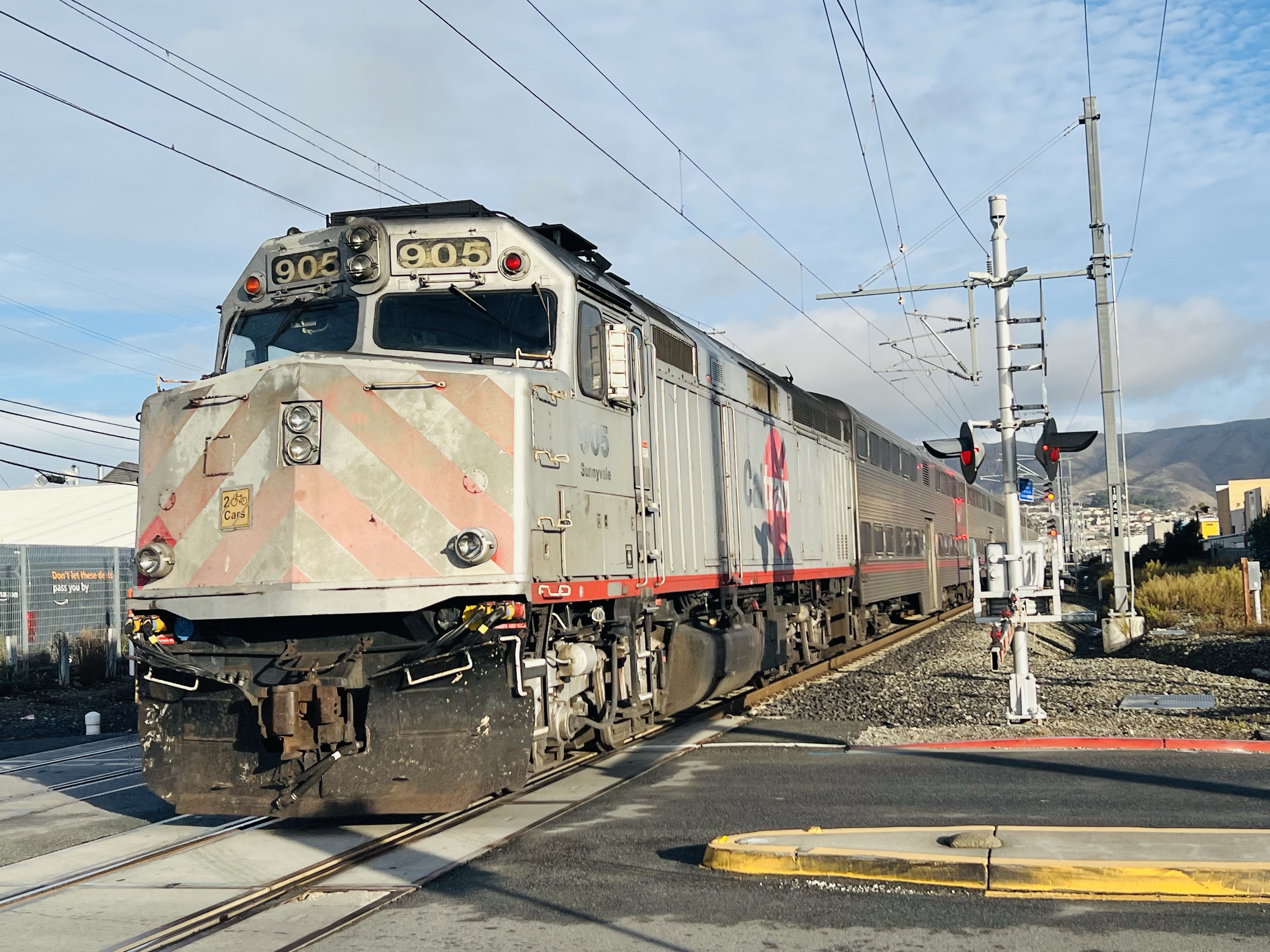
The rails are still very much in use as a northbound Caltrain heads to San Francisco. The train is being pushed by locomotive EMD F40PH-2 No 905 “Sunnyvale”. These diesel-electric locomotives will soon be replaced by electric train sets.

Tanforan was, therefore, connected to the nation through the siding track that brought cars from Tanforan Park proper, to points north (San Francisco) and south (San Jose).
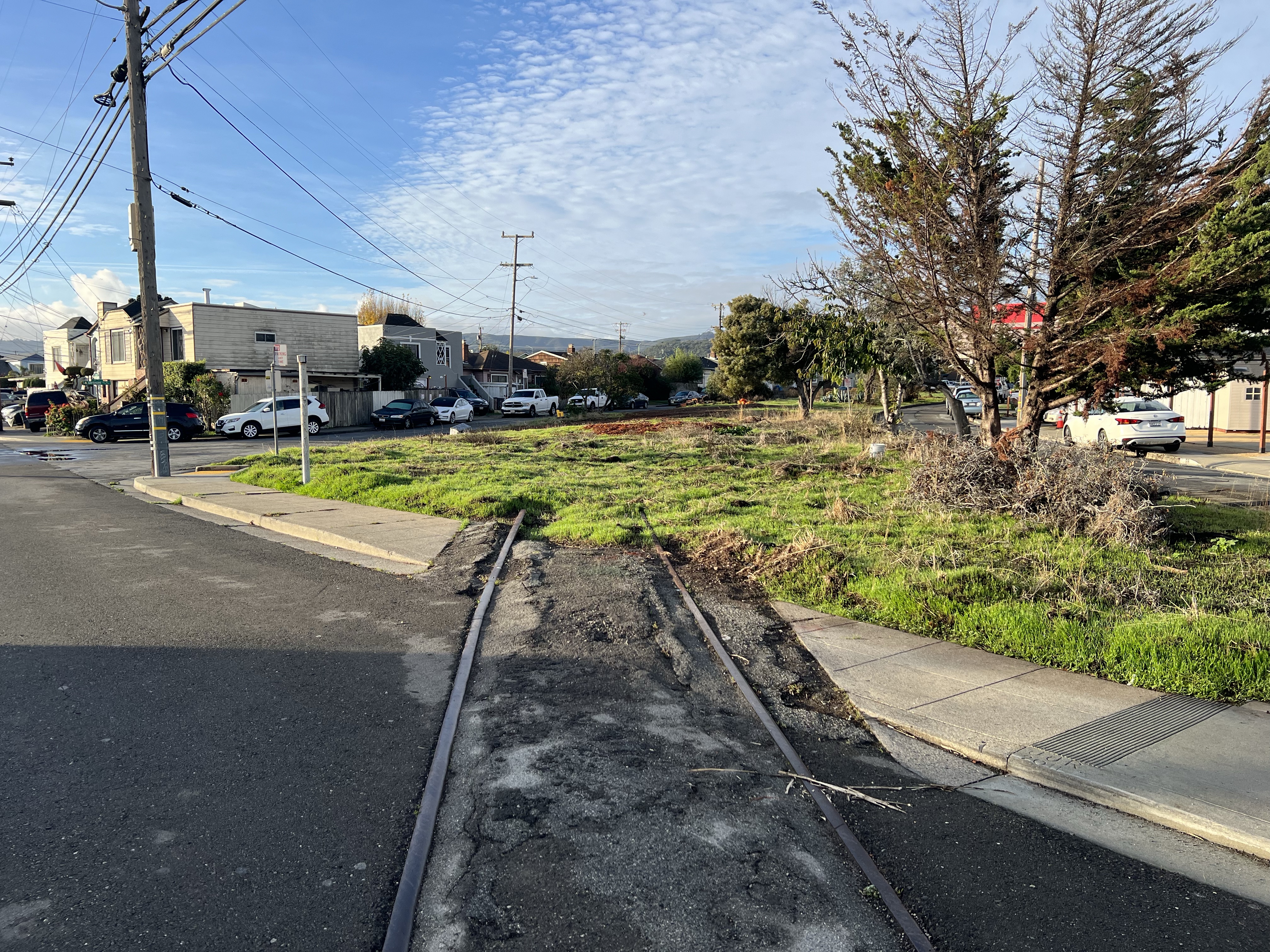
The Tanforan Siding heading towards the former racetrack (now Tanforan Shopping Center). This is the track that connected the siding near the backstretch with the rest of the rail network.

In 1938 the famous thoroughbred racehorse Seabiscuit boarded a special horse baggage car at the Tanforan Siding and he was shipped across the country to the East Coast on his first attempt to beat War Admiral. Large crowds came to see Seabiscuit off at the siding. The first meeting of these racing heavyweights did not happen.

Tanforan does have a dark past. In 1942, the racetrack became the Tanforan Assembly Center (the only assembly center in the San Francisco Bay Area). After the attack on Pearl Harbor, President Franklin D. Roosevelt issued executive order 9066. As a result Japanese Americans where rounded up and about 8,000 men, woman, and children where brought to Tanforan Racetrack now newly christened the Tanforan Assembly Center (one of twelve assembly centers on the West Coast).

Two-thirds of the detainees were U. S. Citizens, born and raised in the United States.
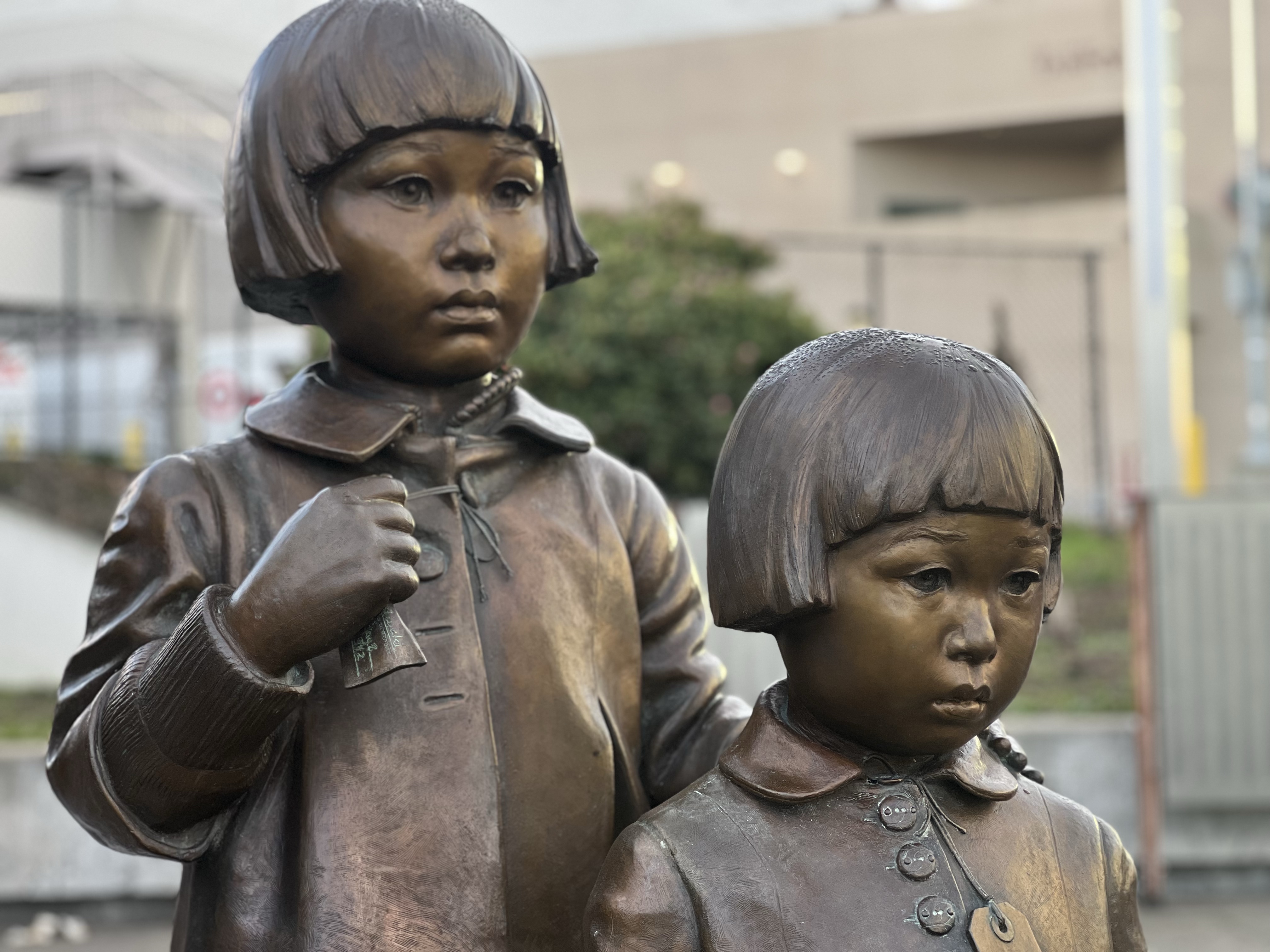
The Tanforan Memorial outside the San Bruno BART Station. The sculpture is based on a 1942 Dorothea Lange photograph of a family on their way to Tanforan. The memorial was dedicated on August 27, 2022.

The first internees arrived on April 28, 1942. They were housed in barracks and horse stalls that reeked of manure and urine. Some families spent about eight months here before being transported, over rail, to the Topaz War Relocation Center in Utah where they remained until the end of the war.

By the fall, the detainees were being sent on a two day rail journey to the Topaz War Relocation Center. On September 9, 1942, the first group of 214 detainees entered the siding that Seabiscuit travelled on a few years earlier and entered the mainline for their trip to the wastes of northeastern Utah. On October 13, 308 detainees, the last to leave Tanforan, entered the siding and then on to Utah.
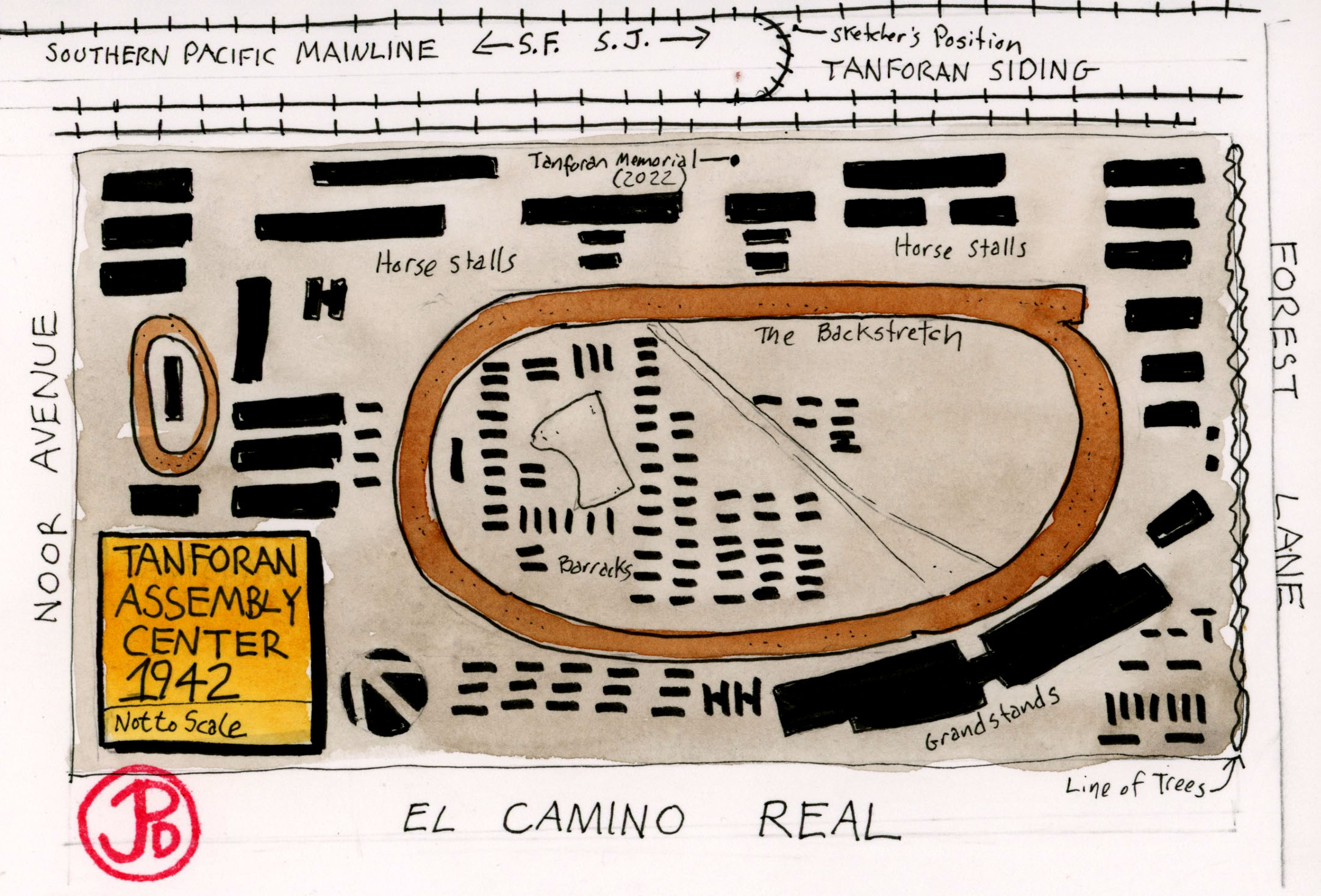
The Tanforan Assembly Center was now closed.

The site of the former track and assembly center is now a shopping mall.

In 2022 the mall was bought by a developer and there are plans to raze the mall and build a massive biotech campus.
Image

Seabiscuit’s Last Pasture

Just south of Willits on an unassuming county road is Ridgewood Ranch.

First established as a ranch in the 1850s, the ranch was given the name Ridgewood Ranch by its second owner, Rench Angle in 1859. Angle increased the size of the ranch by buying up surrounding land for $3.25 an acre.

The next owner of note, and the reason for my visit, was multimillionaire Charles S. Howard, who bought the ranch in 1919.

Howard came to San Francisco with 21 cents in his pocket. He worked his way up to become one of Buick’s best salesmen of all time. He ran many Buick dealerships in the west at the rise of the age of the automobile.

On the streets of San Francisco, cars began to replace horses as the motive power of the day. This is ironic because of a purchase he made in August of 1936 for the sum of $8,000.

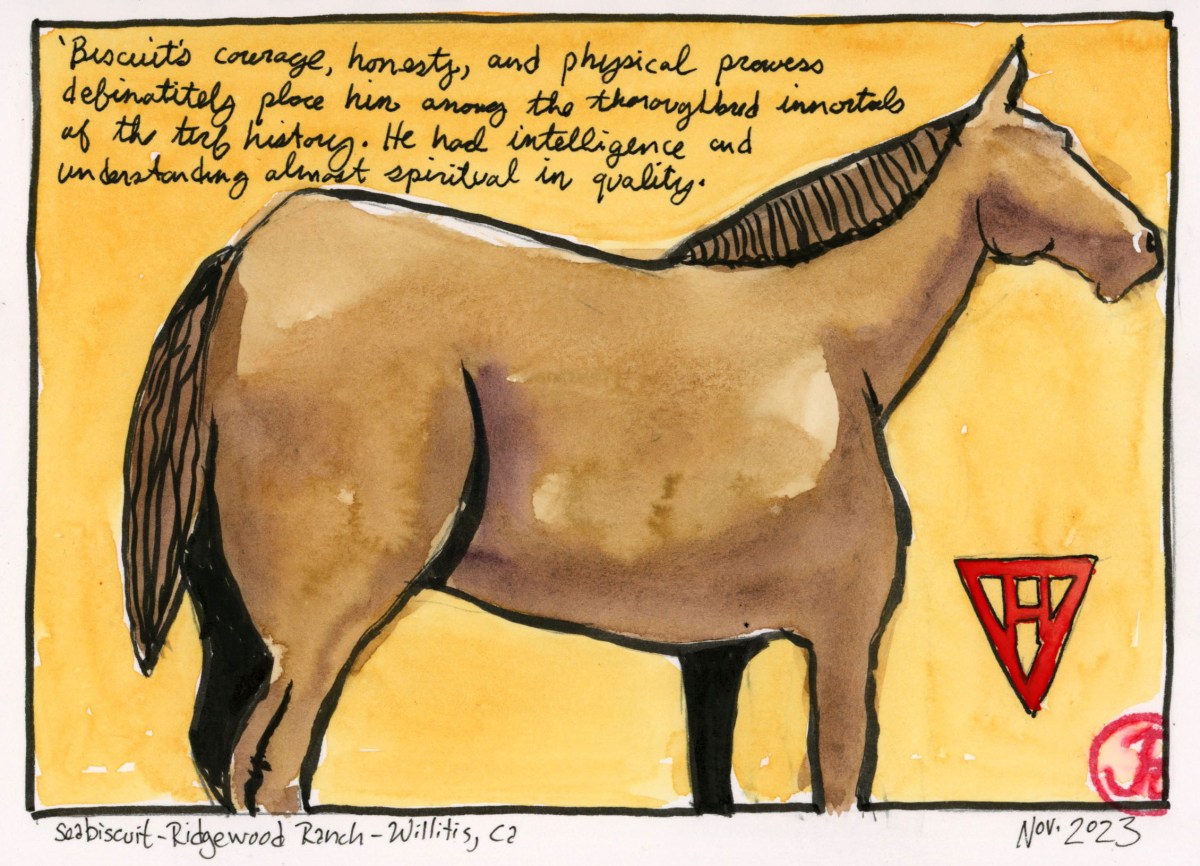
This was the famous thoroughbred Seabiscuit which won many races in the 1930s, lifting a nation in the depths of the Great Depression. He was voted American Horse of the Year in 1938.

The all-time money winner was retired from racing in 1940. Seabiscuit spent the last years of this retired life here at Ridgewood Ranch. He died May 17, 1947 from a probable cardiac arrest.

Seabiscuit is buried near an oak tree at Ridgewood Ranch. Only the Howard family knows the exact location. Seabiscuit’s final resting place is a closely guarded secret.

Image

Seabiscuit in the Bay Area

I’m not really into horse racing and a few of the racing tracks in the Bay Area are now closed. Golden Gate Fields will become a caption to a photo like Tanforan and Bay Meadows before. The recent reports of horse deaths have put a pall over the sport in days of waning interest in horse racing.

What I am into is California history and there is no denying the story of a thoroughbred horse named Seabiscuit with a deep California connections is a great story.

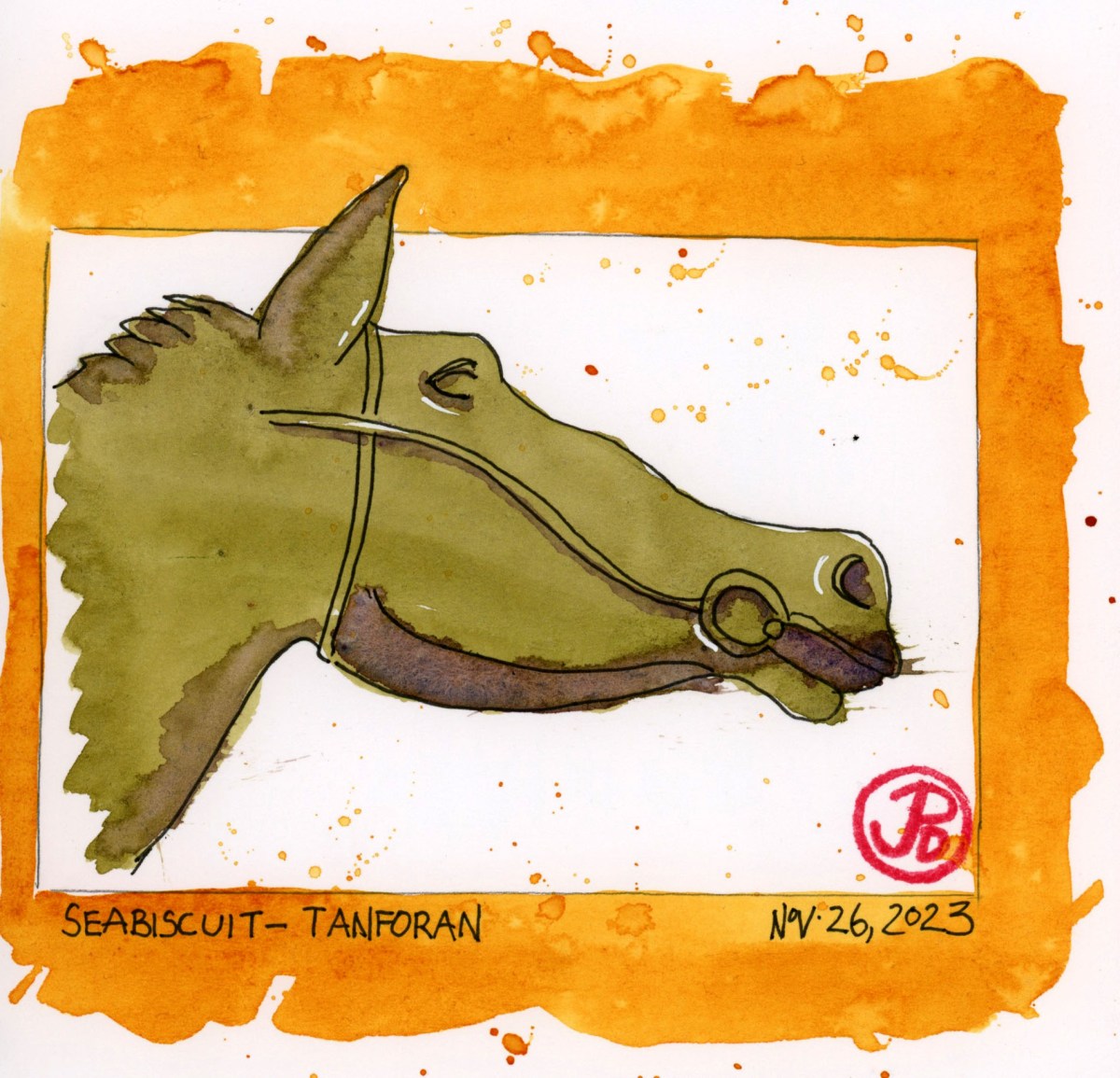
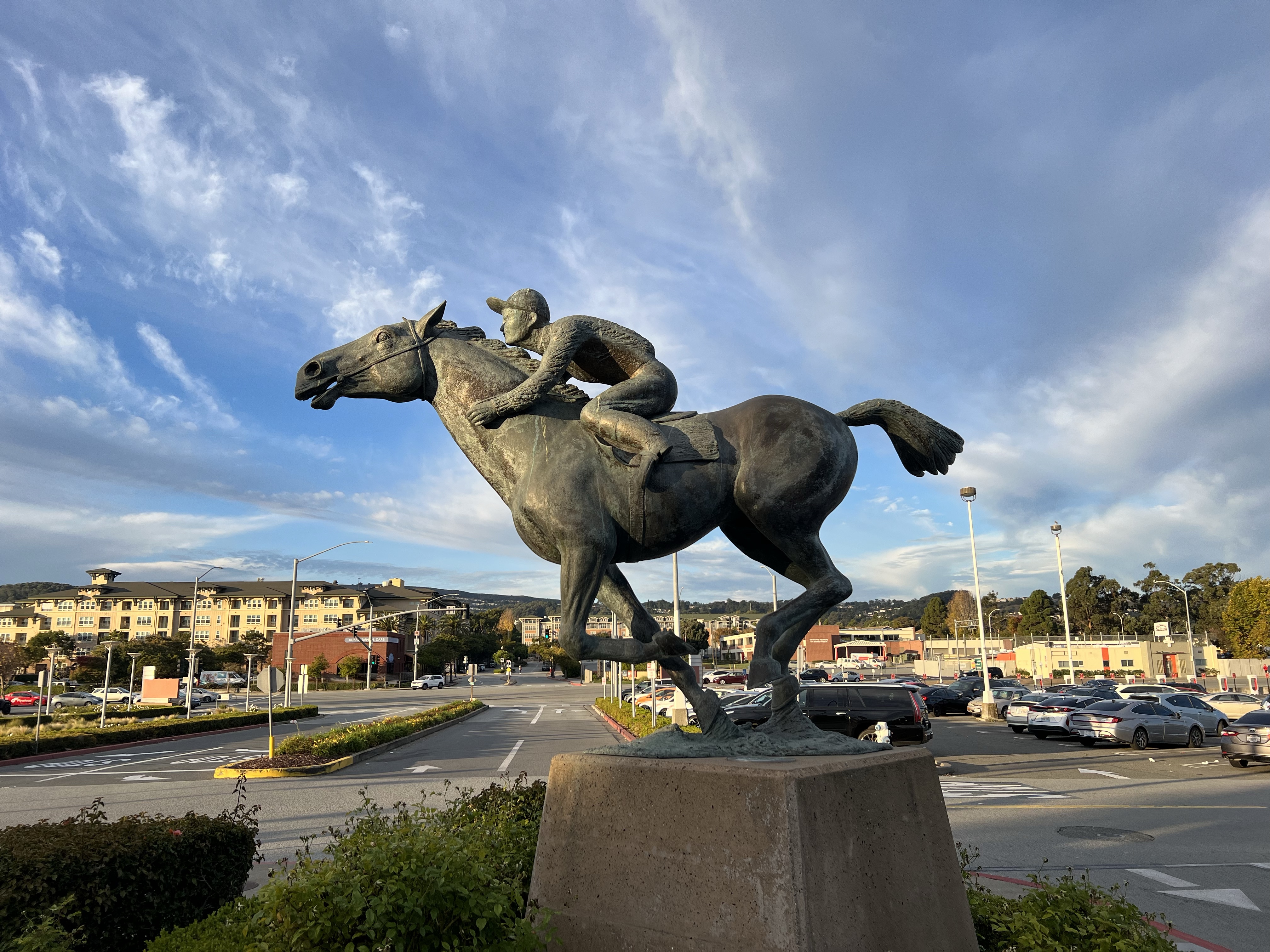
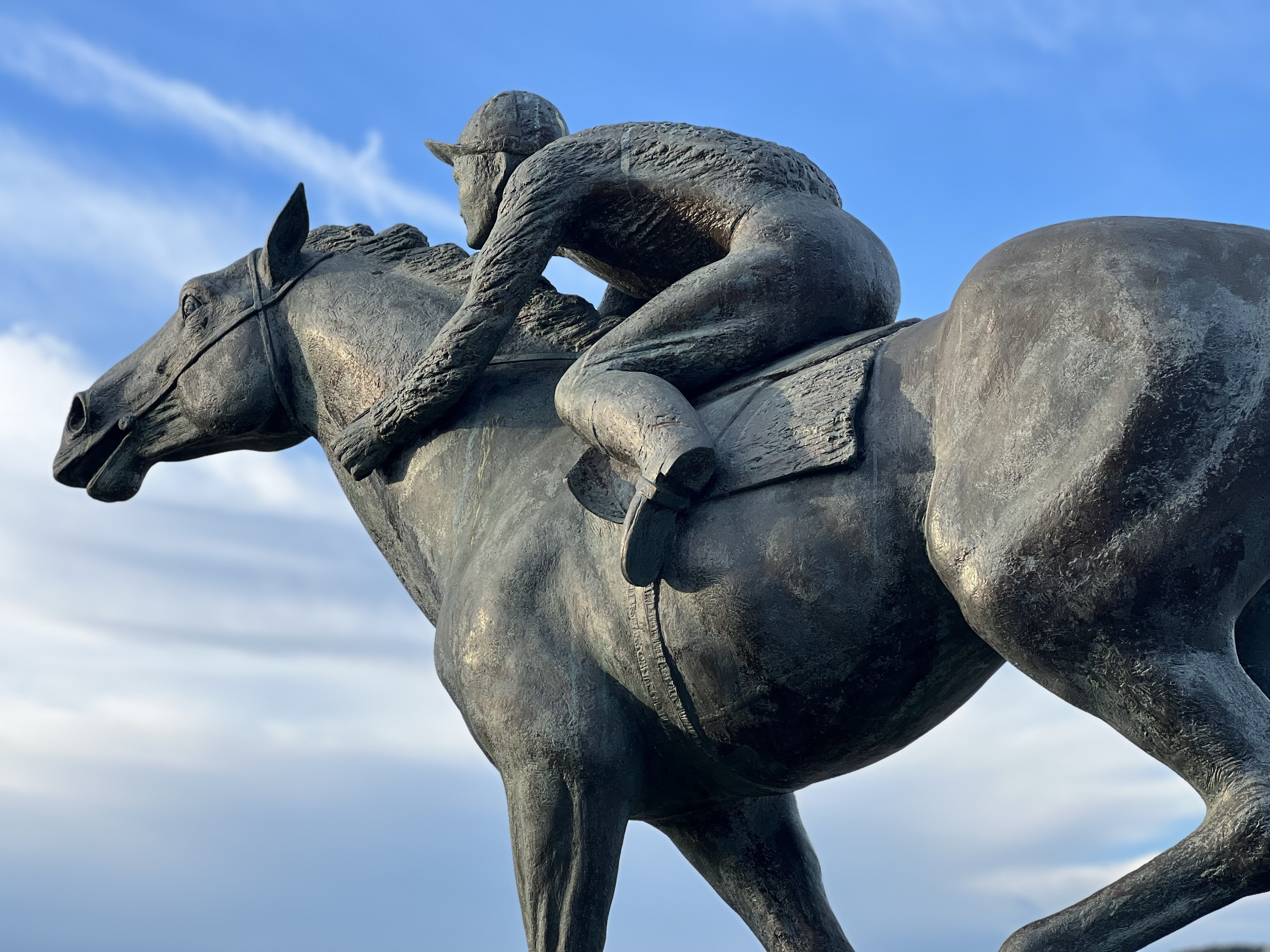
I know Seabiscuit from a statue at the entrance to Tanforan Mall. Seems such an odd place for a horse and rider sculpture but when you know that from 1899 to 1964 the location used to be a racetrack. Tanforan Racetrack featured many of the best thoroughbreds in racing history. The grandstands burned down by suspected arson and then leveled to make way for a mall which opened in 1971.

Tanforan also has a more dubious history as a processing center for Japanese Americans during 1942, then known as the Tanforan Assembly Center. Around 7,800 Japanese Americans were rounded up here and lived in horse stalls for about eight months. They were then sent on to other interment centers across the west.

The plaque under the statue reads: “Seabiscuit Born 1933, Sired by Hark Tack- out of Swing On, Owner- Charles S Howard, jockeys Red Pollard-George Woolf, World Champion Money Winner to 1938.”

Seabiscuit was stabled at Tanforan for a time and ran races here. In 1939 the horse left Tanforan by train when Seabiscuit journeyed east to race War Admiral.

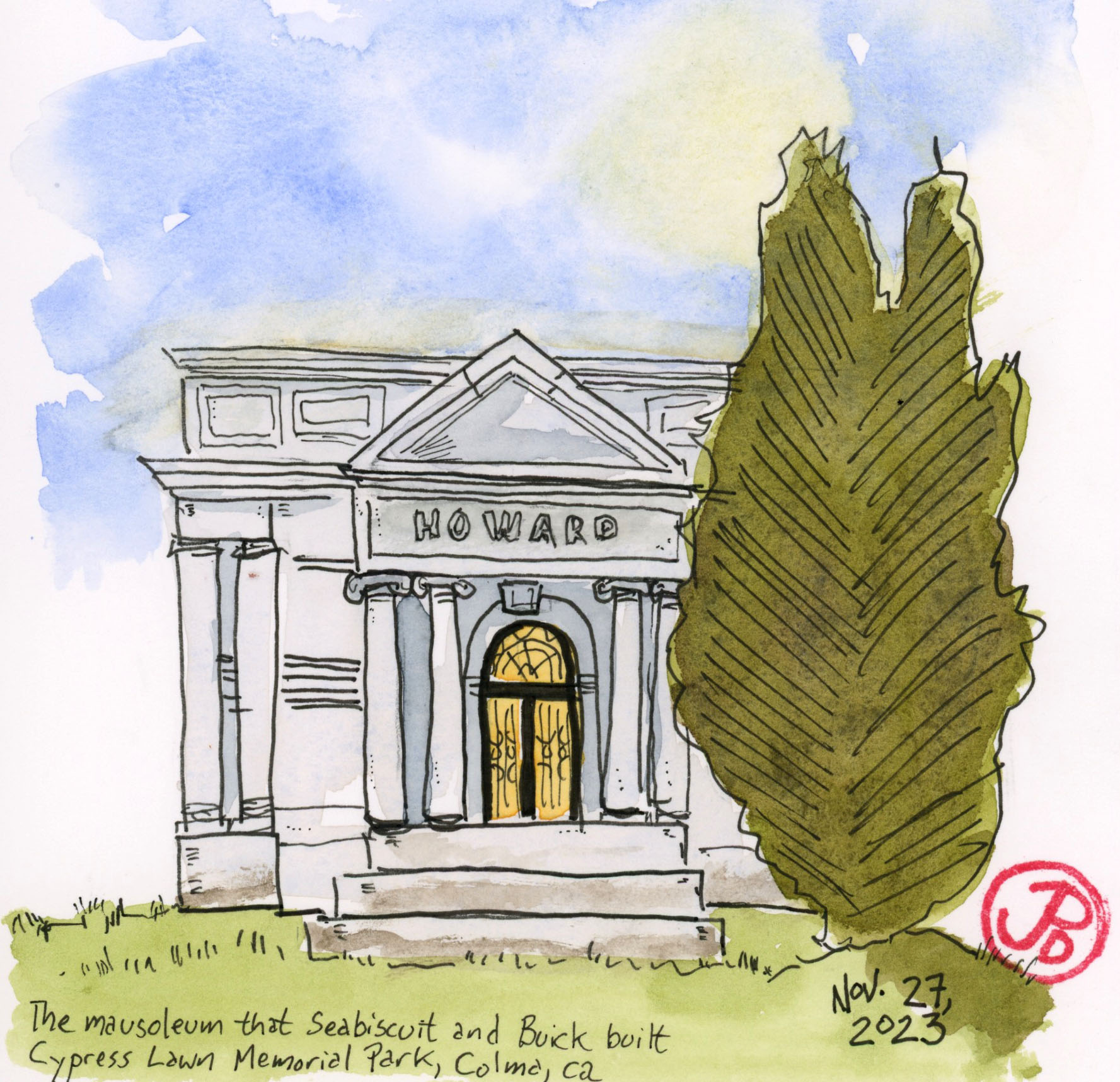
Another bit of Seabiscuit history can be found just north of Tanforan in the sleepy town of Colma. At the Cypress Lawn Memorial Park rests Charles S. Howard.

Howard was Seabiscuit’s owner. The multimillionaire was responsible for Seabiscuit’s success by finding the perfect combination of horse, trainer (Tom Smith), and jockey (Red Pollard).