There are three prominent red buildings I wanted to sketch in Tuolumne County in the towns of Sonora and Jamestown.
My first stop was Jamestown and Railtown 1897 State Historic Park.
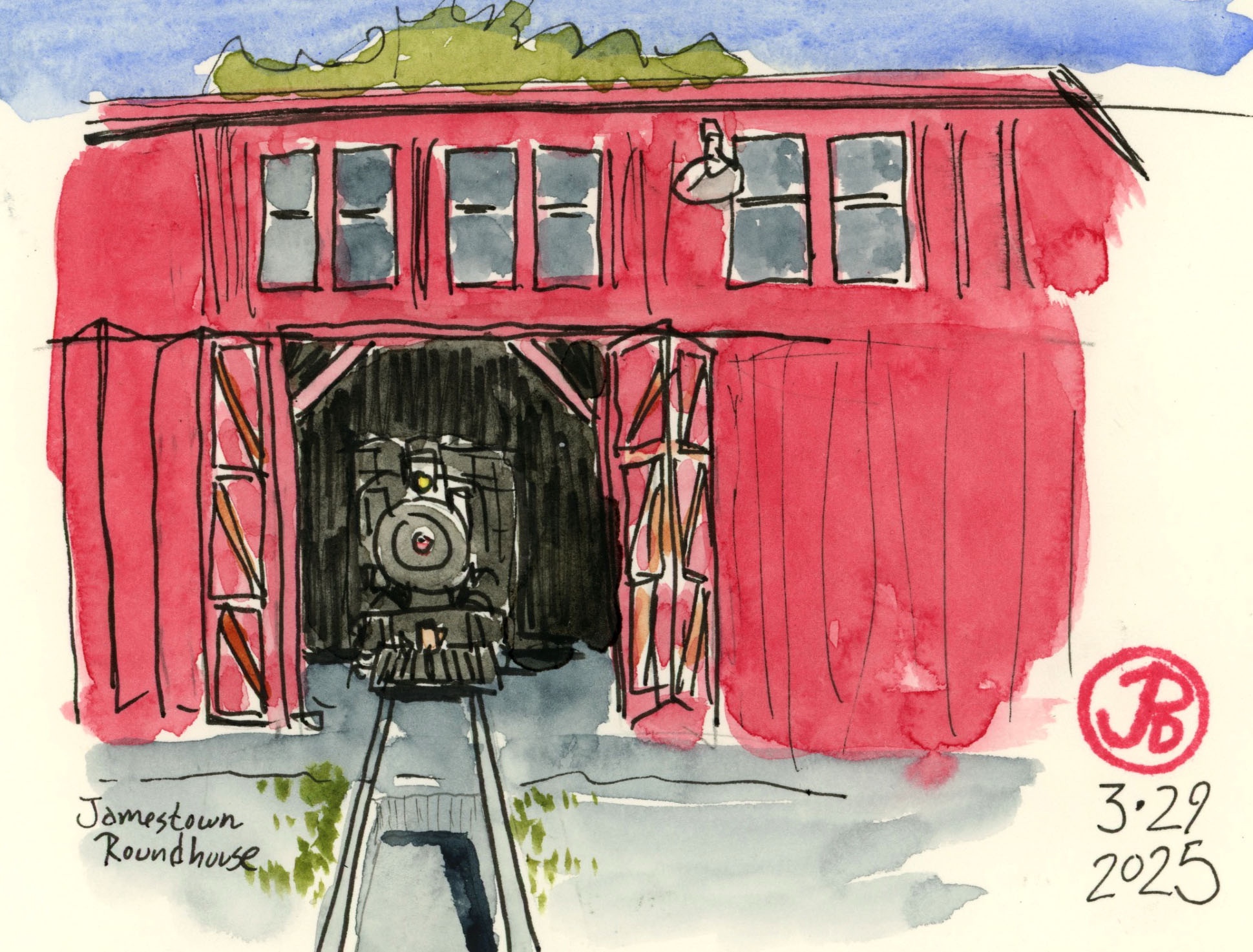
The State Park includes the freight depot and the roundhouse and turntable of the Sierra Railroad. Housed inside the roundhouse are four of the railroad’s steam locomotives.
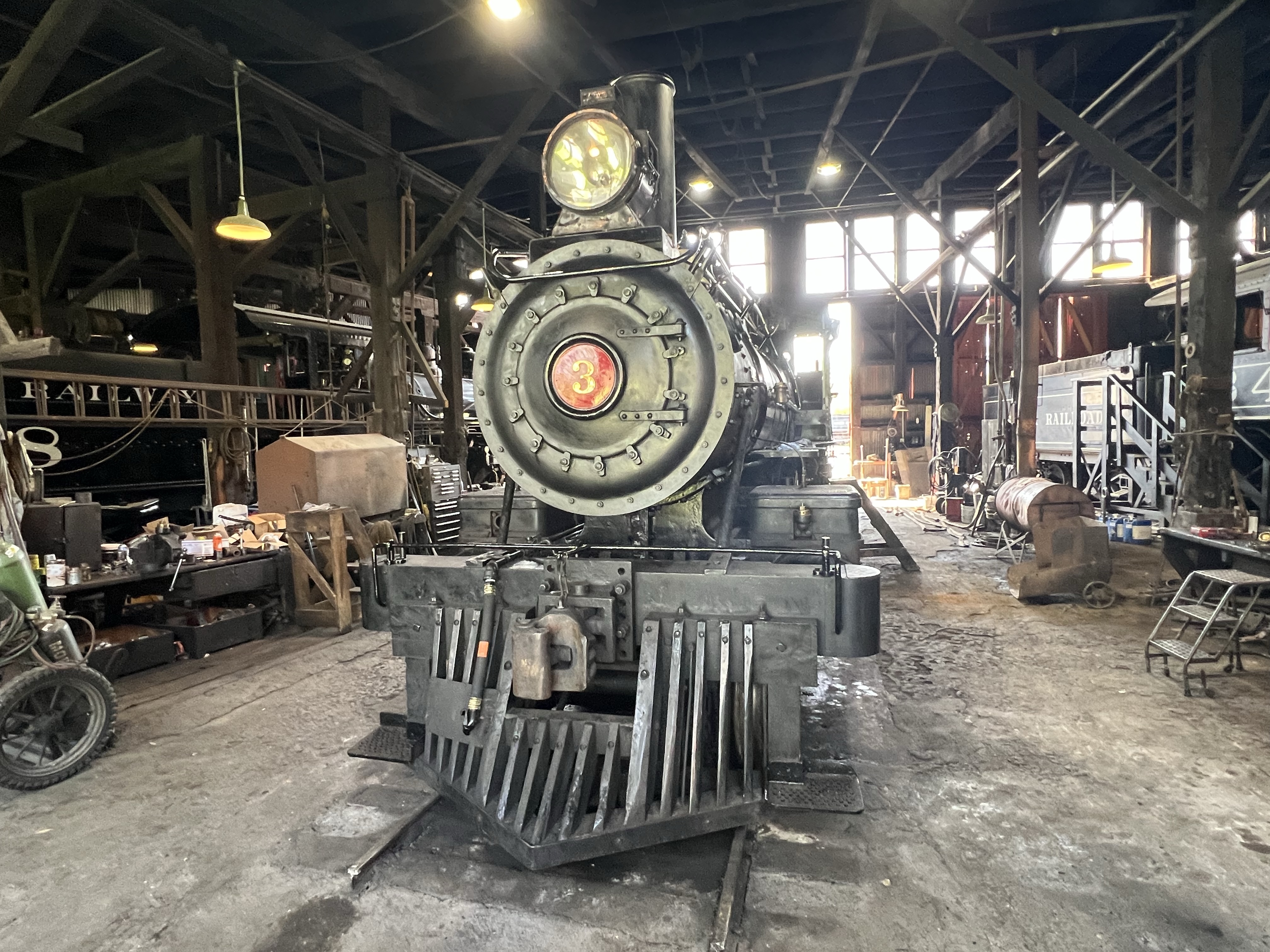
One or two of the locomotives are still active and operate on weekends in the summer months. None is more famous than Sierra No. 3.
Three of my favorite No. 3 films are: High Noon, Man of the West, and Unforgiven.
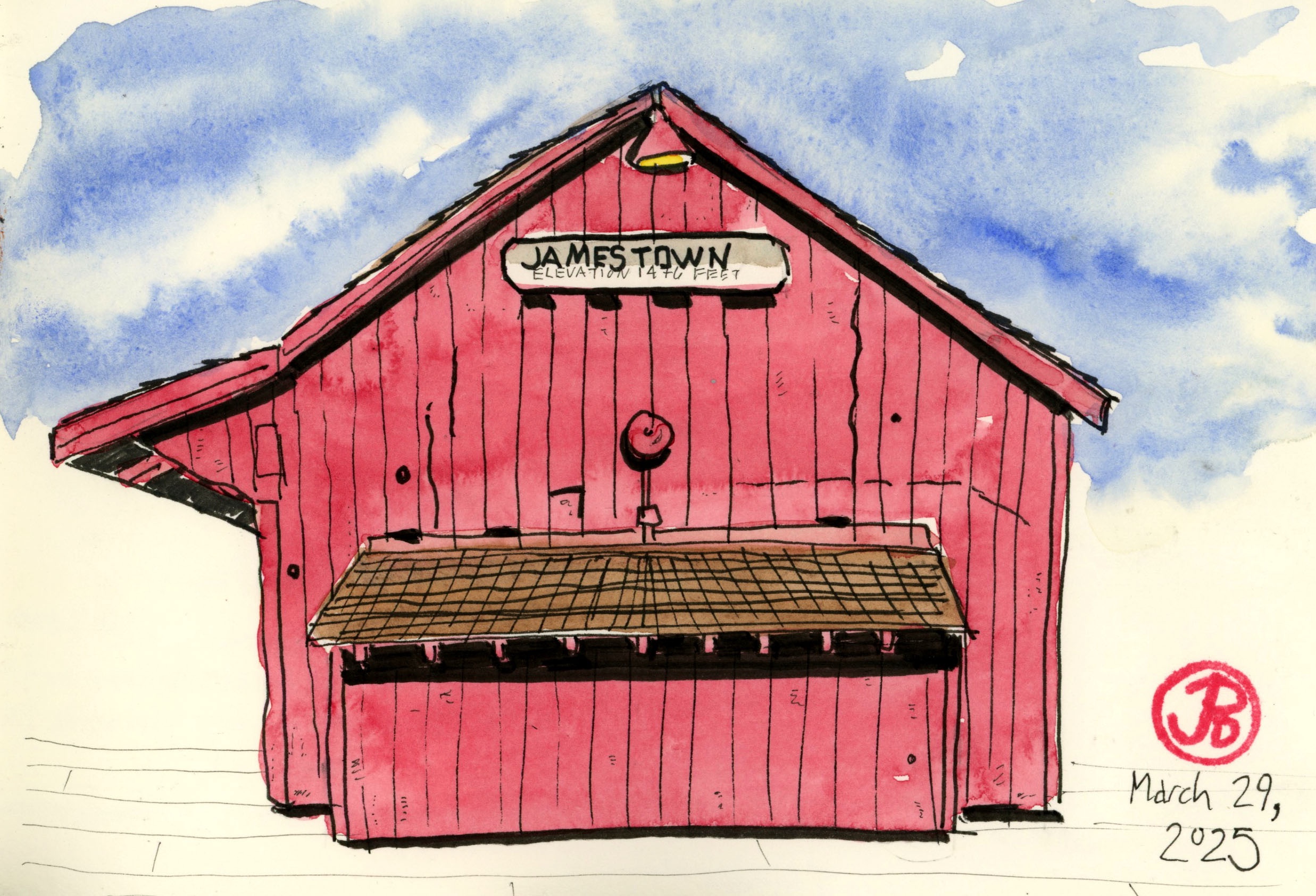
After sketching the roundhouse, I sketched the freight depot, which is now the visitors center and gift shop. This building was featured at the beginning of Anthony Mann’s Man of the West (1958). This is one of Gary Cooper’s last westerns and the last featuring Sierra No. 3 in a Cooper film. Their most famous film was the classic High Noon (although they never appeared in the same scene).
The freight depot. The passenger depot burned down on Thanksgiving Day 1978.
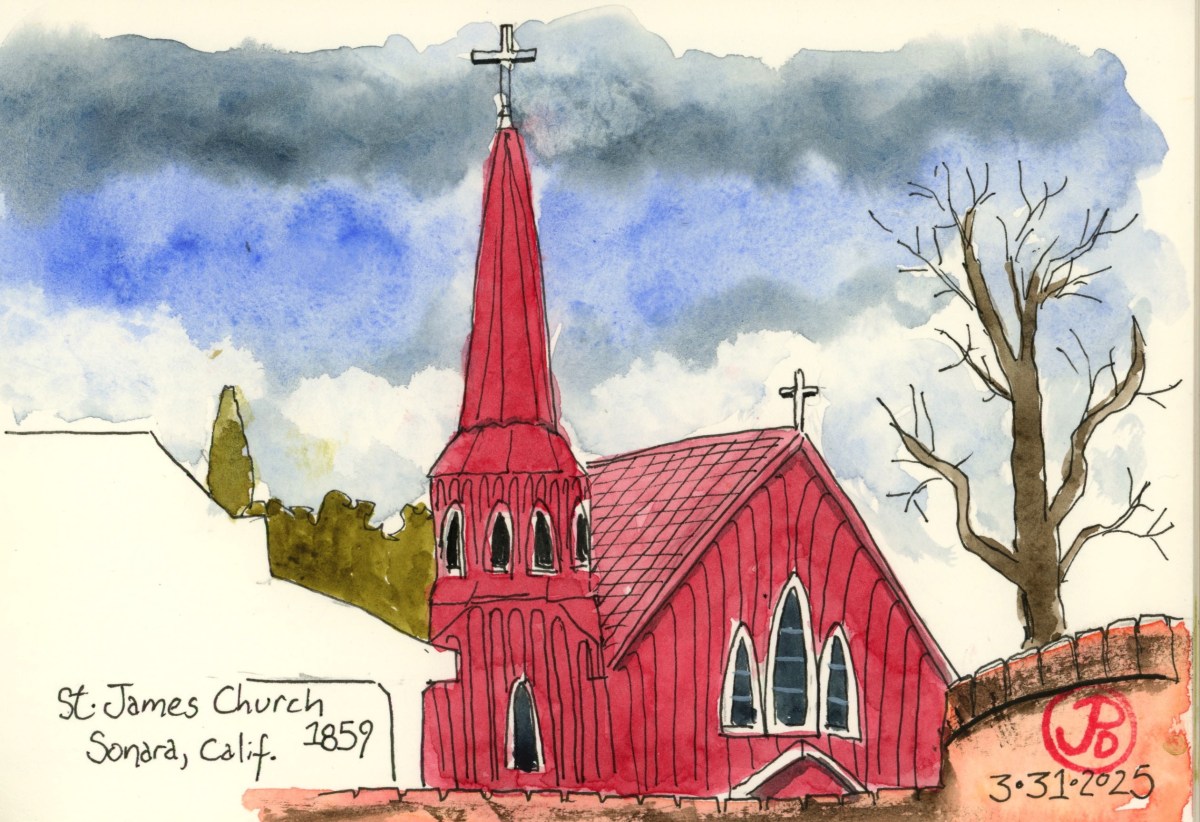
A few days later, I wanted to sketch one of the most photographed churches in the entire Gold Country, which is to be found in the town of Sonora.
This is St. James’ Episcopal Church (1859) also known as The Red Church. The church is build of redwood in a Carpenter Gothic style.
Getting a good sketching perspective was tough because number one, it was raining outside and I needed to do a car sketch yet I couldn’t find parking with an unobstructed view of the church looking up Highway 49. So I found a great perspective from the second story of the parking structure, looking down on the church (featured sketch).
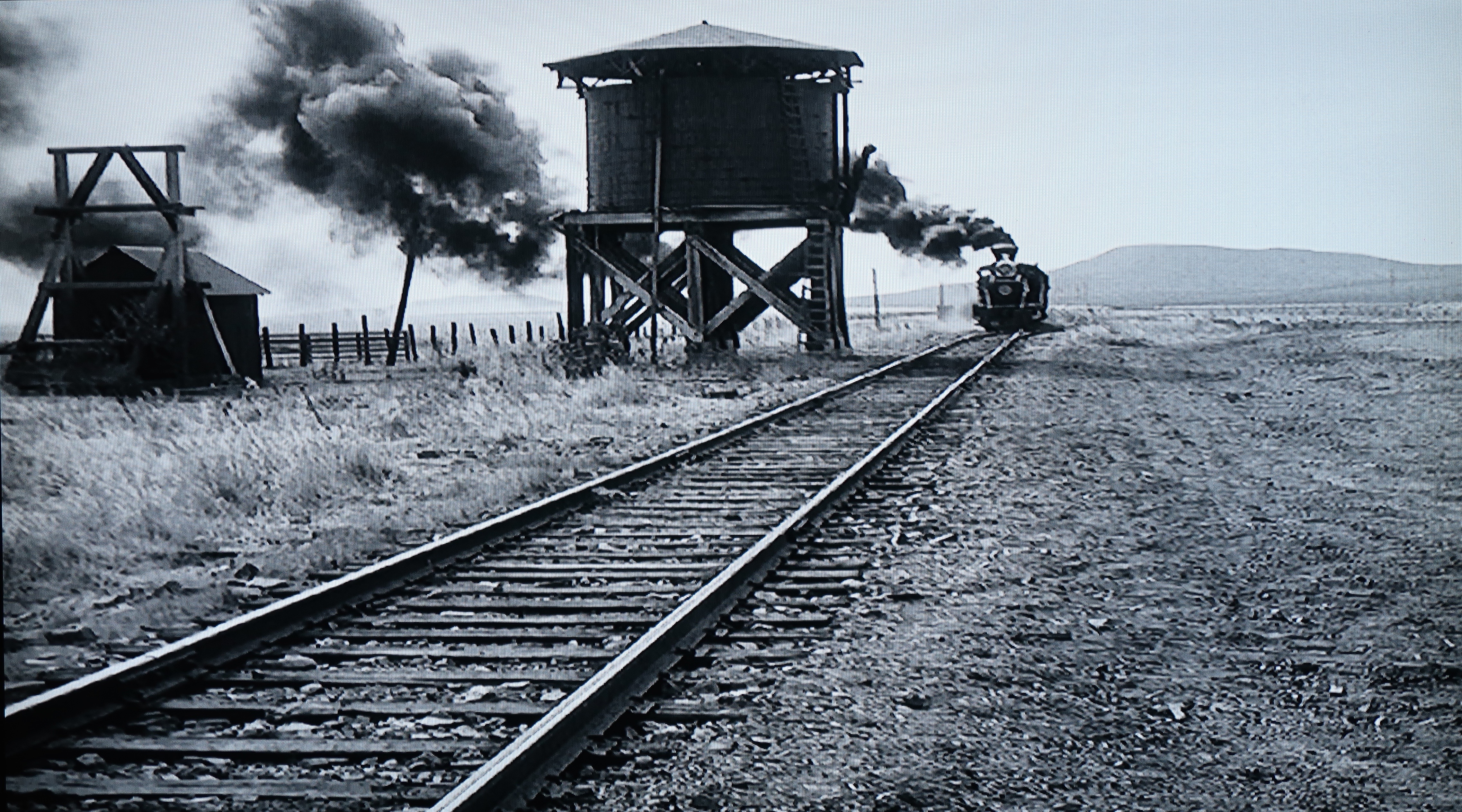
There is one shot that is used to create tension in the seminal western High Noon (1952).
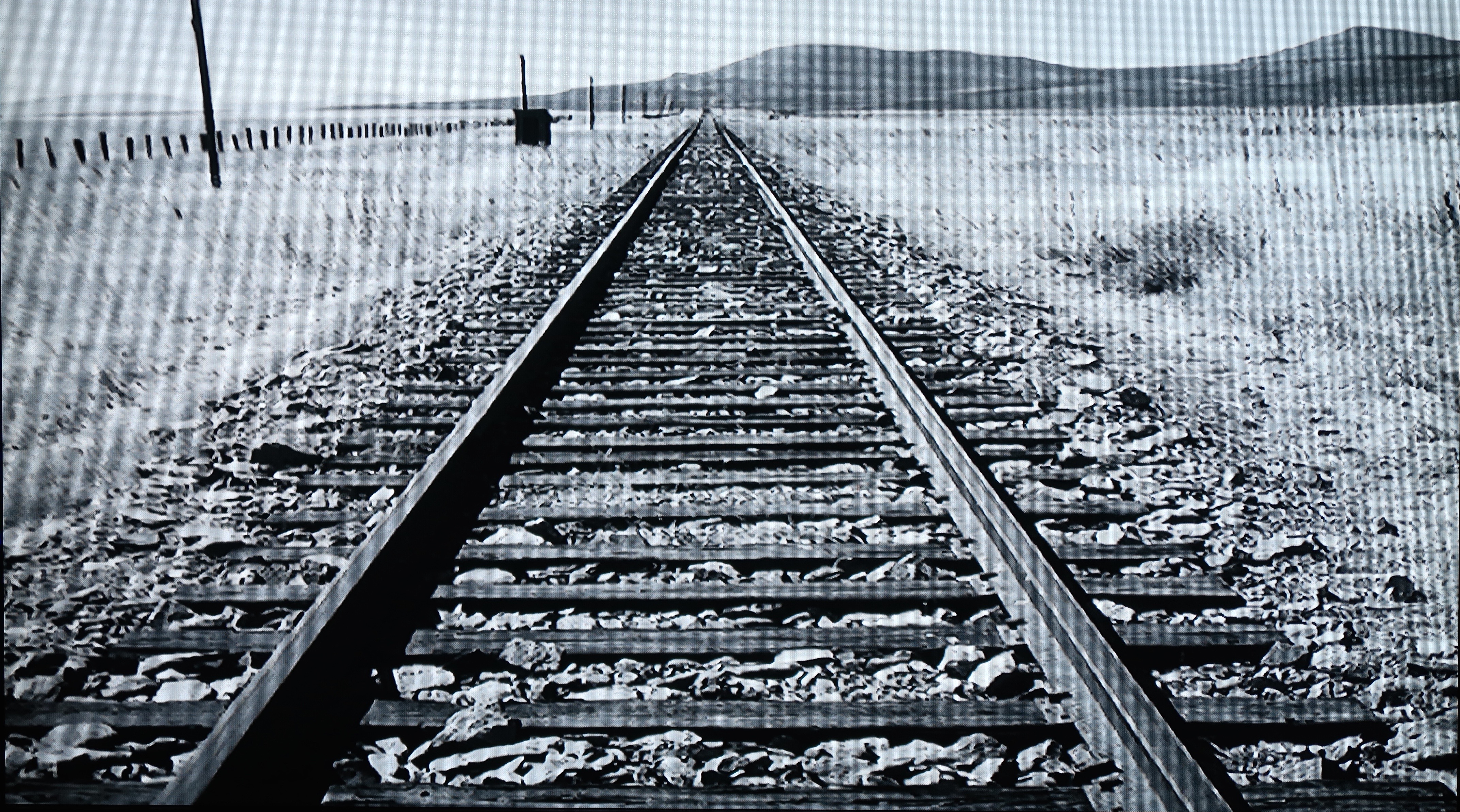
The iconic shot looks down the rails towards low hills in what is supposed to be Hadleyville, New Mexico. This shot is used seven times at slightly different heights but is shot from the same position, looking west down the rails. Below is an example from the film:
A still from High Noon looking west down the rails of the Sierra Railroad.
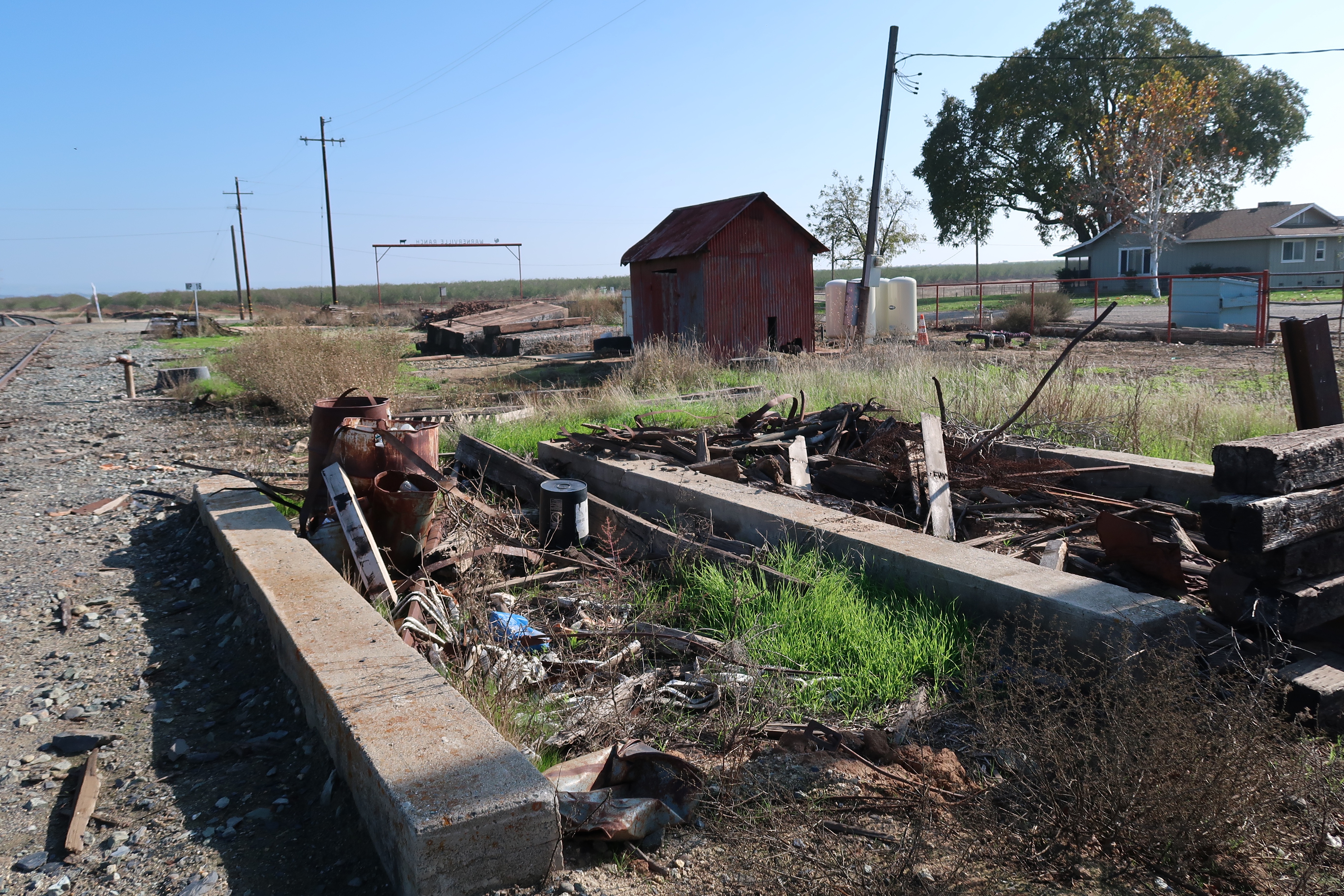
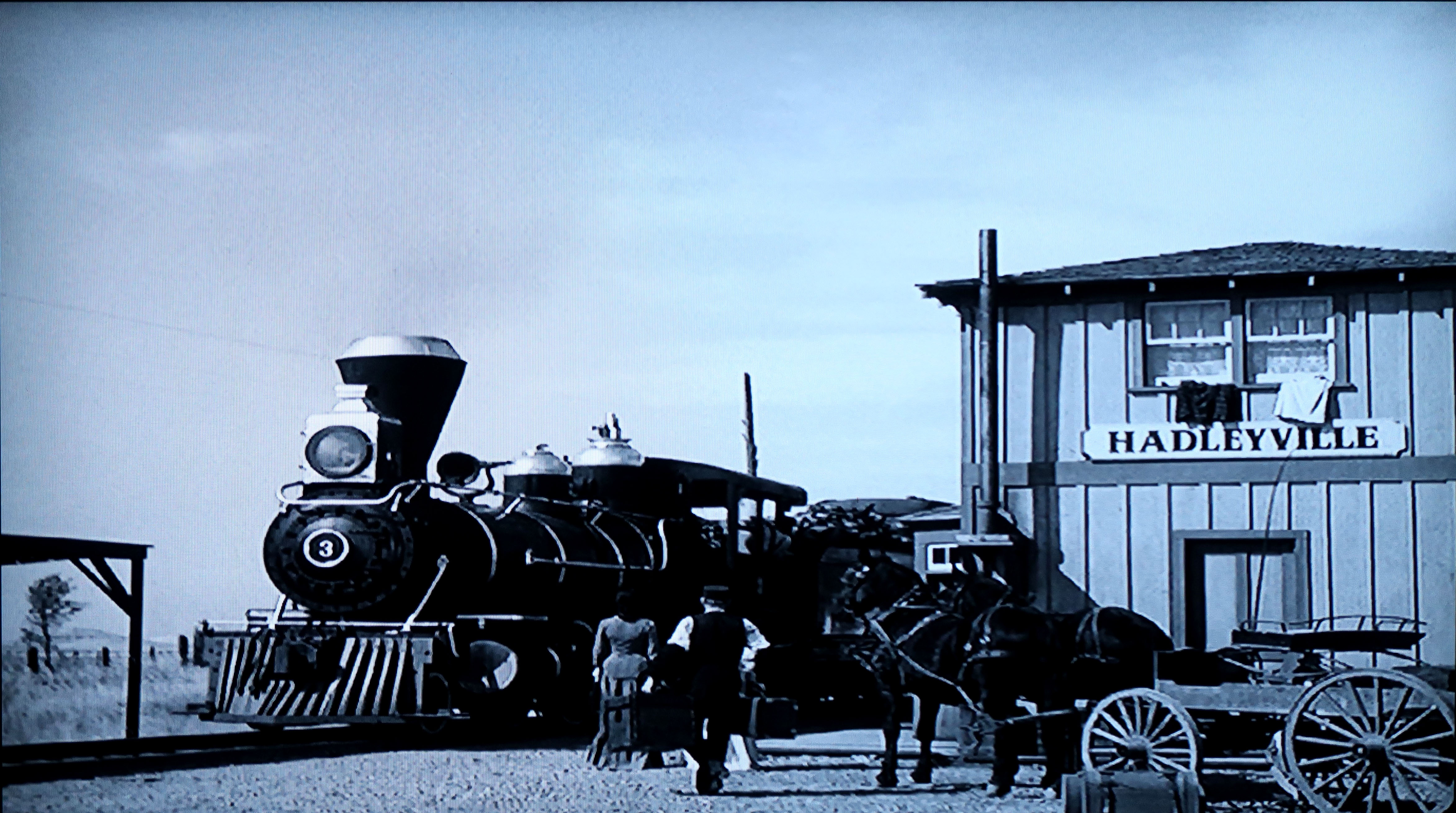
In reality the scene was shot on the Sierra Railroad at Milepost 16 in Warnerville, California. It was here that film crew built the Hardleyville Depot set, which is now gone. There was once a water tower which was featured in the film and this is maybe why they chose this location for the set. The water tower, which was a mainstay in the era of steam, is now gone but the concrete foundation and a small building still remain from the time High Noon was filmed here in September of 1951.
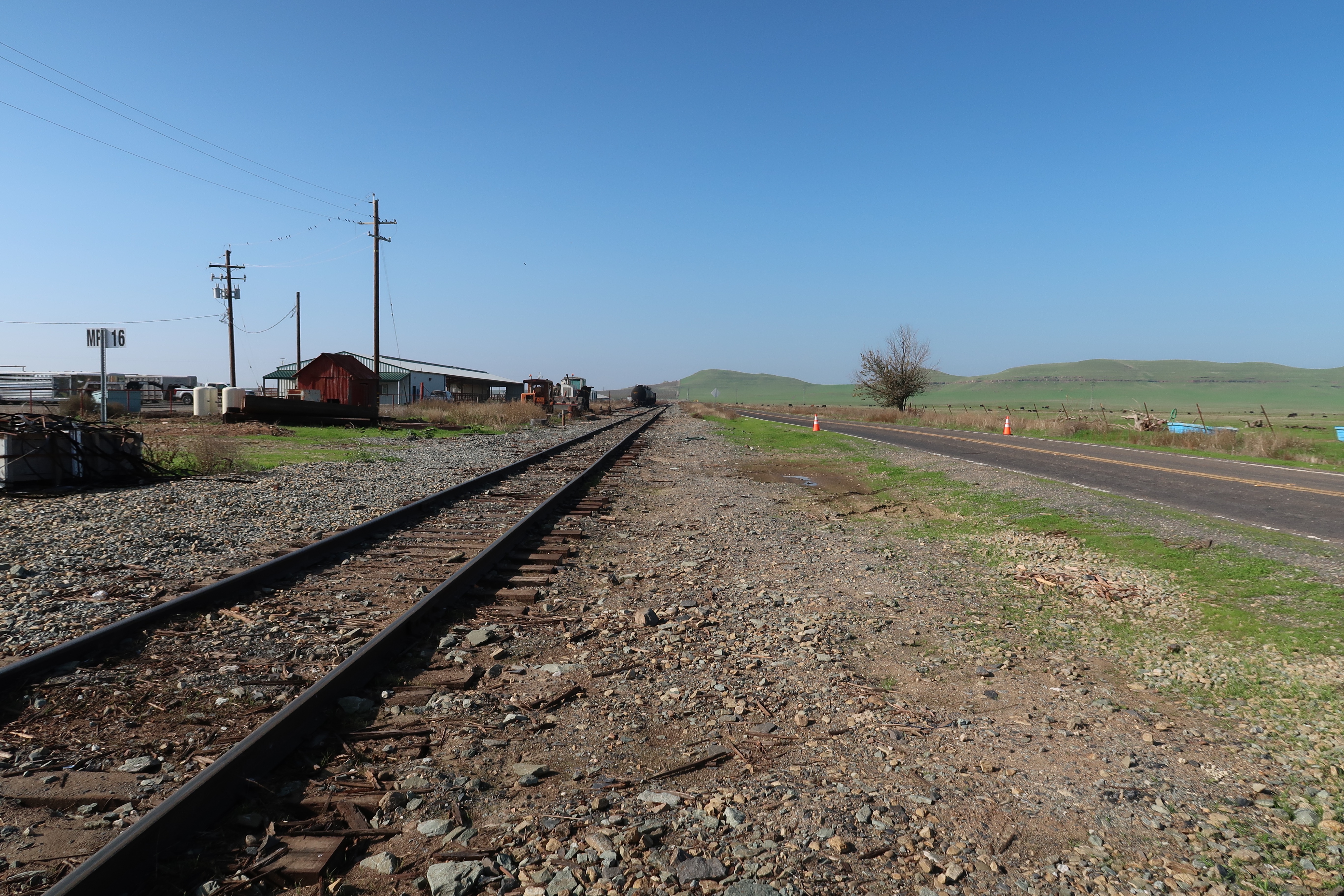
The concrete foundation is all that is left of the water tower at Warnerville. The small red building in the background still stands after 70 years. This shot is looking northeast.Warnerville looking west toward where the noontime train would be arriving. In the foreground, to the right of the rails, was the location of the Hadleyville Train Depot set. The little red building on the left of the tracks still exists.
Warnerville is not really a town. It consists of a few farms and houses, a grade crossing, and a railroad siding. While it would be great if there was an interpretive sign pointing out the cinematic significance of this location but alas, there is none.
This still from High Noon shows the approaching noontime train, in this case the Screen Queen Sierra No. 3. The water tower and the small building that still exists are to the left of the line. The low hills in the background looks very much the same.A still from High Noon of Sierra No. 3 pulling into the Hadeyville Depot set at Warnerville.
In the film Nigh Noon, three rough looking gunman arrive at the train station to await the arrival of the noontime train (hence the name High Noon). They are waiting for Frank Miller, who recently has been released from prison. He is coming back to exact revenge on the marshal (Gary Cooper) who put him away.
Among the three gunman, who gaze down the track expecting the noon train, is an actor making his screen debut. He does not speak a single word in High Noon, although he blows a few bars on the harmonica. This actor is Lee Van Cleef. He is best known as the “Bad” in Sergio Leone’s “The Good, the Bad, and the Ugly” (1968).
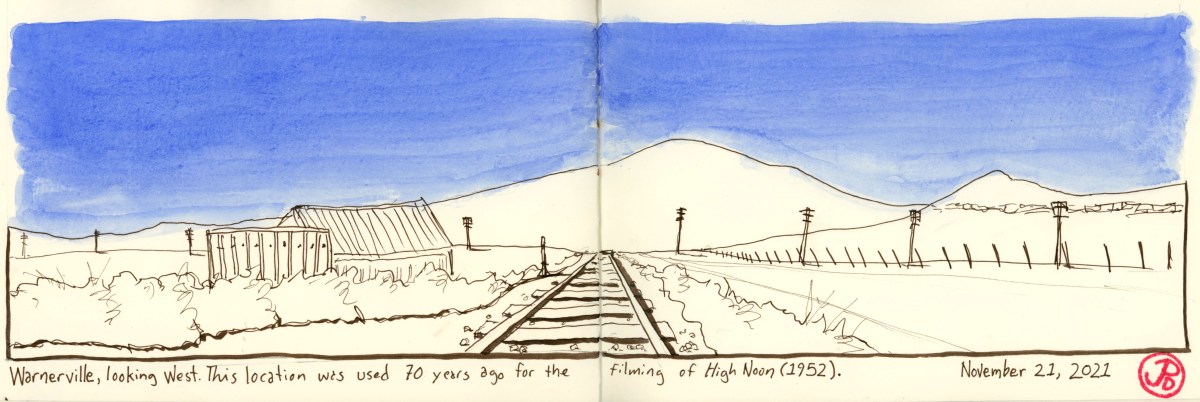
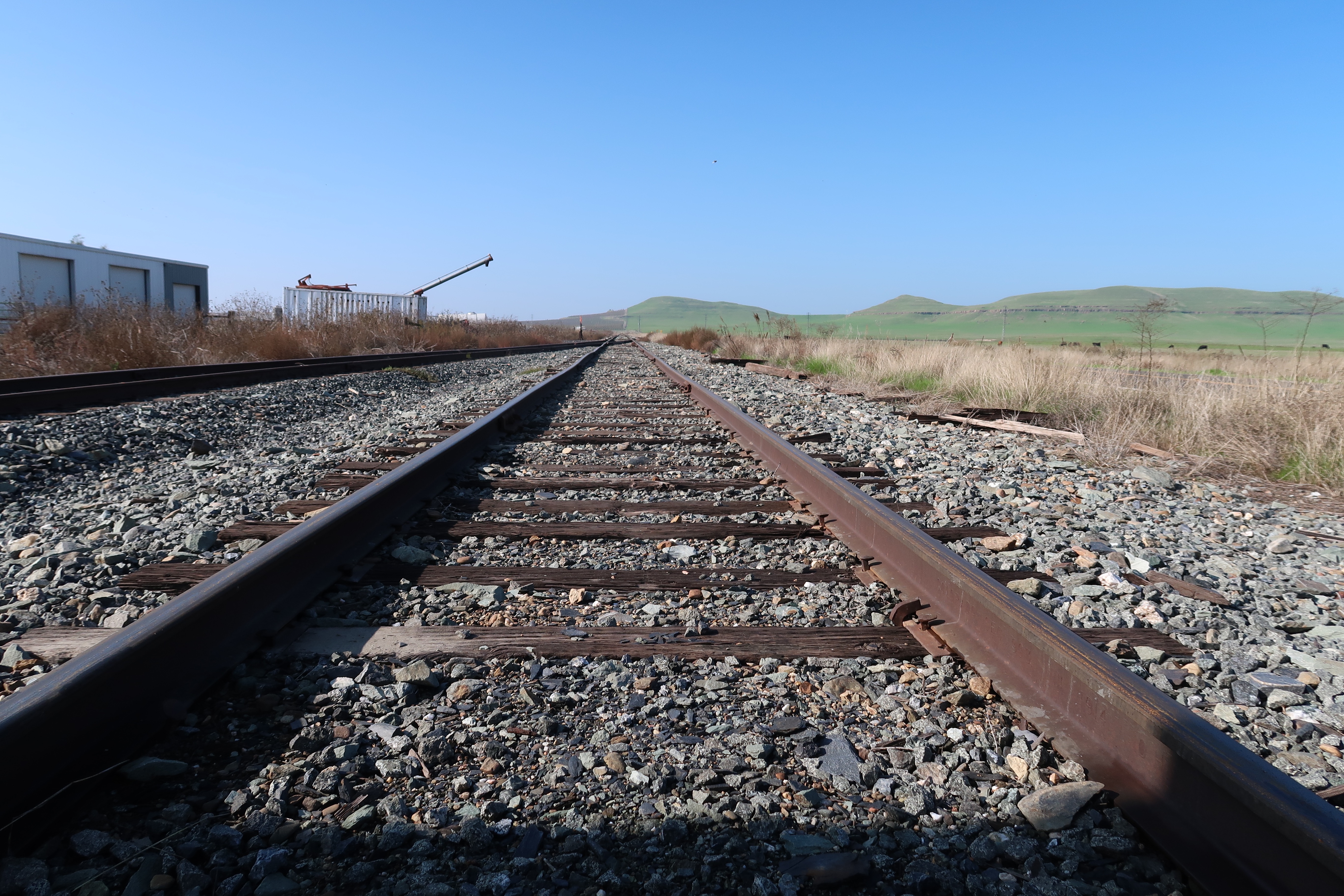
I arrived at the intersection of Warnerville and Crabtree Road at the Sierra Railroad grade crossing. It was 70 years ago that this location was used in High Noon. The area is a bit different from that time but it is very much the same in other ways. The line of hills had not changed much, except for an almond grove creeping up one of the hillsides (I chose not to add it to my featured sketch, sketcher’s license after all.)
I stood in between the two rails and sketched the approximate position of cinematographer Floyd Crosby’s camera. The rails looked a bit rusted enough so I was not expecting a westbound freight anytime soon. But I still checked my back from time to time because the Sierra Railroad is still an active branch line.
My only companion was a black cow grazing on grass across the road. She raised her head in between foraging and peered, without judgment, at Corvidsketcher.
Well how do you really judge the judgement of a cow after all?
A shoutout goes out to Jeff and Sarah of History Hunters for letting me know about this forgotten filming location. Thank you! Their youtube channel can be found at: http://www.youtube.com/jbenziggy
Here is a photo of my sketching position. If you compare the movie sill from the top of the post, you will notice that the distant hills look very much the same today.
So many films have been filmed on the Sierra Railroad that it is known as the “Movie Railroad”.
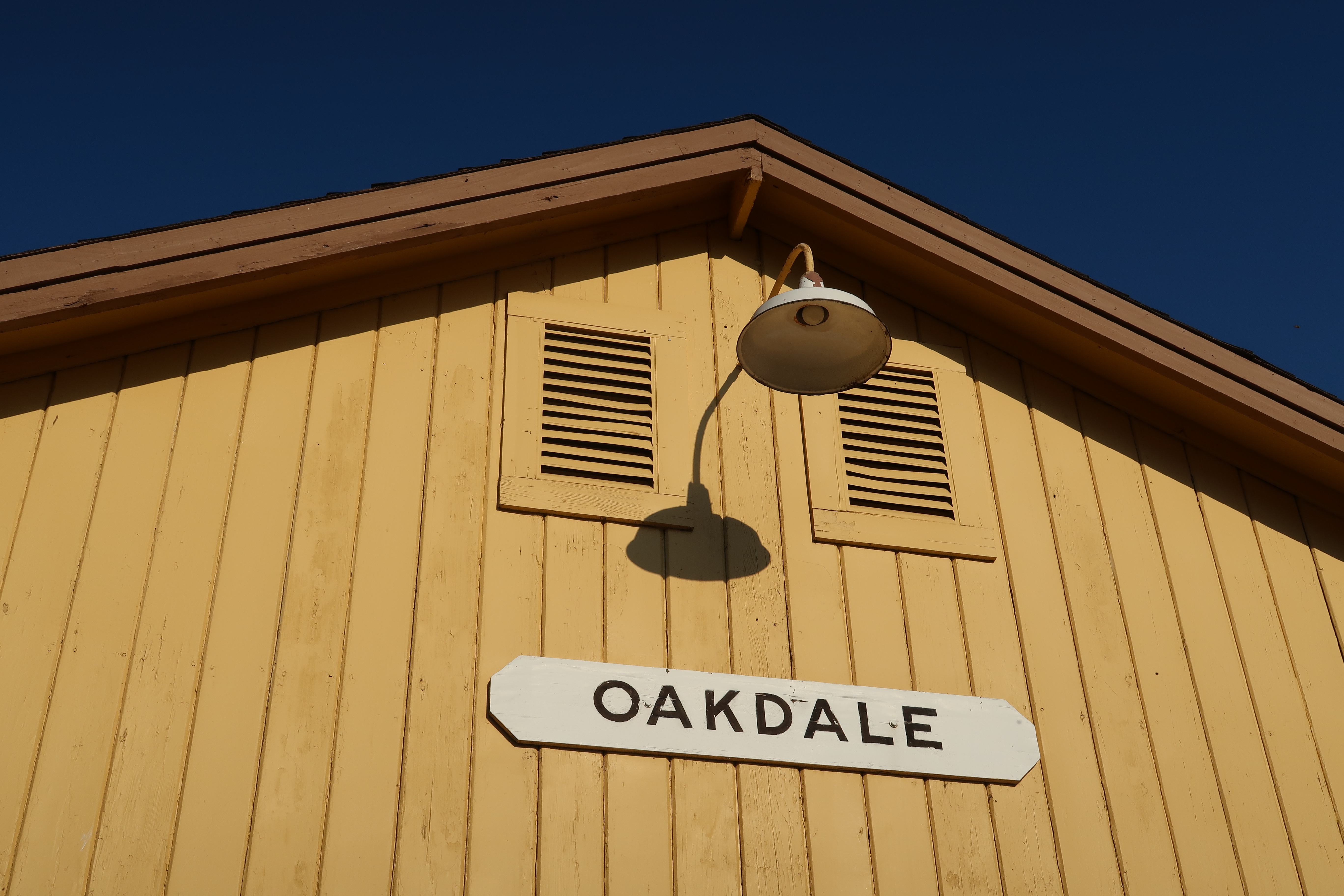
The railroad originated as a branch line connecting the Central Valley, where the mainline is located, to the Gold Country to the east. The construction of the railroad started in 1897 at the Southern Pacific Depot at the town of Oakdale. Seven months later the line reached Jamestown, 41 miles away. In 1899, the line was extended to Sonora, the county seat, and by the turn of the century, the line ran further east to Tuolumne.
The former Southern Pacific Depot at Oakdale. This is where the railroad started. The building now houses the Cowboy Museum.
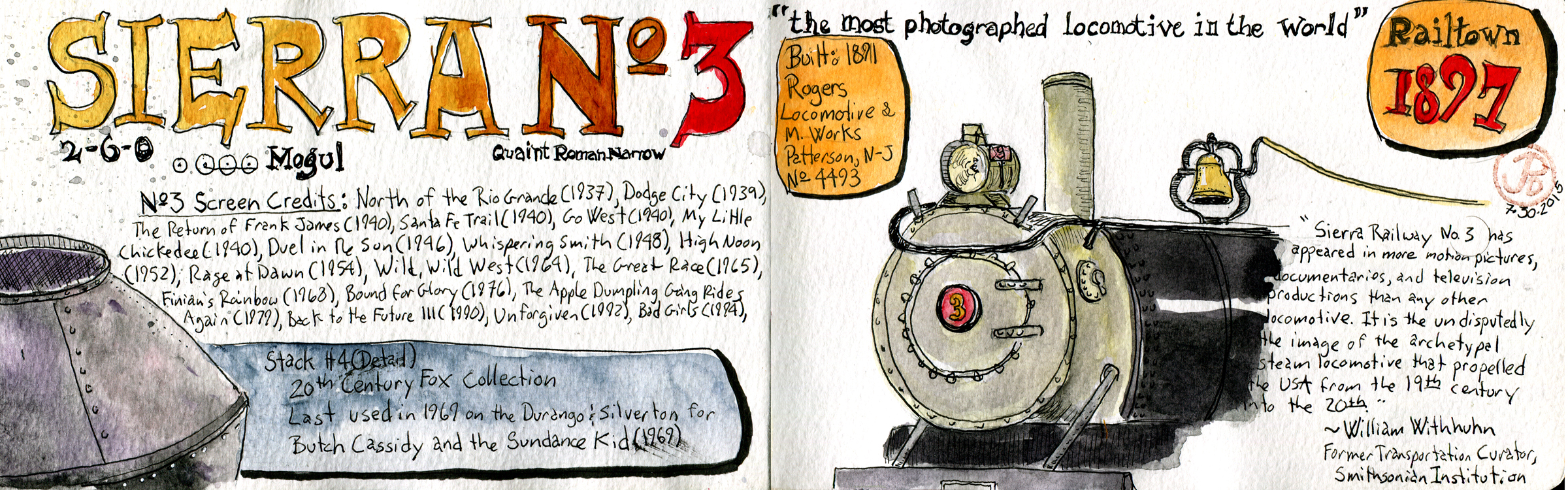
The town of Jamestown was where the Sierra Railroad established its headquarters and it’s maintenance shops. This part of the railroad now exists and is preserved as Railtown 1897 State Historic Park. The roundhouse still stands and it houses three historic steam locomotives that still are operable today. The star of the roundhouse is Sierra No. 3, a 2-6-0 Mogul type locomotive that is considered to be the most photographed locomotive in the world. She was built in 1891 in Patterson, New Jersey. This locomotive has a look that appealed to Hollywood and heyday of westerns. No. 3 appeared in over 100 films and television shows over the years including My Little Chickadee, High Noon, Bound For Glory, Little House on the Prairie, Petticoat Junction, Back to the Future III, and Unforgiven.
Three movie stars in their stalls at the Jamestown roundhouse. Number 28 and 34 where featured in Hal Ashby’s film Bound For Glory. No. 28 is the only steam locomotive in service and now heads the seasonal “Polar Express”. The sound of the Polar Express in the movie of the same name where recorded from Sierra No. 28.
The Sierra Railroad and No. 3 have appeared in three movies that where nominated for Best Picture: High Noon (1952), Bound For Glory (1976), and Unforgiven (1992). Clint Eastwood’s Unforgiven won Best Picture, Best Director (Eastwood), Best Supporting Actor (Gene Hackman), and Best Editing (Joel Cox).
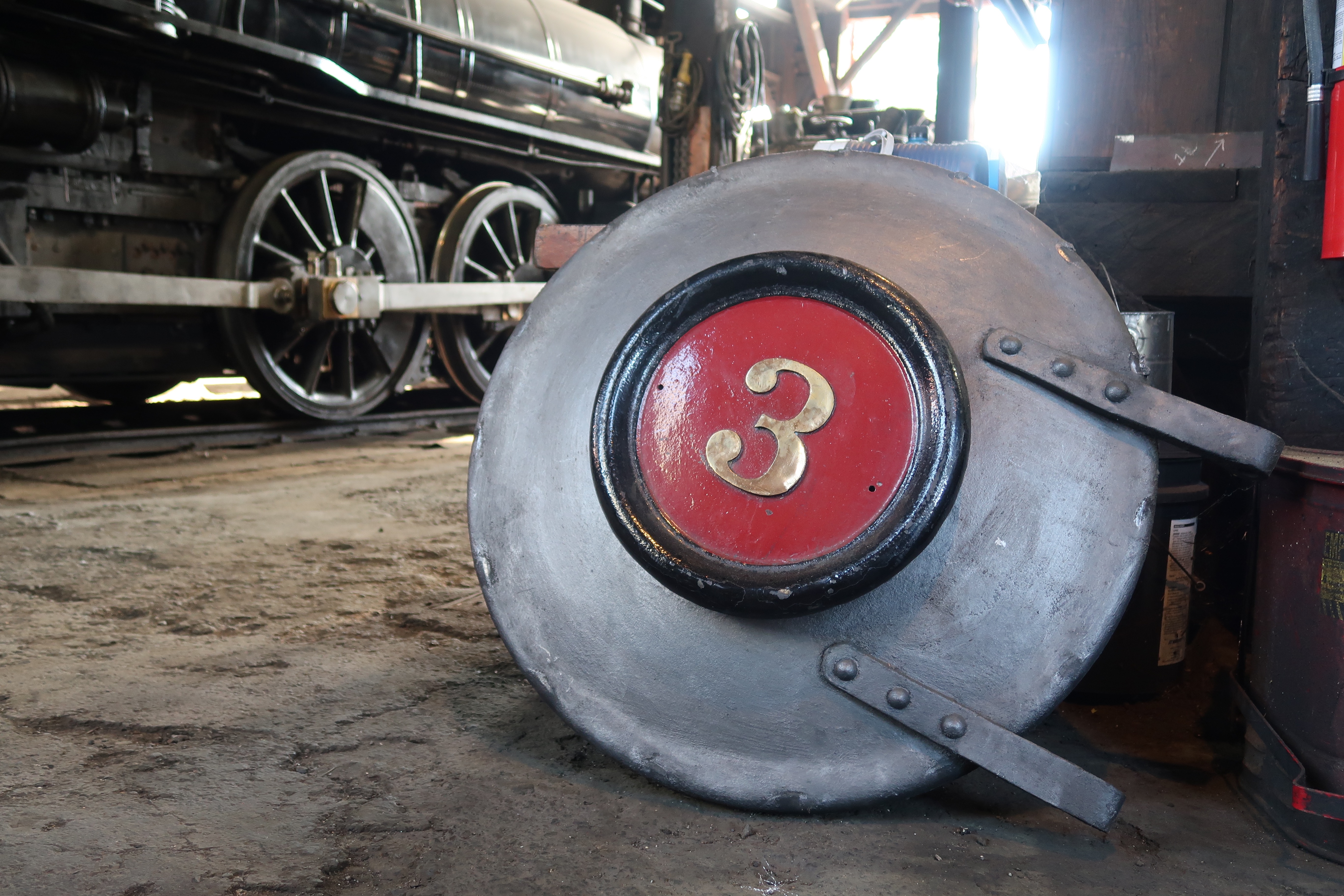
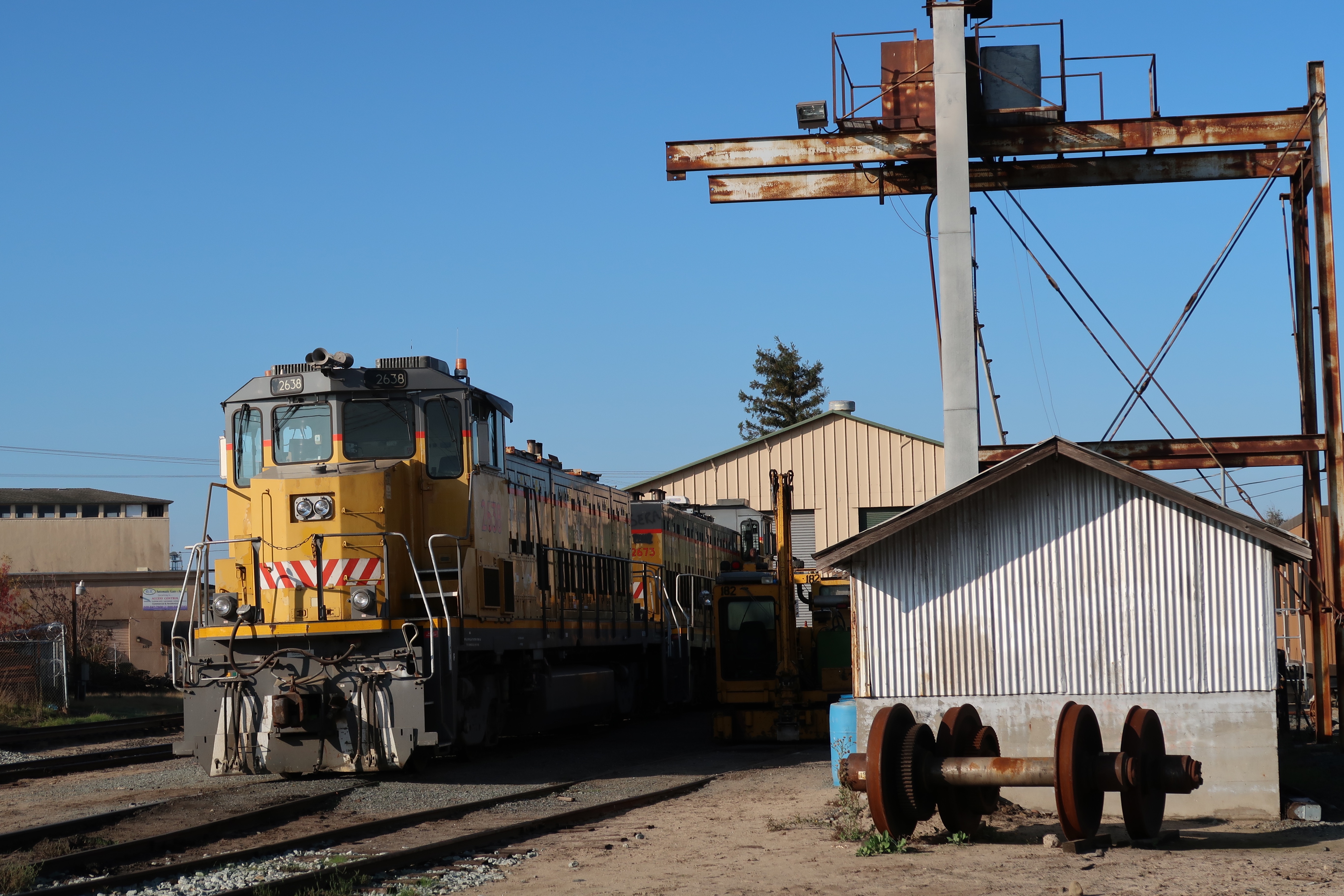
A sketch of Sierra No. 3 from July 30, 2015.On my visit to the Jamestown Roundhouse, No. 3, the Screen Queen was in the process of of having her boiler repaired and was in a few pieces.The Sierra Railroad shops and yard in Oakdale. The yard was used as a filming location for Hal Ashby’s biopic of Woody Guthrie, Bound For Glory. The railroad is still in operation today a runs a few freight trains per week.


 Corvid Sketcher