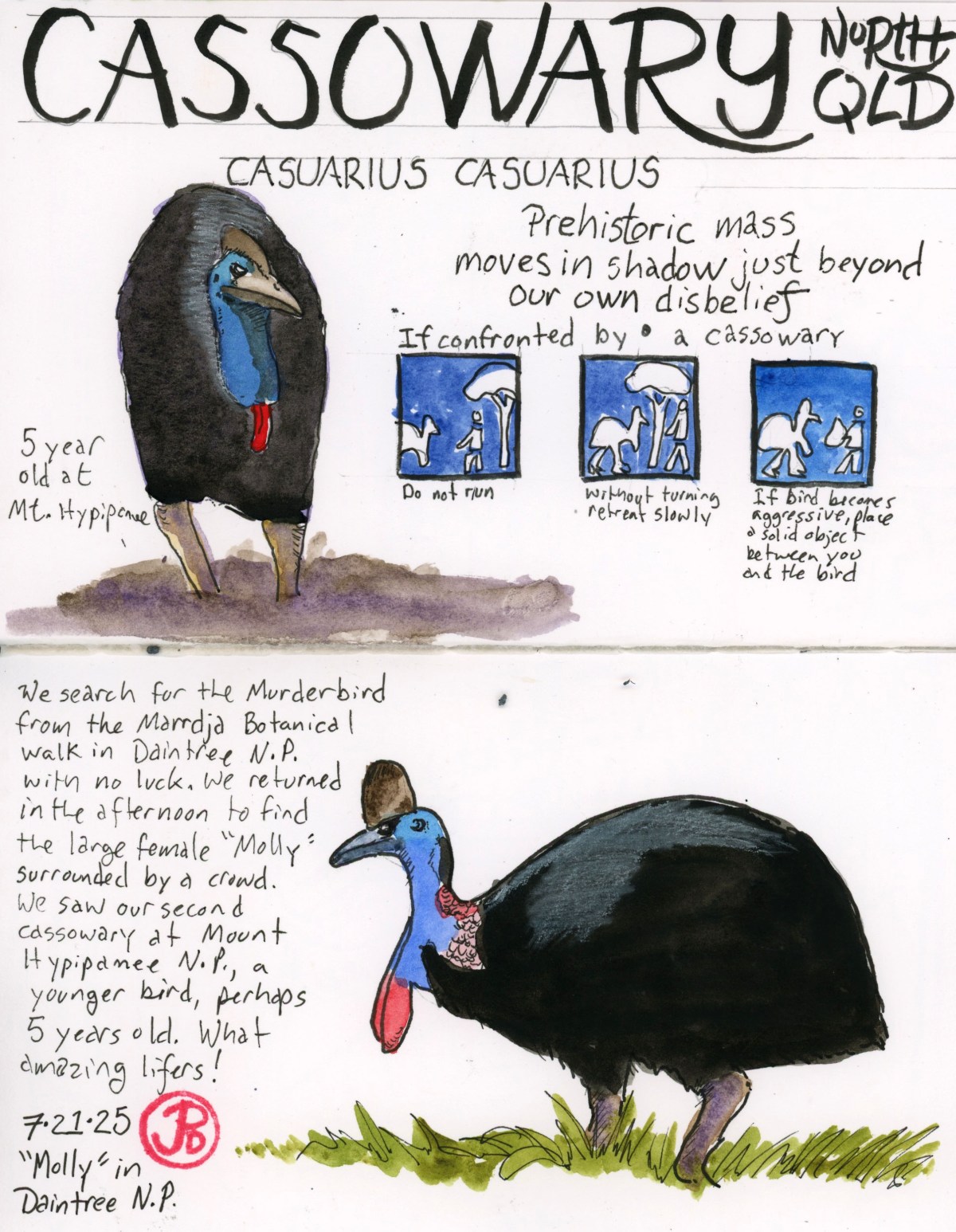
The bird that topped my wishlist for North Queensland (and Australia) is the southern cassowary (Casuarius casuarius).
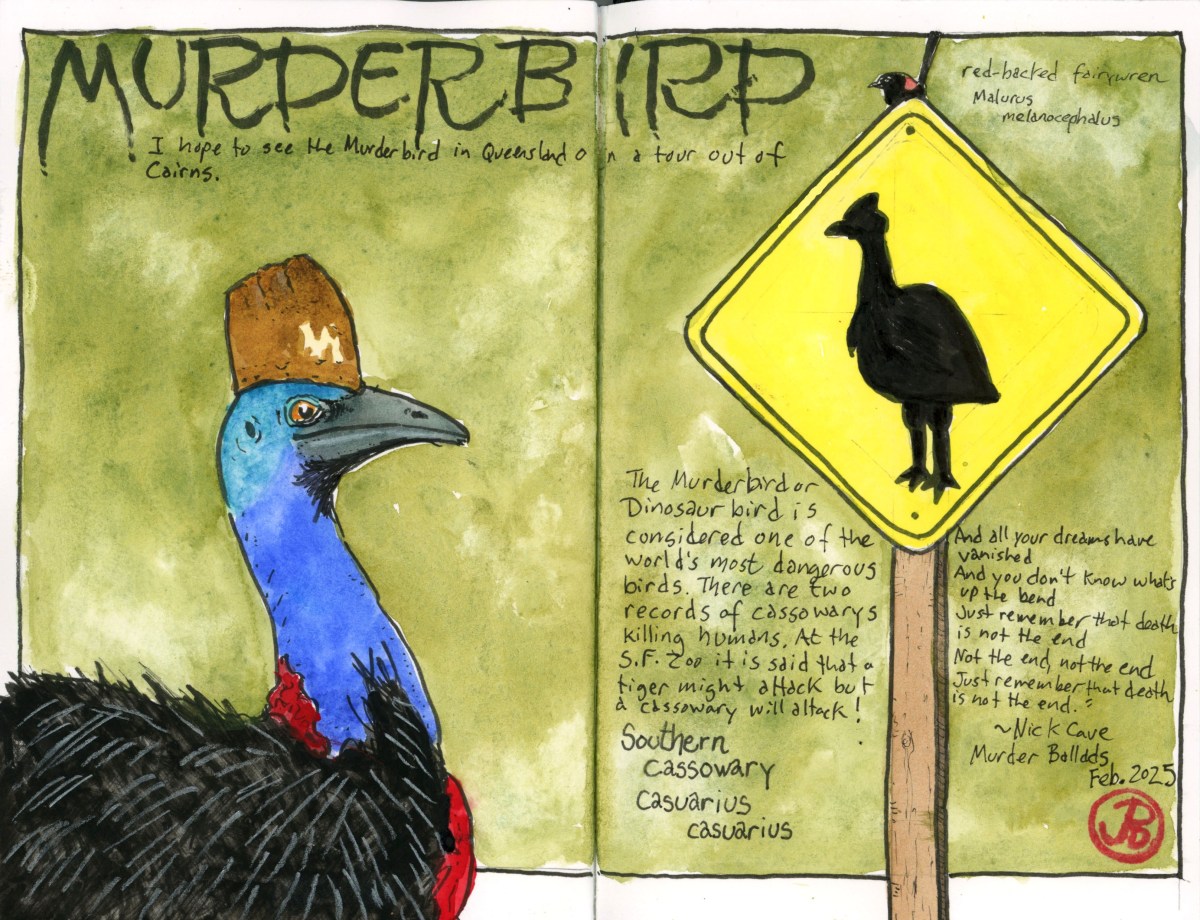
The southern cassowary is a large flightless bird and the second largest bird Down Under only beaten by the emu. It forages on fallen fruit on the rainforest floor. It is a rather docile unless you try to hunt one. The lit lives up to its moniker: Murder Bird!
There are two known instances in which a cassowary has attacked and killed a person. One was a young boy in Australia, who was attempting to hunt a cassowary , the other was a 75-year-old man in Florida (proof that cassowaries don’t make good pets).
How hard can it be to find a large flightless bird in the rainforest? Turns out, pretty hard.
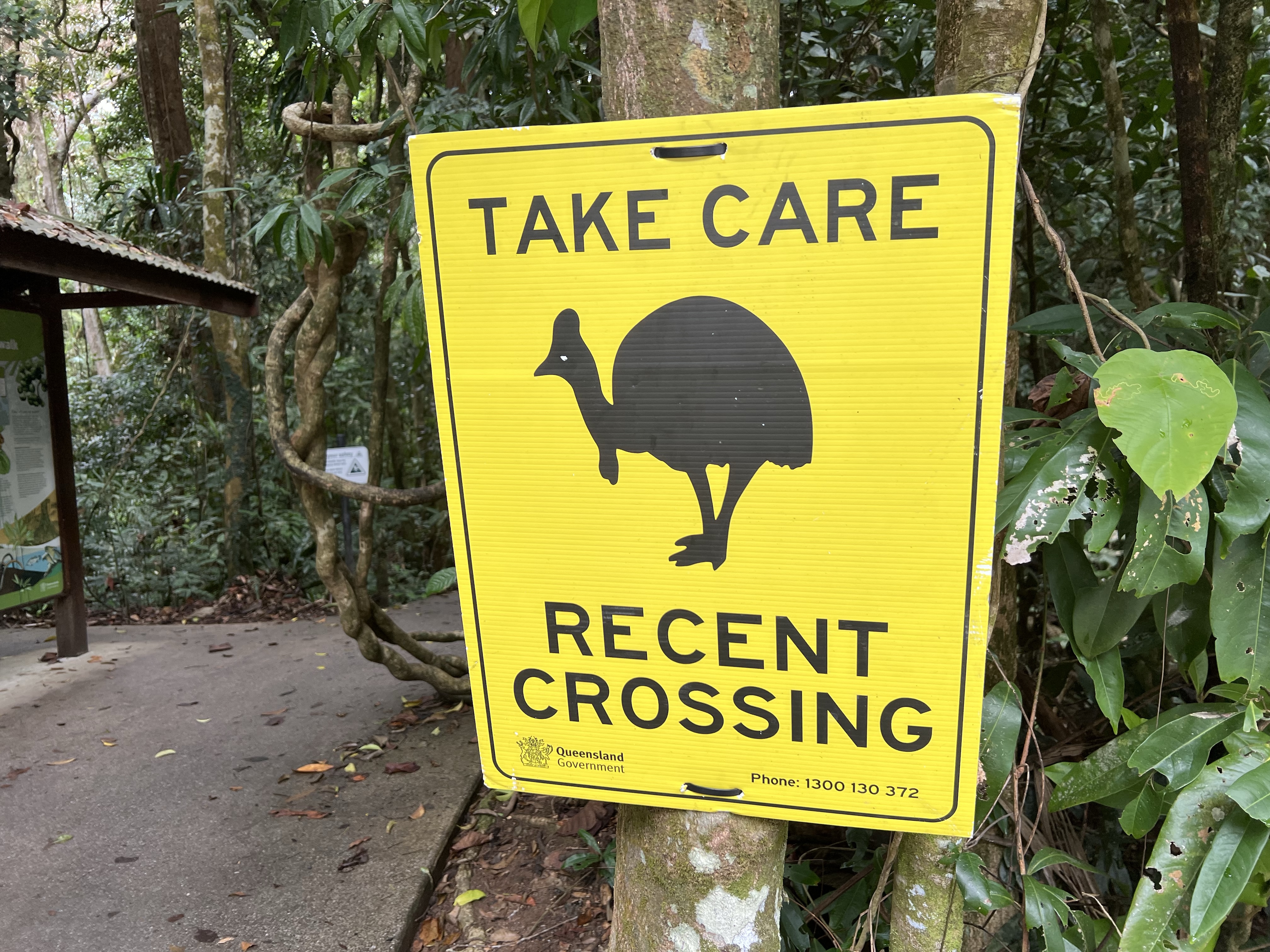
Signs for cassowarys are everywhere in North Queensland. Their images appear on murals, billboards, tour vans, and postcards. But finding one takes sweat (easy in a humid rainforest), perseverance, and patience.
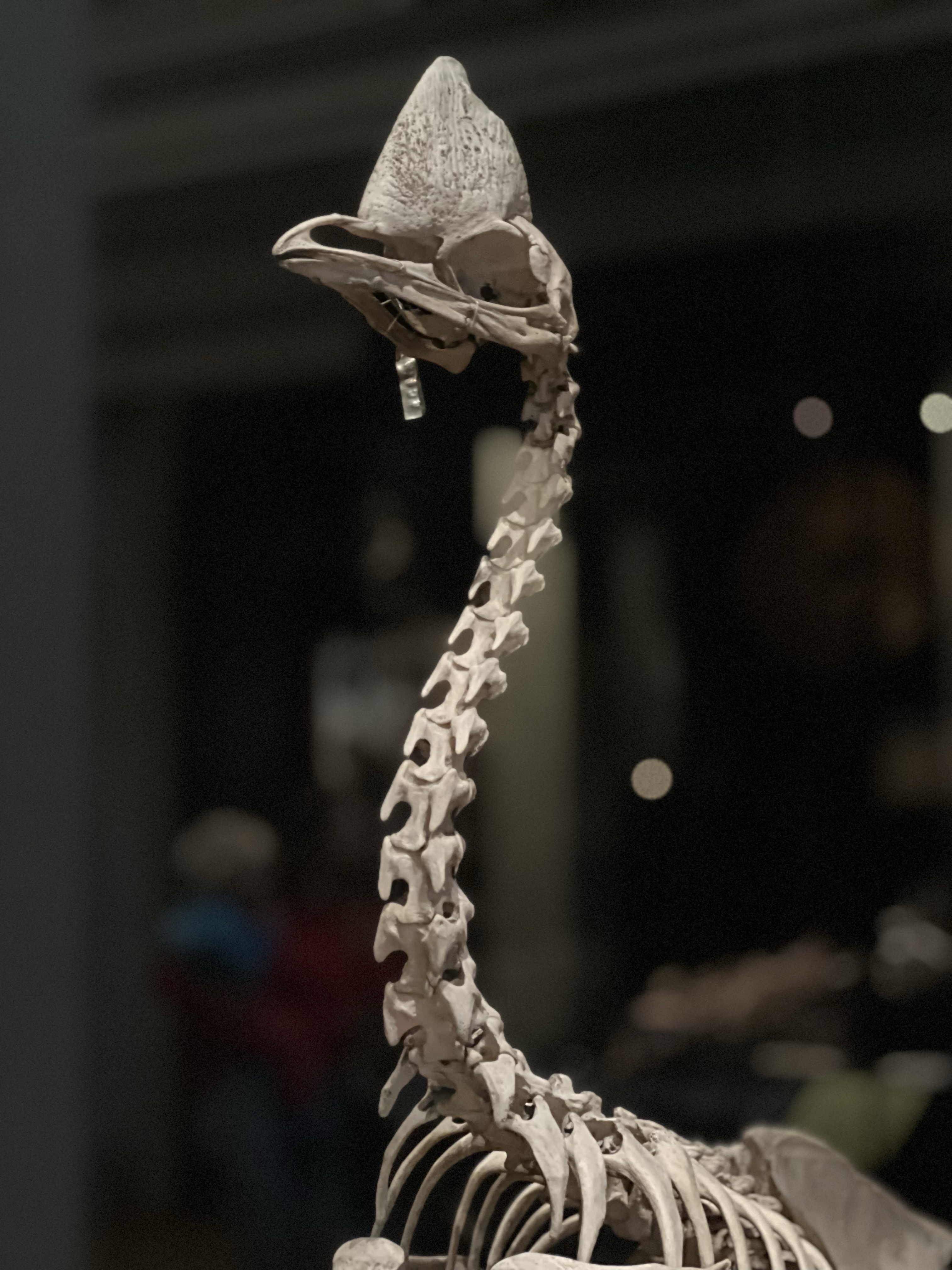
We first tried for this much sought after bird by walking the boardwalk through Daintree National Park at the Marrjda Botanic Walk. We walked the boardwalk looking and listening for the Dinosaur Bird parting the vegetation with its massive casque or battle helm!
Unfortunately, Bigbird’s angry uncle didn’t show. So we headed out to bird in other parts of the National Park, vowing to return for another try in the afternoon.
A few hours later we returned to the parking lot and as we pulled up, we were told that a Cassowary was on the roadside!
We quickly geared up and sped-walked down the road to where there was a line of people looking down the road. But we could not see the cassowary. We were told the bird had wandered into the forest.
A few seconds later she returned to the grassy roadside. It was a she, in cassowarys, the females are larger and our guide recognized the bird by her casque size and shape. It was cassowary known as “Molly”.
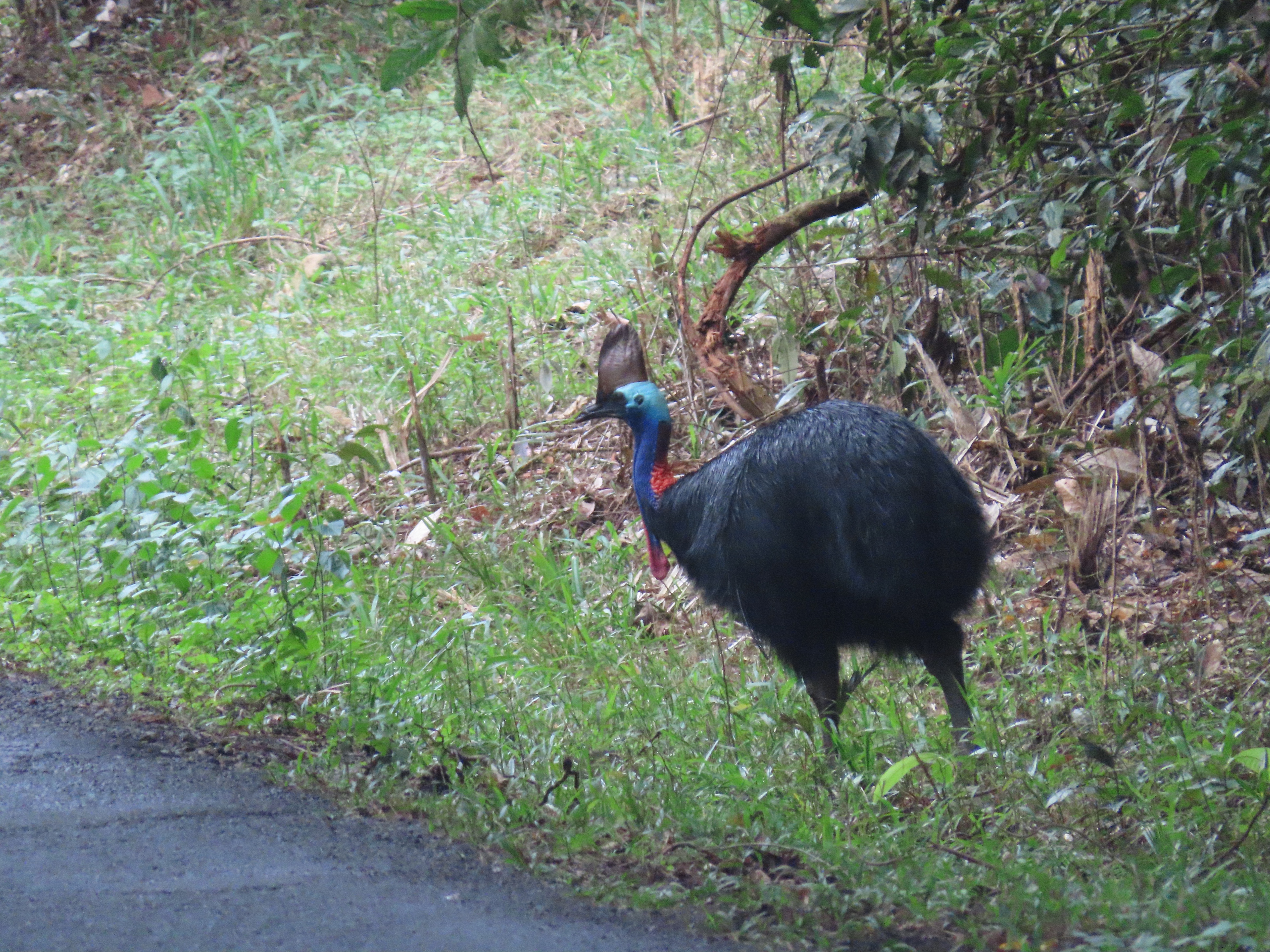
She was trying to cross the road but the mass of people was preventing her from doing so. We all got good looks but “Molly” eventually retreating into the forest to wait it out until the crowds dispersed.
We were lucky enough to not have one cassowary encounter but two.
Our second Cassowary was seen in Mt. Hypipamee National Park, resting just off the trail. This bird was much younger than “Molly”, our guide estimated that this bird was about five years old.
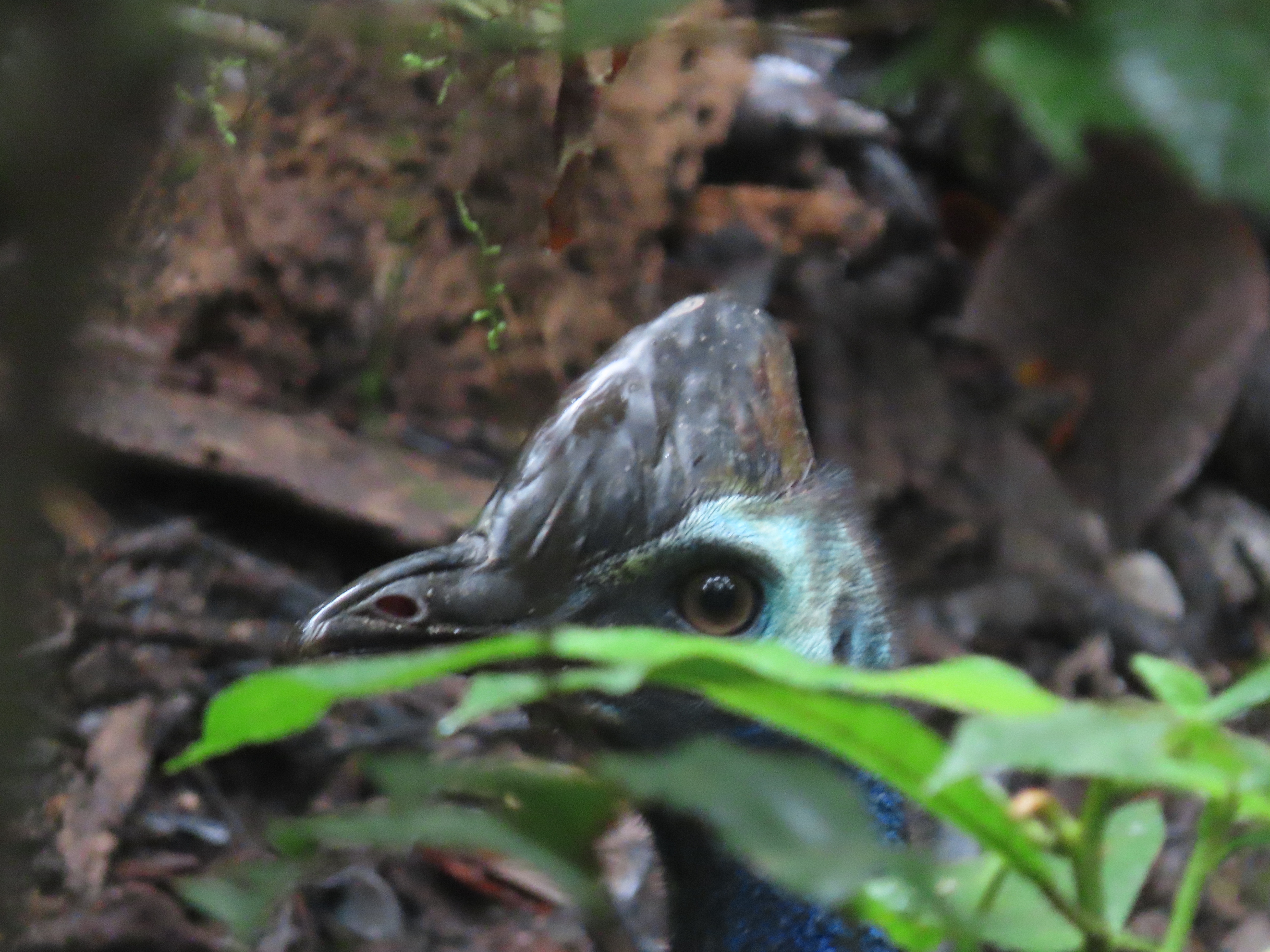
In the young bird’s wandering it headed straight towards me. I stepped aside like a slow motion matador of peace and the bird crossed the path and heard down the bank to the creek.
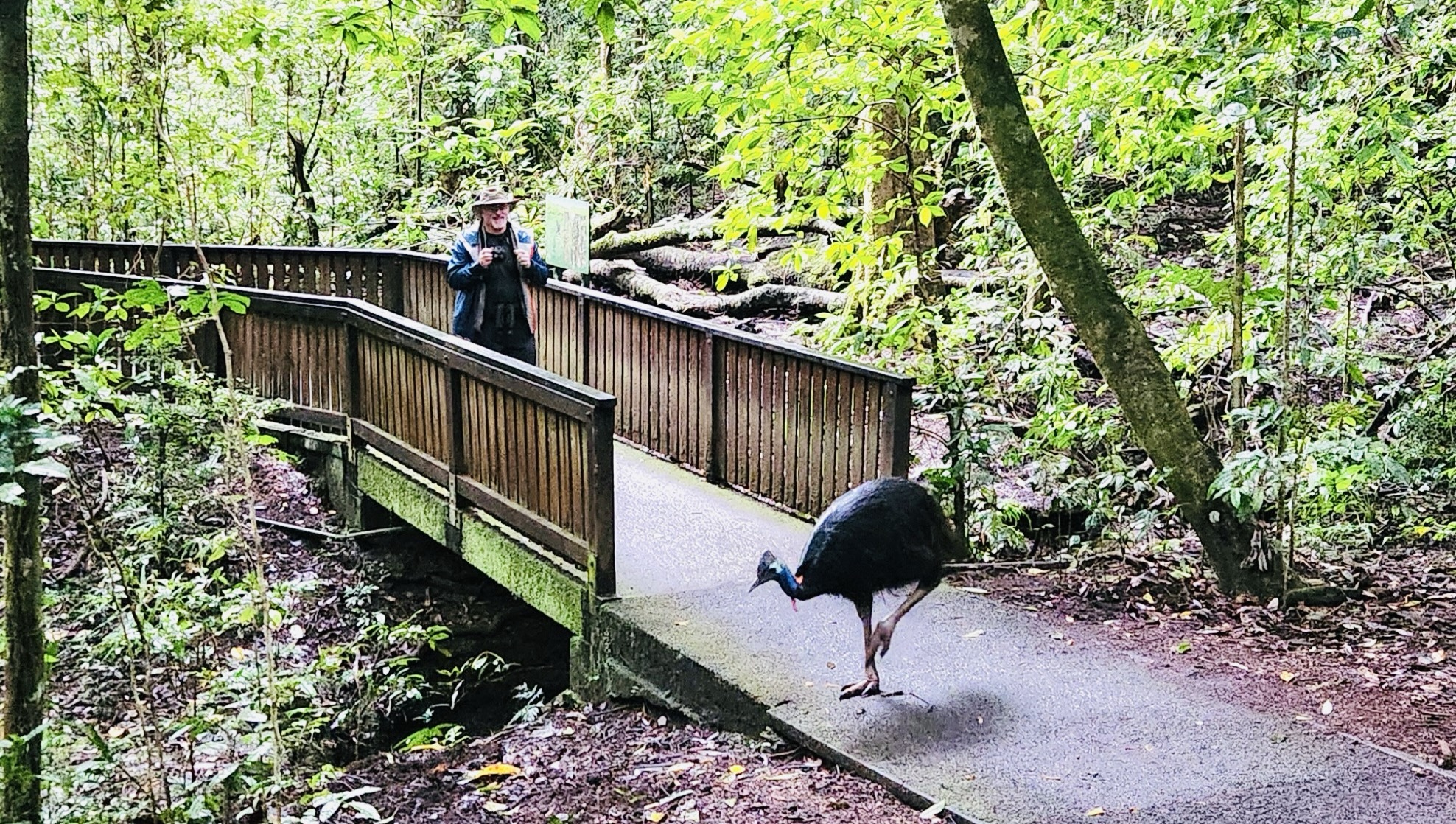
I watched the cassowary wanted down the hill to the creek where it stood in the cool water and drank. This was a great experience spending some time with the young Murderbird.
 Corvid Sketcher