The Skunk Train: Steam Deferred

It can be a hard time for tourist railroads with the rising operational costs such as maintaining the locomotives, rolling stock, tracks, bridges, and tunnels.

The California Western Railroad aka the Skunk Train went from Fort Bragg on the coast, 40 miles east to Willits. That is until tunnel Number One collapsed in 2013, cutting the line in two disconnected segments.

The line currently runs trains out of both ends. The Fort Bragg side runs for about three miles and stops at the entrance to the tunnel (which will take about $300,000 to reopen.)

I rode the Skunk from Fort Bragg a while back and it seems just as the train gets going it stops, halted by the collapsed tunnel. Not much of a ride with the many bridges and redwood scenery on the other side of the tunnel.
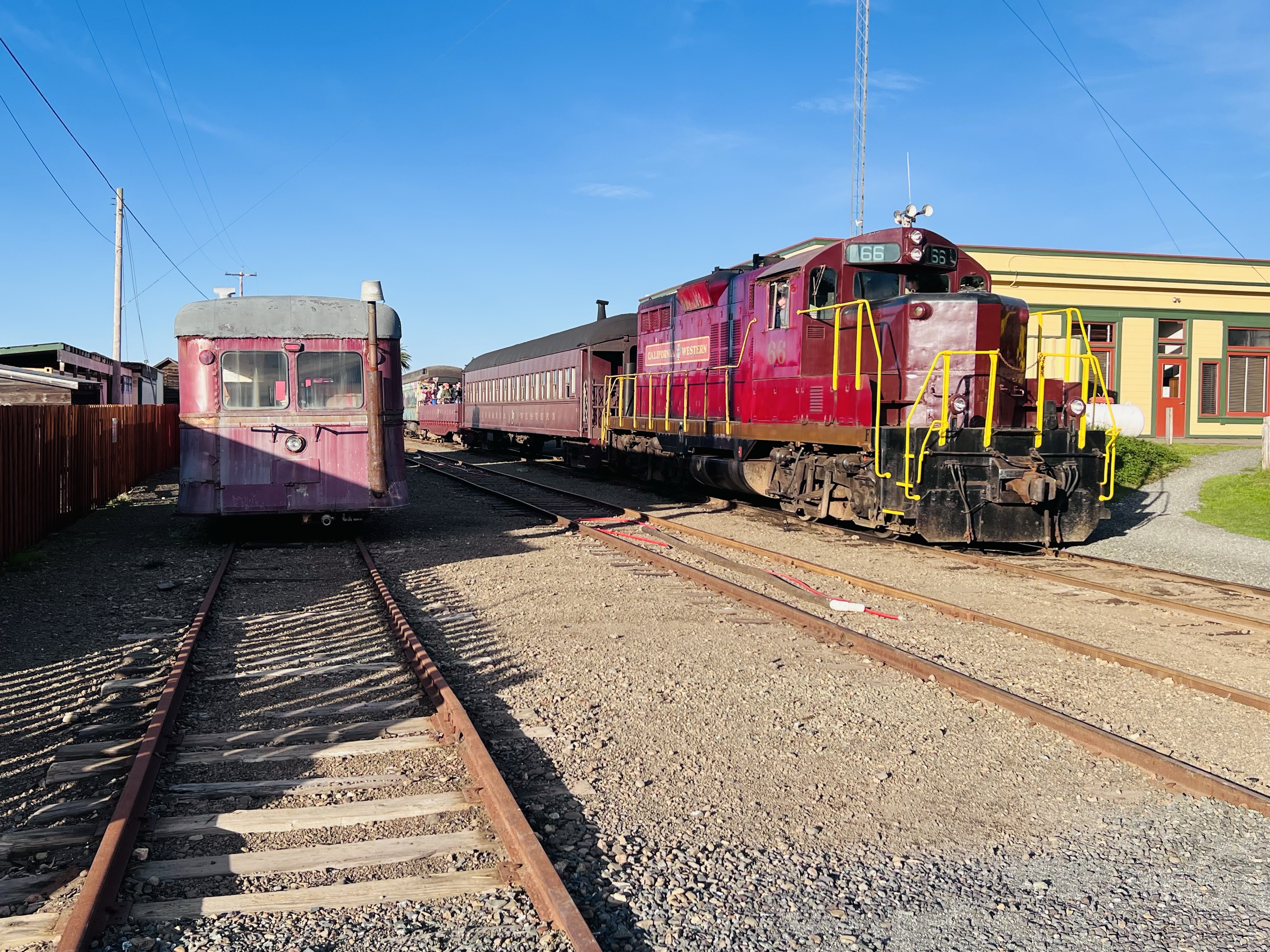
The skunk train is now under diesel-electric motive power. The afternoon Skunk pulls into the Fort Bragg Depot. EMD GP9 No. 66 is on point. On the left is the M-300 motor car.

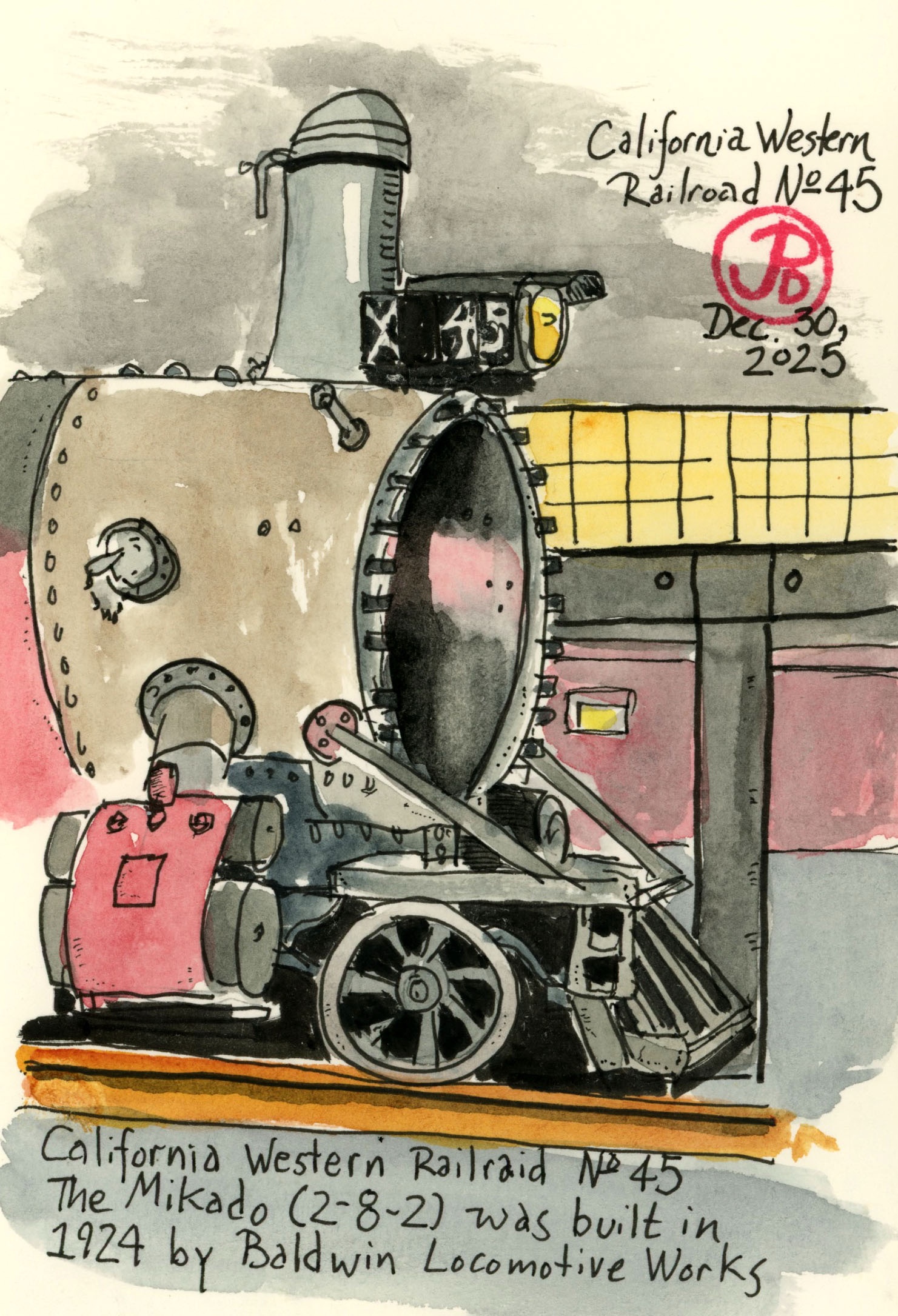
The real star of the railroad is the Mikado (2-8-2) Number 45. The steam locomotive was built by Baldwin Locomotive Works in 1924.

The 101 year old locomotive is now undergoing a rebuilt in the engine house. It will likely be a year and a half before the sounds of 45’s whistle echos along the coastline. Hopefully the line will then be opened to Willits.

The three bay engine house. In the right bay sits No. 45.

The side door to the engine house was open allowing me to get a sketch in of CWR No. 45. In her current state she seems a long way off from riding the high iron.
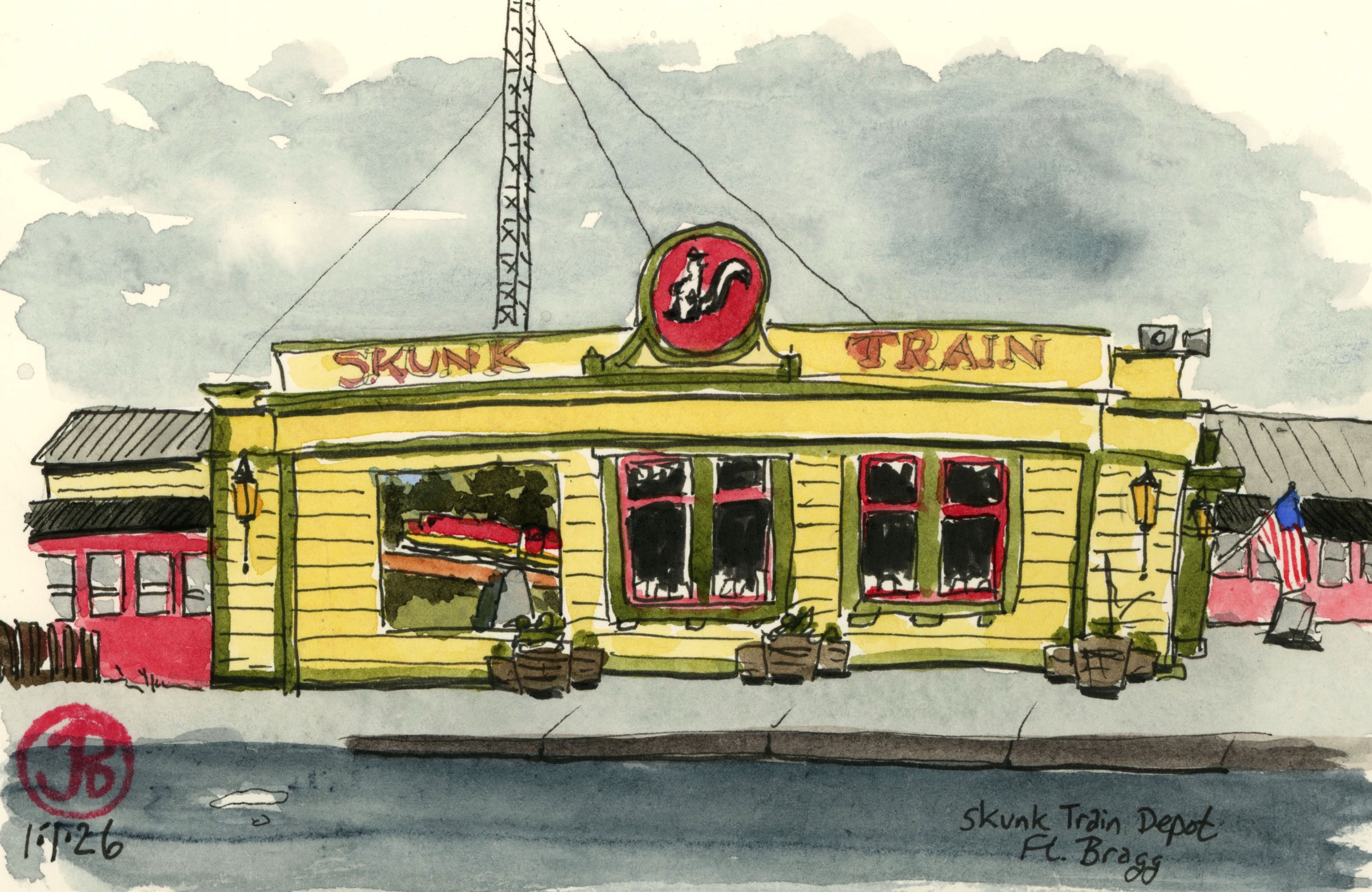
A rainy morning car sketch of the Skunk Train Depot in Fort Bragg.
Image

The Chase is On!

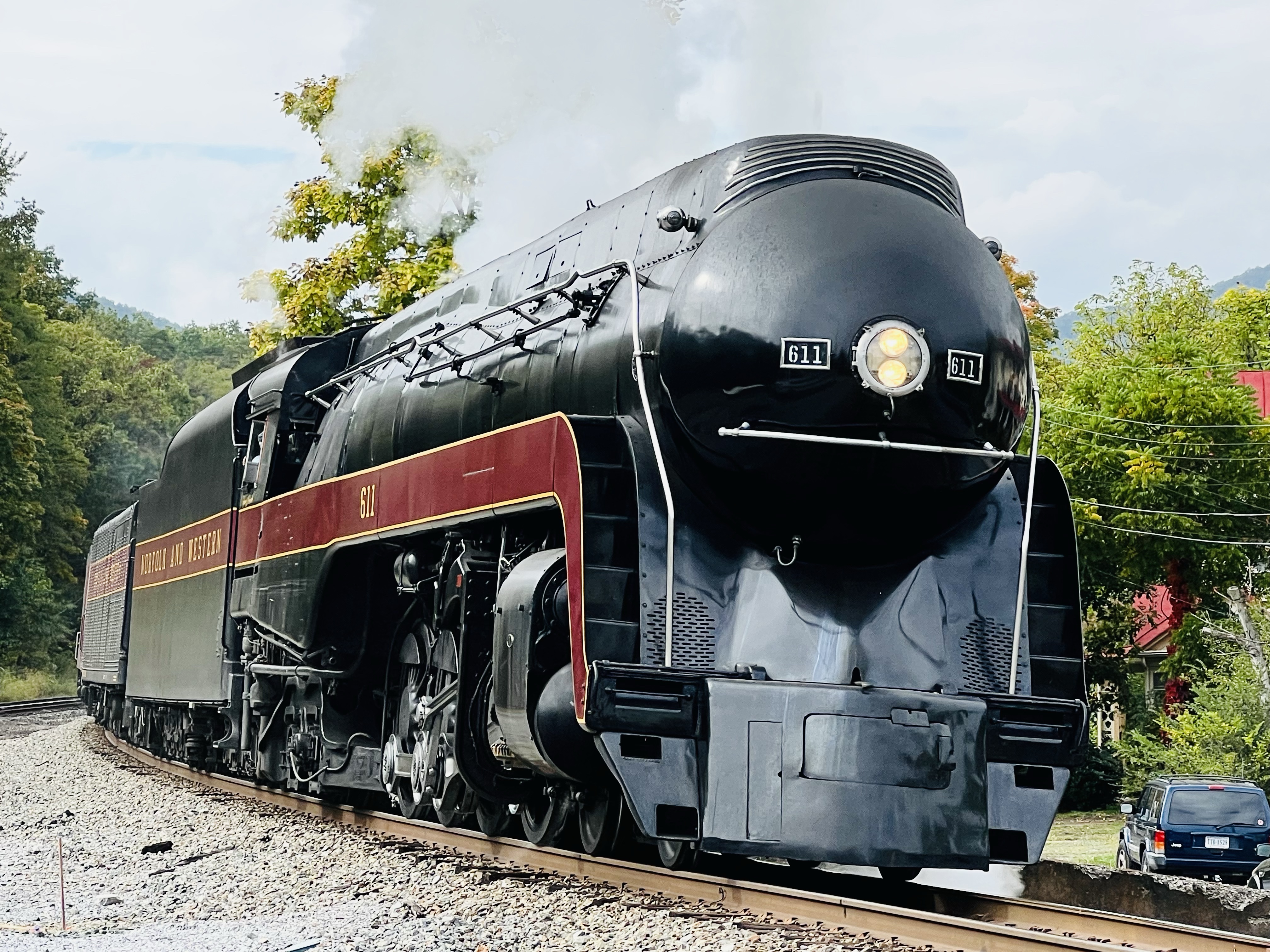
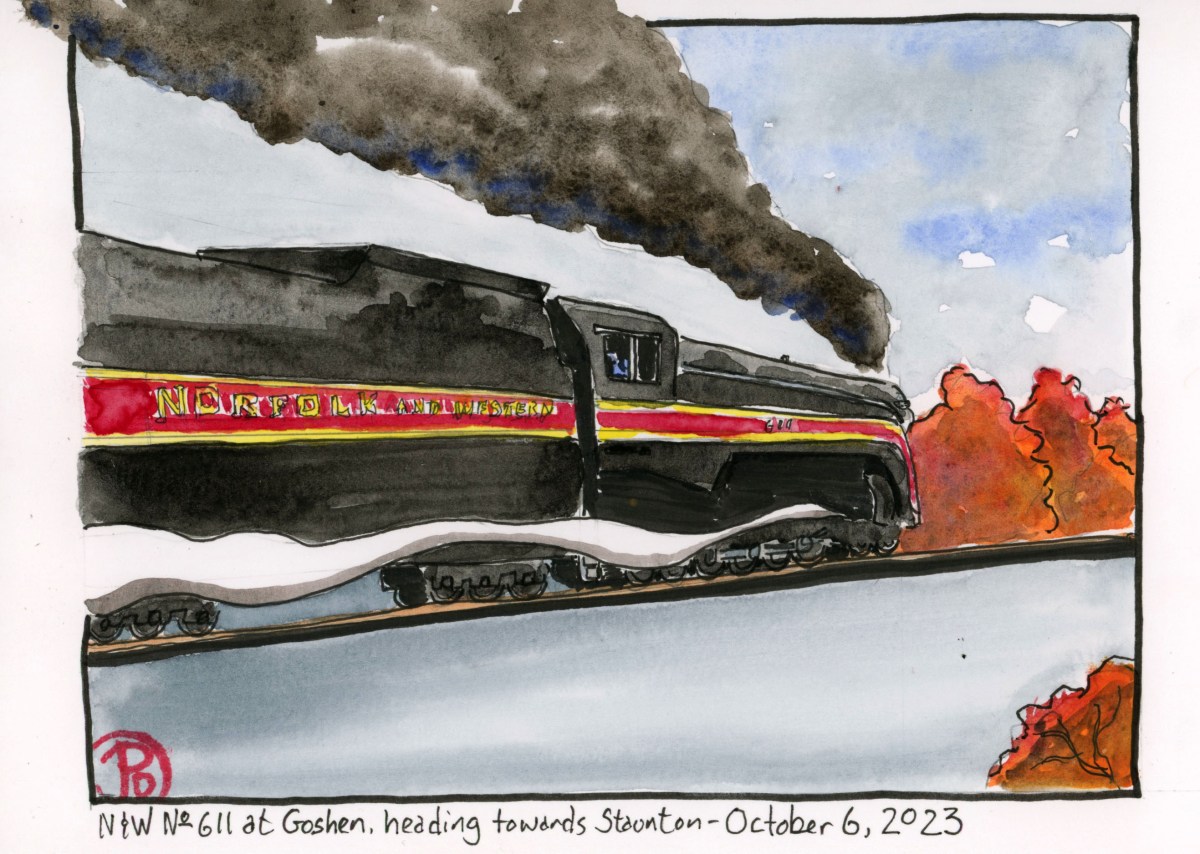
Now it was my turn to be a foamer in a car. I planned to chase 611 from Goshen to Staunton on her afternoon run.

611 being mobbed by fans at Goshen before the afternoon run to Staunton.

I headed into “downtown” Goshen and parked near the railroad. There were already a few chasers getting ready. One was looking over a map and was conversing with another foamer on which grades you could get the best “stack-talk”. He was a serious foamer who had done his research and was willing to share it with the like-minded.

After a wait of about 45 minutes, 611 sounded it’s whistle and the Shenandoah Valley Limited was on it’s way. She had to back her consist onto a siding before headed onto the mainline. Now 611 was facing Staunton and the engineer pushed the Johnson bar forward, released the breaks, and pulled back on the throttle. No. 611 burst in steaming-hissing life!

Down the tracks the sounds of the stack-talk (or the chuff-chuff-chuff of the exhaust) was amazing. 611 blew the crossing and passed the old Goshen Depot and steamed off to Staunton.

Let the foam-fest begin!

611 heading toward approaching the grade crossing at Goshen.
Now this is “stack-talk” as 611 approaches the grade crossing at Goshen. You also hear her powerful whistle.

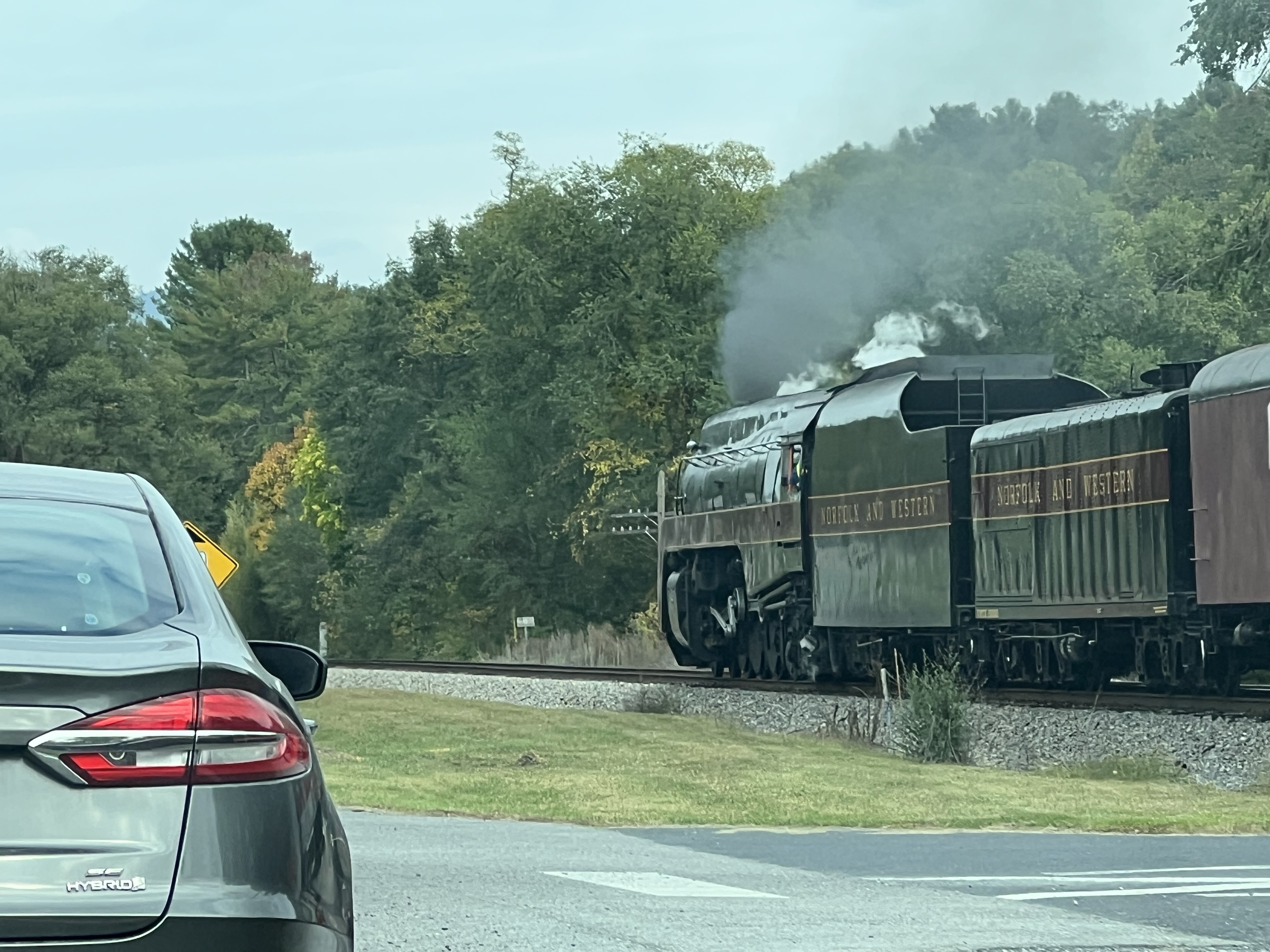
I then joined the line of foamers in cars on Highway 42, which parallels the line. This has created a traffic jam on the two lane road because the pacers wanted to take pacing shots of 611. I and most others on the road, wanted to drive ahead and get shots of 611 on a run by.

611 and dreaded line of pacers in front of me!!

After some of the pacers pealed off, I was able to get ahead of the madding crowd and pulled off to get a run by shot of 611.

611 at a grade crossing.

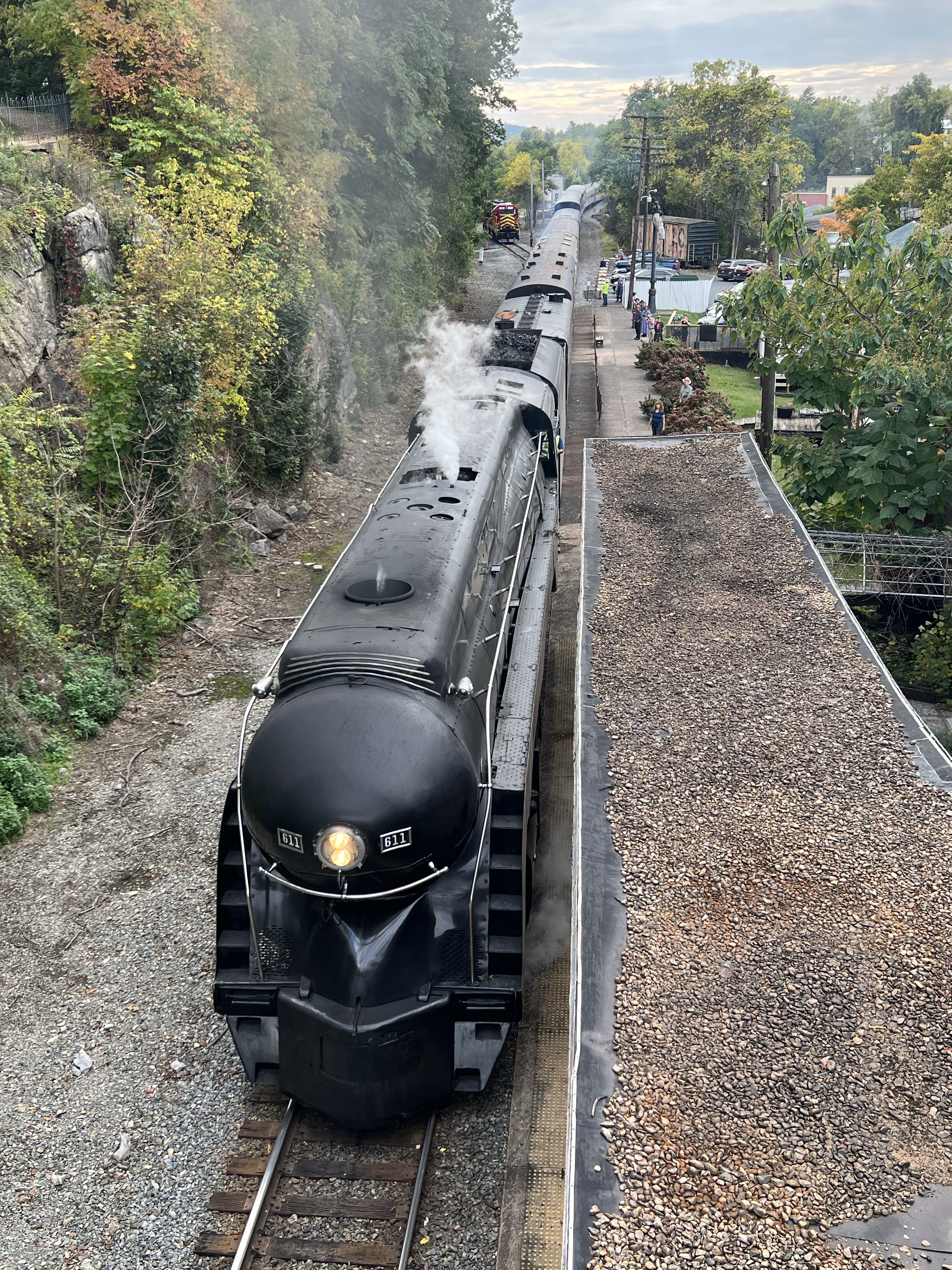
From here, I made a b-line to Staunton because I wanted to get a shot on the walkway above the tracks as 611 pulled into Staunton Station.

611 pulling into Staunton Station. 611 is streamlined even from above. Off to the left are the two diesels that will pull 611 and her consist back to Goshen.