Image

The Kingbird and the Cemetery

Surprisingly a cemetery is full of life.

The wide open spaces with trees and plenty of perches is an ideal habitat for flycatchers and other avian insectivores.
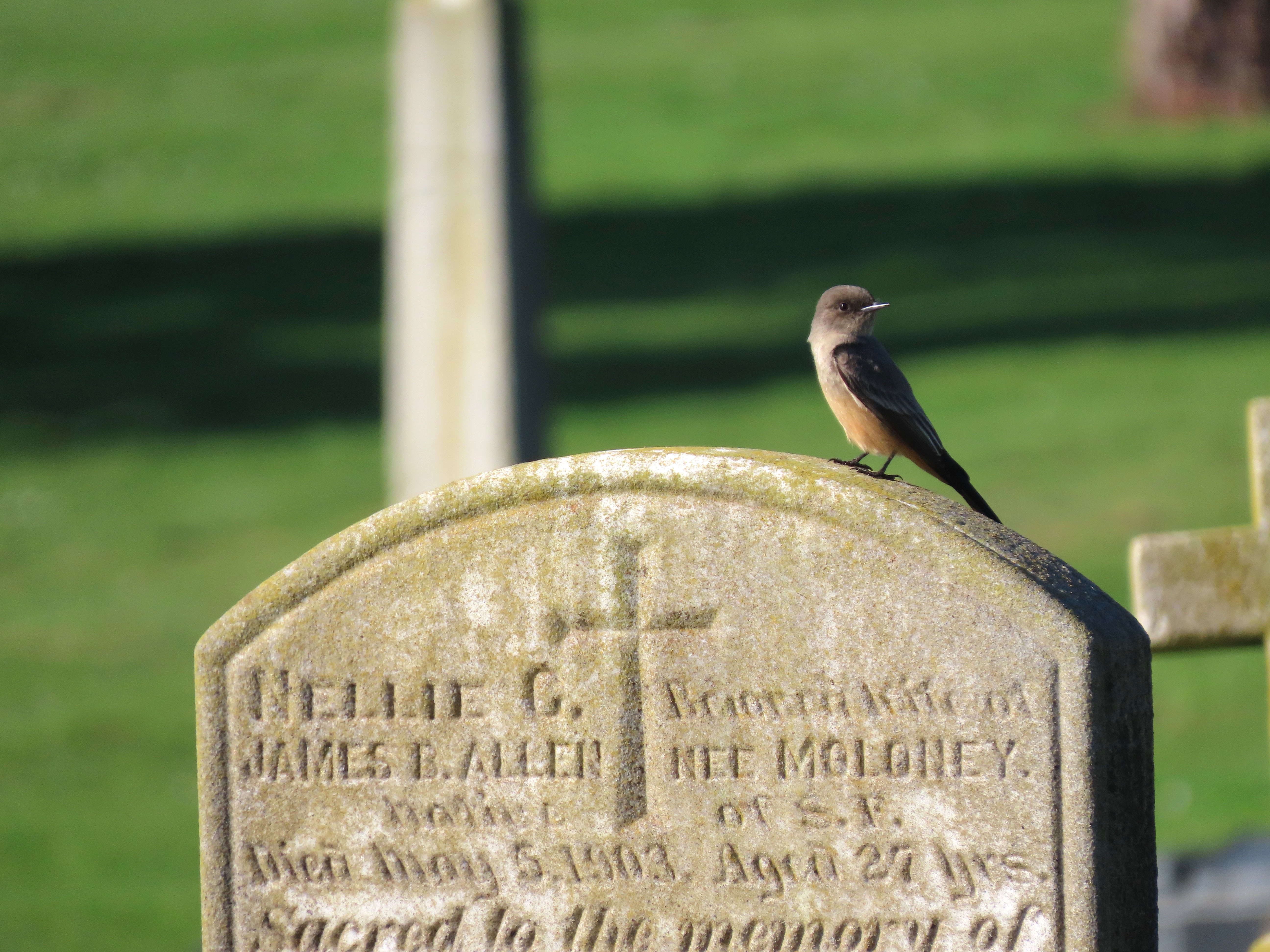
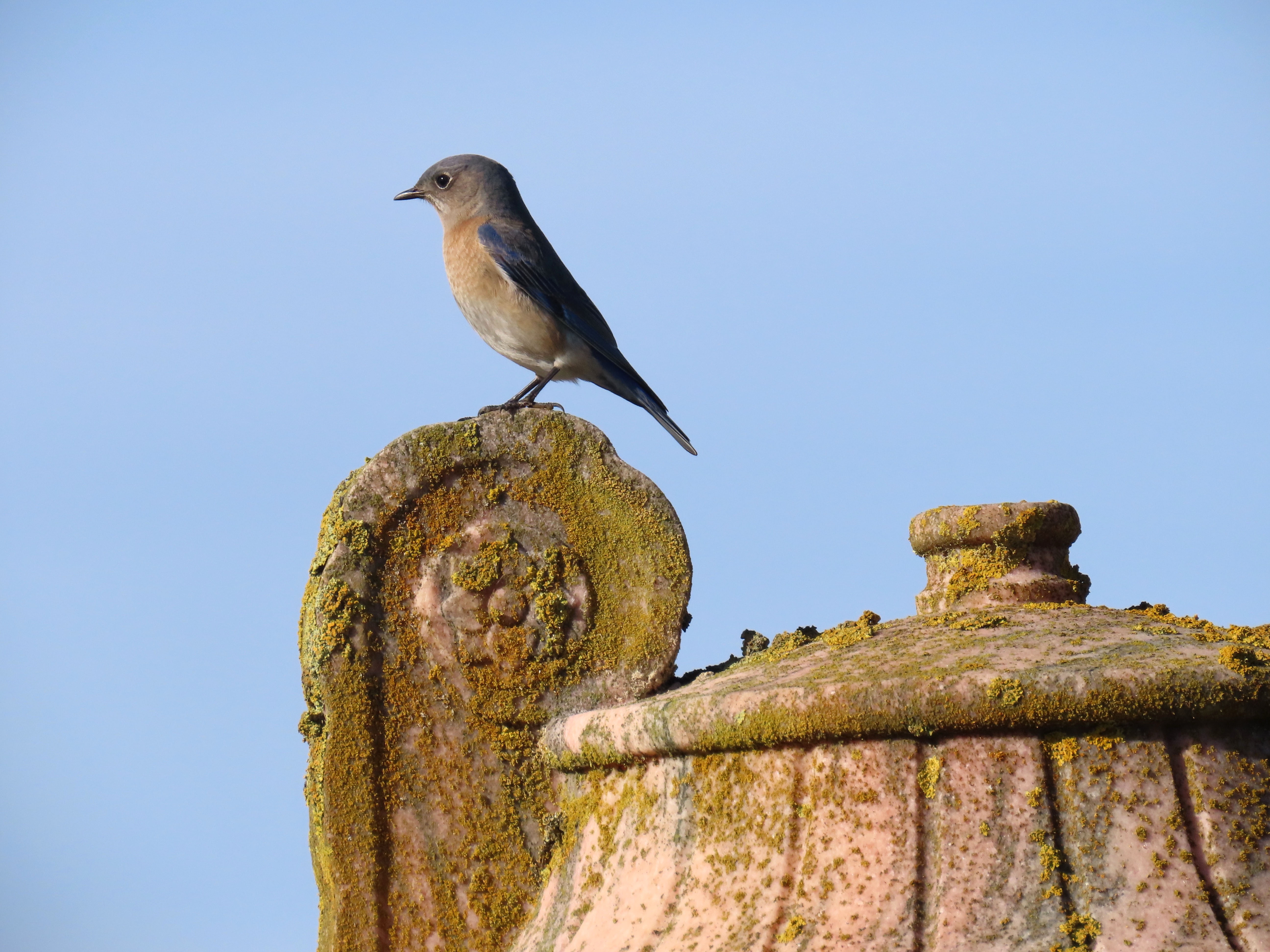
Exhibit A: Say’s Phoebe.
Exhibit B: Western bluebird.

I was heading to Holy Cross Cemetery in Colma (there are more residents below ground than above) to find a vagrant flycatcher.

The flycatcher in question is the stunning vermillion flycatcher (Pyrocephalus obscurus). The normal range of the vermillion in the United States is Arizona, New Mexico, Texas, and Southern California. In the winter, some make their way up the California Coast. And it is one of these wayward birds that I was looking for.

When I drove up to Section G at Holy Cross (featured in the cult classic Harold and Maude) there was a couple standing amongst the tombstones looking in one direction. I bet I knew what they were looking at!
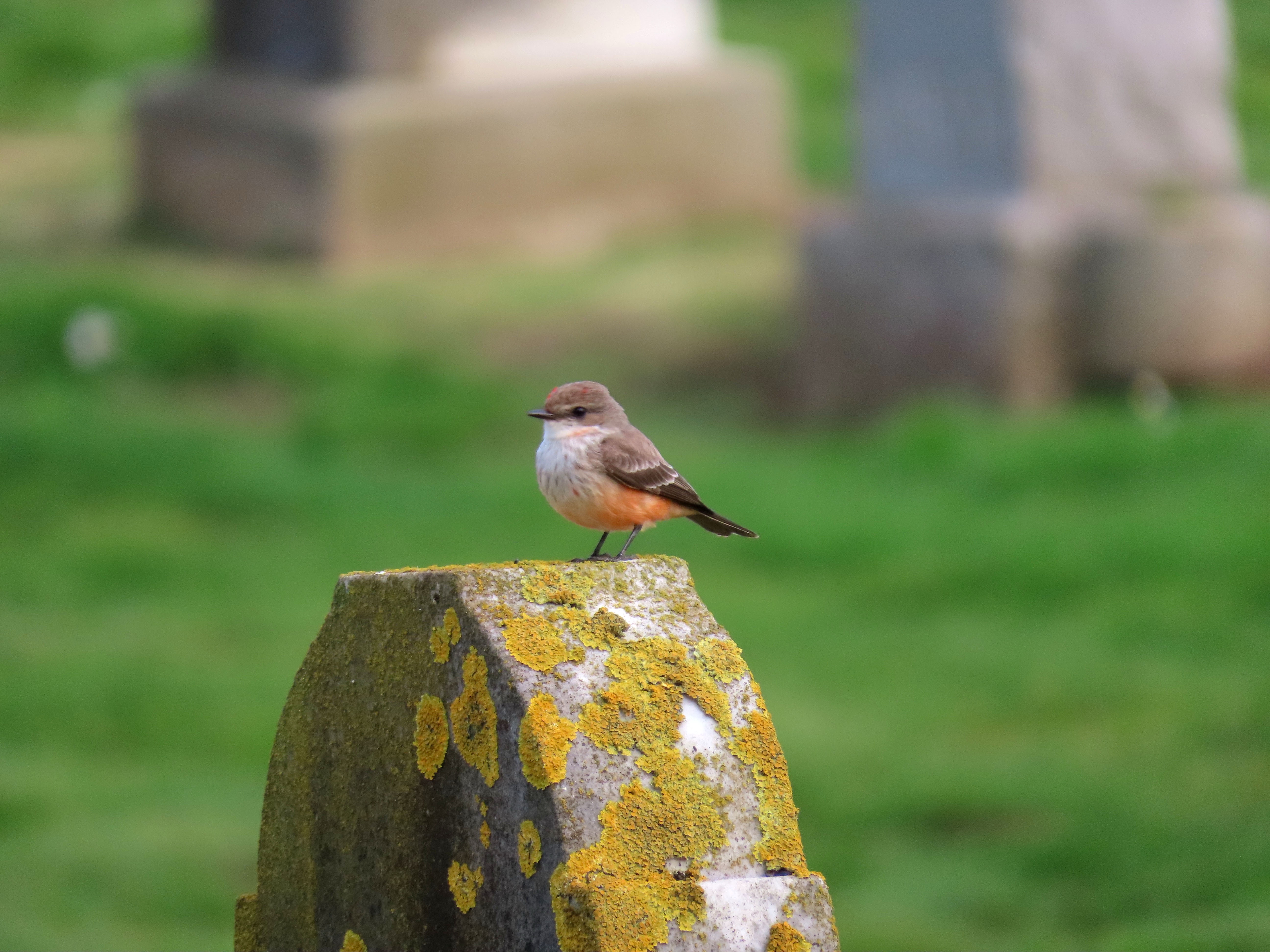
The wayward vermillion flycatcher.

The vermillion was perched on a tombstone and sallied forth to catch a snack on the wing and then land on another hunting perch. It eventually flew up to the top of a pine and disappeared.

I waited for the flycatcher to reappear for about 15 minutes. No luck, so I headed east in Section G. There were plenty of common black phoebes flycatching from the mossy tombstones but no vermillion.

I decided to walk to the eastern edge of Section G which was bordered by 25th Street and then make my way back to where I had first seen the vermillion, I hoped of getting some photo documentation. And that’s when I spotted the flash of yellow!

The flash of yellow flew across the street into Section G2 and landed in a tree. I immediately knew what flycatcher it was and I lifted my binoculars to my eyes for confirmation: yes a kingbird.
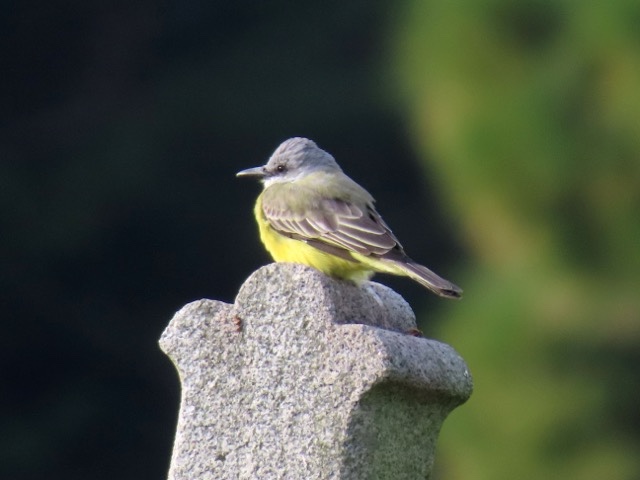
Tyrannus melancholicus.

And at this time of year at this location I knew it was a tropical kingbird, also known as a TK because it is so common in Central America.

I enjoyed following the kingbird around Section G, getting some documentation with my camera because a TK is considered a rare bird for this location.
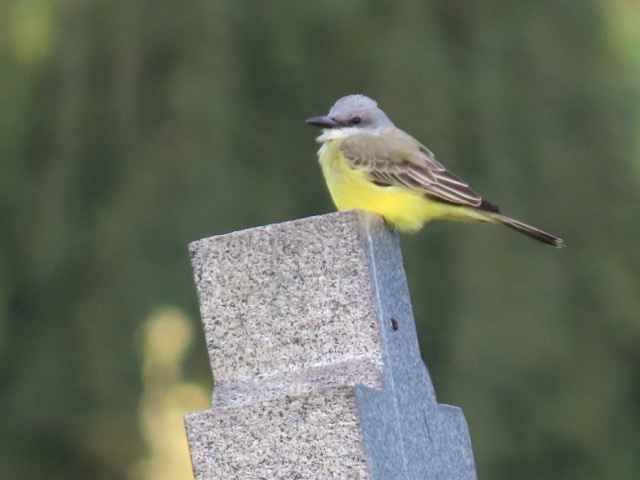
Yup, it’s a TK!
Image

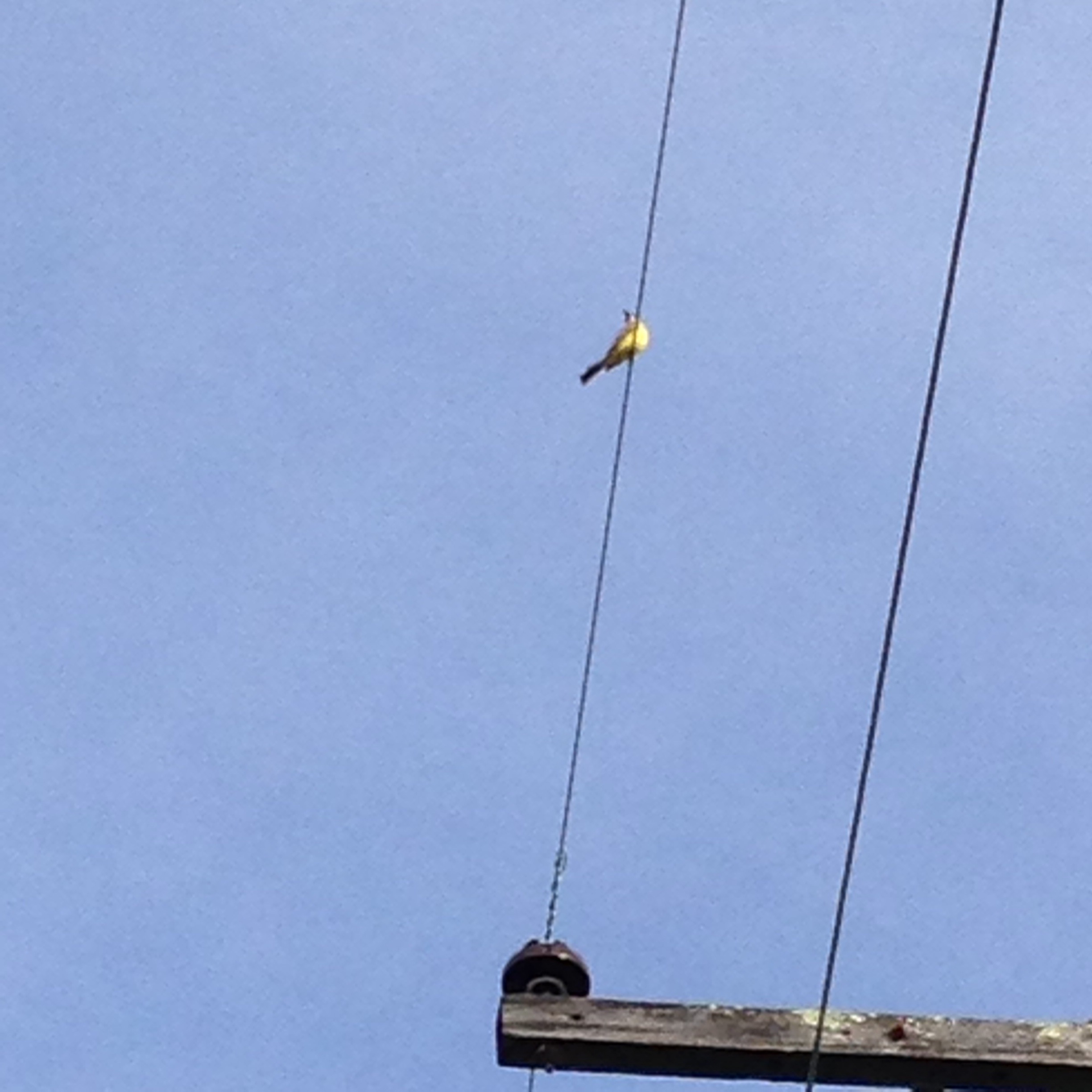
Bird on a Wire

After two long weeks of parent-teacher conferences and a worn out typhoon bearing down on the Bay Area, I had a surprise as I drove up Moraga Street, one block from my home. I took a different route home because of some road work. And as I was heading up the hill, I saw a bird on a wire.

Any bird on a wire that looks a little “off” is bound to catch my attention and this bird did. At first it looked like a really light colored scrub-jay. But as I moved closer I knew it could only be one bird.

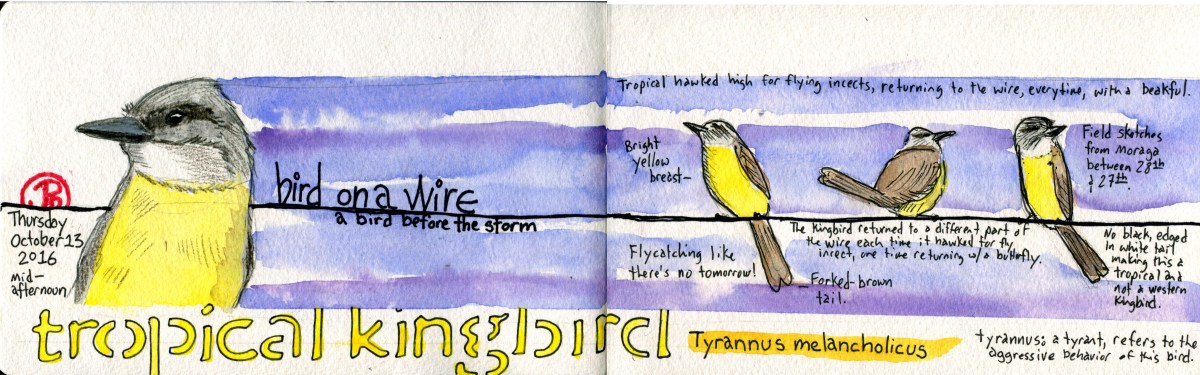
The bird’s location in the middle of the wire, it’s bright yellow breast, and its menacing ever vigilant gaze signaled that this was a tyrant flycatcher. And it’s brown, notched tail and heavy, violent bill, seen through by car binos, confirmed that it was the rare but regular visitor to the west coast, the tropical kingbird, Tyrannus melancholicus.

This is an apt name for the genus that shares part of it’s name with the tyrant lizard king, Tyrannosaurus rex. The tyrant moniker is given to the genus of kingbirds (another link with T. rex) because of the aggressive nature of these flycatchers, especially directed towards much larger birds (hawks, eagles and falcons) during the breeding season. The tropical kingbird’s species name, melancholicus, comes from Greek, meaning of a melancholic temperament. The Greeks believed that one was guided by the four humors (blood, yellow bile, black bile, and phlegm) and if you were out of balance, in this case by being over loaded with sullenness or violent anger, then it would contol your demeanor (by being full of black bile). That’s the long way of saying that the tropical kingbird gets really pissed when intruders are in it’s breeding territory.

A kingbird on a wire, looking for a winged meal. I was able to do three field sketches of the flycatcher.

I watched the kingbird sally forth from it’s wire perch returning each time with a flying insect in it’s beak. On one such attack, the yellow-breasted tyrant launched itself 60 feet into the air, returning with a yellow butterfly, which the hawker dispatched in two deft gulps. The bird worked it’s way up and down the power wires of Moraga Street, eating as it went.

img_5457

On my after dinner stroll, as the harbingers of our first winter storm filled the sky, there was the kingbird, taking the highest perch. It sat, resting from it’s travels and it’s high energy aerial hunts, where it now sang, to no kingbird that was anywhere near.