Image

Patsy

The northwestern Virginia town of Winchester changed hands during the Civil War 72 times. But my travels to Winchester was not to see a battlefield or a monument but a humble two story house in a working class neighborhood.

The house’s history had nothing to do with the Civil War but was to home one of the world’s best singers: Patsy Cline.

Patsy is one of the most influential singers in county music who transcends musical genres and her music crossed over into popular music with hits like: “Walkin’ After Midnight”, “I Fall to Pieces”, “Crazy”, “She’s Got you”, and “Leavein’ On Your Mind”.

She was born Virginia Patterson Hensley in Winchester, Virginia on September 8, 1932.

It had been raining all morning on my drive from Staunton to South Kent Street in Winchester. I was able to find a parking spot across the street from the humble two story house with a historic plaque out front.

I sketched the house, where Cline lived from ages 16 to 21, in my rain-proof-automobile-blind. I was here too early to get a tour of the inside (I had a Civil War battlefield to sketch before my flight to SFO).

After my sketch was complete I had one other place in Winchester to visit just south of downtown: Shenandoah Memorial Park.

On March 3, 1963, Patsy Cline performed at a benefit with George Jones, Dottie West, Hawksaw Hawkins among others in Kansas City.

On the following day she chose to fly back to Nashville instead of accepting a ride with Dottie West for an 8 hour car ride, saying, “Don’t worry about me, Hoss. When it’s my time to go, it’s my time.”

Patsy Cline’s time was on the evening of Tuesday March 5, 1953, when the Piper PA-24 Comanche she was traveling in crashed in a heavily wooded area near Camden, Tennessee. The time read 6:20 PM on Pasty’s watch, which was recovered after the tragedy. Patsy Cline was 30 years old.

Her final resting place is in Shenandoah Memorial Park.

Perhaps I was expecting a bit more for a memorial to one of the best singers in recording history but her grave, like her childhood home, is humble and simple.

The only way you would know that this was a person of note was the amount of flowers and coins placed on the marker. I had a quiet moment, sung a tune in my head, and then placed a penny at her grave and then drove through the steady rain to Manassas.

Image

The Chase is On!

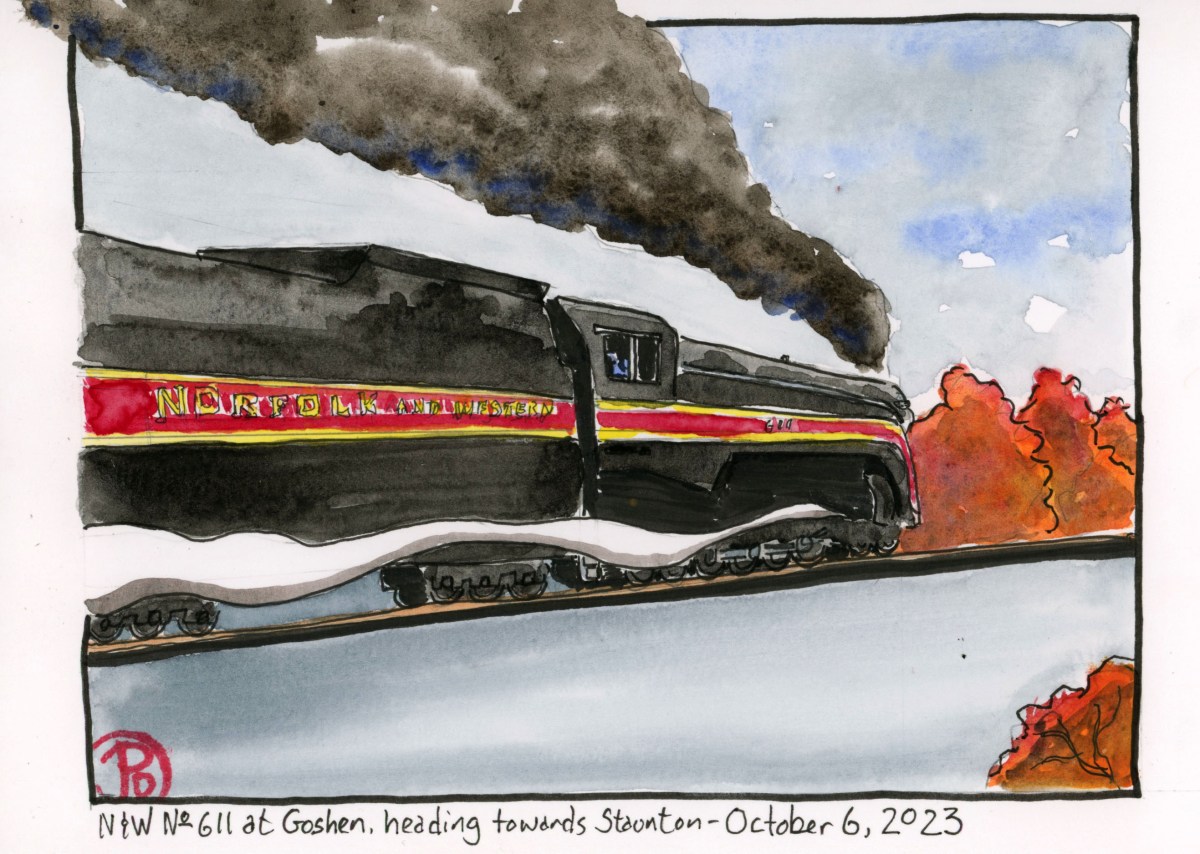
Now it was my turn to be a foamer in a car. I planned to chase 611 from Goshen to Staunton on her afternoon run.

611 being mobbed by fans at Goshen before the afternoon run to Staunton.

I headed into “downtown” Goshen and parked near the railroad. There were already a few chasers getting ready. One was looking over a map and was conversing with another foamer on which grades you could get the best “stack-talk”. He was a serious foamer who had done his research and was willing to share it with the like-minded.

After a wait of about 45 minutes, 611 sounded it’s whistle and the Shenandoah Valley Limited was on it’s way. She had to back her consist onto a siding before headed onto the mainline. Now 611 was facing Staunton and the engineer pushed the Johnson bar forward, released the breaks, and pulled back on the throttle. No. 611 burst in steaming-hissing life!

Down the tracks the sounds of the stack-talk (or the chuff-chuff-chuff of the exhaust) was amazing. 611 blew the crossing and passed the old Goshen Depot and steamed off to Staunton.

Let the foam-fest begin!

611 heading toward approaching the grade crossing at Goshen.
Now this is “stack-talk” as 611 approaches the grade crossing at Goshen. You also hear her powerful whistle.

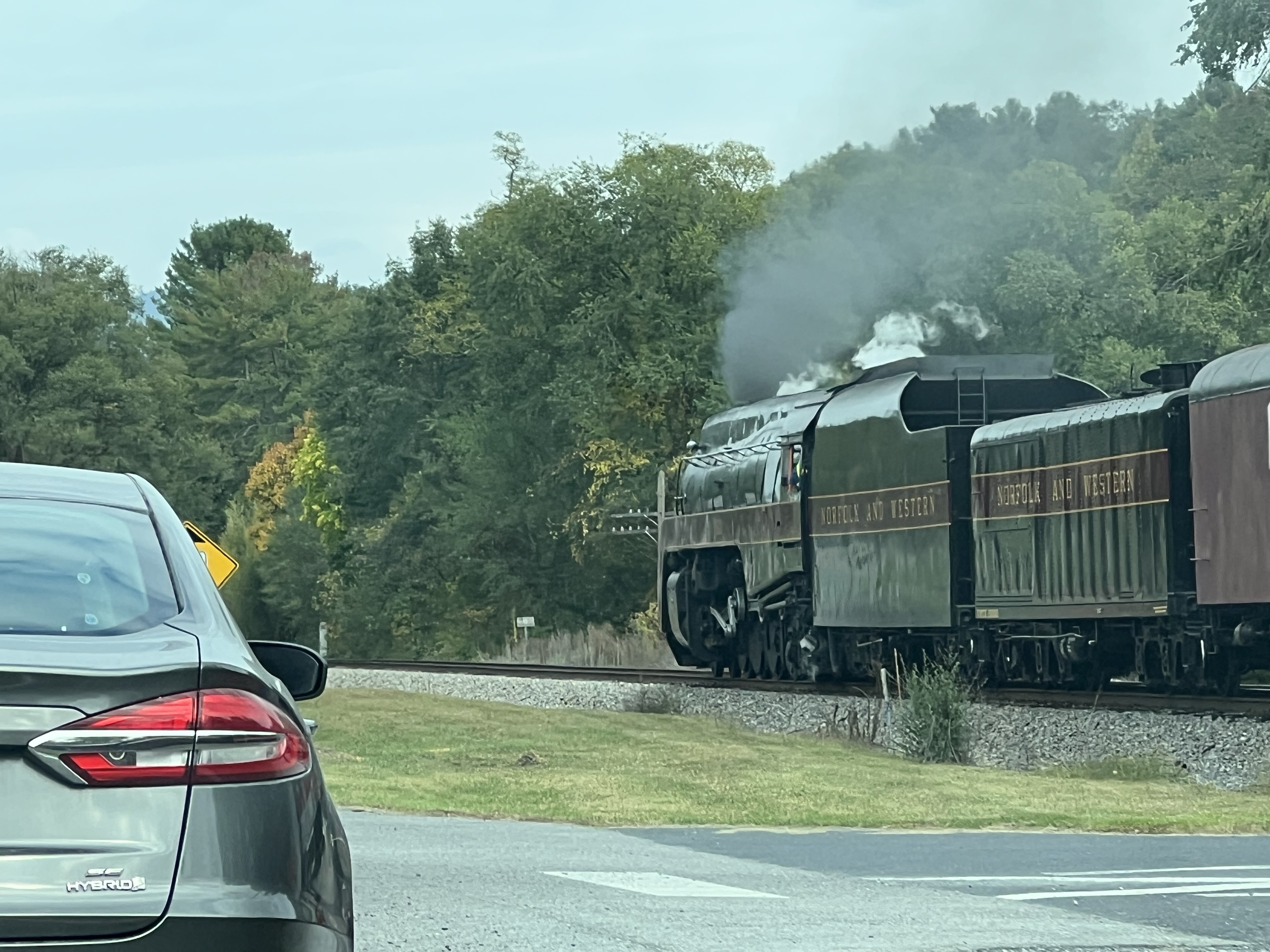
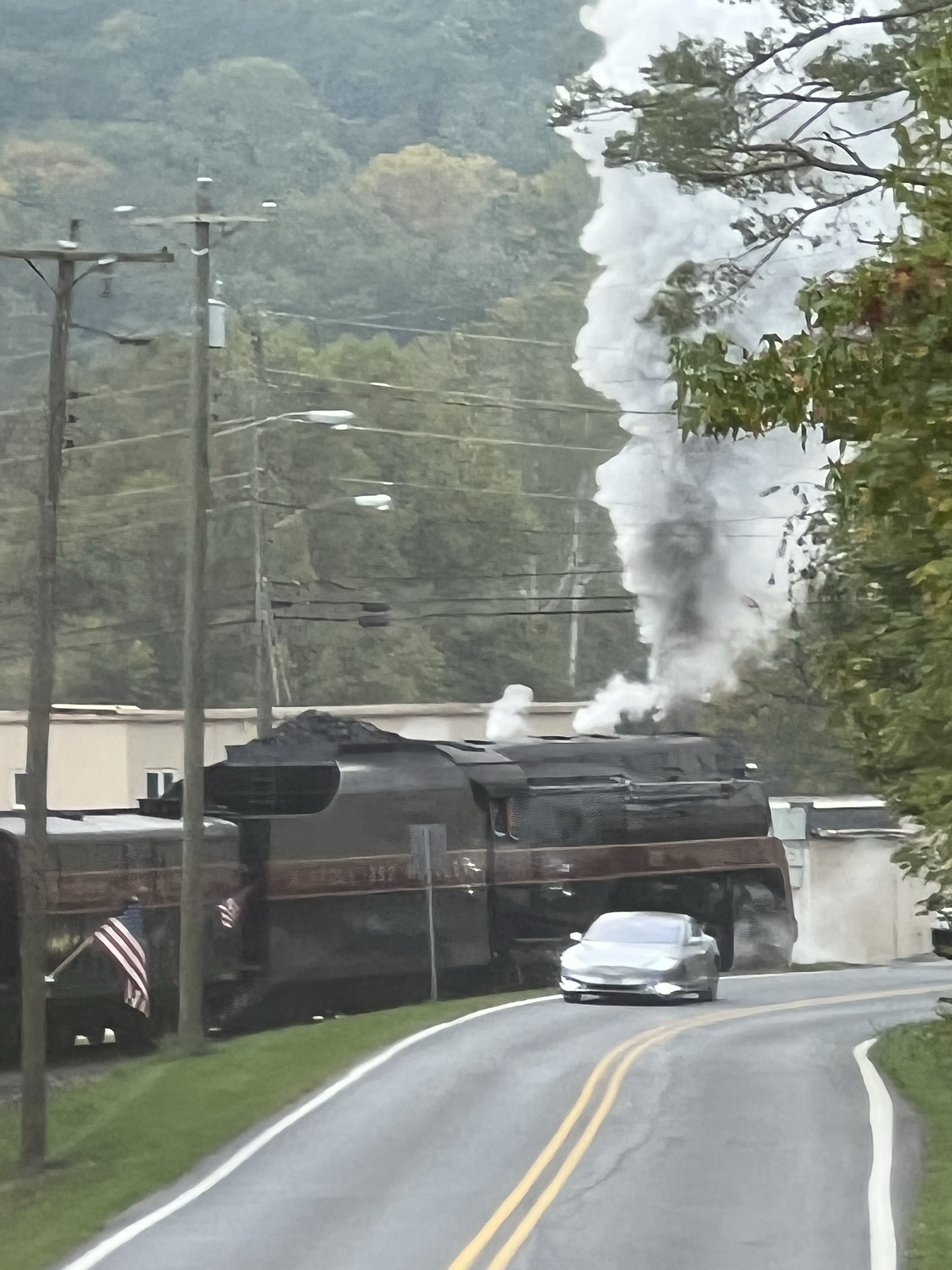
I then joined the line of foamers in cars on Highway 42, which parallels the line. This has created a traffic jam on the two lane road because the pacers wanted to take pacing shots of 611. I and most others on the road, wanted to drive ahead and get shots of 611 on a run by.

611 and dreaded line of pacers in front of me!!

After some of the pacers pealed off, I was able to get ahead of the madding crowd and pulled off to get a run by shot of 611.

611 at a grade crossing.

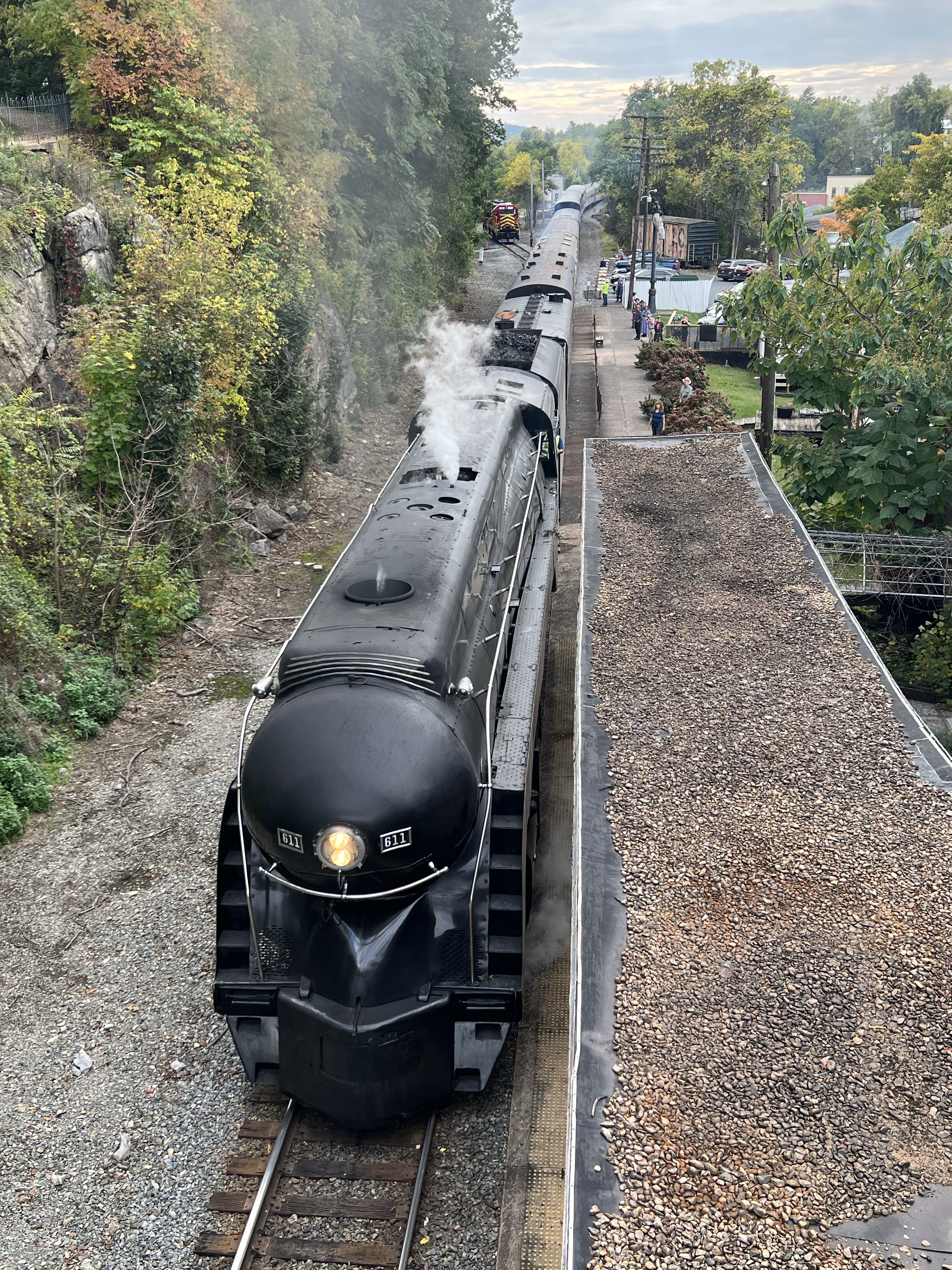
From here, I made a b-line to Staunton because I wanted to get a shot on the walkway above the tracks as 611 pulled into Staunton Station.

611 pulling into Staunton Station. 611 is streamlined even from above. Off to the left are the two diesels that will pull 611 and her consist back to Goshen.
Image

No. 611 on the High Iron

Before my train ride on Friday, I wanted find out where Goshen was. It appeared on my Virginia map but was not mentioned in the travel guide. So I set out of lexington on Thursday afternoon to get an idea of where Victoria Station was.

I came to the station and drove down a dirt road and I could see the excursion train on a siding with 611, under steam, on point. There were still setting up the pavilions and grading the road so I could get a good look at the Queen of Steam.

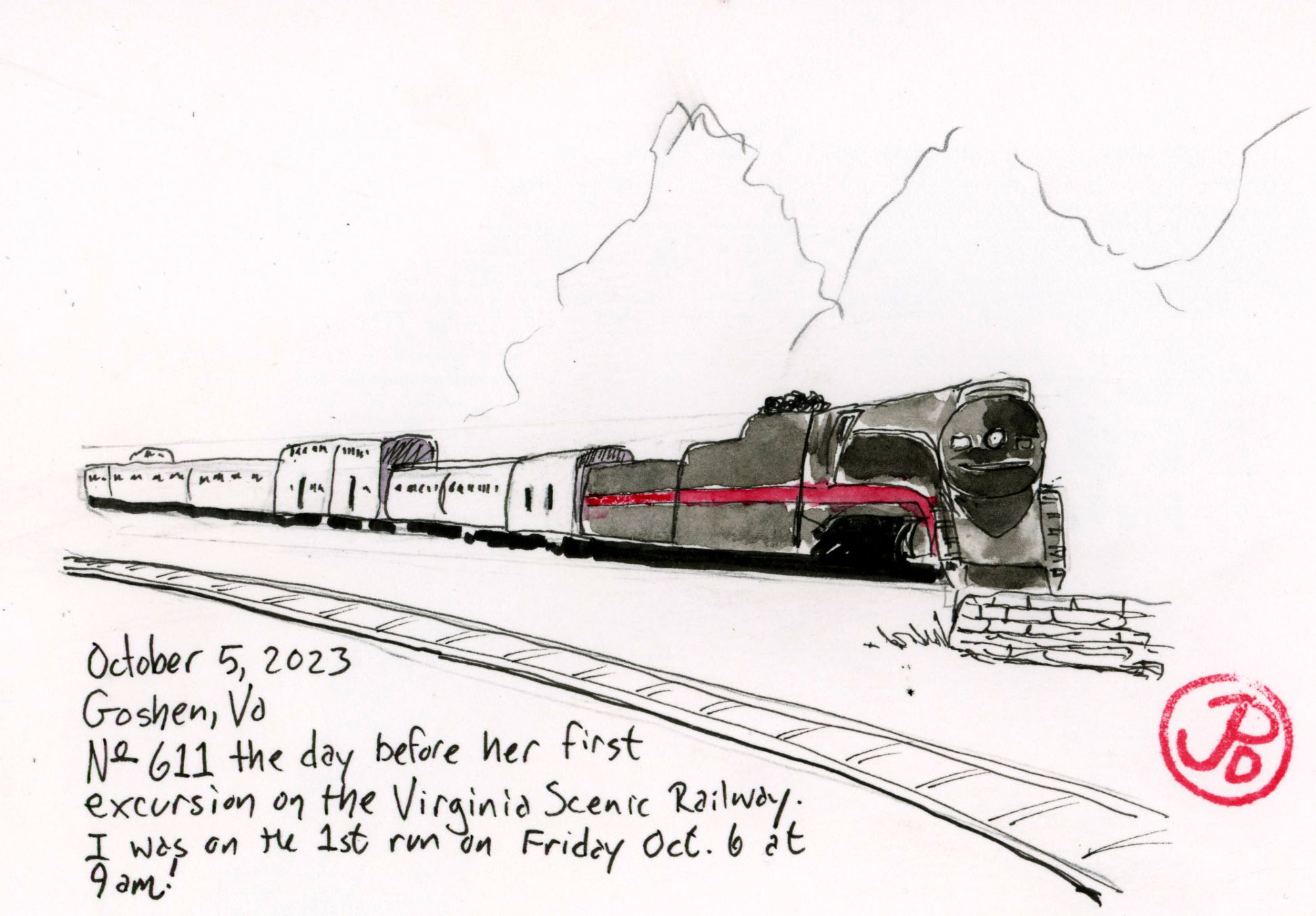
I returned to the main road and then pulled onto the should where I though I was about level with 611, hoping I could get a look at the iconic locomotive from the road. I was able to get a look at 611 and took a few picture which I based the sketch below on.

I couldn’t wait to Friday morning!

I arrived at Victoria Station in Goshen, an hour early and there was already a line forming at the checkin pavilion.

It seemed a mix of casual rail enthusiasts, older folks out for a guffawing good time, and foamers, train addicts that “foam” at the mouth anytime they get near a piece of vintage rail equipment. Better yet if that equipment has steam pouring out of it and is making hissing sounds.

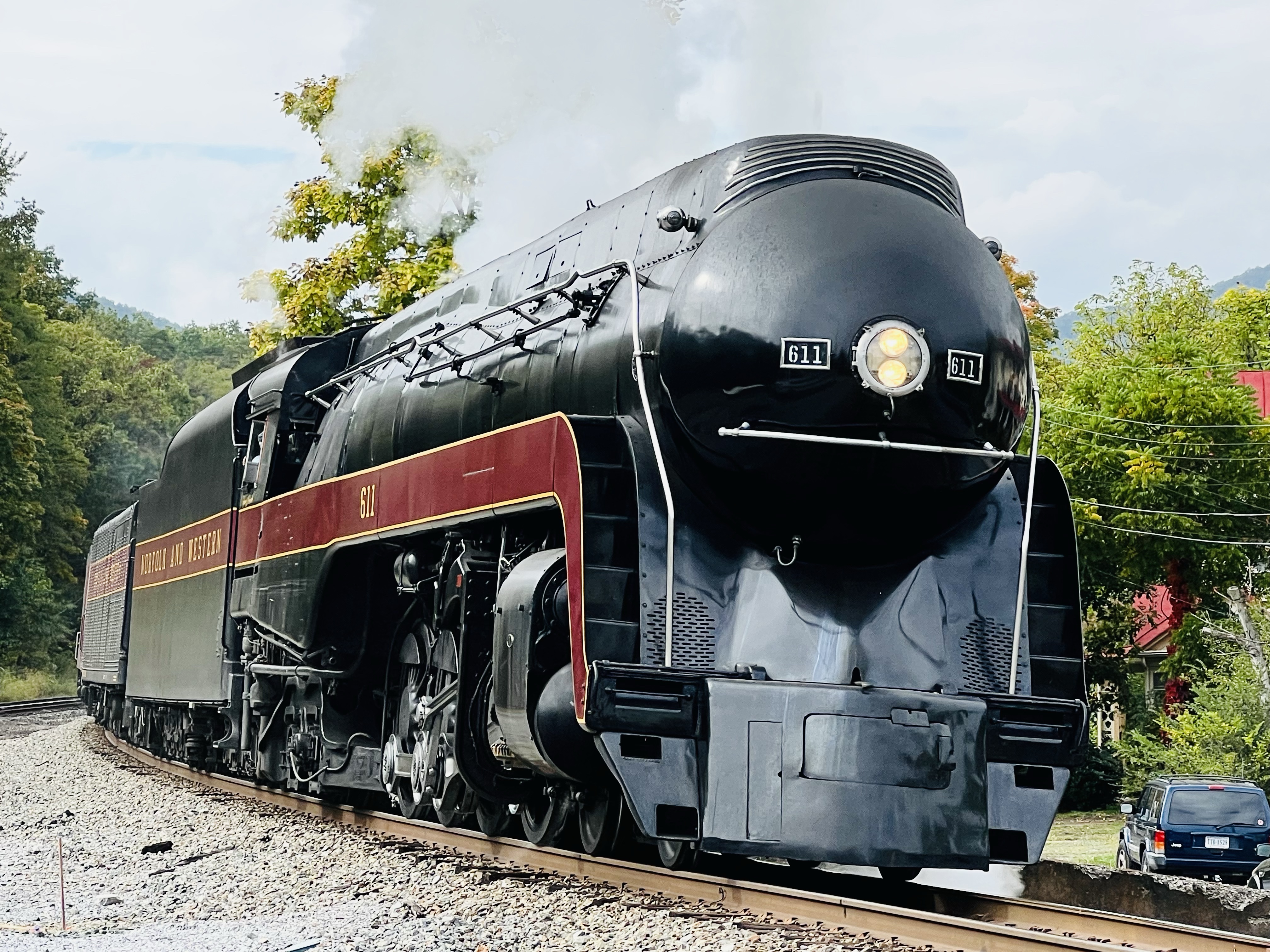
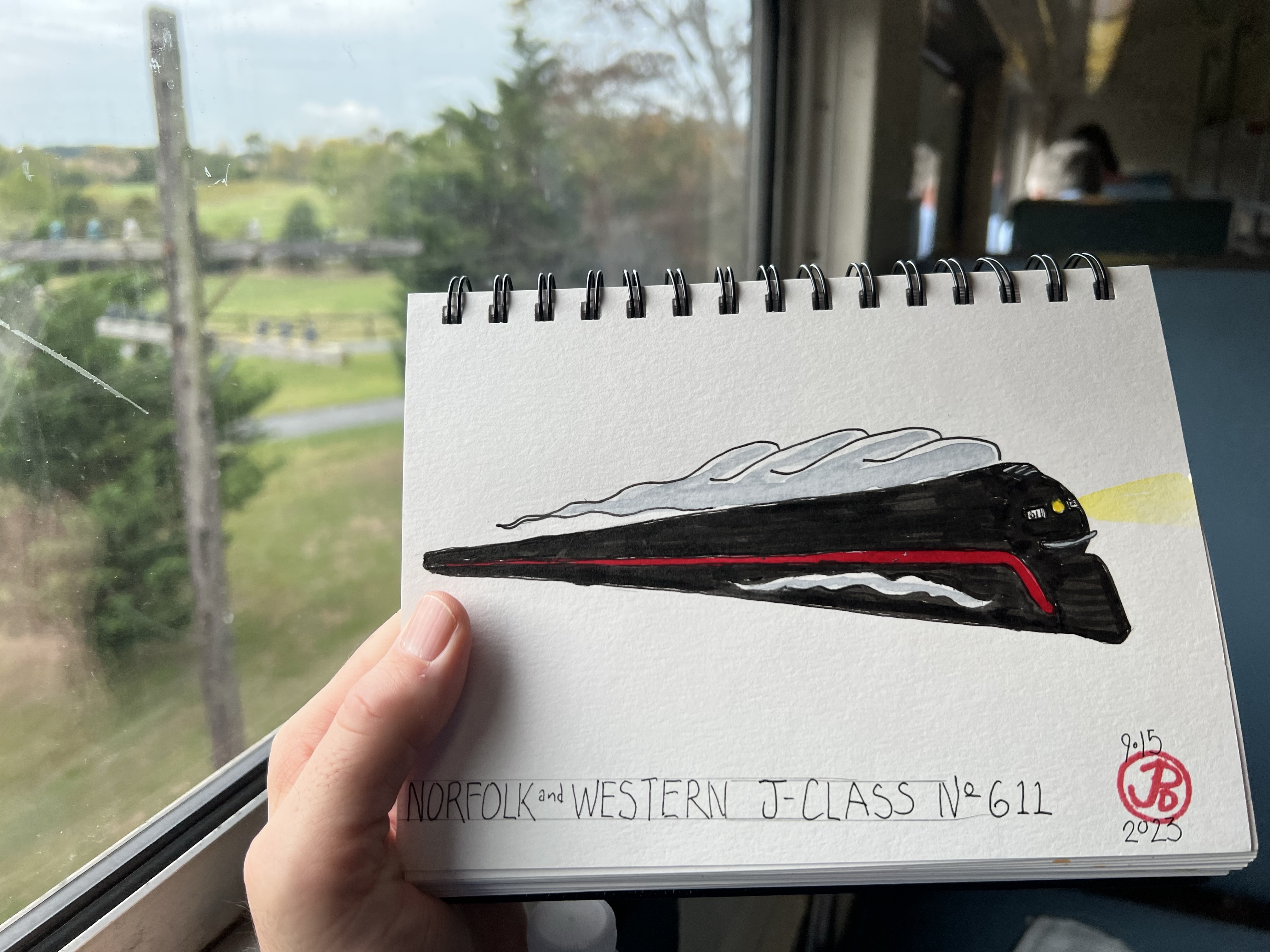
I really wanted to arrive early so I could sketch 611. Norfolk and Western Class J No. 611 is a very beautiful passenger steam locomotive, fully streamlined, giving the machine a sleek look. Her curved and voluptuous lines screamed “speed” and the streamlining makes the locomotive look more an airplane or an ocean-going vessel. She just looks quick!

611 at Victoria Station, Goshen.

It is said that a steam locomotive is like a living, breathing being and I was taking in the sights, sounds, and scents (she’s a coal burner after all) as I was sketching her stately profile.

We boarded and I had a seat in a bi-level car, the type used on commuter lines like Caltrain. I was originally in the bottom level, surrounded by some of those guffawers who were having a Grand Day Out and wouldn’t have cared if Thomas the Tank Engine was pulling our consist. I escaped up to the second level (after first doing a sketch), and had a great view from above.

We backed out of the station at 9:05 AM. This was the first run of the Shenandoah Valley Limited, an excursion that would be running in the month of October, Friday through Sunday with a morning and an afternoon trip daily.

611 backing out of Victoria Station. A foamer is already pacing the Queen of Steam.

611 pulled onto a siding and with a retort of her baritone whistle, she puled onto the mainline, heading towards Staunton (pronounced “Stanton”).

Over the next two hours we headed through the forests starting to show their fall colors. We passed a lumber mill, a few small towns, and backyards scattered with rusted old cars and trucks that were now being repurposed as nature’s planter boxes.

We pulled into Staunton Station at 10:55. From here, two Buckingham Branch Railroad diesels were coupled to the back of the train and be would be pulling the train back to Goshen with 611 riding behind like a big, black smoking caboose.

Throughout our four hour rail journey we were followed by foamers in cars. Some of them would pull ahead of us and then pull off to get a run by photo or video (or both) and them run back to here idling cars and we’d see them a few miles down the line. The worst kind of chaser is called a “pacer” and the drive at the speed of the locomotive which is anywhere between 15 to 40 miles an hour. They hold up traffic and are often driving well below the speed limit to the consternation of other foamers or locals just trying to get to the grocery store.

When we returned to Goshen, I knew 611 would be static for a long enough time for me to get a sketch in (featured sketch).

What a great experience with a legend of the steam era.

I had not ridden behind a Northern type (4-8-4) on the main line since 1984 when my father and I rode a train pulled by Southern Pacific GS-4 No. 4449, from San Francisco to Los Angeles. This was a two day excursion with a stop in the bright lights of Fresno.

For the afternoon run to Staunton I became one of those crazy foamers in a car, but that’s for another post.

Image

Natural Bridge, Virginia

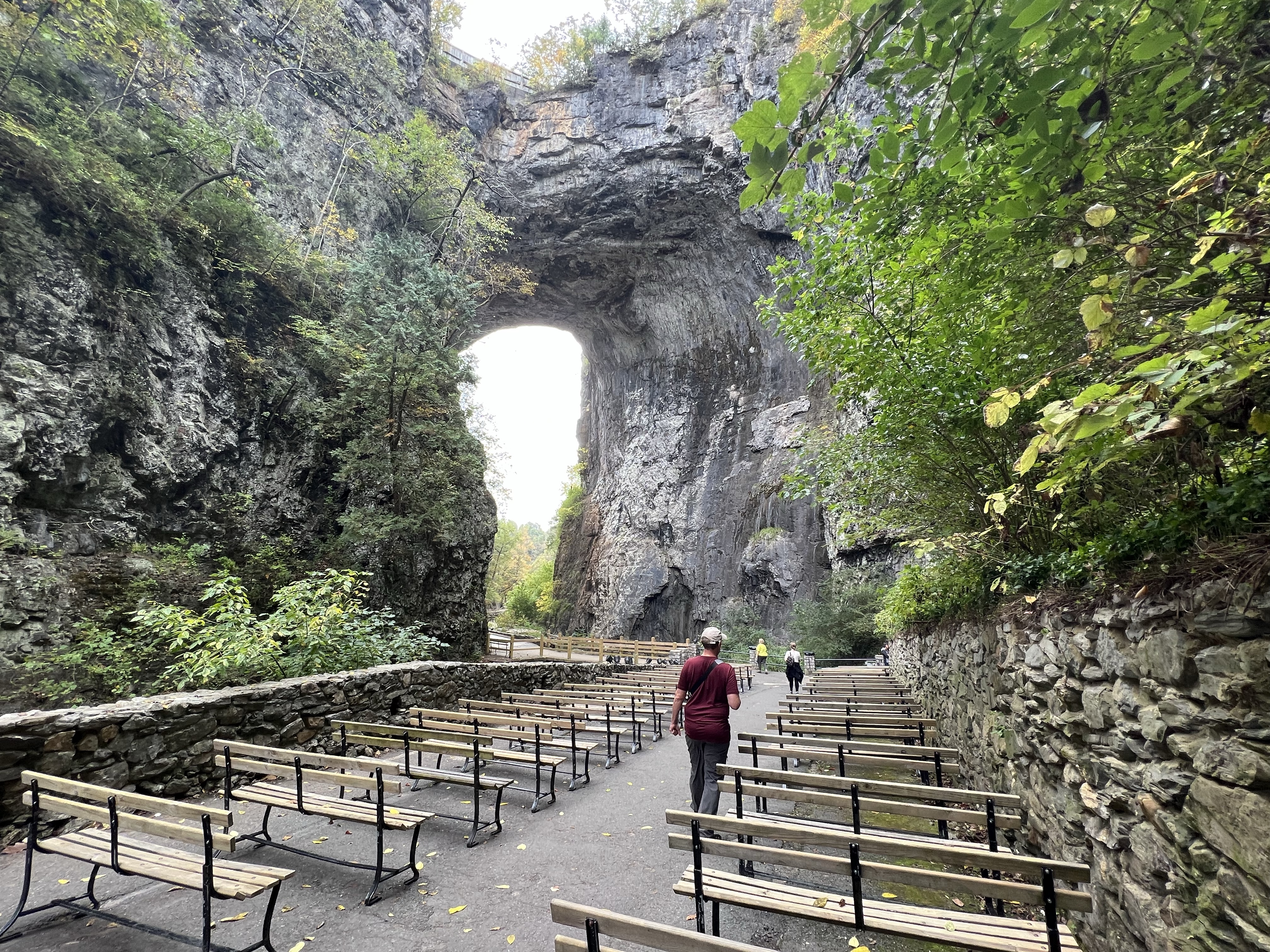
I had grown up going to Natural Bridges State Beach in Santa Cruz. But what of the original Natural Bridge in western Virginia? It was clearly worthy of a visit and a sketch

Only this bridge is much more famous, it was once owned by Thomas Jefferson, surveyed by a young George Washington (apparently), and name-checked in Melville’s masterpiece Moby Dick. (“But soon the fore part of him slowly rose from the water; for an instant his whole marbleized body formed a high arch, like Virginia’s Natural Bridge…”)

The bridge was formed in a limestone gorge, carved out by Cedar Creek about 470 million years ago. The arch is 215 feet high, higher that the Statue of Liberty.

When Jefferson purchased the land in 1774 he called the landforms, “the most sublime of Nature’s works”.

I love the rowed seating at Natural Bridge, as if your are watching nature’s theater, which you are. These were perfect sketching perches.

Image

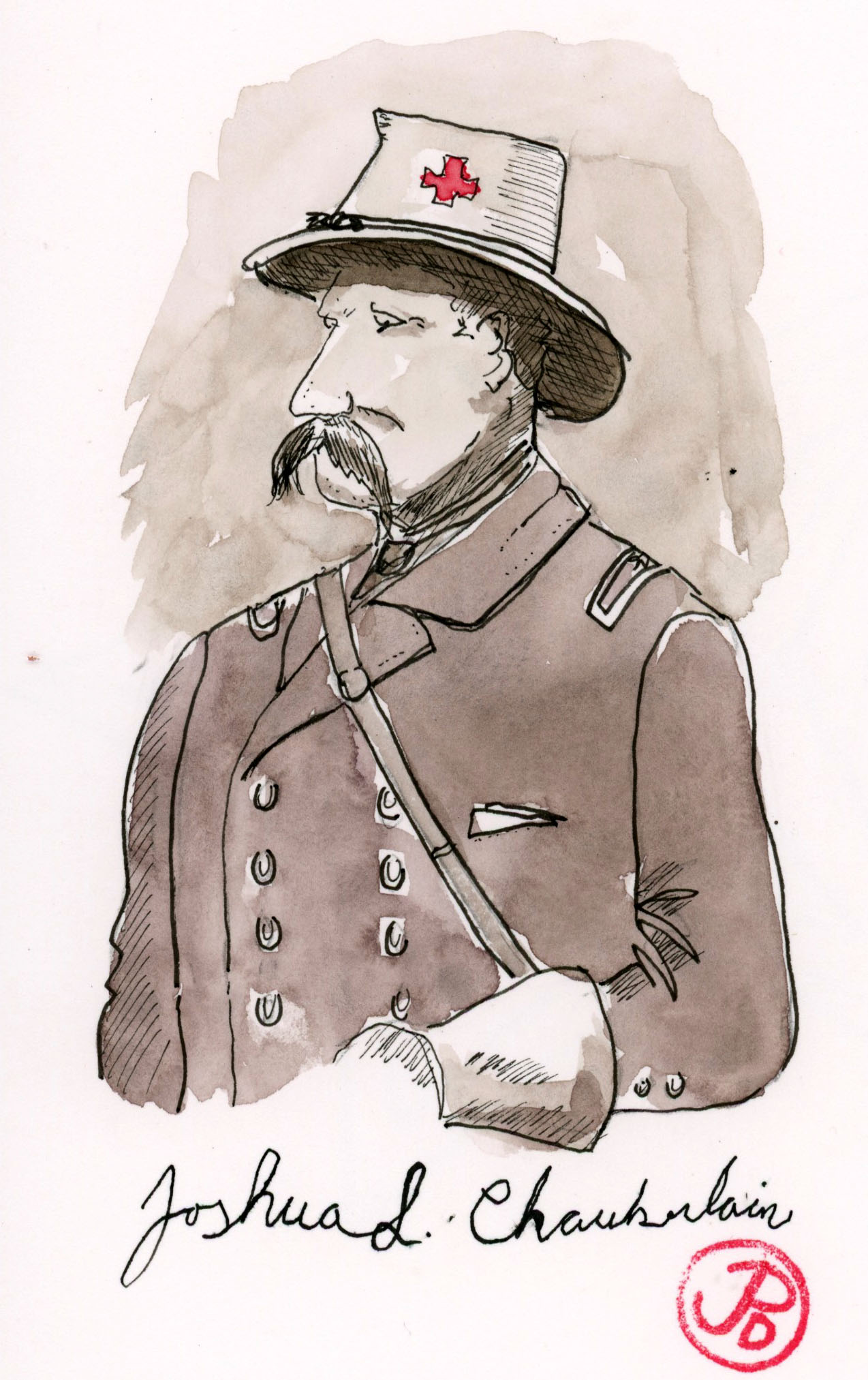
Chamberlain and the Salute of Arms

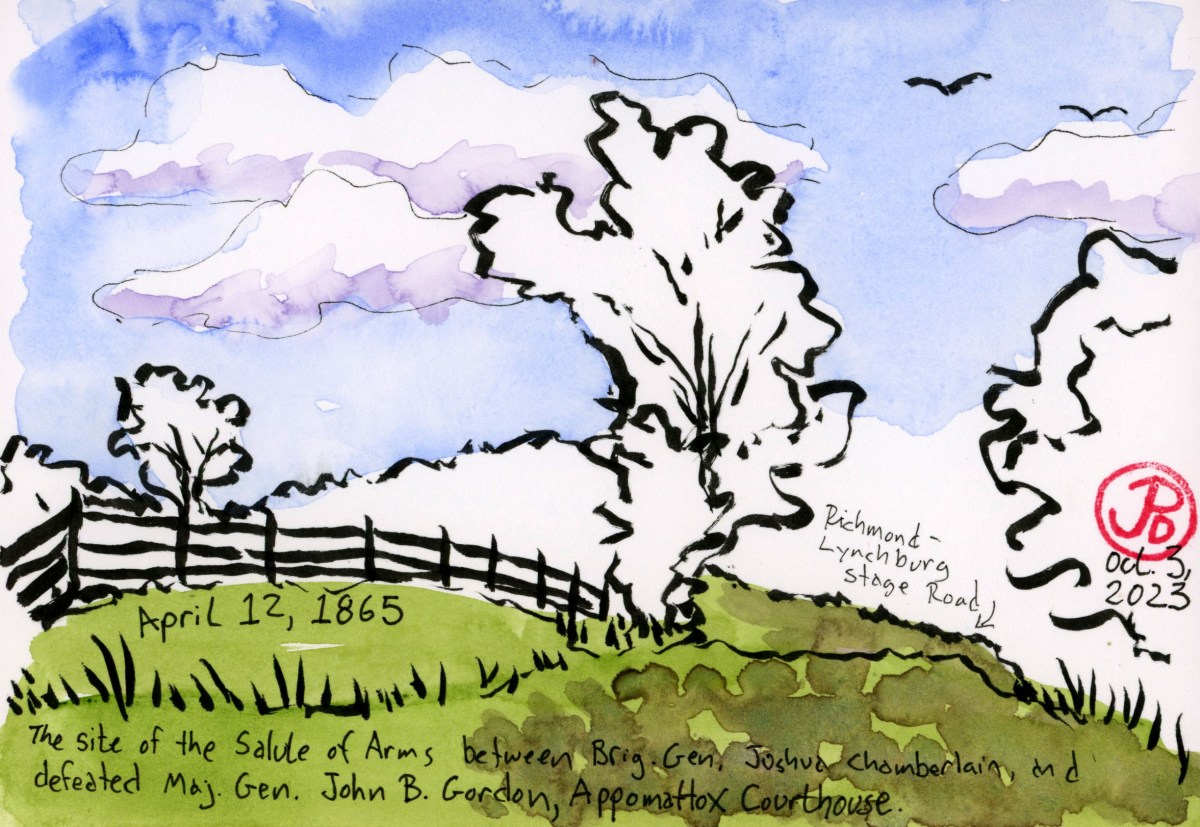
One of the most touching passages of the Civil War happen on April 12, 1865 as Robert E. Lee’s Army of Northern Virginia surrendered at Appomattox Courthouse.

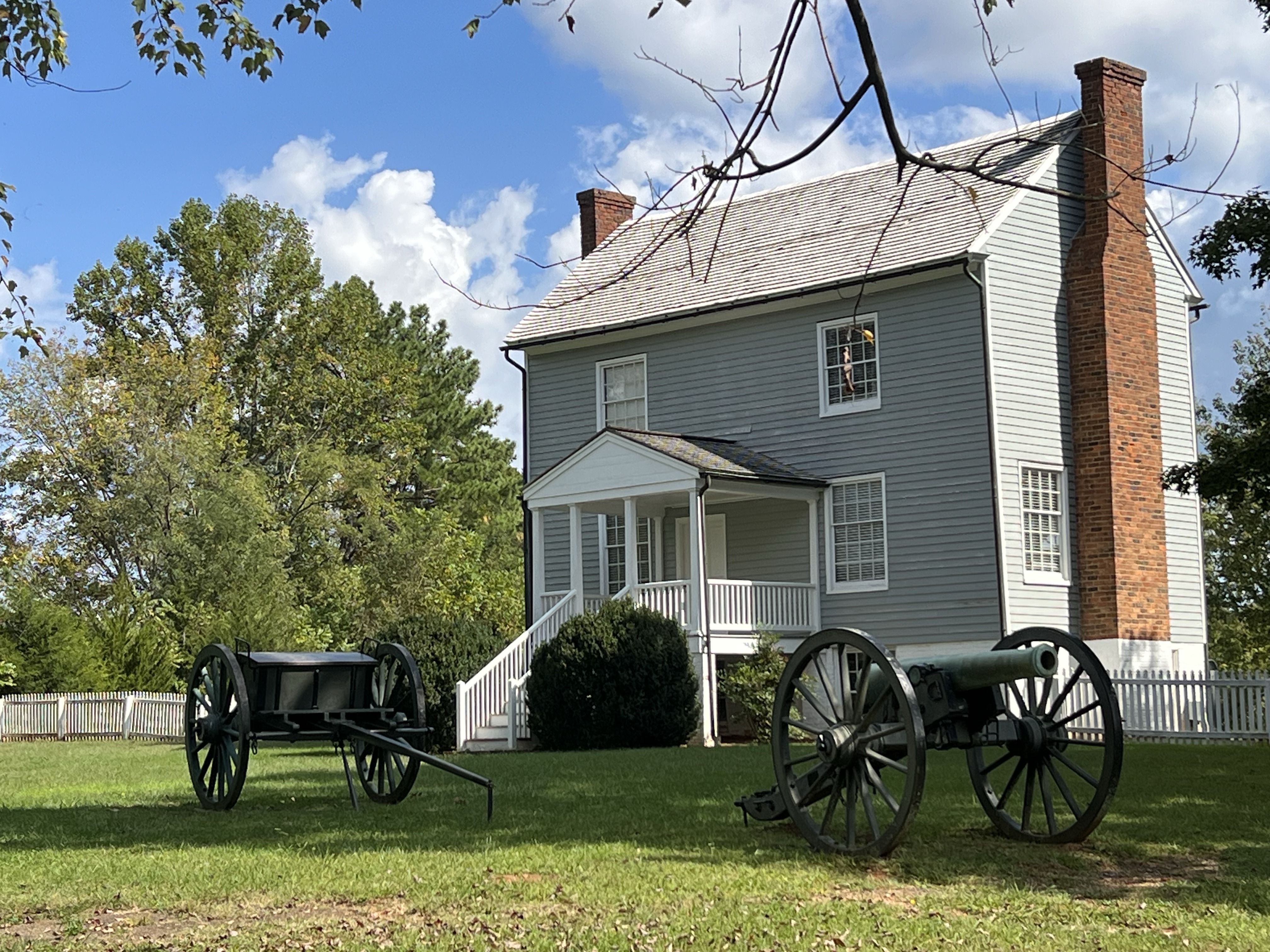
The setting was northeast of the courthouse and just past the Peers House on the Richmond-Lynchburg Stage Road. This was the offical surrender ceremony a few days after Lee had surrendered to General Ulysses S. Grant at the McLean House.

The event is best related in a passage from James McPherson’s Pulitzer Prize winning history of the Civil War, Battle Cry of Freedom:

The Union officer in charge of the surrender ceremony was Joshua L. Chamberlin, the fighting professor from Bowdoin who won the medal of honor for Little Round Top, had been twice wounded since then, and was now a major general. Leading the southerners as they marched towards two of Chamberlain’s brigades standing at attention was John B. Gordon, one of Lee’s hardest fighters who now commanded Stonewall Jackson’s old corps. First in the line of march behind him was the Stonewall Brigade, five regiments containing 210 ragged survivors of four years of war. As Gordon approached at the head of these men with “his chin drooped to his breast, downhearted and dejected in appearance,” Chamberlain gave a brief order, a bugle call rang out. Instantly the Union soldiers shifted from order arms to carry arms, the salute of honor. Hearing the sound General Gordon looked up in surprise, and with sudden realization turned smartly to Chamberlain, dipped his sword in salute, and ordered his own men to carry arms. These enemies in many a bloody battle ended the war not with shame on one side and exultation on the other but with a soldier’s “mutual salutation and farewell.”

This interaction between the victorious north and the defeated south was the first step in helping to bring a divided and bloodied nation back on the path to becoming the United States again. Did it work? I leave it to you, dear reader, to decide.

The Peers House at Appomattox Courthouse. The site of the Chamberlain-Gordon encounter is just down the stage road to the left of the Peers House.

On the morning of April 9, 1865, the Army of Northern Virginia was involved in it’s final wartime conflict. The last shots where fired from the front yard of the Peers House. The cannon shot caused some of the last casualties of the war in Virginia.

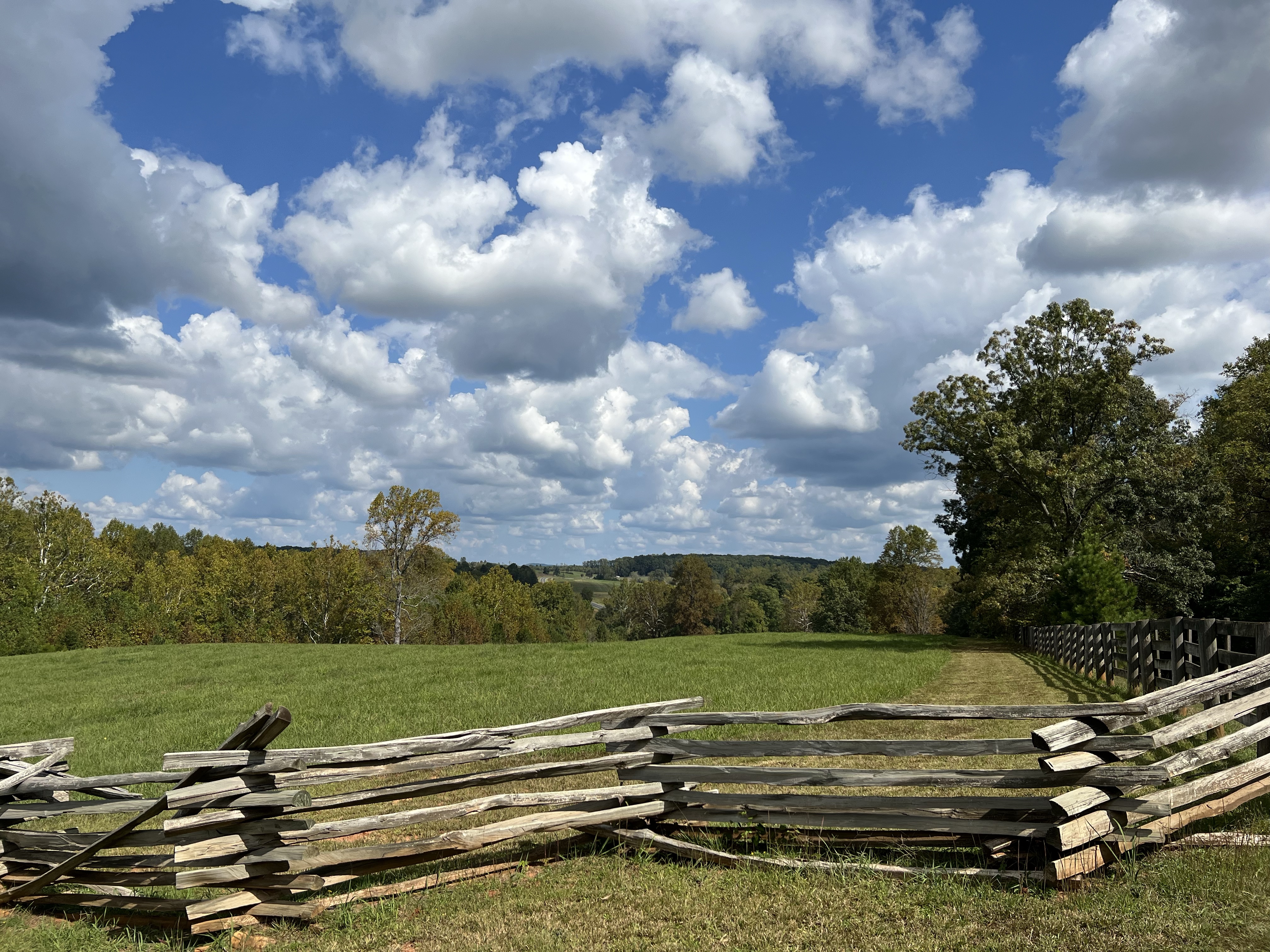
The countryside around Appomattox Courthouse is beautiful. The photo above is taken near the spot of Lee and Grant’s second meeting. The meeting occurred on the morning of April 10 with both men on horseback. While the surrender in McLean’s front parlor pertained to the Army of Northern Virginia, Grant tried to persuade Lee to convince the remaining Confederate forces to surrender. Lee refused telling Grant that the decision was up to the President of the Confederacy, Jefferson Davis.

To the right of this photo and out of frame is the location of Chamberlain’s Salute of Honor. I sketched the view looking down the Richmond-Lynchburg State Road (featured sketch).

Image

Appomattox Courthouse

One Civil War location I have been interested in visiting and sketching for a long time is Appomattox Courthouse in southern Virginia.

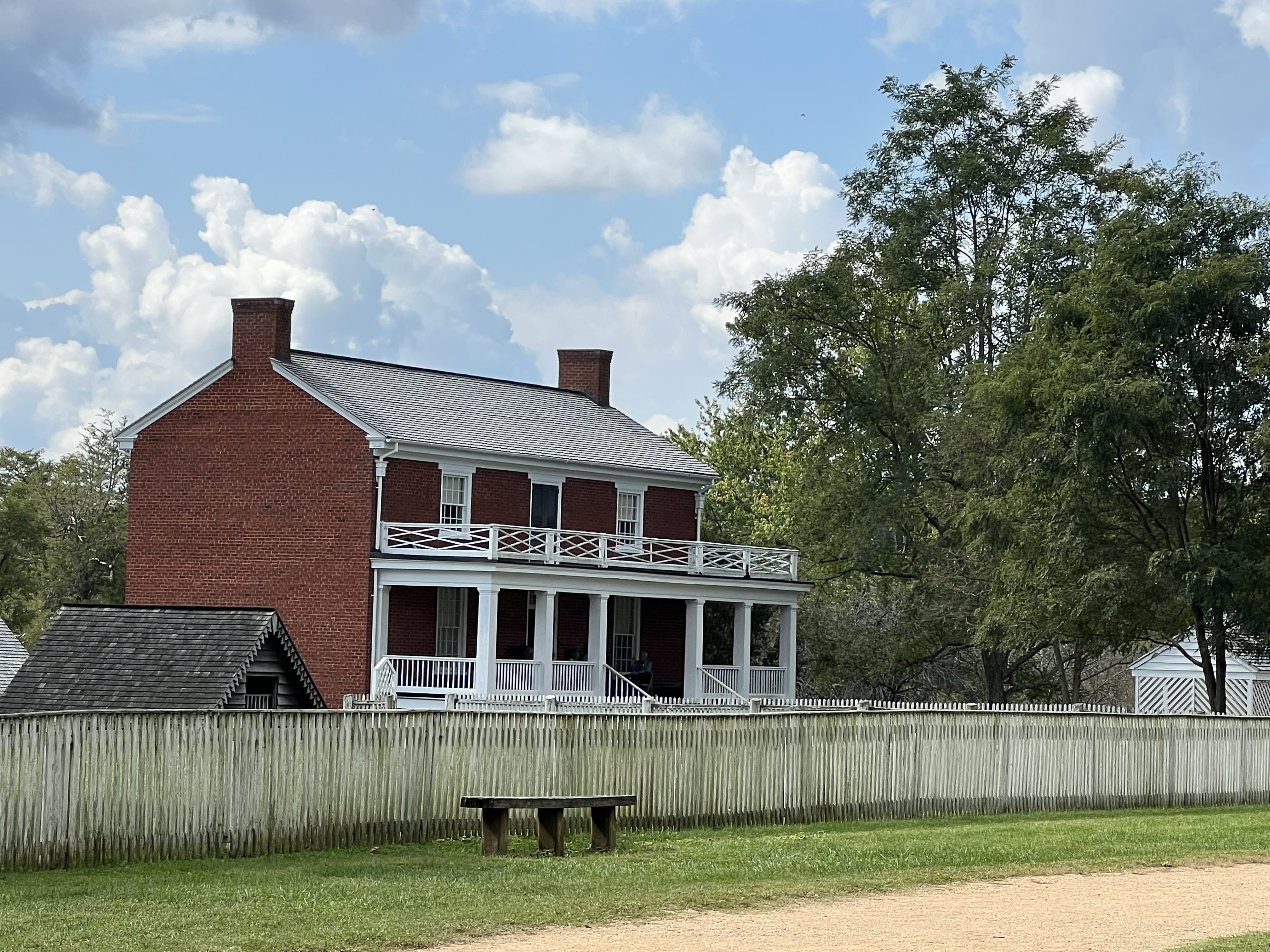
This is not the site of a major battle. Civil War lovers come here to visit a house just down the street from the courthouse and pay a visit to the front parlor.

Now how did this small parlor in a small southern Virginia town become a major historical landmark?

This is where the Civil War ended, at least on paper.

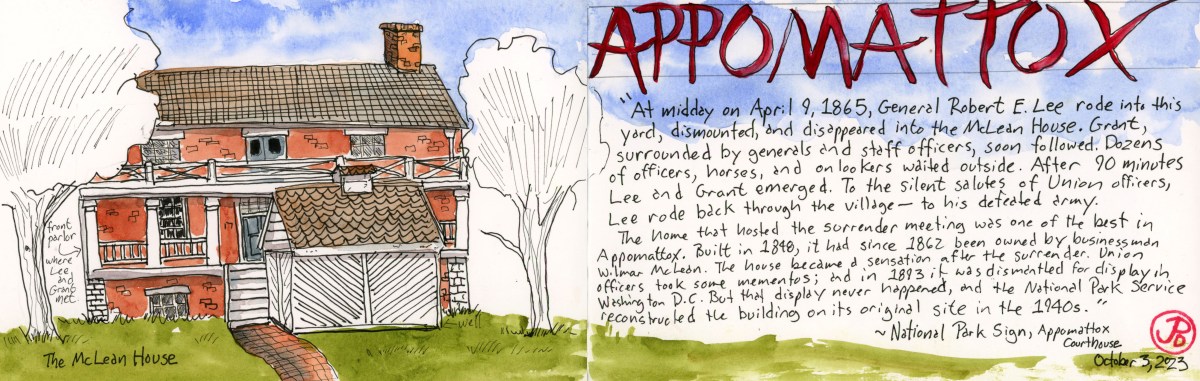
The McLean House.

The Confederate Army of Northern Virginia, commanded by General Robert E. Lee, was surrounded by Union forces near the small town of Appomattox Courthouse. Lee was now out of options and had no choice but to surrender. Lee said, “there is nothing left for me to do but go and see General Grant, and I would rather die a thousand deaths. “

On April 9, 1865, in the early afternoon, Robert E. Lee, entered the village of Appomattox Courthouse. He headed past the courthouse and stopped at the McLean House. Lee dismounted his horse Traveller, and entered the house.

Shortly afterwards General Ulysses S. Grant, General-in-Chief of all the forces of the United States, entered the house.

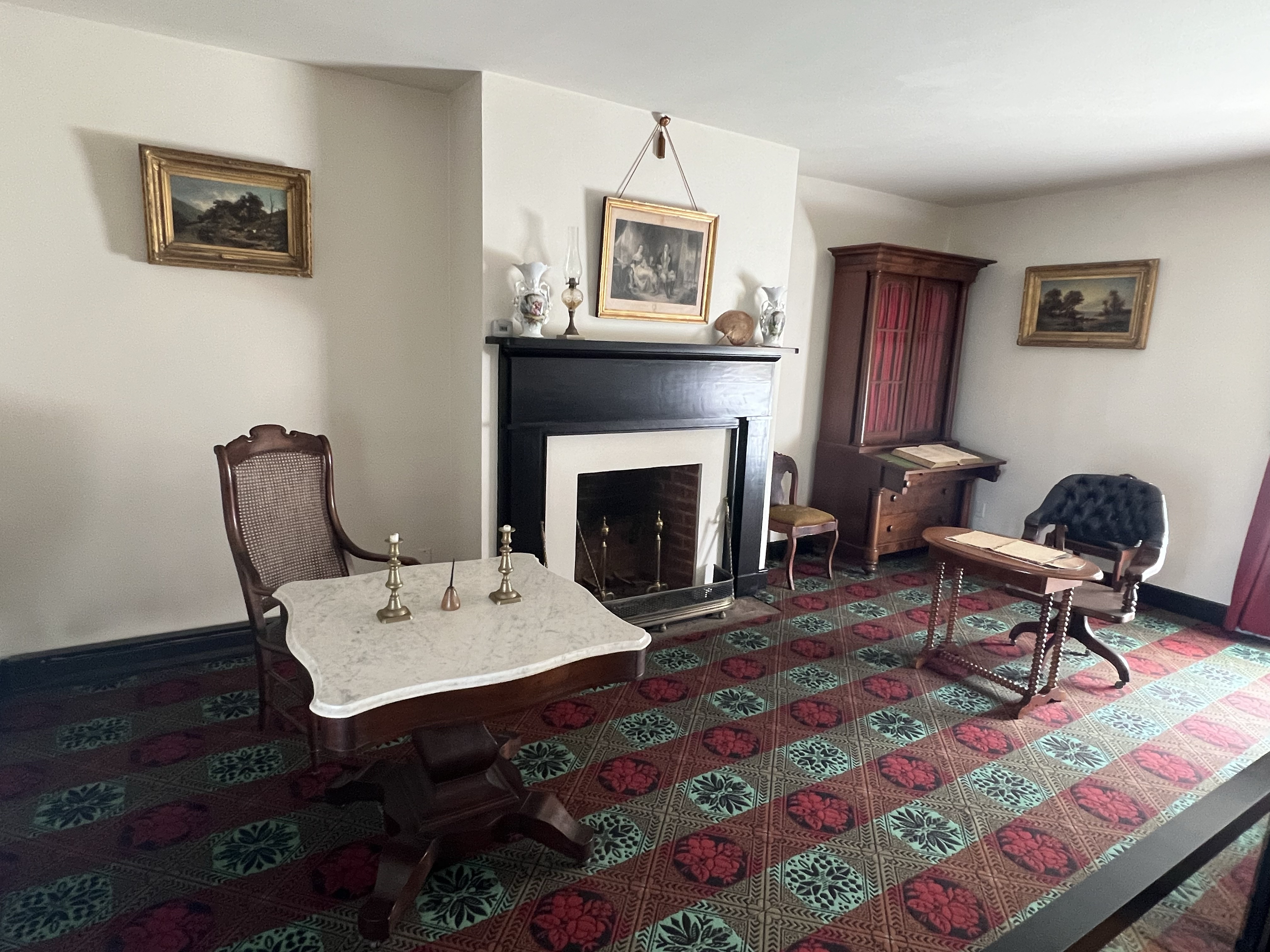
The front parlor where Lee surrendered to Grant.

The two men met in Wilmer McLean’s front parlor while the family was in the upstairs bedrooms. Here the lenient terms of surrender where agreed upon. The Confederate soldiers had to pledge not to take up arms again against the United States, they had to turn in their rifles but could keep their sidearms, and Lee was allowed to go free.

This surrender Appomattox was the beginning of the process of reunification.

Or was it?

Coda: Before he lived in Appomattox Courthouse, Wilmer McLean lived further north in Manassas.
During the the first battle of Manassas (aka Bull Run), McLean’s house was used by Confederate General Beauregard as his headquarters. His house was shelled by Unionist cannons.

It is said of McLean that the Civil War, “began in his front yard and ended in his front parlor”.

Image

Colonial Williamsburg

Colonial Williamsburg is a sketcher’s paradise, especially if you love to sketch architecture.

Williamsburg was the capital of Virginia, preceded by the first permanent English settlement at Jamestown and followed by Richmond (which moved from Williamsburg at the time of the Revolutionary War to be further away from the coast). The capital of Virginia remains in Richmond today.

Colonial Williamsburg represents the capital in the years leading up to the break with Britain. It is billed as the “world’s largest U. S. history museum.”

Many of the current buildings have been restored or even reconstructed to appear as they did in the years before the American Revolution.

Along Williamsburg’s streets are historical reenactors who portray people of the time. Which reminds me of California’s Renaissance Pleasure Faire (a reenactment of Elizabethan England).

You can enter many of the buildings and are met by period interpreters who talk about the life and times of the people of Williamsburg.

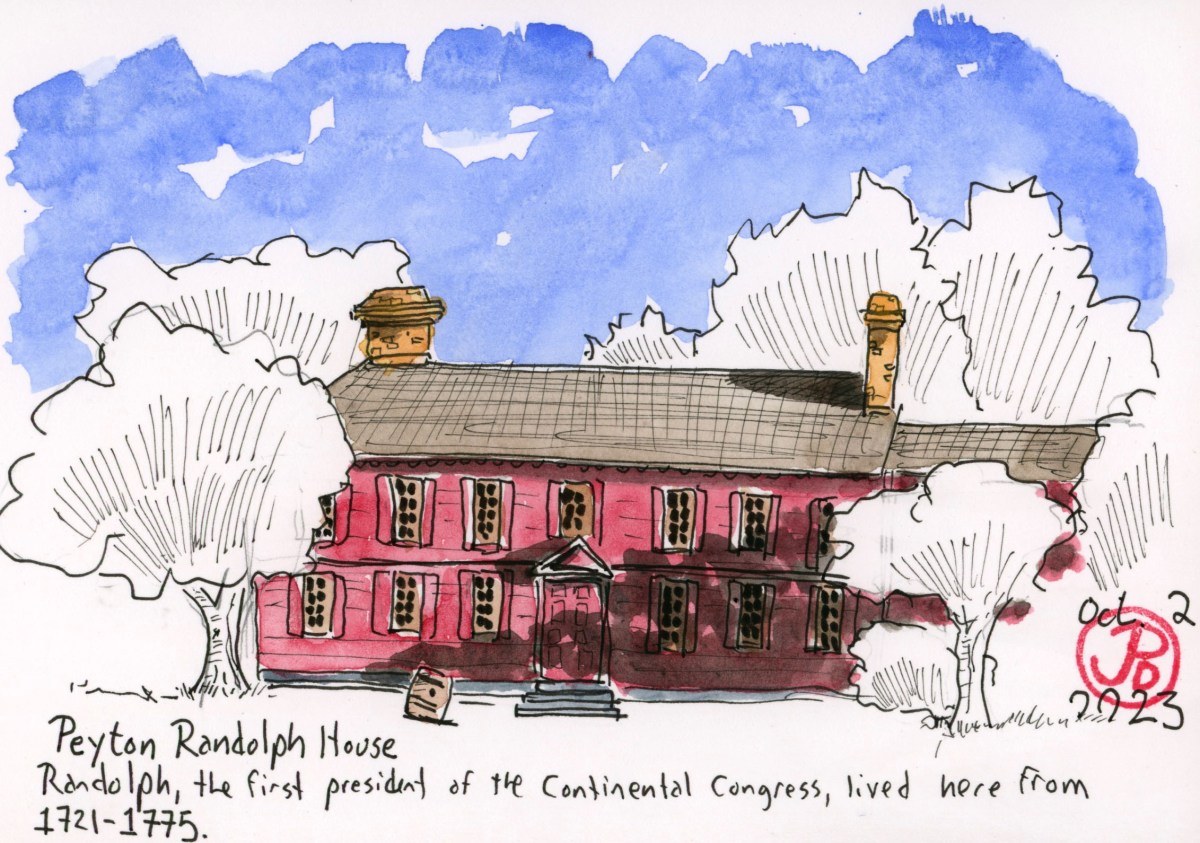
One of these building I toured was the home of Peyton Randolph (featured sketch), one of the Founding Fathers of the United States. He was the first president of the First Continental Congress. Randolph was a very wealthy and influential man. He died in 1775, a year before America’s monumental year. Some historians have theorized that, had he lived, he would have been our Nation’s first president.

It took 27 slaves to tend to the house and part of the tour focused on the slave quarters.

In most cases, slaves slept where they worked. So if you were a cook, you slept in the kitchen. If you where a personal servant to the lord of the house, you slept on a straw stuffed mattress which resembles a large dog bed placed at the foot or the side of their master’s bed.

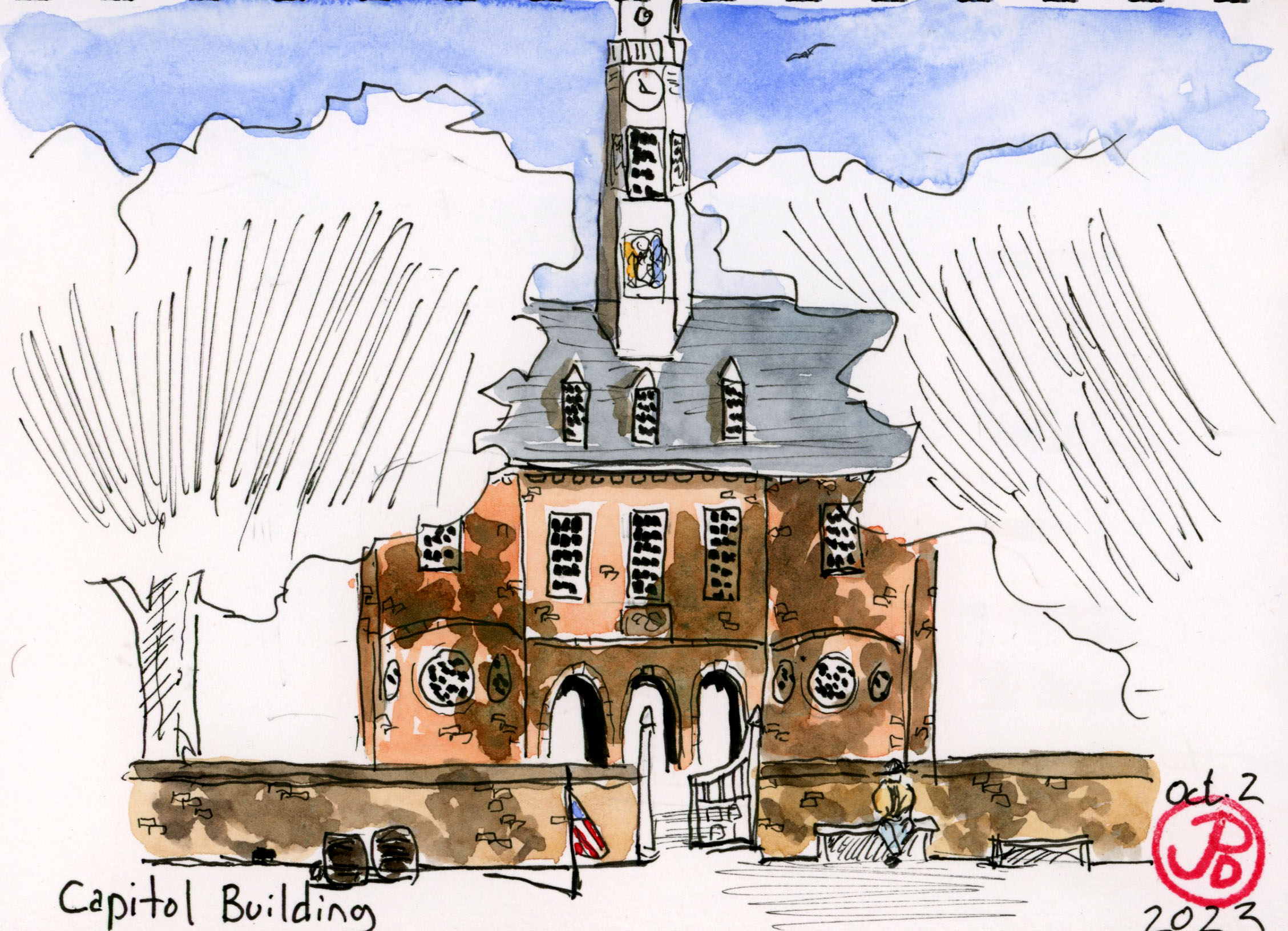
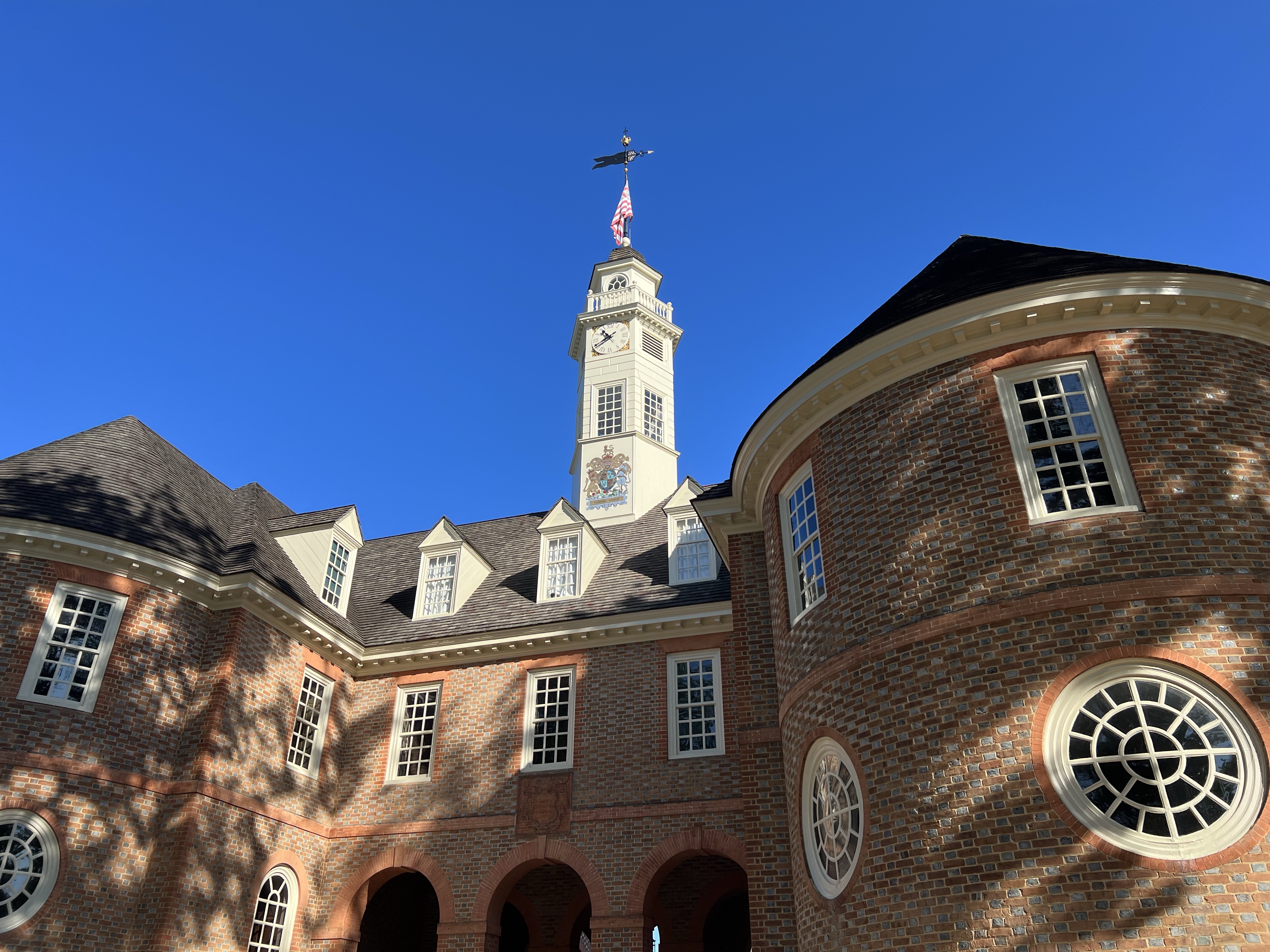
Another building that I toured and sketched was the Capitol Building. It was in this two chambered government building that representatives from the colonies meet with the British government sowing the seeds of our own independence.

The clock tower of the Capital building. I couldn’t fit the tower into my sketch and it was also shrouded in trees, and I ran out of paper!
Image

Yorktown

Yorktown is one of the vertices of the Virginia’s Historic Triangle. The other two being Colonial Williamsburg and Jamestown.

Yorktown is the site of a major victory of the Revolutionary War. The Battle of Yorktown led to the British surrender and the end of British rule over the colonies. It was also one of the last major land battles of the war. This was the beginning of a new nation.

The American army was led by General George Washington with the help of French and the British forces was commanded h Lieutenant General Cornwallis.

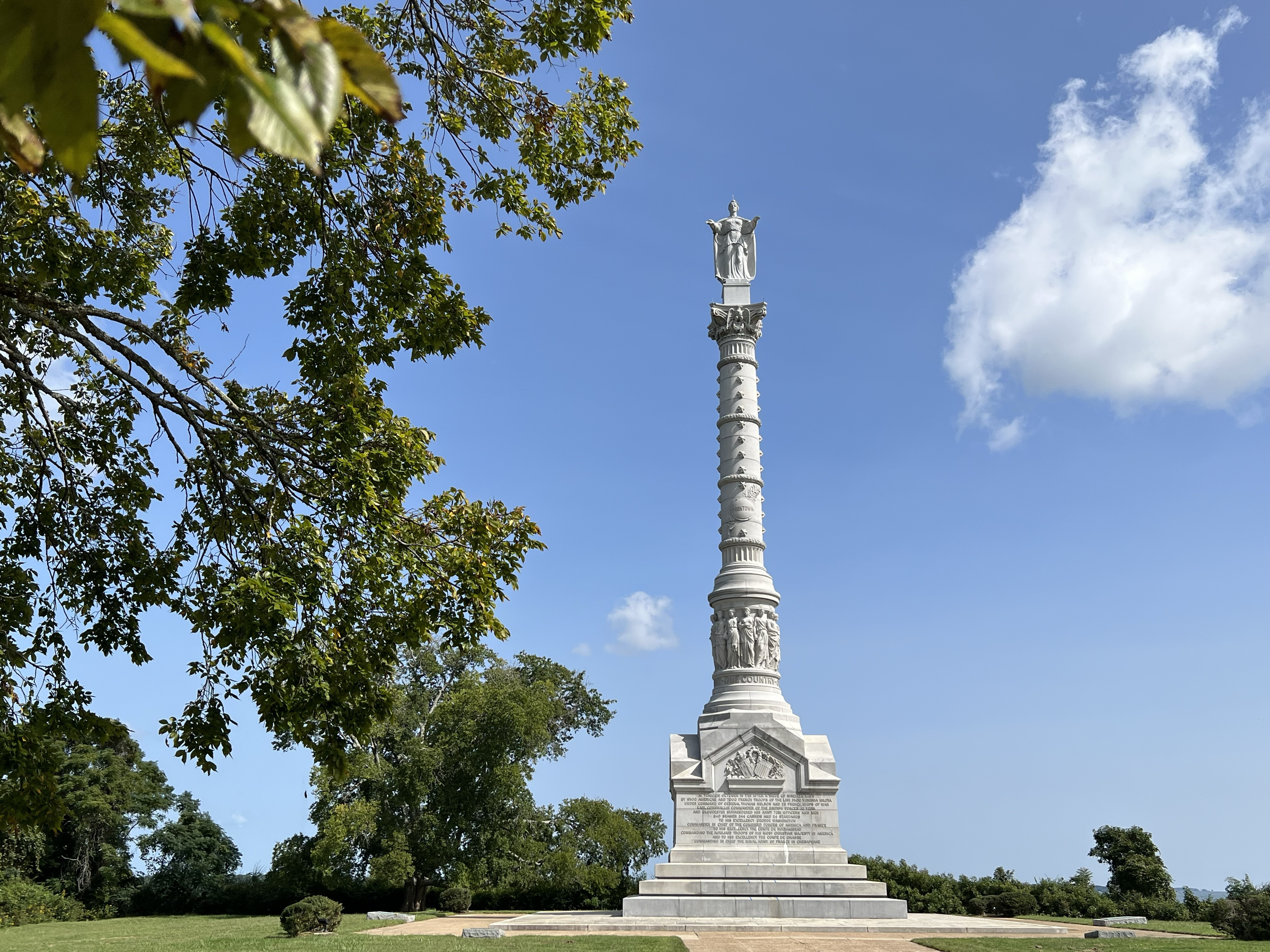
The Yorktown Victory Monument which was completed in 1885, over 100 years after the battle and 20 years after the end of the Civil War!

Signs of this important battle are still visible in the landscape and the buildings that existed from Fall of 1781.

It is one of these signs of battle that I sketched into my sketchbook.

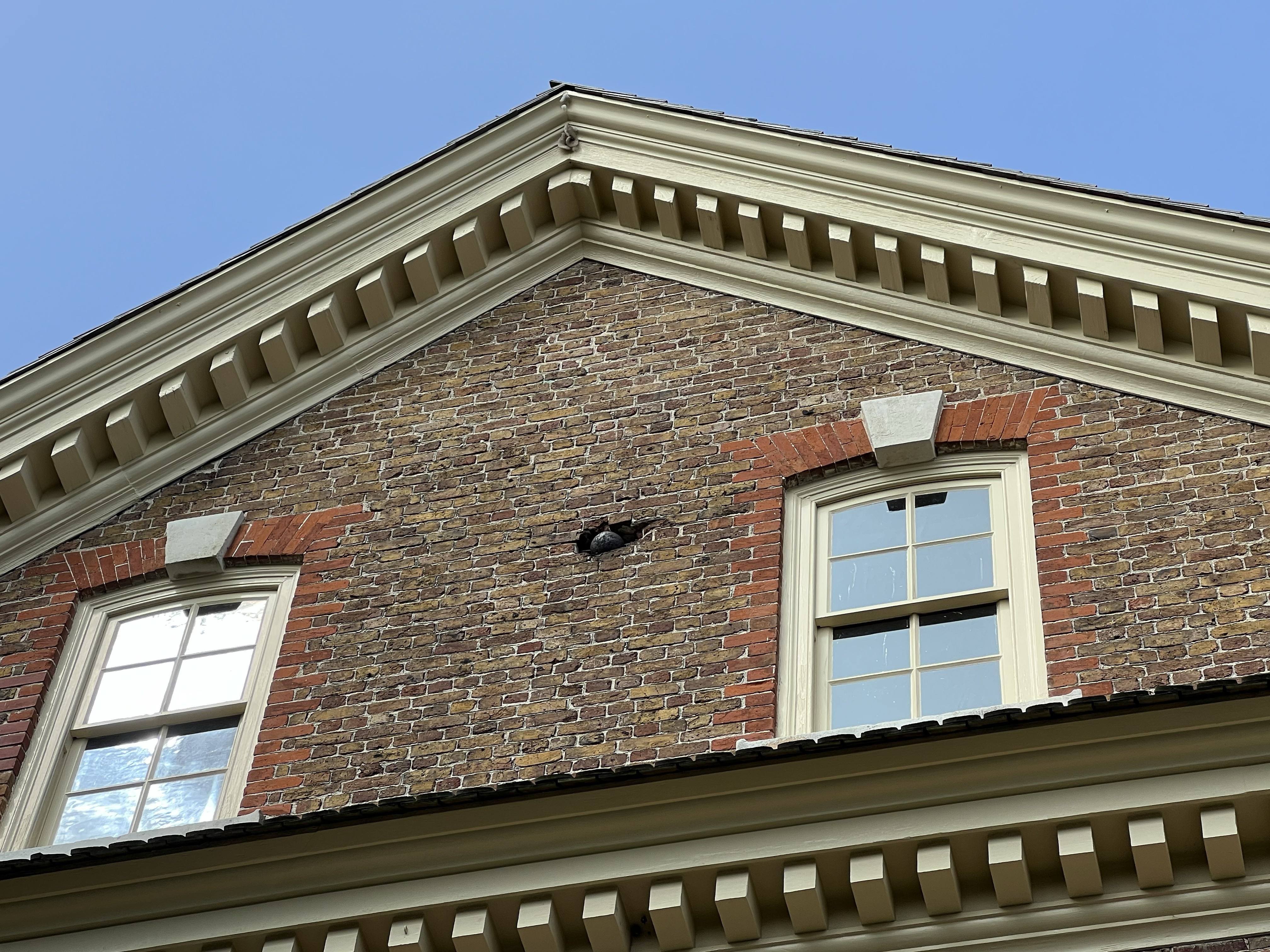
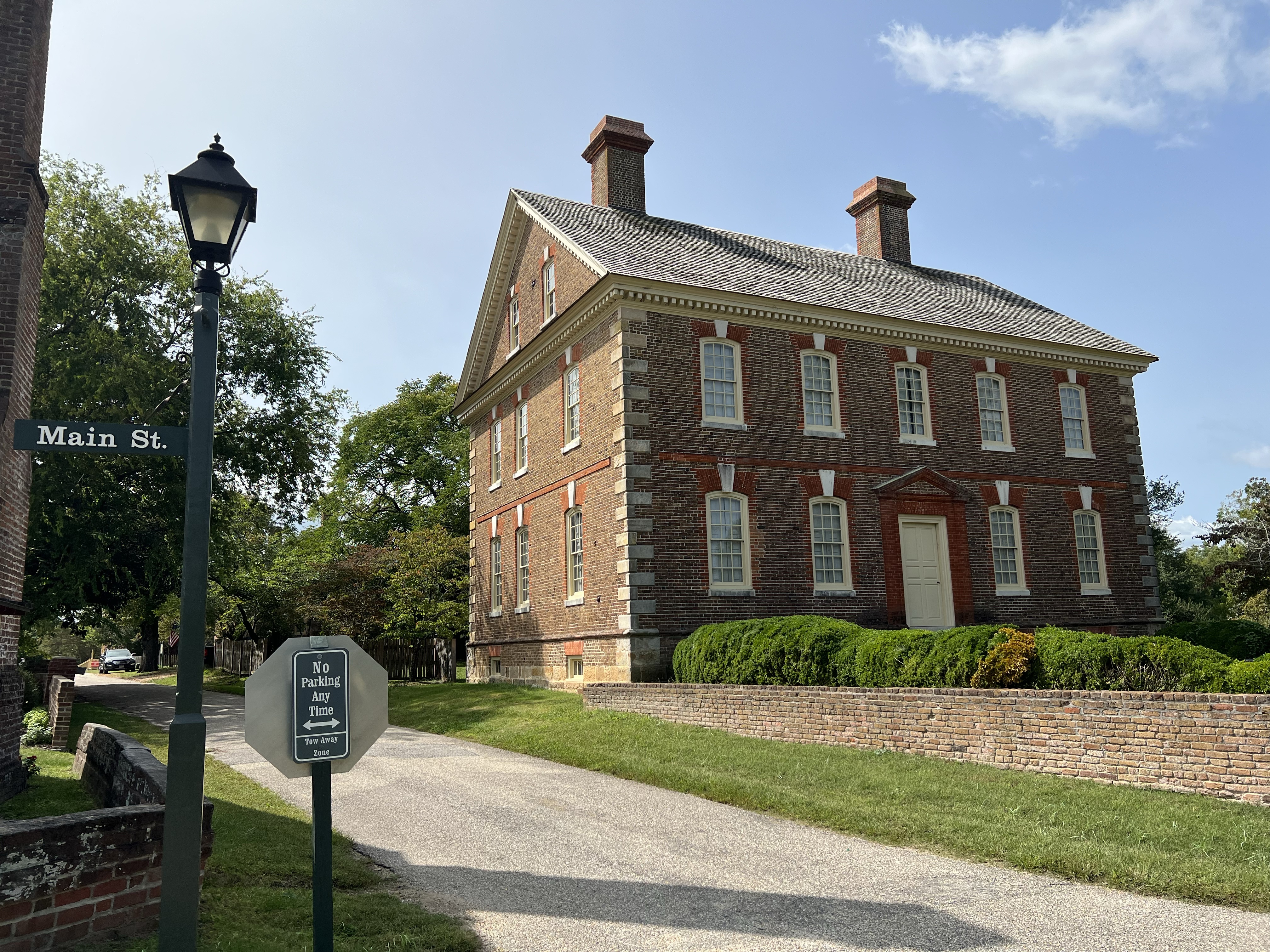
This is the Nelson House on Main Street. Thomas Nelson Jr. served in the Continental Congress and was a signer of the Declaration of Independence. His brick house now has two cannonballs embedded in the brick wall, signs of the fighting in Yorktown. This is the subject of my featured sketch.

Another cannonball embedded in the Nelson House. This one just missed and upstairs window.
Image

Historic Jamestowne

Jamestown, Virginia is the site of the first permanent British settlement in the New World and has been called “America’s Birthplace”.

So I figured this was a great place to start my Virginia rambles and sketches.

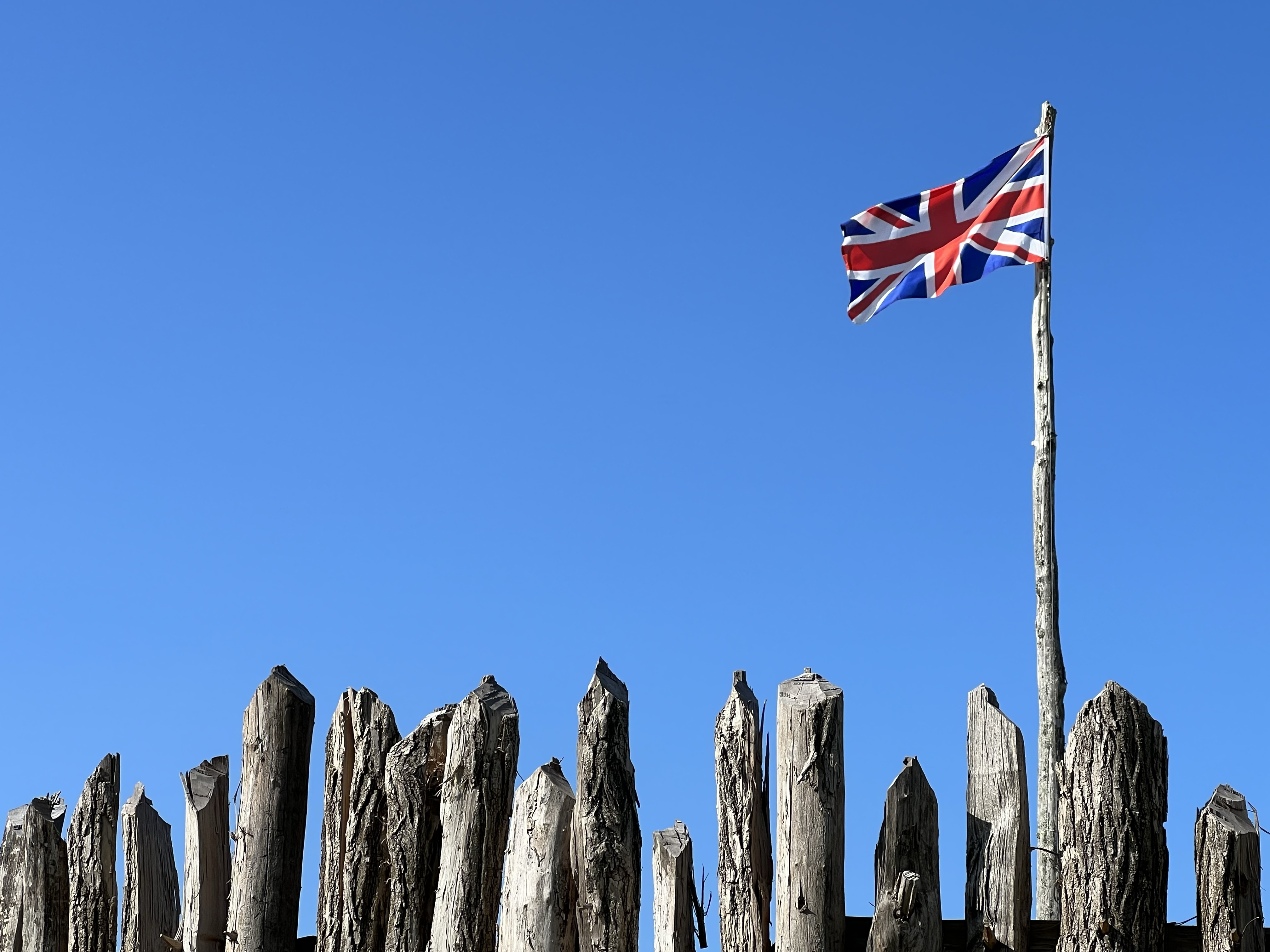
The Union Jack proudly waves over the fort at Jamestown.

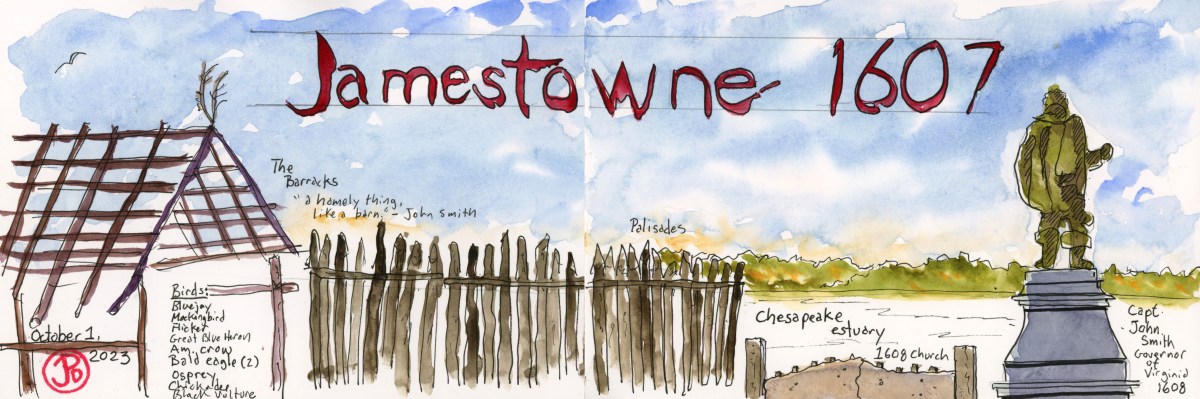
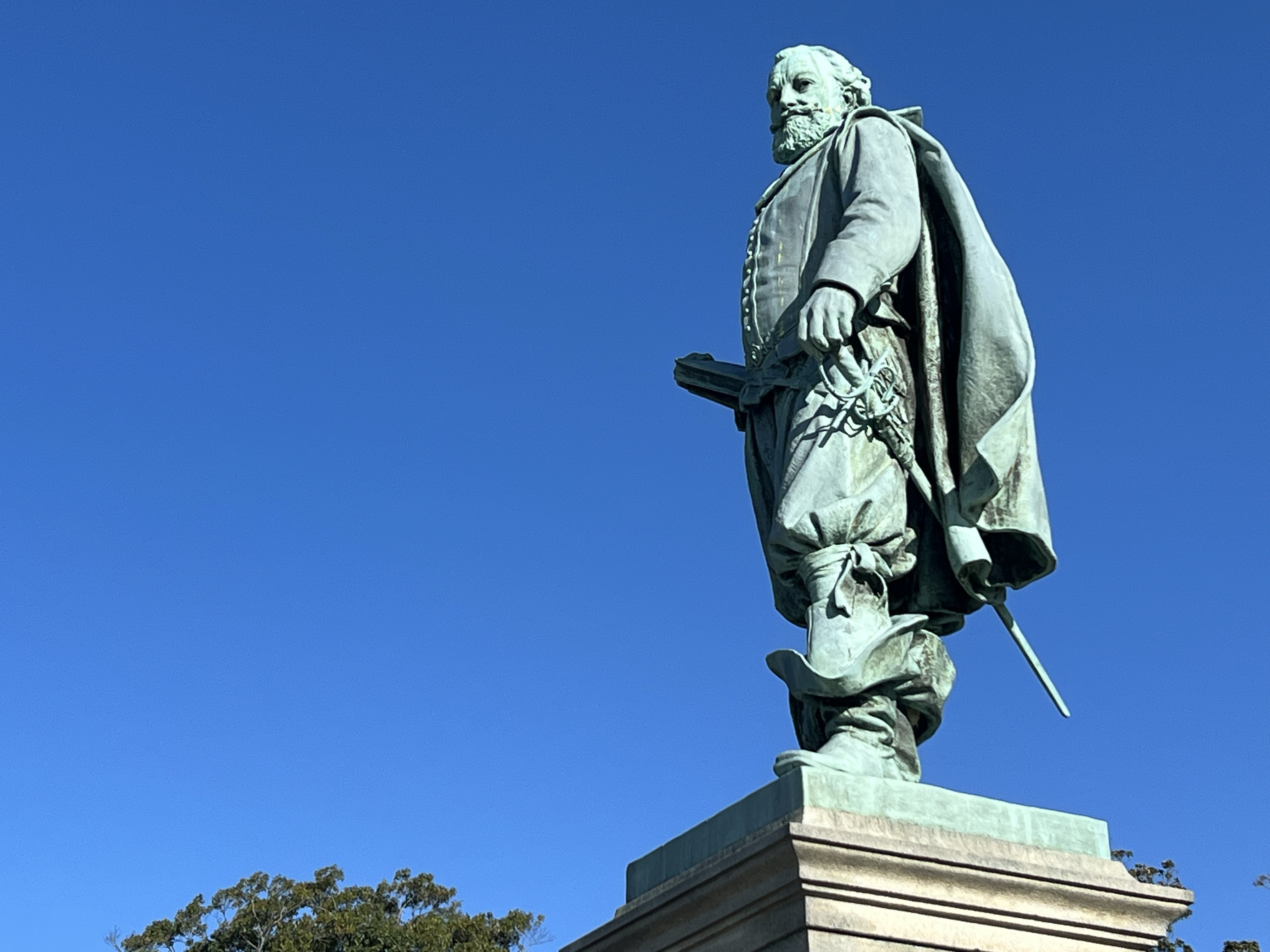
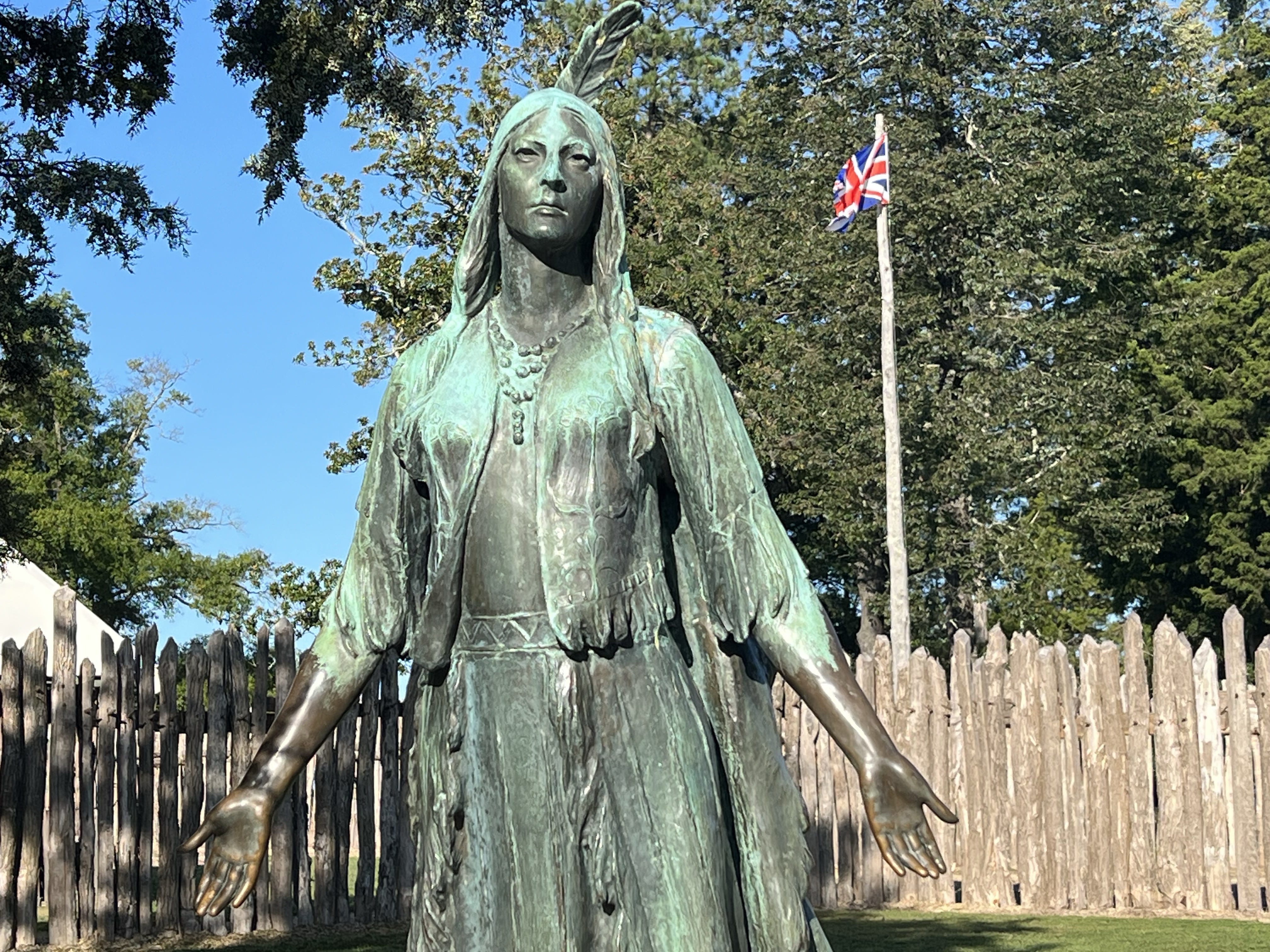
Jamestown is now more of an archeological site than a surviving settlement. There is not much that survived from 1607. There are statues, of Captain John Smith and Pocahontas (not together but separate statues), a monument that looks like a smaller version of the Washington Monument, and some reconstructed structures.

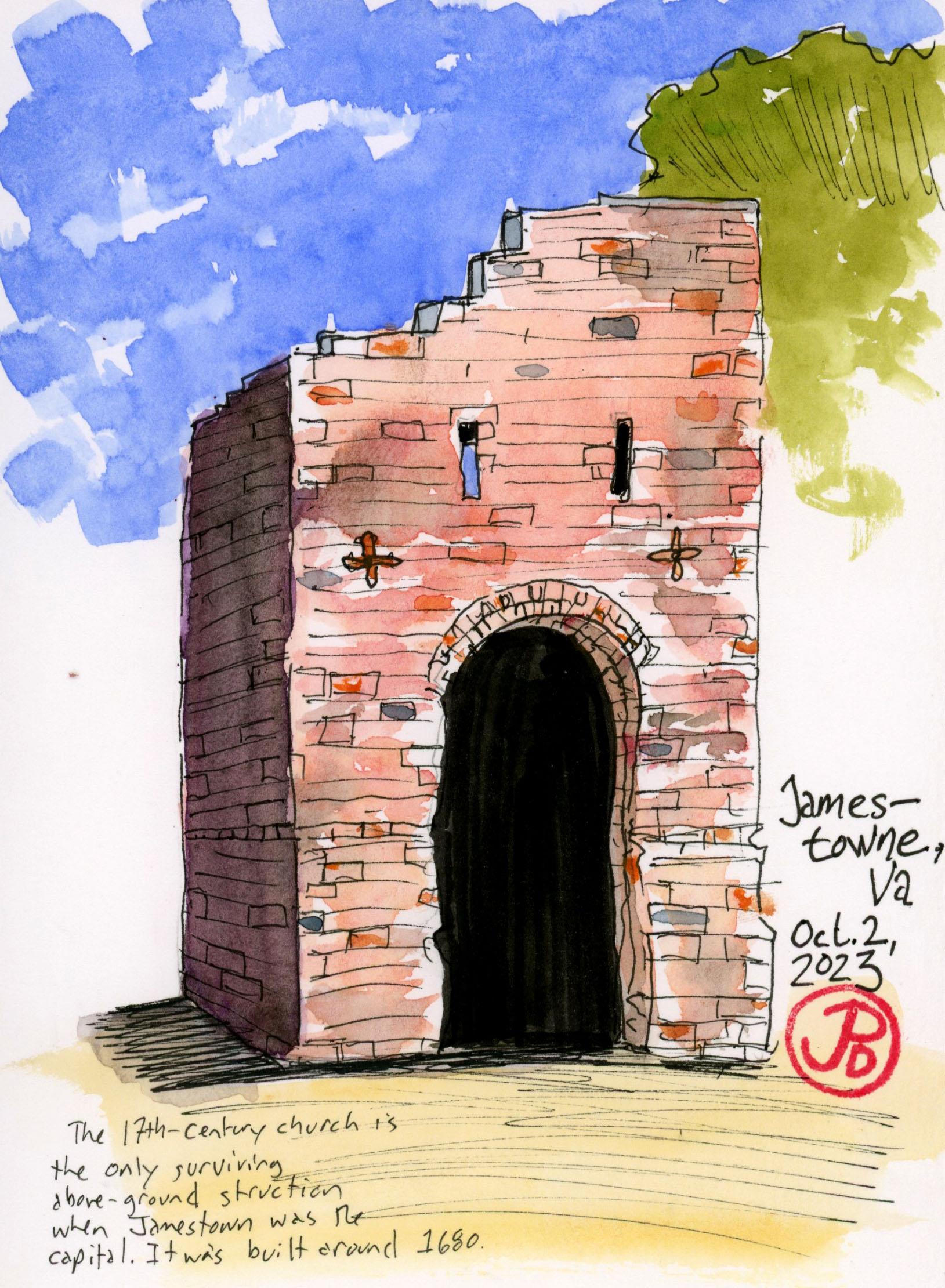
There is one structure that survives to this day of the period when Jamestown was the Capital of Virginia. It is the brick church tower. It was built around 1680 and it the most famous structure of Jamestown. So I had to sketch it of course!

The Jamestown Settlement faces the James River and the Chesapeake Estuary. It was also a great place for birds and I kicked myself for not bringing my binoculars but this was more of a historic and train trip rather than being a birding odyssey. A lone bald eagle climbed above the river and then sailed off to the north.

The Captain John Smith statue looking out to the James River.
The beloved (but also hated) and much photographed statue of Pocahontas. Her story represents the good, the bad, and the ugly of the interactions of the native peoples and the English colonists.
Image

Post No. 611: Norfolk and Western J Class No. 611
On my one week fall break I knew I was going to travel nationally. So I chose Virginia. (It’s for lovers, don’t you know?)

High on my list was to see the streamlined Northern 4-8-4, Norfolk and Western No. 611 at the Virginia Museum of Transportation in Roanoke.

This is one of the most iconic American passenger locomotives ever made and is still active in excursion service. She was built in 1950, very late in the steam age, as diesel-electric locomotives where ending the age of steam across the country.

611 is one of the most technically advanced steam locomotives ever built. One disadvantage of stream was the large amount of hours needed to maintain and operate these locomotives.

To counter this, Norfolk and Western built their new streamlined locomotives, the Class J, at their Roanoke Shops. The locomotive was built with a self lubricating system that automatically lubricate over 200 bearings, including the bell mechanism. This meant the Class J could run for 15,000 miles before maintenance was needed. The 14 Class J locomotives could be serviced in about an hour and then be back out on the mainline.

It was such an engineering marvel of it’s time that is was designated a National Historic Mechanical Engineering Landmark by the American Society of Mechanical Engineers. Out of the 300 landmarks there are just seven steam locomotives that are honored with this designation and 611 shares this honor with Southern Pacific’s Cab-forward No. 4294 and Union Pacific’s Big Boy No. 4023, among four others.

I scoured the Virginia Museum of Transportation’s website for more information about 611. She is clearly the star of the show at the museum where she is called “one of the most iconic and beloved trains in American history”. Wow, that is some praise! Then I read the next line: “Inquire BEFORE visiting, locomotive travels”. Travels? Where could 611 travel in October? Where can you possibly hide an almost 400 ton locomotive that responds to the name “The Black Bullet”?!

I think the first time I saw an image of a J-Class was in a Brian Hollingsworth book. In this case: The Illustrated Encyclopedia of the World’s Steam Passenger Locomotives.

It turns out that 611 would not be on static display at the museum. Would I be making this cross-country trip without seeing one of the most iconic 4-8-4s in existence? (Southern Pacific 4449 and Union Pacific 844 would be the other two.)

Nope! It turns out that 611 would be 80 miles to the north in Goshen, Va. The streamlined J-Class would not be on static display but under steam and on point of the Shenandoah Valley Limited! And I got myself a ticket!

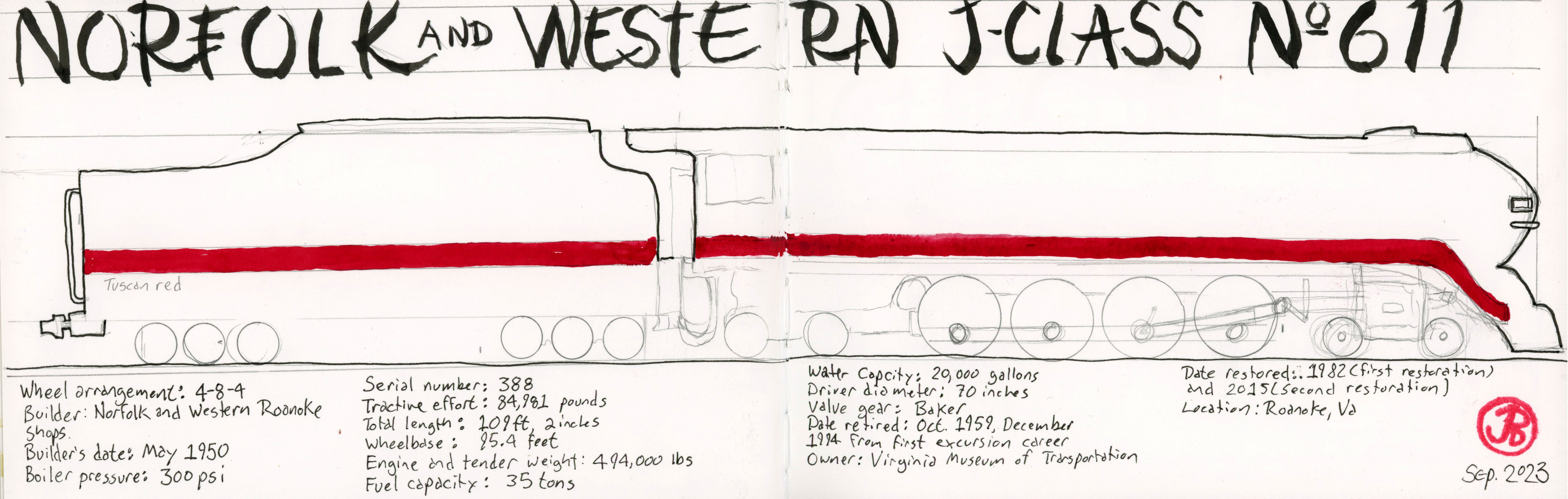
Before I headed east to take in this Queen of Steam, I did three illustrations of 611. One was my version of a stylized promotional period sketch (featured sketch), a realistic head on view (above), and a drawing design of the profile of 611 and tender with specs (below).