Image

The Chase is On!

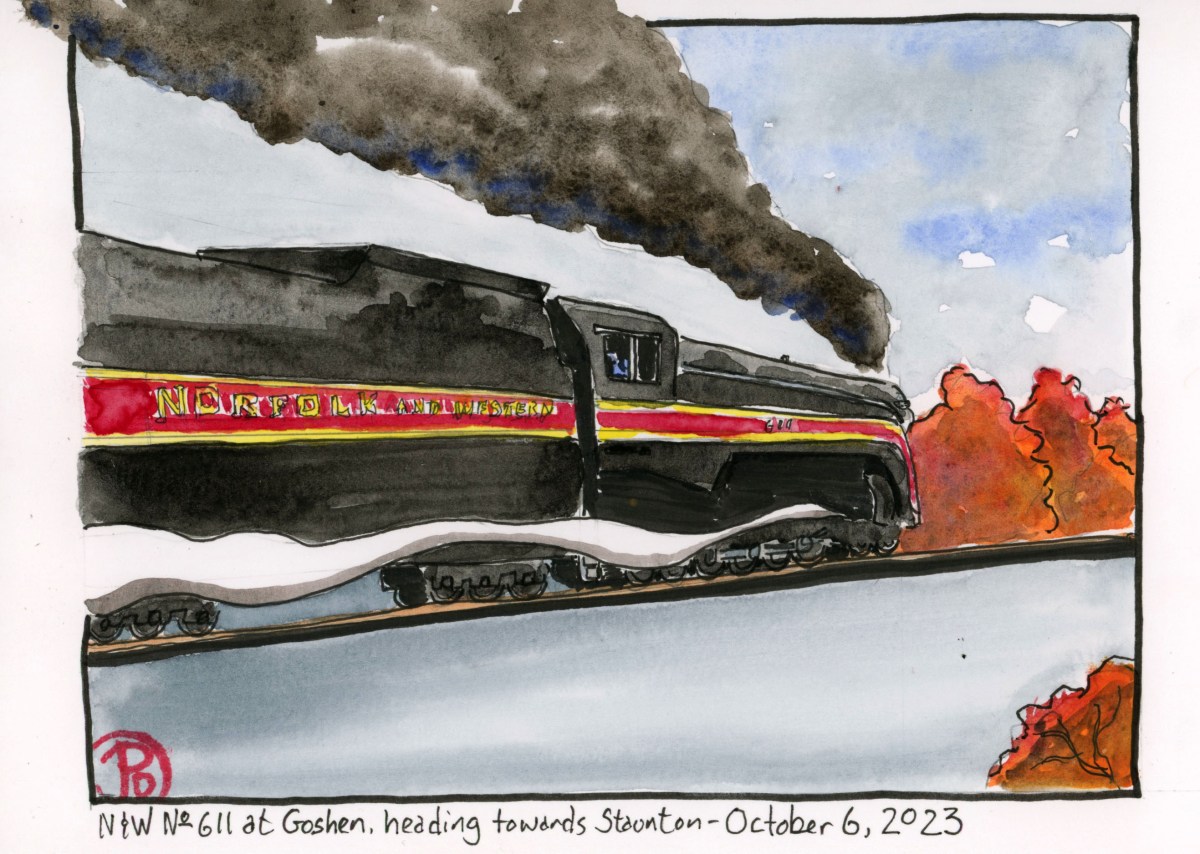
Now it was my turn to be a foamer in a car. I planned to chase 611 from Goshen to Staunton on her afternoon run.

611 being mobbed by fans at Goshen before the afternoon run to Staunton.

I headed into “downtown” Goshen and parked near the railroad. There were already a few chasers getting ready. One was looking over a map and was conversing with another foamer on which grades you could get the best “stack-talk”. He was a serious foamer who had done his research and was willing to share it with the like-minded.

After a wait of about 45 minutes, 611 sounded it’s whistle and the Shenandoah Valley Limited was on it’s way. She had to back her consist onto a siding before headed onto the mainline. Now 611 was facing Staunton and the engineer pushed the Johnson bar forward, released the breaks, and pulled back on the throttle. No. 611 burst in steaming-hissing life!

Down the tracks the sounds of the stack-talk (or the chuff-chuff-chuff of the exhaust) was amazing. 611 blew the crossing and passed the old Goshen Depot and steamed off to Staunton.

Let the foam-fest begin!
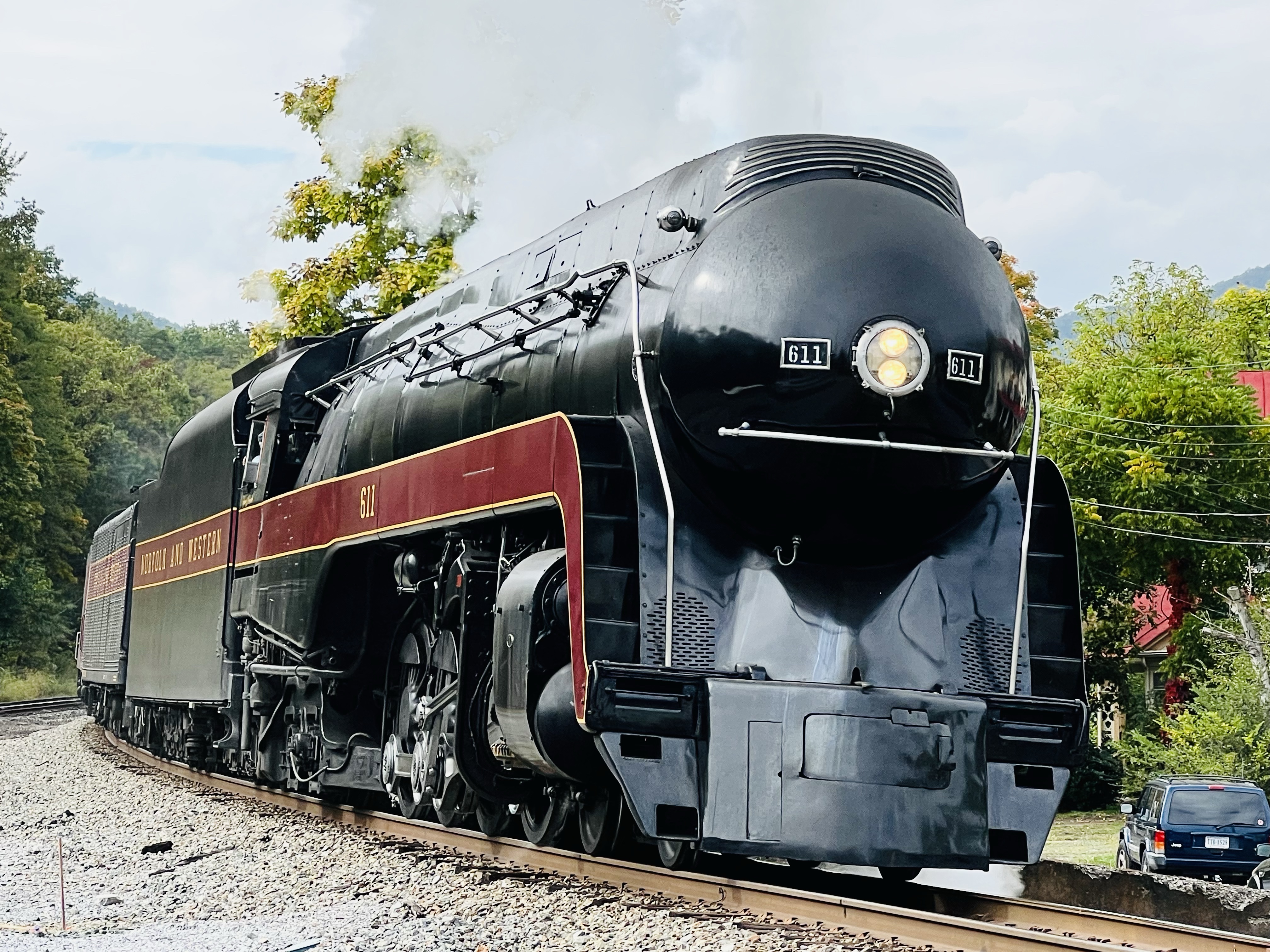
611 heading toward approaching the grade crossing at Goshen.
Now this is “stack-talk” as 611 approaches the grade crossing at Goshen. You also hear her powerful whistle.

I then joined the line of foamers in cars on Highway 42, which parallels the line. This has created a traffic jam on the two lane road because the pacers wanted to take pacing shots of 611. I and most others on the road, wanted to drive ahead and get shots of 611 on a run by.
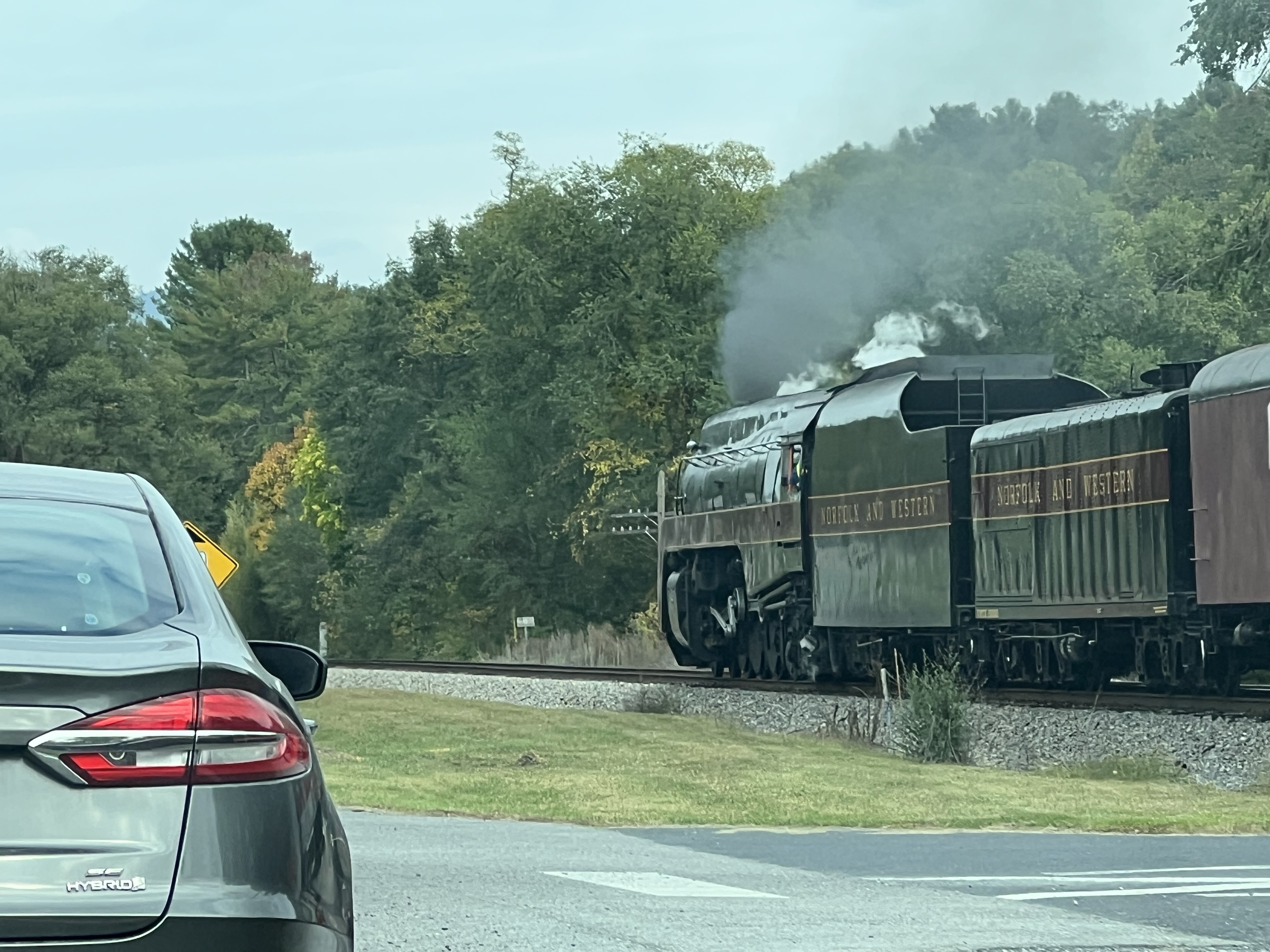
611 and dreaded line of pacers in front of me!!

After some of the pacers pealed off, I was able to get ahead of the madding crowd and pulled off to get a run by shot of 611.

611 at a grade crossing.

From here, I made a b-line to Staunton because I wanted to get a shot on the walkway above the tracks as 611 pulled into Staunton Station.
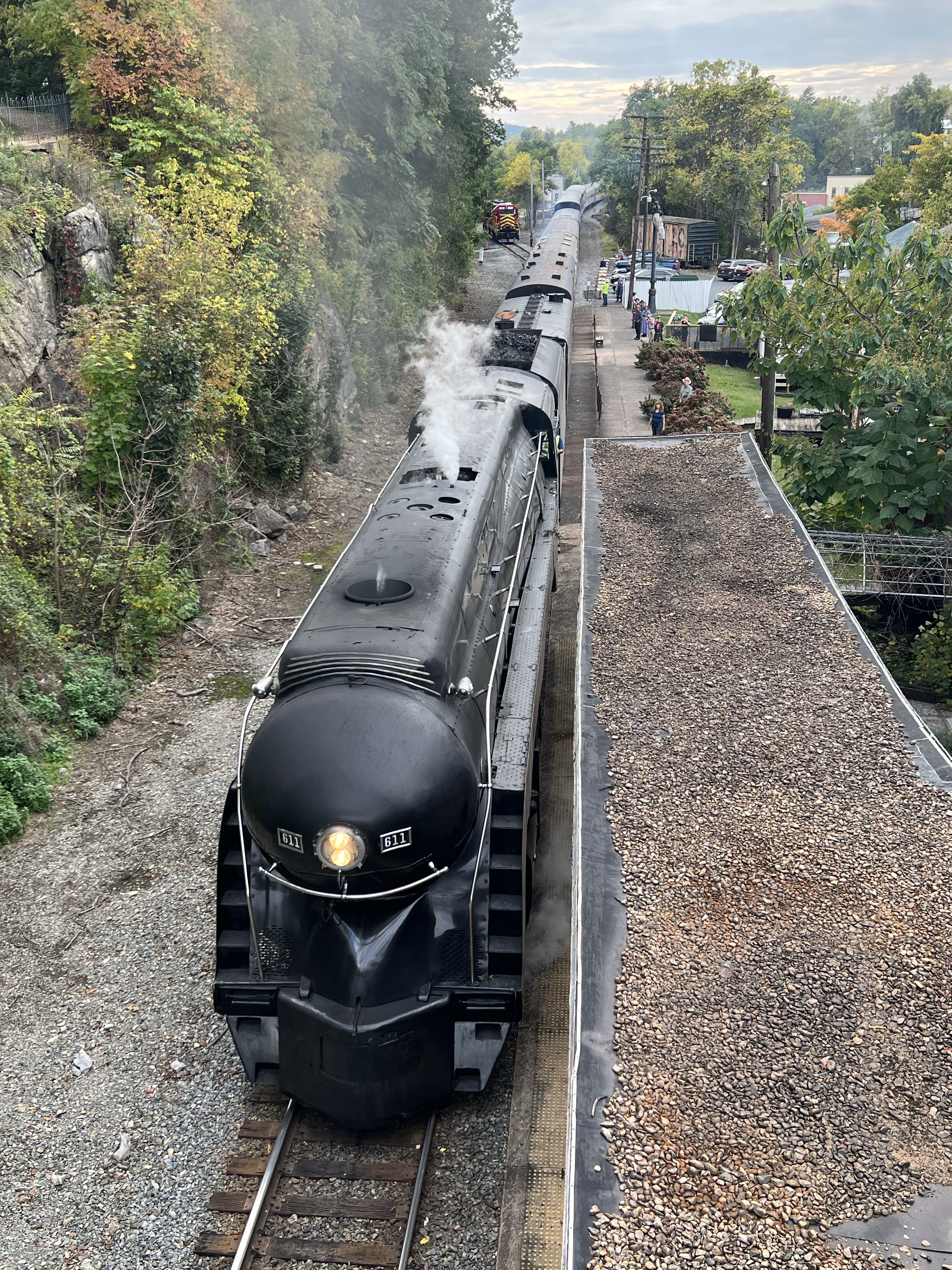
611 pulling into Staunton Station. 611 is streamlined even from above. Off to the left are the two diesels that will pull 611 and her consist back to Goshen.
Image

The Virginia Museum of Transportation, Roanoke

A Roanoke location on my sketch list is the Virginia Museum of Transportation.

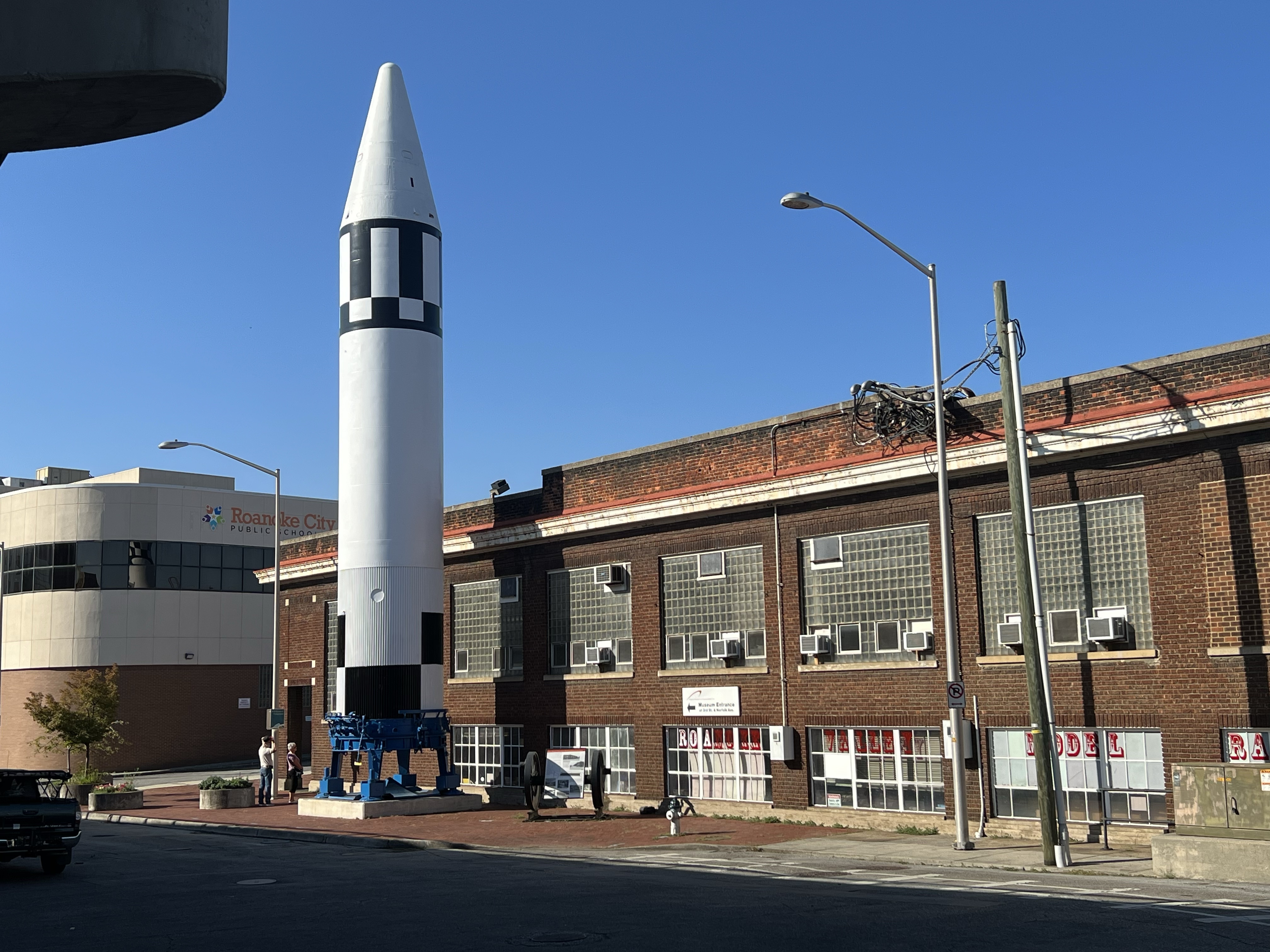
The museum is housed in the old Norfolk and Western Freight Depot and parallels the current high iron of Norfolk Southern.

The city of Roanoke was the epicenter of the Norfolk and Western Railroad where the business offices where located downtown and the eastern shops produced some of the most advanced steam locomotives ever built. While the N & W was a small railroad, compared to giants like Southern and Union Pacific, at it’s height the railroad operated 7,803 miles of rail. The railroad merged with Southern Railroad in 1990 creating a new railroad, Norfolk Southern.

The Virginia Museum of Transportation, housed in the former Norfolk and Western freight depot. The rocket to the left is not for human transportation, it is a Jupiter Missile.

While the museum has a large collection of automobiles, I was here for the locomotives and rolling stock.

And because they were on static display, meaning they weren’t moving anytime soon, they were ideal sketching subjects.

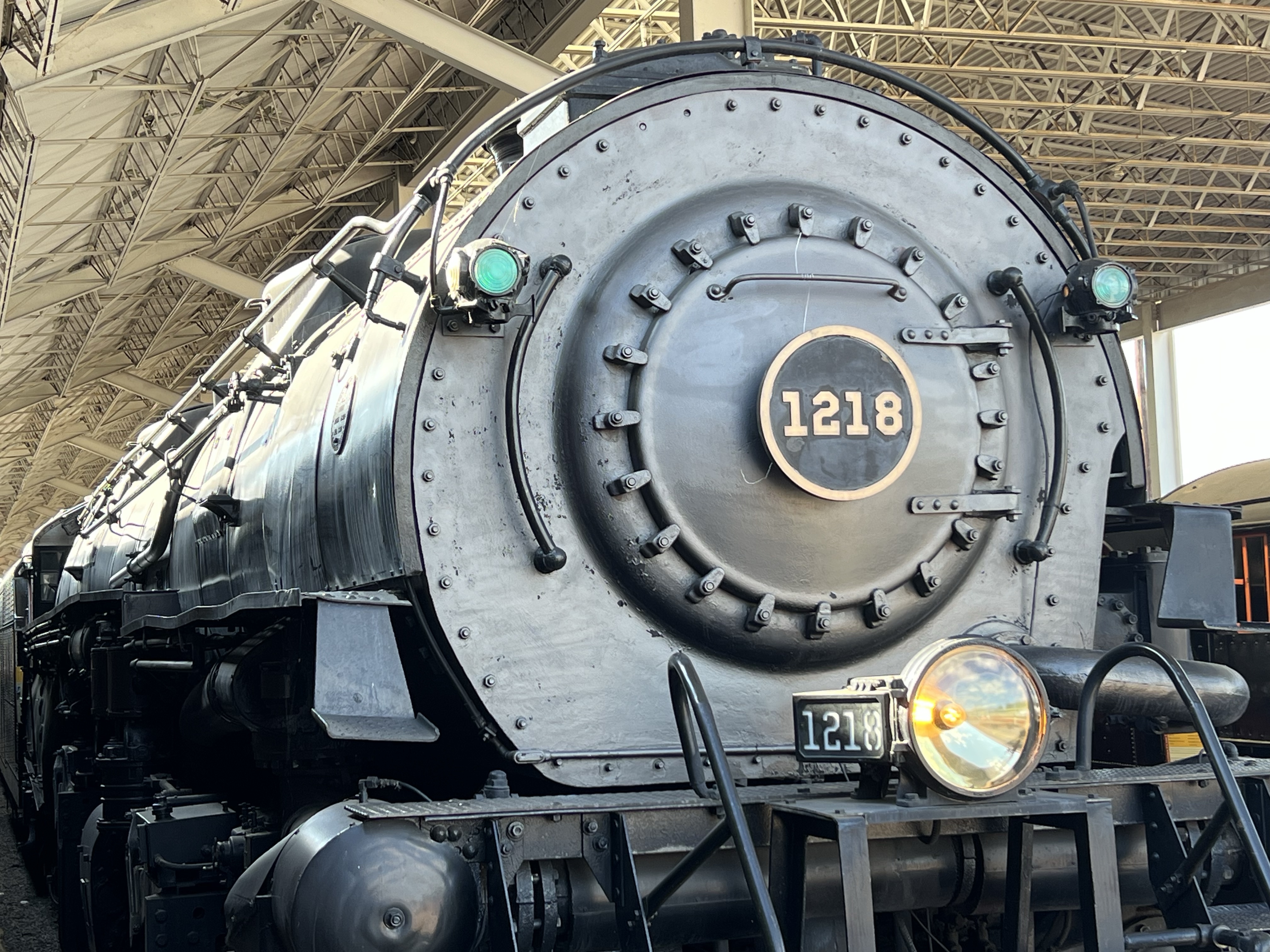
The impressive 2-6-6-4 Class A No. 1218. For a time, this was the most powerful excursion steam locomotive in the world. Big Boy No. 4014 put 1218 firmly in second. 1218 is now retired from active service.

The Norfolk and Western Railroad has three iconic classes of steam locomotives: Class A, J, and Y. All three were built by the railroad at their Roanoke Shops, just east of the museum. All three are now owned by the museum. The Y6 Class No. 2156 is on loan to the National Museum of Transportation in St. Louis, Missouri.

The Norfolk and Western Roanoke Shops still stands, long after the railroad disappeared in a merger with Southern Railroad in 1990.
The 70 inch drivers of 1218.

The Class J No. 611 was not at the museum but was off two hours north on excursion service. (More about 611 in future posts).

It’s not all about trains at the VMT. Here is a vintage Tucker Sno-Cat.
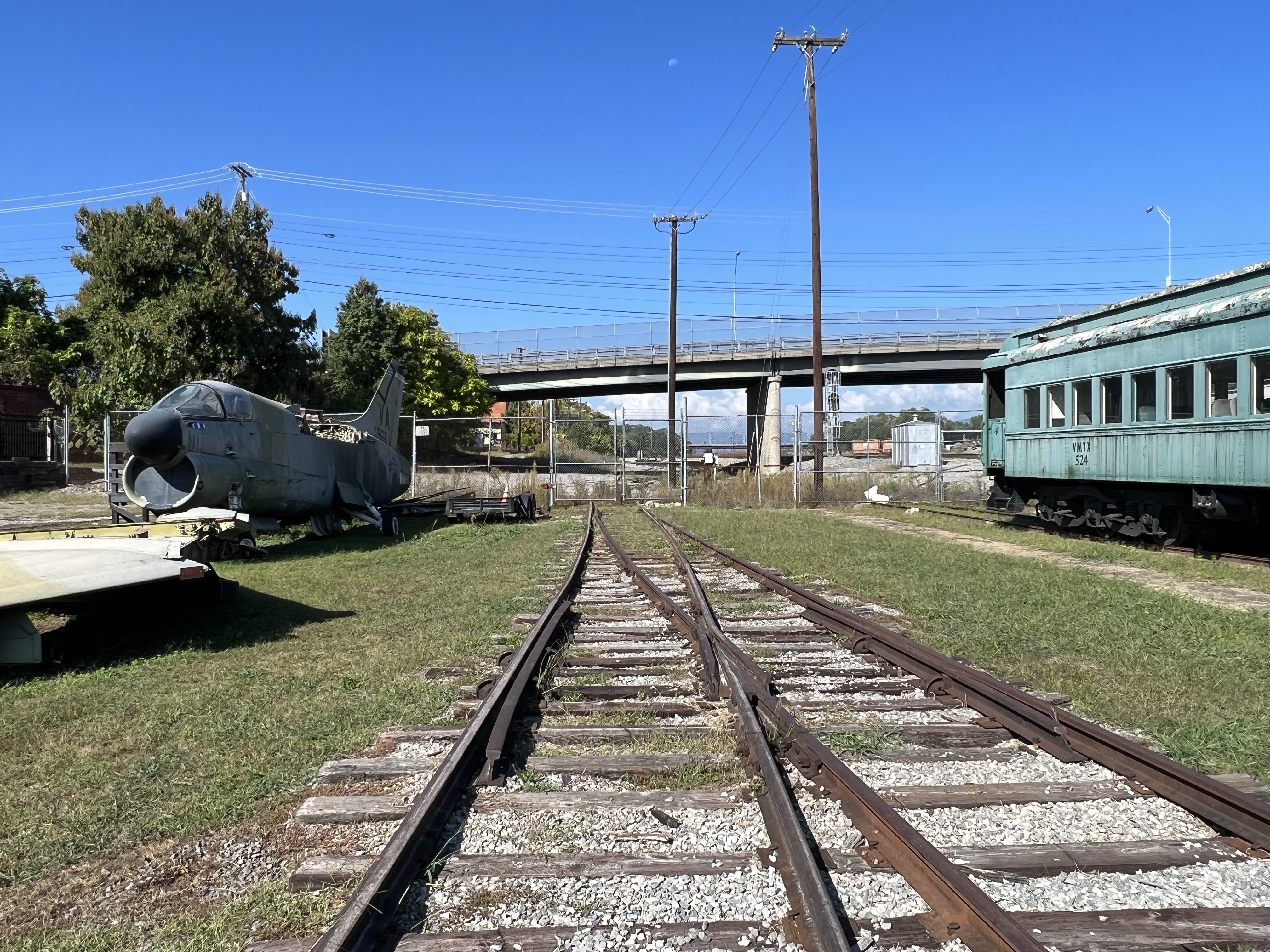
The spur leading east out to the Norfolk Southern mainline. This is track that No. 611 uses to head out for excursions.

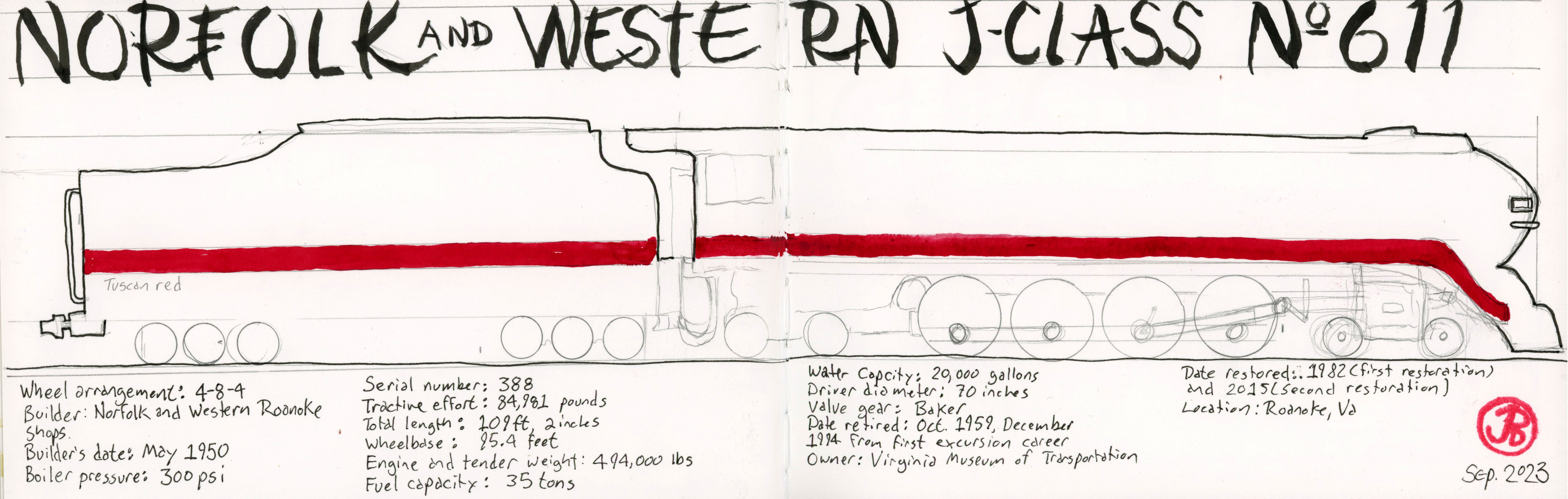
A big draw for visitors to the VMT is Norfolk and Western Class J steam locomotive No. 611. But she was not here, hence the void in my spread (featured sketch). There was some wall space devoted to the museum’s most famous occupant. On the wall was a plaque, very similar to a plaque I had seen the week before at the California State Railroad Museum in Sacramento.

The plaque designated No. 611 as a National Historic Mechanical Engineering Landmark. 611 attained this designation in 1984, noting, “The last survivor of US coal-fired passenger locomotives, considered among the most advanced of any 4-8-4.”

Image

Post No. 611: Norfolk and Western J Class No. 611

On my one week fall break I knew I was going to travel nationally. So I chose Virginia. (It’s for lovers, don’t you know?)

High on my list was to see the streamlined Northern 4-8-4, Norfolk and Western No. 611 at the Virginia Museum of Transportation in Roanoke.

This is one of the most iconic American passenger locomotives ever made and is still active in excursion service. She was built in 1950, very late in the steam age, as diesel-electric locomotives where ending the age of steam across the country.

611 is one of the most technically advanced steam locomotives ever built. One disadvantage of stream was the large amount of hours needed to maintain and operate these locomotives.

To counter this, Norfolk and Western built their new streamlined locomotives, the Class J, at their Roanoke Shops. The locomotive was built with a self lubricating system that automatically lubricate over 200 bearings, including the bell mechanism. This meant the Class J could run for 15,000 miles before maintenance was needed. The 14 Class J locomotives could be serviced in about an hour and then be back out on the mainline.

It was such an engineering marvel of it’s time that is was designated a National Historic Mechanical Engineering Landmark by the American Society of Mechanical Engineers. Out of the 300 landmarks there are just seven steam locomotives that are honored with this designation and 611 shares this honor with Southern Pacific’s Cab-forward No. 4294 and Union Pacific’s Big Boy No. 4023, among four others.

I scoured the Virginia Museum of Transportation’s website for more information about 611. She is clearly the star of the show at the museum where she is called “one of the most iconic and beloved trains in American history”. Wow, that is some praise! Then I read the next line: “Inquire BEFORE visiting, locomotive travels”. Travels? Where could 611 travel in October? Where can you possibly hide an almost 400 ton locomotive that responds to the name “The Black Bullet”?!

I think the first time I saw an image of a J-Class was in a Brian Hollingsworth book. In this case: The Illustrated Encyclopedia of the World’s Steam Passenger Locomotives.

It turns out that 611 would not be on static display at the museum. Would I be making this cross-country trip without seeing one of the most iconic 4-8-4s in existence? (Southern Pacific 4449 and Union Pacific 844 would be the other two.)

Nope! It turns out that 611 would be 80 miles to the north in Goshen, Va. The streamlined J-Class would not be on static display but under steam and on point of the Shenandoah Valley Limited! And I got myself a ticket!

Before I headed east to take in this Queen of Steam, I did three illustrations of 611. One was my version of a stylized promotional period sketch (featured sketch), a realistic head on view (above), and a drawing design of the profile of 611 and tender with specs (below).