“I became quietly seized with that nostalgia that overcomes you when you have reached the middle of your life and your father has recently died and it dawns on you that when he went he took some of you with him.”
― The Lost Continent: Travels in Small Town America
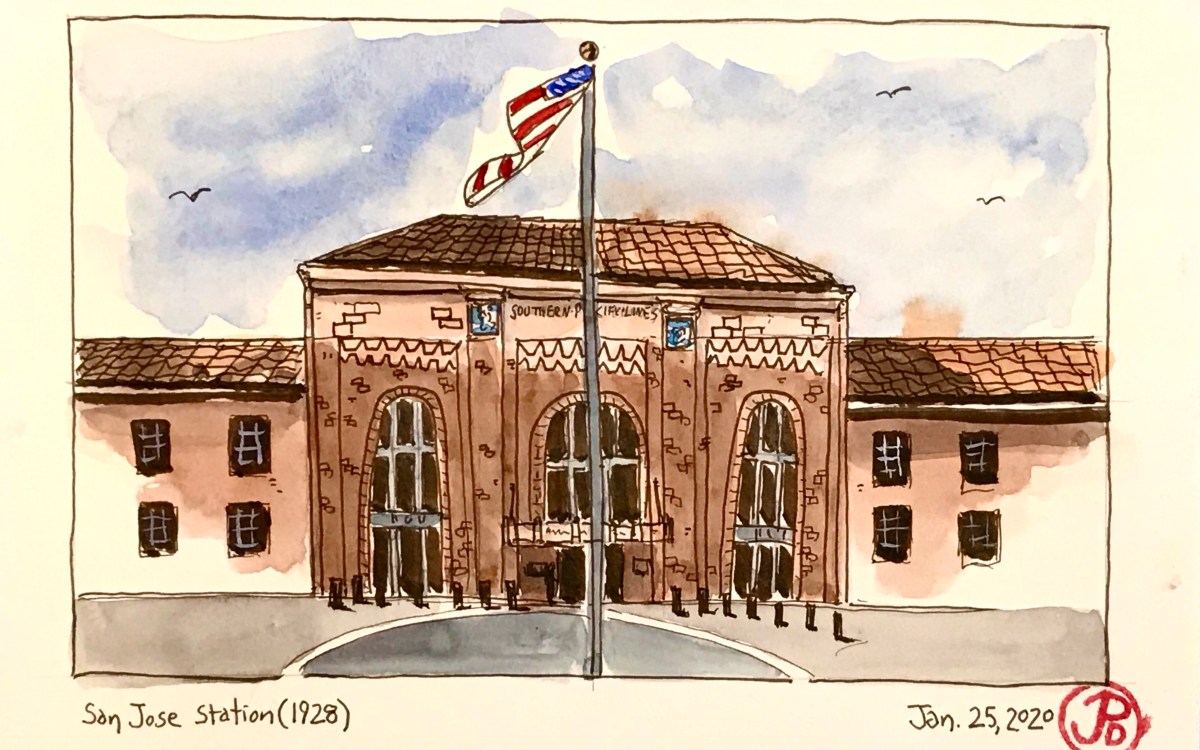
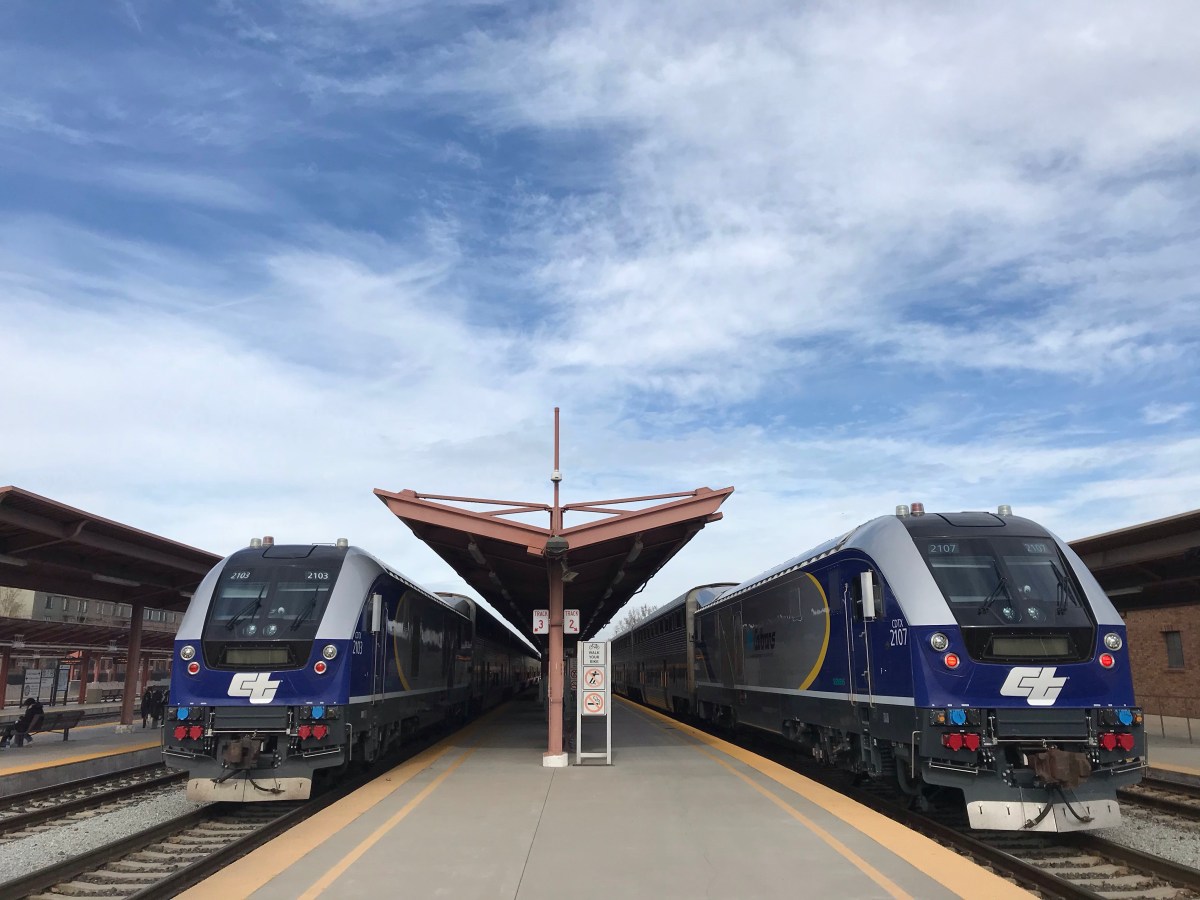
My last historic station sketch was a short train ride down the line from oldest station on route in Santa Clara. This was the end of the line for most southbound Caltrains, San Jose’s Diridon Station.
This is a station that was built to impress, a station to represent a major city and not a town. Much like San Francisco’s old passenger station at 3rd and Townsend Streets.
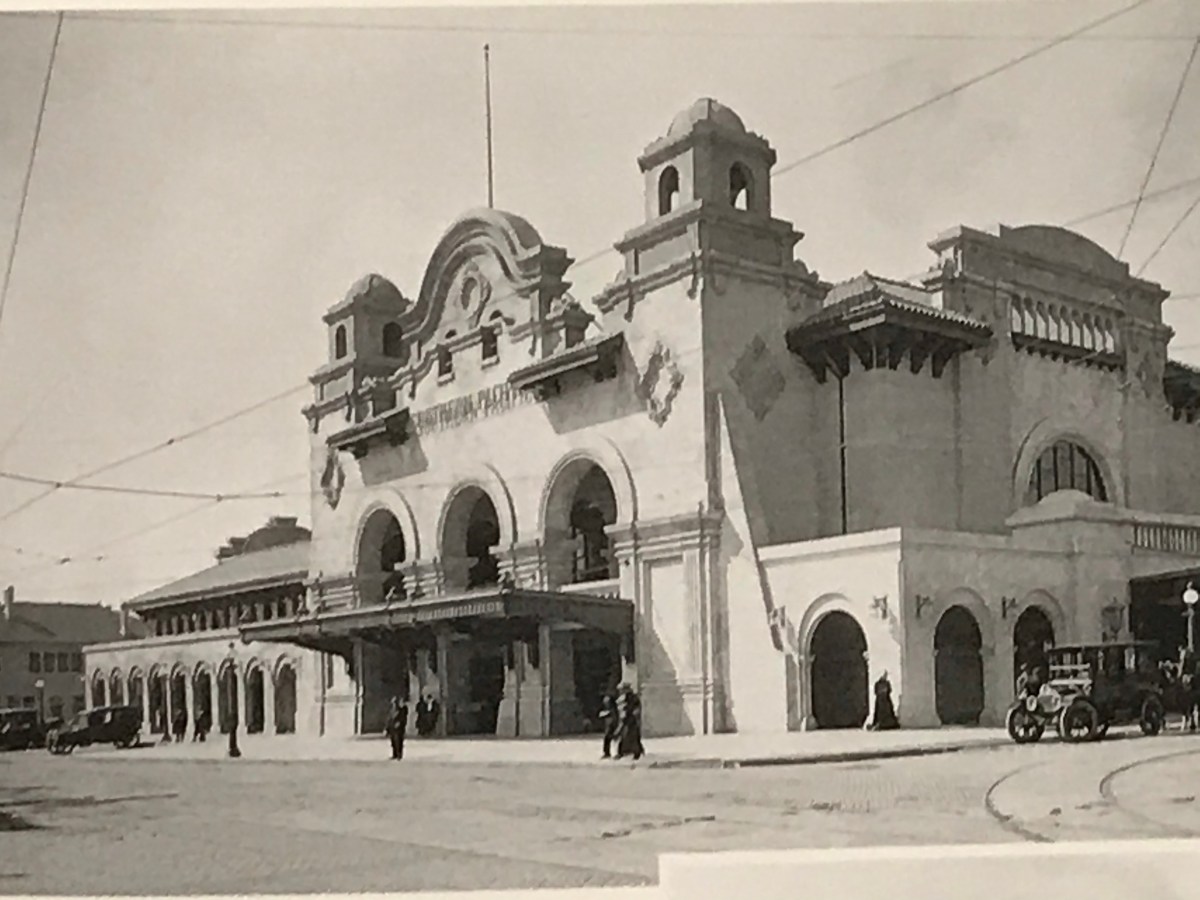
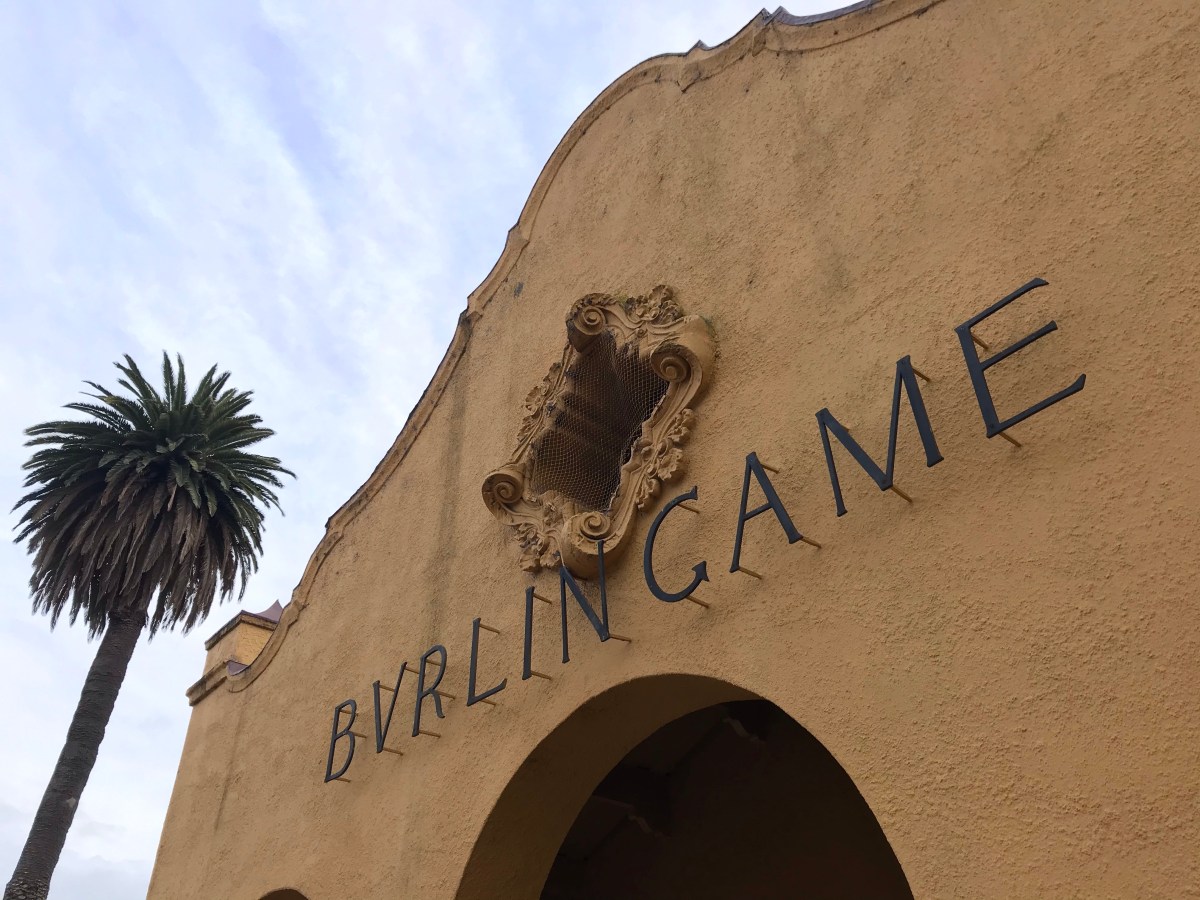
San Francisco’s main train station was built in a Mission Revival style like Burlingame Station. It was opened in time for the Panama-Pacific International Exposition in 1915. This grand station stood until July 1975. It was torn down because, according to Southern Pacific, it had “outlived its usefulness”.
San Jose’s Station, by contrast, still survives and is in use. The station was designed by SP architect John Christine in an Italian Renaissance Revival style. It cost $100,000 to build and was opened on December 30, 1935.
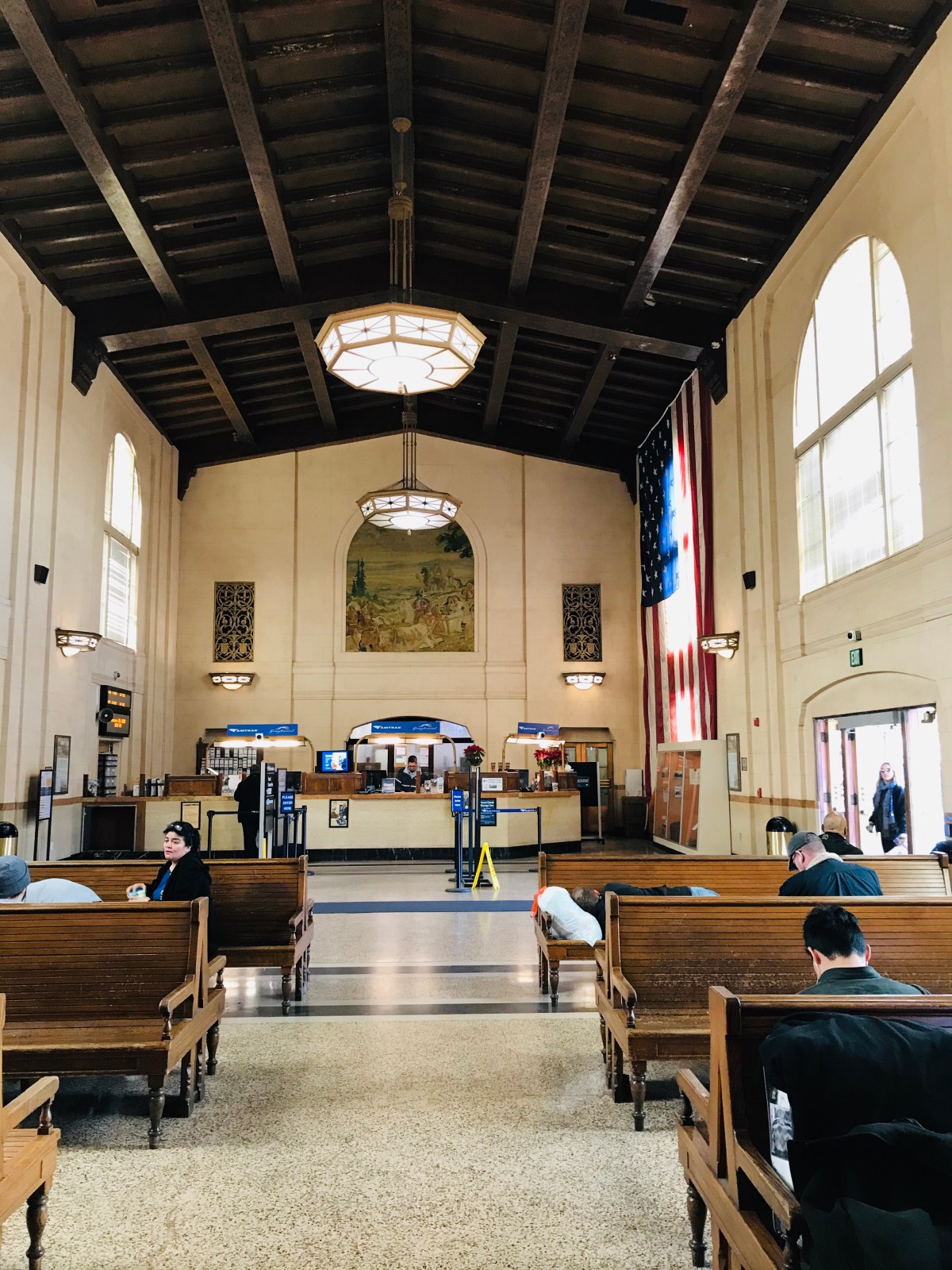
The interior is grand, featuring a high ceiling with large roof beams and hanging chandeliers. At the northern end of the depot is a mural by John MacQuarrie, at the south end is a clock.
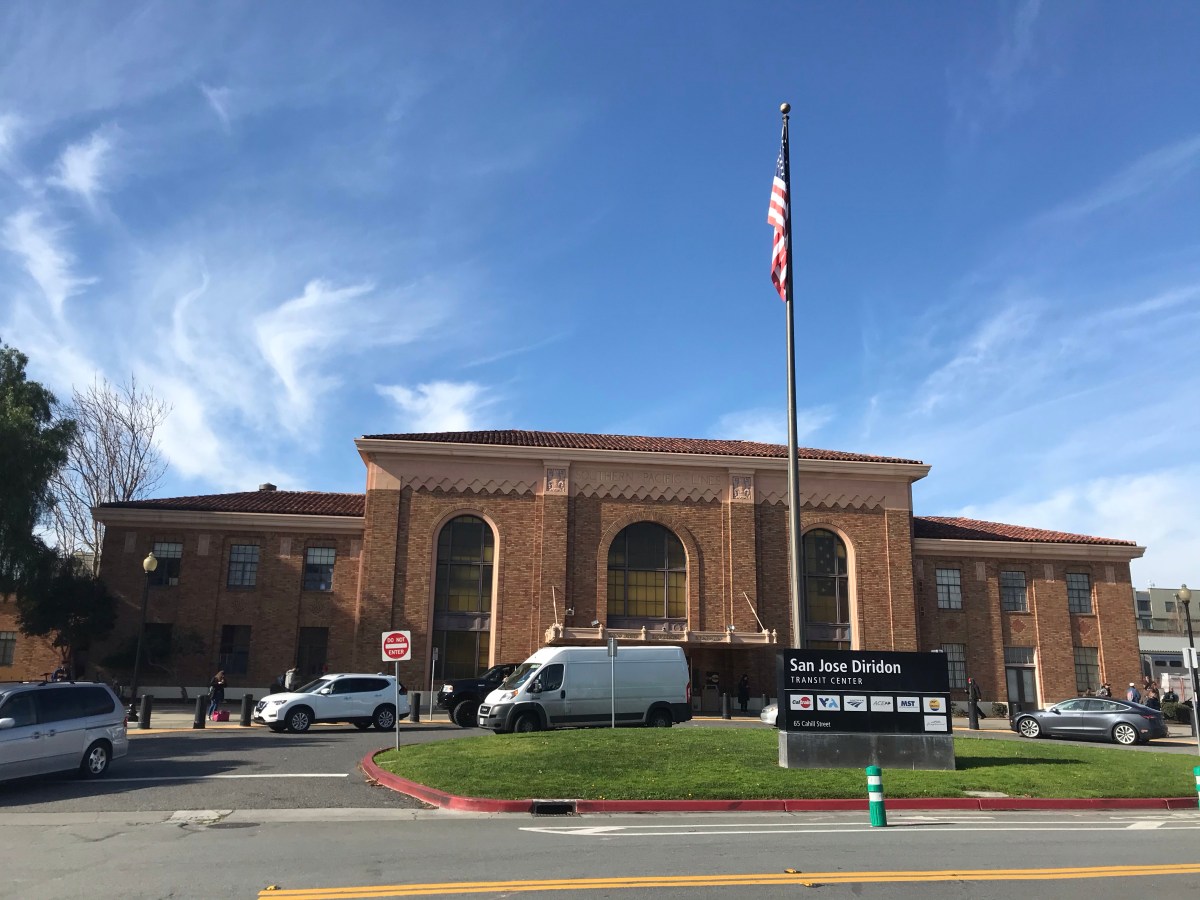
This has always been a busy place. Many routes pass through this station. I remember boarding the Coast Starlight here for a trip to visit a friend in Eugene, Oregon. In its heyday the following routes stopped at this station: the Lark, Coaster, Daylight, Del Monte, and Sunset Limited. Today the station serves Caltrain, Altamont Commuter Express, Capital Corridor, and the Coast Starlight.
I set up my sketching stool on the lawn across the street from the station and started to sketch San Jose’s imposing station. In the background a woman loudly gave a sermon to an audience of none while she waited for a bus.
Coda
The last railway journey of this project was bittersweet for me.
The train ride was through the southern part of the line and through the memories of my youth. There were bits of my youth still standing but much of it altered or gone completely.
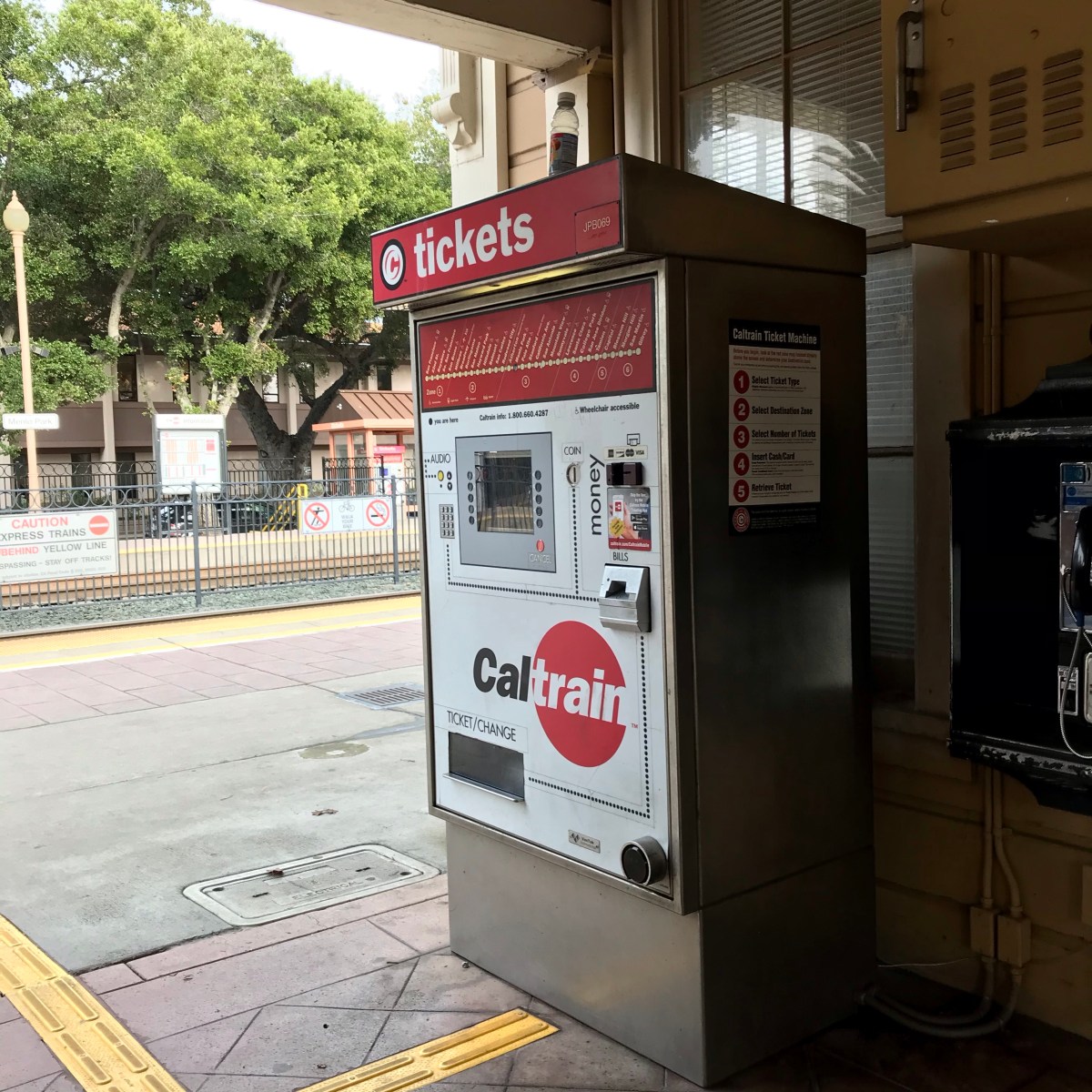
The Sunnyvale train station, where I would come to watch commuter trains with my father, was gone now, along with my father. In its place there was a parking structure with a shelter covering a few benches and a ticket machine.
An August 1977 still frame from one of my dad’s Super 8 reels showing a shirtless me watching a commuter train pull into Sunnyvale Station. My brother looks on from further back. I was six years old.
On the east side of the tracks, just out of the Sunnyvale station, was the former Westinghouse Plant (now Northrop Grumman). This is where my father worked for most of his adult life.
Beyond Sunnyvale, the line was surrounded by tech buildings, parking structures, and concreted clutter. The former orchards of the Valley of Heart’s Delight have been paved over years ago. Change is the creed and mantra of Silicon Valley.
The touchstones to the past where to be found along the line in the eight historic passenger train depots I had sketched. They could not be changed or destroyed because they were designated historical landmarks.
On my return journey from San Jose Station I sat on the east side of the train and watched the ever passing progress of the valleys build up. This was a landscape void of familiarity for me. Sunnyvale was much changed with multi-story buildings cluttering and changing its skyline.
We pulled into Mountain View Station, the next stop north of Sunnyvale, and I looked down at the platform at the passengers waiting to board. That’s when I saw an unexpected part of my past, not a place but a person.
It was Rosemary. My neighbor from Cormorant Court, the street in Sunnyvale where I grew up. But she was much more than a neighbor, she is family, so much so that my brother and I call her Aunt Rosemary. Our families still celebrate the holidays together, long after both families have left Cormorant Court.
I realized that the past is not just made up of places or things, but of people. Like Rosemary, who has known me longer than I’ve known myself.
I walked back a few cars to find her and we talked and I showed her some of my sketches and we enjoyed our brief journey together until I disembark at Hillsdale Station.
It seems fitting, that on my quest to find the past, that I found mine at Mountain View Station in the city of my birth. I’ve been finding the past in stone wood, glass, tile, and steel, forgetting the true treasures of the past that are made of flesh and blood.
These are not only the people we know and love throughout our journey here on earth, but also the people that designed, built and use these stations along the railway corridor. After all, these are not just buildings to be looked at but they are meant to be used by the people who fill them with love and life.
Amen
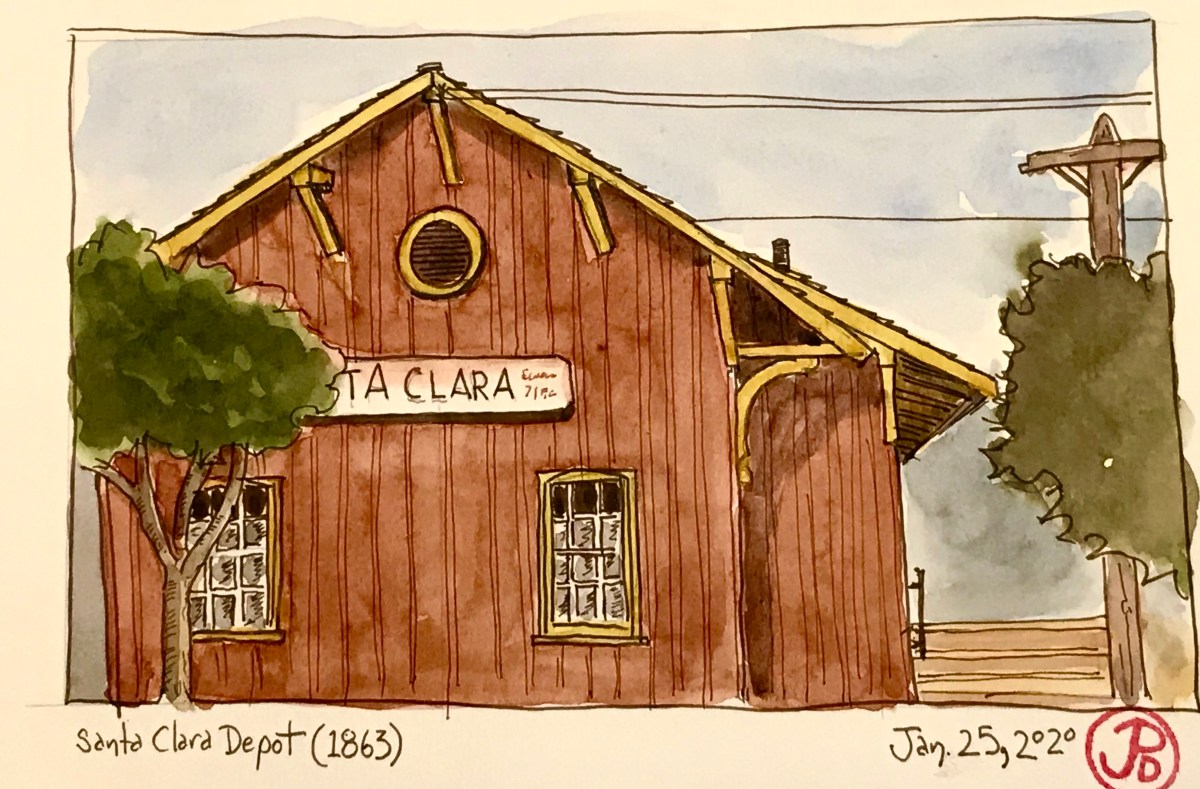
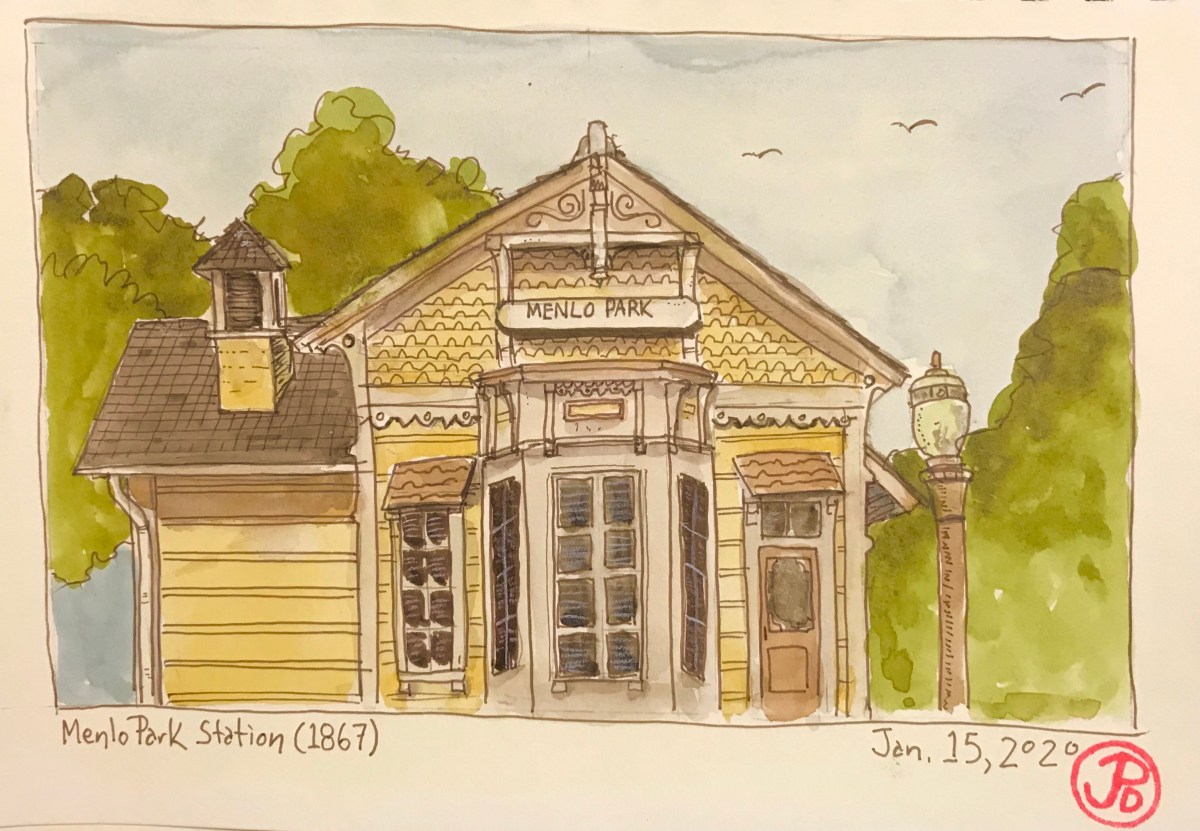
 The passenger depot in January of 2020, looks in great shape compared to other historic depots I have sketched on the line. This is due to the hard work of the volunteer labor of the South Bay Historical Railroad Society.
  One of the few places you can still see Southern Pacific in action, although in HO scale, is at the South Bay Historical Railroad Society. I had a model railroad when I was a kid. My HO gauge railway ran in an oval with a small town in the center. I had a Santa Fe “Super Chief” locomotive but my favorite was a Daylight GS-4 number 4449. The full scale locomotive pulled its passenger consist past Santa Clara Station but did not stop. Passengers wishing to board the Daylight had to go to San Jose.
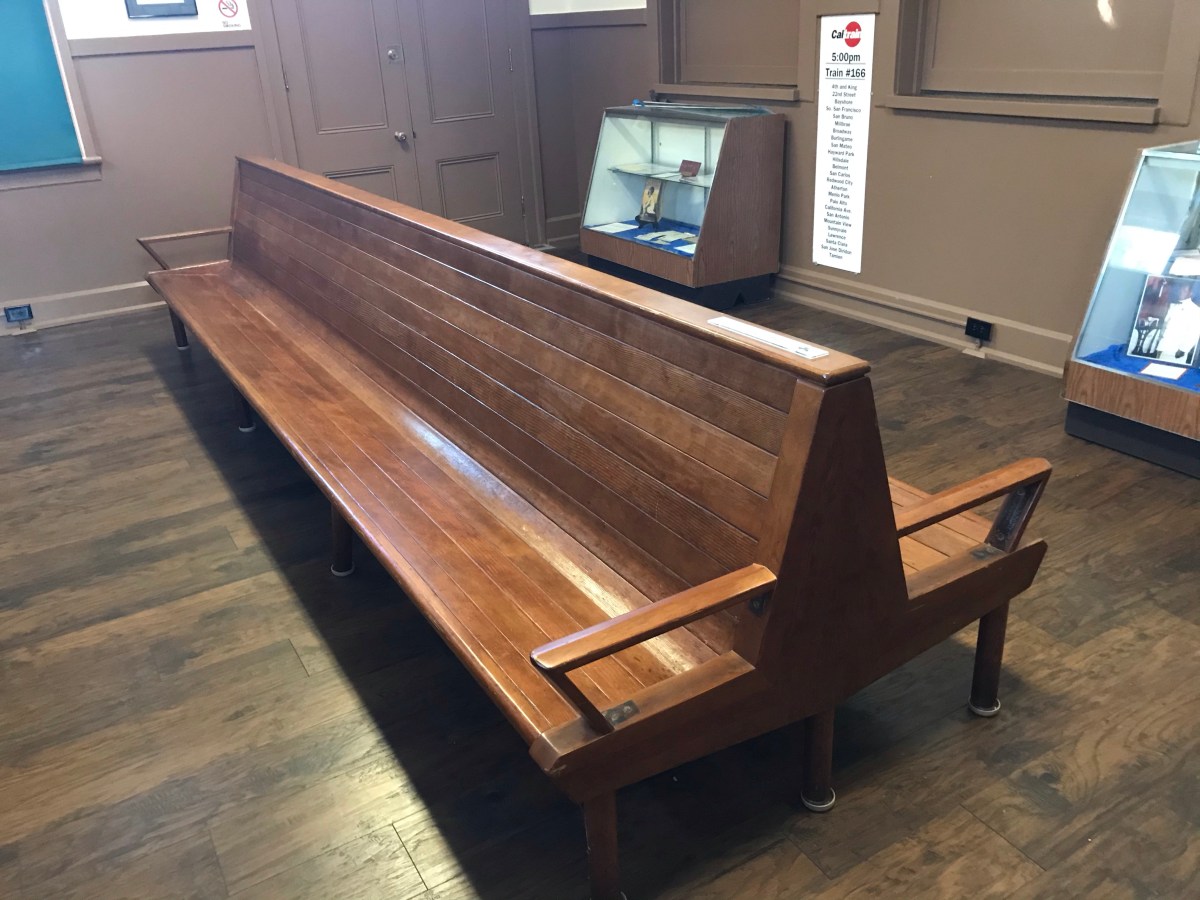 This an original bench in the passenger waiting room of Santa Clara Station.
 This control tower was built in 1926 and was in continuous use until July 17, 1993. The tower was built at the junction of Southern Pacific’s Coast and Western Divisions.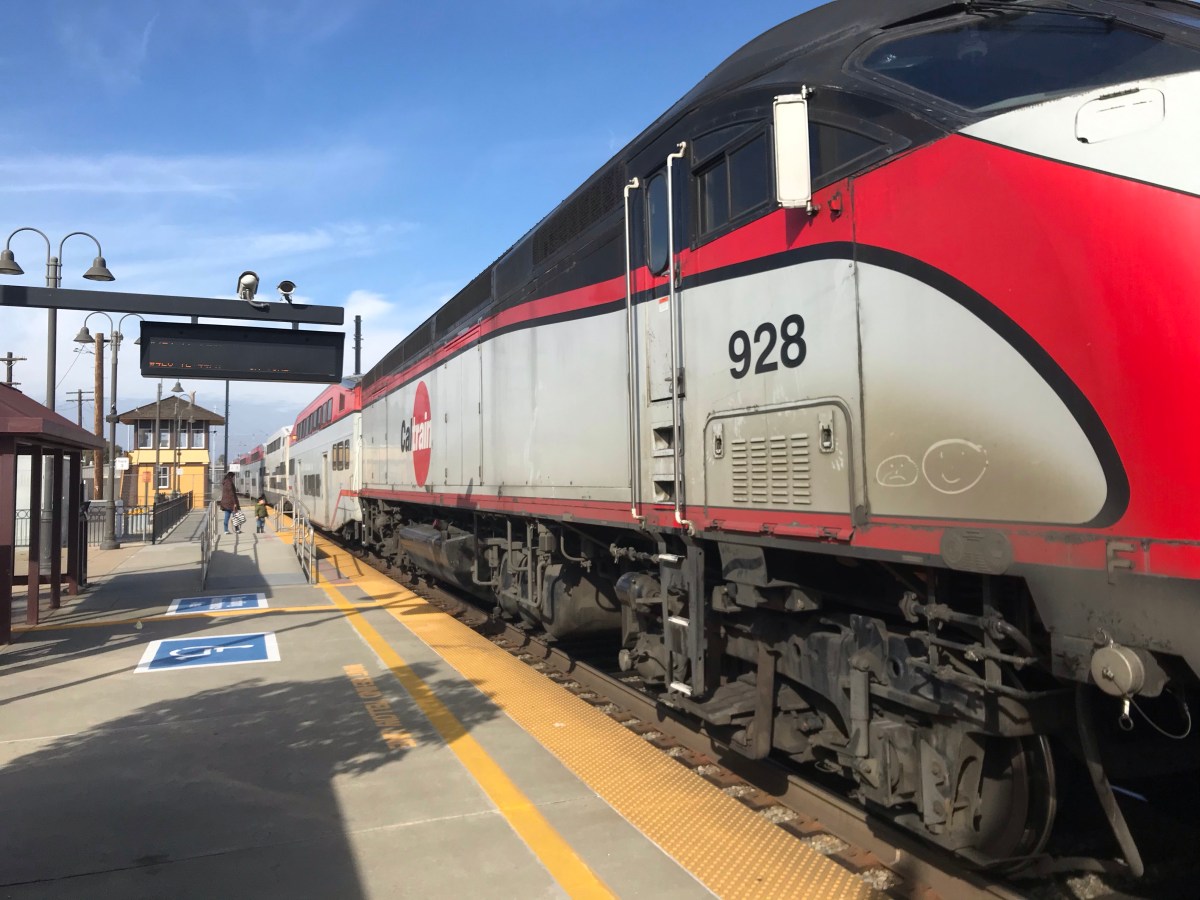
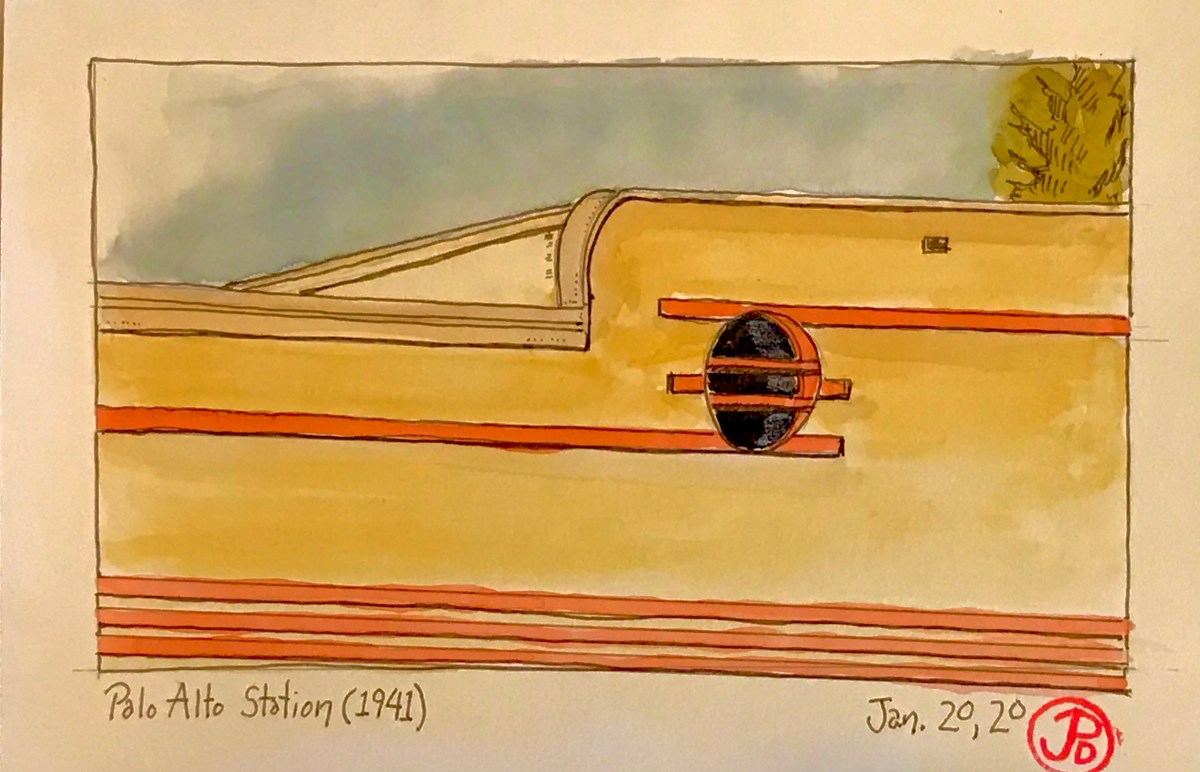
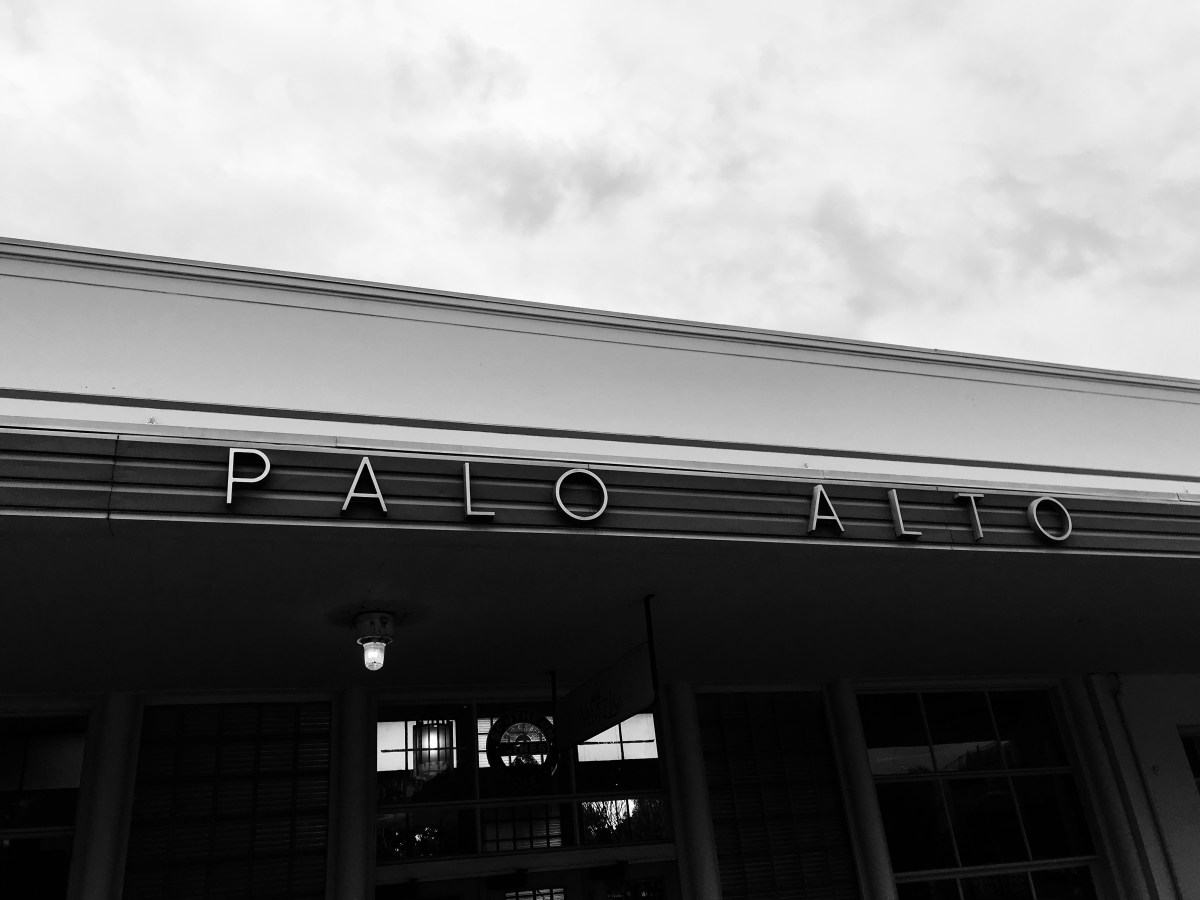
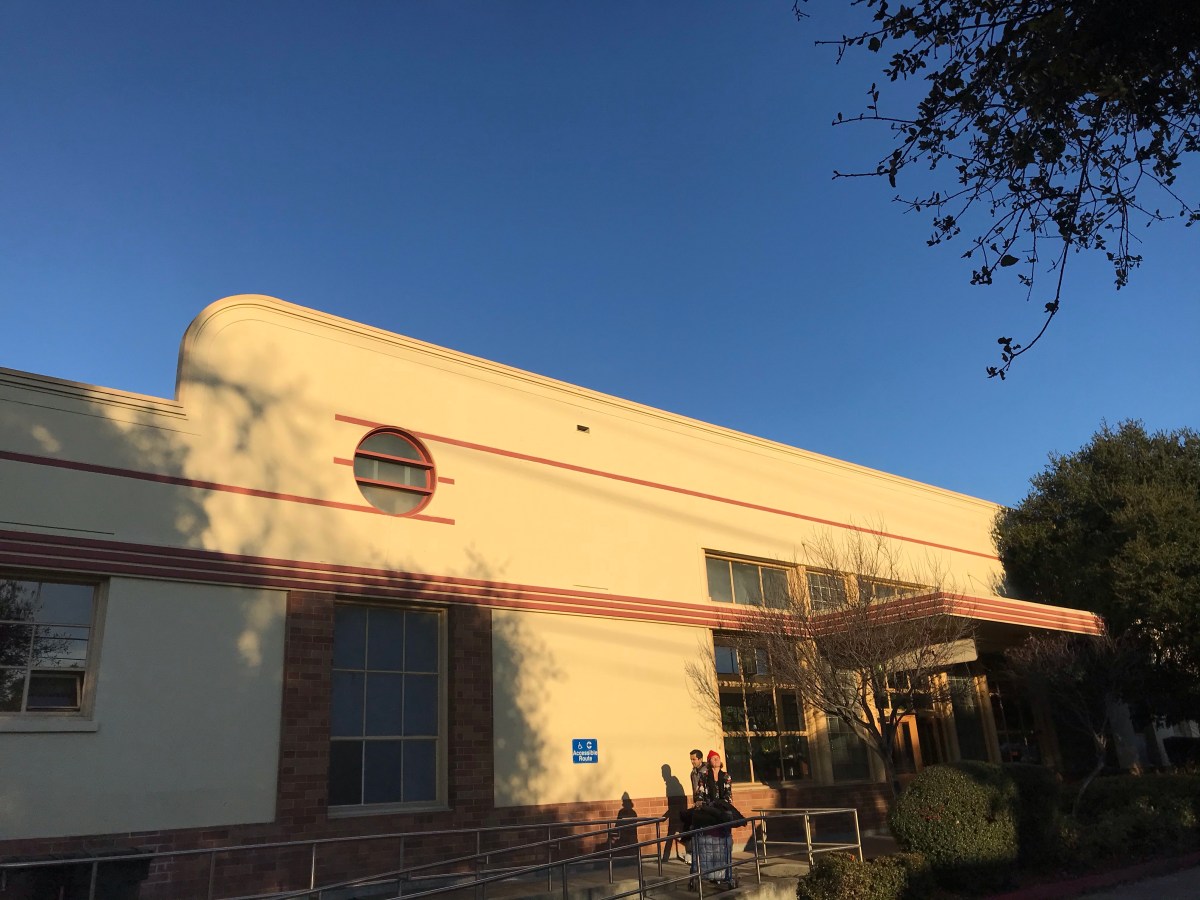
 The mural stretches above the wall where the ticket counter is. It depicts the past and future of transportation. A stream of men on horses, Indians with travois, wagons, stage coach, and men and women walking on foot, head to the right with the quad of Stanford University in the background. In the lower left corner the profile of Leland Stanford looks on towards the future of transportation (circa 1940). The future seems to come out from behind the trees as a Daylight GS-3 locomotive proclaims it’s entrance into the mural. This certainly a synthesis between a beautiful and functional form of transportation and a building that does the same.
 Here is my quick sketch of Caltrain’s most “modern” historic station. I left details out, like the door into the station. I was really trying to get the shapes of the building.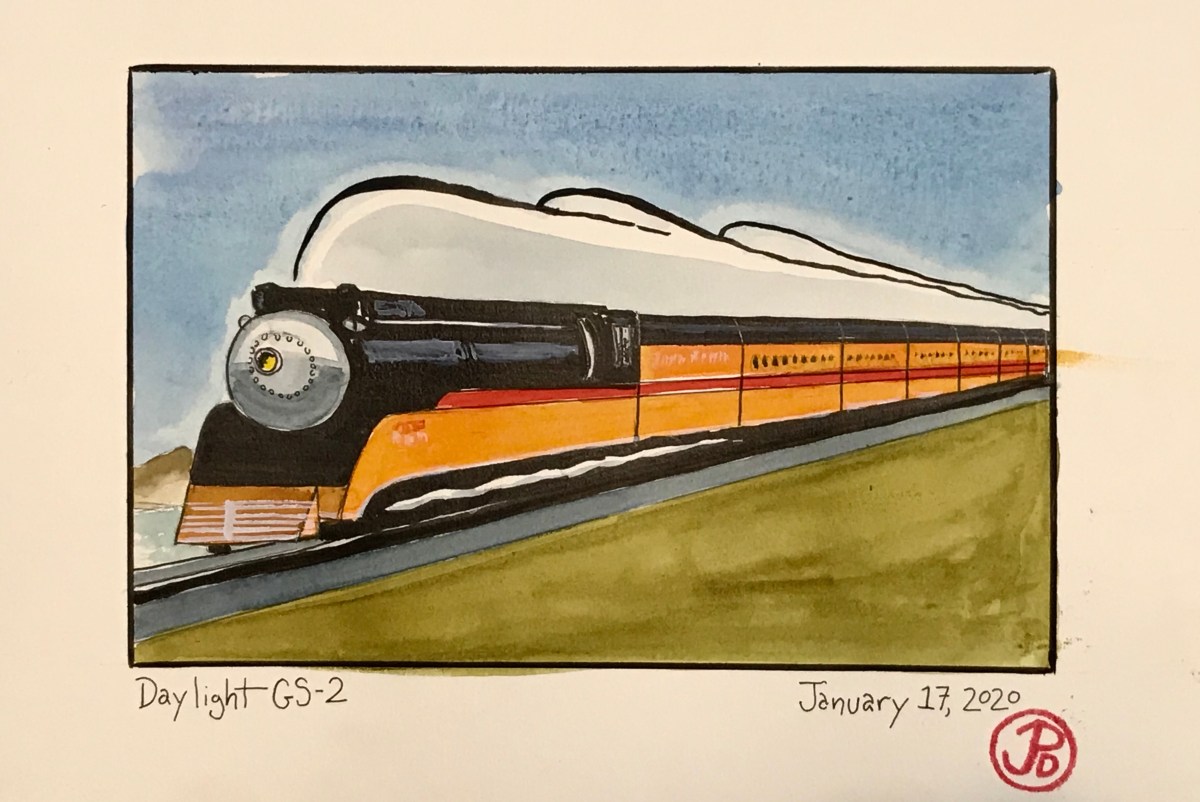
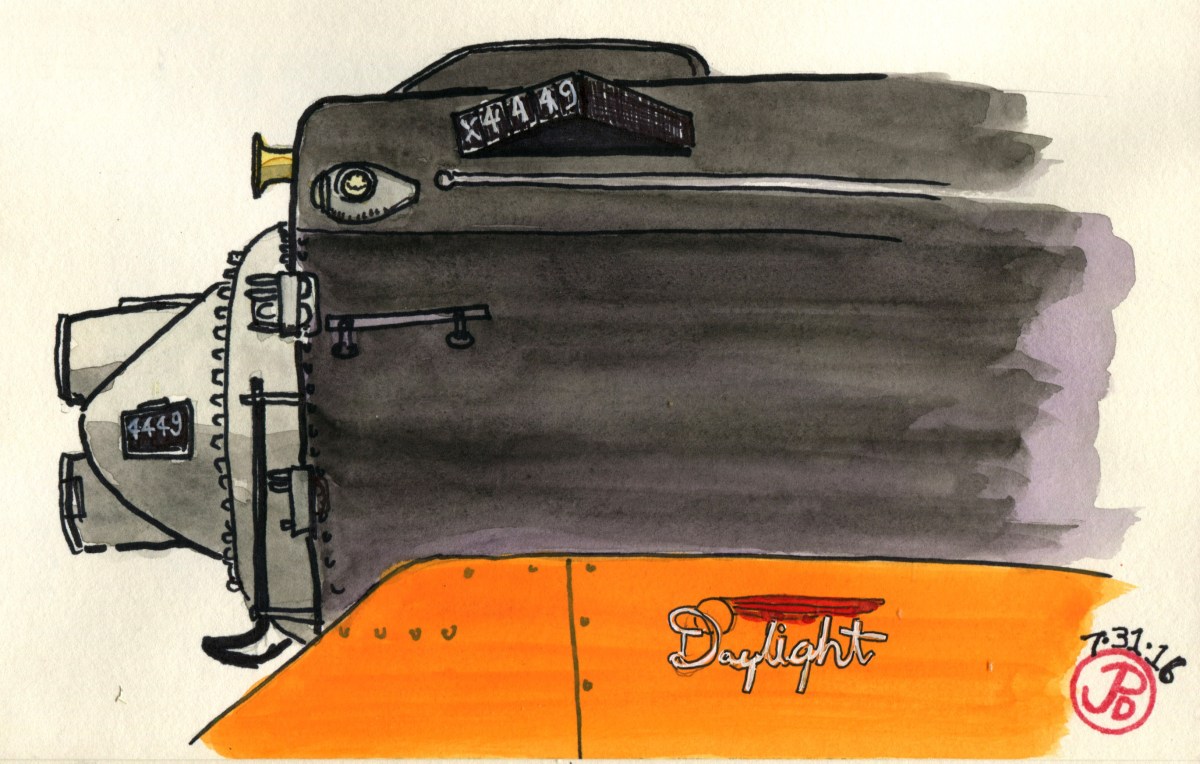 A field sketch of the “Queen of Steam”, GS-4 locomotive number 4449 in Portland, Oregon. This is the only operational engine still in existence that worked the Daylight route.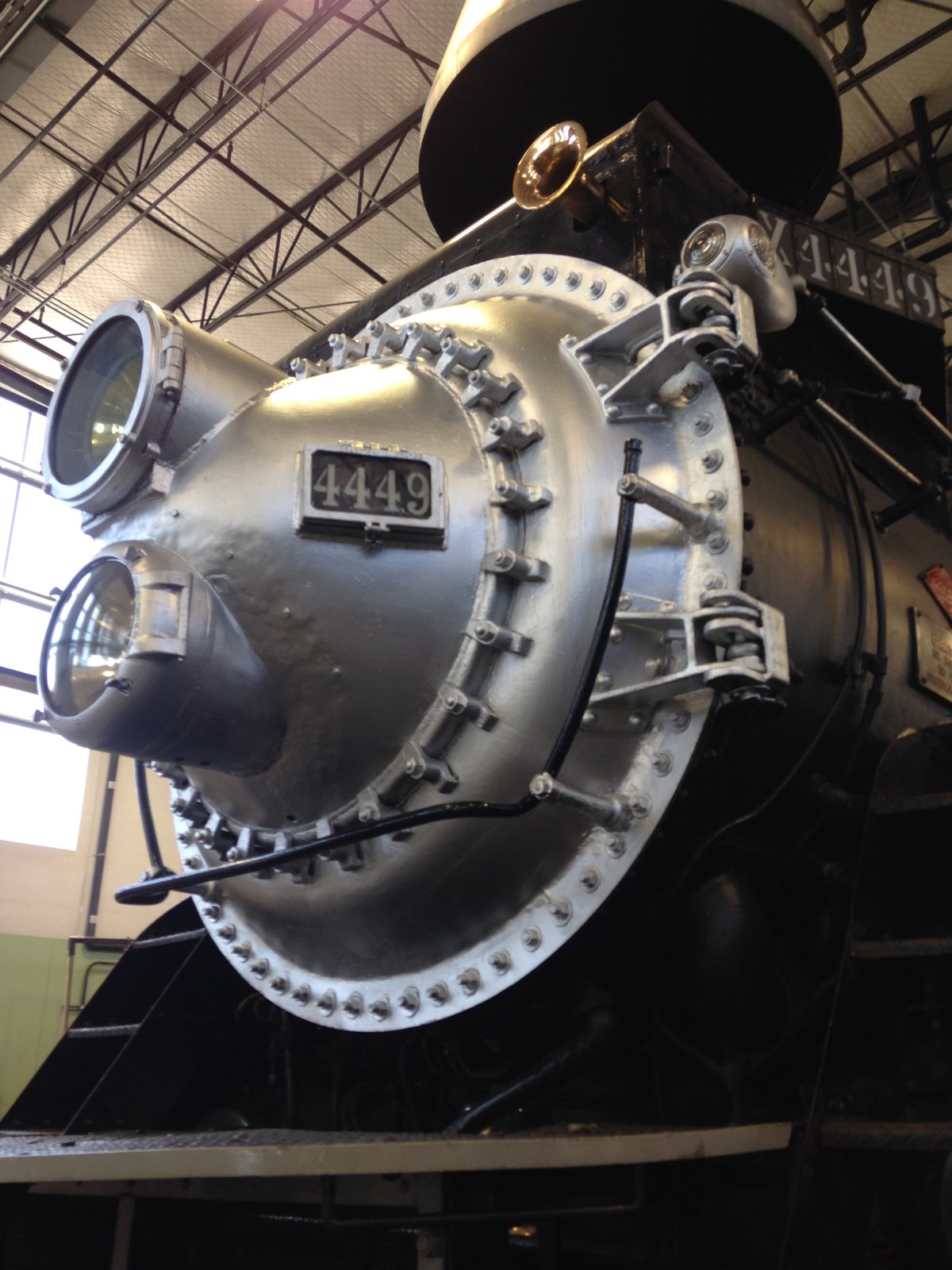
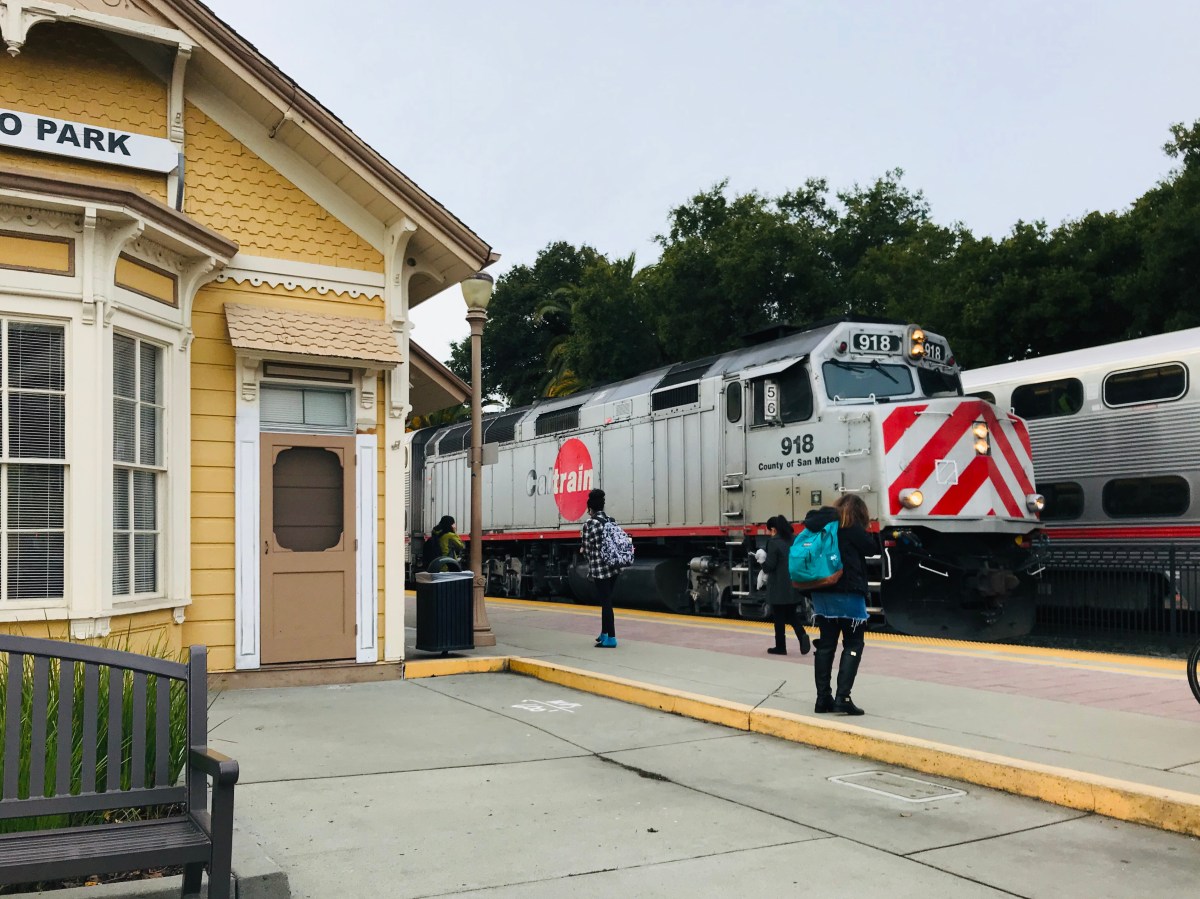
 Engine Number 905 “Sunnyvale ” is on the point of a southbound train to San Jose. This engine is named after my hometown.
 The train station at Sunnyvale is long gone. I never remember it as being an amazing piece of Southern Pacific architecture. The station has been replaced with a ticket shelter that connected to a parking shelter.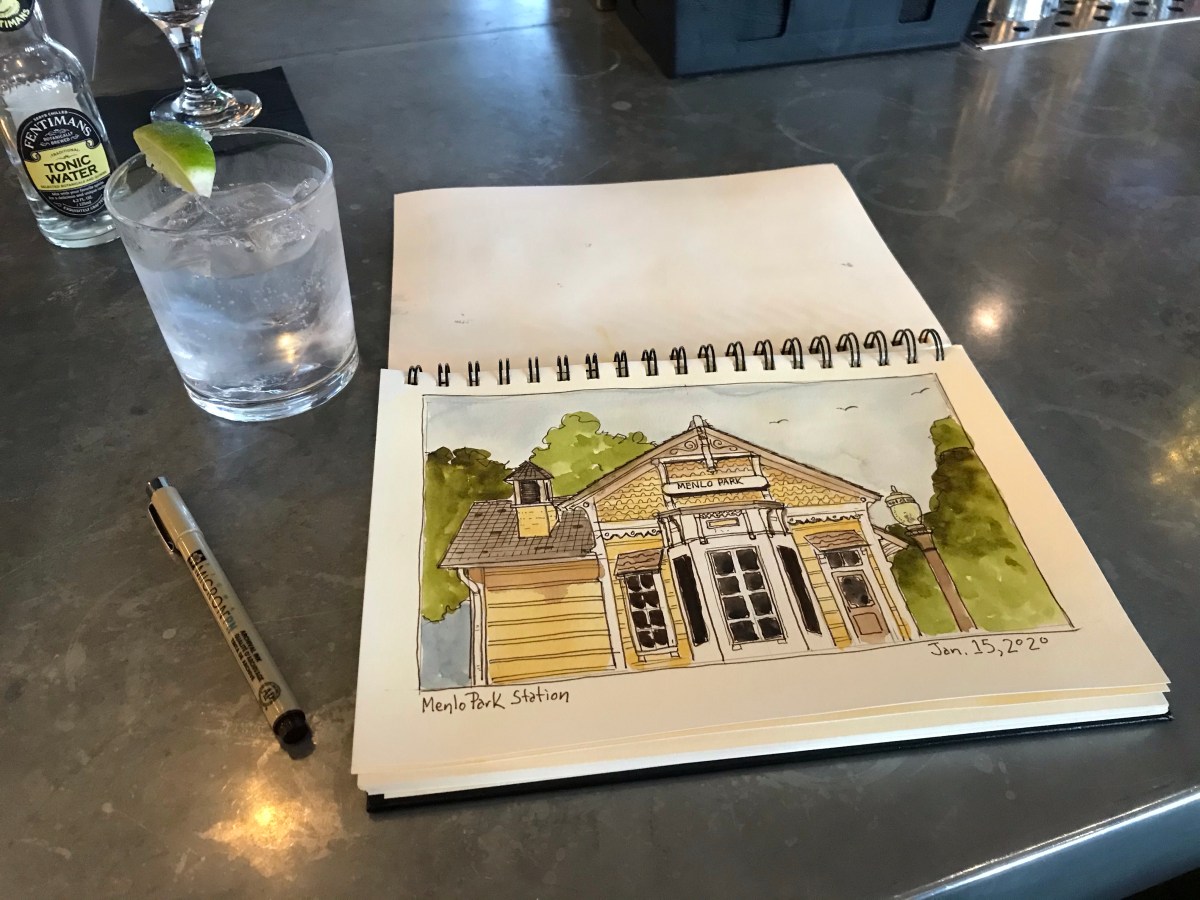
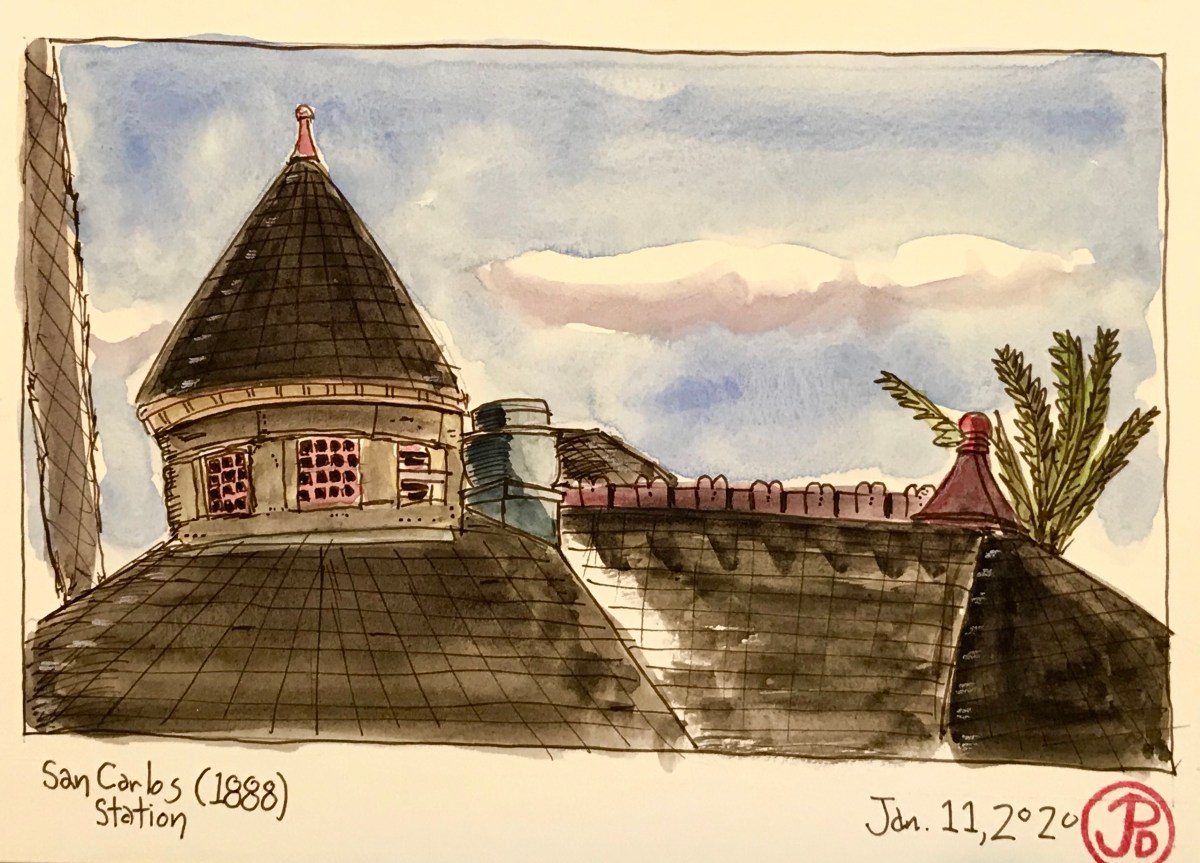
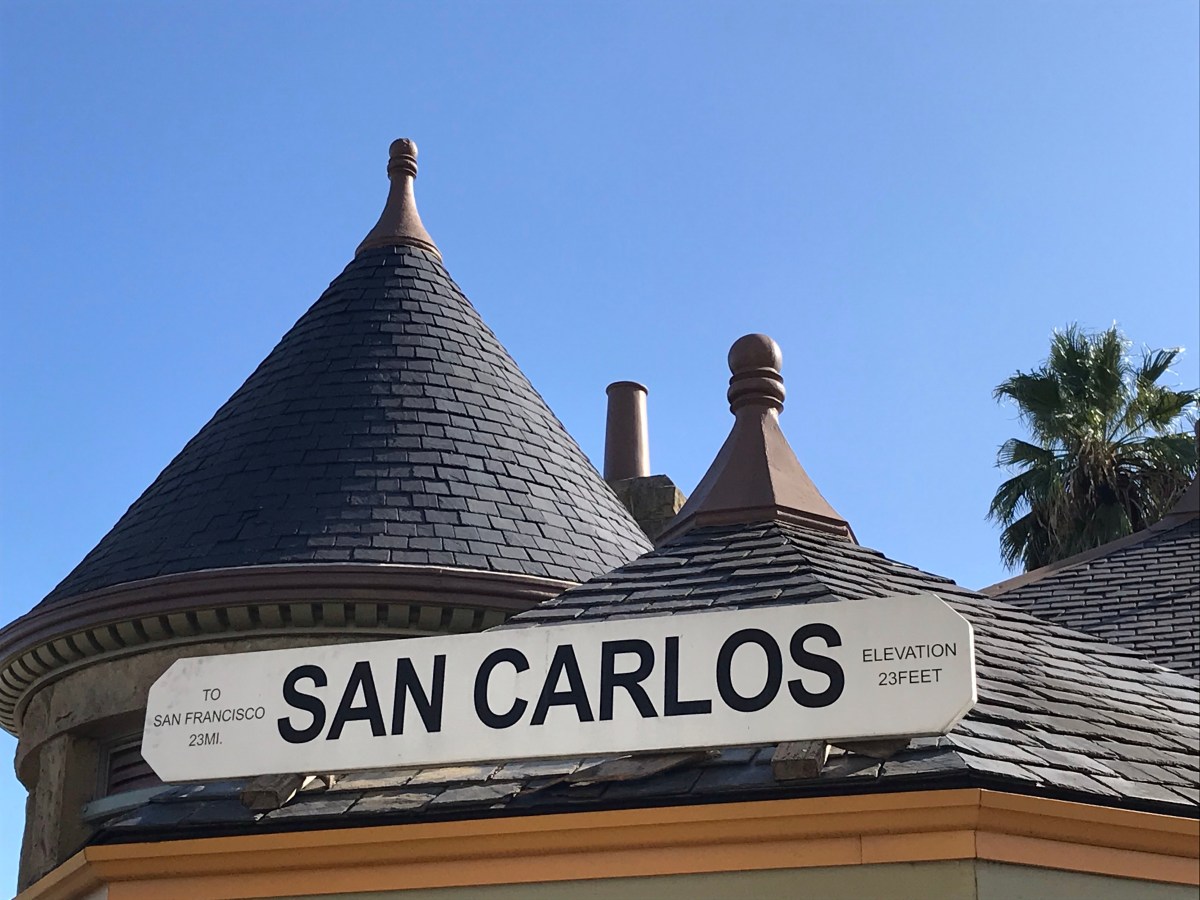

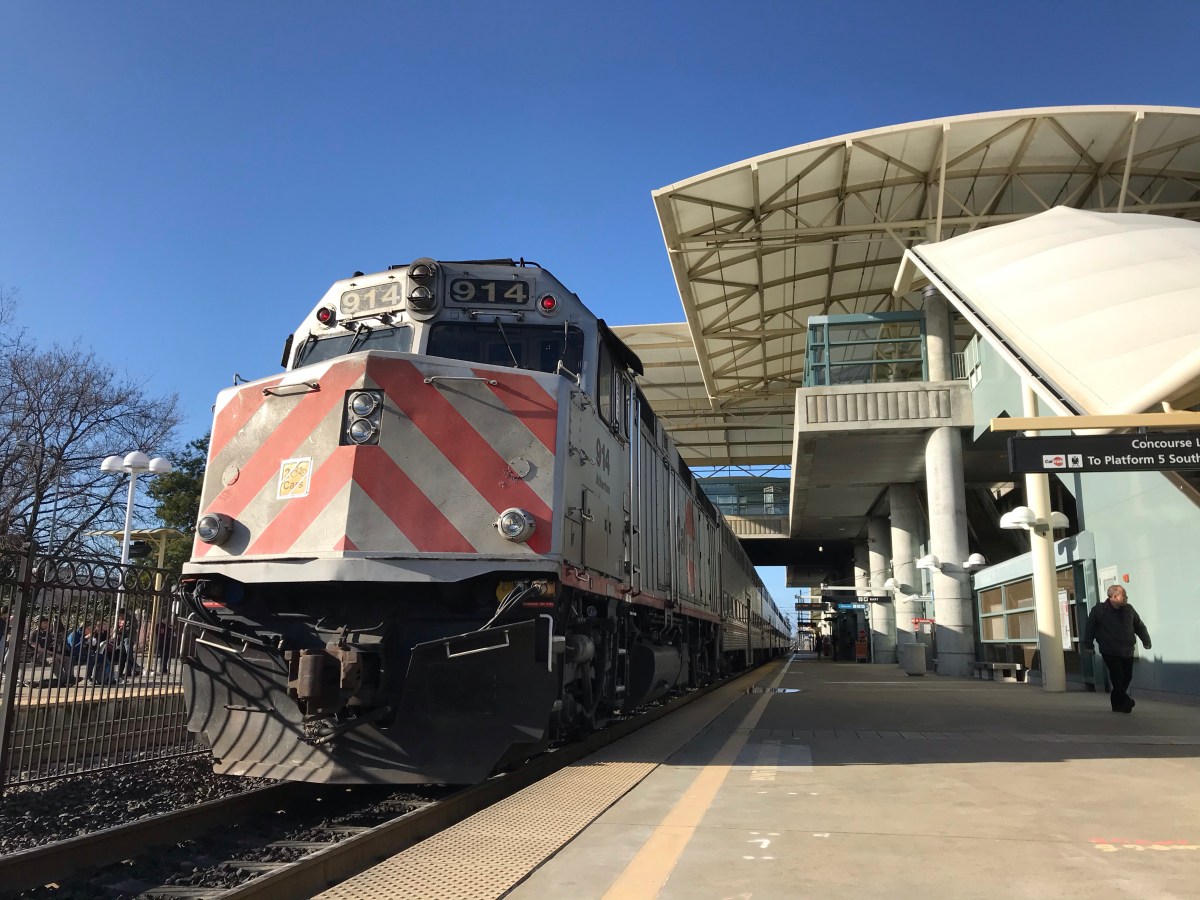 My northbound train heading to San Francisco from Millbrae Transit Center. Don’t let it fool you, this is the end of the train, the diesel engine is pushing the train north. I was going to take BART to Daly City with three sketches in my bag.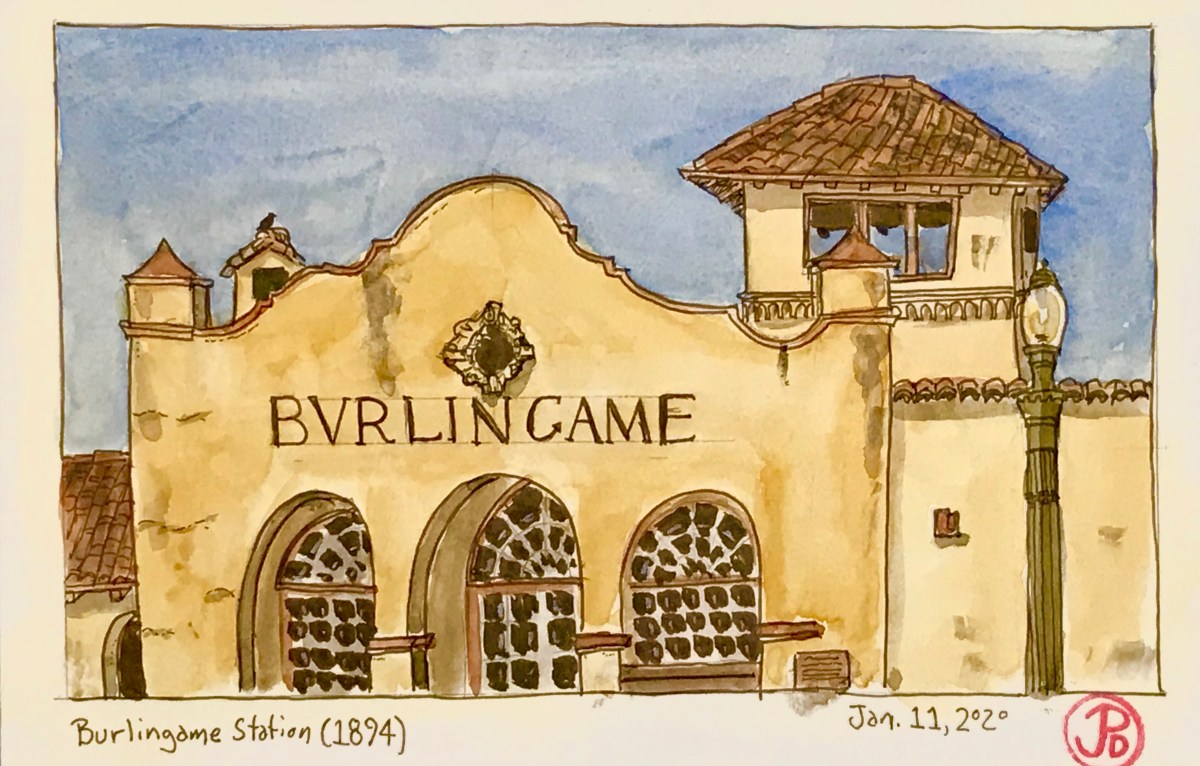
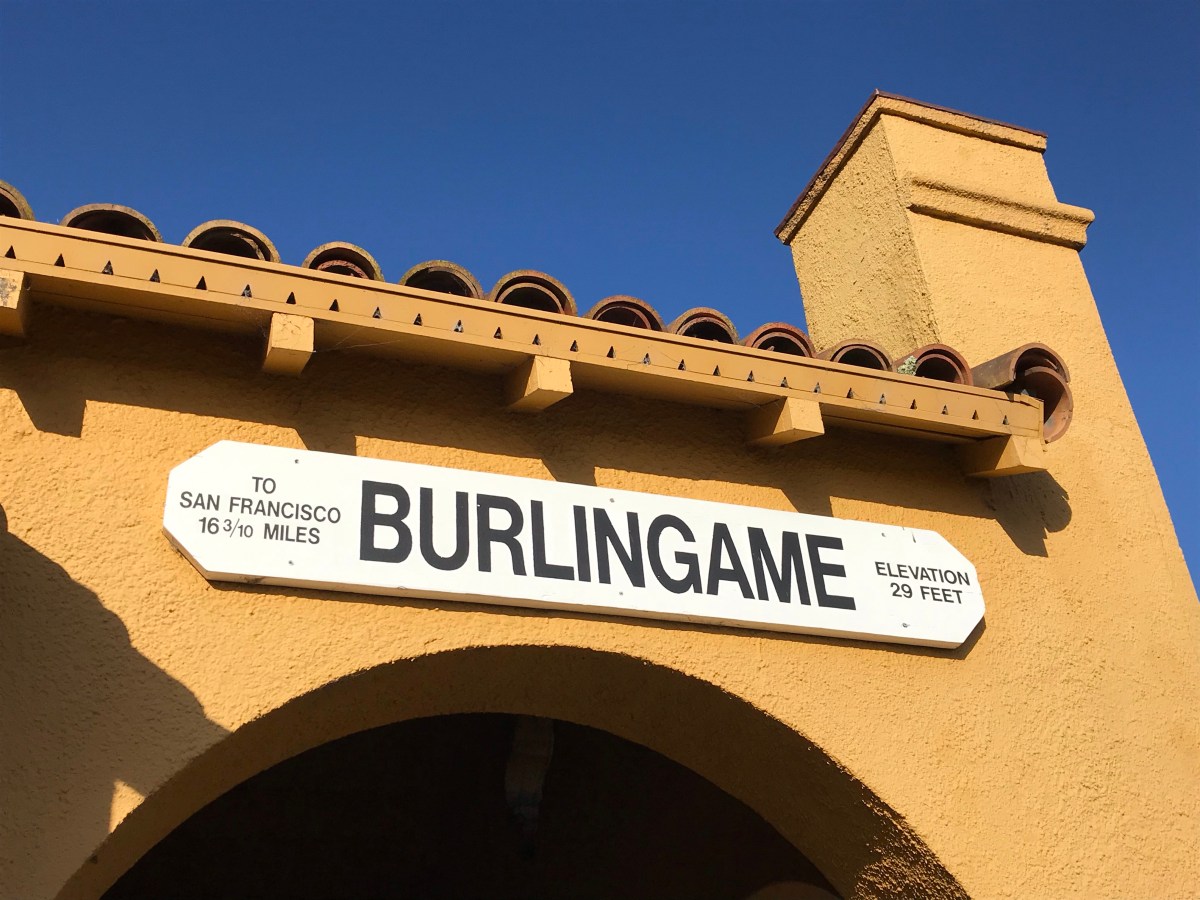
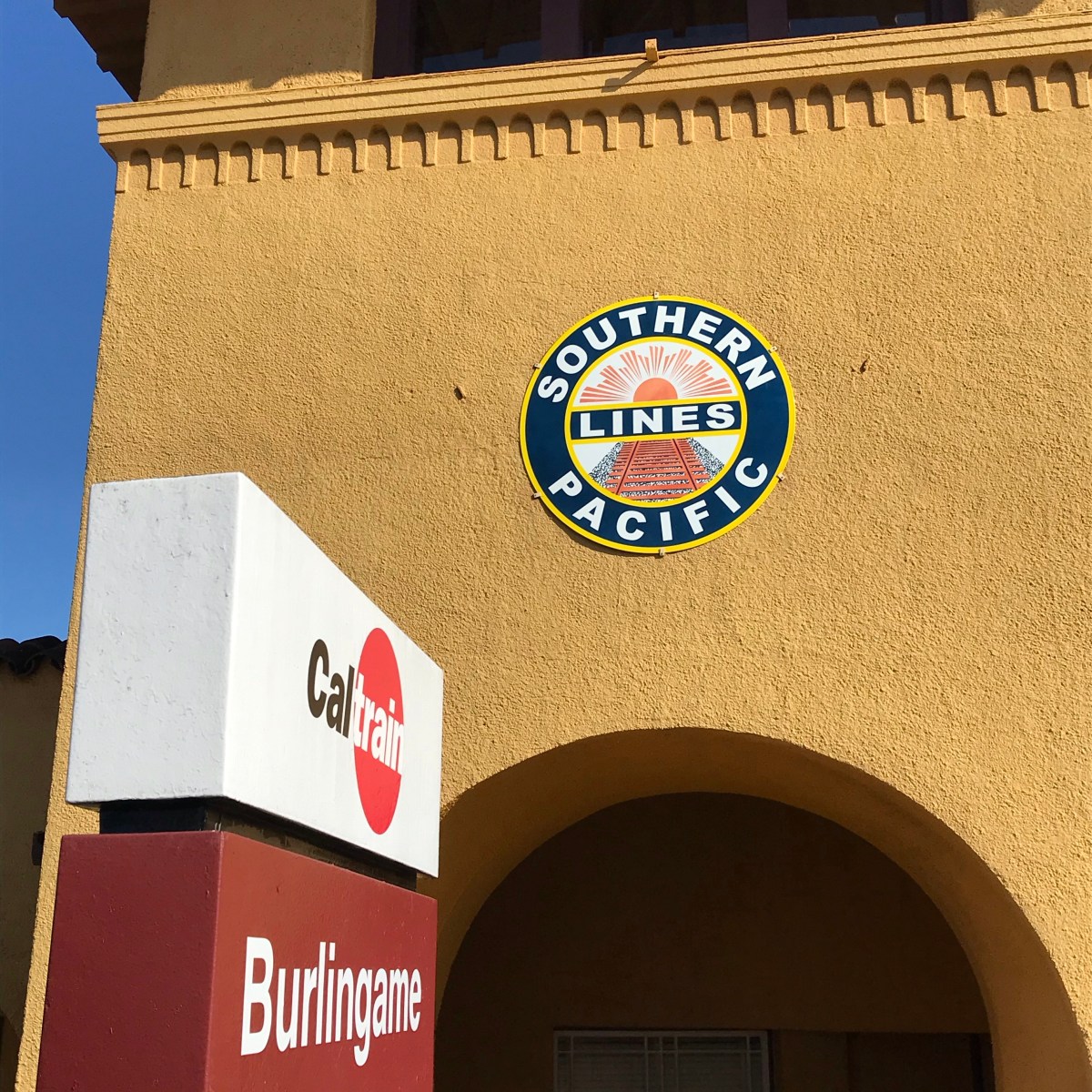
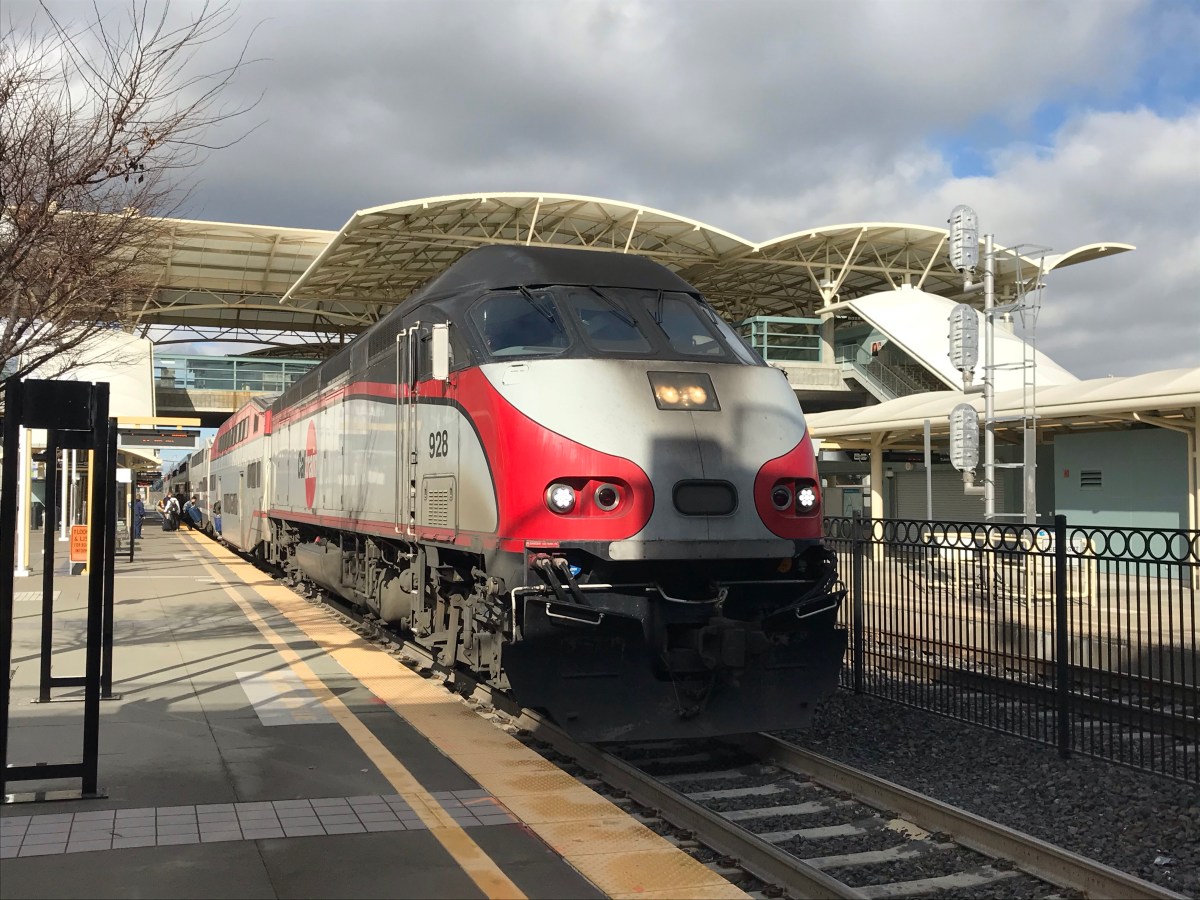 A southbound “Baby Bullet” train pulls into the 2003 transit center at Millbrae. The historic station is about 400 feet behind me.
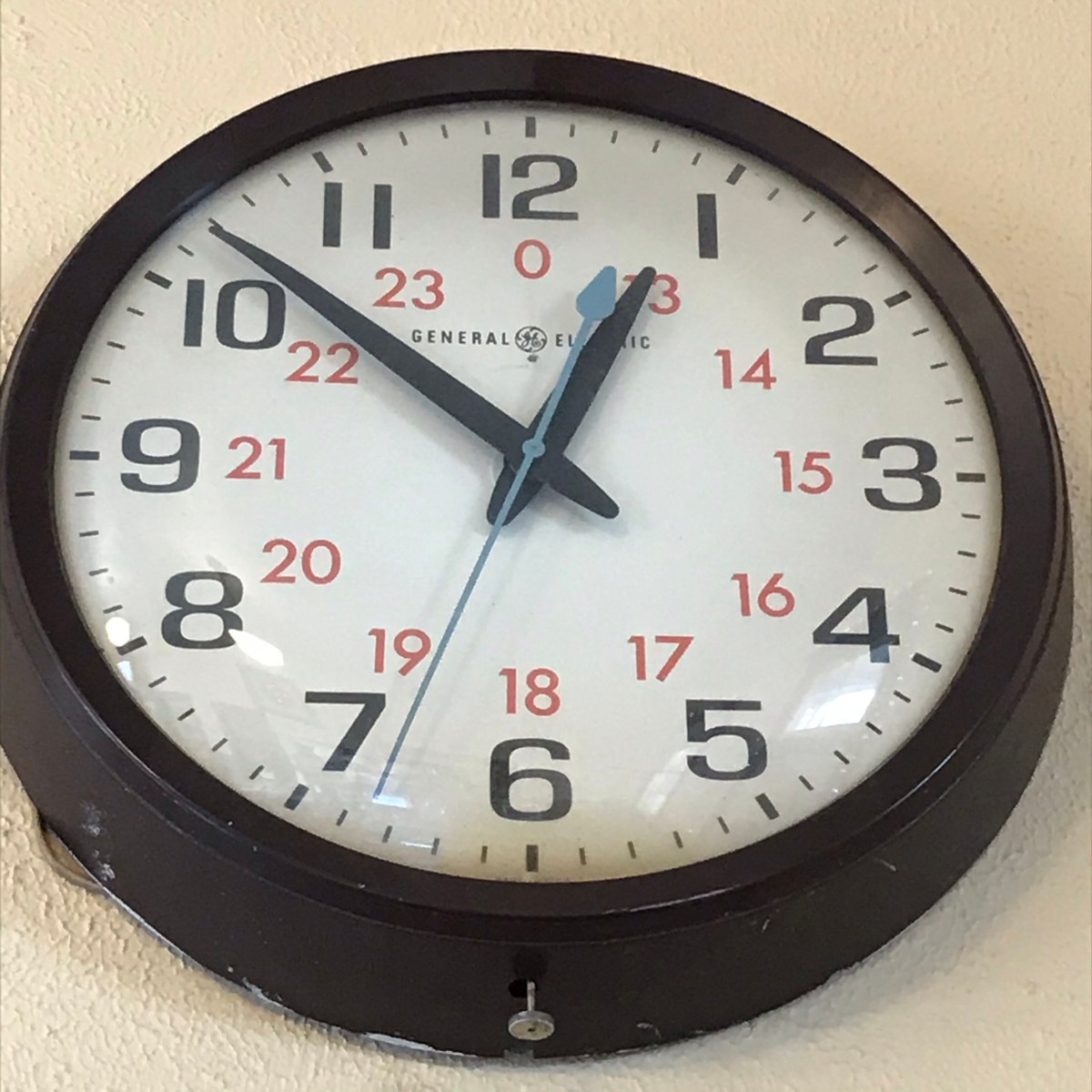 The original clock used in the passenger waiting room when the depot was closed. The inter ring of red numerals show 24 hour time, the time of all railroads.
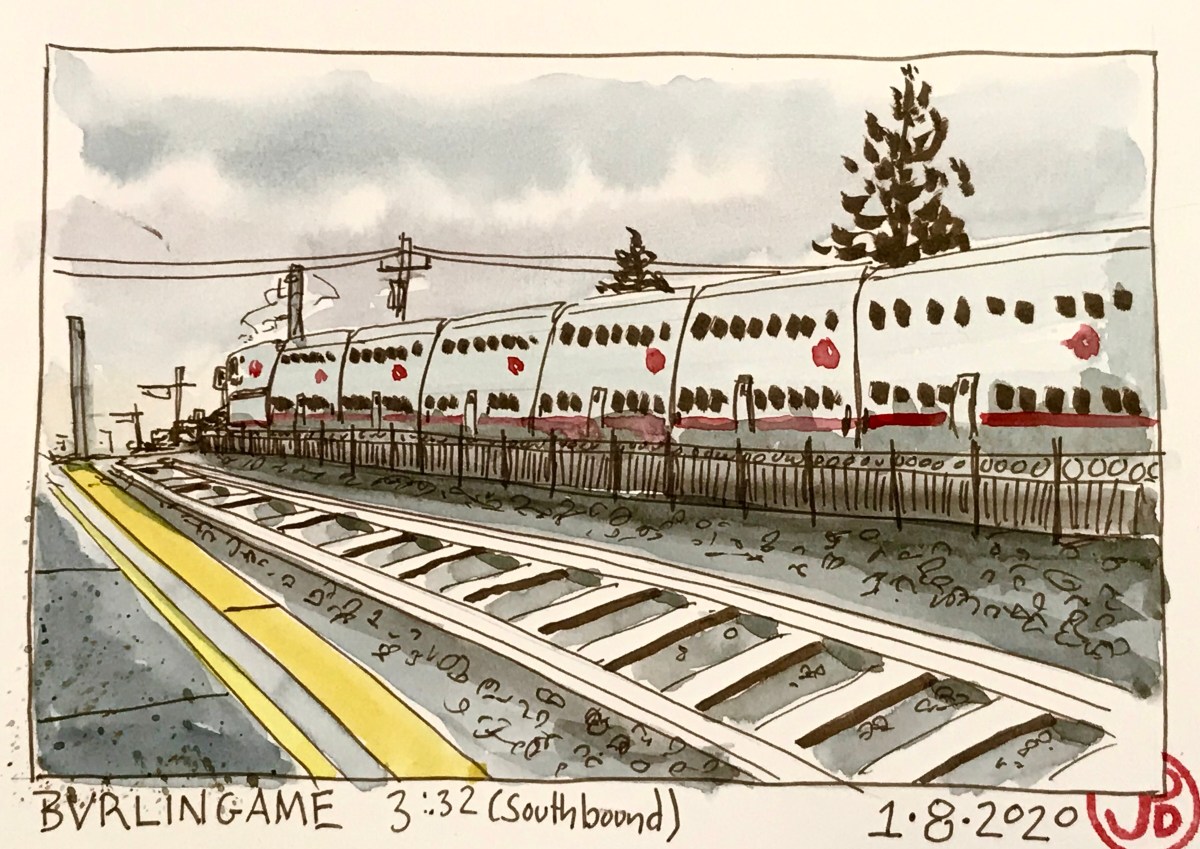
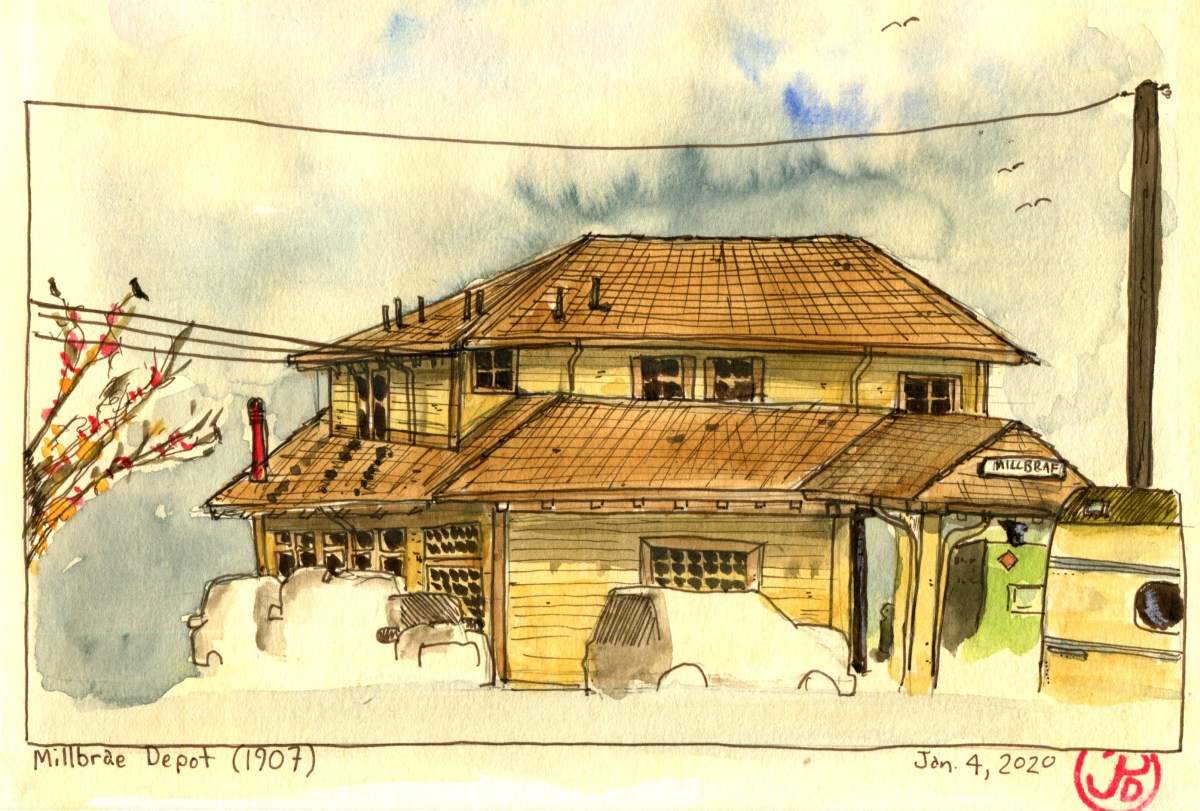
  A southbound train passing Millbrae’s historic railway depot, on its way to San Jose.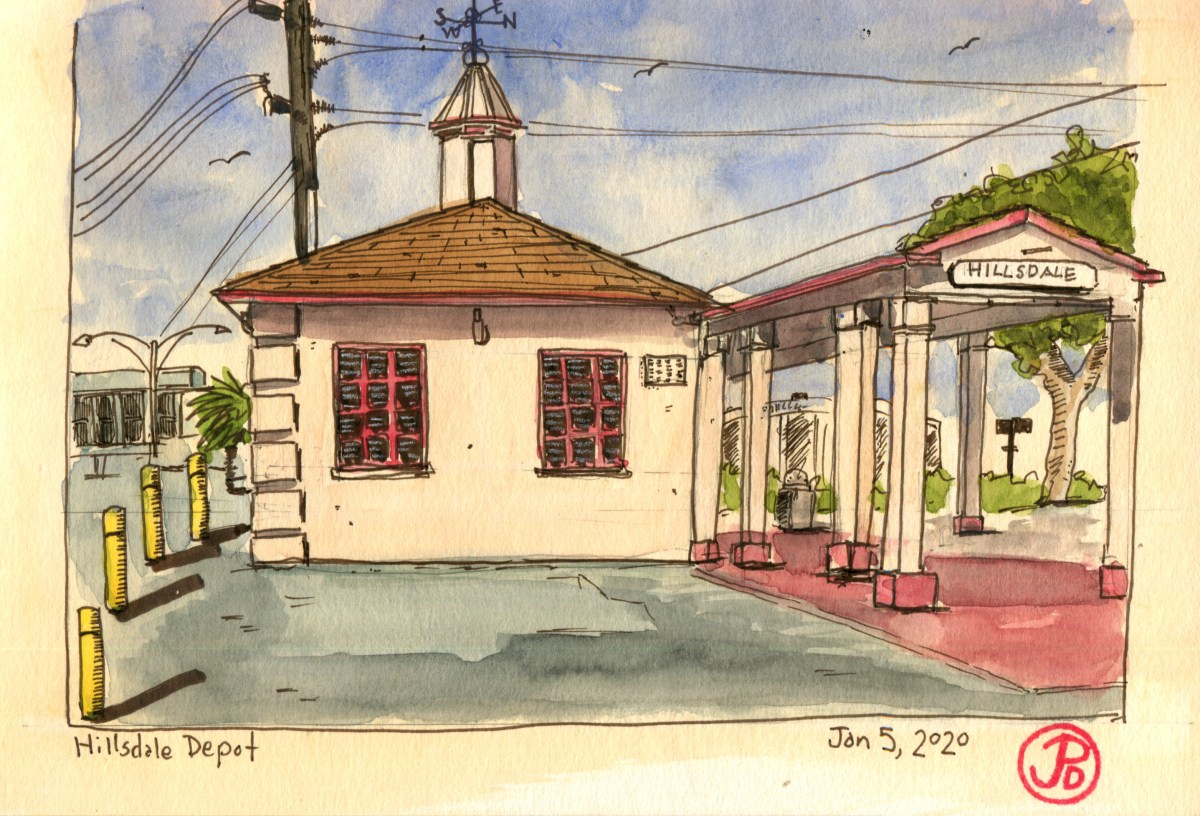
 A southbound train on the main line, pulls into Hillsdale Station. The old station, on the left, is no longer near the railway which now has been raised above the station.
  Engine Number 900 “San Francisco” pulls into Hillsdale Station.
 Corvidsketcher sketching in the parking lot of Hillsdale Station, the day before the building will be demolished. This may be the last drawing of the station while it is still standing.
  Corvid Sketcher