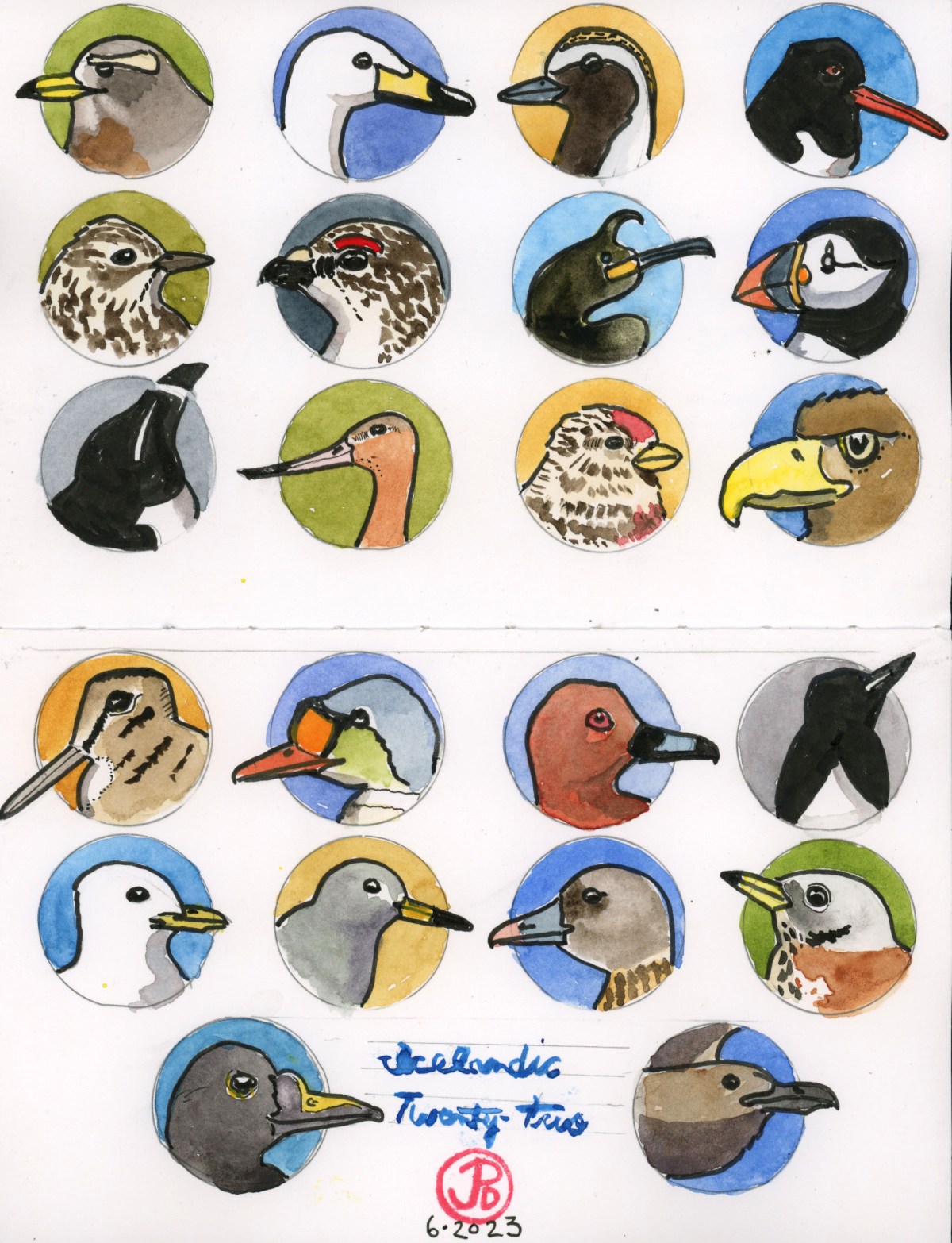
I figured I might see 20 to 25 lifers on my ten day Icelandic birding tour. This was a good goal and I hoped I’d meet it.
In the end I added 22 lifers to my world life list bringing my total to 1,740!
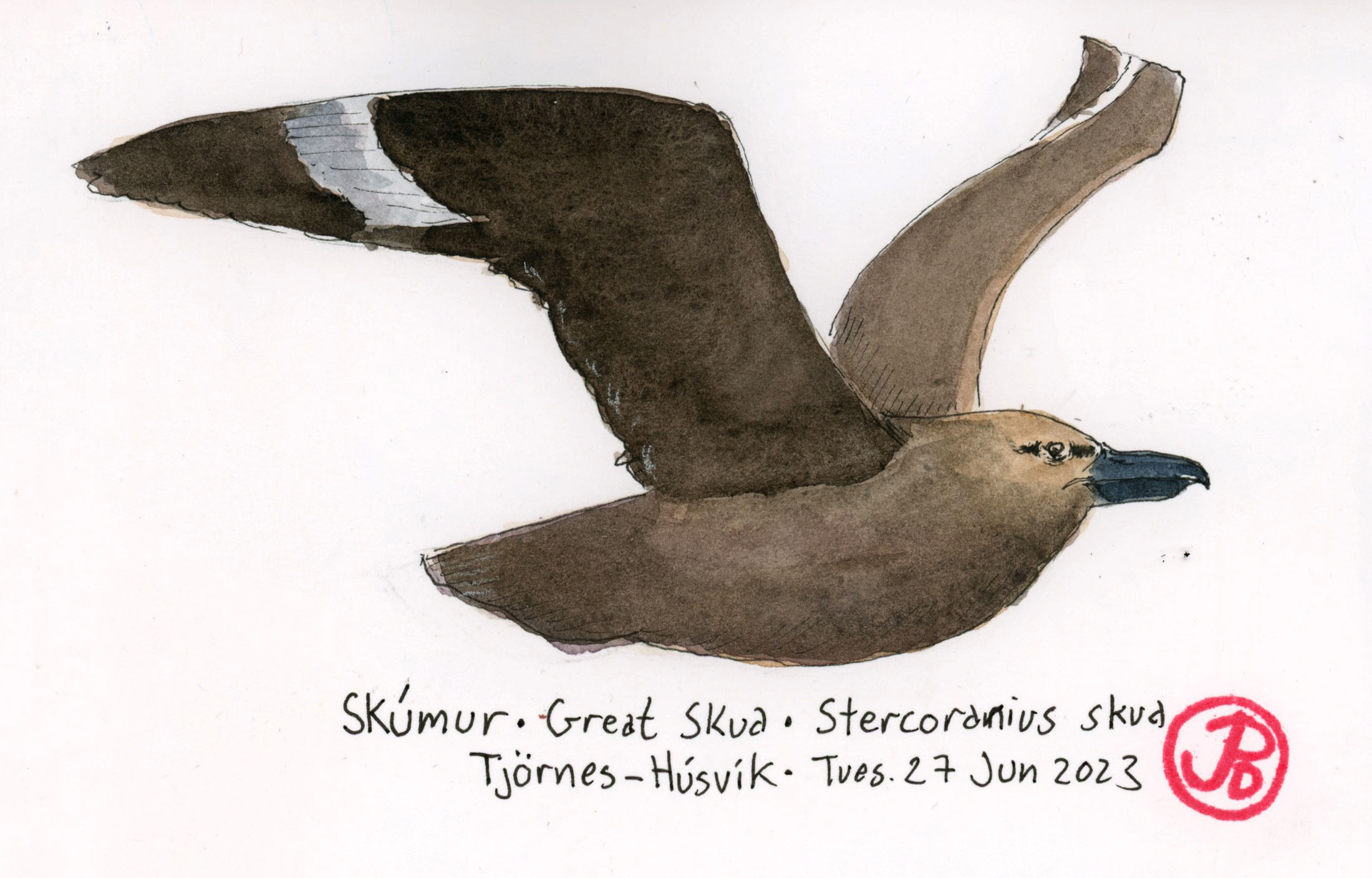
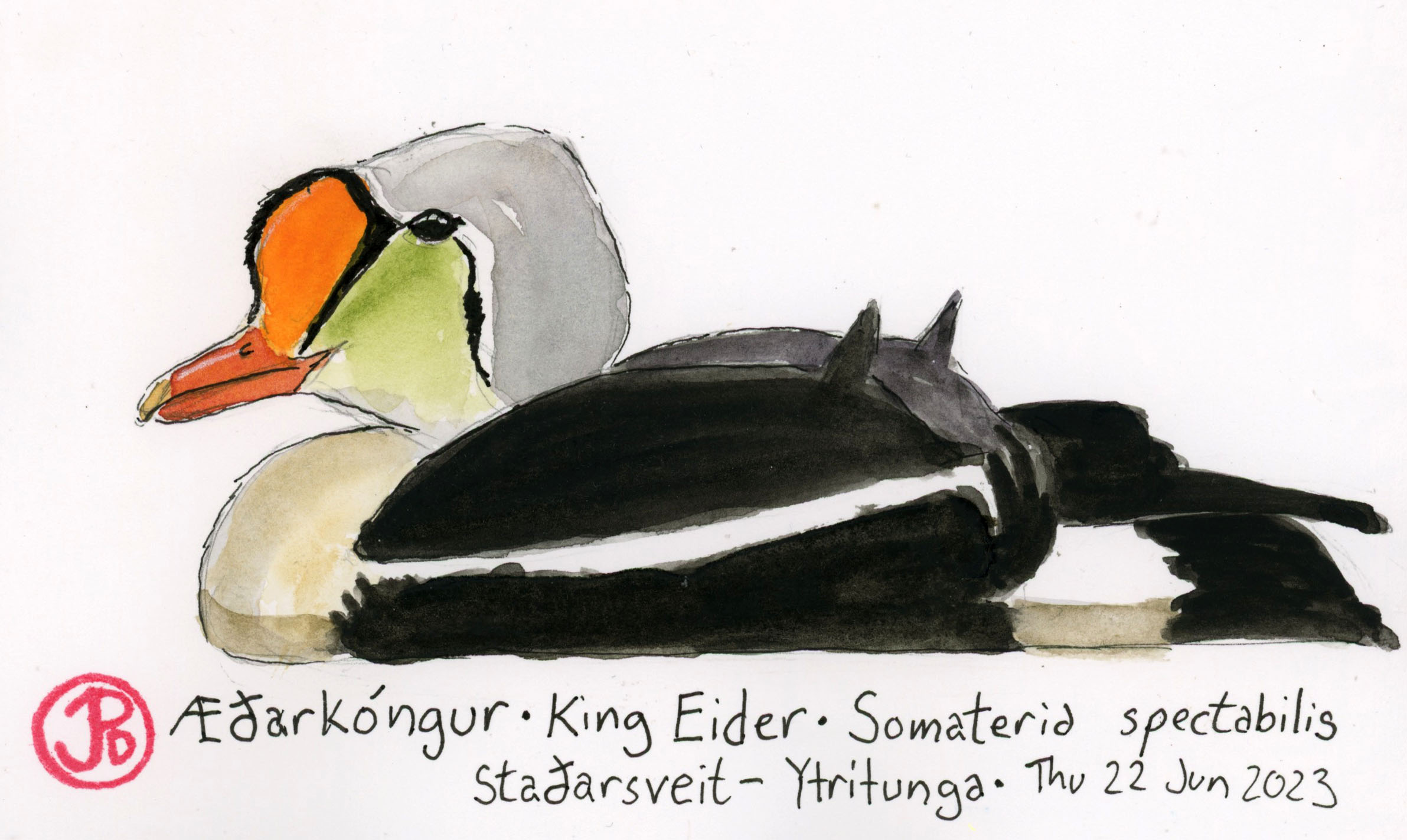
Aside from puffin of course, I had two species that stood out as lifers of the trip. One was the stunning male king eider, the other the powerful and menacing great skua!
The king eider is just one of those ducks that you see in a field guide and say to yourself, “I really want to see that bird!”. The male is such an amazing mix of color, shape, and form. So I had to sketch it of course.
Lifers weren’t the only draw for my Iceland trip, getting quality looks at birds, most in their stunning summer plumage, was another.
I had only seen Arctic terns while on pelagic birding trips off the California coast (it was a good day if you saw one or two on an eight hour cruise). Here in Iceland, the world’s longest migrant can be seen in the thousands. And from land! The terns have to come to land to breed and Iceland is that land.
Another pelagic species that I had seen on pelagic boat trips and occasionally while doing a land-based seawatch was northern fulmar. Fulmars where everywhere in coastal Iceland where they nest on cliffs with a close proximity to the ocean. Walking along the coast, at times fulmars outnumbered gulls as they most common bird passing overhead.
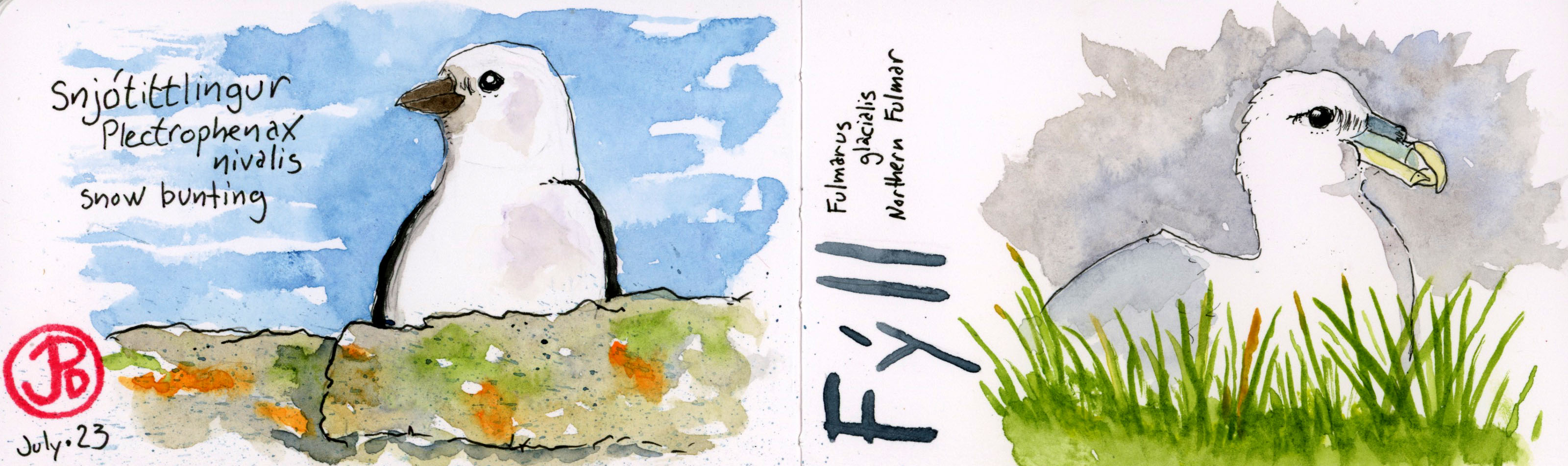
One benefit of living on the California coast is that rarities often work their way down south along the coastline. Such was the case when a snow bunting over wintered on a beach in Half Moon Bay. I first saw the bird on November 19, 2022 and the bird stayed into the new year despite the epic rains of 2023. The bunting was being seen until at least late March.
Now in the summer of 2023 on a beach in northern Iceland I was watching a beautiful male snow bunting perched on a rock. He was decked out in his black and white finery and it really put the word “snow” into snow bunting!

