Image

Polar Shades

Protecting your eyes is very important in the Land of the Midnight Sun. In the summer the Polar day can last for 24 hours.

The sun is intense and extreme in the Polar regions in the summer, with rays being reflected from snow, ice, and water into your naked eyeballs.

That’s why you need to clothe your eyes in Polar shades!

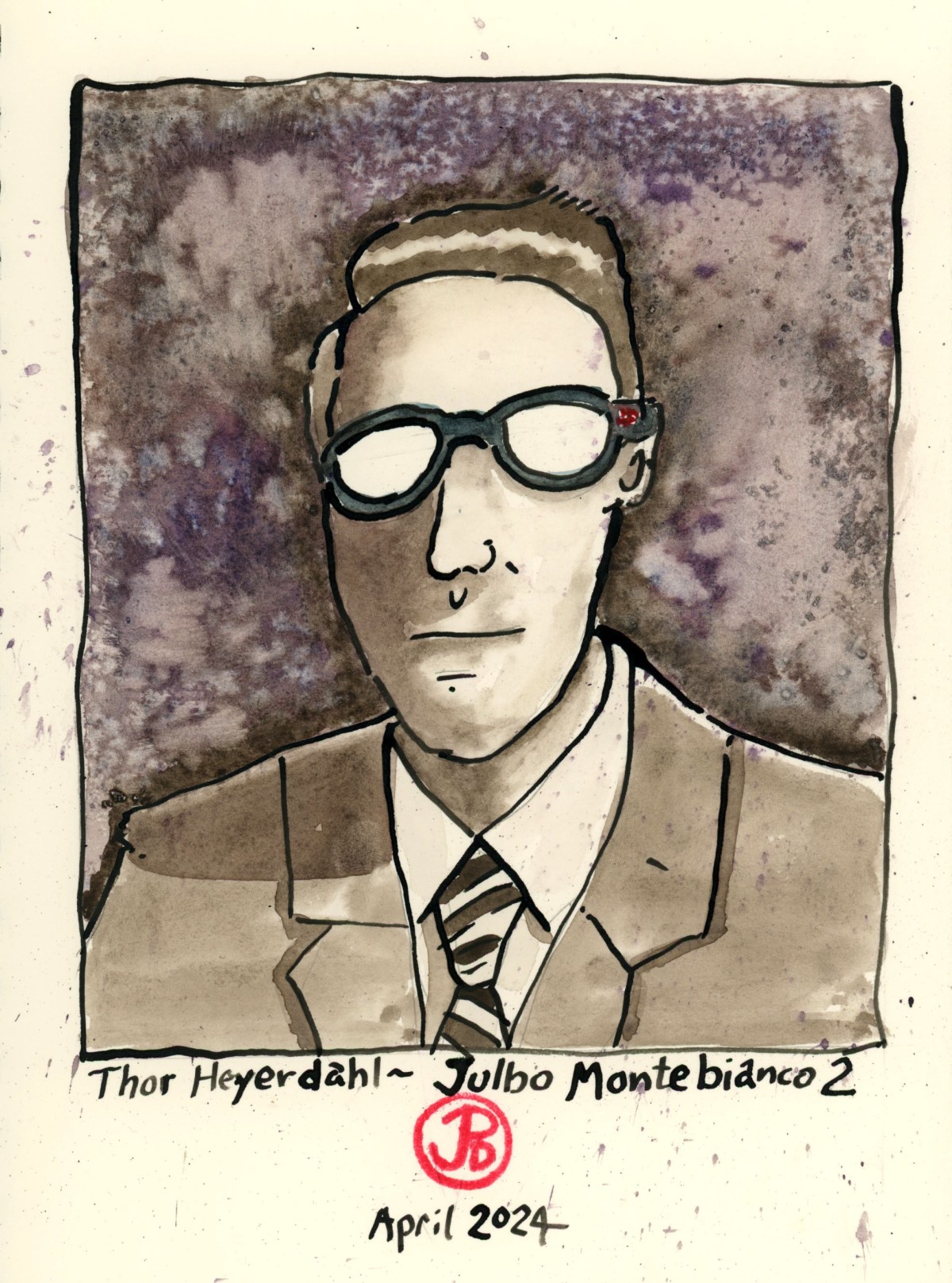
I chose to dress my eyes with the Julbo Montebianco 2.

These French glasses are made for high altitudes and snow sports. The Spectron 4 lens blocks out 100% UV rays as well as a, b, & c rays. The glasses also come with removable side shields which protects your peripheral from intense blinding light.

I also like the fact that Julbo has been making eyewear for explorers and adventurers since 1888. And I would be carrying on with the explorer’s tradition.

With so many hours of daylight, you need a different type of eyewear to get some shuteye during the summer Polar “night”.

I found this out on my summer of 2023 birding trip to Iceland. High up on a summer Scandinavian packing list is a quality sleep mask. Most of my accommodations had blackout shutters but a few did not and having a sleep mask gave me much needed shut eye.

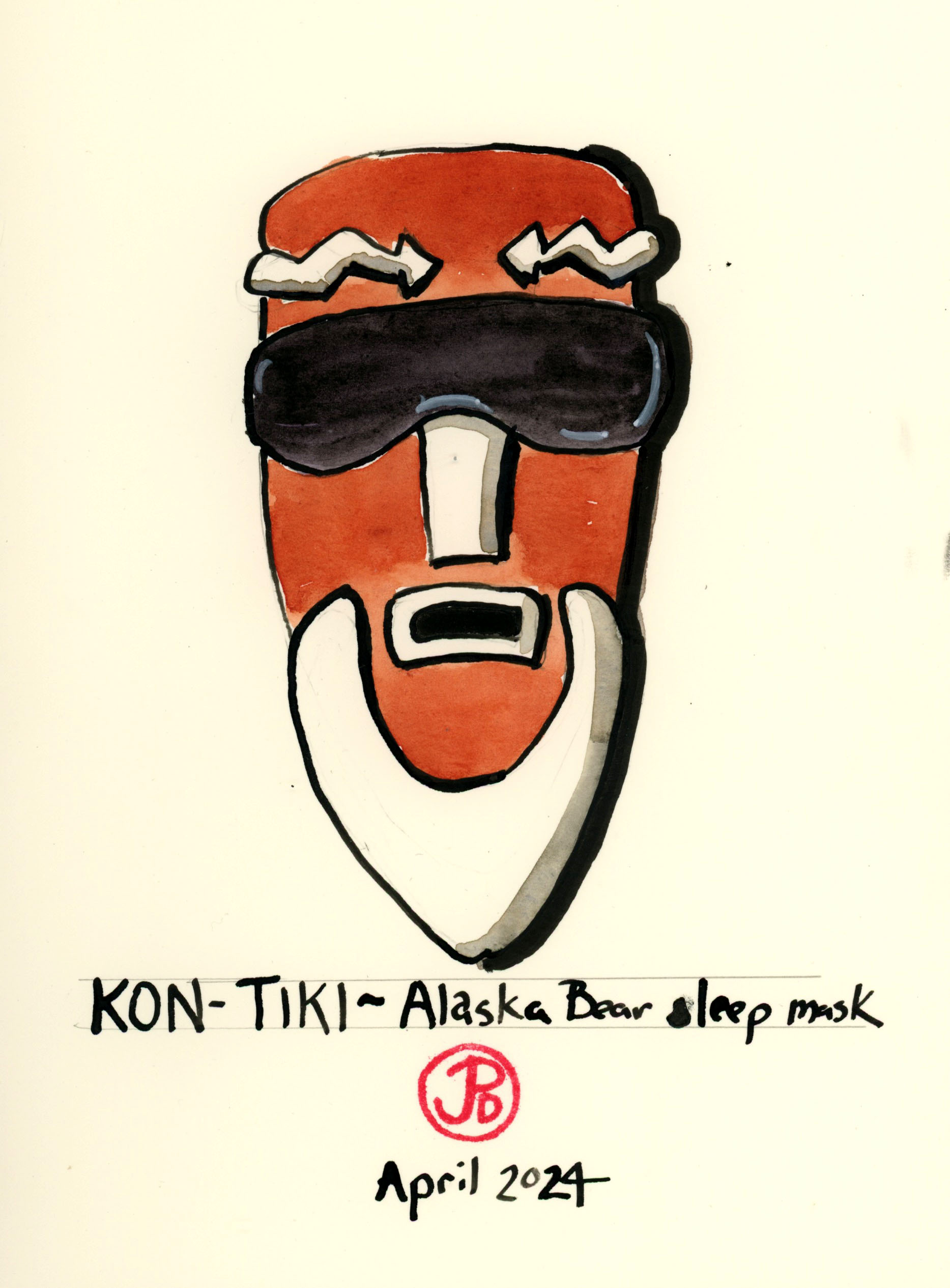
My sleep mask of choice for Scandinavian is the Alaska Bear (could it be a polar bear?!) sleep mask. This mask is comfortable and does it was it designed to do: keep out the light.
Image

Beginnings: Point and Shoot Journals

A new adventure means a new sketchbook.

In the past few years my “go to” travel sketchbooks has always been Stillman & Birn Beta or Delta Series. I love the paper and the different sizes in both soft and hard covers.

Now I wanted to try a new sketchbook so I settled on Hahnemulhe’s 100% cotton cold press sketchbook. This is a hardcover book with very high quality paper for watercolor.

For Svalbard I want to downsize, so I chose two journals: a 4″ by 5.5″ panoramic journal and a 5.5″ by 5.5″ square journal. These would fit in well with my lighter one-bag travel ethic and, I thought, if you use a smaller journal, you are encouraged to sketch more because you have less paper to cover. I figured a smaller journal would be easier to do quick, gestural-loose sketches while on my polar cruise. I think of them as my “point and shoot” journals. I still could do detailed sketches with many watercolor washes, but I like the versatility of these journals and I can’t wait to take them to Scandinavia and sketch!

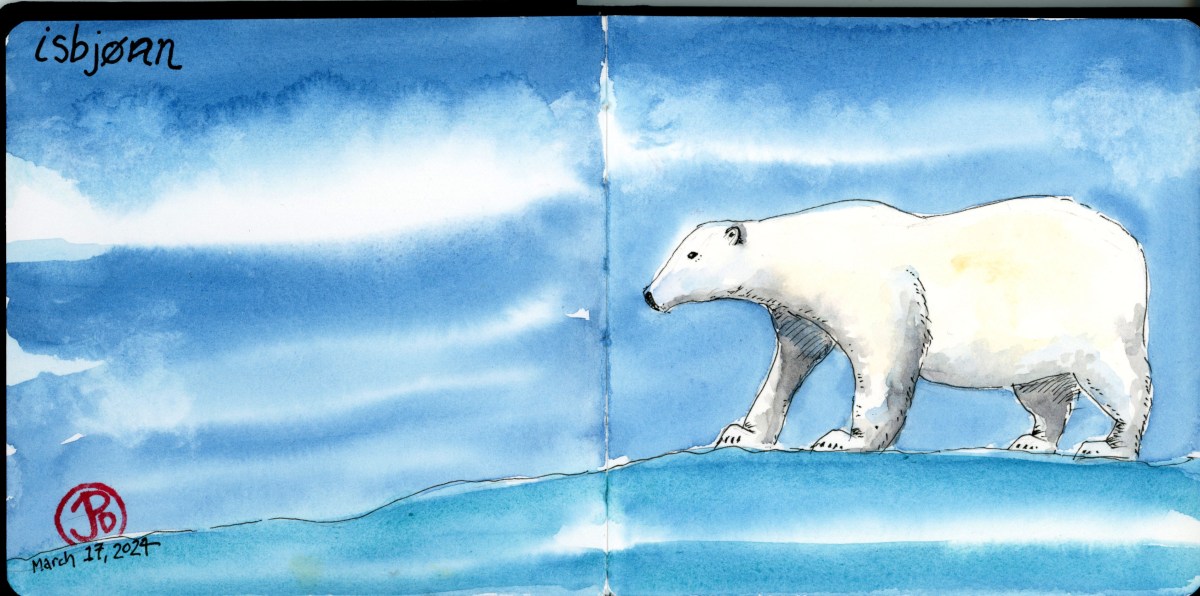
For my opening sketch in the square journal, I chose to paint across the gutter giving me a panoramic spread of 5.5″ by 11″. The spread is the isbjorn (Norwegian for polar bear). This is the number one target mammal on any Svalbard cruise. I loved the way the 100% cotton paper handled the washes (featured sketch).

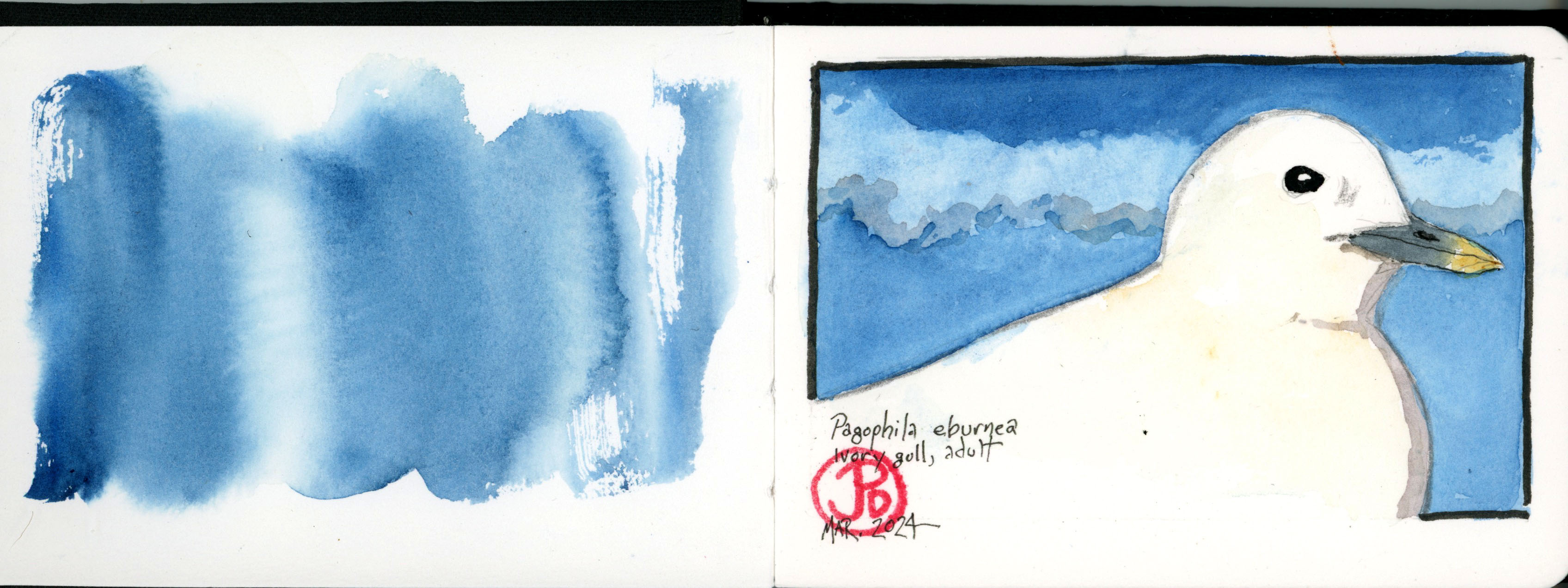
The introductory sketch of my smaller panoramic journal was the number one target on my bird list: the much sought after ivory gull. This all white gull is only found in the Arctic Polar region. Finding an all white gull in an all white landscape was going to be a challenge! But I was up for it (Bring it on!)

Point and Shoot Watercolor Journals.

Image

Osprey Daylite Sling

In my quest to downsize my travel gear, I was looking for a smaller sketching bag to carry my journals, brushes, paints, and pens on my Polar adventure to Svalbard.

My go-to sling bag has been Patagonia’s Atom 8L. I love this bag but it was a bit too big and I wanted a better fit for the smaller Hahnemuhle watercolor journals I would be bringing.

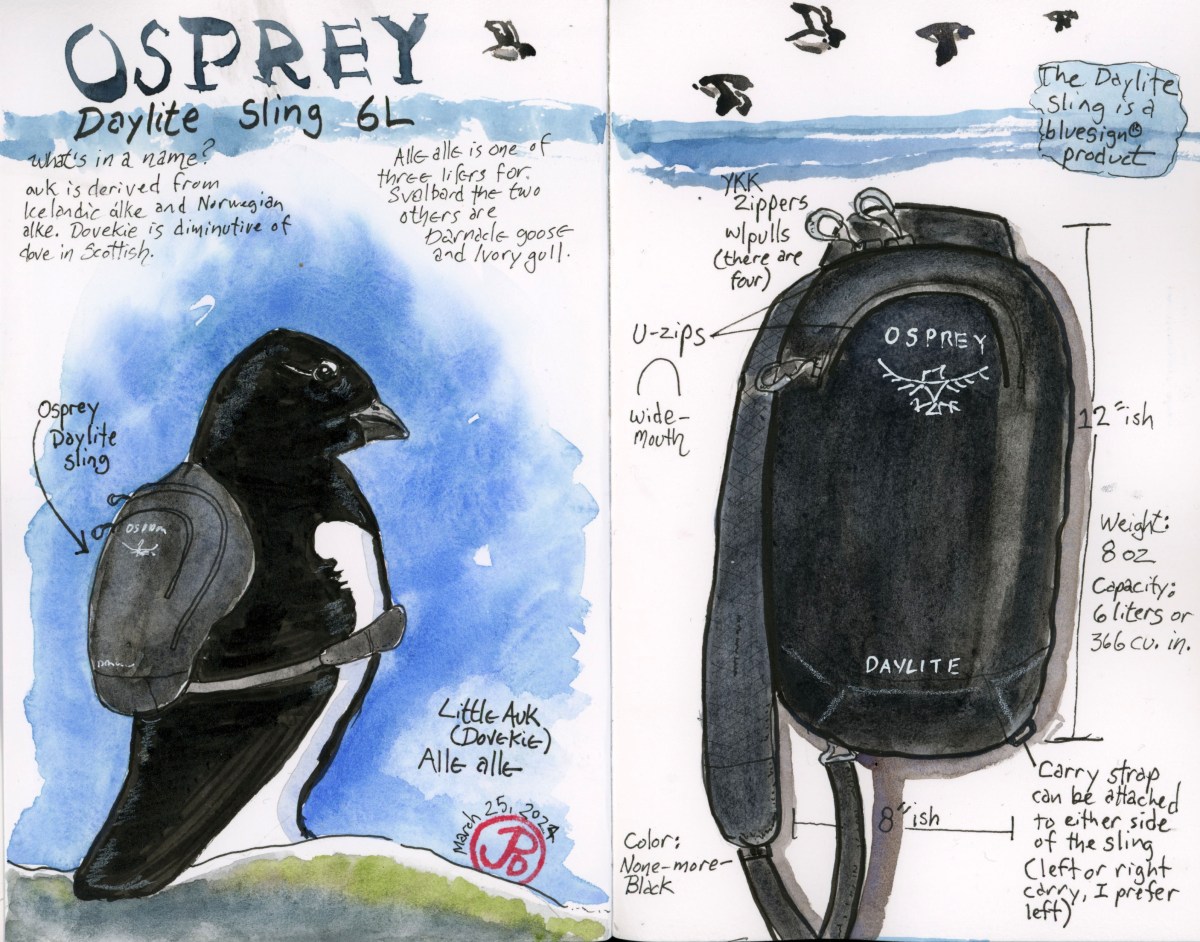
So I decided on the Osprey Daylite Sling. This bag has a 6 liter capacity, it can be worn on the left or right shoulder (I prefer the right), and it has two wide U-zipper mouths to allow access to the interior.

This is my fourth Osprey bag. They are quality built and very comfortable to carry and as an added bonus they were founded just down River Street from my cabin in Santa Cruz.

I did a spread about my new bag featuring a little auk or dovekie modeling the bag. This is one of three lifers I could get in Svalbard (barnacle goose and ivory gull are the other two). The chances of seeing little auk are high because they are the most populous bird in Svalbard.

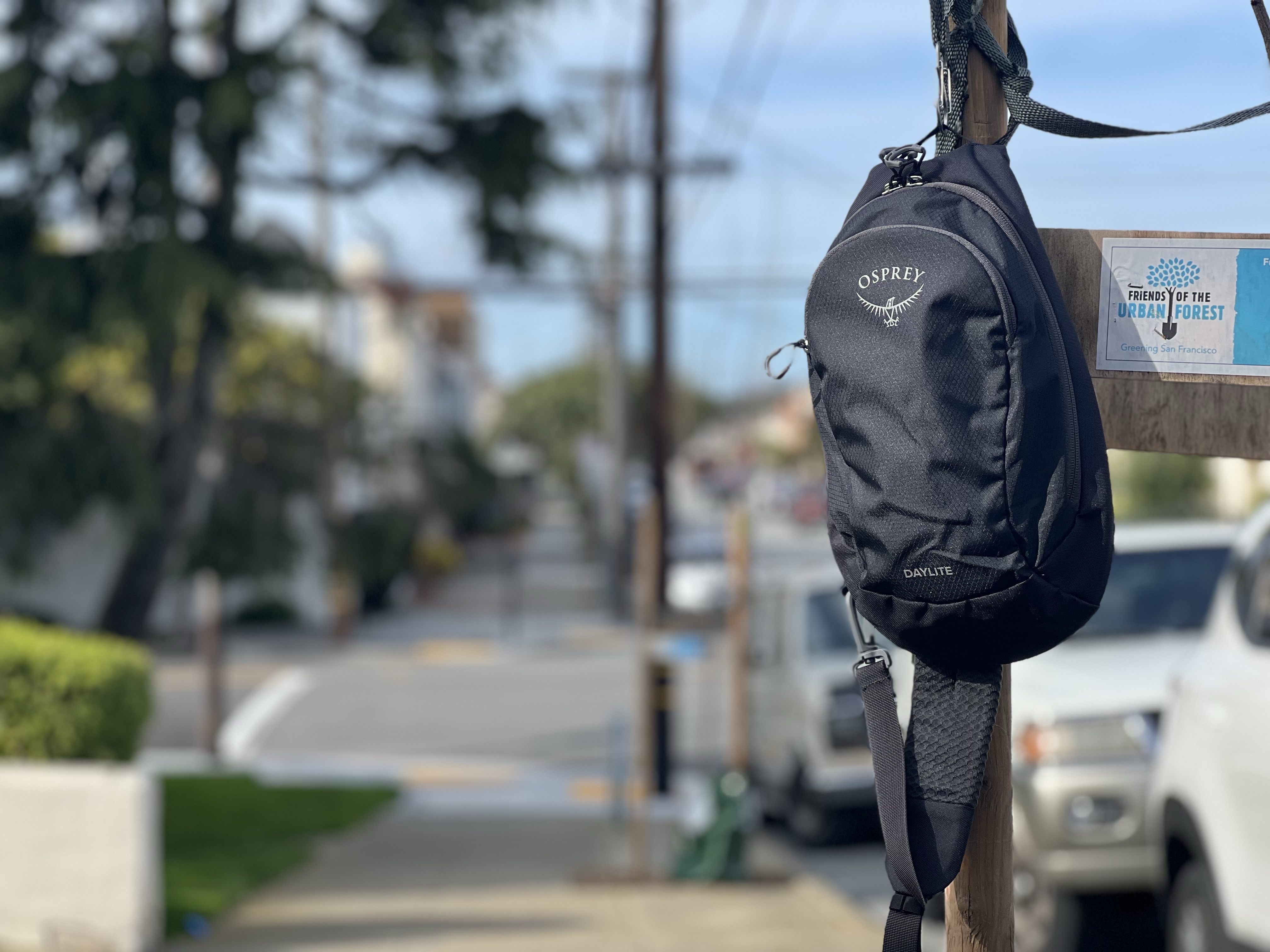
The Osprey Daylite in its natural urban habitat.
Image

Packing For the Arctic

There is one part of travel that I really enjoy: planning.

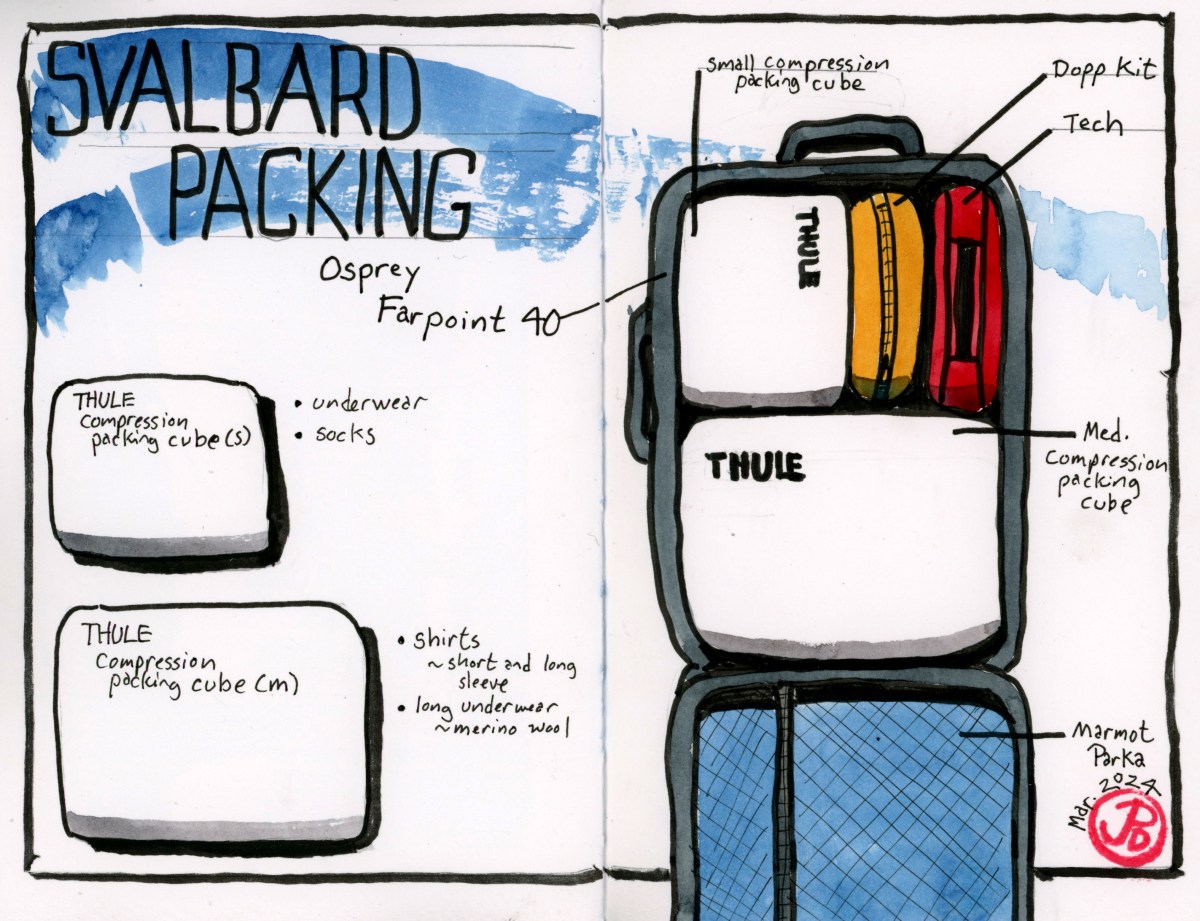
As part of the planning process, I use my journal to map, plan, and diagram. In this case I used a spread to explore packing for the polar summer in one carryon bag.

Was it even possible? Well I was going to find out.

The secret is using compressible packing cubes (it’s fitting that I’m using Thule from Sweden). This way I can pack more into my Osprey Farpoint 40 and the packing cubes help me stay organized on the road.

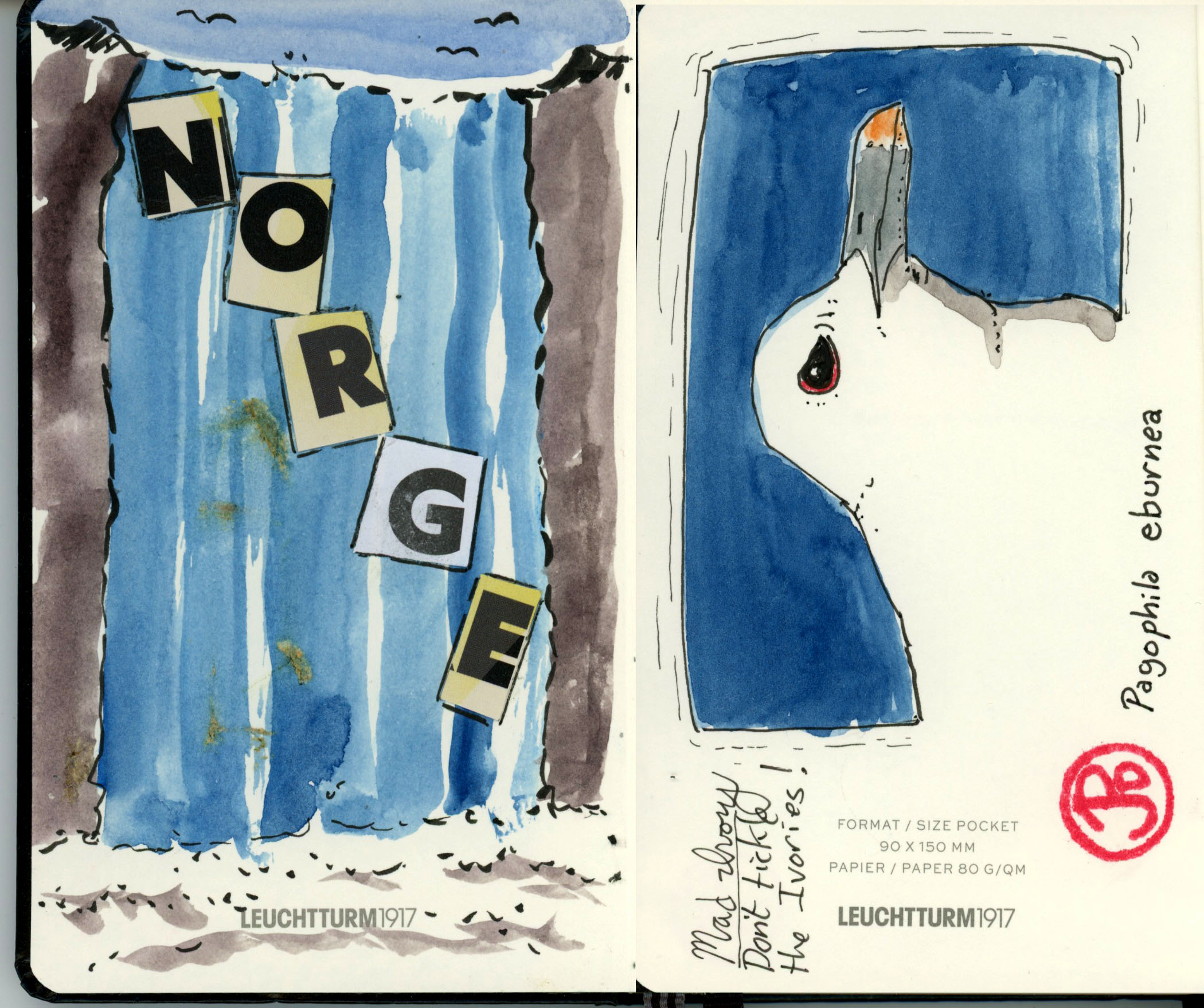
Before any important journey I also start a notebook. For my Svalbard adventure I chose a 3.5 by 5.5″ (90 X 150 mm) Leuchtturm1917 notebook. I do a lot of my preplanning in these notebooks and it is my constant companion while I’m on the trip.

I use it to write and note down details, lists, checklists, and thoughts and I often write blog posts in these small notebooks which easily fit into a pocket. And sometimes I do quick pens sketches too.

This is the front page of my Norway/Svalbard journal. To the right is a gull high on my wishlist: ivory gull. The cartoony gull reminds me of Kehar in the animated version of Watership Down.
Image

CalTrain Electric

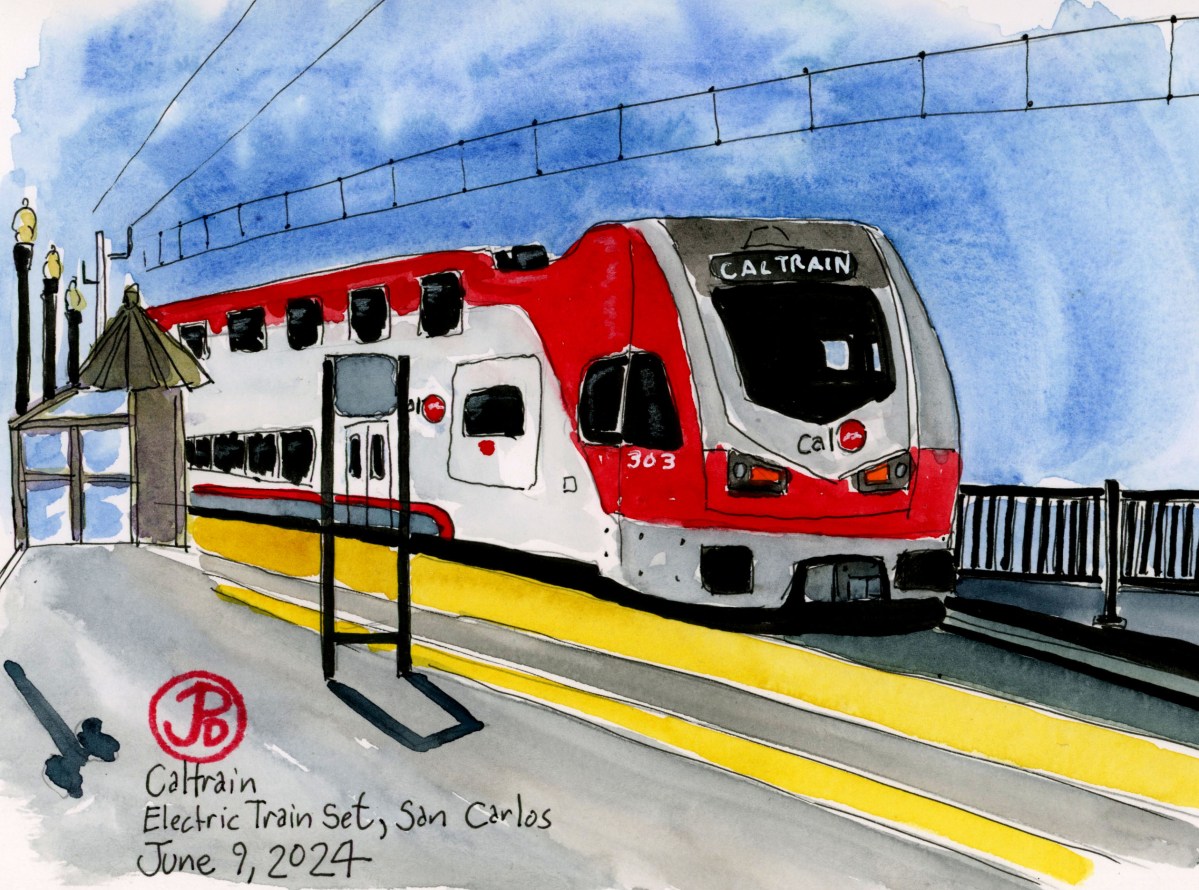
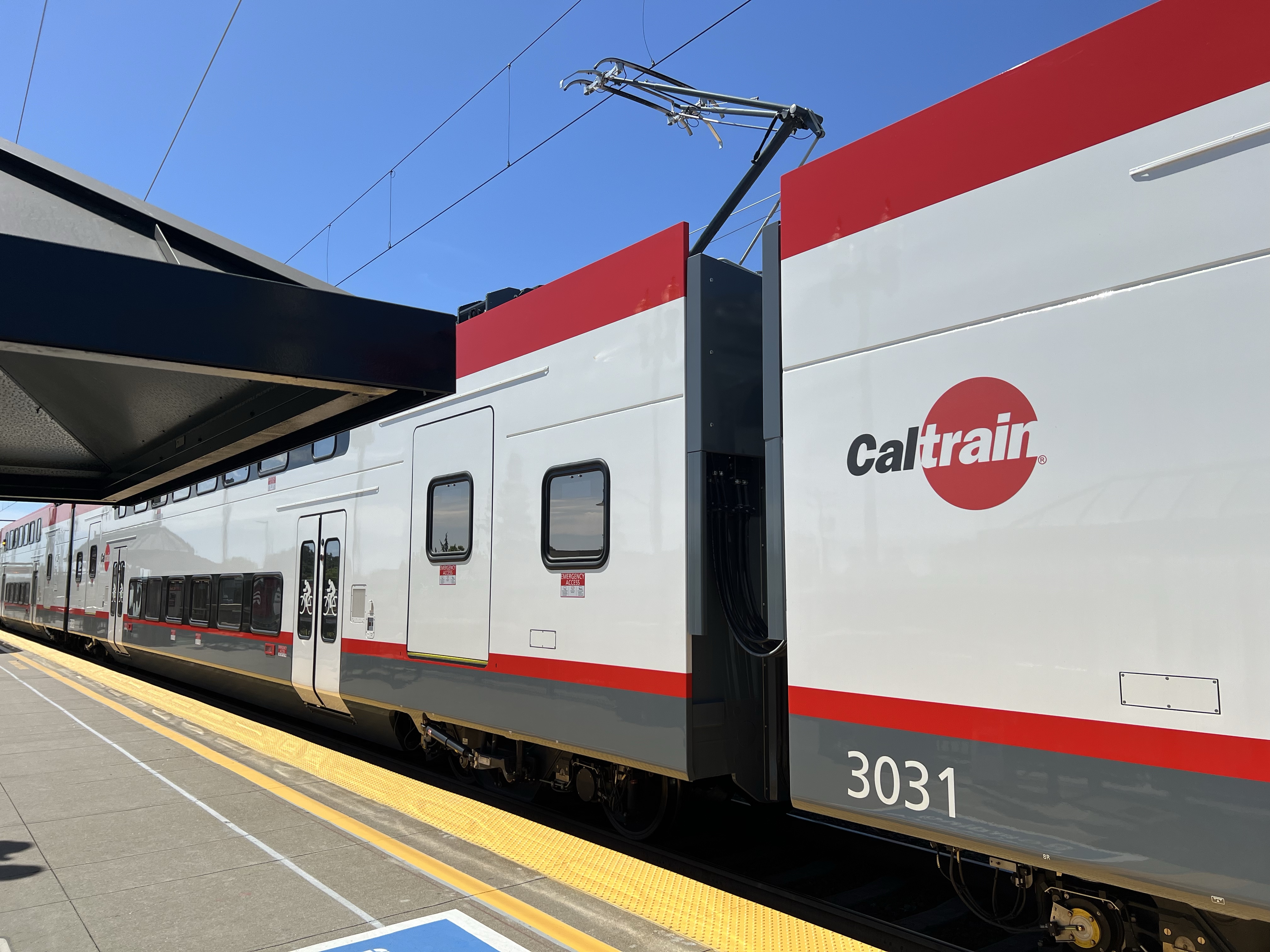
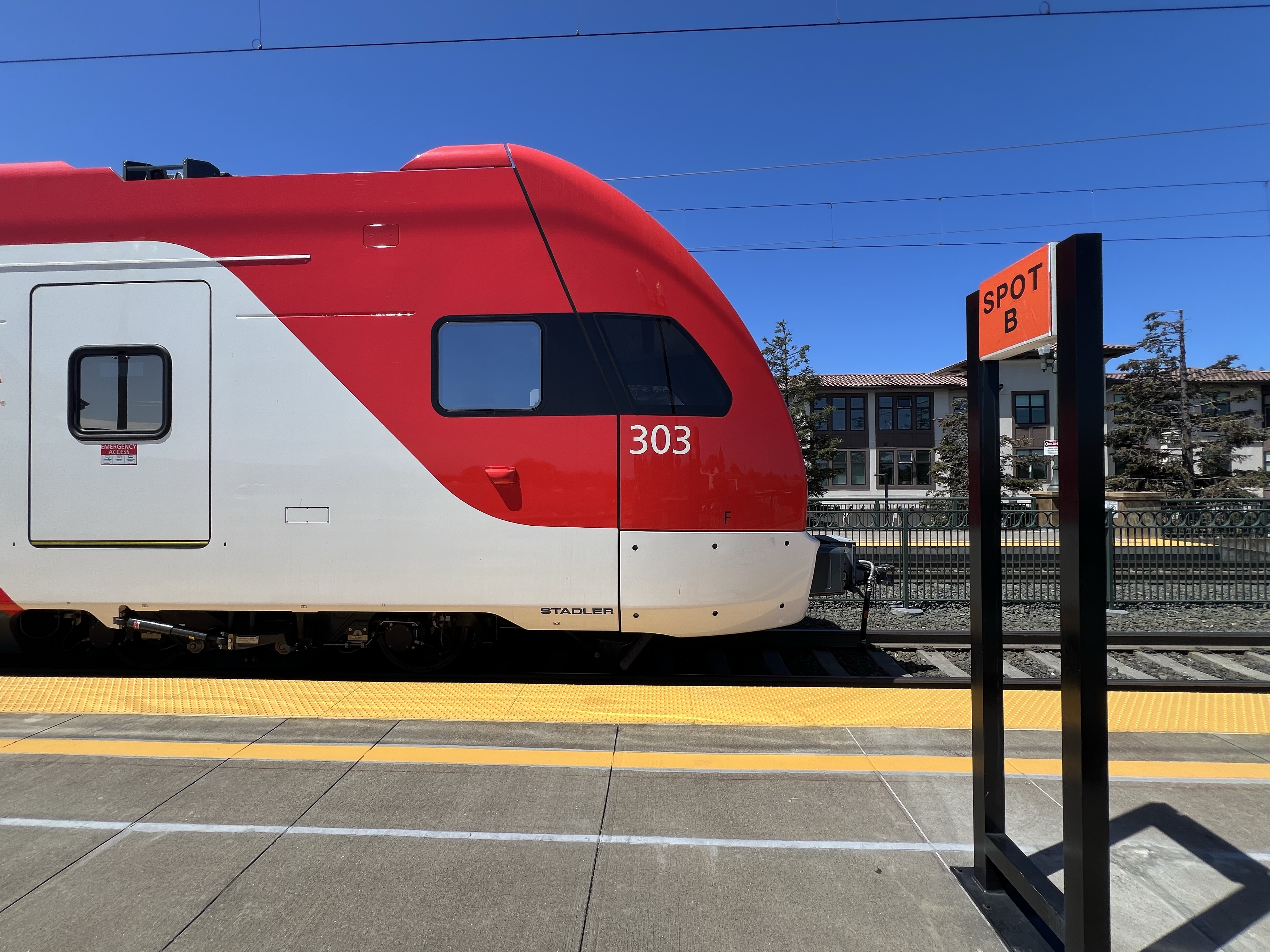
On a recent Saturday morning I had a pleasant surprise as I drove north on El Camino Real at San Carlos. At San Carlos Station was one of the new electric CalTrain sets.

The new trains are built by Stadler, a Swiss-based train manufacturer. The company was founded in 1942 and is headquartered in Bussnang, Switzerland. The company has a factory in Salt Lake City, where Stadler will build 24 train sets for Caltrain.

The train sets are known as BEMUs which stands for battery-equipped electric multiple unit.

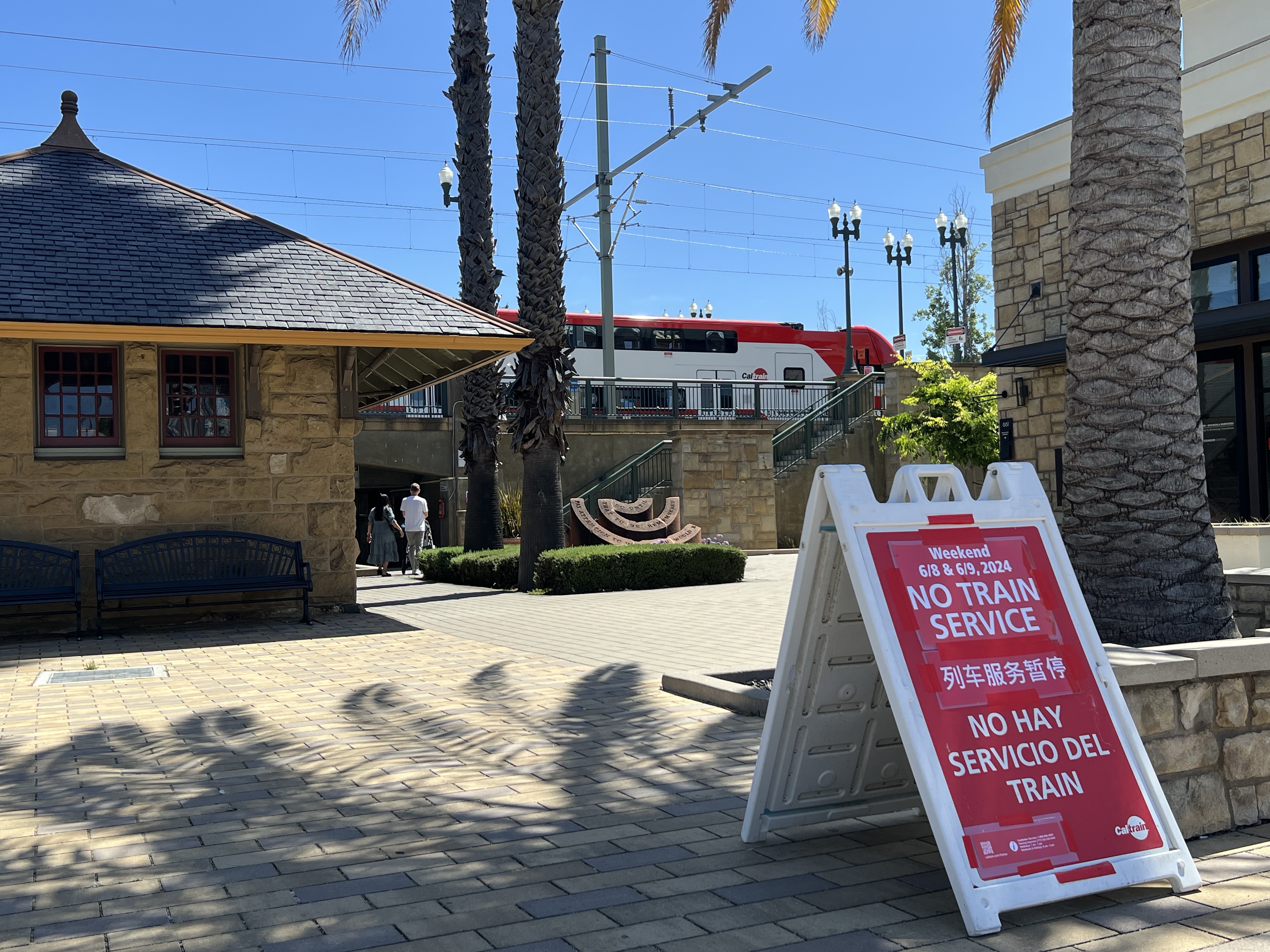
I parked, thinking that the train would surely have left the platform by the time I walked to the station but as I walked down San Carlos Avenue, the train was still stationary at the station.

As I crossed El Camino, a placard stated “No Train Service”. The line was closed all weekend.

The line was closed from San Francisco to San Jose so Caltrain could test eight of the new electric train sets. The electrification of the line started in 2017 and electric trains are scheduled to start running on September 21, 2024.

If you think of some of the most iconic passenger trains in modern rail: Japan’s Shinkansen (“Bullet Train”), France’s TGV, Eurostar, Amtrak’s Acela, Chinese Railways CRH, the Bay Area rail corridor was finally being electrified to catch up with the rest of the world, although it would not come close the top speeds of modern Shinkansen (186 mph).

Three quarters of the world’s passenger service are powered by electricity. About time!

This is what powers the new train sets: the pantograph that delivers power from the wires above to the train set below.
Not sure if these new trains sets earn any style points. They look like a large streetcar or tram.
Image

Coastal Rail Trail

On a gray Saturday morning I decided to explore a recently opened section (opened in December 2020) of the Coastal Rail Trail in Santa Cruz.

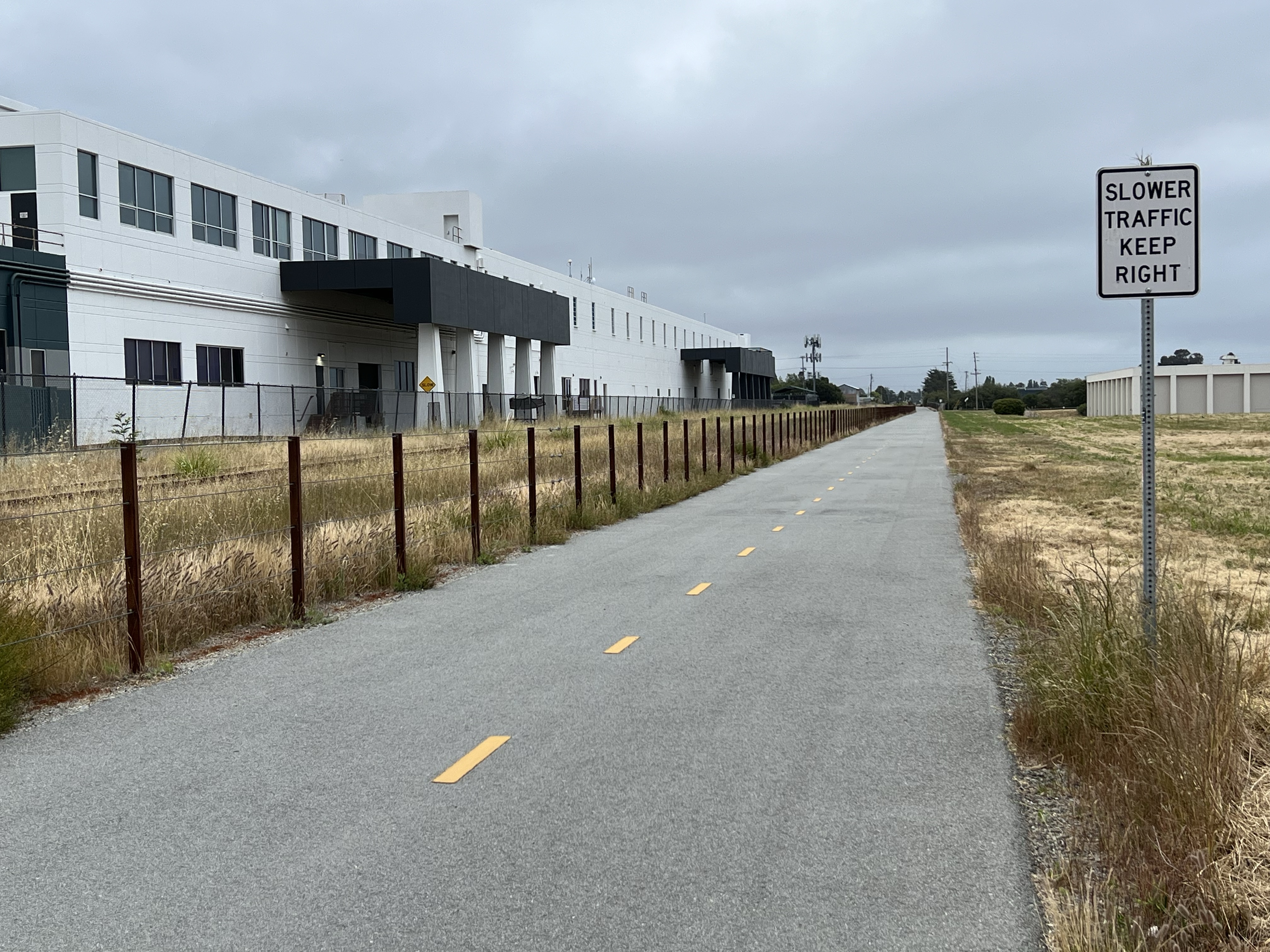
The section I was exploring (Segment 7) is between Natural Bridges Drive and Bay Street. The walk takes about 30 minutes and the round trip covers about two miles.

As the name implies, the paved pedestrian trail parallels the former Southern Pacific Davenport branch line from Watsonville to Davenport.

As of the date of writing only two sections of the trail have been opened, one in Watsonville and the section I was walking on in Santa Cruz.

At grade crossings there are pedestrian signals that stops cars so you can cross the street safely. Well that’s the theory anyway. With the trail recently open, pedestrians should still use caution and not assume all vehicles will stop for you.

When the trail is completed, it will cover 32 miles from Davenport to Watsonville. There are also plans to introduce electric rail service using the former Southern Pacific right of way and trackage.

I started where the rail trail ends: Natural Bridges Way.

The Rail Trail passes by the former Wrigley Chewing Gum plant (left). The plant was in operation for more than 40 years and produced 20 million sticks of gum per day. The plant had a rail siding that is still visible today.

In my college days I remember visiting the gum factory with my roommate in an unsuccessful attempt to get a plant tour. The receptionist told us that they didn’t give tours but asked us if we would like some gum! We answered in the affirmative and then opened a drawer full of gum. I went for Big Red while my roommate picked Juicy Fruit.

The trail is level as it parallels the rail grade. Railroad grades normally don’t exceed 2%. The steepest mainline railroad grade is 3.3% on the Raton Pass grade in New Mexico. A railroad grade is expressed as a percentage the grade rises or falls over 100 feet of horizontal distance. So a 2% grade rises and falls two feet over a 100 feet distance. These gentle grades are ideal for walking and biking.

I passed by the New Leaf Market at Fair Ave, often my first stop when I head into town, as the trail and line turns slightly to the left skirting the Westside Circles neighborhood.

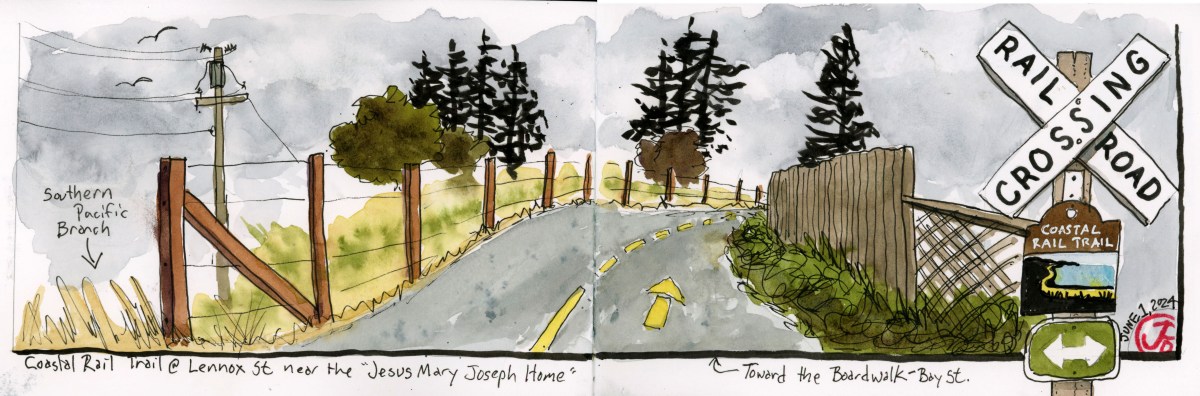
I came upon a scenic curve in the trail at Lennox Street as the rails and trail curve off to the right as it nears Bay Street. I pulled my sketchbook out of my bag and started sketching the view (featured sketch).

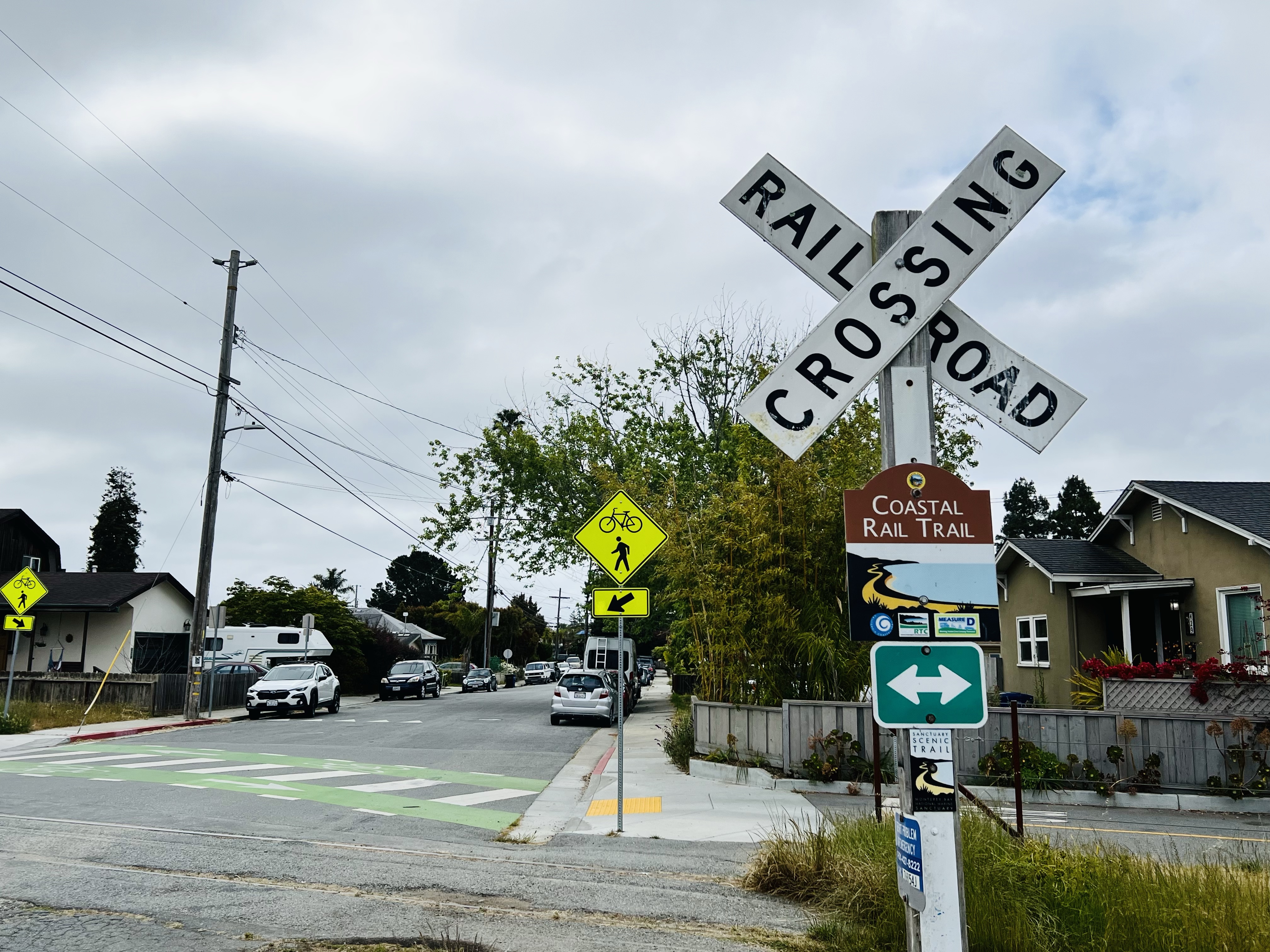
On the right of the spread I sketched the grade crossing sign at Dufour Street with Coastal Rail Trail sign below the crossbuck.