Image

Coloma Sketcher

It was nice to be back in Coloma without 50 fourth graders and 12 chaperones in tow.

I would be back with them in about a month so I wanted to get a few sketches in on a beautiful spring morning.

I parked in front of the visitor’s center and hiked up the road, past the ruins of the jail, past the cabin where James Marshall lived to the hill where Marshall still rests.

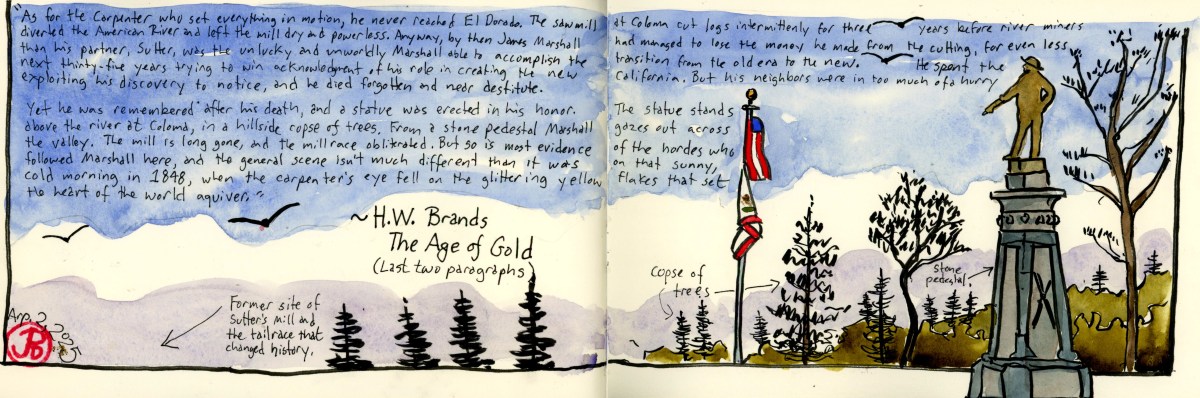
I have sketched the Marshall Memorial many times and this monument has because a sketching touchstone for me. I don’t get an opportunity to sketch it with a group of 4th graders I am looking after but that’s why I cherish my time here alone. Call it a sketching meditation.

I envisioned a panoramic sketch with the monument on the right and I wanted to include two of my favorite paragraphs about Marshall and Coloma from H. R. Brand’s masterful account of California’s Gold Rush: The Age of Gold. The two paragraphs are the last two in the book. I love a book with a great ending. And this is a great book!
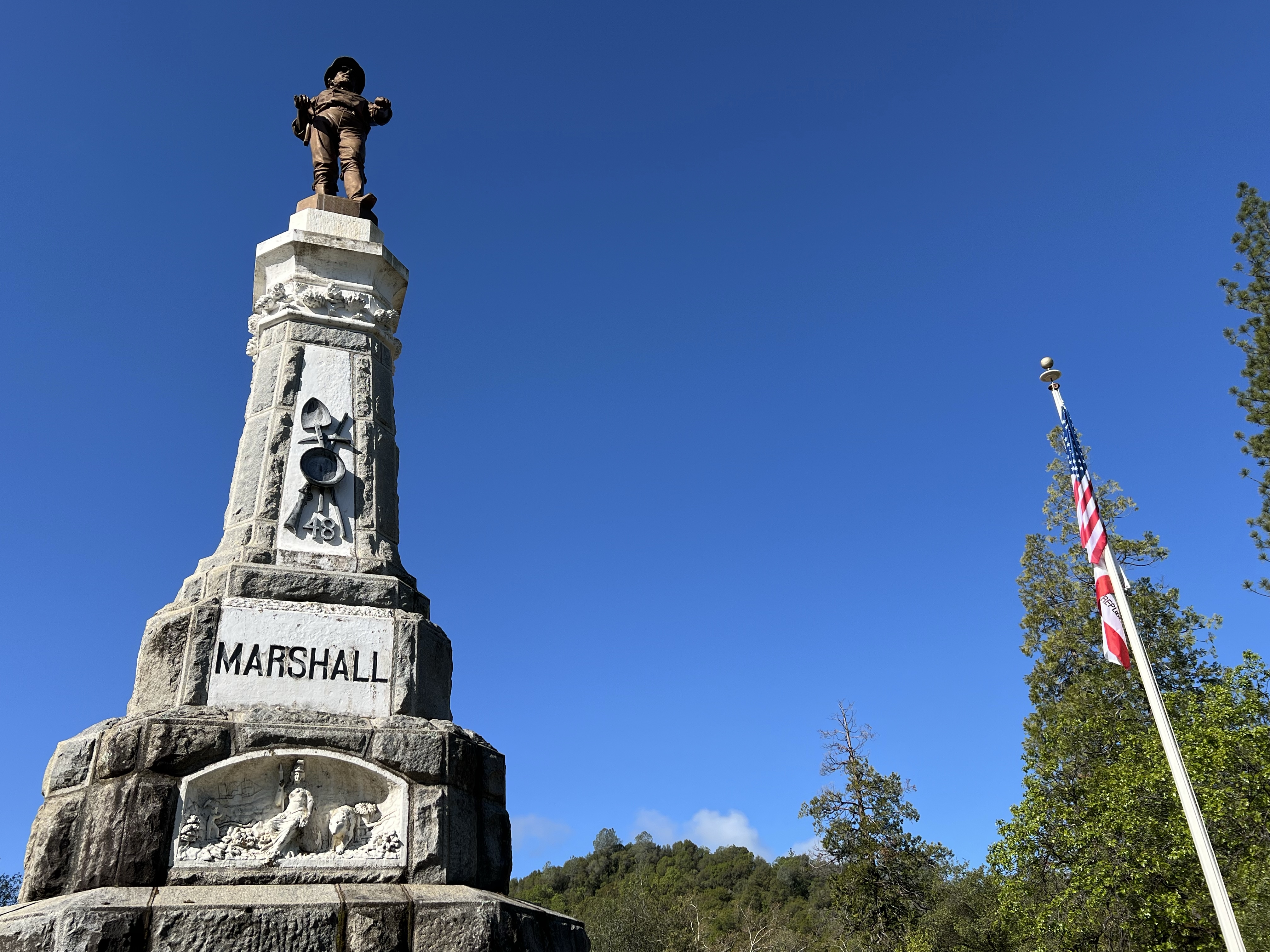
The Marshall Monument in Coloma.

I sat on a park bench and started sketching. I had the place to myself.

Meanwhile buses and cars full of fourth graders and their chaperones pulled into parking lots in the valley floor below.
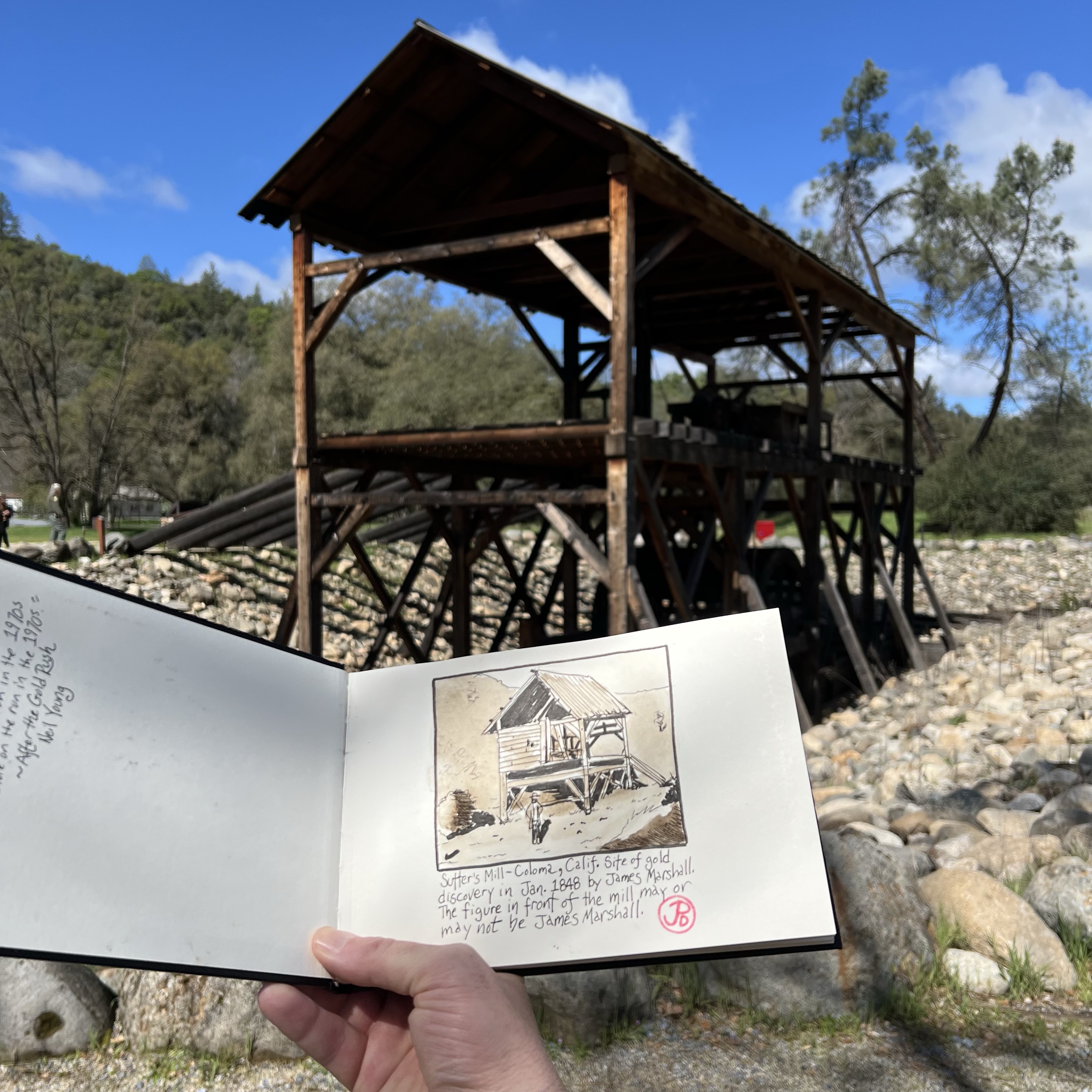
To open my sketchbook I drew a famous photograph of Sutter’s Mill. Here it is with the current replica at Coloma.

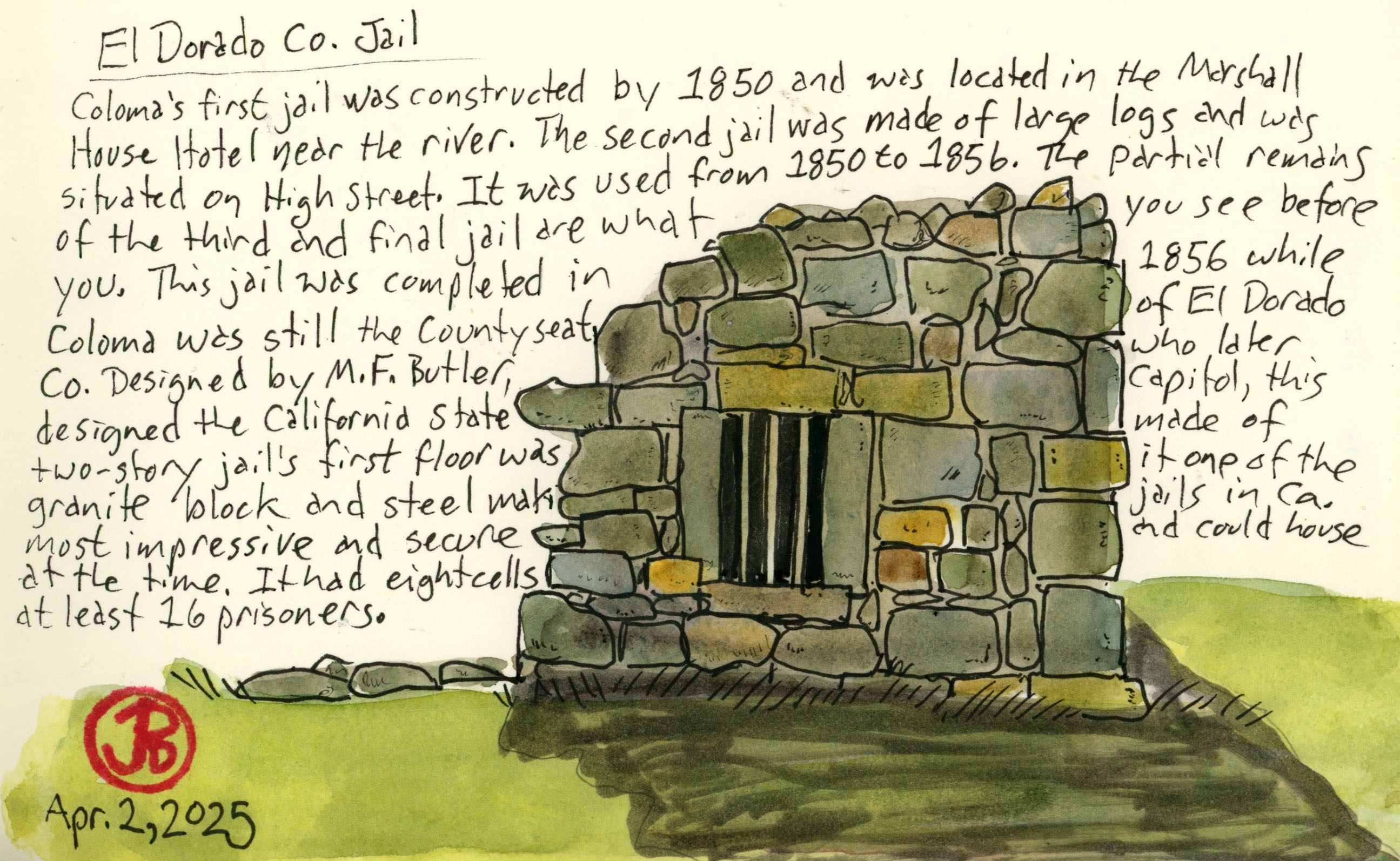
After sketching, I returned to the valley floor via the Monument Trail. I headed away from the growing crowds at the Gold Discovery Museum to sketch the jail ruins.
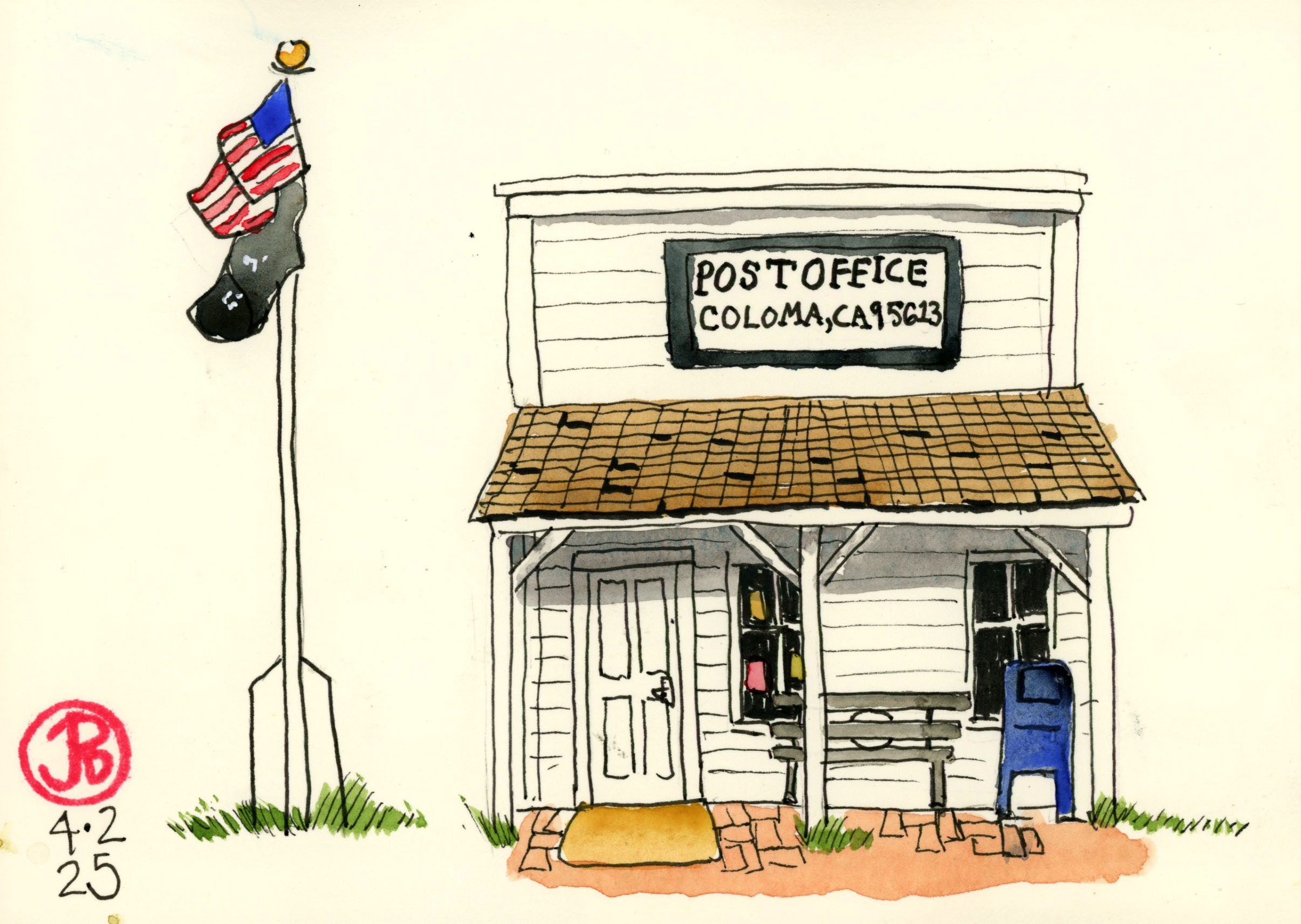
I then walked over to Highway 49, Coloma’s Main Street and I sketched the quaint Post Office.

The first post office in Coloma (then spelled “Culloma”) was opened in 1849. The town has seen at least seven different post offices and the current building was opened 100 years after the first in 1949.
I love Coloma and I love bringing fourth graders here and seeing them experience Coloma for the very first time!

Bring it on!
Image

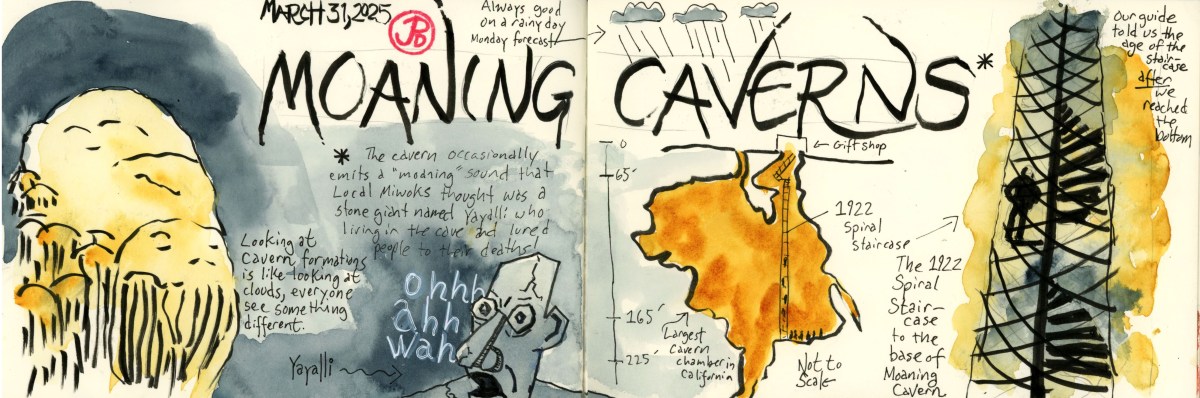
Moaning Caverns

What do you do on a rainy day spring break vacation to the Gold Country?

You go underground! 165 feet underground.

The “moaning” of the caverns are named for a sound that was emitted for the cave when the wind was right and the water table was in alignment. But the cavern is mostly silent now.

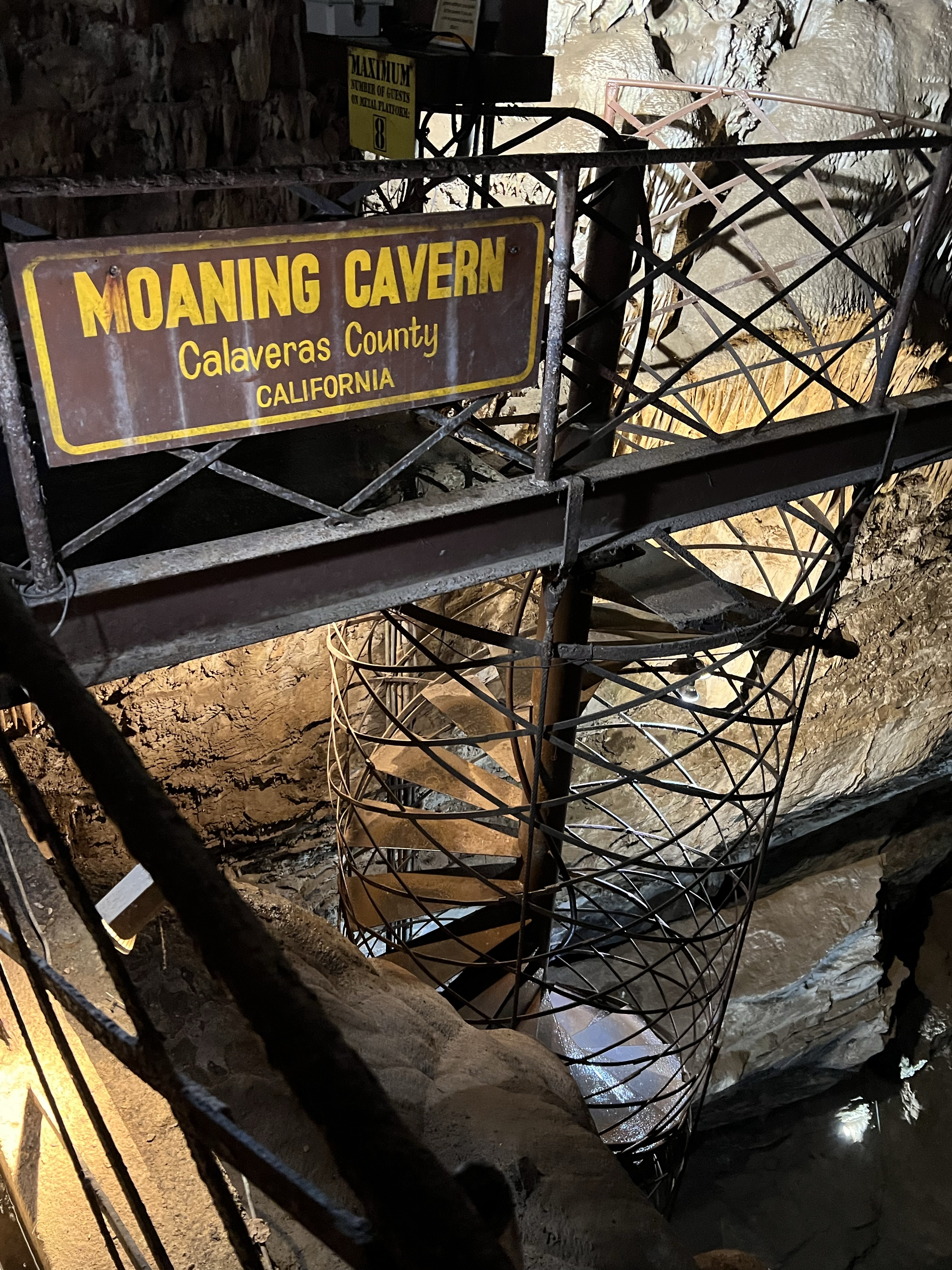
Moaning Caverns has one of the most interesting descents into a cavern. A spiral staircase spirals 16 stories down to the base of the main chamber. Our guide told us the age of the structure only when we were all at the bottom.

The steel staircase was built in 1922 making it just over one hundred years old! It is easy to lose your sense of depth while descending the spiral staircase; you always think the bottom is just around the next turn only to find yet another turn.

The start of the spiral staircase descent.

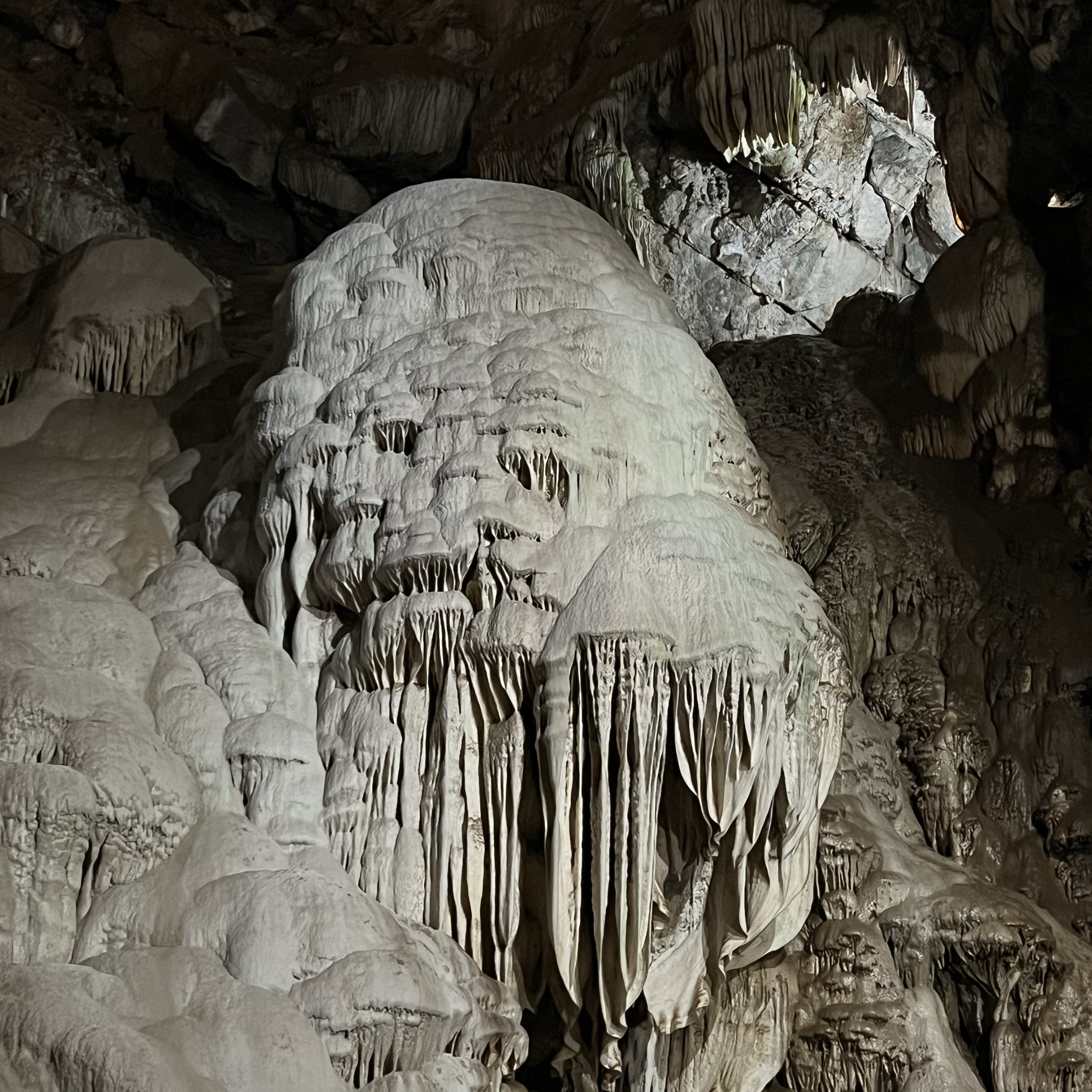
When you reached the bottom of the stairs you are in a vast cavern and our guide pointed out cloud-visions amongst the formations. Jaws there, a dragon up there, and a baddie from one of the Star Wars films. Some I could see while others were a complete stretch.

This seems to be a rule for naming cavern forms; a mixture of cultural references and food much like the differing names for Ursa Major: the Starry Plough, the Great Wagon, the Bear, and the Big Dipper. Different interpretations for the same object.

Is this a walrus, a creature from Jabba’s Palace, or a mutant pirate? It’s all in the eye of the beholder.

On my 16 story spiral accent I arrived a bit out of breath to see a former student (currently a 5th grader) who was about to spiral down into the cavern.

Her hand was bandaged to cover the stitches, as a result of her younger brother skiing over her hand at Dodge Ridge. I hoped she could navigate the stairs “one handed”.

I later found out that she did!

Image

Jumping Frogs of Calaveras County

It’s wonderful when a tall tale becomes a reality.

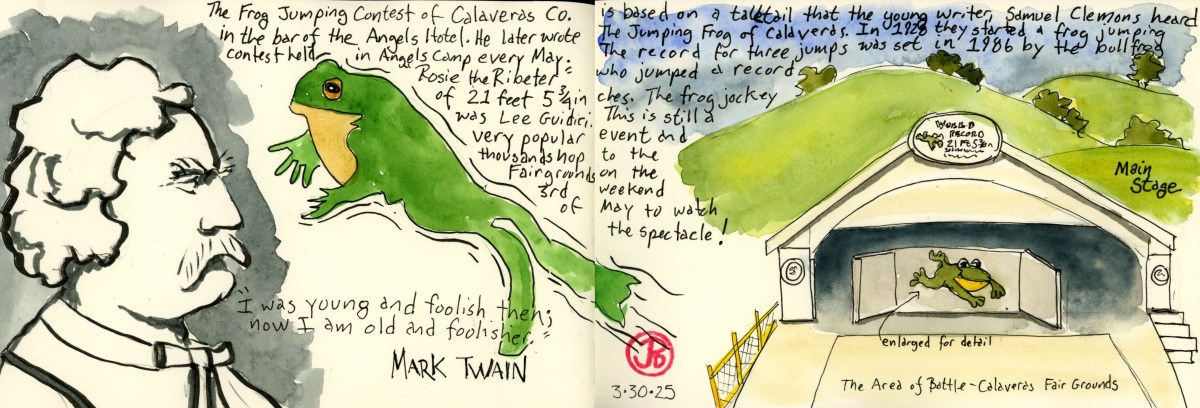
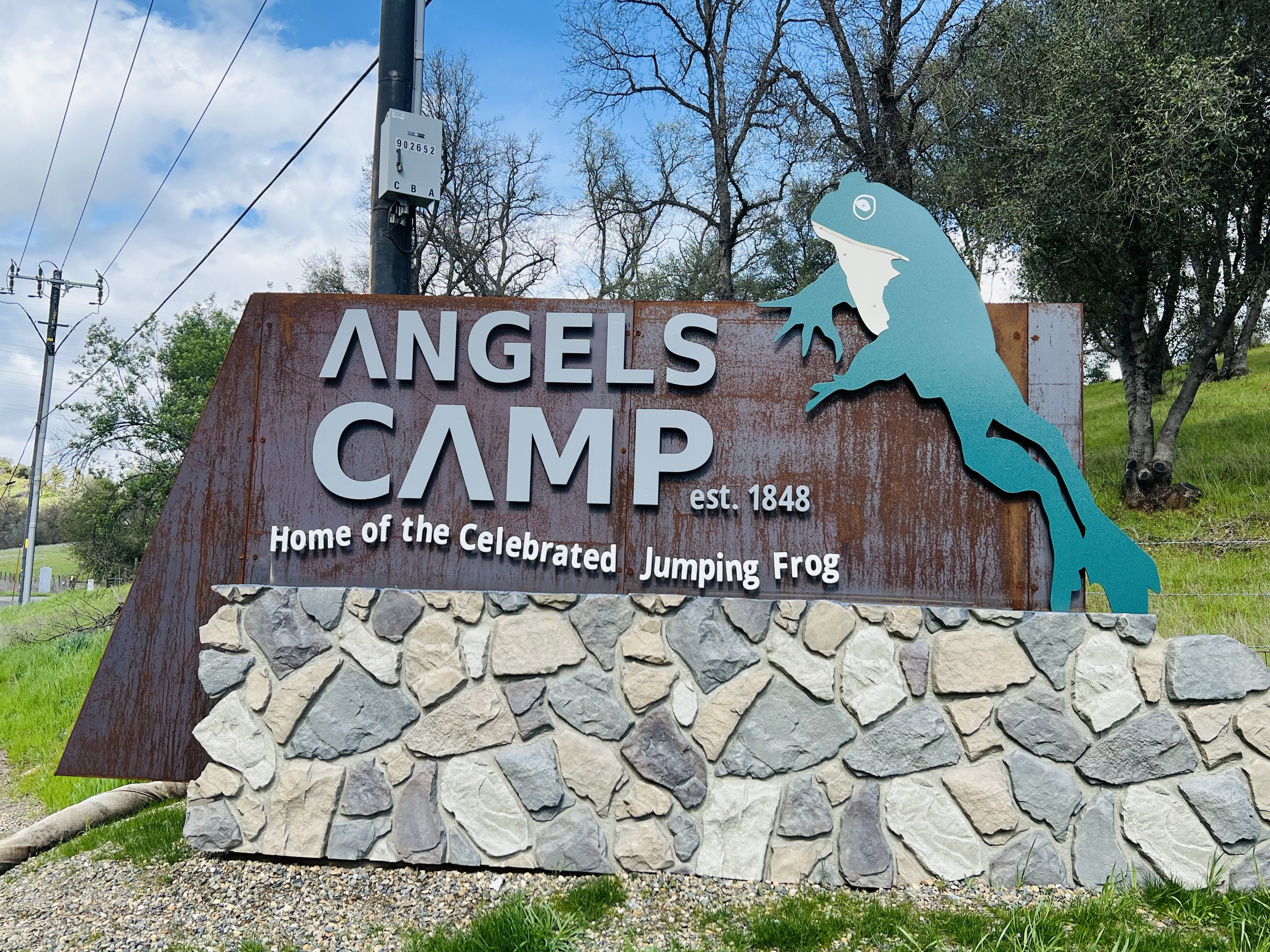
Such is the tale of the Jumping Frogs of Calaveras County. Legend has it that it was a yarn told in a bar in the Angels Hotel. The tale was picked up my a young writer Samuel Clemons. He later changed his pen name to Mark Twain.

He found early success with the publication of the short humorous piece, “The Celebrated Jumping Frog of Calaveras County“. Since that time be put Calaveras County, Angels Camp, and jumping bullfrogs on the map.

In 1928, the Jumping Frog Jubilee started in Angels Camp to commemorate the paving of Main Street. The completion has been hopping along ever since.

Angels Camp revels in it’s herp past.

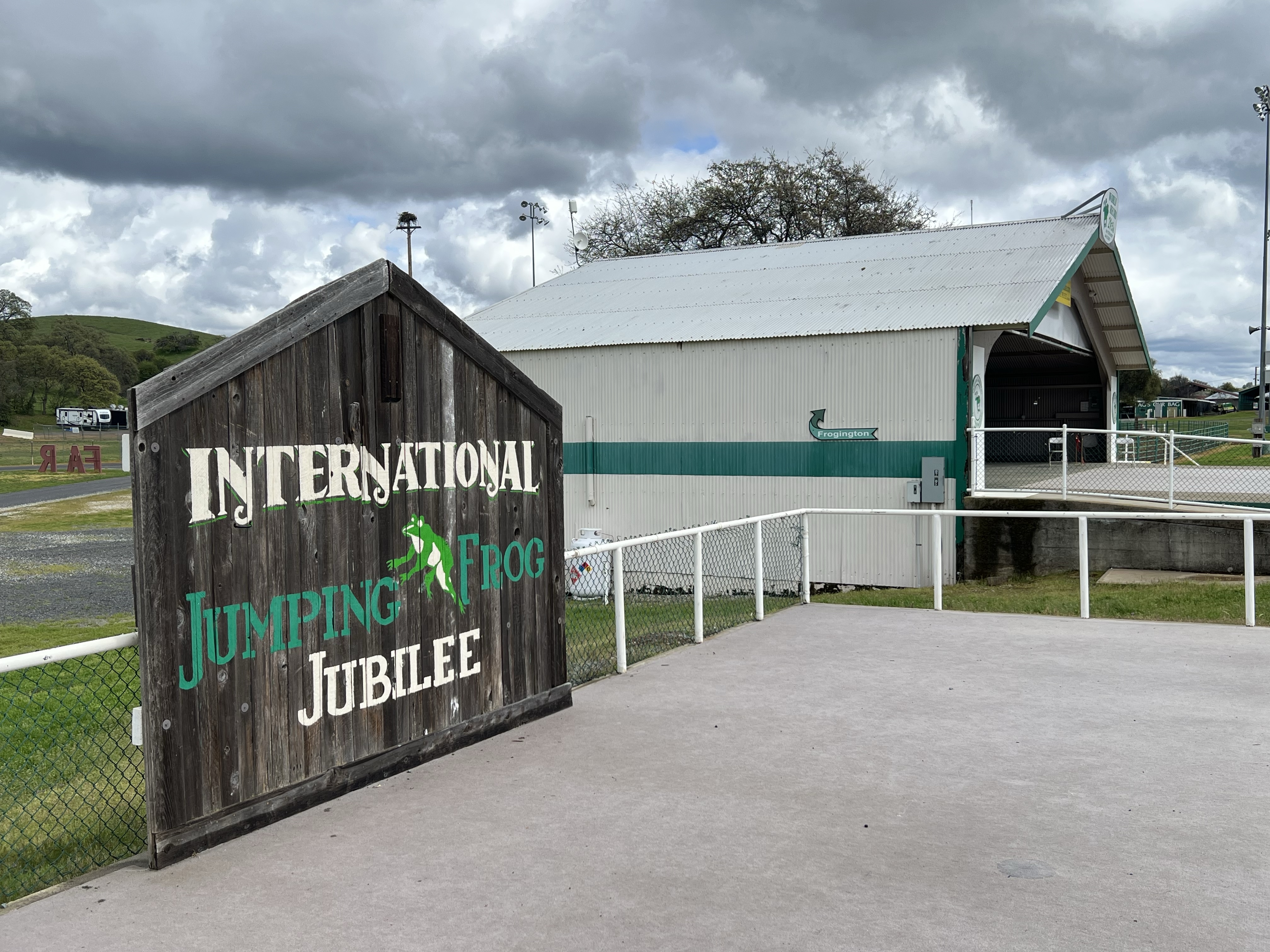
I wanted to explore the arena for the unique contest at the Calaveras County Fairgrounds.

While today the contest in the main hall was roller derby not leaping frogs I found the outdoor stage that was the testing ground on the third weekend in May. I found a seat in the bleachers and sketched the stage with the beautiful green rolling hills of the Gold Country as my anchor sketch.

To the left of the spread I sketch a bust of Twain at the Angels Camp Museum.

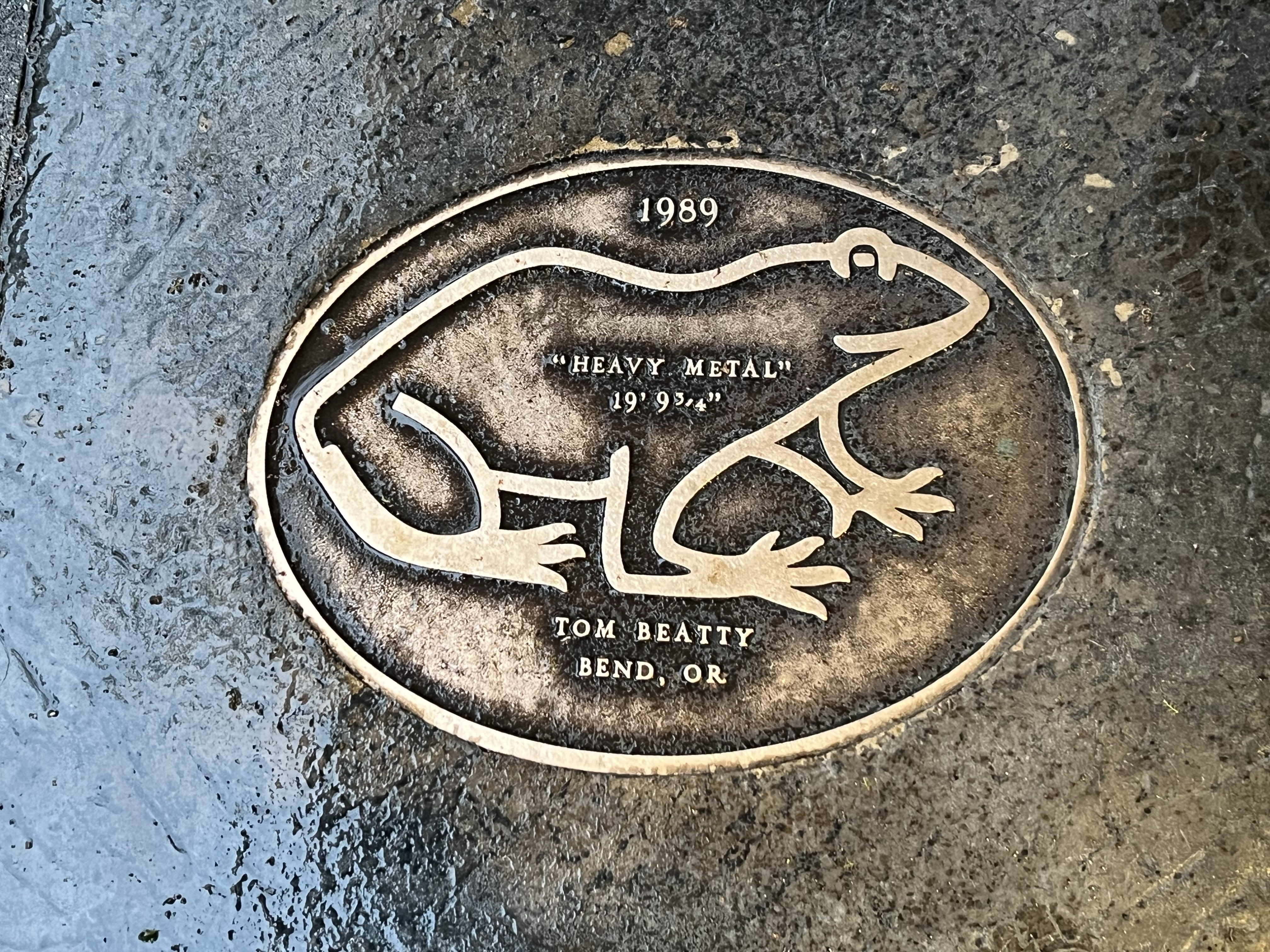
The record jump (set in 1986) still is 21 feet and 5 3/4 inches. The frog jockey was Lee Giudici and the frog: Rosie the Ripiter.

Past winners are memorized on the side walk of Main Street (Highway 49) in Angels Camp.
The stages at the Calaveras County Fair.
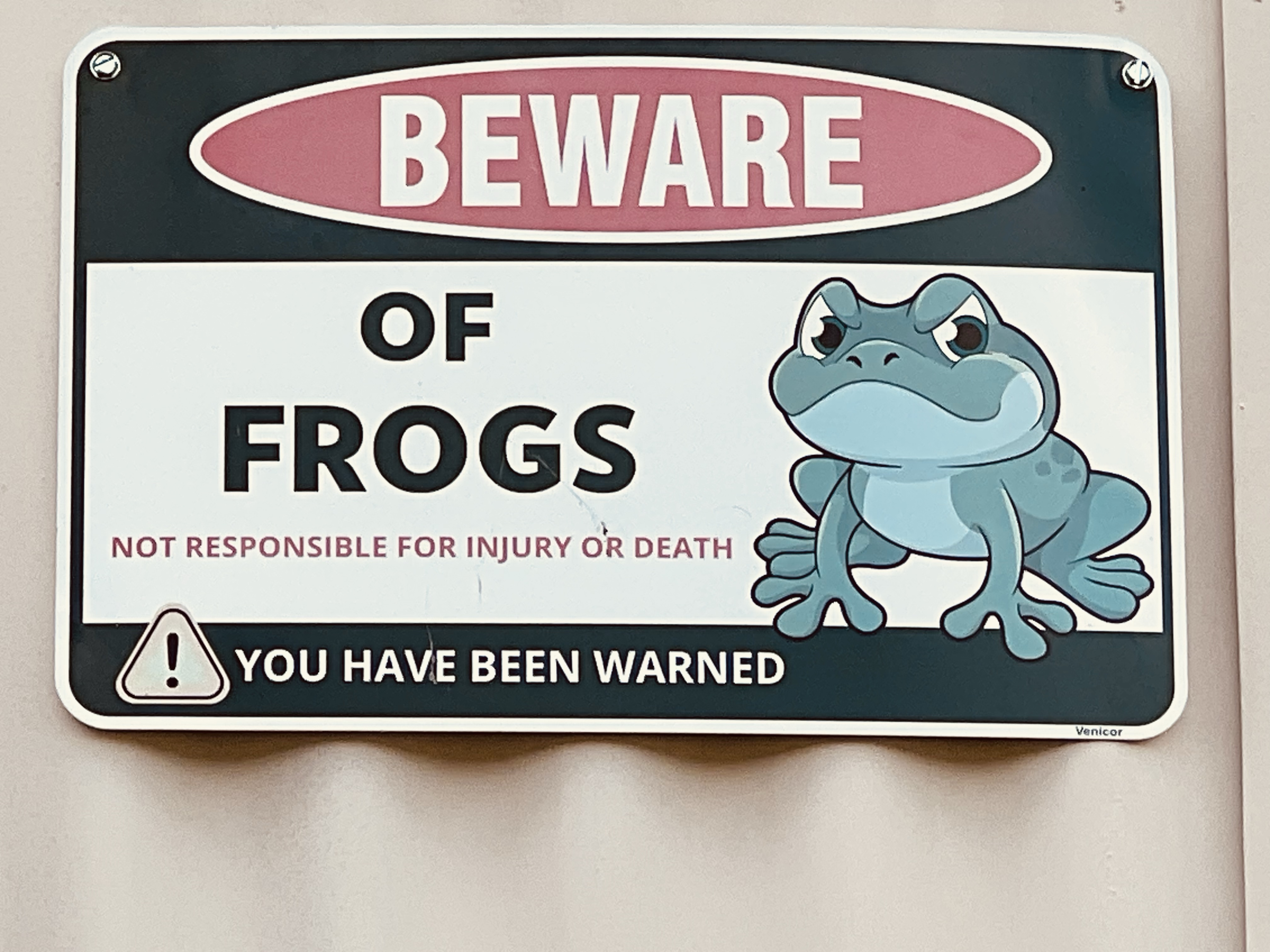
This contest seems to maintain a healthy sense of humor as evidenced by this sign at the back of the stage.
Image

Mercer Caverns

There was a time our 5th graders attended the Sierra Outdoor School (SOS) near Sonora for outdoor education. Before they arrived to do the Duffle Shuffle at their new digs, they headed over to Murphys to do some spelunking at Mercer Caverns, so I thought I wouldn’t mind heading 16 stories underground.

This cavern system is not for the faint of heart, the exceedingly tall, or the claustrophobic.

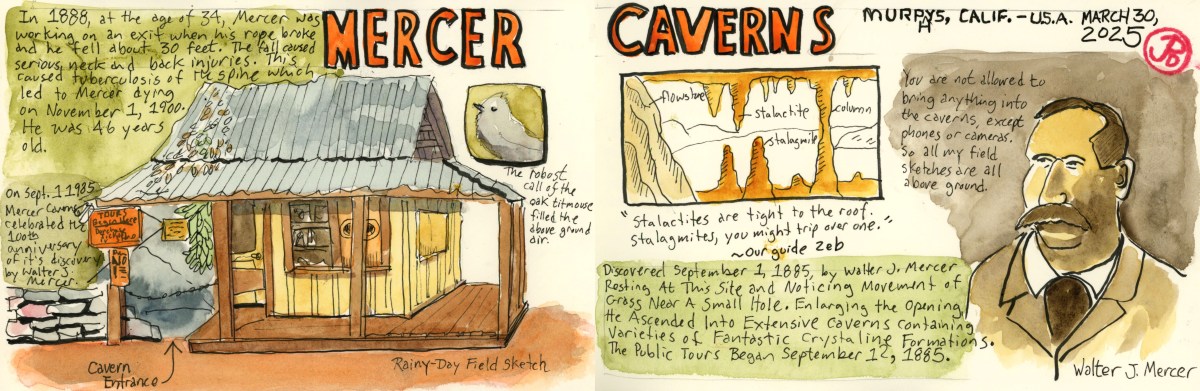
It was “discovered” by its namesake Walter Mercer. Why the quotes? Well native Californians knew of the cavern’s existence at least 1,500 years ago and native remains were found in the caverns.

But on September 1, 1885, Mercer chanced upon the caverns in a search for water. He failed as a gold miner but struck pay dirt with this discovery. Here he was mining the tourists and thrill seekers.

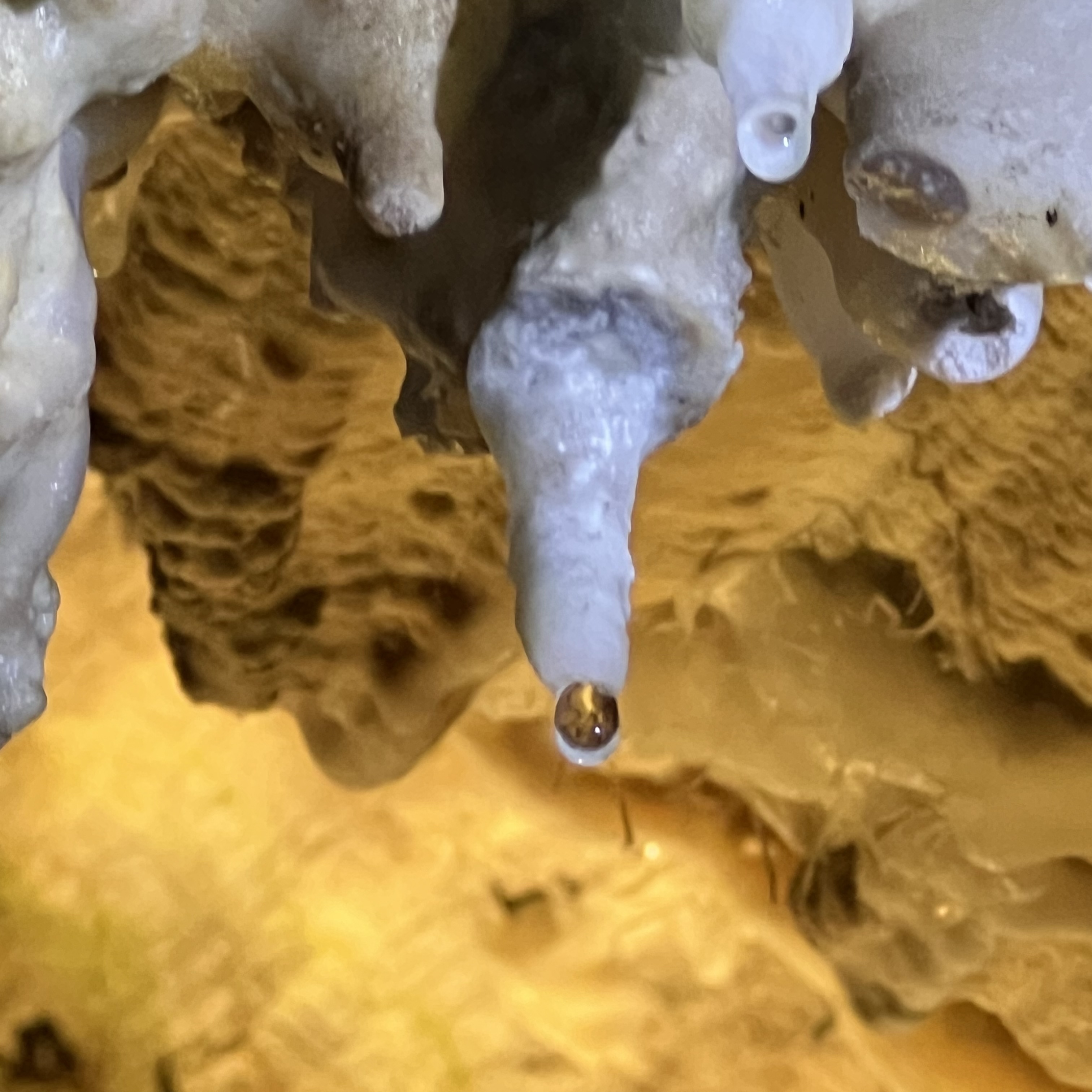
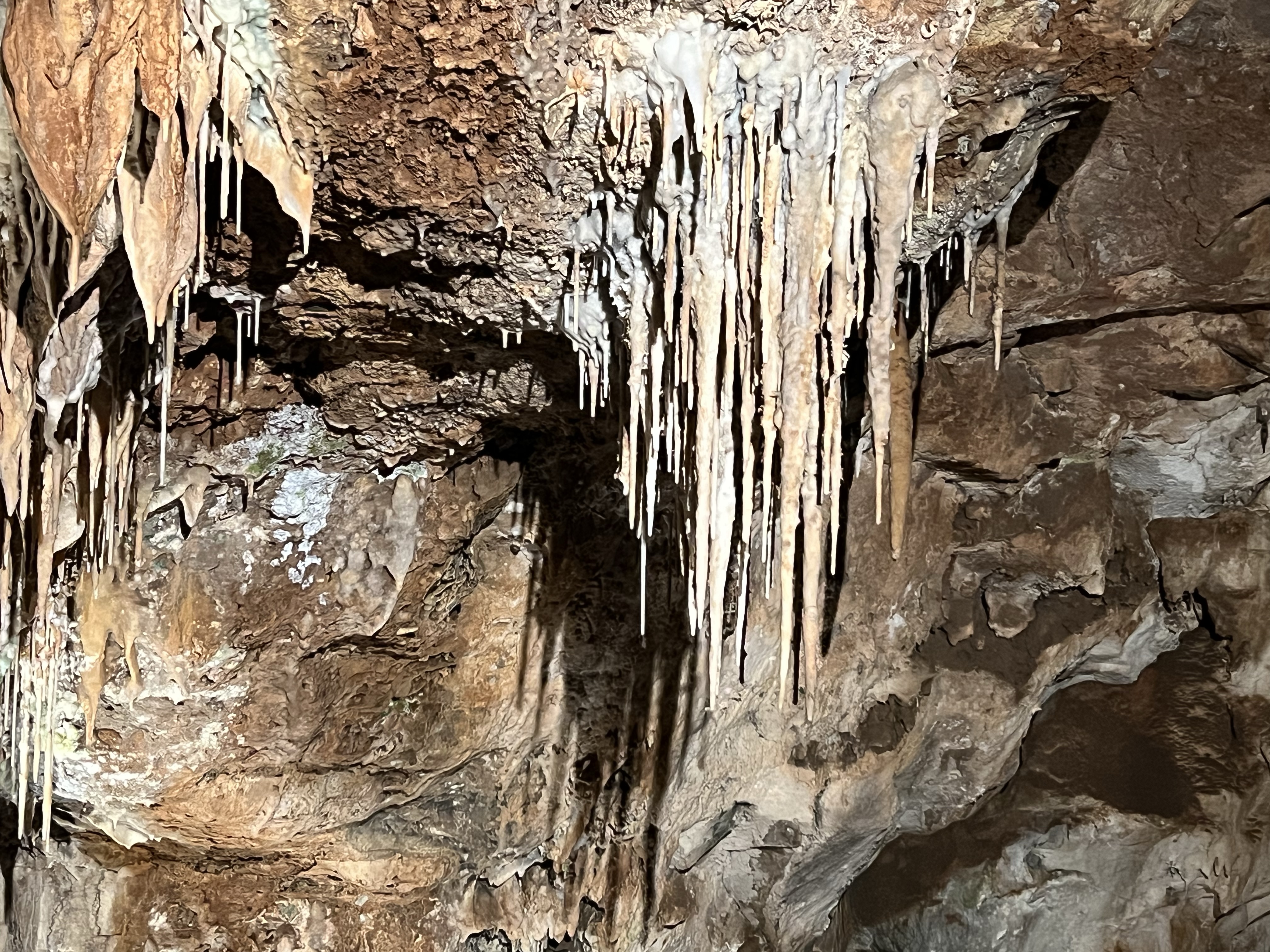
A young stalactite grows slowly, very slowly.

Our guided tour lasted about 45 minutes and luckily I only hit my head once (near the exit).

It was also near the exit that Mercer took a big fall when his rope failed and he fell 30 feet. The fall killed him, it just took twelve years to do so. The fall caused injury to his neck and back and this later led to tuberculosis of the spine. He finally died from his fall on November 1, 1900. Mercer was 46 years old.

While I could not bring my sketchbook into the caverns, I was able to sketch the shack near the entrance. And there was a seated shelter to protect my sketch from the drizzle. This provided the anchor of the sketch.

Some older stalactites.
Image

Rainy Murphys Sketches

As my Gold Country Spring Break trip neared, rain (and snow flurries) were forecast from Sunday to Tuesday.

This throws a wrench into my sketching plans in my base camp of Murphys. Sketching with rain smears your efforts into a soggy mess. No matter. I would just use my waterproof, movable, sketching blind, ie my car!

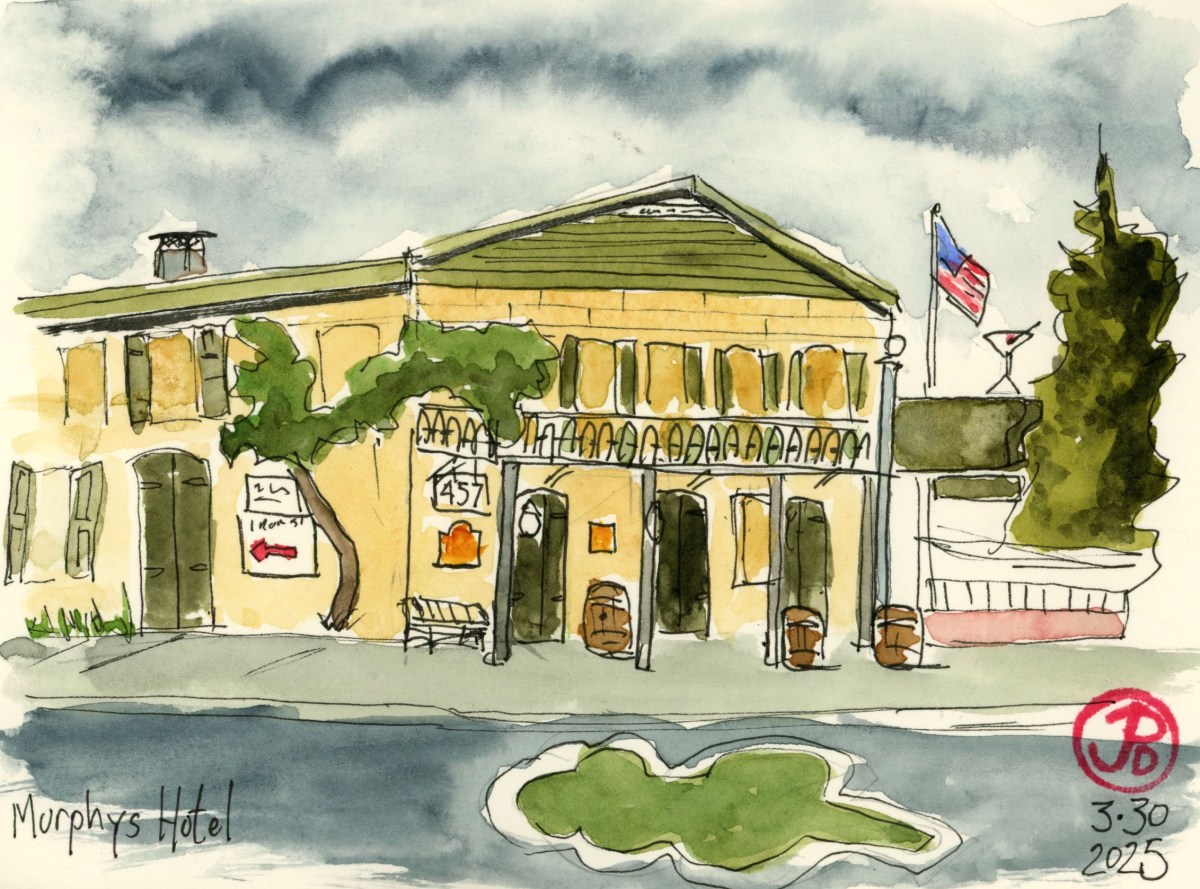
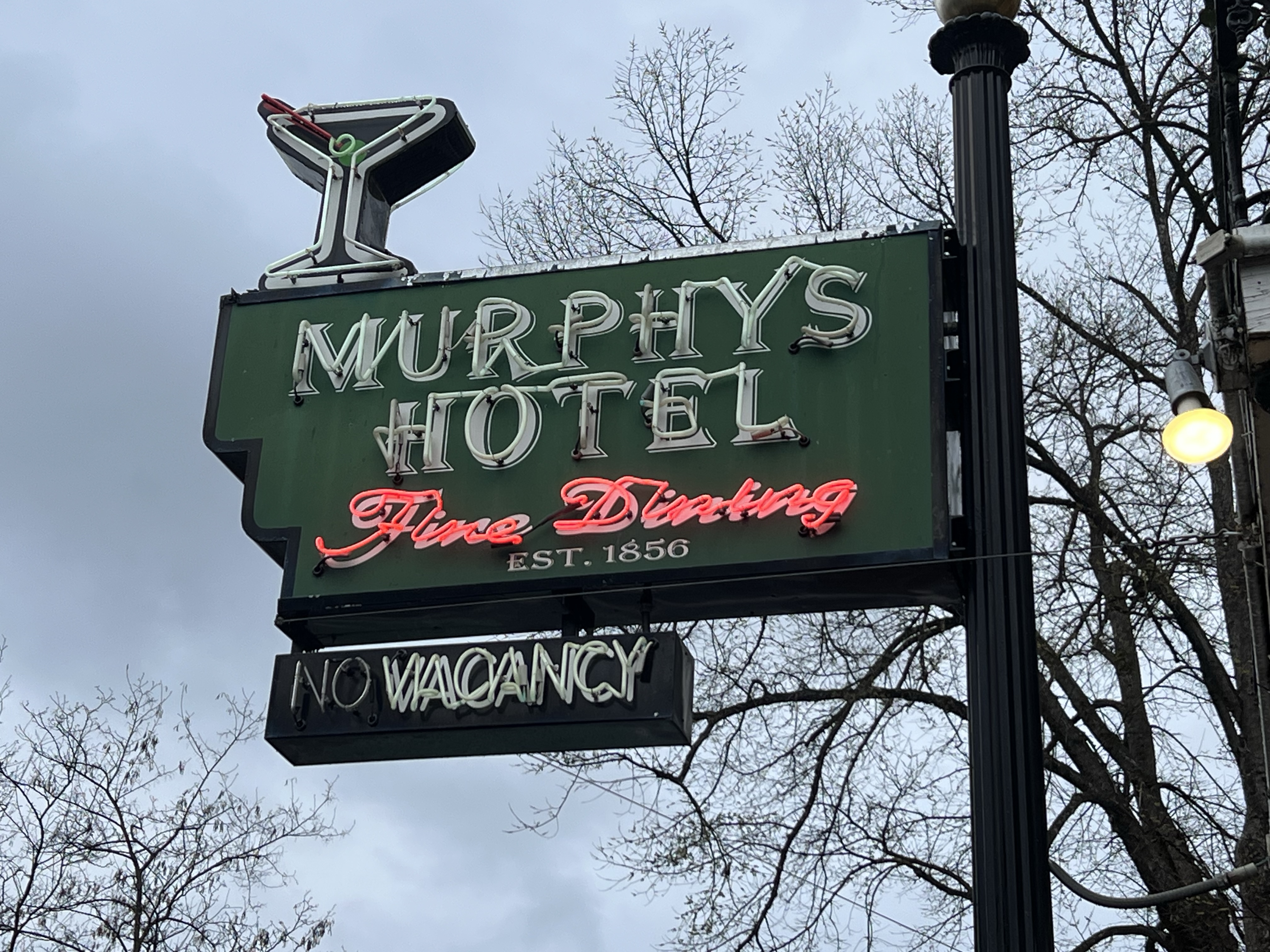
I definitely had the historic Murphys Hotel on my sketch-list. Main Street in Murphys is a very busy place (especially on weekends) so arrived early in morning while visitors were sleeping off their wine induced stupors.

I easily found a spot across the street for a rainy day sketch of this Gold Country landmark. I pulled out my journal and began my sketch (featured sketch).

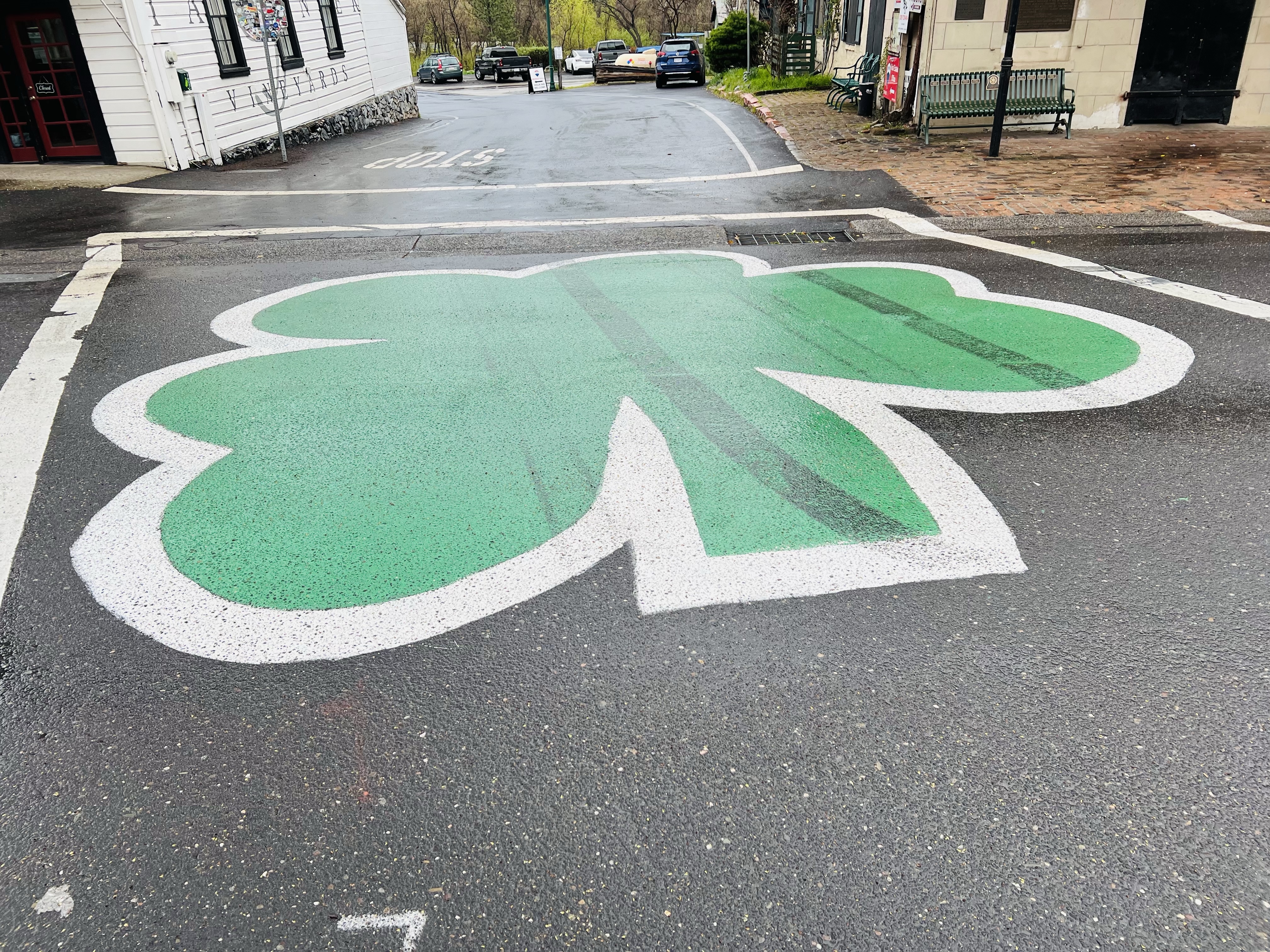
Street shamrocks adorns three intersections on Murphys’ Main Street.

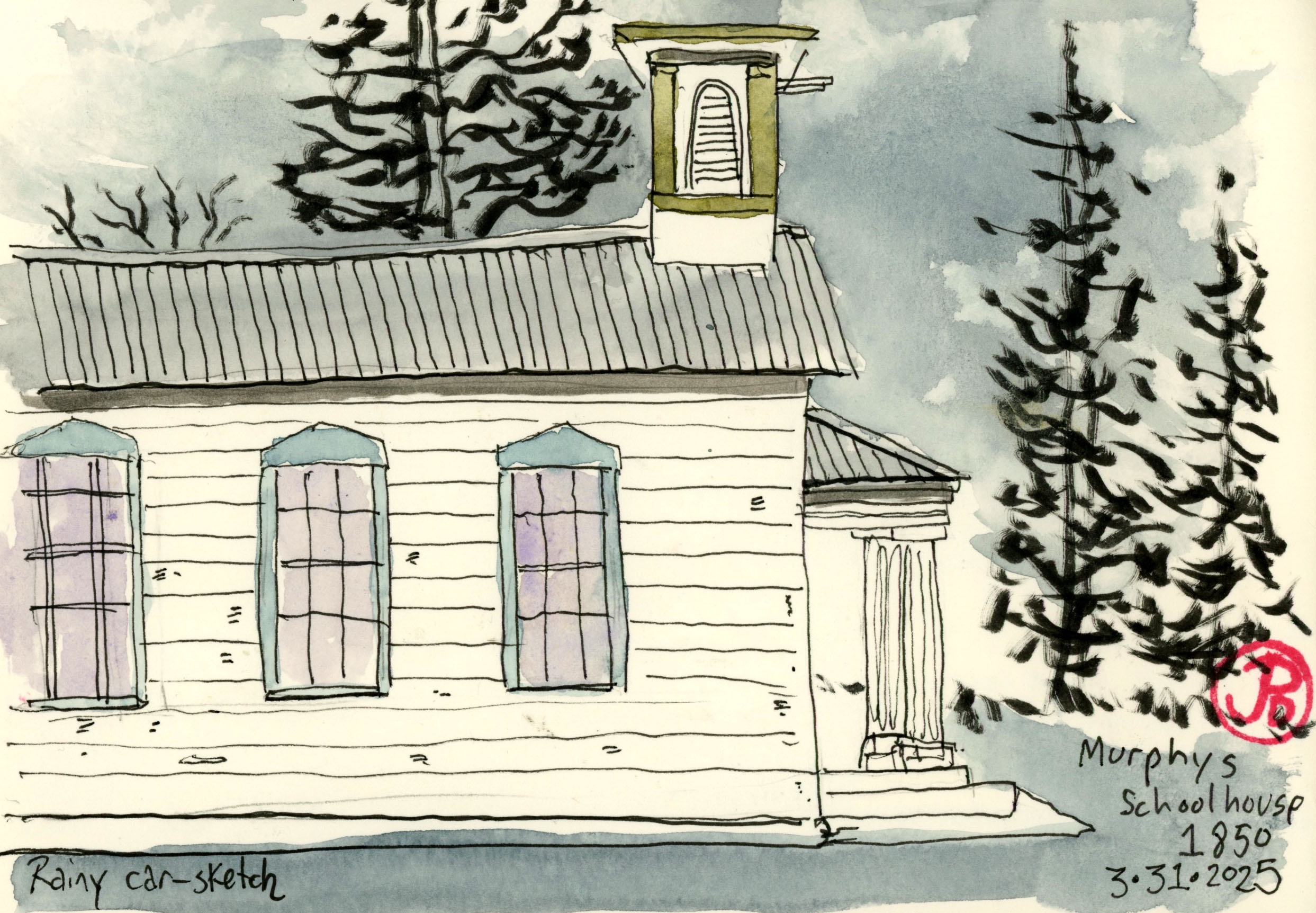
While exploring the side streets of Murphys, I came upon the Murphys’ 1850 schoolhouse.

The rain taps were opened so I found a parking spot and sketched the profile of the school. I normally might have sketched the structure head on but because of the rain I was forced to sketch the school from a perspective I might not have considered.

Image

Calaveras Big Trees Redux

I returned with my sketchbook (a different sketchbook of course) to the North Grove Trail at Calaveras Big Tress State Park.

It was a Saturday in late March and the park was packed! The further along the trail I traveled, the less people there were.

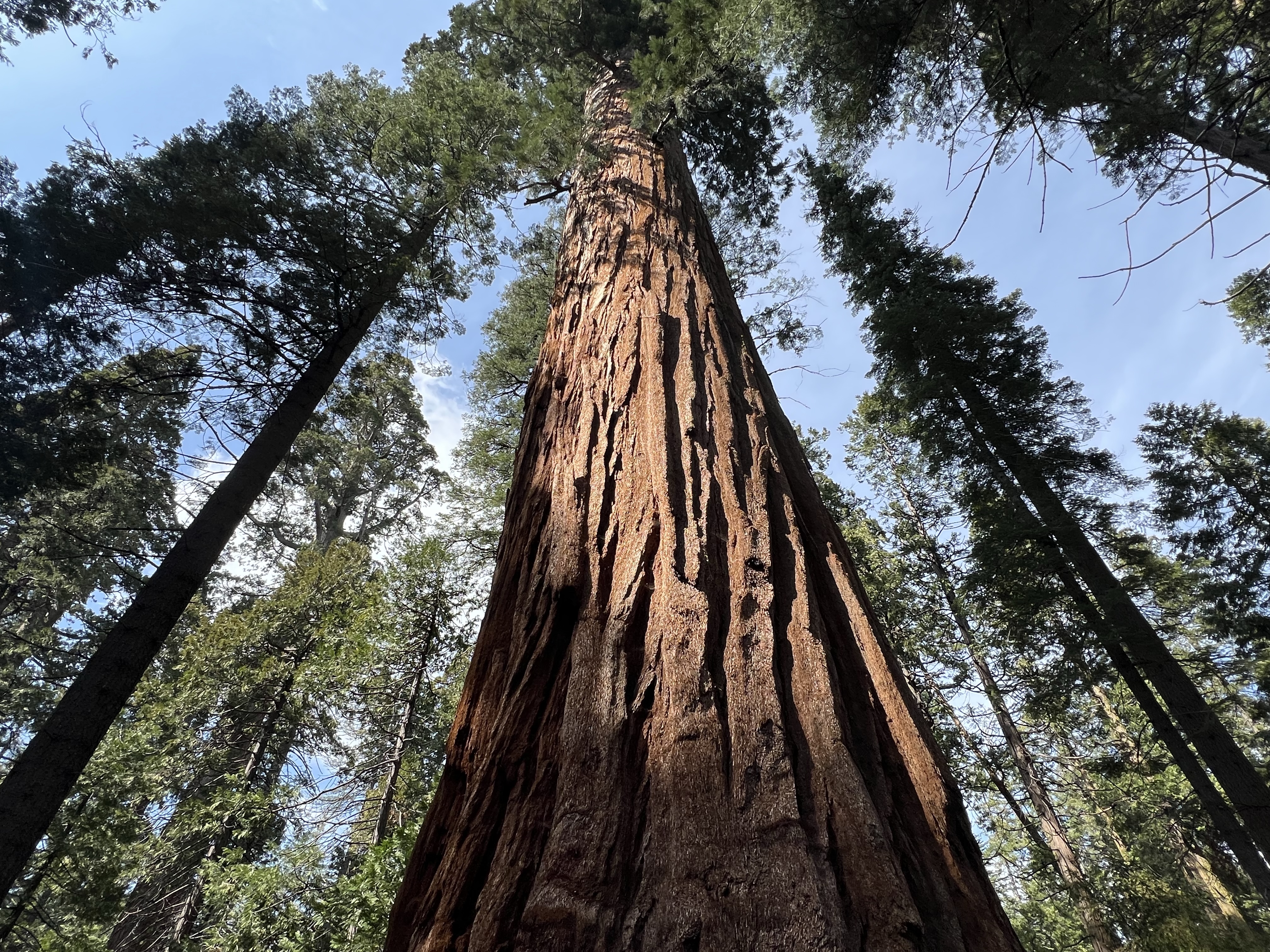
Standing under a giant sequoia is a thing of beauty and wonder. And a great way to get a stiff neck.

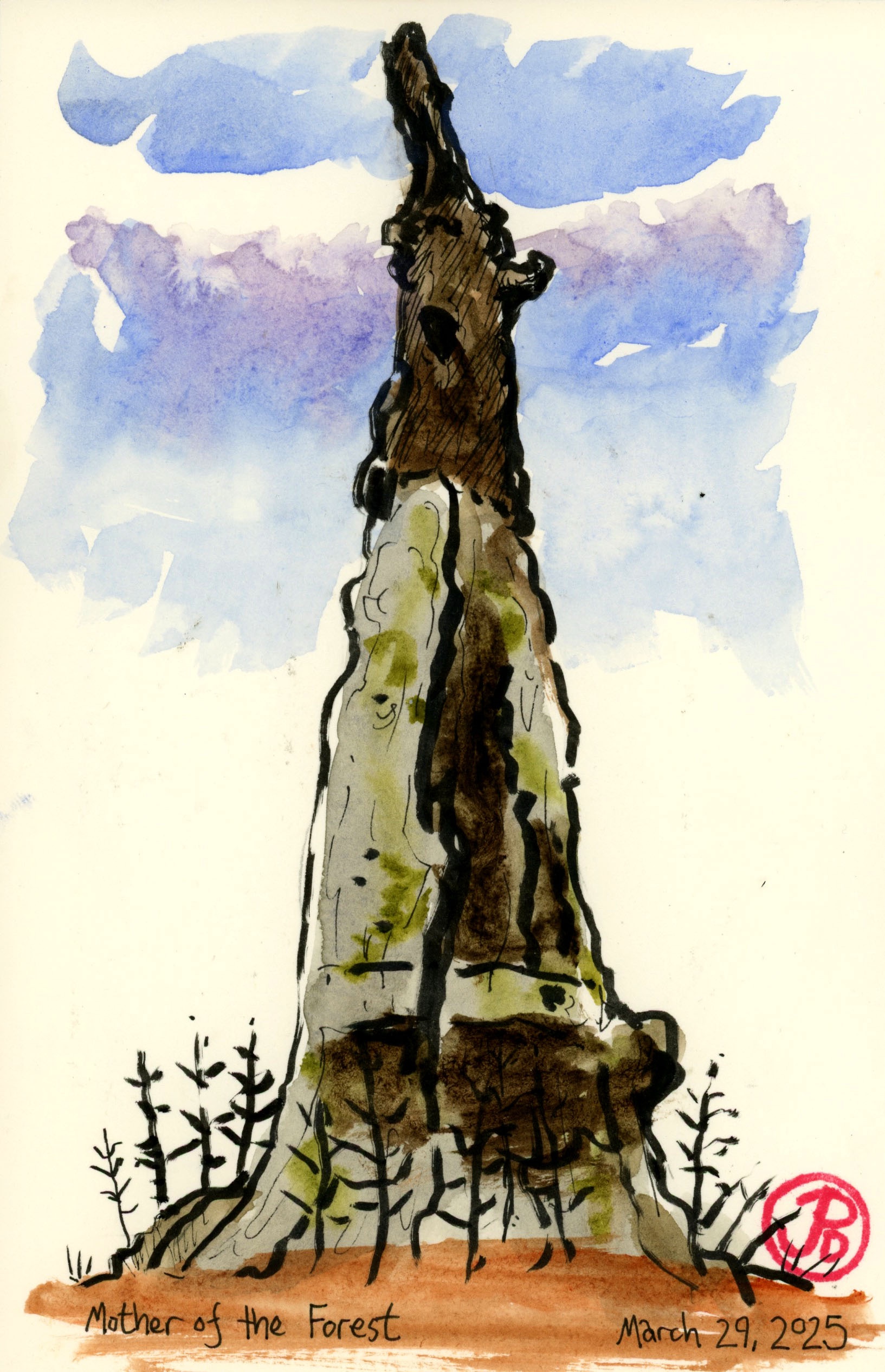
I wanted to sketch the Mother of the Forest. This tree represent the human greed at it’s worst and human desire to exploit nature for profit. In 1854 the sequoia’s bark was stripped off in eight foot lengths. The bark was reassembled and displayed in New York and London, for profit of course.

Without the tree’s outer armor, the tree died. To some 19th century observers, this sparked outrage and people began to understand that these living giants needed to be protected and this shift in thinking gave rise to the redwood protection movement in California. And is the reason these trees are protected today.

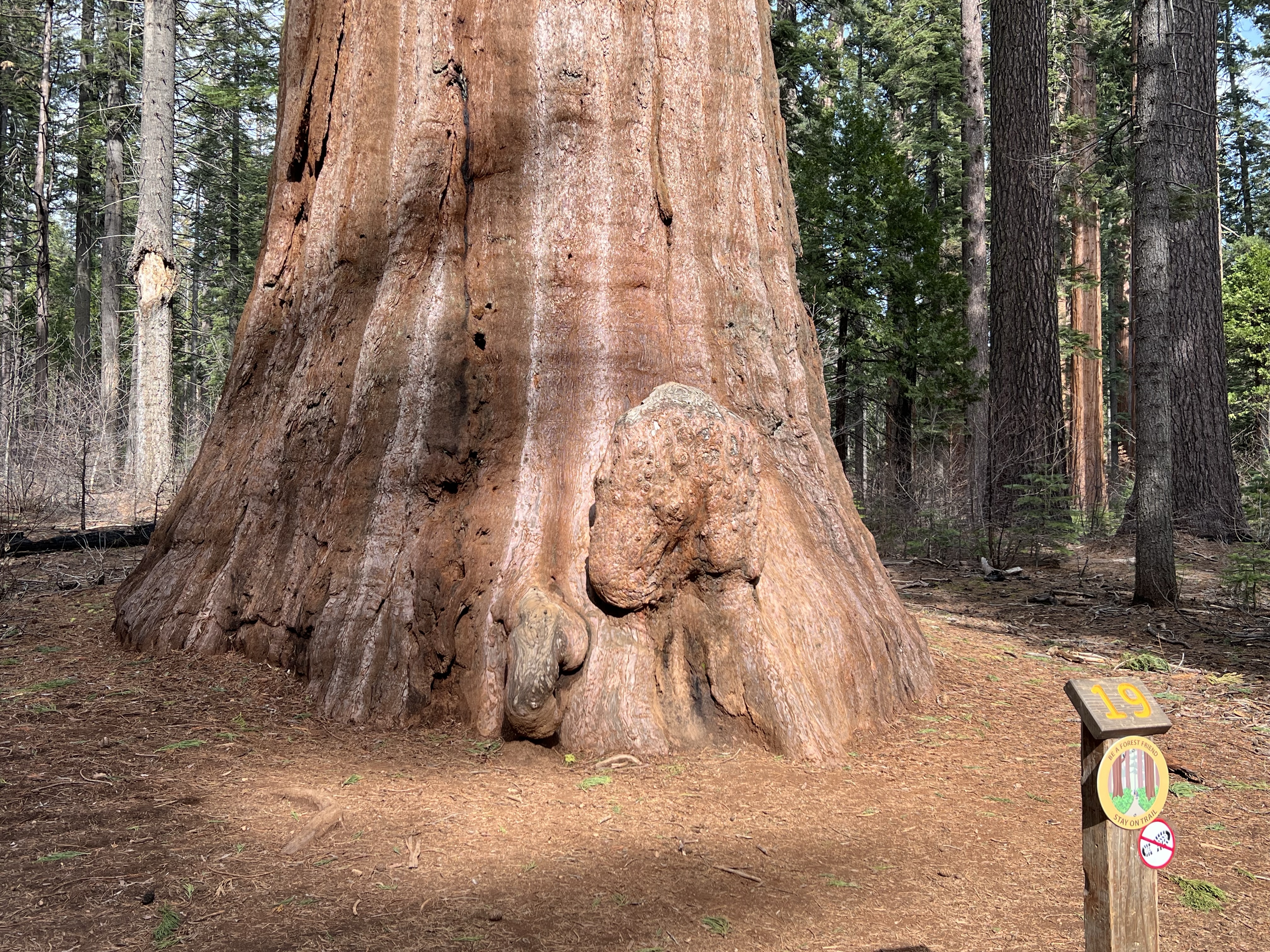
These Sequoia specimens were given names and this is the base of the Lincoln Tree, named after the Great Emancipator.

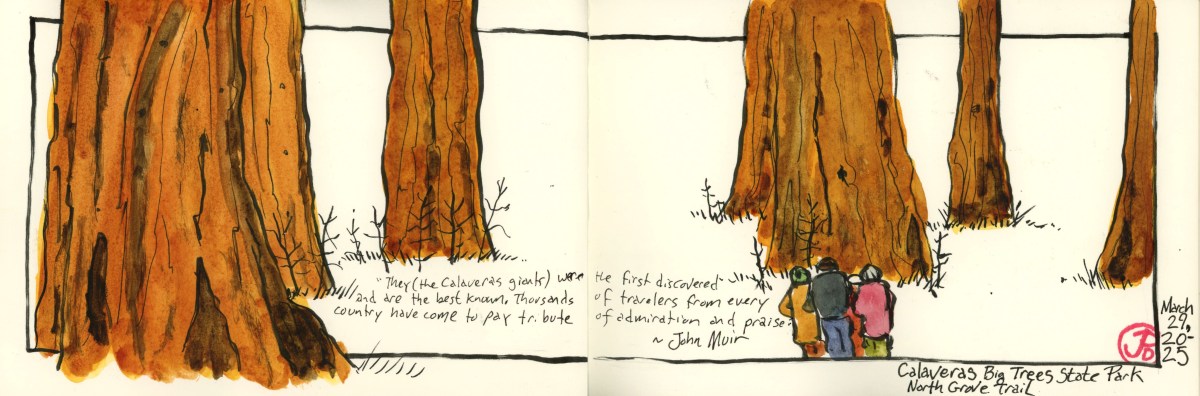
I picked a sketching spot against a shed-sized boulder near marker number 18 and started a sketch that looked into the grove (featured sketch). The view sketched is looking into the heart of the grove where the large trees can be from 800 to 3,000 years old! I included a group of four for scale.

Image

The Red Buildings of Tuolumne County

There are three prominent red buildings I wanted to sketch in Tuolumne County in the towns of Sonora and Jamestown.

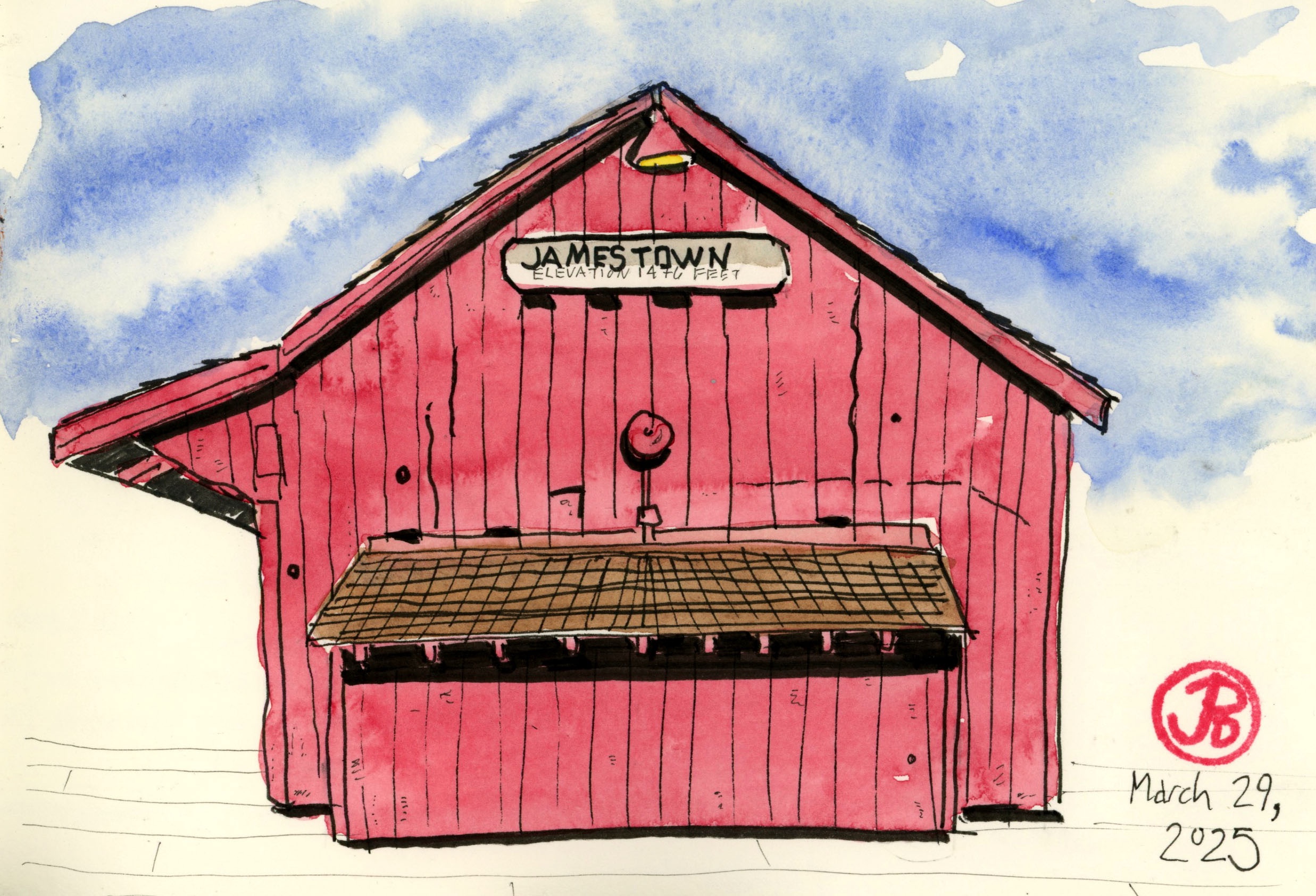
My first stop was Jamestown and Railtown 1897 State Historic Park.

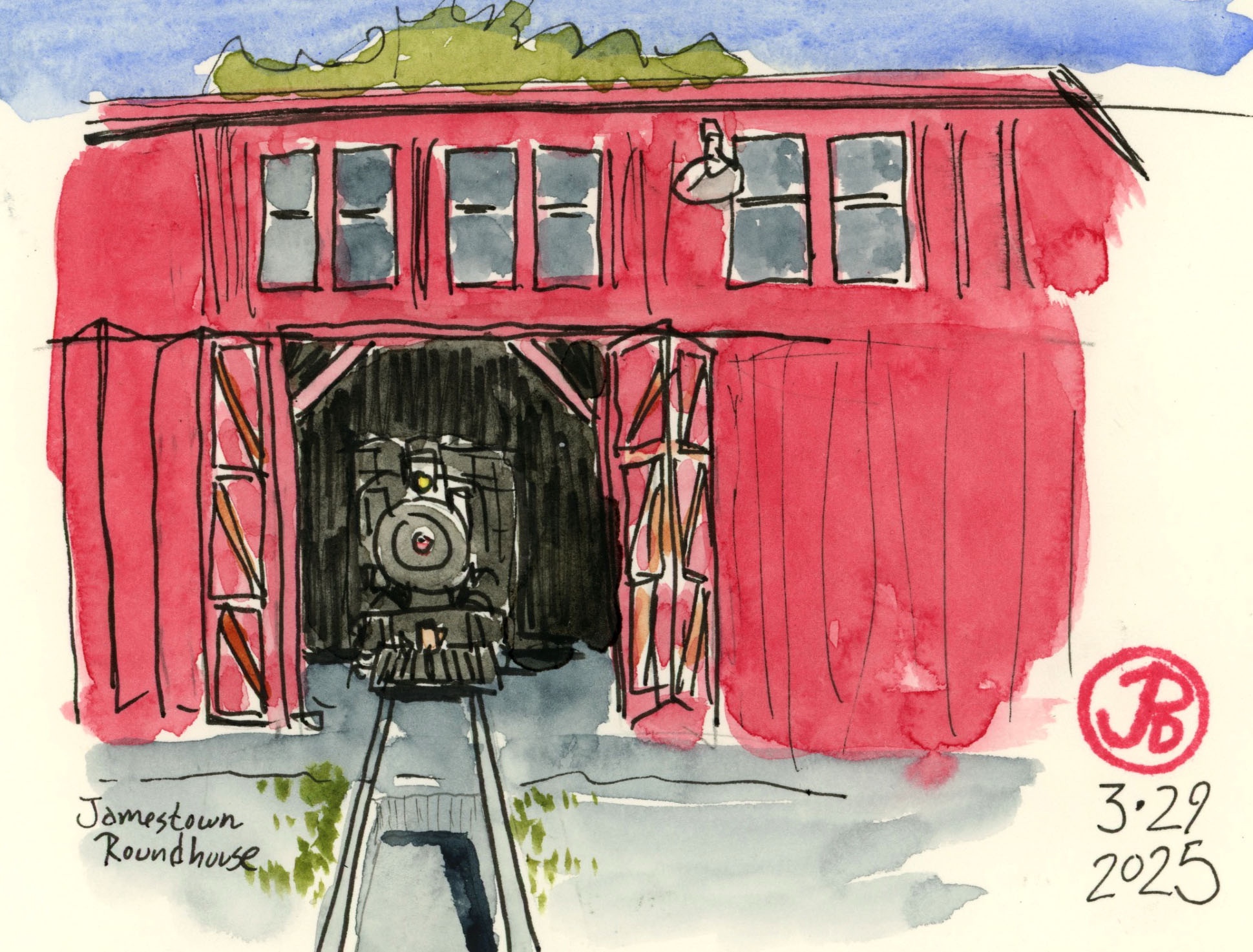
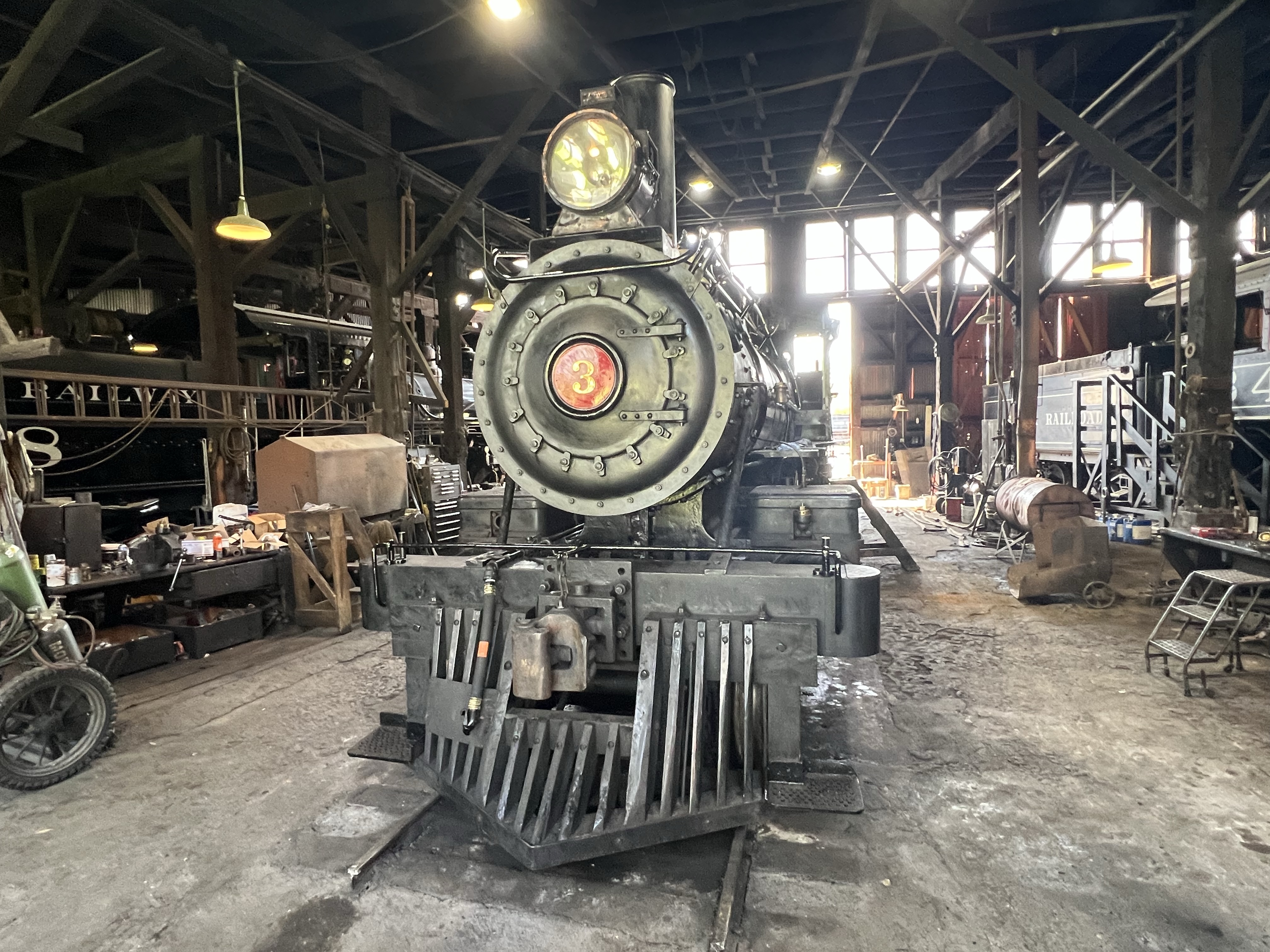
The State Park includes the freight depot and the roundhouse and turntable of the Sierra Railroad. Housed inside the roundhouse are four of the railroad’s steam locomotives.

One or two of the locomotives are still active and operate on weekends in the summer months. None is more famous than Sierra No. 3.

Three of my favorite No. 3 films are: High Noon, Man of the West, and Unforgiven.

After sketching the roundhouse, I sketched the freight depot, which is now the visitors center and gift shop. This building was featured at the beginning of Anthony Mann’s Man of the West (1958). This is one of Gary Cooper’s last westerns and the last featuring Sierra No. 3 in a Cooper film. Their most famous film was the classic High Noon (although they never appeared in the same scene).

The freight depot. The passenger depot burned down on Thanksgiving Day 1978.

A few days later, I wanted to sketch one of the most photographed churches in the entire Gold Country, which is to be found in the town of Sonora.

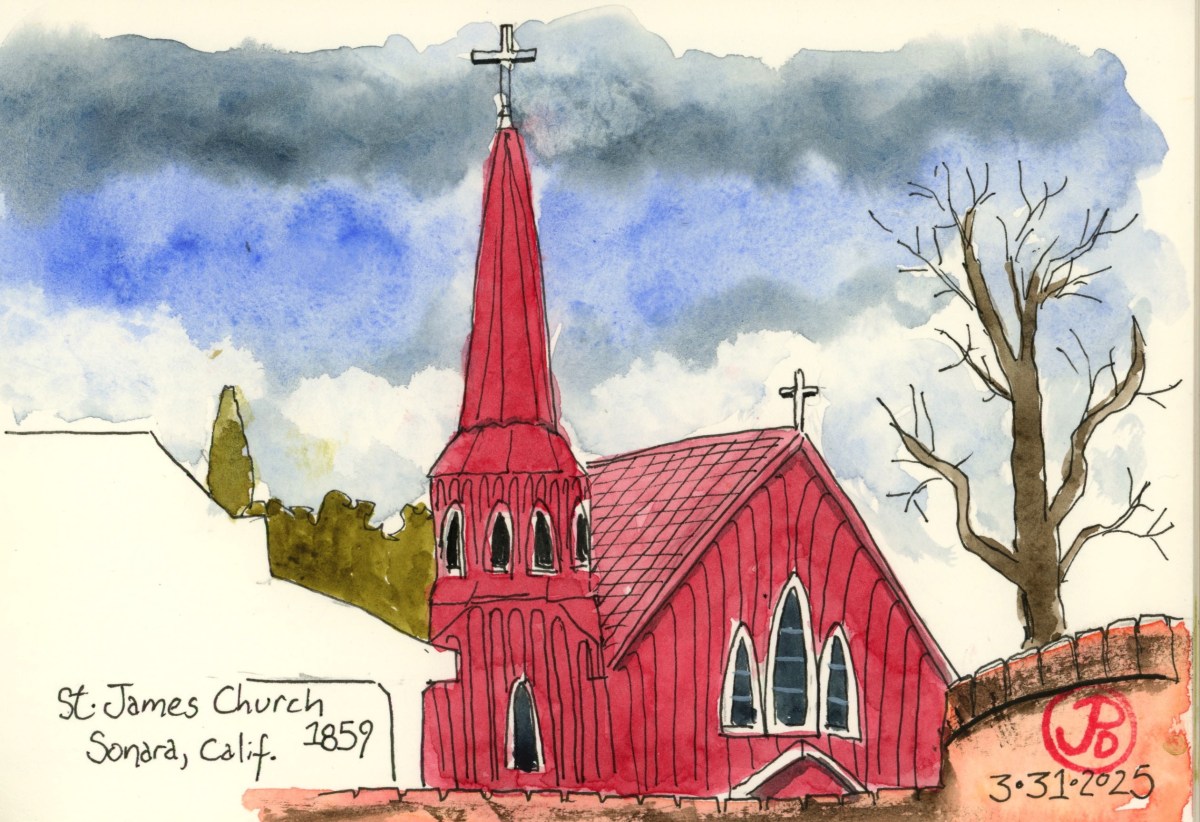
This is St. James’ Episcopal Church (1859) also known as The Red Church. The church is build of redwood in a Carpenter Gothic style.

Getting a good sketching perspective was tough because number one, it was raining outside and I needed to do a car sketch yet I couldn’t find parking with an unobstructed view of the church looking up Highway 49. So I found a great perspective from the second story of the parking structure, looking down on the church (featured sketch).

Image

Coulterville and Whistling Billy

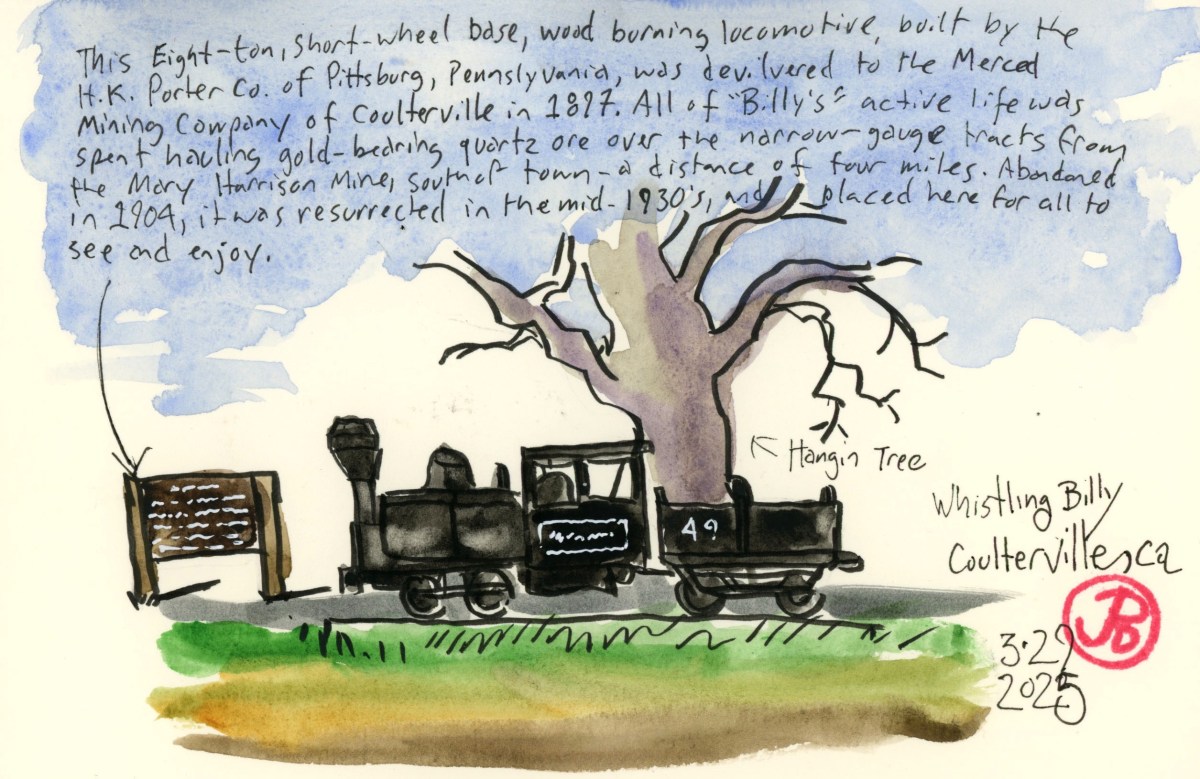
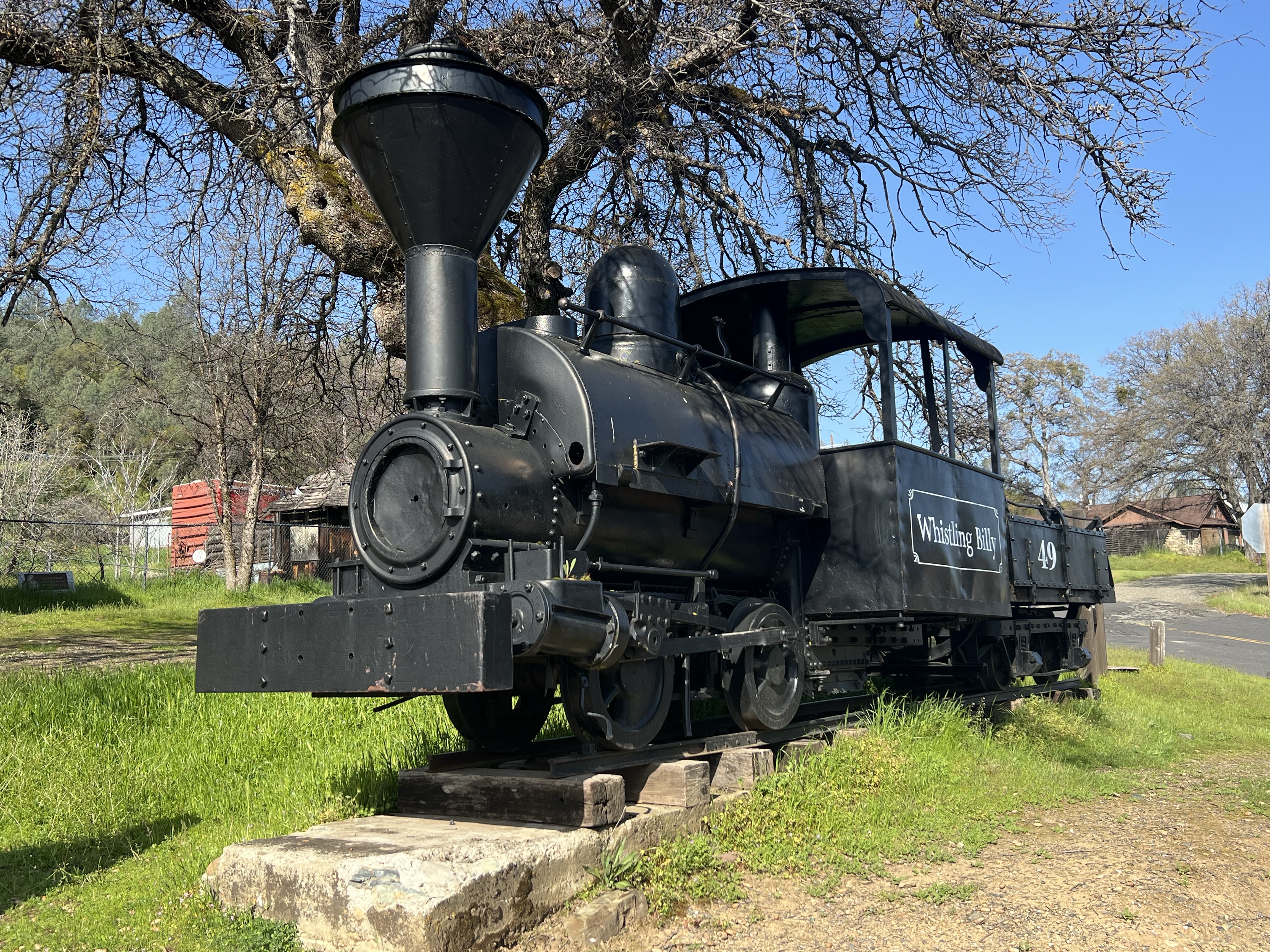
On my Spring Break Gold Country sketch list was an eight ton wood burning narrow gauge steam locomotive that was shipped around the Horn and delivered to Coulterville in 1887.

The locomotive operated on a four mile line hauling car loads of gold quartz ore from the Mary Harrison Mine just south of Coulterville to a stamp mill. Billy was abandoned in 1904 but was later refurbished and put on static display in the 1930s, where it remains today.

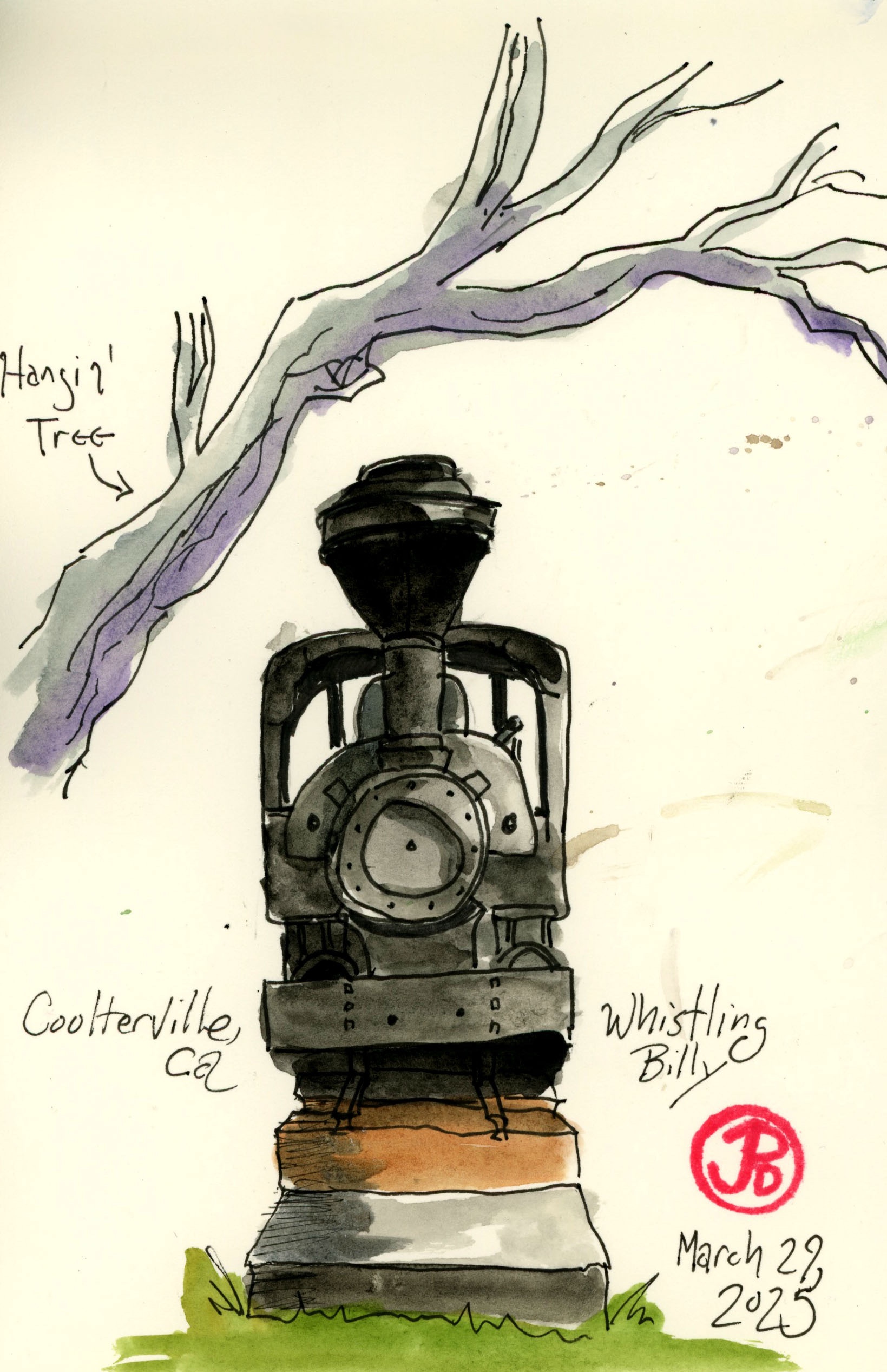
This is the pride and joy of Coulterville. Whistling Billy is displayed across Highway 49 from the Hotel Jeffery under the shade of the town’s hanging tree.

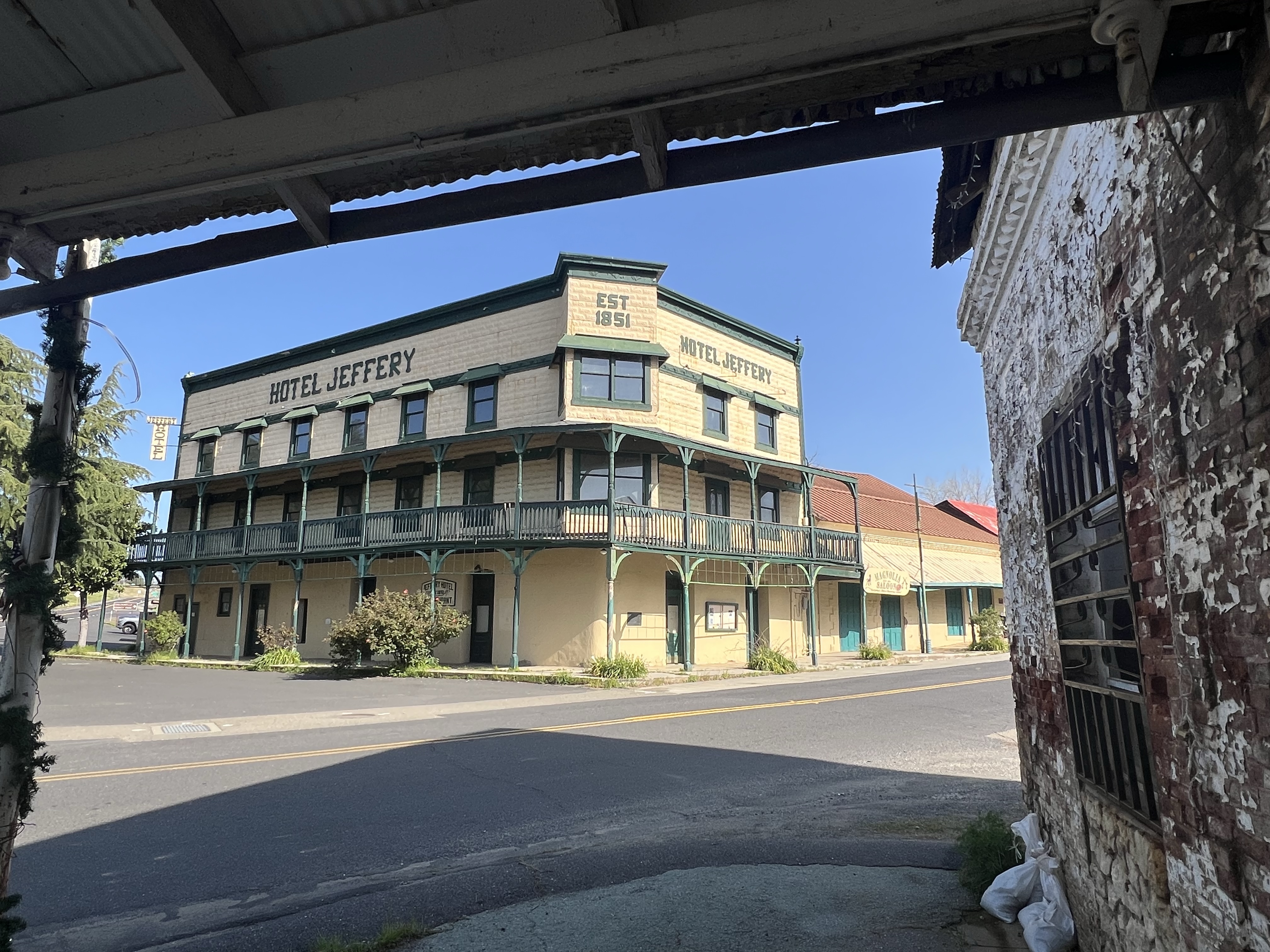
The Hotel Jeffery. While the building still stands the business is closed. Notable lodgers include: President Theodore Roosevelt (on his way to tour Yosemite), John Muir, and Mark Twain. Like most historic hotels in the Gold Country, this one is supposedly haunted.
Whistling Billy in beautiful Gold Country Spring sunshine.

I did two sketches of the diminutive locomotive each featuring the hanging tree.

Sketch number one.