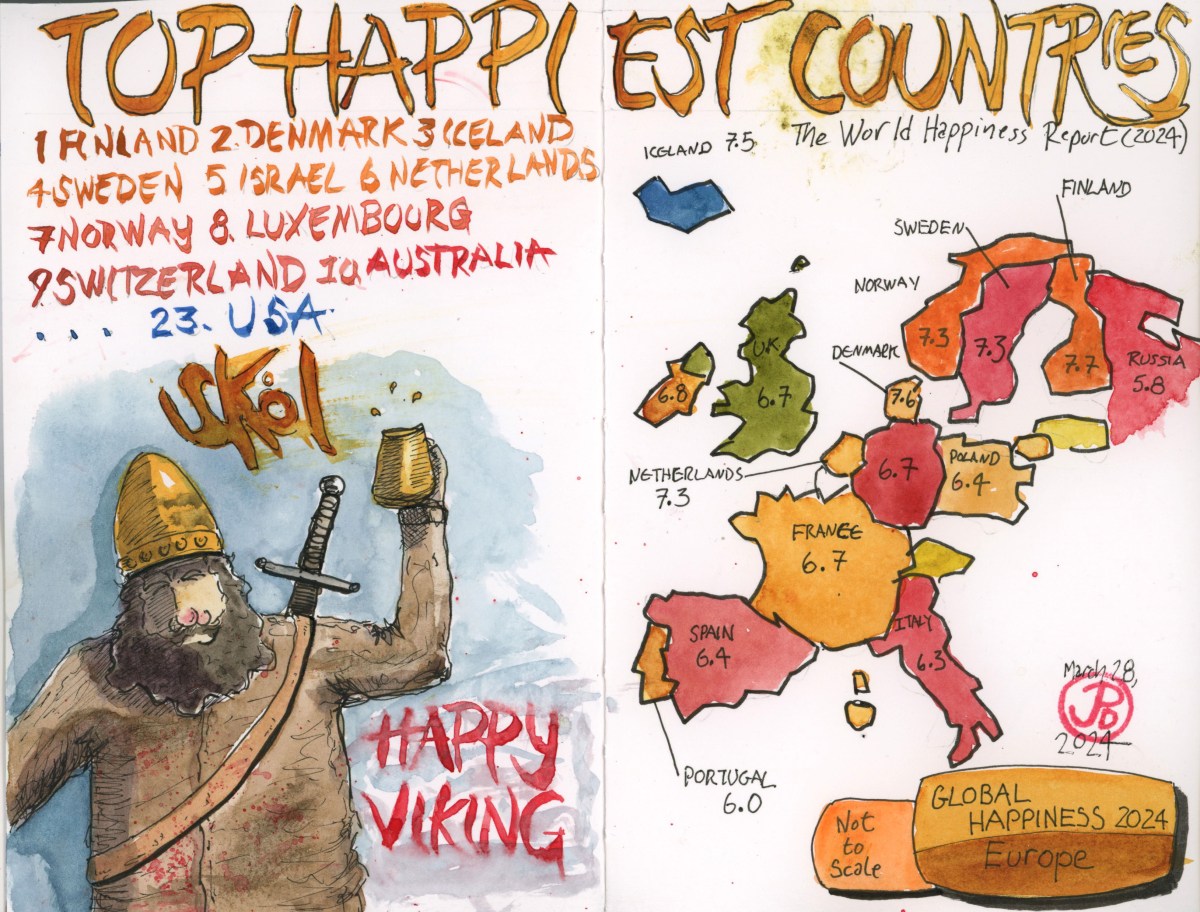
The list of the happiest countries in the world for 2024 has been released.
In the top ten, half of the happiest countries are from Scandinavia (in order): Finland, Denmark, Iceland, Sweden, and Norway. Yes the Vikings are happy!
I have been to one of these countries, Iceland, but will visit Denmark, Norway, and Sweden this summer.
Could I really tell that Iceland was the third happiest country in the world on my visit? No not really. Icelandic people were polite and good natured but they weren’t exactly widely smiling while dancing in the cobbled streets. There was something deeper than one could glean from a two week visit.
Why Scandinavia? Universal healthcare, paid university, low crime rates, strong national identity, and faith and trust of government, and well designed furniture. Overall these Scandinavian countries look after their people.
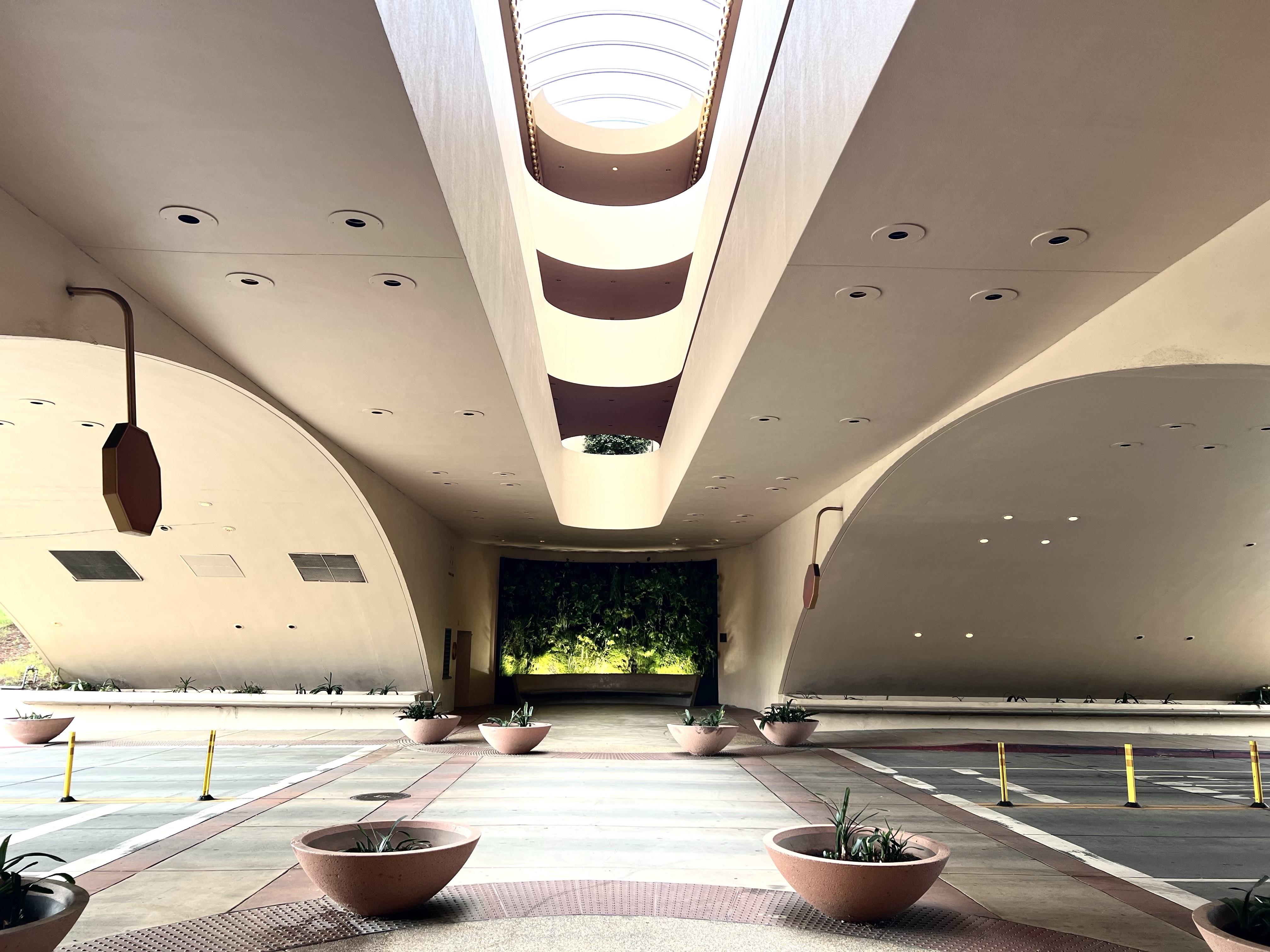
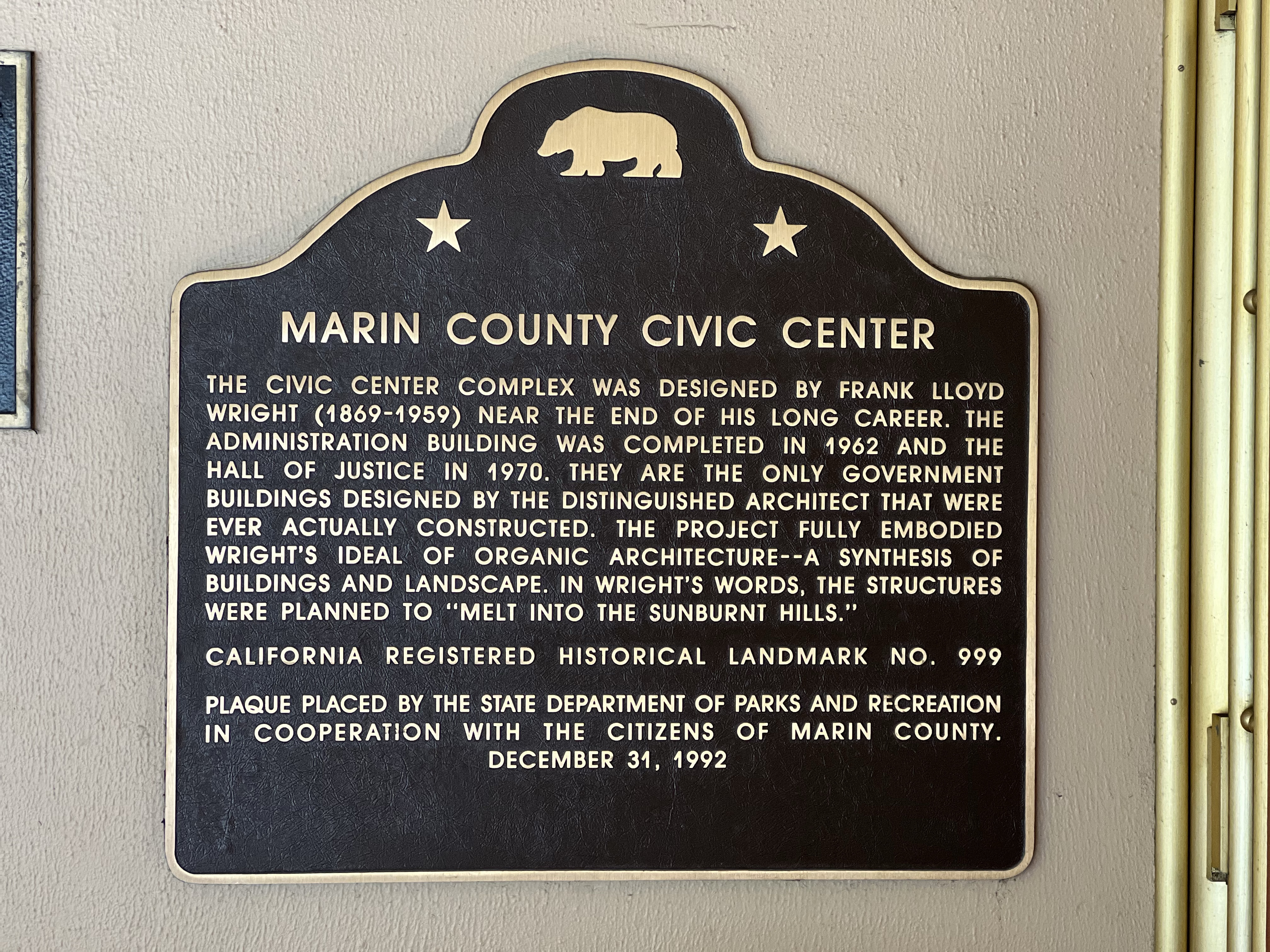
I have had the opportunity to sketch a few of Frank Lloyd Wright’s buildings but I have alway wanted to sketch his biggest public project: the Marin County Civic Center.
Construction started in 1957, and Wright never saw the building completed, he died August 9, 1959. The building was completed in 1962.
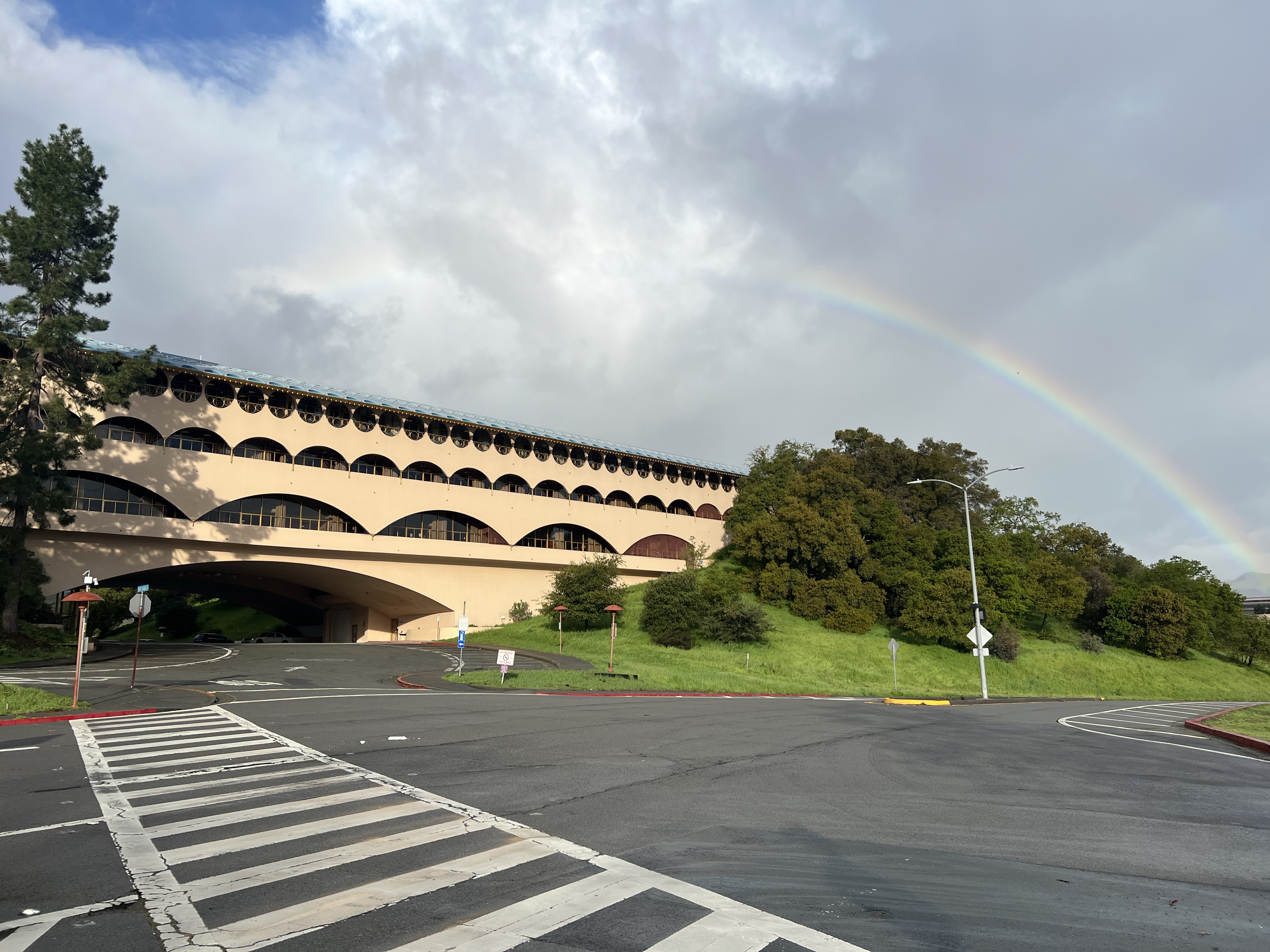
The civic center is constructed in two long wings, one three stories and the other four with a combined length of 1,460 feet, which is almost five football fields. This futuristic space ship is longer than the Titanic by 578 feet!
I have driven by the Marin County Civic Center many times and I have even attempted to sketch the large building before without success. The building always looks like a space ship that somehow fits in with the rolling oak-studded hills.
The building is so futuristic looking that George Lucas used the building as a filming location in his first feature film: THX 1138 (1971).
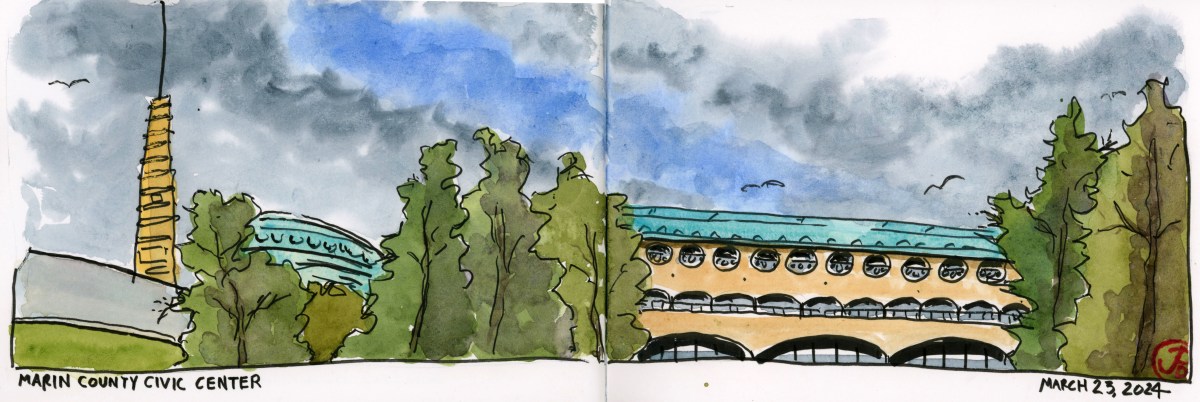
On a wet Saturday morning I knew I was going to add the iconic building into my panoramic sketchbook. I just needed to find the right angle. This is challenging because the building is so large and trees have grown up around the center.
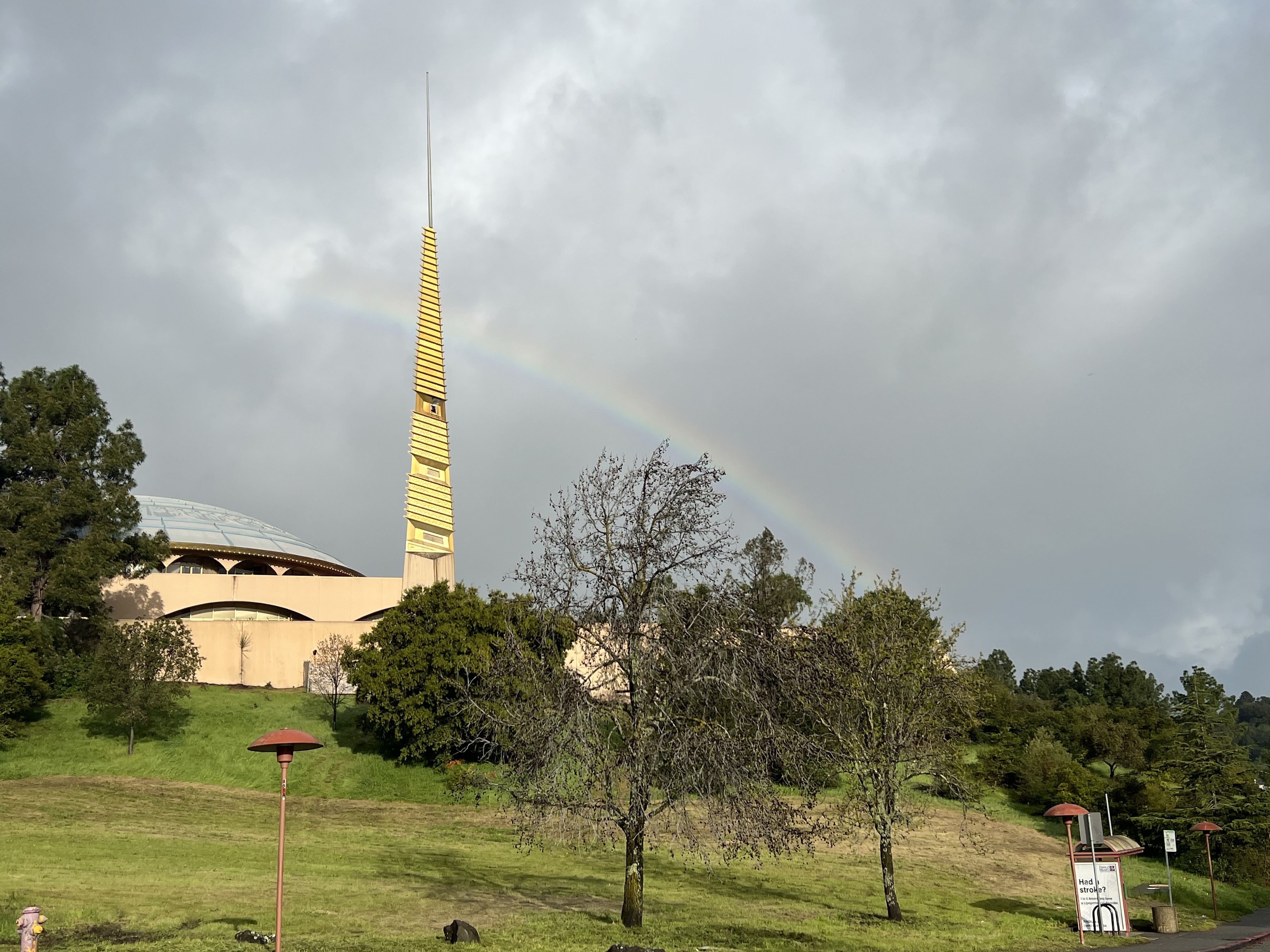
When I arrived it was raining with the sun breaking through the clouds creating a rainbow above the building. I pulled off and parked and although the building was partially obscured by trees, from my perspective I could sketch the 172 foot gold spire and the distinctive arches of the Civic Center.
The final sketch looks like a forest of tree’s occasionally interrupted by a futuristic civic center.
The gold spire is used as a radio transmitter and a boiler chimney.I have been inside the Civic Center once when I was fighting a traffic ticket. The interior reminded me of a dated shopping mall. Historical Landmark No. 999.
I have always wanted to loosen up my sketching so I did a sunrise sketch at the Santa Cruz Harbor mouth to try and keep it loose.
I started with a basic pencil sketch and then chose my Pigma Graphic 1 pen. I figured thicker lines would work best.
To sketch loose, it helps to change your grip on your drawing implement. Most of us hold a pen or pencil like we were taught in school: close to the tip with a firm grip. This is a grip for writing.
To loosen up my line I hold the pen away from the tip near the opposite end. This means sometimes I lack the precise control in my drawing but then it provides the sense of improvisation with my line.
The other way I try to loosen up my sketching is continuous line drawing. To sketch this way you draw without lifting your pen or stopping. I rendered the rocks in the levy with a continuous line sketch.
Sunrise sketch looking south towards Monterey Bay. I chose to leave the dredging barge out of the sketch.
I recently found an interesting connection between a Norwegian Polar explorer, an Oslo maritime museum, and Golden Gate Park in San Francisco.
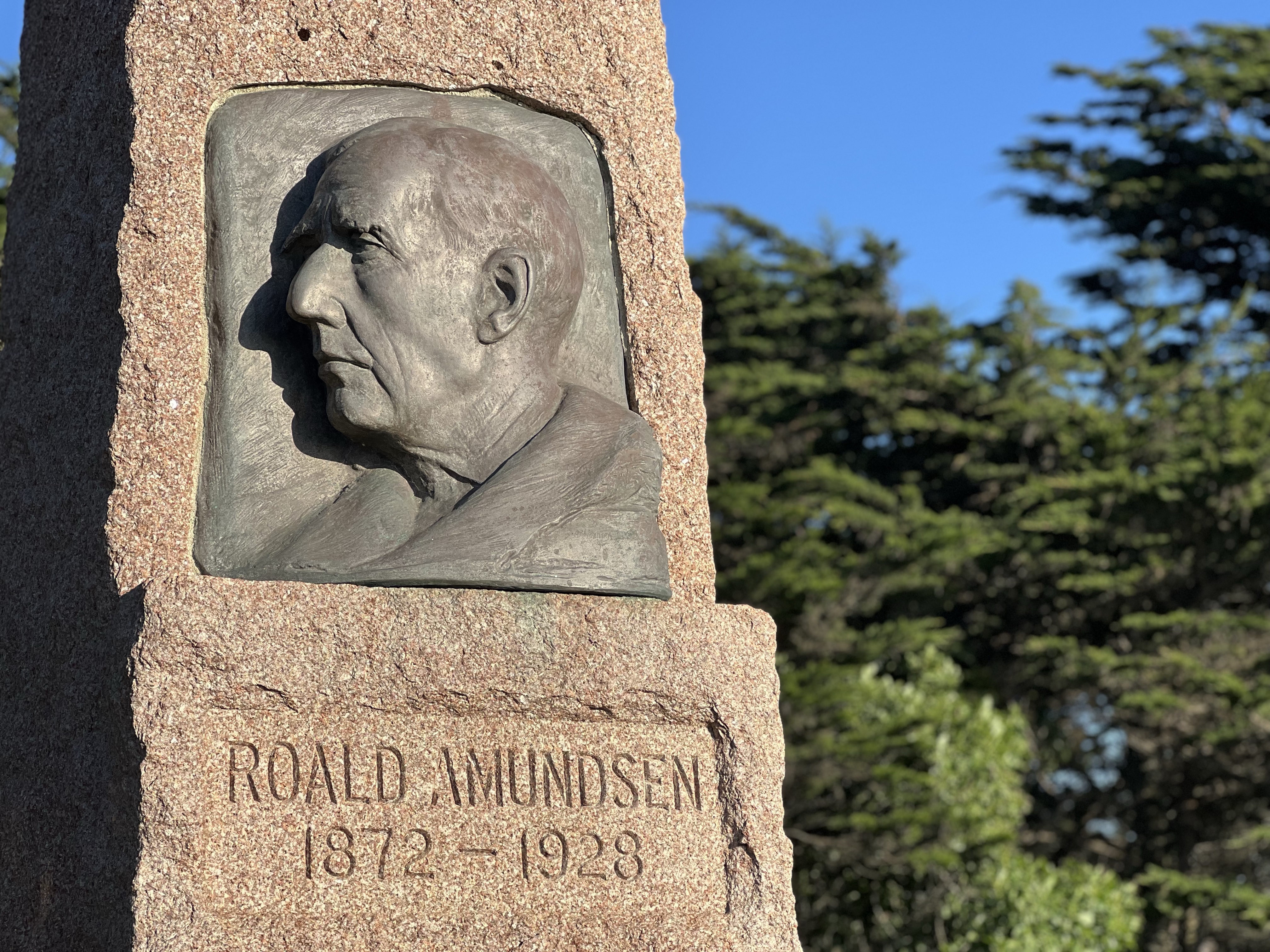
The Norwegian explorer was Roald Amundsen.
The plaque under the monument reads:
Roald Amundsen, the Norwegian polar explorer, was the first to locate the magnetic North Pole and to navigate the Northwest Passage, the Arctic water route from the Atlantic to the Pacific. He left Norway with a crew of six on June 16, 1903 in a 69-foot-long converted herring boat named Gjoa. Amundsen spent three years on the perilous journey. The Gjoa continued on, sailing through the Bering Straits and anchored off Point Bonita, outside the Golden Gate, on October 19, 1906. The San Francisco Norwegian community purchased the Gjoa from Amundsen and donated the ship to the people of San Francisco in 1909. In 1911, Amundsen became the first explorer to reach the South Pole. The Gjoaremained on this site at the western end of Golden Gate Park until 1972, when it was returned to Norway. The restored ship is now on display at the Maritime Museum in Oslo.
The Amundsen monument is a bauta, or stone shaft, or Norwegian granite which was donated by Bay Area Norwegians, March 1, 1930.
I headed west to the end of Golden Gate Park to do an afterwork sketch of the monument that sits in the parking lot just north of the Beach Chalet.
I look forward to sketching the ship that was once on display near this location, it’s bow facing the Pacific Ocean. The Gjoa is now on display at the Fram Museum in Oslo.
The Gjoa was at the western edge of Golden Gate Park until 1970. The elements took their toll on the static Polar ship and rot and vandalism tarnished this once proud and pioneering ship. She was donated to Norway and headed back to her homeland.
A sketch from a c1910 postcard view from Ocean Beach looking east towards the Gjoa and the Dutch Windmill. While the Gjoa is gone, the windmill remains.
Another Norwegian ship on my sketch list is across the car park from the Kon-Tiki Museum. It is a 15 minute ferry ride from Oslo City Center to the Bygoy Peninsula.
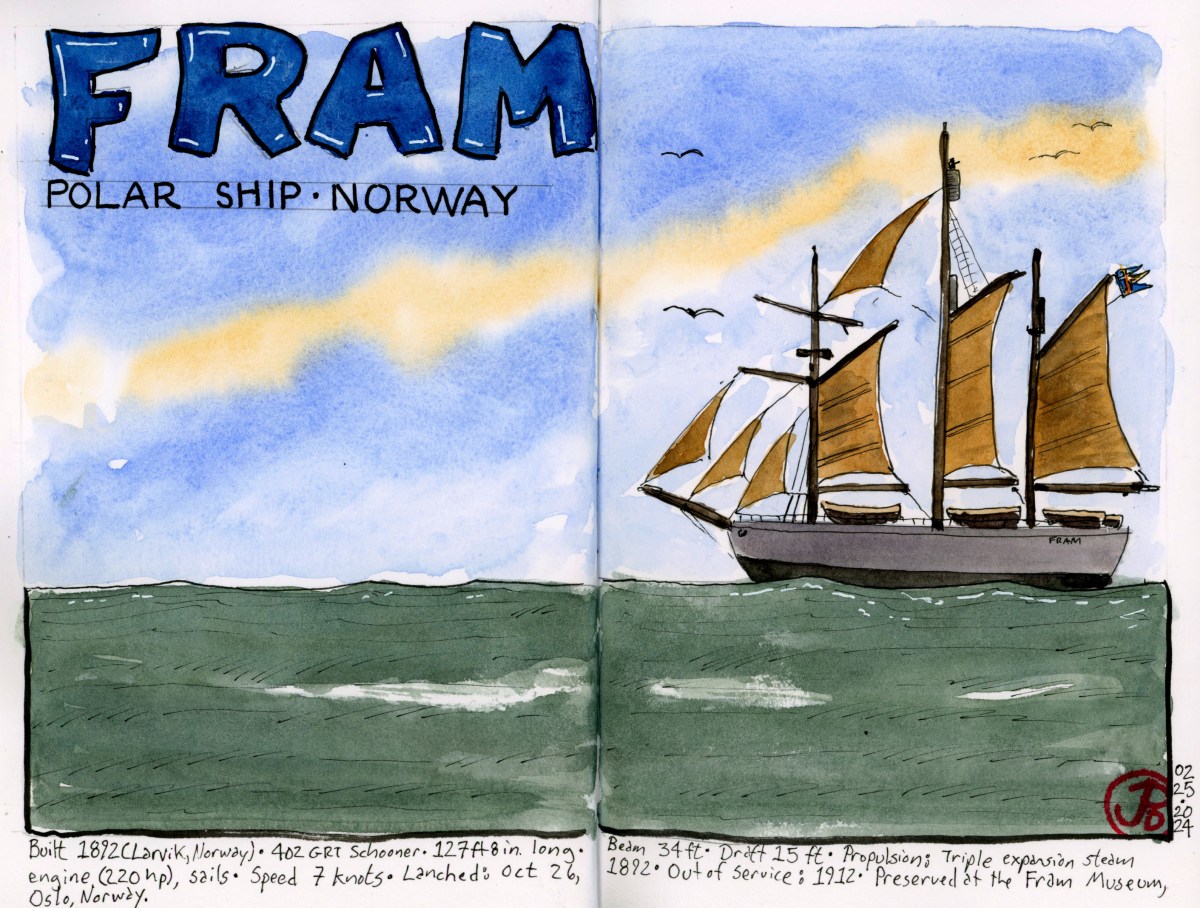
This is the three A-frame buildings that comprises the Fram Museum. Under the largest A-frame is the Polar ship Fram (Norwegian for “forward”).
The Fram is the most rugged, toughest, and most durable wooden ship ever built. It was built to explore the Polar regions.
The Fram was built in Norway as the first ship designed for the rigors of Polar research.
The Fram was used in three important Polar Expeditions. In 1910-12, explorer Roald Amundsen sailed to Antarctica for his South Pole expedition.
One of the ships also on display at the Fram Museum is the Polar Ship Gjoa. This is the first ship that sailed through the entire Northwest Passage, going from the Atlantic to the Pacific Ocean. And I found out that the Gjoa had an interesting San Francisco connection.
How about a balsa wood raft? How about sailing it across the Southern Pacific Ocean?
Is this the definition of insanity? Well not if you’re a Norwegian anthropologist and adventurer named Thor Heyerdahl.
Thor was a boss, a man with vision, a man who looked in the face of reason and “truth” and created his own truth. He will always be a visionary that is blessed to us once in a generation; if we’re lucky.
To prove that Polynesia could have been colonized from South America, in 1947, Heyerdahl and five others (including a parrot named Lorita), sailed a balsa wood raft over 4,000 miles across the Pacific. The raft was named the Kon-Tiki.
The expedition set off from Callao, Peru on April 28, 1947. The raft sailed for 101 days covering 4,300 miles. The journey ended as the craft smashed into a reef at Raroia on August 7, 1947.
The Kon-Tiki is now displayed at the Kon-Tiki Museum on the Bydoy Peninsula in Oslo, Norway. The Kon-Tiki is one of my top sketching targets on my summer trip to Norway.
I find it serendipitous that the best way to get a museum dedicated to an epic sea voyage is by ferry. Also on the Bydoy Peninsula are the Vikingskipshuset, the Norwegian Martine Museum, and the Fram Museum
I did a sketch of Thor, wearing the Tiki mask that is painted on Kon-Tiki’s sail. I sketched with a bamboo dip pen and I’m pleased with the rustic, and sometimes uncontrollable looking lines.
This is a post about my pillow (not to be confused with My Pillow). In fact this is not really a pillow but a pillow case. Well it’s not just a pillow case but also a stuff sack.
Why a post about such a mundane piece of fabric?
Well I hoped it would be the key to helping me pack light and stay warm in the Polar summer.
One of the keys to packing light and one-bag travel is to pack gear that serves more than one use.
In this case my 10 by 14 inch pillow case will double as a stuff sack/ packing cube for my Patagonia down jacket.
I’ve never liked my travel neck pillow that I have used on longer flights. One of the reasons is that you haul it around but you can only use it a few times because it is not a transformer. This neck pillow is just a neck pillow, and is be big and bulky.
The Elan Quest Stuffable Camping Pillow-Stuff Sack can be used as a pillow on flights and then the stuffing can be pulled out and worn to give me a warm layer in the Arctic Circle. The empty pillow case-stuff sack can be easy rolled up and stowed in my pack.
I tested the Elan Quest by stuffing my Patagonia down jacket into the case. It helps that the jacket stuffs into its own pocket so I had no issues fitting it into the pillow case.
The pillow case is two sided, one side is an a bright yellow nylon and the reverse side is a comfy gray fleece.
I look forward to using this pillow/stuff sack this summer!
Aside from all day pelagic cruises, the last time I was on a cruise of length, more than 24 hours, was when I was much younger (11 years old, according to my mom). This was a cruise (think: Love Boat) from Vancouver, Canada to Alaska.
It was my first experience with a floating city. This ship had every thing you needed and many things you didn’t.
Today the capacity of an average cruise ship is 3,000 passangers with a crew of about 1,000. The largest cruise ship in the world, Icon of the Seas, has a capacity of over 7,000 passengers with a crew of just over 2,000. This ship is 1,197 feet in length, that’s 315 feet longer than the Titanic.
I, on the other hand, would be on a summer cruise on a ship with a paltry capacity of 108 and a crew of 49! This ship was just under 300 feet, a mere 30% of the Titanic’s length.
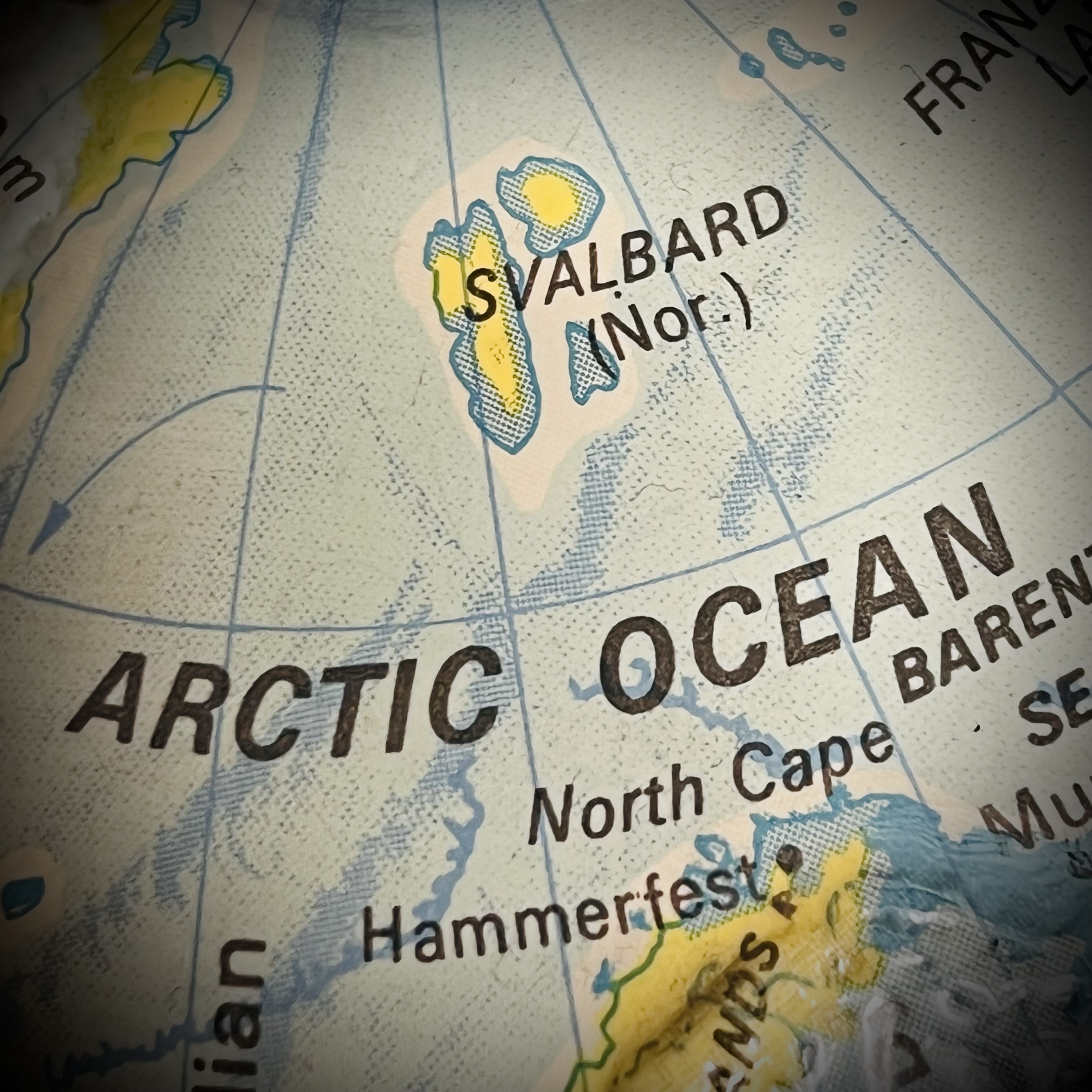
I would not be in the sunny climes of the Bahamas (there’s no ivory gulls or polar bears in the Bahamas!) but cruising 80 degrees North, around the Norwegian island archipelago, Svalbard.
My cruise ship will be the m/v Plancius. (The m/v stands for merchant vessel.)
The Plancius was built in 1976 as a scientific research vessel for the Royal Dutch Navy. She was then named “Hr. Ms. Tydeman” and served the navy until June 2004.
She was purchased by Oceanwide Expeditions and rebuilt to carry passengers in 2009. Rechristened the Plancius in honor of the Dutch astronomy and cartographer she now cruises in the Arctic and Antarctic. In my featured sketch I sketched Plancius, cast as an Arctic explorer, which he wasn’t. Let me go look for my artistic license (I hope it’s not expired!).
I would be sharing my berth with a complete stranger. I knew that he must an adventurer, on a quest to see a melting world.
I look forward to my summer Arctic cruise and the many sketching opportunities in my near future!
High on my Arctic pinniped (fin-footed) wishlist is Odobenusrosmarus: the walrus.
Few animals scream “Arctic” in the same way as the Toco toucan screams “tropics” or “rainforest” or “Guinness”, as the walrus. These animals are the “sexy megafauna” that become the poster animal for the ecosystem. (Okay the toucan isn’t “mega” but its bill sure is). For the Arctic, I would certainly put polar bear at the top of this list, followed closely by the walrus.
This Arctic animal is also keynote species that are the “carnies in the coal mine” for their ecosystems. When the walrus population declines, we know that the Arctic is not healthy.
The walrus’s most prominent feature are its tusks. They are sported by both male and females and are really enlarged canines. Tusks on males can grow to three feet. They use these ivories for male scuffling and pulling their hefty bulk up onto ice.
The walrus is also one of the largest pinnipeds in the world, only exceeded by the Northern and Southern elephant seal. It can be said that it is the second largest pinniped in the Northern Hemisphere. Walrus are sexually dimorphic with males weighing almost two tons and growing to 12 feet in length.
“I felt a calmness birds can bring to people; and, quieted, I sensed here the outlines of the oldest mysteries: the nature and extent of space, the fall of light from the heavens, the pooling of time in the present, as if it were water.”
― Barry López, Arctic Dreams
Since my birding adventures in Iceland last summer, I have wanted to return to the Nordic Region and explore the High Arctic.
The avian fauna would be similar but who wouldn’t want more looks at the stunning king eider, fulmars at eye level, or hearing the constant din of a thousand-strong kittiwake colony?
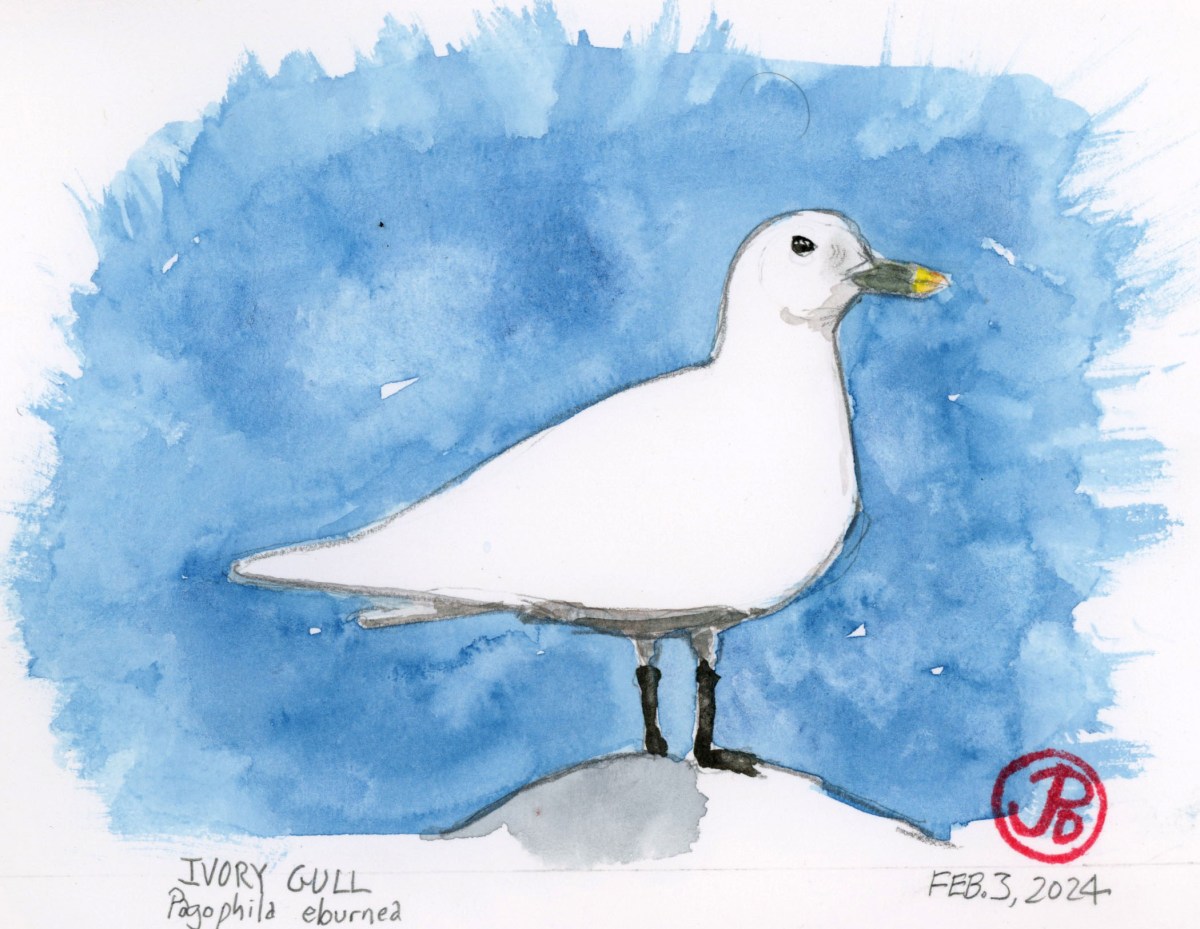
The major avian draw for traveling to the High Arctic is Pagophila eburnea, the “the ice-loving ivory-colored gull”. This would be an incredible lifer and the major totem for any birder visiting the top of the world.
I would be traveling to the Norwegian island archipelago of Svalbard (also known as Spitsbergen) in late June. Ivory gulls nests from June to July in eastern Svalbard and I would be taking a seven day cruise with Oceanwide Expeditions aboard the ice-rated m/v (Merchant Vessel) Plancius. It was not only the birds that I was looking forward to seeing in the lands and waters of Svalbard.
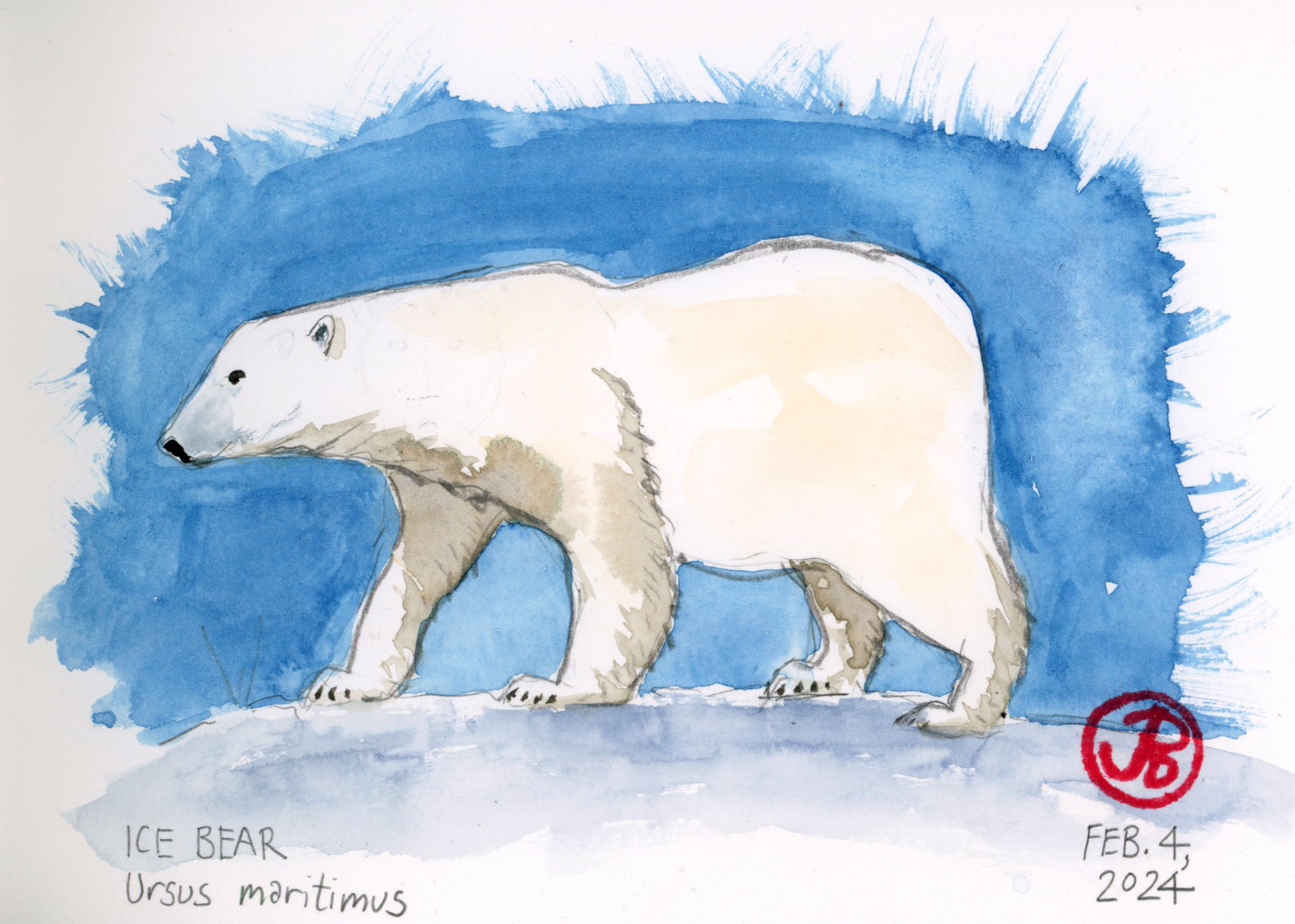
I was also looking forward to seeing the large mammal that the ivory gull is often associated with, the animal that the Norwegians call the Ice Bear. To the rest of the world, the world’s largest bear is called the polar bear. Ivory gulls often follow polar bears because their main food source on the ice are ringed seals and once the bear has finished with it’s kill (they mainly eat the blubber), there is plenty left for the Arctic’s all-white gull.
Some cetaceans on my wishlist are the white whale (also known as the beluga whale), minke whale and fin whale.
I was also hoping to see some pinnepeds for the first time. They included: walrus and harp, ringed, and bearded seals.