Image

Me and a Dipper

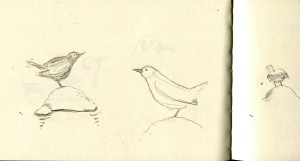
I came down to the valley to sketch the monolith El Capitain but instead I stopped at the banks of the Merced River, Bridelveil Falls falling silencing across the valley and I sketched a dipper.

It says a lot about the American dipper that John Muir devoted an entire chapter of The Mountains of California to this small, drab bird. The water-ouzel, as the dipper was known then, rewards the observer with the amount of time put in by simply sitting down on the river bank and watching.

The dipper is seldom still, making sketching a challenging yet exhilarating experience. Just when you start one sketch you stop and restart because the dipper has disappeared under the river, appearing again, perched on a submerged rock, making the bird appear to be standing on water. And the dipper never just perches. Like it’s name implies, it it constantly dipping it’s body up and down.

As so I passed part of my morning in Yosemite Valley, with my back facing the largest chunk of granite in the world but my eyes focused on one of the most captivating creatures to be found in any National Park: the American dipper.

And as Muir wrote about the dipper, “Among all the mountain birds, none has cheered me so much in my lonely wanderings, -none so unfailingly.” And I couldn’t agree with John Muir more.


Image

Obata’s Yosemite

I left the Wawona Hotel before light, my destination was Glacier Point and I hoped to have the place to myself (if that is ever possible in this very popular National Park).

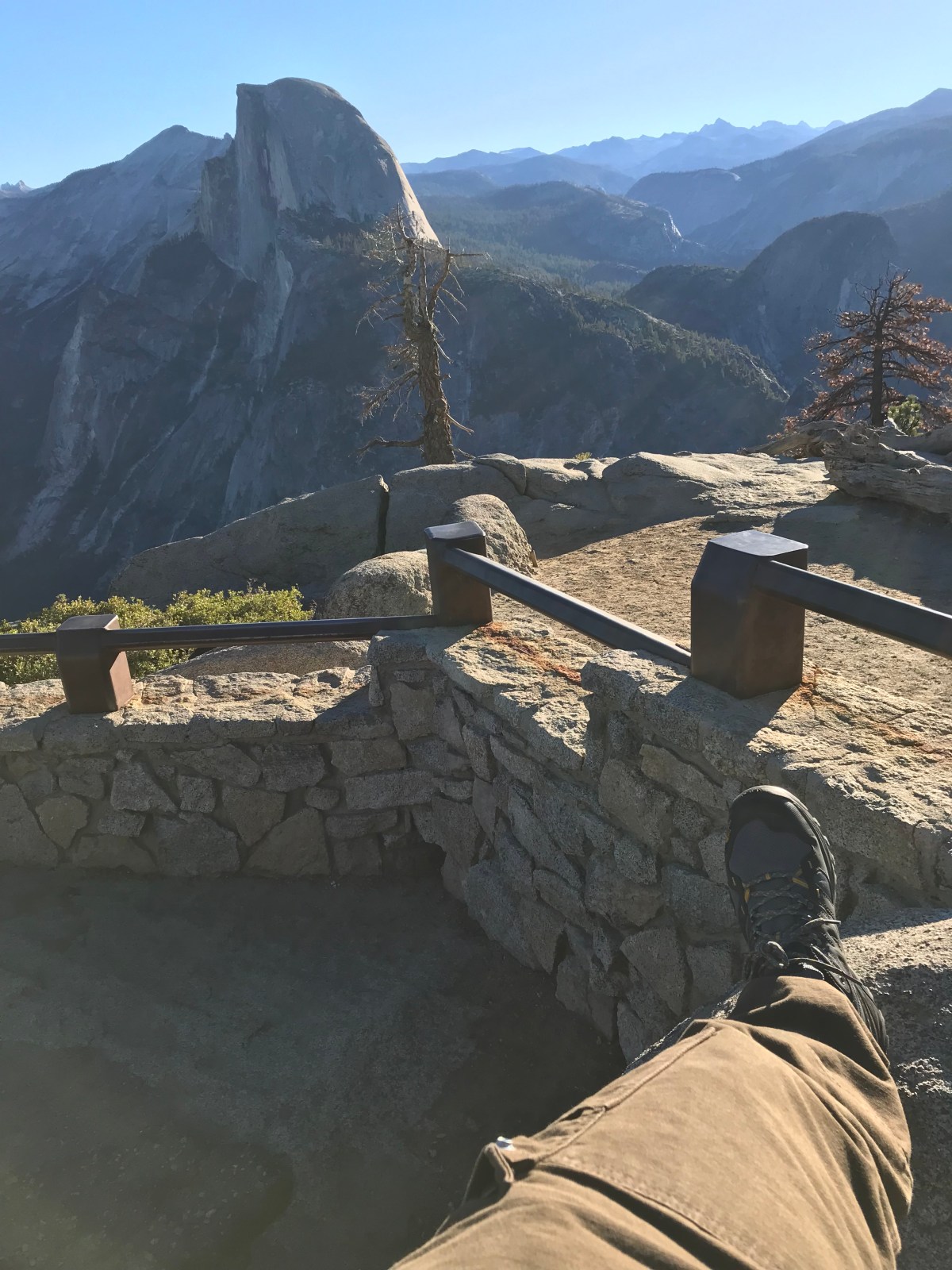
The view from Glacier Point is probably the best view in Yosemite, if not the entire National Park System. Right in front of you, Half Dome rises up and leaning over the rail, you look down into this famous glacier-sculpted valley.

IMG_4670

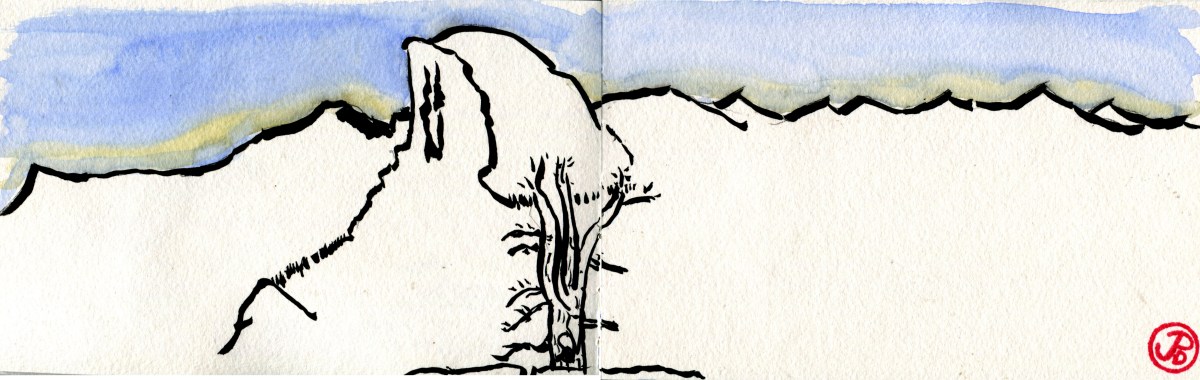
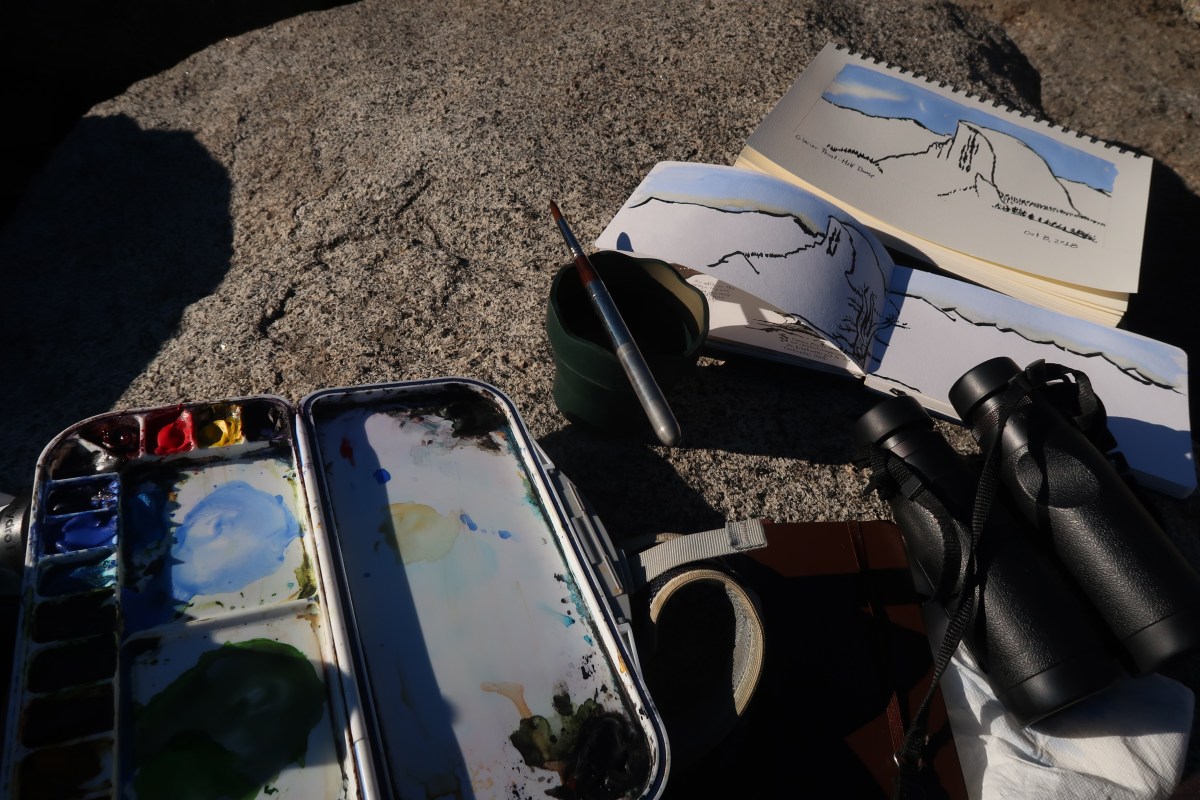
It was a beautifuly crisp fall morning above the valley and as I sketched Half Dome, I had the point to myself for a whole six minutes! An eternity in Yosemite, these where geological minutes.

IMG_9721

I’ve got the place to myself, well at least for another two minutes!

I chose to use a loose, brush technique, inspired by the paintings and woodcut prints of Chiura Obata (1885-1975). Obata’s images of Yosemite and the Sierra Nevada Mountains, are as iconic to me as a Bierstadt or Hill painting or an Ansel Adams photograph. I love this Japanese ascetic that he brings to a very familiar subject.

Obata immigrated from Japan to the United States in 1903. Obama became a well know teacher and artist in the Bay Area and every since visiting Yosemite for the first time in 1927, this National Park has become a major subject matter in his artist output.

Obata Half Dome

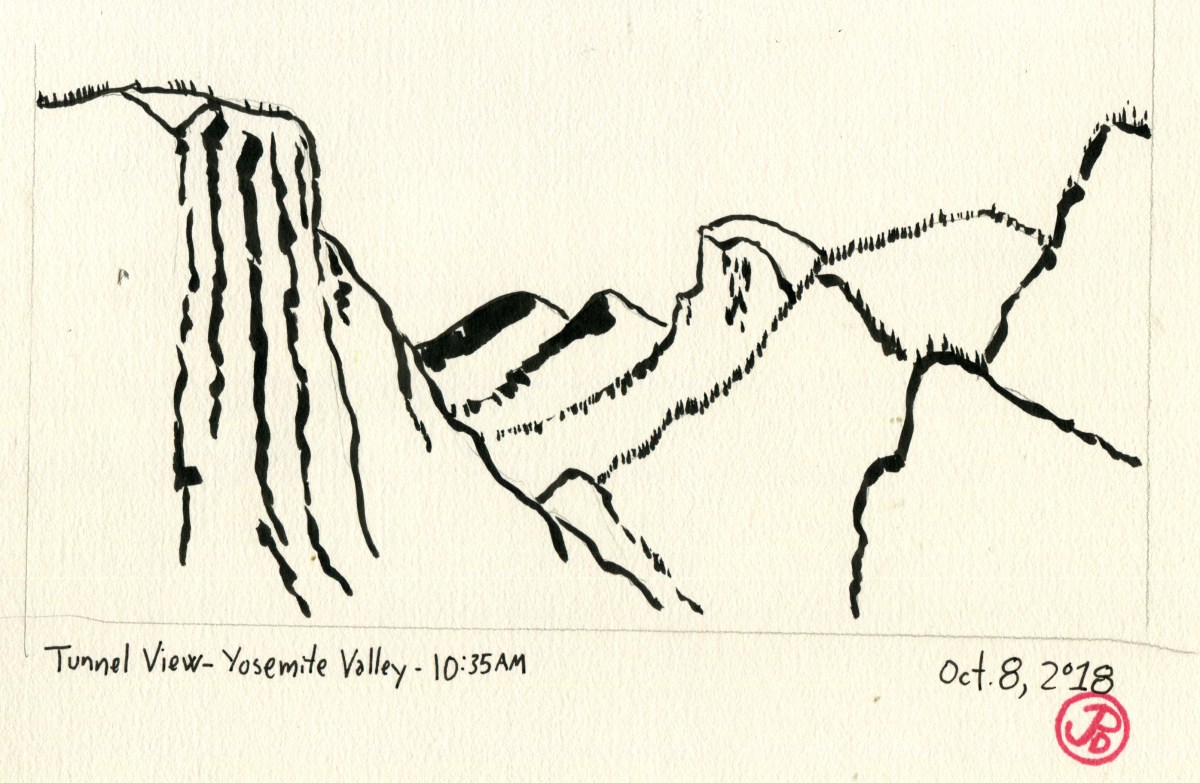
I tried to resist the urge to head to the valley floor which is usually crowded with people, even in October. One of the other most iconic views of Yosemite Valley is the one you get at Tunnel View. While all the tourists took selfies and photos, I sat on a stone wall and sketched this famous view, trying to summon my inner Obata.

Obata Tunnel View

Image

Summer Camp

They say you can never go back to summer camp as an adult but I was sure going to try.

Like most childhood memories, the setting is often divorced from the memory itself. I find this out almost every Monday when I learn that one of my students has gone camping over the weekend. My first question is, “Oh, where did you go camping?” The inevitable answer is, “Ahhh. . . I don’t know.”

I retained certain details from my summer camp experience, which was 30 years ago, like the name of the camp: Skylake, and the lake it was near: Bass and aided by photographs in a album, I have images of people, my councilor Bil, and locations: my cabin and the horse coral and actives: horseback riding, archery, waterskiing, and canoeing, but other than that I had no idea where my summer camp was, other than I knew it was somewhere near Yosemite.

A casual glance at a map reals many lake named “Bass’ in the United States. I looked at a Yosemite regional map and found a Bass Lake just south of the Wawona entrance to the park. A web search revealed that Skylake Yosemite Camp was indeed still in business but under a new ownership. Well I couldn’t go to Wawona without first going back to camp!

All was well when I turned right off pf Highway 41 at the Bass Lake sign. Well this was going to be easy, I thought, one road to the north of the lake and one to the south. What I didn’t take into consideration was that I could not see the lake through the woods. And when I finally did see the lake, it was to my right and I wanted it to my left which meant I was on the north shore and not the south where Skylake was located. Oh bother! As pooh would say.

I figured I would just keep driving east until the road curved around to the south side of Bass Lake but the road kept going east and not south, like I wanted it to. I eventually consigned myself to defeat, turned around and headed back along the north shore on the roadway of shame. I turned left and made a false foray into a housing development, turned back, and stopped at the ranger station and got a map (something I should have done about 45 minutes ago). I finally found the correct road, memorably named Road 222 and headed east along the south shore.

I looked at Bass Lake, trying to connect my memories to the location. The only thing I could come up with was there seemed to be more large house on the north shore than I seemed to remember. Well the last time I was on this road heading in this directions was 30 years ago, aboard a bus loaded with excited campers.

I did remember that there was a picnic area on the shore near the camp and Pine Point Picnic area appeared on my left, I knew I was very close! I rounded a curve and there was the sign on the right side of the road, “Skylake Yosemite Camp”!

I turned up the single track paved road, the ideal scenario running through my mental cinema: I would pull into camp and the off-season caretaker named Gordon (and not Jack) would look up from raking the leaves from the parking lot near the flag pole and welcome me to Skylake. He would commence a grand tour of the camp and memories would come flooding back. Instead I was greeted by a fallen oak, blocking the entire roadway.

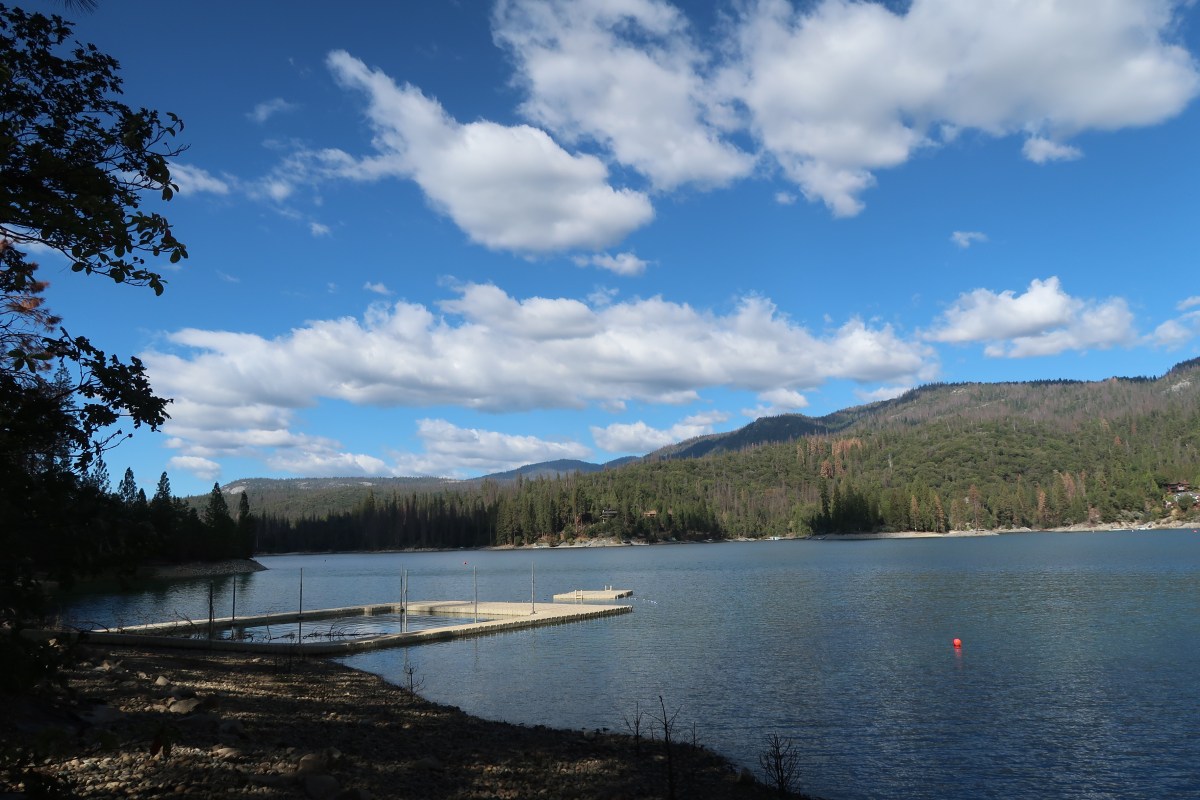
I returned to the camp dock remembering a canoe camping trip from 30 yeas ago. I remember setting of in the late afternoon to the northern shore and I remember sleeping under the stars.

IMG_4646

As I drove back towards Highway 41, one final memory came back. It was they day my dad came to pick me up to take me back home. He was the one who took the photographs. I remember it was great to see him and I gave him a our of the camp along with my best friend Erik. I think we must have driven around the lake, no doubt my father stopping along the shore to take photos. Now much has changed.

They say you can never return to summer camp but I tried.

Image

Fall Pelagic

There was a complete absence of fog as I crested the hill down to Pacifica heading south on Highway One toward Pillar Point Harbor. This was not the only difference from my August 18th pelagic trip. A fall pelagic is known for quality not quantity. We would not find the large numbers of shearwaters but the diversity of species should be higher.

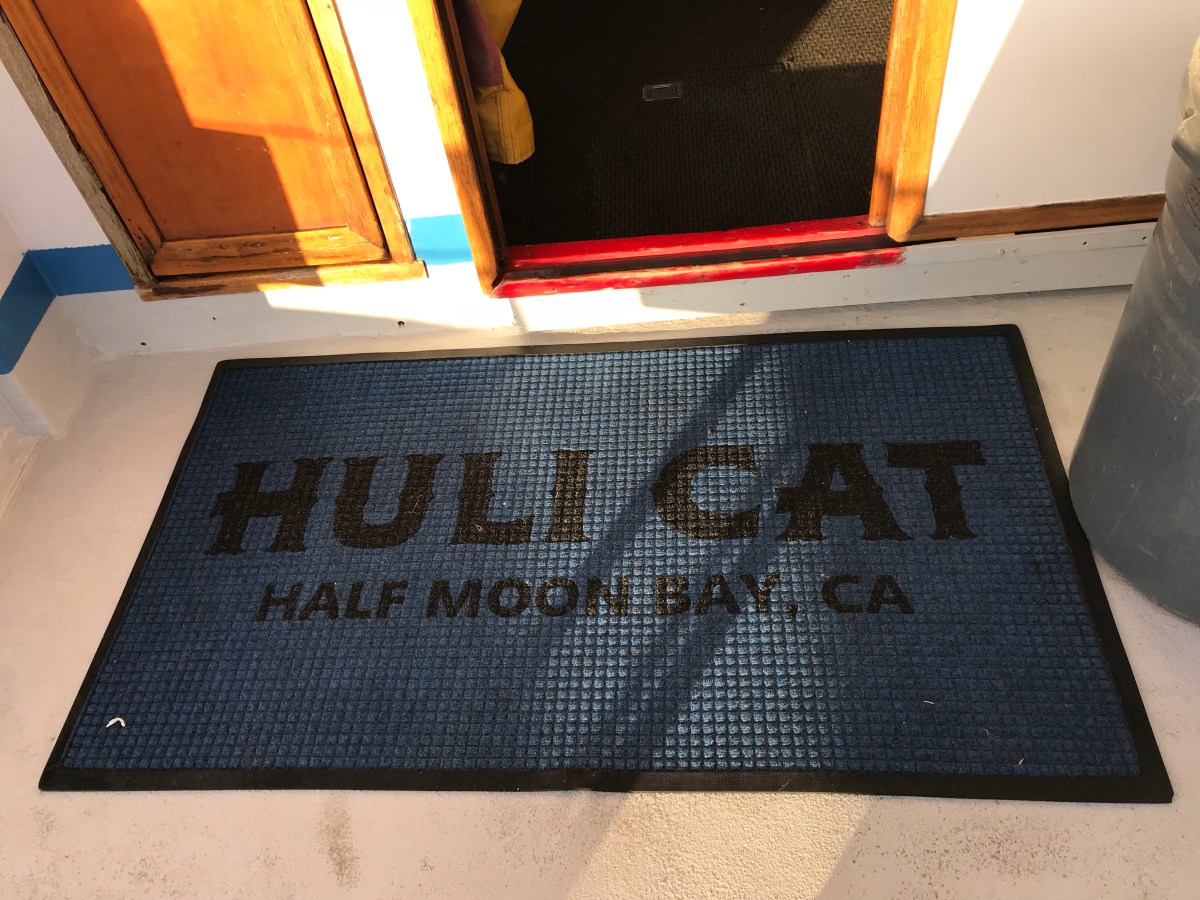
When we headed out on the Huli Cat at 7:00 AM, the skies were clear and the winds were light. A nice treat on the way out to the Continental Shelf was to see the entire genius of turnstone on the breakwater: black and ruddy turnstone, perched amount the pelicans and Heermann’s gull.

Once outside of the harbor we started to see our constant companions for this trip, the common murre. The auk was seen bobbing on the swells throughout the voyage. Framed in the blue sky, lines of brown pelicans heading out to fish.

Heading further out, the uptick of shearwaters picked up but not in the same numbers as in August. In some small flocks pink-footed outnumbered the often omnipresent pelagic staple, the sooty shearwater.

At about 24 miles from Pillar Point Harbor we where over the Continental Shelf and we headed north into San Francisco County waters. The skies where covered in low gray clouds and the sea became a little choppy. This made finding one of the targets of this pelagic, Guadalupe murrelet, very tough to spot in between the swells.

There where more storm-petrels seen on this trip than in August with a high of 19 black storm-petrels and 252 ashy storm-petals. These swallows of the seas fly low to the water, picking off food from the ocean’s surface. Some species even seem to “dance” on the water.

I had a few target birds for this trip. Short-tailed and flesh-footed shearwater. Both would be lifers. It is said about the flesh-footed that it takes ten pelagic to see your first flesh-footed. I was hoping to me a little more lucky.

As we were motoring in San Francisco waters, I spotted a lone, dark shearwater on a parallel course, heading in the opposite direction from my perch on the starboard side of the Huli Cat. My first impression was that it was just another sooty until I noticed the bi-colored black and pink bill like a pink-footed shearwater. All the field marks clicked and before I could put it into words a spotter in the stern shouted out, “Flesh-footed!!” And just like that I had a new pelagic lifer!

Another birder on the Huli Cat ticked this shearwater on her list list. Nicole was doing a Big Year and the flesh-footed was the 752nd species she had recorded in the calendar year

A Big Year is an attempt to see the highest amount of birds in a calendar year. According to the American Birding Association (ABA), there are 993 species that have occurred in North America so I have 438 more birds to go!

I highly recommend Alvaro’s Adventures for a pelagic birding trip.

Image

A Two Mega Rarity Week

It is said that every bird is a rarity somewhere and ever birder in the fall is just waiting to find that bird and that somewhere. If that bird is a mega rarity, the type of bird that makes a birder wake up far too early on a Saturday morning and driving through the dark predawn hours, just to see a sandpiper that is common in Asia, then it is even that much better. But to have two California mega rarities in the space of one week in almost too much to take in!

The first rarity was unexpected, but which rarity really is? I was heading back from teaching a sketching workshop in historic Coloma, California to the naturalists at CODS (Coloma Outdoor Discovery School). On my return I received a text from Dickcissel that an Eastern yellow wagtail had been seen the previous day at Rodeo Lagoon in the Marin Headlands.

I pulled off Highway 37 and checked Sialia, the birding listing sight, and sure enough the wagtail had been seen in the morning. I could be in the Headlands in 25 minutes on my way back to San Francisco.

Some lifers are unexpected and easy and that’s even better when we are talking about a mega lifer like Eastern yellow wagtail (Motacilla tschutschensis).  This wagtail has only been reported in the Golden State 19 other times in the data that dates back to the 1970’s, making this bird listed as “very rare along the Pacific coast to California (mainly Sep)” according to The Sibley Guide to Birds.

When I rounded the curve of Bunker Road at the eastern end of Rodeo Lagoon, I was coming to the pull off at the Radiolarian chert quarry that was capped by the Owl Oak. There was a group of about twelve birders who were looking up into the hillside. Now this seemed odd for a water loving bird that had been reported on the banks of the lagoon, which was in the opposite direction to where the group of birders were focused.

It turns out the group was from the Central Valley and they had the wagtail five minutes earlier and they were now following a warbler flock on the hillside. Their leader was kind enough to lead me across the road and pointed to where the bird had been seen. I scanned the shoreline out to the point and back again. I only had to wait five minutes until the wagtail reappeared from the reeds and foraged on the shoreline. ABA lifer 553!
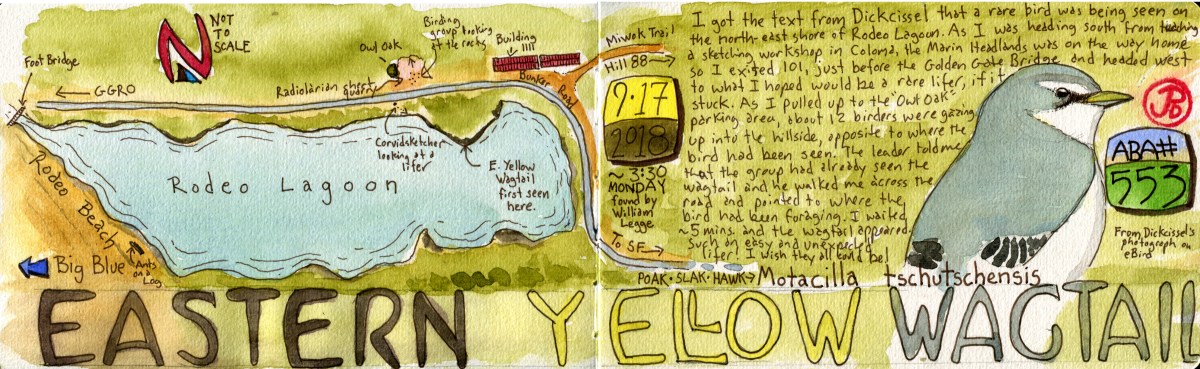
Yellow Wagtail

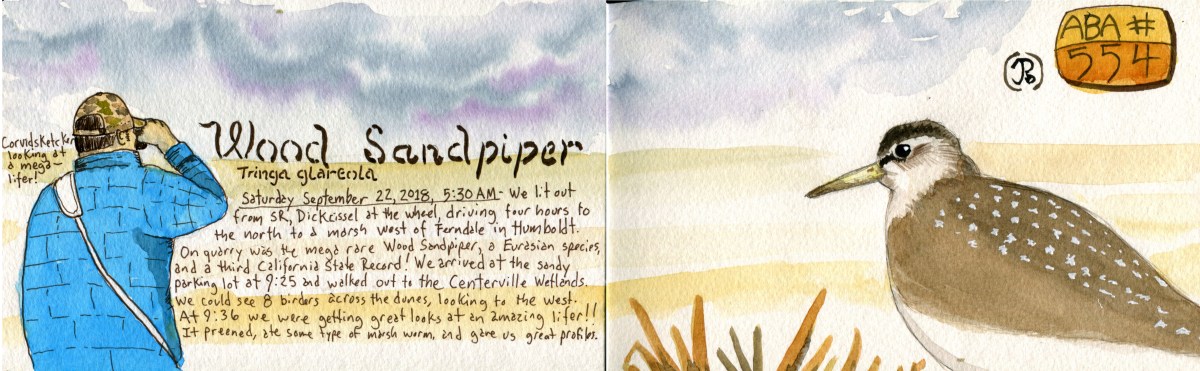
The next mega rarity was first seen on Friday September 14 in Humboldt County at the Centerville Wetlands just west of the town of Ferndale. It was identified as a rare (to California and only a third State record) Eurasian shorebird: a wood sandpiper. It was not refound on Saturday but Sunday morning it was seen again and seen by many birders.

This wetland was four and a half hours from my home, and I did not have time to try to find it on Sunday. So I waited with bated breath, checking all the postings to see if the wood sandpiper would stick. Tensions grew throughout the week as I waited for each new confirmation that the sandpiper was still there. I made a plan with Dickcissel that if the bird was seen on Friday afternoon then we would head up to the wetlands early Saturday morning.

I was up at 4:30AM on Saturday morning, a full half hour before my alarm was set. I was out the door by five and by 5:30, Dickcissel and I where on 101 North, cruising through the predawn darkness willing the wood to stick and hoping that a peregrine has not gotten to the bird before we did!

We where in southern Mendocino County when the sun rose above the hills. We where making great time.

Almost four hours later we exited 101 and headed west toward Ferndale. We bypassed Main Street, noting that we where eight minutes away from our final destination.

We were on what seemed like the longest three miles of our lives know that an incredibly rare visitor could be ours. Once the houses faded away and the vista opened up to the coast we knew we were very close.

To the right was the parking lot. The time was 9:25 AM. As we geared up, two birders, who had journeyed from San Diego, confirmed that the wood sandpiper was still there! We moved across the sand as fast as humanly possible while shouldering a scope toward the line of birders looking off to the west. We knew that find the needle in the haystack was going to be easy!

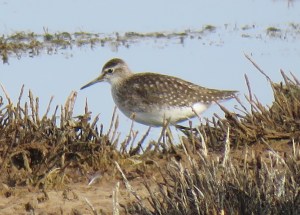
In ten minutes I had the rarity in my scope: dark tipped bill, eye ring, white eyebrow that extended beyond the eye, white speckled back, and yellowish-green legs. This was a shorebirds that looking like nothing else in the Lower 48. This was the wood sandpiper (Tringa gladiola)! What a journey for a mega lifer!
Image

Golden-winged 200

Another Saturday morning, another early start. As the proverbs says, “The early birder gets the bird but the second mouse gets the cheese. ”

20 minutes before 6 AM, I headed north to meet Dickcissel in Marin County. Our destination was, oddly enough, the filming location of the movie that put a generation of people off birds for a lifetime. The movie was Hitchcocks’s The Birds and the location was Bodega Bay. We were headed across the bay from Highway One to Campbell Cove.

We pulled into the parking lot 20 minutes after seven and there were already six cars in the parking lot and beyond the lot we spotted four birders standing on a rise, peering into the trees. This is always a good sign. The more eyes the better.

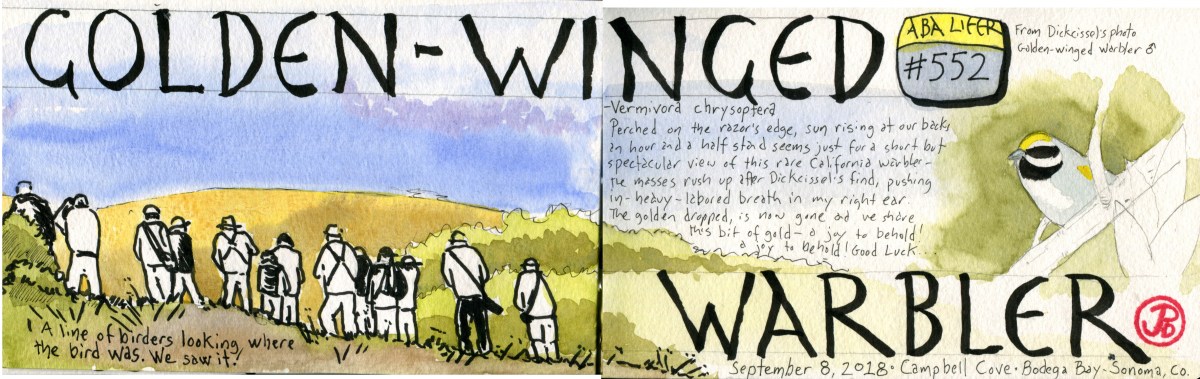
The birders were standing on a narrow ridge about twenty feet high. We recognized a few as birders from San Francisco and they told use that our quarry had just been seen ten minutes earlier. The good news was the the bird was still around but the bad news is we shouldn’t have stopped for coffee in Novato because we would have seen the California rarity, the golden-winged warbler.

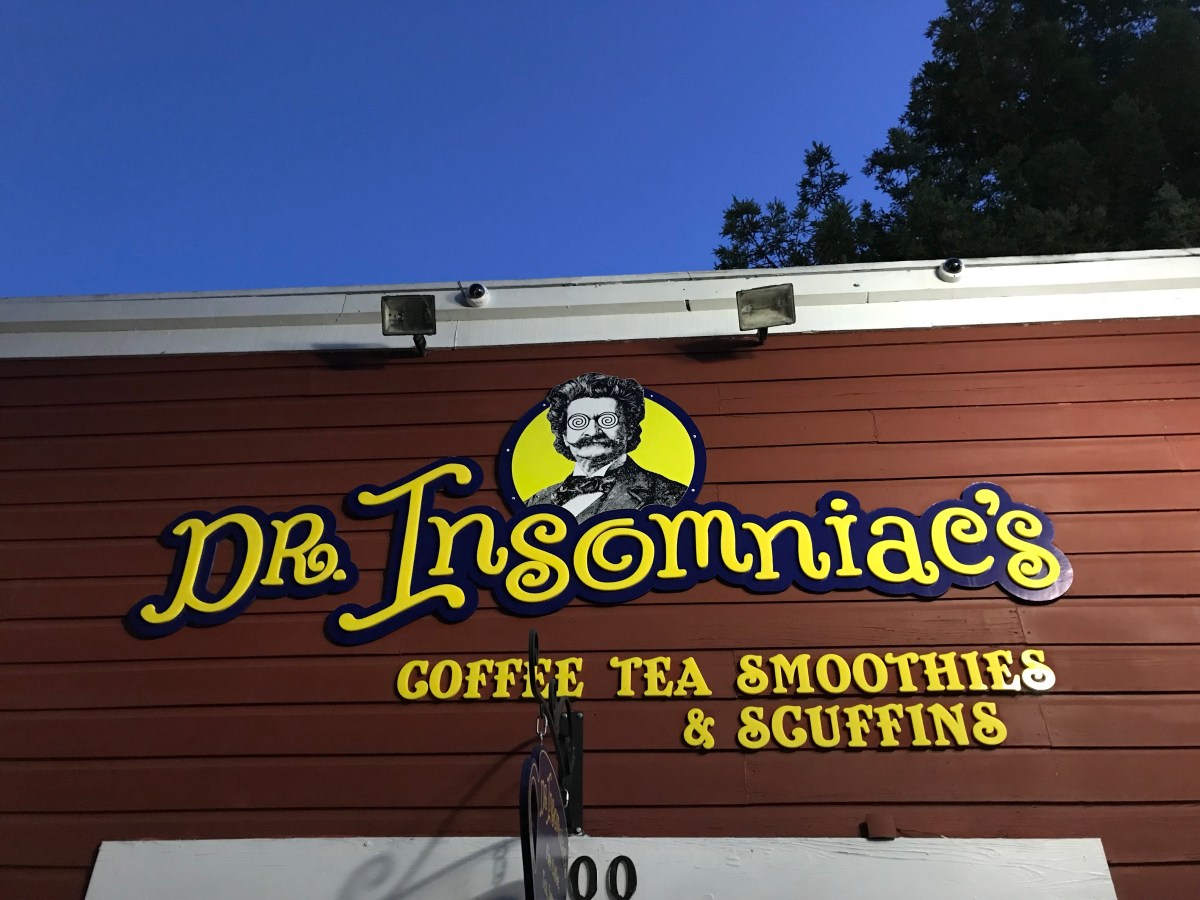
Dr. Insomniac is a devious tyrant. Had we not stopped for his elixirs, then we would have seen the golden warbler.
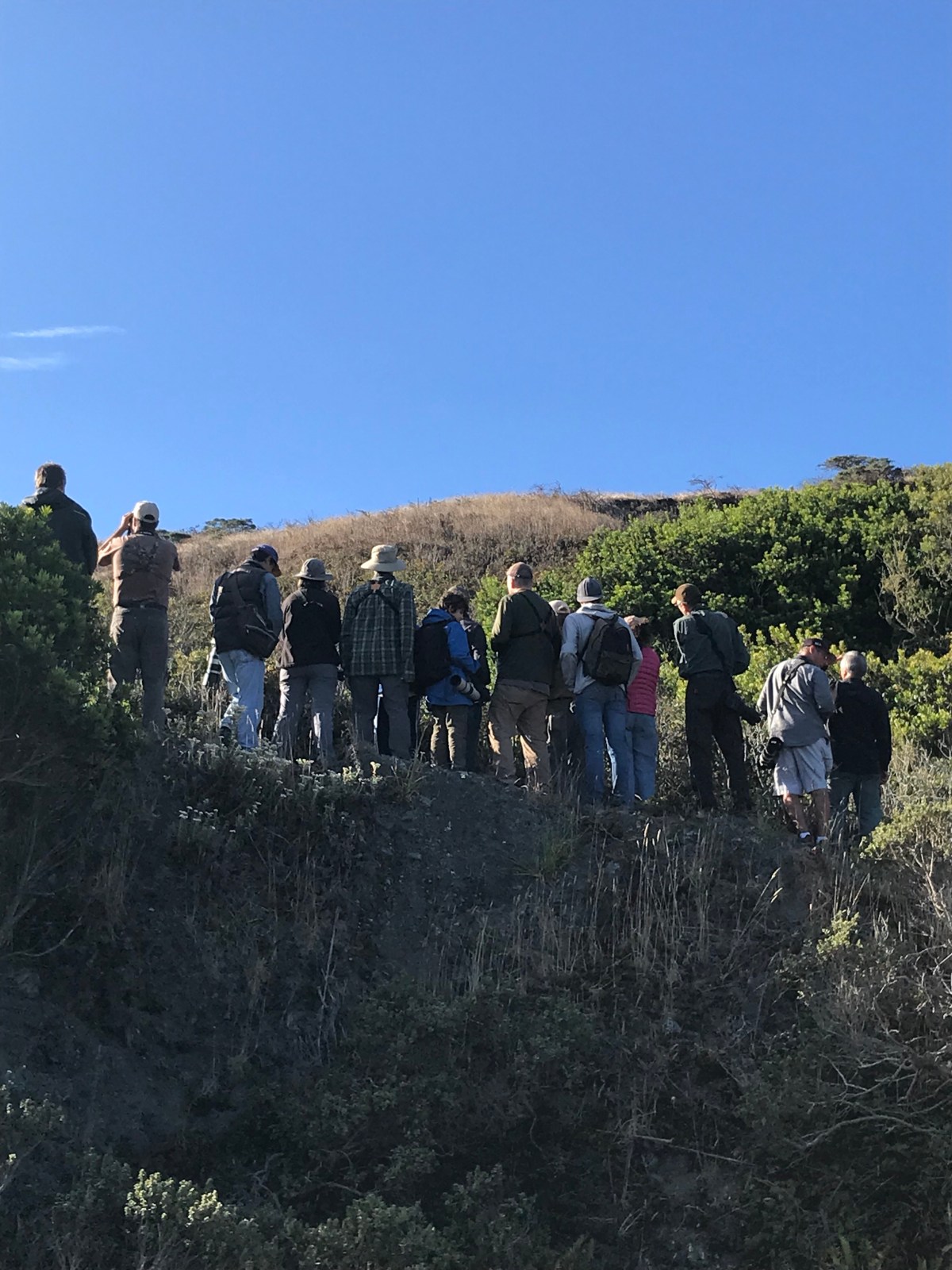
More birders arrived every minute and the lot was full. We stayed on the narrow ridge, which provided eye level views of the willows while other birders headed to the beach or went into the “cave”, a muddy track under the willows. With so many eyes, someone was bound to see the golden-winged warbler again. The question was, would we be able to get to the right location in time to see the notoriously sulky bird. We took our chances and took a wait and see approach and hoped the bird would come to us!

An hour and a half later our wait paid off. Dickcissel spotted the wayward warbler off to our left. I soon had my binos on the bird, bold, chickadee-like facial pattern, yellow mohawk, and yellow wing bar. The warbler was foraging under the canopy with a flock of white-crowned sparrows. We were able to observe the bird for a few minutes before the warbler dropped down and out of sight.

I quickly became aware that our narrow ridge had become a very crowded place. A woman to my right was thrusting her elbow into my side as she tried to get a view of where the bird was just seen and a man standing behind me was huffing and puffing into my right ear, his warm, coffee tinged breath gave me the willies! We were surrounded by rabid birders who were manically trying to add this west coast rarity to their life lists. This seemed like the worst rush hour subway ride imaginable! It was clear the bird had flown and after a celebratory fist bump, it was time to extract ourselves from the overcrowded ridge without falling to our deaths!

The maddening crowd on the ridge looking into the willows where the golden-winged warbler used to be.

Image

Half Moon Bay Pelagic Birding

To the outside eye, birding makes a man do some crazy things. The list is too long to retell here and to be honest I have conveniently forgotten a few.

So what do I do on my first Saturday after my first week back at school. Relax? Of course not! I wake up at 5:30 AM, drive 30 minutes through pea soup thick, Pacifica fog and stop to caffeinated at the Press Cafe, where all the fisherman of Pillar Point Harbor do the same (they open at 4 AM daily).

I then stood at the base of the Johnson Pier, coffee in hand and my binoculars around my neck, wearing them as a lanyard at a conference, announcing my place in the world. Other birders slowly wandered in to form in loose flocks, some nibbling ginger cookies other talking about recent avian sighting.

Our destination was the pelagic birding grounds of San Mateo County and we would be heading out to the Continental shelf aboard the New Captain Pete, a 53 foot fishing charter boat. But we would be doing no fishing on this all day trip.

Sunrise over Pillar Point breakwater as the New Captain Pete heads out to the Pelagic birding grounds of San Mateo County.

We headed out from the harbor it was interesting to see the groups of birds we were seeing as we were heading out to the pelagic or open ocean birding grounds. We first where seeing coastal species such as brown pelican, Caspian tern, and Brandt’s cormorant. A little further out we started seeing marine species that can be seen from land but with a scope. Common murre, a parent with begging young in tow, a pair of marbled murrelets, and a few Heerman’s gulls on the water. At the edge of this zone we spotted our first northern fulmar.

My pelagic map (from Pillar Point Harbor).

As we headed closer to the Continental shelf we became to see more pelagic species that are rarely seen from land such as Buller’s and pink-footed shearwaters, pomarine and long-tailed jaegers, and the long haul migrant, the arctic tern.

As we approached the shelf we spotted a giant of a bird, sitting on the water. This was the master of the wind, the black-footed albatross, a west coast speciality. These birds are amazing to watch on the wing and there can be very tame, often approaching boats.

Once we hit the weather buoy on the Continental shelf, we seem to be seeing more shearwaters and were surrounded by Pacific white-sided dolphins that road the bow wake and paralleled our path. On this journey we also spotted about 40 humpback whales.

Over all it was amazing day at sea, with calm seas, many pelagic bird species and marine mammals.

I highly recommend going with Alvaro’s Adventures on a pelagic trip to the Continental shelf.

Image

Nemesis Bird

Nemesis (noun)

the inescapable agent of someone’s or something’s downfall.

Nemesis Bird (definitely a verb)

the avian agent of a birder’s downfall

I have had a few Nemesis Birds in the 20 years I have been birding.

These are birds that you try to add to your life list, but after repeated attempts, you fail, making you want to pull out the hair that you still have left on your head and chuck your binoculars into the nearest body of water or a deep, dark crevice, whichever is closest.

I’ve had a few nemesis species in my birding life, the plumbeous vireo comes to mind. This small, gray bird’s range skirts the eastern part of California on it’s western edge. The vireo is to be found around the Mono Basin which lies between the Sierra Nevada and the White Mountains.

Well this should be easy, I thought. Just show up where the bird has been reported and with a little patience, you have a lifer.

Such is not the case with a nemesis bird (hence the name), I tried and tried for the plumbeous video all around the Mono Basin in different locations and at different times of the breeding season. No luck. (I finally added this vireo to my life list, not in California but in Arizona’s Madera Canyon.)

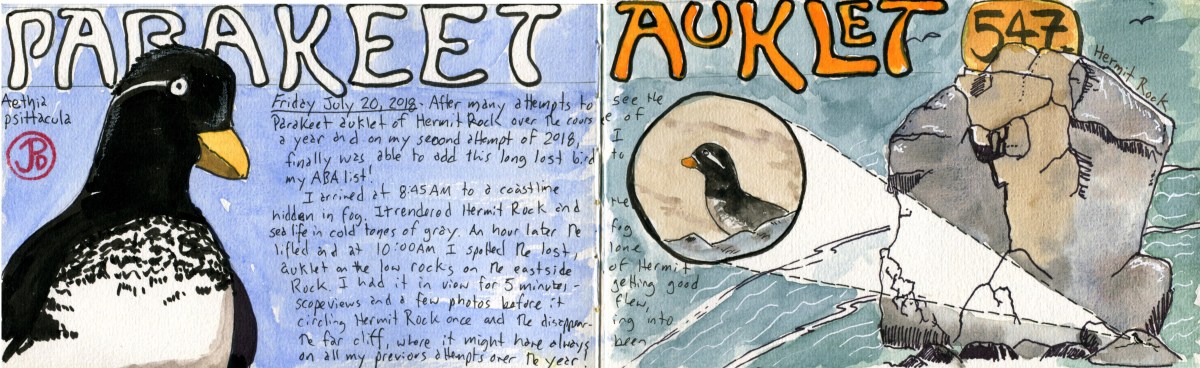
My latest nemesis was a rare visitor from Alaska that was summering on the western edge of San Francisco on Hermit Rock, a mere 15 minute drive from my residence. Well this should be easy, I thought to myself. You get the picture.

It should be a piece of proverbial cake to see the lone parakeet auklet on the entire west coast of California. So I headed out on my first attempt during the summer of 2017 after I had returned from birding in Costa Rica.

As the Jimmy Cliff lyric says, “You can get it if you really want but you must try, try and try ’til you succeed at last.” Went I did the try, try, and try bit but the murrelet remained as illusive as Bonnie and Clyde at a Sunday afternoon church potluck.

Birders had reported seeing the small black alcid with a white tear streak but somehow I had always managed to arrive ten minutes too late. The parakeet had just been on the water or was preening on the cliff face of Hermit Rock but now I was left intensely looking at every pigeon guilimot that flew to or from the rock with the growing urge to take my binoculars by the strap and hulling them around in circles and pitching them into the Pacific!

At the end of the summer of 2017, the auklet remained off my list and I was resigning to going to Alaska in June during my retirement years to add this nemesis bird to my ABA list.

Epilogue

Then during the summer of 2018, after I had returned from Ecuador the parakeet auklet had returned to Hermit Rock! I tried once and failed and then I returned the following day and the coast was fogged in and I began my search. I was soon joined by three other birders.

The fog slowly lifted and an hour after I started my search, a small black alcid with a white teary streak appeared on a low rock, just below the lookout. The auklet remained in view for about five minutes and then flew around the rock twice before disappearing behind the rock on the far side, probably where it had been on all my previous attempts. Bingo! My Nemesis Bird was a Nemesis no longer.

The parakeet auklet (Aethia psittacula).

Image

Only Bear in Town

After heading back down the valley from Antisana with giant hummingbird, Ecuadorian hillstar, black-faced ibis, Andean condor, coot, gull, lapwing, teal, and ruddy duck on my World Lifelist, we headed north, skirting the edge of Quito.

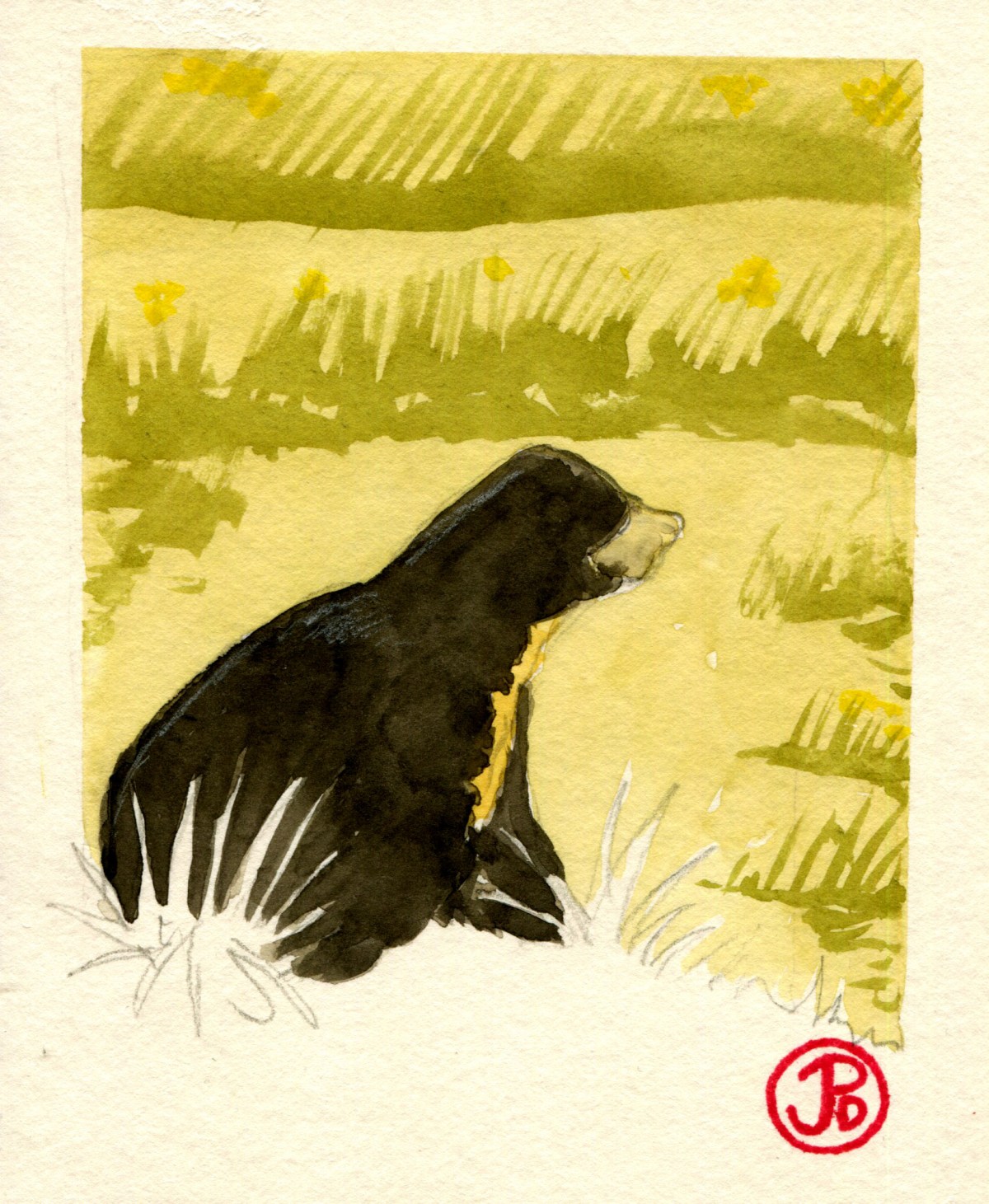
We turned northeast on the road that eventually leads to Amazonian Ecuador. Our destination was Papallacta Pass. Our quarry was one of the eight species of bear in the world and the one species that exists in South America: the Andean or spectacled bear (Tremarctos ornatus). This is the last of the short-faced bears. They are very tough to see in the wild and are classified as vulnerable due to habitat loss.

We scanned the mountainside to the right as we headed up to the pass. Gustavo instructed me to look for a “large, dark moving bush”. So I did and found nothing among the mountain side. We pulled over and scanned the landscape and the high grasses of the paramo were constantly washing in the Andean winds.

As we climbed towards the pass, we were at 14,000 feet elevation and the fog hemmed in the views and the winds cuts through every layer of clothing I had put on. The cutting winds and the difficulty I had breathing at 14,000 feet above sea level made me happy when we headed into the truck and headed back down the pass towards the capital.

As we drove down the pass, in a westerly direction, Gustavo kept an eye on the mountainside we had just passed on the way up, which was now to our left.

The pass was full of cars and trucks and our side of the road lacked shoulders or pullouts.

We were nearing the end of the valley where the mountainside fell away, when Gustavo said, “There’s something up there!”

He stopped the truck in the middle of the slow lane (must be perfectly acceptable in Ecuador) and we got out and peered at the mountainside.

“See if you can find it?”

I love a good challenge.

It didn’t take long to see the large, moving bush of a bear, foraging on the far mountainside. This bear closed out South American bears for me! It’s hard to see the continent’s one and only bear species and I enjoyed my amazing views in the late afternoon light.

I was a little more concerned with being flatten by a semi speeding down the grade. And I kept one eye on the bear and the other on downhill traffic.

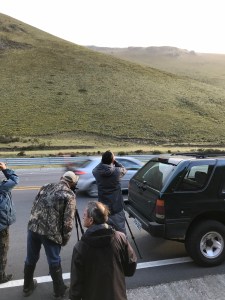
Most trucks and cars swerved around our illegally parked truck (well in the States anyway) but one car slowed and pulled over in front of us. They were ecotourist vultures, coming to feed on our eco find. A couple from the Midwest and their guides exited and the guide inquired, “Bear?”

Gustavo pointed out the dark moving bush to the eco vultures and we now had two scopes on the bear.

Eco Vultures looking at the dark moving-bush.

This was a great sighting to end an incredible time in Ecuador. I end the trip with 331 bird species and one very amazing bear species.

Image

A Tale of Two Condors

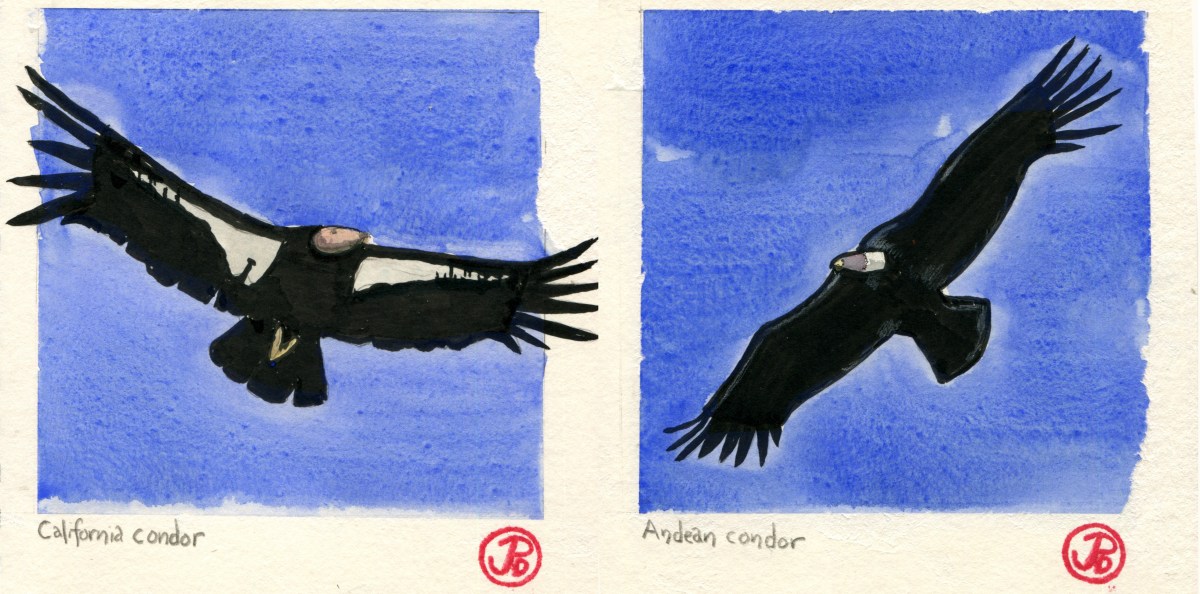
On July 10, 2018 I saw my last Andean condor wheel above the cliffs as I watched from the patio of the Tambo Condor Restaurant. I now had closed out the world’s condor species. It was not too hard to do because their are only two condor species in the world. But it require making a journey to Quito, Ecuador and then a drive up to Antisana Biological Reserve. They are both large, dark birds that soar in the air so they are not difficult to spot. But their rarity  and their majestic awesomeness make them a much sought after bird.

The two species of condor are only found in the western hemisphere on the continents of North and South America. The western United States is home to the California condor (Gymnogyps californianus) and the western part of South America, along the spine of the Andes mountain range, is the domain of the Andean condor (Vultur gryphus).

When I returned to the States I still needed a condor fix and I knew that they were only an hour and a half drive away from my cabin in the Santa Cruz Mountains.

So on August 2, 2018 I left my cabin just before 7:00 AM, my destination was Big Sur.

The Big Sur coast is the best place to see the California condor in California. While most tourists stand by the roadside, facing the ocean, I am usual faced the other way, scanning the ridges for North America’s largest bird.

The best place to look for the condor in the Big Sur area is Grimes Point. It was here in June of 2009 that I saw the most condors I have ever seen.

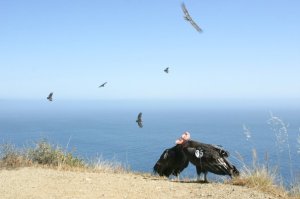
California condor on the Big Sur coast from Grimes Point in 2009.

June 22, 2009. In this photo from Grimes Point shows an incredible seven California condors!

After birding at Andrew Molara State Park I headed further south. riding the ribbon of road that has been called the most scenic drive in the world. After cutting into a canyon, Highway 1 pulled up out of the canyon and headed south again. At the top was the pullout for Grimes Point.

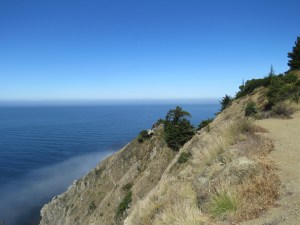
Grimes Point looking north.

I pulled off at the pullout at 10 AM and began my condor watch. The sky was clear and a low haze was skirting the coast below. There was a southernly movement of swallows and a few turkey vultures soaring up on the ridges. But no condor, not yet.

I looked north at the A-frame house that clung to the point and at 10:05, an adult condor appeared from around the point and flew south below me! It is always amazing to see these large birds in flight and to see these condors in close proximity and from above, is an unforgettable experience!

My second condor species in less than 30 days, California Condor below Grimes Point.

In the less than 30 days I had both species of condors in my binoculars in two very different locations, one at sea level and the other, high in the Andes at 13,000 feet. Almost 4,000 miles separated these to signings but they seemed to bring the world closer together,