Image

Monterey Bay Classic Pelagic

The first time I remember going out on a boat on Monterey Bay I was in high school. That year (1988, I think), numbers of blue whales were being attracted by krill into the nutrient-rich bay.

My dad and I took a whale watch boat out of Monterey’s Old Fisherman’s Wharf and it was the first time I set eyes on the world’s largest animal. I was able to take a few pictures of the whale’s blue-gray mass. Later, I told my biology teacher that I had seen blue whales in Monterey Bay. He didn’t believe me, but I showed him pictures to prove it!

In the ensuring 30 years, I have been on a few Monterey Bay pelagic birding and whale trips. But it had been a while so, when I saw that Alvaro’s Adventures was taking a trip to the bountiful Monterey Bay, I signed up.

I love Monterey because of it’s place in California’s history. The American flag was first raised in Monterey. Our state constitution was written (in English and Spanish) at Colton Hall, a short walk from Monterey Wharf.

What I don’t love about Monterey is it’s wharf. This is full of tourist junk shops and cheesy nautical themed restaurants but it’s saving grace is to be found at the end of the wharf: the companies that lead nature tours (mainly for whales) out into the Monterey Bay Sanctuary.

The orca sign at the dock to Monterey Bay Whale Watch and our masked-leader below, Alvaro. I had seen a pod of orca in the bay a few years ago. I wouldn’t mind seeing the world’s largest dolphin again.

I found myself here at a quarter to seven at a wharf that was slowly coming to life, which would be a jarring contrast on our return later that afternoon when hordes filled the wharf, having not got the note about social distancing.

A few pelagic birders were milling about. You could always tell them apart, they had on birding hats, often displaying some national or international birding destination. They usually had optics around their neck and were nibbling on ginger snaps or cookies and thumbing through bird guides. Some where even checking out the local western gulls and pelicans.

Today our boat was manned (this doesn’t sound right) by two women. She was a large boat, the 70 foot Sea Wolf II and was made, not for fishing, but whale watching, a perfect vessel for pelagic birding! Of course the real Sea Wolf of the seas is the orca aka the killer whale.

There was plenty of leg room on the Sea Wolf II. The red tape on the rail was placed six feet apart to encourage social distancing. One of these lines of perspective is straight. My money is on the horizon. The Sea Wolf had lots of places to stand or sit with clear views of Big Blue.

We boarded and before long where heading out into Monterey Bay. The swells were high and I enjoyed riding the rhythms of the sea like a nautical bucking bronco, a raucous sea horse! A few members of birders joined the Feeding-the Fish Club. Luckily, touch wood, I have never been a member of this club.

The reason Monterey Bay is a legendary location for pelagic life is the marine canyon, the Monterey Submarine Canyon, that bisects the bay. This canyon starts just to the west of Moss Landing. The canyon, at certain places, is a mile in depth and is the deepest submarine canyon on the west coast; a Grand Canyon of the Pacific. This canyon produces nutrient-ruch waters that attracts cetaceans (from blue whales to orca) and pelagic birds. This also means that you do not have to travel too far out to see pelagic species.

Today we headed south to search the waters off the coast of Big Sur. I told Alvaro that I would be checking the skies for California condor! (there is a nerdy bird joke in there.) The pelagic birding in the bay had not been as prolific in recent weeks, possibly because of water temps, so Alvaro directed the crew of the Sea Wolf to head south. And it turned out to be a good decision.

Within 30 minutes of leaving port, we had our first pelagic species, a lone sooty shearwater. This trip was dominated by the presence of pink-footed shearwaters. Alvaro noted that “weirdo” shearwaters (aka rare) associate with pink-footed and not sooty shearwaters. I could only hope for a Manx!

A little further out, we were upon a pod of Risso’s dolphins. These gray dolphins have dorsal fins that resemble female orcas. Our captain called attention to one individual Risso’s, an albino, named by whale watchers as “Casper”.

Risso’s dolphin. These dolphin don’t seem to enjoy bowriding like the gregarious Pacific white-sided dolphin. But a great dolphin to see nonetheless.

Further south we encountered sweet spots with many shearwaters, a smattering of ashy storm-petrels, and some south polar skuas. One skua was being chased by a Heerman’s gull, oh how the tables had turned. In this general direction we saw our first, of about ten, black-footed albatross. We added two species of jaegers to our list.

I spent most of my time in the stern of the boat. It it usually is less crowded, less wet, and less turbulent in the back. Once we headed back north again, I migrated to the bow of the Sea Wolf. Here is was important to keep at least three points of balance and attempt to hold binoculars to your eyes. At times, I wore my binos like a dense necklace and scanned the waters with the naked eye. This is a wide angle lens approach to pelagic birding. This approach has payoffs.

I spotted a chocolaty shearwater crossing our bow from right to left. “Shearwater”, I called out. Alvaro, who was standing to my left, got bins on it and proclaimed, “Flesh-footed!” It really does pay off to stand next to someone who knows more than you do. It always makes you look better. This was the only flesh-footed shearwater we saw on the trip and only the second one I had ever seen.

Something similar happened a dozen miles later when I spotted a grouping of four birds. It looked like two phalaropes bookended by two California gulls. One of the spotters identified the two birds as red phalaropes. The seas, swells, and light can play tricks on the birder, even the most seasoned pelagic birder. As we came closer the birds were not phalaropes but the smaller Napoleon’s gull. They showed their dark bills and ear muffs. These small gulls were a pleasant pelagic surprise. I have never seen this gull in open ocean but on terra firma.

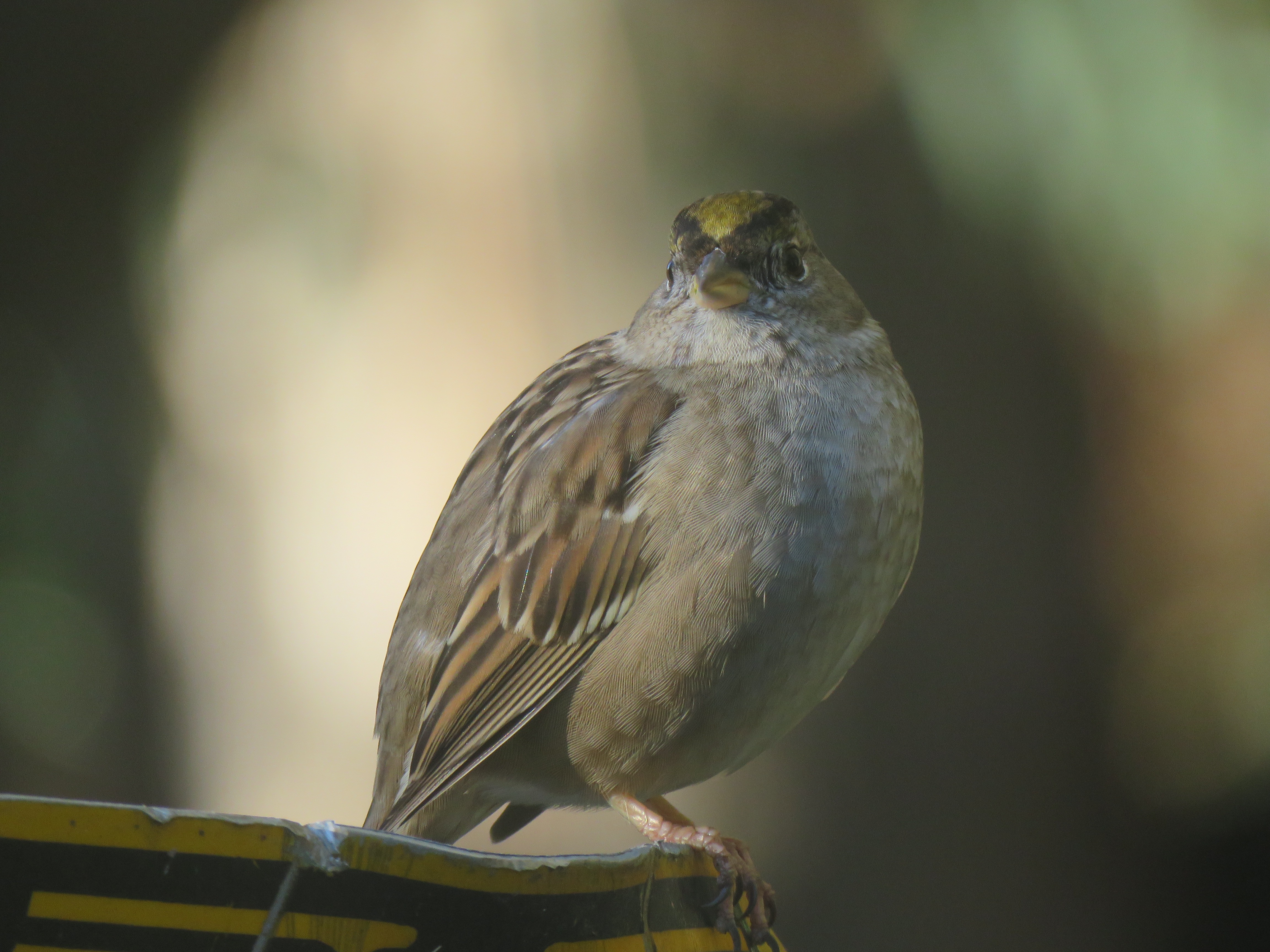
It was surprising to see a few passerines so far out at sea. The closest these birds might come to water was a bird bath. An American pipit strafed the boat and then later a golden-crowned sparrow crossed our stern. We also spotted an unidentified sparrow that was laboring, inches above the waters. It was flying towards us. Some passerines hitch rides back to port but this sparrow did not look long for this world. It most likely had gotten lost flying over the bay and this shortcut can prove deadly. We soon lost sight of the sparrow, it disappear behind the swells.

We soon made a course to the west as we headed back to port. Here we saw more inshore species like common murre, Brandt’s cormorant, and brown pelican. The latter species it’s truly one the of the iconic inshore west-coast species. Brought close to extinction by the pesticide DDT, they now flourish in the Pacific. A line of pelicans approached from our port side. Such a common species here, now, but is there no other bird in flight, over the seas that is more soothing to soul and meditative, than a line brown pelicans?

To me, there never has been, nor will there ever be a species that says “Monterey Bay” than the brown pelican.

Image

Pioneer Canyon Pelagic

For months, Grasshopper Sparrow has been dreaming of going on a pelagic to see some of the iconic west coast species: shearwaters, storm-petrels, and the mighty black-footed albatross! And finally the morning came for a September Alvaro’s Adventures pelagic trip to the continental self from Pillar Point Harbor.

A loose sketch of a budding birder checking out the birds on the breakwater as we head out of Pillar Point Harbor.

We arrived at the harbor half an hour before the meeting time of 6:30 AM. I felt like a child on Christmas Eve, I was excited and I rarely sleep well before a pelagic. Pelagic trips are so exciting because you never know what you’re going to see.

This pelagic produced some avian highlights but on this trip the cetaceans really shined.

A loose pen brush sketch from the stern of the Huli Cat. Not an easy thing to do with the rolling and rocking of the boat in open sea. That’s why it’s loose!

As we headed out into the foggy bay we saw many rafts of common murres. It took a while to see a sooty shearwater and our first was a lone individual, strange for such a gregarious species. As we headed further out we saw more sootys and then our first pink-footed shearwater. A bird misinterpreted by an elderly woman on the trip as a “pink” shearwater, the flamingo of the sea. We came upon small rafts of red-necked phalaropes. Then we saw our first storm-petrel, an ashy.

We were all anticipating the first appearance of an albatross. Once the depth went from 200 feet dropping down to 1,000 and more, we knew we had passed over the continental shelf and were over Pioneer Canyon. This is where pelagic life really intensifies. These were the waters of the albatross. But we didn’t see any of these monarchs of the open seas (well not yet, anyway).

We where not over the submarine canyon long before we were surrounded by dolphins, hundreds of them. Pacific white-sided dolphins same toward the Huli Cat, riding our bow wake and jumping in our stern wake. Mixed in with this large pod were the northern right-whale dolphin, it’s finless back can be easily confused with sea lions. The large pod seemed to seek out our boat and many dolphins where fully breaching out of the water! Their playfulness in water reminded me of ravens in the air.

We next encountered a pair of humpback whales. As we cruised along the continental shelf we came to our best whale sighting of the day. Two blue whales that we kept pace with for about 10 minutes. This is the largest animal to have ever lived on planet earth and it is always amazing to see this leviathan of the Oceans. In fact, there were two of three other blue whales in the area, their tall, straight blow gave away their positions. The two whales would pause on the surface, perhaps resting before diving down, showing their massive fluke as they searched the nutrient rich waters for krill.

The mighty blue whale. We saw their flukes as they dived down.

Later, to our starboard, a young humpback whale entertained us by breaching (jumping) out of the water. We were able to watch about ten breaches from this playful whale.

We came to a group of gulls and shearwaters on the water, perhaps feeding on the remainder of a sea lion meal when Alvaro yelled out the word we were yearning to hear, “Albatross!” A lone black-footed albatross passed us on our port side, giving us great views of it’s effortless flight. We later saw one other albatross but this pelagic was marked by the presence of some amazing cetaceans.

And Grasshopper also got some great lifers, both pelagic birds and marine mammals!

Image

The Skies of Mars

But Oh! as to embrace me she inclin’d,
I wak’d, she fled, and day brought back my night.

—John Milton, Sonnet 23

The morning skies of Wednesday September 9, 2020 where an odd orange hue. This dawning day looked like a sepia colored night from a Film Noir based in the foggy, hilly streets of the City By the Bay (think: Out of the Past).

The sun was shrouded by a high, smoky fog. The street lights were on, motorists had their headlights bright, and the birds where silenced by the false-night.

There are currently 28 major wildfires burning in California that have consumed over 2.5 million acres. The smoke from these fires lay thickly in our upper atmosphere, above the coast marine layer (fog) creating the sun’s orange-tinged light.

Many forecasts predicted temperature highs to be in the 90s but the smoke blocked out so much sunlight that many areas in the Bay Area could only muster temps in the 60s.

The only bird that broke the silence was the local California scrub-jay. All other life seemed silent and shrouded in a apocalyptic nightmare!

This photo was taken at 11:30 AM, you could not drive in the gloom without your headlights on!
Looking north down 27th Avenue. The Golden Gate Bridge is out there somewhere!
Image

California Wildfires: CZU Lighting Complex

In the early morning hours of Sunday August 16, 2020, I was awoken by the low thud of thunder. A few minutes later, white light temporarily illuminated my bedroom. A summer thunder and lighting storm! This was a rare occurrence on the California coast.

I lept out of bed and headed to the deck in the same spirit that John Muir climbed up a Doug-fir to experience a windstorm! In this case my survival instinct prevented me from climbing to the top of the tallest tree in an electrical storm. Instead I stood in the open doorway.

I looked upriver and another flash of lighting silhouetted the sloping tree-line and then a clap of thunder filled the darkness. I heard the first drop of rain hit the deck and I reached my hand out from the doorway to feel the life-giving rain. It rained for a very short time, this was a dry thunderstorm.

I stood in the threshold of the back door until that survival instinct willed me to close the door and return to bed. Of course I couldn’t sleep in all the climatic excitement. The center of the storm cell was now moving over my cabin. One clap of thunder was so close that it rattled my bedside lamp.

The whole storm lasted for about 30 to 45 minutes. At that time, little did I know, that this storm sparked wildfires that would create more damage in Santa Cruz County than the 1989 Loma Prieta Earthquake.

I finally drifted off to sleep and when I awoke and looked out across the deck to clear blue skies, I knew the day was going to be warm, extremely warm.

That day I chose to drive over Highway 9 through the San Lorenzo Valley. I rarely drove this route but I had many memories of the area including the town of Boulder Creek, where I worked at a coffee shop just after college. This highway would be a fire line in upcoming weeks. Over 900 structures would be destroyed to the west of Highway 9.

Monday August 17, was the first day of school and it proved to be one of the oddest first days in my teaching career because I was not greeting my students at the classroom doorway but online in my digital “classroom”. Well that was the plan until I got to school and found out that the power was out and PG&E later looked at a power pole on campus that had been struck by lighting (part of the same storm system that started the fire in the Santa Cruz Mountains) and destroyed a transformer. Power would not be restored until two days.

As the news came that a series of forest fires (a complex) was growing into one big wildfire, I kept an eye on Cal Fire’s updates on the contagion. At the same time trying to be present for my students who were no doubt anxious and nervous with the first week’s jitters, especially so because we where all in isolation and we where only seeing a facsimile of ourselves on a screen.

I was also planning for a digital Back to School Night on Thursday and I knew there would be many questions about Distance Learning and I surly did not have all the answers. I ended the presentation by sharing the poem I had written last April about how we were all like pioneers on the Oregon Trail. There would be many hardships but with perseverance and hard work, we would get there.

Back to School Night went better than I had expected and it was very odd not to see my parents and greet then in person. Half and hour later, at 7 PM I received work that a mandatory evacuation order was in place for Paradise Park and my family cabin was in danger of being consumed by the CZU Lighting Complex fire!

At the time of writing the fire that was named the CZU Lighting Complex had burned for 19 days and have consumed over 86,000 acres across San Mateo and Santa Cruz Counties. As of the morning of September 5, the fire is 61% contained.

Cal Fire were able to create fire lines to protect the UC Santa Cruz campus, Santa Cruz, Scott’s Valley, and Paradise Park. The evacuation order was lifted after seven days and residents were able to return to their homes. I headed back to my cabin, a week later, almost 20 days since I had left.

The first thing I noticed was the smoky air and when I looked down the ground was covered in fine white ash, like a light dusting of snow that hadn’t melted away yet. Then I headed to my deck and I heard the rumble of a Cal Fire Huey helicopter with an empty water bucket trading behind.

I looked down and that’s when I noticed the leaves. They were bay laurel leave but they were drained of color and were a charred sepia. How far from the fire storm had these leaves travelled to land on my deck? This evidence of fire was somehow more “real” than the smoky air or the Cal Fire helicopters passing back and forth.

A burnt bay laurel leaf on my front steps.

The suet feeding on the deck was empty and the trees around the cabin were eerily empty of birds. I wondered some animals, like the humans of the community, had fled to less smokey quarters.

I replenished the water in the bird bath and I added some suet to the feeder. Slowly, life was returning. The first bird to visit the feeder was a chestnut-backed chickadee. Life was beginning to return to “normal”.

Image

The Record Plant

One of my many passions is music. To sketch something as ephemeral as music seems a daunting task. So I needed to find an anchor image.

There are many locations that are pilgrimage sites for music devotees. Many of these sites are in the Bay Area reflecting the flowering music scene stemming from the 1960’s

One of these Mecca’s of Music is on an unassuming side street in Sausalito, just north of San Francisco. It’s an odd building looking like it would not be out of place in a futuristic western or as massive palace built of driftwood on Stinson Beach. It really is an odd wooden facade for the amazing music that was created and recorded on the inside.

The recording studios are currently silent and has just been purchased by a new owner.

This is the Record Plant and many well know artists recorded albums here in the recording studios. These albums a few classics and one is monumental album.

The original Record Plant was founded in 1968 in New York City and it was soon followed by another studio in Los Angeles with the same name that was opened in 1969. The owners wanted another studio that was an oasis from the music scenes, and distractions, of New York and LA. One October 28, 1972 they opening the Record Plant in Sausalito, on 2200 Marinship Way, just a short distance where Otis Redding wrote” Sitt’in on the Dock of the Bay” on rock promoter Bill Graham’s houseboat in August of 1967.

What made the Record Plant studios different is that it provided a warm and comfortable space to create music. The studio even included a jacuzzi. Musicians stayed in houses in Sausalito or in nearby Mill Valley.

The side door of the Record Plant. How many legendary musicians have passed through this door? John Lennon and Yoko Ono attended the opening night party dressed as trees.

Many well known local Bay Area musicians recorded albums here including: New Riders of the Purple Sage, the Grateful Dead, Sly and the Family Stone, Marty Balin, the Doobie Brothers, Huey Lewis and the News (Sports), Jefferson Airplane, Journey, John Fogerty (Centerfield), Santana, and Metallica (Load and ReLoad).

Other notable artists from around the world also recorded albums here including: Bob Marley and the Whalers, America (the group ironically formed in Germany), Heart, Van Morrison, Jimmy Cliff, Price (he recorded his debut album For You here), John Lee Hooker, Whitney Houston (her self-titled debut album), Stevie Wonder (the amazing Songs in the Key of Life), Rick James (he recorded the song Super Freak here), Mariah Carey, and the Dave Mathews Band.

But the one album, that was recorded in Studio A in this redwood-sided studio, that stands out is Rumours by Fleetwood Mac (1977). This Grammy winning album has sold over 45 million copies worldwide and is the fifth largest selling album in American history. It includes the hits: “Dreams”, “Go Your Own Way”, “Don’t Stop”, “The Chain”, and “You Make Loving Fun.”

The album was largely recorded here from February to August 1976. This album was forged out of strife and drama. The bass and keyboard player, John and Christine McVie had recently been divorced, and the couple, Stevie Nicks and Lindsey Buckingham, were in the midsts of separation. Out of these tempestuous times in the odd wooden recording studio in Sausalito, came one of the best albums of the 1970s.

Music writer, Patrick McKay wrote of Rumours, “What distinguishes Rumours—what makes it art—is the contradiction between its cheerful surface and its anguished heart. Here is a radio-friendly record about anger, recrimination, and loss.”

Image

Albatross

At length did cross an Albatross, 
Thorough the fog it came; 
As if it had been a Christian soul, 
We hailed it in God’s name.
 

~The Rime of the Ancient Mariner, Samuel Taylor Coleridge

“Into each life some rain must fall, but too much is falling in mine.”

~Ella Fitzgerald and the Inkspots

Albatross.

Most people know the word. Some know that it is a bird. Fewer know that is is a bird of the sea. And even fewer have ever seen one in the wild.

I have seen albatross. But only two species, of the almost 21 species that ride just above the seas. They are a bird to behold. Long and thin, graceful wings that rarely flap as they soar on the ocean’s winds. A turkey vulture of the seas.

The most common albatross in the northeastern Pacific Ocean is the black-footed albatross (Phoebastria nigripes). It is uncommon to see Laysan albatross on an all day pelagic boat trip.

I had booked a pelagic trip out of Santa Cruz Harbor that was scheduled for August 30th. This trip was sponsored by the Santa Cruz Bird Club (founded in 1956) and was open to members only. The trip was limited to 18 birders because of the continuing pandemic. It sold out in a very short time.

This trip is a reconstituted version of a very popular “Albatross Trip” which was an annual pelagic trip first taken by the club in the 1950’s. As many as 60 club members would depart the Municipal Wharf in June on one of the Stagnero’s fishing boats. They headed out 12 miles to the rock cod fishing grounds and the bird on everyone’s wish list was black-footed albatross.

The albatross is the figurehead of the Santa Cruz Bird Club. Since the club’s inception in 1956, the newsletter is named “Albatross”. And the only way to see an albatross in Santa Cruz County is to get on a boat and head offshore. Most pelagic birding trips leave from Monterey and not Santa Cruz. So this Santa Cruz pelagic trip was a rare treat.

Albatross is a species I like to see at least once a year and I have never recorded a black-footed in Santa Cruz County waters and this pelagic trip was my chance! Along the way to the fishing grounds we also had a chance to pick up shearwaters, storm-petrels, jaegers, skua, murrelets, Sabine’s gull, and Arctic tern.

An adult black-footed albatross seen on an August 17, 2018 pelagic trip off the coast of San Mateo.

And then came a fierce, dry electric storm on the morning of Sunday, August 16. I was at my cabin the Santa Cruz Mountains and I first heard the deep rumble of thunder at 3 AM. This was a rare treat in the Coastal Region of California: thunder and lighting. I walked out on my deck and reveled in the sights and sounds of the power of nature.

This treat came with a trick. Lighting struck the extremely dry earth many times and ignited a forest fire, that was named the CZU Lighting Complex. At the time of writing the fire has consumed 78,769 acres and had been burning for eight days. 330 structures had been destroyed, including the Big Basin State Park Visitor’s center and taken one human life. (There is no tally for the lives of trees, plants, and animals killed in the fire.)

So with distance learning starting during a global pandemic, and a fire slowly creeping towards the cabin that has been in my family for almost 80 years I was especially looking forward to the opportunity to escape to the sea and look at the marine life; the whales, dolphins, and pelagic birds (including the black-footed albatross).

But it was not meant to be as the trip was postponed because of the wildfire and the displacement caused by mandatory evacuations in Santa Cruz County.

But this gives me hope. The fire is now 17% contained and I look forward to heading out to sea with the Santa Cruz Bird Club to see our first albatross appear through the rolling waves!

Image

Goldsworthy, Again

On a Saturday morning, Grasshopper Sparrow and I went down to Stanford University to do some urban sketching.

We parked near the Oval and headed towards the Center of Visual Arts. A red-tail hawk was very vocal from above and we soon found out why as a much larger golden eagle flew low over the museum, circling up on rising rounds and then disappearing to the south. This had to be a great sketching omen!

Andy Goldsworthy’s Stone River (2001) is a touchstone in my sketching world. As I have written before, a touchtone is subject that I return to again and again. Usually a touchstone is a building, a bird, or a piece of sculpture; something that is not going anywhere, anytime soon and can be sketched from different perspectives. This was my third time sketching this outdoor sculpture on the Stanford campus and I was excited to share the experience with Grasshopper!

Our sketches of Goldsworthy’s Stone River, resting on Mrs. Fayer’s lawn.

After about a 20 minute sketch I called up a fellow teacher from my school who lives on the Stanford campus. She was Grasshopper’s favorite 3rd grade teacher and rumor has it, that I was his favorite 4th grade teacher. She was home and invited us over. She happens to be one of my favorite people.

We walked through campus and had a lovely time in Mrs. Fayer’s backyard, from ten feet of course! To see the care and love Mrs. Fayer had for her former student was inspiring! This was no idle, simple conversation here. She challenged Grasshopper and asked about his hopes and dreams. When he answered, she dug deeper. It reminded me that all good teachers are also students that never stop learning; about their students or former students (there really is no difference) and life.

On Sunday I wanted to sketch another Goldsworthy touchstone in the Presidio. This was the wooden sculpture called Spire (2008). Goldsworthy has four pieces in the Presidio and I have sketched them all. The last time I sketched Spire was in December 2010.

I parked at Inspiration Point on Arguello Boulevard. I looked up at Spire against the gray summer skies of San Francisco and when I saw some of the trails barricaded off, I should have known something was wrong. Perhaps just another closed area during the ongoing pandemic.

It was a typical gray day in western San Francisco at this time of year, when colors are drained of vibrance and contrast is muted. Spire looked just the same as ever before. Then I noticed that the area around Spire was fenced off and people were milling about as if before some somber memorial. Not a spire then but a funeral pyre.

I found out from one of the visitors that Spire had been burned in an act of arson on the morning of June 23 (2020). It is unclear if this fire was part of the recent protests in the City or if it was set by illegal fireworks. At least the piece is still standing in a somewhat altered and charred state. Andy Goldsworthy, often the creator of ephemeral works, commented on the burning of Spire:

The burning of “Spire” goes too deep for my own words. Besides “Spire” has always spoken for itself and will perhaps now speak with an even greater eloquence after what has happen. If anything, its epitaph will be better written in the memories, thoughts and words of those who have lived with it over the past twelve years.

I would also add that it is also “written in the memories, though, words, and sketchbooks“. This response from the artist to what could be viewed as a tragedy is, well, very Goldworthian. His pieces are always subject to the elements and time, whether from the wind and rain or at the hands of an arsonist.

Vistors stand in silence, looking up at the burnt remains of Spire. The sculpture was still standing!
Image

Black Swift

Birding is a form of maddness.

It can make us wake at ungodly hours, spend ten hours in an ocean going fishing boat, or drive hours to search for a rarity! All for adding birds to a list or seeing a species for the first time.

This evening I was driven to hike a mile through fields and farmhouse to stand at the edge of the ocean, my face to the wind (a small sacrifice I know). I was standing above the sea caves at Sand Hill Bluff, about five miles from the city limits of Santa Cruz.

The caves are used as a nesting and roosting site for a Santa Cruz County target bird: the black swift (Cypseloides niger).

The black swift is our largest swift and is not often seen because it forages for insects high up in the air column, sometimes as high as 10,000 feet. They live much of their life on the wing, including copulating on the wing. But they return to terra firma to roost and nest. They have a limited distribution in North America, hugging the western side of the continent. Sadly, the black swift population has diminished by 90% since 1970.

I arrived on the bluff at 6:30. The black swifts seemed to be returning to roost just before sunset, which was going to be at 8:10, so I had a little time to wait.

I reflected on the fact that there is so much that is unknown about the black swift. It’s nest was left undiscovered until 1901 when a swift nest was found on the cliffs near Santa Cruz.

After reflecting I set up my sketching stool and sketched the cliffs looking west (featured sketch). Western gulls and Brandt’s cormorants where roosting on the rocks and off shore a steady line of sooty shearwaters where heading west. I estimated that there might be 2,000 shearwaters in this flock. Closer in, there where four sea otter foraging in the kelp beds.

At about seven I was joined by another madman, err, I mean birder. He had come from Sacramento to see the appearance of the black swift. It is always great to have a second set of eyes. In the past the swifts appear for a short time before flying into the sea caves to roost.

At about 7:30 I noticed an uptick in bird movement. The movement of westward sooty shearwaters had diminished and disappeared. The always vocal Caspian terns were heading east to their roost sites and long lines of “checkmark” formations of brown pelicans were flying low over the water heading west. I was waiting with anticipation as I scanned the skies for the arrival of the black swifts. Nothing yet.

At 7:55 PM, the Sacramento birder alerted me of the presence of a lone swift that disappear into a sea cave. I missed it. This was followed quickly by two other swifts that flew just east of the bluff and stayed in sight for about four minutes. County lifer 210!

Image

The Search for the American Dipper or Dipping On Dipper

Once, perhaps 35 years ago, I saw an American dipper (Cinclus mexicanus) flying downstream on the San Lorenzo River, between Middle and Sandy Beach in Paradise Park. What an amazing sighting. The bird of John Muir, the aquatic songbird of clear, turbulent mountain streams was on the San Lorenzo!

At the time I did not keep records so I don’t know the month or year of the sighting but since that time I have been looking to find another dipper on the river. This bird is an indicator species for the health of a river. Dippers are considered a rare bird in Santa Cruz County but there was suitable habitat upriver in Henry Cowell State Park that look promising. Large granite boulders, turbulent river water. This is where a dipper should be, I reckoned.

I first checked the location of my first sighting on the San Lorenzo on the turbulent turn in the river between Sandy and Middle Beach. This rocky bend looked like good habitat for dipper and I walked up river, checking river rocks for the tell tale signs of whitewash, bird poop. There was some but this could be from a black phoebe. I did not see a dipper here.

On another day I next searched Rincon Gorge upstream from Paradise Park. Dipper had been reported here in May 1988 and again in May 2009 where a nest with young was seen. That was a long time ago and there were no current reports on eBird. So I searched and I again dipped on dipper.

Now it was time for a bigger expedition on the San Lorenzo, to explore some of the best stretches of river between Coon Gulch and Garden of Eden Beach in Henry Cowell State Park. This effort would require traversing down to the river from the railroad tracks on what only could be called a mountain goat path and then hiking up and often in, the San Lorenzo, towards Garden of Eden.

I parked on Highway 9 and headed down the Ox Fire Road towards the railroad and Garden of Eden. When I was halfway down the trail I heard the primeval calls of our largest woodpecker: the pileated. On a Douglas-fir snag, about 100 yards from the railroad, I spotted a family group of four pileated woodpeckers! Either this was a good omen for my dipper search or a great consolation for dipping.

After leaving the pileated family I headed downstream on the railroad and took the trail down to the popular beach, Garden of Eden. Perhaps this beach should be renamed Garden of Trash. I was appalled at the amount of cans and bottles, random clothes and towels, and toilet paper. Beachgoers clearly ignored the “Pack Out Your Trash” signs.

The amount of discarded cans and bottles along the banks of the San Lorenzo was truly disgusting!

I headed upstream from Garden of Eden to check the granite boulders for dipper. I was further appalled at all the graffiti on rocks and logs. It seemed far from the favored pristine rivers that the dipper preferred. And I did not find any dippers upstream from Garden of Eden.

What makes someone come to the San Lorenzo and spray paint a rock, I will never know! No wonder I didn’t find dipper on this stretch of the river.

When I returned to the main beach a young man was wiping graffitti off a sign post that no longer contained a sign. I’m sure the sign said, “Don’t Litter” or “Respect The Trees, Dippers, and Rocks!” or “Save the Painting For Sketchbooks and Canvas!” Turns out he was an interpretive ranger from Henry Cowell State Park who comes to Garden of Eden, before his shift, to clean up the beach. I asked about beach clean-ups and he told me that when litter is removed, there is more to replace it on the following days. Shameful!!

I returned to the railroad and hiked downstream towards Coon Gulch. I paused at the osprey nest where both adults were perched near the nest, indicating that there might be chicks hidden in the deep nest.

A view of the osprey nest and the two adults from below on the banks of the San Lorenzo. I did a brush-pen sketch of the nest on my journal.

I then headed down the steep mountain goat trail towards the river (this seemed so much easier 30 years ago). The final pitches of the trail had rope tried to trees to aid in the descent. This was a far less accessible part of the river and is not visited as much and seemed a little more “pristine” then upriver.

I traded my hiking boots for river sandals, made sure everything was secure in my dry bag, and I grabbed a hiking stick and headed upstream.

This, to me, is the most scenic and “wild” stretch of the river. The stream bed was lined in large granite boulders, perfect foraging perches for the American dipper.

Heading upstream on a beautiful stretch of the river, between Coon Gulch and Garden of Eden. If there was any place on the San Lorenzo that contained dipper, I reckoned this was it.

Progress was slow going as I was hiking in the river, reminiscent of The Narrows in Zion National Park. I had to pick my path through the large boulders often crossing and recrossing the river bed to find the path of least resistance. A bonus was finding a Pacific wren nest built under a fallen Doulas-fir tree that spanned the river.

The river veered to the right and I was in the stretch of river that when viewed from Highway 9 is known as Inspiration Point. I needed some avian inspiration at this point!

The river hike was an adventure in itself but the closer I came to Garden of Eden, I knew the the chances of seeing American dipper on this stretch was diminished. The habitat seemed right but the pollution and semi-turbid waters of the San Lorenzo did not look like the pristine mountain stream that the dipper require.

I have made the journey with no mishaps or injury and as I came in sight of Garden of Eden, which was now full of family groups, I took this time to slip and fall. It’s always good to have an audience. And as Nelson Mandela said, “The greatest glory in living lies not in never falling, but in rising every time we fall.” And so I recovered and stood up again only to see that no one noticed. 


Image

Wilder Ranch

On a foggy morning, most mornings are foggy in the summer, I headed northbound on Highway 1. My destination was just out of the city limits of Santa Cruz, Wilder Ranch State Park.

Wilder Ranch is a former dairy ranch on the coast. In 1871, two partners Baldwin and Deloss D. Wilder bought 4,160 acres of the a former rancho. In 1885 the partners split the acres in half and for the the next century the Wilder family farmed the land and their farm was prosperous enough to build a new Victorian farm house in 1897. The Wilder family farmed until 1969 when the farm became unprofitable.

The property became part of the State Park system in 1974. The park today includes 7,000 acres and is visited by hikers, mountain bikers, and birders. And a few sketchers too.

The closer I got to the coast, the thicker the fog. Fog and watercolor don’t always go together.

I parked on Highway One and headed down to the historic ranch buildings of Wilder Ranch. While most people hike or mountain bike on the 35 miles of trails of Wilder, I set up my camp chair in front of the Horse Barn.

This is a rather fancy barn, looking almost more like a house than a barn. Today this barn no longer houses horses but the interior provides a substrate for a bird’s nest, the appropriately named barn swallow. This year’s swallow fledglings where perched on the wires and buildings of the farmstead. I made sure to sketch a few in on the wires before they flew off on newly fledged wings.

After I finished sketching the horse barn, I walked a few hundred yards to get a vantage point of the Victorian farm house with the palm tree in the background. For this sketch I keep things a little loose, urban sketching style. For example I kept the sketch of the vegetation loose, and focused on the details and perspective of the house. I carried this over to the watercolor, I only painted the farmhouse and the roof in the foreground.

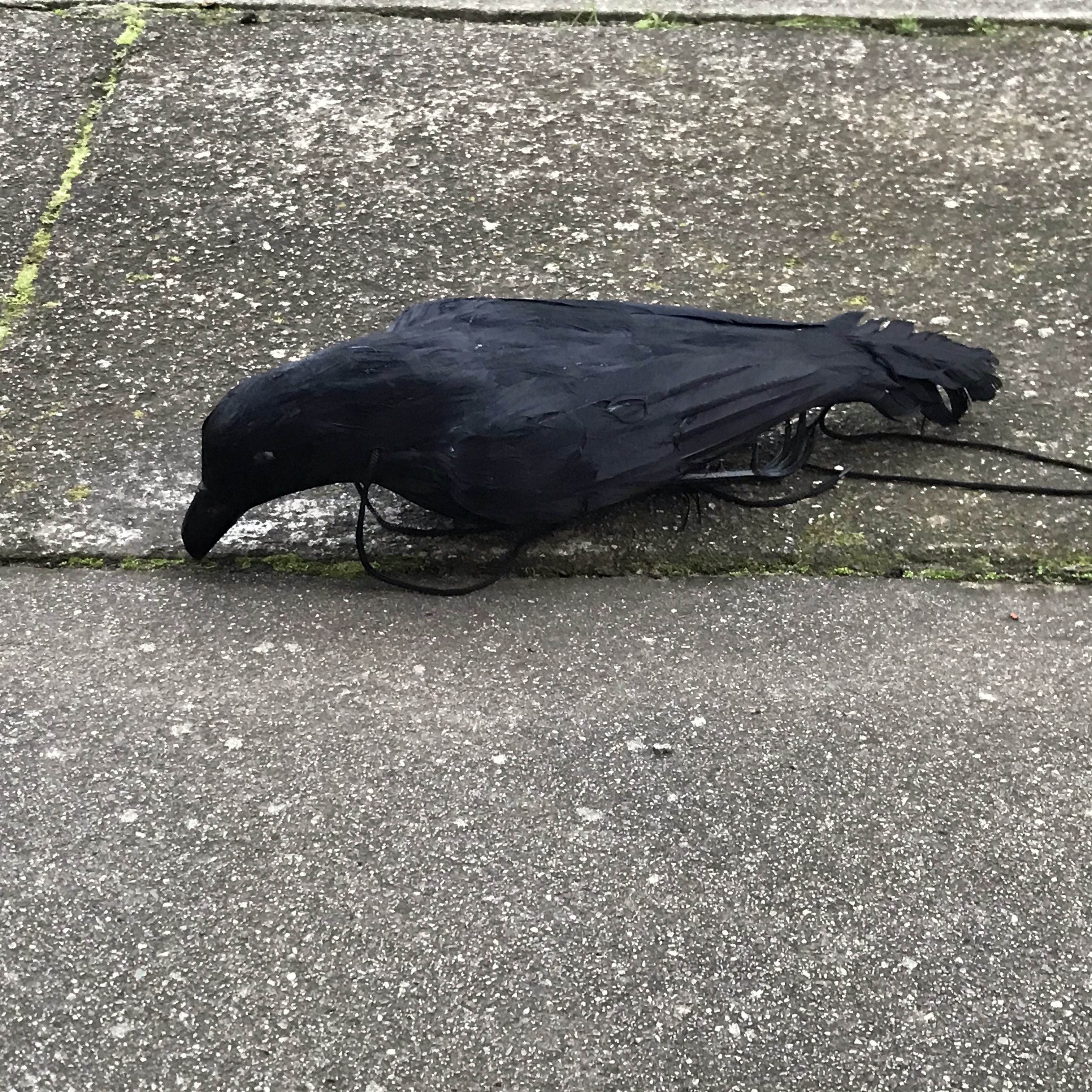
On my way out, I did a quick sketch of the scarecrow. The scarecrow was wearing proper face protection and was social distancing. There was not another scarecrow in sight! Nor a crow for that matter.