Image

Torn Asunder

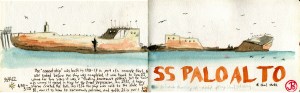
The S S Palo Alto, also known as the “Cement Ship” is a Monterey Bay oddity from my childhood, up there with Santa’s Village, Lost World, and the Mystery Spot.

The S S Palo Alto was a concrete ship built in Oakland at the end of World War I and launched in 1919, too late to take part in the war.

The ship was mothballed until it was purchased by the Seacliff Amusement Company and towed to Monterey Bay in 1930. It was sunk in shallow water, at Seacliff Beach, her bow pointing West towards the Pacific.

It was opened as an amusement ship with dining, a dance hall, and swimming pool and a pier was built out to the ship. The timing could not have been worse because it’s opening coincided with the start of the Great Depression. The ship cracked in half during a storm in 1932 and the ship was closed to access. It was eventually sold to the state for one dollar.

Over the years the ship has been torn apart. Recently, powerful winter storms including one in February 2016 pushed the ship onto it’s starboard side and then on January 21, 2017 the stern was torn off and now rests leaning on it’s port side.

A September 14, 2012 sketch of the S S Palo Alto in slightly better times. This sketch is of the ship’s starboard side and the gash from the 1932 storm is clearly visible. The bow has fallen away but the stern in intact.

Thousands of sooty shearwaters (Ardenna grisea) pass south off the bow of the wrecked Palo Alto.

Image

April 15, 1974

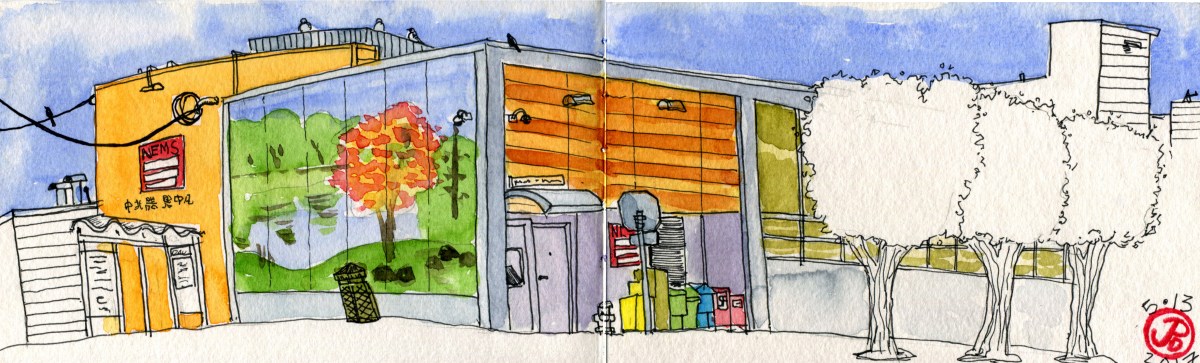
The health clinic at 1450 Noriega Street is a few blocks from where I live in San Francisco’s Sunset District. It’s an unassuming building at the corner of Noriega and 22nd Avenue with a Bank of America ATM on the corner and a bucolic mural painted on one side. When you pass by the building, you would never know it was the location of one of the most notorious crimes of the 1970’s. 

In 1974, 1450 Noriega was the Sunset Branch of the Hibernia Bank. And it was here, at 9:40 AM, that this branch was robbed. Now a bank robbery is not a notorious crime in itself but one of the gun-wielding robbers made this such a notable crime. The story really started  across the Bay on February 4, 1974 on Benvenue Avenue in Berkeley.

An Apartment on Benzene Avenue was the setting of the kidnapping of Patricia Hearst, granddaughter of newspaper publisher William Randolph Hearst. She was then a 19 year old student at the University of California when she was kidnapped by The United Federated Forces of the Symbionese Liberation Army (SLA). What happened from the moment she was kidnapped and the time she walked into the Hibernia Bank, 71 days later,  with a sawed-off M1 carbine rifle, remains shrouded in speculation and mystery. Was Patty Hearst brainwashed or did she willingly because a member of the SLA?

Before her star turn on the security cameras of the Hibernia Bank, she said in a communique that was sent to local radio stations :

I have been given the choice of, one, being released in a safe area, or, two, joining the forces of the Symbionese Liberation Army and fighting for my freedom and the freedom of all oppressed people. I have chosen to stay and fight. 

We do know that she changed her name to “Tania” and when she was eventually arrested, over a year later, she listed her occupation as “urban guerrilla”.

A painting from one of the most iconic images of the 1970’s: Patty Hearst, Tania, wielding a gun at the Hibernia Bank. Painted from a still from the security camera footage from April 15, 1974.

About the Hibernia Bank robbery Hearst said in a communiqué sent to a local radio stations:

Greetings to the people. This is Tania. Our action of April 15  forced the corporate state to help finance the revolution. As for been brainwashed, the idea is ridiculous to the point of being beyond belief. I am a soldier in the People’s Army.

I usually see the health clinic as the number 7-Haight/Noriega inbound bus makes a left turn onto 22nd Avenue. I imagine most passengers never realize what happened here, over 40 years ago. Indeed the events surrounding the Hearst kidnapping and her participation with the SLA proves the point that reality really is stranger than fiction.

Image

Another Pier, More Storm-Petrels

“I’m surrounded by storm-petrels!” I said as I watched another fork-tailed  wave swallow pass underneath me.

“I’m heading down”, Dickcissel said, “don’t go anywhere!”

I had been reading about the continuing fork-tailed storm-petrels that were being seen at the Pacifica Municipal Pier and figured I’d make a jaunt out to the coast after work to see these pelagic delights from another pier in another country: San Mateo.

So while I waited for Dickcissel to head south from Marinland, I pulled out my camp chair, my sketch book, and my pen case and sat on the beach and sketched the pier.

It could be a scene from a Film Noir but no, it’s just Pacifica Pier.

From my vantage point, the “L” shaped concrete pier is not much to look at. The “Rev. Herschell Harkins Memorial Pacifica Pier”, as it is officially known,  was built in 1973 as part of the city’s sewage system where a pipe pumped sewage (treated I hope) out into the Pacific Ocean. It now primarily is used as a fishing pier but today it was used by birders as a quasi-pelagic platform that juts out a a quarter mile into the Pacific. This pier is much shorter and certainly less interesting than the Santa Cruz but it provided outstanding looks at the storm-petrels.

A storm-petrel flying below me on the Pacifica Municipal Pier.

Instead of seeing three FTSPs from a great distance, I was now surrounded by about 20. They were on all sides of the pier and frequently flew underneath the pier giving unique views that would be impossible on a pelagic boat trip. I figured that this experience may come once in a lifetime and felt lucky to be in the right place at the right time.

Sketching the low flight path of fork-tailed storm-petels.

Field sketch from the Pacifica Pier. Just sketching these storm-petrels helps me understand and see them more fully.

Image

Put a Fork-tailed in It

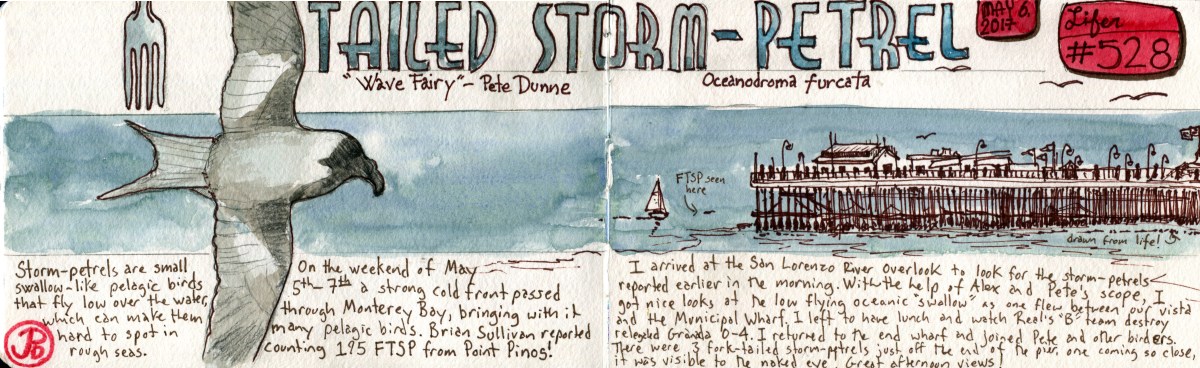
This lifer was a parking lot bird in a manner of speaking. I looked at the text from Dickcissel: “fork tailed storm petrel san lorenzo river mouth. you going?”.

I really needed a pair of black pants but they could wait for a possible lifer so I left the Capitola Mall parking lot and headed to the San Lorenzo River overlook, which was about 15 minutes away. 

At 9:52 AM a fork-tailed storm-petrel was seen again, two were first first reported from the rivermouth at 8:23 AM, one was being stooped on by the local peregrine. It was now 10:15 AM and I hoped the pelagic petrels would stay close enough to shore to be seen.

I parked, grabbed my car binos and headed out to the overlook. The first thing I saw was two birders, which was a very good sign. I walked out to the point and scanned the waters between the buoy and the Municipal Wharf, looking for a grayish low-flying petrel. One birder had it and I soon had the sea-swallow in my binos, tracking it as it flew to the right. The bird passed in front of the wharf and one birder suggested heading off to the wharf to get closer looks.

I was off to lunch to watch a Real Madrid “B” team slaughter already relegated Granada 0-4. It reminded me of the time I was in Bilbao last Spring, on a Sunday afternoon after the home team, Athletic Bilbao had drawn 1-1 with Granada. I was walking up to the Federico Moyúa Plaza, the town’s center, as the Granada team bus circled the plaza, quietly making it’s way out of town and now the Spanish minnows were quietly making it’s way out of the Spanish Primera Division.

A shop front in Bilbao sporting the crest of the local all Basque team. Futbol is a religion in this northern part of Spain. But I digress. . .

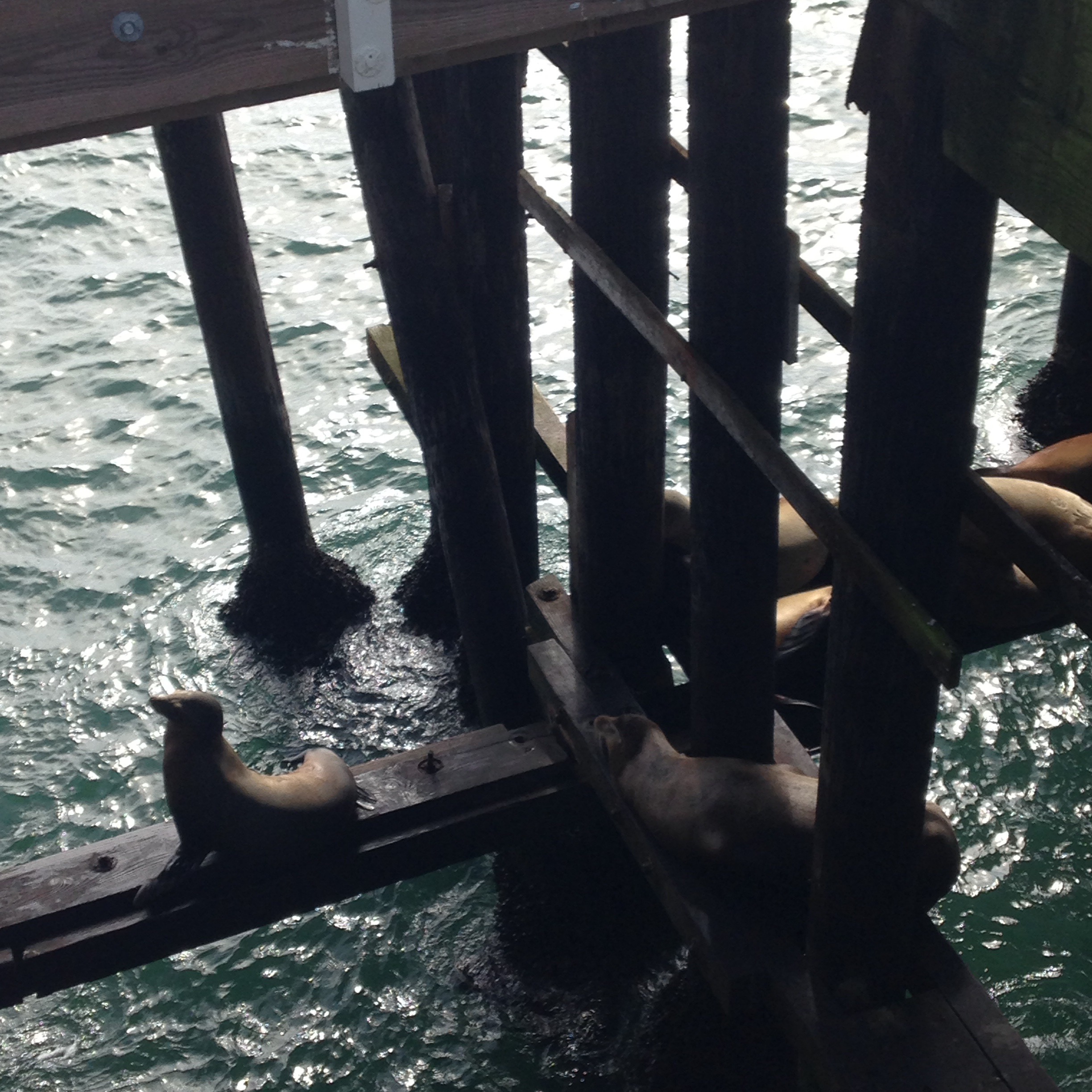
In the afternoon I decided to head out to the wharf, which was a popular destination in my childhood. I have many memories of eating burgers and fries with my dad and brother and then heading to the end of the wharf to watch the snoozing California sea lions. This area and the Santa Cruz Beach and Boardwalk is the tourist side of Santa Cruz and I now rarely visit this part of town, but close looks at a rare Monterey Bay petrel drew me to the very end of the west coast’s longest pier at 2, 745 feet. That’s 2,745 feet jutting out into the Monterey Bay was almost like being on a pelagic boat trip but without the rocking and rolling. Dramamine not needed.
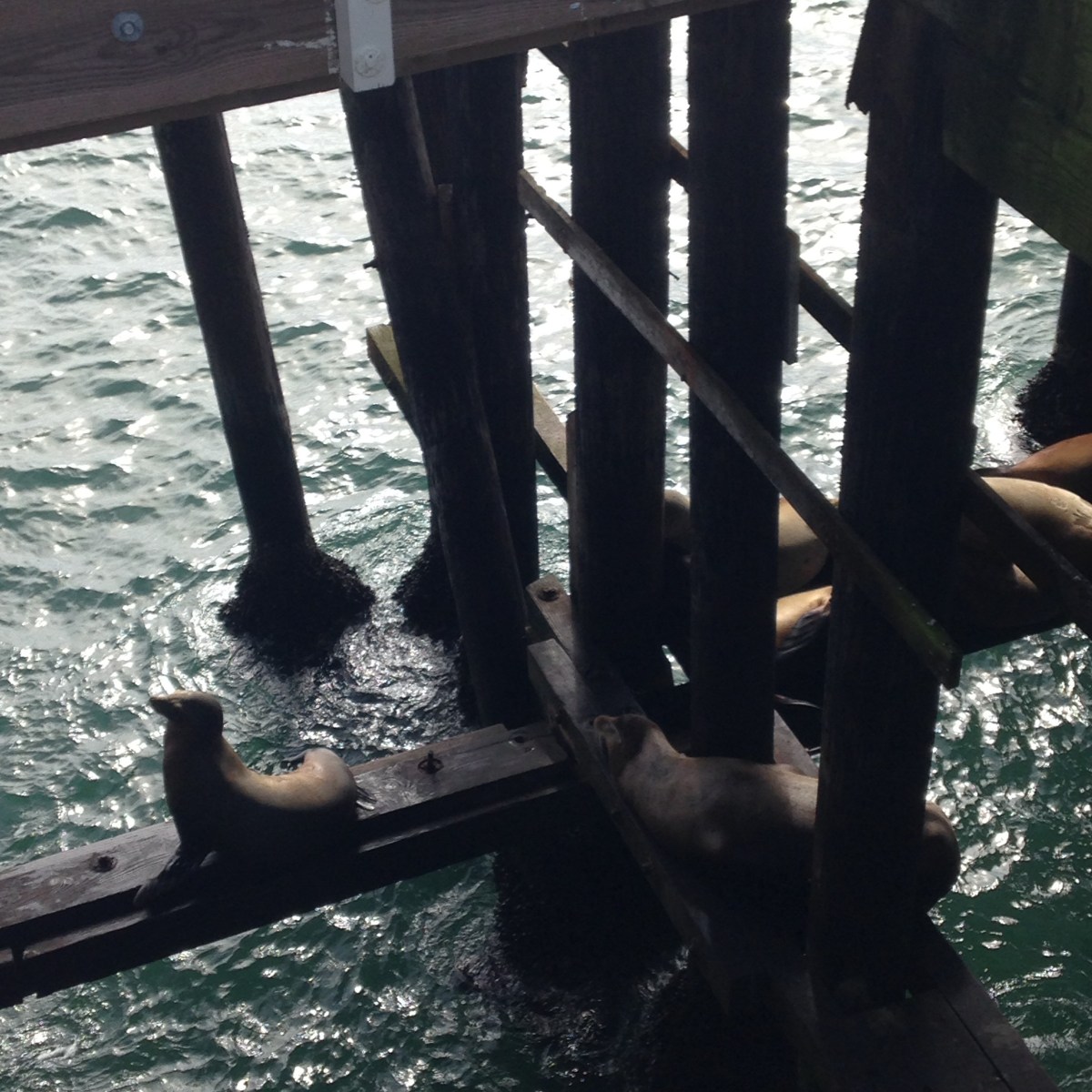
The sealions of my youth. Under the wharf of the West Coast’s longest pier. 

When I walked to the end of the pier, there were two good omens.the first was that there with about eight birders peering off to the waters (always a good sign). And the second was a honey bee that alighted on my right hand (can’t ask for a better blessing). And I just kept birding with my pollinator guest.

Show no fear, don’t get stung. It’s a lesson I  teach all my students: don’t be afraid of nature, nature has more reasons to fear us.

It didn’t take too long, with so many scopes and binos  trained on the waters to find a fork-tailed storm-petrel. One was sighted as I walked up, in fact there were three of them foraging off the pier. One came so close that I lowered my glasses and watched it with the naked eye. Amazing for a pelagic species and not being on an ocean going vessel!

We were frequently asked by the tourists if we where looking for whales. The standard response was, “No, just a small ocean bird. ” That answer usually struck them dumb and they hurriedly walk off as if we had the Pneumontic Plague.

As a nice bonus I spotted a humpback’s blow on the horizon, followed by its flukes as it dove. So I  now could say we where looking at whales. But they didn’t ask and I didn’t answer.

Image

Backyard Owling

There’s nothing like discovering amazing birds in your own backyard and my “backyard” is Golden Gate Park. And seeing four owls, in the daylight, is even better.

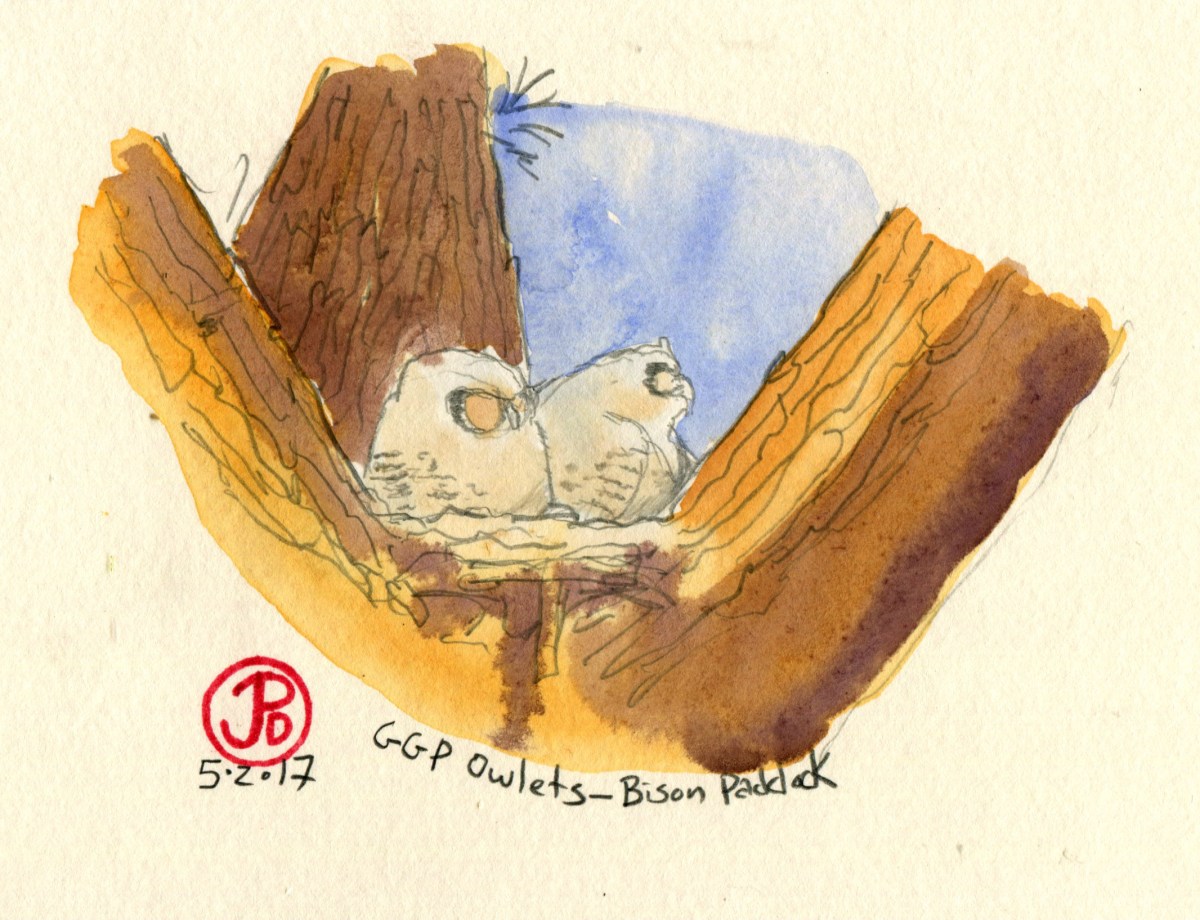
Traditionally great horned owls have nested in the crook of a pine across the street from the Bison Paddock. This nesting tree, and the owlets in, it have featured in a few sketches in the past.

A sketch  of the same nest but with different owlets on January 19, 2015.

So on a very warm May afternoon, I headed out to the park with my scope, paints, and sketch book. I focused my scope on two owlets in the crook of the pine. Another owlet was branching out and perched on a limb above the nest.

The owls seemed to be nesting a little late in this year, perhaps because of our record Northern Californian rainfall had something to do with the timing. Great horned owls don’t build their own nests, instead they might reuse hawk or crow nests or use caves or crooks in trees as was the case with the paddock owls.


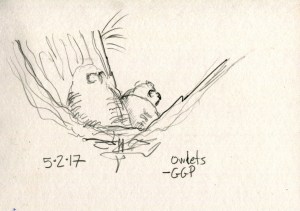
A pre-painting sketch of the great horned owlets.

Which sketching, I was entertained by a black phoebe that would fly in to a puddle on the jogging path, collect some mud in it’s beak and fly off towards the paddock to continue work on it’s mud-cupped nest.

A Golden Gate Park owlet thinking about branching out. Note the whitewash on the rim of the nest. It’s a sure sign of owl activity.

Image

Mines Road and Del Puerto Canyon

We met in Livermore, under the tall flag pole in the center of town. Dickcissel, Brown Creeper, and I were heading to the southeast on the legendary Bay Area birding route: Mines Road to Del Puerto Canyon.

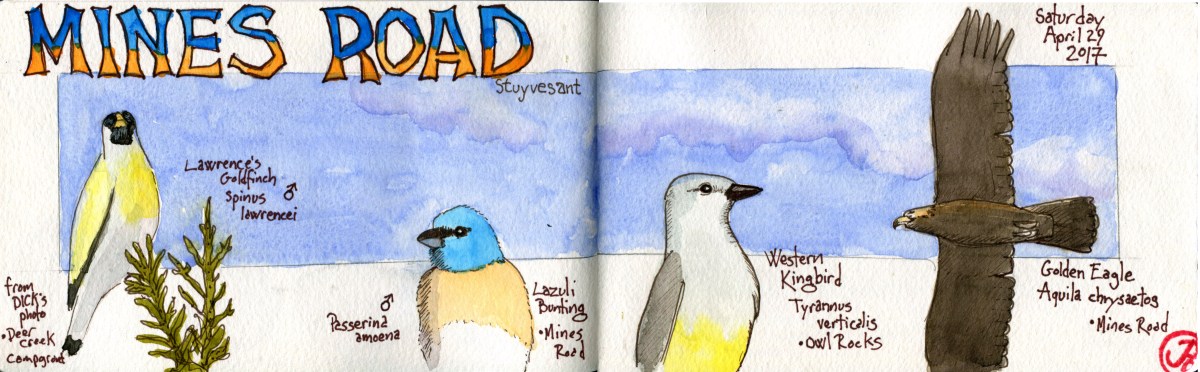
We had a few target birds for the trip: golden eagle, Lawrence’s goldfinch, and Bell’s sparrow. These would all be lifers for BRCR and the Lawrence’s was a sought after near-endemic species in California and Dickcissel had wanted to tick this bird off for a while now. (I had added this bird to my list on June 6, 2002 but have not seen the finch since then.)

It was a beautiful morning and we pulled over from time to time, willing that far off raptor into a golden eagle but there were all red-tail hawks and turkey vultures. The California endemic yellow-billed magpie was a nice consultation.

Mines Road was relativly busy on this Saturday with a bike race and many weekend warriors taking either their covetable sports cars or motorcycles out for a spring spin. We seemed to be the only birders on this stretch of road.

Mines started to climb up into the green oak-studded hills giving us wonderful views in all directions and a wide panorama of the blue cobalt skies. Any large bird soaring caught our attention. At this point we had seen red-tails and turkey vultures, a few accipiters and a female American kestrel.

Between mile 11 and 12, I pulled over. Something seemed about right on this stretch of road. I scanned the skies and a very stable looking raptor caught my attention as it circled to our north. This bird was uniformly dark with “plank-like” wings with large primaries. We all knew what it was but we didn’t utter it’s name. Incredibly the bird flew south giving us an amazing rapturous flyby. “There’s your golden!”

We continued down Mines Road going from Alameda County to the the county of my birth: Santa Clara. Along the way we enjoyed views of California scrub-jay, acorn woodpeckers, California quail, ash-throated flycatcher, some randy cows, and western kingbird. At one pull out we had a scope full of a singing male lazuli bunting. Always a beautiful spring treat!

We then headed east at “The Junction” and stopped at Frank Raines Regional Park for lunch. Here is were we found all the other birders in the area with the same intention of having lunch and doing a bit of birding between bites. I talked with another birder and he noted that it was not too birdy. He had golden eagle and roadrunner but no Lawrence’s goldfinch (LAGO).

After lunch we headed to the Deer Creek Campground which was a noted hotspot for LAGO. This campground was very popular with off-roaders and their noise-polluting vehicles. This was not an ideal place to bird because it was noisy and full of families that incredulously looked on as our binocular-sporting trio wandered through their camp, looking up into trees.

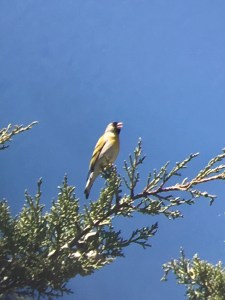
In a tree above a campsite we heard a very finch-like song. We tried to locate the singer but with no luck. Two finches flew off towards the creek and we did not get very good looks. Not good enough to call them LAGOs. The finches soon returned and this time the male perched on top of the tree in full view. He sang giving us great looks. We noted his black cap and face, gray back, and his yellow ‘bra”. Lifer for Dickcissel and Creeper!

Dickcissel’s photo of the male Lawrence’s goldfinch, singing at the top of a tree in the Deer Creek Campground.

Image

Handful of Wonder

“These are the days of miracle and wonder.” -Paul Simon, The Boy in the Bubble.  

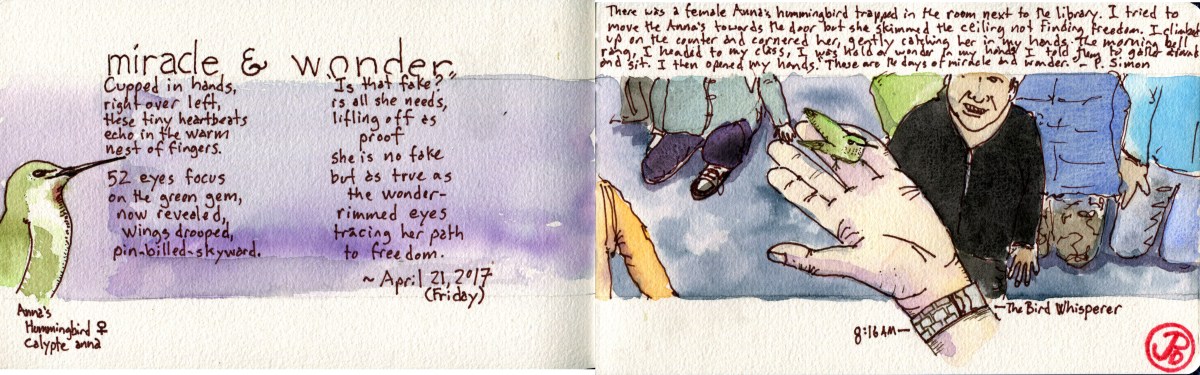
Occasionally you have  moments in education filled with “miracle and wonder”. The morning of Friday April 21, 2017 was one such moment.

As I was walking down the hall, a few minutes before the morning bell, our librarian called my name. Something was up. She was standing at the doorway of the room next to the library that was used as our janitor’s office. There was a bird trapped inside.

At my school I am known as the Bird Whisper because if there is a bird, usually a dark eyed junco, trapped in a classroom, I’m the first person they call. I’ve liberated birds from many classrooms and once I freed a junco from our multipurpose room during an assembly. But the bird trapped in the janitor’s office was no junco. This rescue was a first for the Bird Whisperer: a female Anna’s hummingbird!

When I entered the room, the Anna’s was frantically skimming the ceiling, looking for any egress. A hummingbird ‘s tiny heart can beat 1,263 times a minute (compared to about 80 in humans). Who knew how fast this tiny creature’s heart was thumping now. I just knew I had to free her. And free her fast, before she hurt herself.

I first tried the basic trick in avian liberation: getting on one side of the bird, with arms raised, and coaxing it towards it’s path to freedom, in this case, the open doorway. This attempt failed because the extremely agile Anna’s just counted my plan by flying around me, further from freedom.

My next plan was to climb up on the counter and try to steer her toward the door. This failed as she repeated her agile maneuver.

I turned and my next plan was to coax her to the corner and gently capture her by hand. This plan worked as I left the Anna’s with no escape except in my warm embrace. I gently hopped off the counter with my prize safely in my hands.

The morning bell rang and I headed to where my class was lined up. I instructed them to gather round and sit down. What I was about to reveal was a complete surprise to all my students.

I opened my hands and the Anna’s sat, a little dazzed, perched on my left index finger. One of my students moved back in fear but then wonder filled his face. The Anna’s sat very still, prompting one student to ask, “Is that fake?” At that point, to prove she was real, the Anna’s lifted off and headed straight up. 

This moment is one of my greatest teaching moments. Not because it was linked to the Common Core Standards or an increase in standardized test outcomes from the previous trimester. This was a gain that is immeasurable, unquantifiable. This was a wonder. That pure undefinable moment that opens your student’s hearts and minds. The moment where some of the students you have struggled with to conform to what every fourth grader should know now raises their eyes in wonder at the green gem rising from my hand to the heavens!

This a wonder, beyond words. I remain in awe. 

Image

South Texas Lifers

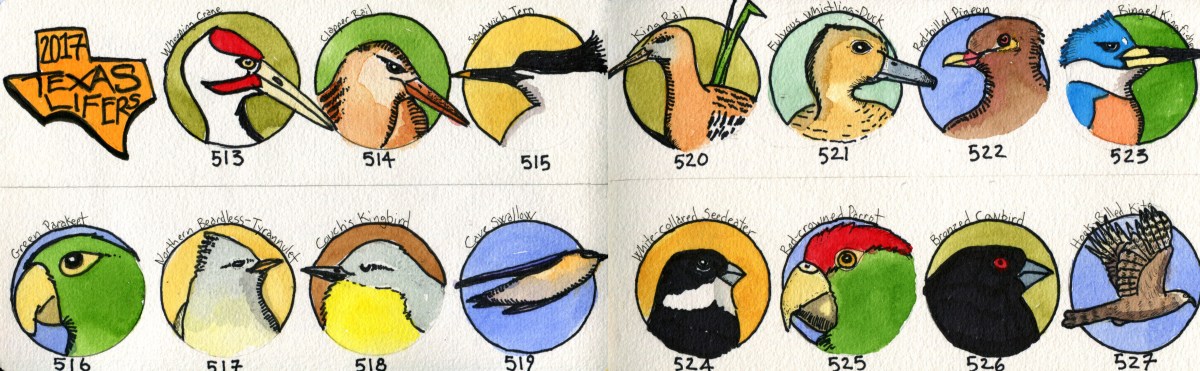
I though a successful haul of lifers from my five days in South Texas, would be between 15 to 20 new species. I just squeaked in at 15 new Life birds. It was not just about the number of birds but their quality.

And I certainly had quality in spades! My trip was bookended by two iconic Texas super specialties: whooping crane and hook-billed kite. These two birds would have been worth the price of airfare, lodging, and rental car alone!

Judging by the accents, both domestic and international, on the Whooping Crane Boat Tour and the Santa Ana observation tower, the whooper and hook-billed draw birders from both far and wide to add these relative rarities to their world life list.

I did miss a few birds on my target list: muscovy duck, Audubon’s oriole and Wilson’s plover but seeing these birds, as is the case with many species, can be a hit or miss quest and I just happened to miss.

I returned from Texas with a total of 527 species on my the United States (ABA) list and 651 species on my world bird list, but who’s counting?

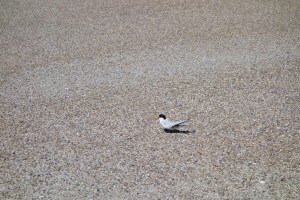
Who doesn’t love a parking lot least tern? Rockport, Texas. 

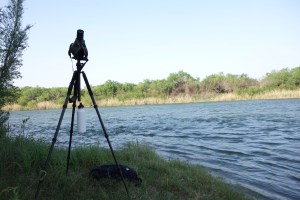
Birding the border on my search for America’s largest kingfisher on the Rio Grande River. The “water bottle” hook on my tripod came in handy.

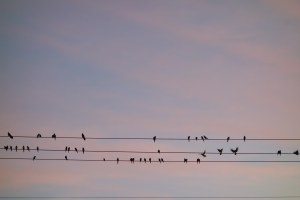
Birds on the wire. I must be on 10th Street in McAllen. Green parakeets and great-tailed grackles (the ubiquitous bird of South Texas).

Santa Ana National Wildlife Refuge, Texas. 


Image

The Not So Plain Chachalaca

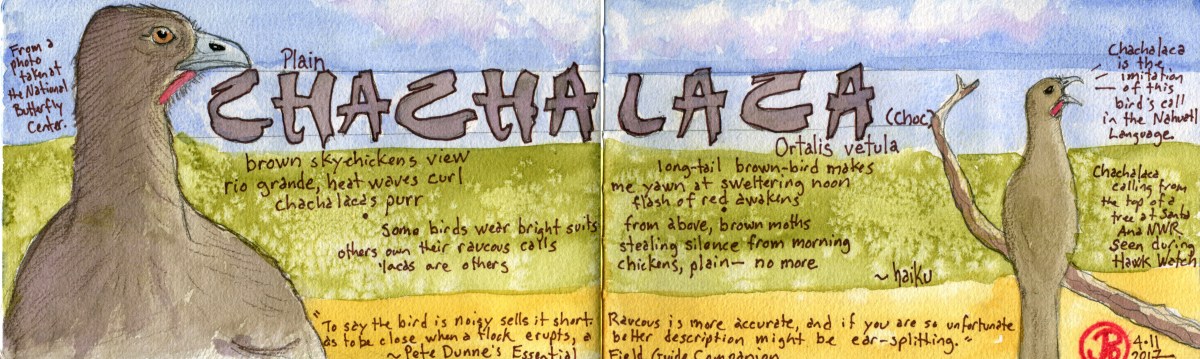
There is something mundane about a bird that has “plain” in it’s common name. But when that is paired with “chachalaca” now we are talking about a bird that birders will travel to the deepest depths of Texas to add to their life list, because of it’s very limited range in the US, confined to the lower Rio Grande Valley. The great news for birders wishing to add this species to their list is that it is very common and in some parts of Hidalgo County, it is a backyard bird.

The only thing plain about the plain chachalaca (Ortalis vetula) is it’s uniformly brown plumage. The name “chachalaca” is in imitation, according to the Nahuetl language, of it’s loud and raucous call, most often heard during the breeding season. And I was in southern Texas during it’s breeding season. When chachalacas call, they are very hard to ignore and worthy of a spread in my journal.

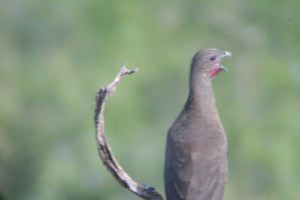
While I was hawk watching on the observation tower at Santa Ana National Wildlife Refuge, it afforded views, down into the tops of trees. I would often see, and hear,  chachalacas calling from the tallest branches.

Looking down on yet another plain chachalaca calling from the top of a tree, Santa Ana NWR. Digiscope photo.

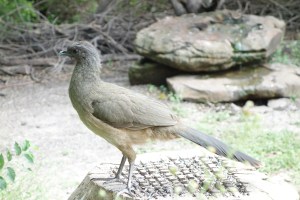
After my hawk watch I headed over to the National Butterfly Center to visit their feeders, and to look at butterflies. Here the chachalacas where so tame that they were within grabbing distance. (I kept my hands to myself.)

Getting up close and personal with a plain chachalaca at the feeders of the National Butterfly Center. No zoom or scope required.

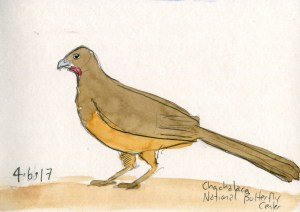
A quick field sketch from the National Butterfly Center.

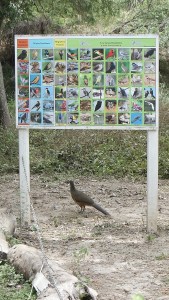
I sometimes wish all birds were this easy to identify. A plain chachalaca under a sign featuring the most common birds of the Rio Grande Valley. National Butterfly Center.

Image

The Gem of the Valley

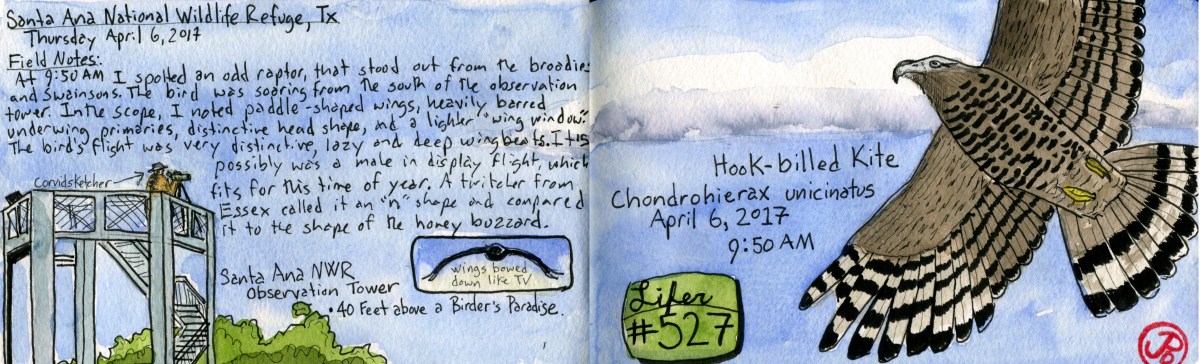
At 8:35 AM, I found myself 40 feet above Santa Ana National Wildlife Refuge on top of the observation tower. This was my second hawk watch of the trip and my third attempt to add one of the most sought after birds in the entire Rio Grande Valley. This was and is the hook-billed kite (Chondrohierax unicinatus). 

This tropical treesnail hunter is only found in the United States in the wide Rio Grande Valley, between Falcon Dam and Brownsville but Santa Ana NWR is the epicenter for most visitor’s kiteless search.

To prove this point, an hour later, I was joined by two Twitchers (very committed bird watchers) from Essex, England. It’s always good to have witnesses!

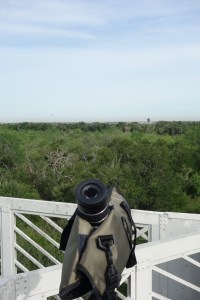
Scope view from the Santa Ana NWR observation tower.

Two days before I had hawk watched for three hours and there was a prolific northern movement of hawks, coming up from South and Central America. The most numerous raptor was the broad-winged hawk (thousands) and a good number of Swainson’s hawks, the raptor with the longest migration on planet earth.

This day the hawk migration was more of a trickle, allowing me time to explore the treetops of Santa Ana. What immediately stood out was the local Harris’s hawks that were perched along the canopy.

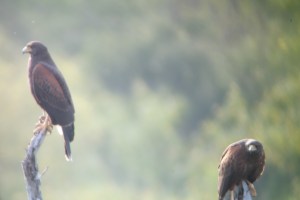
A pair of the local Harris’s hawks (Parabuteo unicinctus). Two in one scope view!!

As the skies continued to be raptorless, I looked around at the treetops. A small black bird perched on a power pole caught my attention. What stood out, even at distance, was the birds intense red eyes, like it hadn’t gotten any sleep in a week or more. I focused my scope on the bird just to confirm lifer # 526, Bronzed cowbird!

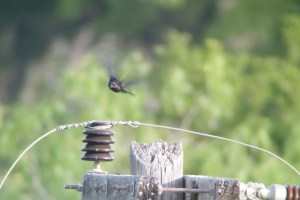
Bronzed cowbird (Molothrus aeneus), flying from the power pole. 

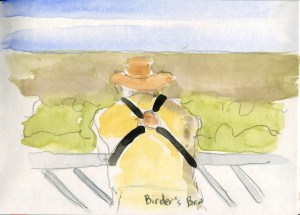
There was plenty of downtime between raptors and, as always, I filled in the time with a sketch. This sketch is a birder peering off to the south, wearing his “birder’s bra”.

I noticed a mixed kettle of black and turkey vultures and broad-winged hawks. Then I saw a bird that clearly stood out, a bird that looked like no other. I trained my scope on the soaring raptor. I mentally ticked off the paddle-shaped wings, heavily barred underwing primaries, distinctive head and beak shape, lazy and deep wing beats.

“I got the kite!” I announce to the British birders and they were soon on the soaring Hook-billed. I was able to watch the kite in the scope for a good five minutes. The search for The Gem of the Valley was over!

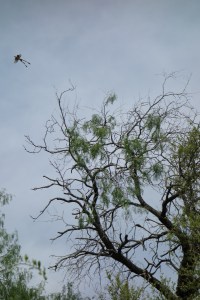
One my way back from my triumphant kite watch, an added bonus was seeing the stunning scissor-tailed flycatcher (Tyrannous forficatus). I got great looks at this seasonally common kingbird and as I raised my camera to my eye, just as I pushed the shutter button, it flew.