Image

The Gem of the Valley

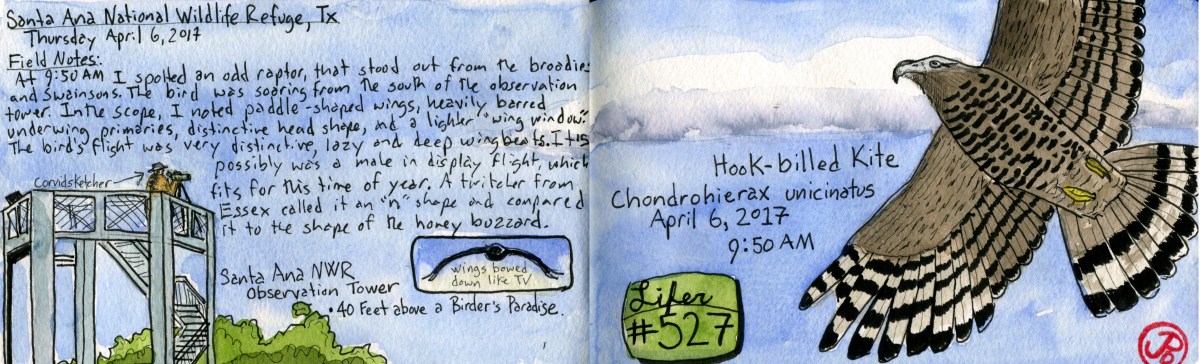
At 8:35 AM, I found myself 40 feet above Santa Ana National Wildlife Refuge on top of the observation tower. This was my second hawk watch of the trip and my third attempt to add one of the most sought after birds in the entire Rio Grande Valley. This was and is the hook-billed kite (Chondrohierax unicinatus). 

This tropical treesnail hunter is only found in the United States in the wide Rio Grande Valley, between Falcon Dam and Brownsville but Santa Ana NWR is the epicenter for most visitor’s kiteless search.

To prove this point, an hour later, I was joined by two Twitchers (very committed bird watchers) from Essex, England. It’s always good to have witnesses!
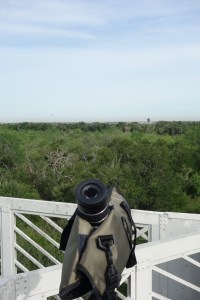
Scope view from the Santa Ana NWR observation tower.

Two days before I had hawk watched for three hours and there was a prolific northern movement of hawks, coming up from South and Central America. The most numerous raptor was the broad-winged hawk (thousands) and a good number of Swainson’s hawks, the raptor with the longest migration on planet earth.

This day the hawk migration was more of a trickle, allowing me time to explore the treetops of Santa Ana. What immediately stood out was the local Harris’s hawks that were perched along the canopy.
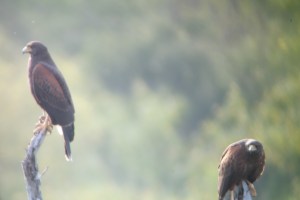
A pair of the local Harris’s hawks (Parabuteo unicinctus). Two in one scope view!!

As the skies continued to be raptorless, I looked around at the treetops. A small black bird perched on a power pole caught my attention. What stood out, even at distance, was the birds intense red eyes, like it hadn’t gotten any sleep in a week or more. I focused my scope on the bird just to confirm lifer # 526, Bronzed cowbird!
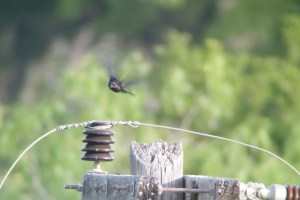
Bronzed cowbird (Molothrus aeneus), flying from the power pole. 
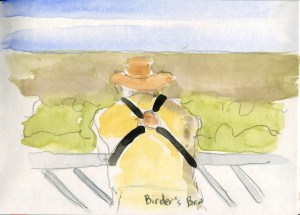
There was plenty of downtime between raptors and, as always, I filled in the time with a sketch. This sketch is a birder peering off to the south, wearing his “birder’s bra”.

I noticed a mixed kettle of black and turkey vultures and broad-winged hawks. Then I saw a bird that clearly stood out, a bird that looked like no other. I trained my scope on the soaring raptor. I mentally ticked off the paddle-shaped wings, heavily barred underwing primaries, distinctive head and beak shape, lazy and deep wing beats.

“I got the kite!” I announce to the British birders and they were soon on the soaring Hook-billed. I was able to watch the kite in the scope for a good five minutes. The search for The Gem of the Valley was over!
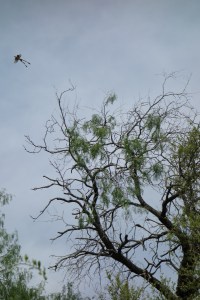
One my way back from my triumphant kite watch, an added bonus was seeing the stunning scissor-tailed flycatcher (Tyrannous forficatus). I got great looks at this seasonally common kingbird and as I raised my camera to my eye, just as I pushed the shutter button, it flew.
Image

Birding the Border

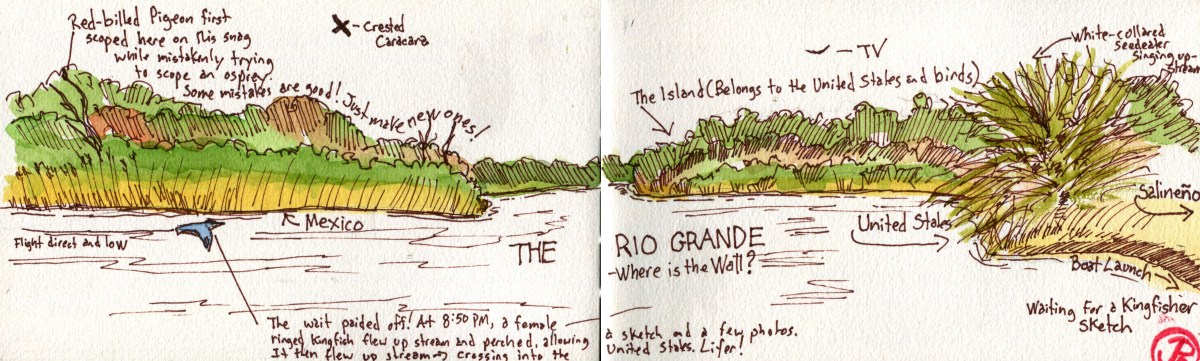
Birding takes patience, sometimes lots of patience. So here I was on the banks of the Rio Grande, looking across the river at our southern neighbor, Mexico. I had arrived at Salineño at sun up, the best time to see my target birds: red-billed pigeon, ringed kingfisher, and muscovy duck.

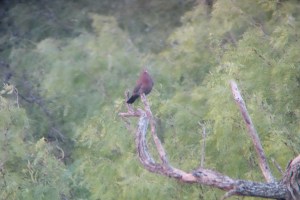
When I reached the river at the very primitive boat lunch, I saw an osprey on the Mexican side of the river, perched on a snag. I set up my scope, planning to get a close look at this “fish hawk”. While trying to locate the osprey through the scope I panned along the Mexican riverside looking for the base of the snag. There it was and I angled the scope up waiting for the osprey to appear in my field of view. But the bird did not appear at the top of the snag. I had gotten the wrong snag, instead of an osprey, peering intensely into the waters of the Rio Grande, I got a surprise, a true South Texas speciality: the red-billed pigeon. I had gotten the wrong snag, but maybe I had the right one all along.

Wrong snag, right lifer! Red-billed pigeon (Patagioenas flavirostris) perched on a snag about the Rio Grande. Digiscope photo.

Three birders arrived at the shoreline. I informed them that I had a red-billed in the scope. One birder ran over to look through the scope to see his lifer. Birding is always about sharing the feathery wealth, just to confirm that what you are seeing is the real McCoy. The group of two was being lead by a guide and she told me that if I wanted ringed kingfisher, I would have to wait a long time because the females were in their nesting burrows at this time of year so only a single male kingfisher would be flying up or downstream. The pigeon flew upstream and the trio of birders also headed upstream, looking and listening for white-collared seedeater ( I would pick up this sought after lifer later). 

I though I might have a long wait for the largest kingfisher in the Americas to appear so I unpacked my sketchbook, sat down on the banks, and started drawing the view looking upstream to the river that divided two nations. This sketch is a chronicle of a landscape and my experience in the landscape. Birding the border, watching a “Mexican” cow on the Mexico side, sounds very much like an American cow.

After about a 30 minute sketch, I set down my sketchbook and scanned the river for birds. Blue-winged teal, snowy egrets, a lone black skimmer, a soaring crested caracara (the bird represented on the Mexican flag), a pair of caspian terns, a low flying kingfisher. . . a kingfisher!!

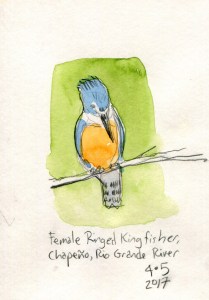
The large, distinctive kingfisher flew upstream and perched on a low snag directly across from the boat launch! I got my scope on the beautiful male ringed kingfisher and was able to get a quick field sketch of the bird and took a few digiscope photos. The male gave me and the two sister Wisconson birders, who had just arrived,  a great look at a lifer!

Quick ringed kingfisher (Megaceryle torquata) sketch from the banks on the Rio Grande.

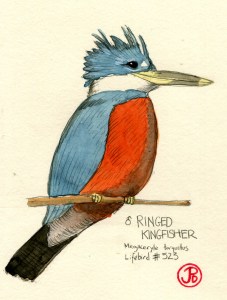
A post-Texas ringed kingfisher painting.


Image

King Rail and the Texan Whistler

One of the benefits of birding is that it takes you to different parts of your home state (California), or other states you might never have visited (Texas and New Jersey) or the world (Extremadura, Spain).

And so it was that I was standing on a rural roadside beside a lake that ebird informed me was Tiocano Lake, located somewhere in Cameron County, northeast of my home base of McAllen.

I had two target birds that I was looking for: king rail and fulvous whistling-duck. I had whiffed on both of these species before, once in Florida and the other on a previous trip to the Rio Grande Valley.

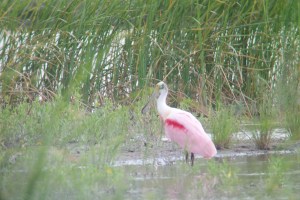
A first sweep with the scope showed this lake to be very birdy. Black-belled whistling-ducks filled the air, neotropic cormorants, egrets and herons, black-necked stilts, killdeer, and the stunning roseate spoonbill.

Roseate spoonbill at Tiocano Lake.

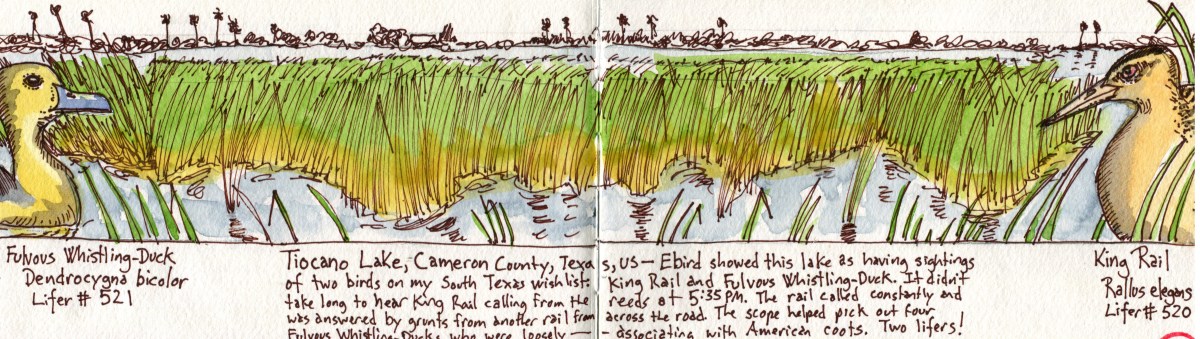
I walked along the road to where it bends to the left. This was the spot where the king rails had been heard calling. As if on cue, at 5:35 PM, the king rail started to call from the reeds and I got an audio recording to confirm its existence. It was soon answered by grunts from another king (or perhaps queen) from the reeds across the road. I was now surrounded by rail!

I then turned my glasses towards the search for a South Texas speciality: fulvous whistling-duck. I was told by other birders that they would be hard to seen this time of year. I walked further down the road to find a gap in the reeds. I picked through the ducks swimming on the far shore. They looked very promising. I got the ducks in the scope. Bingo! Fulvous whistling-duck! Four of them!

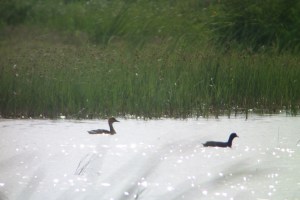
Fulvous-whisting duck (left) and an American coot.

In the end, it paid off to schlep my heavy scope and tripod from the Golden State to the Lone Star State because it enabled me to pick out lifers from the hazy distance. My scope would bring me more sought after South Texas specialties on the following day as I birded the Rio Grande at the legendary birding hotspot in the small town of Salineño and a days later I would focus my scope on a true superbird of the Rio Grande Valley!

Image

Spring Whoopers

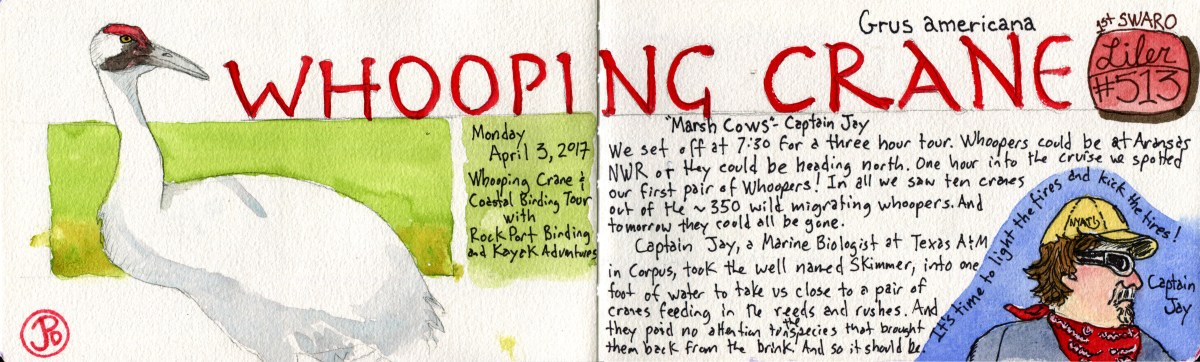
“It’s time to light the fires and kick the tires!” Captain Jay announced and then he turned and headed up to the bridge to ease us out of Fulton Harbor. 

As the Skimmer headed out of port, for a three and a half hour tour, laughing gulls covered the docked boats and breakwater. It was funny to think that birders where picking trough large gull flocks at Pilarcitos Creek to find this extremely common gull on the Coastal Bend. It reminded me that even somewhere, every bird is rare.

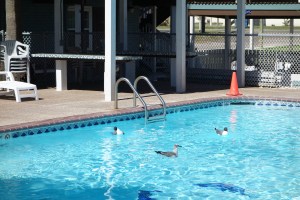
Toto we’re not in Kansas anymore! Laughing gulls in the swimming pool in Rockport.

But the “power birders” on board where not here to look at common gulls of the Gulf Coast. We where here for a bigger and rarer bird. Everyone wanted to check off the elegant whooping crane (Grus americana) on their lifelists.

One reason that the whooper is such a desirable bird is because of it’s rarity. In 1941 there were only 21 cranes in existence. And today there are about 350 birds that breed in Canada and winter in the marshes of Aransas National Wildlife Refuge in Coastal Texas. The whoopers success has much to do with the efforts of biogists and the captive breeding programs. The Texas birds represent the only migratory, self-sustaining population of whooping cranes in the world.

The second reason that these birds are so desirable is that they are simply beautiful. Cranes are a revered group of birds the world over. These birds are known for their iconic beauty and grace and they are often represented in art and origami. Their haunting bulging call is know by many cultures. They are collectively known as “Birds of Heaven”.

After motoring across the bay we entered Dunham Bay, a wide intercostal waterway which is a watery boulevard for shrimp and oyster boats. The captain throttled down and he then explained that cranes were not guaranteed in the spring. The entire Texas population could be on the wing, headed north for their Canadian breeding grounds. We were going to keep our fingers crossed.

All eyes scanned the shoreline looking for the bird that Captain Jay affectionately called “the Marsh Cow”. Was that far off white bird a lifer?! No it was just a white egret. How hard could the tallest bird in North America be to find? You’d think they would stand out like two large, white sore thumbs. Two because mated pairs are almost always seen together and sometimes with a single juvenile.

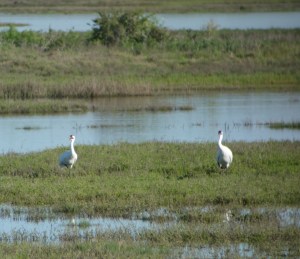
From above came the shout, “Cranes!” And all binoculars where trained and focused on the port side. In the far channel, on the far shore, were two foraging whoopers! Within an hour into our cruise, we had out target bird!

“I love spring cranes!” Captain Jay enthused from the bridge.

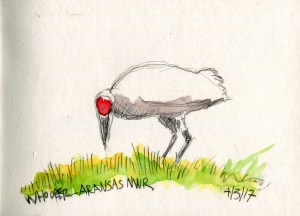
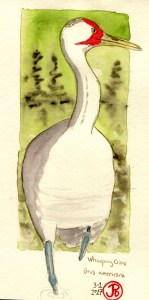
Whooper field sketch from the steps of the Skimmer.

Overall we saw a total of ten cranes. We got close to one pair as Captain Jay drifted into one foot of water at the edge of the reeds. The two cranes, whose very existence today, was so dependent on the human species, paid no attention to us as they foraged and preened to the presences of the species who brought them back from the brink. But their presence in this marsh, on this earth, was thank you enough.

A pre-Texas Whooping Crane sketch.


Image

Do You Have a Flag?

Our annual open house always brings out my creative side. This year I had my students create a flag that represents themselves.

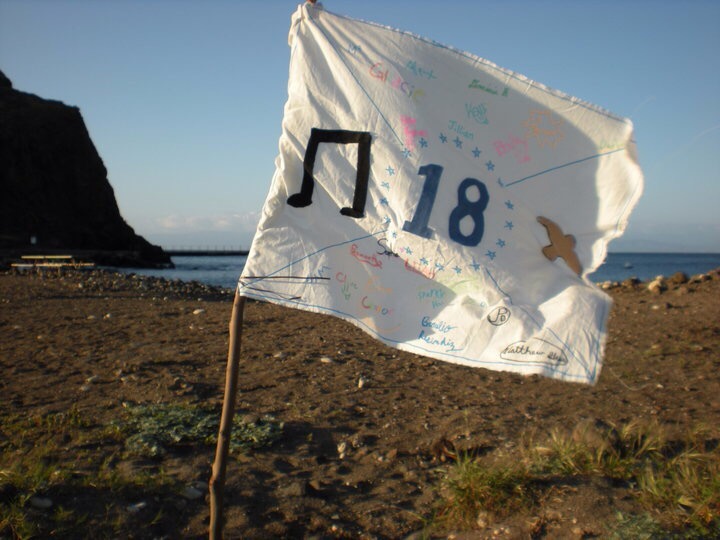
This idea came to me late one night, perhaps it was early morning, when I remembered the flag I created with the 5th grade class I student taught in. We all collaborated on the design and we all helped create the flag for Room 18. On Spring Break, I even took the flag to Santa Cruz Island and planted it on the beach at Scorpion Anchorage, claiming the island for Room 18. 

Do you have a flag? Well Room 18 does and we claim Santa Cruz Island in the name of Murphytonia. 

I had 26 completed student flags hanging from the ceiling but there was one thing missing: my flag!
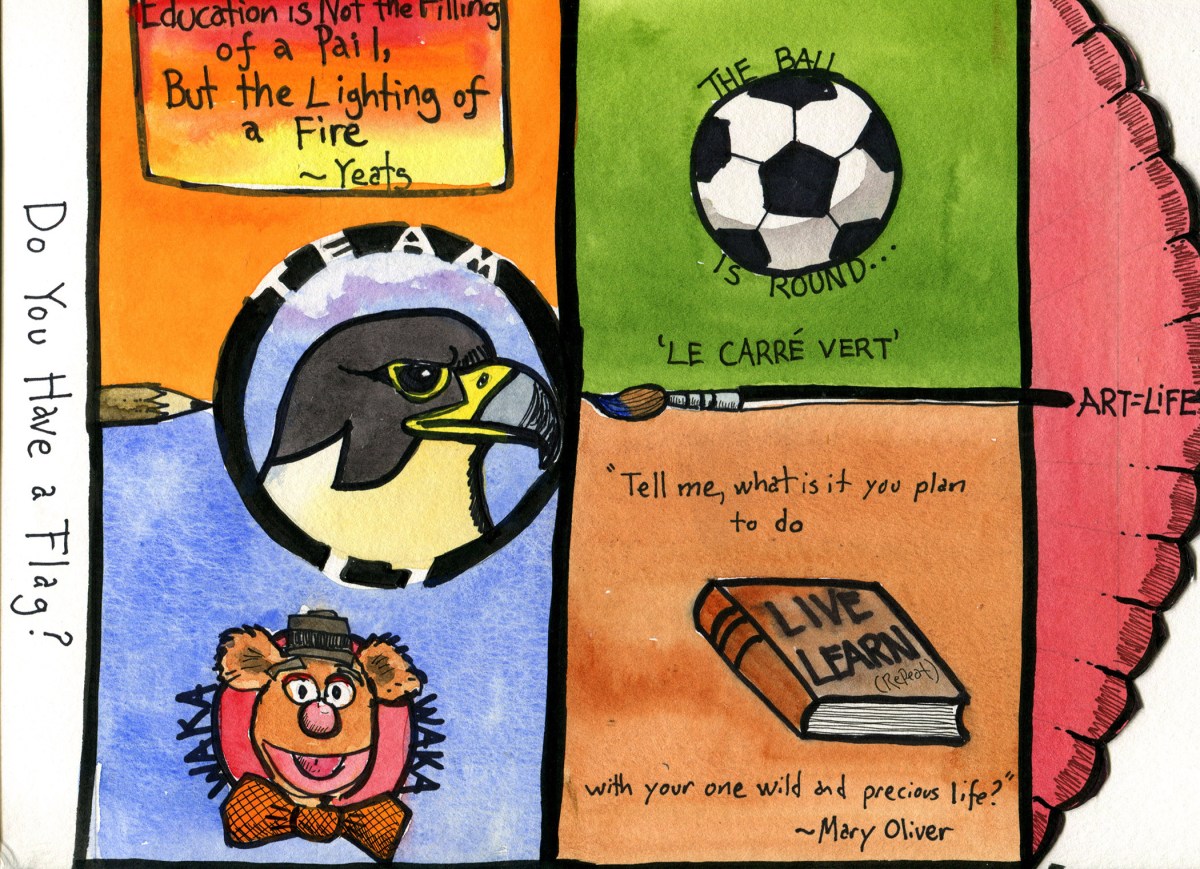
And now for a tour of my flag:

I wanted my flag to be shaped differently from the common rectangular shape so I rounded the fly end off to resemble a red-tailed hawk tail which is one of the most common raptors in North America and is one of my “spark birds”, that is a bird that first got you hooked on birds and birding.

I created a circular emblem to anchor the design. In the emblem is a peregrine falcon looking off to the fly end. The peregrine is one of my favorite raptors and emblamatic of  nature’s resiliency, with a little help from enlightened humans. This is a bird that I frequently see, perched on a power tower on my way home from work.

The field in the upper left features one of my favorite quotes about education:  “Education is not the filling of a pail, but the lighting of a fire. ” This Yeats quote is always displayed in my room.

The upper right field is about my love for the Word’s Game, which is the true football that is played the world over. There are two quotes featured. The first is by German coach Sepp Herberger, “The ball is round. The game lasts 90 minutes. This much is fact. Everything else is theory.” The second is from my favorite player, Zinedine Zidane who said he would miss “Le Carre Vert (the green of the grass) when he retires.

Fozie de Bear represents many things: the lifeskill of Sense of Humor, native Californians (the grizzly bear), bow tie (traditions and science), and how students should move in the halls (waka, waka, waka).

The last field is a book with the words “Live Learn (Repeat)” on it. It means that I’m a life long learner and I love reading. I have included a quote from one of my favorite poets, Mary Oliver. It is the last two lines of “The Summers Day” as well as important question for my students, “Tell me, what is it you plan to do/ with your one wild and precious life?”

And finally the quote, “Do you have a flag?” comes from the Eddie Izzard show Dressed to Kill.

Image

Gather of Gulls

Flying Rats. Parking Lot Bird. Beach Pigeons. A Health Hazard. A Nuissance.

There are many epithets given to the unpopular group of birds collectively known as “seagulls”. These birds are often overlooked, even by birders. 

Gulls are found in most coastal urban areas including parking lots, school yards or perched on the roof of fast food chains, often chasing other birds and sometimes even small children. While the rising human population harms many species of animals, gulls seem to prosper with our desrtruction and altering of the earth’s landscapes.

From a birder’s perspective, gulls all seem to look alike and can be devilishly difficult to identify. Some first year birds look like a Dickensian chimney sweep, covered from head to tail in dark-gray soot. Or you have adult birds that all seem to have the same proportion of white and grey. It’s easy to understand why many birders ignore them altogether. With gulls, the devil is truly in the details.

So it was that on a Sunday morning that Dickissel and I came to be on a bluff above Pilarcitos Creek to observe details.

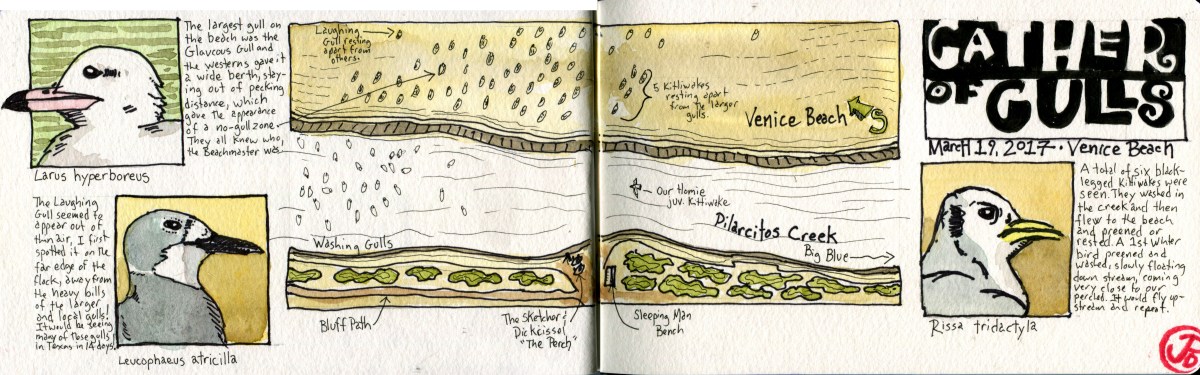
From our perspective, the creek was directly below us and beyond the water was Venice Beach and further down slope was Half Moon Bay. Directly in front of us were gulls bathing and preening in Pilarcitos Creek while up on the beach there where other gulls that were preening or resting on the sands. In total, the mixed gull flock included about 150 individuals.

This flock  was truly mixed. It included common gulls at different plumages on their three to fourth year journey to adulthood. And none of them resembled each other, hence the importance of observing details (and a scope helps).

The first gulls that stood out were the five adult and one juvenile black-legged kittiwakes, enthusiastically bathing in the creek. 2017 has been a fantastic year for this normally scarce species on the coast. For whatever reason, this winter, these petite pelagic gulls were abundant on beaches and off shore rocks. The kittiwakes kept their distance from the larger gulls in the communal bath that is Pilarcitos Creek.

One juvenile kittiwake would vigorously preen and bath at the base of the main flock and slowly float downstream just below our perch where we could observe it’s bold “M” stretched across it’s wing span and it’s black rimmed tail. Dickcissel christened the young one our “Homie”.

Our “Homie”, the juvenile black-legged kittiwake,  flying upstream to preen in the waters of Pilarcitos Creek. 

Aside from the kittiwakes, the most common gull present were westerns, followed by California, mew, ring-billed, and two glaucous-winged gulls. But we were searching for a large white Artic gem. This would be the largest and whitest gull around, a gull that cohabitants with polar bears and its foragaging portfolio includes predation, this gull was the glaucous gull (Larus  hyerboreus).

A large white gull with a pied bill of black and bubblegum pink appeared amoung the gulls washing in the creek. This gull really stood out. It washed and preened for a good 15 minutes allowing close study thought the scope. After it’s bath, the glaucous flew up to the beach to continue to preen.

A digiscope photo taken by Dicksissel of the 1st winter glaucous gull, bathing in the creek. All other gulls are giving this menacing youngster a wide berth.

What I noticed about the glaucous is that all the western gulls surrounding on the beach, it gave it a wide berth as if they knew the glaucous was different. Bigger, more aggressive, and menacing. All the other gulls stayed outside of pecking distance.

Some beach walkers flushed the gull flock, they took to the air, circled around and eventually returned to the creek and beach. I scanned the flock and refound the glaucous. I then noticed a bird at the upper edge of the flock that stood out. It stood out for a few reasons: first is was standing apart from the flock, as if it didn’t belong, second it’s bill shape was very different from the others, and lastly it’s dark eyes was framed in a broken white circle. This was a rare west coaster, a laughing gull (Leucophaeus artricilla).

A birder on the bluff looking for that needle in the haystack.

Image

Binoculars of the Gods and the Wanderer

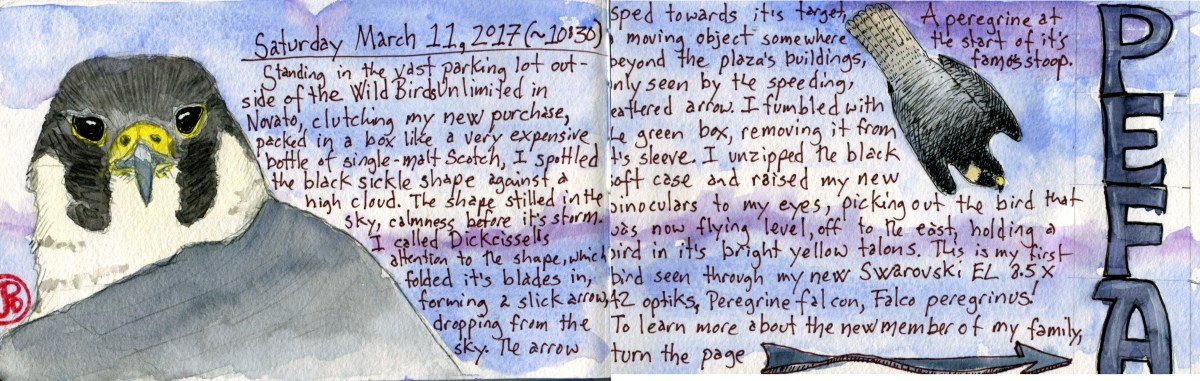
Saturday March 11th, 2017 (~10:30)

Standing in the vast parking lot outside the Wild Birds Unlimited store in Novato, clutching my new purchase, packed in a box like a very expensive single malt Scotch, I spotted a black sickle shape, high in the sky, silhouetted against a cloud. The shape stilled in the sky, calmness before it’s storm. I pointed out the shape to Dickcissel. The shape then folded in it’s blades, forming a slick arrow, dropping from the sky. The arrow sped toward it’s moving target, somewhere beyond the plaza’s buildings, only seen by the speeding, feathered arrow.

I fumbled with the green box, removing it from it’s elegant sleeve. I unzipped the dark green soft case and raised my new binoculars to my eyes, picking out the bird that was now flying level, heading to the east, holding a bird in it’s bright yellow talons.

This was my first bird seen through my new Swarovski El 8.5 x 42s, a peregrine falcon (Falco peregrinus)! You can’t get a much better parking lot bird than this!

These binoculars where the fourth pair I have owned. Each new pair got a little better that the previous. Brighter glass, lighter weight, a nice and comfortable feel in the hand. The binoculars I now hold are top of the class, light years ahead of all my other pairs. You can’t get any better than Swarovski. I look forward to a lifetime of lifers and other birds!

Image

Rio Grande Valley and the Coastal Bend

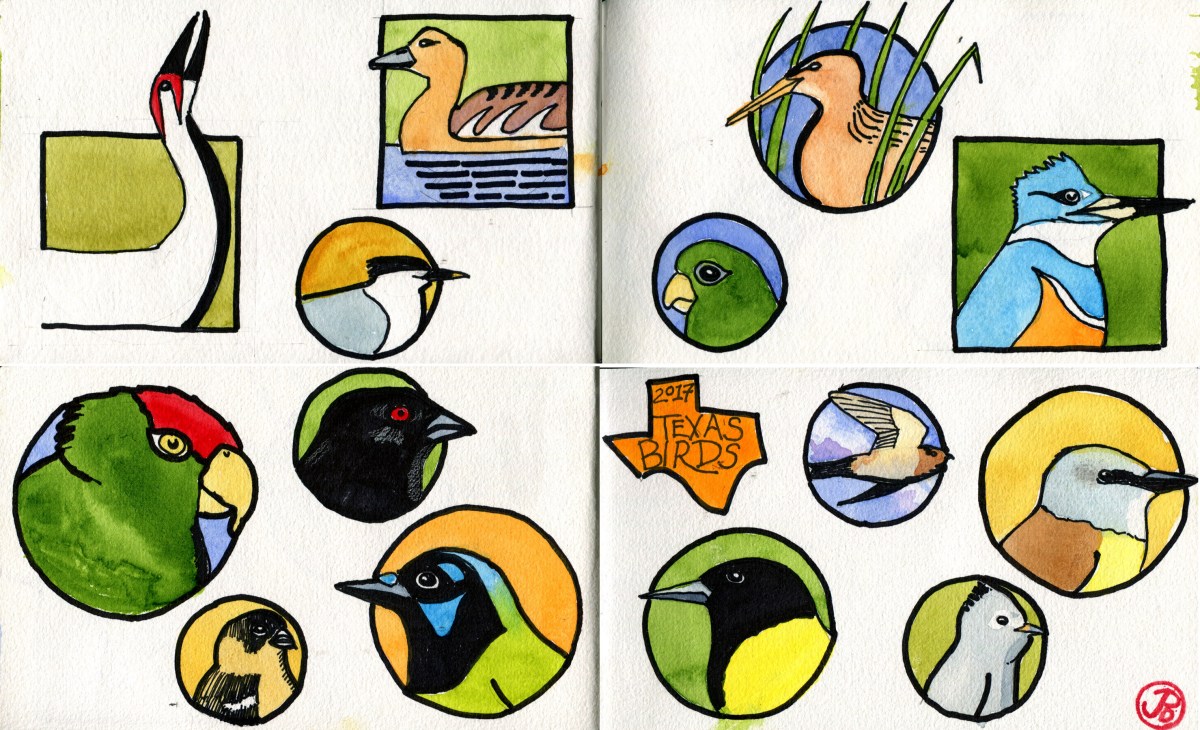
While planning a birding trip to South Texas in April I sketched some  birds on my wish list. I chose to sketch in a woodcut, stylized way that focused more on shape rather than fine detail. The style is that of a preliminary working sketch if I were designing a linocut.

The birds are, from left to right, top to bottom: whooping crane, sandwich tern, fulvous whistling-duck, green parakeet, king rail, ringed kingfisher, red-crowned parrot, white-collared seedeater, bronzed cowbird, green jay, Audubon’s oriole, cave swallow, northern beardless-tyrannulet, and Couch’s kingbird.

Bird notes:

Whooping Crane: One of our rarest and tallest birds in North America. In the 1940’s where were just 21 whoopers in the wild. Since then, with conservation efforts, their numbers have grown. I hope to add this bird to the list on a cruise on Aransas Bay.

Sandwich Tern: A medium-sized tern of the Gulf Coast with a black bill dipped in mustard.

Fulvous Whistleling-duck: I struck out on this duck on my last visit to Texas but am determined to add it to my list in the ponds around McAllen.

Green Parakeet: I should find this gregarious green gem at it’s nighttime roost, about ten minutes from my digs in McAllen.

King Rail: Missed this rail in Florida but I am hoping to hear, if not see it,  at Ticano Lake. This is our largest rail in North America.

Ringed Kingfisher: I missed this kingfisher, the largest in North America, by a few minutes at Bentsen-Rio Grande Valley State Park.

Red-crowned Parrot: Another McAllen specialty.

White-collared Seedeater: Found only in a few places along the Rio Grande. I’m going to search around Falcon Dam.

Bronzed Cowbird: This devil-eyed bird can be found in parking lots in McAllen.

Green Jay: Not a lifer but very common in the Rio Grande Valley. This beautiful jay is a blockbuster bird in south Texas and it’s found nowhere else in the US.

Audubon’s Oriole: Hoping to add this bird to my list near my digs at the McAllen Nature Center.

Cave Swallow: Similar to the cliff swallow. I will keep my eyes to the sky to see this lifer.

Northern Beardless-Tyrannulet: This small, drab flycatcher is inconspicuous, until it sings.

Couch’s Kingbird: Almost identical to the tropical kingbird, until it sings.


Image

Friday After Work Lifer

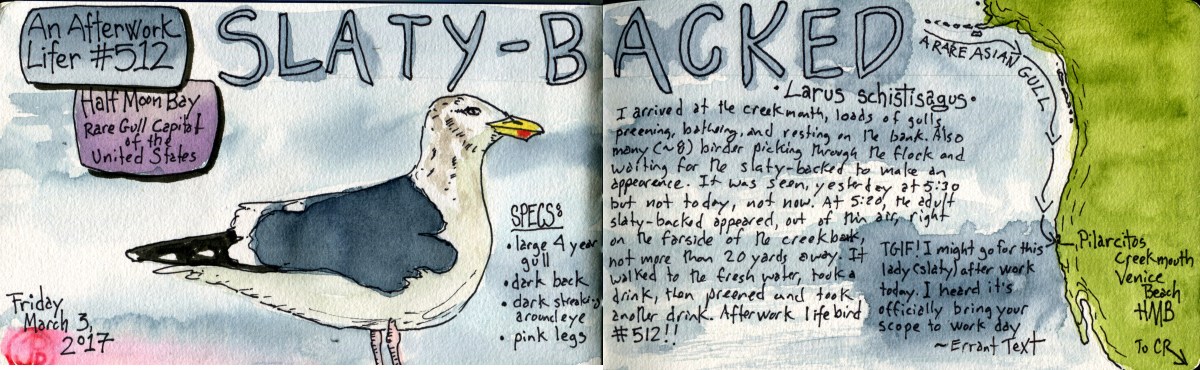
Is there any better way to end a week on a Friday than having an afternoon lifebird on the San Mateo Coast? I was about to find out as I left work and headed west to Half Moon Bay, recently christened, “The Rare Gull Capital of the United States”.

The rare gull in question was the slaty-backed gull (Larus schistisagus). This large four year gull is an Asian gull that is rare in Alaska but is even rarer along the western coast of California. This was my sort of lifer.

The last time the adult gull had been seen was at 5:30 on the previous afternoon at the Pilarcitos Creek mouth as it entered the Pacific at Venice Beach in Half Moon Bay.

When I arrived at about 4, there were over one hundred gulls preening, resting, and bathing on the beach and in the creek and about 10 birders combing through the mixed species flock.

Now which one of these gulls has a slaty back?

I figured patience was the order of the day. I was hoping the gull would appear and we had many eyes trained on the group.

I shared a conversation with Sterling and a non-birder lady that when a little something like this:

Lady: What are you looking at?

Birder: Gulls.

Lady: Oh seagulls! Why are there so many here?

Birder: The fresh water from the creek, they bathe and drink from it.

Lady: Why don’t they drink from there? (she points to the Pacific Ocean).

Birder: It’s the ocean. It’s saltwater.

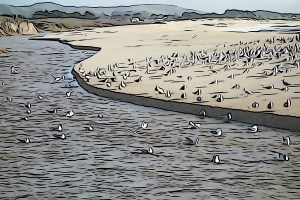
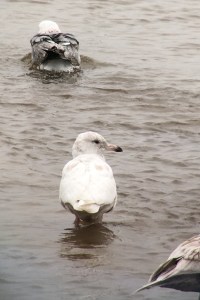
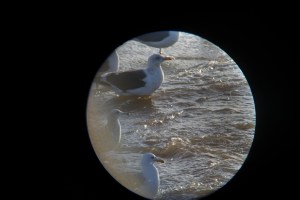
dsc07389 Another oddly pixilated photo of the mixed gull flock at Pilarcitos Creek. I’d call it art if it weren’t a complete accident.
It was starting to get colder but the mix flocked provided me with many different looks at gulls of different ages and species. But the the large gull with a dark slaty-grey back had not yet appeared.

Then at 5:20, out of thin air, the adult slaty-backed was spotted on the southside of the creek, 20 yards away! Lifer #512!

dsc07394

A rather crappy digiscope of the adult slaty-backed gull.

img_6473

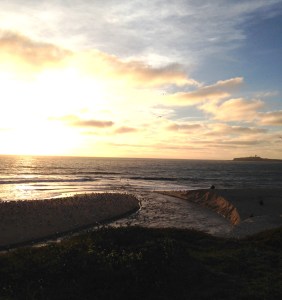
A great way to end the week: a lifer and a beautiful sunset at Venice Beach.

Image

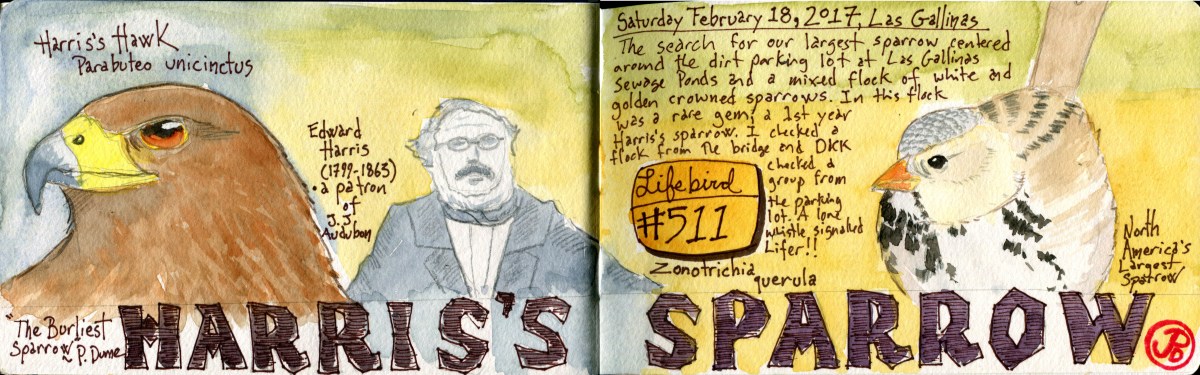
Edward Harris’s Sparrow (A Surprise Lifer)

When you are north of 500 lifers, your memory can get a little foggy on what you’ve seen, especially with the class of birds known to birders as Little Brown Birds (LBBs), the sparrows and their relatives. A sometimes tricky group of birds to identify.

I was not sure how I missed North America’s largest sparrow. When I saw that a Harris’s sparrow had been found at Las Gallinas, on December 24th, in a mixed flock of white and golden crowned sparrows I thought I had added this one to my list years ago. I noticed that it had been refound on Friday and I consulted my records to help jog my memory. That box was not checked. I checked and rechecked and sure enough, that sparrow was not on my list. I knew that, with a break in our extremely wet winter, I would be heading north, to one of my favorite birding destinations: Las Gallinas Sewage Ponds.

I rendezvoused with Dickcissel and we headed up. The ponds were swollen with all the recent rains and it was extremely easy to see birds that are normally shy and elusive because most of their reedy habitat was now underwater. Soras, gallinules, and the constantly singing marsh wrens where putting on a wonderful Saturday morning show. On the west side of Pond 1, a common gallinule rushed out of the water and up into the remaining reeds. A predator was near. Sure enough, a river otter poked it’s head above the water to survey the scene.

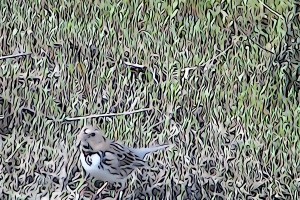
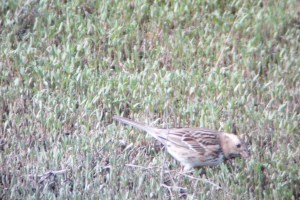
We returned to the parking lot area and scanned any sparrow flocks for a large sparrow with a white breast. I was following a flock across the channel and Dickcissel returned to the dirt lot to see what he could find. A whistle alerted me to the fact that the Harris’s had been located and I rushed over to Dickcissel’s position and found lifer # 511, Harris’s sparrow.

dsc07381

An oddly pixilated digiscope shot of the Harris’s, no Photoshope required.

dsc07370

Digiscope of North America’s largest sparrow at Las Gallinas.