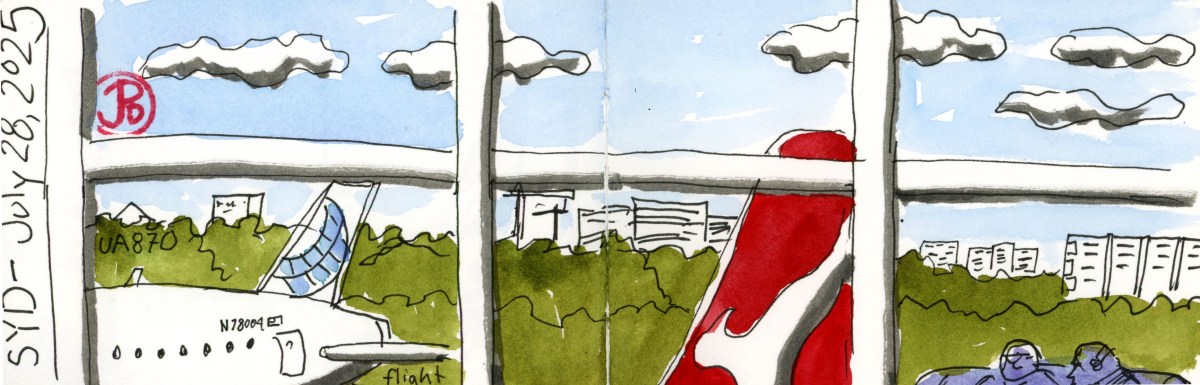
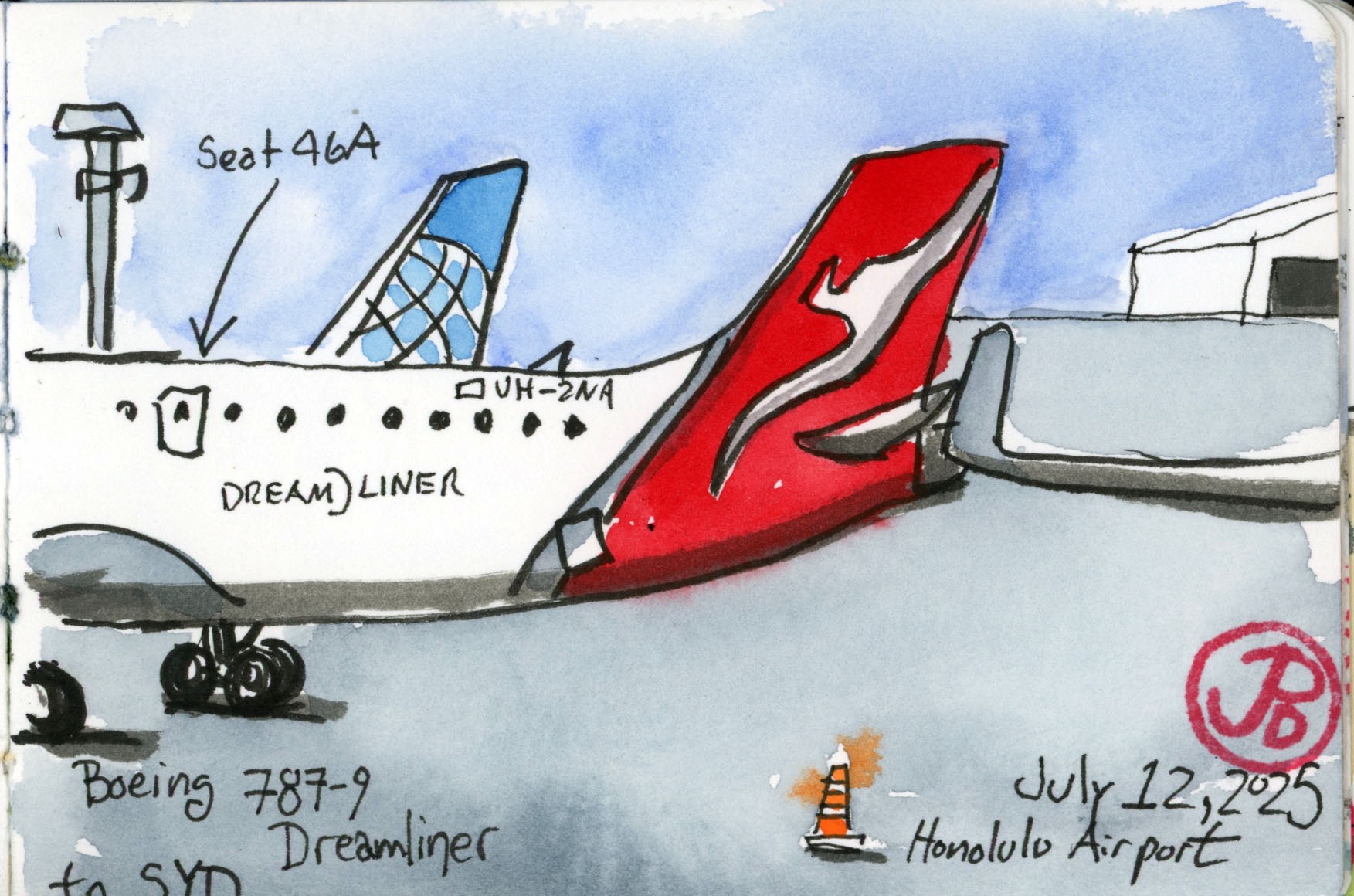
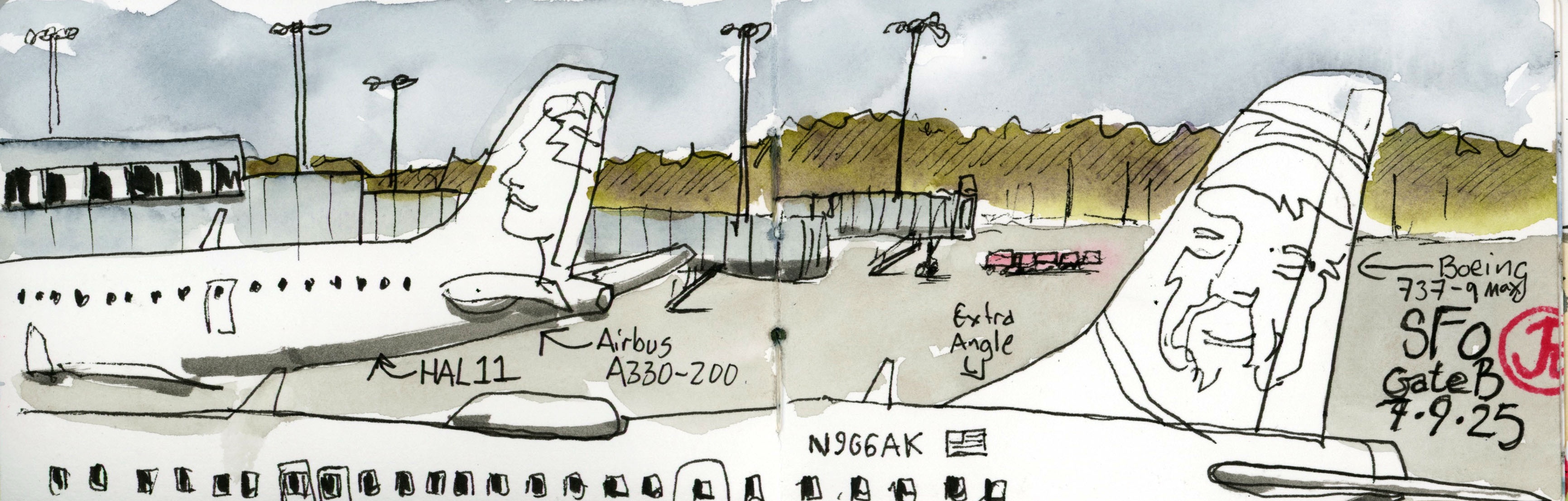
On my Hawaii/Australia adventure I took a total of six flights so it left me with plenty of time to do some airport sketching. A perfect way to spend time while waiting to board. Or a perfect way to spend time if you’re really bored!
I did a total of nine sketches, some of which I have included here.
I always enjoy the art in airports. My home airport, SFO, frequently changes what’s on show.
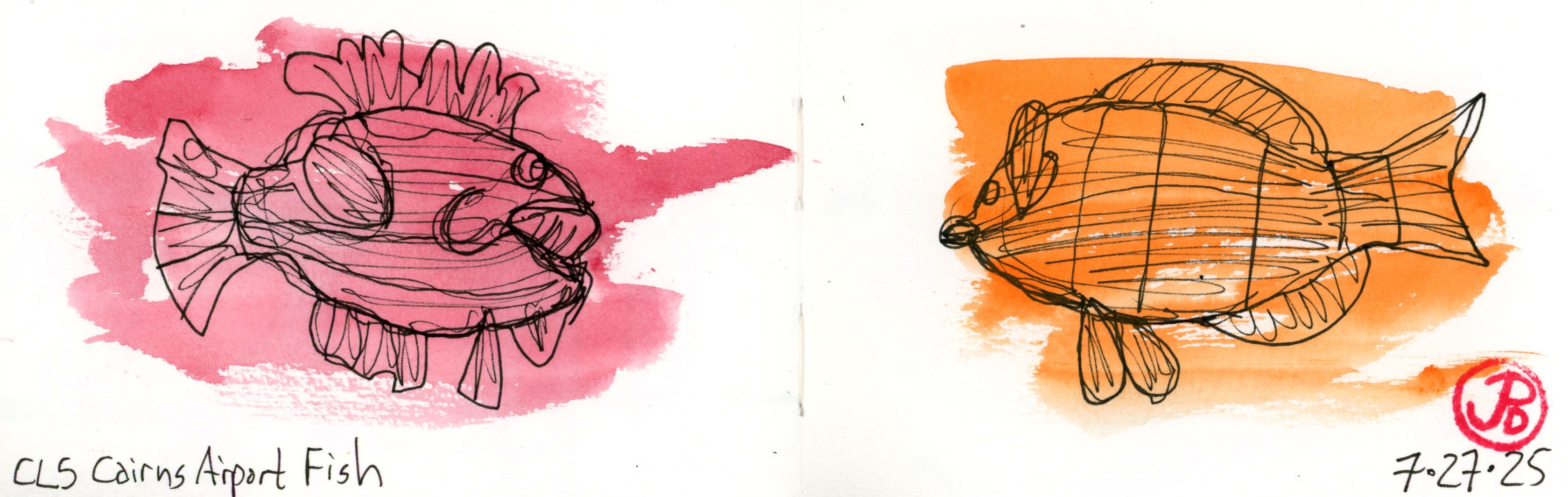
Most of the time I focus on the scene outside the window of planes parked at the gates. But at the airport in Cairns (Gateway to the Great Barrier Reef) I sketched some of the fish sculptures hanging from the ceiling (all rendered in a continuous-line sketch).
You can’t be in Cairns (pronounced “cans”) without heading out to the natural wonder that is the Great Barrier Reef.
I chose a trip on the Ocean Spirit to Michaelmas Cay, a sandy island on the reef.
While I am a certified SCUBA diver and I love marine life, I was here for the birds.
I checked in and walked out to the dock under a light, warm drizzle. It rains almost everyday in Cairns. I was early so I headed to the breakwater to try to pick up a lifer.
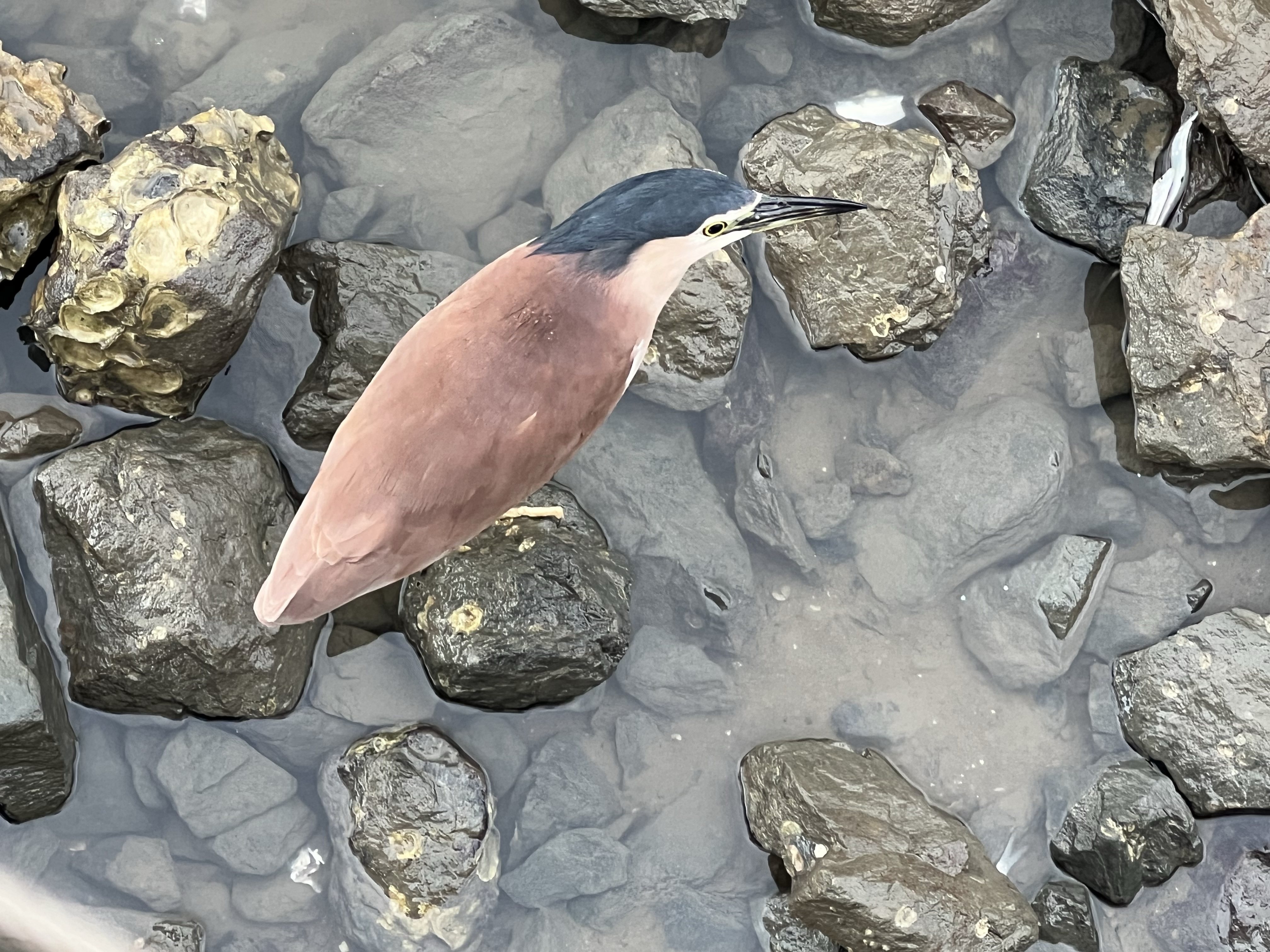
I scanned the nearby trees for roosting birds, I was looking for a night-heron. I found one foraging at the breakwater. I guess no one told it that it was a night-heron, a Nankeen night-heron.
I headed back to the dock and boarded the Ocean Spirit.
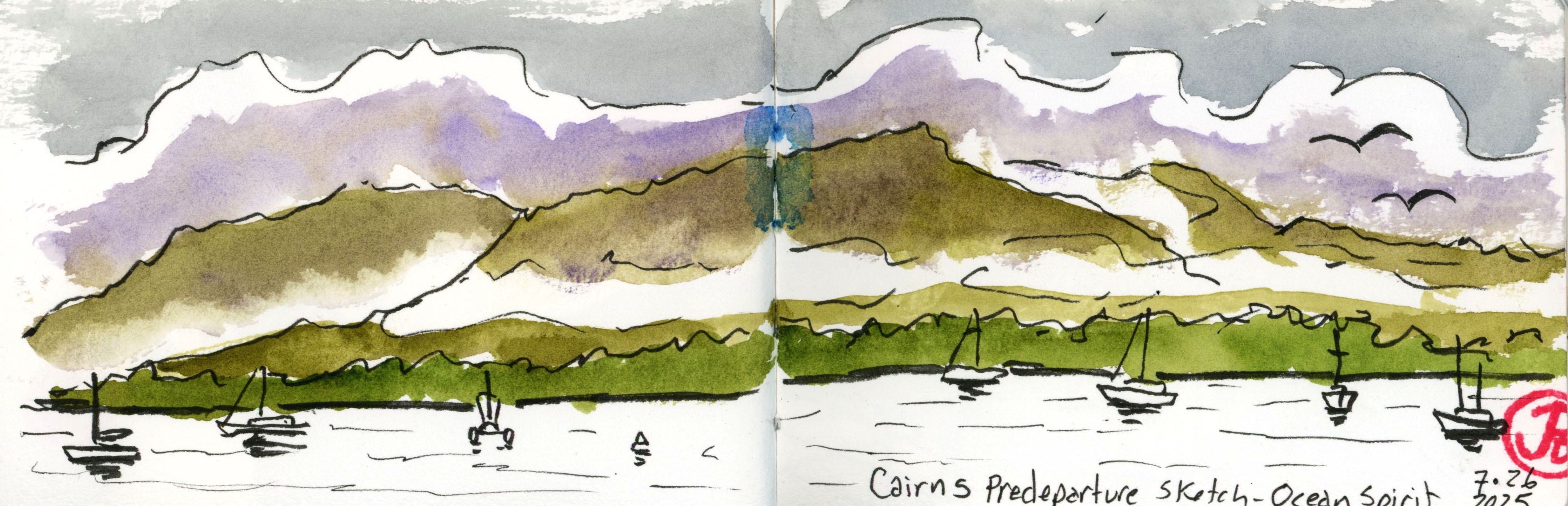
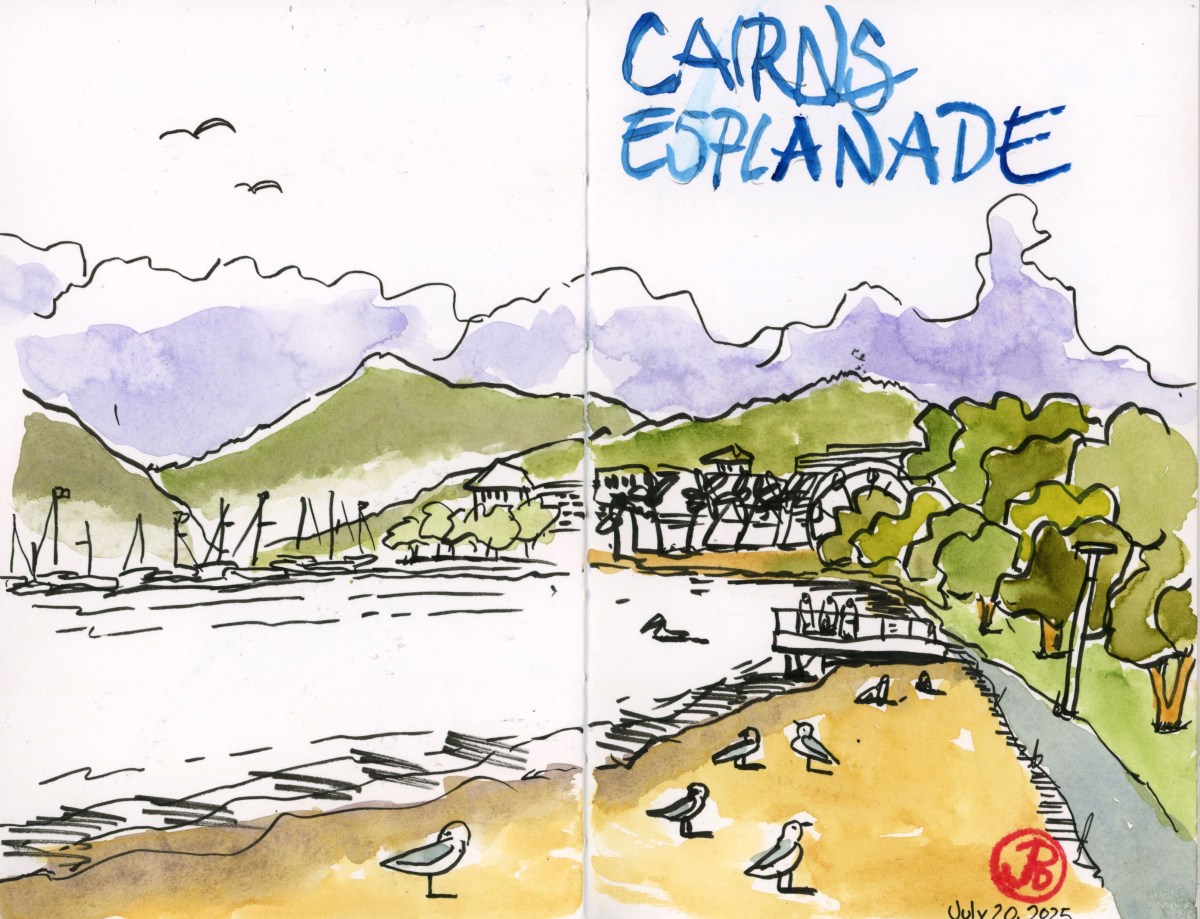
While waiting for the Ocean Spirit to depart I sketched the mountains to the south and the boats moored in the foreground.
During the two hour cruise to the cay, we stopped to look at a few humpback whales.
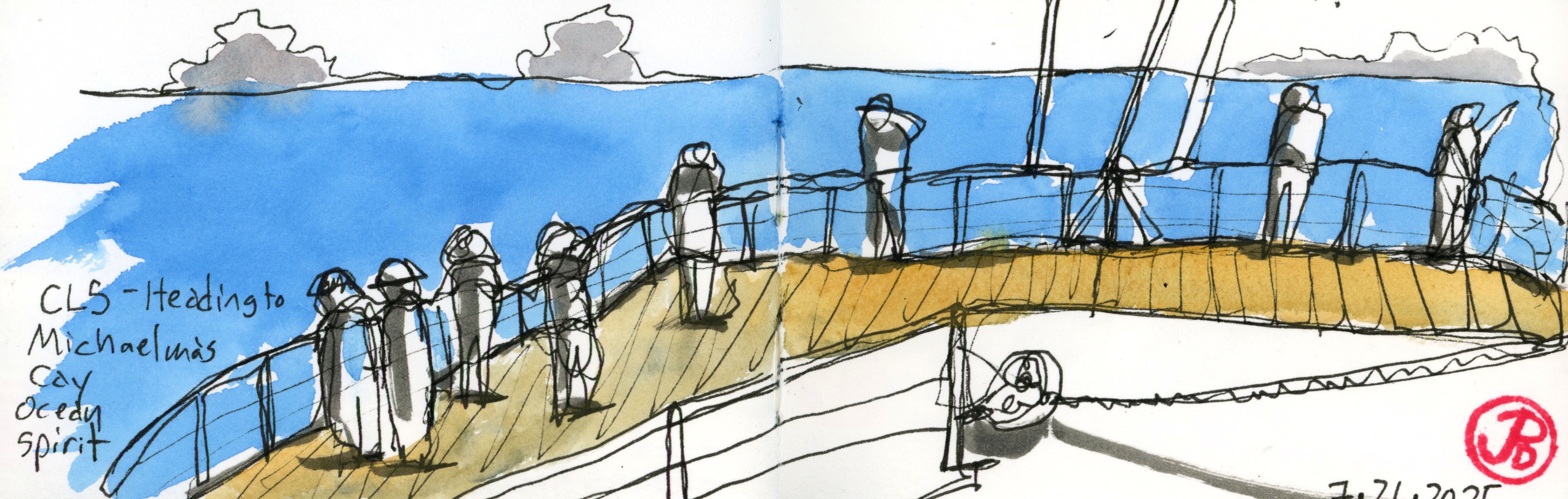
This is a continuous-line sketch of the Ocean Spirit looking towards the bow as we head to the cay.
We arrived at the cay and anchored to the buoy. The launch began to take snorkelers to the sandy cay.
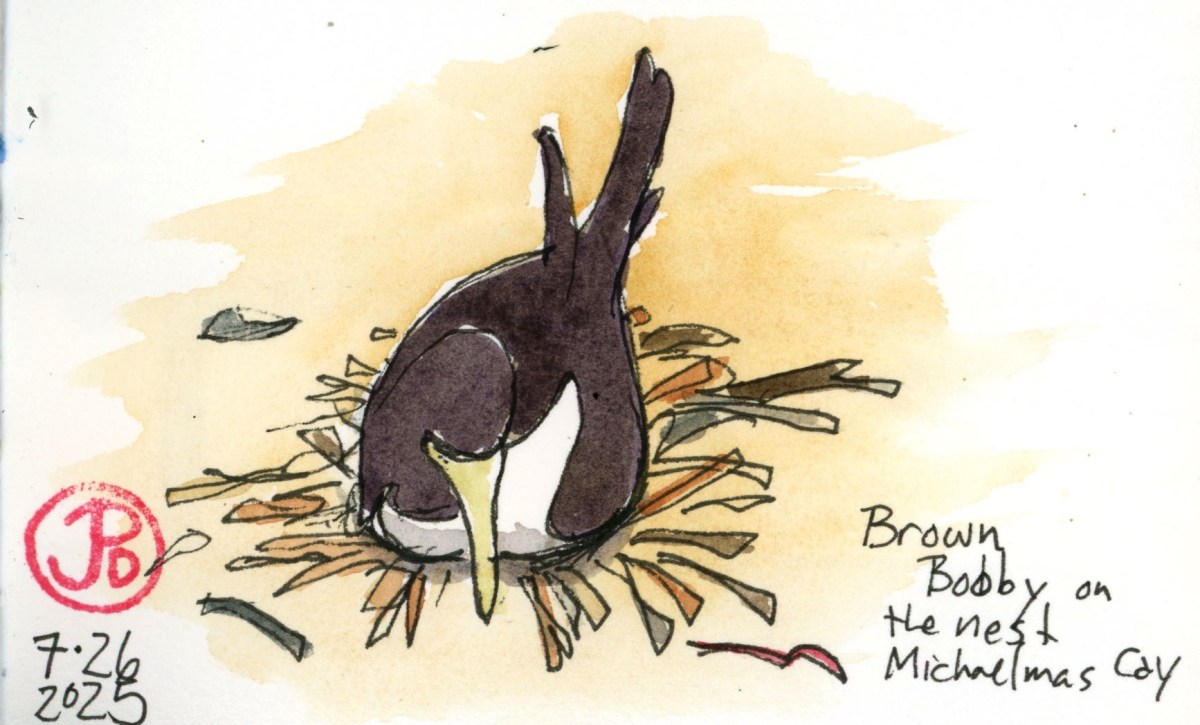
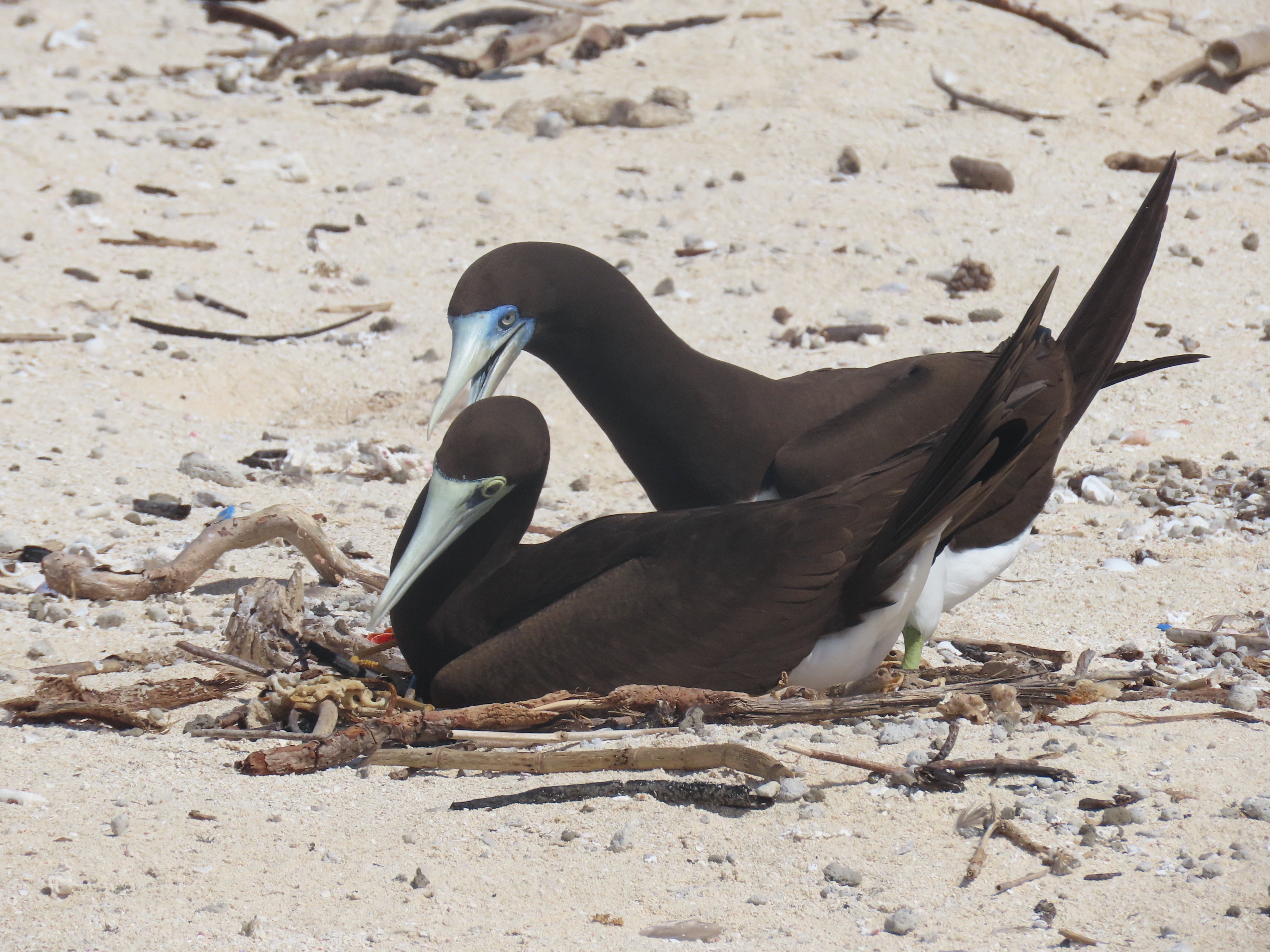
I headed over and walked on the vibrant sands. The cay is a bird sanctuary and various pelagic birds nest and roost here. The most prominent breeding bird at this time of year is the brown booby.
This a semi-regular vagrant to the west coast of California but I had never seen one this close and in it breeding plumage. I sketch one on it sandy nest (featured sketch).
The top birding site in the Australian State of Queensland is the Cairns Esplanade.
The esplanade is a path that runs north to south along the water with parks and trees bordering to the west. This path is popular with joggers, bikers, and dog walkers, as well as birders from around the world.
When the tide is right, many waders feed close in on the exposed tidal flats but there are always birds to be found foraging in the trees.
With the following sketches I highlight a few of the species I encountered on the Esplanade. While none of these species are rare or Esplanade specialties, they are birds that grabbed my attention.
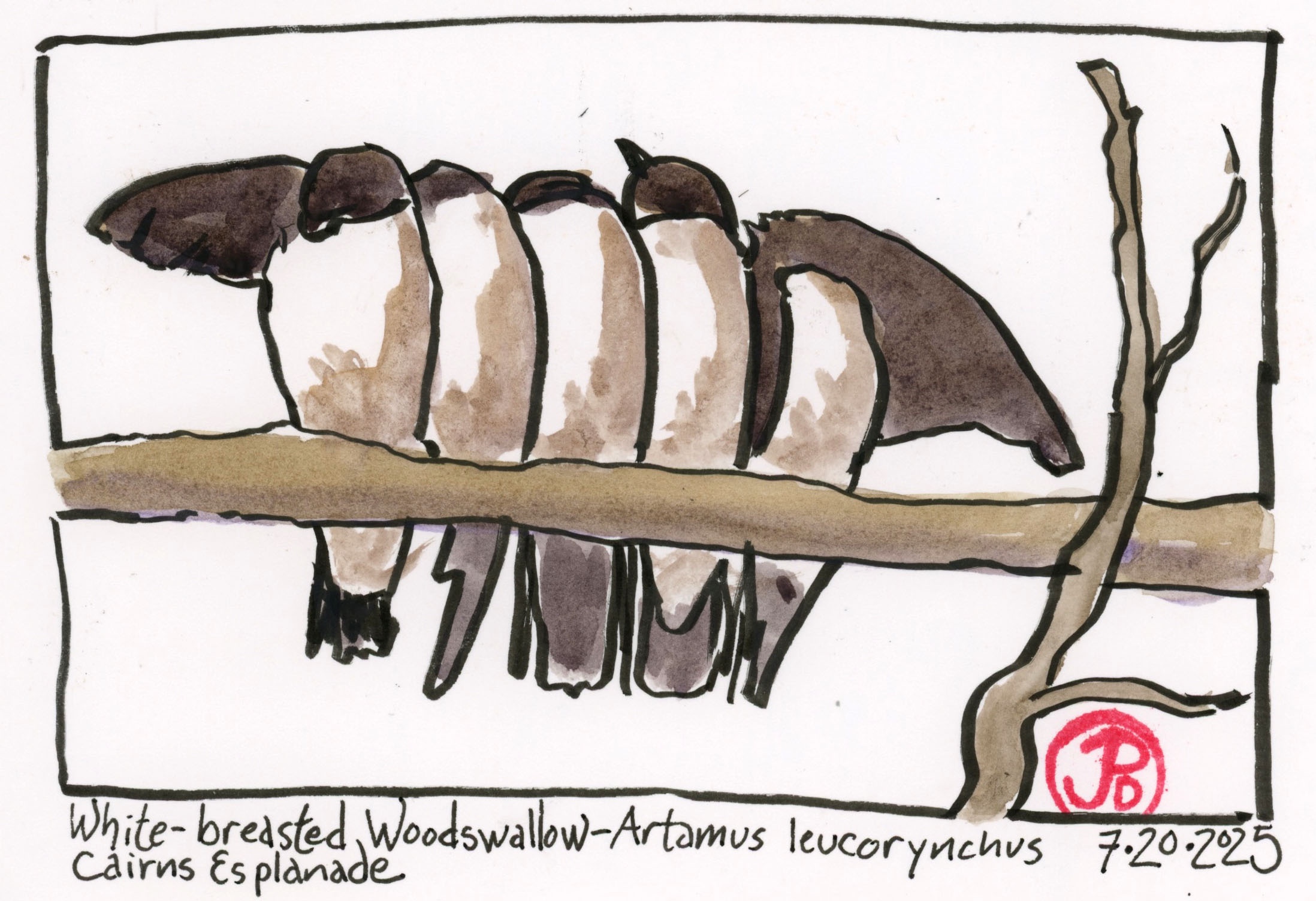
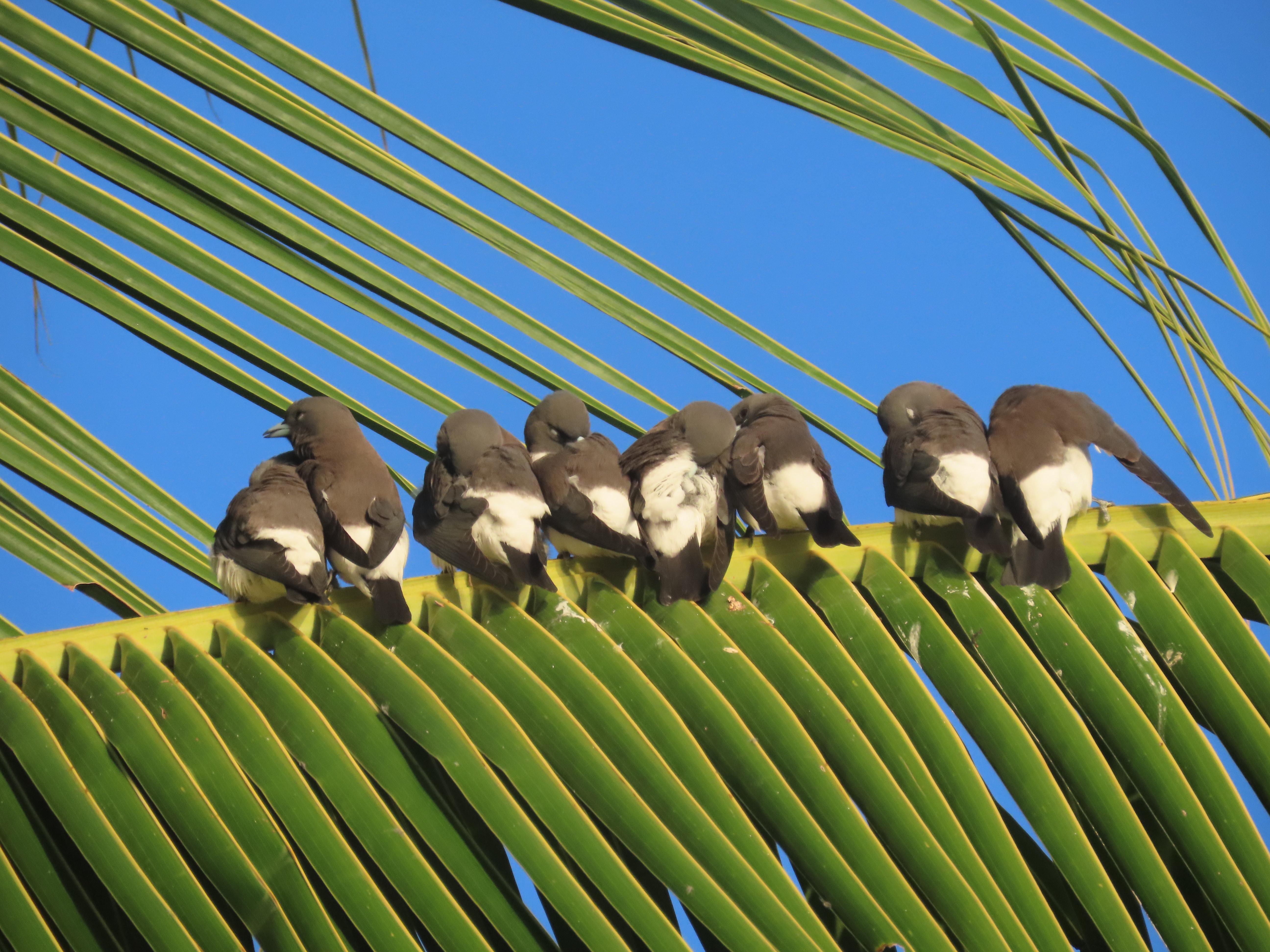
Ever since seeing woodswallows in my Australian bird guide I knew I wanted to see them, primarily because of an interesting behavior. My guide reads, “compulsively social when loafing or roosting, often settling in tight rows on branches to sleep or to preen themselves or each other”. There are six species of woodswallow in Oz, these were white-breasted.
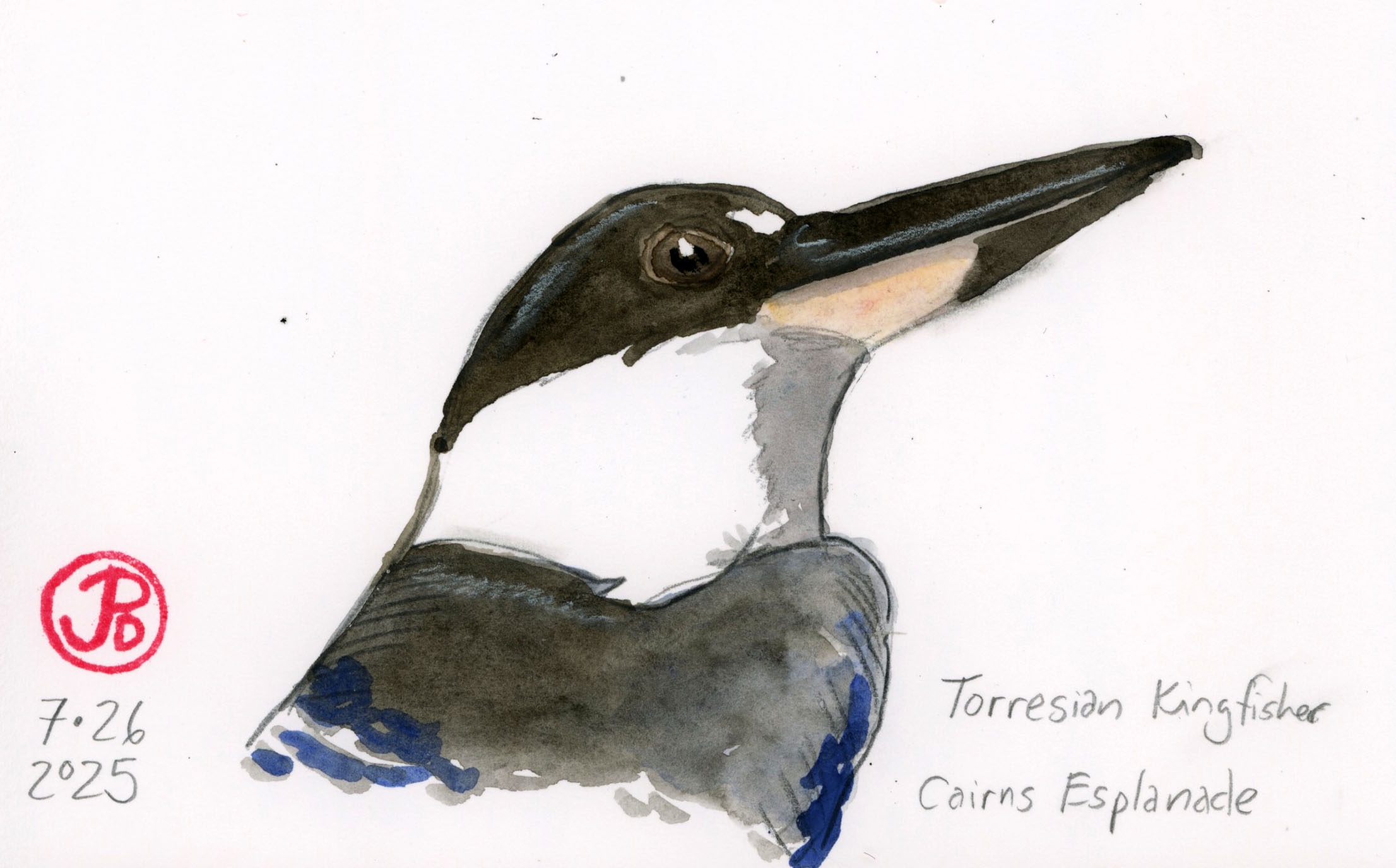
While in Australia I added seven species of kingfisher to my world list including the world’s largest kingfisher, the laughing kookaburra. I added my last species of kingfisher on my final day in Cairns birding the northern Esplanade.
In my bird guide it is known as the collared kingfisher but is now known as the Torrisian kingfisher. Named for the Torres Strait which is the body of water separating Queensland and New Guinea.
I had missed this larger kingfisher on two other visits. The most common kingfisher on the tidal flats and in the trees was the wonderfully named scared kingfisher.
On my last pass I found two Torrisans perched in trees near the water. They were both calling and having me stunning looks in the morning light!
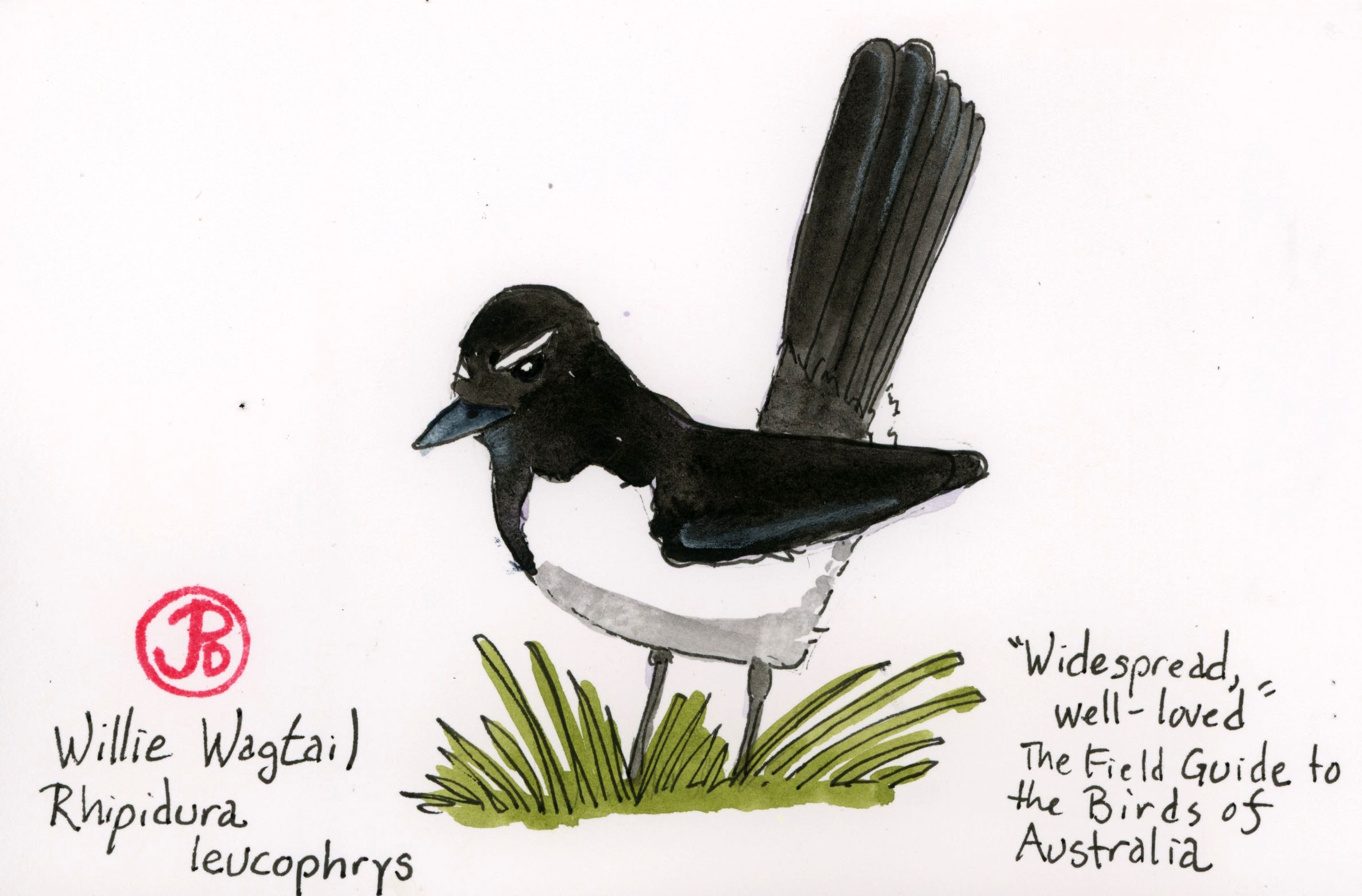
The final bird that I am highlighting is perhaps the most common and as one bird guide notes, “widespread and well-loved”. And I certainly loved my encounters with the Willie wagtail.
The wagtail seems to relish being in the presence of humans. While I was walking across a lawn at the northern end of the esplanade, a Willie wagtail flew up to me and landed close. The bird followed me as I traversed the grass and I realized the wagtail was using me like the cattle egret uses cattle, as a way to scare up bugs from underfoot.
I had experienced this behavior once before, as I was being followed Wunce by a barn, swallow, while I was crossing a soccer pitch.
If the cassowary was number one on my bird wishlist, a monotreme topped my mammal wishlist. A unique creature only found in one place in the world: the eastern coastal region of Australia.
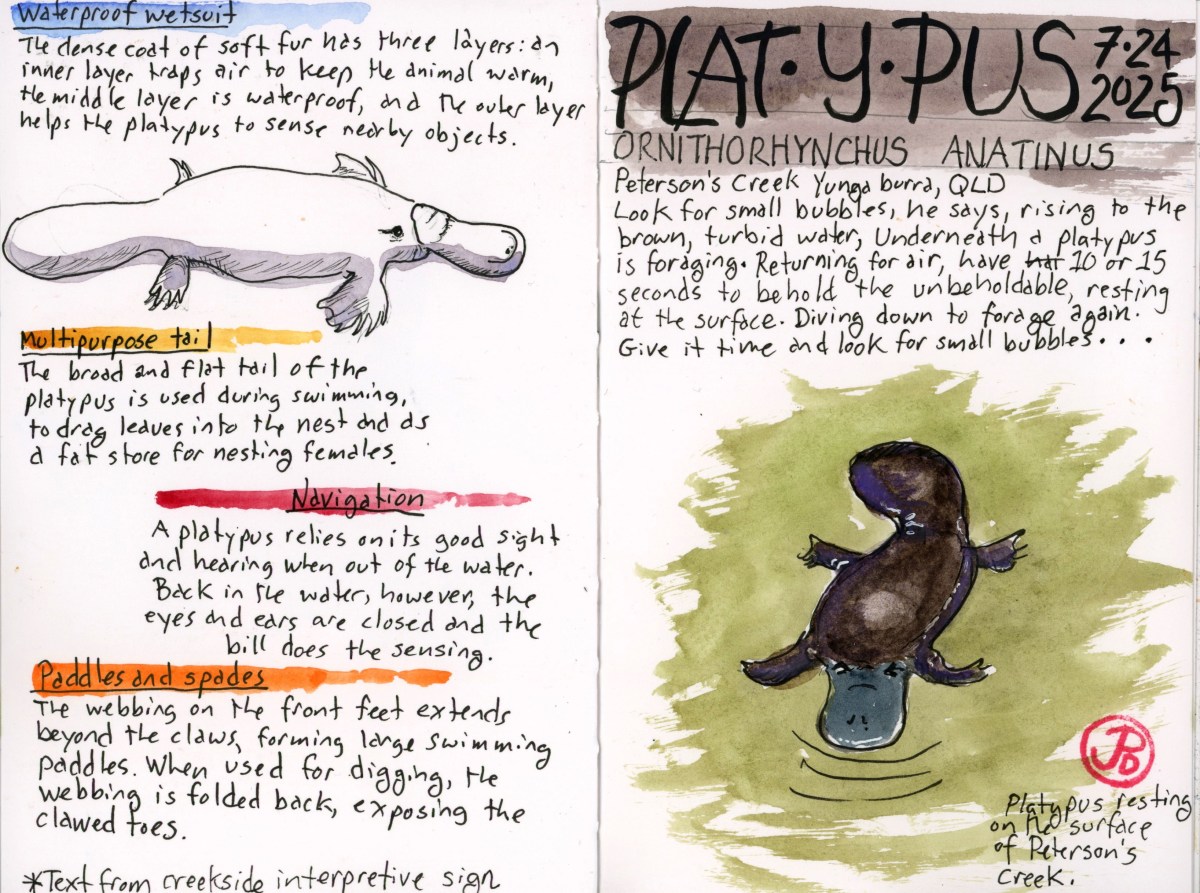
This is Ornithorhynchus anatinus, the platypus.
Before I left for Australia, my guide hinted that we might have a chance for platypus in the way that most nature guides don’t overpromise what they can’t control while giving you real hope of the possibility of seeing a sought after species in the wild.
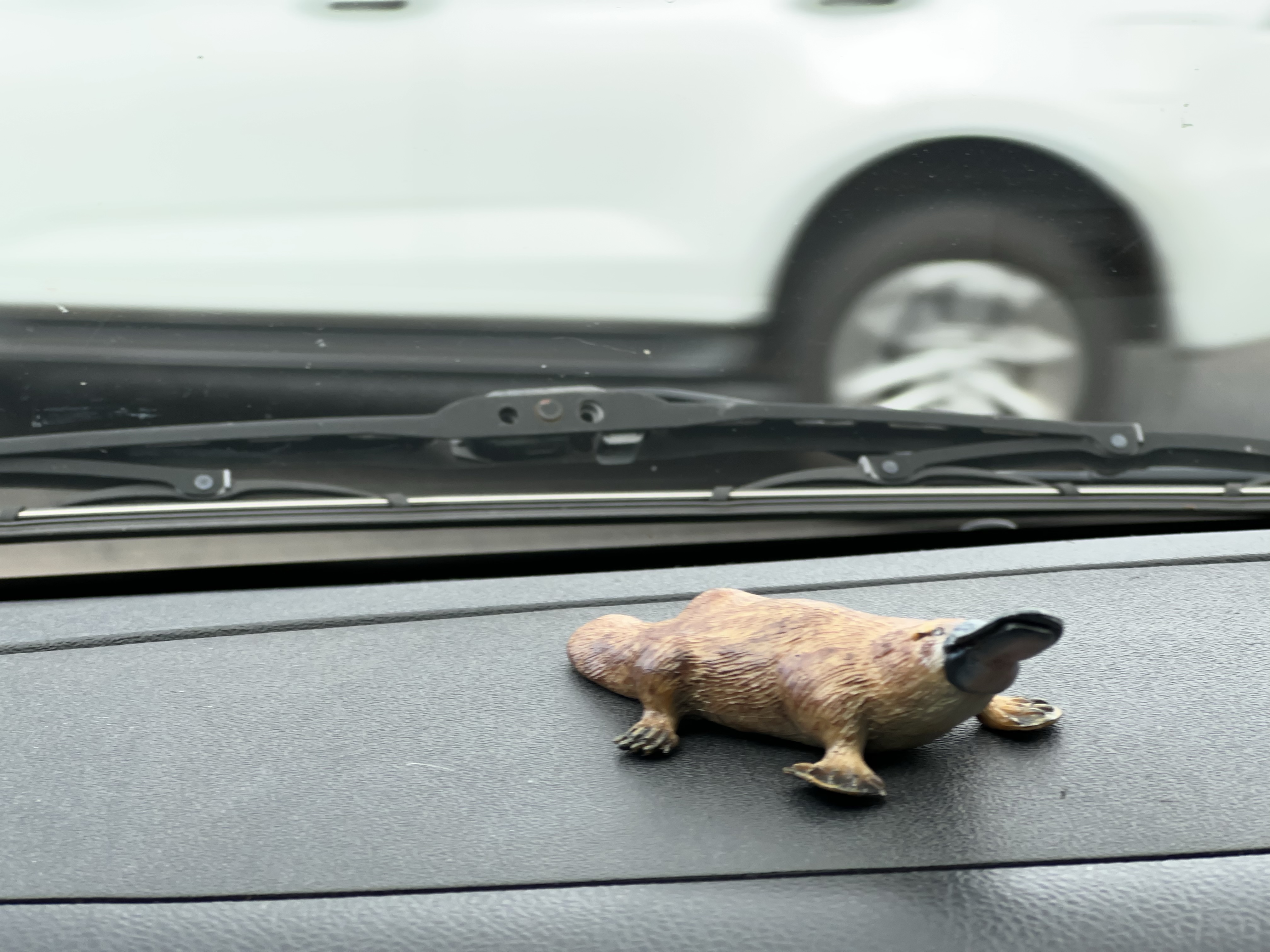
I brought with me my good luck platypus in giving me extra luck in seeing this sought after species.
Our search was conducted at Peterson Creek in Yungaburra, North Queensland.
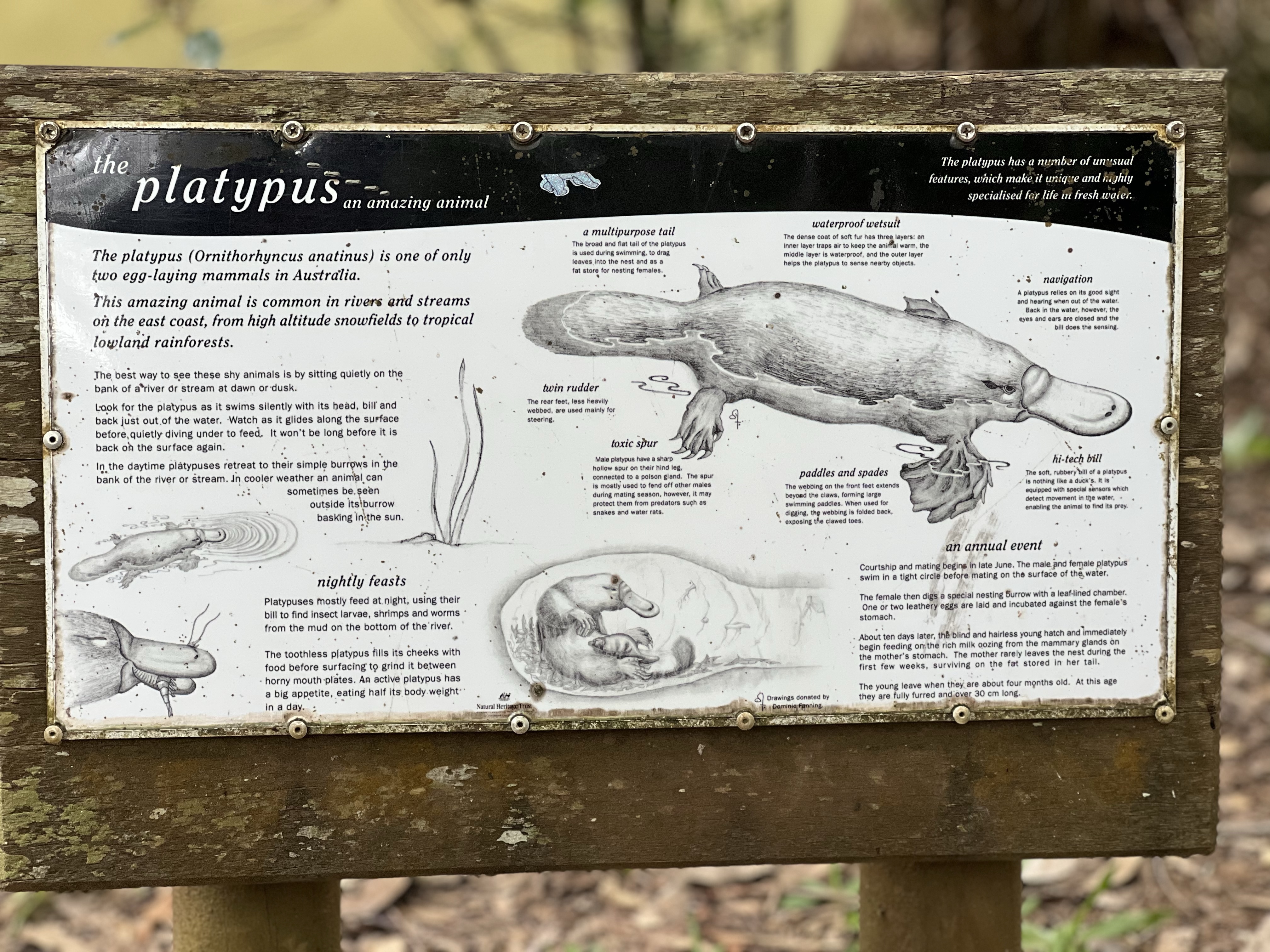
A platypus interpretive sign on the banks of the creek. We must be in the right place.
Out guide told us to look for small bubbles at the surface as we walked along the creek. This was a sign that a platypus was foraging under the brown turbid water. The platypus would come to the surface for a breath of air. It would be at the surface for 10 to 15 seconds and this was the best time to see Australia’s mammalian oddity before it dove down to continue foraging.
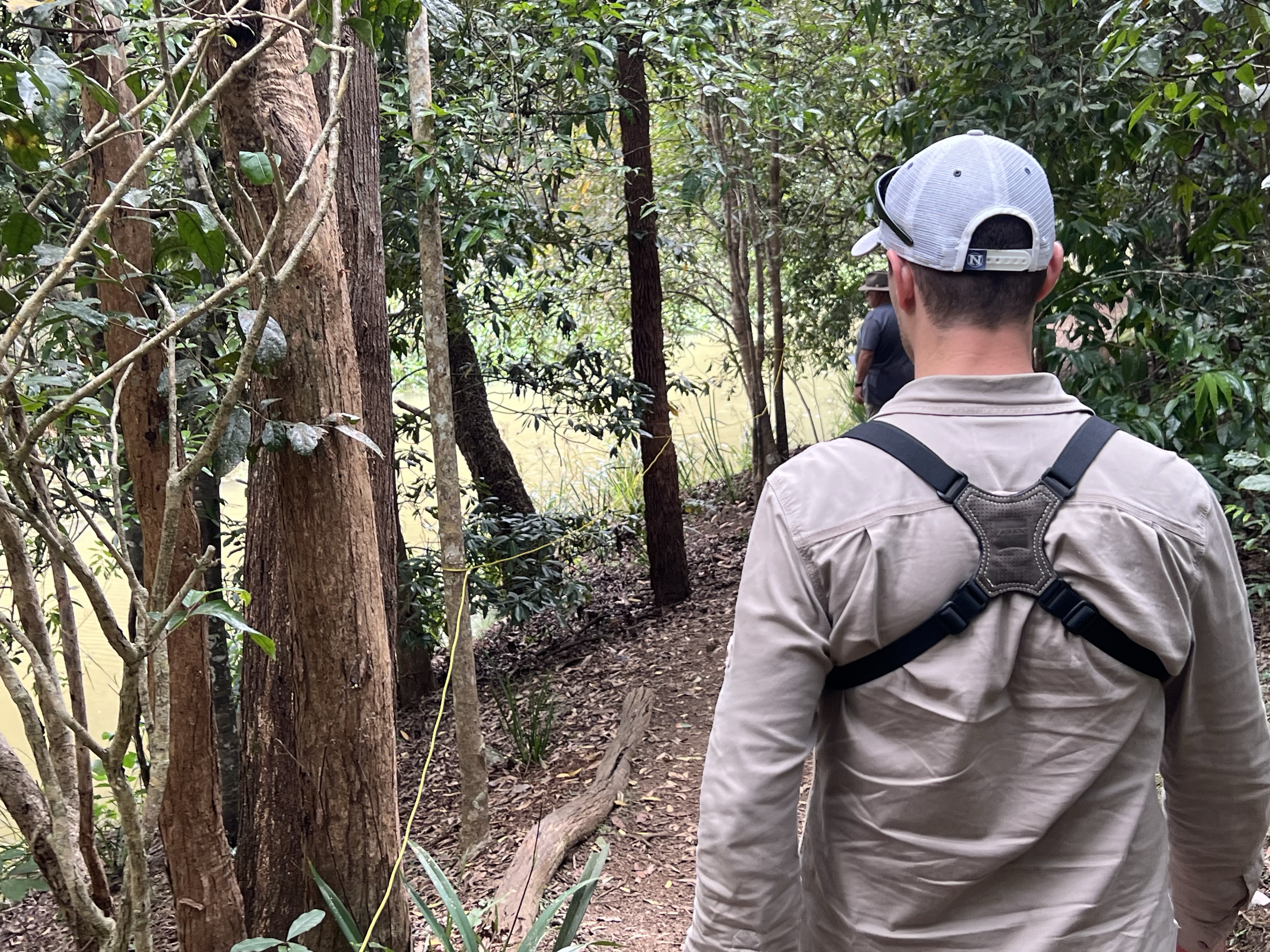
Walking along the creek looking for tell tale bubbles.
Now platypus lore says that the best time to see this aquatic mammal is at dawn and dusk. So why were we at the bank of the creek in early afternoon? According to our guide, we had a good chance of seeing platypus on this stretch of creek at any time of day. Platypus spend a lot of the hours of the day foraging for food. And that is the best time to see them.
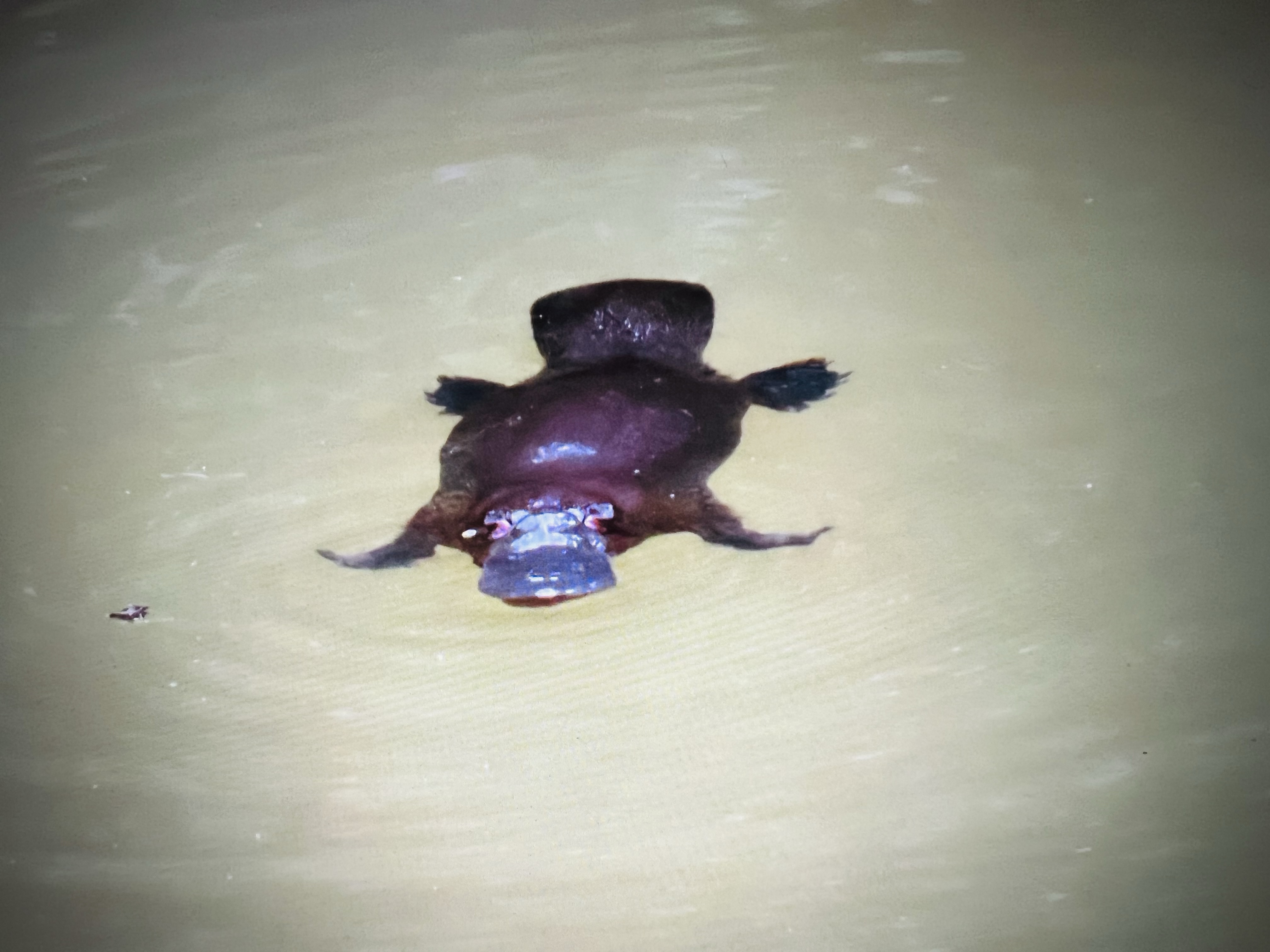
It did take long before we saw small bubbles rising to the surface and followed shortly by the platypus itself. The amazing mammal stayed at the surface for about 20 seconds before diving down to forage.
We spent about 20 memorable minutes with the platypus, getting excellent looks and photos.
Australia is home to ten species of bowerbird and I saw half of them.
Bowerbirds themselves are a beautiful and varied group of birds. What makes them well known around the world is the bowers that the males build to attract females. And we thought humans are the only artists on the planet.
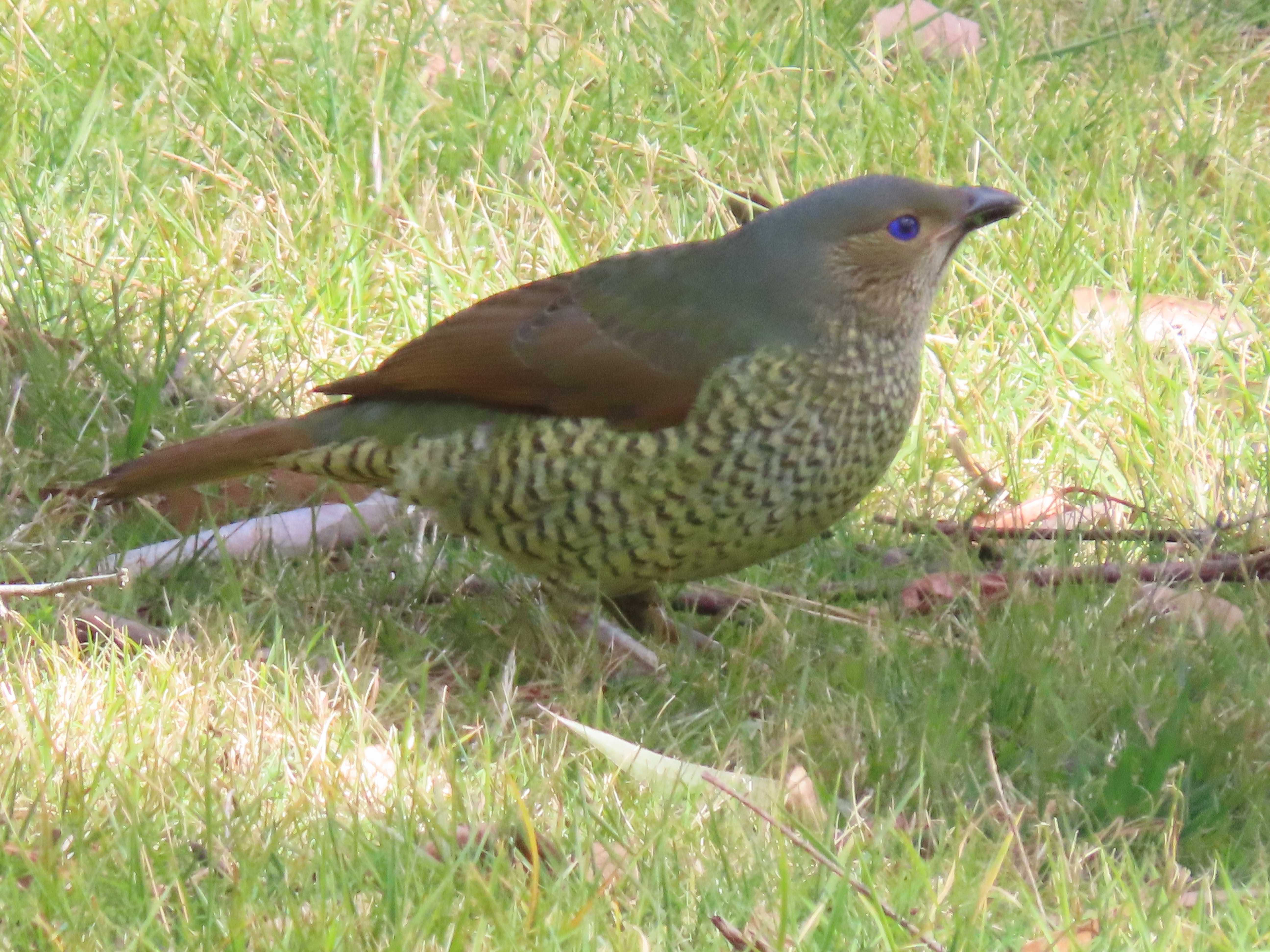
All the bower designs are different depending on species and each female of the species seems to be attracted to different colors. For instance, female satin bowers birds prefer blue while great bowerbirds go for white and light gray.
Female satin bowerbird prefers blue decorations like her eye color.
Once the bower had been constructed, the male finishes the bower off with decorations purloined, or foraged, by the male. Many of the decorations are human made plastics.
I was able to see and sketch two bowers on my Australian trip. Bowers constructed by the male golden and great bowerbirds.
I was in Australia during their winter and so it was out of breeding season but some bowers remain standing year round.
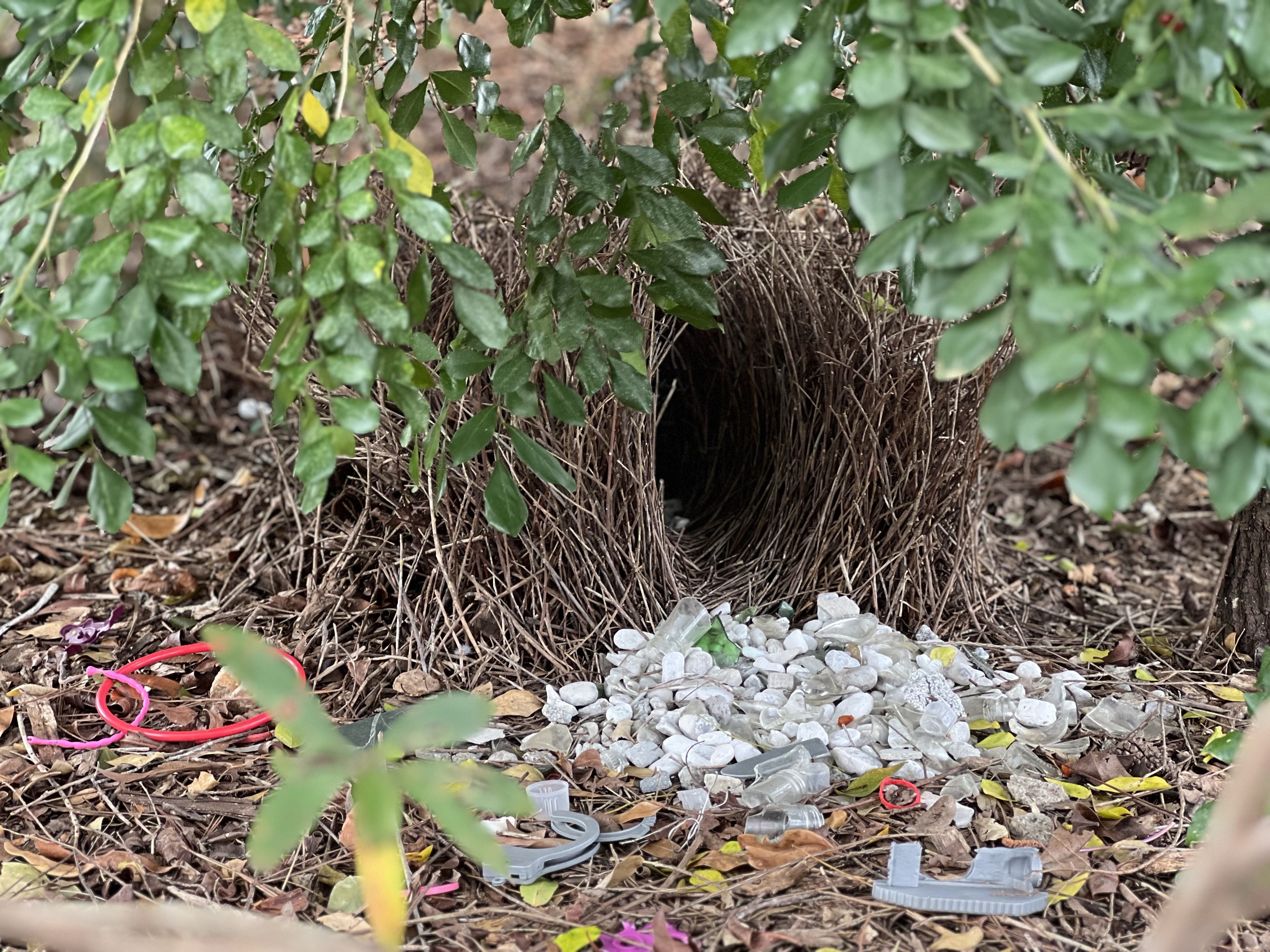
One such bower was in a cemetery and our guide showed us the bower of the great bowerbird.
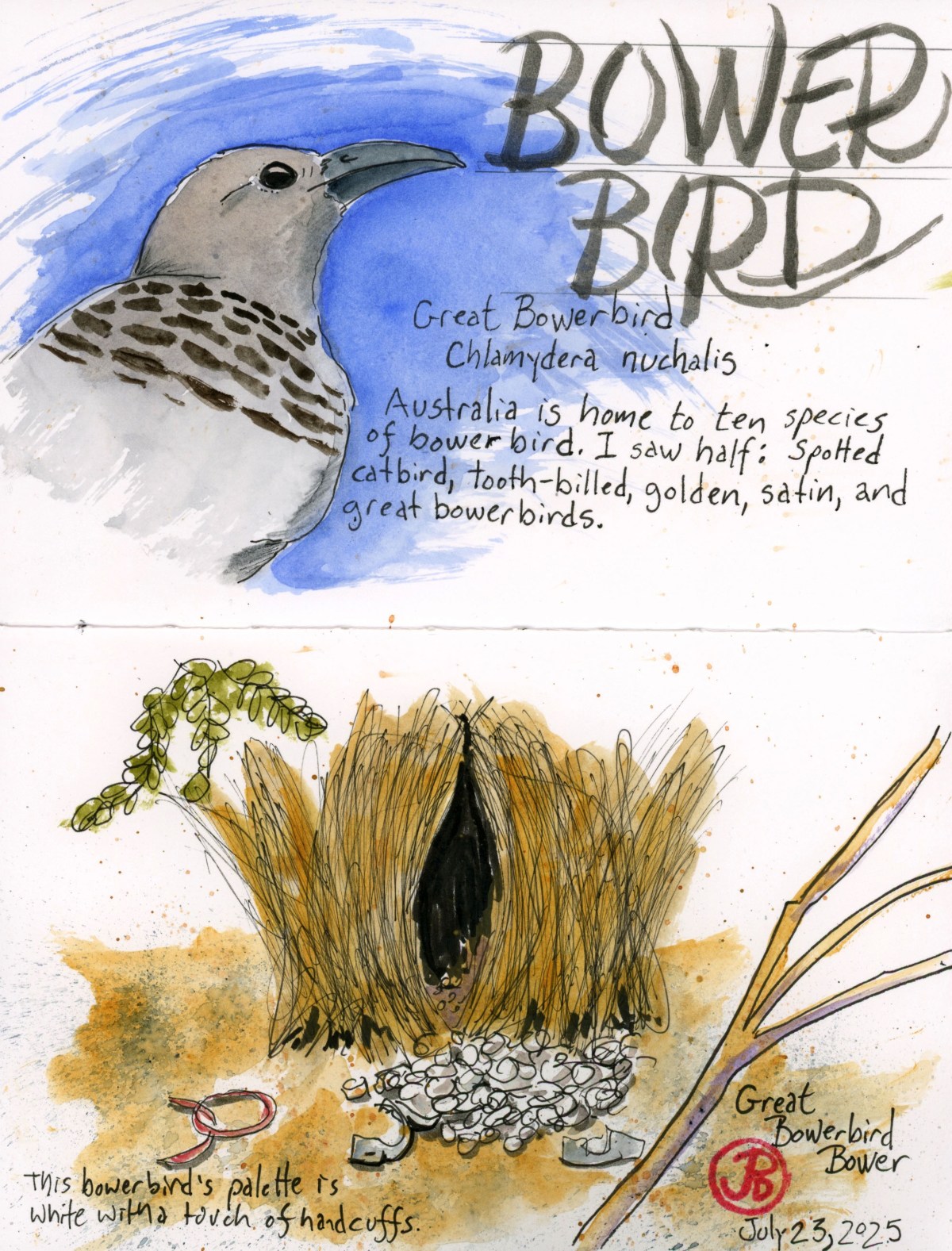
The great bowerbird paints in a palette of whites and grays including a set of plastic toy handcuffs.
I did a spread about the bower and the bird that created it (featured sketch).
Our next bower was in the rain forests of north Queensland at an elevation above 2,000 feet.
We hiked up a short way to the bower. But we also wanted to see the male that the bower belonged to. This required waiting.
This is a where being a sketcher has its advantages. Waiting means, “Time for a sketch!”
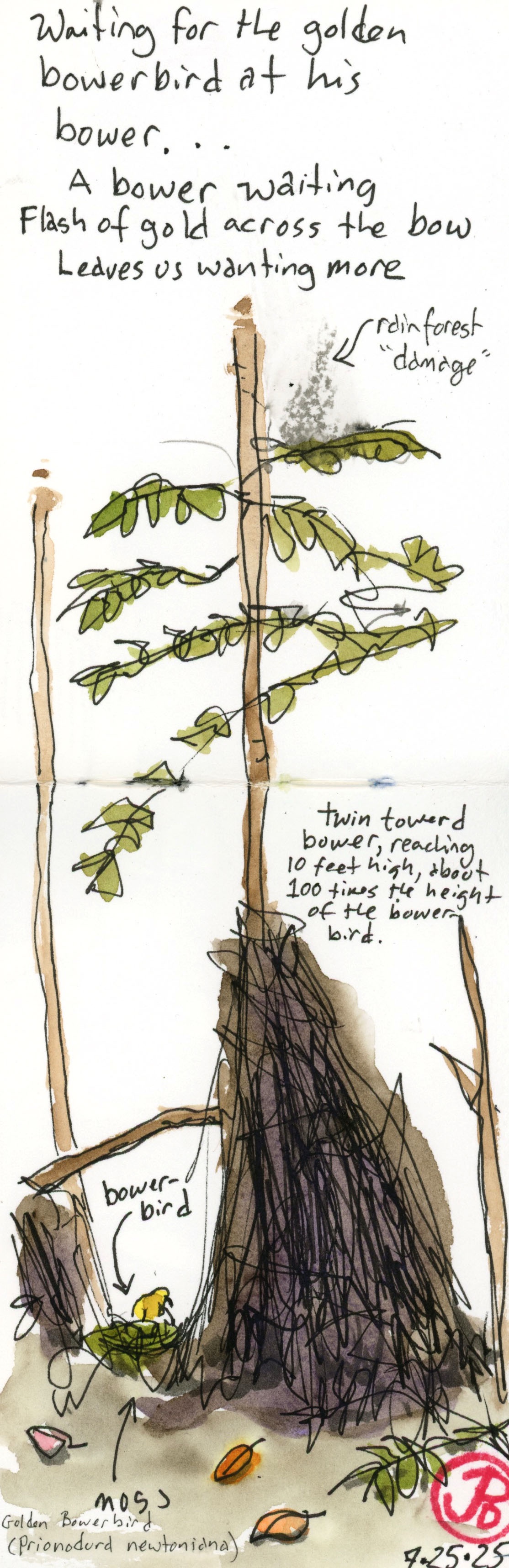
I sketched the impressive bower that was constructed of two tall towers. In the off season, the bower was a work in progress with one tower being about five feet high and the other was under construction. Between the towers was the “stage” lined in green moss.
Now we had to wait for Australia’s smallest and most sought after bowerbird.
After about 15 minutes, I saw a flash of gold cross from left to right which caused me to write a haiku:
A bower waiting
Flash of gold across the bow
Leaves us wanting more
The bower bird flew into a tree out of view, in this case the North Queensland endemic golden bowerbird.
In the darkness under the rainforest canopy I realized another benefit of field sketching, you don’t need a lot of light to sketch but as my shifty photos of the bowerbird proves, you need light to paint with light.
A blurry photo of the male golden bowerbird.
After another wait, the male bowerbird returned to his bower with some green moss to cover his stage. The group all got great looks at this most sought after Queensland endemic.
The bird that topped my wishlist for North Queensland (and Australia) is the southern cassowary (Casuarius casuarius).
The southern cassowary is a large flightless bird and the second largest bird Down Under only beaten by the emu. It forages on fallen fruit on the rainforest floor. It is a rather docile unless you try to hunt one. The lit lives up to its moniker: Murder Bird!
There are two known instances in which a cassowary has attacked and killed a person. One was a young boy in Australia, who was attempting to hunt a cassowary , the other was a 75-year-old man in Florida (proof that cassowaries don’t make good pets).
How hard can it be to find a large flightless bird in the rainforest? Turns out, pretty hard.
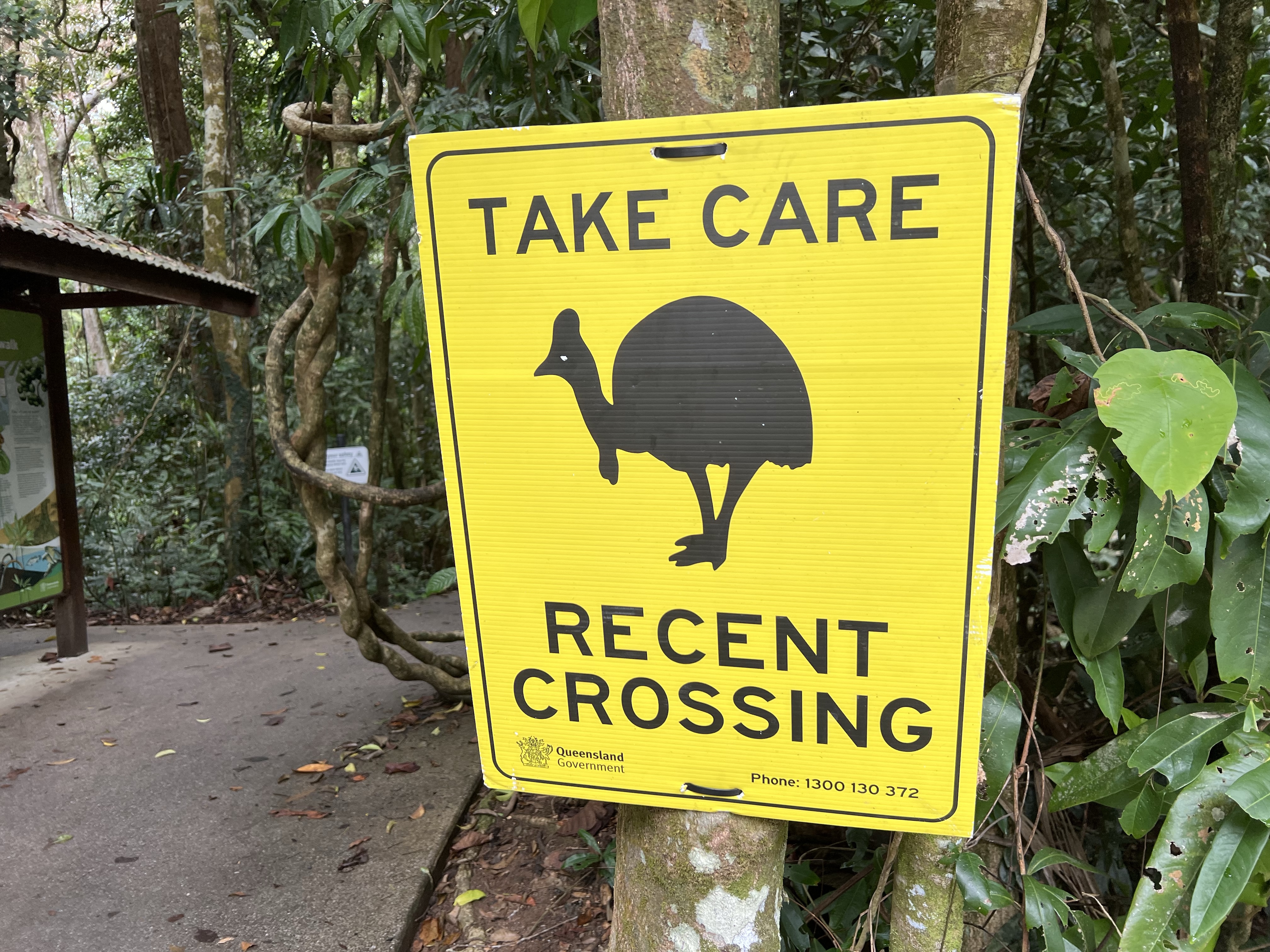
Signs for cassowarys are everywhere in North Queensland. Their images appear on murals, billboards, tour vans, and postcards. But finding one takes sweat (easy in a humid rainforest), perseverance, and patience.
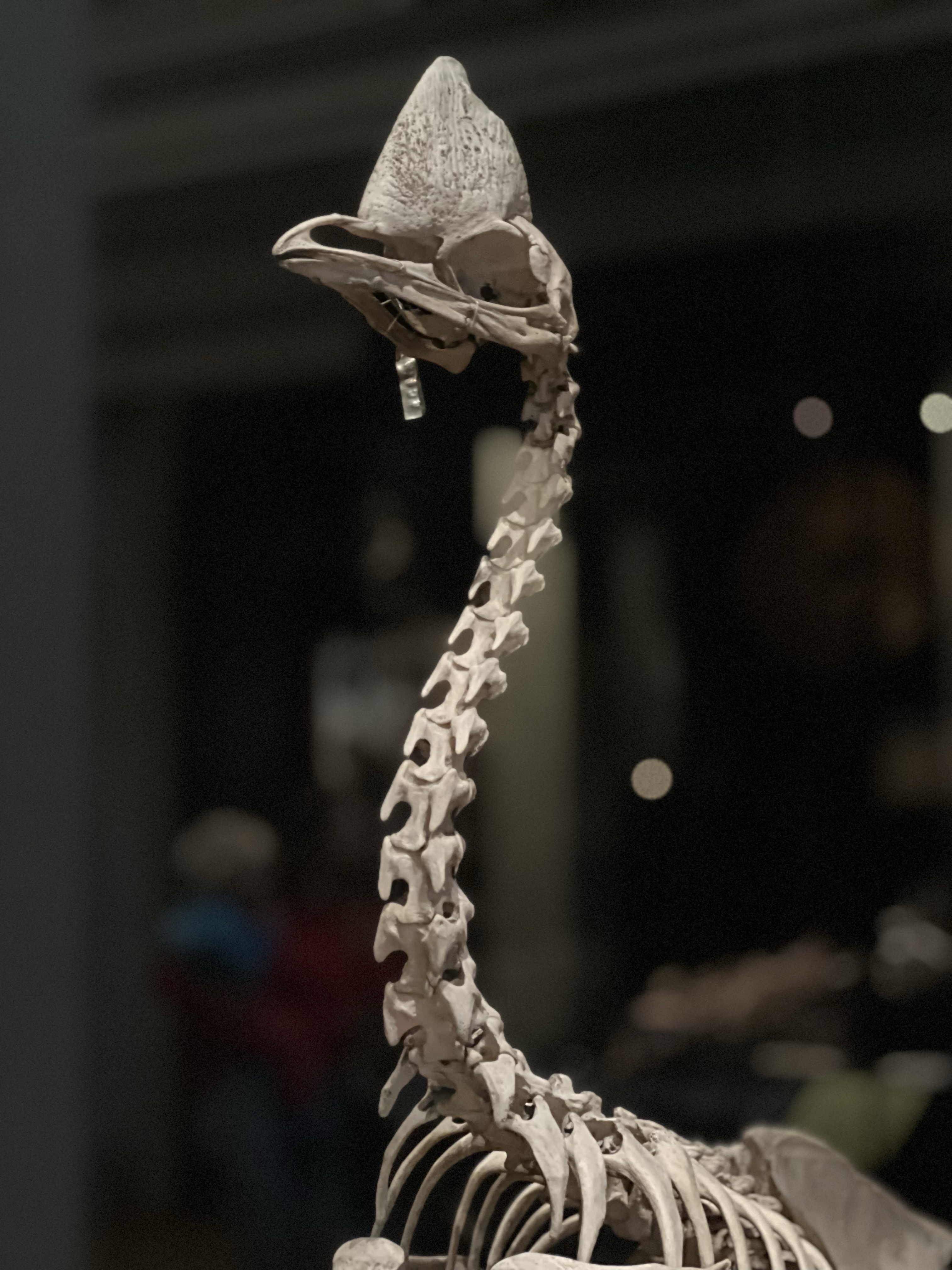
Cassowary skeleton at the Australian Museum.
We first tried for this much sought after bird by walking the boardwalk through Daintree National Park at the Marrjda Botanic Walk. We walked the boardwalk looking and listening for the Dinosaur Bird parting the vegetation with its massive casque or battle helm!
Unfortunately, Bigbird’s angry uncle didn’t show. So we headed out to bird in other parts of the National Park, vowing to return for another try in the afternoon.
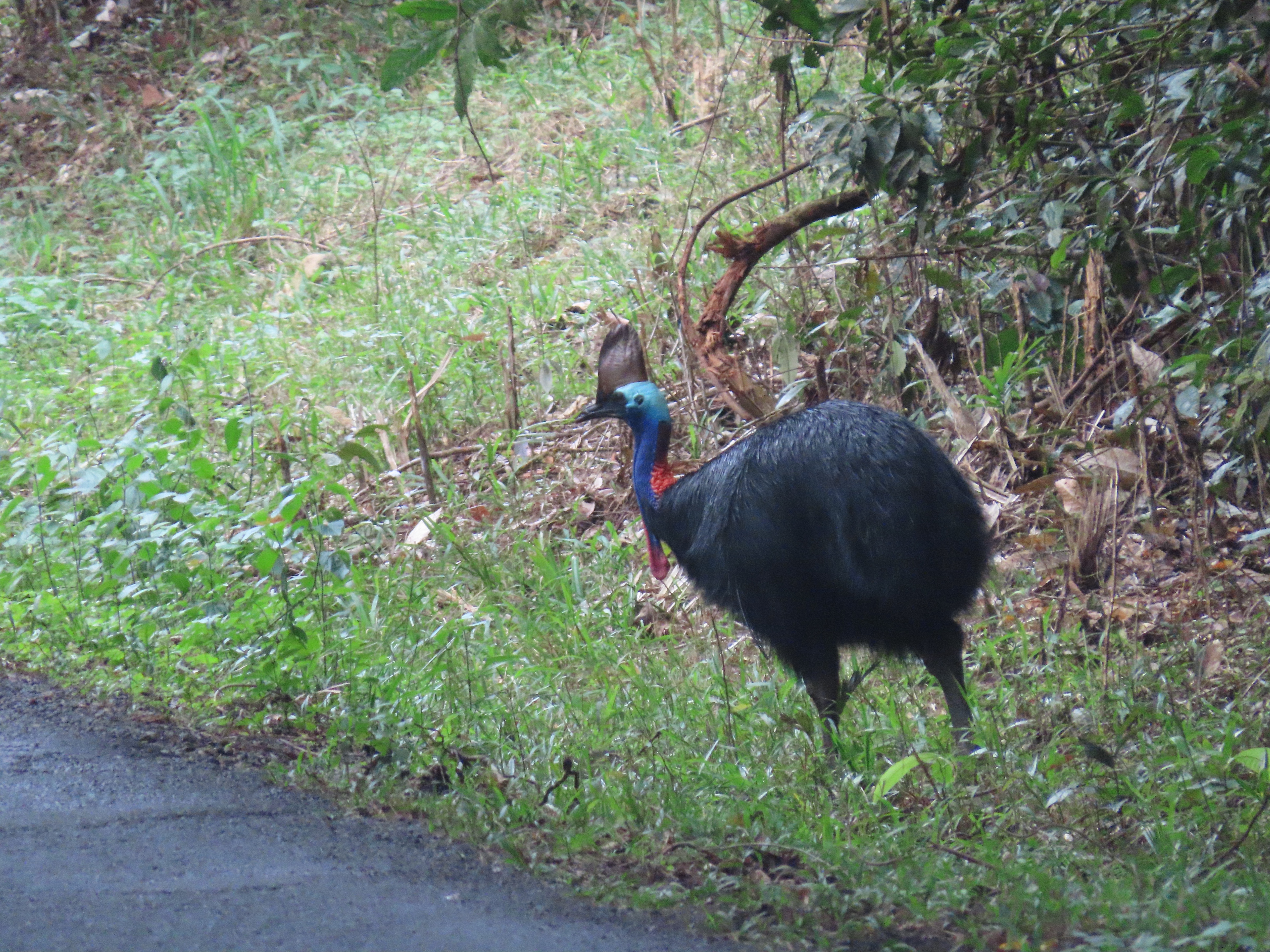
A few hours later we returned to the parking lot and as we pulled up, we were told that a Cassowary was on the roadside!
We quickly geared up and sped-walked down the road to where there was a line of people looking down the road. But we could not see the cassowary. We were told the bird had wandered into the forest.
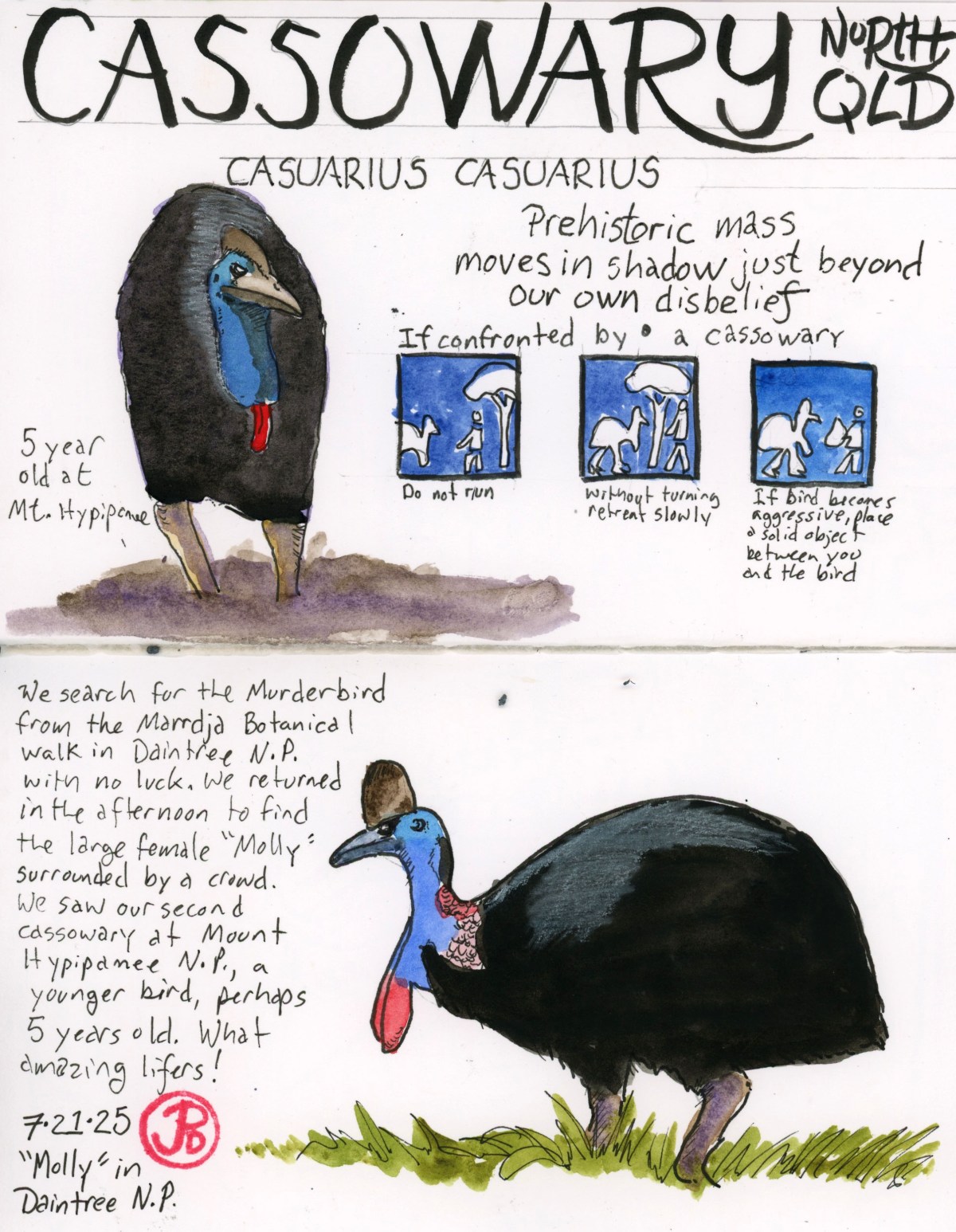
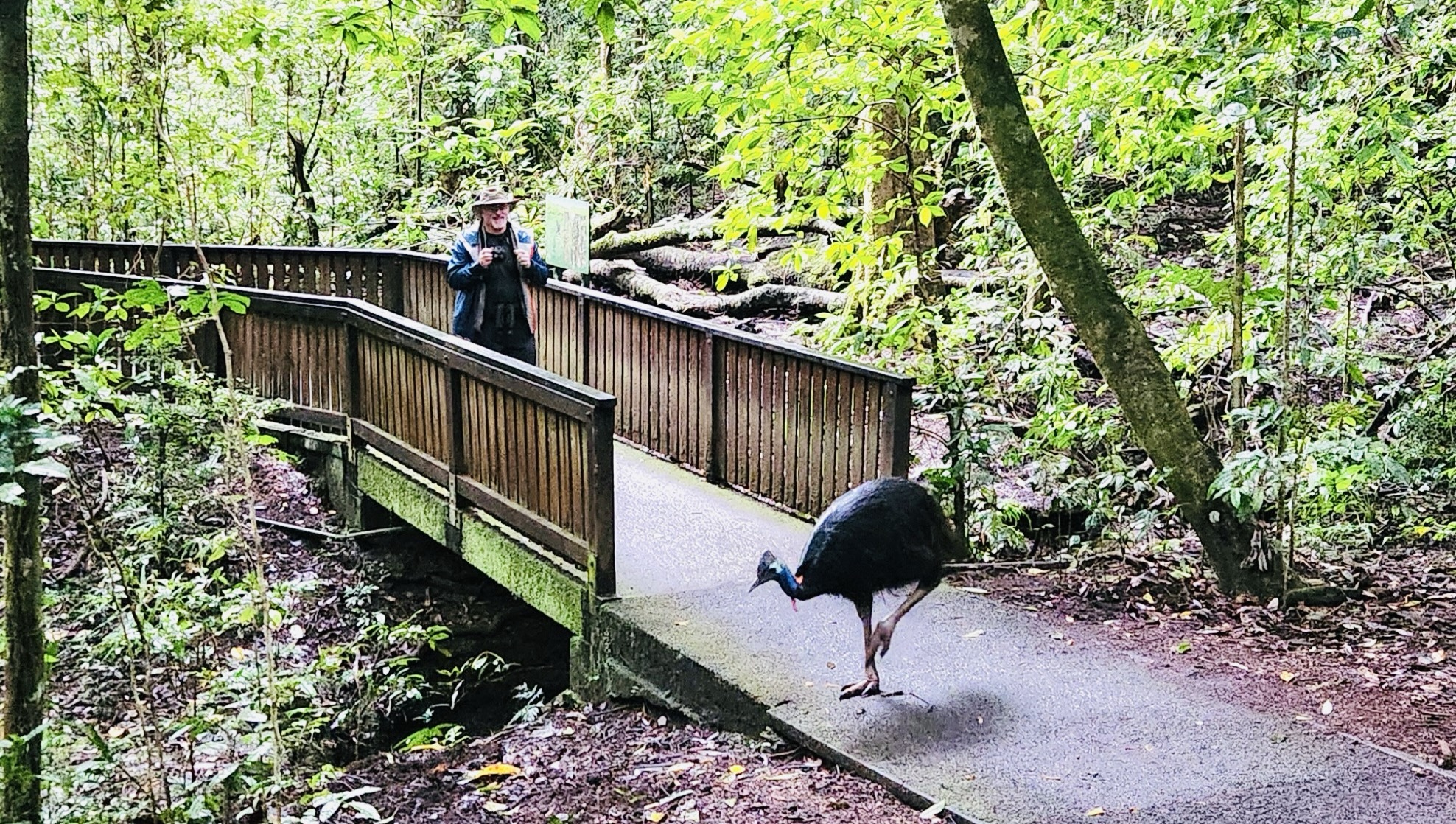
A few seconds later she returned to the grassy roadside. It was a she, in cassowarys, the females are larger and our guide recognized the bird by her casque size and shape. It was cassowary known as “Molly”.
Why couldn’t the cassowary cross the road?
She was trying to cross the road but the mass of people was preventing her from doing so. We all got good looks but “Molly” eventually retreating into the forest to wait it out until the crowds dispersed.
We were lucky enough to not have one cassowary encounter but two.
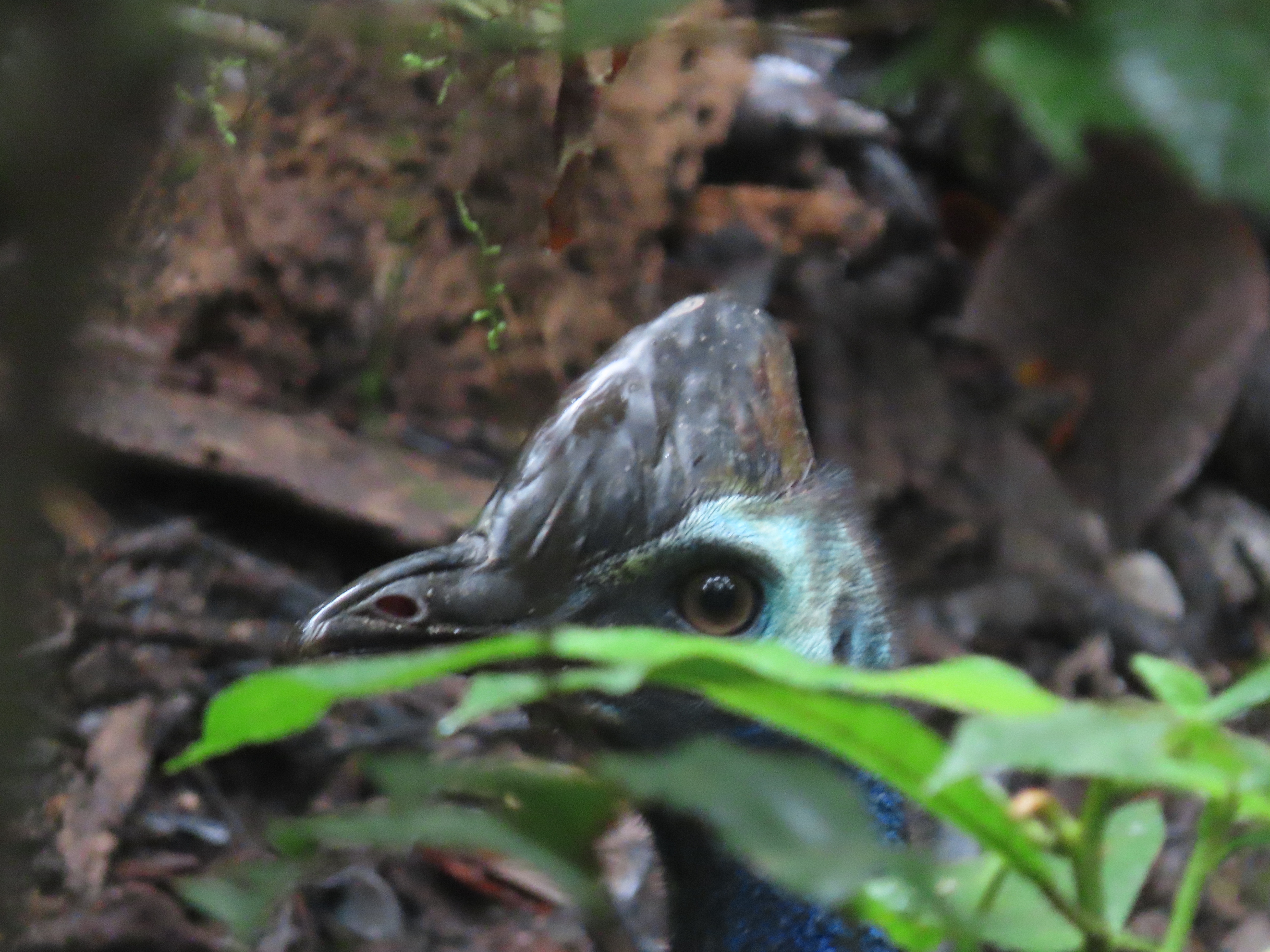
Our second Cassowary was seen in Mt. Hypipamee National Park, resting just off the trail. This bird was much younger than “Molly”, our guide estimated that this bird was about five years old.
In the young bird’s wandering it headed straight towards me. I stepped aside like a slow motion matador of peace and the bird crossed the path and heard down the bank to the creek.
Corvidsketcher watching a cassowary cross the road.
I watched the cassowary wanted down the hill to the creek where it stood in the cool water and drank. This was a great experience spending some time with the young Murderbird.
On day one of my North Queensland birding tour with FNQ Nature Tours I was picked up at my hotel in Cairns at 6:30 AM and met my fellow travelers: three Aussies from Melbourne and two Kiwis and our local guide James.
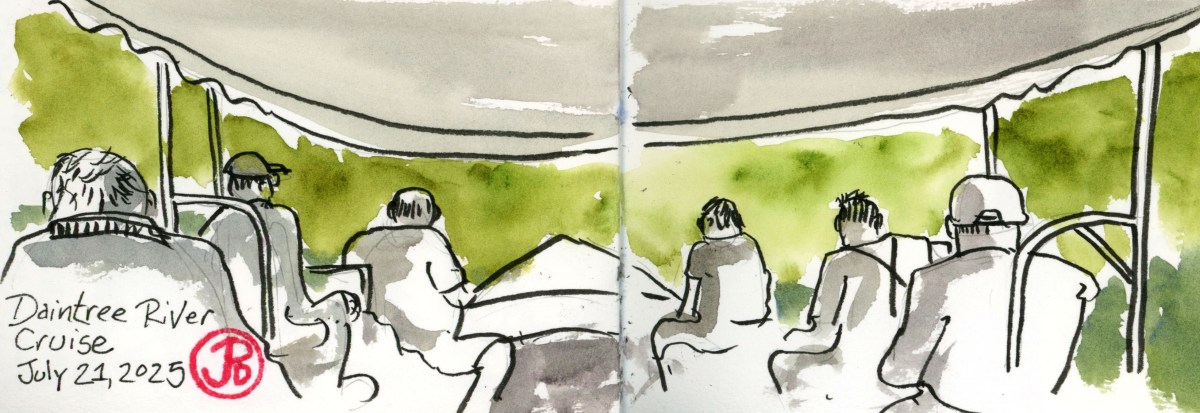
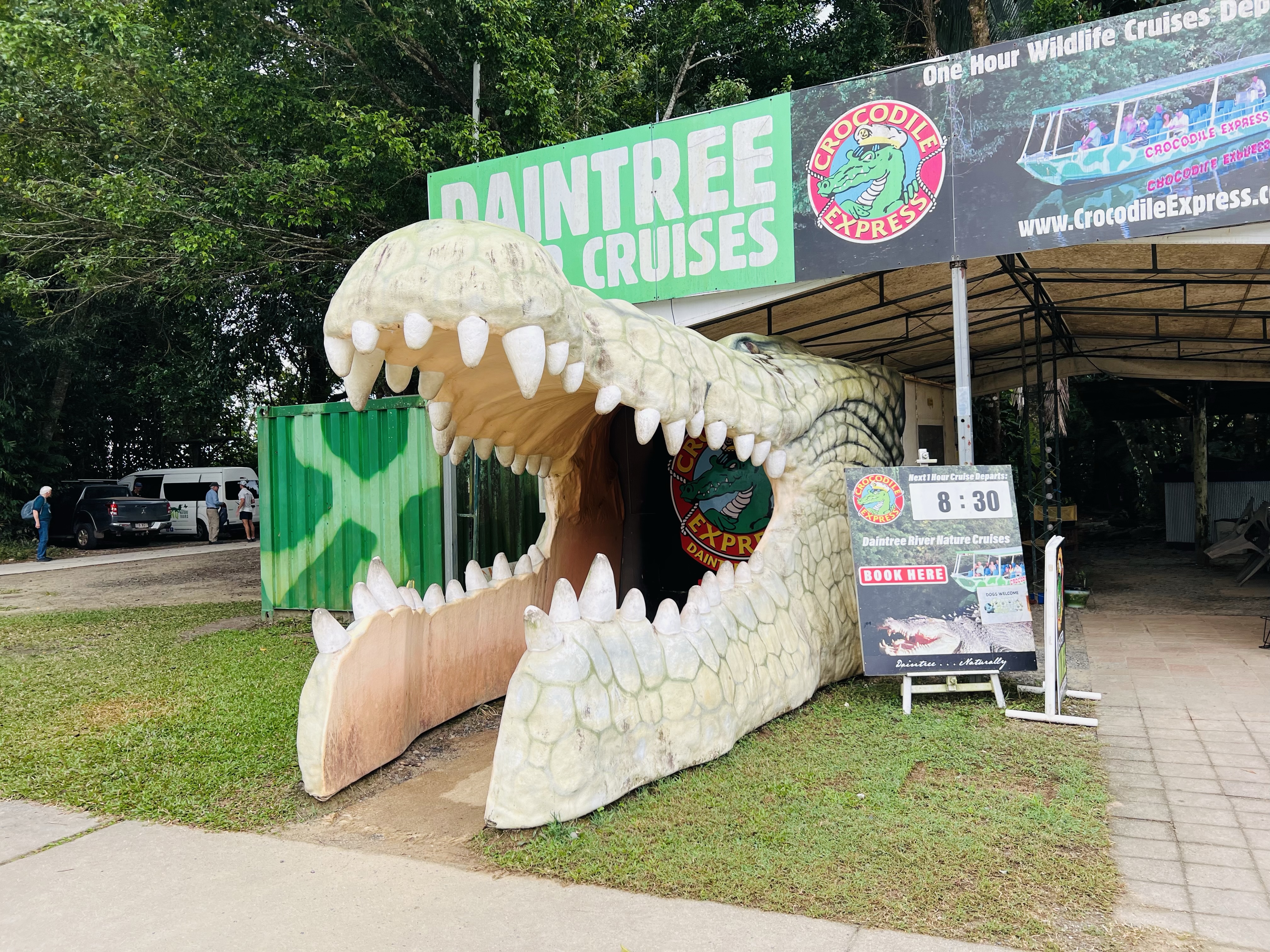
About forty minutes later we arrived at the banks of the Daintree River.
In case you didn’t know, saltwater crocodiles are the big draw on the Daintree.
While we were sure to see crocodiles, our main focus was on the avian life.
We departed from the dock and headed across the Daintree and went up a creek in search of Australia’s smallest kingfisher, the appropriately named little kingfisher.
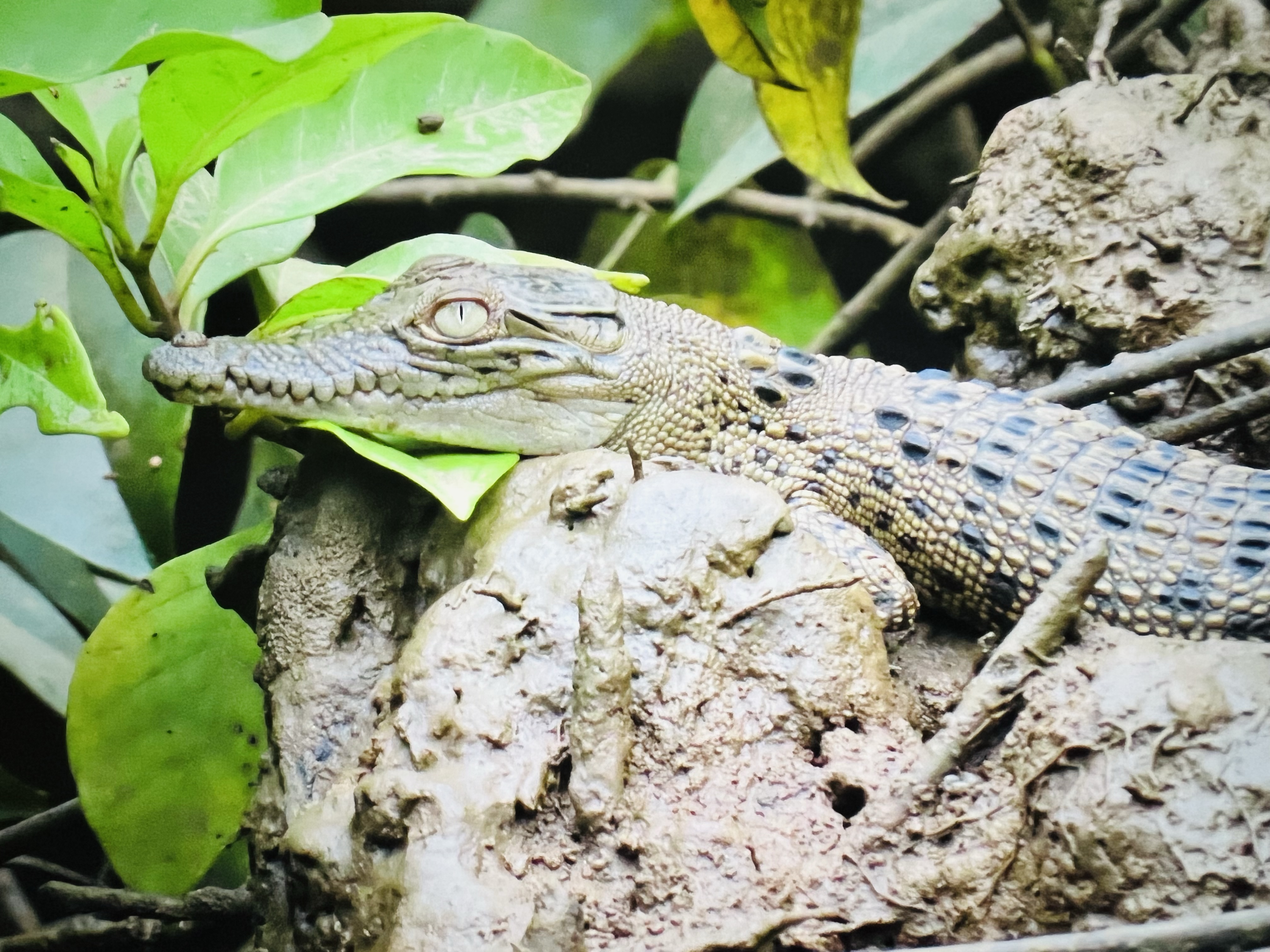
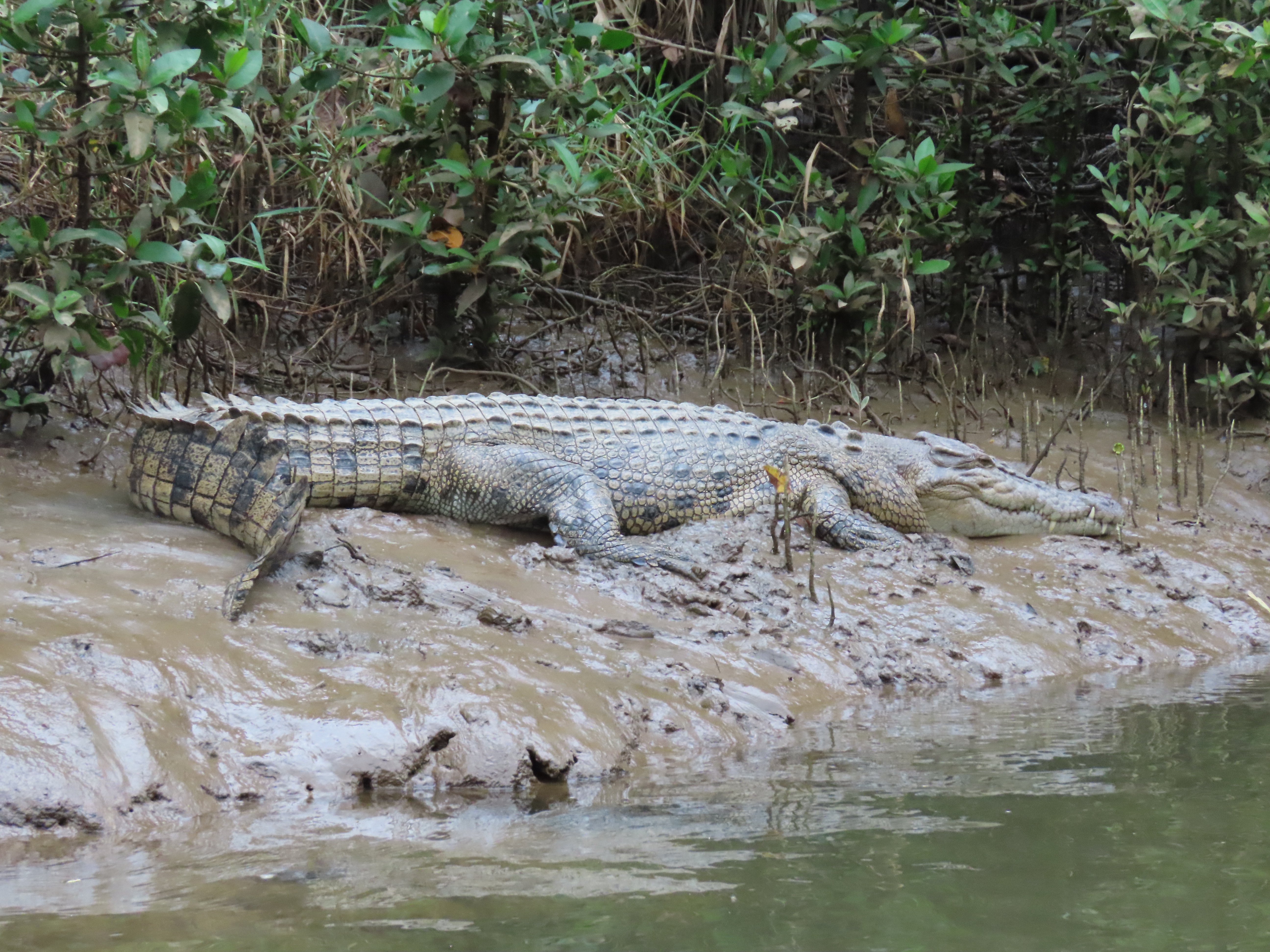
On the way there, our guide pointed out a small salty resting on the bank.
A small salty, perhaps a year old.
We peered down every small tributary and every low hanging branch. While everyone had their bins focused on the tributary on the port side, I peered over to the starboard and there it was, perched on a limb over the creek.
A little kingfisher photographed at the Botanical Garden in Cairns.
After getting more looks at the little kingfisher, we headed back to the Daintree to see bigger crocs.
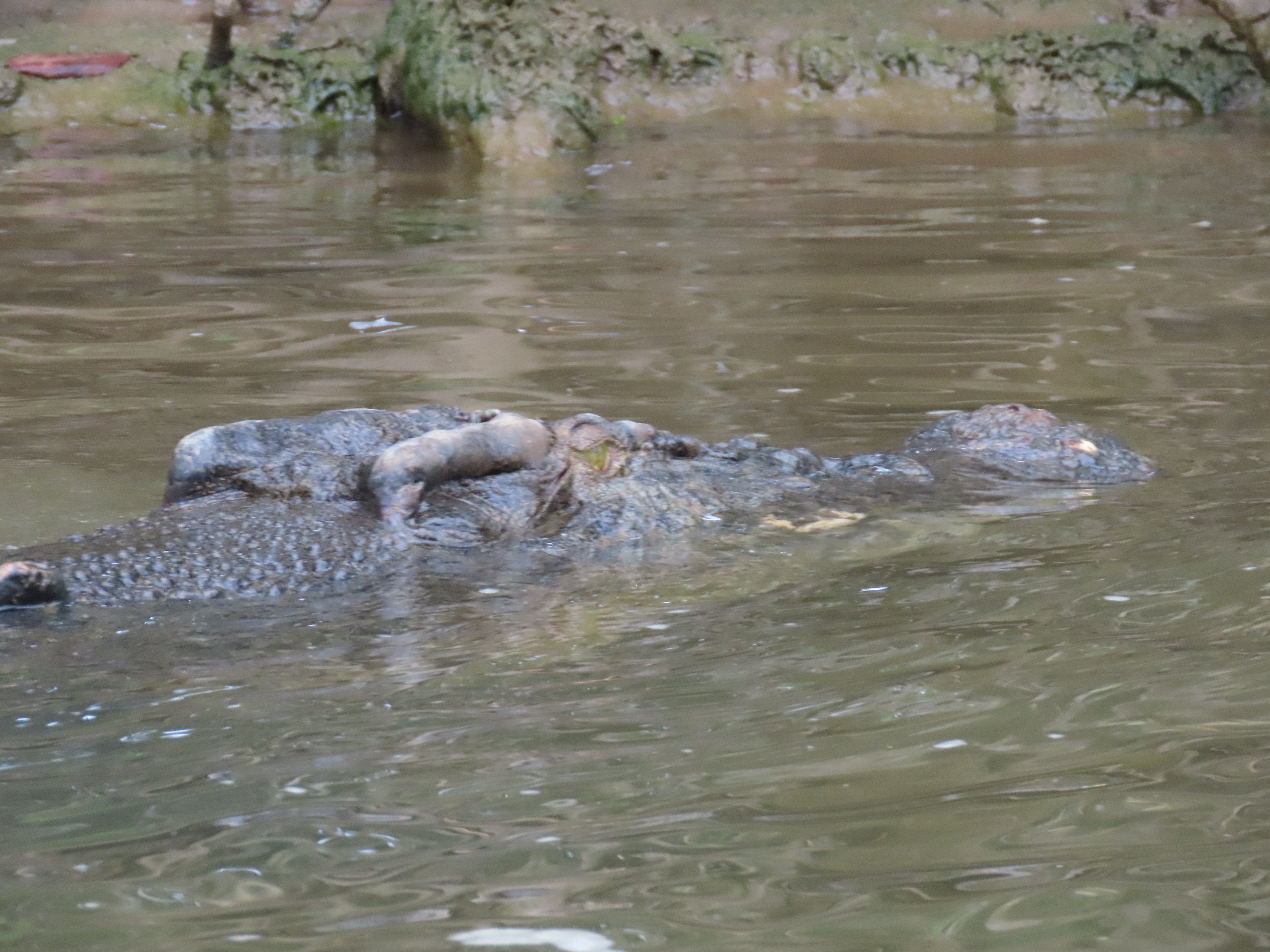
The king of the crocs on this stretch of the river is a large male with three teeth named “Scarface”.
The three-toothed dominant male of the stretch of the river: “Scarface”.
After getting looks at “Scarface”, we headed up another small creek to get a look at a resting female.
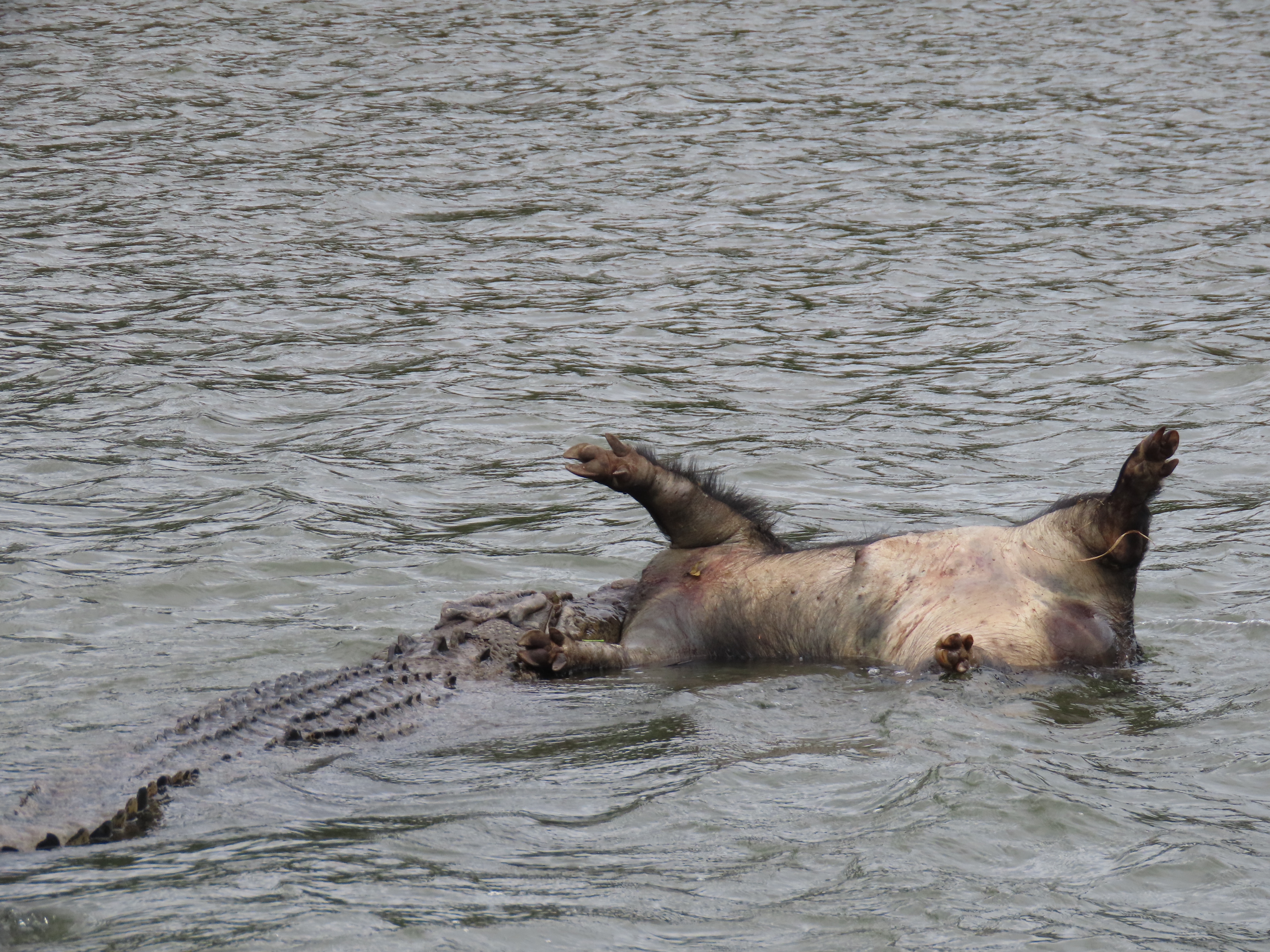
Our most interesting sight of the morning, and one our guide had never seen, was an interloping male carrying a bloated feral pig across the Daintree.
Feral pigs, as in parts of the United States, are a major problem in Australia. They eat and destroy crops and destroy native habitats. The open season for hunting pigs is year round. It is assumed this is how a feral pig made it into the river and into the jaws of a hungry male salty.
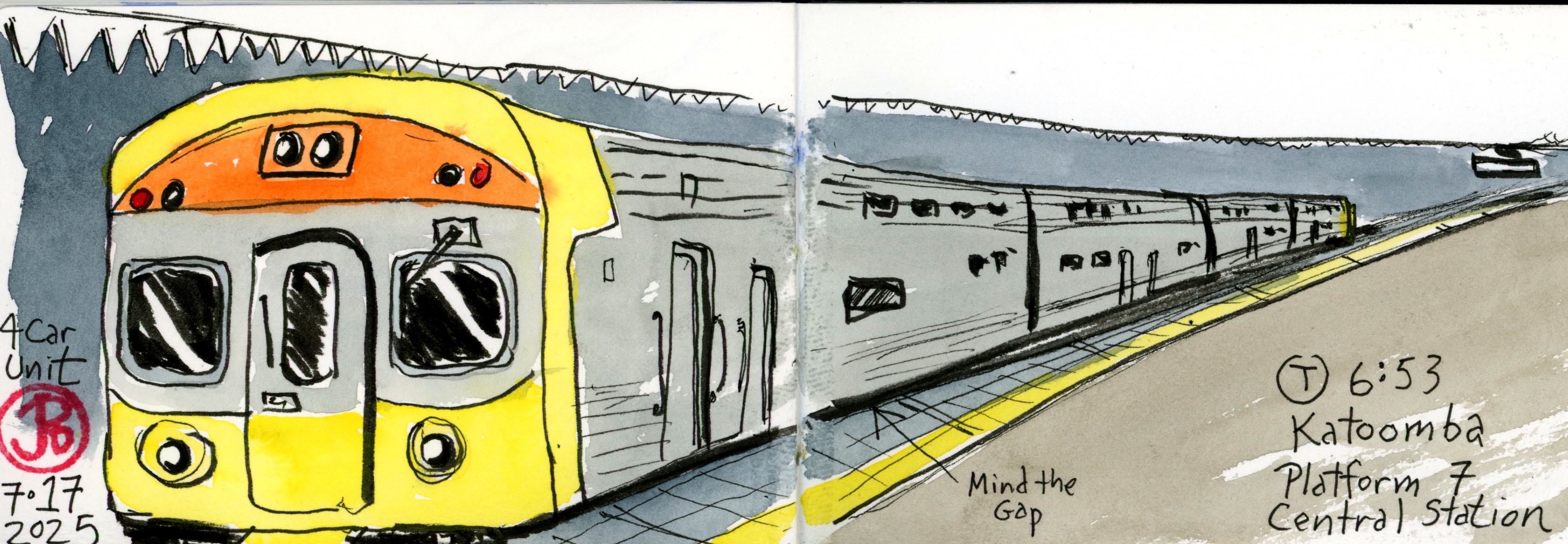
I caught the 6:53 train from Sydney Central Station to Katoomba, gateway to the Blue Mountains.
I really didn’t have solid plans, just a day trip with hiking, nature loafing, birding, and sketching. And these could happen in any order.
Central Station is a five minute walk from my digs and it was already buzzing with weekday commuter bustle. I was a little early so I sketched my train at Platform 7.
After a two hour train ride (which I birded along the way) I detrained in Katoomba and walked down the high street toward Echo Point.
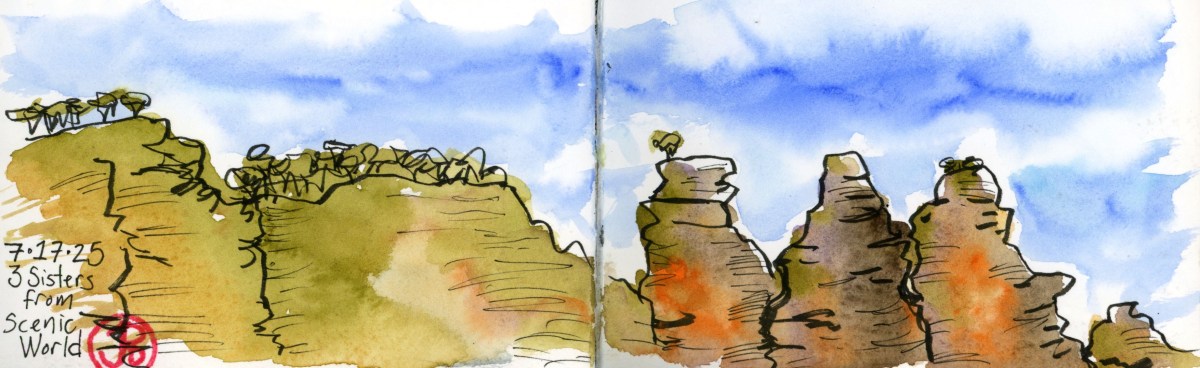
This is an extremely popular place to view the vast sweep of the Blue Mountains and the limestone monoliths know as the Three Sisters (certainly the Blue Mountains poster children).
Although it was 9:30, there were a flock of people here already and I felt a tour bus (or three) was about to arrive any minute so I headed out to the trails, a sure fire method for decreasing the masses.
As soon as I was on the trails it seemed I had the National Park to myself. Here I heard the birds and experienced a new fauna and flora. Like what were those plumb greenish looking birds flying across the trail (more about them later).
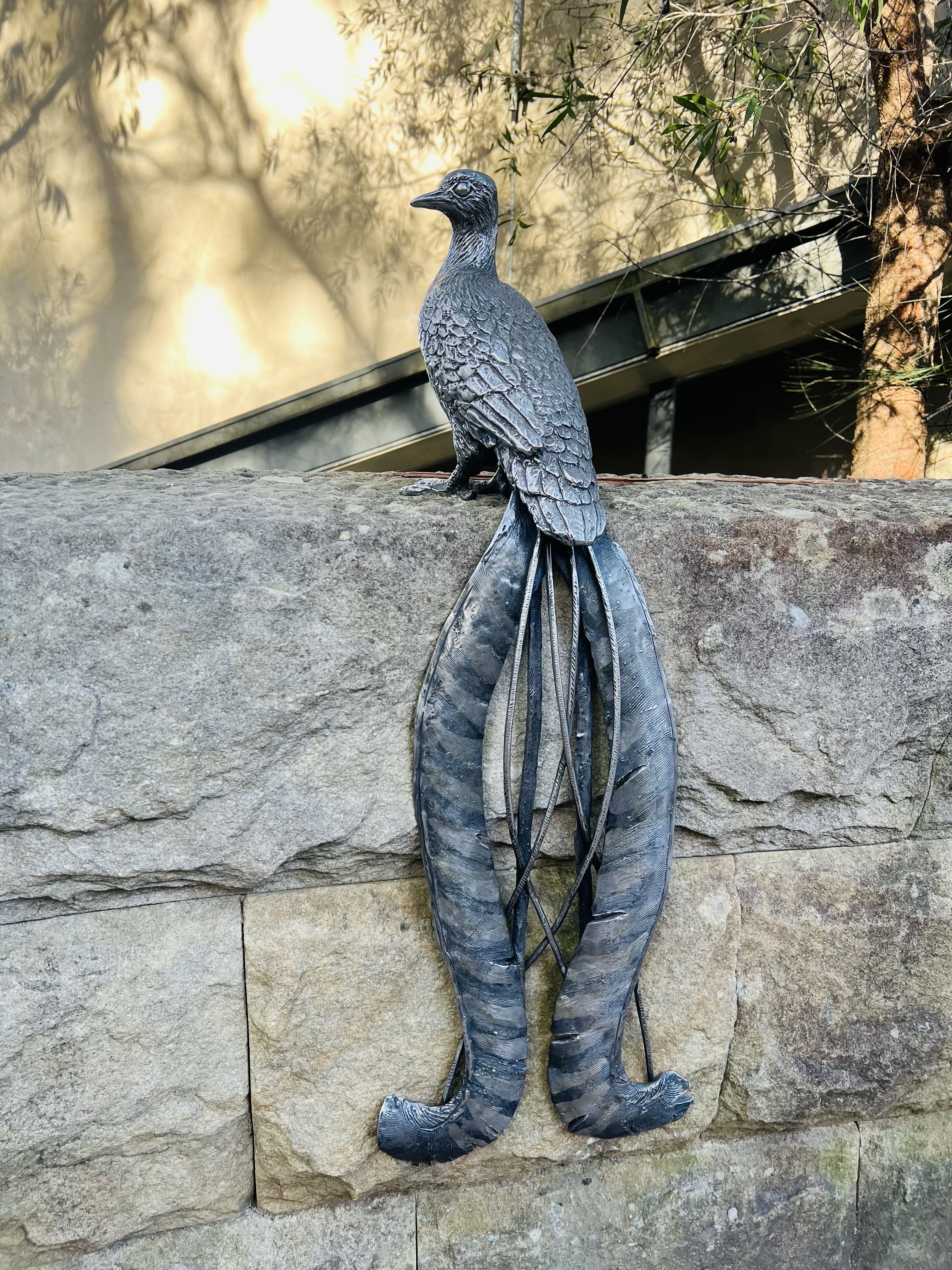
I headed to an overlook and heard the loud but distinctive calls of the superb lyrebird, the poster bird of the Blue Mountains.
The avian star of the Blue Mountains and a Sir David Attenborough favorite: the superb lyrebird!
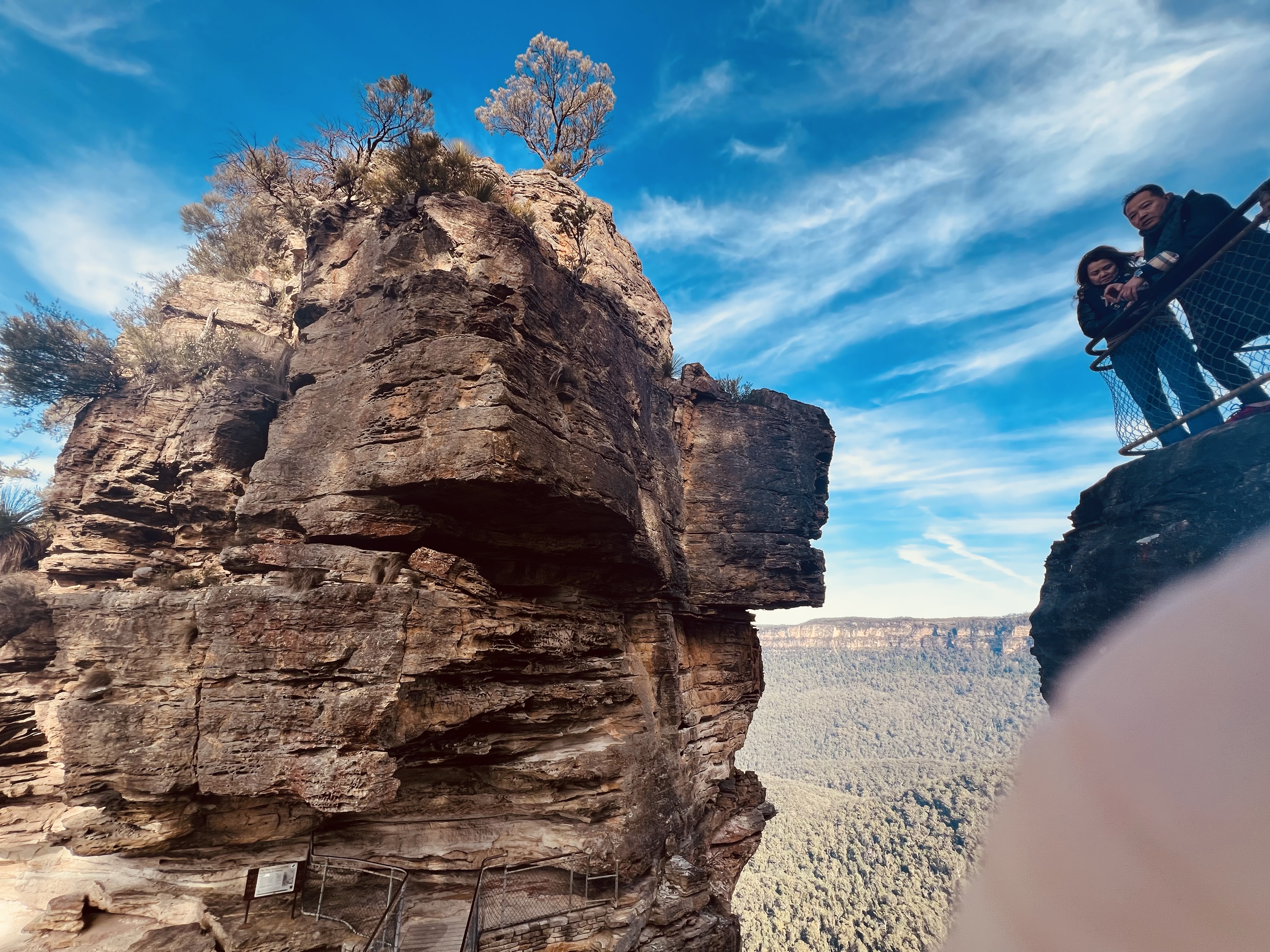
I then back tracked and went to another viewpoint of the Three Sisters. I was at the top of the Giant Staircase. It was over 800 steps down to the valley floor. The steep stairway was constructed in 1909, hewn out of sandstone with sections made of metal stairs.
At this point I had to decide if I was going all the way down and hike another two to three hours to Scenic World. This was really a way to avoid the masses. I swear I could hear another tour bus arriving at Echo Point! Why not, I thought as I took my first step.
One of the Three Sisters at the top of the Giant Staircase. I think this is Madge. Only 788 more steps to go.
As I took the first flight of steps I passed a young lass who was butt-scooting down one trend at a time. “You’re brave,” she commented. “Or stupid,” I replied.
I guess I’d soon know the answer if I didn’t roll an ankle or fall to my death before I reached the last step.
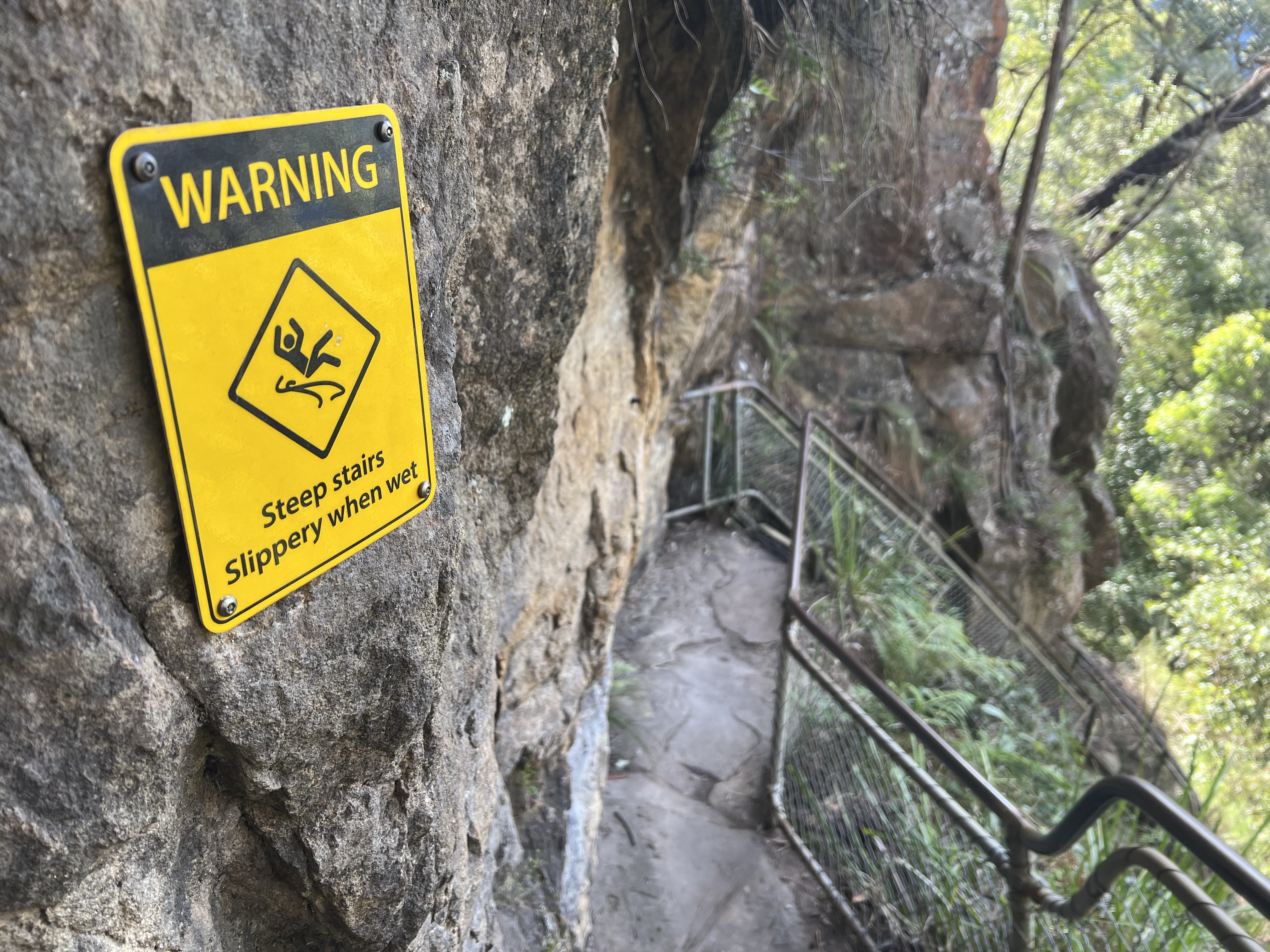
This warning is no joke, these steps are step and don’t meet OSHA standards.
I finally made it to the end of the Giant Staircase with my quadriceps and calves burning (They were still burning after three days giving me the gait of a person 25 to 30 years my age!)
I rambled through the forest with the sandstone cliffs rising above through the gum trees.
And those plumb green birds? They were another Attenborough favorite: the satin bowerbird.
Circular Quay is the epicenter of Sydney. This is where the First Fleet landed in 1788 and established first settlements at the Rocks.
Today it is a bustling transit hub bringing together trams, trains, and ferries. And bookended by two iconic architectural masterpieces: the Sydney Harbour Bridge and Opera House.
I first became aware of the quay in Eric Bogle’s antiwar song, “And the Band Plays Waltzing Matilda”. The song is narrated by an Australian man who fights in World War I in the battle of Galipoli, where he loses both legs. Here are a few verses:
And when the ship pulled into Circular Quay I looked at the place where me legs used to be And thank Christ there was no one there waiting for me To grieve and to mourn and to pity
And the Band played Waltzing Matilda When they carried us down the gangway Oh nobody cheered, they just stood there and stared Then they turned all their faces away
On some days a massive cruise ship is docked in the Quay. On my visit there was a Princess Cruise ship disgorging its many passengers and their equally massive bits of luggage.
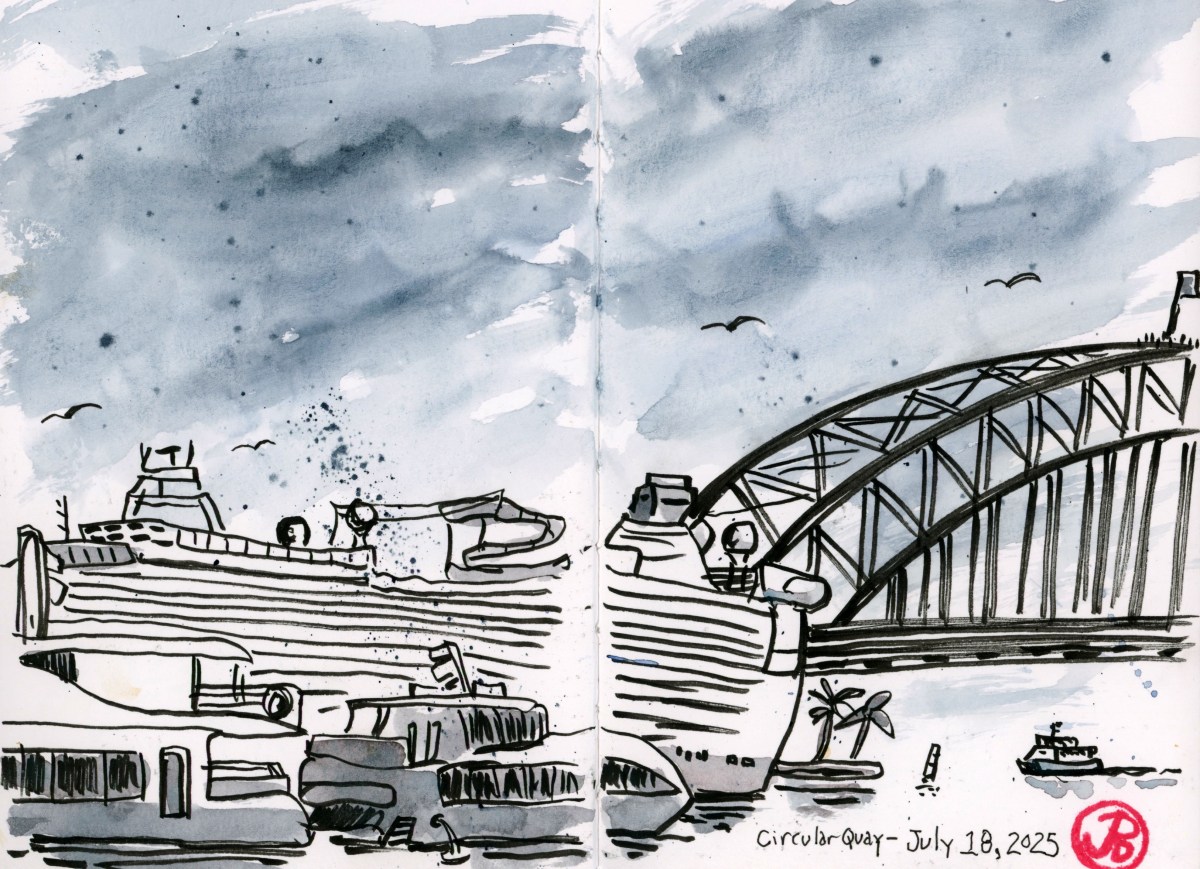
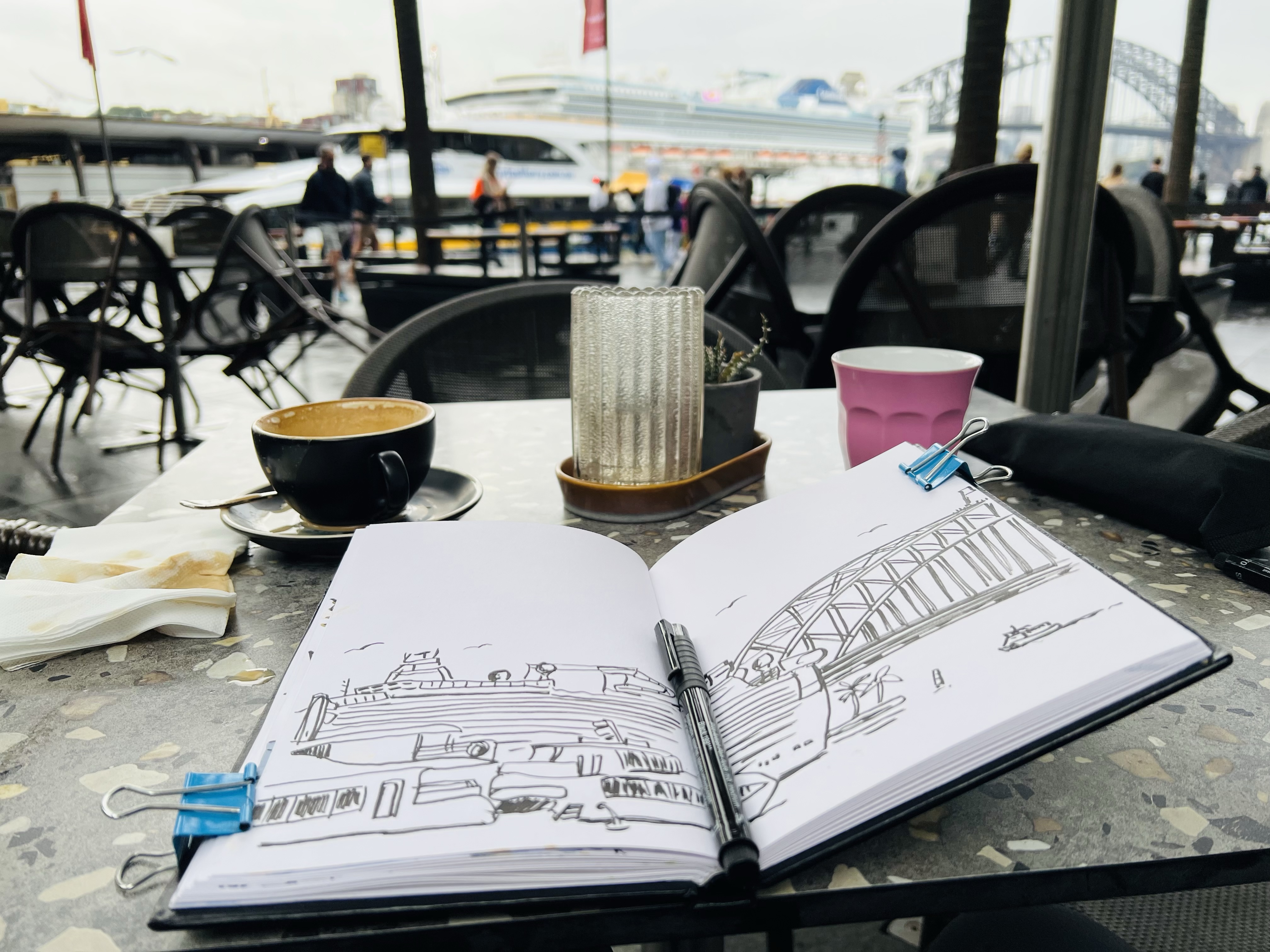
I was going to take the ferry to Manly after my Opera House tour. Before the tour, as a light drizzle puddled the pavement (it is winter after all), I sat under an umbrella at a cafe and sipped a cappuccino and started to sketch the view of the Quay before me (featured sketch).
The size of the cruise ship almost blots out the Sidney Harbour Bridge. When you are on the starboard side of the ship while it is at the terminal, the size of the floating city completely blots out the Opera House. I somehow wanted to convene it’s massive, eclipsing size in my sketch.
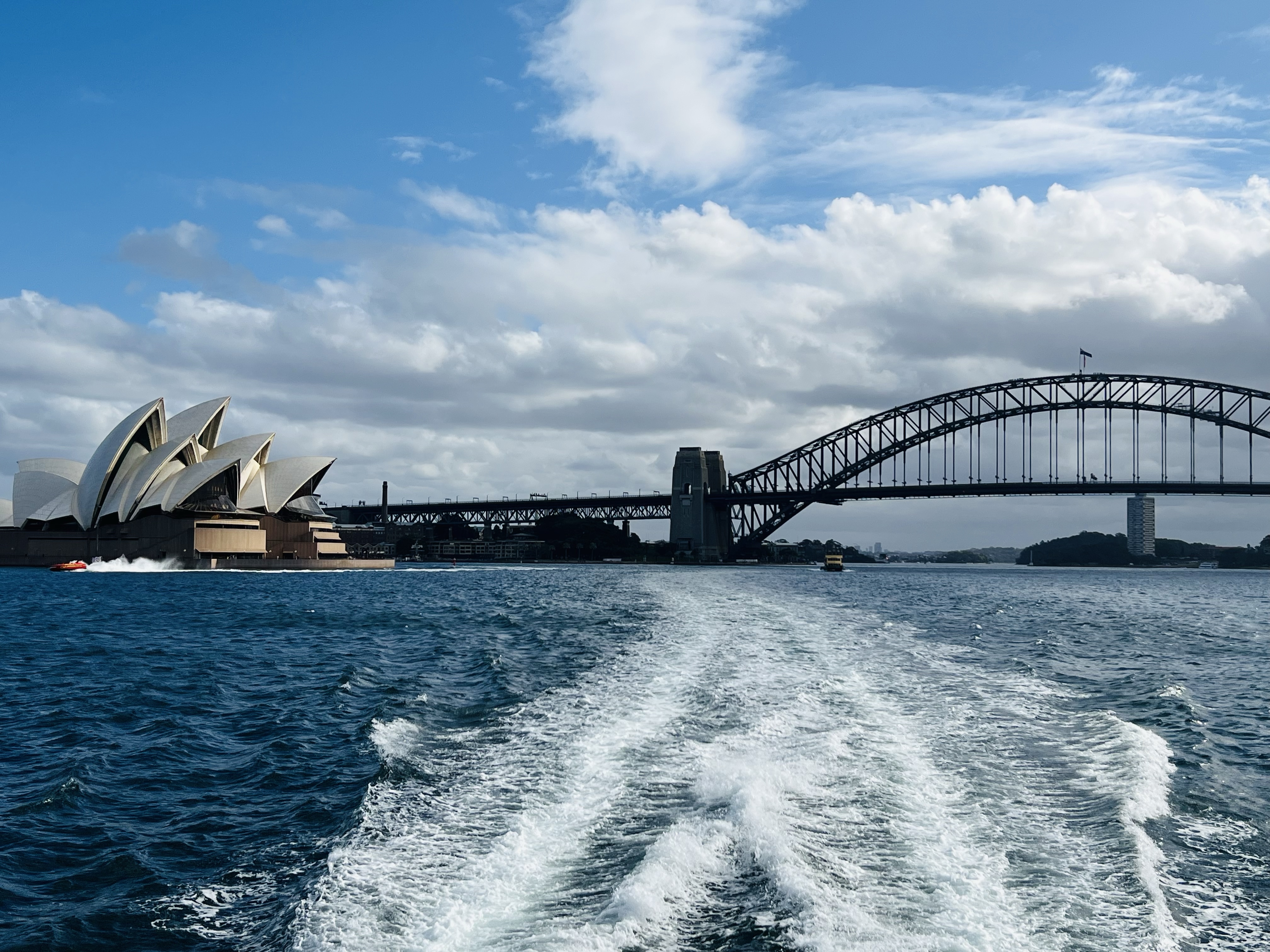
The view from the stern of the ferry leaving Circular Quay to Manly is hard to beat.
Sydney is known as the Emerald City because it has so many parks and there is none bigger than Centennial Park (founded in 1888, one hundred years after the First Fleet entered Sydney Harbour.)
This park had been on my birding list for months before my arrival. It is an urban birding Mecca.
While I was birding in the massive park between the Duck Pond and Lachlan Swamp I heard an unworldly racket coming from the gum trees.
I saw what I took to be a large bird flying from one tree to another. I had to get a closer look. Perhaps another lifer!
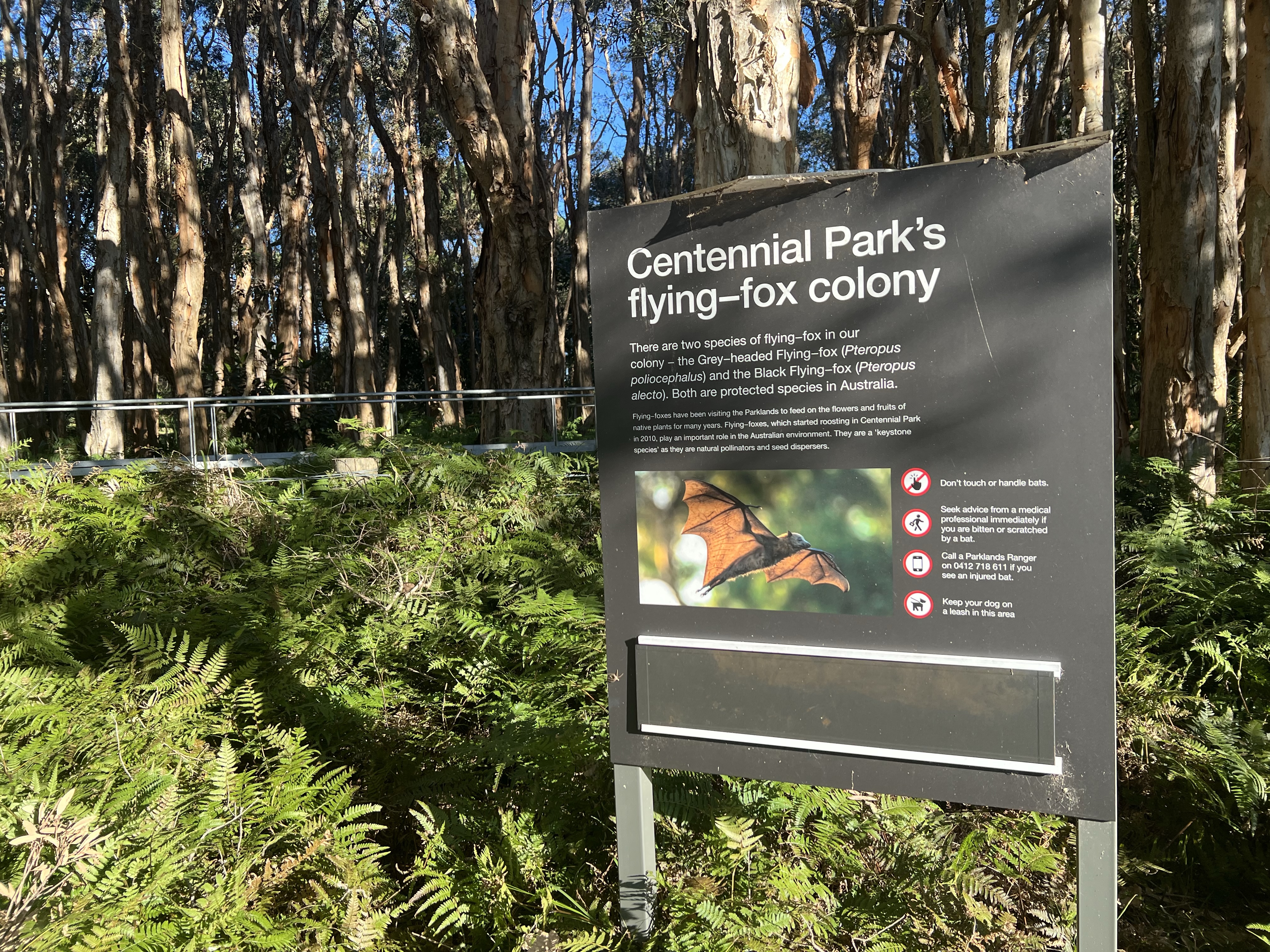
What I stumbled upon was Centennial Park’s flying-fox colony!
The gum trees were adorned with these mega bats, all making a cacophonous symphony with individuals switching trees and other resting.
This is Sydney’s largest flying fox colony with numbers between 5,000 to 45,000 individuals.
This was another “I’m not in Kansas anymore!” experiences as we only have microbats in the Northern Hemisphere. I figured anything that I saw flying in the Australian skies would be feathered.
The bats that roost in Centennial Park are grey-faced and black flying-foxes.
I pulled out my sketchbook and drew the roosting bats in the gum trees, the result looked like a very odd Christmas tree. My sketching was in the presence of an observant perched kookaburra.





 Corvid Sketcher