Image

Bondi to Coogee

A former parent from Sydney highly recommend the four mile coastside walk from Bondi Beach to Coogee and even with overcast skies, the walk was absolutely stunning. And also very birdy.
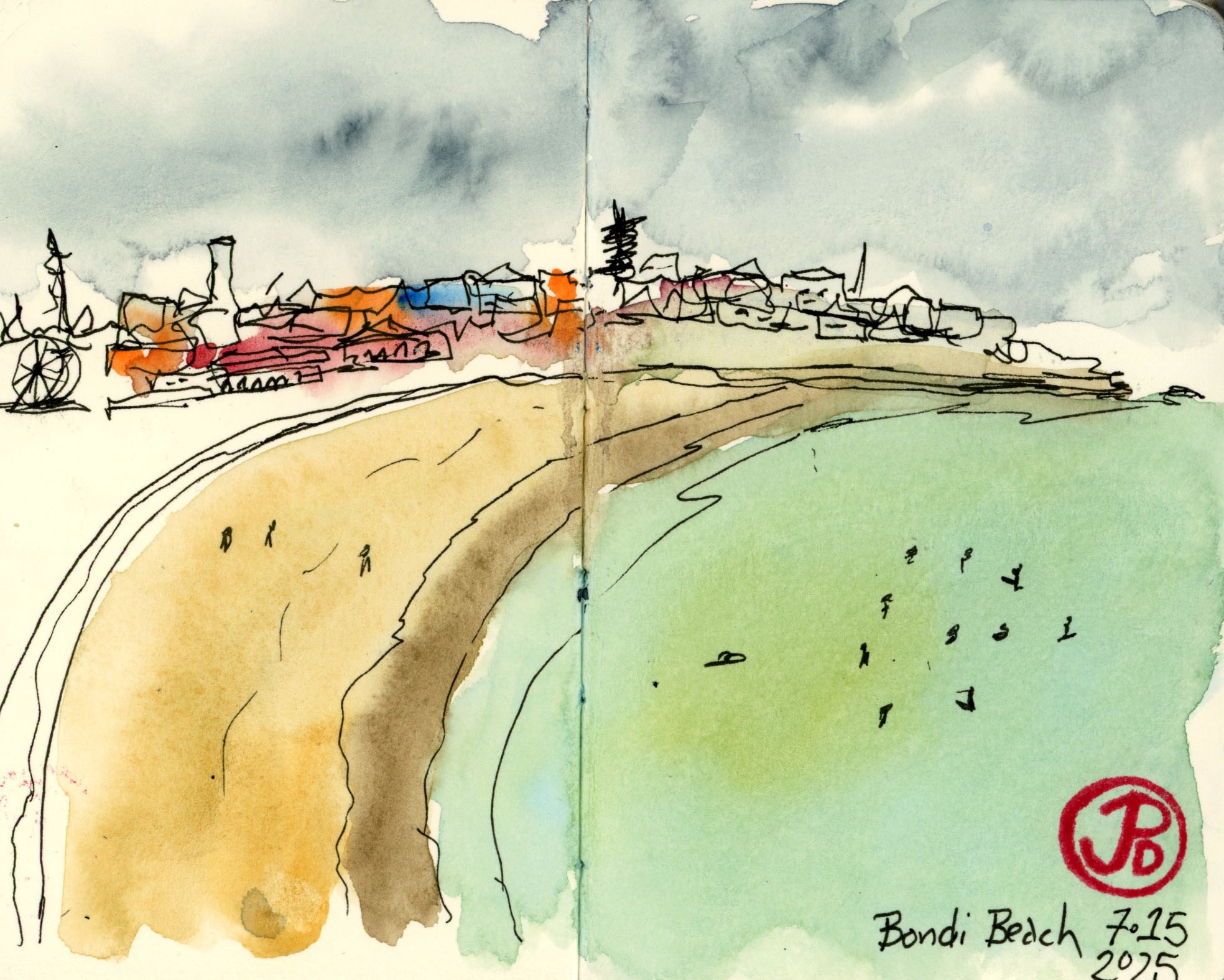
A quick sketch of Bondi Beach with its many winter surfers.

I took two buses from my digs in Surry Hills, via Bondi Junction to Bondi Beach. The beach was all Australian but the buildings around it seems more Blackpool or Brighton, showing Australia’s English influence. The windy cold-gray weather even suited the English seaside.
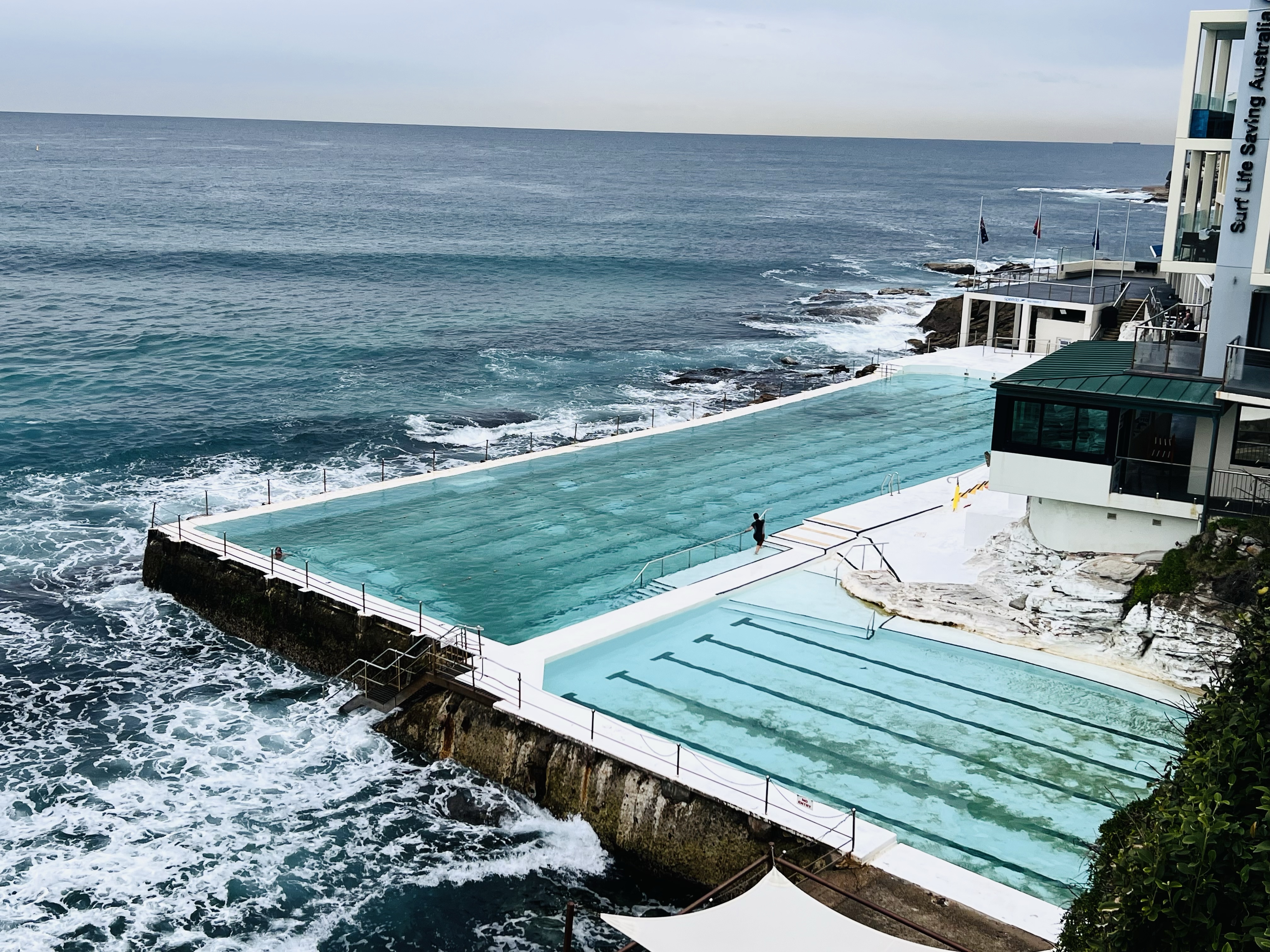
Oceanside swimming at Bondi.

I was starting my coastal walk here and heading south toward Coogee. I had a few birds on my wishlist: Australasian gannet and superb fairywren topped the list.
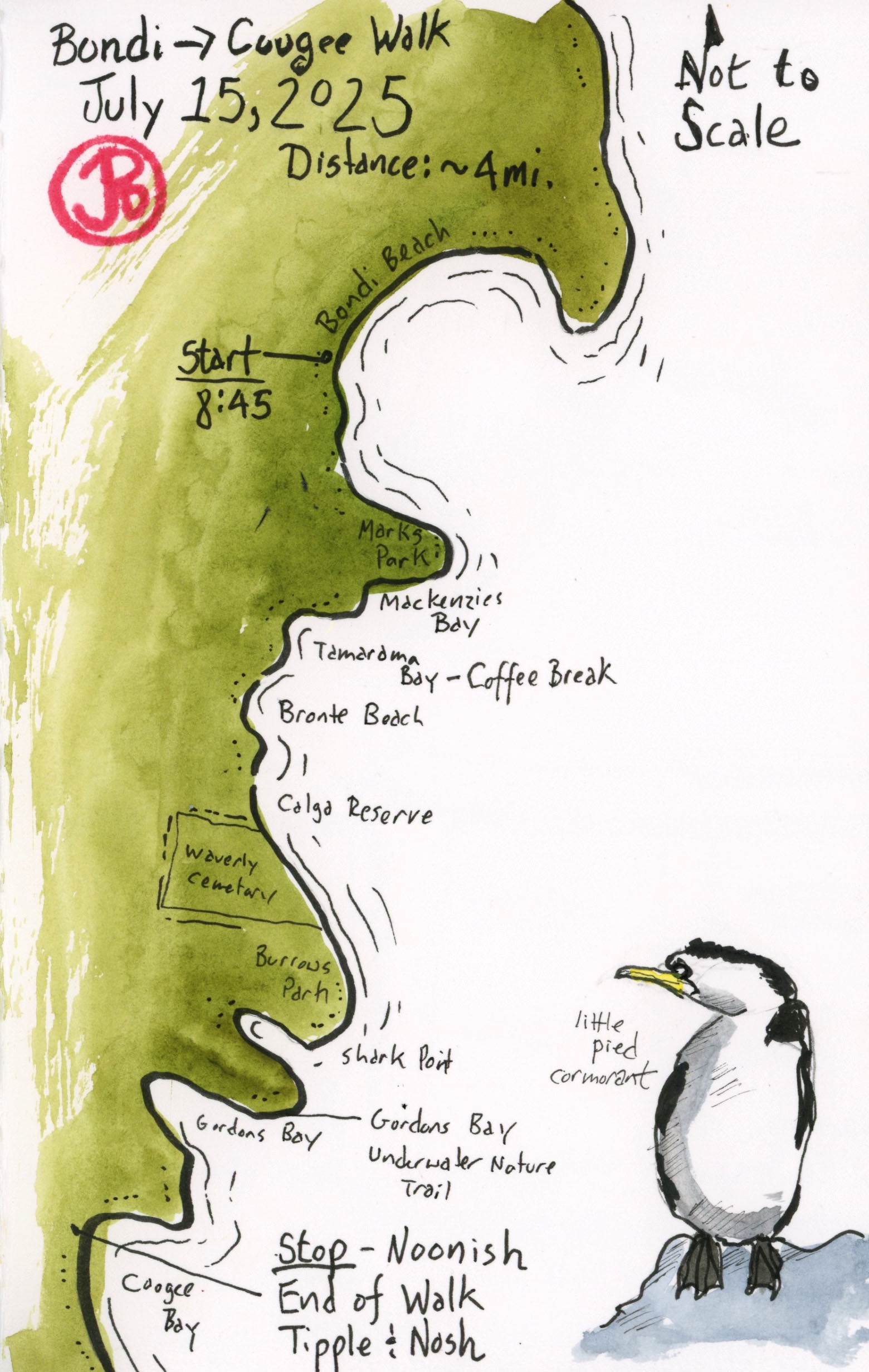
A post trek map of my journey.

I had the Pacific Ocean on my left as I headed south toward the town on Coogee and I kept one eye out to my left for gannet and looked and listened as I passed vegetation for the fairywren.

I came to a point close to Bondi Beach when I saw the telltale sign of a gannet just off the beach. Lifer!

Now it was time to find the 2021 Australian Bird of the Year, the superb fairywren.

As I walked by every trail side bush, I listened for the tell-tale trill of a fairywren, even though I had never heard one before.

The nice thing about the walk is there are plenty of places to stop and have a cup of joe. I stopped at the cafe at Tamarama Beach and had a cappuccino and sketched the scene over my seaside table.
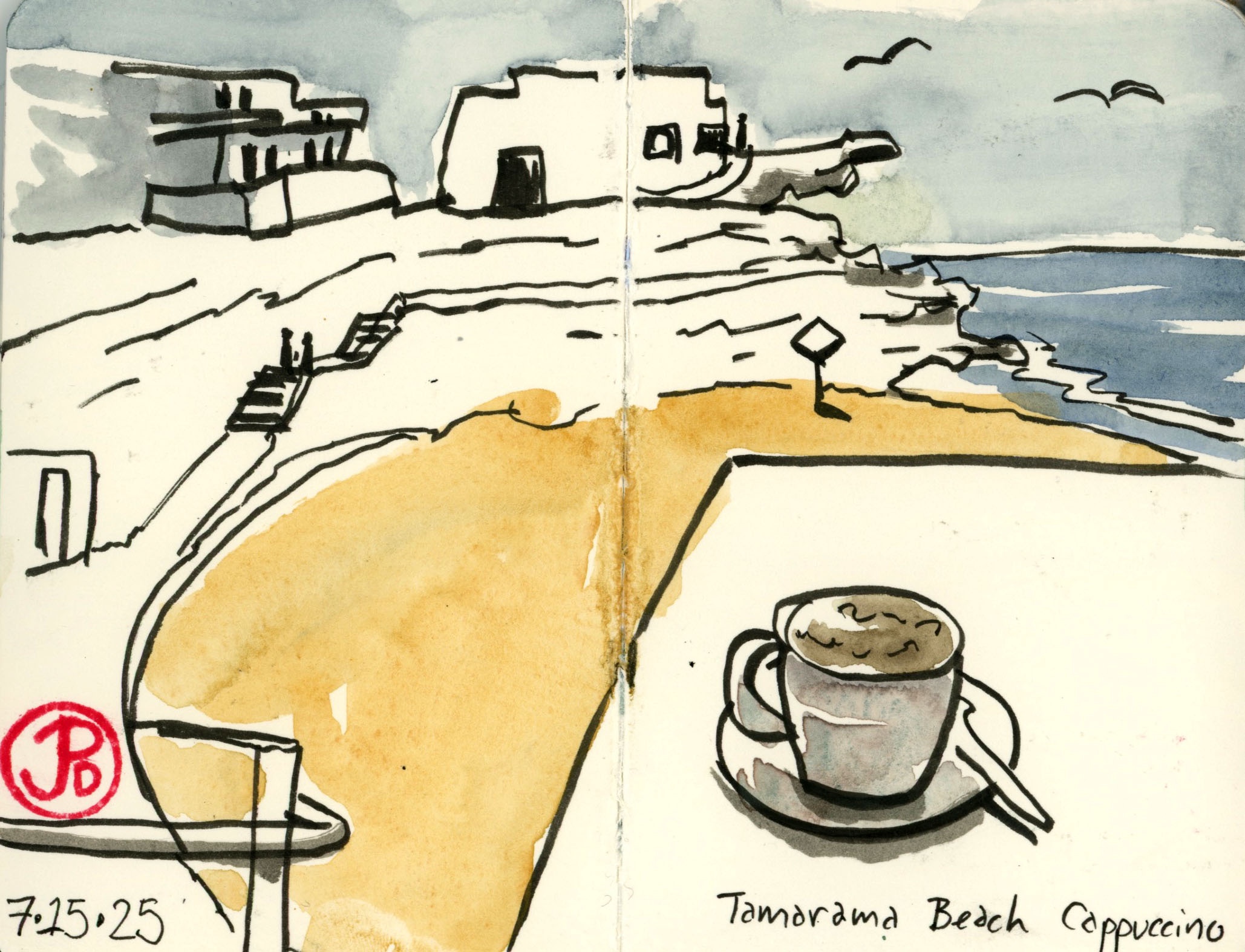
After finishing my cappuccino, I continued my southward journey towards Coogee. As I neared Waverly Cemetery, the bushes grew denser and more birdy. I heard a high trill nearby and knew there must be fairywrens.
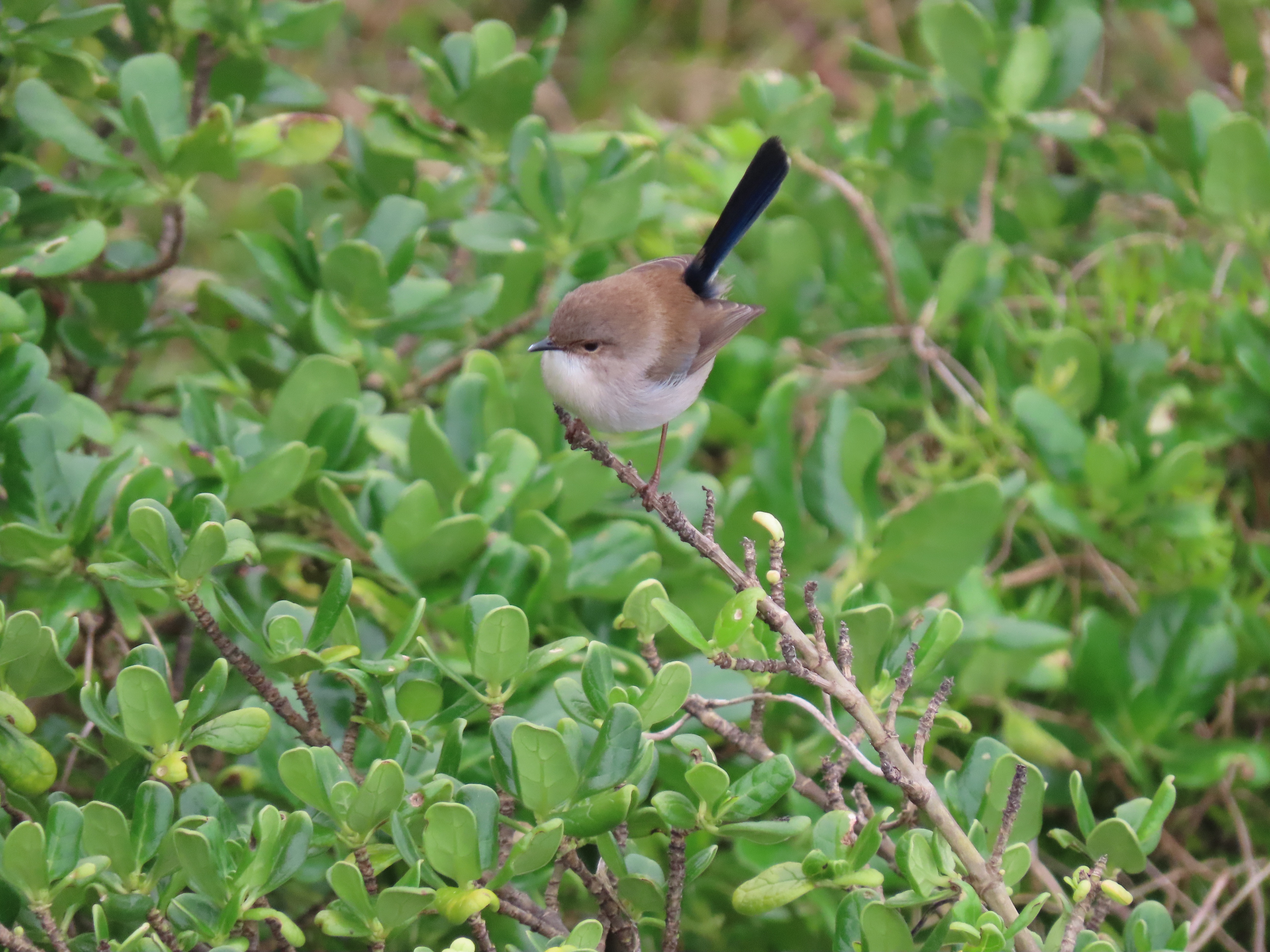
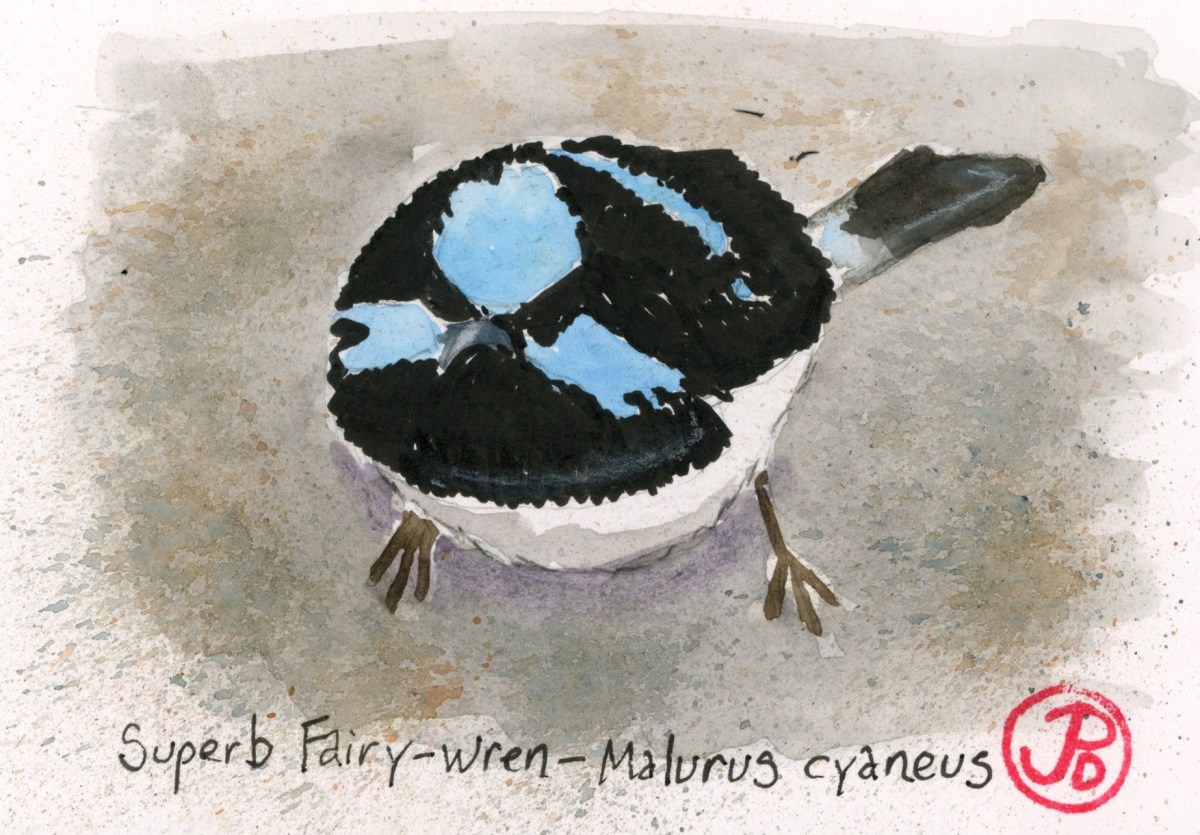
I saw movement in a seaside bush below. With a little patience, a non breeding male with a deep blue tail appeared! I knew that fairywrens forage in family groups. Now with a little more luck a stunning male would appear. So I continued waiting.
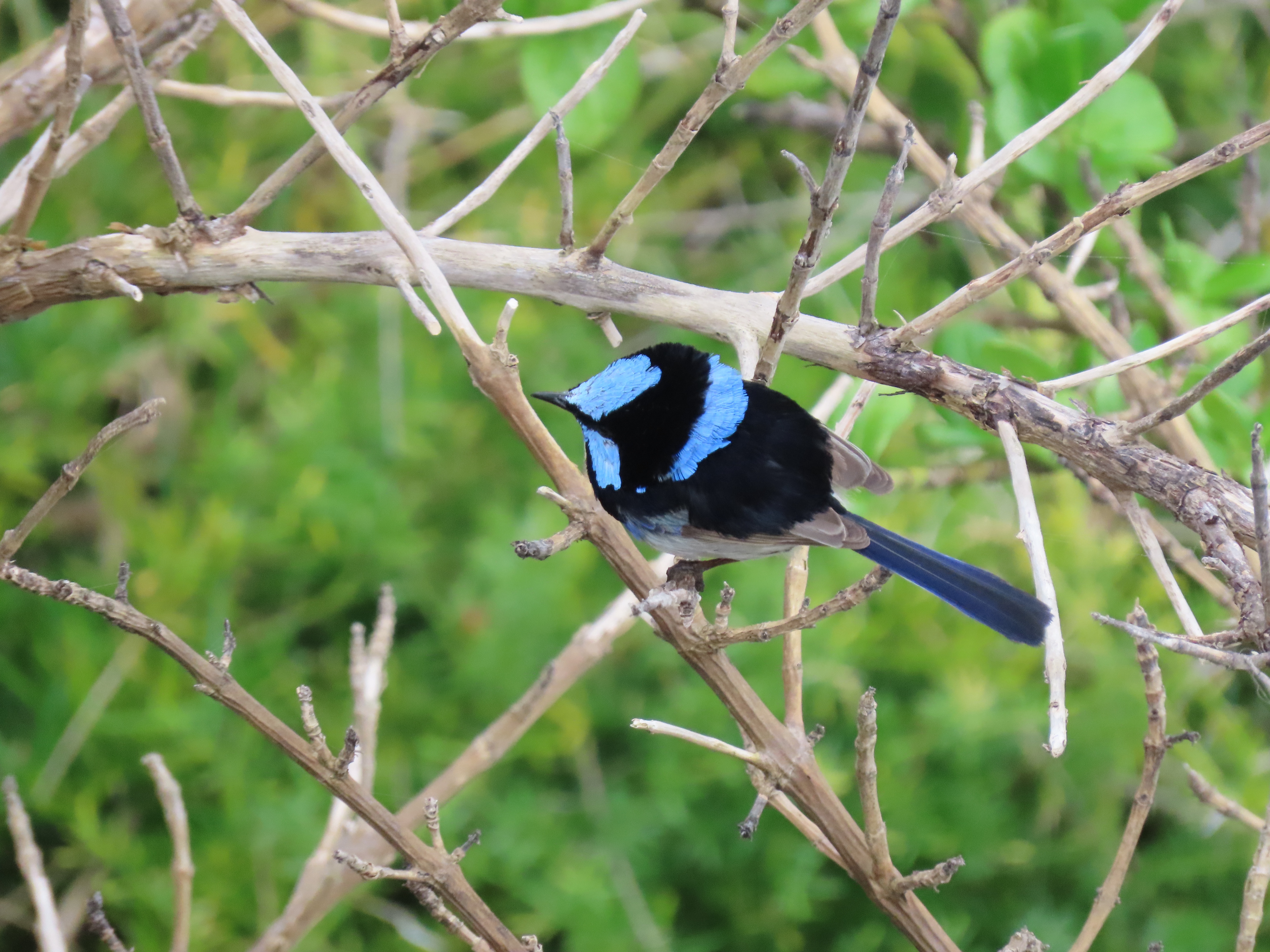
A stunning male!

My wait paid off and I had prolonged looks at the vibrant male fairywren. He even perched out on the rock giving me many reason to understand why this was such a beloved Aussie bird!

As I continued south, bordering the cemetery I added grey butcherbird and the amazing yellow-tailed black-cockatoo.
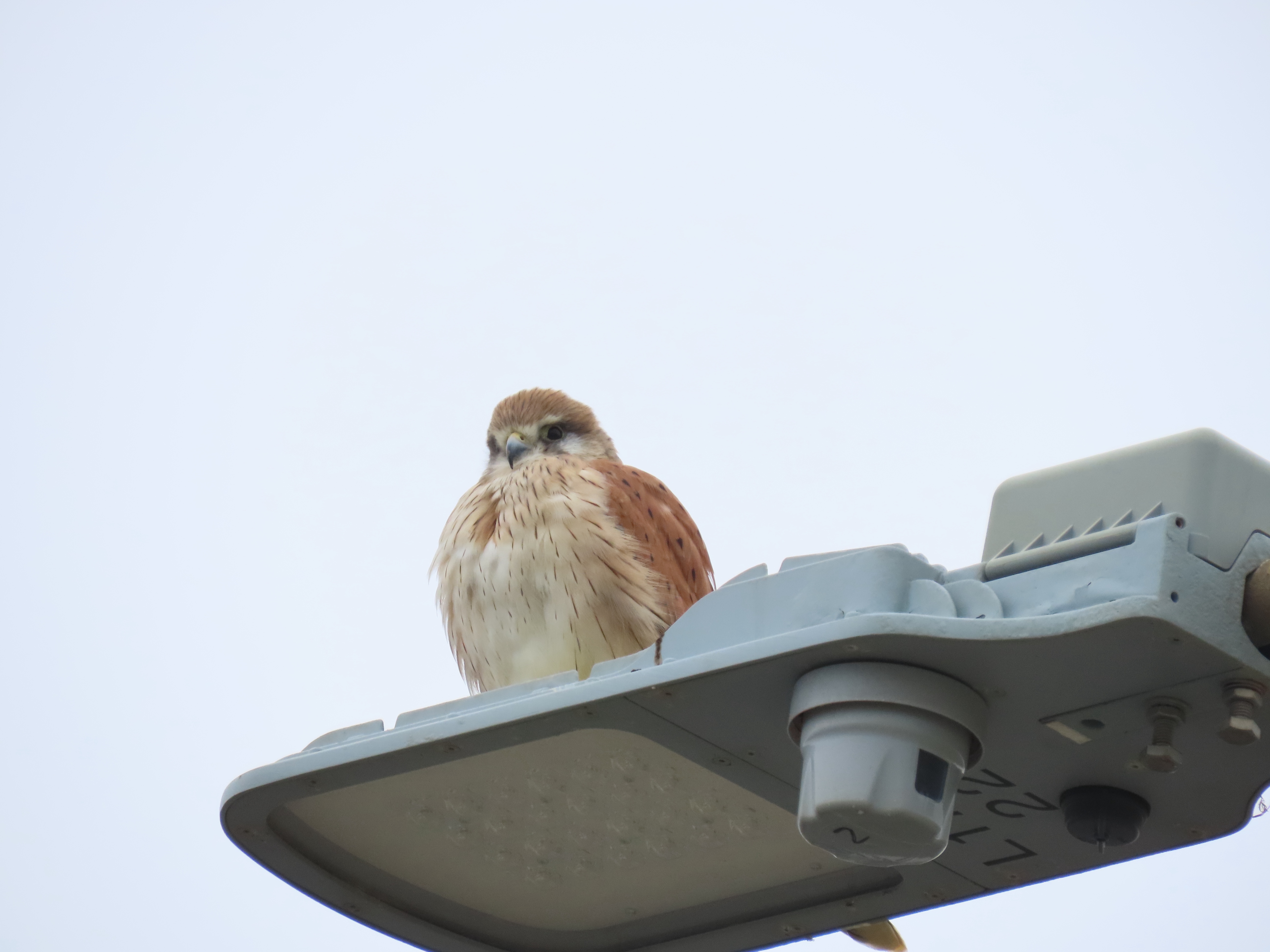
As I neared Coogee, I spotted my first raptor of the trip: a Nankeen kestrel.

On the final third of my journey I added more birds (some lifers) to my list: my fist raptor of the trip, Nankeen kestrel, white-faced heron, another family of fairywrens, a pair of crested pigeons, New Holland honeyeaters, and a foraging gannet in Coogee Bay.
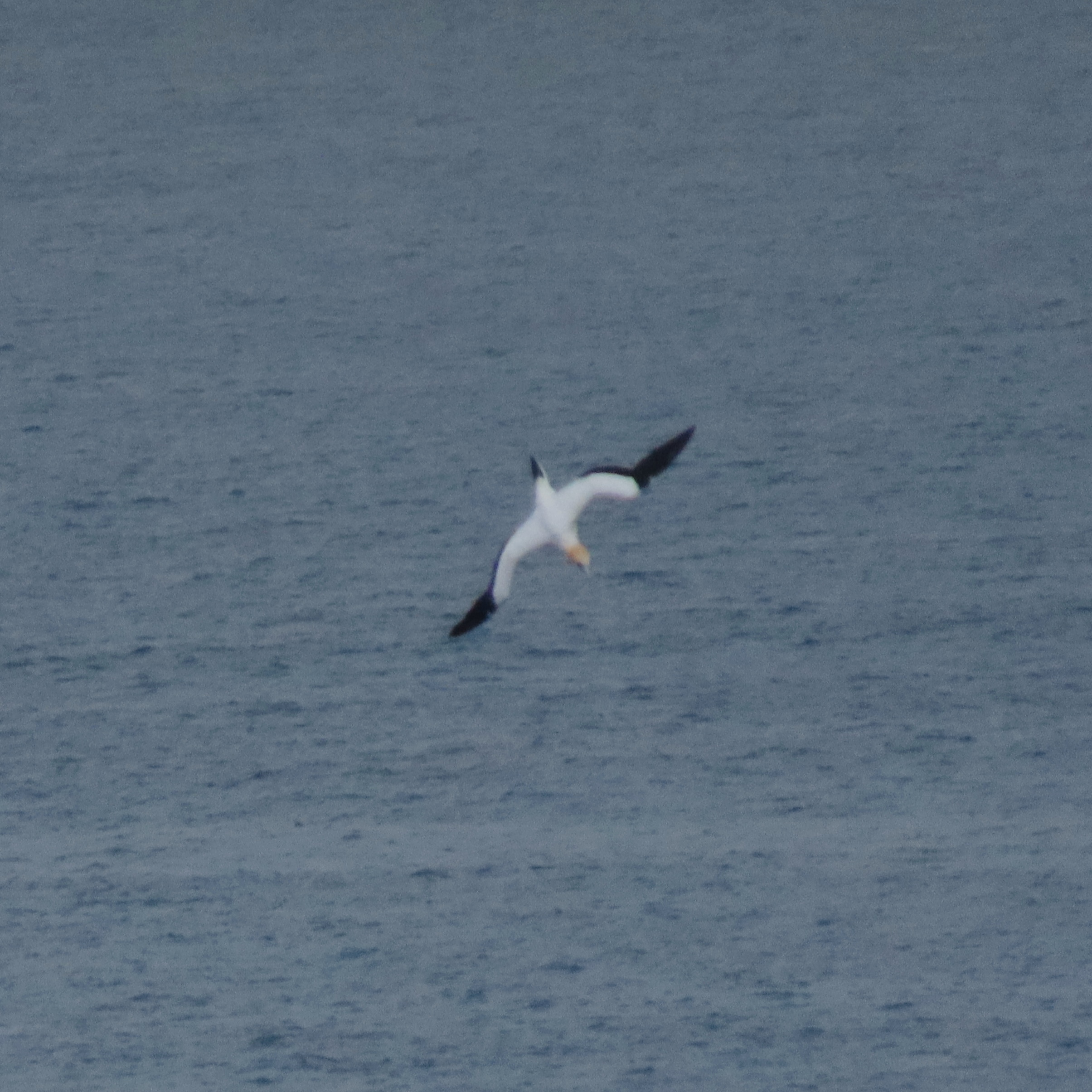
A treat was seeing an Australasian gannet plunge diving into Coogee Bay at the end of my walk!
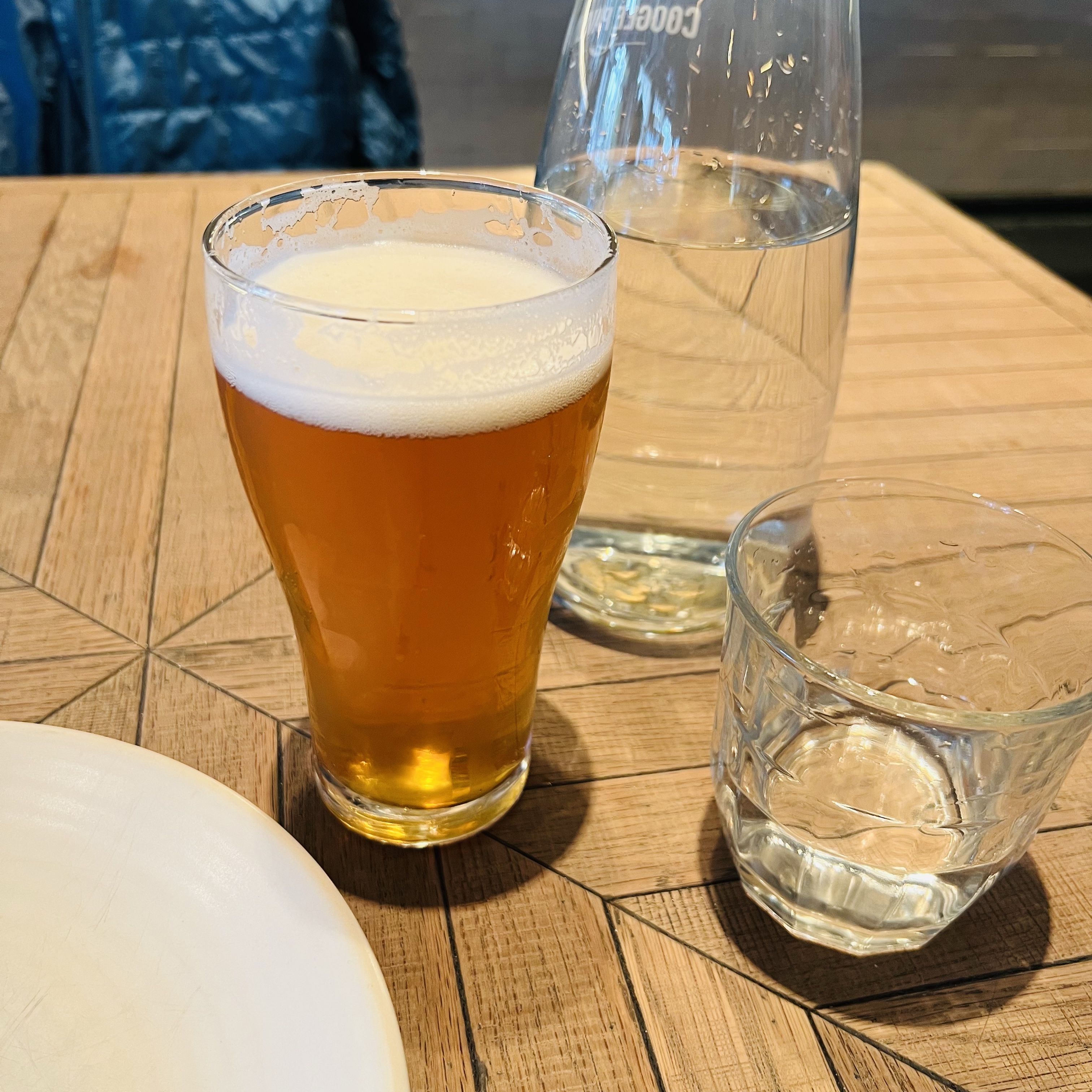
To celebrate the completion of my walk and the many lifers along the way, I had a schooner of fermented liquid bread at a Coogee pub.
Image

Sketching a Masterpiece: Sydney Opera House

There is one Sydney building that I wanted to add to my sketchbooks more than any other: Sydney Opera House.

There are few structures in the world that are instantly recognizable whether you’ve seen then in person or not: Stonehenge, Eiffel Tower, Machu Pichu, the Golden Gate Bridge, the Pyramids of Giza, the Taj Mahal, and the Sydney Opera House.

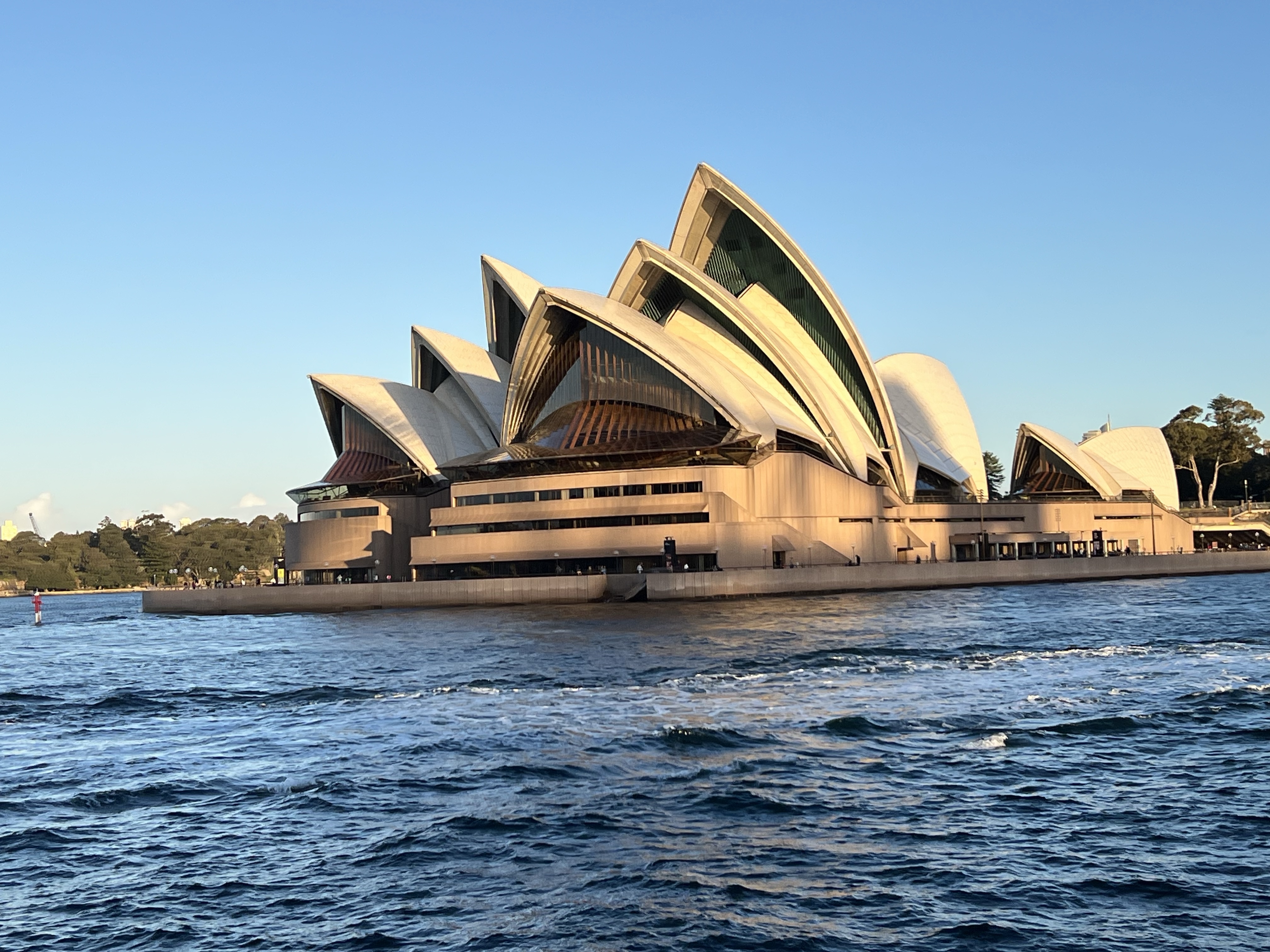
One of the best views of the Opera House is from the Harbour itself, in this case aboard the Manly Ferry.

The opera house was designed by Danish architect Jorn Utzon after a 1955 completion with 233 entries. Utzon’s innovative design was chosen and construction started on March 1, 1959. After many set backs, budget overruns, and redesigns, including the firing of Utzon, the opera house was inaugurated by Queen Elizabeth II on October 20, 1973.

After his firing Utzon never returned to Sydney to see his completed masterpiece.

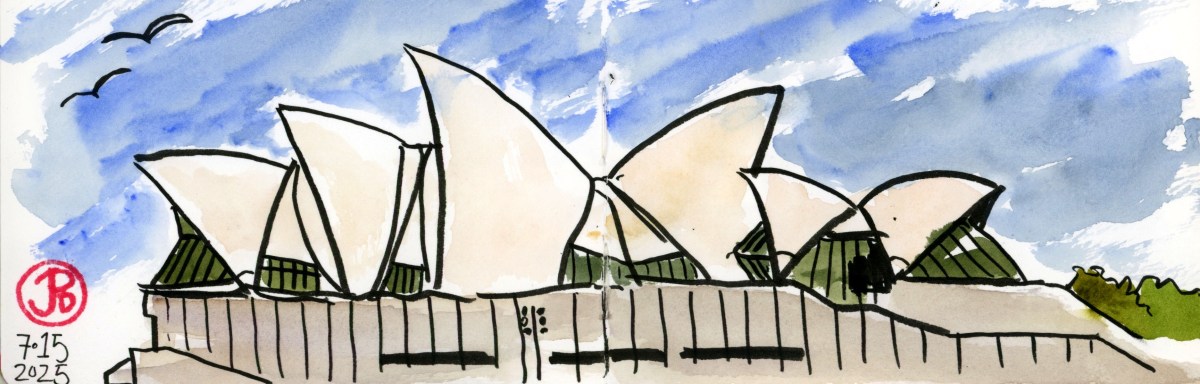
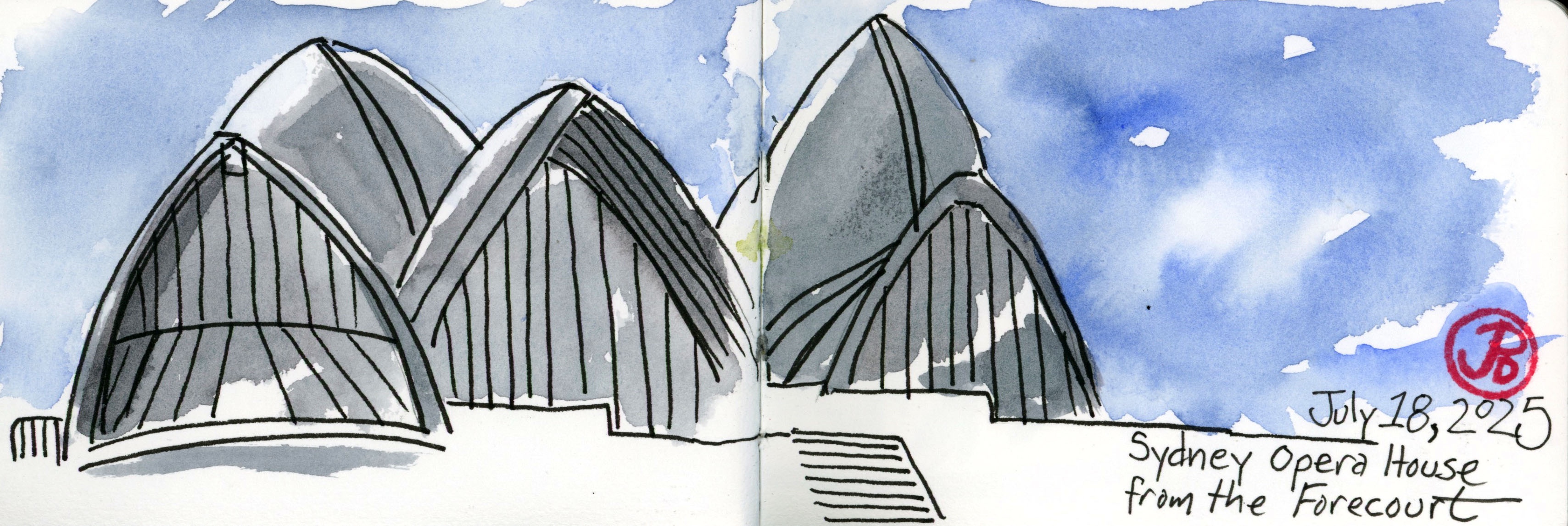
I was captivated by the Opera House and I did a total of six sketches of the masterpiece and with each sketch, I began to understand the structure a little more.

A sketch from the forecourt. Many concerts have been held in the forecourt perhaps none more famous than Crowded House’s last concert on November 24, 1996. The free concert was attended by about 250,000, which was way more than the forecourt could hold.
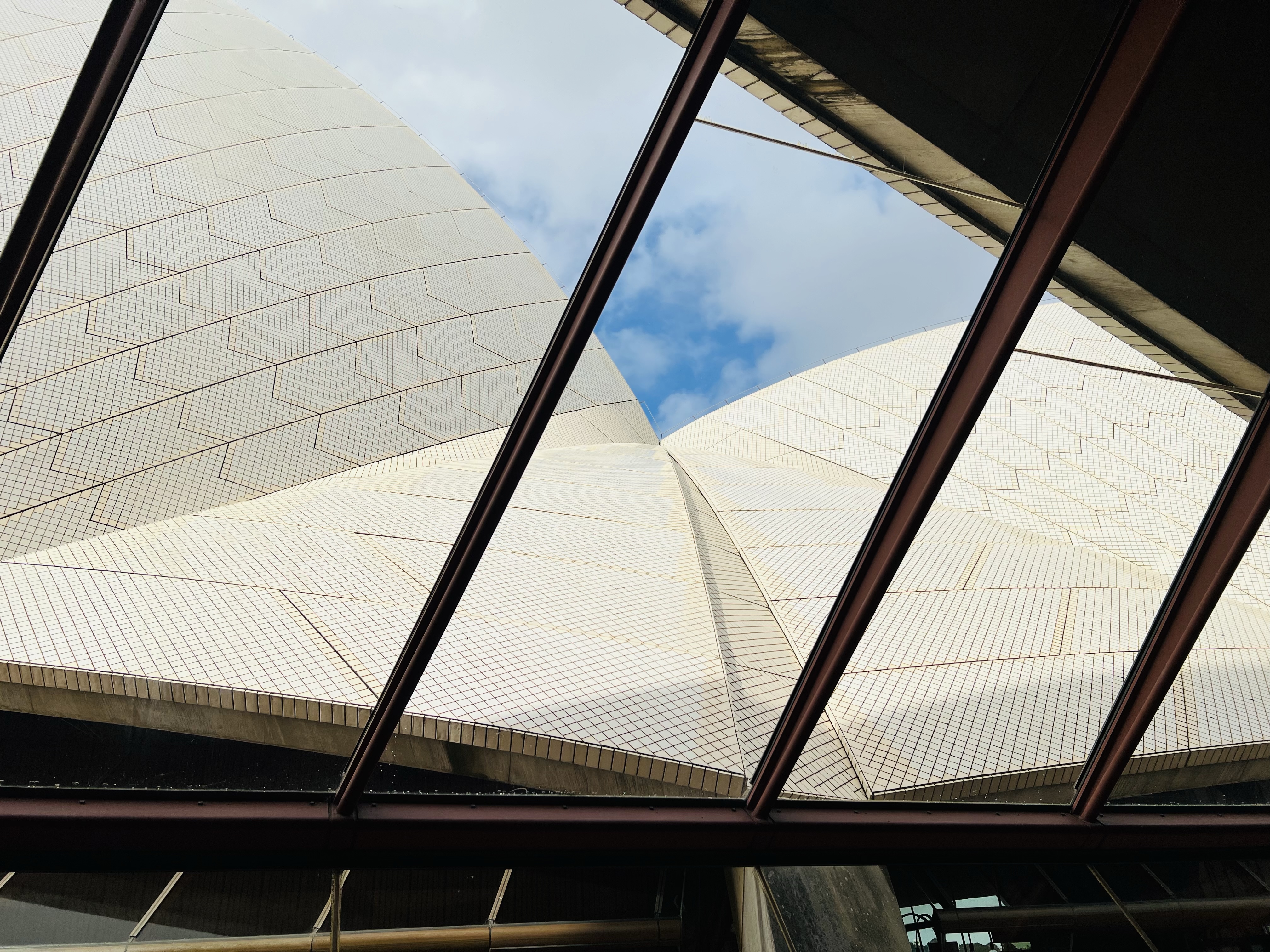
A look at the tiled sails of the opera house from the inside while on a tour of the building.
Image

Sydney at First Sketch

On my first morning in Sydney I left my digs in Surry Hills and took the L2 tram line towards Circular Quay.

Circular Quay is a very famous spot in Australian history because it was here that the First Fleet landed with its first batch of convict colonizers in 1788.

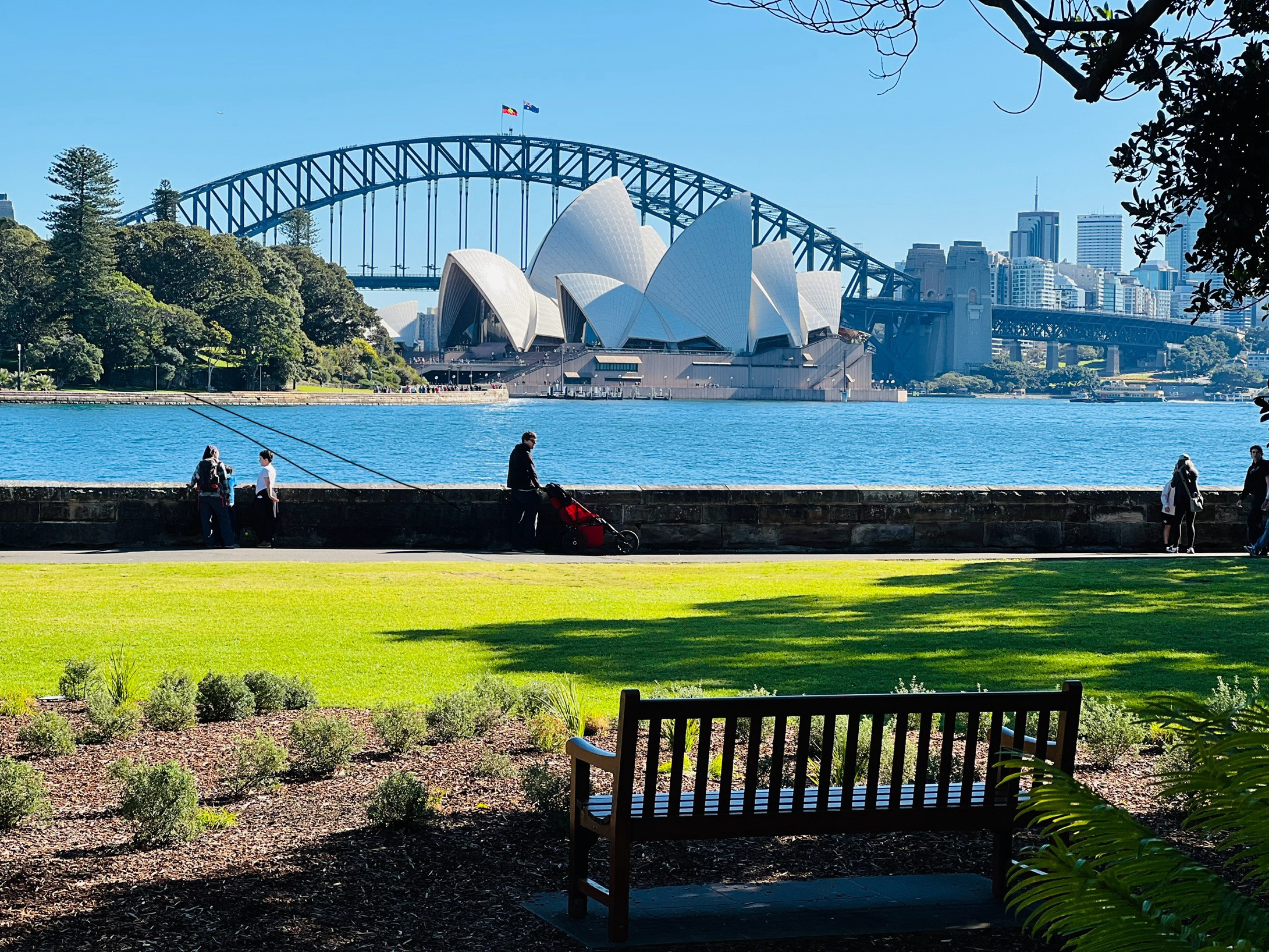
Two of Australia’s most famous sites bookend Circular Quay: Sidney Harbour Bridge and the Opera House. This is the epicenter of Sydney.

I picked a bench in the shade of the iconic sails of the Opera House and sketched the equally iconic Harbour Bridge.

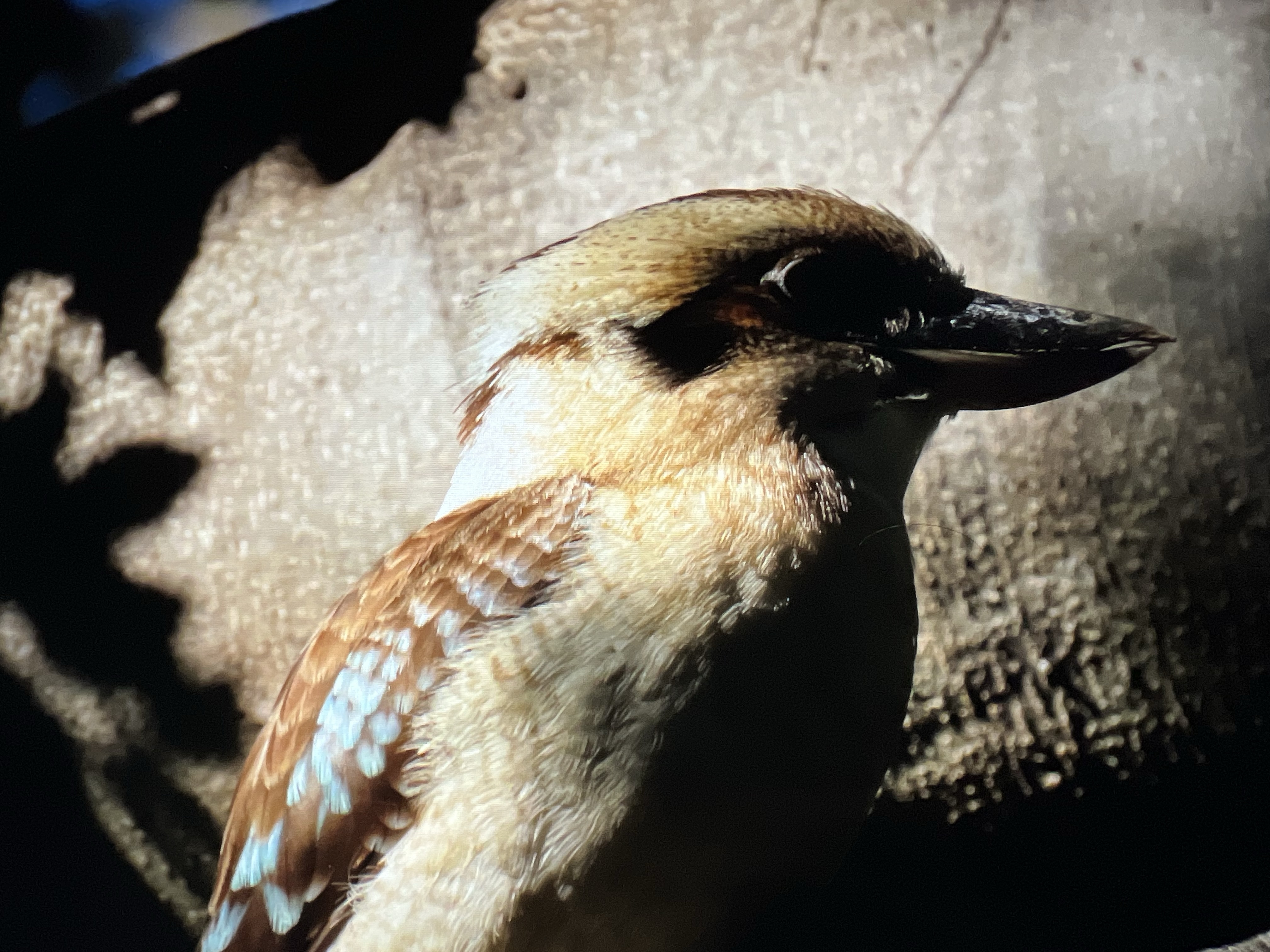
I then walked around the Opera House wondering how on earth I was going to fit this architectural masterpiece into the pages of my journal. (Maybe I needed a bigger journal!) First I needed to get a further perspective so I headed into the Royal Botanic Gardens, picking up life birds along the way like such iconic Aussie species as sulphur-crested cockatoo and the laughing kookaburra.

It was thrilling to get a first look at a kookaburra!

I found a bench and attempted a first sketch. Capturing the sails was going to be a challenge and I figured I’d needed a few attempts from different perspectives.

In the meantime I continued to bird.

One of those “I’m not in Kansas” moments. These are not escaped cockatoos but wild sulphur-crested cockatoos feeding on seed like pigeons in a park!

I headed out to Mrs. Macquarie’s Point, after picking up more lifers, to get a further perspective of the Opera House and Bridge.

My sketching bench with a view of two of Sydney’s most iconic structures produced the featured sketch.
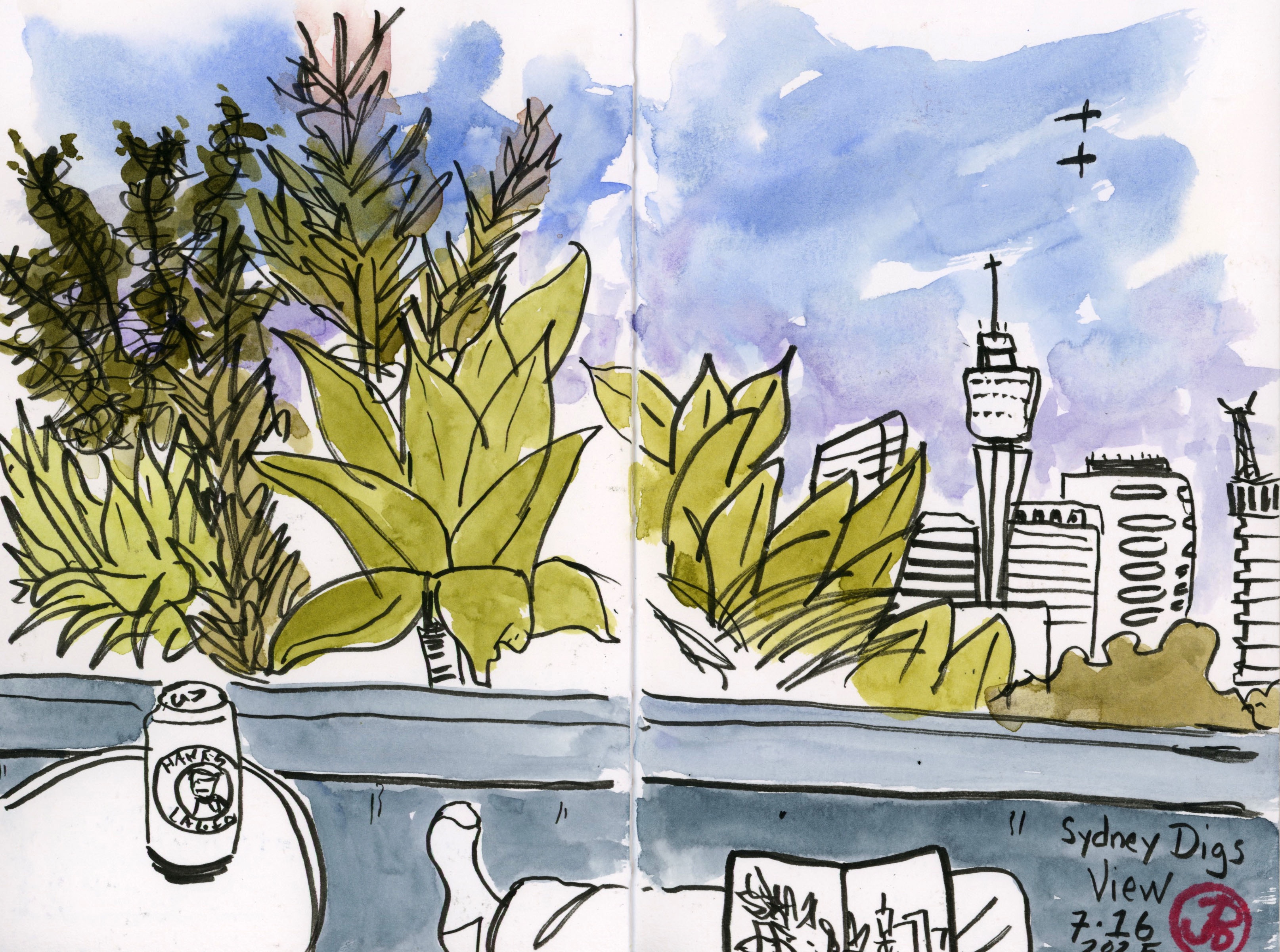
A self portrait view from the deck of my Surry Hills fifth floor flat looking toward downtown Sydney. A frequent morning visitor to the trees in the foreground and my first Aussie lifer was the beautiful rainbow lorikeet.

Image

The World’s Oddest Mammal

“Consider the platypus. In a land of improbable creatures, it stands supreme. It exist in a kind of anatomical nether world halfway between mammal and reptile. Fifty million years of isolation gave Australian animals the leisure to evolve in unlikely directions, or sometimes scarcely to evolve at all. The platypus managed somehow to do both.”-Bill Bryson

Australia has a host of really odd creatures.

Some are only found Down Under such as kangaroos, wallabies, wallaroos, and certain tree-possums.

There is one animal that tops the oddity list and this has to be the duckbill platypus.

The platypus is a monotreme, an order of the only mammals that lay eggs. There are just the platypus and four species of echidnas in existence today in this order.

The platypus seems to be put together from some surplus animal parts: the bill of a duck, body of an otter, the tail of a beaver, and the webbed feet of a goose. Who knew what early scientists made of the platypus?

I hoped to get a chance to see this mammalian oddity in Queensland.

I ordered a platypus model to use as a sketching tool. I think I might bring this long with me in my carry-on. An Aussie mascot.

My Aussie good luck platypus mascot. I wonder if it will bring me a real platypus.
Image

Great Barrier Reef

On my visit to North Queensland, I couldn’t be near one of the seven wonders of the natural world without having a look-see.

From the coastal town of Cairns, boats depart on day trips to the Great Barrier Reef.

The reef system runs mostly parallel along the northeastern coast of Australia for 1,400 miles, making it the largest reef system in the world.

The Great Barrier Reef (GBR) is what a tropical rainforest is to biodiversity. Here are a few facts that highlights the mega diversity on hand.

The GNR supports 1,500 species of fish, 4,000 species of mollusks, 400 species of coral, 6 of the 7 world’s species of sea turtles, 14 species of sea snakes, 133 species of sharks and rays, and 242 species of birds. The GBR also contains 25% of all known marine species!

I am planning to dip into a bit of this biodiversity with a snorkeling trip to Michaelmas Cay. While I’m a certified SCUBA diver, I want to spend some time topside, to see some of the breeding seabirds of this cay.

The cay supports 23 species of seabirds and at the height of the breeding season (our summer) there can be up to 20,000 birds on Michaelmas Cay.

Some of the lifers I hope to see on the cay are: brown (common) noddy, sooty, little, great crested, black-naped terns, and masked booby. I also hoped to get great looks at some birds I’ve seen before such as great frigatebird and brown booby but in breeding plumage.

Image

You Call That a Croc?

“The saltwater crocodile is the one animal that has the capacity to frighten even Australians. People who would calmly flick a scorpion off their forearm or chuckle fearlessly at a pack of skulking dingos will quake at the sight of a hungry croc.”

-Bill Bryson, In a Sunburned Country

I was looking forward to my encounter with the world’s largest reptile in Queensland on a Daintree River cruise. I just hope it will not be a close encounter!

Australian wildlife has the capacity to kill. Even a cone snail can kill a human! Oz is home to 213 venomous snakes. That is more venomous snakes than anywhere else in the world.

Australia is also home to the Murder bird, a small venomous octopus, the world’s most deadly spider (Sydney funnel-web), stonefish, box jellyfish, the common death adder, the blue bottle, the bull, tiger, and great white shark, and many others.

But as Bill Bryson notes, there is one deadly animal that rises above all others: the saltwater crocodile.

This apex predator sometimes sees humans as prey. In Australia from 1971 to 2013, saltwater creatures crocs killed 106 people. On average there are about 2 fatal attacks per year.

I have seen the American alligator and crocodile in Florida and the Yacare caiman (above) in the Pantanal. I was really looking forward to seeing the largest crocodilian in the world.

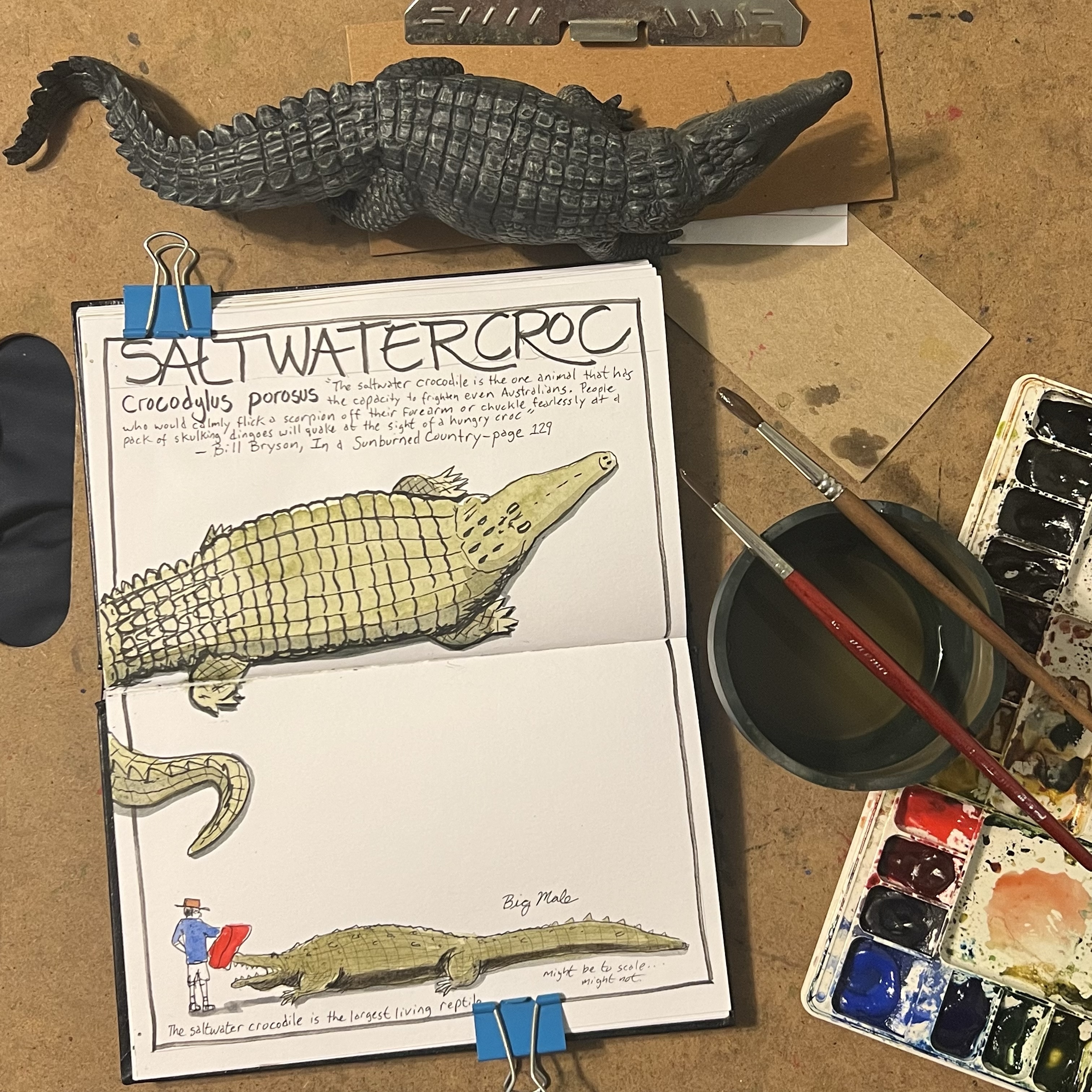
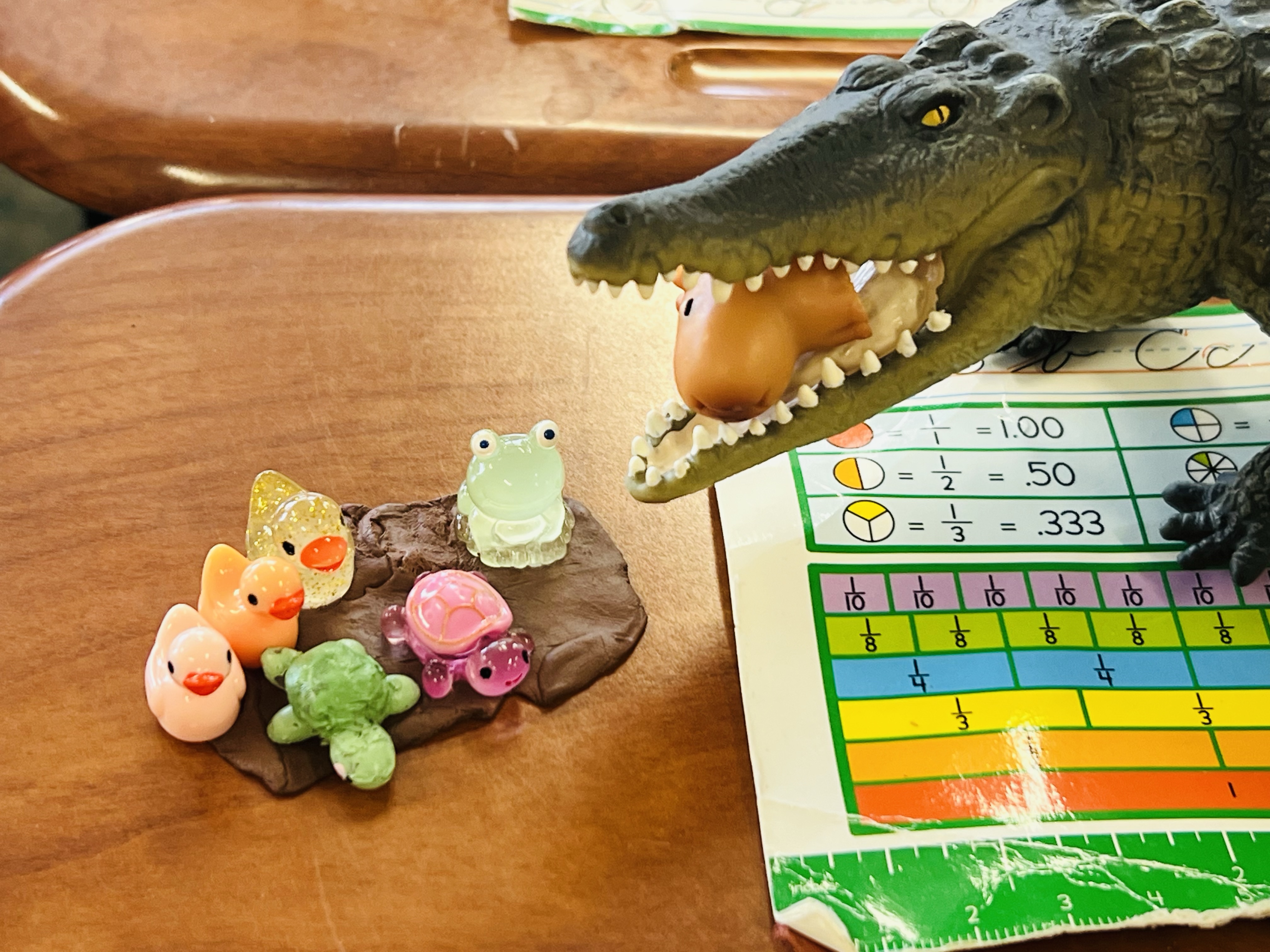
In order to sketch a croc I ordered a model to help me sketch. This way I could sketch it from any angle such as from above.

My saltwater croc model and my sketch in progress.
My croc eating my student’s capybara! No plastic was harmed in the making of this photograph.
Image

Sydney Birds: the Fairy-Wren & the Black Swan

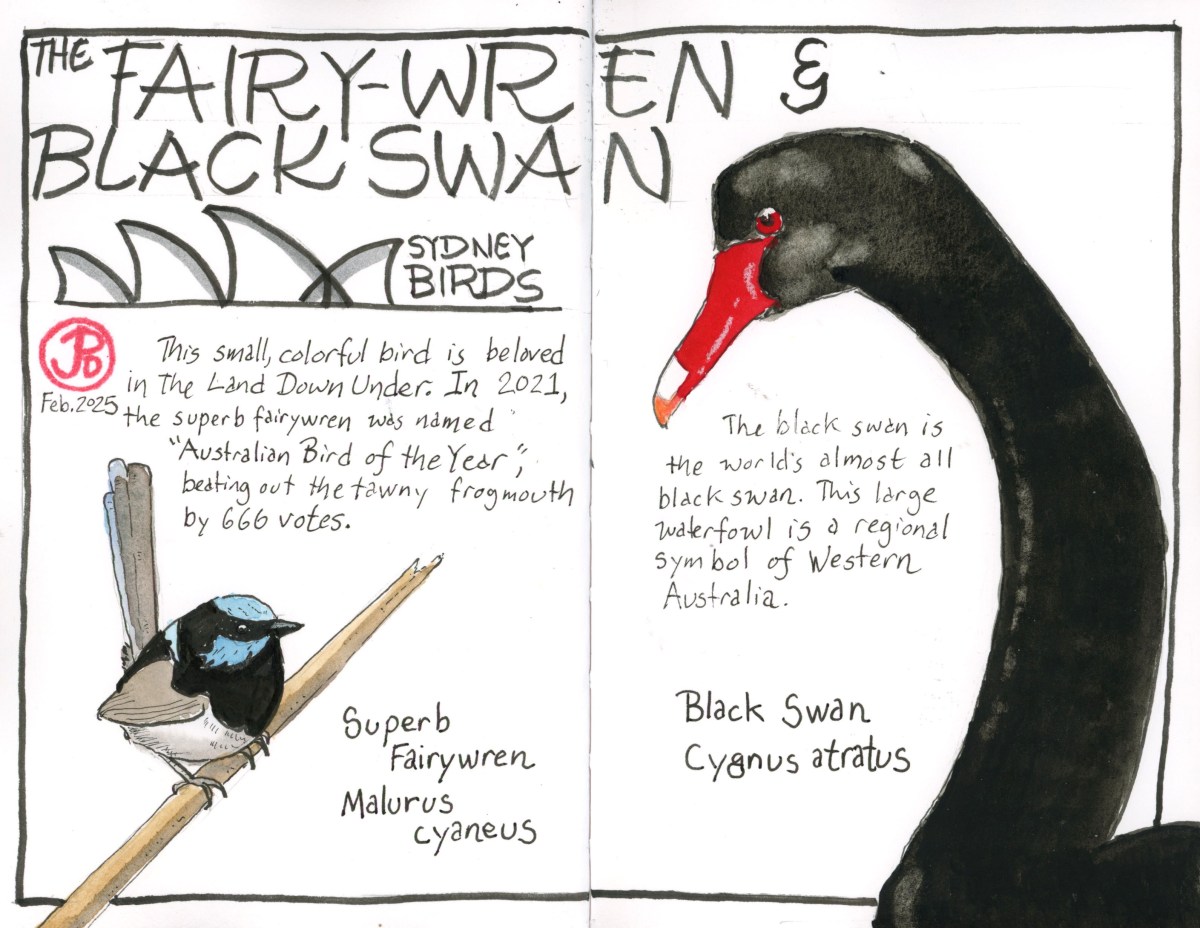
Some of the birds on my Australian trip would be fairly easy to find in Sydney’s parks. Especially a big black swan. The other is a diminutive little bird with a wonderful name of superb fairywren. (This bird is a species featured in The 100 Birds to See Before you Die). Challenge accepted!

The swan can be found in the ponds of Centennial Park. Having seen these all back swans at the San Francisco’s Zoo’s Australian exhibit, I wanted to see this bird in the wild. Or the quasi-wild of an urban park.

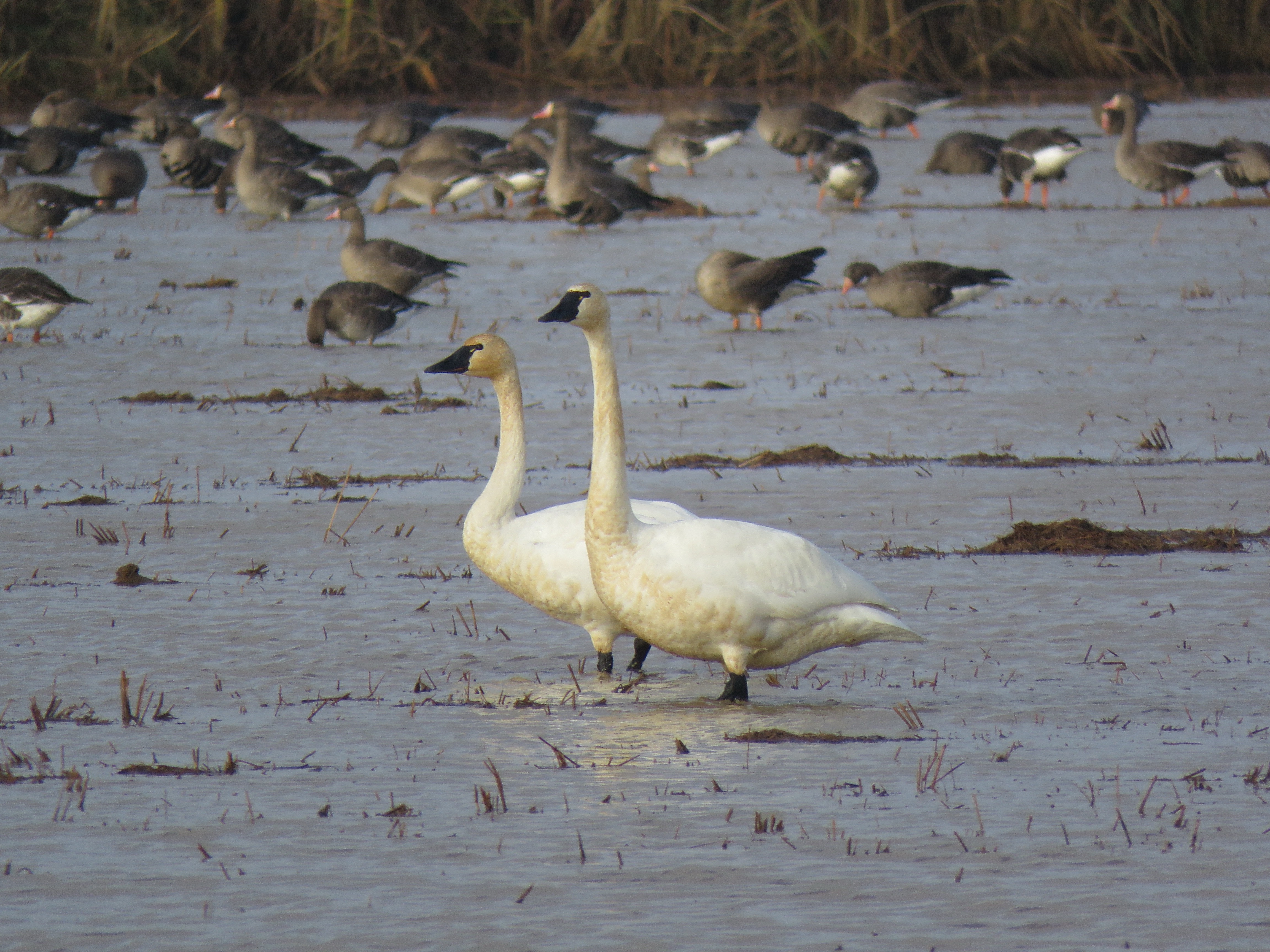
All of the swans found in North America are all white, such as this pair of wintering tundra swans in Yuba County.

The superb fairywren is a member of the Australian wren family. The male and female, like most ducks, are sexually dimorphic. The male is a stunning mixture of black, brown, and an electric blue. The female is a drab brown with a blue tail held erect.

In 2021, the superb fairywren was voted Australian Bird of the Year, beating out the tawny frogmouth.

Image

The Murderbird

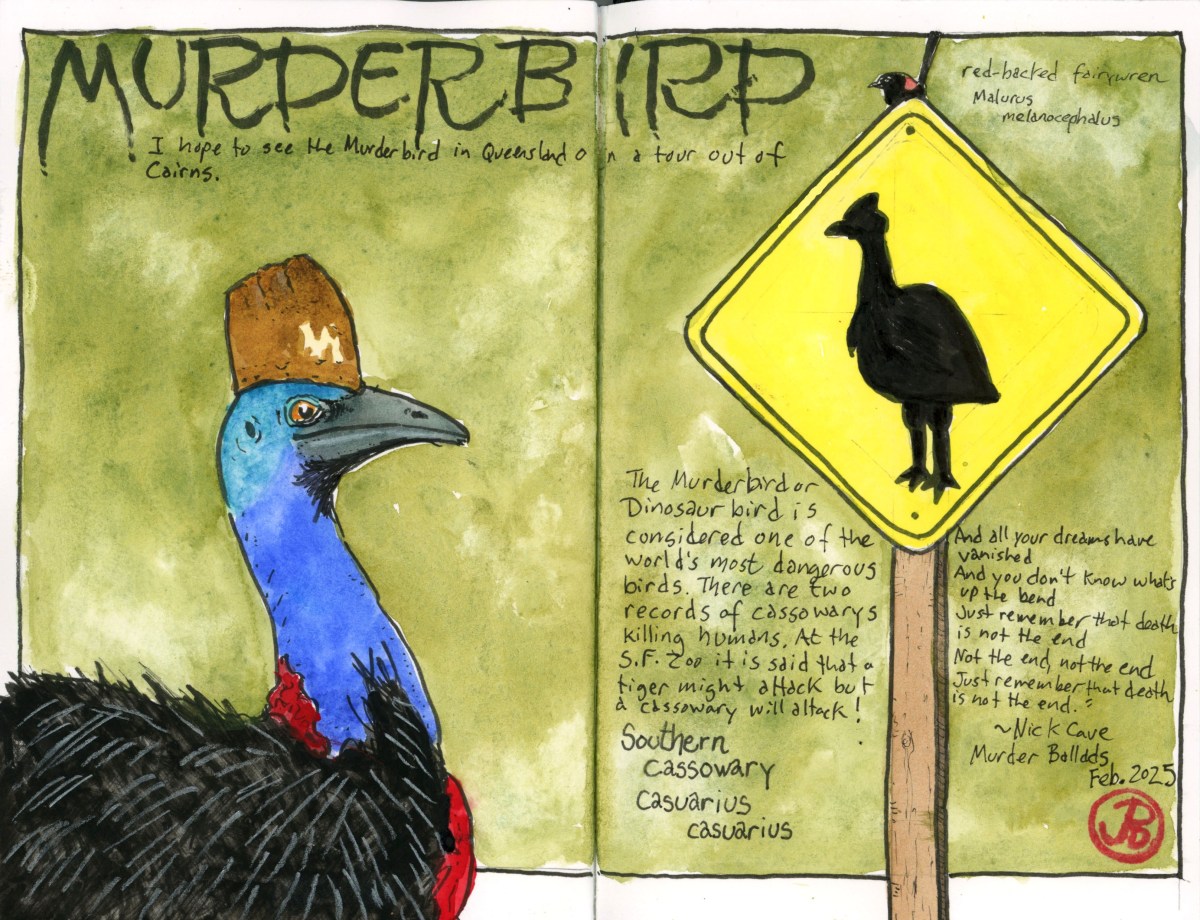
There was one creature in Australia, out of all the deadly and dangerous creatures, that my Australian mate was concerned with me encountering: the murderbird (southern cassowary).

When asking zookeepers at the San Francisco Zoo to list the most dangerous animal in the zoo they often replied: a tiger might attack you but a cassowary will attack you. This flightless beast topped the list.

And I intended to see a cassowary in North Queensland. The Murderbird topped my Australian birding wishlist.

I will be on a five day guided birding trip out of Cairns and we would be looking for the flightless Danger Bird on three different days.

If the tawny frogmouth looks like a Muppet, then the cassowary looks like a denizen of Sesame Street, but from the other side of the tracks. A satanic Big Bird.

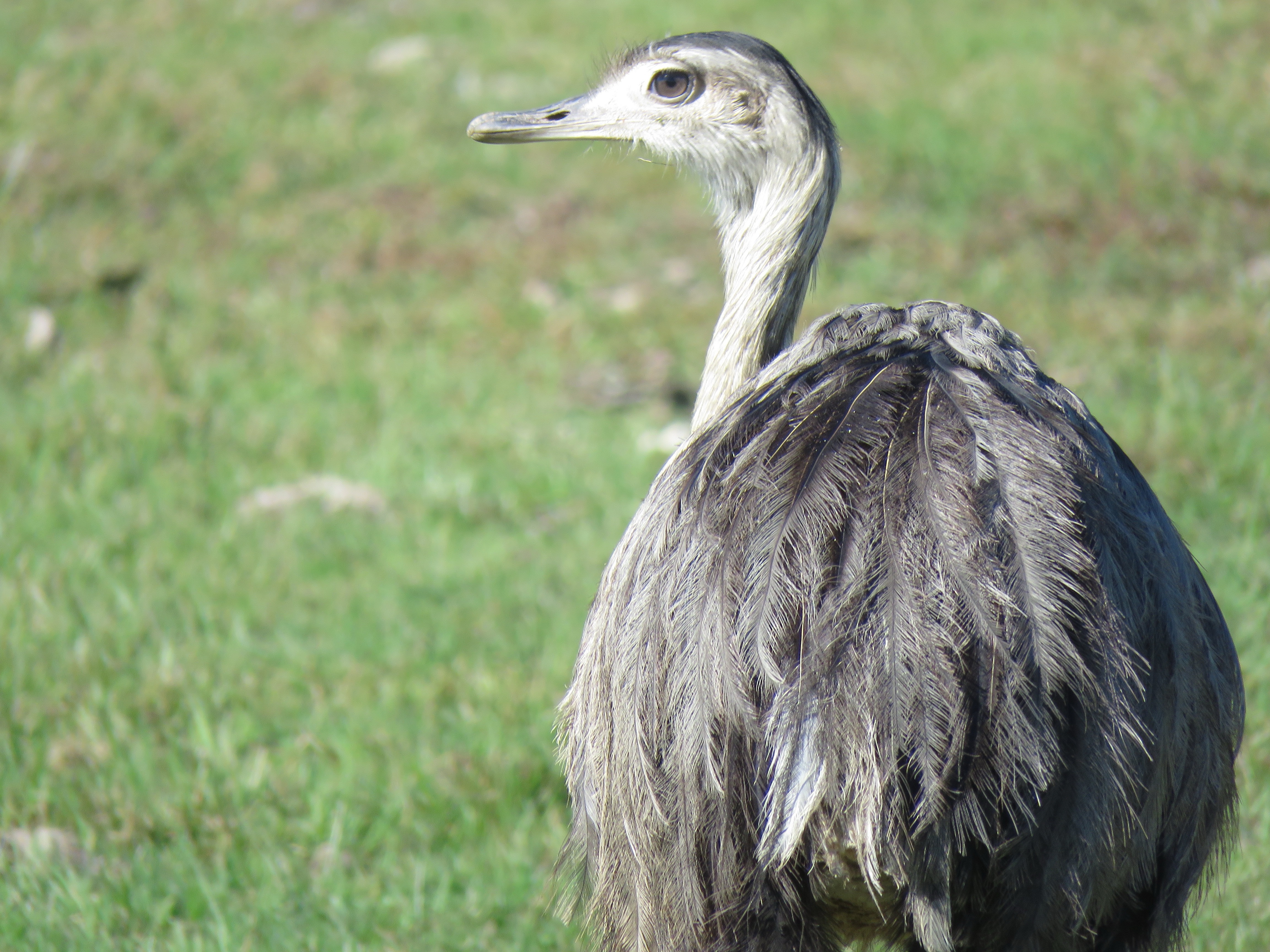
I have seen large flightless birds before, like this greater rhea in Brazil’s Pantanal. The rhea looks friendly and inviting, unlike the cassowary!!
Image

Birds of Sydney: Laughing Kookaburra

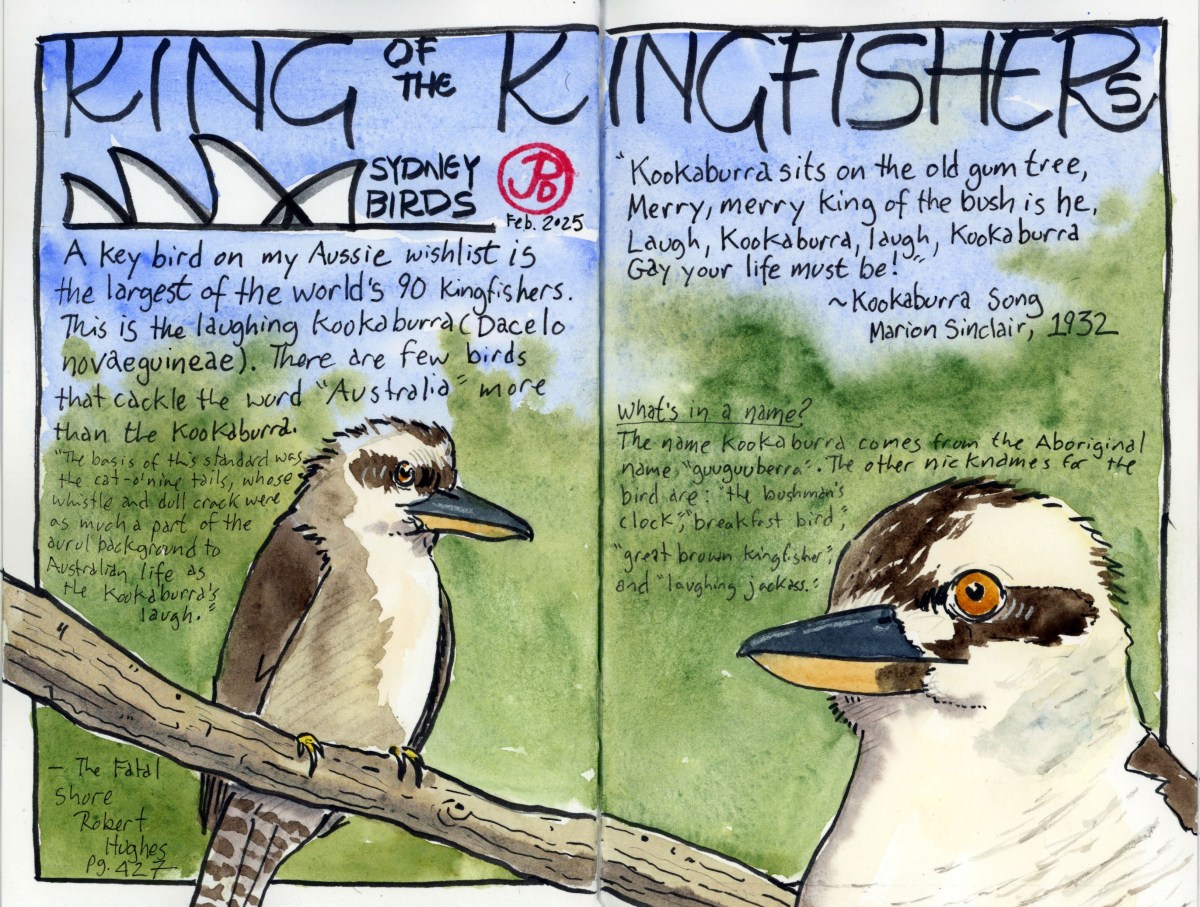
“Kookaburra sits in the old gum tree, / Merry, merry king of the bush is he, / Laugh, Kookaburra, laugh. . .”

When it comes to a list of Australian birds that anyone from around the world can list, I bet the laughing kookaburra is in the top two.

This is a species that is commonly held in zoo’s collections. And then there is the song we sing in music class, quoted above.

Of course I have seen a real kookaburra at the San Francisco Zoo but I have never seen one free flying in the wild.

Oddly enough the kookaburra is a kingfisher. Out of the world’s 118 kingfishers, the kookaburra is the world’s largest and heaviest kingfisher, yet fish are a very small part of their diet. The “Bushman’s Clock” mainly eats rodents, insects, worms, snakes, and lizards.

The kookaburra’s laughing calls have been made famous as it is often used as jungle foley in films such as Tarzan, Wizard of Oz, The Treasure of Sierra Madre, and The Lost World: Jurassic Park.

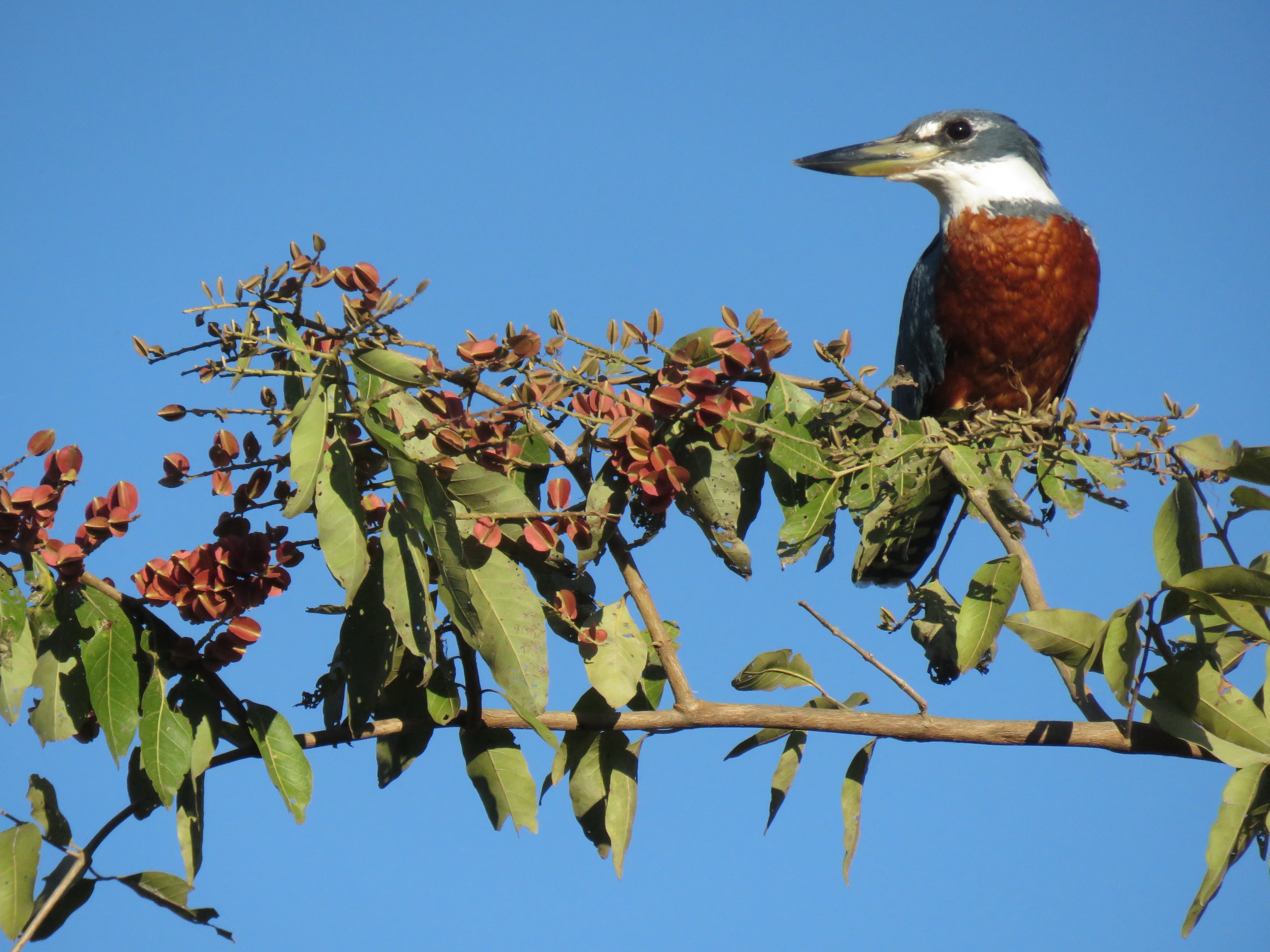
The ringed kingfisher is the largest kingfisher in the Americas. This female was photographed in Brazil’s Pantanal.

For my kookaburra spread I included the first verse of the Kookaburra Song by Marion Sinclair. The song was composed in 1932 and is sung by children all around the world.

There was some controversy involving the song when the flute riff from Men At Work’s hit “Down Under” was deemed to plagiarize the melody of Sinclair’s ditty.

Now all I need is a Vegemite sandwich!

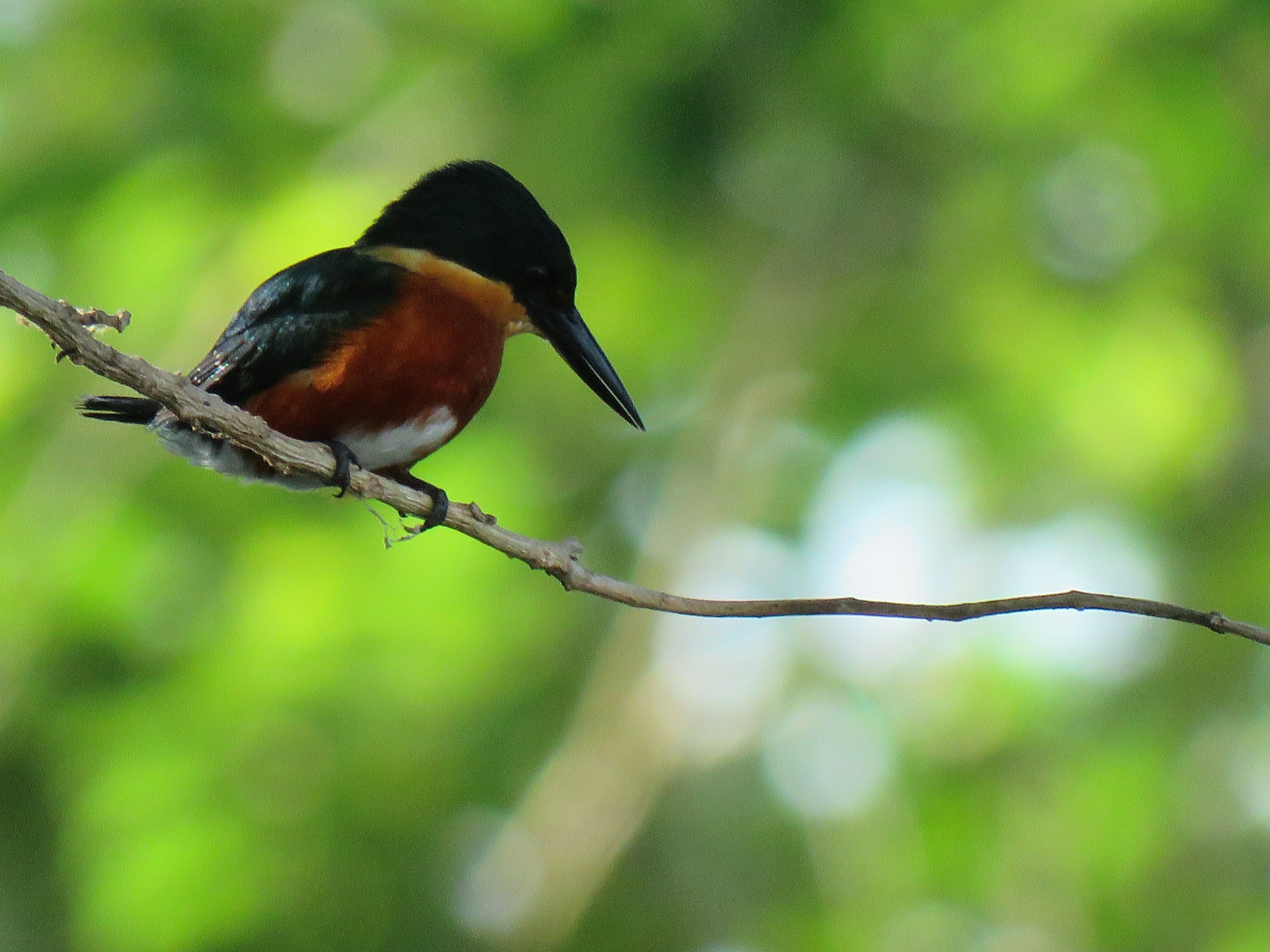
One of the smallest kingfishers in the Americas: a Pygmy kingfisher in Panama.

On my Aussie adventures I hope to add a few other kingfishers to my lifelist: azure, little, forest, red-backed, sacred, and collared kingfisher. And I aimed to add the other kookaburra of Australia to my wishlist: the blue-winged kookaburra. This would more than double my current number of kingfishers (7).

Image

Birds of Sydney: Parrots

In my neighborhood you occasionally see posters tacked up on a power poles about missing animals, mostly dogs or cats but sometimes parrots that have flown away from their gilded cages.

The only parrots seen flying in my neighborhood are escapees. Exotics in a strange land.

Parrots, especially macaws, Amazons, cockatoos, and budgerigars, are some of the most recognizable birds species in the world because they are often pets. They frequently appear in media such as books, art, and movies. Show just about anybody an image of psittacines and they will say “parrot”.

My sixth grade class pet was a budgie (native to Australia). My grandma also had a budgie before I was born. Macaws and cockatoos are mainstays at zoos and animal parks where they frequently perform at shows showing off their intelligence, dexterity, and vocal abilities.

Just last year, an organization, Happy Birds, had an assembly at my school that was a parrot show featuring a very vocal Amazon and some macaws, including the largest parrot in the world: the hyacinth macaw.

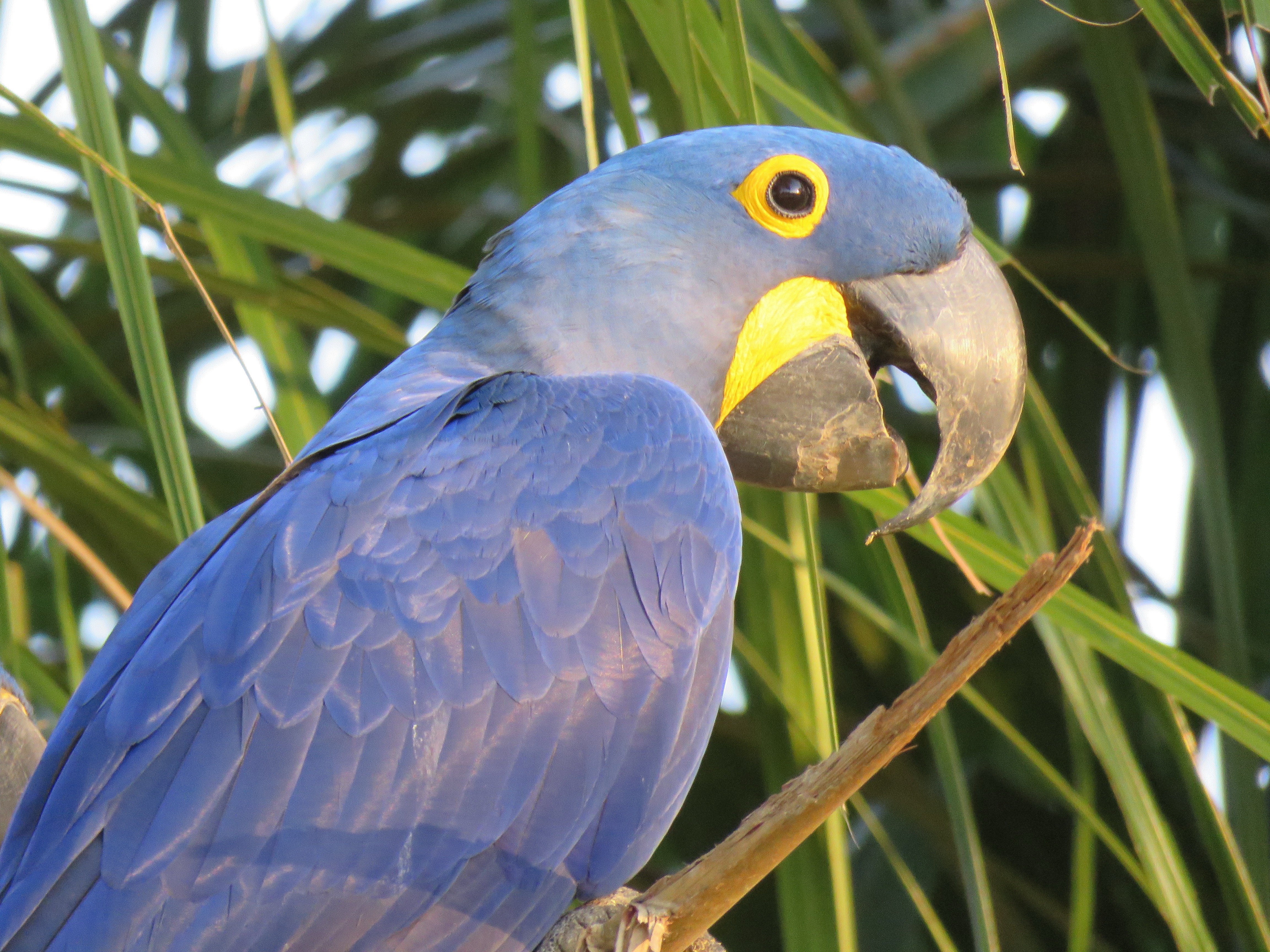
A few summers before the parrot assembly I saw the beautiful big blue macaw in the Pantanal in Brazil. This is a wild and free hyacinth macaw.

The first time I saw a free flying wild macaw (scarlet macaw) was in Costa Rica. I saw many more on birding trips to Ecuador and Brazil.

It was so unreal to see a pair of scarlet macaws flying in Costa Rica without thinking they had just escaped from a nearby zoo.

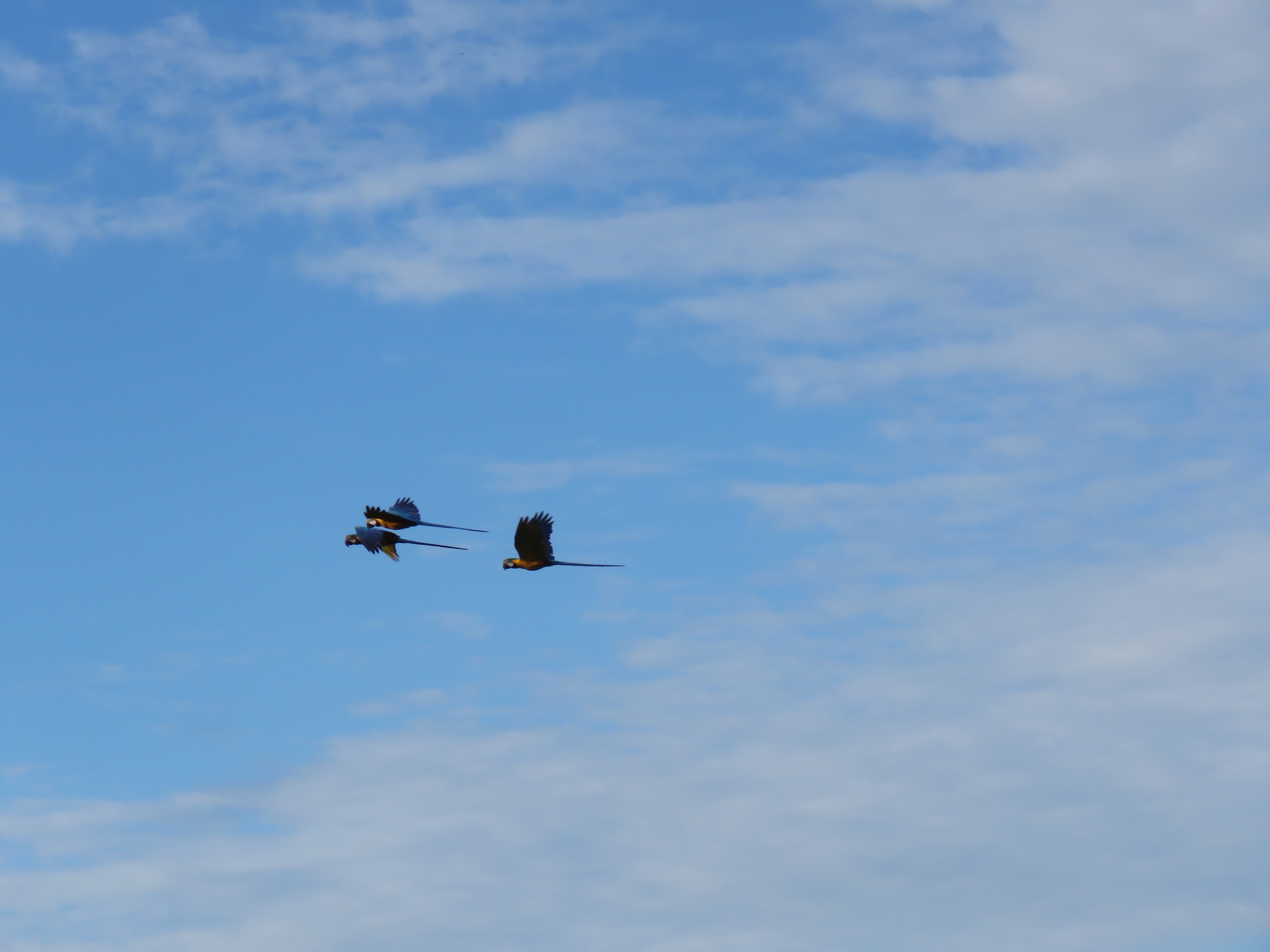
Macaws on the wing in Brazil.

Seeing these iconic parrots flying free over a rainforest, proclaiming themselves with their raucous hymns is an unforgettable natural experience.

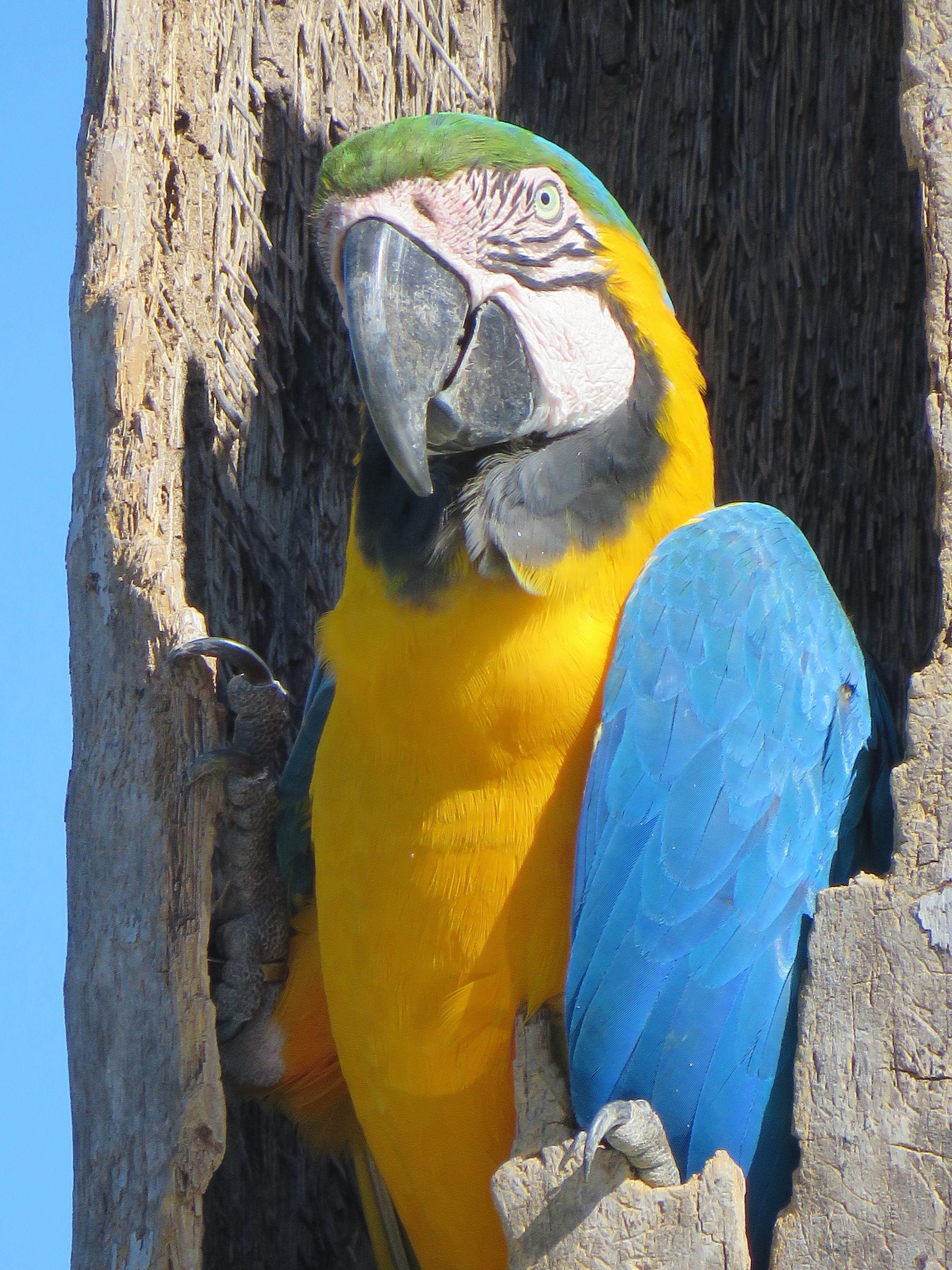
If looking at this a photo one thinks it is taken at a zoo but no, this is a wild blue and yellow macaw in the Pantanal in Brazil.

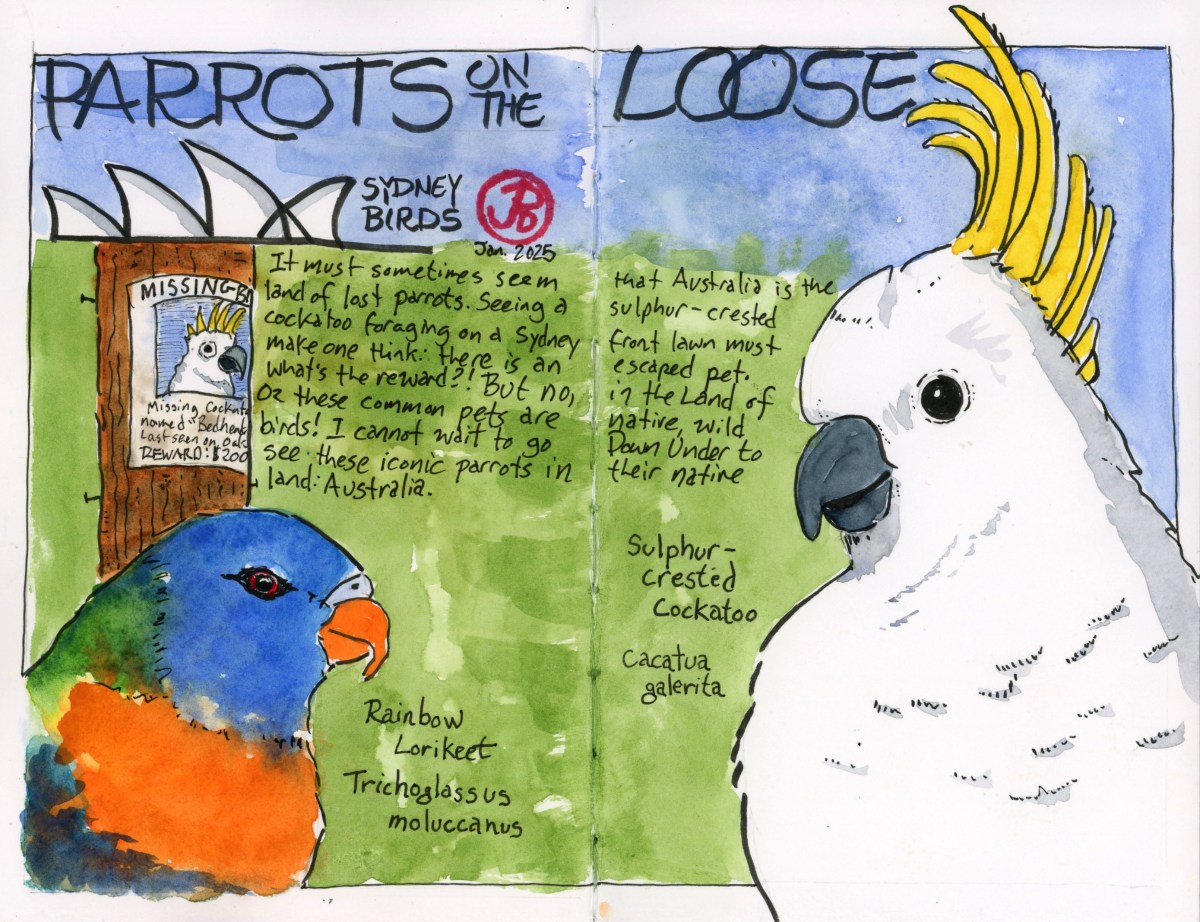
Now I turn to the county of Australia and it’s “escaped” parrots of Sydney. The most iconic for me are the sulphur-crested cockatoo and the rainbow lorikeet (featured sketch). Both are common in the Emerald City.

My Australian mate (a former student’s parent) and a former Sydney resident told me about seeing the iconic sulphur-crested cockatoo almost everyday simply blew my birding brain making me want to go Down Under to see them for myself.