Image

Broadway Station

On Monday I did an afterwork sketch of the closed Atherton Station on the Caltrain route and now on Friday I headed to North Burlingame to do another after work sketch of a Caltrain station: Broadway.
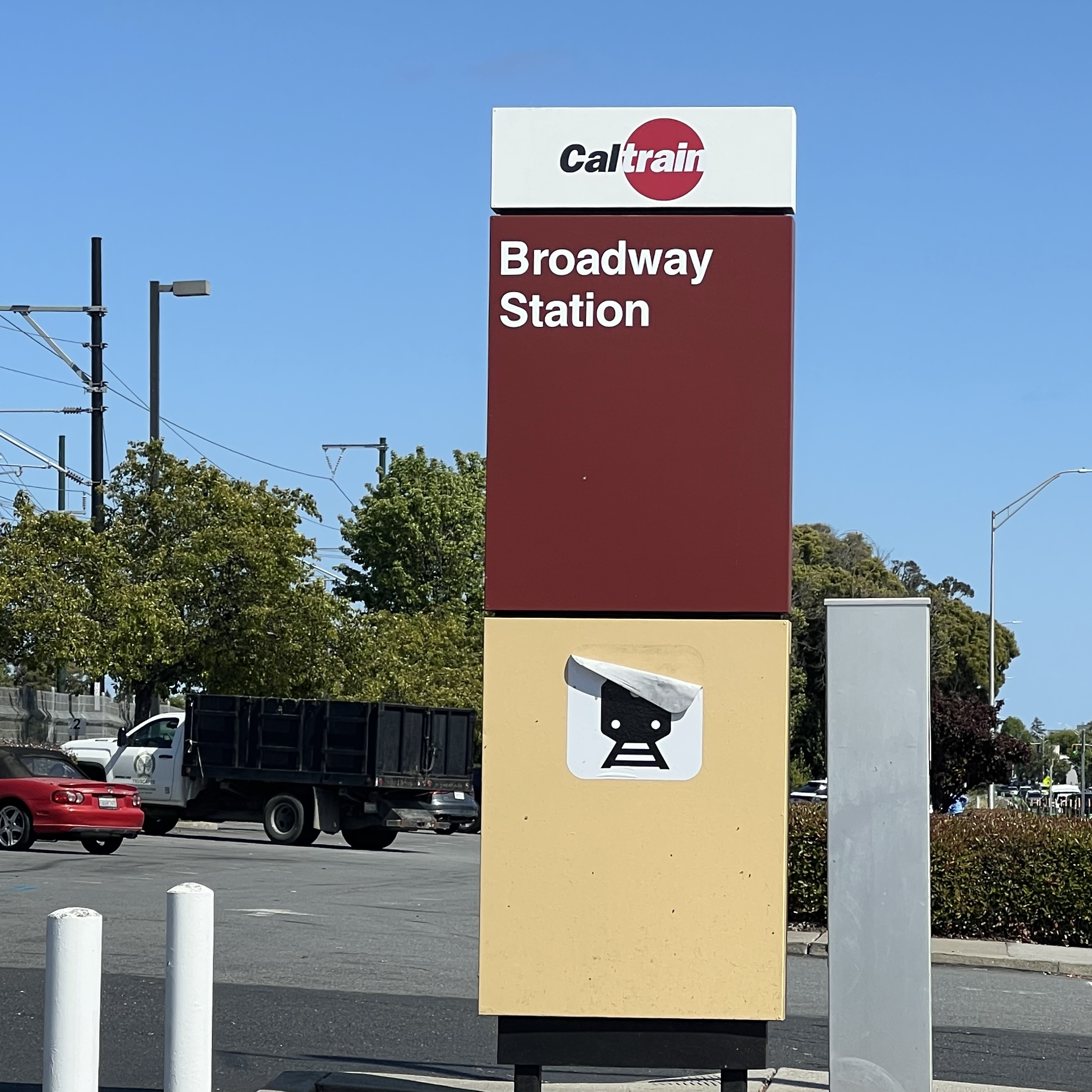
The peeling train sticker on the sign is a living metaphor for the downtrodden Broadway Station.

With a name like Broadway, you’d think of a busy station with lots of passenger traffic and a station with a staffed ticket office, a waiting room lined with wooden benches, and perhaps a cafe. Sure that might have been the picture over 70 years ago. Now here is the ticket window:
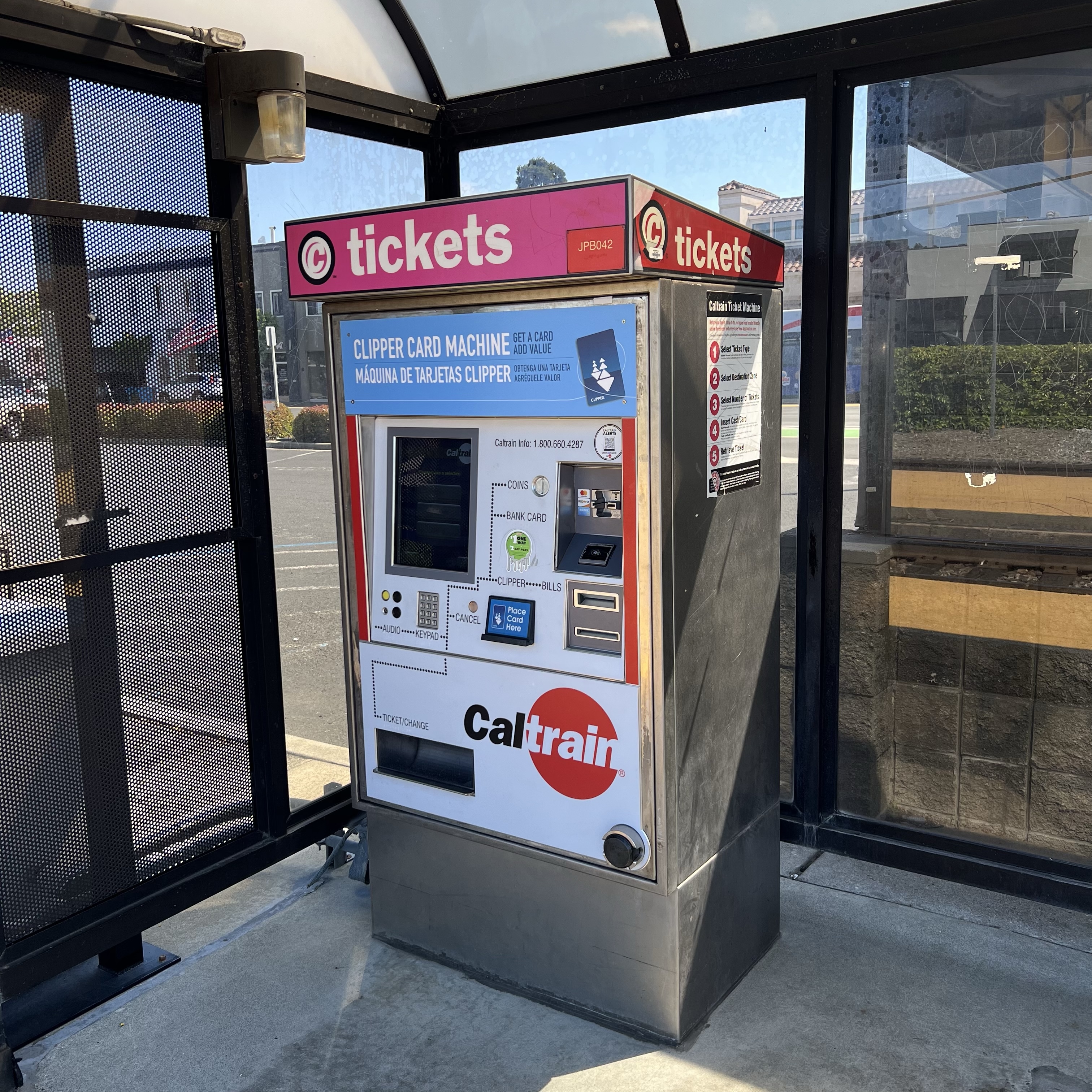
And there is no cafe. And no passengers for that matter.

Like Atherton, the new electric EMUs speed by this station. The train only stops here on weekends, which is more than can said for Atherton, and the former station is now a restaurant. The platform has some benches, a few shelters, and a sign that reads “No Loitering”. Is sketching a form of loitering?
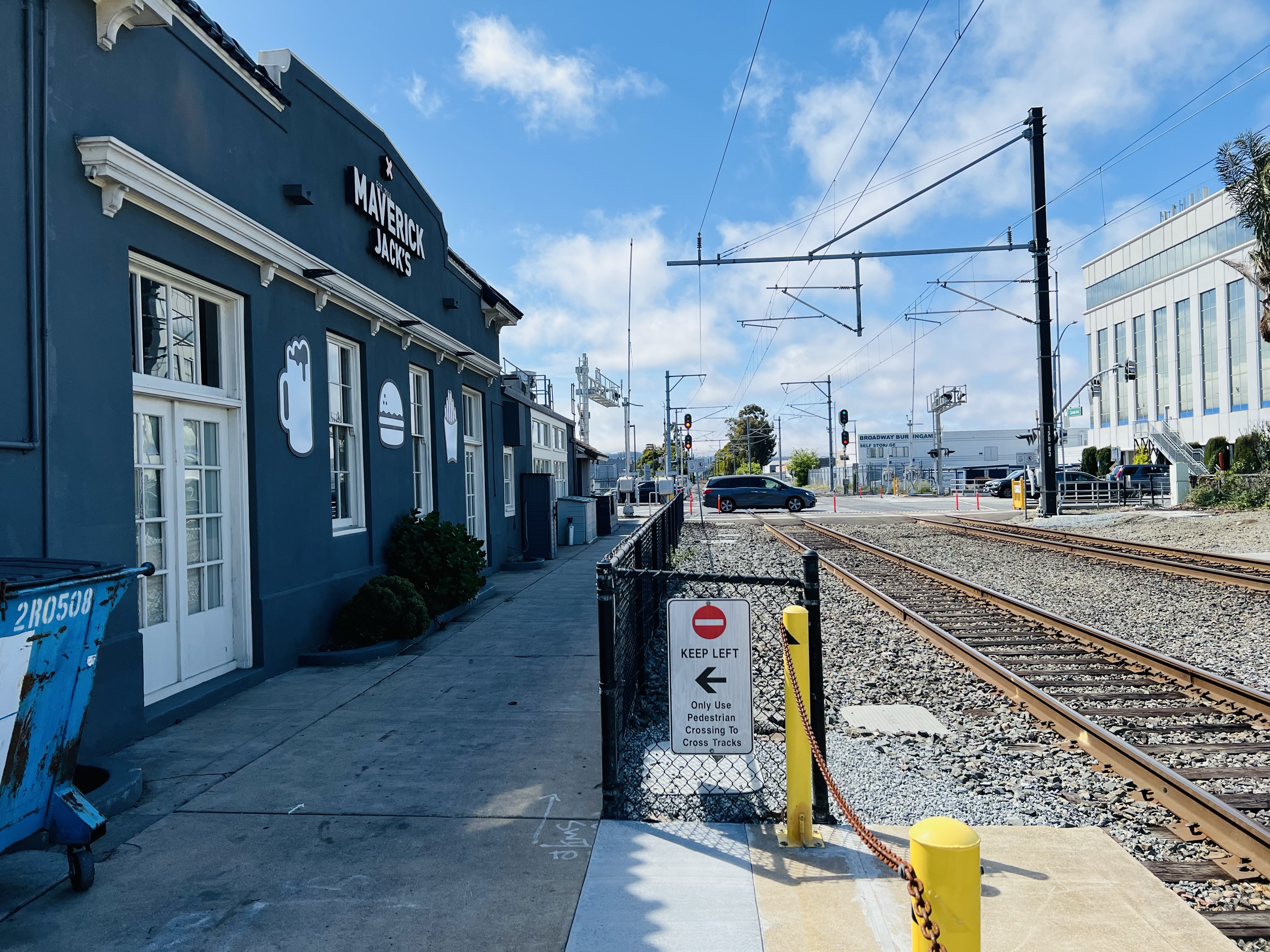
Looking north toward San Francisco with the former station, now a restaurant, on the left.

The Broadway Station suffers from diminishing ridership and a center loading island platform for northbound trains. This means that a hold-out rule is in effect which means that if a train is in the station, a train heading in the opposite direction must wait outside the station until the other leaves before pulling in. This creates delays and is a major reason the station was closed on weekdays on August 1, 2005.
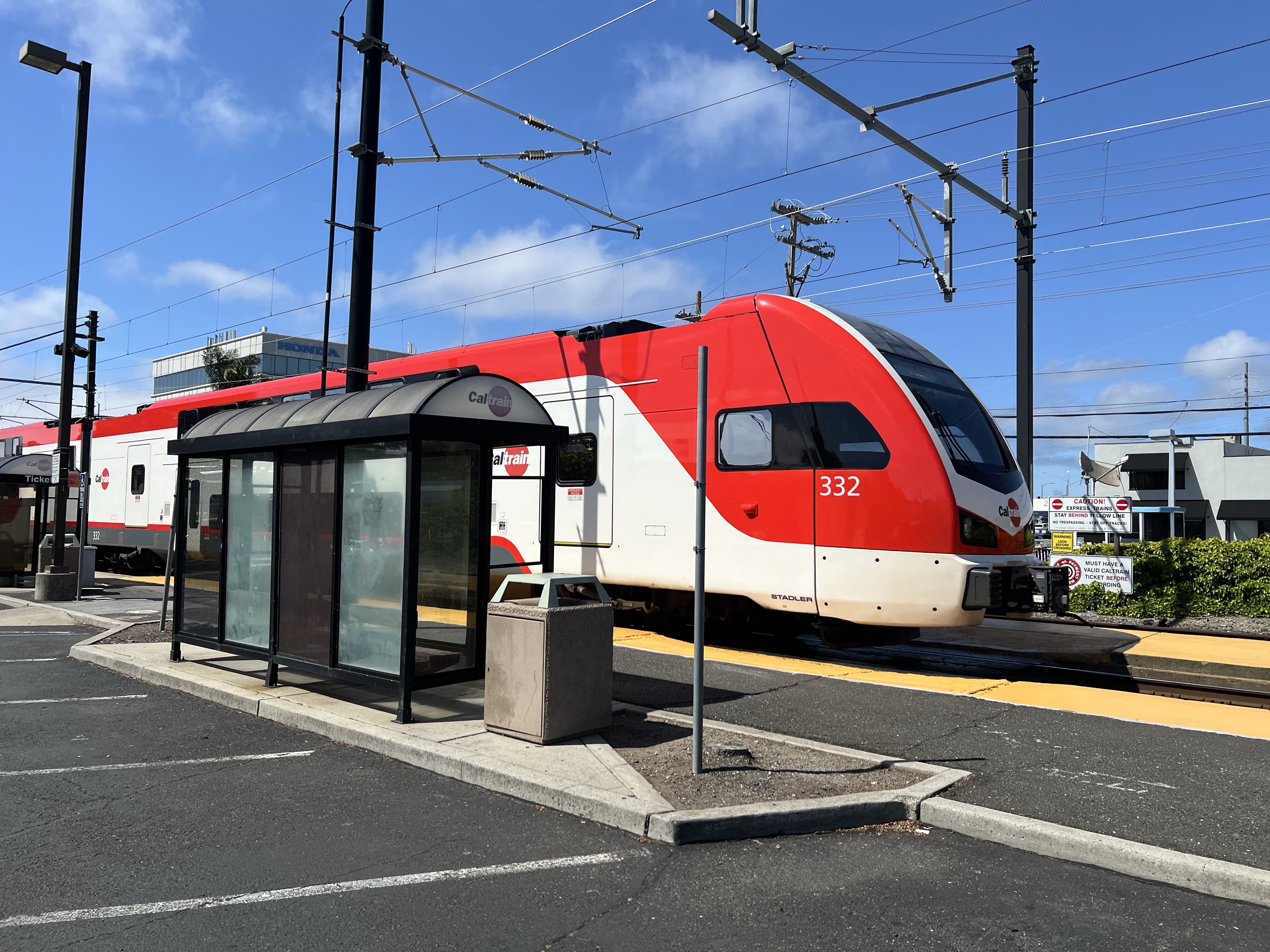
This southbound EMU is not stopping here.

The original station was opened by Southern Pacific in 1911. The station was renamed Buri Buri in 1917 and then to its current name in 1926.
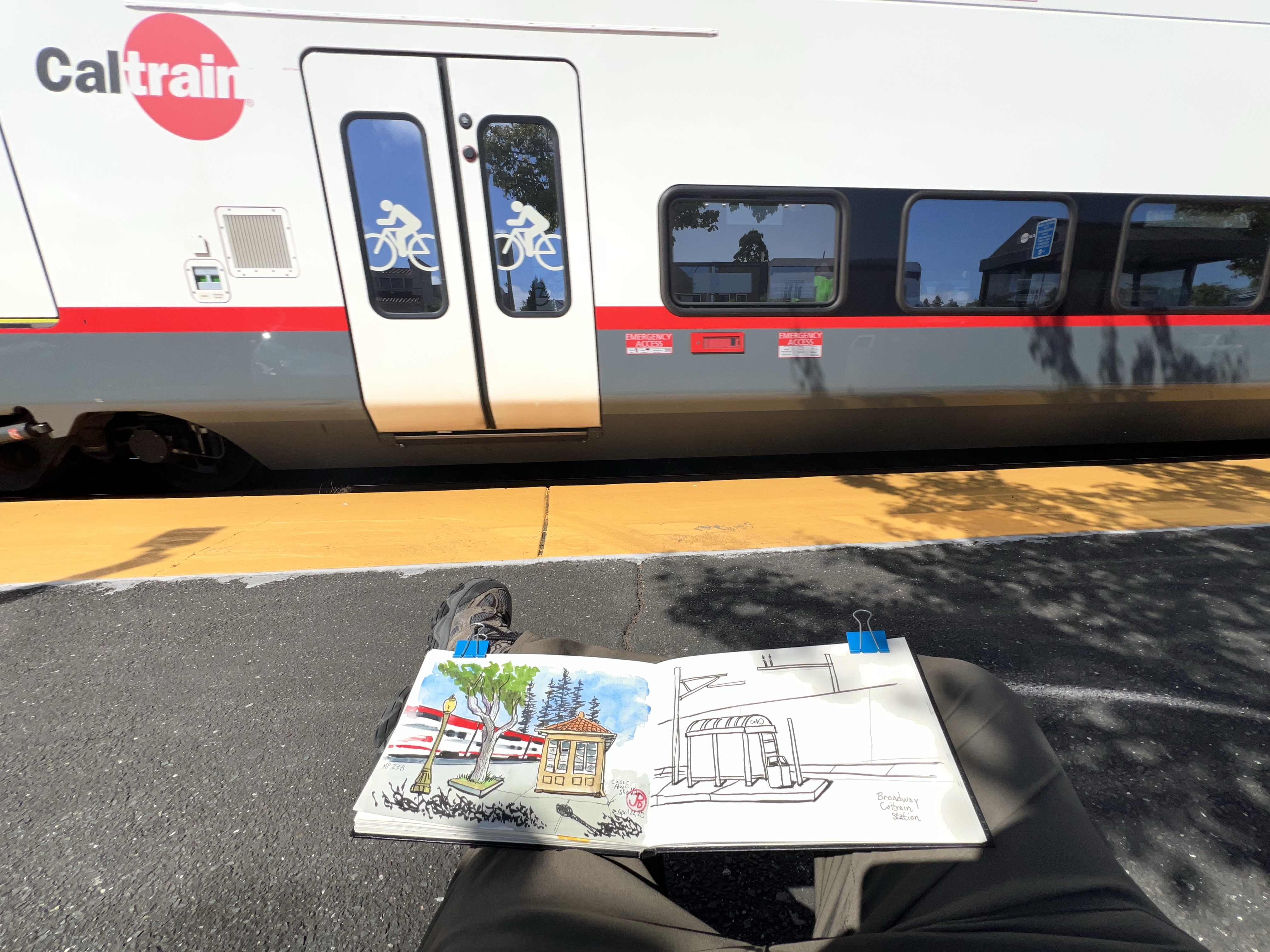
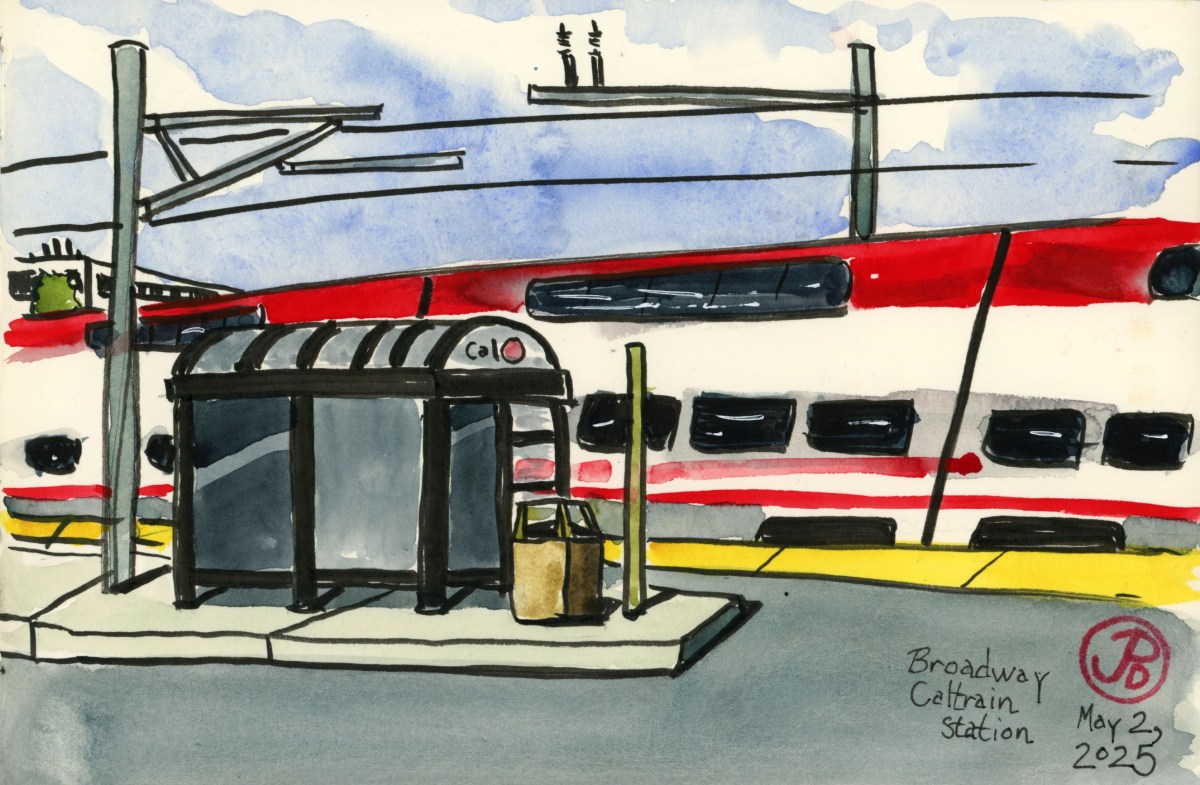
My field sketch and a southbound EMU speeding by at Broadway.

Sketching Notes

During my lunch I sketched out the scene I wanted to sketch on an index card. This is like a storyboard for a tricky scene in a film. What I wanted to do was convey a sense of stillness and motion. The stillness of the shelter and the motion of the train speeding by. In the presketch, or storyboard, I exaggerated the lines of the train. They are curved and kinetic while the shelter remains calm and pedestrian.
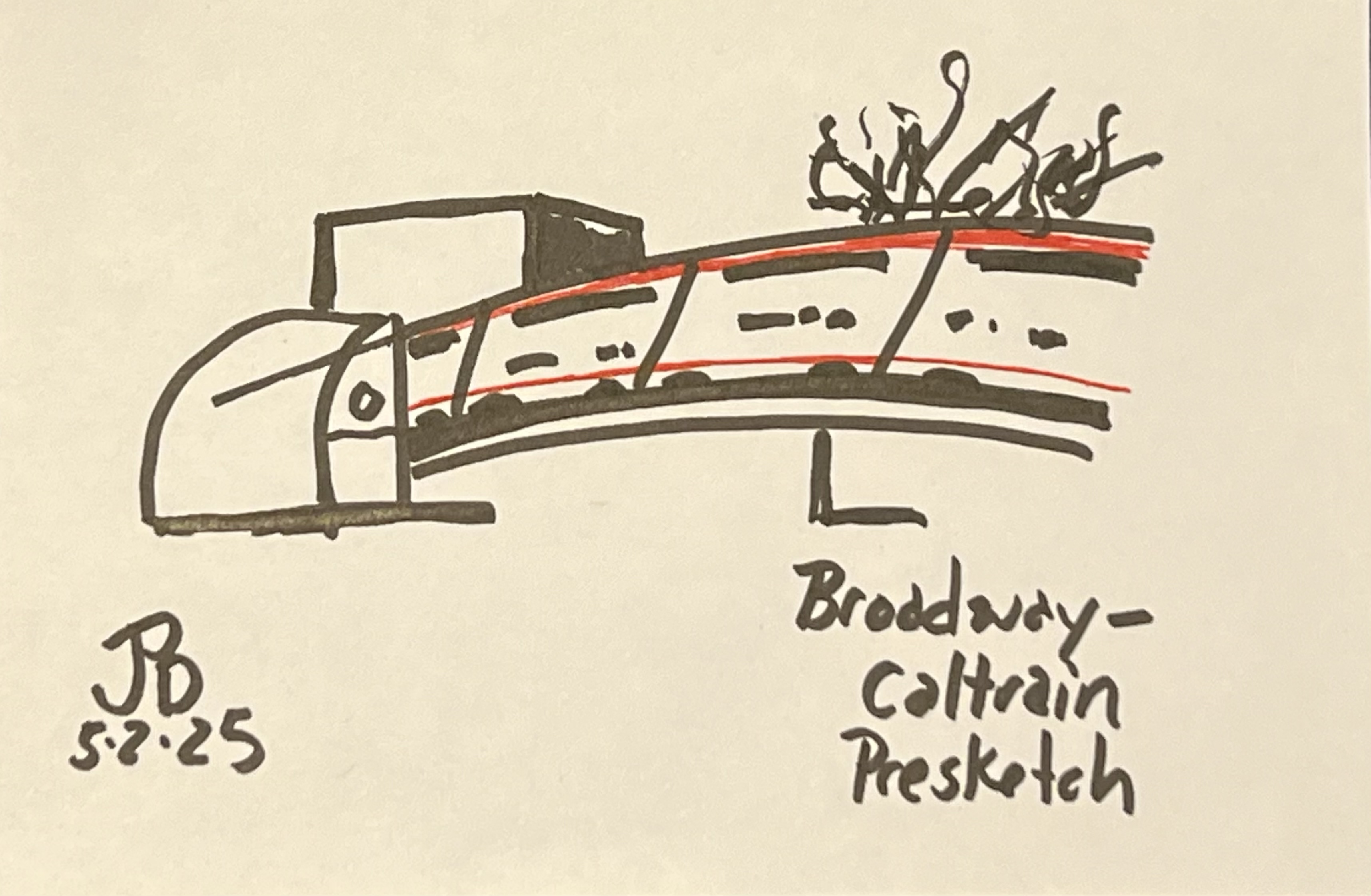
Perhaps I could have exaggerated the lines more in my field sketch. That would entail sketching things that aren’t there in front of me. Like sketching in another dimension.
Image

Burlingame: “The Prettiest Station on the Line”

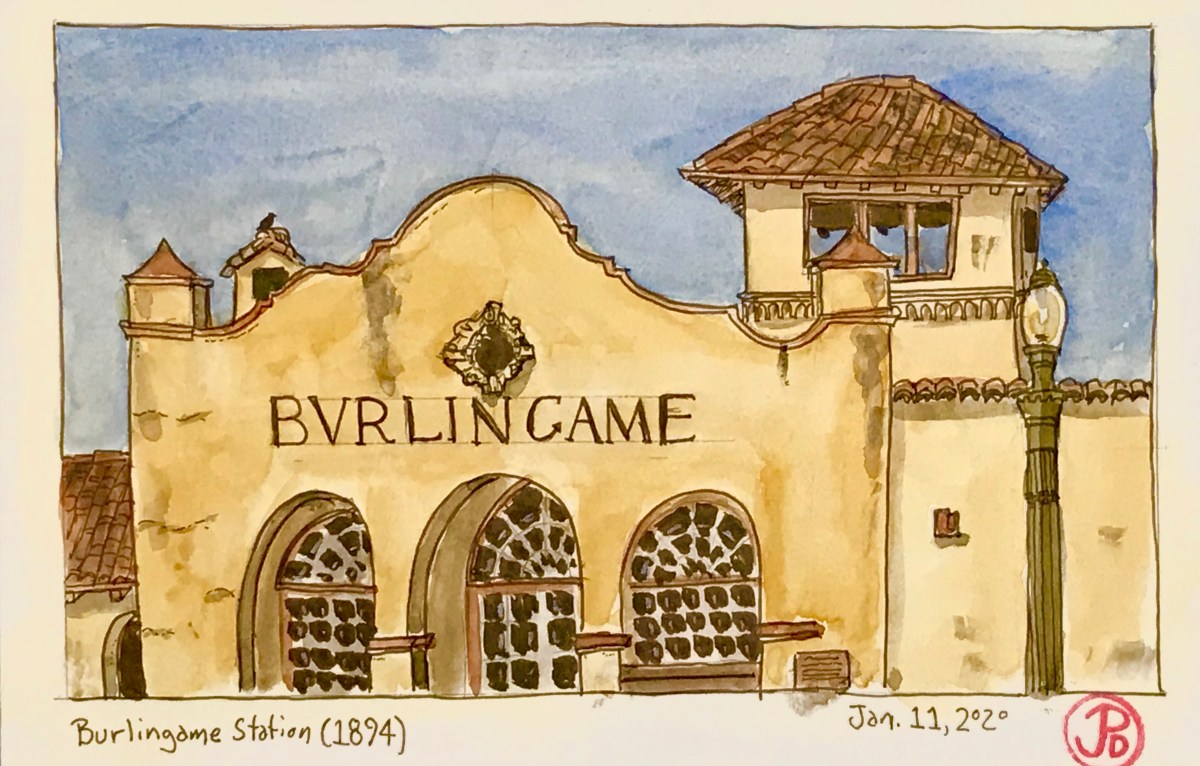
Burlingame Station was the station I looked forward to sketching the most out of all the depots on the line.

It is certainly one of the most architecturally interesting stations anywhere between San Francisco and San Jose. The station is the first permanent example in California of the Mission Revival Style; a look back to the 21 Spanish Missions that line the California Coast from San Diego to Sonoma. It’s style influenced other train stations in California including Santa Barbara, San Luis Obispo, and San Diego. The station building itself was designated a California Historic Landmark on March 29, 1971 (almost five months before I entered this world).

I had field sketched all 21 missions and was fluent in the architectural language of the missions, so the grade of my learning curve was flattened. In Burlingame I saw the tiled roofs, tower, arcades, and arches that defined the California Mission Revival Style. These elements are almost second nature to me because I had drawn many examples of them in the 21 missions. And who doesn’t love to draw an arch?

Burlingame Station was opened for service on October 10, 1894. And it was certainly a busy station in the heyday of rail service along the peninsula corridor. On a weekday in the late 1930s, 33 passages trains passed through Burlingame station each way. This included the Lark, Sunset Limited, Del Monte, Daylight, and Coaster which where all long-distance trains as opposed to the local commuter trains that took passengers from San Francisco to San Jose.

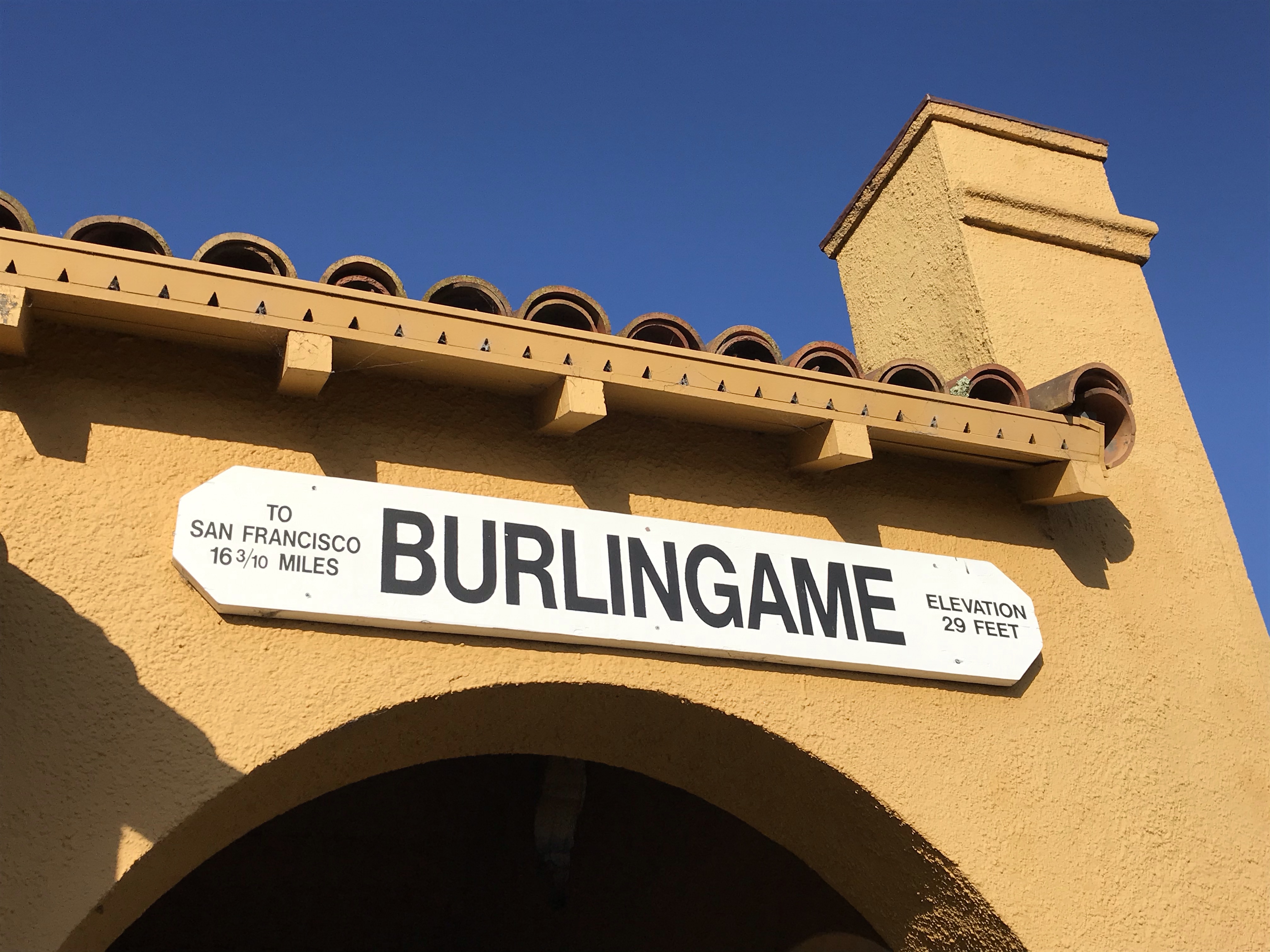
The old and the new. In the foreground is the Burlingame Caltrain sign and on the tower is the round shield of the mighty Southern Pacific Railroad. SP operated from 1865 to 1996.

As a comparison, the current passenger railway traffic through Burlingame is about 92 weekday trains with a weekday ridership of about 65,000 passengers. Burlingame Station is very much an active station with tracks running right in their original position and grade.

On a Saturday morning I took BART to the Millbrae Transit Center and then transferred to a southbound Caltrain. After a short ride, I got off at the train’s second stop, Burlingame. Once the train pulled out of the station, I crossed the tracks and set up my sketching stool on the opposite platform.

While I was sketching a young boy and his father had biked over to watch trains. They reminded me of my own father and told of a little touch of sanity in this insane world. The seven year old boy stood in front of me watching me work. “I draw trains!”, he announced with the candor and fearlessness of youth. I told him I also draw trains and train stations.

He then turned his attention to the train tracks and he looked both north and south along the line for the tell-tale headlights of an approaching train. There were none. Caltrain was operating on a weekend schedule which means less trains. The boy wanted to wait, until eternity if need be, for the next train to coast through Burlingame Station. This also reminded me of my own love of trains and it is always special to see a working train on the line. His father finally shepherded his son back home and he thanked me for sharing my sketch.

A little accent from Baja California, palm trees and Spanish arches.

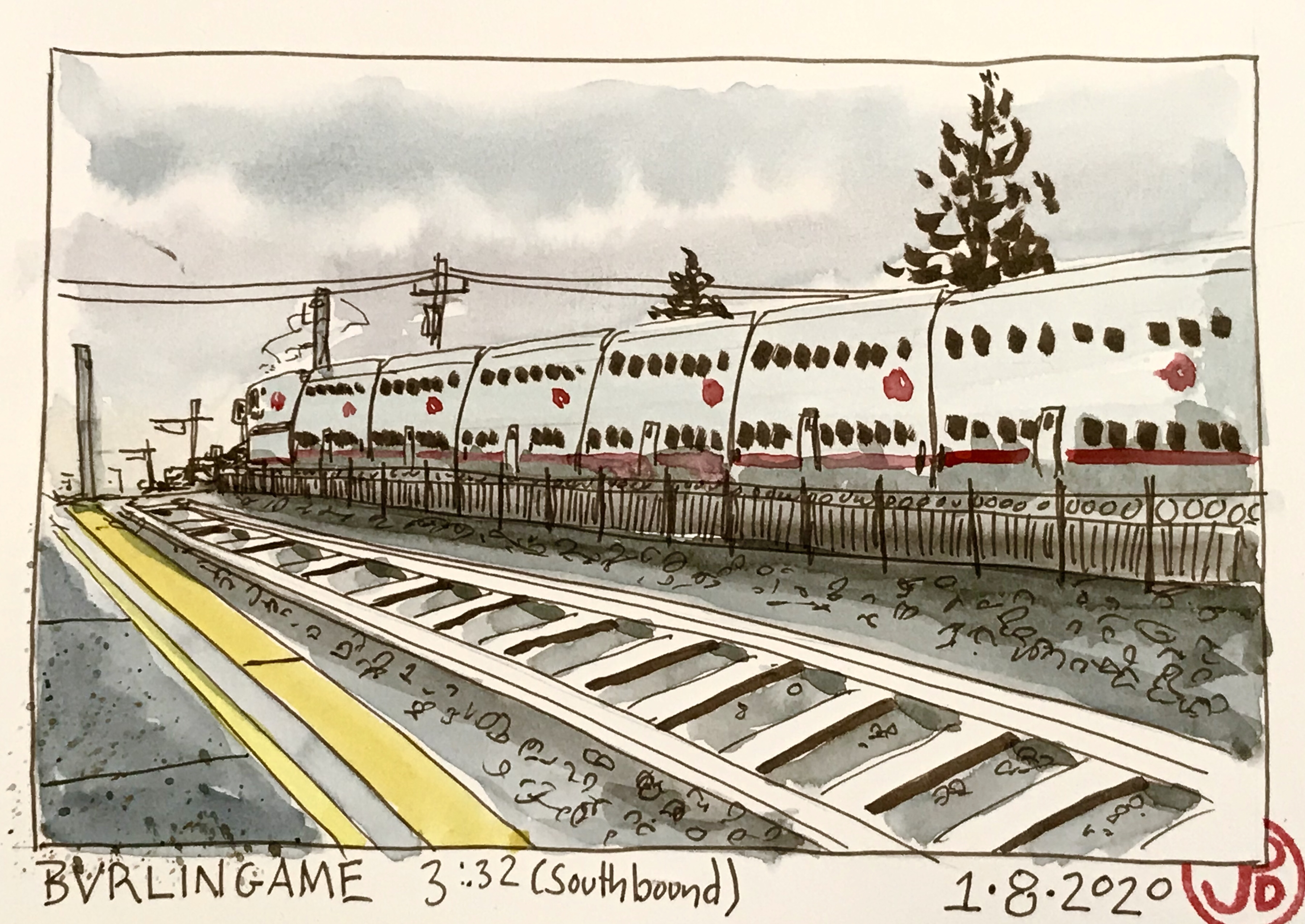
An after work sketch at Burlingame Station. I had less then two minutes to roughly sketch this southbound train before it departed toward San Jose. Once I got the perspective correct, I added other details long after the train had left the platform. I put in the things that where still there: the platform in the foreground, the northbound tracks, trees, and power lines and towers.