Image

Pacific Grove Museum of Natural History

On my first full day of summer I headed 50 minutes south of Santa Cruz to Pacific Grove on the Monterey Peninsula.

This is a return trip (it had been a while) to the Pacific Grove Museum of Natural History.

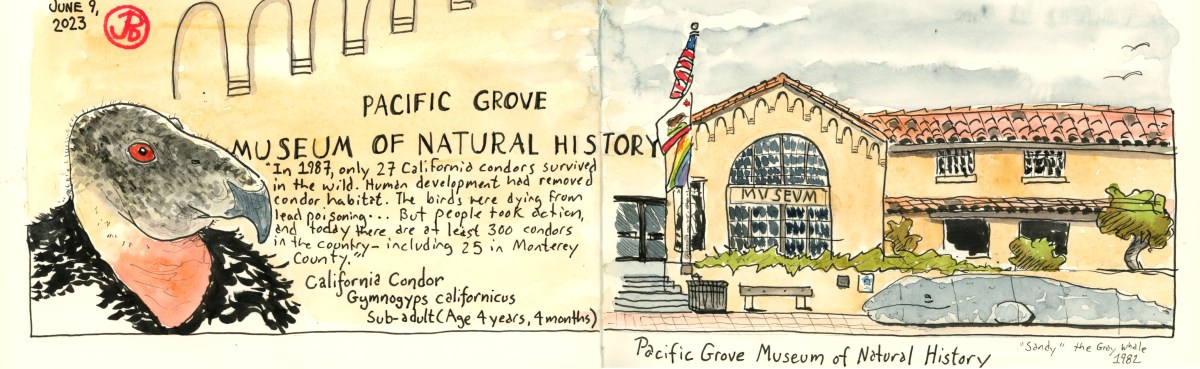
I arrived early and sat in the park across the street to sketch the 1932 Spanish Mission Revival museum. To the right was a statue of a female gray whale named “Sandy”, built in 1982.
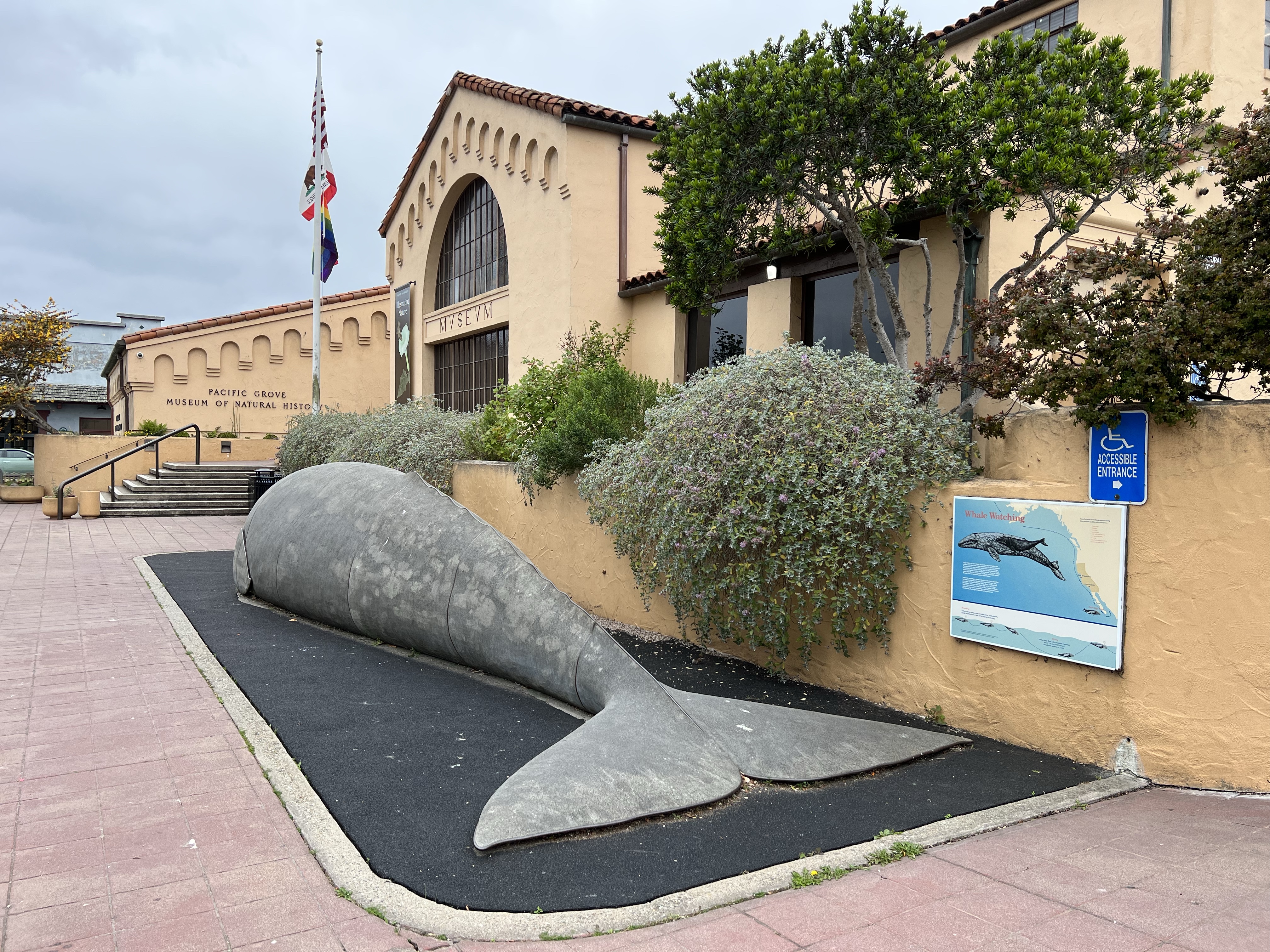
“Sandy” in the foreground and the museum in the background.

The museum opened at ten and after paying my $10 admission I walked into the gallery, greeted by a grizzly bear standing up on it’s hind legs. The grizzly is the extinct State Mammal of California. This specimen came from Alaska.
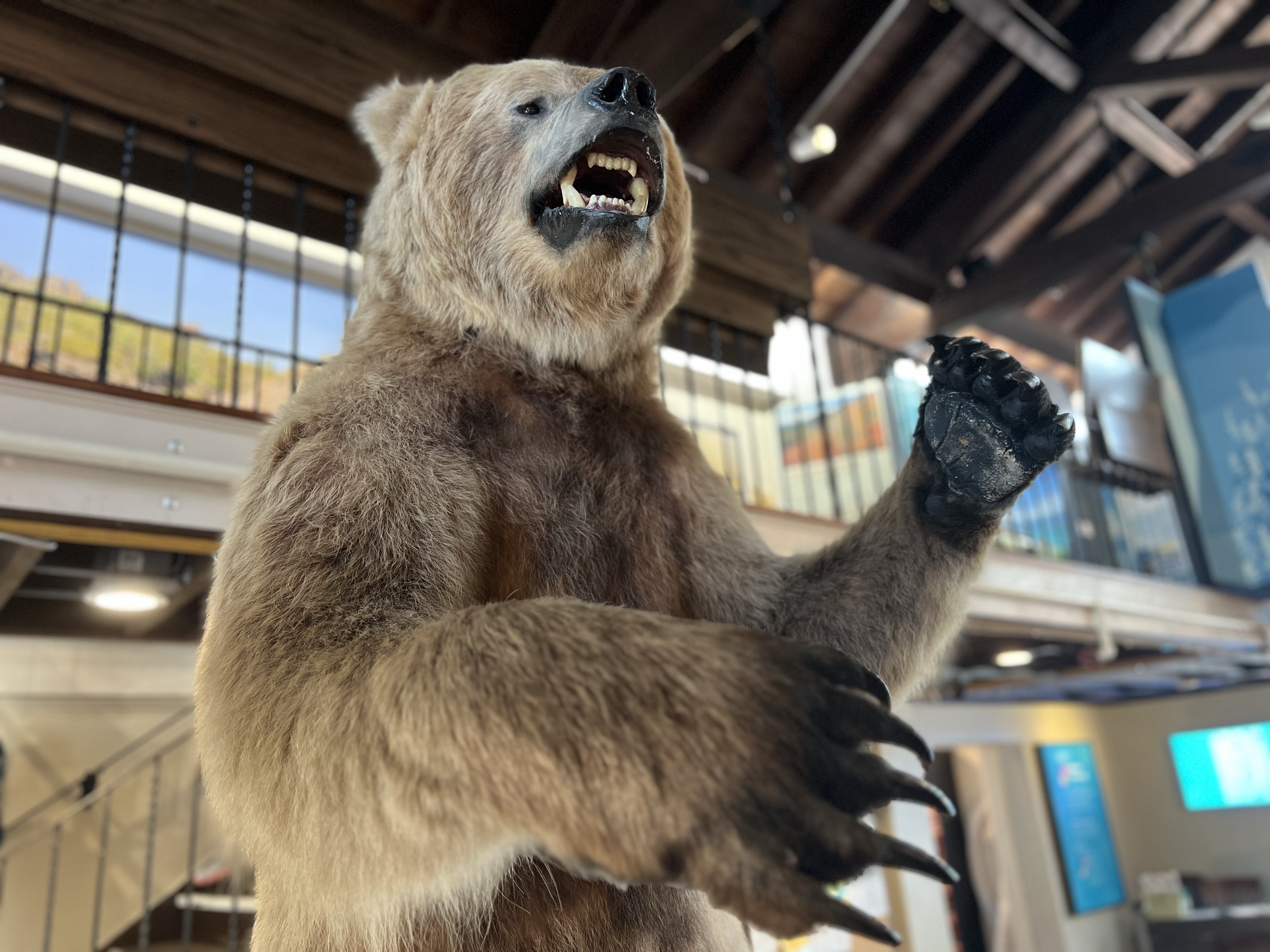
The Pacific Grove Museum of Natural History is full of animals: insects, amphibians, reptiles, fish, mammals, and birds, lots of birds. But all of them are dead. This is a mount museum where the visitor are surrounded by taxidermy. Some very lifelike but others a little comical.
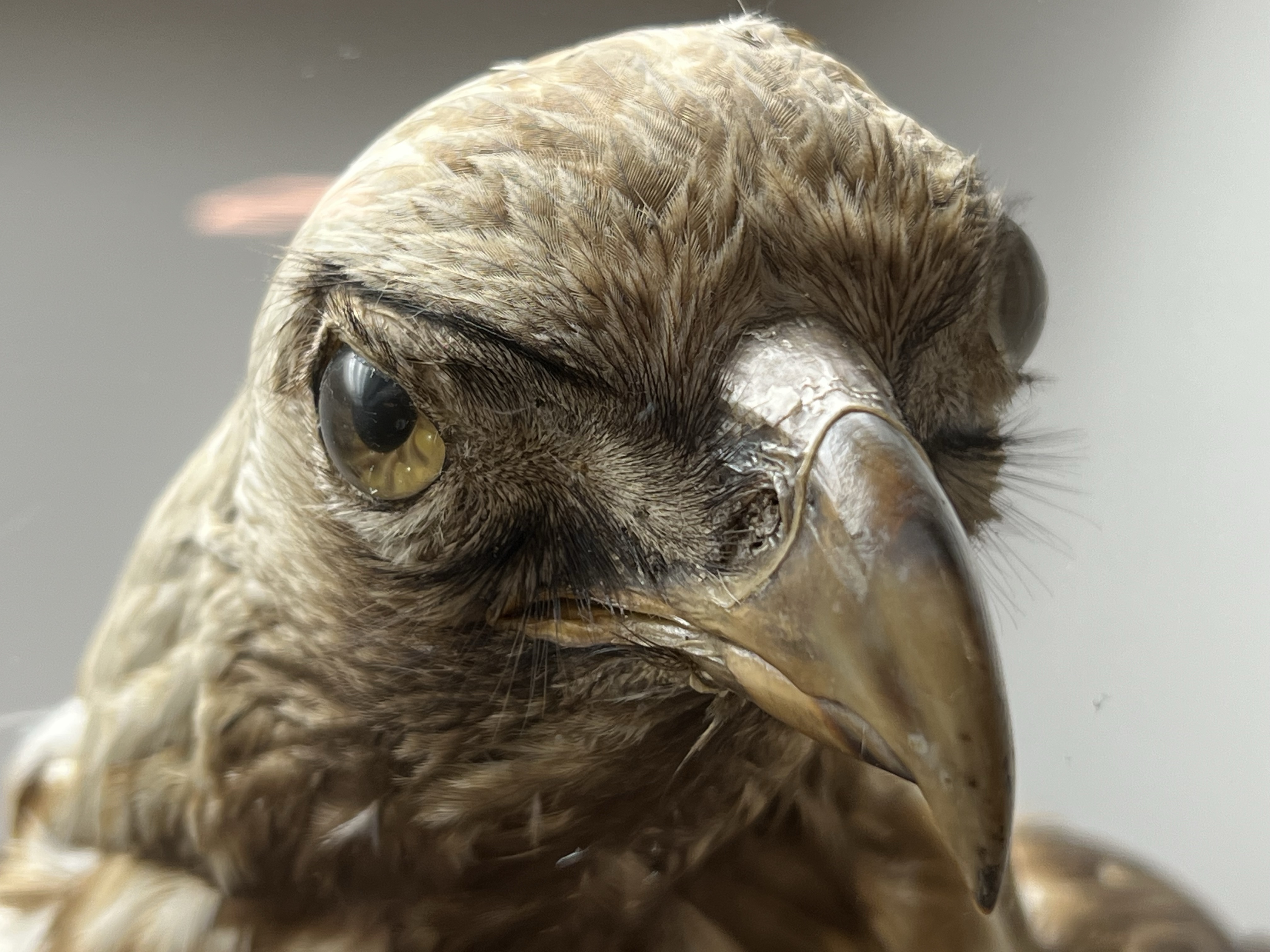
This taxidermy golden eagle looks like someone squeezed it a little too hard.

This is a sketchers paradise because it provides lots of subjects, none of which are moving anytime soon. After sketching the exterior of the museum, I added a California condor from the bird hall. These magnificent and rare birds can be seen a short distance from PG on the coast of Big Sur.
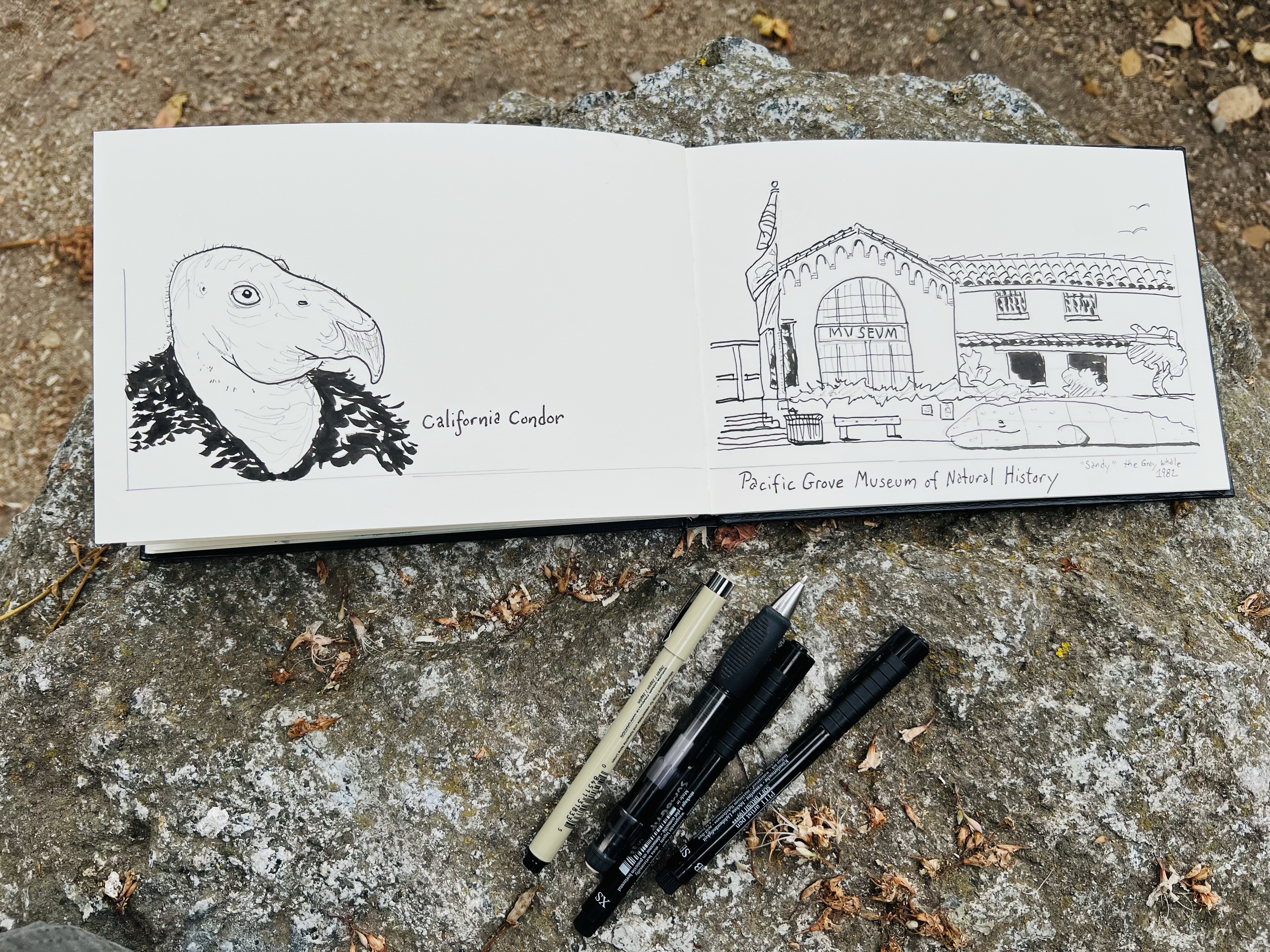
My spread in progress from the Monterey Native Plant Garden in the back of the museum.
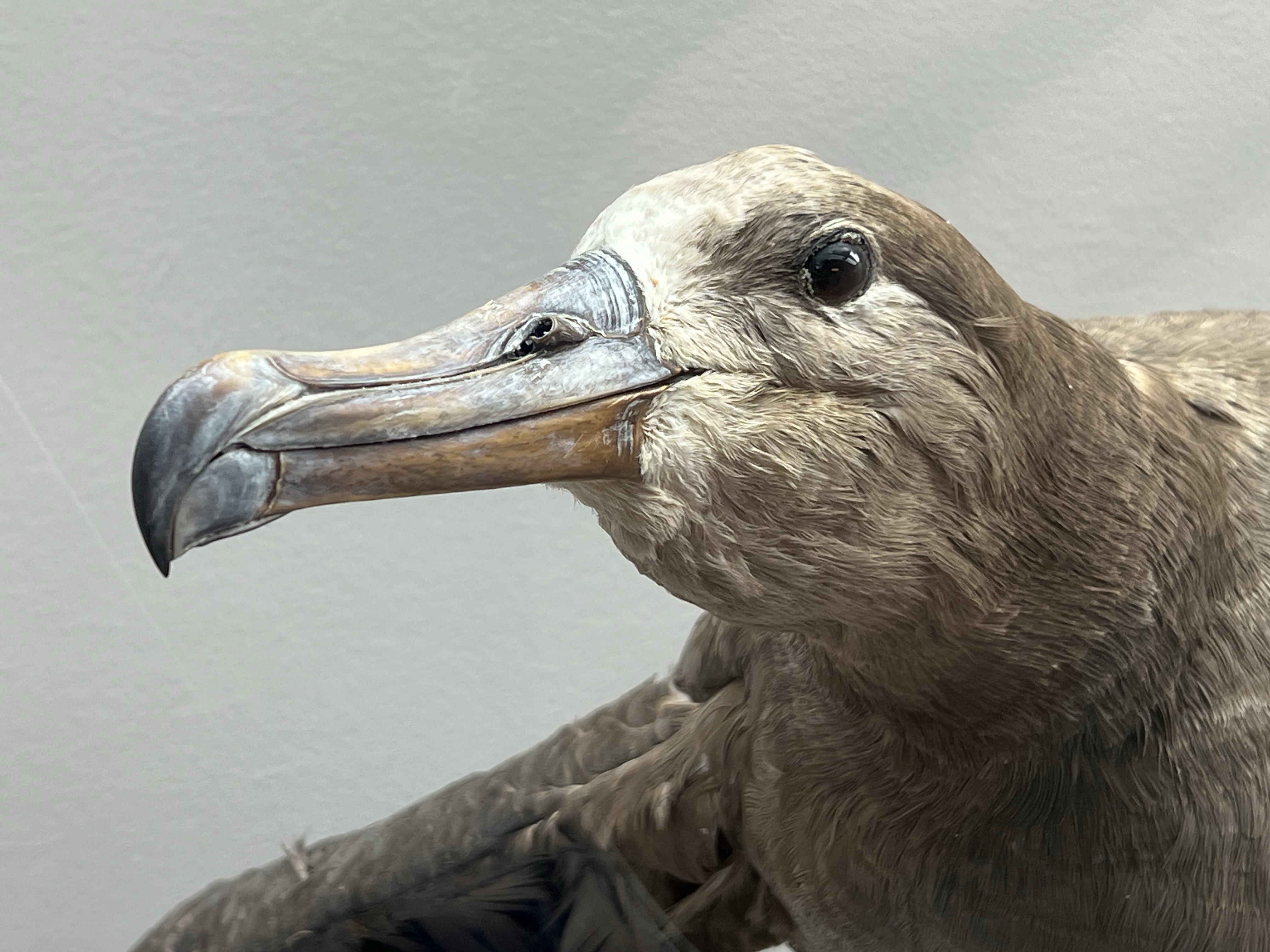
The black-footed albatross can be seen in the Monterey Bay, usually on a pelagic boat trip. A Northern California coast pelagic trip is not the same without a sighting of this iconic species.

One avian mount that I was looking forward to sketching was the extinct passenger pigeon. In Washington I had seen “Martha”, the last passenger pigeon at the Smithsonian Museum of Natural History so I was looking forward to sketching PG’s pigeon.

I looked and looked but I could not find the passenger pigeon. I thought it might be in the pigeon cabinet between band-tailed pigeon and rock dove. Nope. I even asked the lady at the desk and I got a blank stare. You think such a noteworthy mount would be well known to museum staff. Nope. None of the docents knew where it was nor what it was.
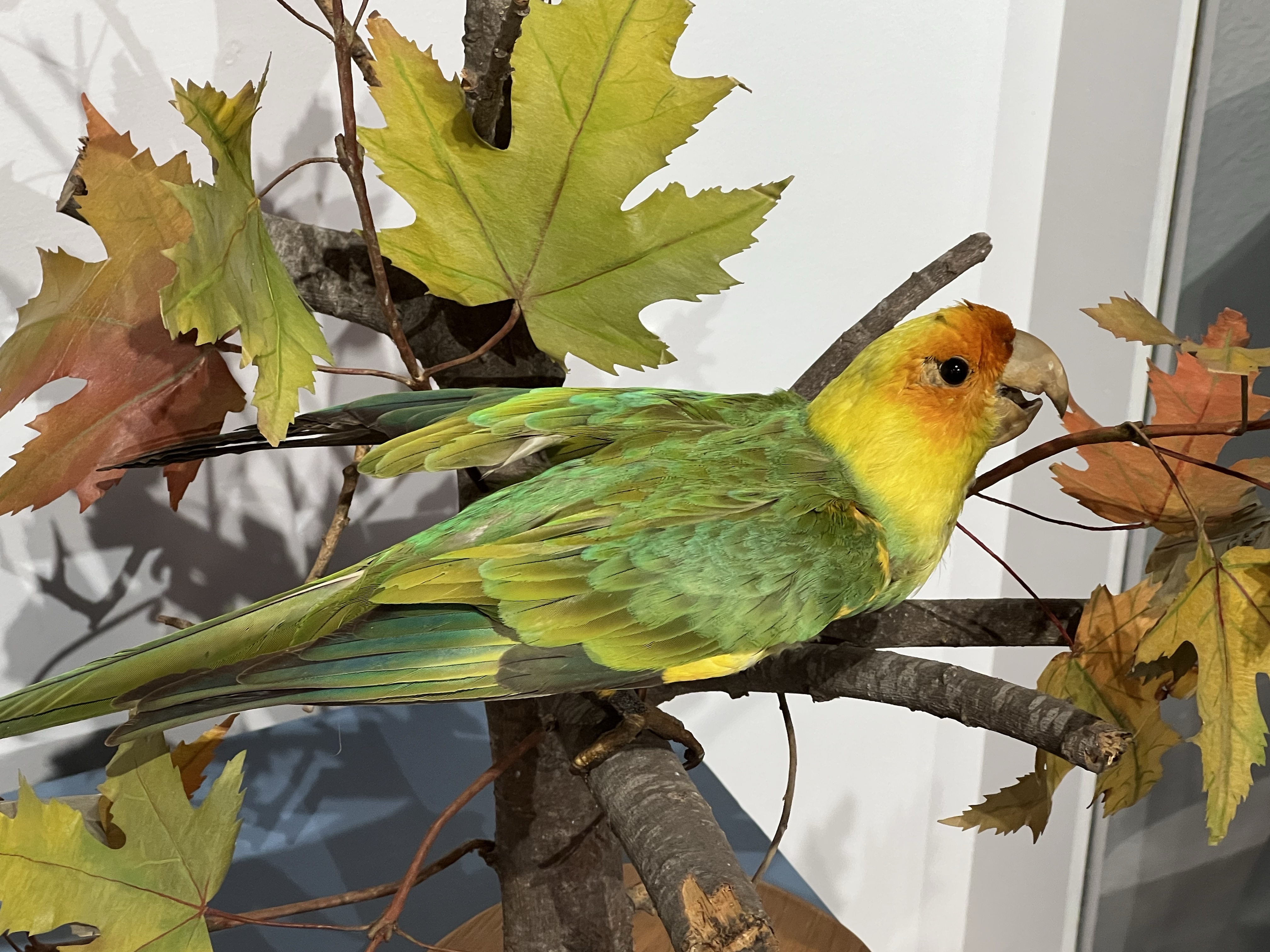
A consolidation was the mount of the Carolina parakeet, long extinct. The last individual died in 1918 at the Cincinnati Zoo.
Image

A Tale of Two Condors

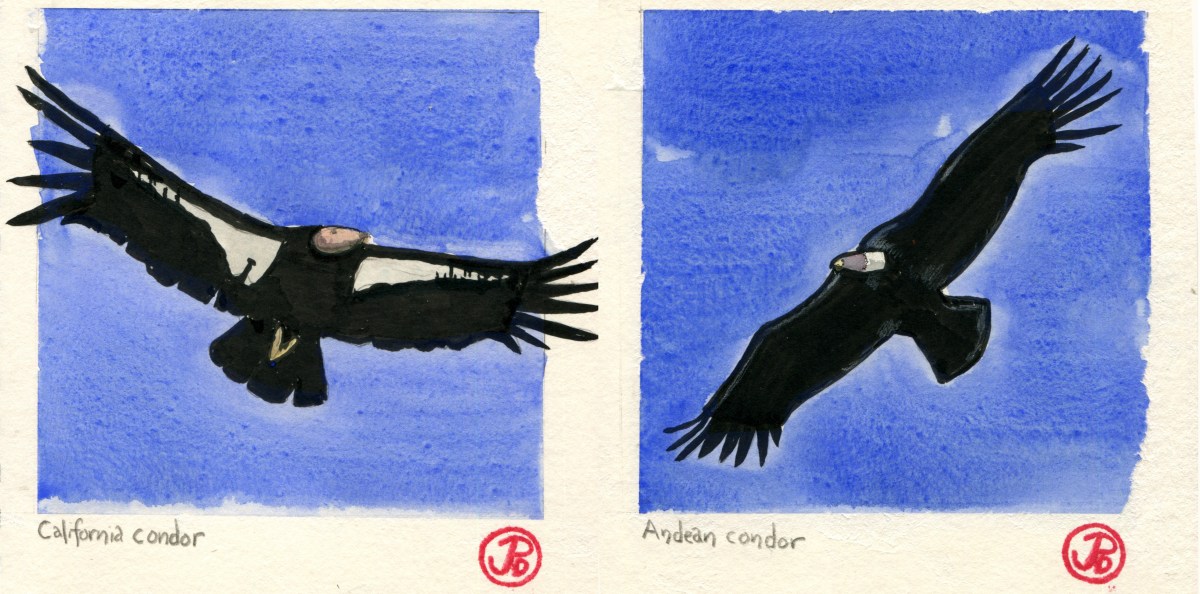
On July 10, 2018 I saw my last Andean condor wheel above the cliffs as I watched from the patio of the Tambo Condor Restaurant. I now had closed out the world’s condor species. It was not too hard to do because their are only two condor species in the world. But it require making a journey to Quito, Ecuador and then a drive up to Antisana Biological Reserve. They are both large, dark birds that soar in the air so they are not difficult to spot. But their rarity  and their majestic awesomeness make them a much sought after bird.

The two species of condor are only found in the western hemisphere on the continents of North and South America. The western United States is home to the California condor (Gymnogyps californianus) and the western part of South America, along the spine of the Andes mountain range, is the domain of the Andean condor (Vultur gryphus).

When I returned to the States I still needed a condor fix and I knew that they were only an hour and a half drive away from my cabin in the Santa Cruz Mountains.

So on August 2, 2018 I left my cabin just before 7:00 AM, my destination was Big Sur.

The Big Sur coast is the best place to see the California condor in California. While most tourists stand by the roadside, facing the ocean, I am usual faced the other way, scanning the ridges for North America’s largest bird.

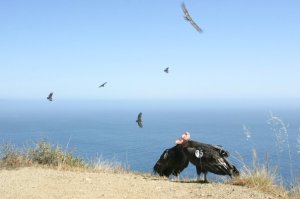
The best place to look for the condor in the Big Sur area is Grimes Point. It was here in June of 2009 that I saw the most condors I have ever seen.

California condor on the Big Sur coast from Grimes Point in 2009.

June 22, 2009. In this photo from Grimes Point shows an incredible seven California condors!

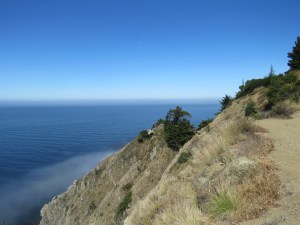
After birding at Andrew Molara State Park I headed further south. riding the ribbon of road that has been called the most scenic drive in the world. After cutting into a canyon, Highway 1 pulled up out of the canyon and headed south again. At the top was the pullout for Grimes Point.

Grimes Point looking north.

I pulled off at the pullout at 10 AM and began my condor watch. The sky was clear and a low haze was skirting the coast below. There was a southernly movement of swallows and a few turkey vultures soaring up on the ridges. But no condor, not yet.

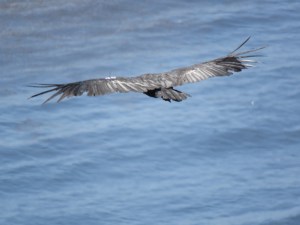
I looked north at the A-frame house that clung to the point and at 10:05, an adult condor appeared from around the point and flew south below me! It is always amazing to see these large birds in flight and to see these condors in close proximity and from above, is an unforgettable experience!

My second condor species in less than 30 days, California Condor below Grimes Point.

In the less than 30 days I had both species of condors in my binoculars in two very different locations, one at sea level and the other, high in the Andes at 13,000 feet. Almost 4,000 miles separated these to signings but they seemed to bring the world closer together,

Image

Sketch Poetry

Poetry frequently makes it’s way into my journal.

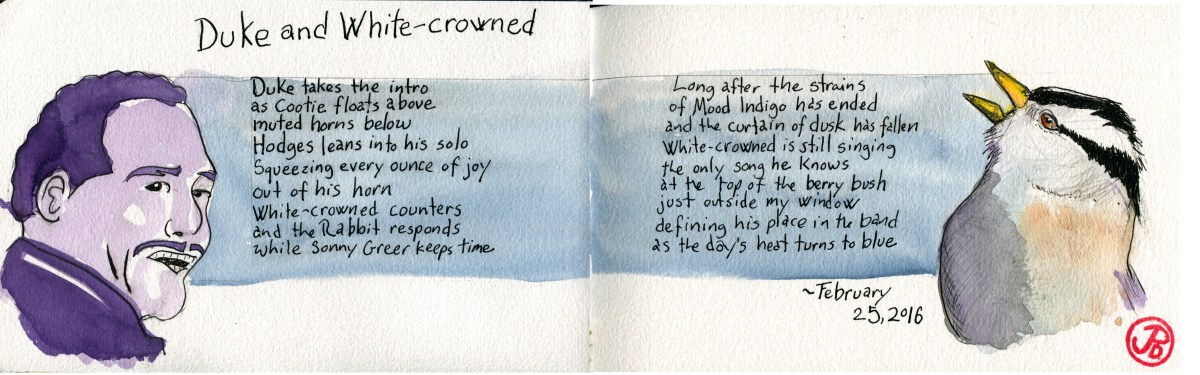
One afternoon I was listening to one of my father’s Duke Ellington CDs, a CD that I had gotten him for Christmas a while ago. My father loved big bands and he saw Ellington, Basie, and Ella as well as west coast greats Brubeck, Cal Tjader, and Vince Guaraldi. It was one of those beautiful February afternoons where the trees have blossomed early and the White-crowned sparrows were singing at the tops of trees to mark out their patch. It seemed to me, and the sparrows, that it was a spring day. As I was listening to Ellington the white-crown in the backyard seemed to be singing with the band so I wrote a poem about it and created a spread.

Duke and White-crowned

Duke takes the intro

as Cootie floats above

muted horns below

Hodges leans into his solo

squeezing every ounce of joy out of his horn

White-crowned counters

and the Rabbit responds

while Sonny Greer keeps time

Long after the strains

of Mood Indigo had ended

and the curtain of dusk has fallen

White-crowned is still singing

the only song he knows

at the top of the berry bush

just outside my window

defining his place in the band

as the day’s heat turns to blue.

I added two illustration as “bookends” to the text, one was sketched from the Ellington CD cover and the other was from a photograph of a white-crowned sparrow.

Condor

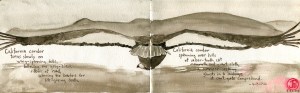
This spread was about my experience watching California condors at Grimes Point in Big Sur. it was a magical day with about ten condor perched by Highway One. The drawing is based on a photograph that I took and the condor’s massive wingspan seems to span the coastal hills in the background. I wrote a poem about the condor, included underneath it’s wings.

Bee

This poem is about my philosophy of nature, that we should not fear nature but embrace it. The poem is dedicated to three of my students as I taught them not to fear the honey bee. During recess on day, I found a bee on the blacktop and I picked it up and showed my students that they had nothing to fear. I then let the bee crawl on their hands and they learned that if you treat nature with respect and acted with confidence the bee will not cease its life by stinging you. I don’t think that lesson is a California State Standard!

Leaves

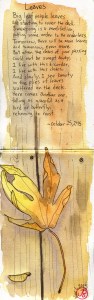
This spread was created to illustrate a poem I wrote shortly after my fathers passing in October. It’s really about accepting what life has dealt you and coping with change.