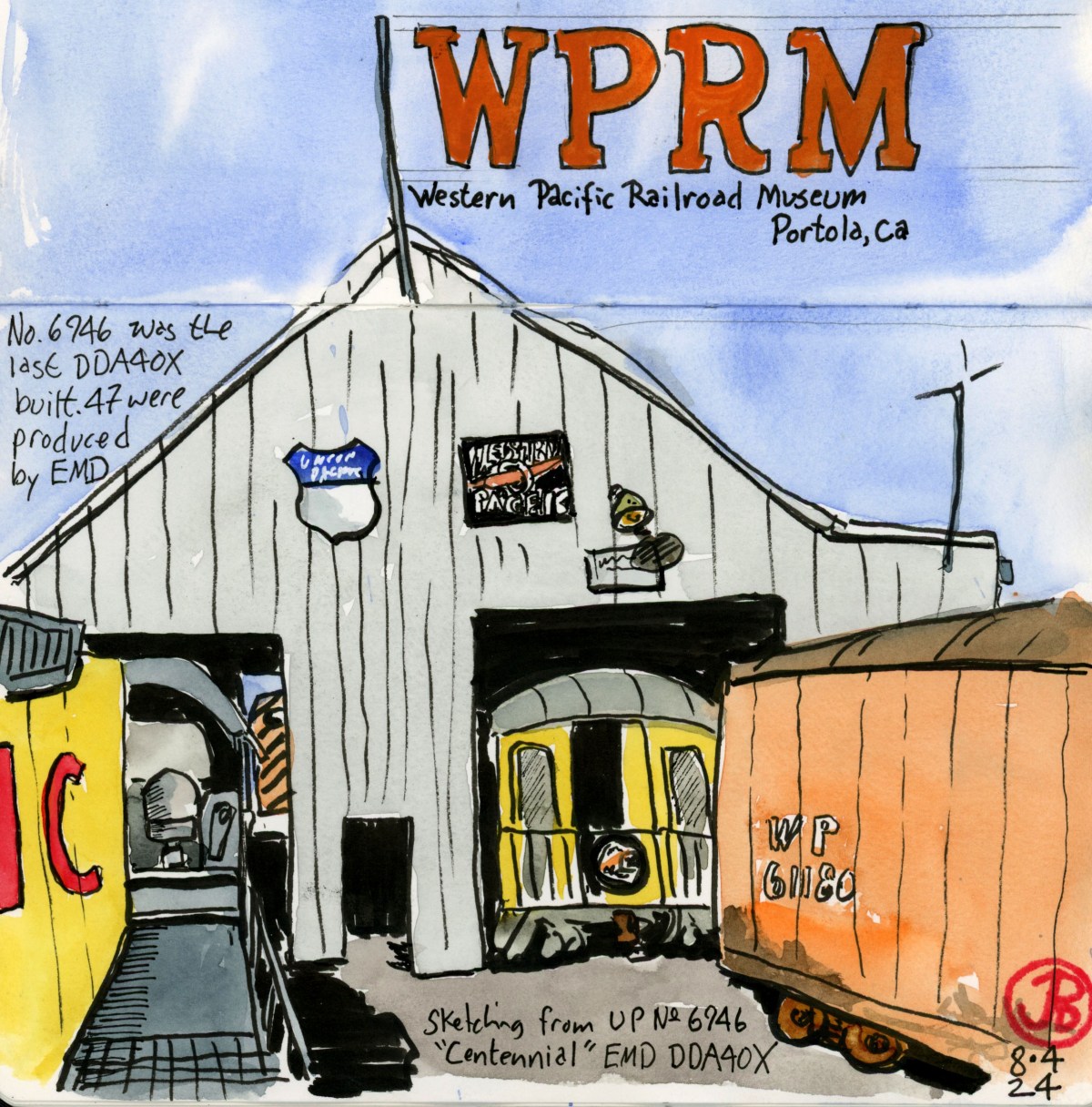
You really have to like trains to make it out to Portola, Ca. From my mom’s house it was a two hour drive over windy roads to reach the small town where the former diesel shops of the Western Pacific were.
These shops and the rails around it, are now the Western Pacific Railroad Museum. The museum is adjacent to the tracks of the Union Pacific which acquired the WP in 1982. Heading west from Portola you enter the Canyon Subdivision which is the WP’s Feather River Route. This is one of the most scenic sections of the the former WP. It was the route the original California Zephyr took from the Bay Area to Chicago.
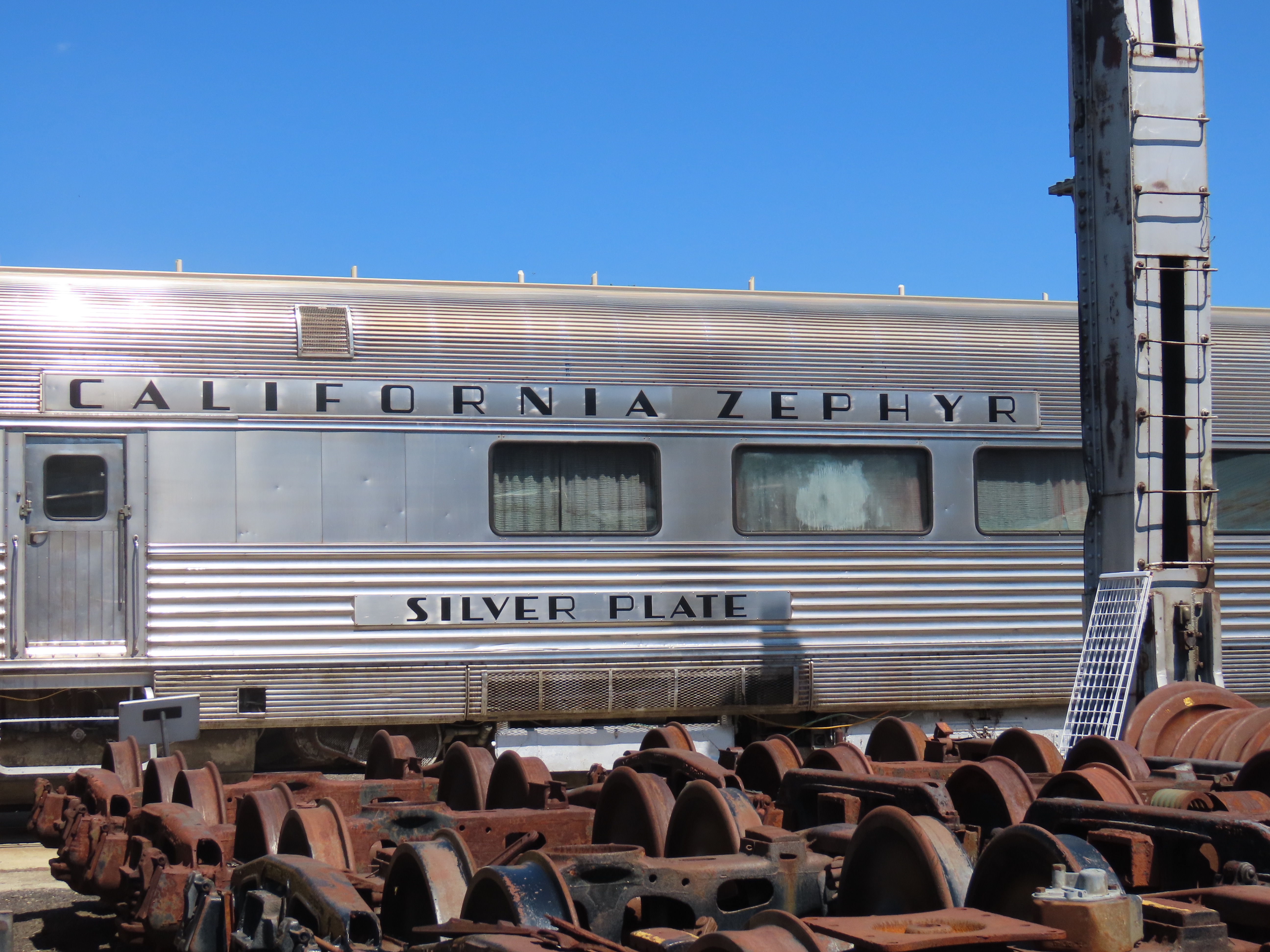
While many railroad museums focus on the age of steam, the WP was one of the first major railroads in the west to dieselize. The museum has 29 diesels in its collection.
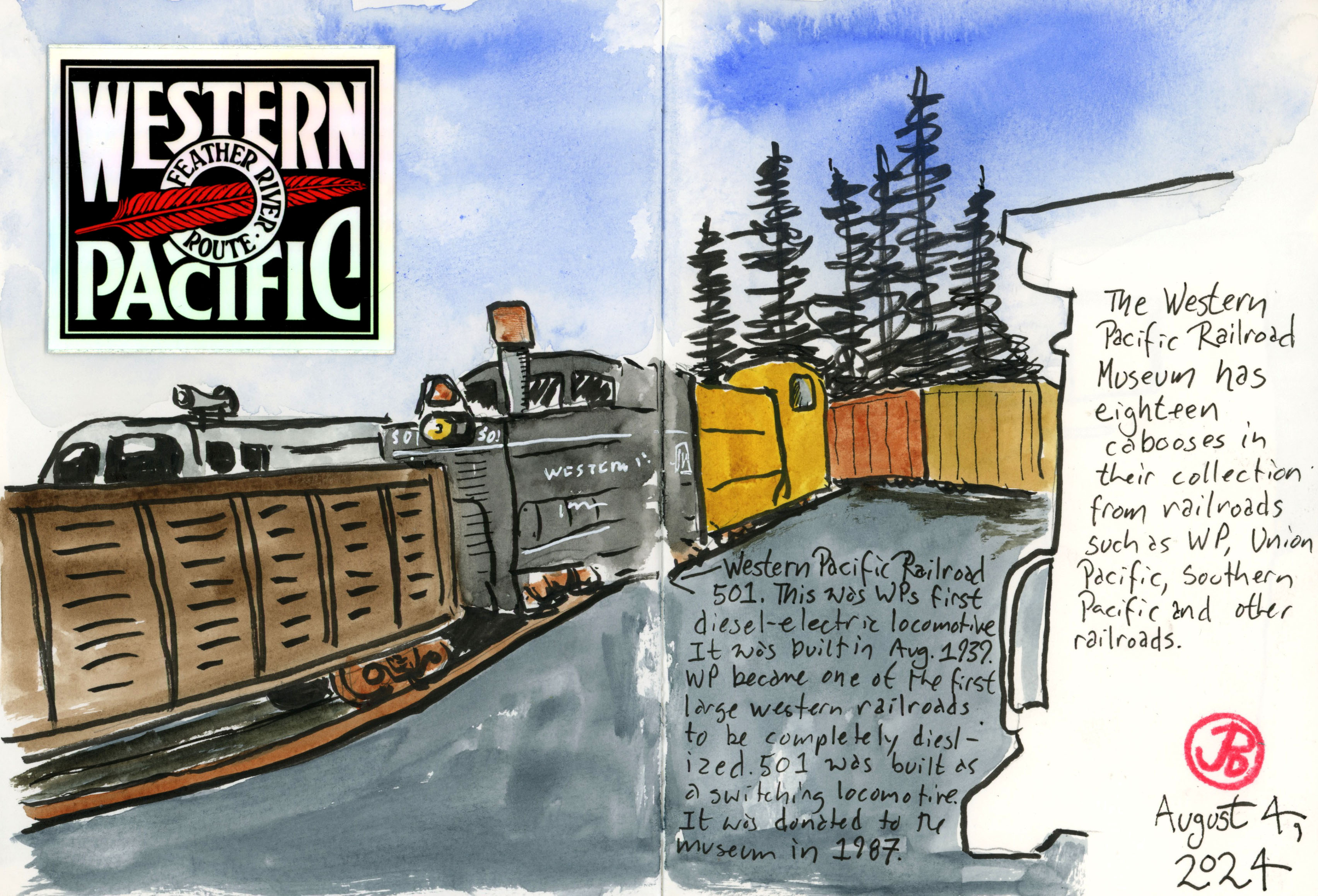
The WP acquired its first diesel in 1939. The SW1 switcher was built by the Electro Motive Corporation for an original cost of $64,525. It was built to work in the yard and with a top speed of 45 MPH, it was not designed to be out on the mainline.
The WP tested out the diesel (No. 501) and liked what it could do. It later ordered two more sister locomotives and 14 years later the Western Pacific was completely dieselized. The genesis of WP’s diesel age is now part of the museum’s collection.
The museum has many classic, epic, and iconic diesel-electric locomotives in its collection and I added a few to my sketchbook.
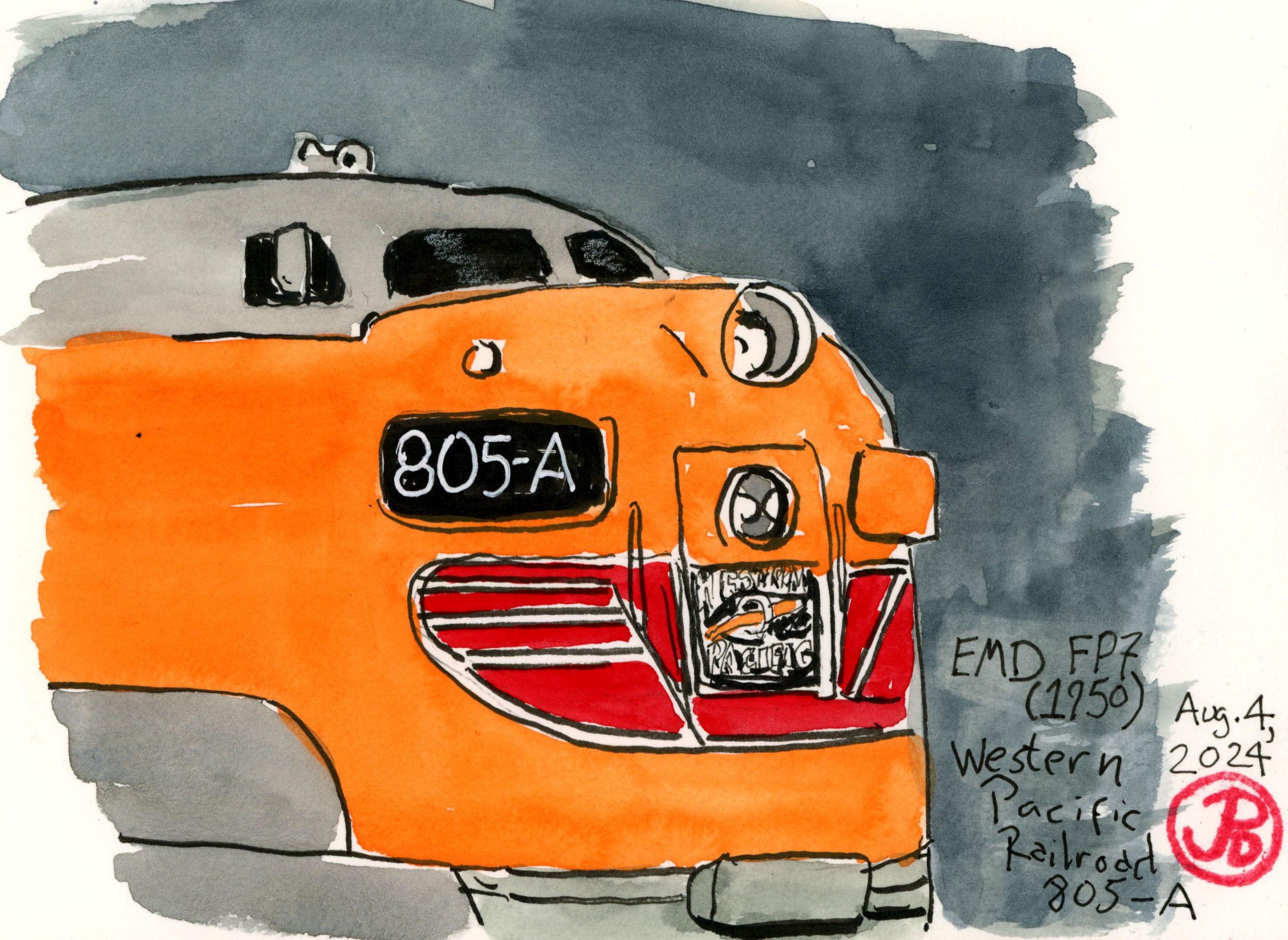
An iconic locomotive is the WP 805-A. This is an EMD FP7. This hood unit was on point of the California Zephyr from Oakland to Salt Lake City. The diesel was in service on the Zephyr from 1950 to the route’s end in 1970.
805-A is the last WP California Zephyr locomotive in existence, so I had to sketch it.
One of the epic diesels in the museum’s collection is perhaps the most epic diesels ever built, this is Union Pacific No. 6946. This 6,600 horsepower behemoth is EMD Class DD40AX “Centennial”, the largest and most powerful diesel-electric locomotive ever built and is the successor of UP’s Big Boy. 6946 is the last (out of 47) Centennial ever built. Only 13 Centennials still exist, the large locomotives having been retired from the UP fleet in 1986.
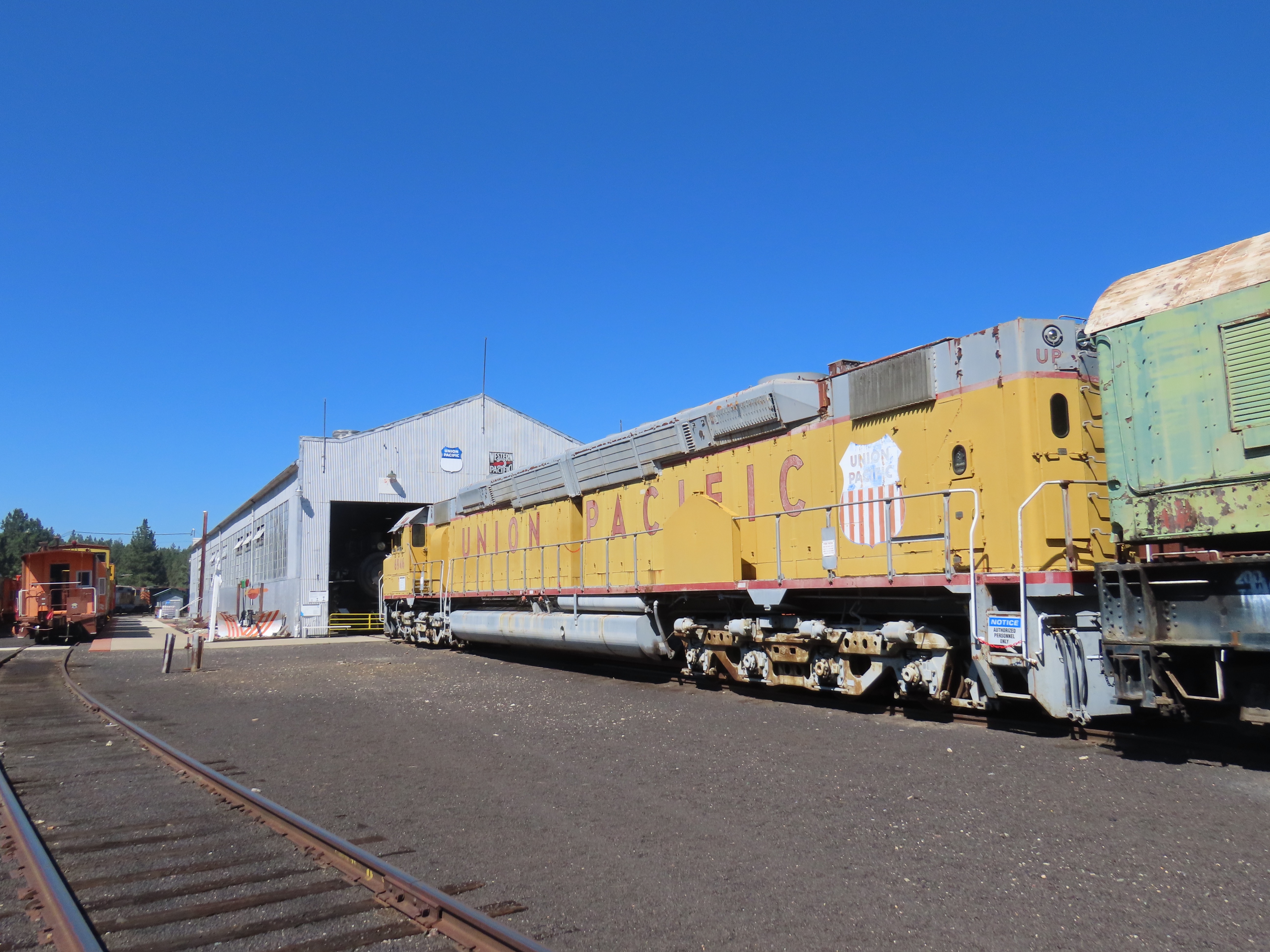
A docent told me I could climb aboard the duel engine workhorse and I walked along the gangway to the cab.
I liked the view so I sketched the 1953 diesel shop from the gangway of 6946 (featured sketch).
 Corvid Sketcher