Image

Coastal Rail Trail

On a gray Saturday morning I decided to explore a recently opened section (opened in December 2020) of the Coastal Rail Trail in Santa Cruz.

The section I was exploring (Segment 7) is between Natural Bridges Drive and Bay Street. The walk takes about 30 minutes and the round trip covers about two miles.

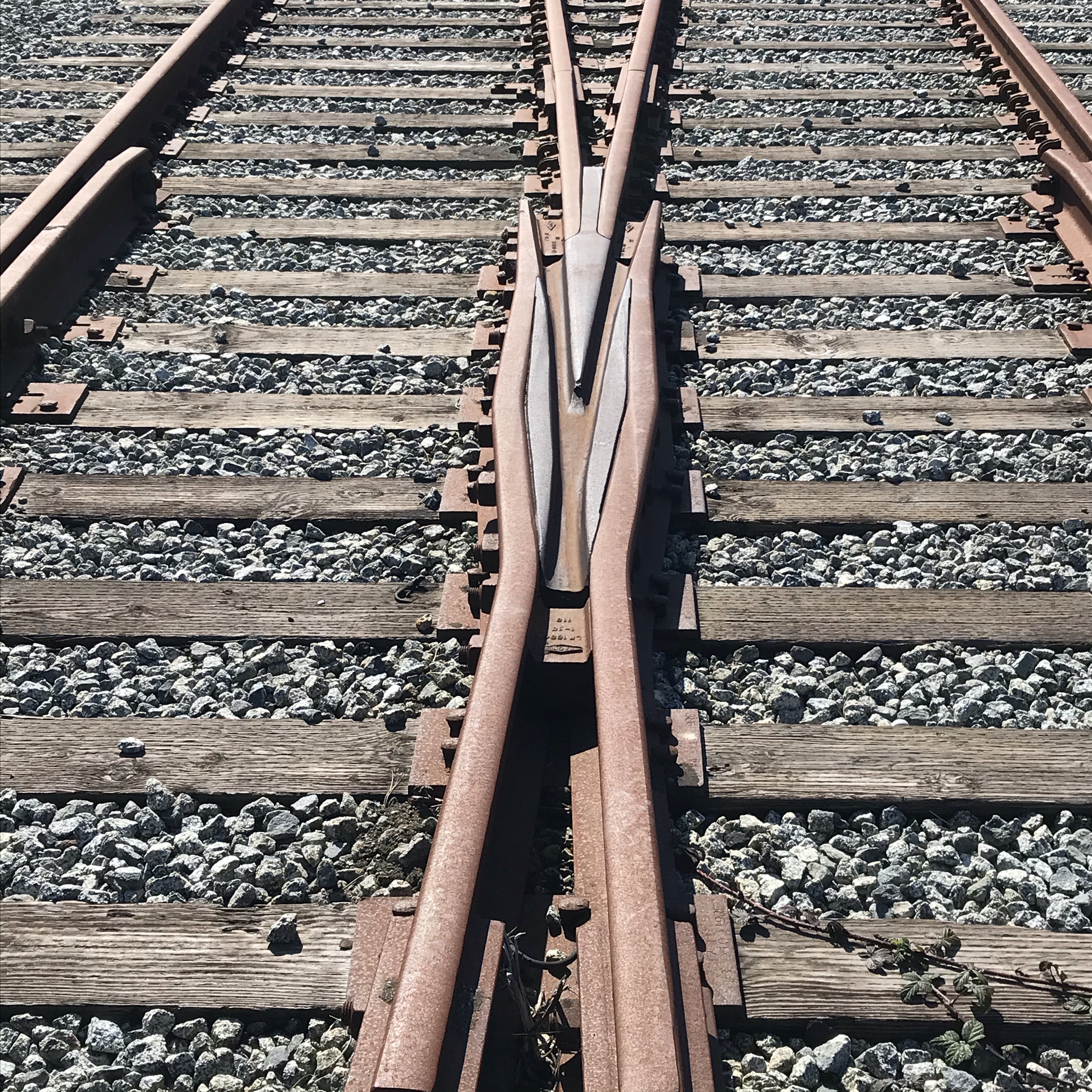
As the name implies, the paved pedestrian trail parallels the former Southern Pacific Davenport branch line from Watsonville to Davenport.

As of the date of writing only two sections of the trail have been opened, one in Watsonville and the section I was walking on in Santa Cruz.

At grade crossings there are pedestrian signals that stops cars so you can cross the street safely. Well that’s the theory anyway. With the trail recently open, pedestrians should still use caution and not assume all vehicles will stop for you.

When the trail is completed, it will cover 32 miles from Davenport to Watsonville. There are also plans to introduce electric rail service using the former Southern Pacific right of way and trackage.

I started where the rail trail ends: Natural Bridges Way.
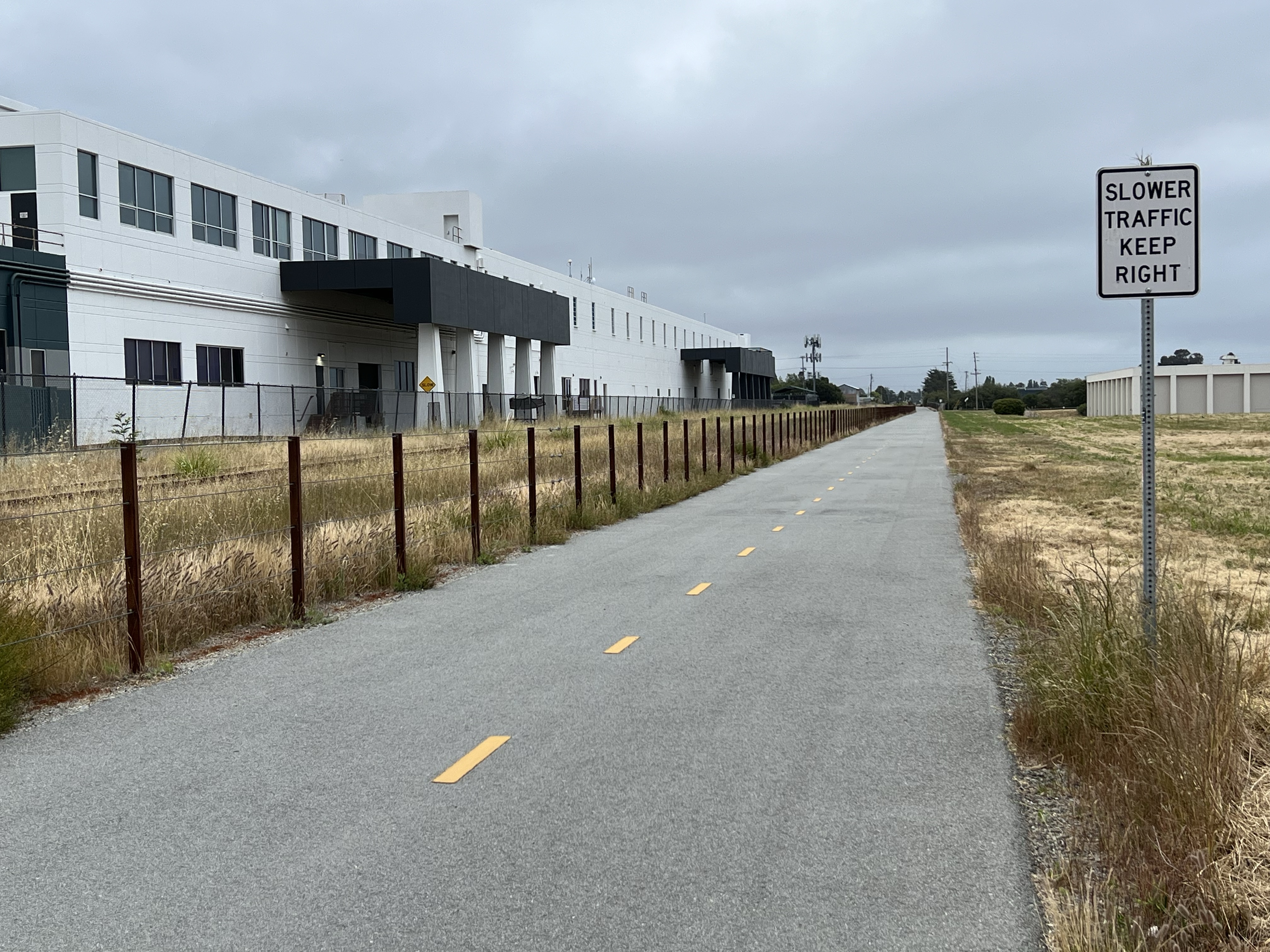
The Rail Trail passes by the former Wrigley Chewing Gum plant (left). The plant was in operation for more than 40 years and produced 20 million sticks of gum per day. The plant had a rail siding that is still visible today.

In my college days I remember visiting the gum factory with my roommate in an unsuccessful attempt to get a plant tour. The receptionist told us that they didn’t give tours but asked us if we would like some gum! We answered in the affirmative and then opened a drawer full of gum. I went for Big Red while my roommate picked Juicy Fruit.

The trail is level as it parallels the rail grade. Railroad grades normally don’t exceed 2%. The steepest mainline railroad grade is 3.3% on the Raton Pass grade in New Mexico. A railroad grade is expressed as a percentage the grade rises or falls over 100 feet of horizontal distance. So a 2% grade rises and falls two feet over a 100 feet distance. These gentle grades are ideal for walking and biking.

I passed by the New Leaf Market at Fair Ave, often my first stop when I head into town, as the trail and line turns slightly to the left skirting the Westside Circles neighborhood.

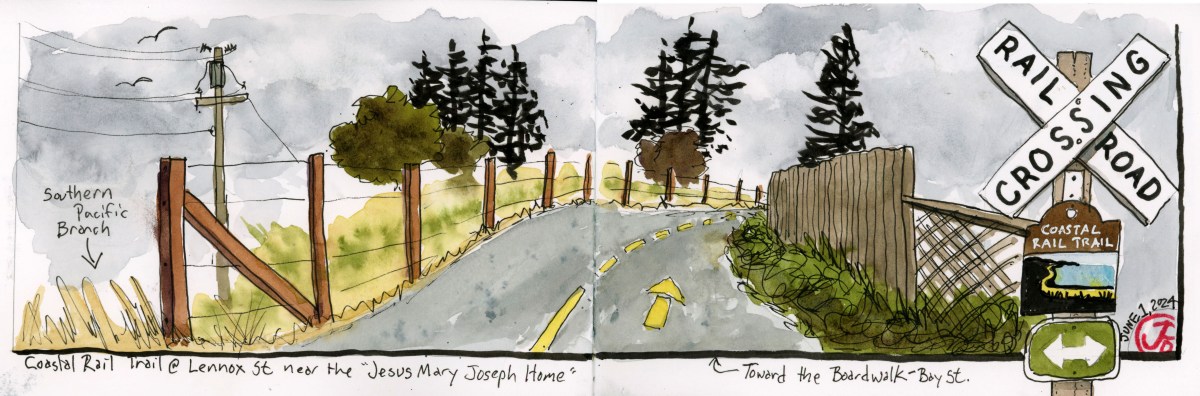
I came upon a scenic curve in the trail at Lennox Street as the rails and trail curve off to the right as it nears Bay Street. I pulled my sketchbook out of my bag and started sketching the view (featured sketch).

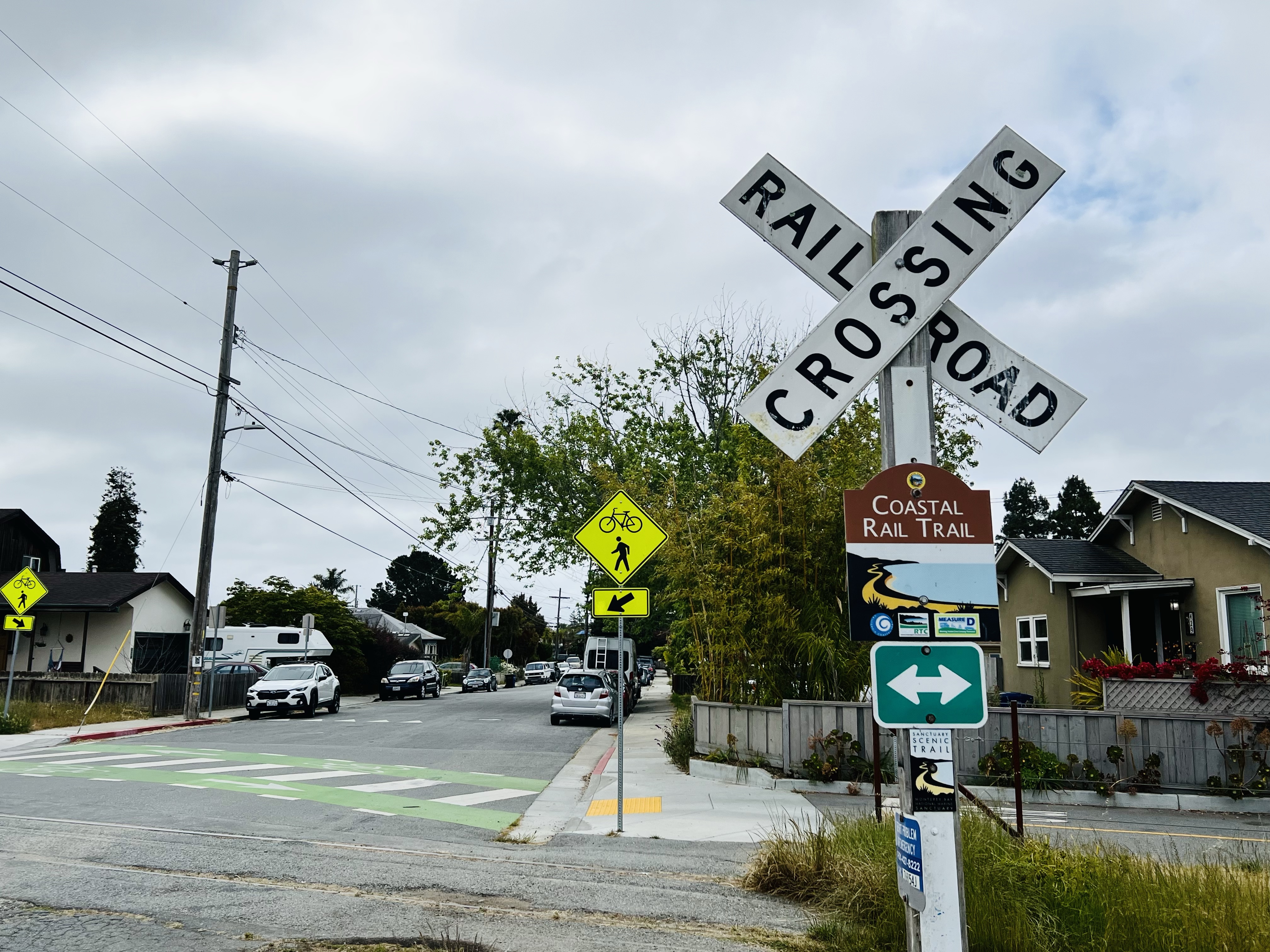
On the right of the spread I sketched the grade crossing sign at Dufour Street with Coastal Rail Trail sign below the crossbuck.
Image

The Coastal Hoosegow

The big house, the bucket, the calaboose, the cooler, the gray bar hotel, the hoosegow, the joint, the jug, the pen, the pokey, the slammer, and stoney lonesome.

These are all slang for jail.

On my way down the coast, I did a Friday afterwork jail sketch in the town of Half Moon Bay.

On a side street that parallels Main is a small building that sits alone. In case anyone wondered what this building was, it reads “JAIL BUILT-1909” in big black letters across the top. (The jail was actually built in 1919.)

This was Half Moon Bay’s small two-cell jail. This isn’t, even with the wildest imagination, the Big House.

The jail is built of reinforced concrete on a concrete foundation, built to keep people in. Not like it’s formerly interned were serious criminals. The cost of the jail was $3,000.

The Half Moon Bay Jail reopened in 2018 as a historical museum.
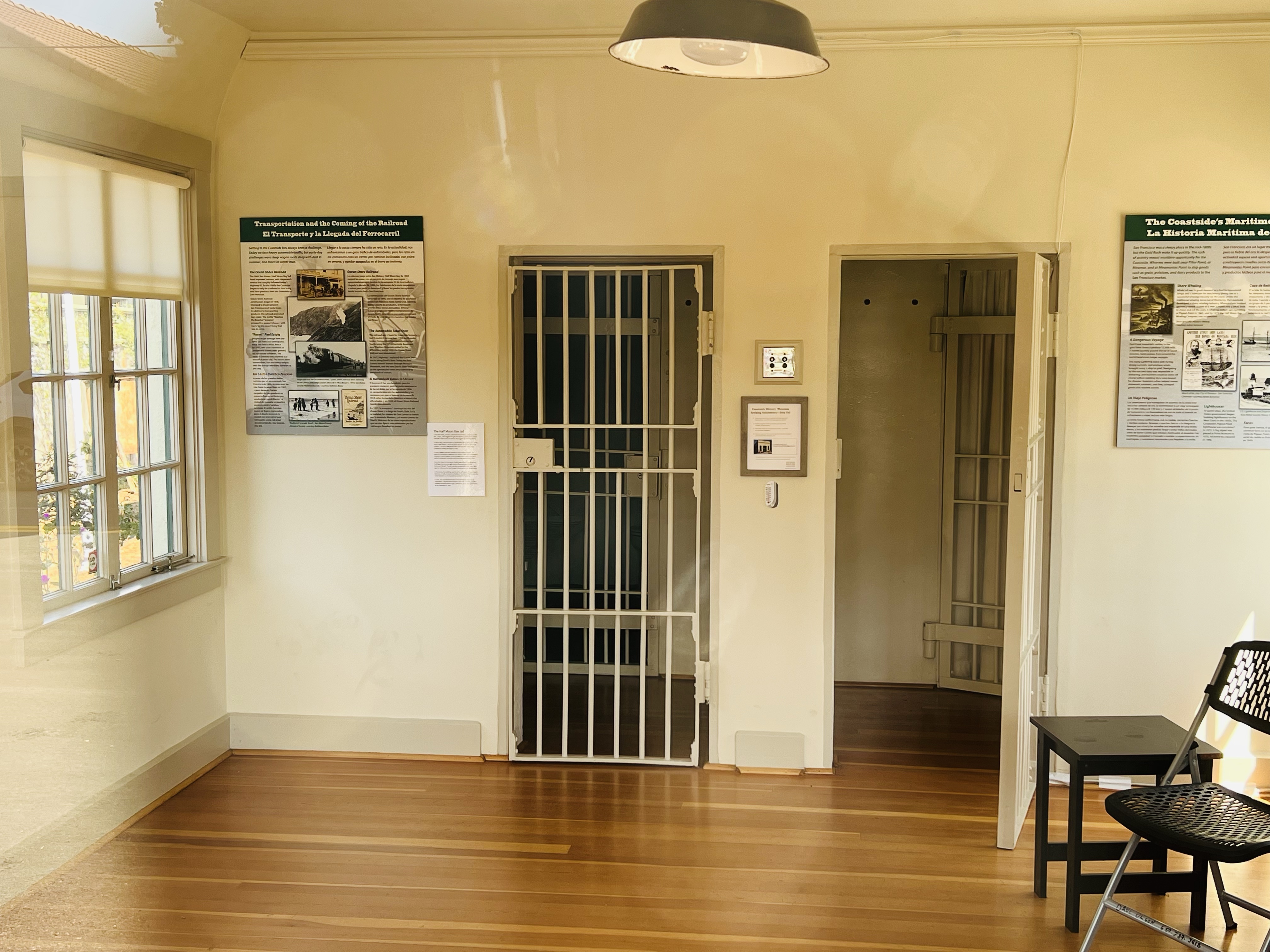
The two cells and constable’s office.

The jail held prisoners until they could be transferred to the county jail in Redwood City. Locals also spent the night here having had too much fun in Half Moon Bay’s saloons.

The jail was used as a jail and sheriff’s office until 1967 where it was little used until it was reopened as a historical museum in 2018. It is the oldest public building in Half Moon Bay.

I then headed 45 minutes south on Highway One to the small town of Davenport to sketch their small jail.

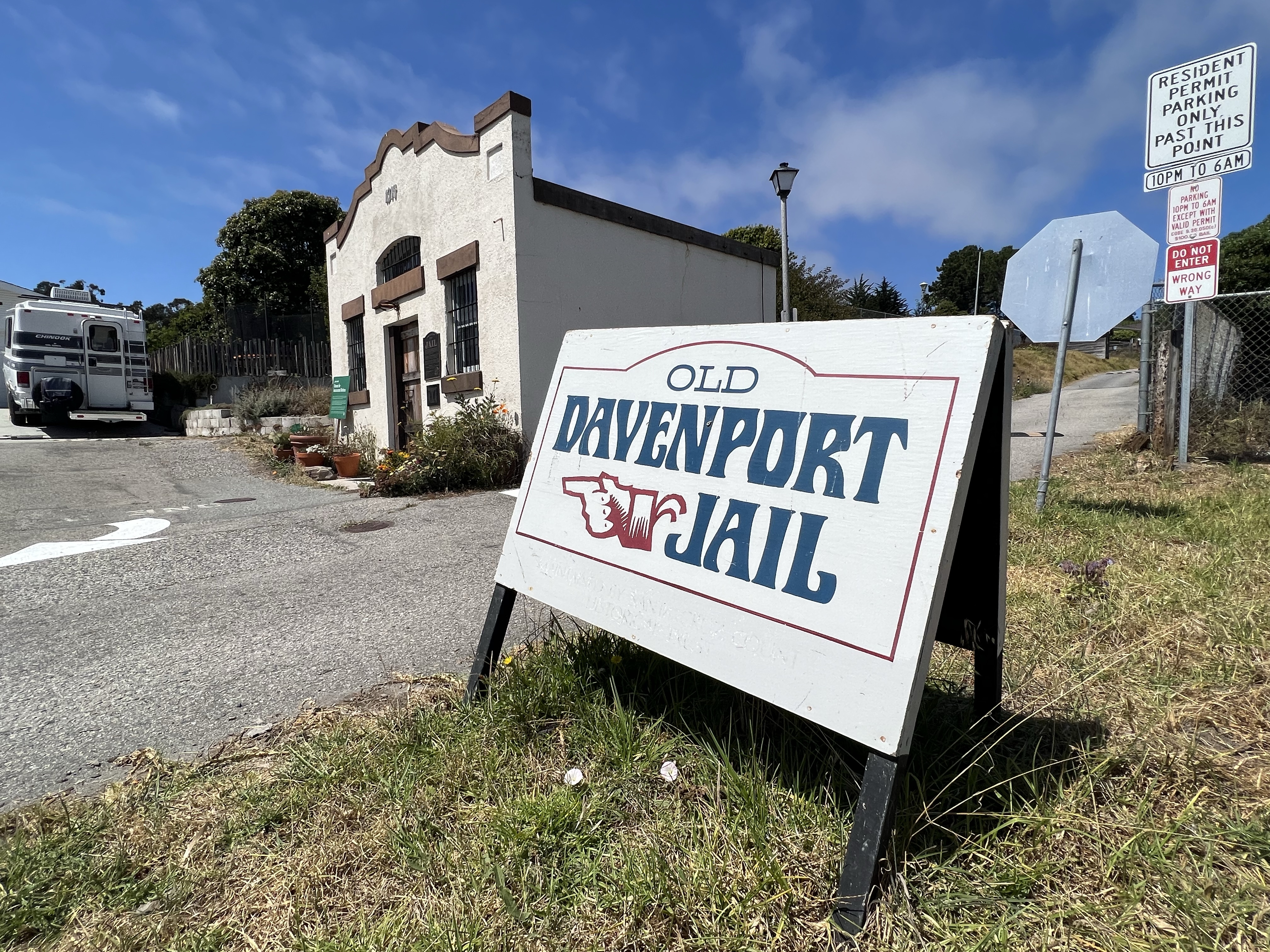
This two-cell jail was built in 1914 of Santa Cruz Portland Cement, made at the Davenport Cement Plant. This small jail was built to last and looks solid for a building that is over 100 years old.

The jail housed two horse thieves from San Mateo and like Half Moon Bay, locals that had imbibed a bit too much in Davenports’s saloon.

In 1936, when the new jail on Front Street in Santa Cruz was built, the Davenport clink became redundant.

It is now a historical and art museum.

Image

San Mateo and Santa Cruz Whalewatch

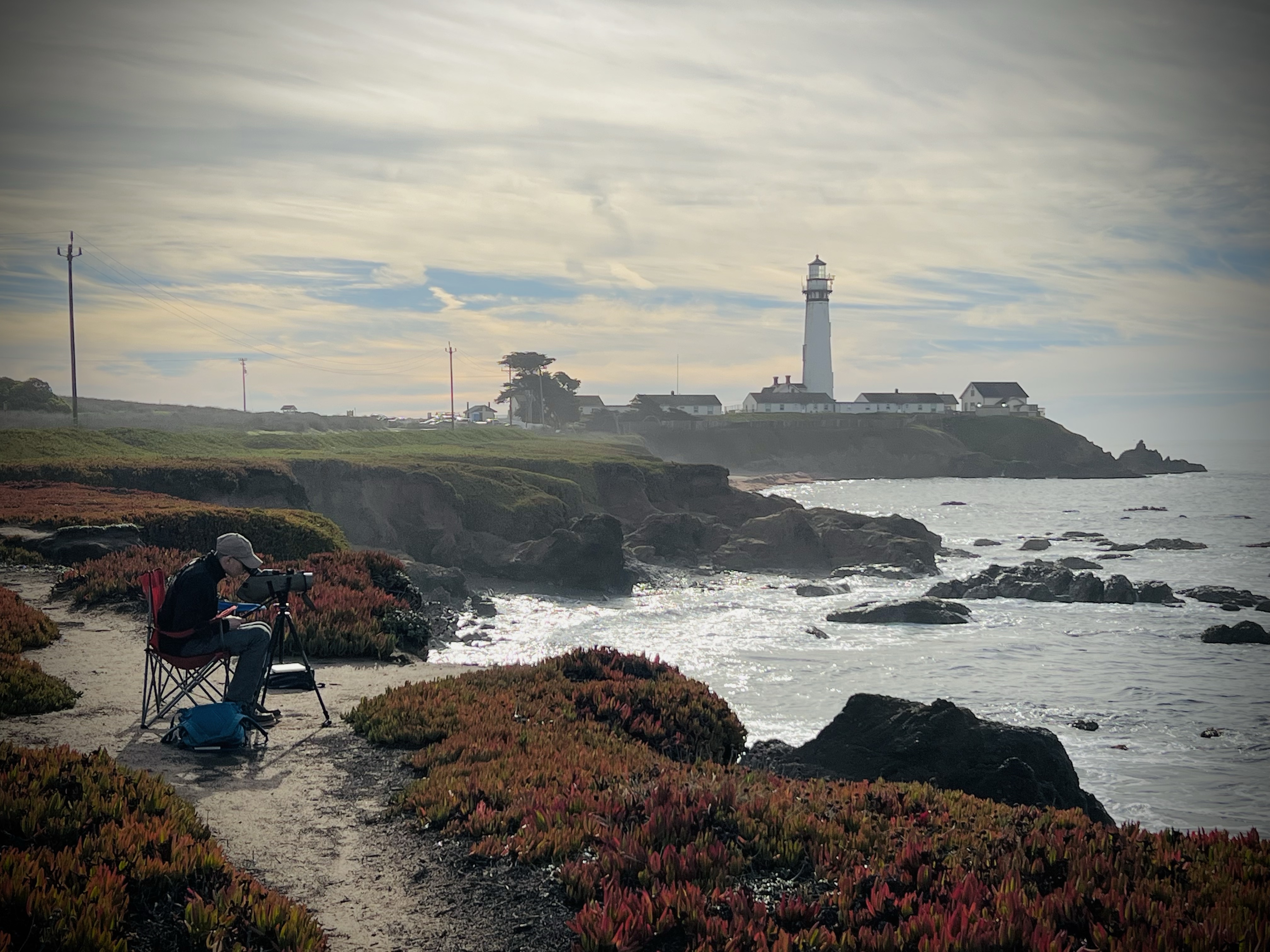
Before setting out on my adventure to Mendocino, I wanted to do a little coastal whale watching in the Bay Area. So I met Grasshopper Sparrow (he has wheels now!) in Half Moon Bay and we headed south to Pigeon Point and turned our lenses west.

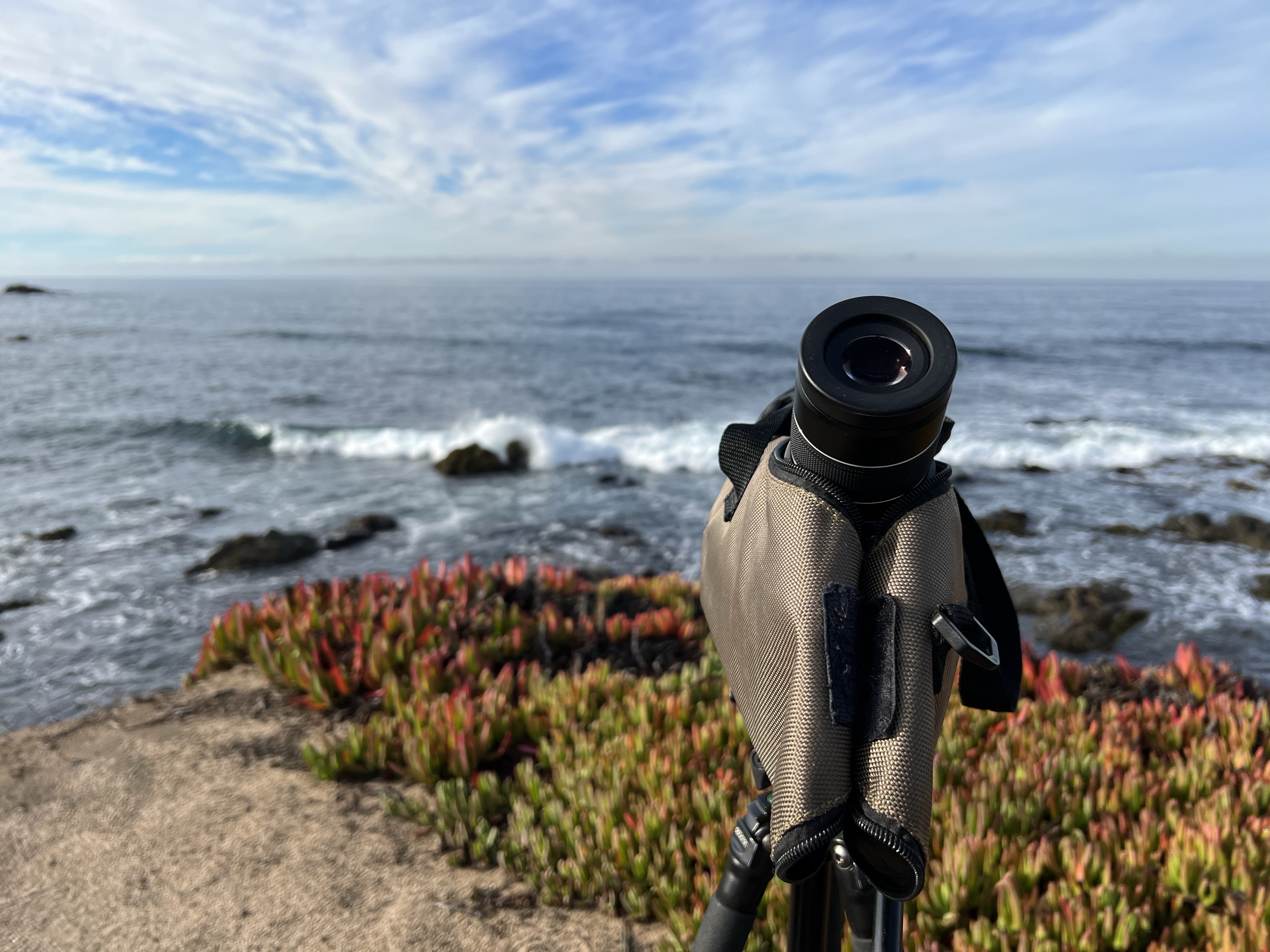
My scope pointed west at Pigeon Point.

We found a point overlooking the ocean just to the north of Pigeon Point Lighthouse. It was a beautiful, clear day and the seas were calm with a lot of bird life flying both north and south. Perfect conditions for land-based whale watching.

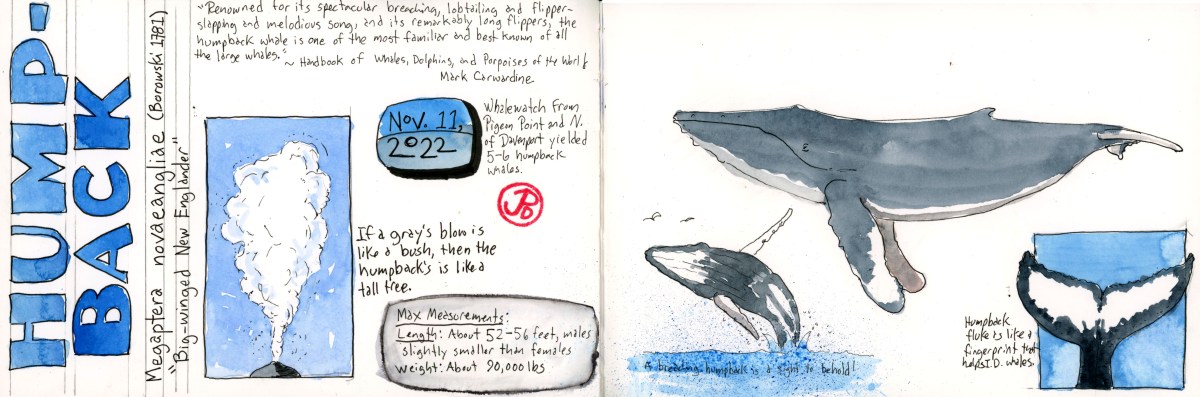
We scanned the horizon looking about an inch below, to see if any blows were visible. This is the telltale sign of a whale. Blows happen when their warm breath makes contact with the cold air and the white exhaust can be seen from a long ways away. We were looking for a short bushy blow which is a sign of a migrating gray whale.

I wandered off a few yards to the north to get a look at some roosting surfbirds when Grasshopper exclaimed, “Whale!” I turned my bins to the horizon, scanning about and inch below. Near the horizon I picked out a white blow in the middle of a flock of birds on the water and circling above. These attendant birds are also a great sign of cetacean activity.

Grasshopper spotting blows just below the horizon with the lighthouse to the south. It always helps to have a set of young eyes along for whale watching.

Now we just needed to identify the whale by its unique blow. Grasshopper noted that the whale he saw through the scope had a dorsal fin. Now this would exclude grays because they do not have a fin but a dorsal ridge. Also the blow looked taller than the heart-shaped gray whale blow.

After a few more observations, with a few of the whales showing their pied flukes, I knew we where looking at a group of three humpback whales!

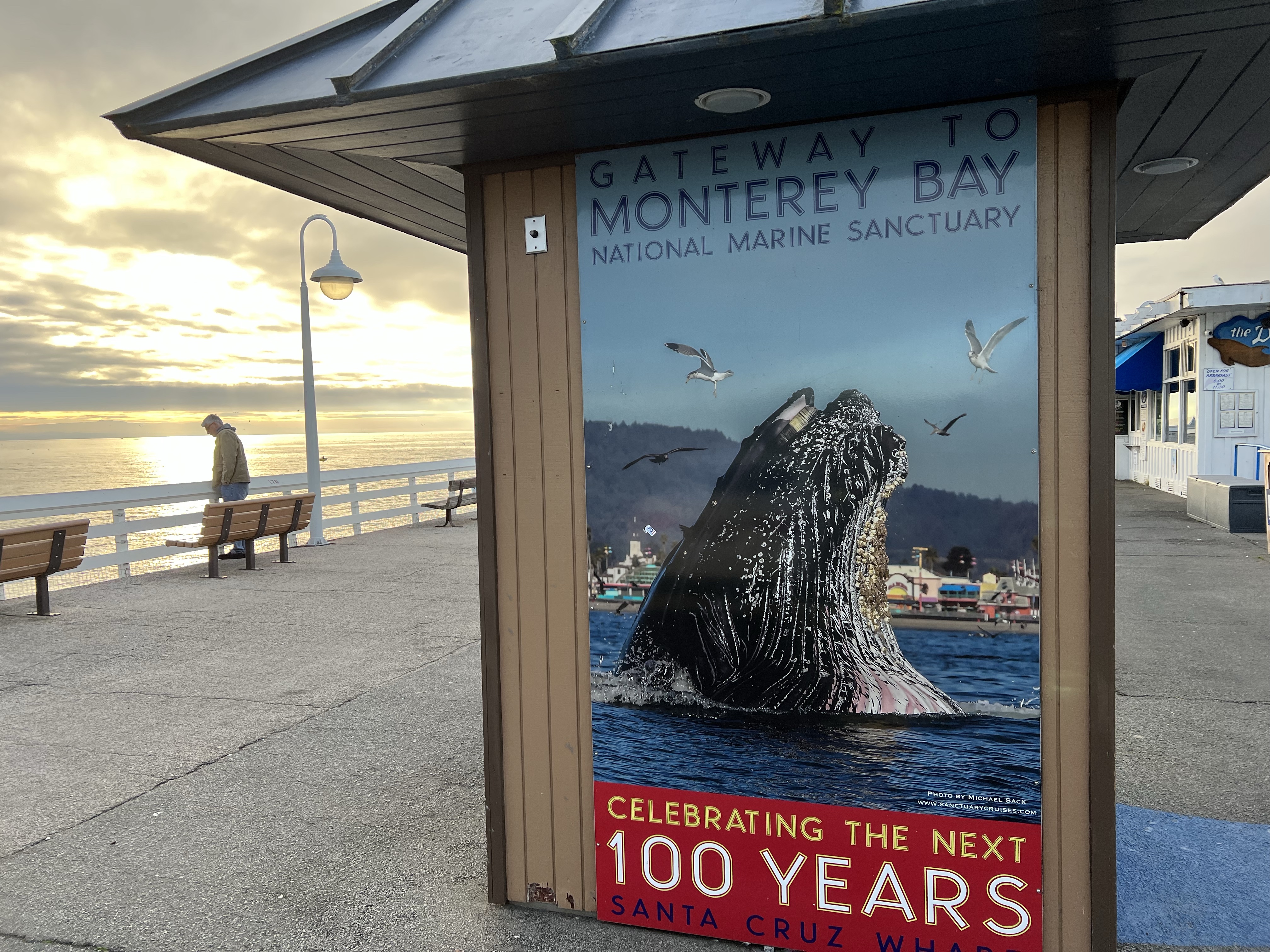
While looking at the rare red-footed booby I spotted this billboard on the Santa Cruz Wharf.

I later headed south down Highway 1 towards Santa Cruz. I pulled off just north of Davenport to have a little lunch and scan the Pacific for whales. I didn’t have to wait long before I saw my first blow with the naked eye. I put a scope on the whales and identified a few more humpbacks but I did not see any grays.

I would have to drive north to meet them “halfway”. Well, that was the plan all along.

Mendocino, here I come!

Image

The Long-tailed Kingbird of Davenport

While Grasshopper and I were birding Mines Road and Del Puerto Canyon, a rare flycatcher for the West Coast was found on a barbed wire fence just north of Cement Plant Road in Davenport. I wasn’t going to able to look for it until the following Friday, that is, if it hung around.

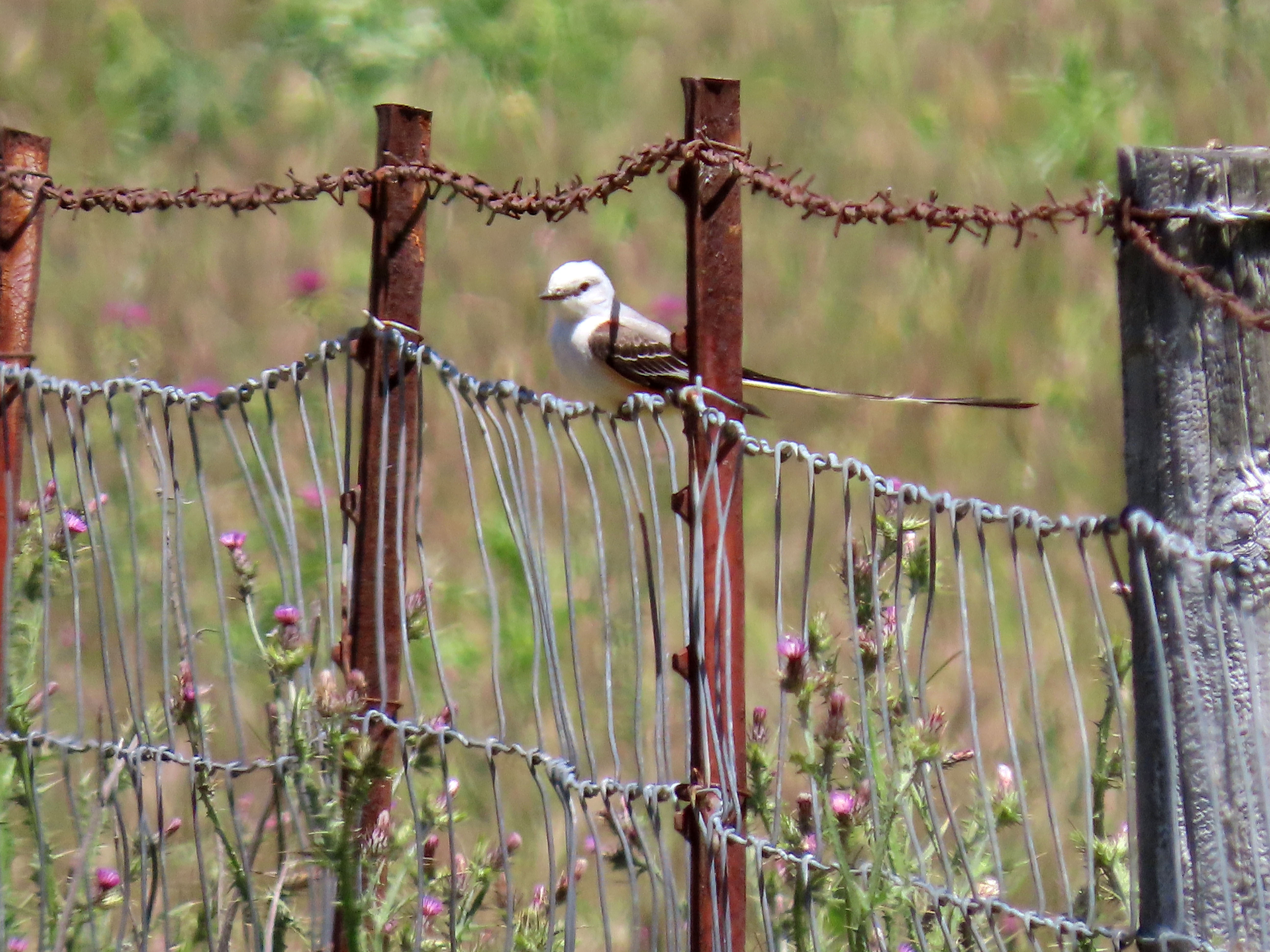
This is arguably one of the most beautiful flycatchers in North America. This is Tyrannus forticatus, the scissor-tailed flycatcher. The flycatcher looks like a kingbird (it is actually related to the western kingbird) with a forked tailed that is twice the length of it’s body. In the book 100 Bird to See Before You Die by David Chandler & Dominic Couzens, the authors rank the scissor- tailed on the list at number 79, ahead of vermillion flycatcher, magnificent frigatebird, angel tern, paradise tanager, tufted puffin, and greater flamingo (all birds I have seen in the wild.)

The adult scissor-tailed was not where it was supposed to be (something all birders love). The bird summers and breeds in the southern middle of the United States, in Texas, Nebraska, eastern Colorado, and western Louisiana. But all this kingbird needs is an open pasture, some cows, lots of hunting perches( like a barbed wire fence), and a sky full of flying insects.

I got off work early because of a buy back day to pay us back for the extra hours of open house and I headed to the coast on Highway 92 and then south on Highway 1 toward Davenport.

Some birds are extremely hard to add to your life or county list such as rails, wayward warblers, and some thrashers but it is always nice to have a bird handed to you on a plate (a live bird of course!). This was the case with the “Long-tailed Kingbird of Davenport”. As I rolled up, five birders where already peering into the cow pasture along Cement Plant Road. The flycatcher was perched on barbed wire about 30 yards out. This was much closer than it had been seen by others over the past six days!

This is not only a beautiful flycatcher but it is also a pleasure to watch as it is in motion for most of the time, pursuing flying insects from it’s fence perch. It would also fly down to the grass to catch insects on the ground.

This was a wonderful and unexpected Santa Cruz County bird!

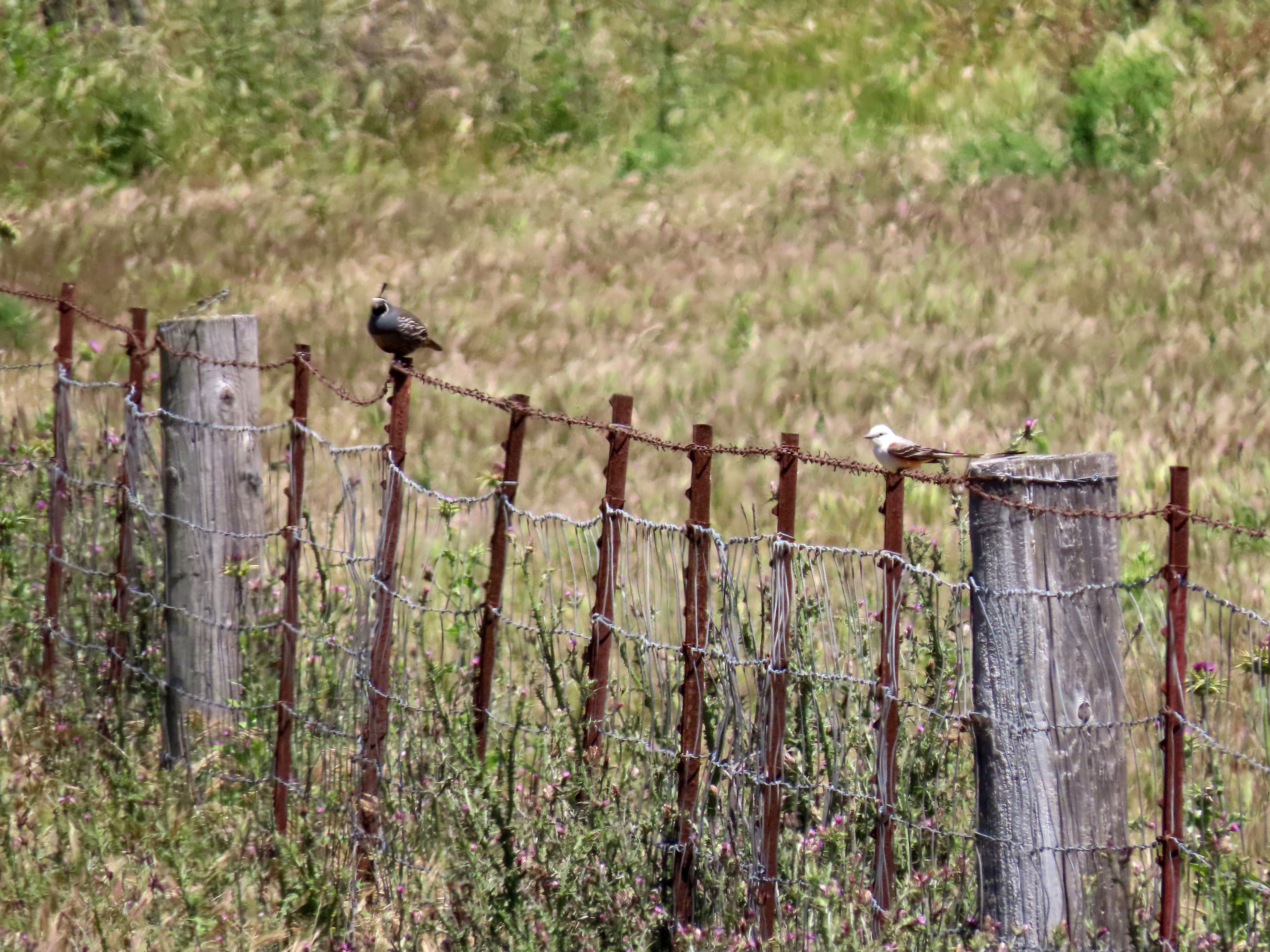
You don’t see this combo everyday: California quail and scissor-tailed flycatcher.
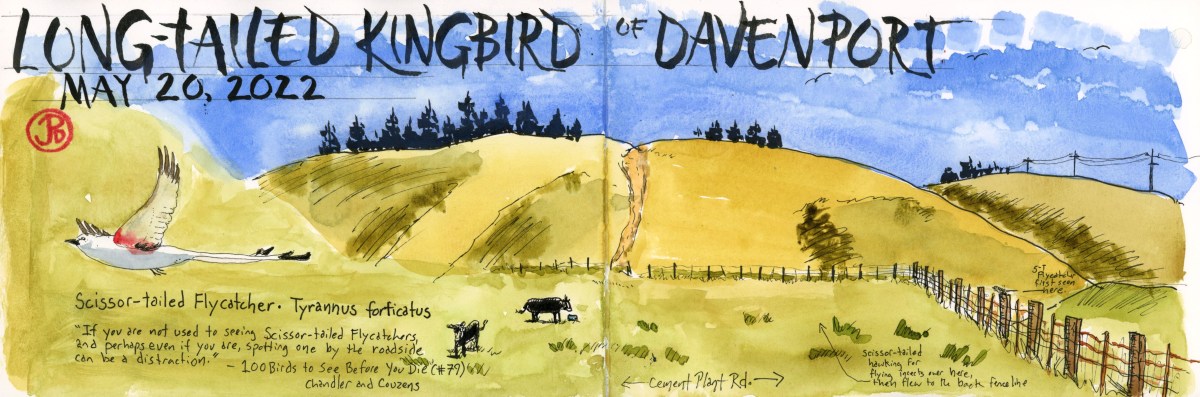
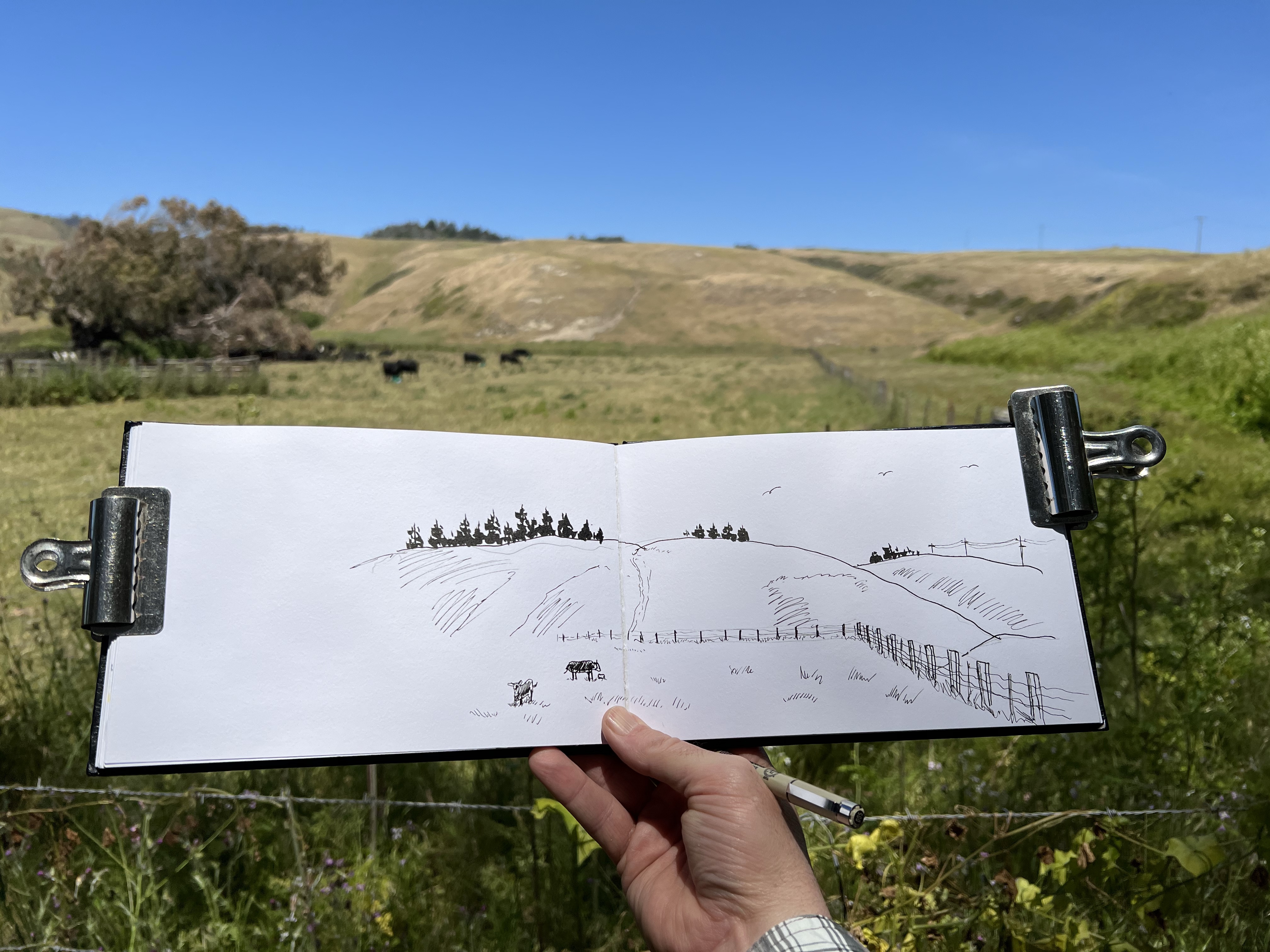
The anchor for my sketch was a field sketch of the cow pasture where I first spotted the scissor-tailed flycatcher. Full disclosure: while there were many more cows in the pasture, I only drew two. I try to follow a whole foods, plant-based diet after all! And don’t get me started about cow farts.

Image

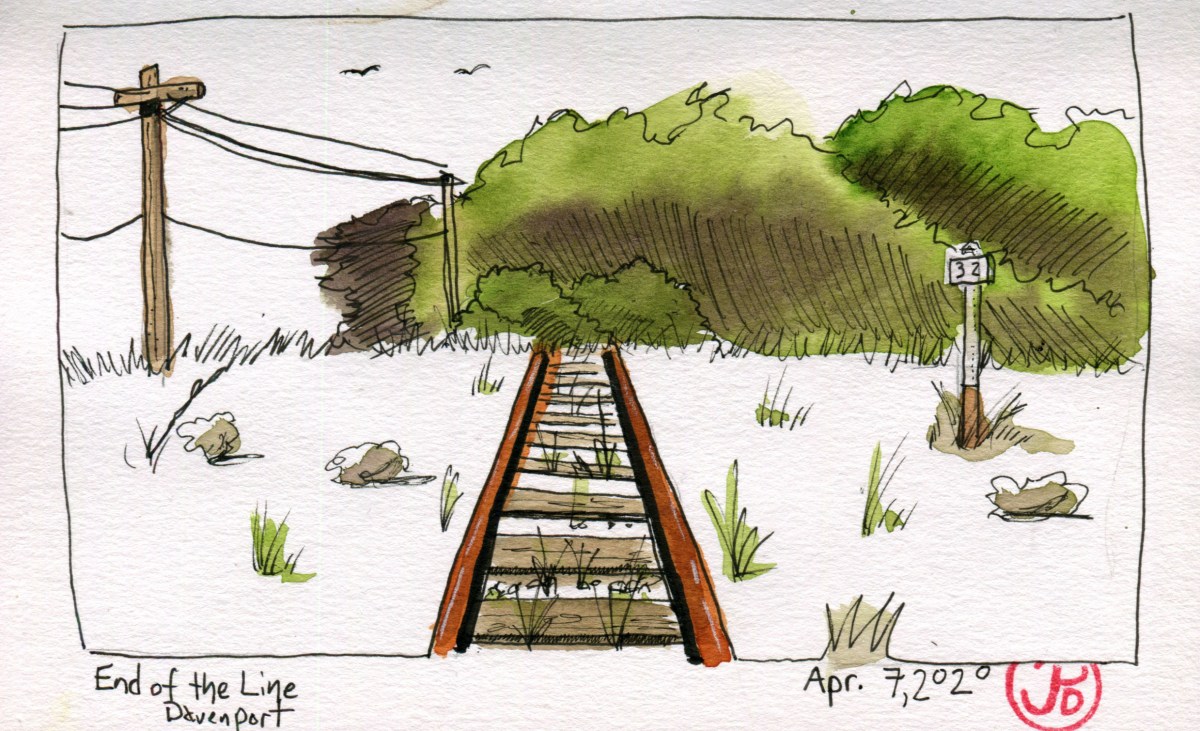
End of the Line: Davenport

In these times of social isolation, I headed north out of Santa Cruz on Highway One. My destination was the small town of Davenport.

A branch line runs from the coast mainline at Watsonville Junction to Santa Cruz, north along the coast to the Davenport Cement Plant. The plant was built in 1907 by the Santa Cruz Portland Cement Company. This cement plant became one of the largest producers of cement. At the height of it’s production, during World War II, the plant shipped out 700,000 barrel of cement a year. Cement from this plant helped rebuild San Francisco after the 1906 earthquake and fire and also supplied cement for such major construction projects as Pearl Harbor and the Panama Canal.

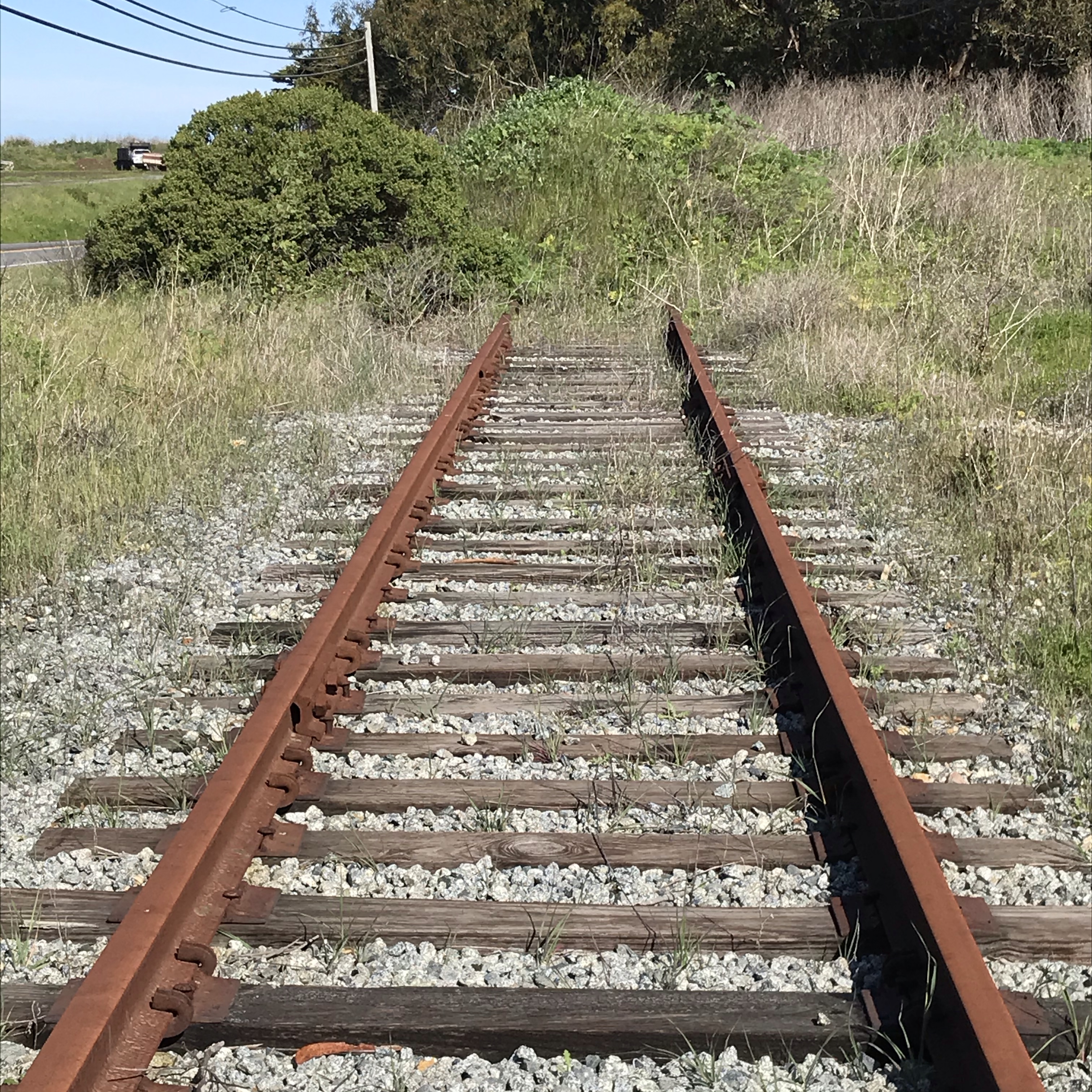
The cement plant was later acquired in 2005 by Mexico’s CEMEX. The plant was closed for good, in 2010 and now the rails stand rusted, overgrown and the end of the line disappears into vegetation.

The Davenport railroad to nowhere sums up the plight of America’s railroads. At it’s height, in 1916, the United States Railroad network consisted of 254,000 miles of track, the largest rail network in the world. From 1916 to the present day, 160,000 miles of track have been closed down and abandoned. The current rail network stands at about 94,000 miles of trackage.

Railroad companies saw passenger service as a losing hand, as trains were competing with the automobile and the increasing use of passenger air travel. The railroads were in dire straights in the 1960’s and passenger service was saved by the creation of AMTRAK in 1971 (the year of my birth). This service is a government subsidized and controlled service which now serves an average of 30 million passengers annually.

Railroads companies still exist to this day but they earn their profits from freight and not passenger service. They keep America moving and most Americans are unaware both of their legacy in creating the United States and there present impact in moving goods around the county. As Christian Wolmar notes in his excellent book, The Great Railroad Revolution, “America needs to relearn the joys of railroads that have served them so well in the past and, indeed, continue to do so today, albeit invisibly.”

The American railroad stands at a crossroads as the plight of high speed rail in California seems like a far off dream.