Image

Next Stop, Atherton

On my weekend Caltrain ride to Palo Alto, we sped past the former passenger shelter at Atherton.

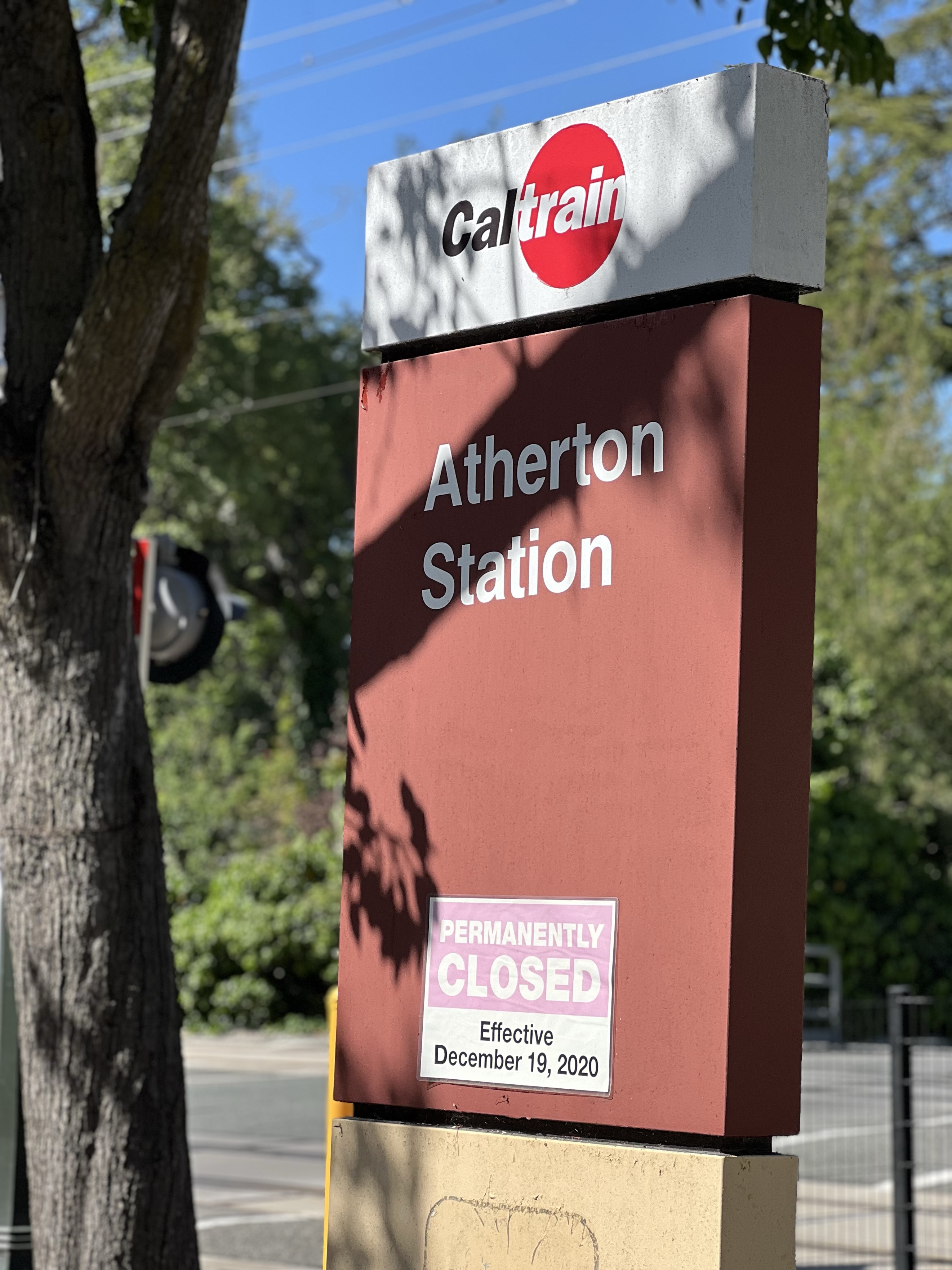
I remember that this used to be a stop on the commuter line but I later found out it had been permanently closed since December 19, 2020.
Where had I been?

I returned to Atherton to sketch the lonely railroad shelter where passengers no longer detrain or board.
There are a few things to know about the San Mateo County town of Atherton (population 6,823). Atherton had been ranked as having the highest concentration of wealth per capita for a town of its size anywhere in the United States. The town also has the highest median house price in the country at an astonishing $7,950,000!

And then there is the infamous Atherton police blotter. Here are a few examples, and yes these are real: “A man was reported to be sitting down and talking to himself. Police made contact and confirmed he was using a cellphone”, “A resident worried that a noisy hawk in a tree was in distress. When authorities arrived, the hawk was quiet and enjoying dinner”, “Police assisted an Atherton man in a San Francisco bar who forgot where he was and called 9-1-1”, “A family reported being followed by a duck who resides on Tuscaloosa Avenue”, and this takes the cake: “A resident reported a large light in the sky. It was the moon”.

From these police blotter examples we can tell that Athertonians are a vigilant and concerned group of citizens.

When Caltrain announced that they would be electrifying the line, the town of Atherton sued Caltrain alleging the construction would damage some heritage trees. Atherton lost the lawsuit and electrification continued.
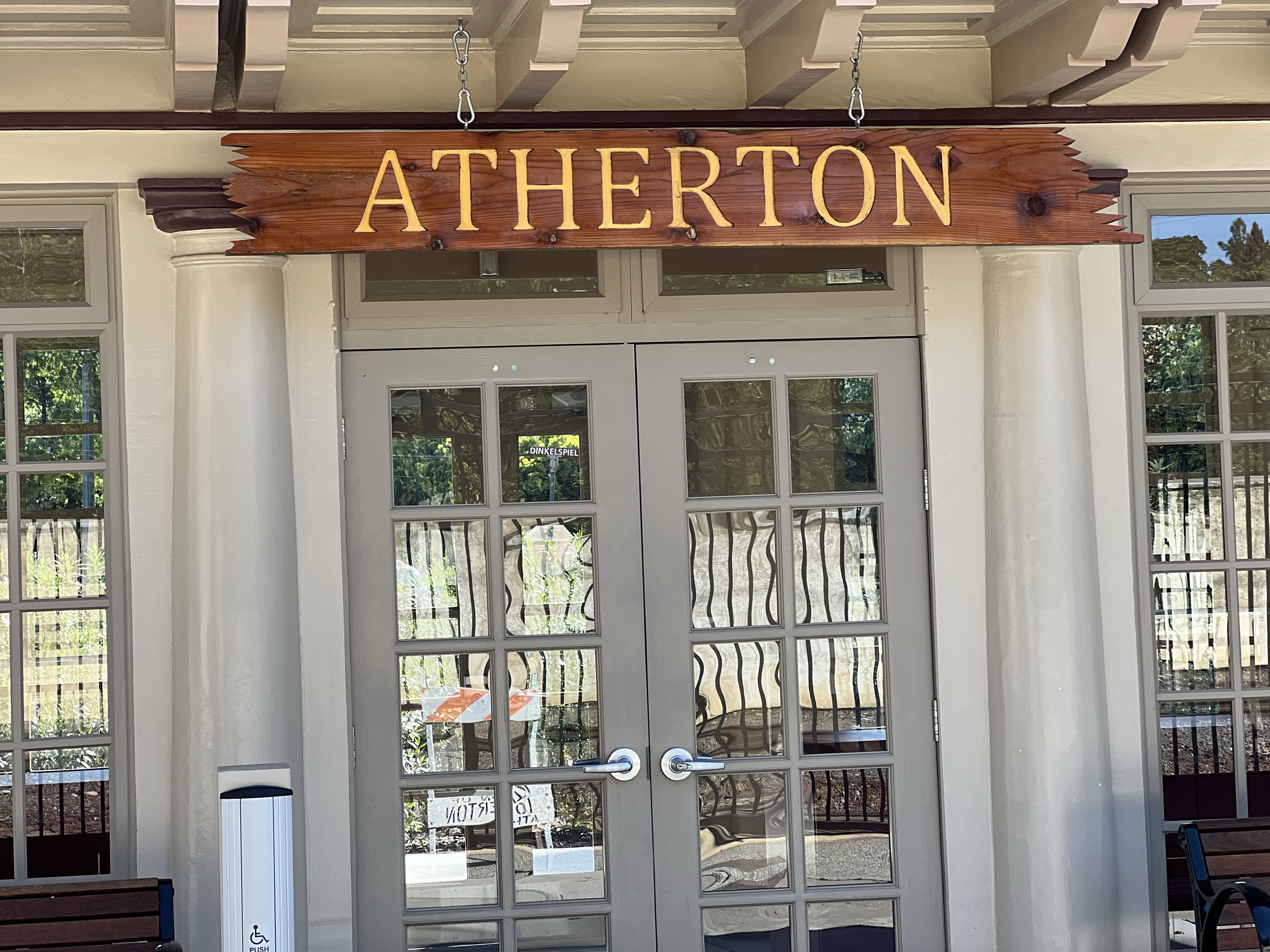
A train station without a train.

This is not a great way to treat a rail service that has stopped to pick up passengers in the town since 1866 when the first station opened under the then named Fair Oaks.

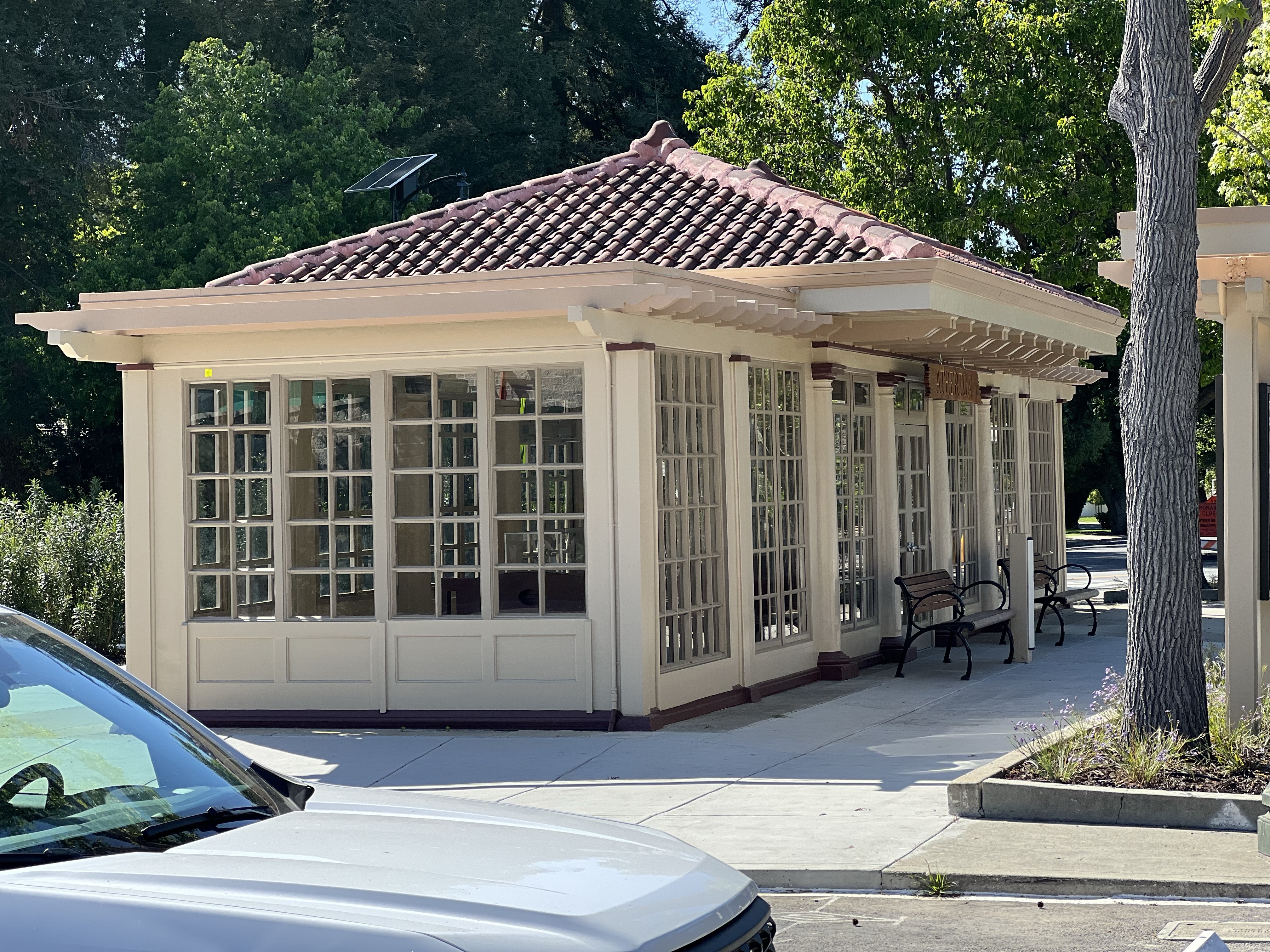
Southern Pacific replaced the first structure in 1913. This is the core design of the shelter that remains to this day. The shelter was enlarged in 1954 and later rebuilt in 1990.
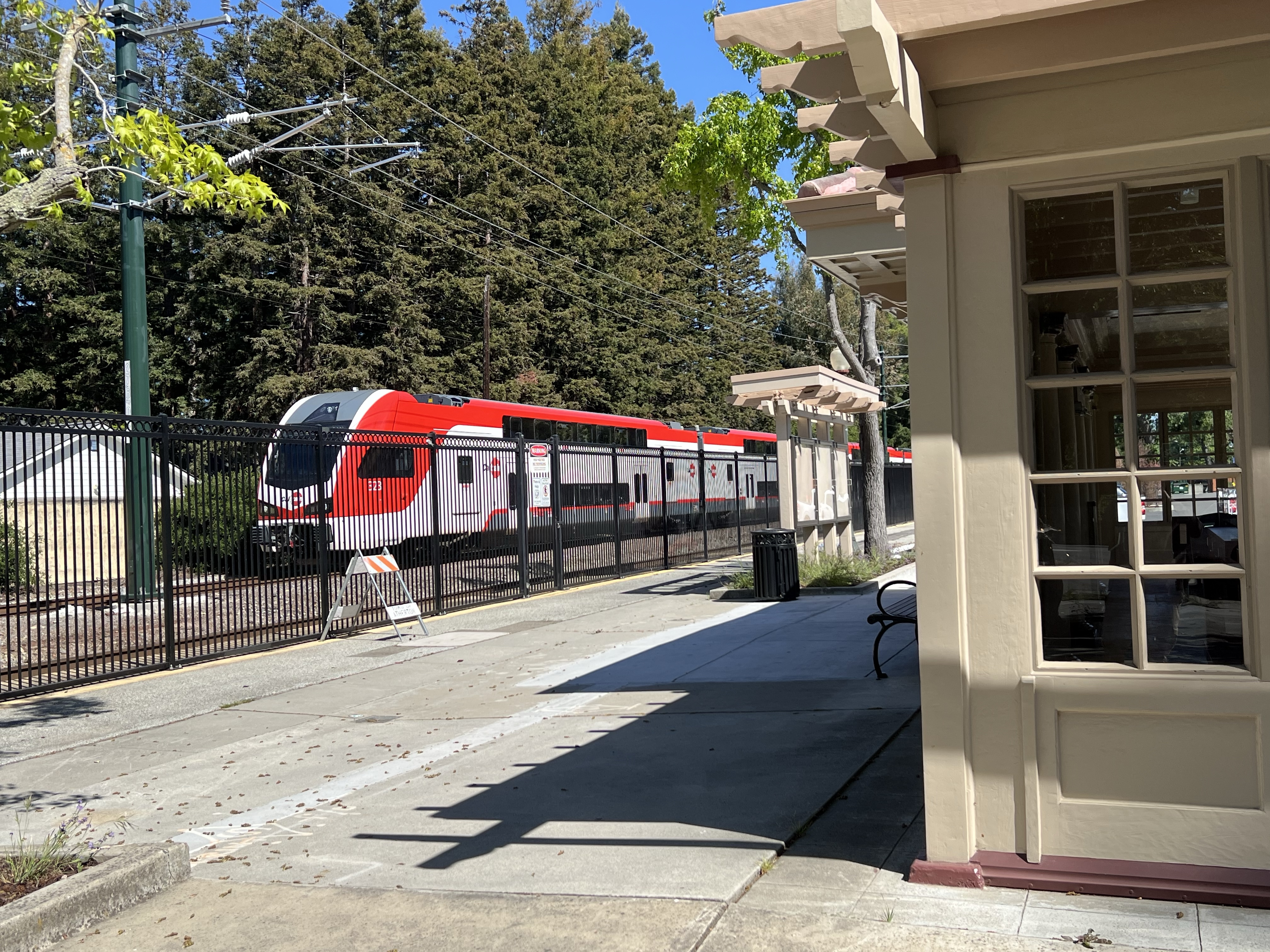
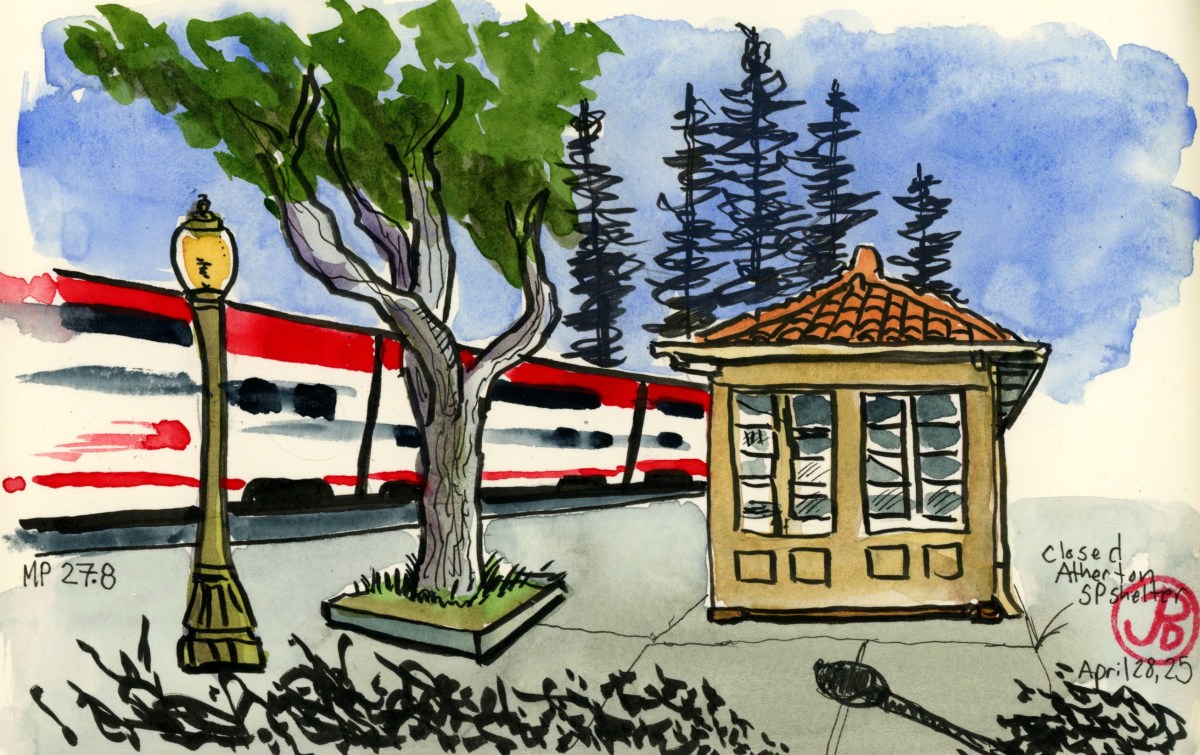
A northbound EMU speeds by the closed shelter. A barrier fence separates the platform from the busy rails. In the featured sketch I left the fence out.

In 2005 weekday service to Atherton was suspended because of low ridership. The station averaging only 122 boardings a day compared to nearby Redwood City at 4,212 boardings per day. The low ridership combined with improvements needed ($30 million in improvements) to the aging center loading platform island meant that this train stop was doomed.

Perhaps a fitting end for a town that sued to halt progress but in the end now watches the future pass them by.
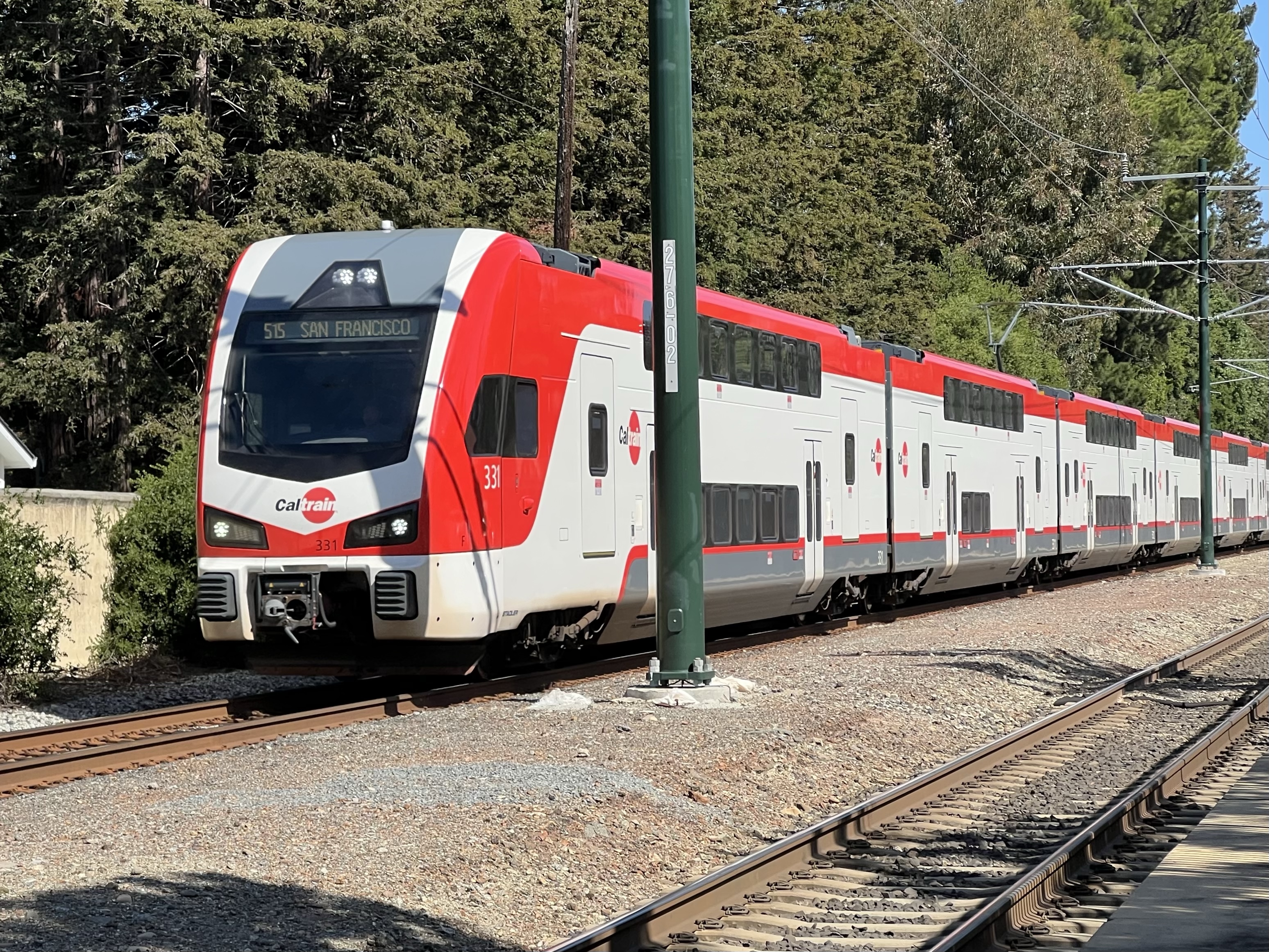
A busy afternoon in Atherton. During my 45 minute visit, five trains sped past the station. This one is northbound to San Francisco.

I did an afterwork sketch and I can imagine a new police blotter posting: “A strange man was sitting down near Atherton Station. Turns out he was only sketching.”
Image

Caltraining

Last fall the new Sadler electric multiple unit sets (EMU) were put into service on the Caltrain route from San Francisco to San Jose and I had been meaning to ride aboard ever since.

So on a gloomy spring morning in late April, I boarded an inbound N Judah to the Caltrain Station at 4th and King.

I was picking a travel window that was not going to be too chaotic with first pitch scheduled at 1:05 at the Giant’s game. Lots of fans use the N Judah and Caltrain to get to the game.

I planned to catch southbound train 610 departing at 9:55 AM and detrain in Palo Alto for lunch on University Avenue.

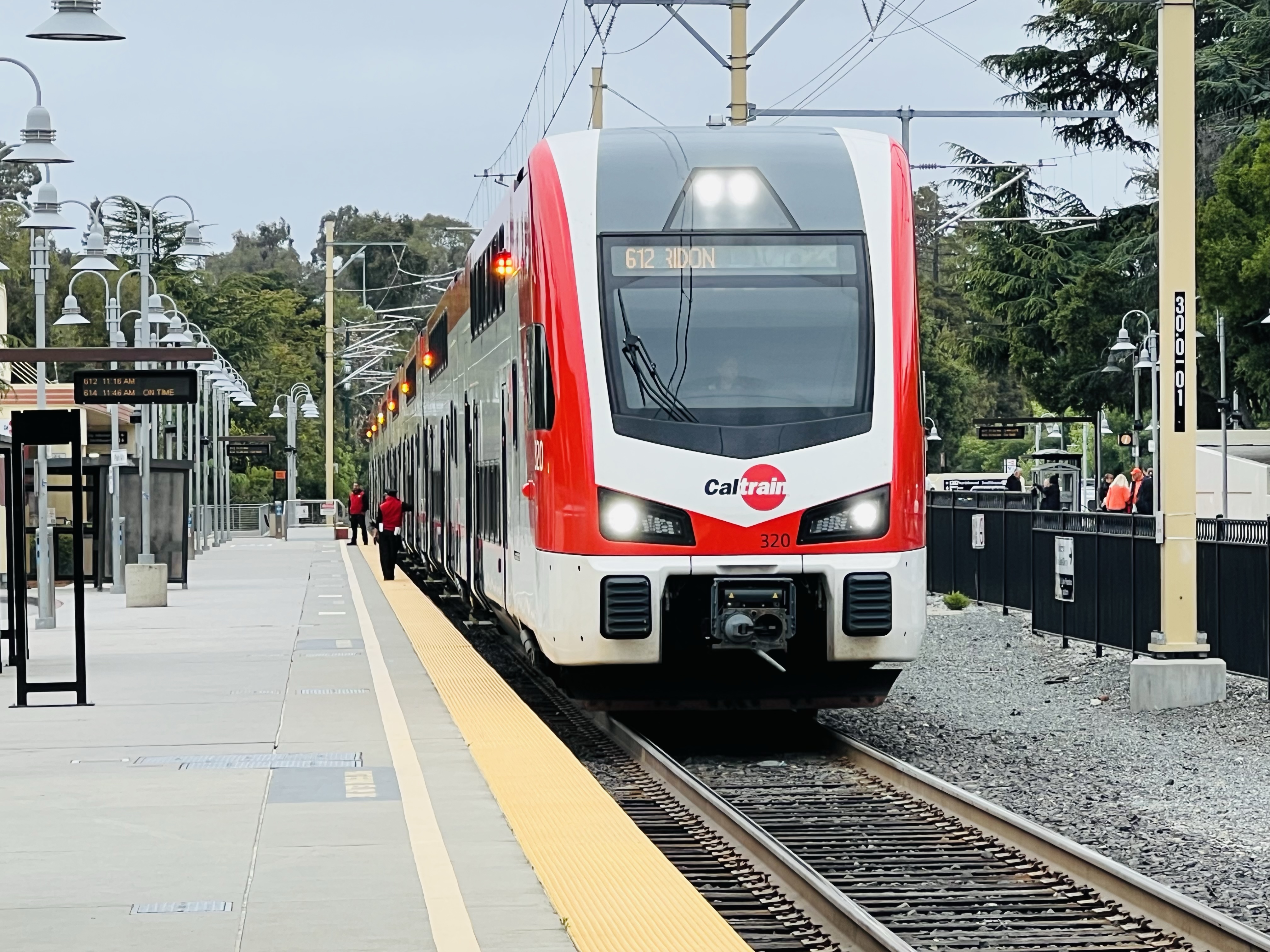
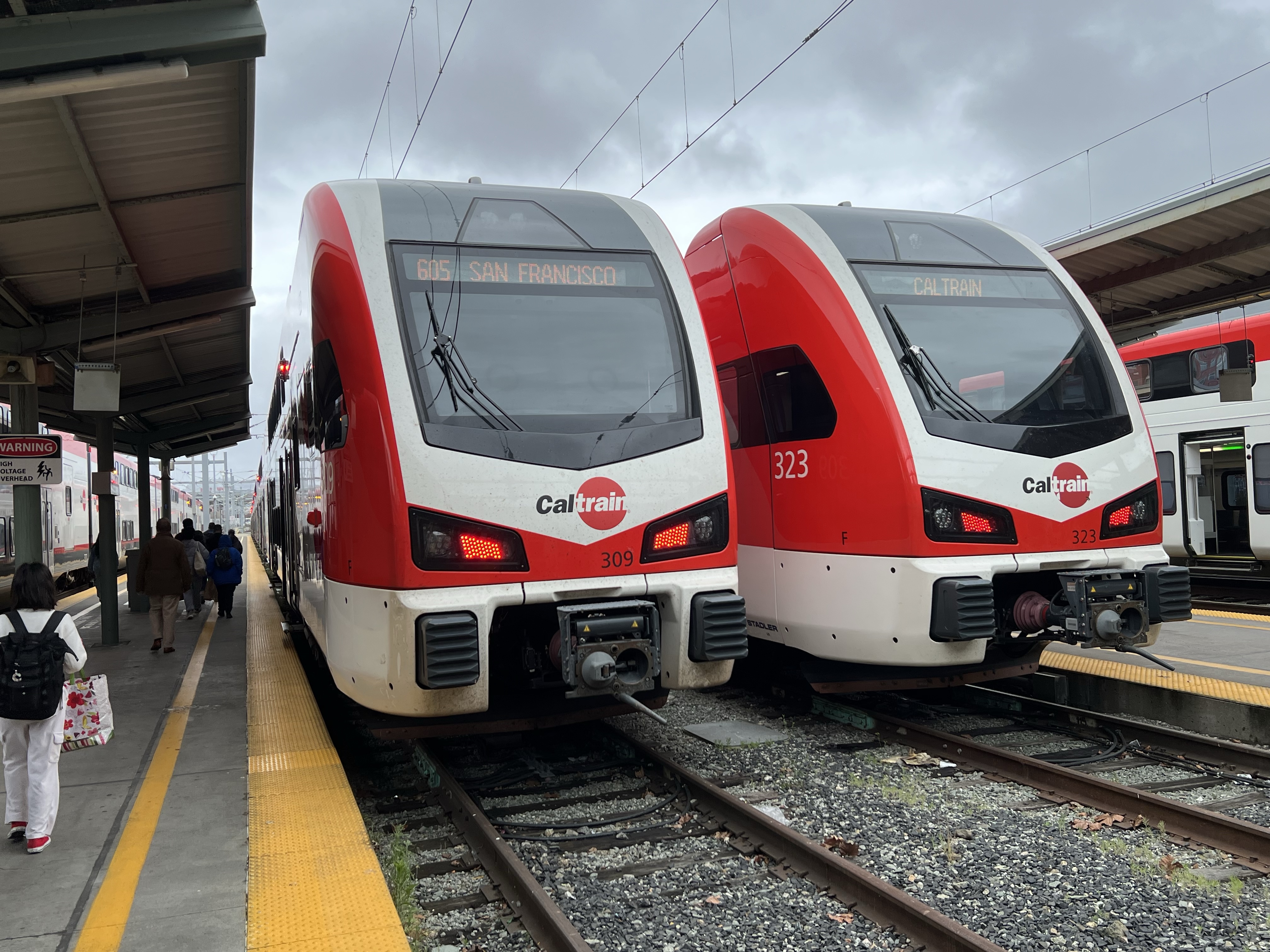
Two of the new EMUs at the San Francisco Caltrain Station.

My goal was to bring one pen (TWSBI Eco) and one watercolor journal (Stillman & Birn Delta panoramic) and only use continuous line sketching.

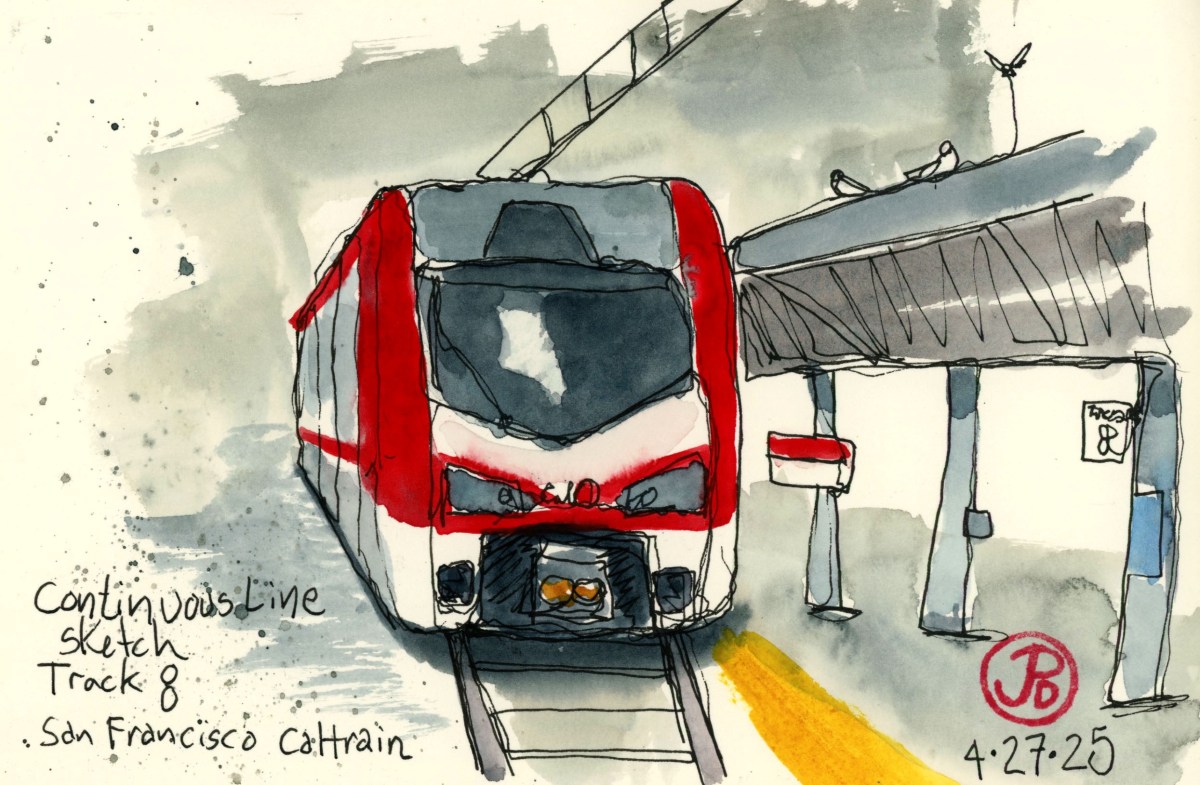
Before catching my train I sketched one of the new units on Track No. 8. (Featured sketch).

The gates opened and I boarded the train and was impressed with the bi-level design. I chose a seat on the top level sitting on the west facing side of the train (where all the historic stations are located).

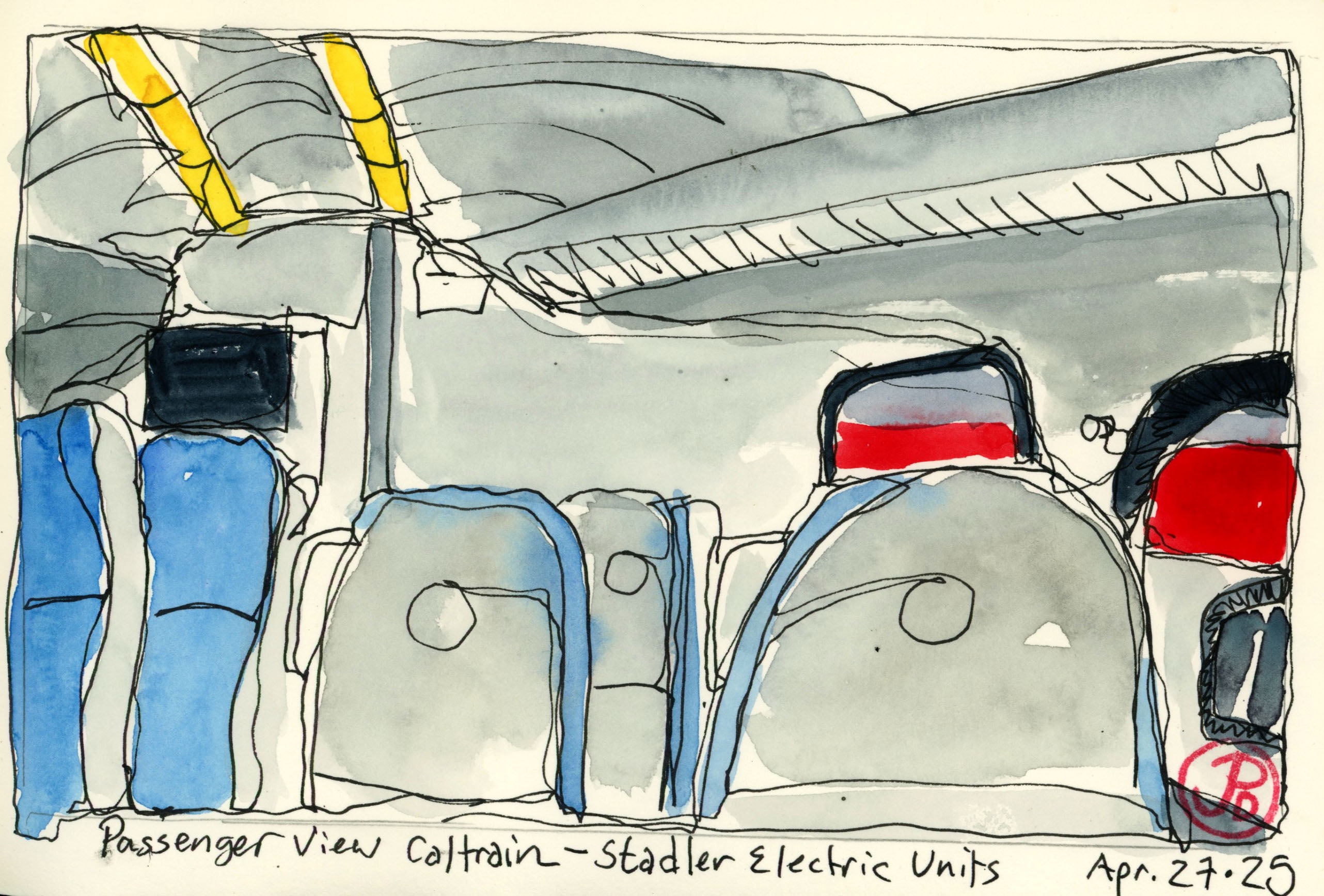
Before the train left I did a continuous line sketch of the interior from my upper deck seat-view. This sketching style loosens up your work including perspective. Normally I would pencil in the vanishing point and convergent lines but this sketching style is absolutely feral!

This takes a little getting used to because loosening up your sketching style causing you to loosen up your perspective of the style.

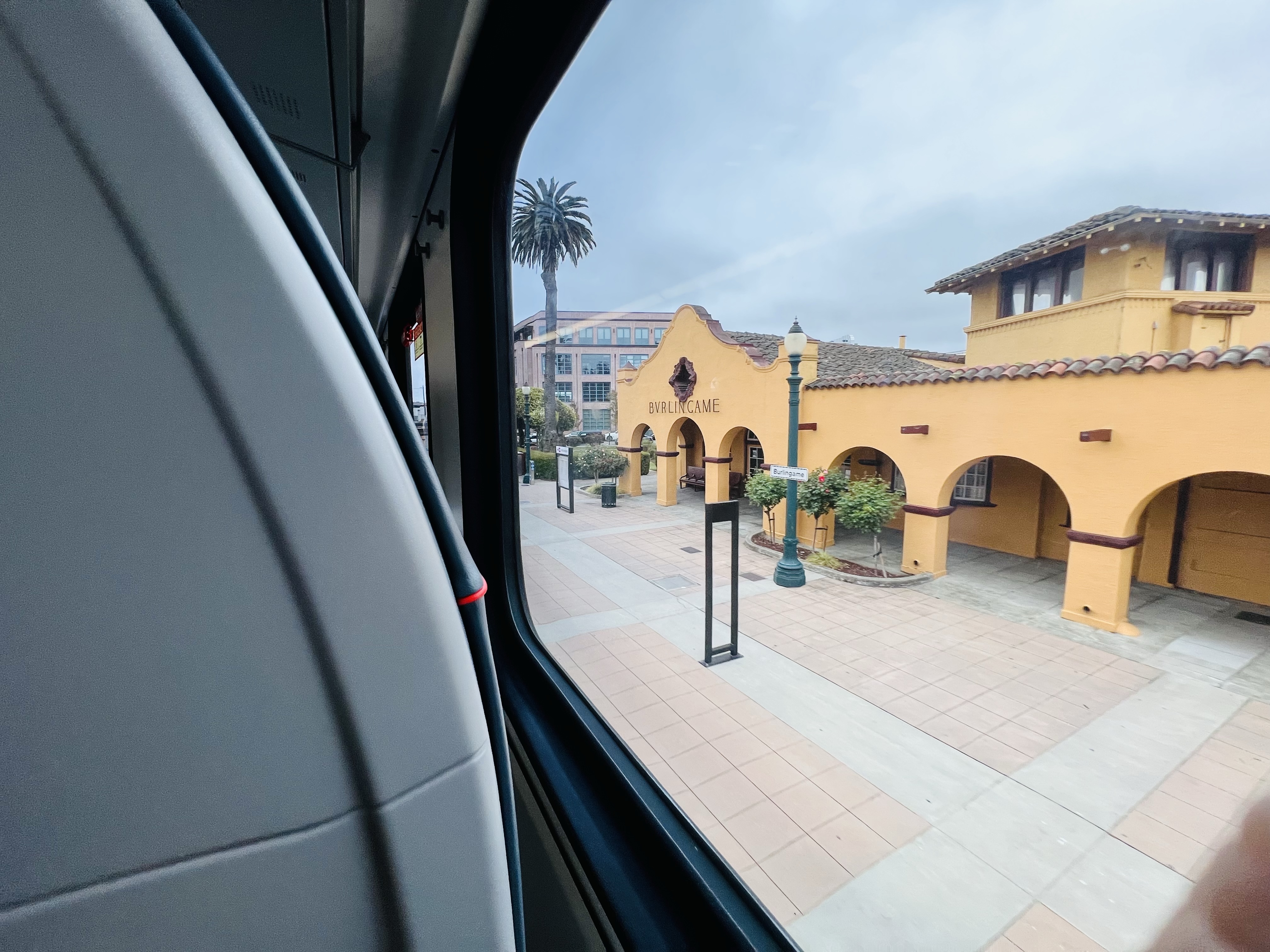
The view of one of my favorite stations on the line: Burlingame. This station is one of the earliest examples of the Mission Revival style and was highly influential in California when it was opened in 1894.
An EMU at Palo Alto, Caltrain’s second busiest station after San Francisco.
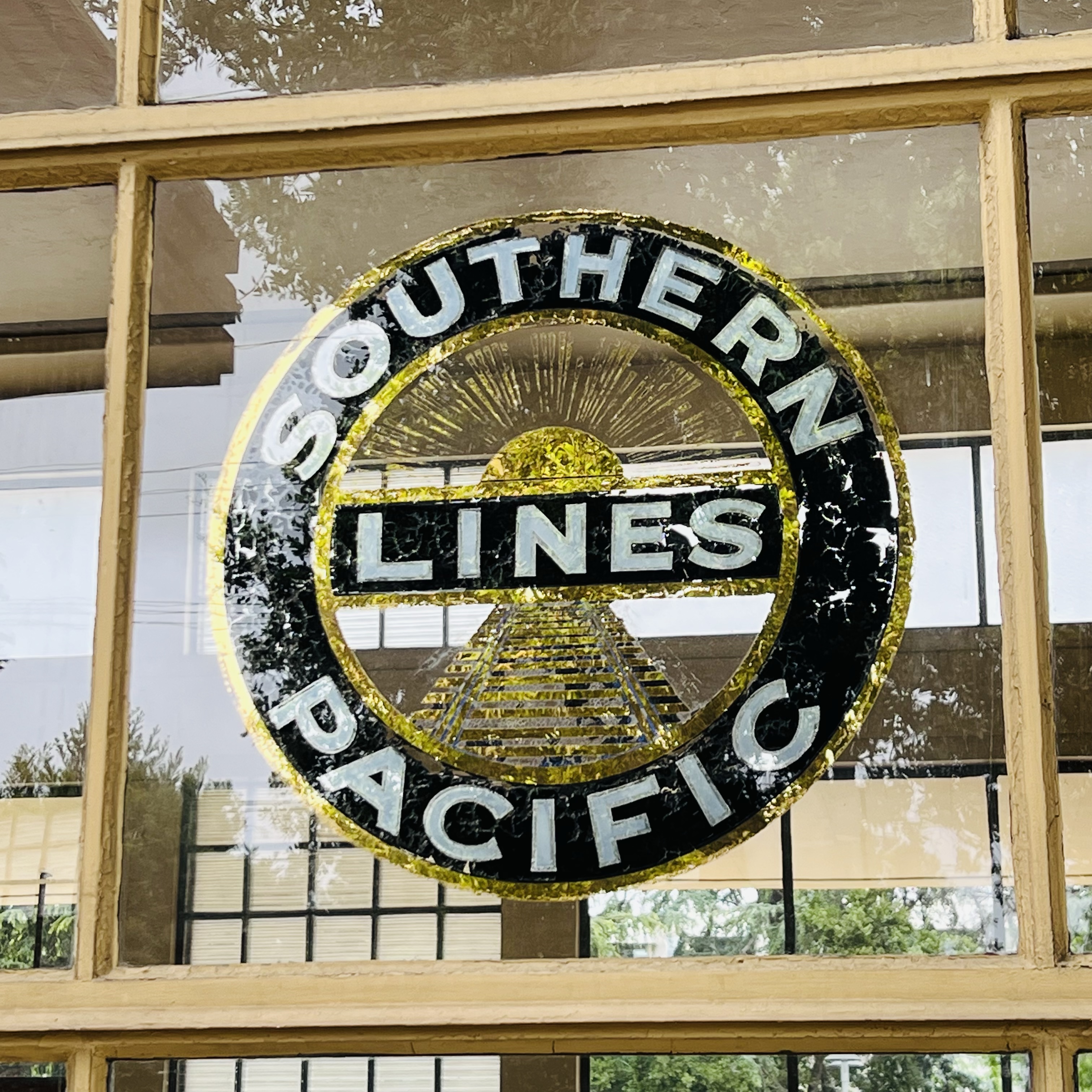
The emblem of the mighty SP when Palo Alto was a stop on the streamlined Daylight passenger service from San Francisco to Los Angeles. The most beautiful passenger train in the world (But I’m biased.)

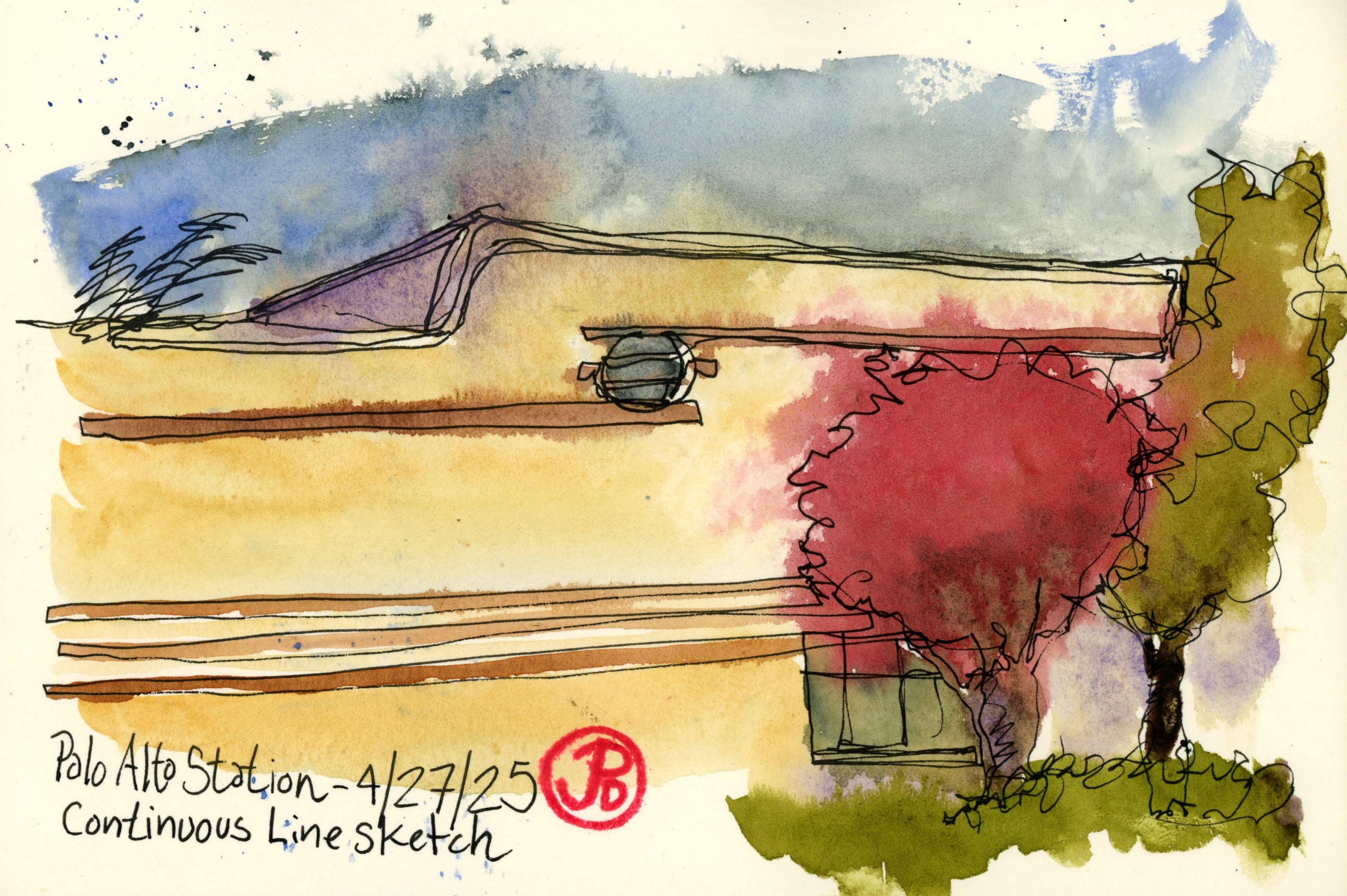
Before heading to lunch on University, I sketched another of my favorite stations on the line the Streamline Moderne Palo Alto station (1941) which looks like some kind of sea going vessel about to take to the air! The station was rebuilt to match the streamlined GS locomotives that were on point for the Coast Daylights.

Final Thoughts

Caltrain’s new EMUs provided a quiet, comfortable, and quick ride from San Francisco to Palo Alto. The interior is well designed and easy to navigate with screens at both ends of the car that shows the next stop as well as upcoming stops. The seven car units have a European feel that looks more like a fast tram or articulated streetcar rather than a high sped mainline train set.

One quibble with the design is that there is only one restroom aboard the train set. This is not a minor quibble as most stations on the line do not provide opened restrooms (including Palo Alto).