Image

Sketching Ft. Bragg

While many painters, sculptors, and artists are attracted to the picturesque town to the south, Ft. Bragg has plenty of objects to sketch.

And I added a few to my sketchbook.

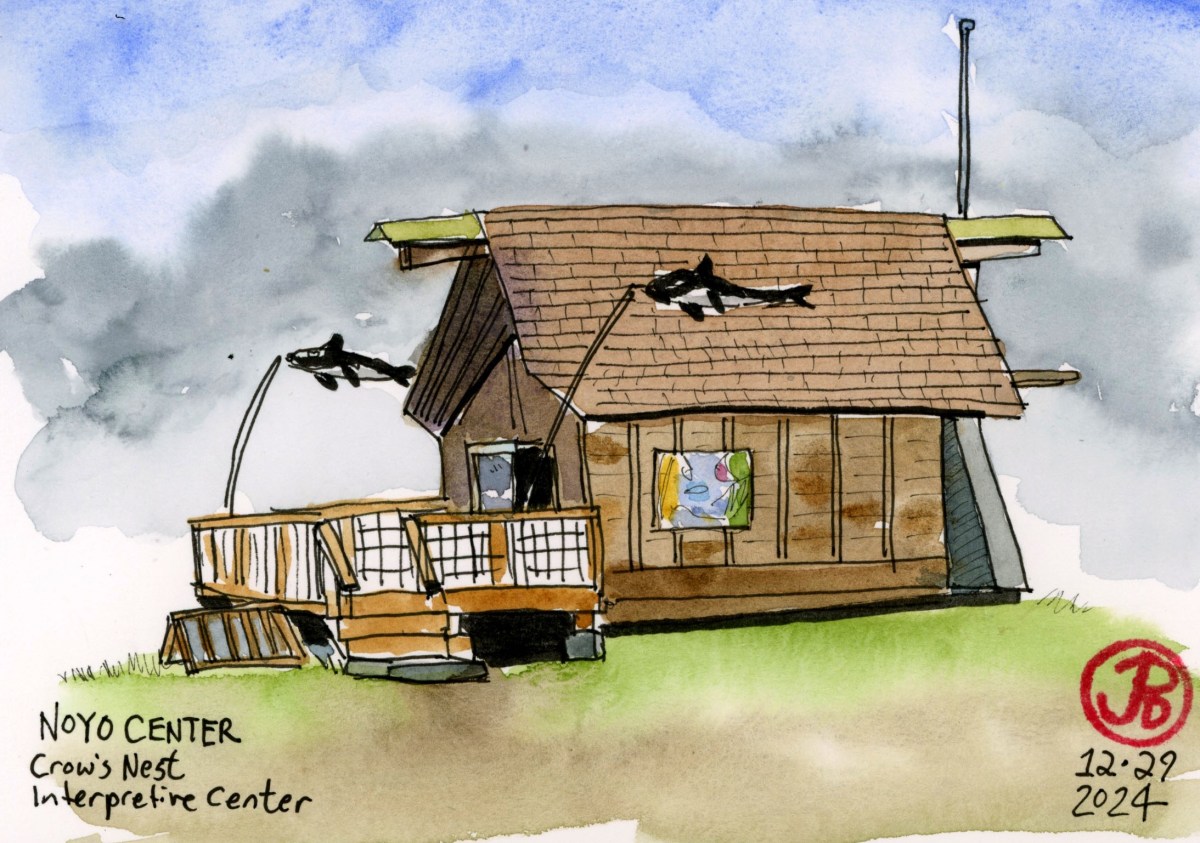
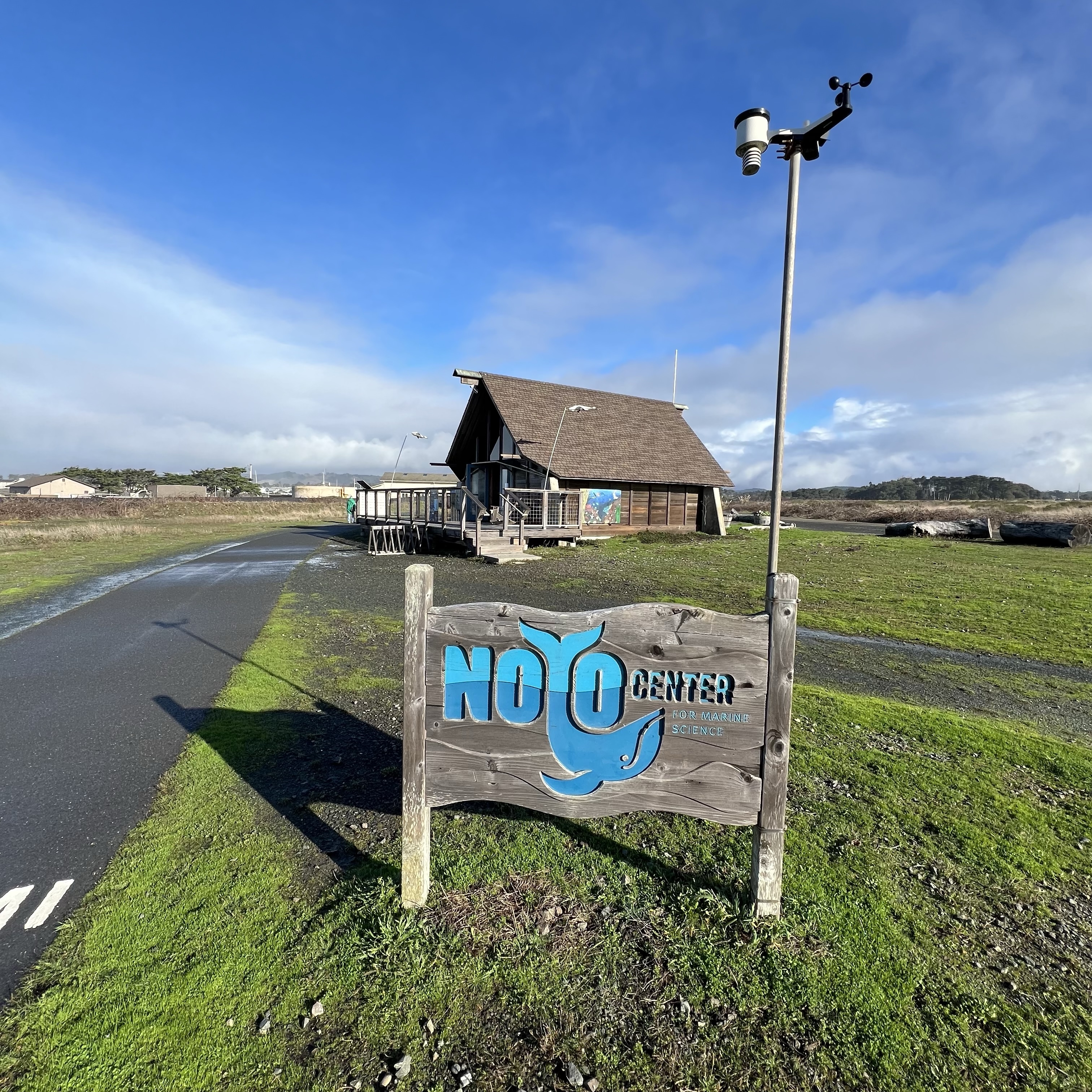
I hiked out on the Noyo Bluffs, north of the river mouth. My destination was the Noyo Center’s Crow’s Nest Interpretive Center.

This center has marine mammal skulls and bones, maps and diagrams, a tide pool tank, and a deck for whale watching.

I sat at a picnic table and sketched the interpretive center. All this hiking and sketching makes me thirsty.

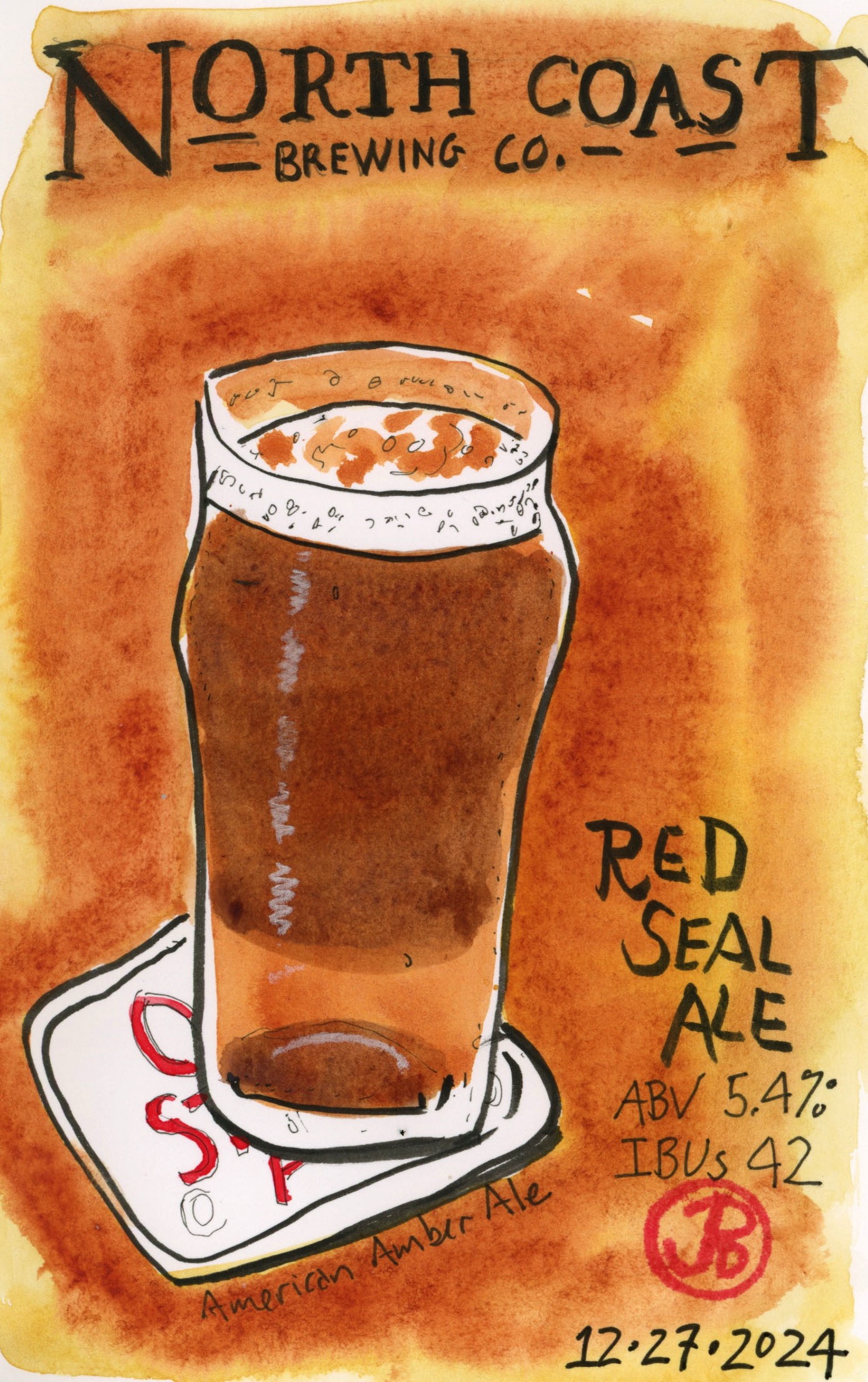
Good thing I was in Fort Bragg, because on Highway One, near the train depot, is the North Coast Brewing Company. Across the street from the brewery is their pub where you can get a bite to eat and sample their brews.

North Coast has been brewing since 1988, well before I could legally drink. They always have creative names for their brews such as Scrimshaw, Old Rasputin, Brother Thelonious, Old No. 38 Stout (named after a California Western Railroad steam locomotive), and my favorite Red Seal Ale (sketched above).

Cheers from Fort Bragg!

Image

Train Sketching: Ft. Bragg

I have enjoyed sketching in the town of Fort Bragg, just to the north of Mendocino.

The genesis of Fort Bragg as a town was the huge strands of coast redwoods and lumber mills sprang up to harvest the timber.

Now how to get the lumber to markets like San Francisco to help build the growing city?

Lumber was shipped south by boat but once the California Pacific connected Ft. Bragg with Willitis and the Northwestern Pacific, milled lumber could be shipped by rail.

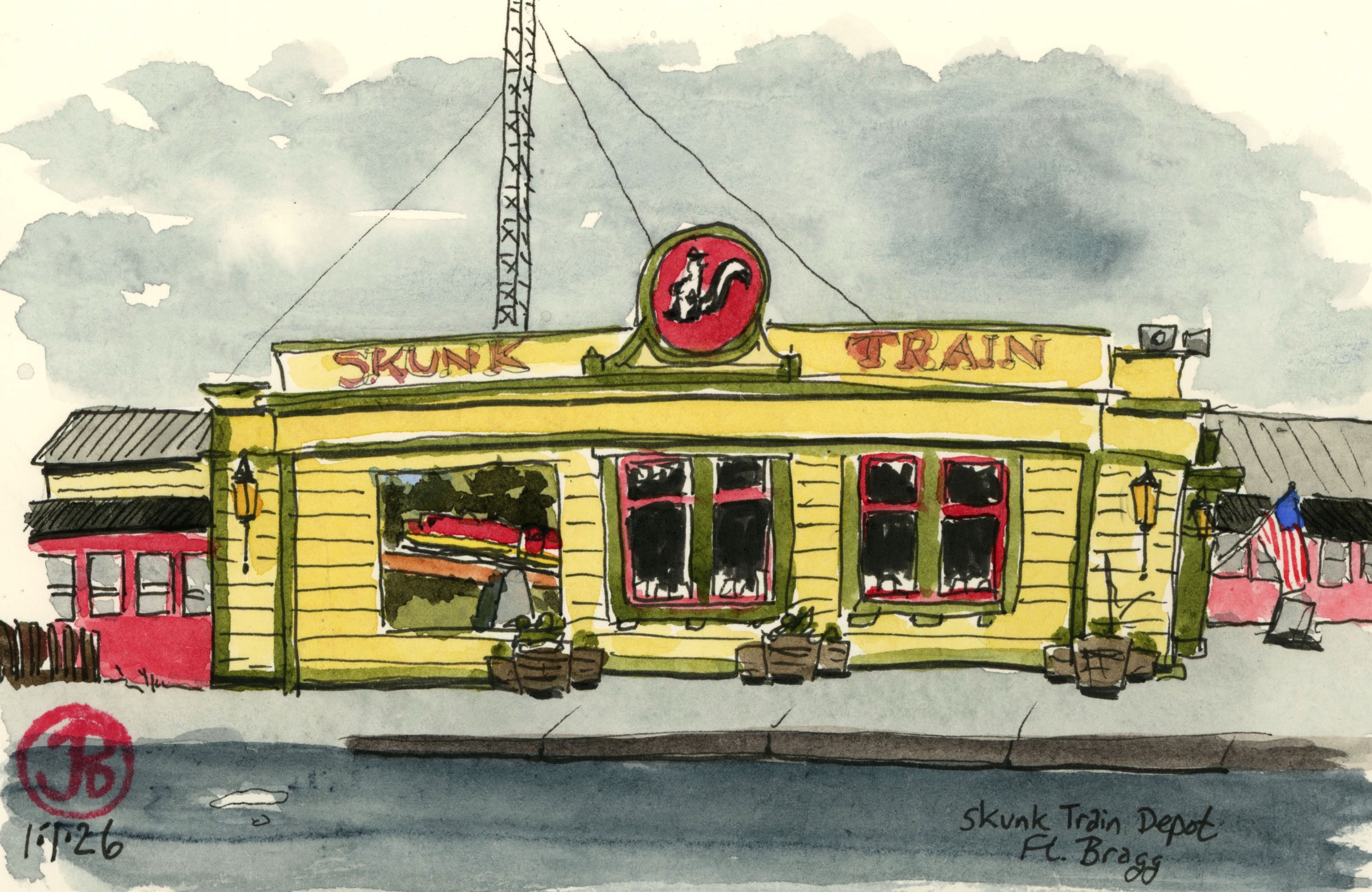
The rails of the past lives on as the Skunk Train. Now a tourist railroad.

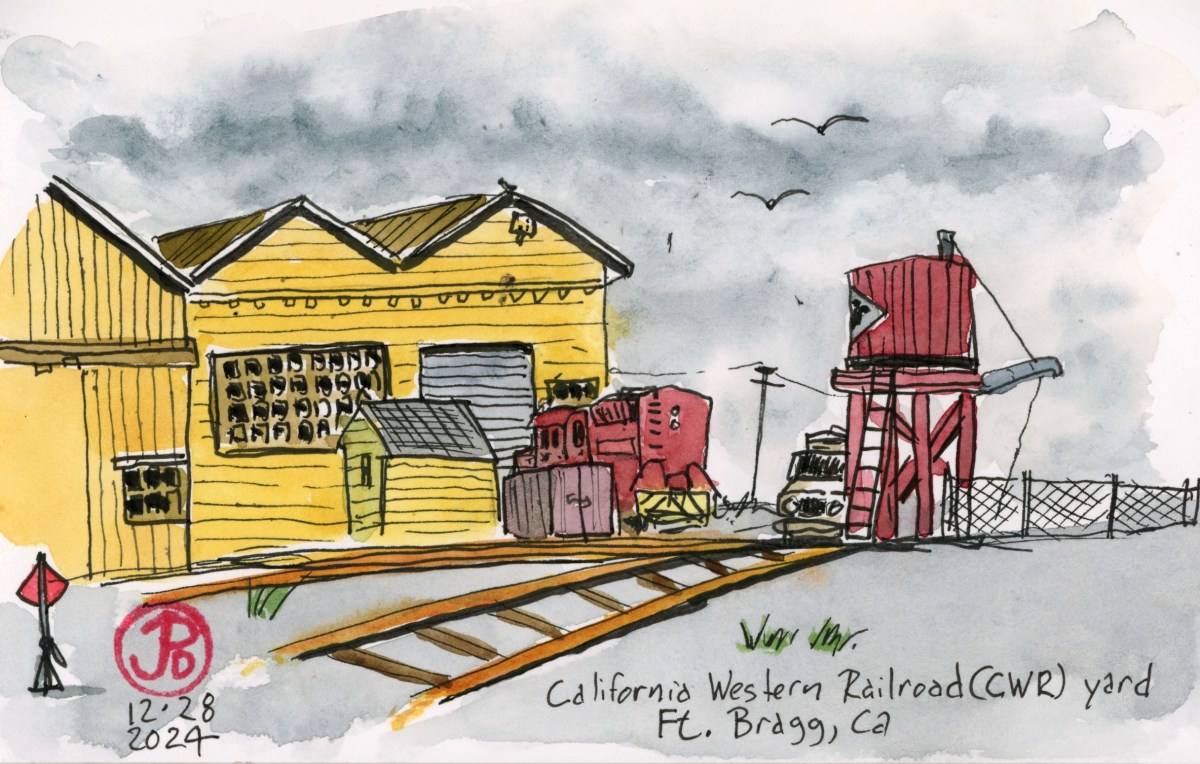
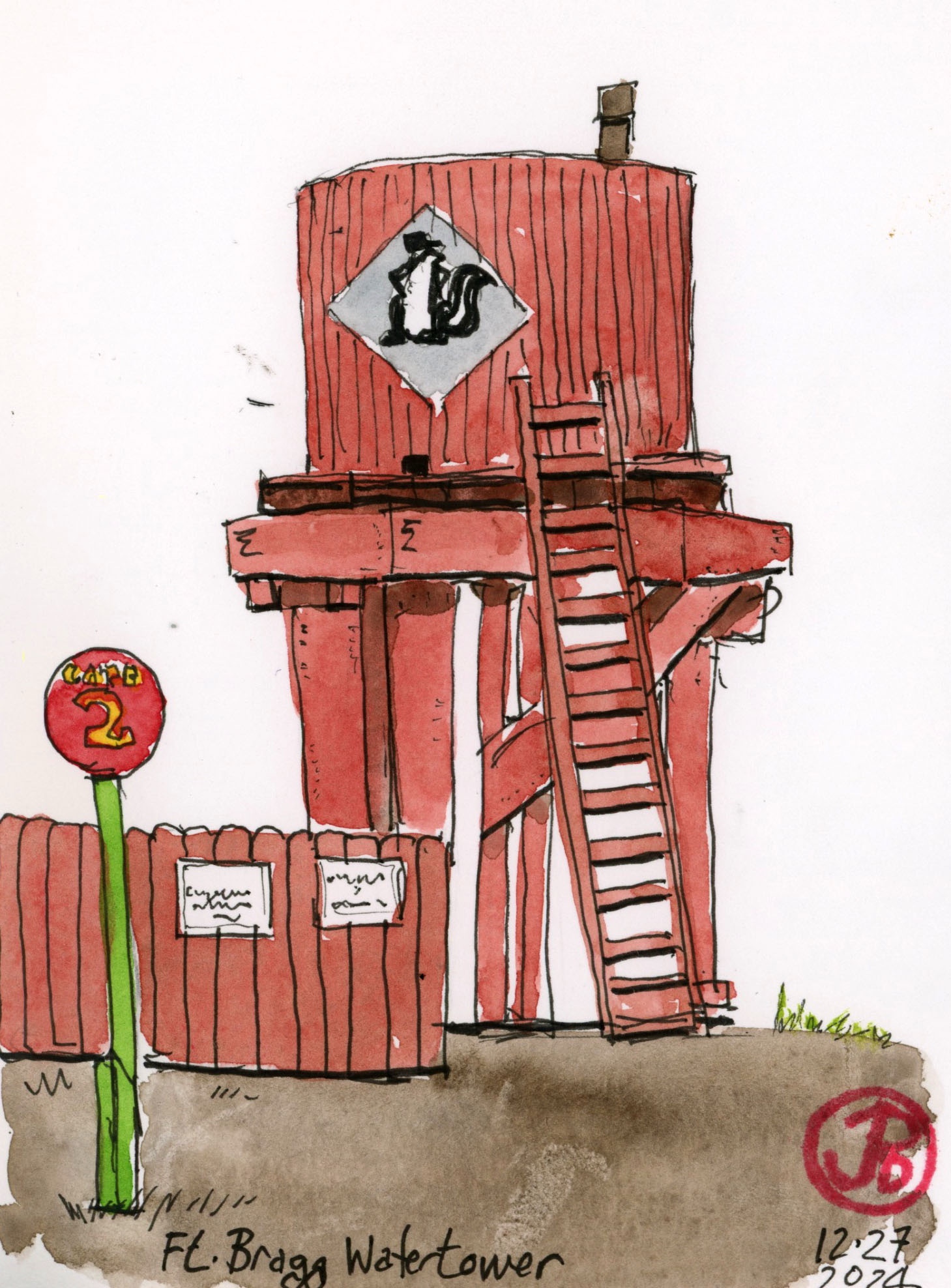
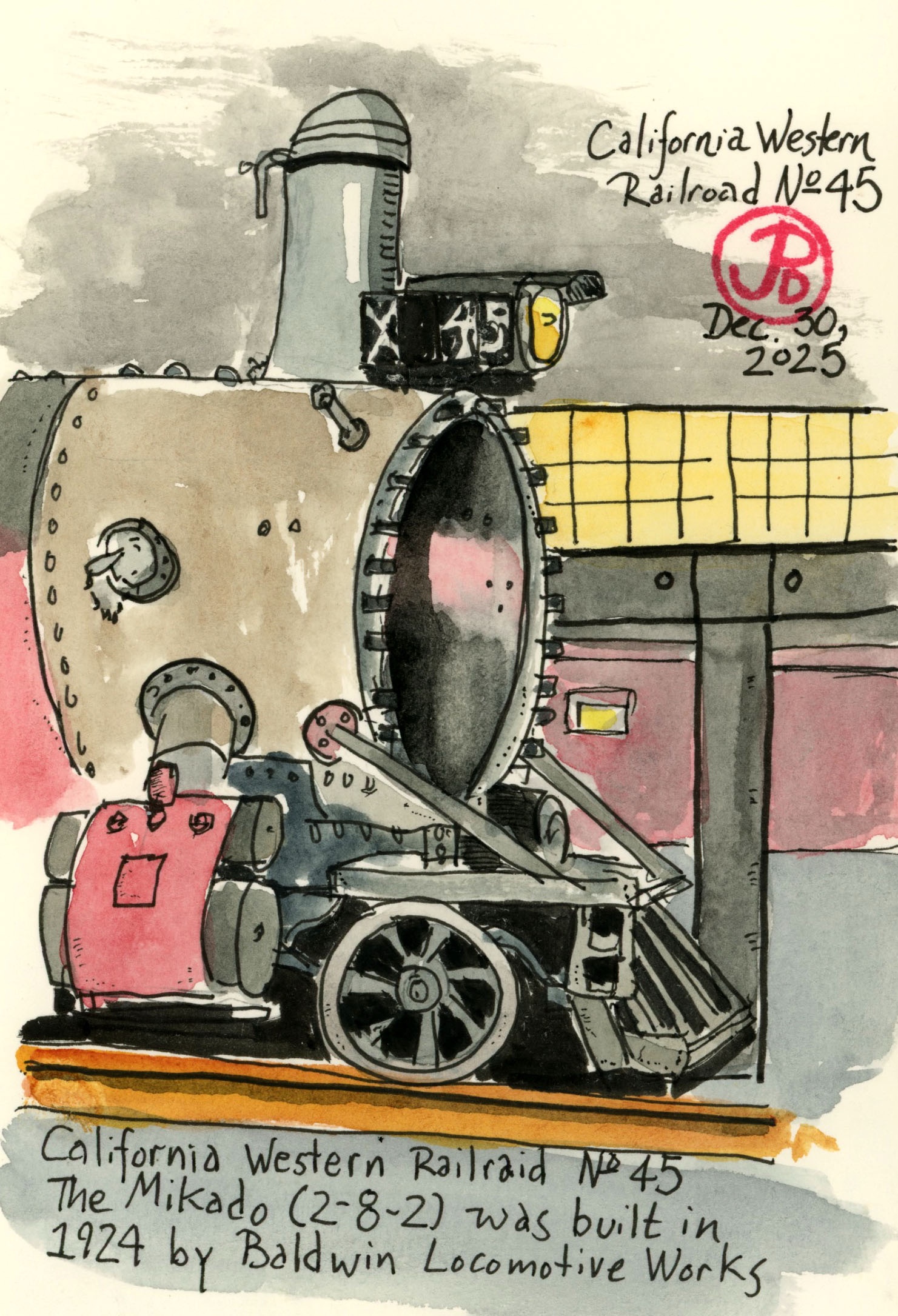
I did some sketching at the train yard (featured sketch) including the water tower with the skunk logo.

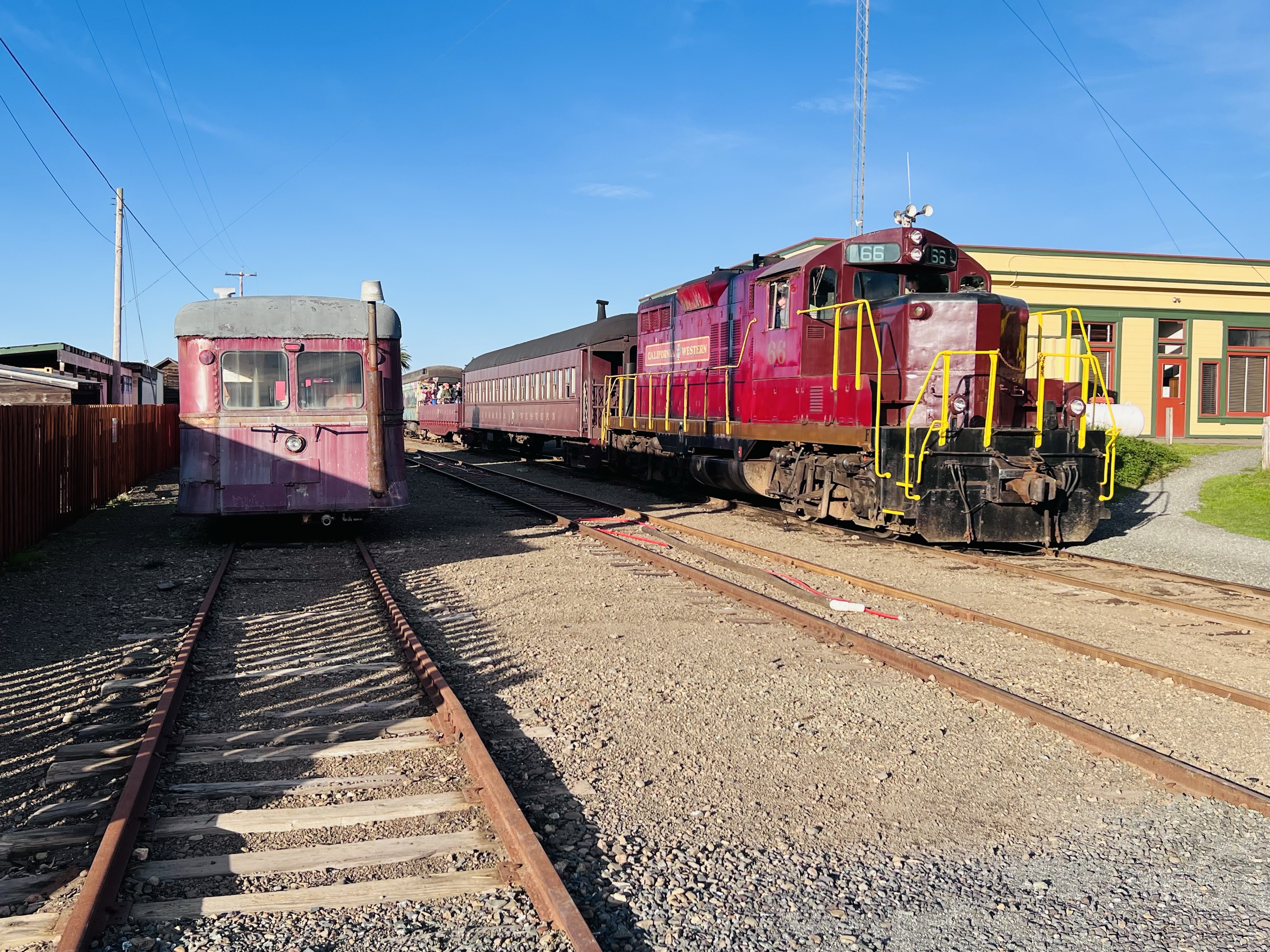
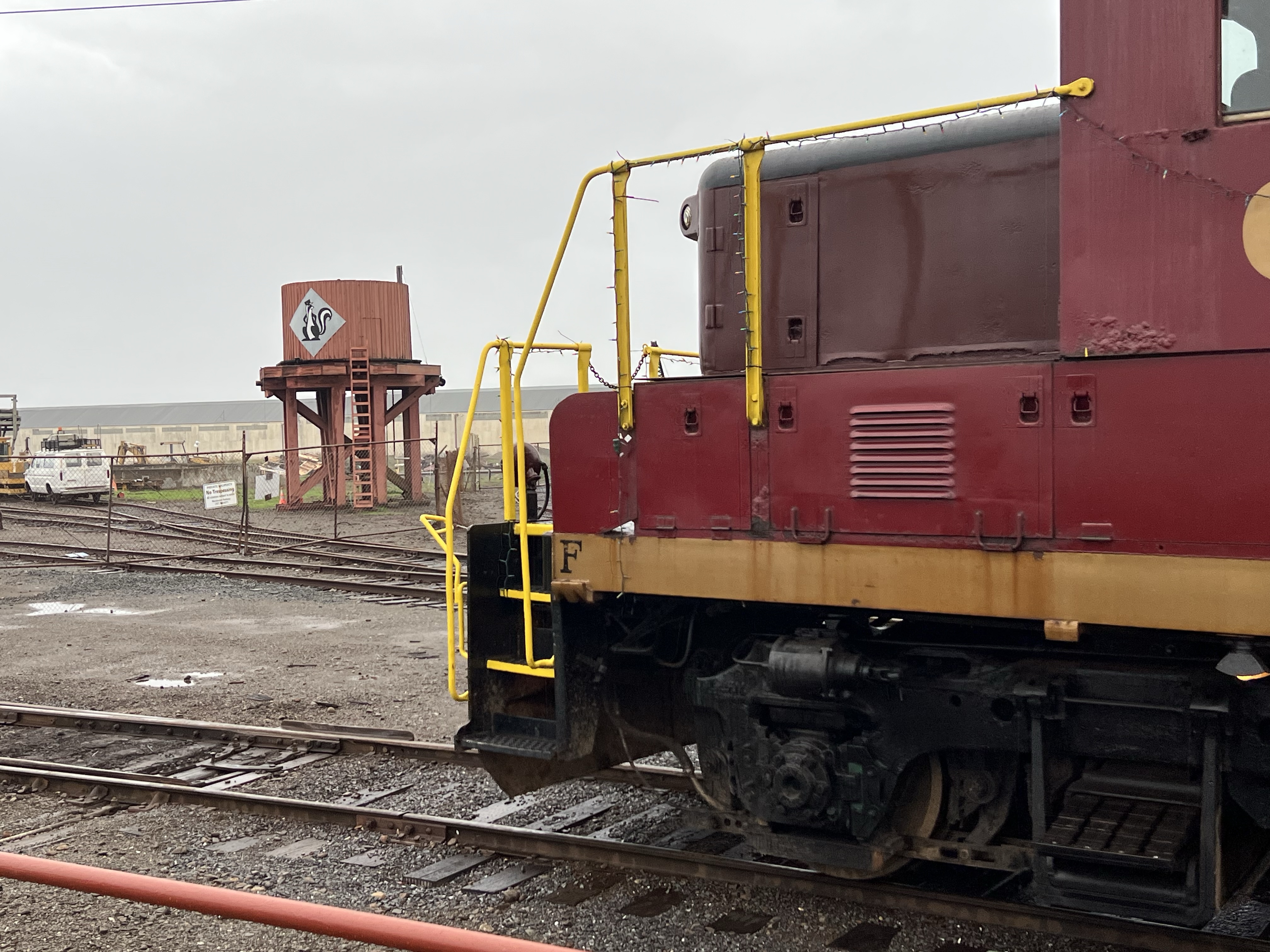
The past and present of Skunk Train. A diesel pulling into the station with a water tower of the steam age in the background.
Image

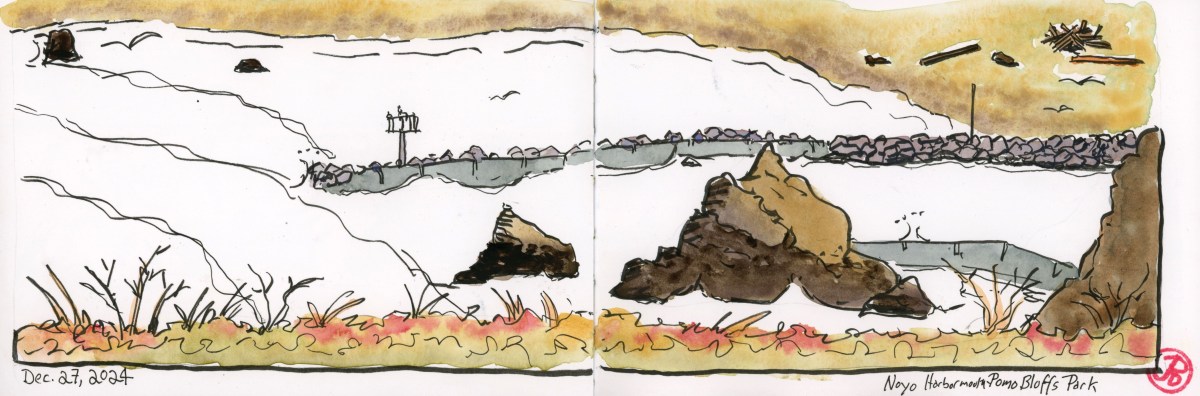
Pomo Bluffs Park and the Noyo Rivermouth.

In between rain showers I made it out to Pomo Bluffs Park to sketch the large swells at the harbor mouth.

The trail along the southern bluffs offers a great view to witness the drama where the Noyo River meets the Pacific.

On this December morning, the wave action was epic. No boats were entering or leaving the harbor with these crashing swells.

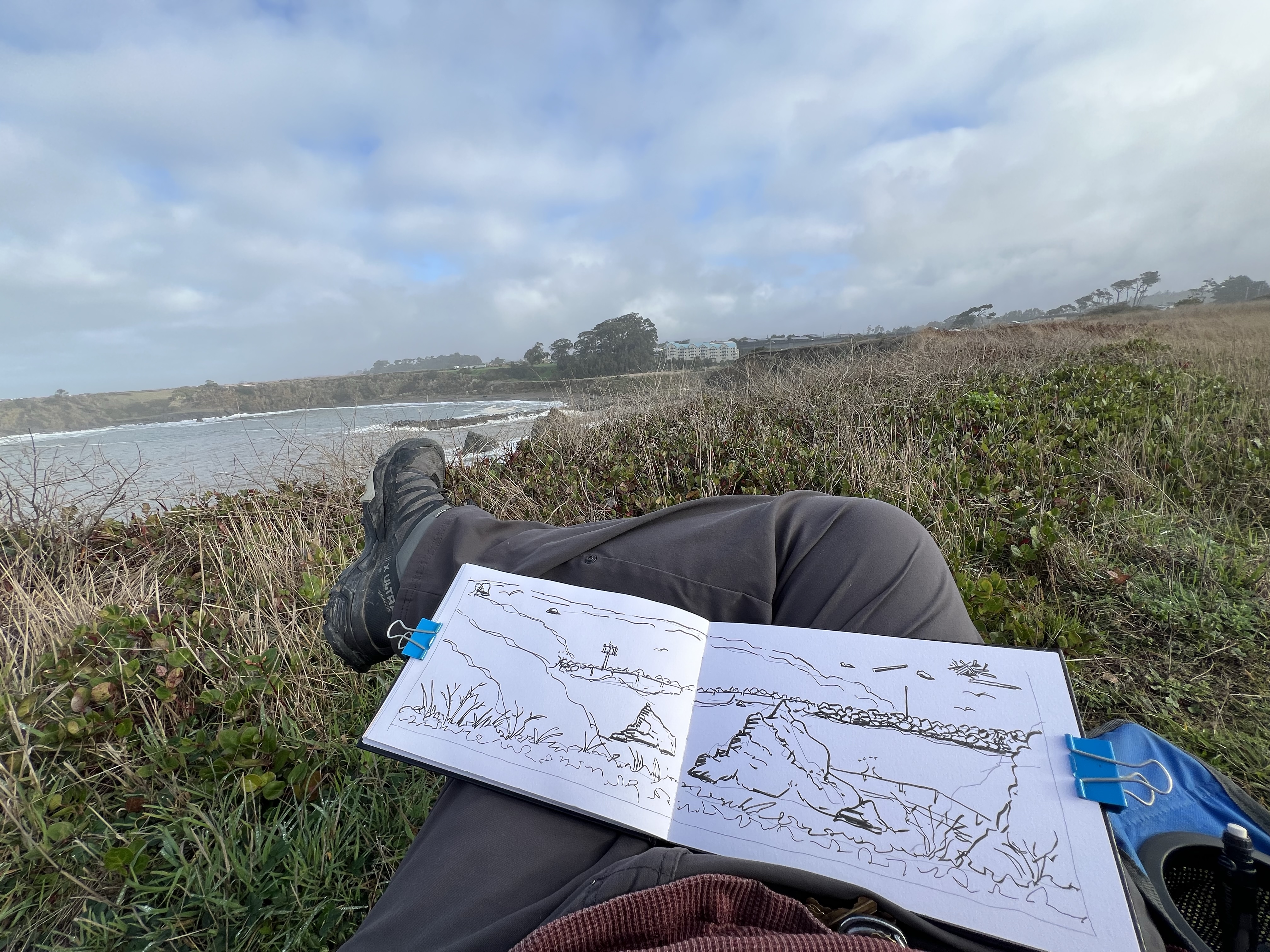
I found a patch, set up my sketching chair, and opened my panoramic sketchbook. The result is the featured sketch.

Sketching the harbor mouth.
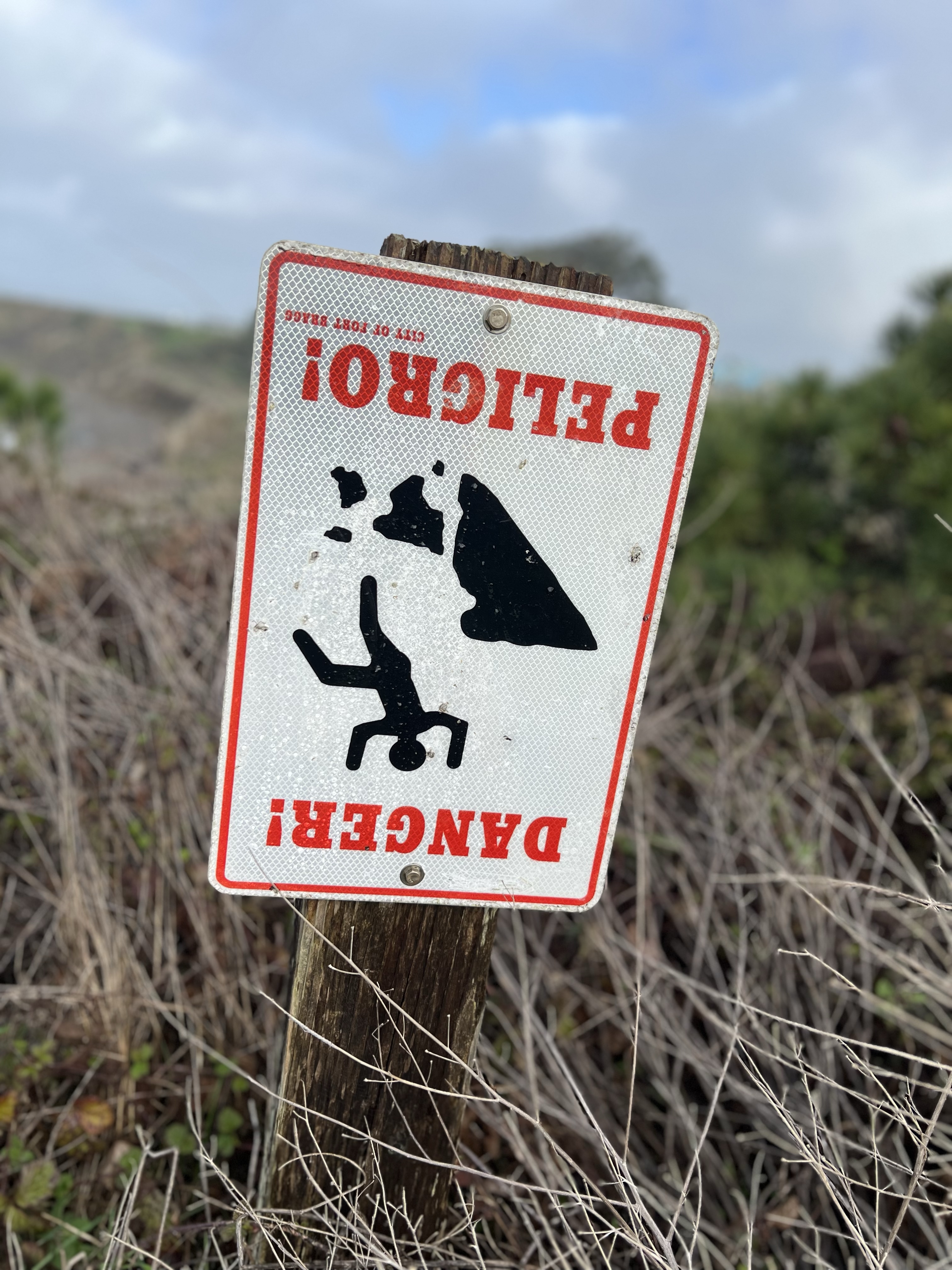
The locals have a screwdriver and a sense of humor!
Image

Mendocino Whale Watch

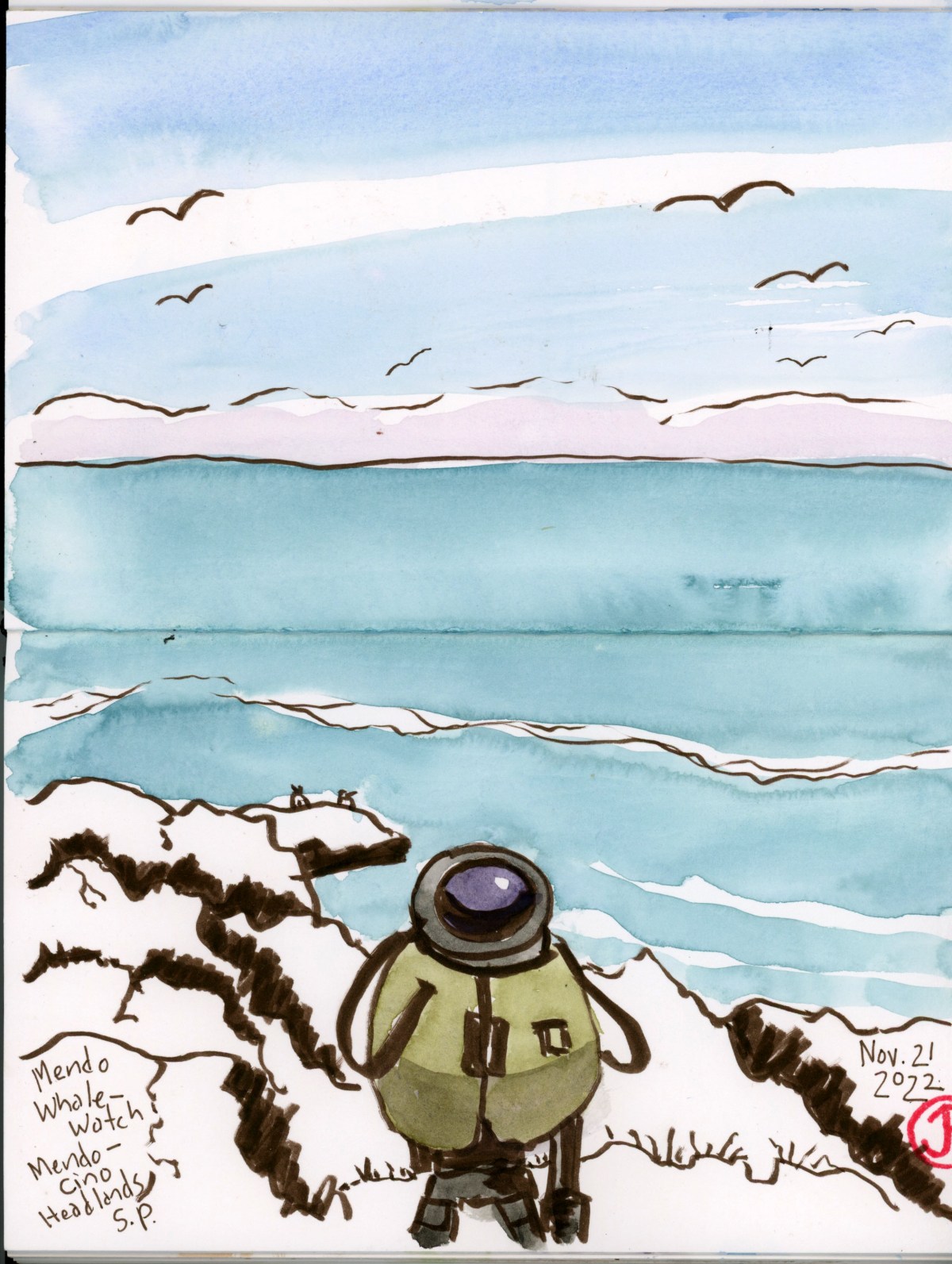
I started my whale watch just down the street from my digs at the Mendocino Art Center at the Mendocino Headlands State Park.

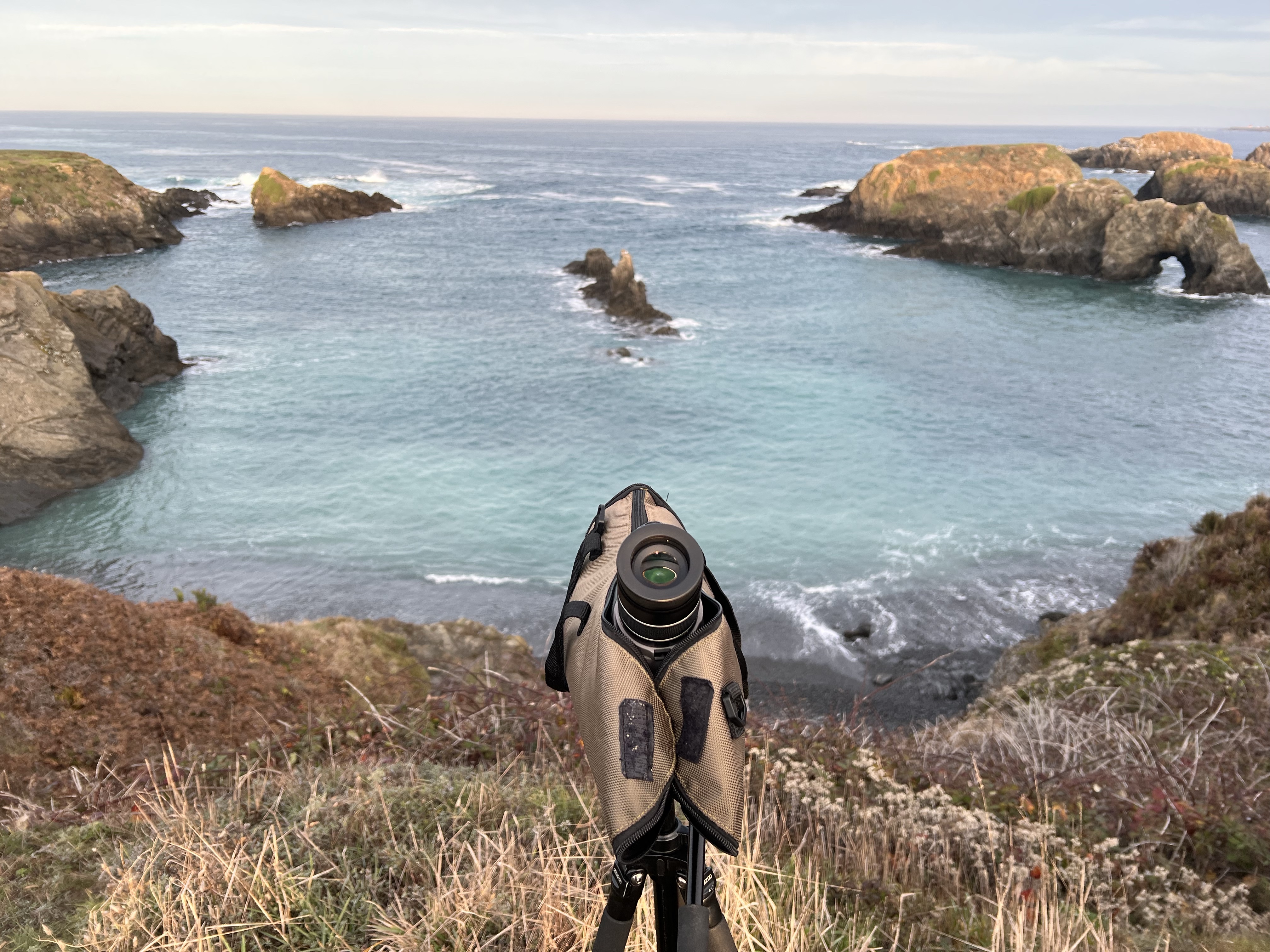
I set up my scope at 7:45 AM and looked for blows just below the horizon.

I looked and I looked. I looked at gulls and I looked at oystercatchers and I looked at the constant stream of common murres heading south.

But no blows.

I looked at a bottling harbor seal and I looked at the lone snow goose on a bluff to the north, and I even turned around to look at the perched white-tail kite and harrier.

Where were the migrating gray whales? Perhaps I was too early.

Perhaps there was a gap in the southern stream of pregnant females on their journey to the birthing lagoons of Baja California. Or maybe they were farther off, just on the other side of the curvature of the earth. But whatever it was, after two mornings of whale watching, I saw zero whales.

The plus of being a sketcher is that you are never bored, and if you have a pen and sketchbook handy, you can pass the time with a sketch (featured sketch).

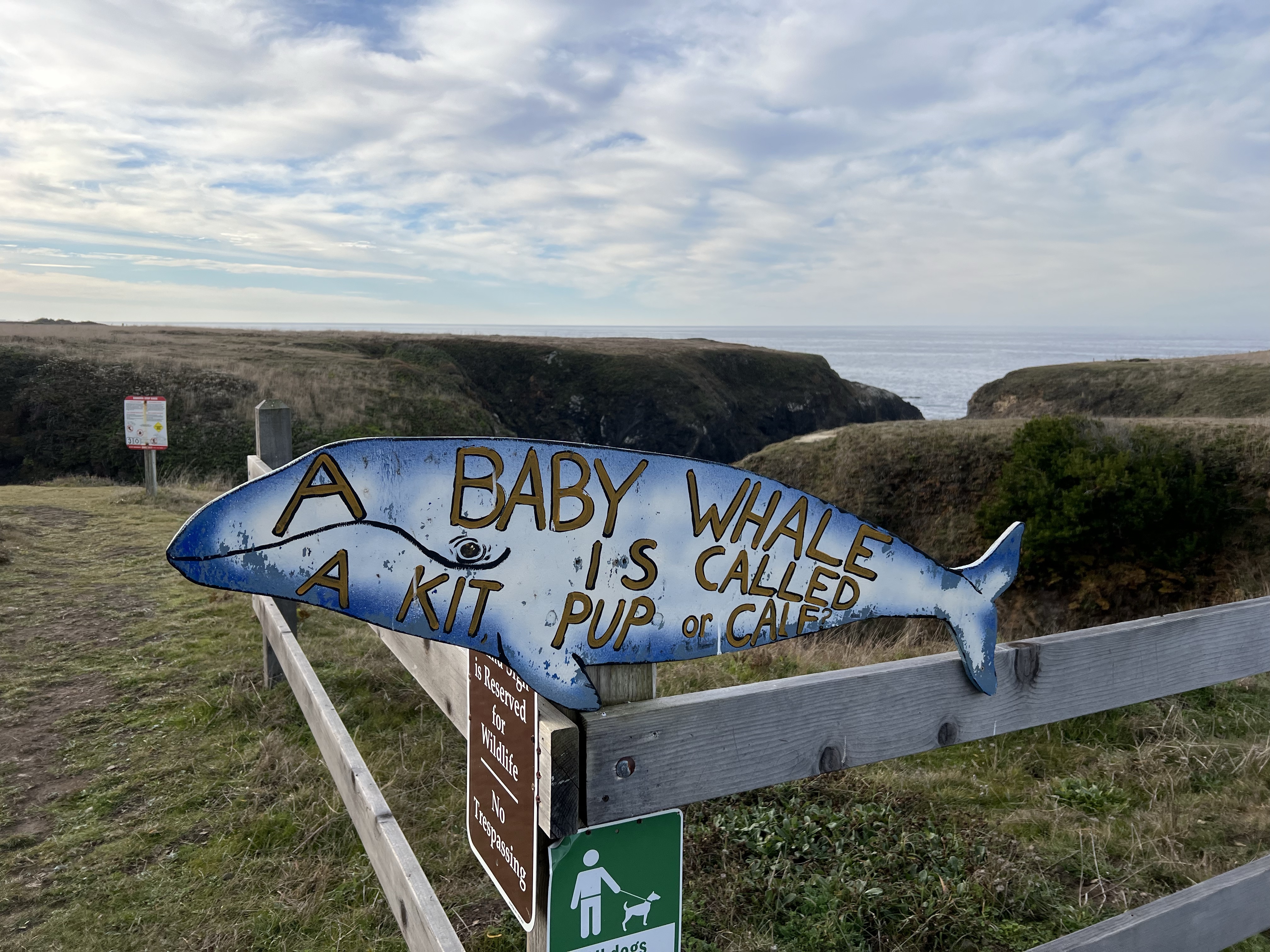
This sign at Point Carrillo Light Station was one of my better “whale” sightings.
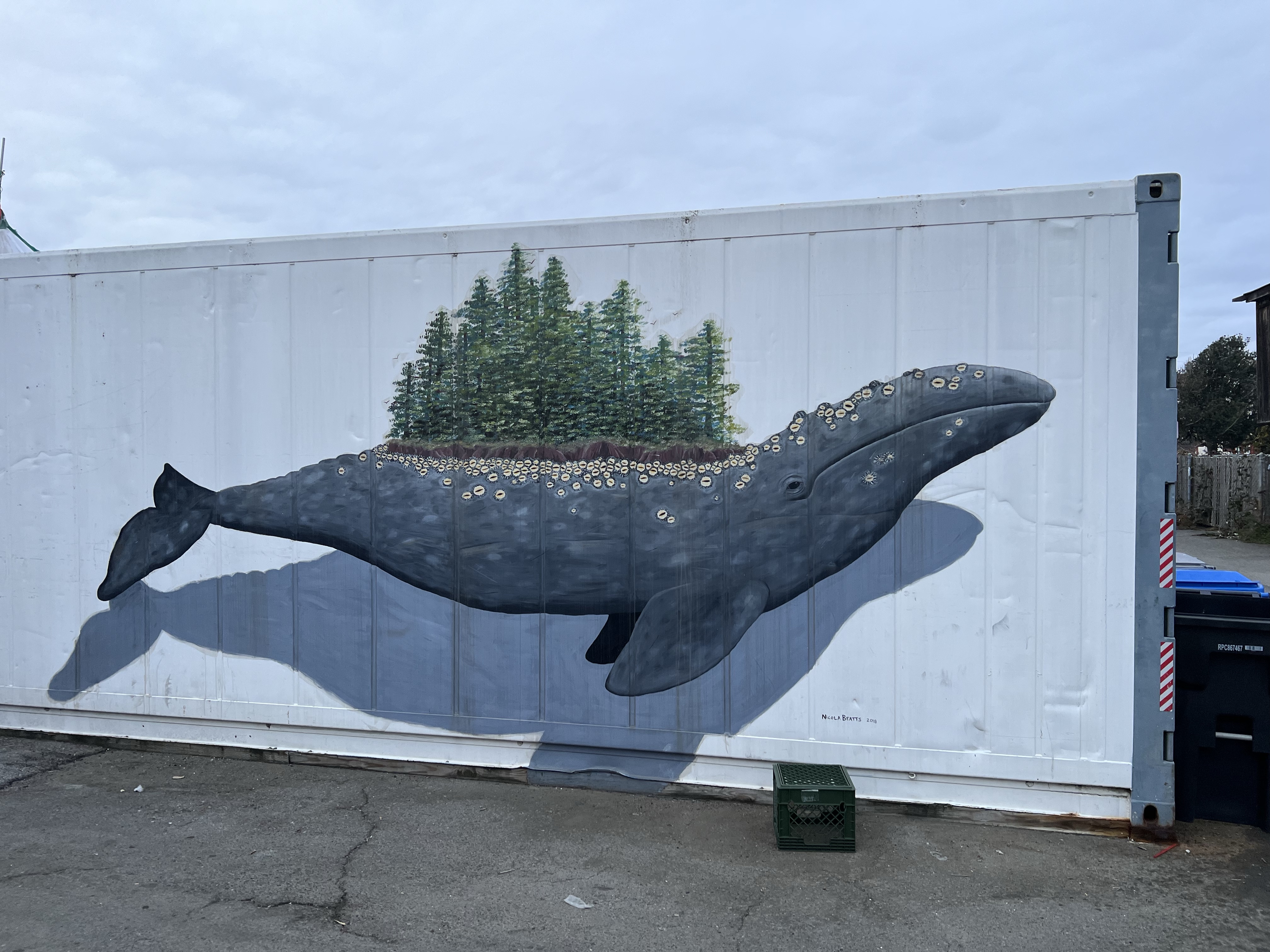
This gray whale mural in a back alley in Fort Bragg was probably the “best” whale sighting of the trip!
Image

Orca Bones of Fort Bragg

The great thing about sketching bones is that they don’t move.

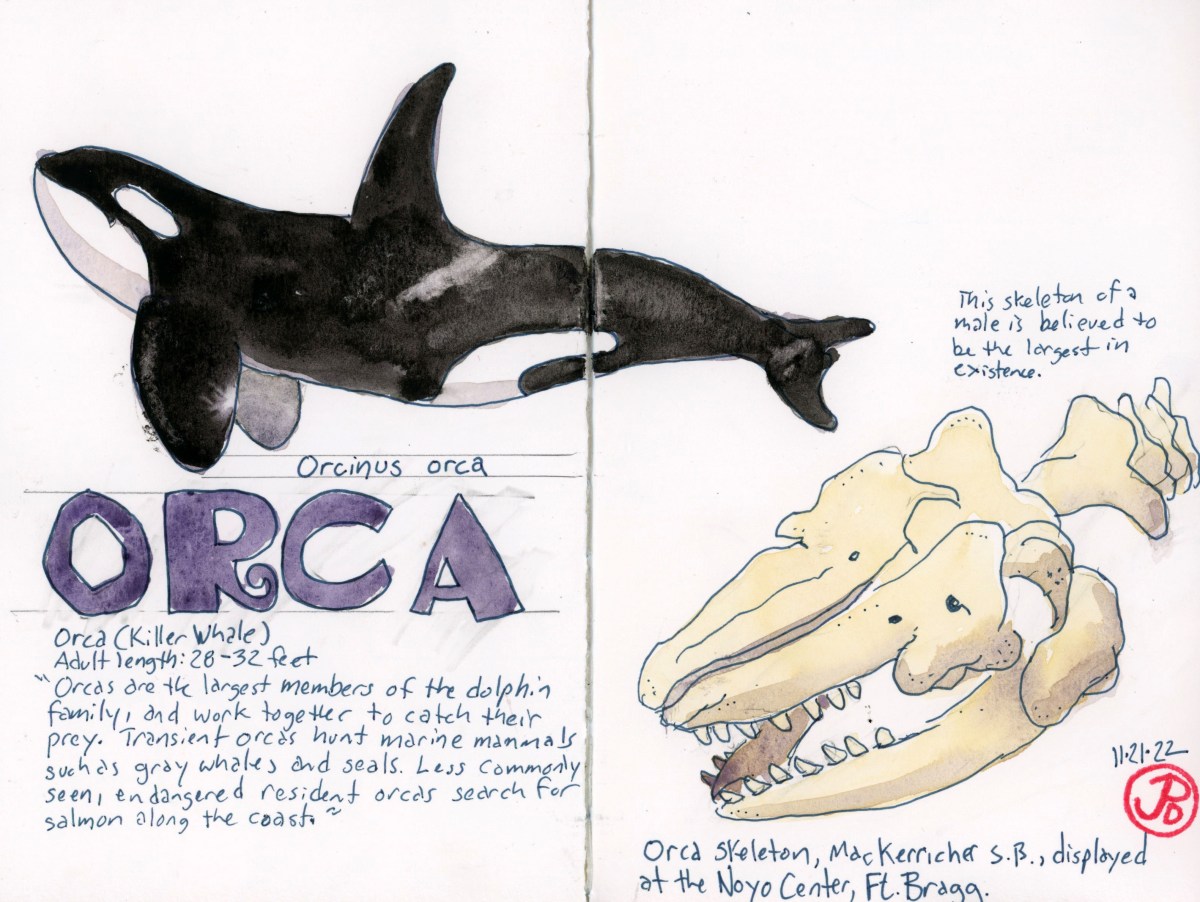
And there is a set of bones that I wanted to sketch in Fort Bragg. These are the bones of a male orca or killer whale. The orca (Orcinus orca) is not a whale but the world’s largest dolphin and these bones are from one of the largest specimen.

These impressive bones are to be found at the Noyo Center for Marine Science on Main Street (Highway One), in Fort Bragg, across the street from the Guest House Museum.

This orca was trapped in some netting off the Mendocino County Coast. In the summer of 2017, the skeleton was articulated or put together by experts ranging as far away as Alaska and Canada who came to Ft. Bragg to give the orca skeleton “life”. It’s the impressive centerpiece of the museum’s collection.

An orca sighting at Point Cabrillo Light Station. And the answer is “Yes!”
The male orca skeleton at the Noyo Center in historic downtown Fort Bragg. This is one killer dolphin!!
Image

The Rime of the Ancient Murrelet

On Veteran’s Day Weekend, consisting of a birding and camping adventure with Dickcissel, I had one bird on my wishlist: the ancient murrelet (Synthiloramphus antiquus).

I have been to the Mendocino Coast many times but had not put the effort into a dedicated seawatch to see this small alcid. (I also did not bring the scope required for finding this bird.)

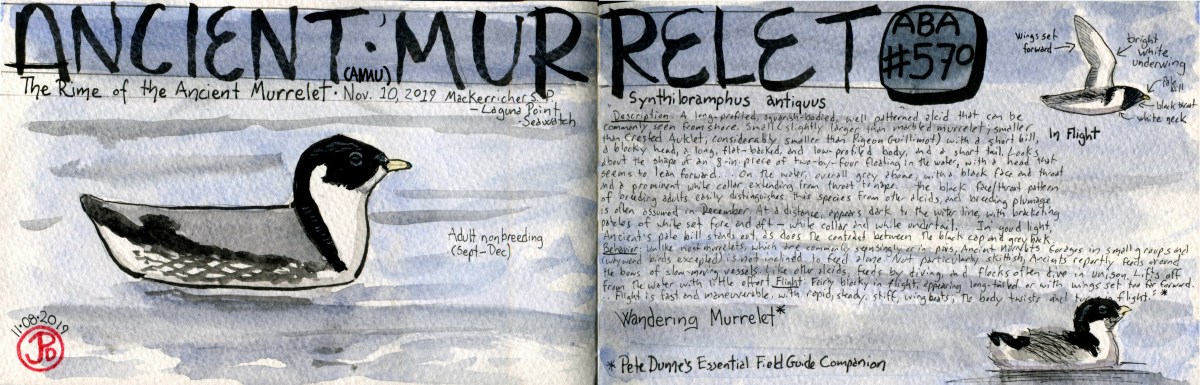
Before heading up to the Mendocino Coast, I did a study sketch of this small alcid (the featured sketch). When I did this sketch, using the Sibley Guide, photos, and Pete Dunne’s Essential Field Guide Companion, it was a way of creating a mental image of this bird; It’s field marks, behavior, and flight. This helped me single out the other birds and find the two toned “flying penguin “. A bird named “ancient” because of the gray feather of it’s head, giving the impression of being really old.

We started our Seawatch on the observation decks at Laguna Point in MacKerricher State Park just north of Fort Bragg. It was a beautiful day, clear and calm which makes for great seawatching with the sun at our backs providing great light to see the passing birds on the water. There was a lots of birds moving south, mainly loons and surf scoters that flew close to shore, low across the water.

Now it was just a matter of finding a small gray-backed alcid with white underwings, a light, short bill and a twisting and turning flight pattern. Really there where not too many birds that we could confuse it for.

About 30 minutes into our watch, I got on a two small alcids, heading south. I panned the scope with them and they checked all the boxes! Ancient Murrelet, ABA lifebird #570!

Scoping the Pacific. There was lots of southerly movement at Laguna Point. Mostly loons and surf scoters and the alcid I wanted to see: the ancient murrelet. Does this hat make me look ancient?
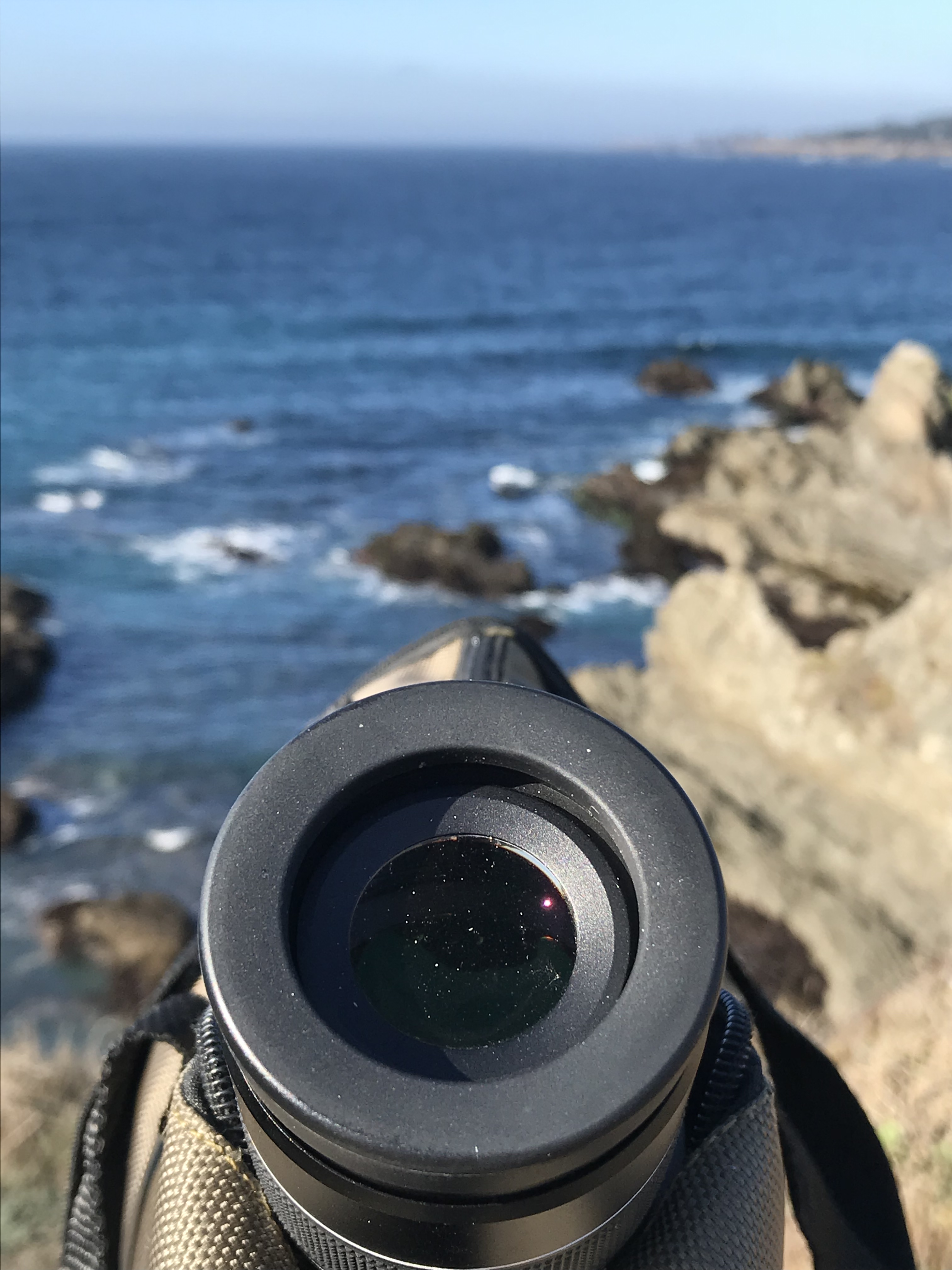
We also scoped from the Mendocino Headlands State Park.

A little nature loafing in between seawatches at Mendocino Headlands State Park. We had a glorious day on the Mendocino Coast. From here we spotted a peregrine, loons, black oystercatchers, mergansers, and five snow geese. The latter had never been recorded for this location!