Sonoma Bits & Bobs

These are a collection of sketches that are related in their location, the Sonoma Coast.

From Mammoth Rock to Fort Ross to the north and into the Russian River Valley to the former lumber town of Duncans Mills.

Fort Ross

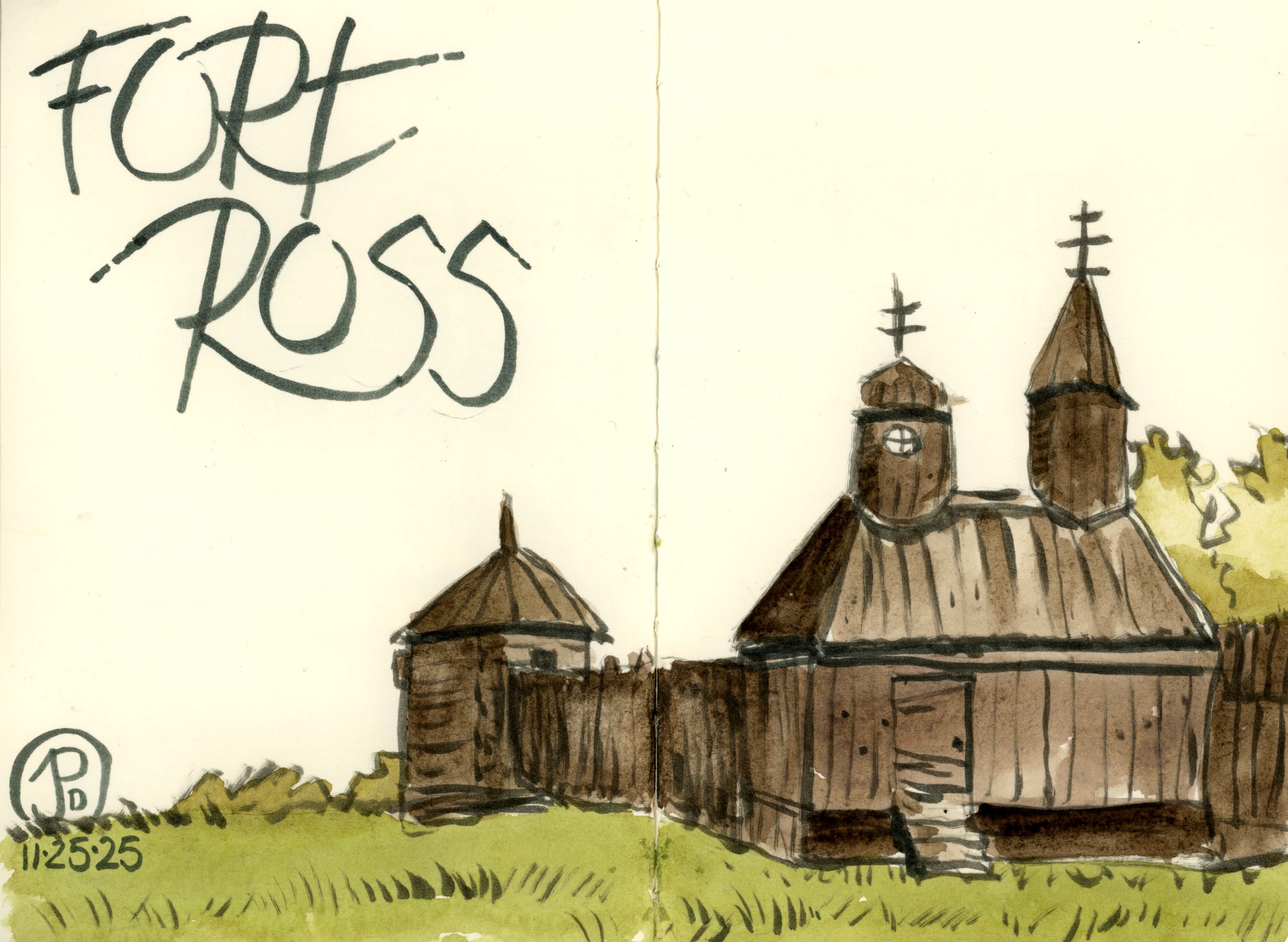
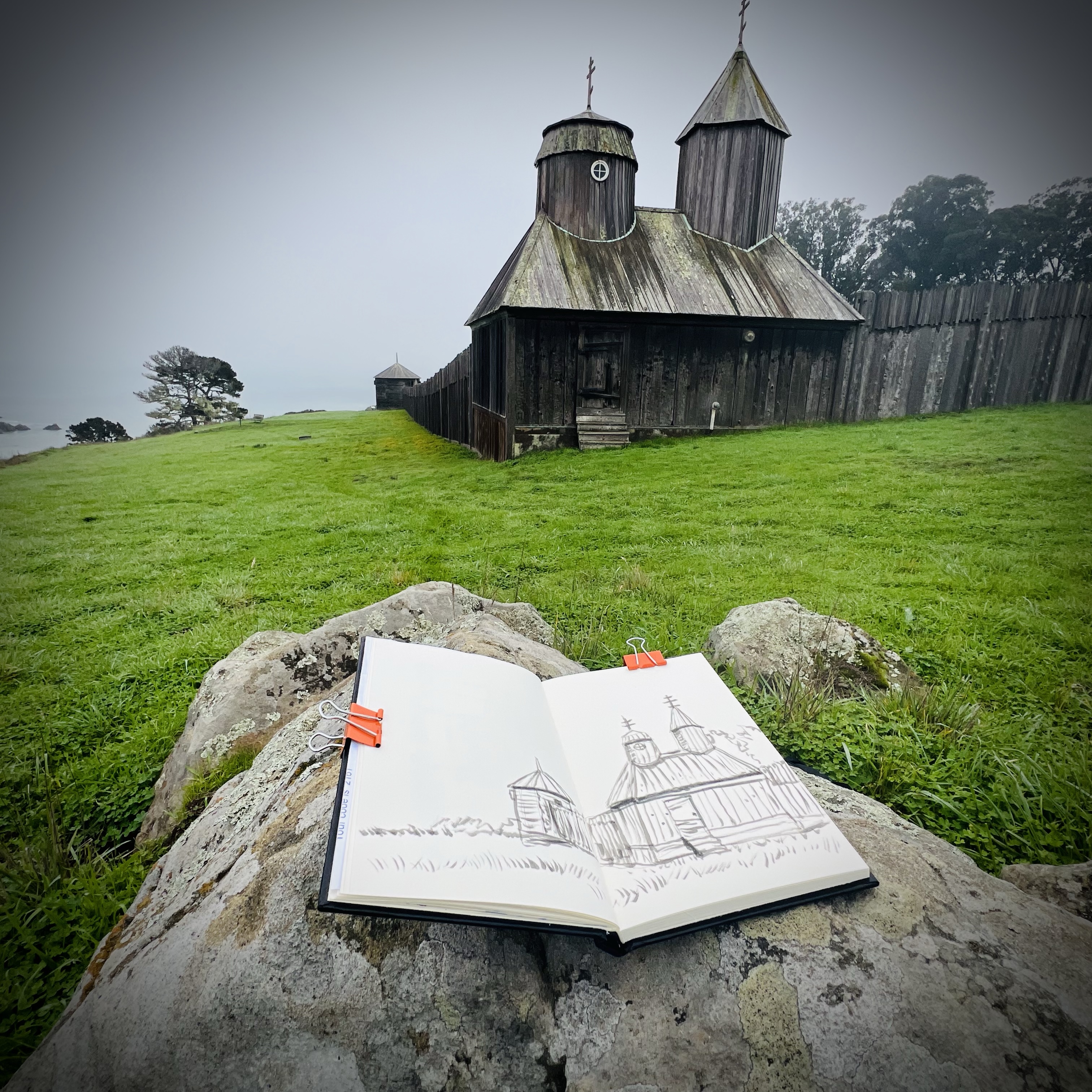
One morning I drove half an hour north from my digs to Fort Ross State Historic Park. Fort Ross is a sketching touchstone for me and I have returned here with my sketchbook many times. This time I chose a different angle sitting on a rock outside the fort looking towards the Russian Church. I had wanted to sketch from a similar perspective on a previous visit, but I was foiled by rainy conditions.

Duncans Mills

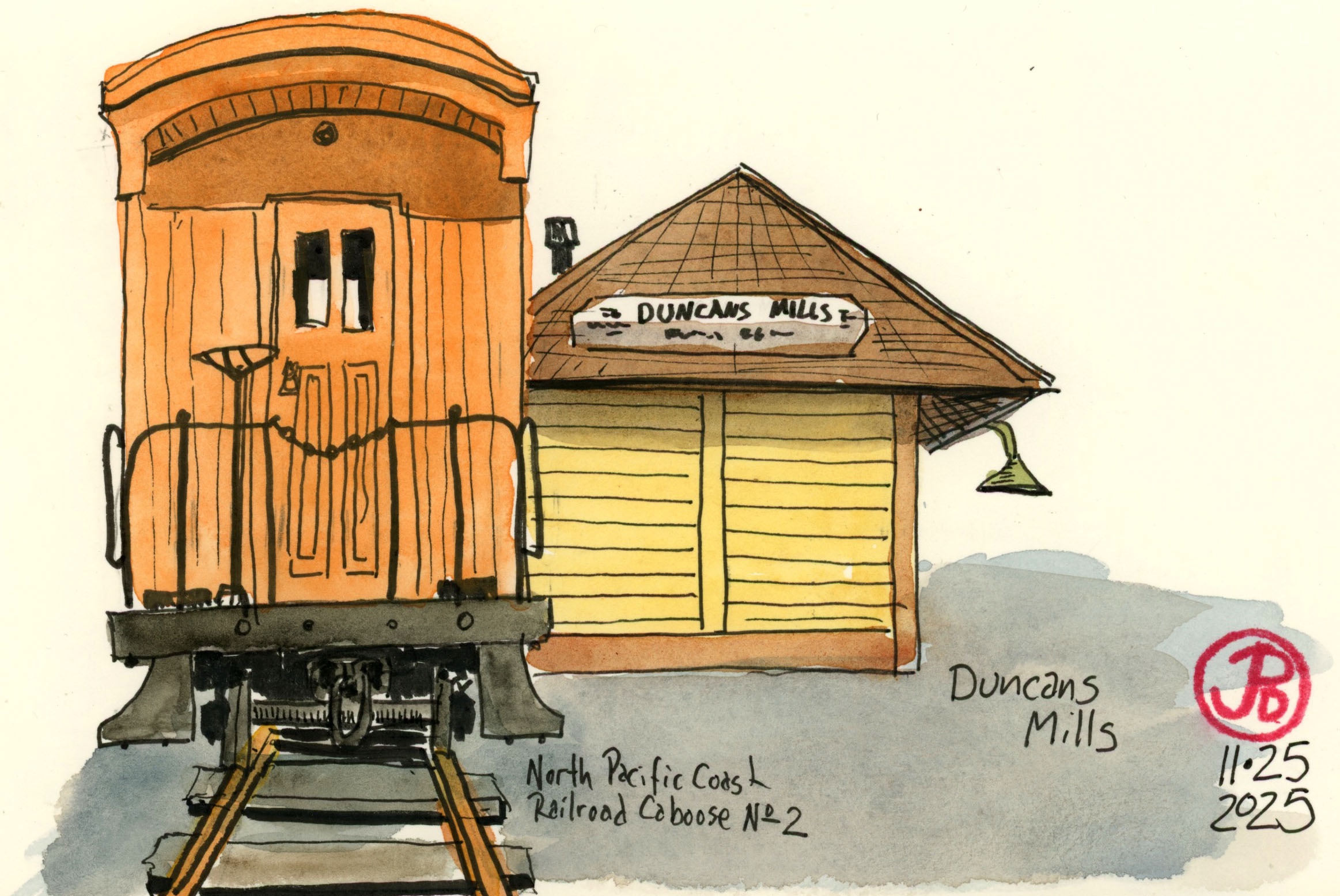
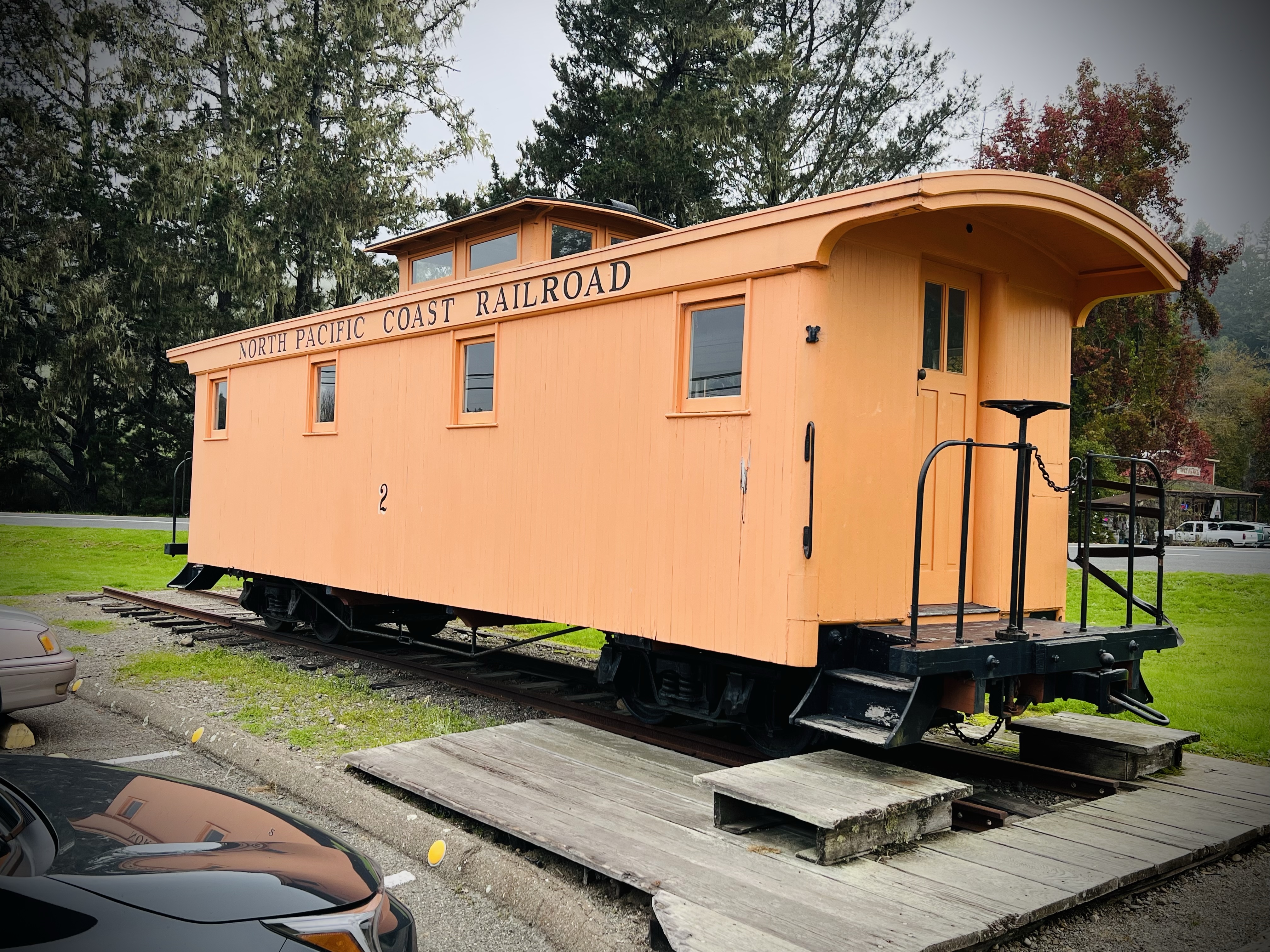
I have wanted to sketch the train station and caboose at Duncans Mills for a while but I had not found the right perspective. There were always cars parked in front and around the station so I sat on the end of the caboose with the back of the station in the background. The narrow gauge line was to the right but is name a paved parking lot.

The narrow gauge railroad came to the lumber town of Duncans Mills in the 1870s and rail, both passenger and freight, until train service was discontinued in 1935.

North Pacific Coast Railroad Caboose No. 2. This narrow gauge caboose was built in 1877.

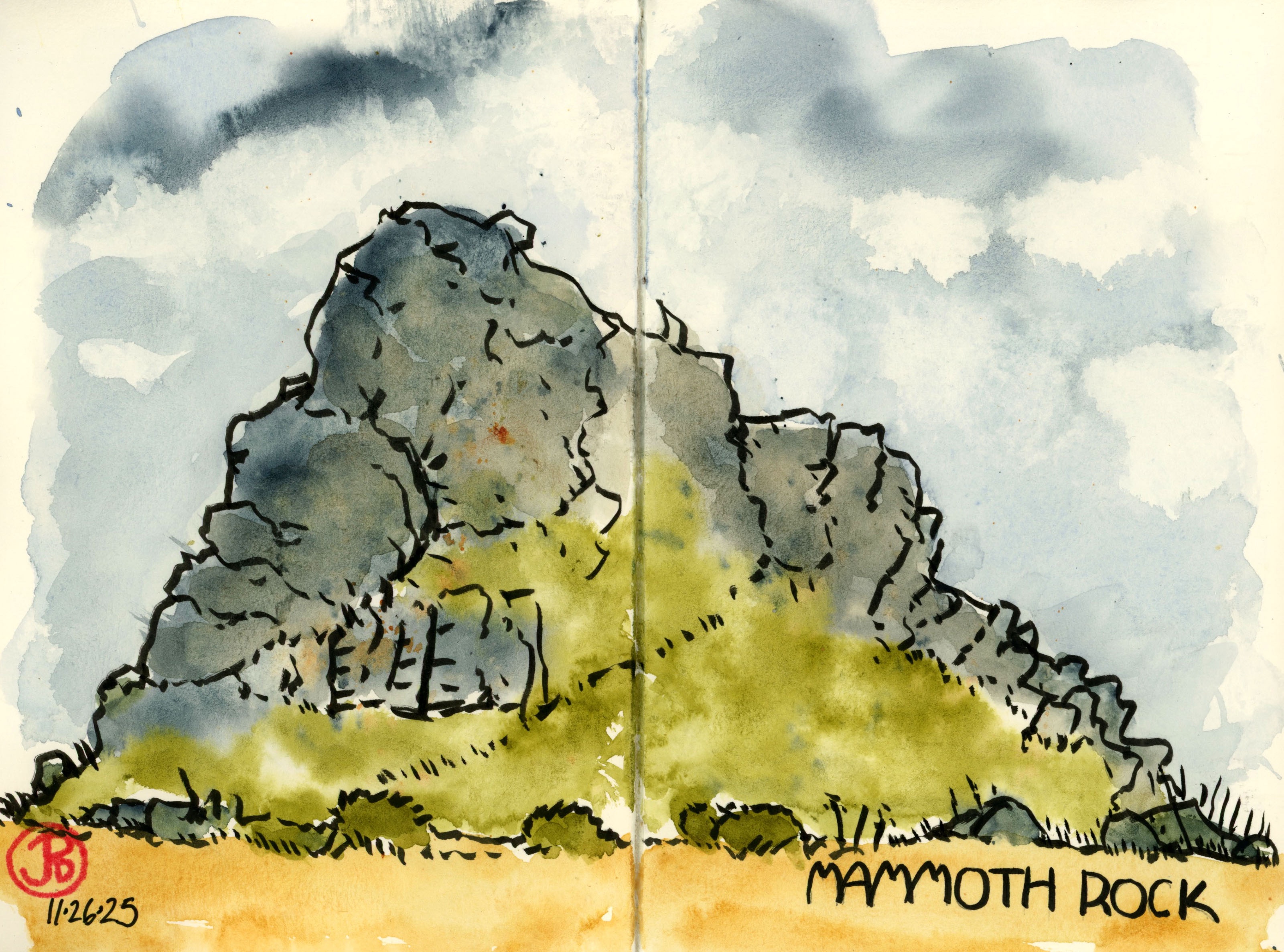
Sonoma Coast SP: Mammoth Rock

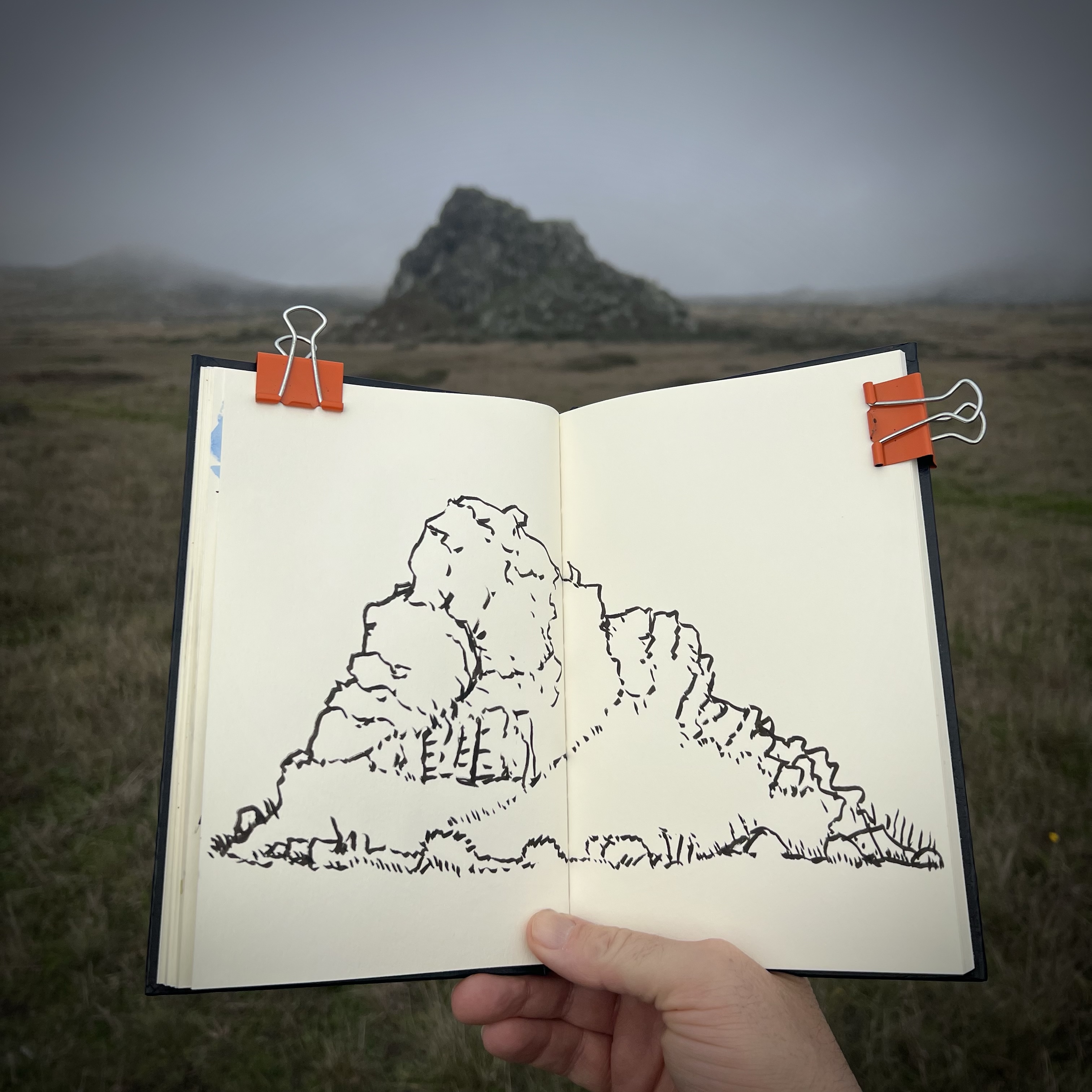
From my digs it was a short drive north to Goat Rock State Beach- Sonoma Coast State Park. My hiking/ sketching destination was Mammoth Rock. It was a blustery 30 minute hike to the large Mammoth Rock.

Wintery and windy weather is never an impediment to a good sketching experience. Driving, windy rain is another monster.

I found a perspective and started my sketch.

Image

Fort Ross, A Sketcher in the Rain

As my north coast journey approached I looked to the weather forecast of the Sonoma Coast, one weather phenomenon dominated: rain.

I wasn’t going to let this dampen my field sketching mojo. I planned to sketch at Fort Ross, no matter the weather. Call me the postal worker of sketching! Corvids don’t mind the rain.

I had everything I needed for wet weather: rain jacket and pants, umbrella, and a dry bag for my journals.

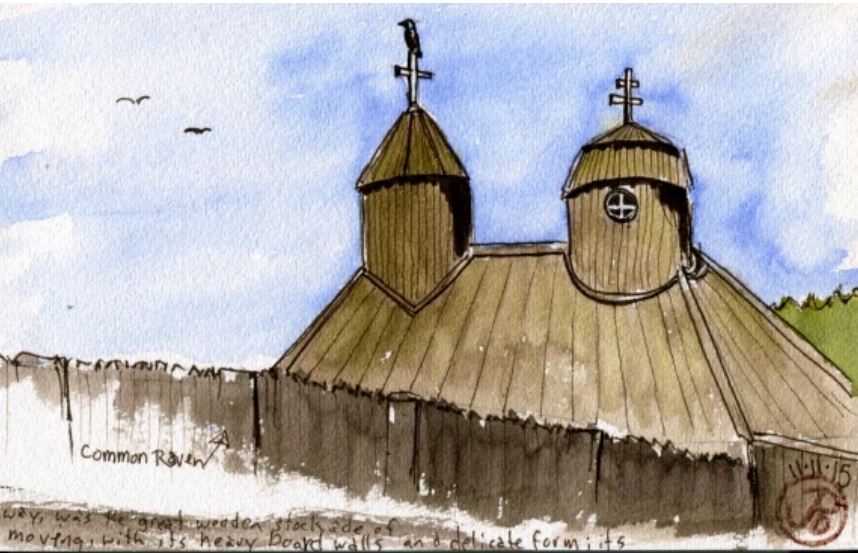
A November 2015 sketch of the Fort Ross Chapel in better sketching conditions.

Fort Ross is one of those coastal sketching touchstones that I have returned to again and again. This was the first time I had visited with 100% humidity.

Now you can’t have watercolor, as the name implies, without water. But a deluge of rain is a bit too much water. And applying ink to damp paper will cause the ink to run or smudge which can become part of the story of the final sketch.

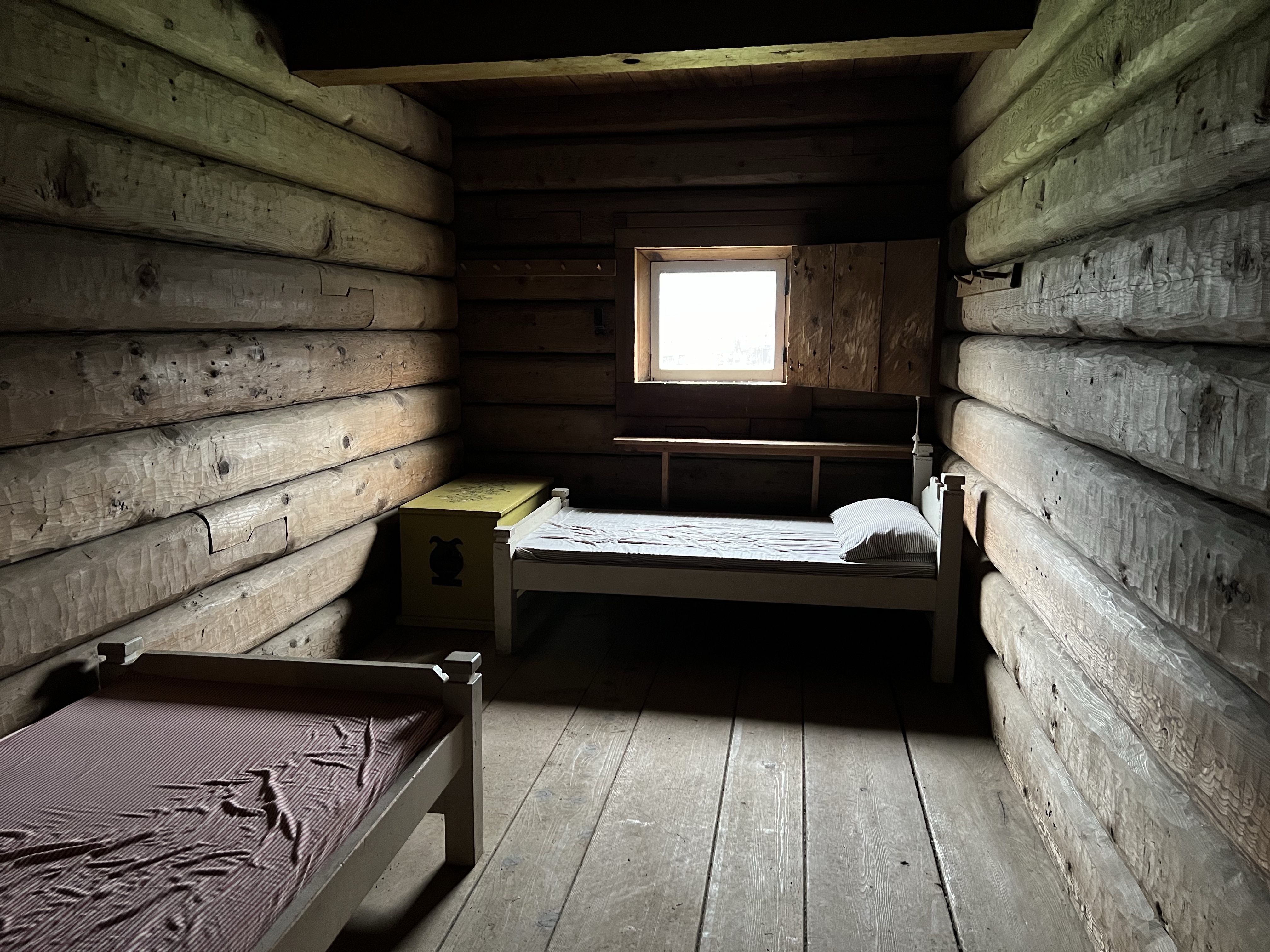
Now this bed just looks icy cold.

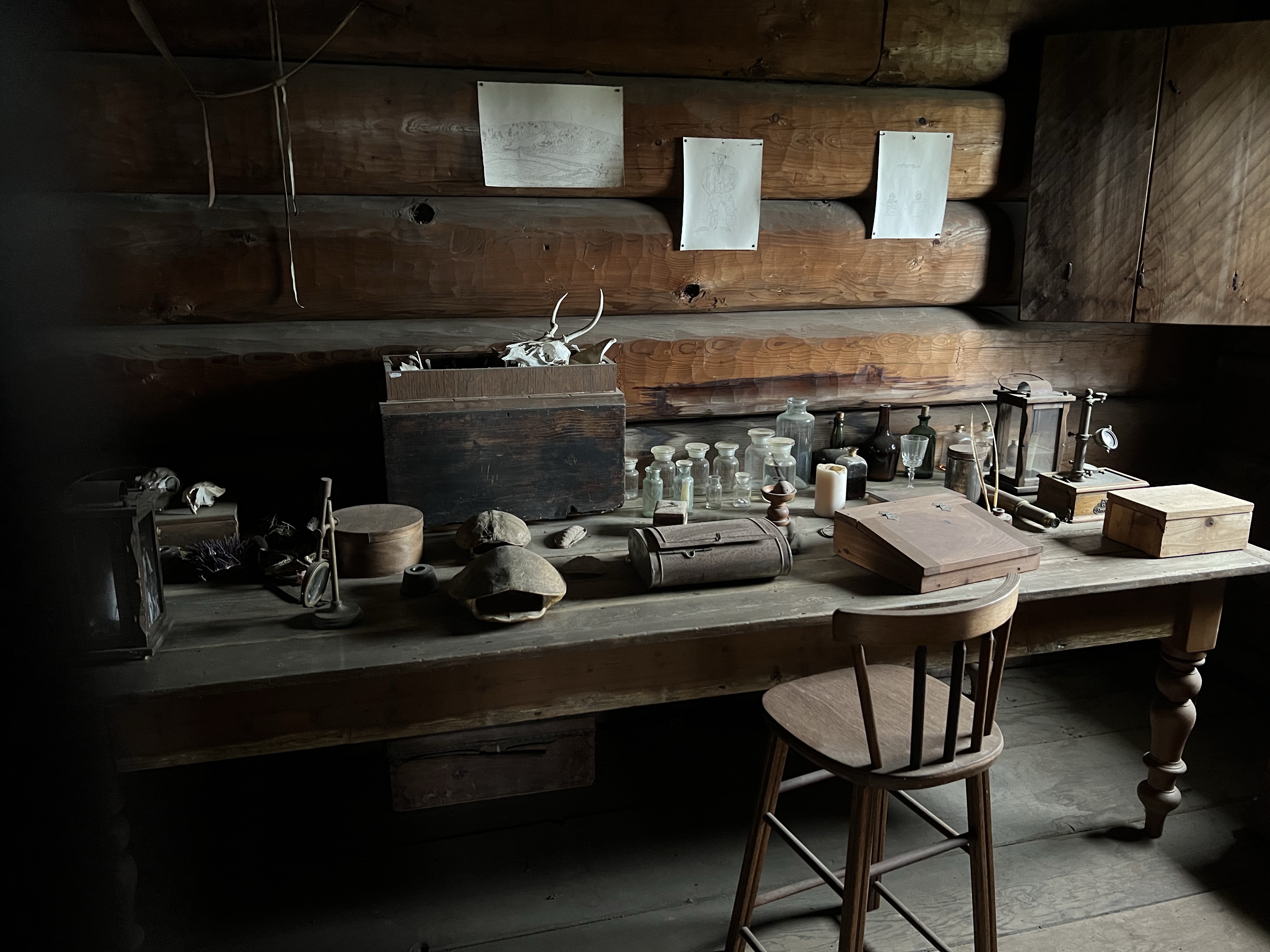
Visiting Fort Ross on a cold, rainy, and windy day gave a me a first hand experience of what it must have been like to spend the winter at the fort. It was dark in the houses even in the middle of the day. No electricity, no television, no smartphones, and no emojis. Cabin fever anyone?

The plus side is that I had the fort all to myself!

The Russians added some new species to the scientific record, of course they couldn’t tell the native people something they didn’t already know.

I knew the perspective I wanted to sketch from: along the barricade looking west toward the guard tower. Seems perfectly fine while you’re planning in your cozy abode; far harder to do in the realities of rain and wind.

I had my umbrella to keep the rain off my journal. Well my umbrella was absolutely useless in these fierce coastal gusts. Trying to concentrate on my sketching while attempting to prevent my umbrella from launching into the local watershed was a struggle.

I had to abort the sketch without actually committing pen to paper. It was time to find shelter from the wind and the rain and commit a sketch to my journal.

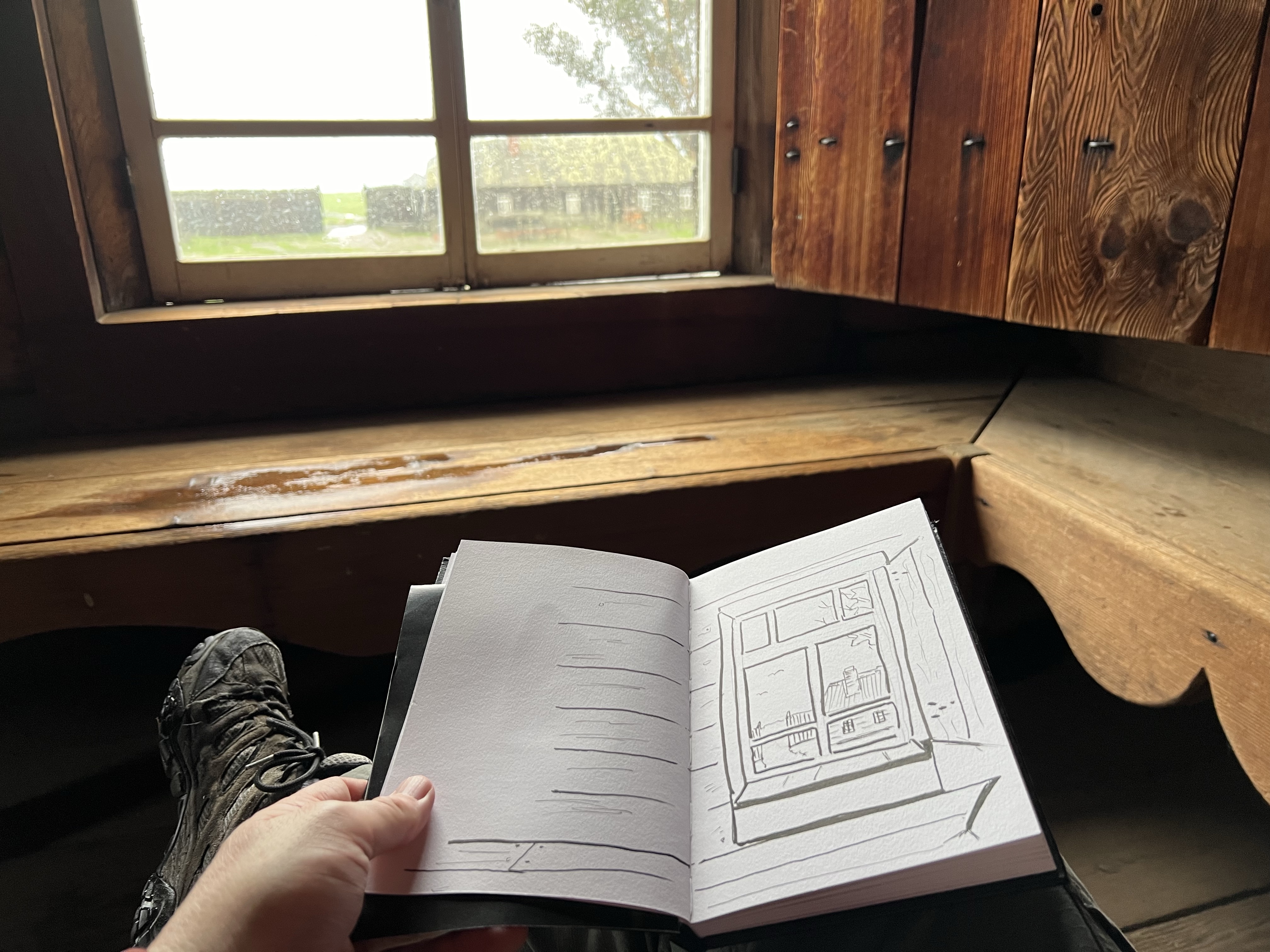
I chose as my sketching blind, the second story of the Kuskov House. Great view, dry, and less chilly.

Call me a cheater but by hook or by crook, I got my rainy day sketch in under the timbers of the Kuskov House.
Image

Condominium One

Condominium One is one of the seminal buildings in California architecture of the 1960s.

The building looks out at Bihler Point and the Pacific Ocean at The Sea Ranch on the Sonoma County Coast. It was among the first buildings (built by Oceanic) to be constructed at Sea Ranch and it provided the model for most of the structures that were designed and built later.

Sea Ranch provided an opportunity to develop a whole community that tried to work with the land as founding architect Donlyn Lyndon noted:

We wanted each building  to engage the land, to become part  of the way in which people could accommodate to this extraordinary and often chilled and windy terrain. We wanted the relationship between buildings and land to be complementary, to use the buildings to make the land more habitable, without destroying the very qualities that attracted people to this segment of the coast.

This is the mission statement, the creed, that underscores all the early structures that were erected at Sea Ranch.

This was clearly a building I needed to understand and look at. This called for a sketch. As soon as I checked into my room, I headed east from Sea Ranch Lodge and followed the trail out to Bihler Point. I found a spot directly in front of Condominium One, which was to the east and across a sea thrashed cove, and set up my stool, opened my journal, and began to sketch.

The ten unit Condominium One was completed in 1965. And it didn’t look like anything that was built before. The rooflines all slope down toward the ocean, seemingly echoing the sloping hill surrounding it. In the sketch I left the roof unpainted to emphasize the unity of the pitch lines of the roof. The structure is anchored by two towers that rise from the units.
Sea Ranch Barn

The building’s design was influenced by the land but the historic existing structures of the Sonoma coast also had an influence on the building. You can see the influence of the wooden barns that dot the landscape of the coast as well as the barn that directly northwest of the condominium’s location. This barn I sketched and it is part of the “DNA” of the current structures of Sea Ranch.

Donlyn Lyndon also notes that one of the structures that they drove by on their way up to the building site, influenced Condominium One and that was the chapel at Fort Ross.
Fort Ross Chapel

The Fort Ross Chapel was built at this Russian settlement in the mid 1820s and is the first Russian Orthodox structure in North America built outside of Alaska.

Lyndon notes the importance of Fort Ross in its influence on Condominium One:

Even more insistently present in our minds, since it then straddled the highway, was the great wooden stockade of Fort Ross. The restored nineteenth-century chapel, which occupies one corner, was especially moving.

And Lyndon brings up the point that the way a building is designed and constructed, can be moving in a way that can surprise the viewer. When you walk into York Minister or Stanford Memorial Church or the Sea Ranch chapel and you look up, the experience really can be moving. Great architecture can convey  that feeling.

Too bad I couldn’t retrace my steps, turn off to the south (ignoring the private property signs), and knock on one the condo’s doors. The bewildered owner would open the door (in my world anyway) and I would ask, “Can I step into your living room? I want to be moved.”