I took young Grasshopper Sparrow to one of my favorite birding locations in Santa Cruz County, the Old Cove Landing Trail, at Wilder Ranch State Park.
Birding in the spring is a pleasure as you see returning migrants and signs of newborn life. Males are defending their territories in song and are frequently seen perched on prominent singing perches giving a birder great views!
One lifer on Grasshopper’s list was a pigeon guillemot, an alcid that is not a pigeon but a bird of the near shore. Once we hit the coast the guillemots were an easy tick with many on the water or resting on cliffs. We had sensational views and we moved on down the coast in search of more signs of spring.

The spring pleasures are not only reserved to the avian world. As we were about a mile down the trail which follows the contours of the coast, a long-tailed weasel crossed our path! Perhaps an adult hunting to feed its growing kittens. We watched as it’s black-tipped tail disappeared into the green grass.

My young acolyte, Grasshopper Sparrow’s spread about our brief encounter with a life mammal.
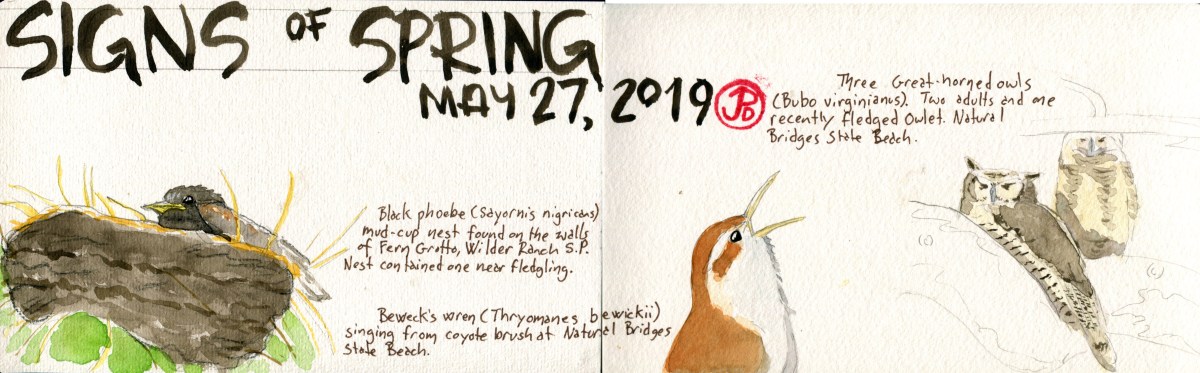
We continued on and were rewarded with a black phoebe nest with a near fledgling. Grasshopper thought the chick was dead but I suggested it was just in instinctual frozen mode at the sight of two large bipeds approaching.
We then headed back, adding more lifers to Grasshopper’s growing list and I wanted to check in on another sign of spring just south on Highway One at Natural Bridges State Beach. The eucalyptus grove here is known for the 150,000 wintering monarch butterflies. Most were gone now. We were here for owls!

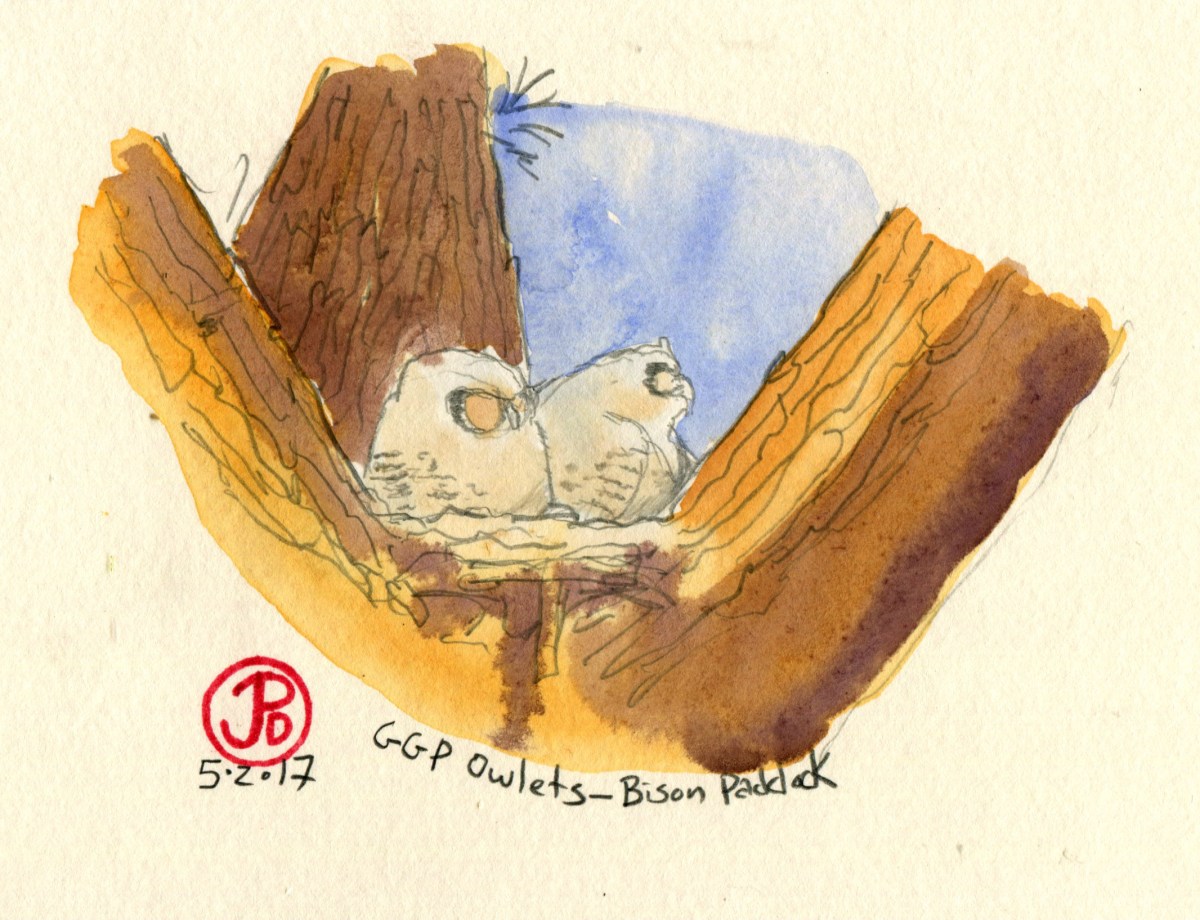
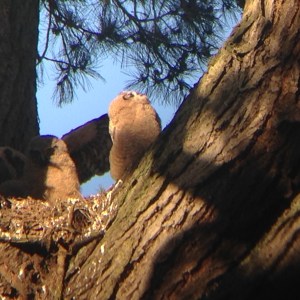
From the butterfly viewing platform we easily spotted the two adult great horned owls with their recently fledged owlet. These owls start their breeding cycle early as the don’t construct their own nests. Instead they borrowed a red-shouldered hawk’s nest.
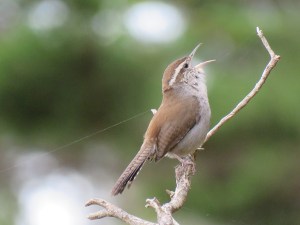
As we headed out, the local male Bewick’s wren was perched up, proclaiming his place in the world.

 Corvid Sketcher