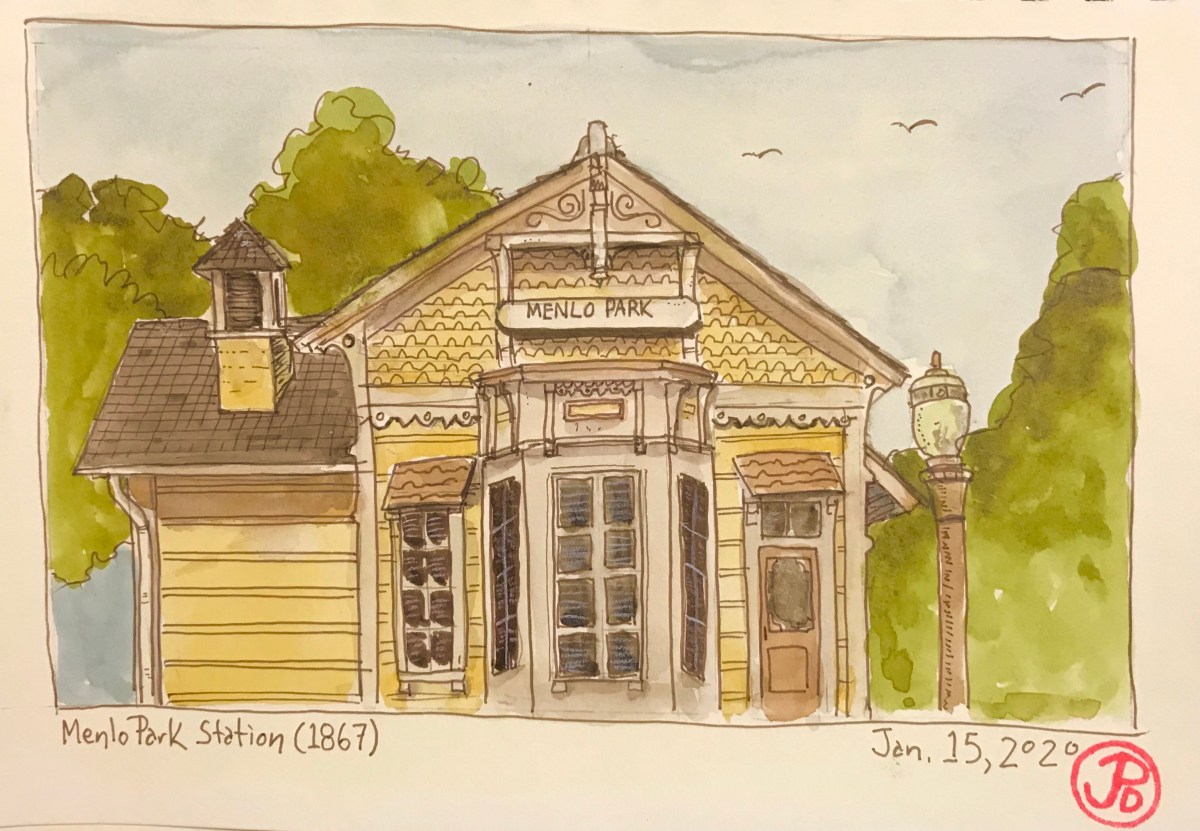
It was now time for an after work train station sketch.
I headed south to one of the oldest stations in San Mateo County and one of the stations furthest south on the line before heading into Santa Clara County. Menlo Park Station is the oldest active train station in San Mateo County. Rail service to Menlo Park began on October 18, 1863. At that time, a simple shelter was on the site before the depot was built. It is considered the oldest active passenger railway station in California. It was built by the San Francisco and San Jose Railway in 1867. The Queen Anne expansion, included a Ladies Parlor, was added to the south side which is featured in the sketch.
When Southern Pacific consolidated the line (in 1870), Victorian ornamentation was added in the 1890s to appeal to the students (and parents) of nearby and newly built Stanford University.
At one time Menlo Park Station had two separate waiting rooms, one for men and one for women. In the office, Stanford University co-founder, Jane Stanford, wife of rail tycoon Leland Stanford, would wait for her train in a private room by herself. In 1905, Jane Stanford died of strychnine poisoning and her murder has never been solved. It is claimed that her ghost has been seen pacing back and forth in the station.
The station is on the same level as the main line just as it was when it was first constructed. The interior is no longer used as a passenger waiting room. Southern Pacific closed the station in 1959. It now houses the Menlo Park Chamber of Commerce.
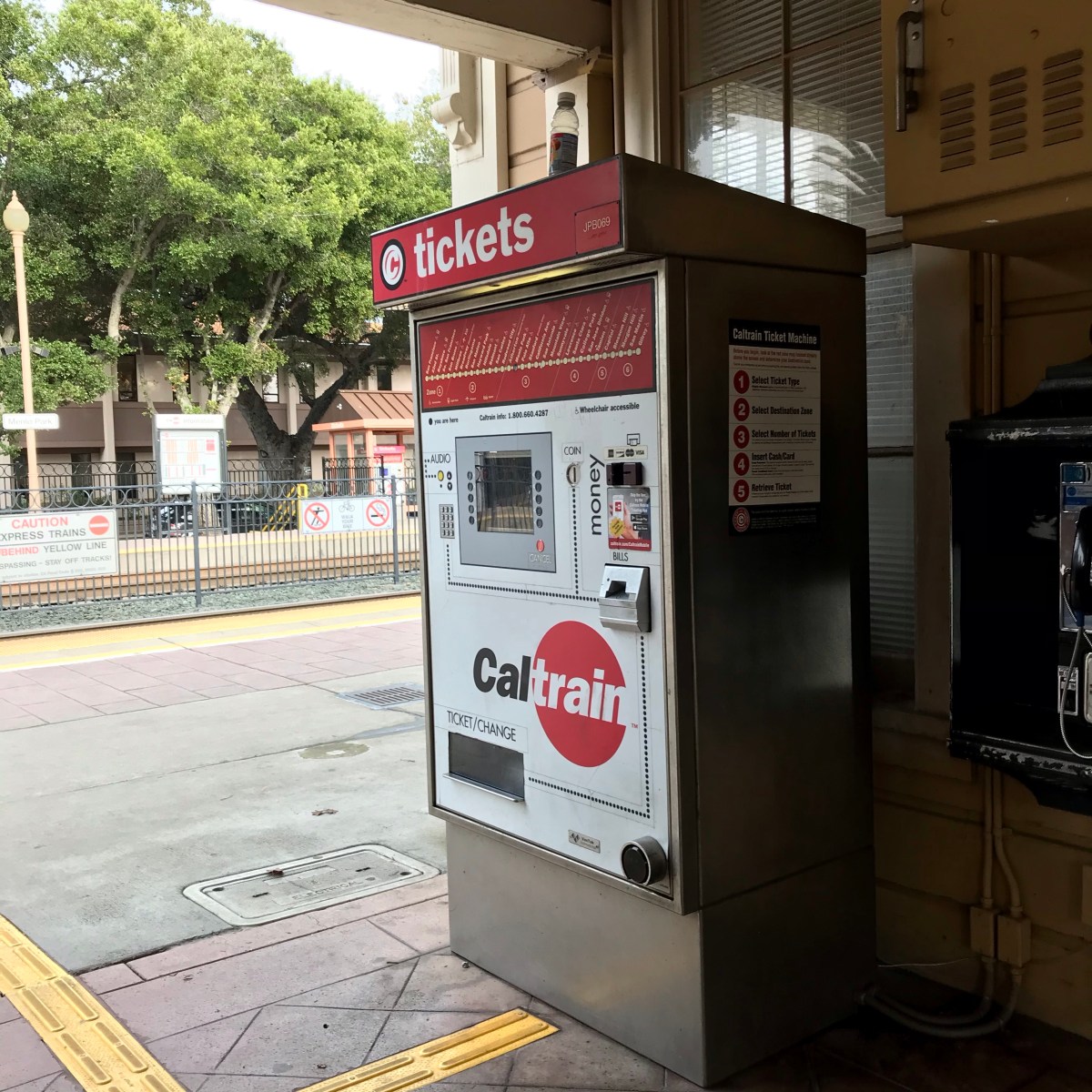
This fancy vending machine has replaced passenger stations on Caltrain. I always prefer to buy my train tickets from a human being. You can’t do that here in Menlo Park. Nor can you buy tickets on the train from the conductor. Although you can chat with the friendly people at the Chamber of Commerce.
I sat on a north facing bench and started to sketch the elevation view of the station. There was something very comforting about this sketching experience. All around me I was surrounded by commuters. Both high school students and high-tech workers with their bikes milling about the platform or sitting on benches texting their friends waiting for their train. The overall feeling was of a vibrant station that is still in use and gave me hope for transit in the Bay Area. The scene at 4:30 PM in 2020 could not be too much different from a weekday scene at this same station, 70 years ago. Of course it helps to squint.
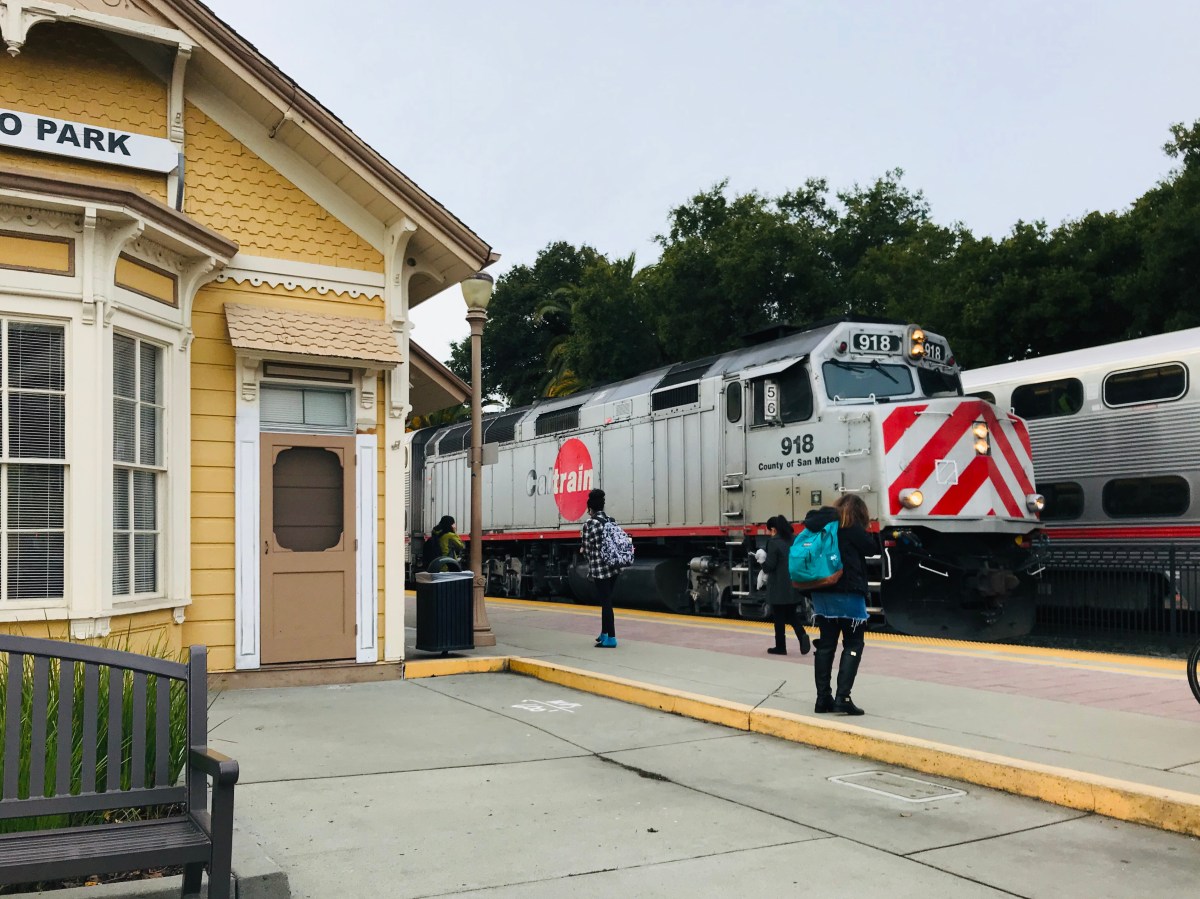
Menlo Park is a busy station on a Wednesday late afternoon. A southbound and northbound train pull into the station.
 Engine Number 905 “Sunnyvale ” is on the point of a southbound train to San Jose. This engine is named after my hometown.
 The train station at Sunnyvale is long gone. I never remember it as being an amazing piece of Southern Pacific architecture. The station has been replaced with a ticket shelter that connected to a parking shelter.
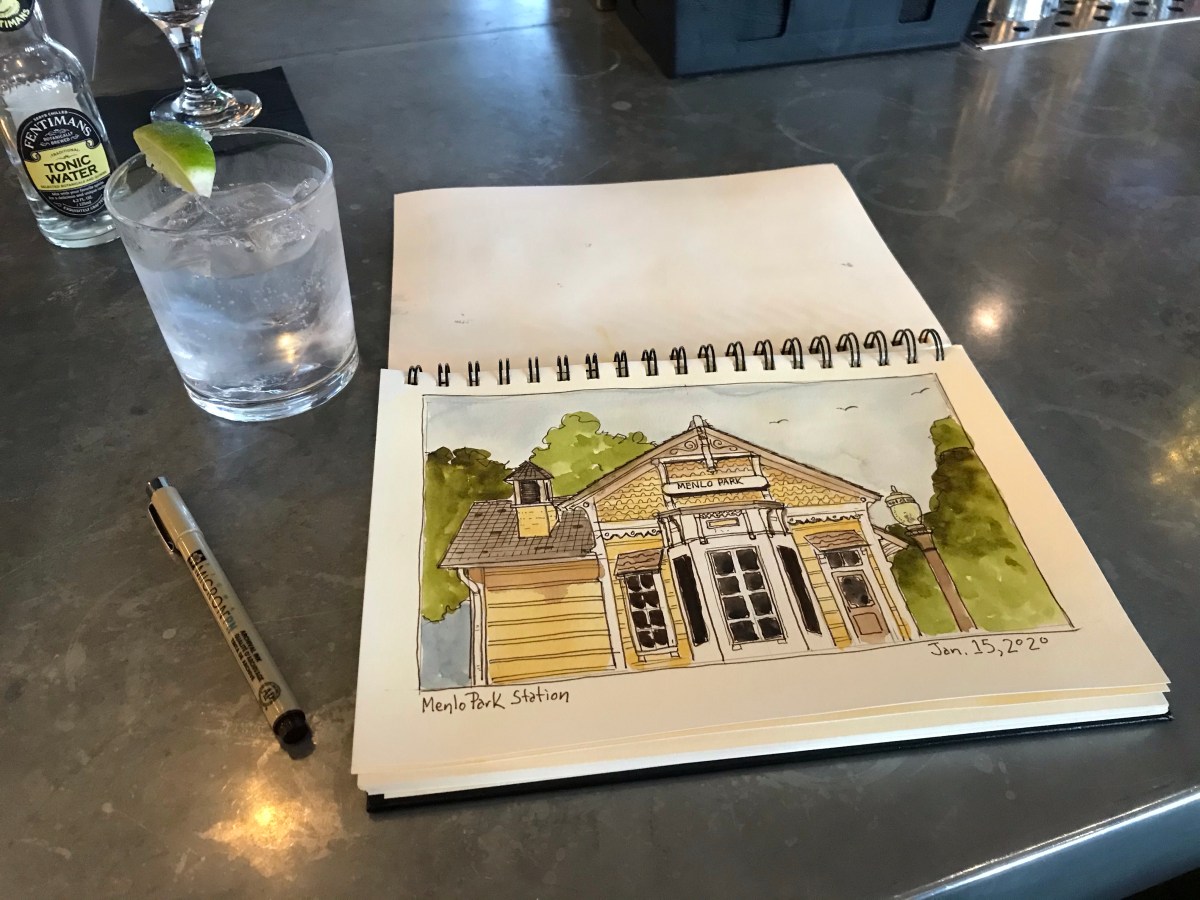
Quenching my thirst after my sketch at the redesigned British Bankers Club. I raised a glass to my father, who had to come to Menlo Park when he was at “The Farm” to buy spirits because Palo Alto was a dry town.
 Corvid Sketcher