Image

The Former Whales of Long Marine Lab

One joy of sketching is to return to a previous subject but sketch it from a different perspective. Such is the case with the whales of Long Marine Lab in Santa Cruz. (Former cetaceans, that is.)

Long Marine Lab is part of the University of California at Santa Cruz (UCSC) and is a research and educational facility for marine biology. The campus also features a small aquarium (the Seymour Marine Discovery Center) that is open to the public. The biggest draw for me is the biggest creature that ever lived on Planet Earth: the blue whale. The Discovery Center has an incredible blue whale skeleton on display flanking one side of the museum.

I had sketched the massive blue whale skeleton and the smaller gray whale skeleton before but I wanted to sketched them in a different way. For the blue, I stood directly in front and sketched it head on, as if the largest creature on Planet Earth was swimming towards me.

I have been lucky enough to see blue whales in the wild from pelagic boating trips. Most of these trips have been in Monterey Bay. I remember the first time I saw this massive cetacean on a trip out of Monterey Harbor with my father in the late 1980s. My high school biology teacher at the the time didn’t believe blue whales could be seen in Monterey Bay, until I showed him the photos.
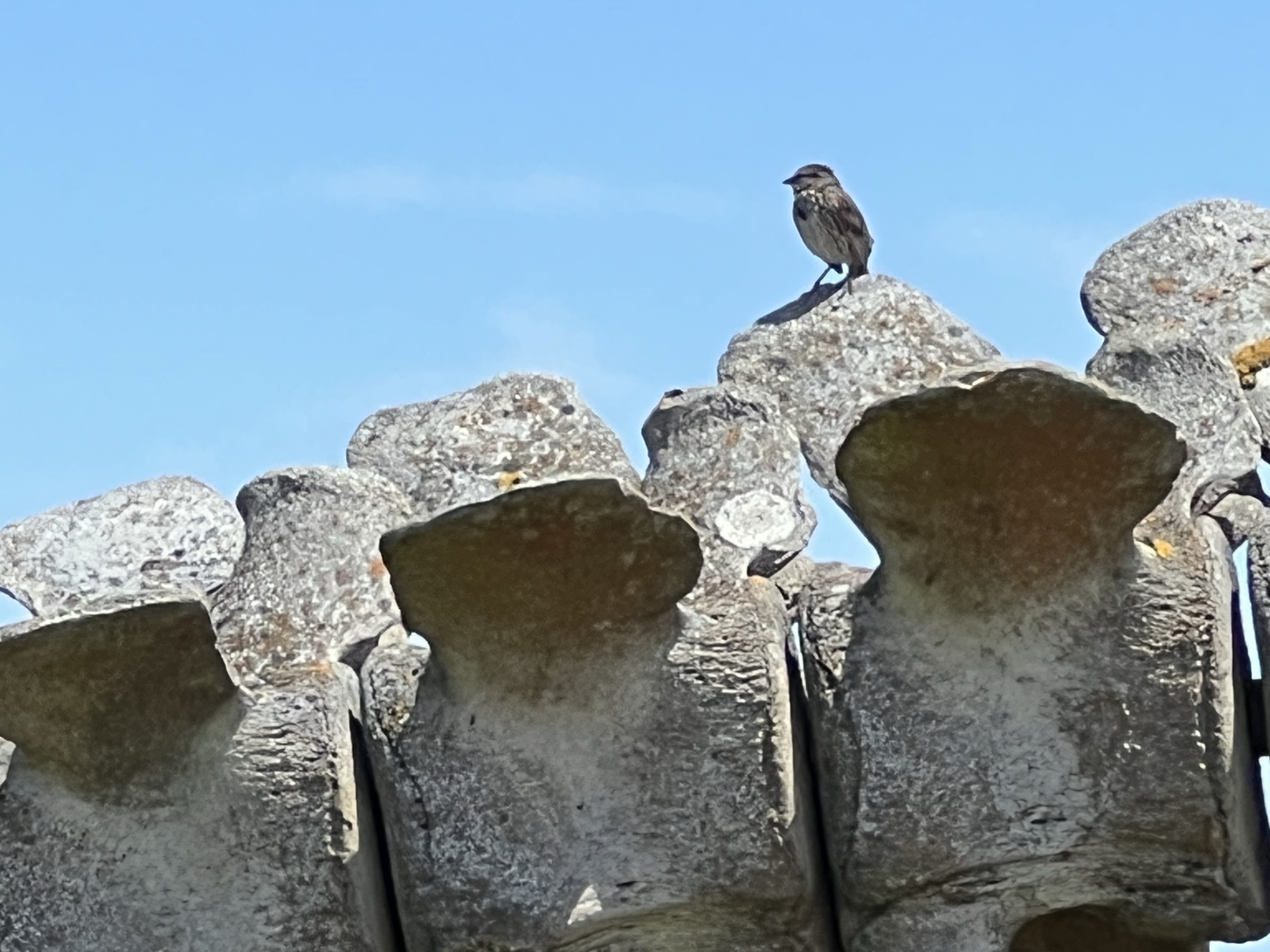
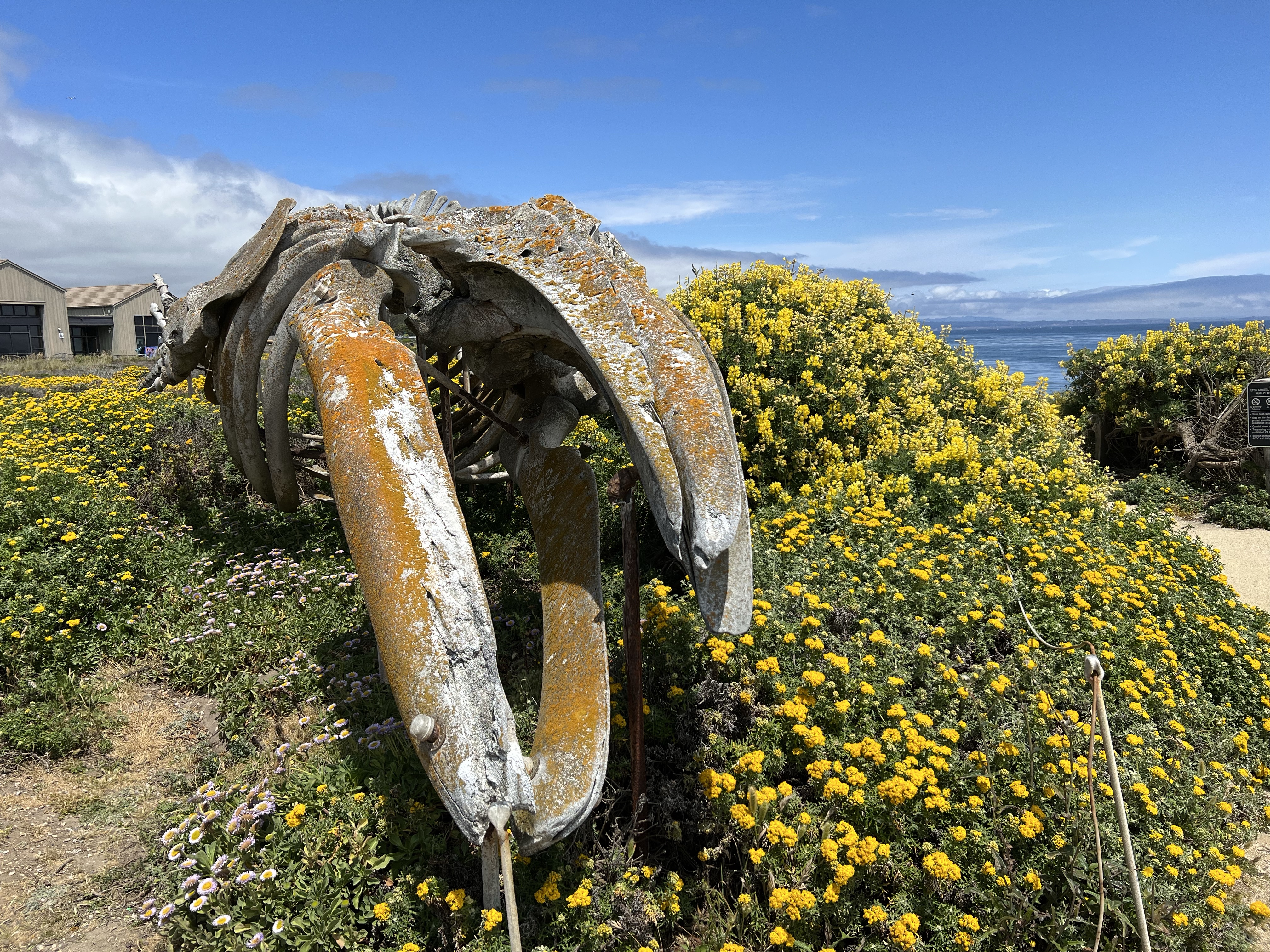
Song sparrow using the vertebrae of the gray whale for a singing perch.
Gray whale skeleton with the Seymour Marine Discovery Center on the left and Big Blue on the right.
Image

The Wreck of the La Feliz

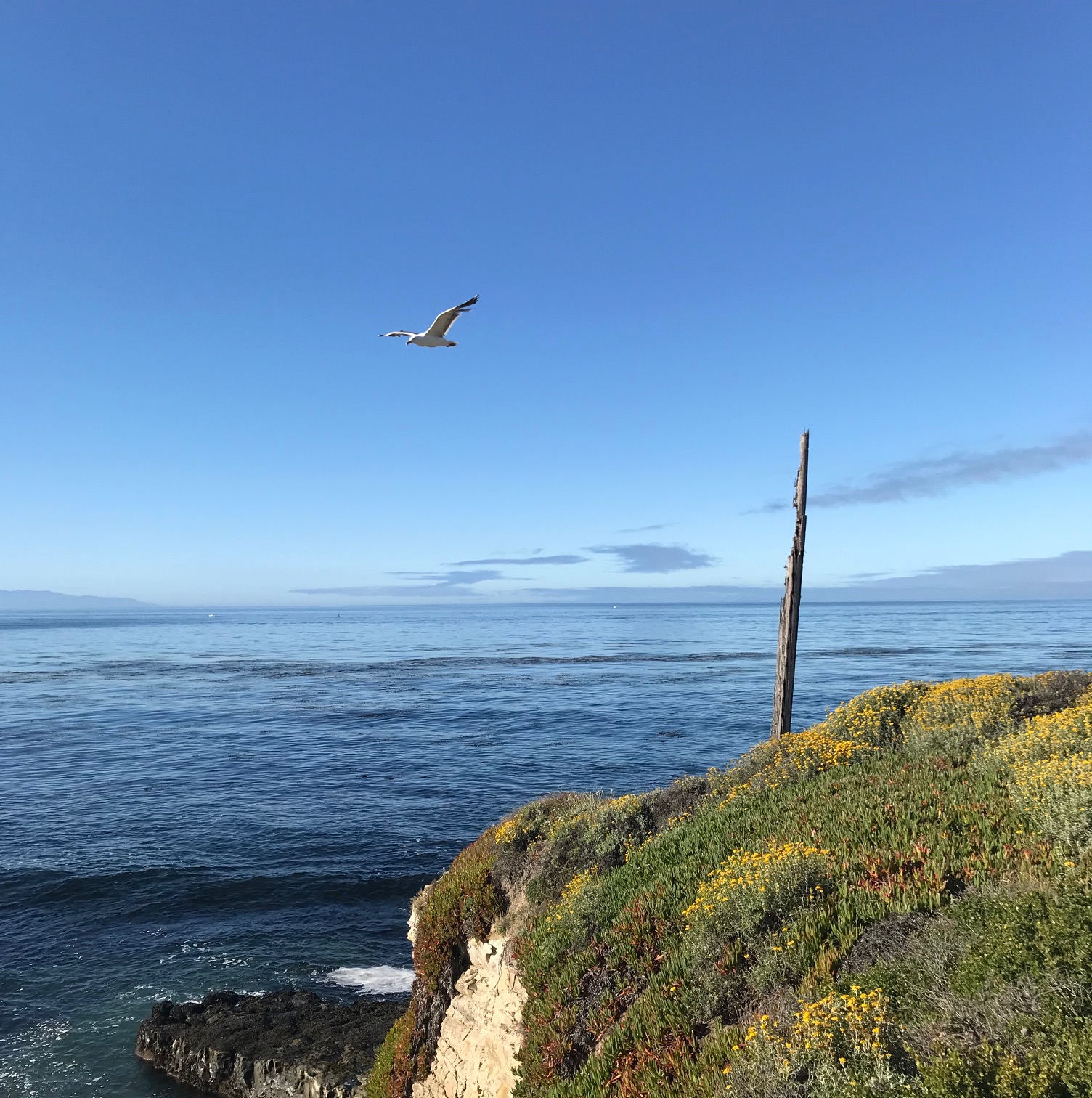
Along the Santa Cruz coast, just northwest of Natural Bridges State Beach, is a historic relic that is just shy of 100 years old.

It looks like a weathered flag pole that is leaning slightly shoreward, placed on a cliff above the rocky reefs. In reality it is the mast of the 72-foot freighter La Feliz, leaning against the cliff.

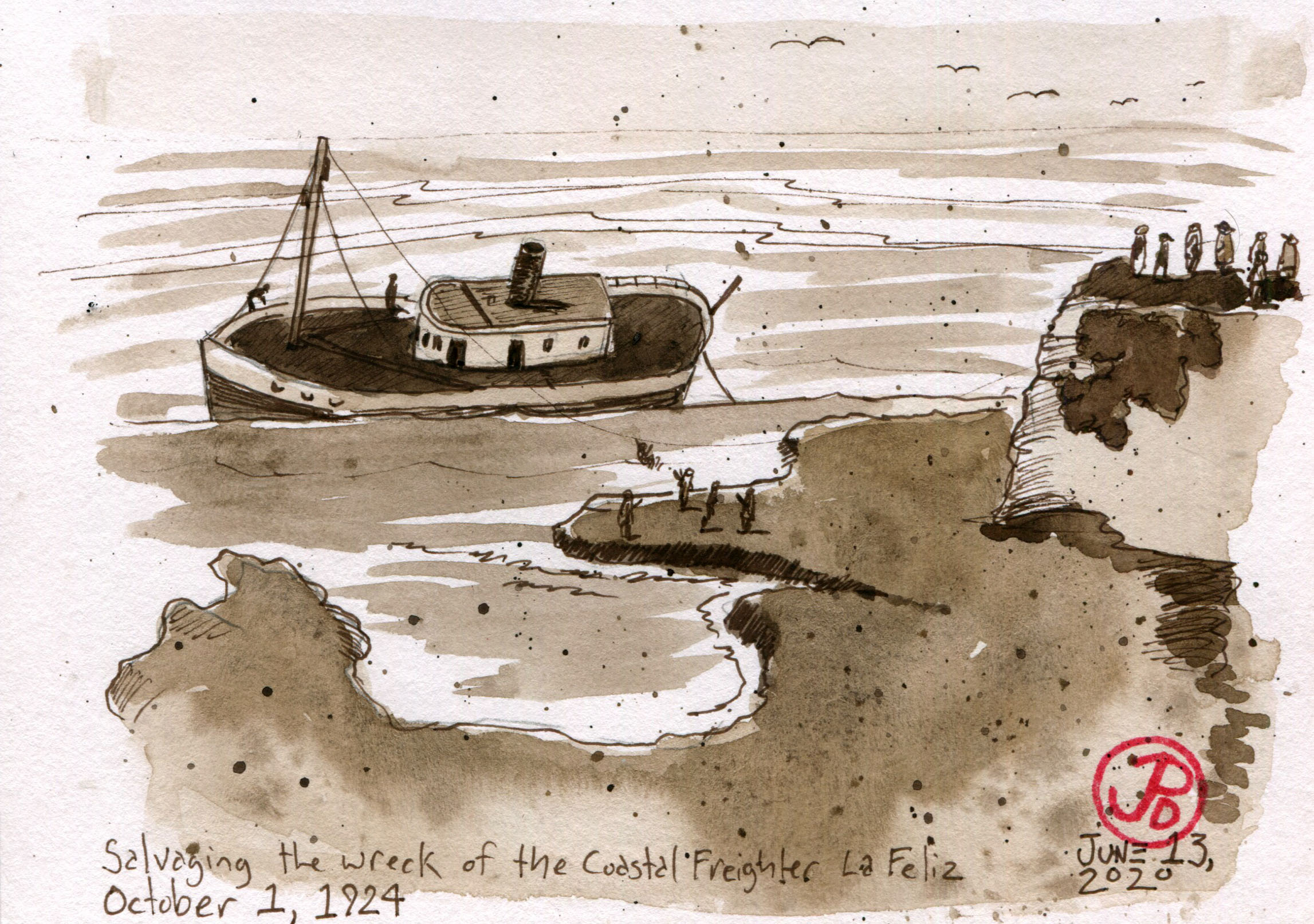
On the night of October 1, 1924, violent waves pushed the coastal freighter onto the rocky reef below where the Seymour Center at the Long Marine Laboratory (temporarily closed) now sits. Locals helped rescue all 13 crew members from the floundering ship.

Sketched and painted in sepia from a period photograph of the salvage of the La Feliz.

The mast was laid against the cliff in order to salvage the cargo and other equitment of the La Feliz. The cargo consisted of 3,100 cases of sardines from Cannery Row in Monterey.

There have been over 450 shipwrecks recorded in the Monterey Bay National Marine Sanctuary. Few relics of these wrecks exist today, except for the La Feliz auxiliary mast.

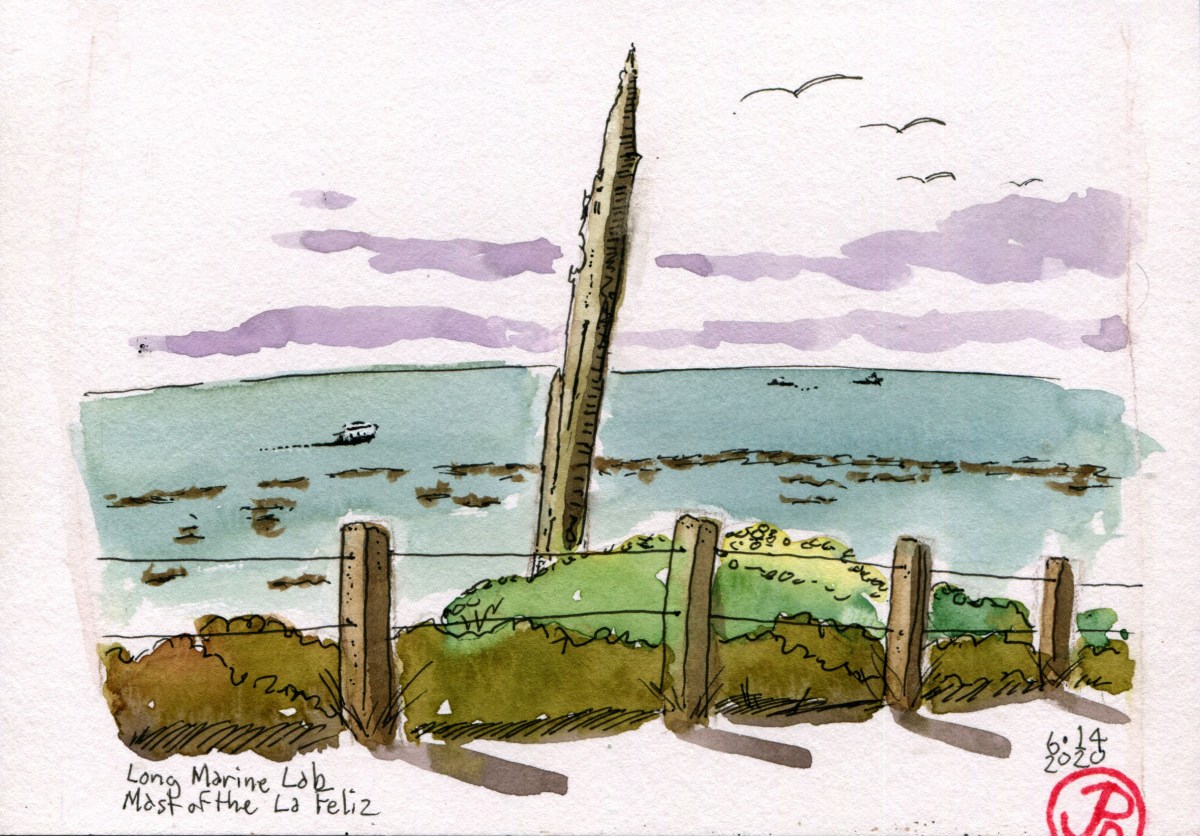
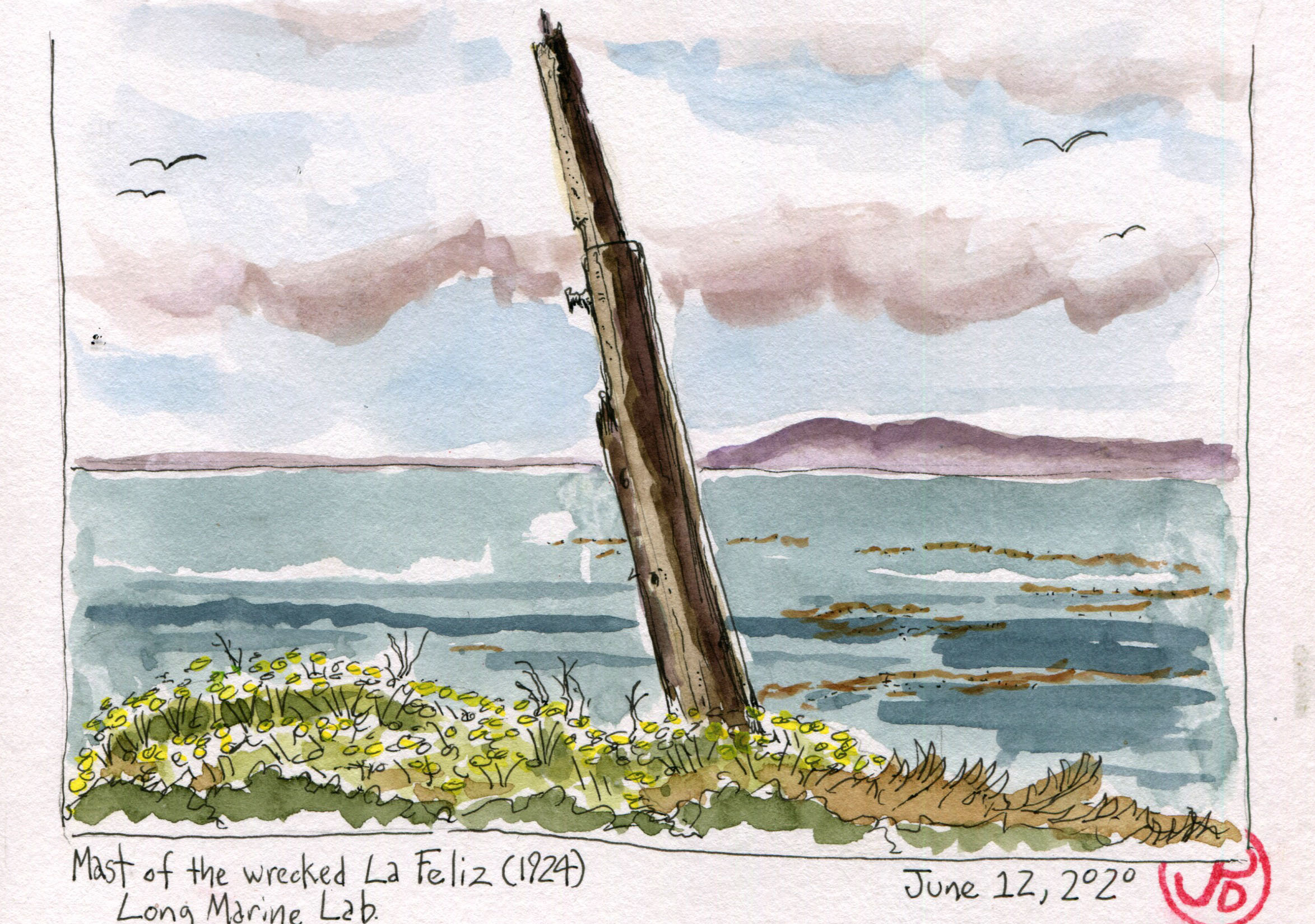
A beautiful Sunday morning, looking to the Northwest.

I did what I always do when I want to learn more about something, I sketch it! I hiked out to the mast on two different occasions and sketched it both times. It is always nice to sketch something more than once. I feel each time that I understand the subject at little more and each time I learn more and more about the mast of the La Feliz.

A Friday after work sketch of the mast of the La Feliz, looking south.

For my first sketch of the mast, I first drew with pencil them inked in the lines with a Uni-ball Micro Deluxe pen. I erased the pencil lines and then added watercolor the scene.

On my next sketch (featured image) I did the exact opposite. I loosely sketched in the scene with a water-soluble colored pencil (walnut brown) and then I painted the scene, letting some of the watercolor washes run into each other. Once the paint dried, I added ink lines with my Uni-ball. Both were sketched on location.