Image

Portola, the Ohlone, and Sweeney Ridge

Just after 9:30 AM I set out on my ascent to Sweeney Ridge.

The path to the ridge is not a dirt trail but a graded paved road which is an extension of Sneath Lane which runs east to El Camino Real.

This road was built to service the Nike Missile Control Site (SF-51) that was active on the ridge from the 1950s to 1974.

Sweeney Ridge, along with Marin Headlands to the north, is now part of the Golden Gate National Recreation Area.

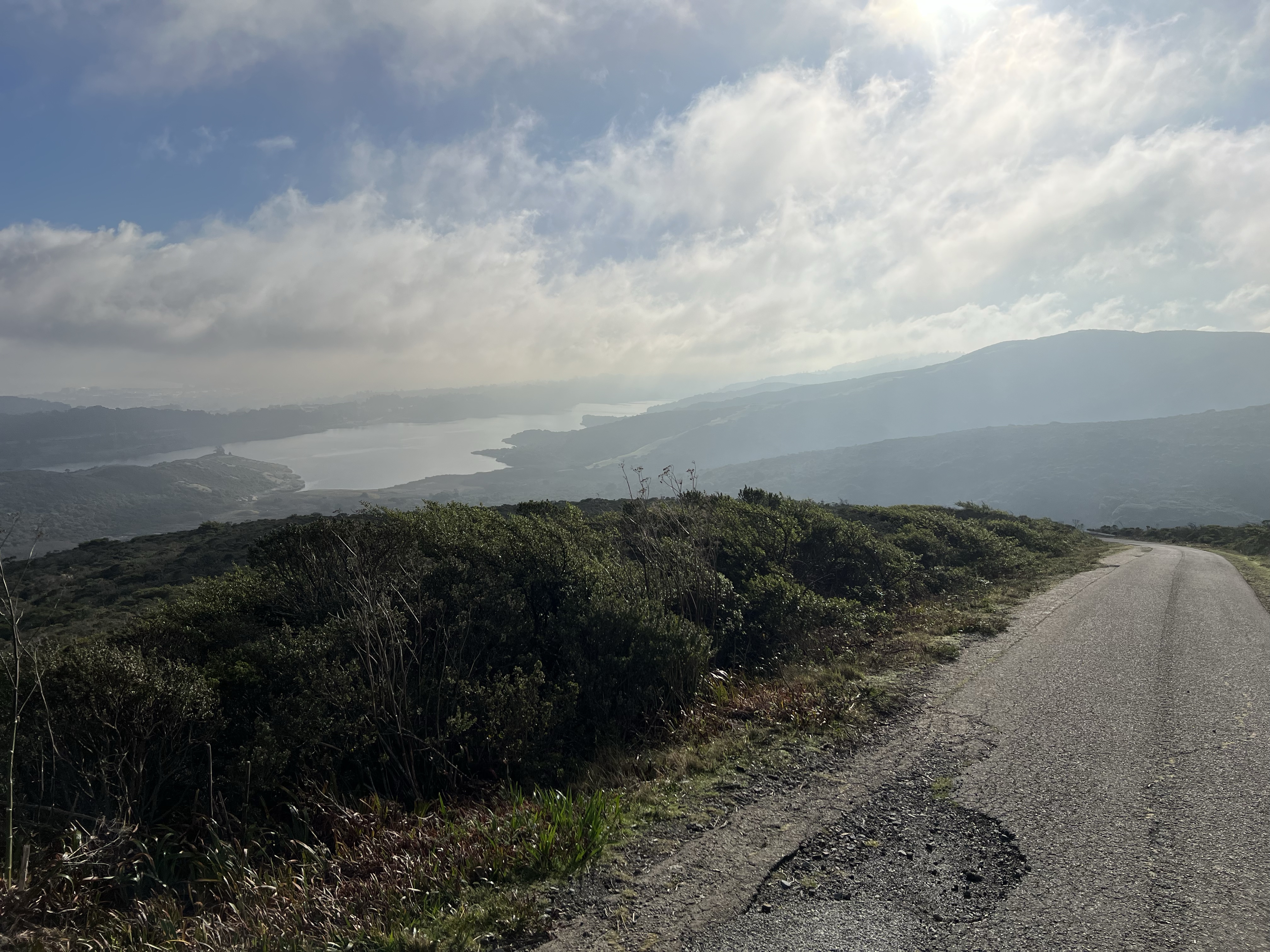
Sneath Lane on the ascent to Sweeney Ridge. From the trail head the almost two mile hike took me 45 minutes. In that 600 foot elevation gain I would be on the ridge at 1,200 feet.

On the way up, looking south, the sun was reflecting off of San Andreas Reservoir. The reservoir is part of the San Francisco Water District and covers the active San Andreas Fault.

San Andreas Fault and Reservoir in the background and Sneath Lane in the foreground. Almost at the summit.

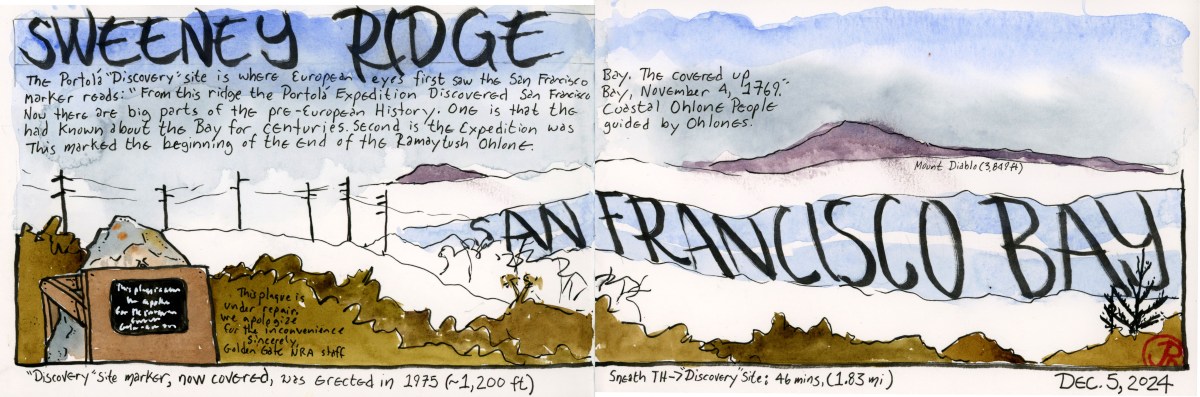
My destination and sketching stop would be the Portola San Francisco Bay Discovery Site. This is the location where on November 4, 1769, the first Europeans set eyes on the San Francisco Bay.

The way history of Spanish Exploration of California has been written negates that the Ohlone had already been on the land and had already seen San Francisco Bay centuries before. So the idea of San Francisco Bay being discovered in 1769 is a fallacy.

I had not been to the Discovery Site in a few years and I was surprised to see that the 1975 serpentine rock that is the Discovery marker was boarded up. The sign on the board read: “The plaque is under repair. We apologize for the inconvenience. Sincerely, Golden Gate NRA staff”.

Now I wasn’t sure if park staff was covering up the inscription that is carved into the rock which reads: “From this ridge the Portola Expedition discovered San Francisco Bay, November 4, 1769” to hide the content from visitors or protecting the marker from vandalism. Perhaps they were doing both. (I later found out that the sign had been vandalized and now the board covering the vandalized maker is now vandalized with the words: “WOKE CENSORSHIP”.)

Just east of the stone marker two information panels have been installed filling in the history of the Ohlone people.

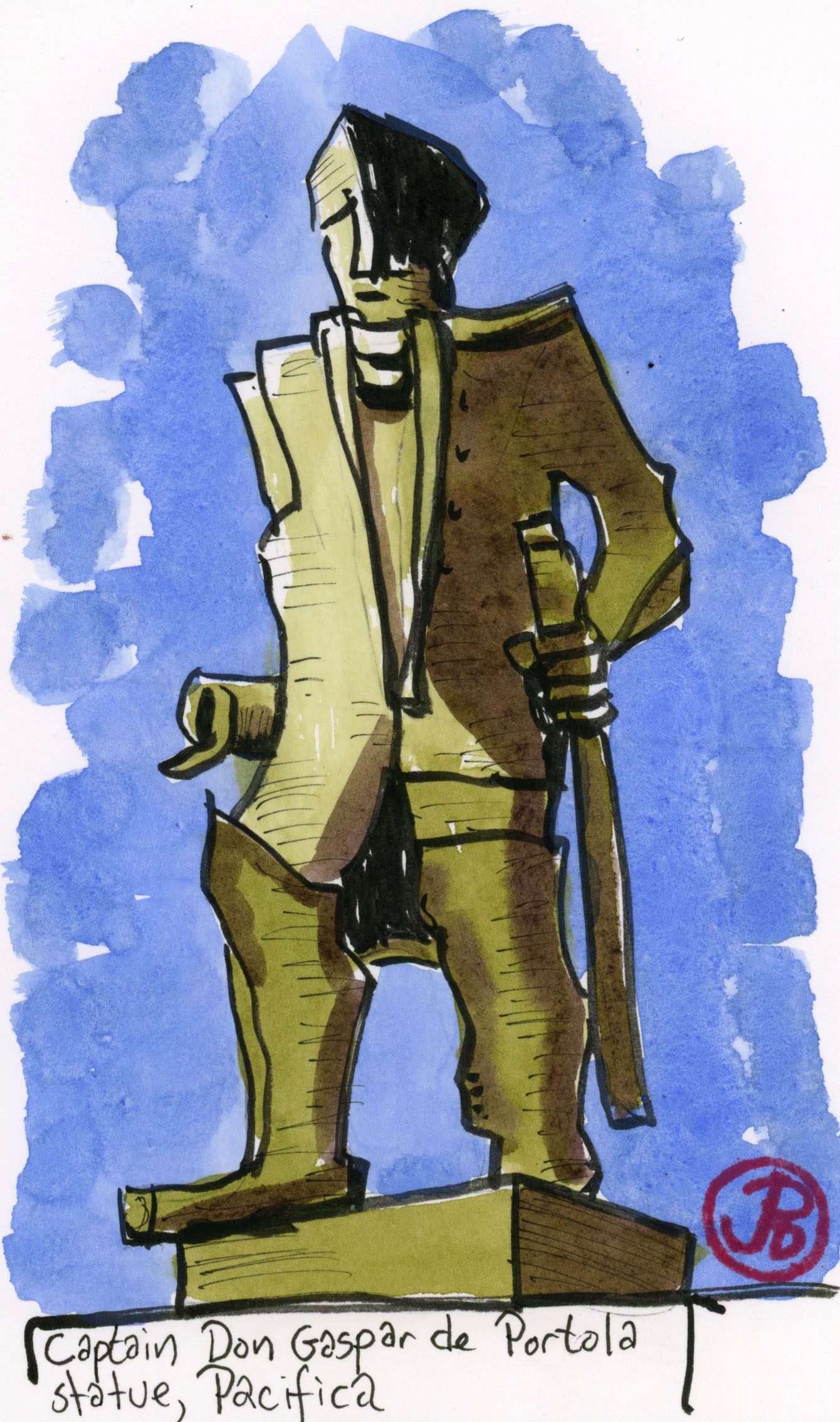
On the western side of the ridge is the town of Pacific. This is were the Portola Expedition set off. Near the community center there is an odd stature of Portola, one hand on his boxy sword, the other clutching a rolled up map.

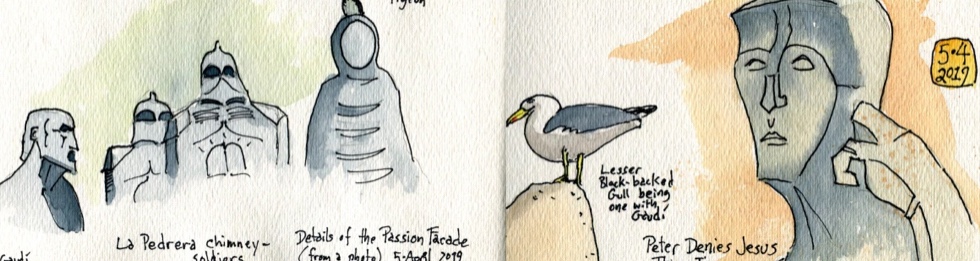
The statue is by Josep Maria Subirachs, a Catalonian sculptor responsible for the statues on the Passion Facade on Gaudi’s masterwork, La Sagrada Familia in Barcelona.

A few years ago I had the opportunity to sketch the cathedral that is still under construction. And I sketched some of the figures on the Passion Facade.

My 2019 sketch of Subirachs’ Passion Facade.
On Thursday January 18, 2020, the Cabrillo statue was removed.
Image

Lost by the Sea

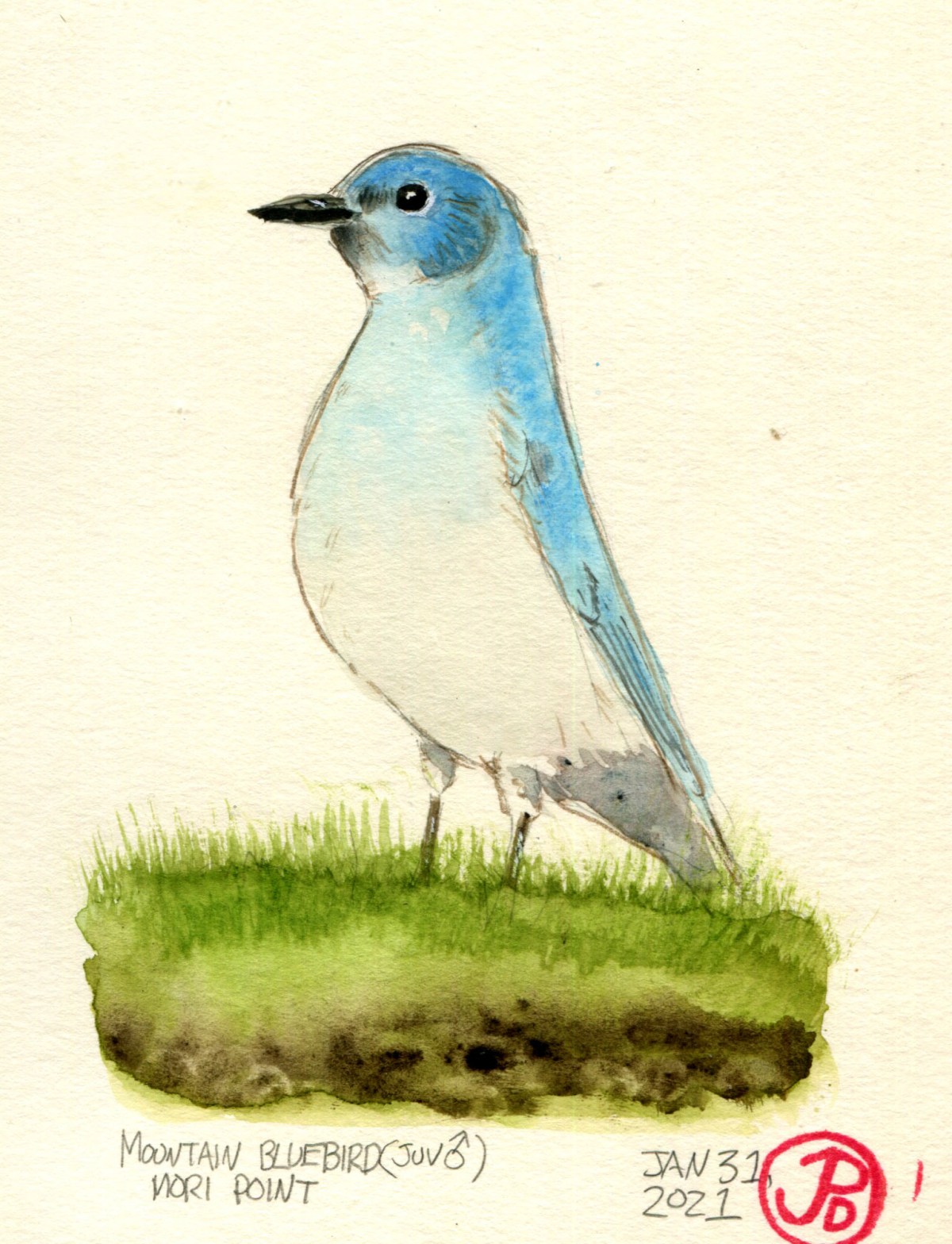
As their name implies, the mountain bluebird lives in the mountains.

The male is a intensely blue bluebird that I see at higher elevations when birding around the Tahoe Basin or in the Eastern Sierra. This is not a bluebird that is associated with the Coastal Region of California. Here you are more likely to find the western bluebird.

So when an immature male mountain bluebird was spotted at Mori Point a few days ago, I headed down to Pacifica to try and add this rare county coastal lifer.

Usually a bird like this is easy to find because of the amount of other Bay Area birders this rarity attracts. As I was heading up to the point, I passed three geared out birders head down. They confirmed the bird was still there.

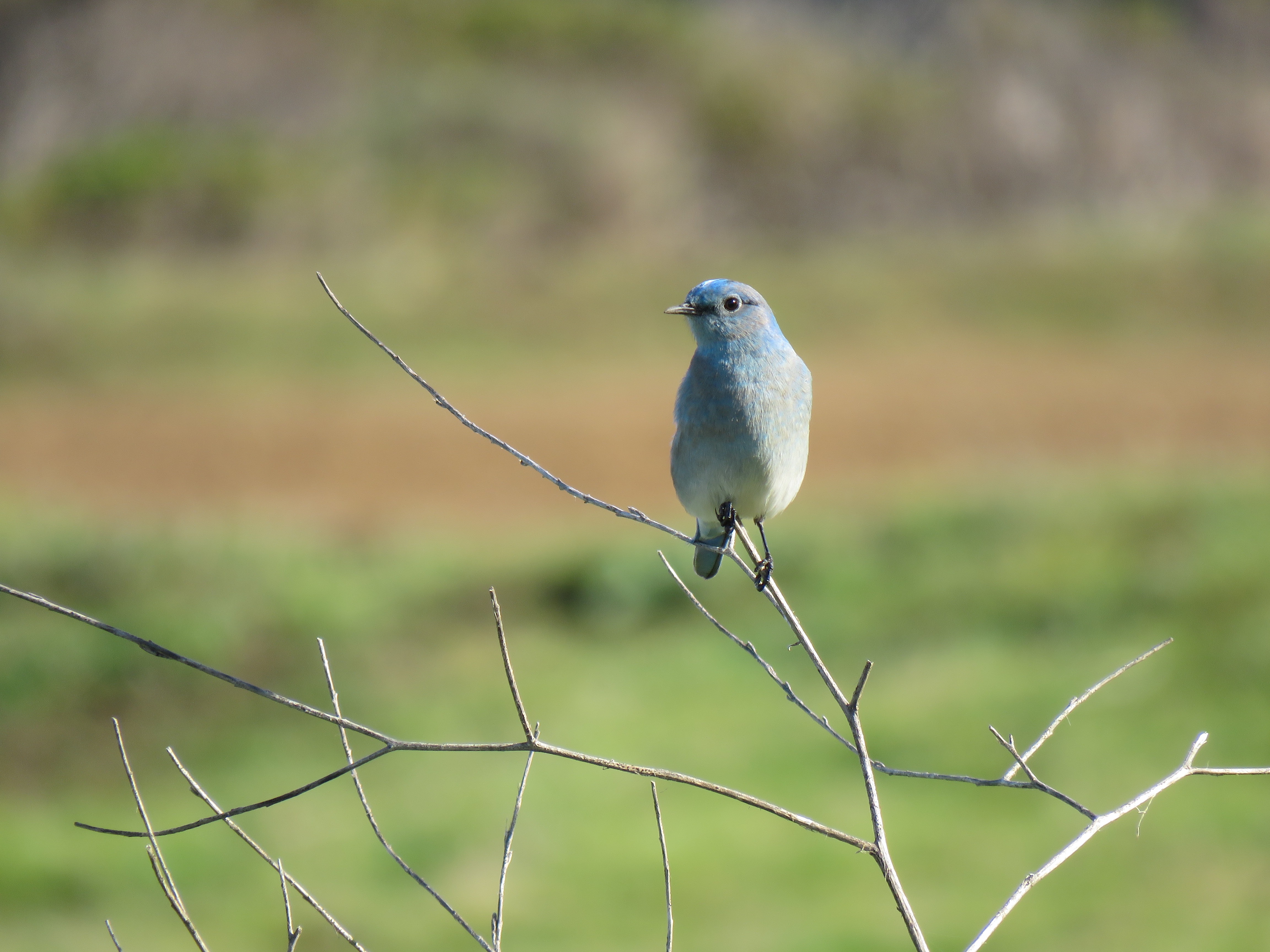
When I reached the plateau just to the east of Mori Point, the intensely blue bluebird stood out against the green grass. It was an odd juxtaposition seeing this mountain bird with the Pacific Ocean in the background.

The mountain bluebird perched up at Mori Point.

I watched the bluebird forage and took some document photos and then I heard a loud thrasher calling from the hillside. I headed up the hill and saw the singer who I had already identified as a California thrasher.

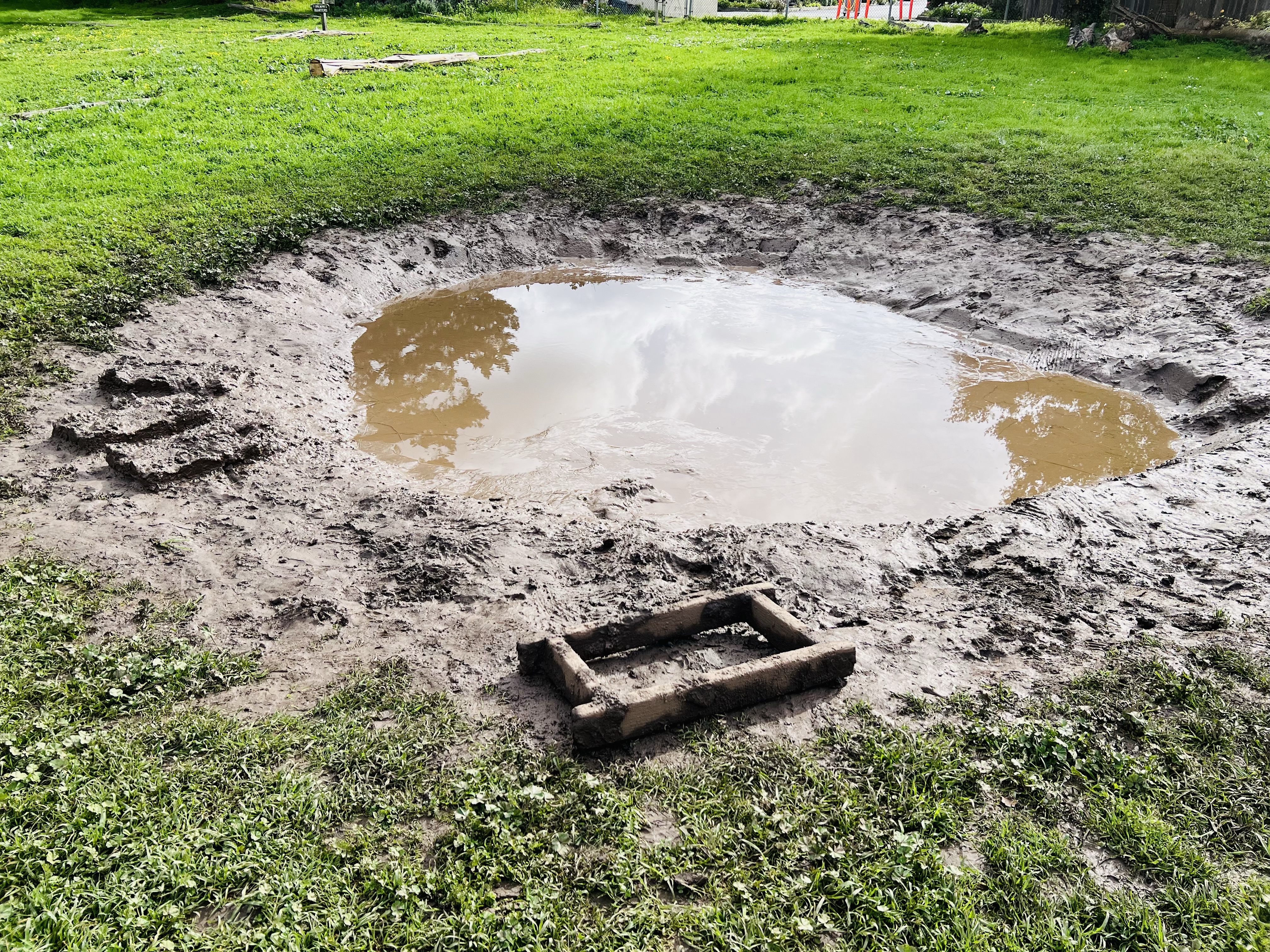
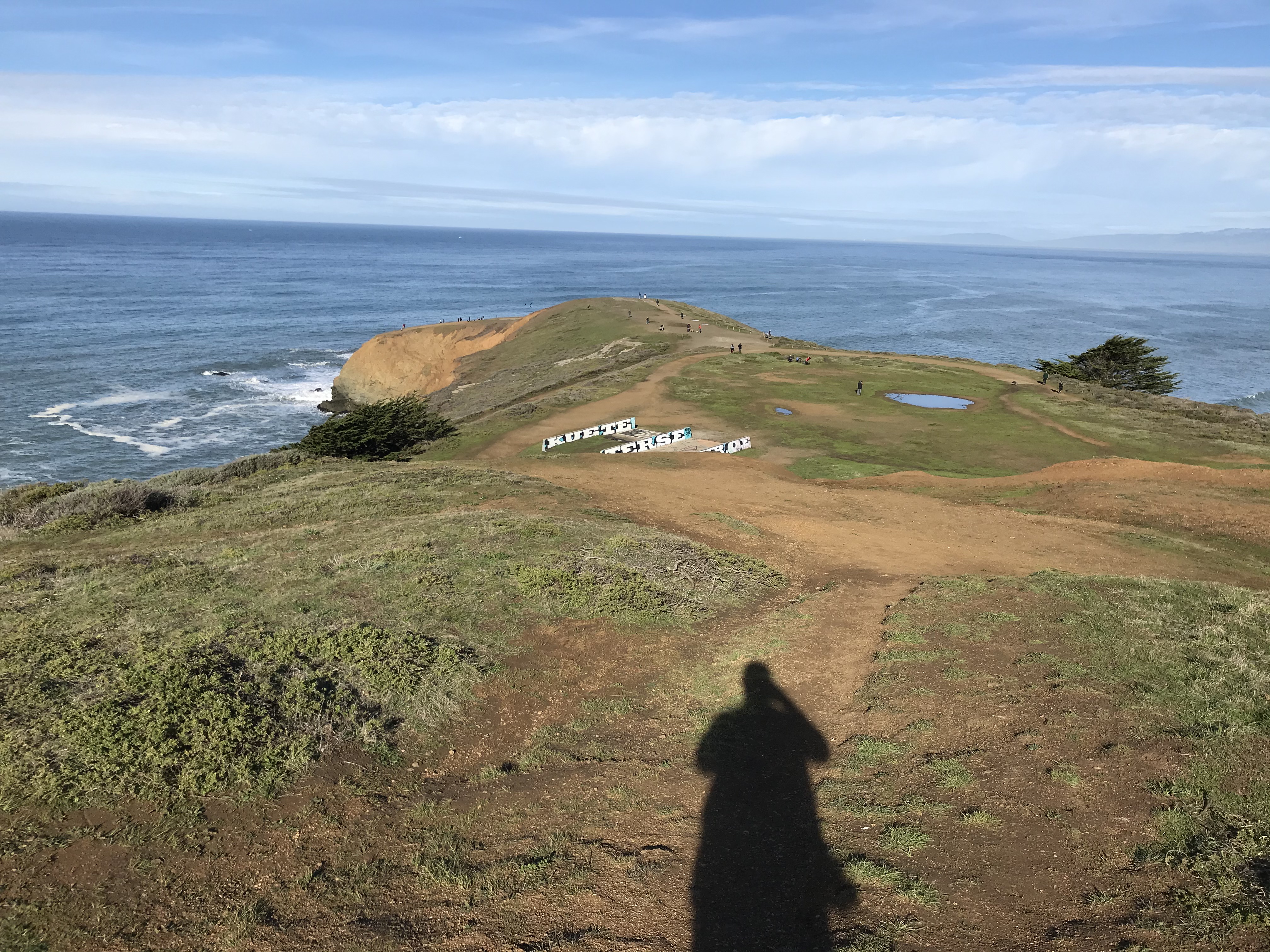
Up the hill listening to the thrasher. The mountain bluebird is near the large puddle. The figure near the puddle is a birder with a big lens, stalking the bluebird. What a beautiful coastal winter’s day.
Image

Scope Gull

To the naked eye they are white specks on a rock. With binoculars you can discern the white front and grey back, the yellow beak (with maybe a smudge of red on the lower mandible) but the iris and orbital ring color are unknown at this distance. But with a scope the smaller gull,  just on the right, with a yellow bill, dark “earmuffs”, and black feet turns into North American Lifebird #510!

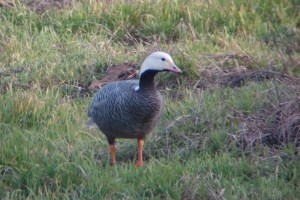
I set out on Saturday morning ,  heading south on Highway One with binos, scope, and tripod stowed in the back. My first detour of the day was in Pacifica to the Sharp Park Golf Course to check on the continuing emperor goose. A short walk south down the berm produced the rare goose, loosely feeding on the fairway with a group of Canada geese. Check.

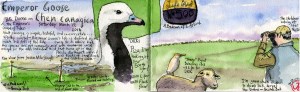
Emperor

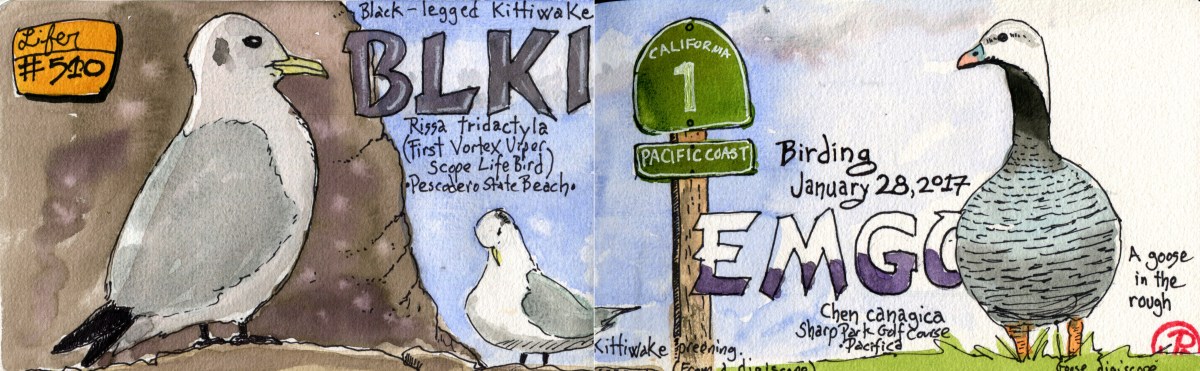
Journal page from the Emperor goose I saw at Seven Mile Slough, Lifebird #500. March 12, 2016.

dsc07316

Digiscope shot of the goose in the rough, at Sharp Park Golf Course, January 29, 2017.

The next stop was Pillar Point Harbor to see if anything interesting had blown in. I checked the creekmouth and beaches for any interesting gulls with not much luck. I then returned to Highway One. My plan was to head to Pescadero to scope the rocks and sea to find something interesting.

On my way to Santa Cruz, I frequently stop here, scanning the rocks for one of my favorite rock dwellers, the black oystercatcher. Most times it’s banshee wail, issued as it flies, calls attention to this cryptic colored bird, especially when it tucks its bright orange-red bill into its feathers. I scoped the rocks from the Pescadero State Beach pockmarked parking lot.  I counted 11 oystercatchers among the gulls and pelicans.

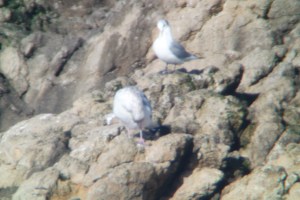
I slowly picked through the gulls, noting the beautiful plumage of the Heerman’s gull that were preening near the brown pelicans. As I panned to the left I saw a small gull, one with dark earmuffs, that I had missed on my first pass. This gull was different. Through the scope I ticked off the details: black legs, earmuffs, yellow bill. This was my target bird: an adult black-legged kittiwake! Lifebird #510!

dsc07285

A not so wonderful digiscope photo of the preening kittiwake (the top gull).