Image

Mothers

On Mother’s Day I saw the merganser ducklings for the first time.

I was on Washington Way, a footpath that runs parallel to the San Lorenzo River. There was the female, in a cloud of young ones. The common merganser ducklings where actively diving and foraging so it was hard to get an accurate count but I estimated I counted 12 heads.

Common merganser nests in cavities near water and females may lay 6 to 13 eggs. The hatchlings may stay in the nest for a day and then the downy young jump out of the nesting cavity and they immediately can swim and hunt for themselves. No failures to launch in the merganser world.

The next day, on my daily walk, I saw the wood duck family from Washington Way. They were foraging on Middle Beach. The group included two adult males, a female, and three ducklings.

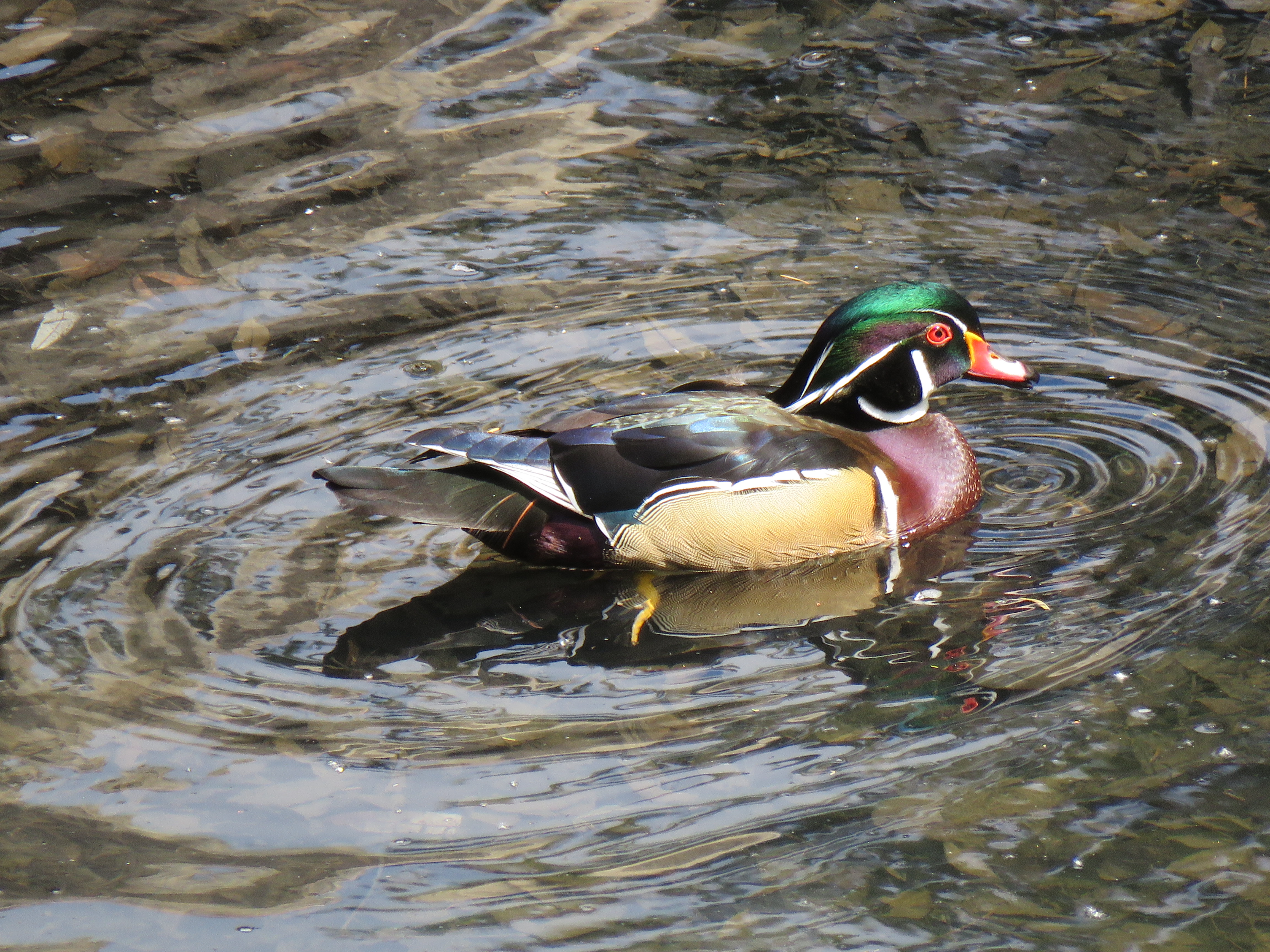
The wood ducks with two of their three ducklings. The ducklings were actively foraging on their own on Middle Beach.
The male wood duck is considered to be the most beautiful duck in North America, if not the world. There’s a lot going on with this duck.

Later that day, at about four in the afternoon there was a late spring rain. I stood at the backdoor, looking out past the deck and the trees towards the river and I wondered how the wood duck ducklings were handling their first rain.

So I did want I always did when I am inspired by the natural world: I wrote a poem and did a sketch. What else should I have done? (As Mary Oliver would have asked).

Mother

To the three wood
duck ducklings on
the river, this was
their first rain.

Did it seem odd
to them that it
was wet from above
as well as below?

Did they wonder
if the whole world
was river?

I imagine that
before they got
lost in thought
(as much as ducks
get lost in thought)

mother presented
her downy breast
and they sought shelter
before an answer came.

Image

The Founders Tree

“The redwoods, once seen, leave a mark or create a vision that stays with you always. No one has ever successfully painted or photographed a redwood tree. The feeling they produce is not transferable. From them comes silence and awe. It’s not only their unbelievable stature, nor the color which seems to shift and vary under your eyes, no, they are not like any trees we know, they are ambassadors from another time.” – John Steinbeck, Travels With Charley

Over the past 15 years I have spent much time sketching around my cabin in the Santa Cruz Mountains among the redwoods, douglas-firs, big leaf maples, and bay laurels. I have sketched all of the trees but one of these stands above the others. That would be Sequoia sempervirens, the coast redwood.

I have always loved sketching coast redwoods and I have sketched them many times and I understand their visual language. For one, they are not too hard to sketch, a straight trunk that reaches up to the sky like a giant sundial. These trees are so massive that when I sketch them, I only seem to capture a small part of them as the tree grows off the page. As Steinbeck noted, “No one has ever successfully painted or photographed a redwood tree.” I agree with this because I have attempted both, with mixed results. And I love the idea that you can sketch or photograph a subject but never truly capture it’s essence.

The coast redwood is a California native, growing along the coast (as it’s name implies) with it’s northern range just crossing the border into Oregon. In every sense the coast redwood talked about in superlatives. They are considered the tallest trees on planet earth. The tallest specimen is 379 feet high. They are also long lived, living between 1,200 to 1,800 years old. They are also one of the oldest species on earth.

In Paradise Park, most of the redwoods and Douglas-firs are second growth and are not necessarily considered superlatives of their species. The giants of the species are usually found further north. Except for one exception.

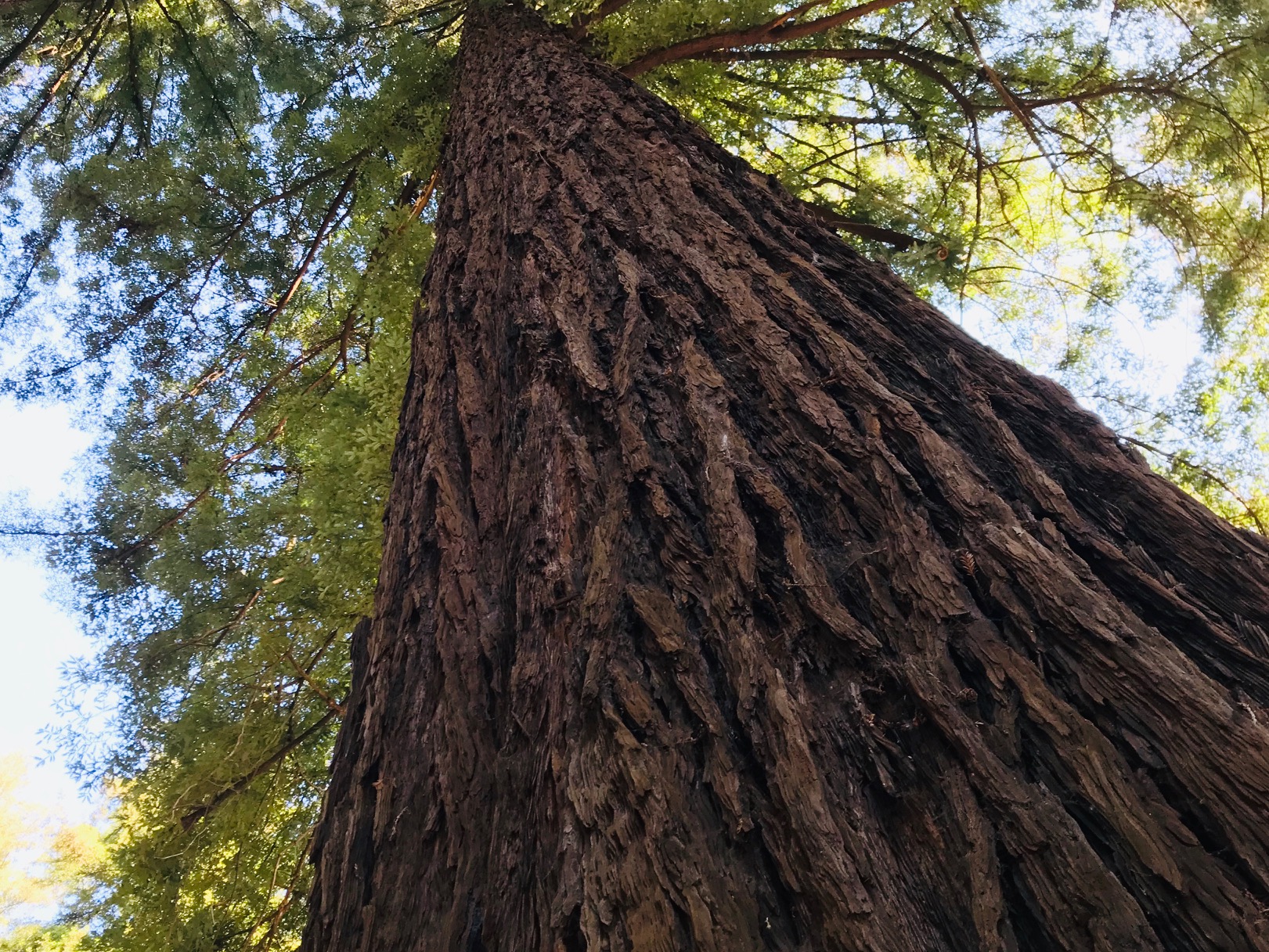
This redwood is known as the “Founders Tree” and it is believed to be the largest and tallest tree in Paradise Park. It is 24 feet in circumference and about 200 feet tall. The tree is estimated to be about 350 years old. Just for context, this tree is older than the government of the United States of American by about 100 years.

Your neck gets sore looking up toward the top of the Founders Tree.

The stone marker notes that the the Founders Tree was dedicated on August 12, 1974 and celebrated the foundation of Paradise Park on August 12, 1924. It is certainly a paradise for me in these tough and uncertain times.

Image

Nature Loafing

“Adopt the pace of Nature. Her secret is patience.” ~Ralph Waldo Emerson

With the rest of the school year relegated to distant learning, I decided to spend the remainder of the last trimester at my cabin in the Santa Cruz Mountains.

This was an easy decision because I could be in a place that I love and also have access to everything I needed in my digital classroom to stay connected with my students, parents, and coworkers. In the wooded hills I could really stretch out and breath fresh air while experiencing the world coming alive as Spring was upon us in the San Lorenzo River Watershed.

The calls of Wilson’s warbler, California towhee, and song sparrow was the soundtrack to my mornings and the hoot of the great horned owl dueting across the valley was my evensong.

There is also much more elbow room in Santa Cruz County. A comparison of the population and area of Santa Cruz and San Francisco Counties is telling. The 2019 population of Santa Cruz County is 273,213 compared to 881,549 in San Francisco. The City and County of San Francisco is much smaller, it being hemmed in on three sides by water. The City is 231 square miles compared to the expansive 607 square miles of Santa Cruz County.

It also gave me a opportunity to do one of my favorite activities: nature-loafing. I define nature-loafing as being in nature and actively doing nothing. This definition really captures the oxymoronic nature of this non-pursuit. No agenda, no plan, just being there and being in the moment. All the stress and strain of sheltering in place and distant learning just drains out of me and flows downstream to the Pacific.

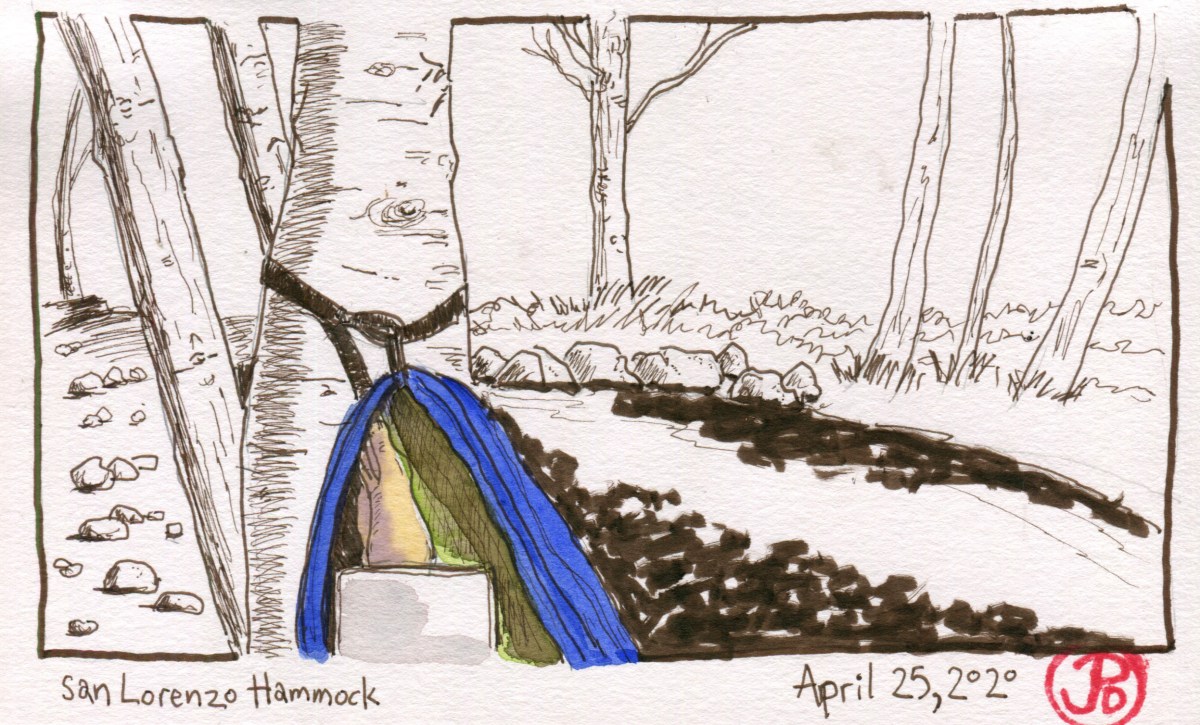
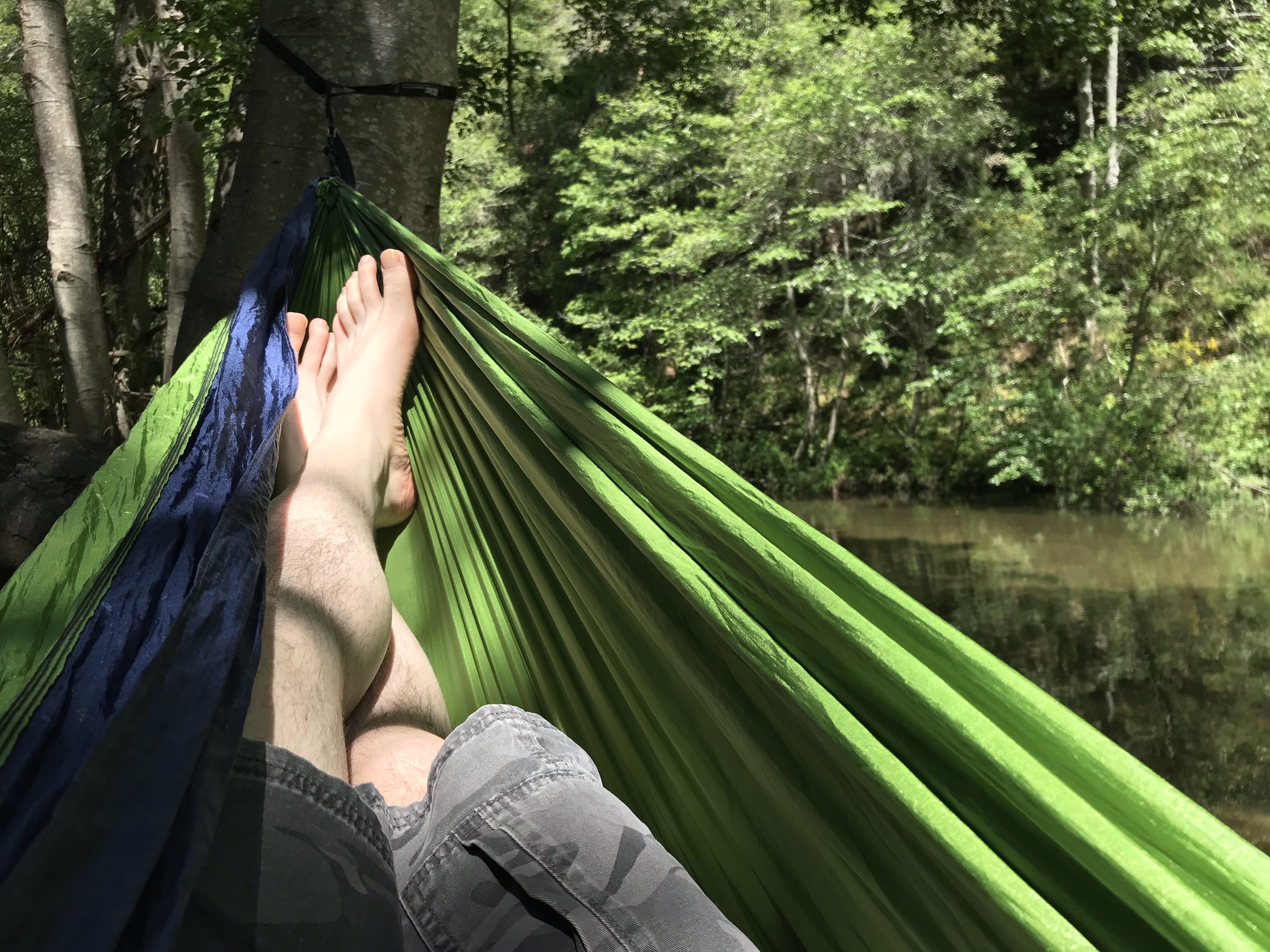
Of course I never just nature-loaf because I am also nature sketching at the same time. Like the feature sketch for this post of my hammock-view with my feet pointed upstream and my head downstream.

One of my favorite places to nature-loaf is on the banks of the San Lorenzo and one of my favorite actives is Power Hammocking.

Near Rocky Beach are two alders that are lined up parallel to the course of the river. They are about 15 feet apart and demand that a hammock be strung between; a perfect nature-loafing platform!

My nature loafing stage with the San Lorenzo River on the right.
Image

Powder Works Covered Bridge

Many think of New England as being associated with covered bridges. I certainly saw many during my fall trip when I was in New Hampshire. But there has been a west coast covered bridge in my life for as long as I can remember.

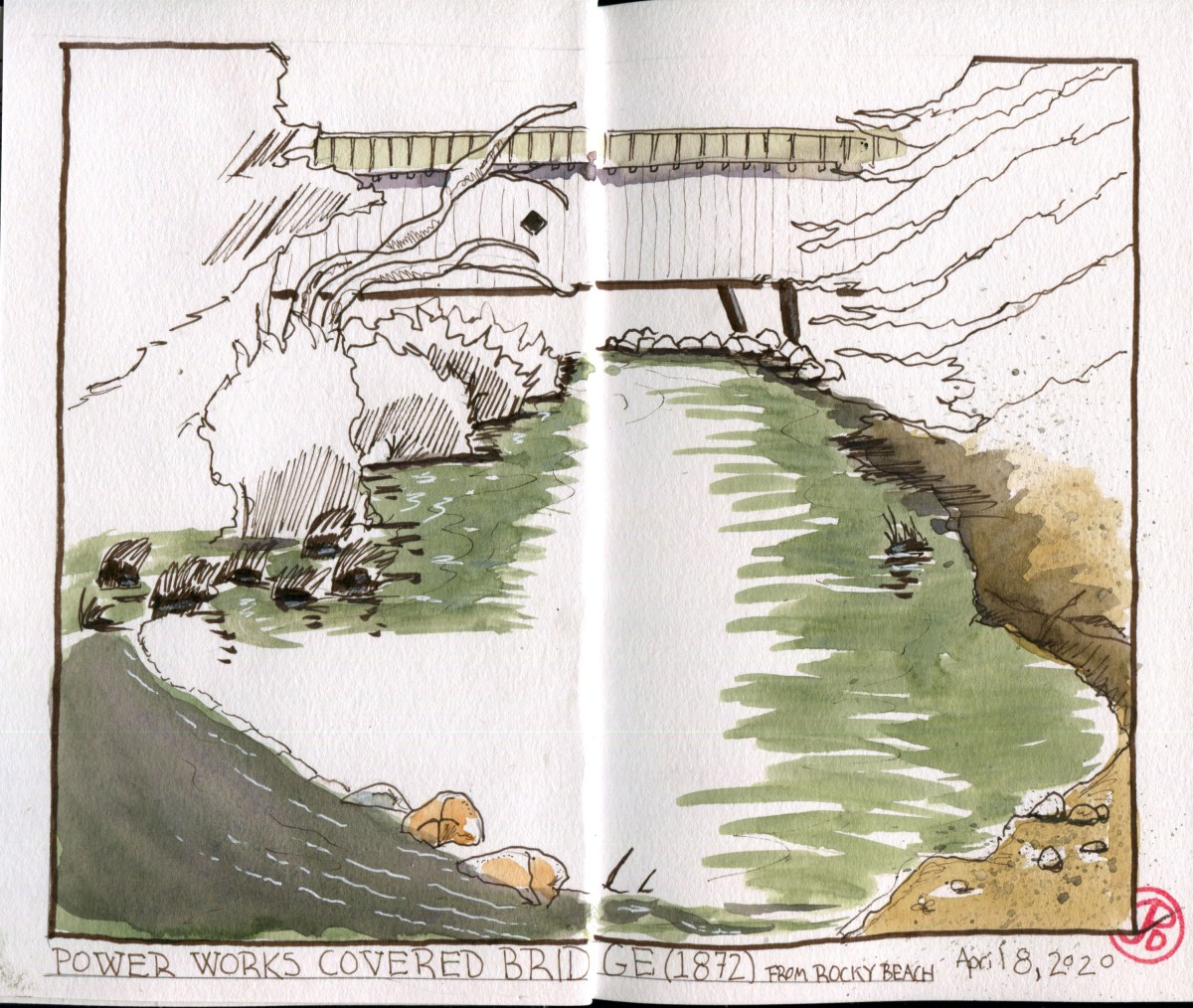
This is the Powder Works Covered Bridge, which was built in 1872. This bridge was built across the San Lorenzo River (the largest river in Santa Cruz County). The bridge was built by the California Powder Works in the site of the plant that produced black power. The plant operated for 50 years but as the population of Santa Cruz increased combined by the decreasing need for black powder the plant was closed down for good in 1914.

When the original bridge over the river washed out in 1871, the Powder Works Superintendent hired the Pacific Bridge Company (in Oakland) to build a new covered bridge. The bridge was constructed in 71 days, at a cost of $5,250.

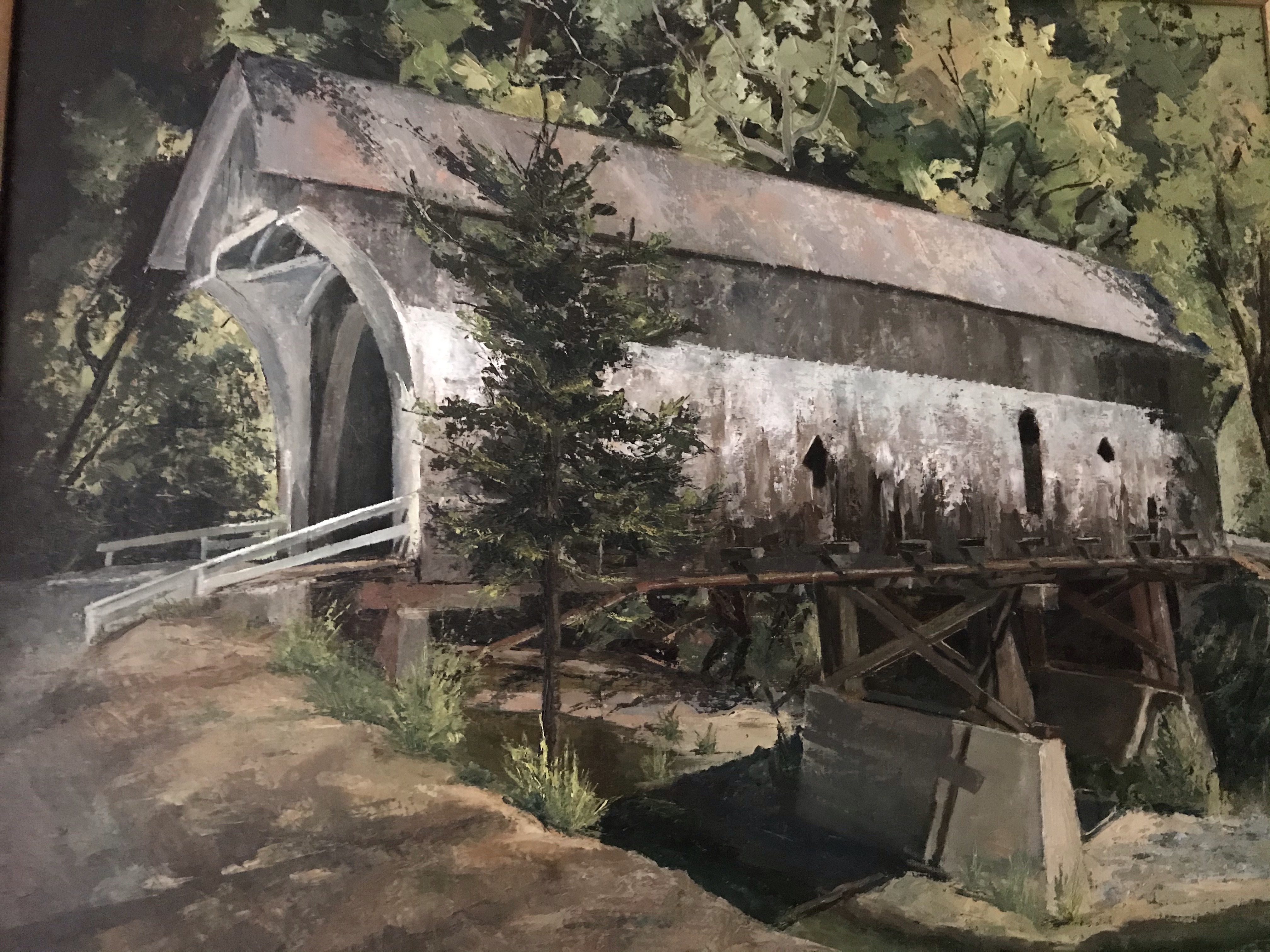
Above the fireplace of my family cabin, hangs a 1960 oil painting by my great aunt Marjorie Close. This is probably one of the best paintings ever done of the Powder Works Covered Bridge. And I’ve always looked at it with wonder what it’s amazing thick strokes applied with a pallet knife.

My grand aunt was born in a mining town in Arizona on November 11, 1899. She moved to San Francisco and was trained as an artist at UC Berkley and the Art Institute of Chicago. She was known for her still life work as well as a prominent jeweler and furniture designer.

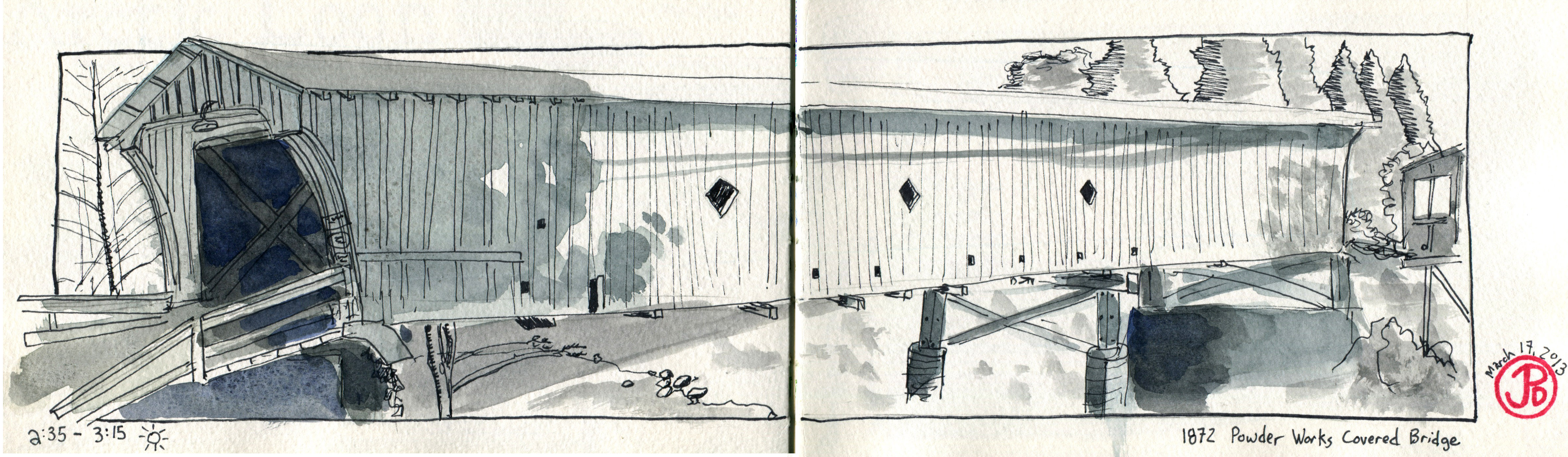
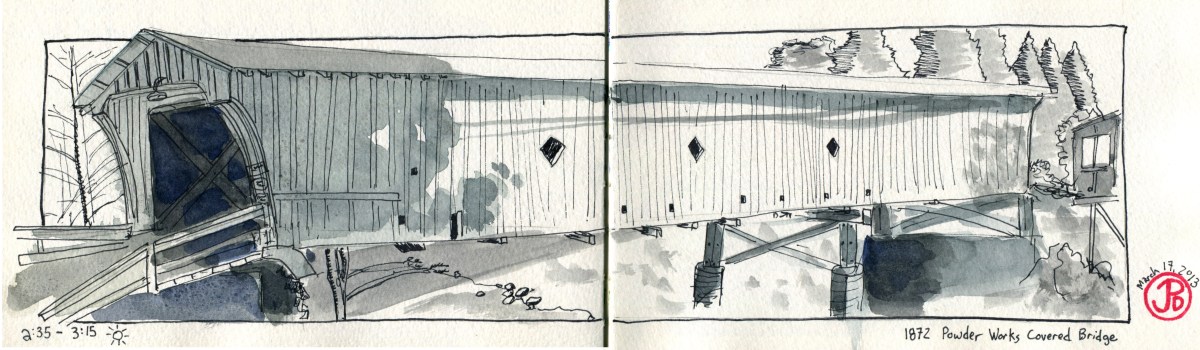
I have painted this bridge before. One sketch of the bridge was from roughly the same position as my great aunt’s painting. For my new sketch, I wanted a different perspective.

A 2013 sketch of the bridge. I used a limited monotoned color palette for this sketch.

I headed upstream to Rocky Beach, just upriver from the bridge. I found a spot on the beach and I looked downstream to the span. There was lot of trees and vegetation in my view. I did not go for realism when sketching in the flora, instead I wanted to sketch in the form and shapes that leads the eyes downstream to the bridge. So I embraced the form instead of each individual leaf.

I also took a minimalist approach to painting the sketch and keeping it loose was my objective. I left much of the drawing unpainted and I kept my paint palette to a few colors. It is a sketch after all!

Image

Cabin Birds (Earth Day 2020)

My love of birds was born by spending time at my family’s cabin above the backs of the San Lorenzo River in the Santa Cruz Mountains. My grandma put up a feeder on one corner of the deck that attracted the local chestnut-backed chickadees, pygmy nuthatches, and Steller’s jays.

While I was planning to spend my Spring Break traveling on the California Zephyr to Chicago, the coronavirus pandemic threw a wrench into the works (and changes the lives of others across the world). Instead I headed down to my cabin to shelter in place.

The spring is one of my favorite times at my cabin. Things are finally starting to dry out and temps are gradually warming up. You really start to feel, see and hear the changing of the seasons.

First you feel the air warm against your skin. You start to see the world of green slowly coming alive on the trees and bushes from the desk. And you start to hear the sounds of the neotropic migrants arriving on there summer breeding grounds.

These are the birdsongs that I have not heard in almost a year and I sometimes have to become reacquainted with them, like hearing the voice of a forgotten friend.

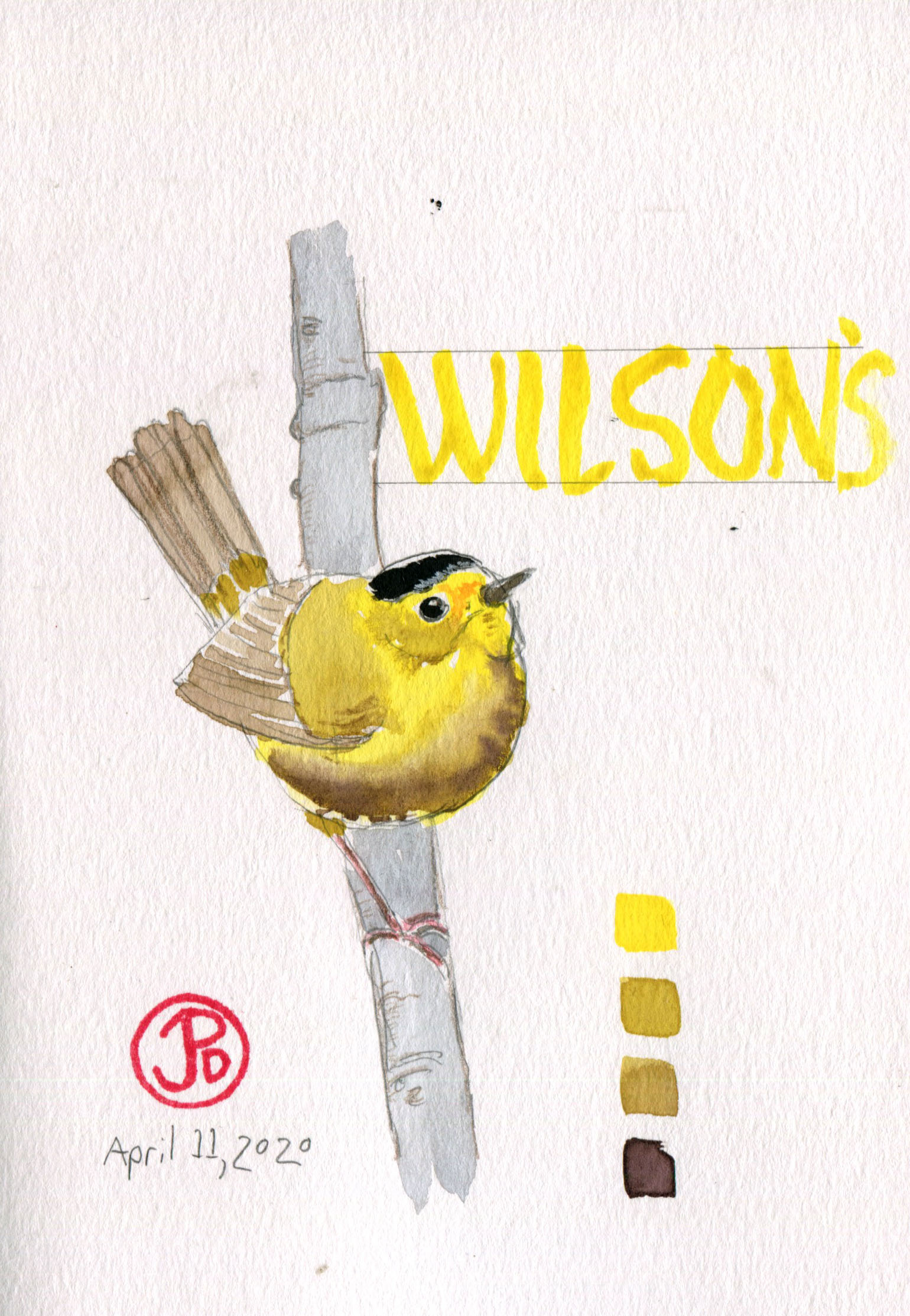
The most vocal newly arrived avian member is the diminutive Wilson’s warbler. This little flash of gold is a very vocal member of the spring choir. It calls constantly from the midsts of trees out back. The males at this time of year are setting up their breeding territories and also hoping to attract new-arrived females.

Another migrant is the Pacific-slope flycatcher, of the tricky genus Empidonax. Most of these similar flycatchers can be identified by call alone and I far more ofter hear the “pee-wheet” call of the Pac-slope. Welcome home.

A resident that becomes very vocal at this time is the diminutive Pacific wren, which boasts one of the fastest songs in the avian world at about 32 notes per second! What is amazing is that such a small, drab looking bird can create such a loud and splendid song. I painted a wren from a photograph of a singing male in my backyard bramble.

A pair of common mergansers roosting near the waters of the San Lorenzo River.
Image

Paradise Park

With the current pandemic and the shelter in place order, I chose to shelter in Paradise during my Spring Break. My family cabin is in Paradise Park, just up Highway 9 from downtown Santa Cruz.

Here I have more legroom than my digs in San Francisco and the population density here is far less than the 7 by 7 mile County and City of Saint Francis. Another factor was that San Francisco had almost 1,000 Covid-19 cases and the larger (by size) County of Santa Cruz had just 90 (at the time of writing). This seemed like a no brainer! Head to Santa Cruz for my two week Spring Break.

This move allows me to spread out, breath fresh air, and be amongst the redwoods and river. It also gives me a very familiar patch to sketch from. Here I know all the birdsongs and paths, all the secluded river beaches, and the places of solitude and rest. And I certainly needed both after three weeks of distant teaching.

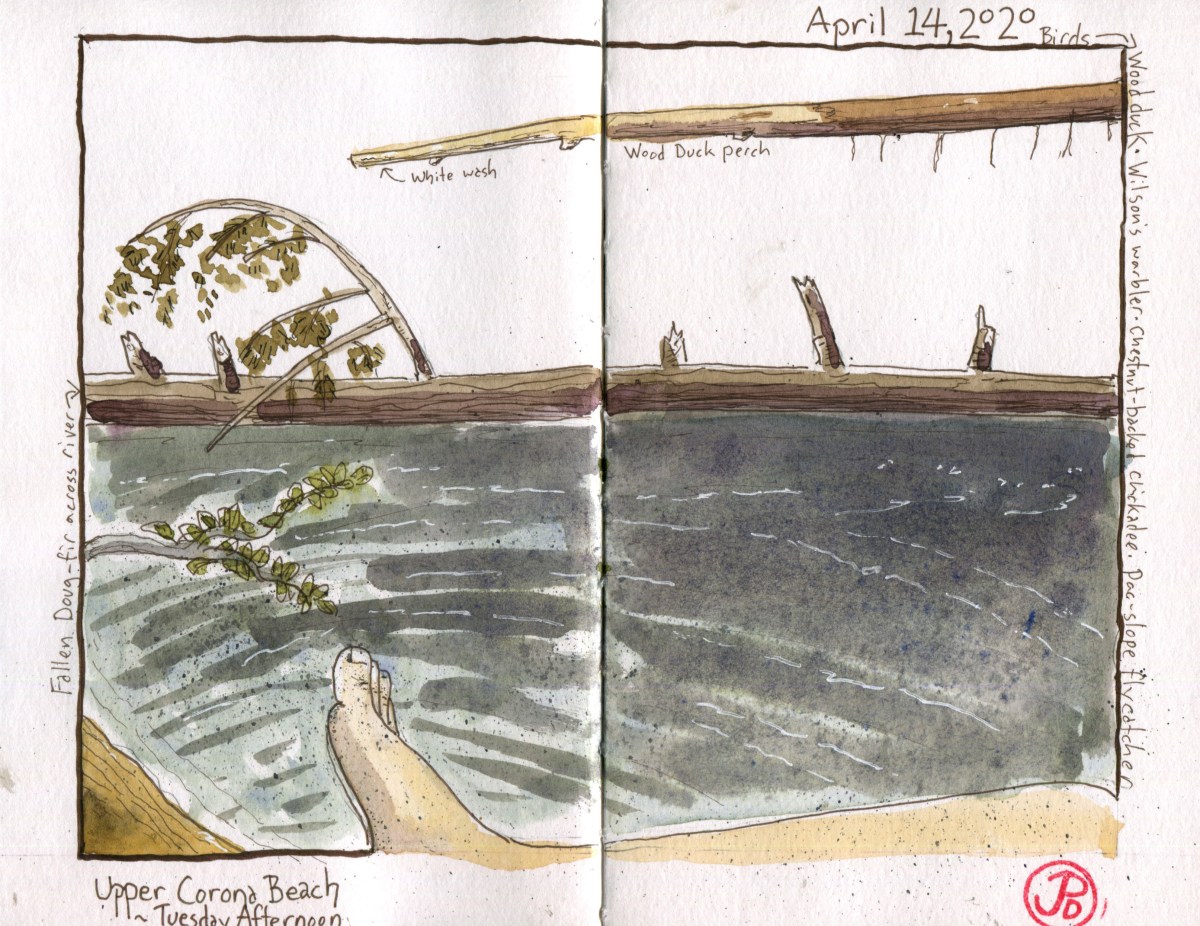
Some of my favorite sketching locations in the Park are my redwood deck and different locations on the San Lorenzo River, certainly the most important landform that runs through the Park. A beach that I have always loved both as a place of repose and sketching is what is known in my own person geography as Corona Beach (this was named long before the infamous virus).

To get to Corona Beach involves heading up stream with some bush whacking, fording the San Lorenzo (which was trying to take my feet from under me), and then a little more bush whacking to arrive at a small, sloped river beach. Today it was occupied by a young couple, so I headed up stream (social distancing, dontcha know) and arrived at Upper Corona Beach. A smaller bit of sand on the river side. This is clearly a feral beach, wild, rugged, and something Mary Oliver might write a poem about. Well Mary is no longer with us so I guess I will have to give it a go. . . . a poem hasen’t blessed my brain at the moment (the trouble with poetry) so I did a sketch instead (featured sketch).

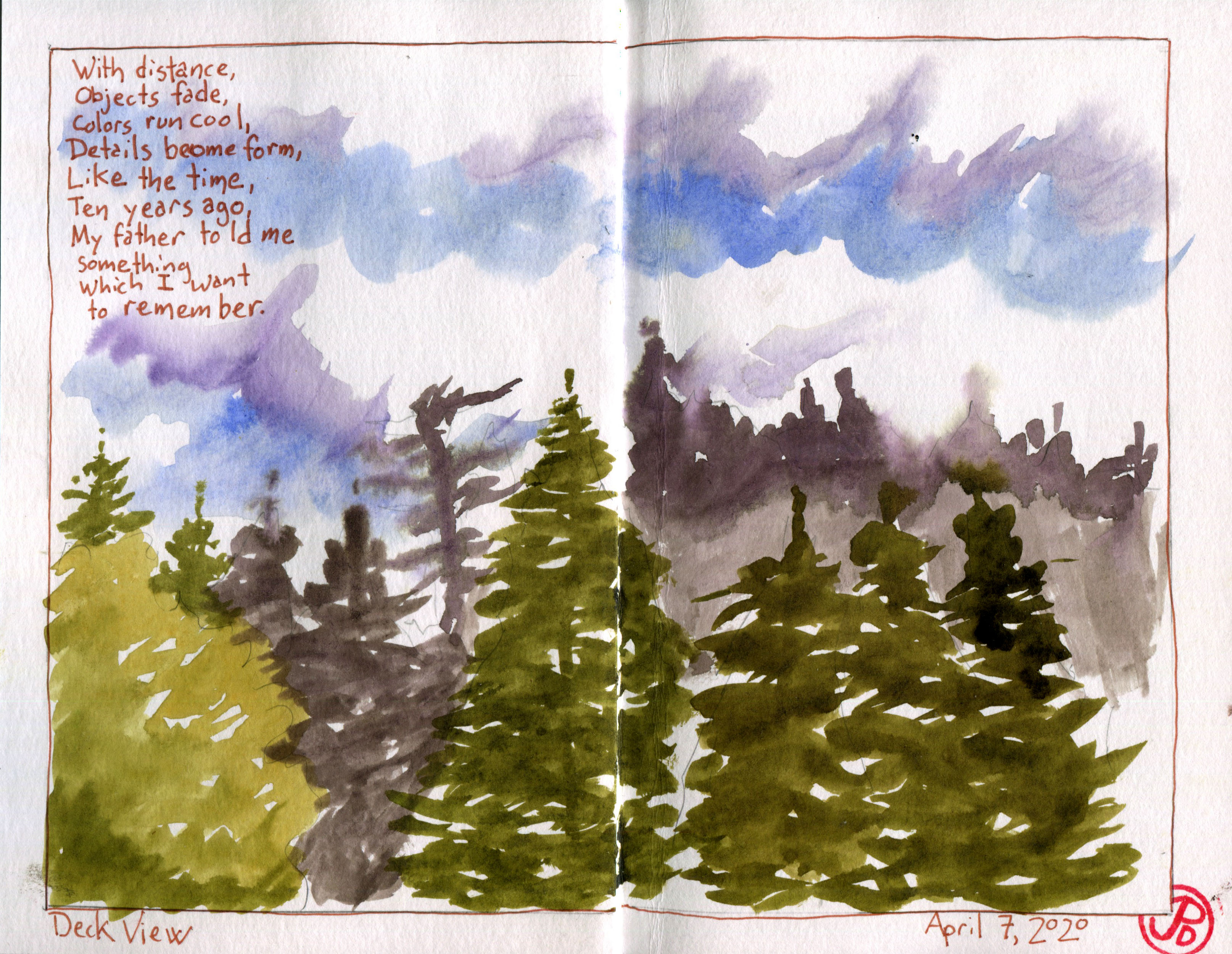
I also like to be in open air and sketch the green treescape of the view. This was a excise in creating depth in a sketch. In this desk sketch I included a poem:

With distance,

Objects fade,

Colors run cool,

Details become form,

Like the time,

ten years ago,

My father told me

something

Which I want

to remember.

With this deck sketch I tried to work with creating depth with warm and cool colors and tone. I also worked on my brush work to create the treescape.
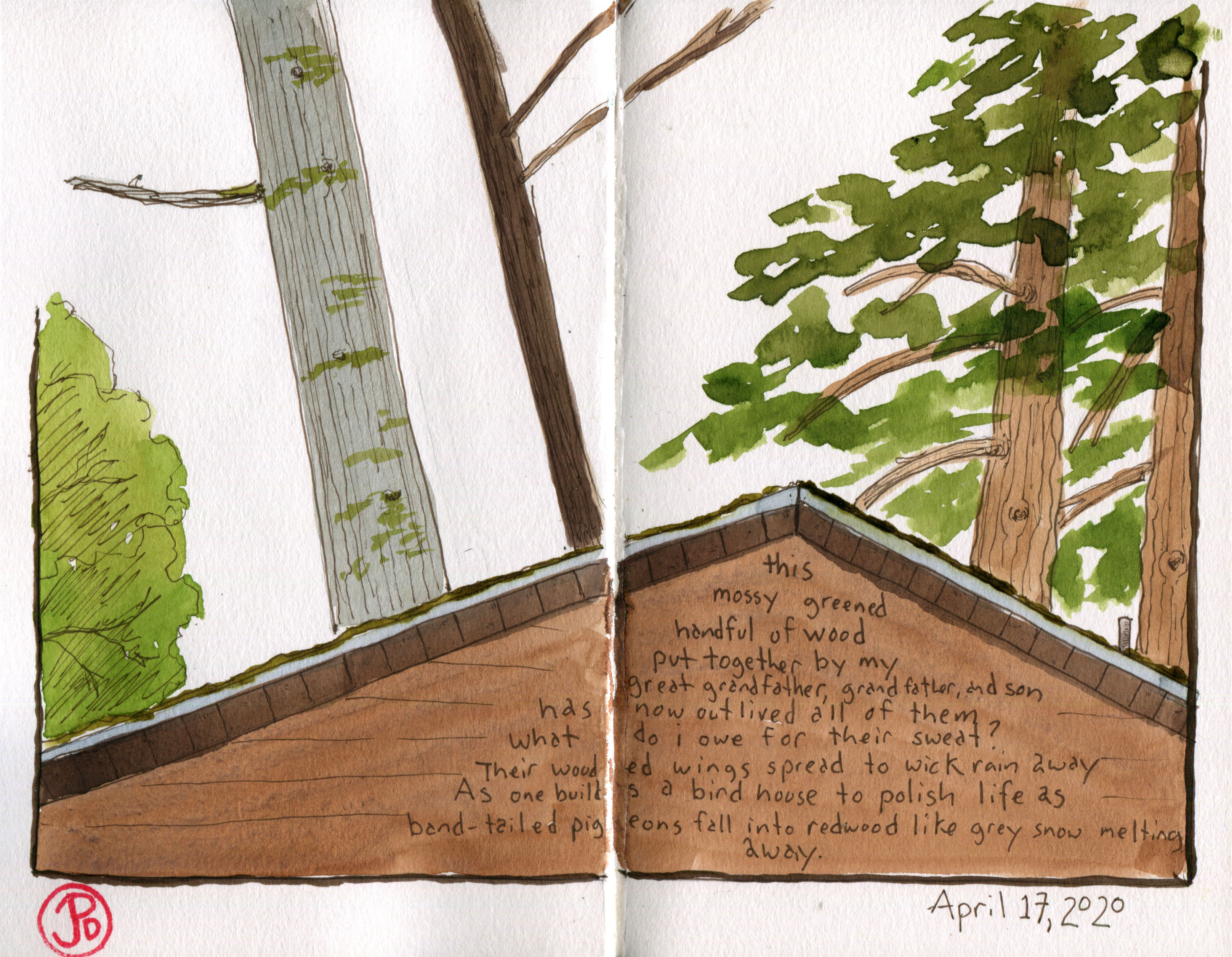
Roof view of my cabin surrounded by big-leaf maple, douglas-fir and redwood. The redwoods on right contains Bird Box #2 (the redwood on the left). More on the box in a later post.

Cabin Birds Part Two (Audubon’s Birthday)

“Spring work is going on with joyful enthusiasm.” —John Muir

“to live in this world
you must be able
to do three things
to love what is mortal;
to hold it
against your bones knowing
your own life depends on it;
and, when the time comes to let it go, to let it go”. -Mary Oliver

Spending two weeks during my Spring Break at my cabin in the Santa Cruz Mountains gave me the opportunity to slow down and notice the most important things in life. That is life itself. (A nod to you Mr. Ebert)

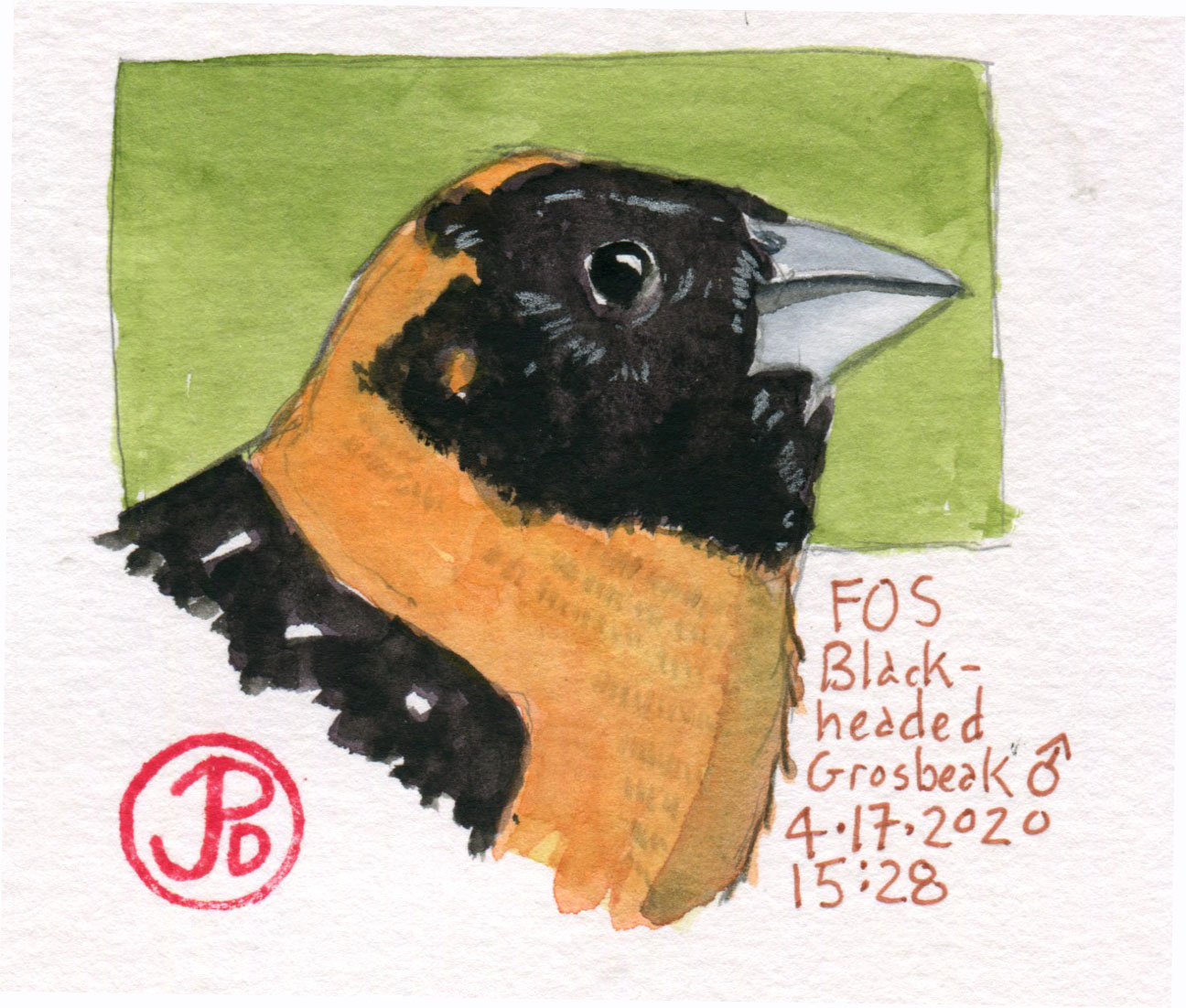
Birding just adds another layer to experience. It is a soundtrack that not many hear. To those aware, the signs of spring are everywhere. To the calls of the Pacific wren and dark-eyed junco to the sounds of the newly arrived neotropic migrants like Wilson’s warbler, Pacific-slope flycatcher, and black-headed grosbeak. The latter bird I heard on my last day at my cabin, when I heard a district “clip” contact call. I headed out to the deck to see this beautiful flash of orange, back, and white.

This was a First of Season (FOS) bird for me. The males arrive on their breeding grounds from Mexico just ahead of the females and the males proclaim their place in the world with their robin-like song. This has always been a favorite cabin bird and it arrives in mid April most years.

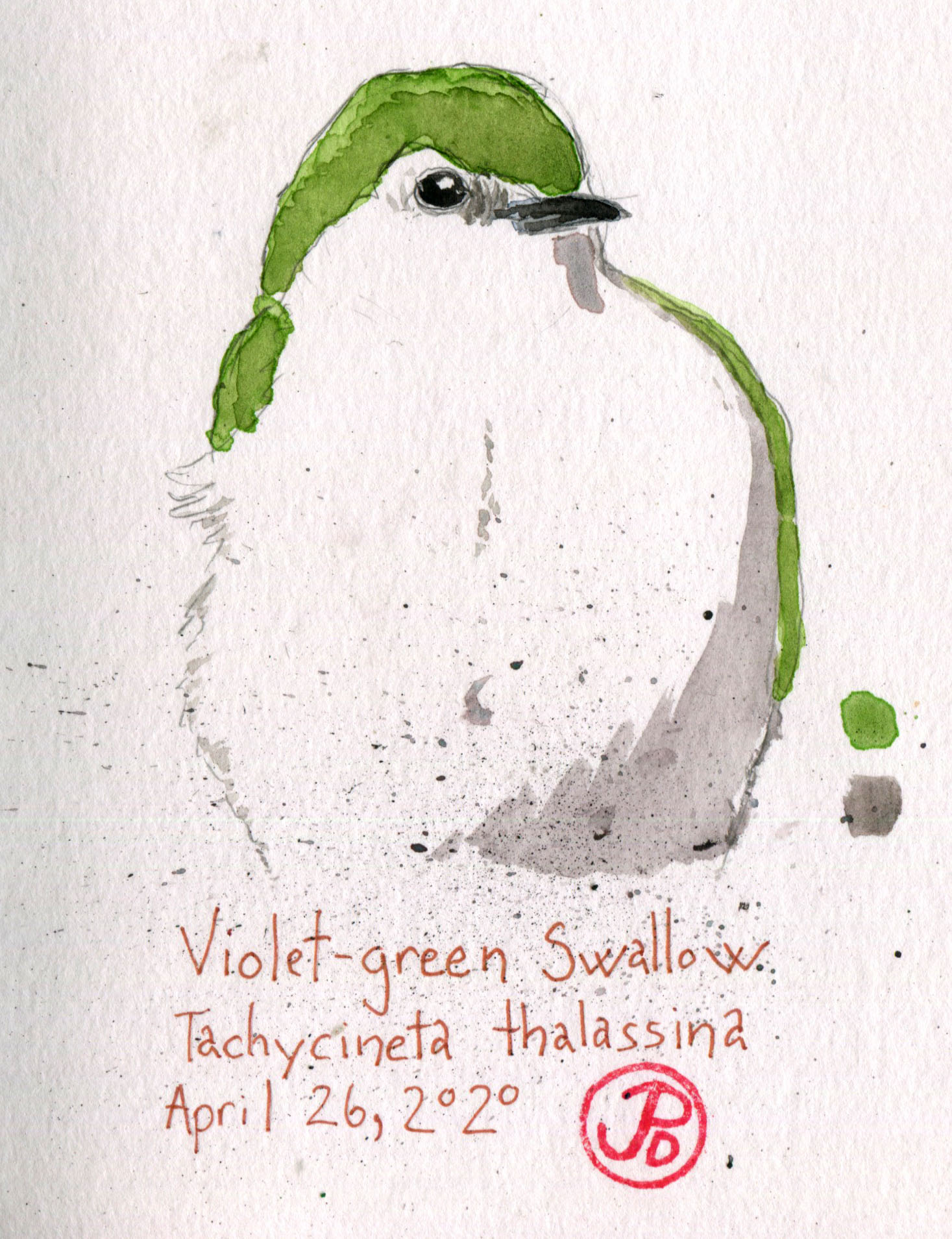
The sky above the San Lorenzo River is filled with newly arrived swallows at this time of year. The most common species are tree and violet-green swallows. Swallows are insectivores and are aerial acrobats that catch flying insects on the wing. Like the Swallows of San Juan Capistrano, swallows are a sign of renewed and the turning of the season from winter to spring.

The aerial insectivore, one of North America’s most beautiful swallow.

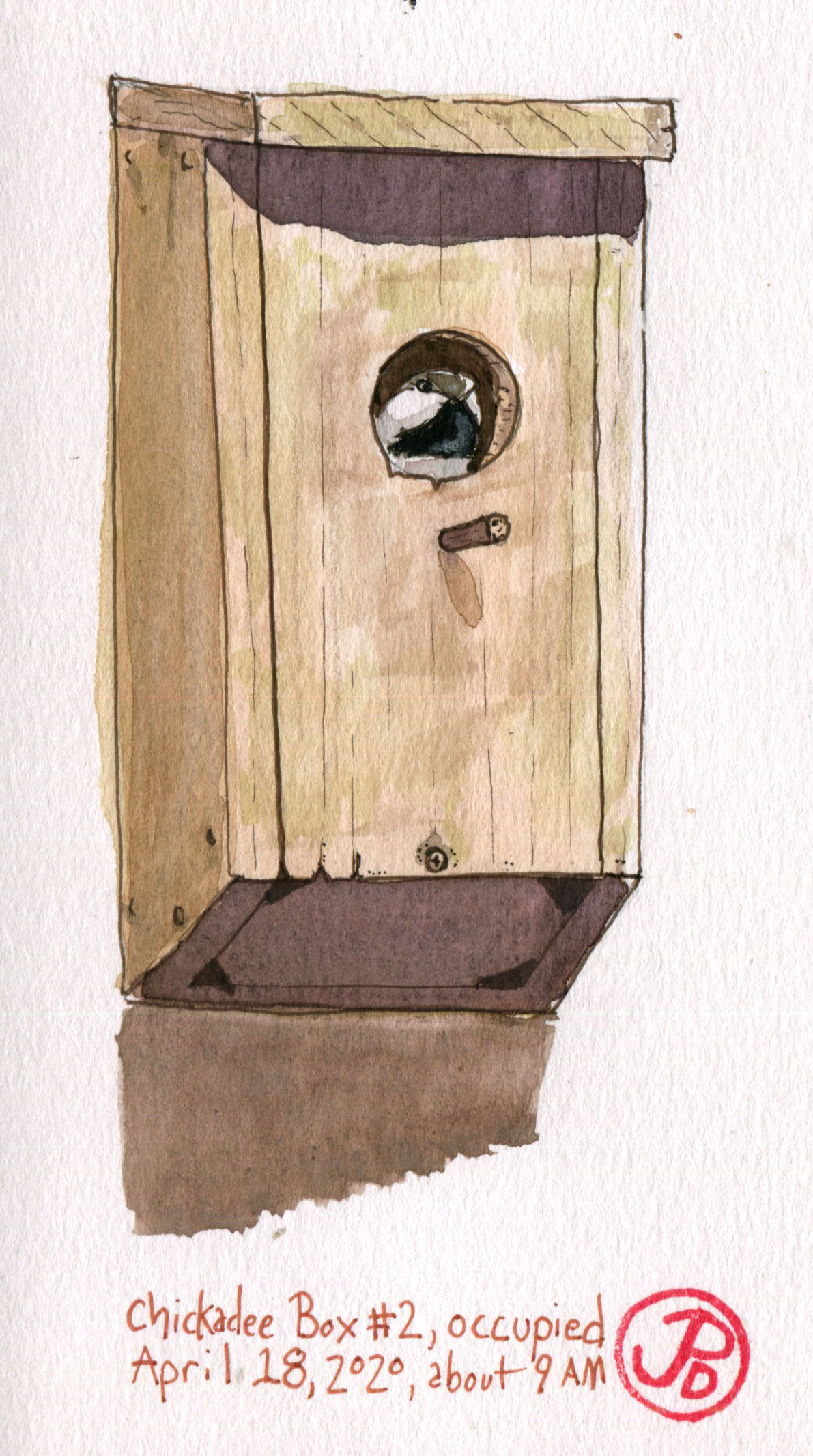
Just as I was packing up the car to return to San Fransisco, the natural world gave me a parting gift. I noticed that a pair of chestnut-backed chickadees were cleaning out one of the nesting boxes that I had built and hung on a redwood near the parking lot. This gives me such a sense of joy that I have played a small part in helping to create life.

The two weeks I spent in Paradise was a great was to slow down and really appreciate life.

Image

Covered Bridges of California

There are about 12 covered bridges in California. And like much else such as the coast redwood, giant sequoia, bristlecone pine, and Mount Whitney, these bridges contain a superlative. Now as I teach my fourth graders, a superlative contains “est”as a suffix, and shows that something is without comparison. Such as tallest, largest, oldest tree or the tallest mountain in the lower 48.

California contains the longest single span covered bridge in the United States. The Bridgeport Covered Bridge spans 229 feet across the South Yuba River.

Brigdeport Covered Bridge

I set up my camp chair on Family Beach and using the waters of the chilly South Yuba River, I painted the span. The beach was lacking families on this December morning and an American dipper kept me company as this amazing aquatic songbird dove in the wintery rapids of the river as if it were a summer’s day. The dipper provided entertain while I waited for my washes to dry. I even included Muir’s favorite bird in the sketch.

I have been familiar covered bridges from an early age. The covered bridge in Paradise  Park (featured image), near Santa Cruz, has been the only way to cross the San Lorenzo River without getting wet. This bridge was originally built for the California Power Works which formerly occupied the site. The 180 foot span was built in 1872. Unlike the Bridgeport bridge, this bridge is open to foot and automobile traffic making it a bridge in continual use for 143 years.