Image

County Birding in the New Year

It was a good omen to see a large raptor perched on a snag just after I crossed into Santa Cruz County on Highway 1.

I was not sure what the raptor was (hard to identify at 70 miles per hour) but it certainly was not a red-tailed hawk, it was much bigger. I was thinking more eagle-like.

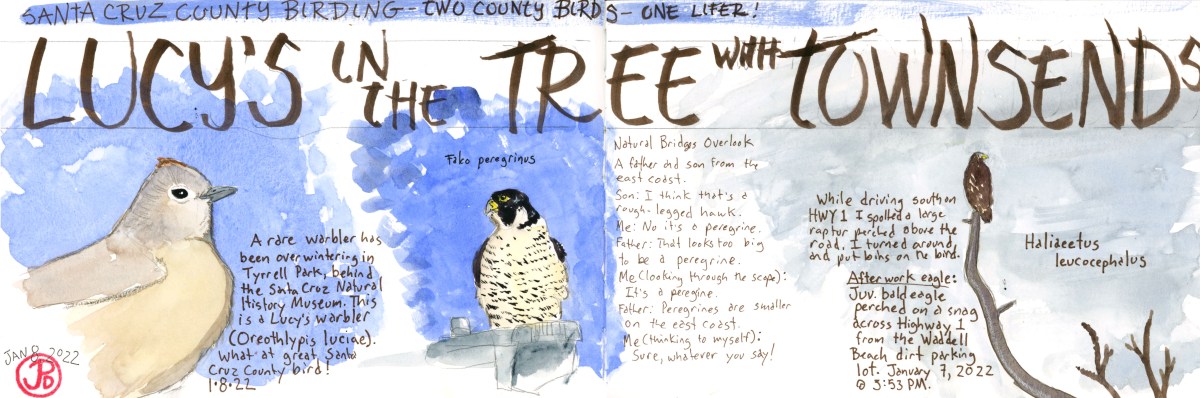
I passed Waddell Beach and turned around at the soonest point. I headed back and pulled into the dirt parking lot at Waddell State Beach. Once I got bins on the bird, I had no doubt that I was looking at an eagle. Not a golden but a juvenile bald eagle. Perhaps a second or third year bird. Welcome to Santa Cruz County! What a great afterwork bird!
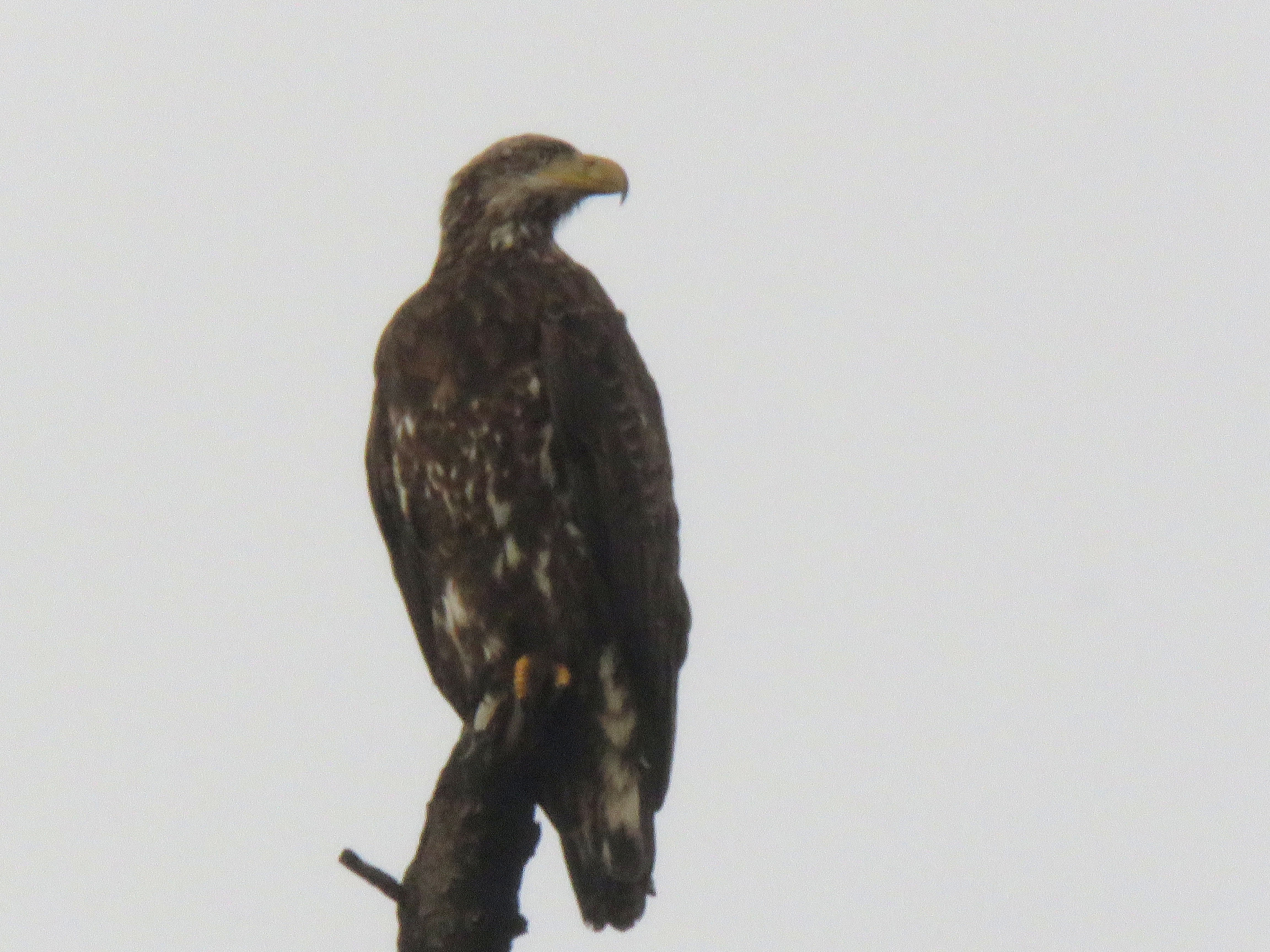
That large yellow bill screams: bald eagle!! This is a juvenile bird and the first I have seen at Waddell Beach.

The next morning, Saturday, I headed to Tryrrell Park, just behind the Santa Cruz Museum of Natural History to look for a wayward warbler that had recently been spending the winter among the oaks and willows. Within about ten minutes I had the small, grey warbler, foraging in the willows with a Townsend’s warbler. A Lucy’s warbler. What a rarity and what a great county bird!

I then headed across town to the Natural Brides Overlook just off Westcliff Drive, to looked for a reported ruddy turnstone. It was not there but a local fellow Santa Cruz Bird Club member was there looking for the same bird with a scope. Together we found some nice birds: whimbrel, black turnstone, black oystercatcher, back-bellied plover, Heerman’s gull, and a close female white-winged scoter on the water.

We met a man with a large lens from Sacramento, our state capital, and he was photographing some birds on the rock. He was excited at adding Brandt’s cormorant and Heerman’s gull to his life list (these birds are not seen in the Central Valley). A father and son from the east coast walked up, telling use there was a hawk perched on a light post on Westcliff. What follows is the conversation:

Son: I think it’s a rough-legged hawk.

Me: Now that would be a great bird to see here. (I put the raptor in my bins) Peregrine.

Father: It’s too big to be a peregrine.

In the meantime my club member compatriot has put his scope on the bird in question. And he asks me to take a look. I looked.

Me: Peregrine.

Dad: They are smaller on the east coast.

Size is not a great measure for field identification because birds can often seem larger when they fluff up their feathers and in raptors occurs reverse sexual dimorphism, which simply means that females are larger than males.
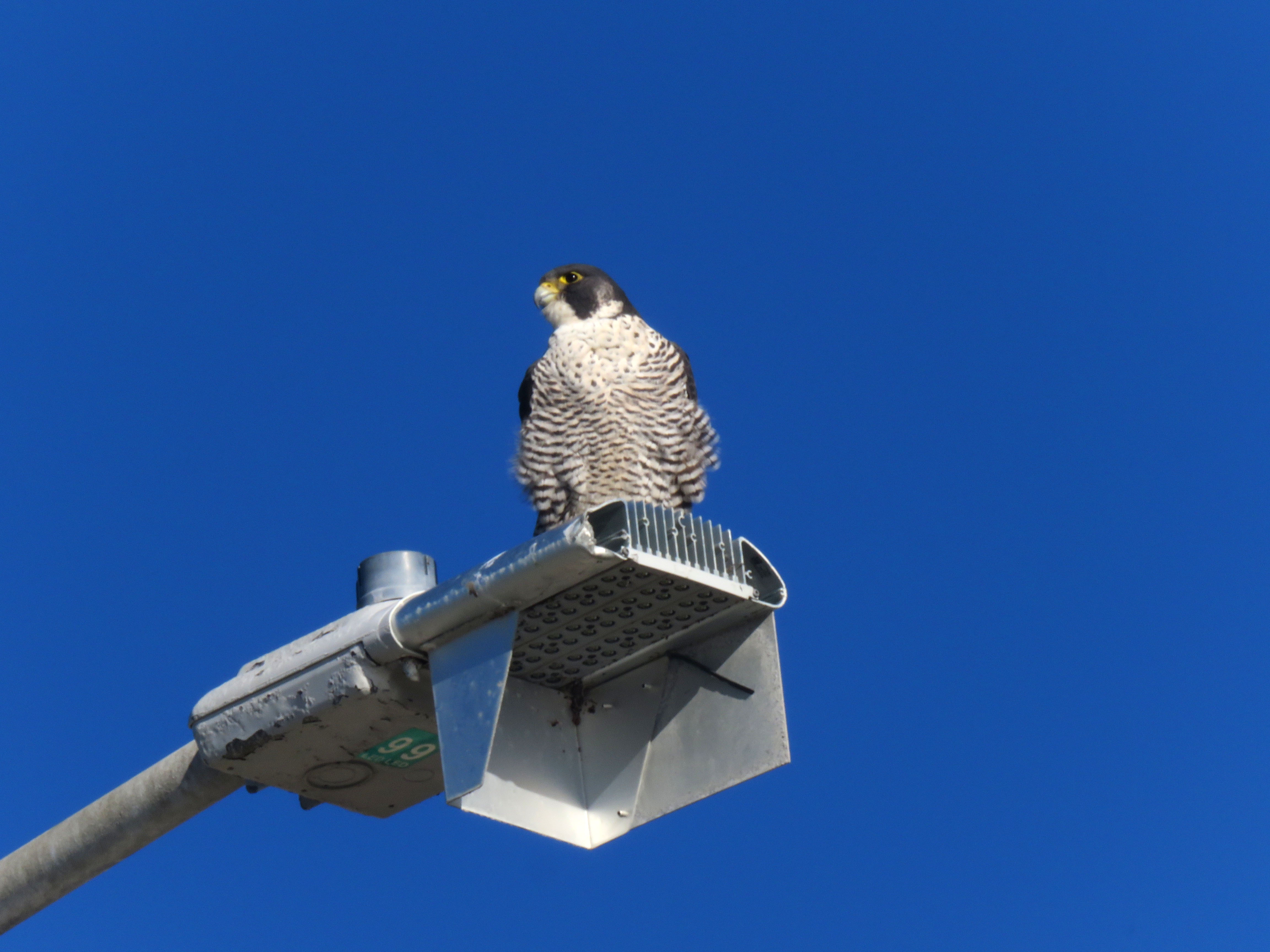
A rough-legged hawk, no err, a peregrine, no, too big to be a peregrine. . . okay a peregrine! A nickname for this bird on Hawk Hill is “Elvis” because of it’s dark head and “sideburns”.

I got some beta from the club member about a bird in the county that I needed to add to my lifelist. I had lackadaisically searched for the Santa Cruz County resident with no luck. Why? First I was searching in the wrong place and secondly, the bird was an exotic species which had been introduced to California.

Exotic species are an odd one when it comes to listing. They could be escapees and normally you cannot count them but if they have a established and sustained breeding population, such as the European starling or the Himalayan snowcock, then they can be counted. With the ABA’s approval of course.

So I headed down Highway One towards Watsonville. My destination: Pinto Lake City Park. The bird in question, according to my beta, was to be found in the reeds near the picnic area, just to the right of the dock.
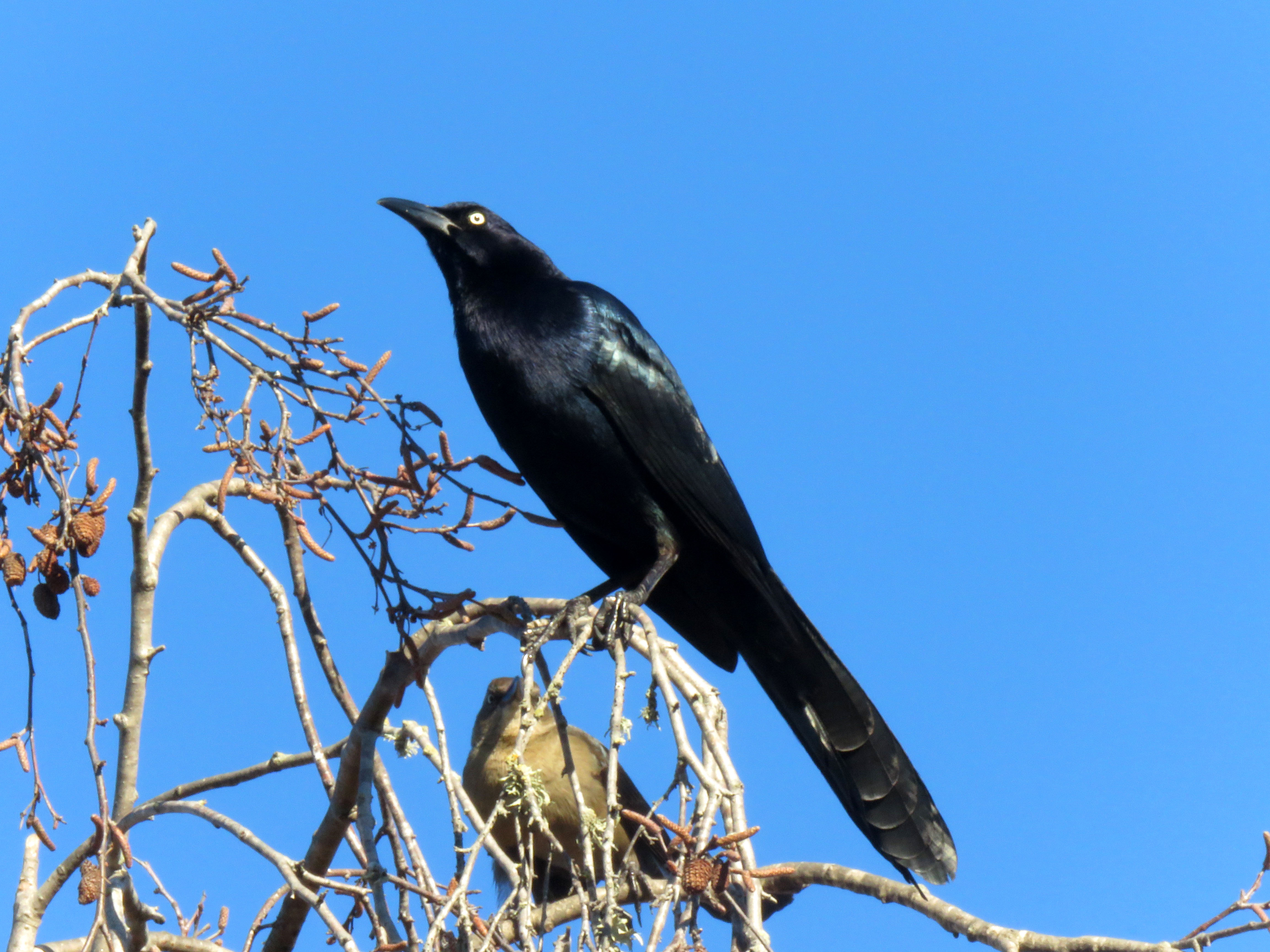
At the moment the dock was inundated with the Devil’s Bird: great-tailed grackle. There must have been about 30. I searched the reeds and got a brief view of my quarry before a flock flew to the other side of the dock.
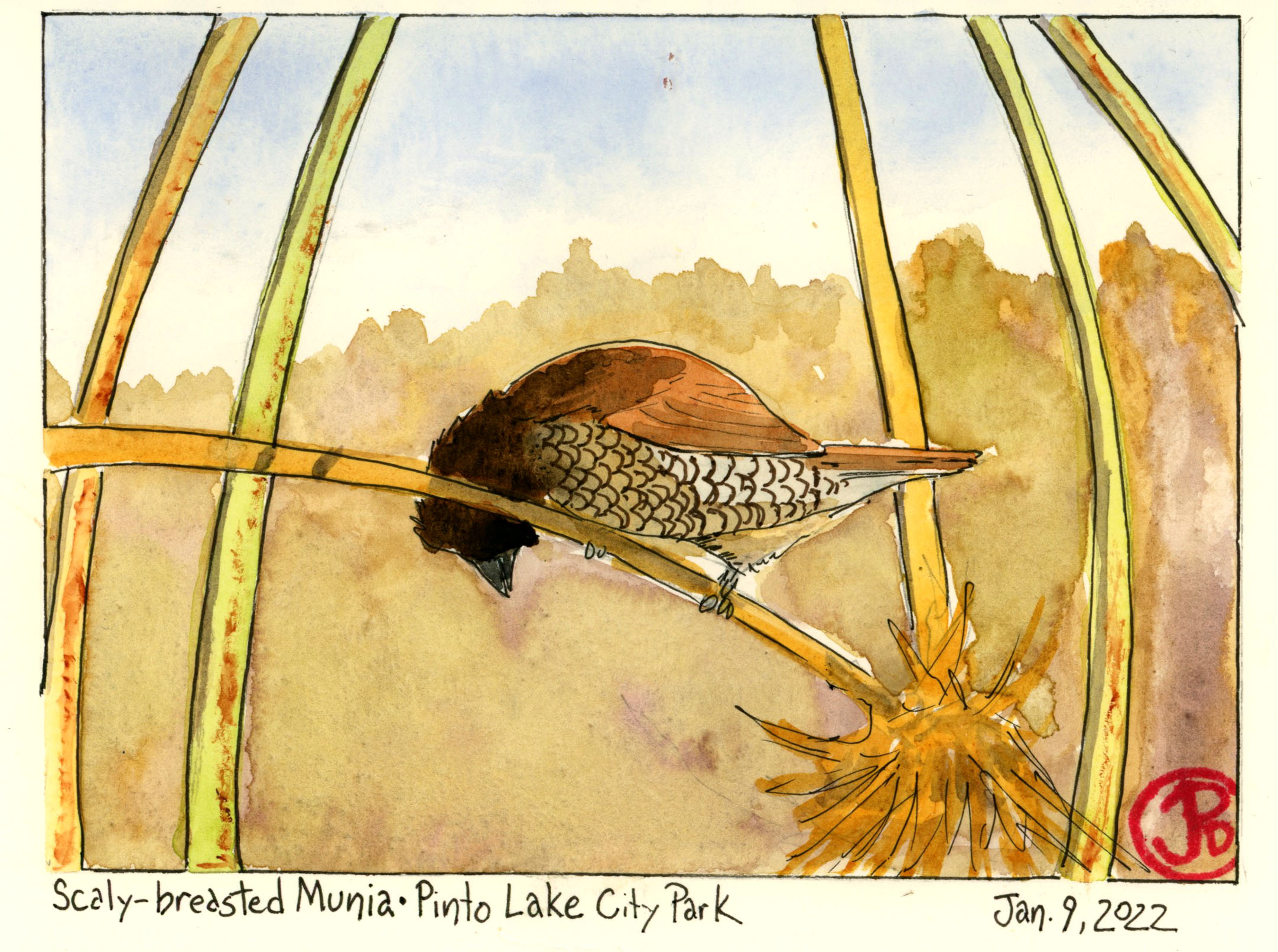
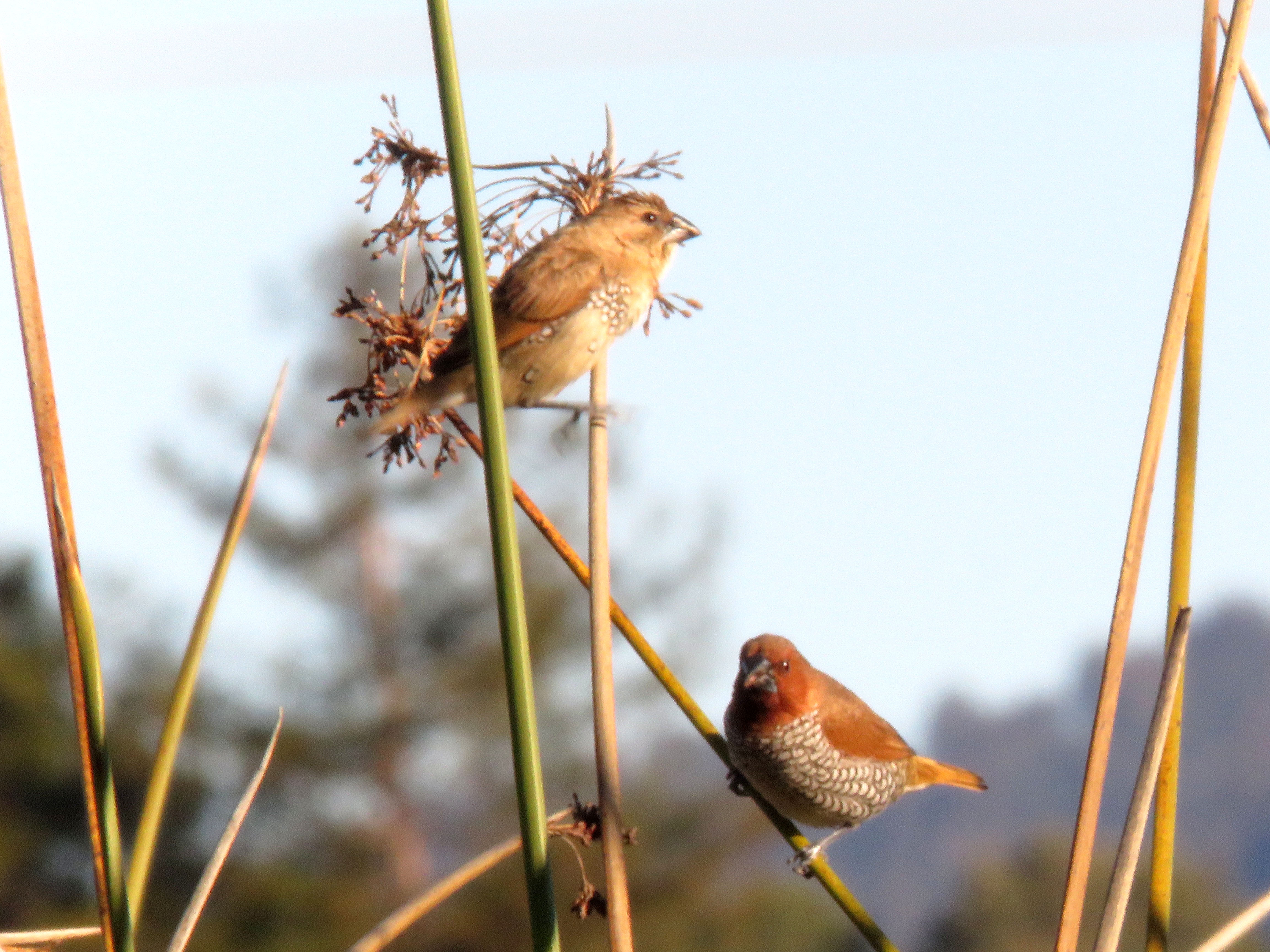
I walked over and followed the sounds of the flock moving through the reeds. I final got great views of lifebird # 1,666 (a global pandemic really spoils a world life list). Here was a flock of 12 scale-breasted munias. This small sparrow-like birds are native to Asia and India. How they got here, no one really knows.
Image

The Prairie and the Neotropic

I have often said that birding is a type of madness. Even more so if it’s a county bird you’re after because this is a species that I have seen many times before but not in Santa Cruz County!

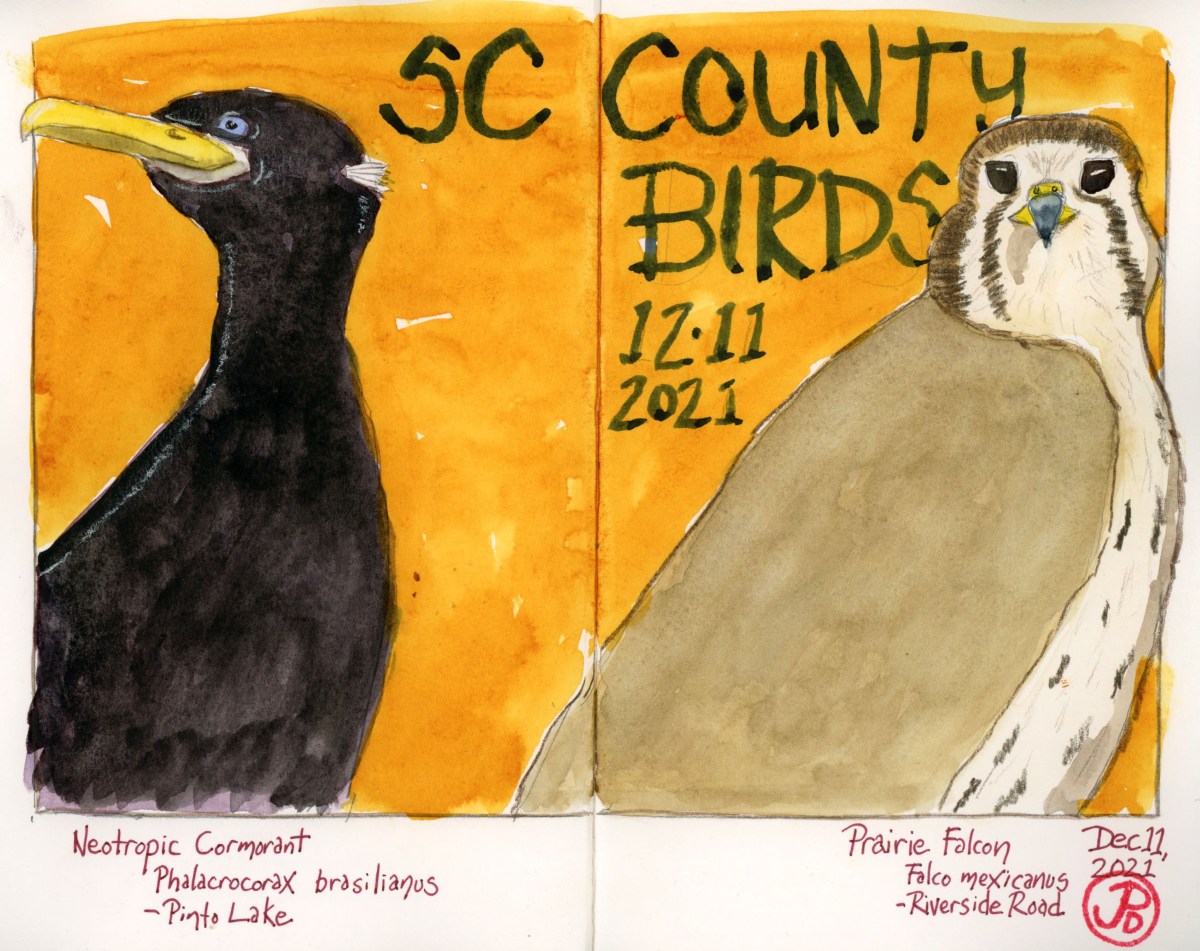
I had missed out on the wintering prairie falcon on the southern edge of Santa Cruz County near Riverside Road. I returned, for the third time, to see a sandy falcon with dark wingpits. I pulled off Riverside Road to scan the pastures, like I’d done three times before. The morning was sunny and clear with blue skies. It was very chilly with the temps hovering in the mid 30s. My hands where numb and for the life of me I couldn’t find my second glove. But what warmed me, was the large hawk circling above the pasture in beautiful morning light. It was the overwintering ferruginous hawk.

But there was no prairie falcon in the air or on any fenceposts so I moved east down the road towards the county line.

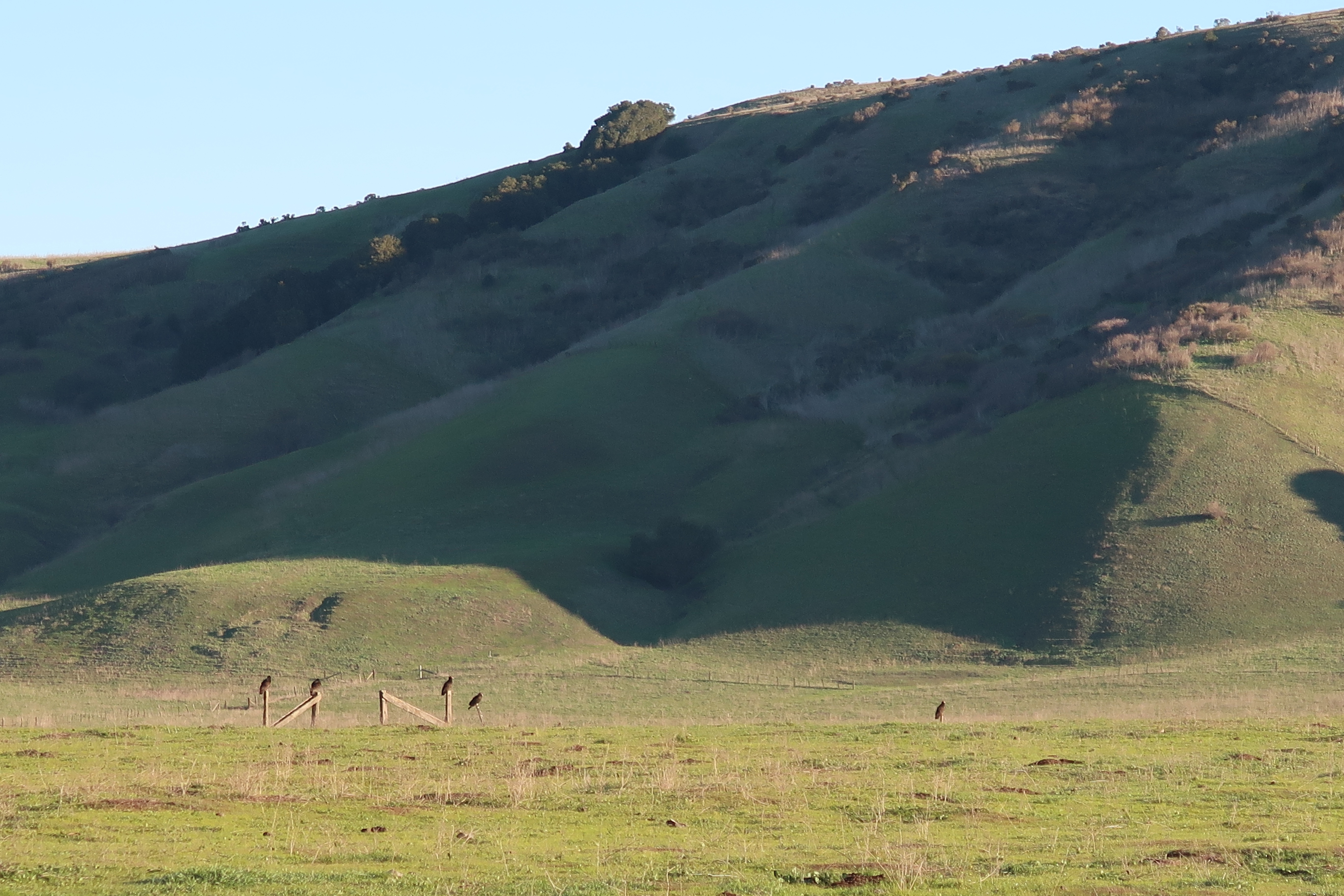
In the field, on almost every fence post, where turkey vultures, warming themselves in the morning sun. A lone red-tailed hawk was on a post. Further north, near the base of the hills, was a growing kettle of turkey vultures, rising in the air.

With the naked eye, I could see a bird circling with the vultures. It was much, much lighter compared to the vulture’s black livery. I raised my binoculars and here was my county bird: prairie falcon (Falco mexicanus)! The falcon stooped on a vulture below it, practice hunting I suppose. The falcon continued to circle with the vultures and then peeling off in powered flight as it headed towards the hills to the northwest.

Fence sitting turkey vultures in beautiful morning light.

With the prairie falcon in the bag it was now time to look for the extremely rare visitor that was first seen at Pinto Lake two days before. It was spotted again yesterday after some local birders rented a boat to head out into the lake (hopefully I wouldn’t have to rent a boat to add this bird to my county list). There was a report that the bird had been seen in the middle finger of Pinto Lake in the mid morning. At Pinto Lake, there where a hundred double-crested cormorants at any given time. This could be an exhausting search.

I arrived at the middle finger of Pinto Lake at about noon. I spotted one double-crested cormorant and not the southern visitor so I walked out to the point to scan the main body of the lake. There were a lot of gulls on the water but very few cormorants.

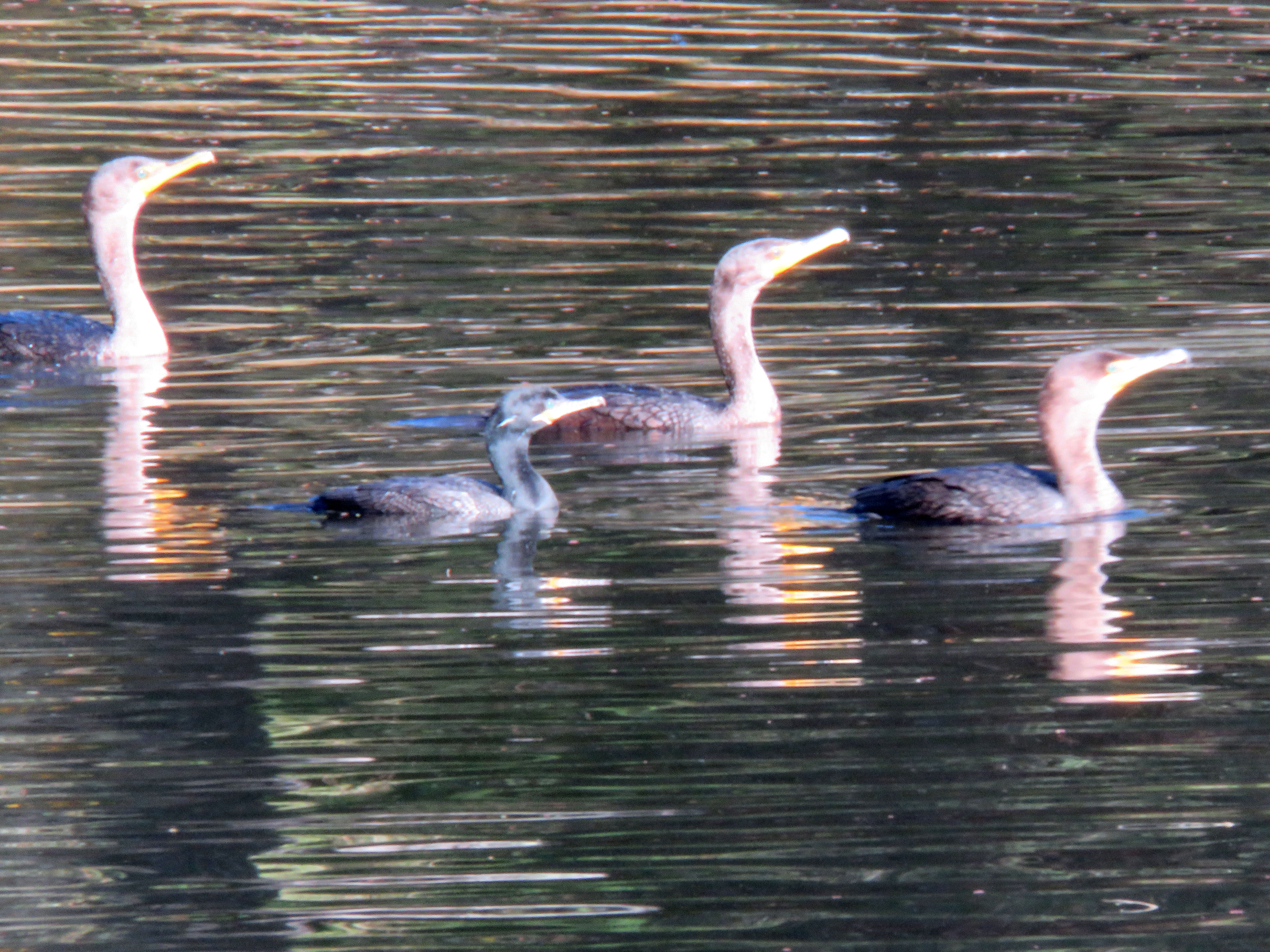
I headed back along the western edge of the finger. There were a few ducks, three hooded mergansers, and more coots but no cormorants. Just when I was about to end my search and head back to my car, three cormorants flew past me heading north up the finger. One of the cormorants stood out. It was much smaller and darker than the the double-crested cormorants it flew besides. The birds moved out of view but I had no doubt that they landed on the water.

I ran down the trail to an opening in the vegetation (birding is a kind of madness after all). There were the three cormorants on the water. One was much smaller and I noticed other details such as the white “V” that framed the base of the beak and the white “sideburns” of it’s breeding plumes. This was the neotropic cormorant (Phalacrocorax brasilianus)! A very rare county bird! In fact this was the first time that a neotropic cormorant had been seen in Santa Cruz County!

The cormorants stayed in view for about five minutes before taking to the air and flying back toward the open lake. I had been lucky with my brief encounter with a Santa Cruz County rarity.

One of these cormorants is not like the others.