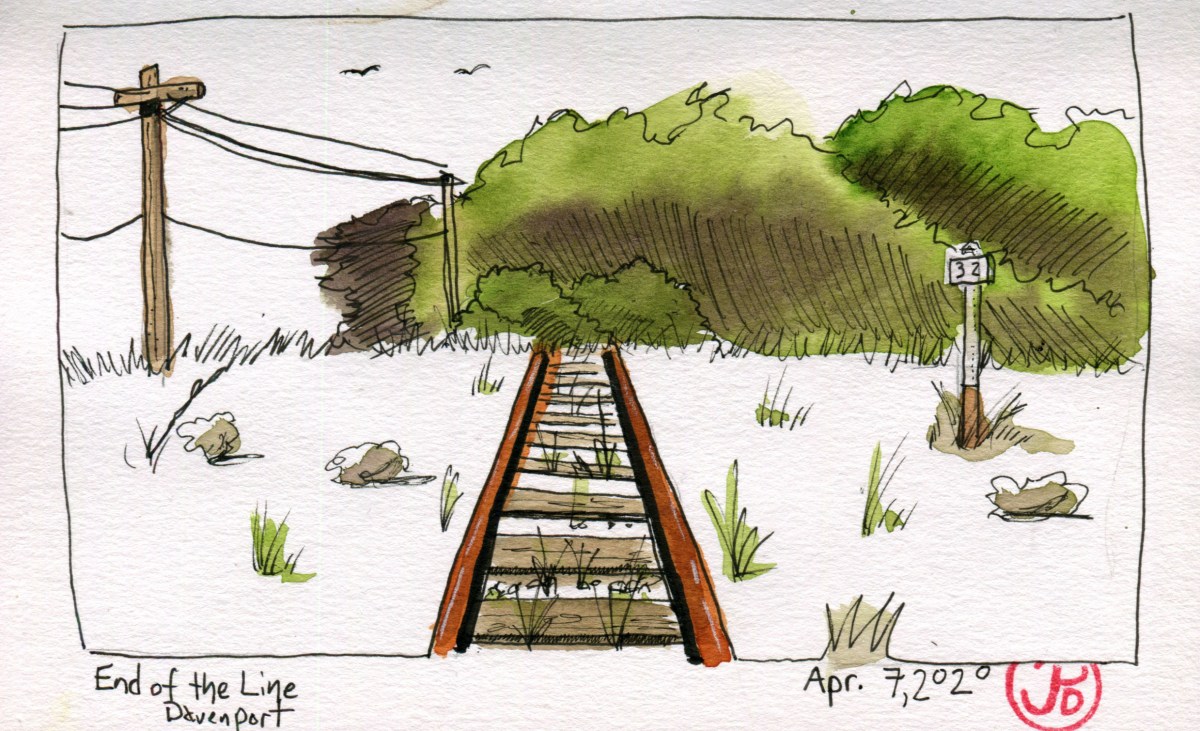
In these times of social isolation, I headed north out of Santa Cruz on Highway One. My destination was the small town of Davenport.
A branch line runs from the coast mainline at Watsonville Junction to Santa Cruz, north along the coast to the Davenport Cement Plant. The plant was built in 1907 by the Santa Cruz Portland Cement Company. This cement plant became one of the largest producers of cement. At the height of it’s production, during World War II, the plant shipped out 700,000 barrel of cement a year. Cement from this plant helped rebuild San Francisco after the 1906 earthquake and fire and also supplied cement for such major construction projects as Pearl Harbor and the Panama Canal.
The cement plant was later acquired in 2005 by Mexico’s CEMEX. The plant was closed for good, in 2010 and now the rails stand rusted, overgrown and the end of the line disappears into vegetation.
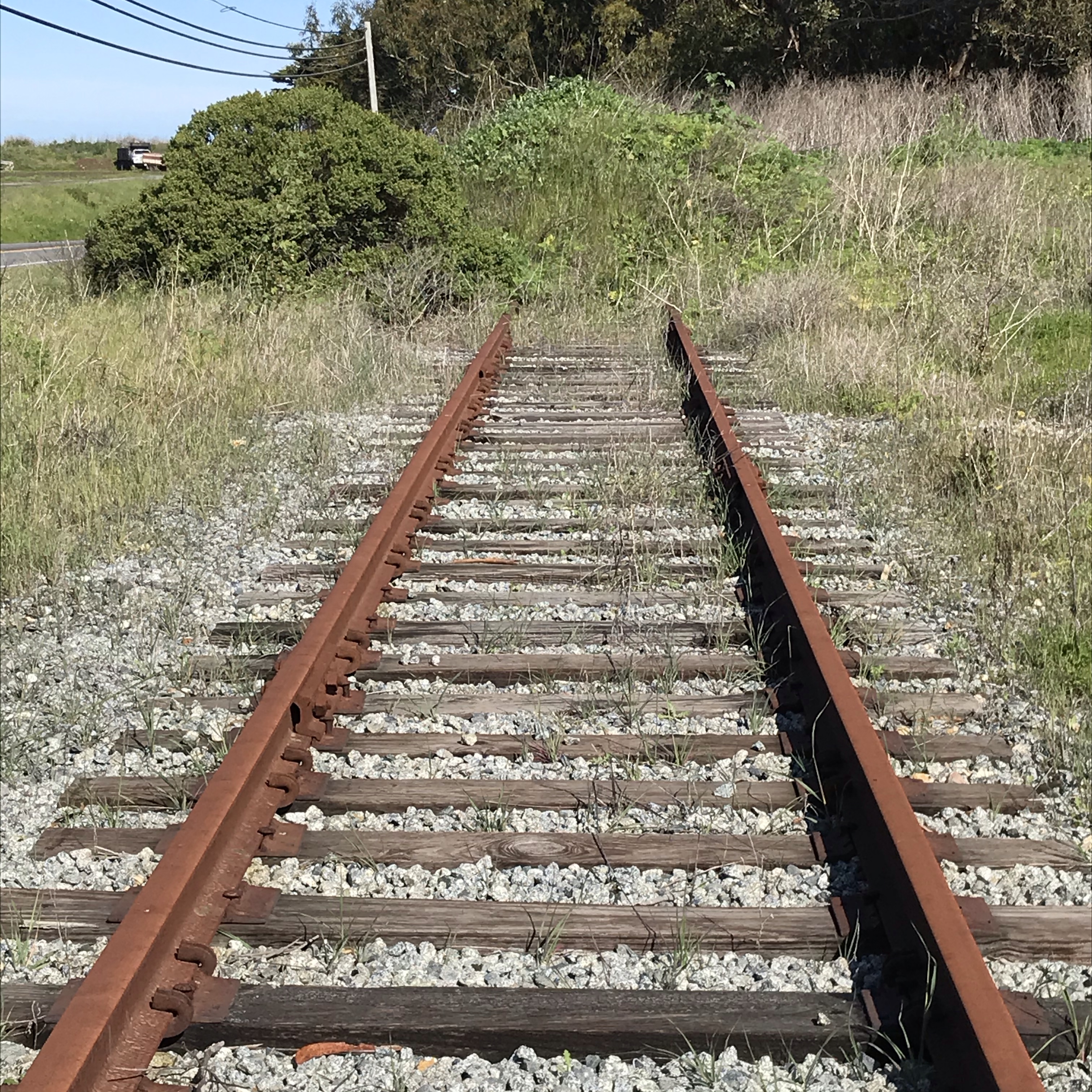
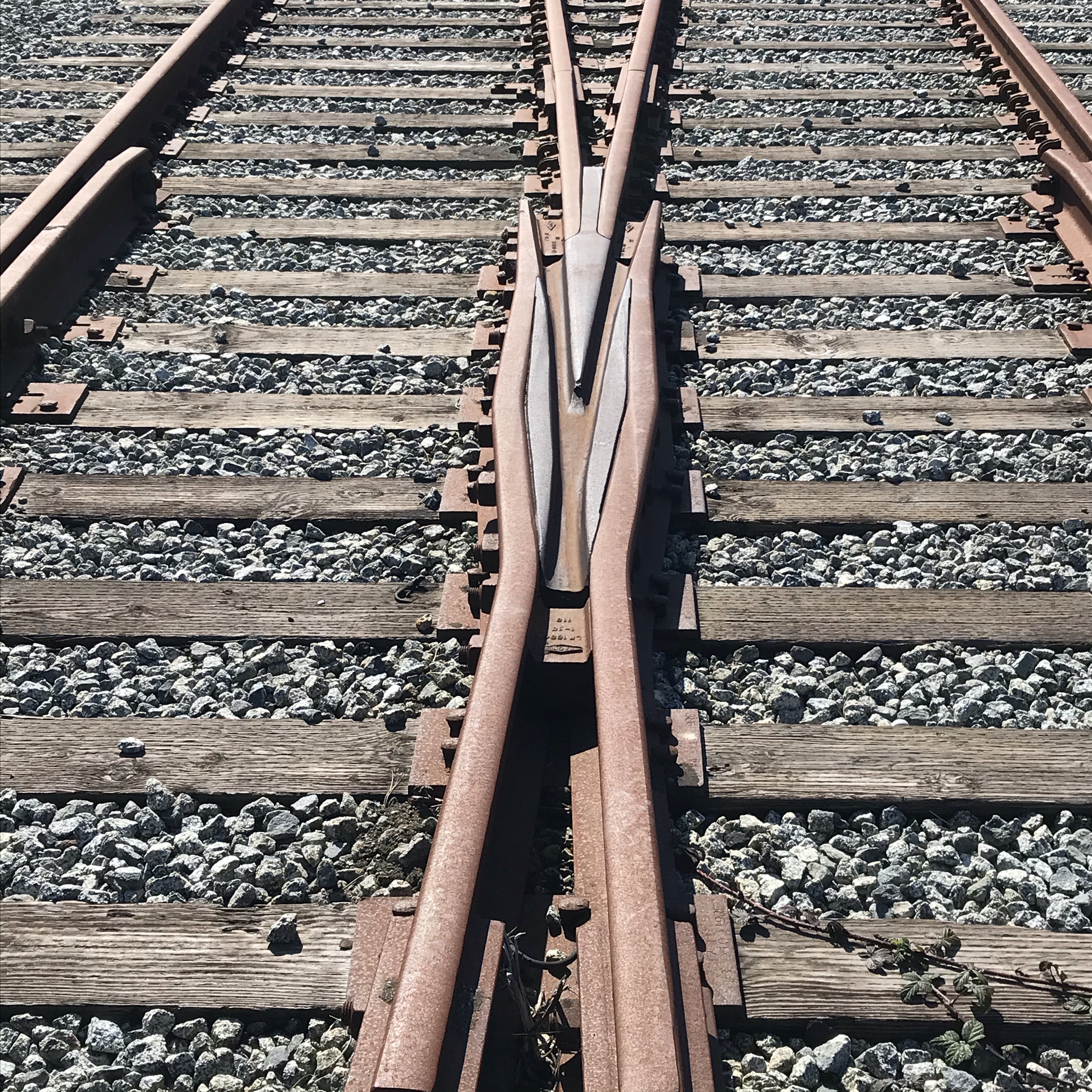
The Davenport railroad to nowhere sums up the plight of America’s railroads. At it’s height, in 1916, the United States Railroad network consisted of 254,000 miles of track, the largest rail network in the world. From 1916 to the present day, 160,000 miles of track have been closed down and abandoned. The current rail network stands at about 94,000 miles of trackage.
Railroad companies saw passenger service as a losing hand, as trains were competing with the automobile and the increasing use of passenger air travel. The railroads were in dire straights in the 1960’s and passenger service was saved by the creation of AMTRAK in 1971 (the year of my birth). This service is a government subsidized and controlled service which now serves an average of 30 million passengers annually.
Railroads companies still exist to this day but they earn their profits from freight and not passenger service. They keep America moving and most Americans are unaware both of their legacy in creating the United States and there present impact in moving goods around the county. As Christian Wolmar notes in his excellent book, The Great Railroad Revolution, “America needs to relearn the joys of railroads that have served them so well in the past and, indeed, continue to do so today, albeit invisibly.”
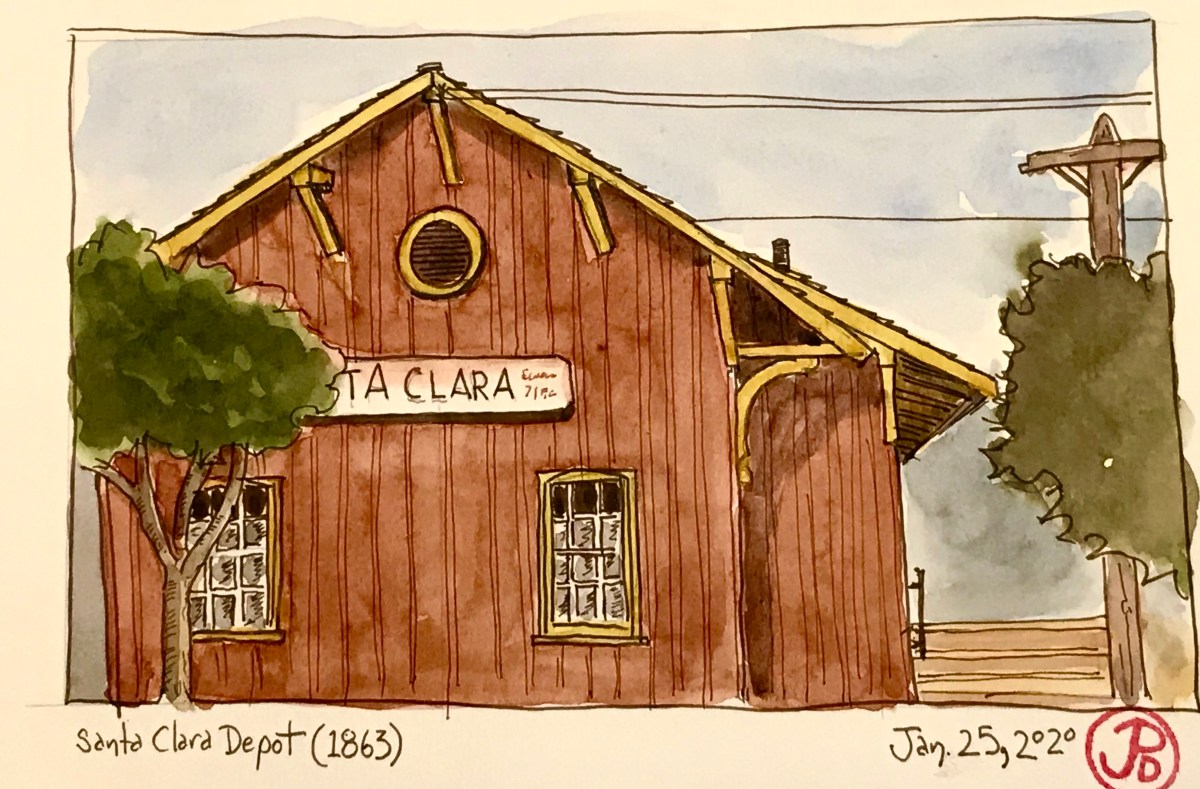
 The passenger depot in January of 2020, looks in great shape compared to other historic depots I have sketched on the line. This is due to the hard work of the volunteer labor of the South Bay Historical Railroad Society.
  One of the few places you can still see Southern Pacific in action, although in HO scale, is at the South Bay Historical Railroad Society. I had a model railroad when I was a kid. My HO gauge railway ran in an oval with a small town in the center. I had a Santa Fe “Super Chief” locomotive but my favorite was a Daylight GS-4 number 4449. The full scale locomotive pulled its passenger consist past Santa Clara Station but did not stop. Passengers wishing to board the Daylight had to go to San Jose.
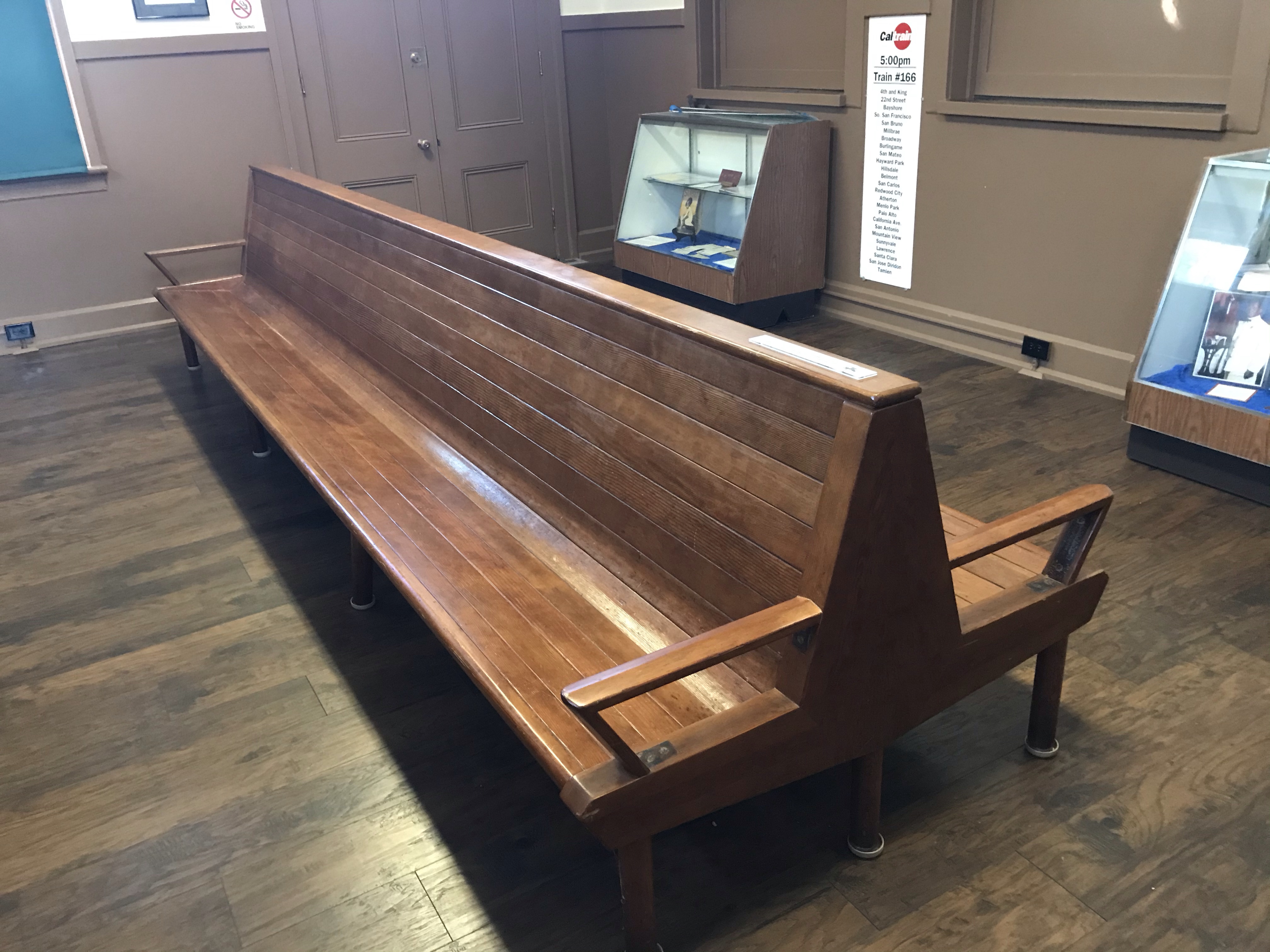 This an original bench in the passenger waiting room of Santa Clara Station.
 This control tower was built in 1926 and was in continuous use until July 17, 1993. The tower was built at the junction of Southern Pacific’s Coast and Western Divisions.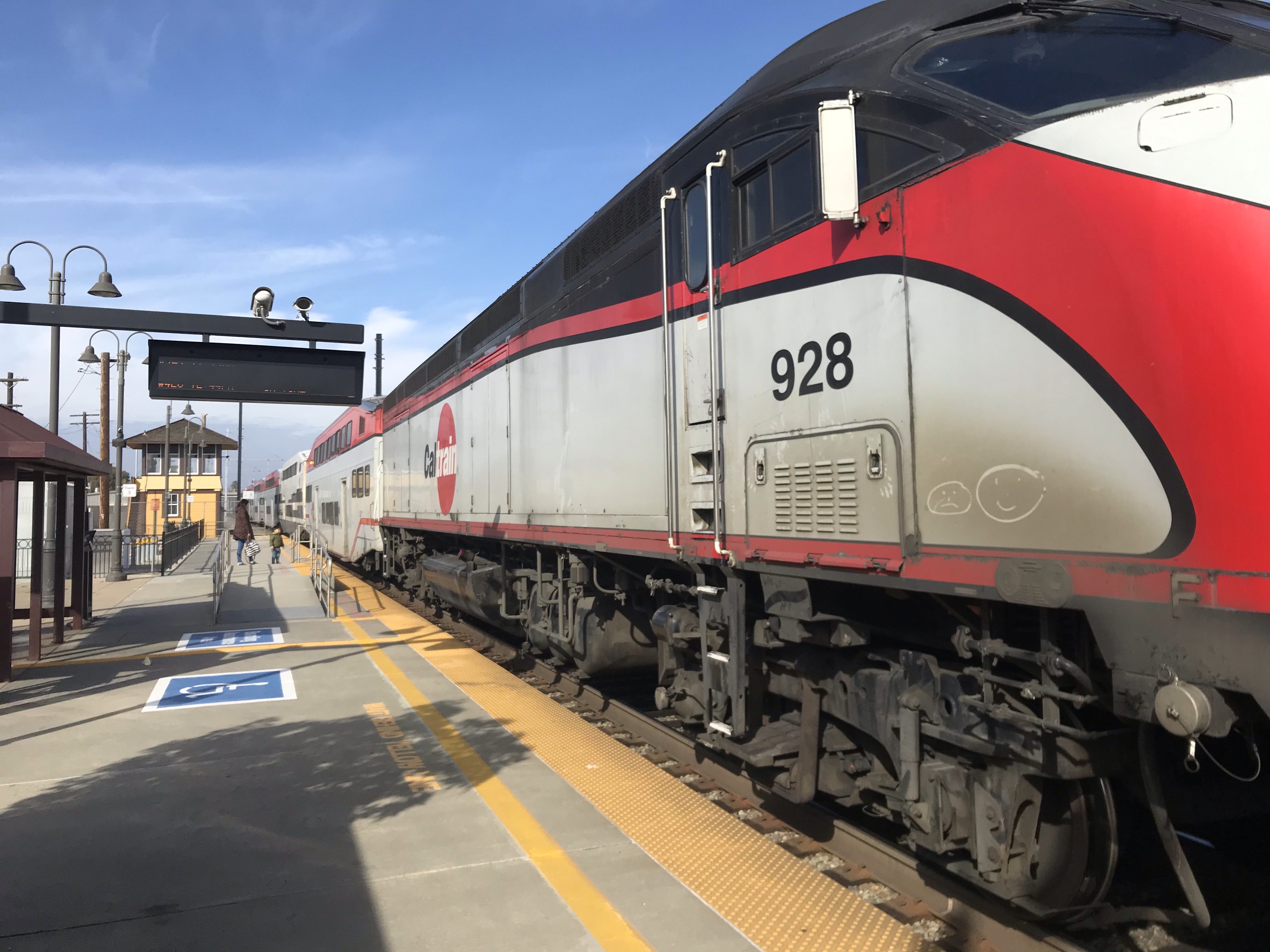

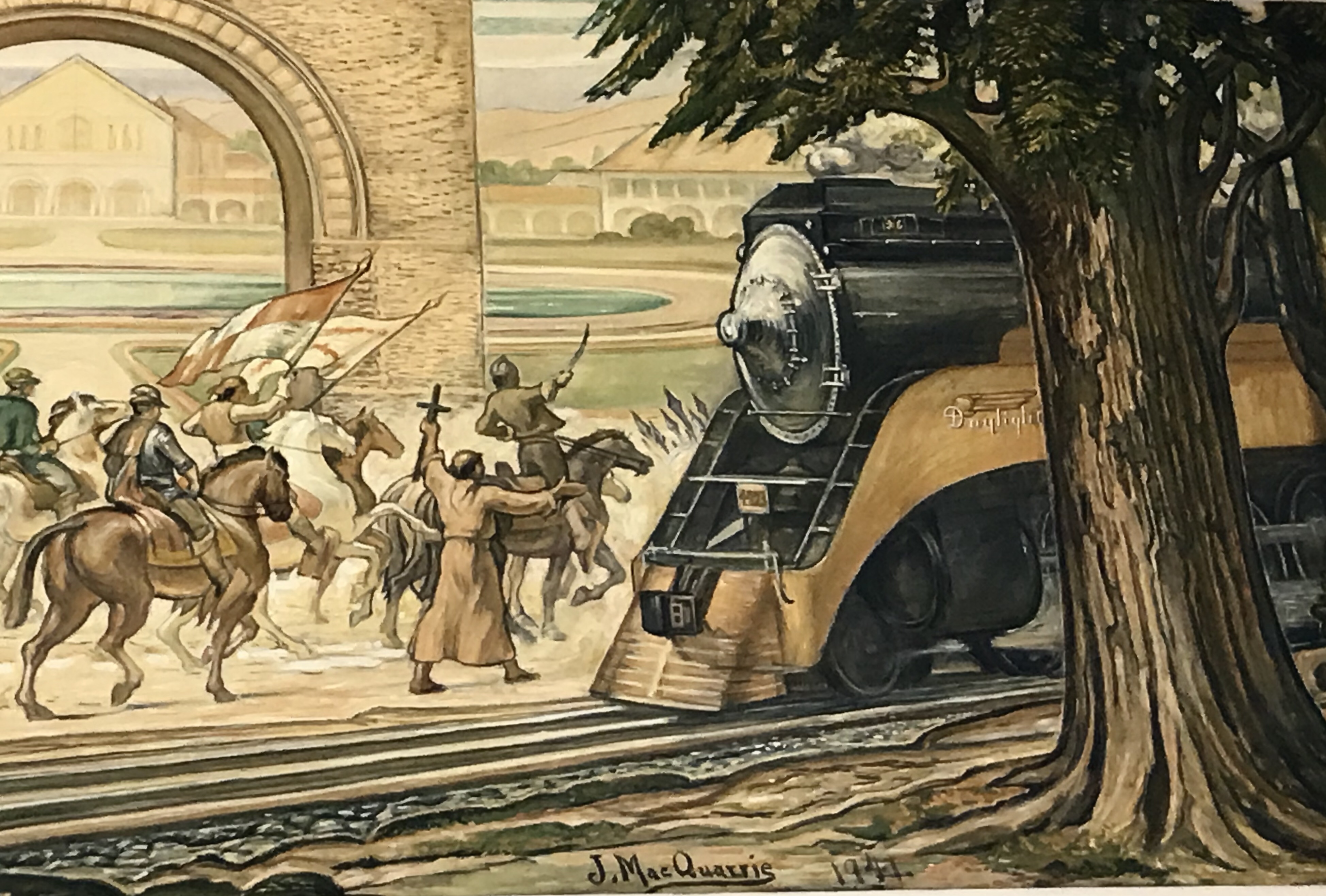 The mural stretches above the wall where the ticket counter is. It depicts the past and future of transportation. A stream of men on horses, Indians with travois, wagons, stage coach, and men and women walking on foot, head to the right with the quad of Stanford University in the background. In the lower left corner the profile of Leland Stanford looks on towards the future of transportation (circa 1940). The future seems to come out from behind the trees as a Daylight GS-3 locomotive proclaims it’s entrance into the mural. This certainly a synthesis between a beautiful and functional form of transportation and a building that does the same.
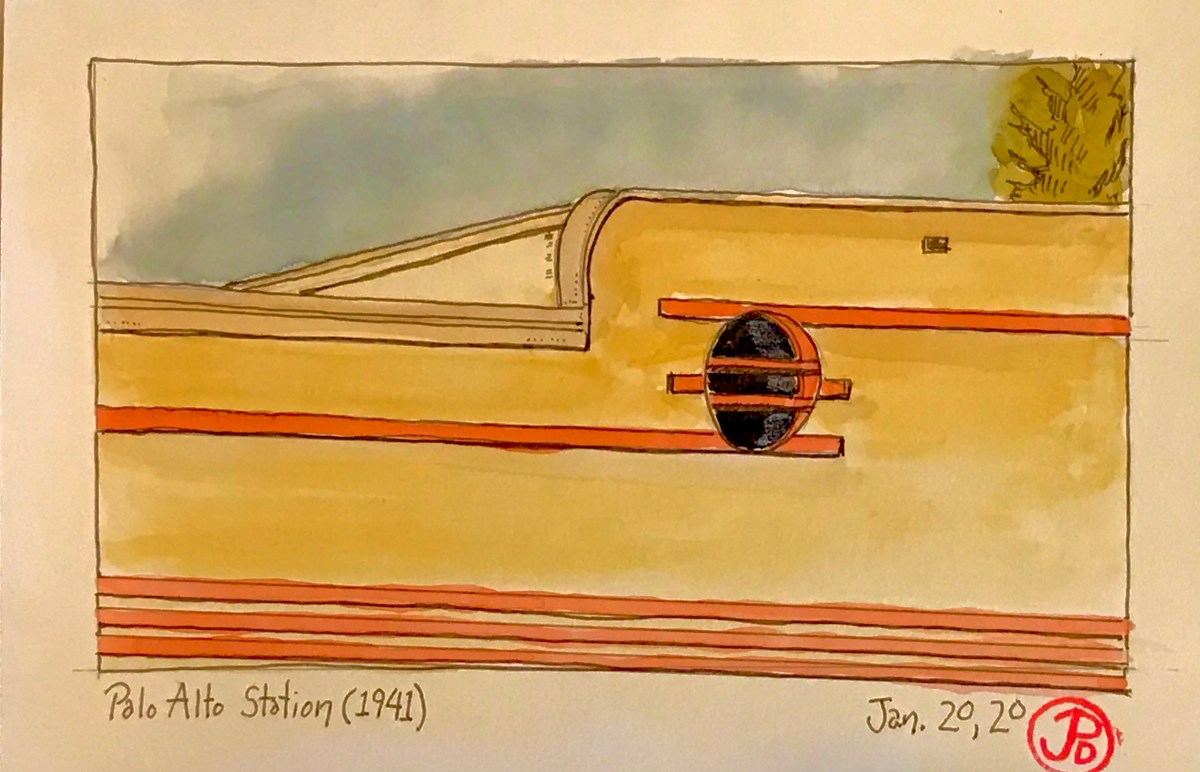
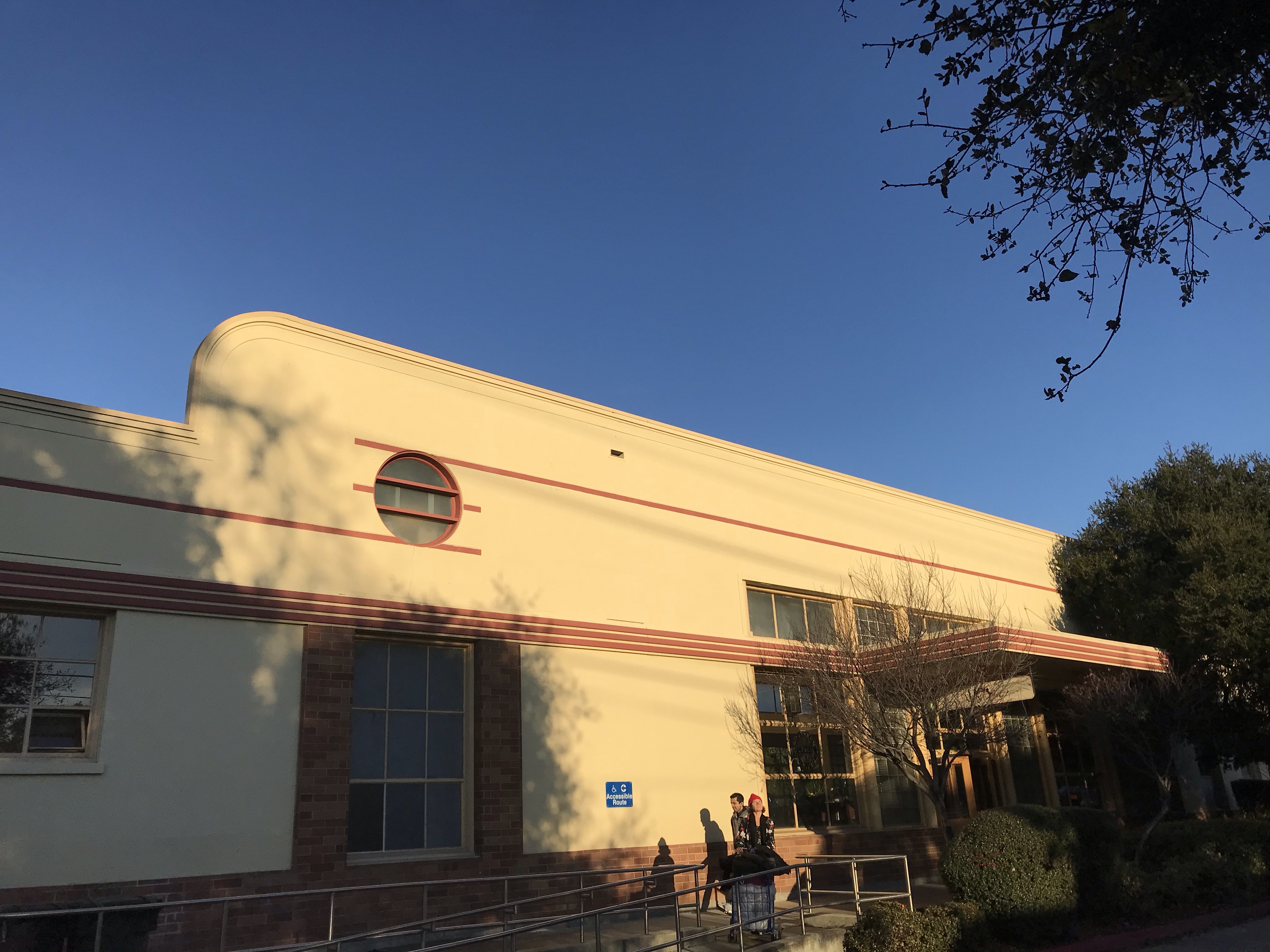
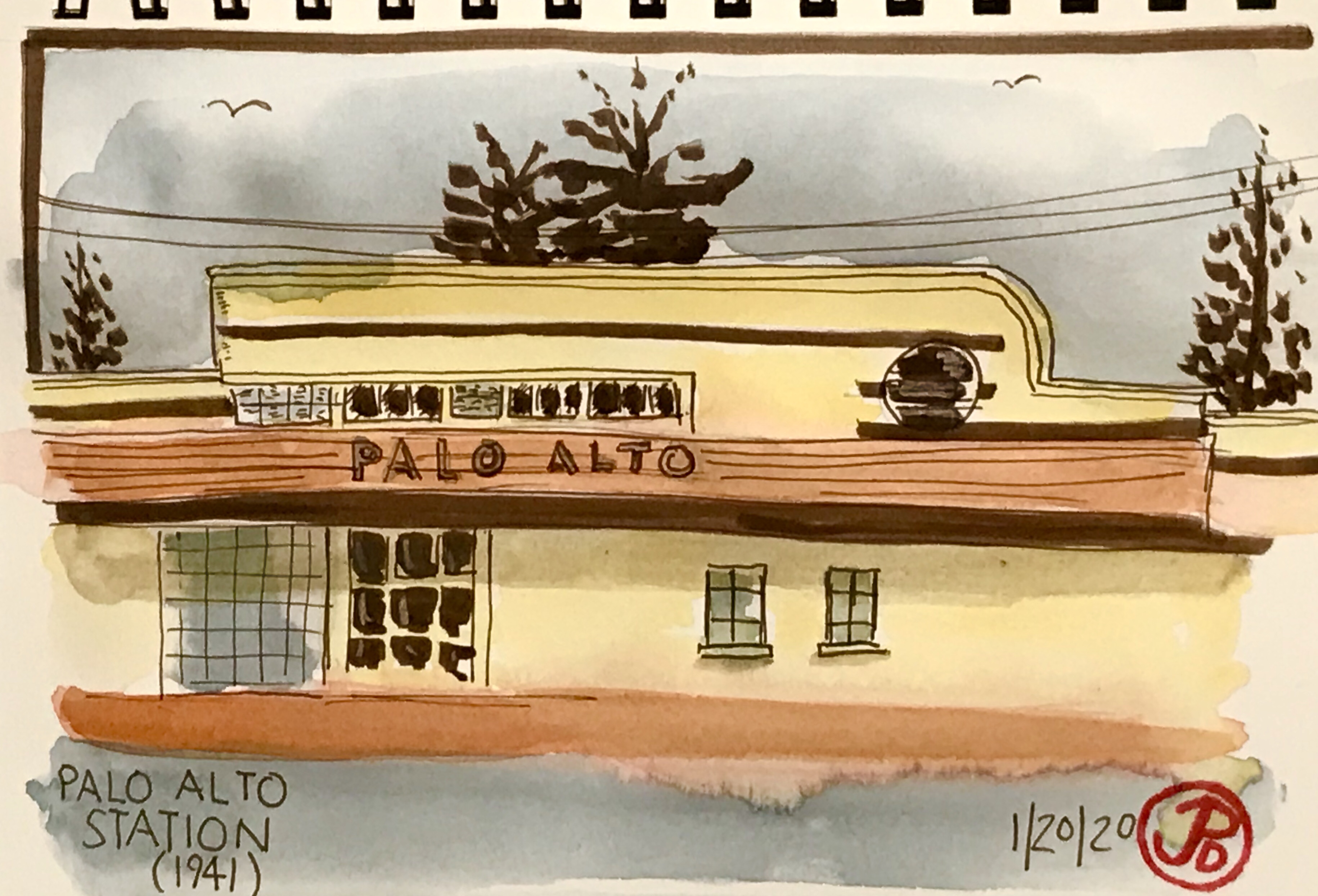 Here is my quick sketch of Caltrain’s most “modern” historic station. I left details out, like the door into the station. I was really trying to get the shapes of the building.
 Corvid Sketcher