Image

Wild Godwit Chase

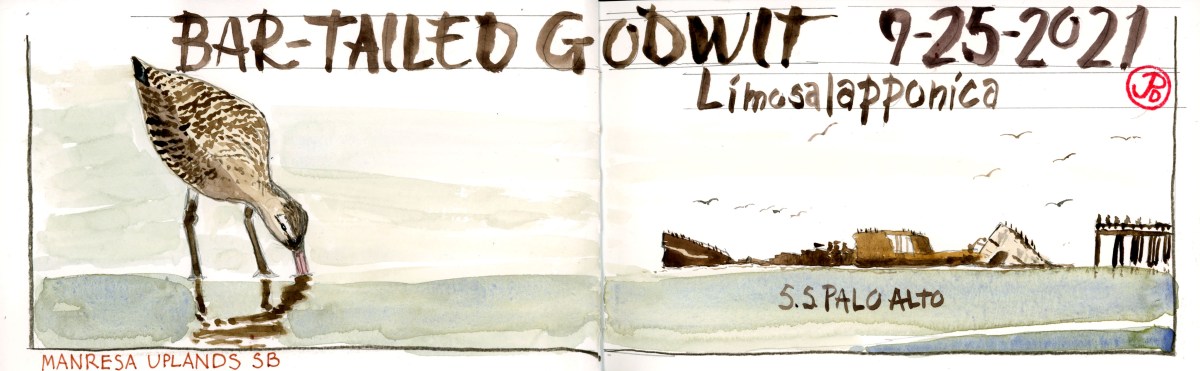
A rare godwit from Siberia has been hanging around with a group of marbled godwits on the Monterey Bay Coast in Santa Cruz County. And I was going to try and find it!

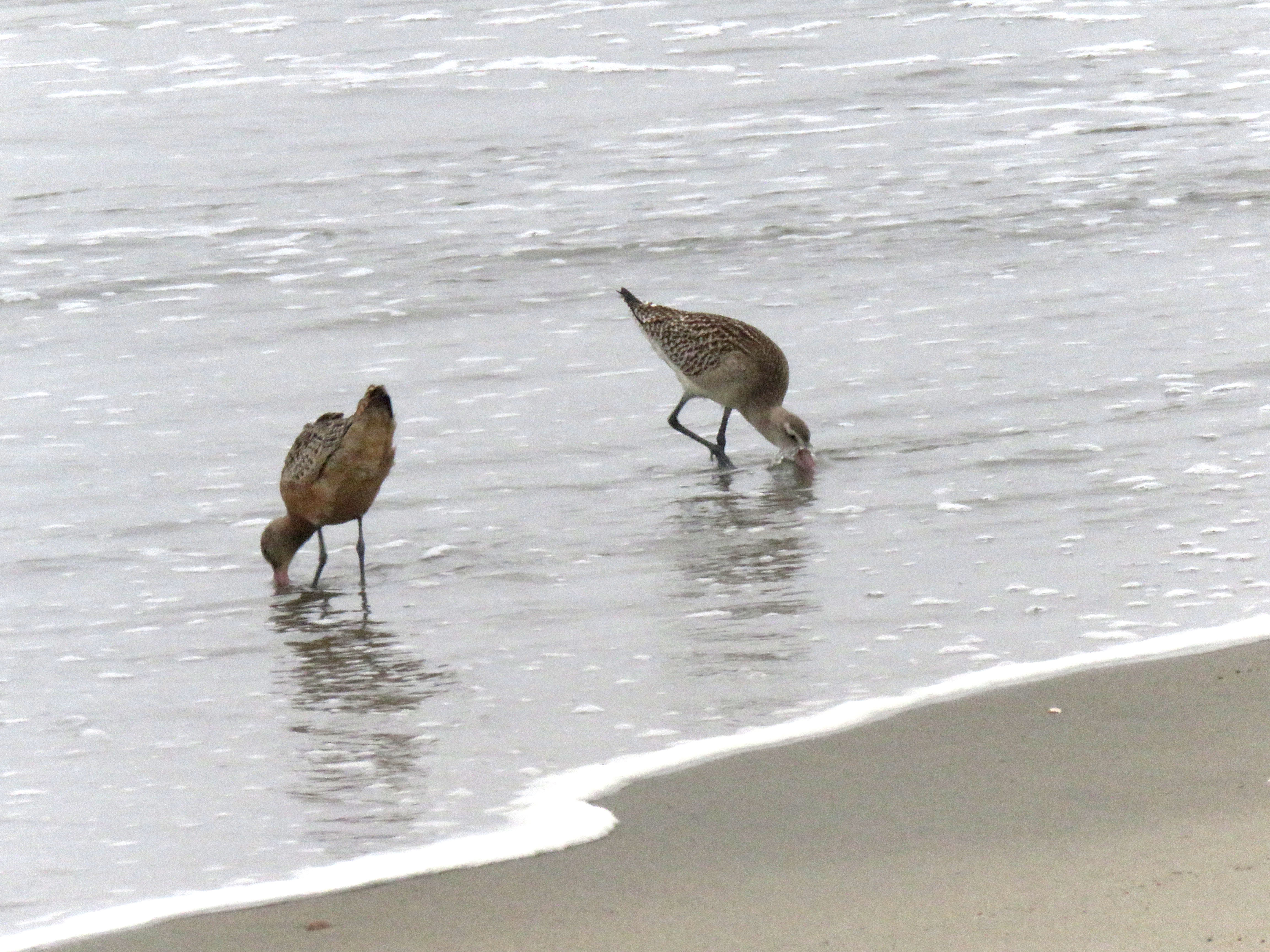
The bar-tailed godwit (Limosa lapponica) could easily be passed over when scanning a flock of foraging godwits. The differences can be subtle, especially if you don’t know what your looking for. The bar-tailed is slightly smaller legged and slightly smaller than the marbled (the difference in size is slight, marbled: 370 grams and the bar-tailed: 340 grams). The bar-tailed has a defined light supercillium (eyebrow) and it’s back is more darkly streaked than the commonly coastal marbled godwit.

This was either going to be a very easy find or a taxing struggle because the godwit flock could be anywhere on the long stretch of beach from Seacliff State Beach in Aptos to Sunset State Beach farther south in Watsonville. I anticipated a lot of leg work over sandy beaches to find the flock.

I first headed to the most northerly location where the flock had been seen: Seacliff State Beach. It is here that the hulk of the SS Palo Alto is rolled over on it’s port side like a huge, beached whale. I scanned the beach from the bluff. No godwit flocks. So I headed down the wooden stairs, used by locals as their personal gym, to the beach below. I headed south and there was a gull flock at the creek sans godwits. I returned to Highway 1 and drove three miles south. It looks like this godwit search was to become my own personal workout.

One of the best things about local birding is that it exposes you to new places, even in your own backyard. Such was the case as I exited Highway 1 at San Andreas Road and passed through La Salva Beach and headed further south. I turned right, heading towards the Pacific. My destination was the trail to Zills Beach. I reckoned that I was somewhere near or in Watsonville.

The trail to the beach that borders an agricultural field.

I headed down the trail, shouldering my scope and tripod. I reached the beach in about five minutes and looking to the south and the north, I did not see any shorebird flocks. Unfazed I decided to try my luck to the north, heading towards Manresa Beach. I set up my scope, to save some legwork, and scanned the water’s edge. I spotted some small peeps, in this case sandering. Beyond the sandering were some larger shorebirds which I hoped were godwits and if they were a flock of godwits, I hoped one of them had a white eyebrow and a darkly streaked back! I shouldered my scope and headed north down the beach to find out.

As I got closer I scoped the flock and indeed, confirmed that it was a flock of marbled godwits but I was too far away to identify a godwit that looked a bit different. As I came closer to the flock I came upon a family of five that was slowly heading up the beach. Lucky a pod of dolphins, frolicking in the inshore waters, was distracting them and they stopped to watch. They were heading towards the godwits too and I was hoping that they wouldn’t flush the flock before I had a chance to identify the bar-tailed. These shorebirds have wings and are at a distinct advantage, should the flock hightail it down the coast to Sunset Beach! That would be a lot of trudging in the sand. A good coastal workout I suppose.

With the family of five preoccupied with dolphins, I headed away from the waterline, in a flanking maneuver to take me closer to the flock without flushing them. I set up the scope and scanned the godwits, left to right, looking for the one that didn’t quite belong. After a short search, I spotted a godwit with a light supercillium and a darker streaked back, compared with the nearby marbled godwits. Bingo! Bar-tailed godwit!

The bar-tailed godwit on the right and a marbled godwit on the left.

I spend about 15 minutes with the bar-tailed, getting scope views and taking photos before a a woman with golden retriever, who was heading south down the waterline, flushed the godwit flock. I traced the flock’s flight down the shoreline toward Sunset Beach. It was inevitable that a dog walker would walk along and send the flock to another part of the beach. At least the golden was on a leash. And I had some good looks at the bar-tailed godwit before it lifting into the air.

Here was an interesting find on the strandline, a former mola mola or ocean sunfish.

As I headed back south along the beach, I felt good about my Godwit Chase, not yet knowing that two more county birds would be added to my list on the following day. But this is a story for another spread and another post. Stay tuned!

Image

A Plover From Another Continental Coast

When I read the report of an extremely rare plover on a Santa Cruz County beach, I knew that I had to head down with GrassHopper Sparrow, to add this find to my county list! (This was a mega lifer for Grasshopper.)

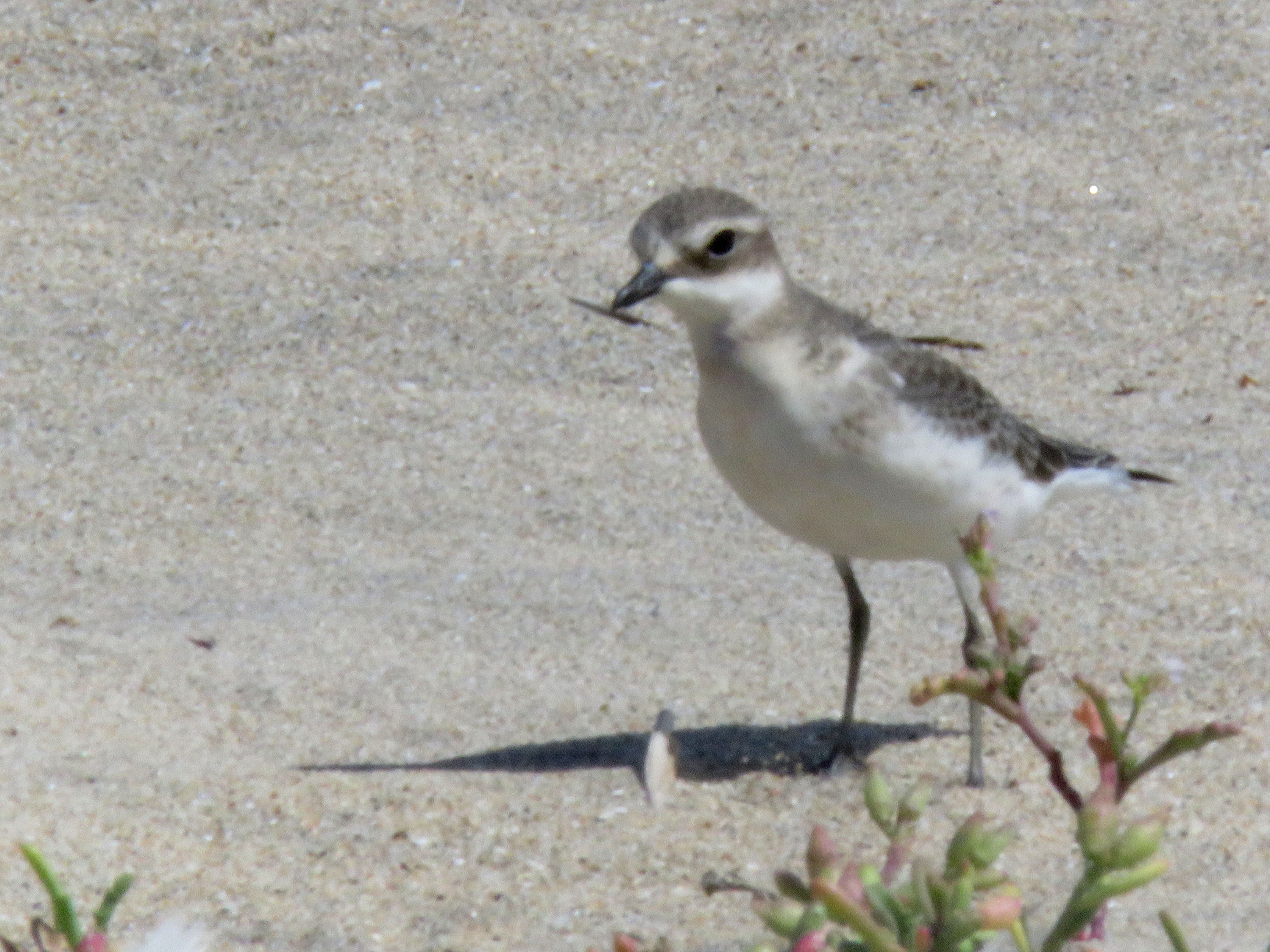
This plover had only been seen in California on twenty occasions. And when it was first seen on the morning of September 17 by Simon Thornhill, he posted on a birding list serve: “Strange Plover at Laguna Beach”. He noted that the plover was slightly larger than the snowy plovers it was loosely associating with. He included a photo and it was identified by the birding community as a lesser sand plover (Charadrius mongolus).

I had first seen a Lesser Sand Plover in California on October 22, 2016 on Pt. Reyes Beach on the Outer Point of Marin County’s Pt. Reyes. This small plover is usually found in Asia (it was formally know as the Mongolian plover), the east coast of Africa, India, and Australia. So when one wanders into California is would have most likely crossed over from Siberia and headed south through Alaska, Canada, and the states of Washington and Oregon.

A rare plover in Santa Cruz County was a bird too good to pass up so Grasshopper and I headed to the coast on a Sunday afternoon. The weekend pumpkin patch traffic was surprisingly light and we make good time down Highway One into Santa Cruz County.

We parked in the dirt lot, crossed the highway, and started down the trail towards Laguna Beach. As we headed down the trail, we met three other birders coming up the trail. They where smiling and this is always a good sign! The rare plover was still present.

The birders gave us directions to where the sand plover was being seen and they predicted that we would find it in less than five minutes! Let’s hope this prediction comes true.

The wind off the ocean was whipping up the sand and I assumed the plovers would be hunkered down in the dunes about 40 yards from the waterline.

We first observed three snowy plovers in the dunes and we knew the sand plover must be close by. To distinguish a snowy from a sand is not a very tough identification. The sand is larger and uniformly a darker grey with a distinct white supercillium (eyebrow). And also most of the snowies on Laguna Beach were sporting jewelry, colored leg bands to help researchers identify individuals.

While I did not keep track of time, we did find a darker, slightly larger plover that was loosely associating with the snowies, within about five minutes! County lifer 262!!

A not-so-sharply-focused photo of the lesser sand plover on the sands of Laguna Beach.

We had the sand plover all to ourselves for about 15 minutes. Over the last couple of days the plover had attracted many birders to this almost forgotten beach on this Santa Cruz County beach.

Image

Santa Cruz County Pelagic

County lines are a bit strange when it comes to off shore waters. They can seem arbitrary in the same way that county, state, or country lines can be. Only these county lines are drawn over deep water.

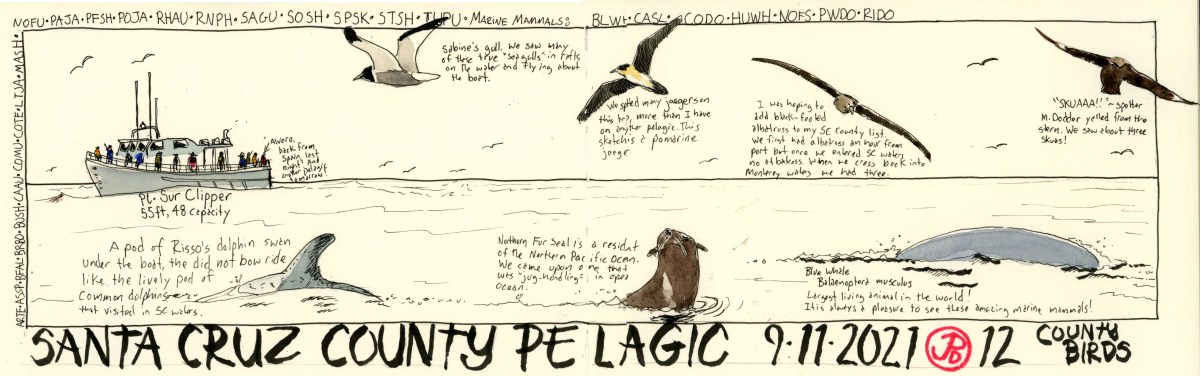
One of Alvaro’s pelagic boat trips was scheduled to head north from Monterey Harbor into Santa Cruz County waters. So I had to take this trip on my quest fro 300 Santa Cruz County birds.

Pelagic birding can be sublime and maddening in equal measures. For one, you are birding from a platform that is pitching in constant motion and the birds are often on a surface that is undulating where birds appear and disappear at a blink of an eye. Some birds fly to and over the boat while other birds, that had been resting on the water, take off at the first sight of a boat and you get a view of a retreating bird. Also because the bird boats are really designed for fishing and not pelagic birding, it is impossible to be two places at once. So if you are on the starboard rail and a rarity is seen on the opposite side of the boat, you have to make a mad scrabble on a surface that make one look like a drunk sailor, and only to find that the bird is gone with a spotter pointing to the spot where the Manx shearwater used to be!

I suppose this is the draw of pelagic birding. It is challenging and it can often give you incredible memorable experiences. Such as the time when our boat was surrounded my a pod of Pacific white-sided dolphins that numbered in the high hundreds or the time when we kept pace with two blue whales or another time when a black-footed albatross flew in and rest in the water a few yards from the boat.

We where scheduled to depart at 7:30 AM and at 7 a group of Santa Cruz Bird Club members where milling about, cleaning their optics and looking at gulls in the harbor. Our leader, Alvaro walked down the wharf. I was surprised to see him upright because he had flow in the night before from Spain, having just finished a birding trip. He said he felt fine but joked that if we found him asleep later in the afternoon we where to kick him awake.

We left on time and we where only about an hour from port when we saw our first pelagic gem: the black-footed albatross. We soon crossed into Santa Cruz water and I wanted to add this albatross to my county list but unfortunately the four that we saw where all in Monterey waters. There where large numbers of shearwaters throughout our trip, the most common being sooty and pink-footed but with sightings of Buller’s and just one short-tailed and Manx shearwaters.

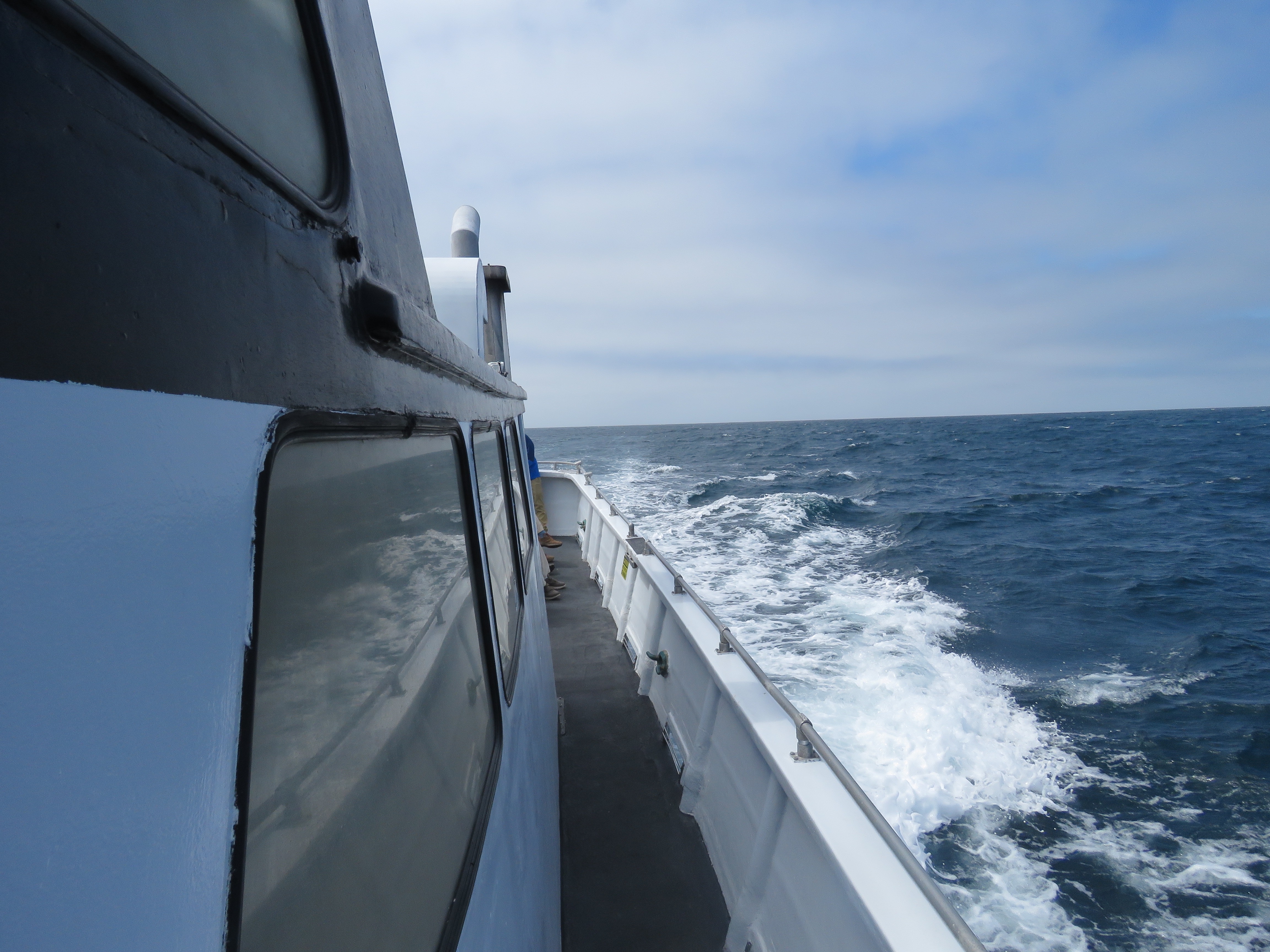
Looking down the port side of the Pt. Sur Clipper, or in pelagic birding parlance, 6 o’ clock to 9 o’clock. Here we are cruising above the Monterey Bay submarine canyon.

In all it was a very pleasurable cruise, even though I did not get an albatross over Santa Cruz waters, I did add 12 new county lifers, including: south polar skua, Arctic and common tern, Sabine’s gull, two jaegers, northern fulmar, Manx, Buller’s, and pink-footer shearwater.

As we headed back towards Monterey Harbor and the pelagic species where being replaced with inshore species like brown pelican, Brant’s cormorant, and western gull, there was one last surprise for use. One of the spotters picked out a far off brown booby flying along the coast. Not a bad way to ended a productive pelagic.

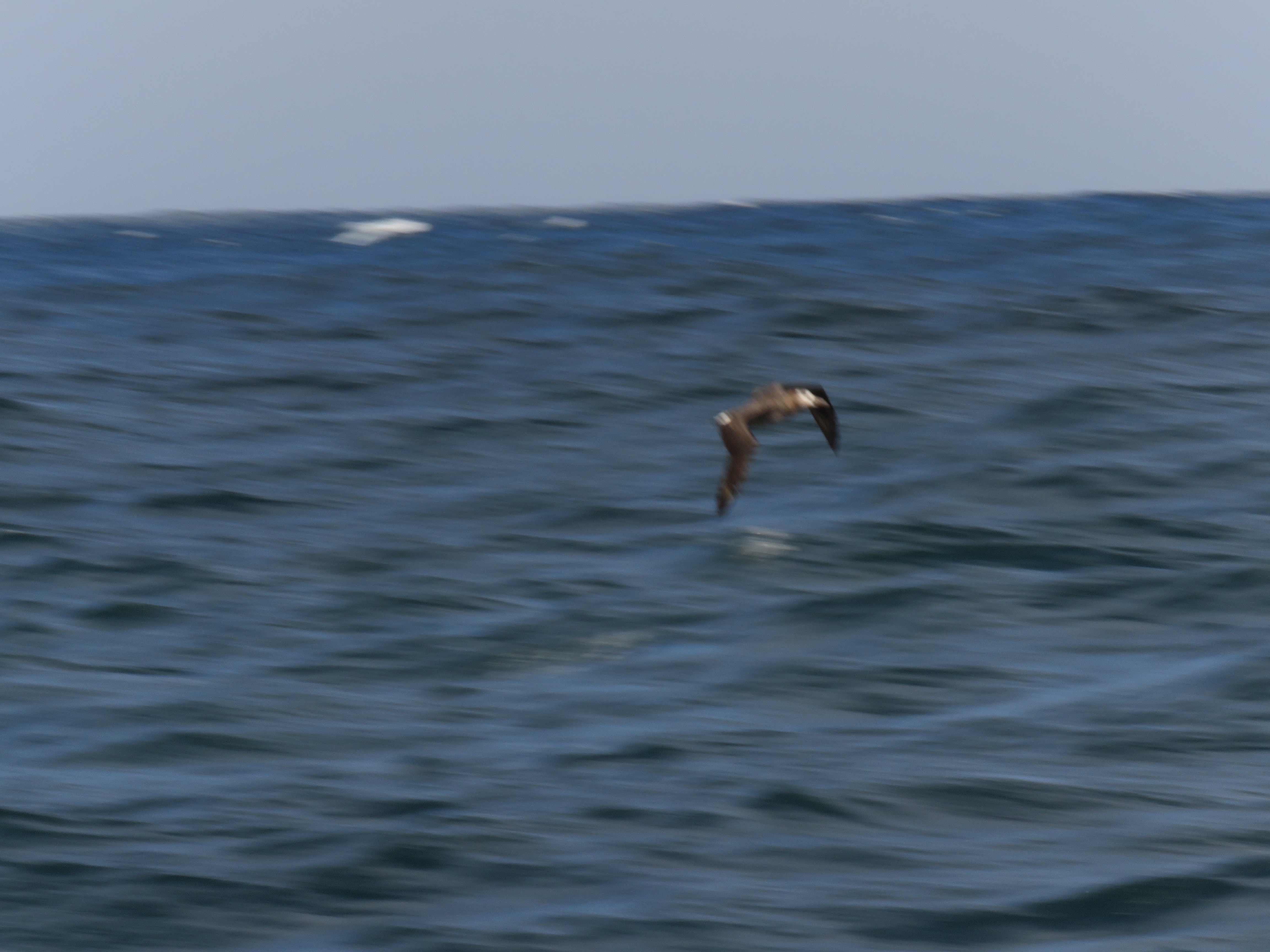
While we whiffed on black-footed albatross in Santa Cruz County, this photo of an albatross, blurred in motion over Monterey waters, sums up the motion and excitement of a classic Monterey Bay Pelagic.
Image

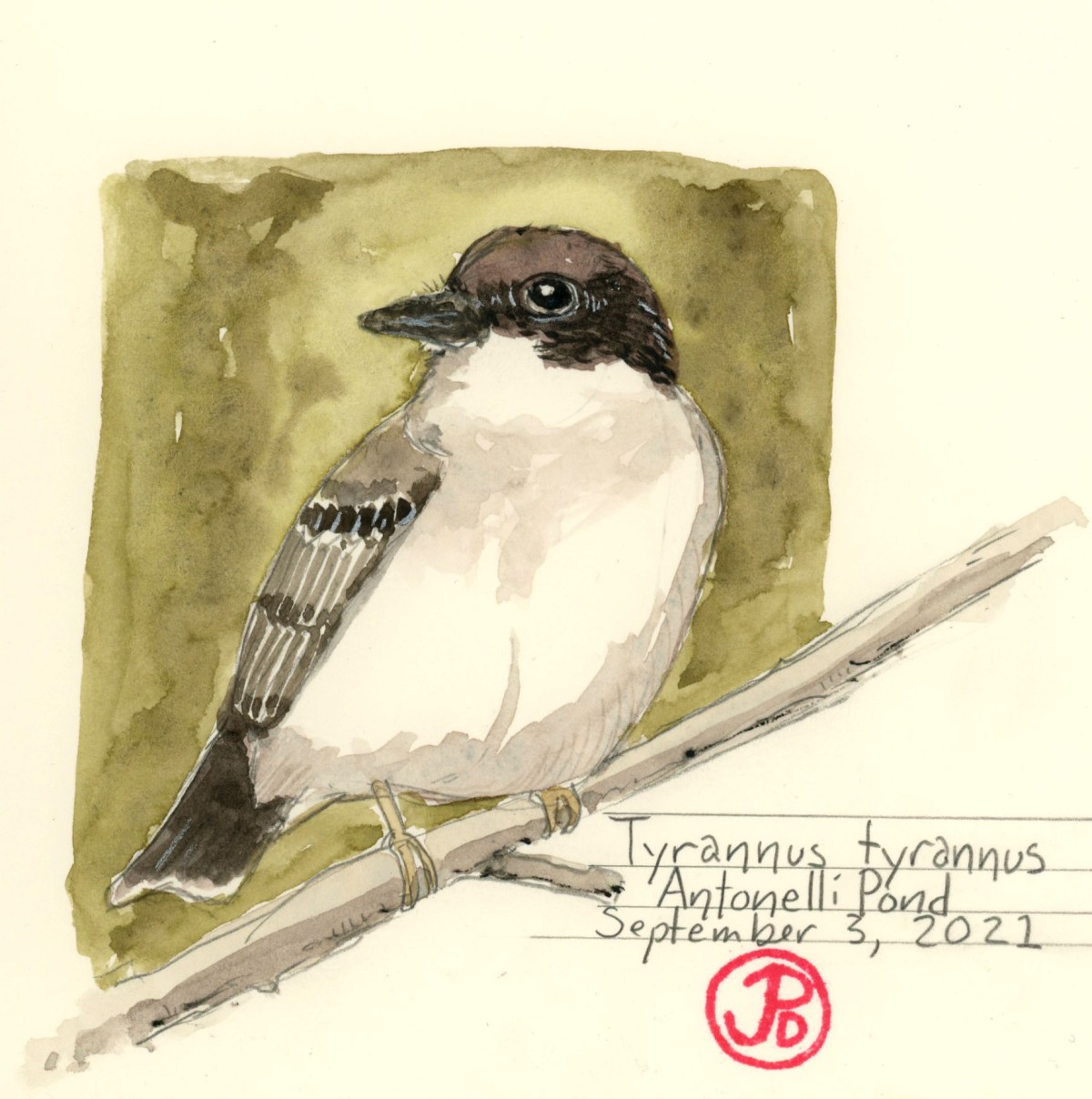
King of Tyrants: Tyrannus tyrannus

On a Monday, Trrannus tyrannus was first seen in a coffeeberry bush (Rhamnus californica) in the northwest corner of Antonelli Pond in Santa Cruz’s westside. I just hoped this county rarity would stick around until Friday when I could get down the coast to look for it.

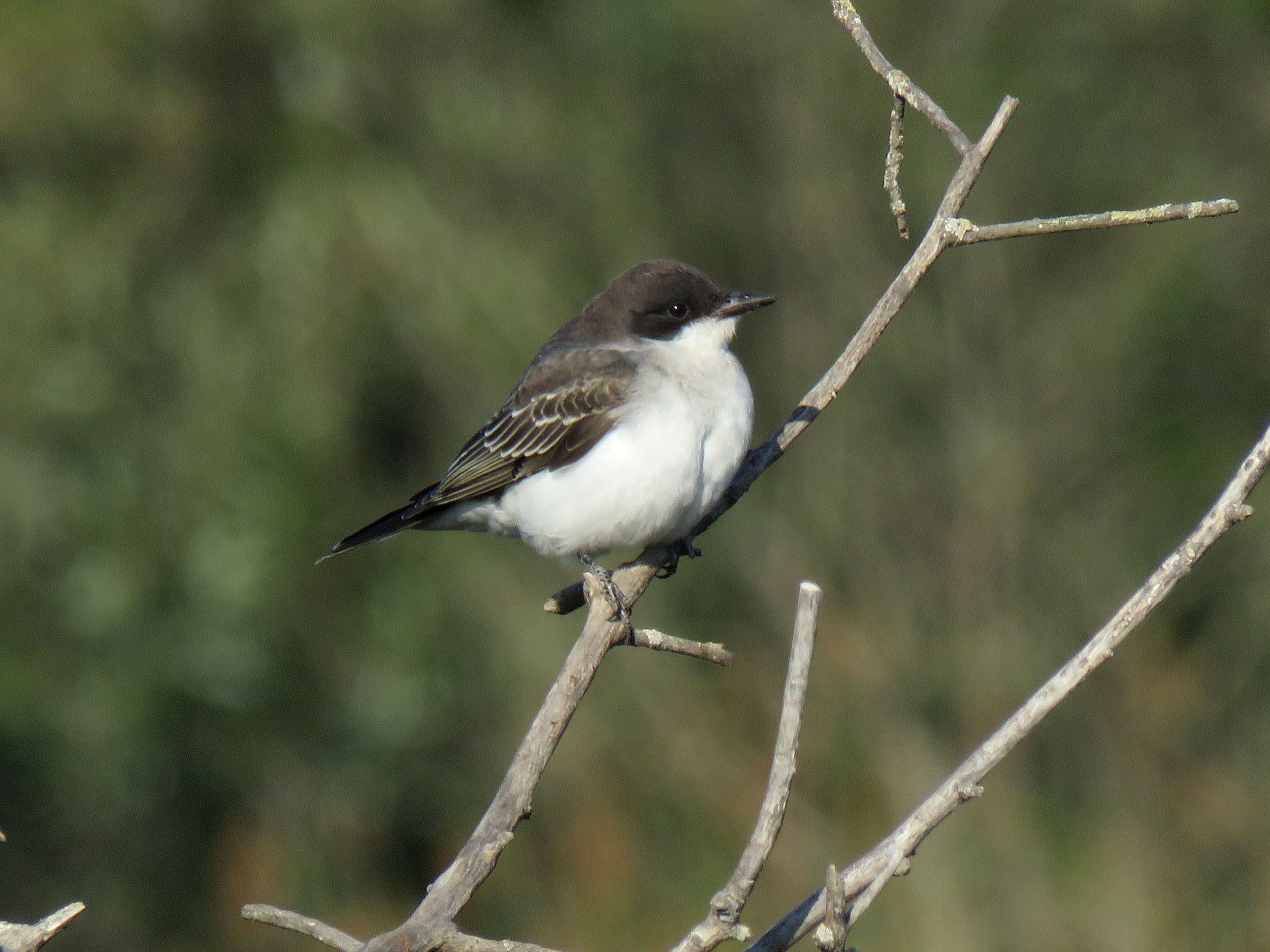
The Eastern kingbird, like it’s name implies, breeds on the eastern side of the United States. This kingbird is a neotropical migrant where it spends winters entirely in South America. On their winters grounds, the kingbird travels in flocks and eats berries. (In the north it feeds mainly on insects taken on the wing).

Tyrannus tyrannus, means “tyrant, despot, or king” (take your pick) is named for the kingbird’s aggressive behavior during breeding season. While defending their nesting territory, they will attack birds that are much larger than itself, including hawks, great blue herons, ravens, crows, and even squirrels. There have been reports of kingbirds landing on the back of hawks and vultures, pecking and pulling out feathers. This is the King of Tyrants with a major Napoleon Complex.

So at about five PM I found myself in the northwest corner of Antonnelli Pond reflecting on the long journey this 40 gram bird had made, from the Amazon, eating fruit in flocks to it’s long journey up the Pacific Coast to forage for a few days near a pond in Santa Cruz. So far the coffeeberry bush was sans kingbird.

After about a 15 minute wait, a pied bird flew from the north into the bottom of the bush. I attempted to flank the bird to identify it as the wayward tyrant. A bird shot up from the bush, dark above and light below was a fine white border on it’s tail, Bingo! Eastern kingbird! The bird flew to a chain linked fence that bordered the Homeless Garden, where I was able to get a few distant photos.

A common perch for a kingbird: a fence.

The kingbird foraged for a bit in the garden and then flew back and landed on top of the coffeeberry bush in perfect late afternoon light, so I had to take a few photographs to confirm it’s misplaced existence. It stayed on it’s perch for a few minutes and it then flew across the pond and my encounter with the wayward (is their such a thing in nature?) eastern kingbird was over.

The eastern kingbird in great light, showing off it’s kingbird profile.

Often when we are looking for one thing in nature we see so much more. This was the case on Saturday morning, when I returned to Antonelli Pond to look for the eastern kingbird again (and the willow flycatcher that had also been report). While the coffeeberry bush was lacking a kingbird, some movement in the brush in front of me caught my attention.

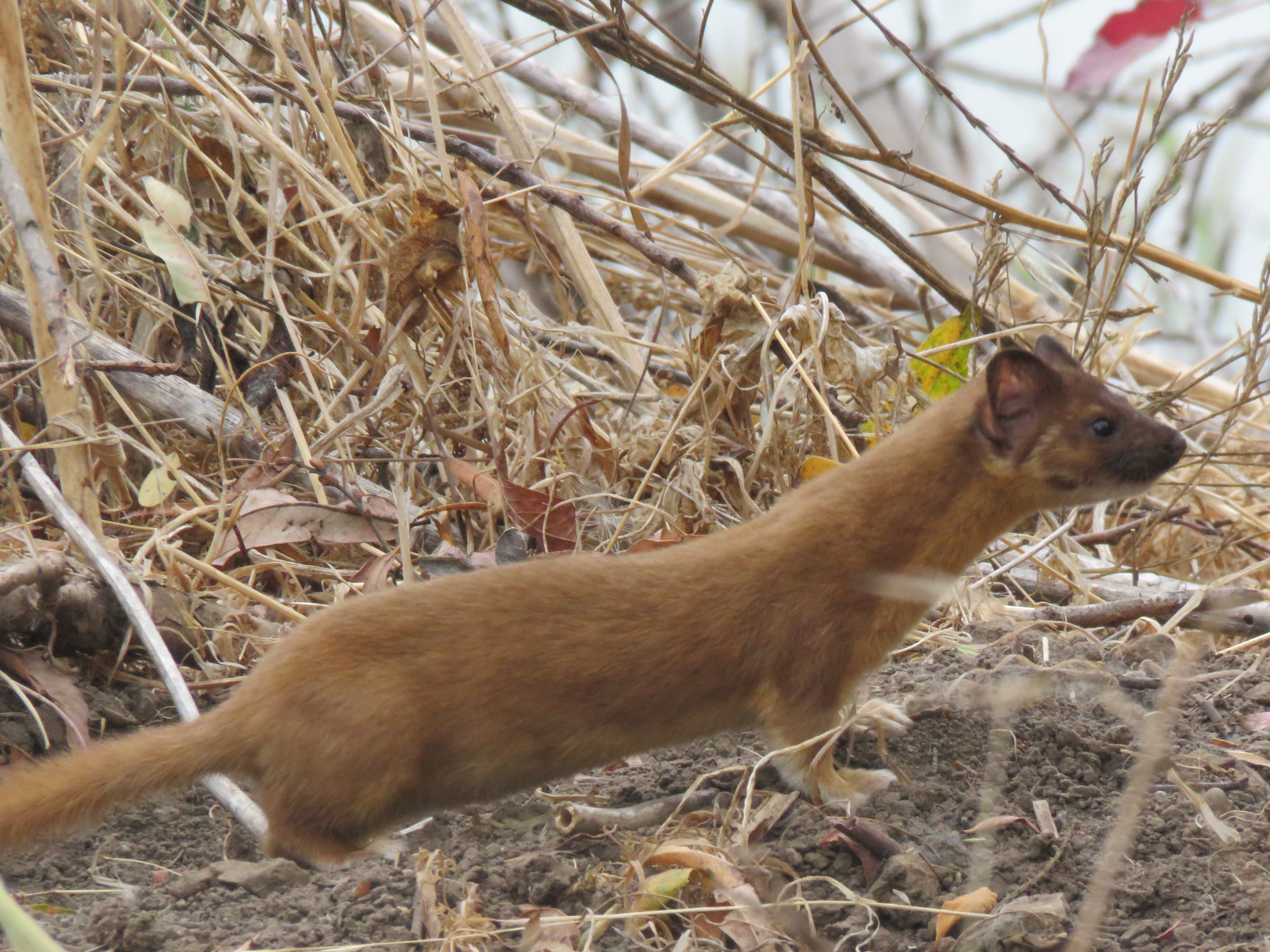
A caught a glimpse of a long mammalian predator. I wanted to entice it out to get a better look so I did my best impersonation of a wounded rodent (I was thinking mouse) and within seconds, it’s snake-like head, ears alert, appeared out of the brush. It was almost licking it’s deadly teeth with delight (I call anthropomorphism on myself!)

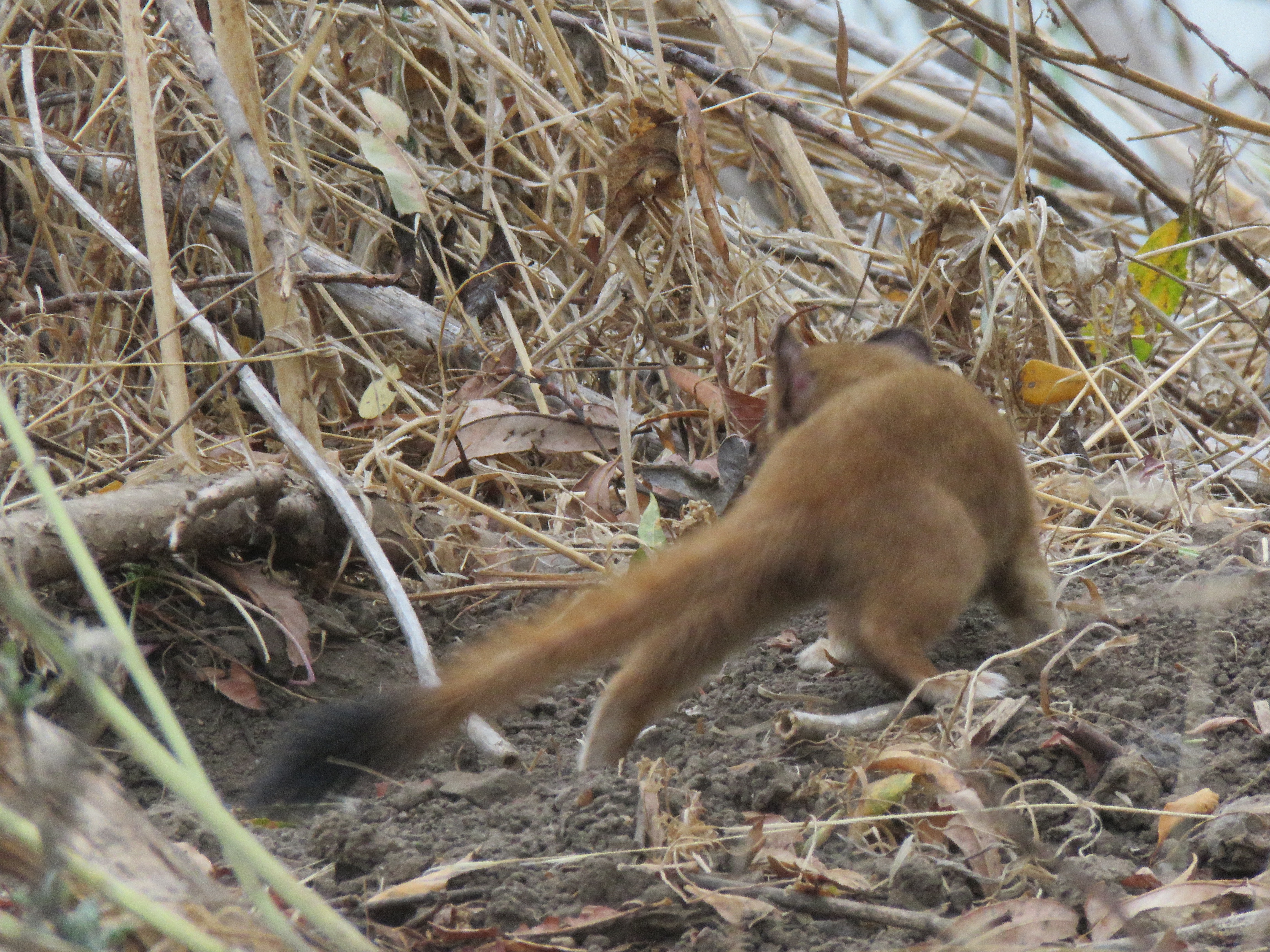
It was a long-tailed weasel (Neogale frenata)! I had seen this predator on two other occasions but both sightings (at Wilder Ranch) were fleeting and I just got a flash of it’s dark-tipped tail as it disappeared into coyote brush.

The long-tailed weasel is an aggressive predator which can take prey twice it’s size such as rabbits and squirrels. On one occasion at Wilder Ranch on the Old Cove Landing Trail, a weasel was hunting bush rabbits and I heard a lagomorphic scream that was hard to forgot. I was not sure if the weasel’s hunt was successful.

The long-tailed weasel, coaxed out of the brush with my wounded rodent impression.
The long-tailed weasel showing off it’s black-tipped tail.
Image

Flexing my Sketching Muscles

Before I headed out on my Trails, Roads & Rails Roadtrip I wanted to get into sketching shape. To do this I made it my daily practice to do a sketch in and around Santa Cruz.

Each sketch took no longer than 15 minutes and I chose subjects that would force me to take a complicated subject and simplify it into a quick sketch. Some of my subjects were architecture, trees and foliage, marine mammal anatomy, and old brickwork. I figured that this range of subjects would give we practice for some of the subjects I would be encountering on my trip along Highway 80.

I combined these short sketches with hikes in order to get into birding shape to search for the Himalayan snowcock, which required an early morning two mile hike to get to it’s alpine territory in the Ruby Mountains.

Architecture: Holy Cross Church, Santa Cruz.

For this sketch I wanted to make sure I was getting my angles and perspective right so I held out my pencil at arms length to take measurements and transferred these “measurements” to my journal. Because it was architecture, I worked in pencil to make sure the sketch held together. I was then was freed up to work in pen to capture the backside of Santa Cruz’s namesake church. Then I added watercolor washes and within 20 minutes, I had a sketch.

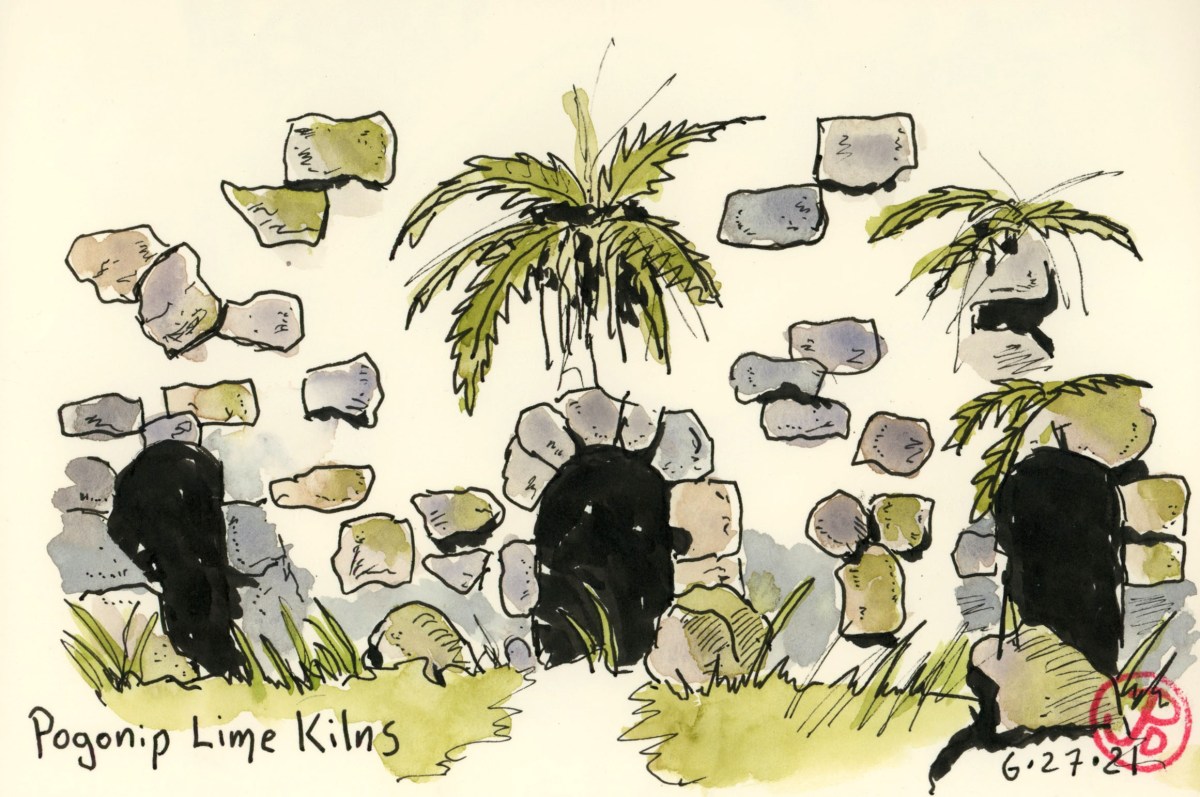
Lime Kilns, Pogonip. (Featured sketch)

After a hike up the Spring Trail at Pogonip Open Space Preserve, I turned off the trail to head up to the abandoned lime kilns. After timber, producing lime for building was Santa Cruz County’s biggest industry in the 20th Century. There were a few signs of this history at Pogonip but there was none better than these kilns.

For this sketch, I worked in pen and I used a bit of sketcher’s license on this one. In reality the ferns in the center were higher up but I though of this quick sketch as capturing little vignettes or details of the kiln, ferns, and brick work. All these details, when put together, tell the story in representing the lime kilns.

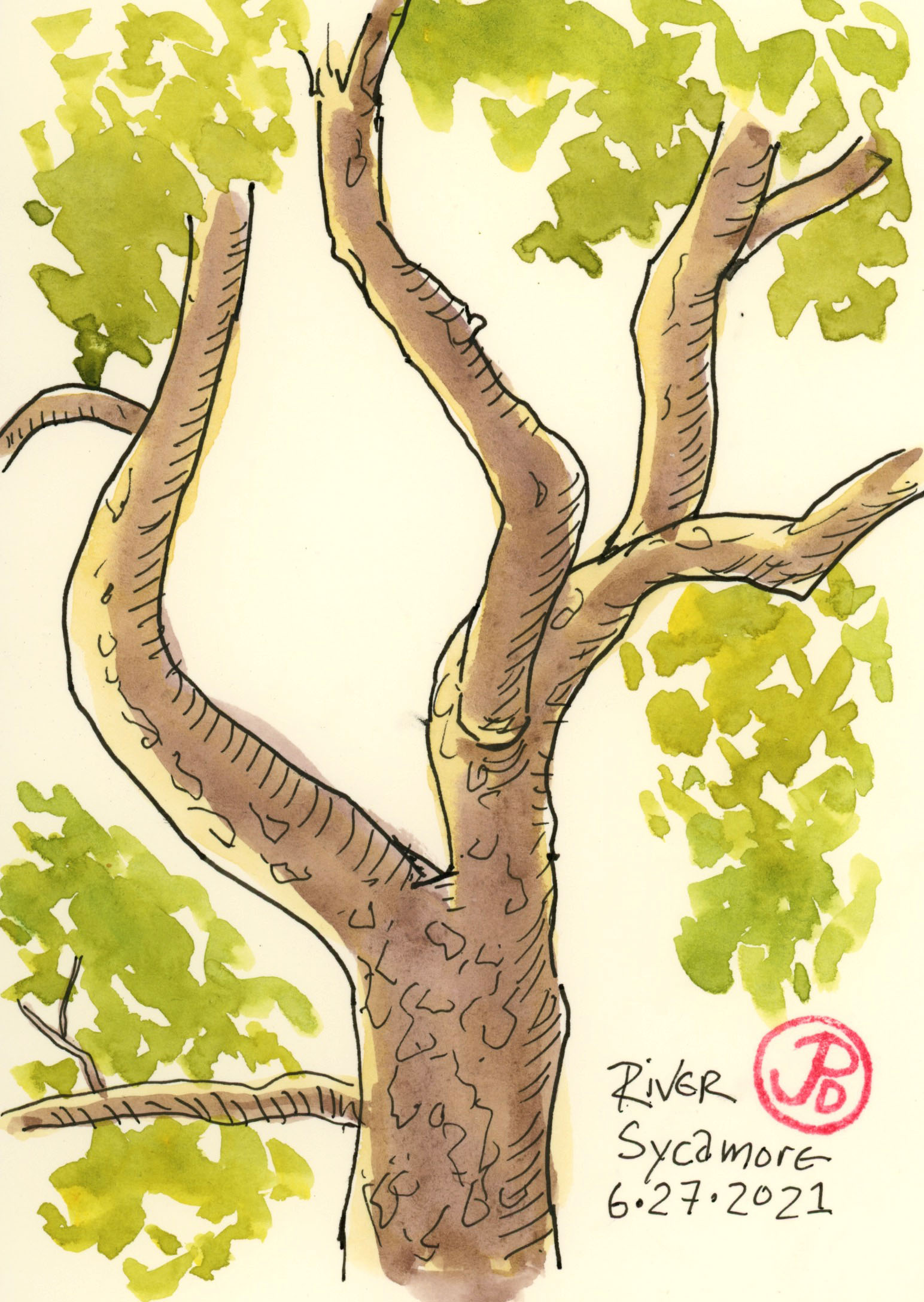
River Sycamore, Paradise Park.

I walked by the sycamore many times on my walks on Washington Way. I thought this grand, old tree would make a good subject for a quick sketch. Working on this sketch had a very organic feel, no pun intended, as I captured the shape of the limbs and let them lead off the page. I only worked in pen on this one.

I have sketched redwood, the most dominate tree in Paradise Park, many times so working on a sycamore just helped me understand the tree just a little bit more.

Image

Bird Dunes

On Sunday morning I headed to Watsonville, to worship at the Alter of Shorebird known as Pajaro Dunes.

Yes I know that June us not exactly shorebird central on the Central Coast but I had two shorebirds on my Santa Cruz County wishlist: American avocet, and black-necked stilt.

Pajaro Dunes is a coastal vacation community built on and over the Monterey Bay dunes. No doubt that this development has affected the original residents of these dunes and tidal flats: shorebirds. Their habitat here has been compromised, restricted, and expunged. That is one reason that birders are allowed access to this private community.

I do have a disclaimer: my family has spent much time at Pajaro Dunes when I was a kid. Once a year we rented a house at Pajaro with our neighbors on Cormorant Court. (Pajaro is the Spanish word for bird.) I somehow think that spending time here, as a child, made me appreciate this place and being a noticer, I noticed the natural world that was thriving here. I remember digging for sand crabs and catching lizards. And the brown pelicans that hugged the coast raised my eyes skywards.

On this Sunday morning, after checking in at the gatehouse, I kept my eyes towards the water channel, which was to my left. The tide was in, so water was much deeper, which would not be attractive to both avocet and stilt.

I headed to the bay where the Pajaro River becomes brackish. There where a large group of white pelicans, foraging in a raft and many double-crested cormorants drying their feathers. On the beach was a large flock of gulls, including about 40 Heerman’s gulls, one of the world’s most beautiful gulls, in my opinion.

The beautiful Heerman’s gull a Pajaro Dunes. The white-headed gulls are adults while gray-headed birds are juveniles. These gulls are newly arrived from Mexico or points south.

Since I was here last, a fence had been installed around the dunes to protect the breeding habitat of the threatened snowy plover. I have seen snowies here before in the winter where but they where not wearing the black headband and black epaulets of their breeding plumage. Some of the plovers were wearing colored bands on both feet so biologists can identify individual plovers in the field.

A child created sign on the fence placed around snowy plover habitat. Judging by the drawing and the capitalization (or lack of it) I would say it was done by a 3rd grader. It is funny that children draw the head like a separate circle plopped on the body when in reality there is usually a smooth transition from head to body. Sadly, most adults would draw birds in the same way because around this time, nine to tens years old, most realize that their drawing no longer captures realty and their artist development stops at that age.

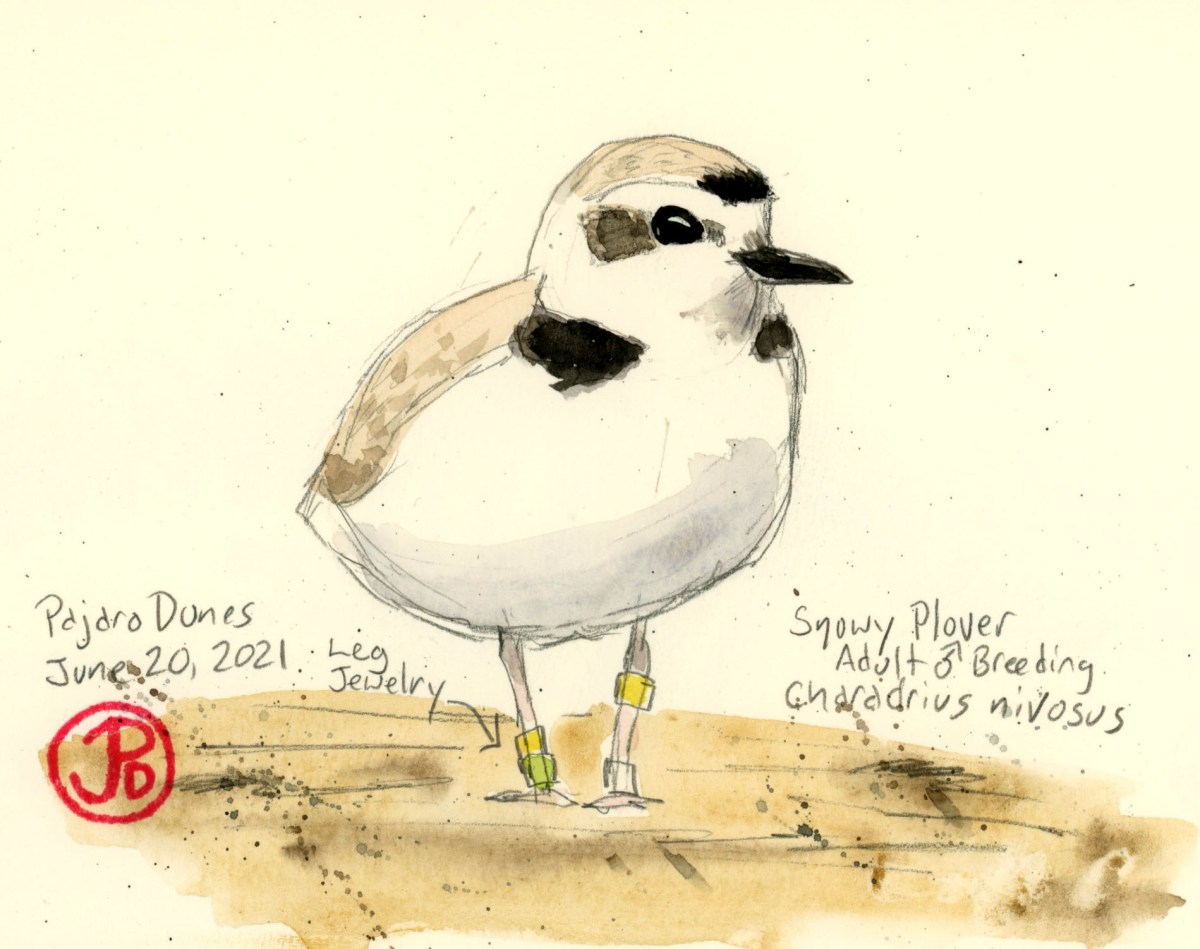
I did see three snowy plovers. One was running circles around me looking like a windup toy dune-runner. This male was sporting jewelry in the form of four leg bracelets, known as bands in America or rings in Britain. I incorporated the bands in my plover drawing.

It was good to see the plovers on their breeding territory but I did note that there was a woman with her off lead dog that was crossing the fence line. She needed to read and internalize the 3rd graders’ message: “Please Stay away from The BiRDS.” Dog and dog owners vs snowy plover have been an on going conflict on beaches on the west coast where these plovers breed. They nest on the ground, making them vulnerable to walkers and dogs. For all of those whole claim to be “animal lovers” lets not forget about animals that don’t wear a collar, respond to their “given” name, and who are flying free. (I’m starting to sound like the Lorax here!)

I headed back towards the exit gate and I looked to the water channel, which was now to my right. I passed Avocet Circle (no avocets). As I passed the tennis courts and sports field, near Willet Circle, I spotted the undeniable form of a black-necked stilt, foraging on the the far bank. Santa Cruz County life bird!

Black-necked stilt.
Image

Waddell Beach: Black Scoters and an Elephant Seal

I had a nice Santa Cruz County After-Work-Lifer (AWL) as I just crossed into Santa Cruz County on Highway 1.

A pair of black scoters had been reported just north from the dirt parking lot at Waddell Beach.

Three scoters are found on the California Coast in winter: surf, white-winged, and black. The most numerous is the the surf scoter. There were about fifty (probably many more) riding the waves or diving under them, off the sands of Waddell Beach.

Black scoter is the least common off the Santa Cruz County coast. Luckily for birders, it is the easiest to identify. Both the male and female are distinctive. The black has a rounded head where as the surf and white-winged scoter have a flatten head as if they were hit on the head with a frying pan!

The male black scoter, like it’s name implies, is all black. It’s head is rounded and it’s orange “golf ball” at the bases of it’s bill is a beacon that yells out, “Black Scoter!!”
The female also has a rounded head and a dark cap that contrasts with a lighter checks and neck.

I returned to Waddell Beach on Saturday morning to look through the gull flock at the Waddell Creekmouth. I was hopping to see a kittiwake or the rare lesser black-backed gull that had recently been reported. I saw neither.

What I did find, foraging in the near shore of Waddell Creek, was a long-billed dowitcher. Turns out that this is a new county shorebird for my list!I always love these shorts of birding surprises!

I did want to look for the black scoters again and try to get a few photos of the continuing sea ducks in good morning light. They obliged as the rode the tide about 40 yards from the parking lot. I was able to photograph the two together and separately as they associated with the surf scoters.

On Sunday morning, I headed back to Waddell Beach. The creek provides a large public gull bath along the coast and this area has produced much sought after gulls as black-legged kittiwake, glaucous gull, Bonaparte’s and, just once, an adult lesser black-backed gull! Gulls congregate here to wash in the fresh water and you are more likely to see a larger number of gulls at this early hour before the beach crowds arrive.

On Sunday morning all I recorded was California, western, mew, herring, and four Heerman’s gulls. Nothing too out of the ordinary. It did give me practice at sorting through gulls which can be notoriously tough to identify.

On my way back to the parking lot I refound the two black scoters in even better morning light. The two photos included in this post were taken on Sunday morning.

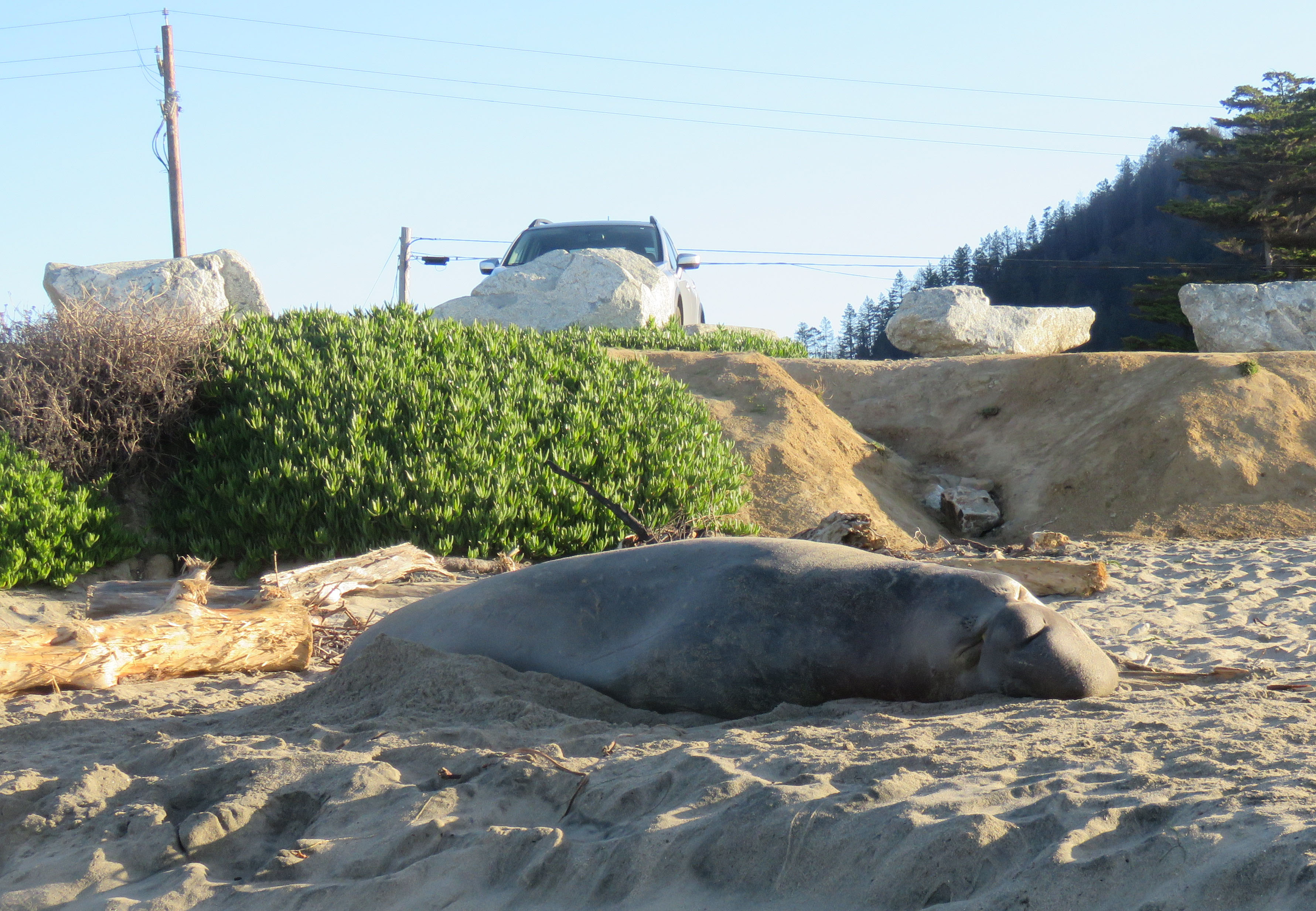
When I returned to my car I looked down at the beach and about 20 feet away was large 12 to 15 foot bull elephant seal resting on the sands. How had I missed such a large beast?

I had come here to see a county life bird. Instead I found a county life pinniped!

The view from the parking lot. Seems so hard to miss.
Here is my car to provide some scale.
This young male northern elephant seal looks like he has been in a few scuffles by the number of scars on his body. He is defiantly the beach master of this beach.
Image

Meder Canyon

With my inward focus on county lifers I begin to realize that I had many common and uncommon species on my life list that now became new targets for the county.

In Santa Cruz County I had five species of owls: great horned, barn, burrowing, short-eared, and saw-whet. I had two more that I had not yet heard in the county, when owling, hearing is believing. These are the western screech-owl and northern pygmy-owl.

As day turned to dark, I headed to the slopes of the Santa Cruz Mountains near Corralitos. Owling is a new kind of birding madness that makes one wake up at an ungodly hour or head up into the hills on one lane, windy roads in the darkening night. My destination was Hazel Dell Road, a productive owling road in the county.

I stopped at the intersection of Hazel Dell and Mt. Madonna Road and got out to listen of my target owling. I heard nothing except for the din of frogs just down the road. I struck out on both species.

Seeing a recent online birding post, I was reminded that I did not have white-throated sparrow in county. So on a Sunday morning, I headed out early to looking for this beautiful but uncommon Santa Cruz County sparrow.

I headed up Meder Canyon and turned right into the side canyon. This spot reliably produces California thrashers, except for today. I did hear the cat-like “mew” of a blue-gray gnatcatcher. I climbed up the slope to get a better vantage point to see the gnatcatcher and that’s when I first heard the northern-pygmy-owl!

If the toot-toot call of a saw-whet sounds like a owl on too much coffee, then the northern pygmy-owl has had too much NyQuil. I could clearly hear the slow toot-toot call coming from across the canyon. It was just 8AM.

It may sound odd that a nocturnal predator like an owl would be active in the day but northern pygmy-owl is noted for it’s daytime dalliances. According to David Sibley in his Sibley Guide to Birds, pygmy-owls are “active in daylight” and it’s song is “often heard during the day”.

I headed back down slope and to try to locate the owl. It sounded like the owl was calling from brush or trees further up slope. After about two minutes, the pygmy-owl stopped calling and I was unable to locate it. It was a great encounter anyway.

Now it was time for my next target bird, white-crowned sparrow. I returned to the main canyon and headed up to a location were the sparrow had been recently seen.

It was a warm morning and it had a feeling of a spring morning and I was surrounded by the calls of birds: Steller’s and scrub jays, wrentits, yellow-rumped warblers, a Bewick’s wren, a pair of oak titmice, and a northern flicker.

As I neared the end of the trail at Meder Street and University Terrace Park I stopped at the “bird feeder” house. The back of this house faces the trail and the owners put out seed and suet on the upper balcony. There were some juncos and an acorn woodpecker feeding at the feeder when walked up.

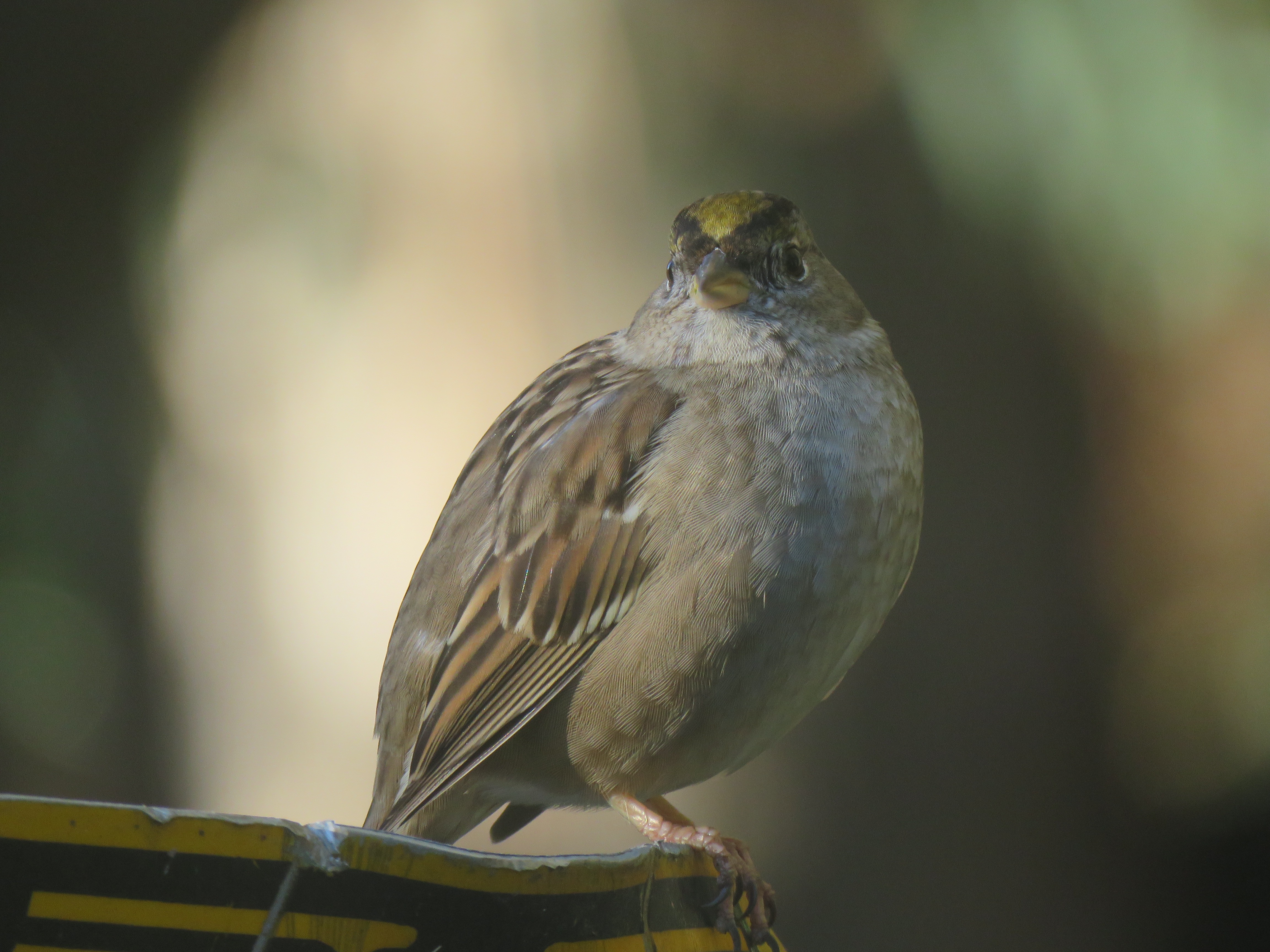
On the right side of the trail was a golden-crowned sparrow perched on a sign. This was a good sign. I was hoping the white-throated was loosely associating with other sparrows.

Golden-crowned sparrow.

I saw a sparrow fly into the eucalyptus about ten feet high. I tried to get a better vantage point. I got bins on the bird: white suplercilium, yellow lores, and the the distinctive white throat! A new county lifer: white-throated sparrow.

White-crowned sparrow singing in the eucs.
Image

Santa Cruz Sapsucker

For some reason I have a sapsucker blindspot in Santa Cruz County.

I have done more international birding over the past few years but because of Corvid 19, I have been forced to bird inward. And I kinda like it. And the focus of my county list has been Santa Cruz.

A resident (human, that is) along Trout Gulch Road in Aptos had reported a red-naped sapsucker, coming in to feed on an old apple tree in his yard. I wanted to boost my sapsucker numbers because my current Santa Cruz sapsucker count stood at: 0.

The home owner is a bat biologist and birder who knew the difference between a hawk and a handsaw, and for that matter a red-breasted from a red-naped sapsucker. He was kind enough to let me bird from his driveway. He had even set up a camp chair for visiting birders. This highlights the friendliness of the Santa Cruz birding community that is not just about seeing a rare bird but also repaying the favor so others can see a rarity as well.

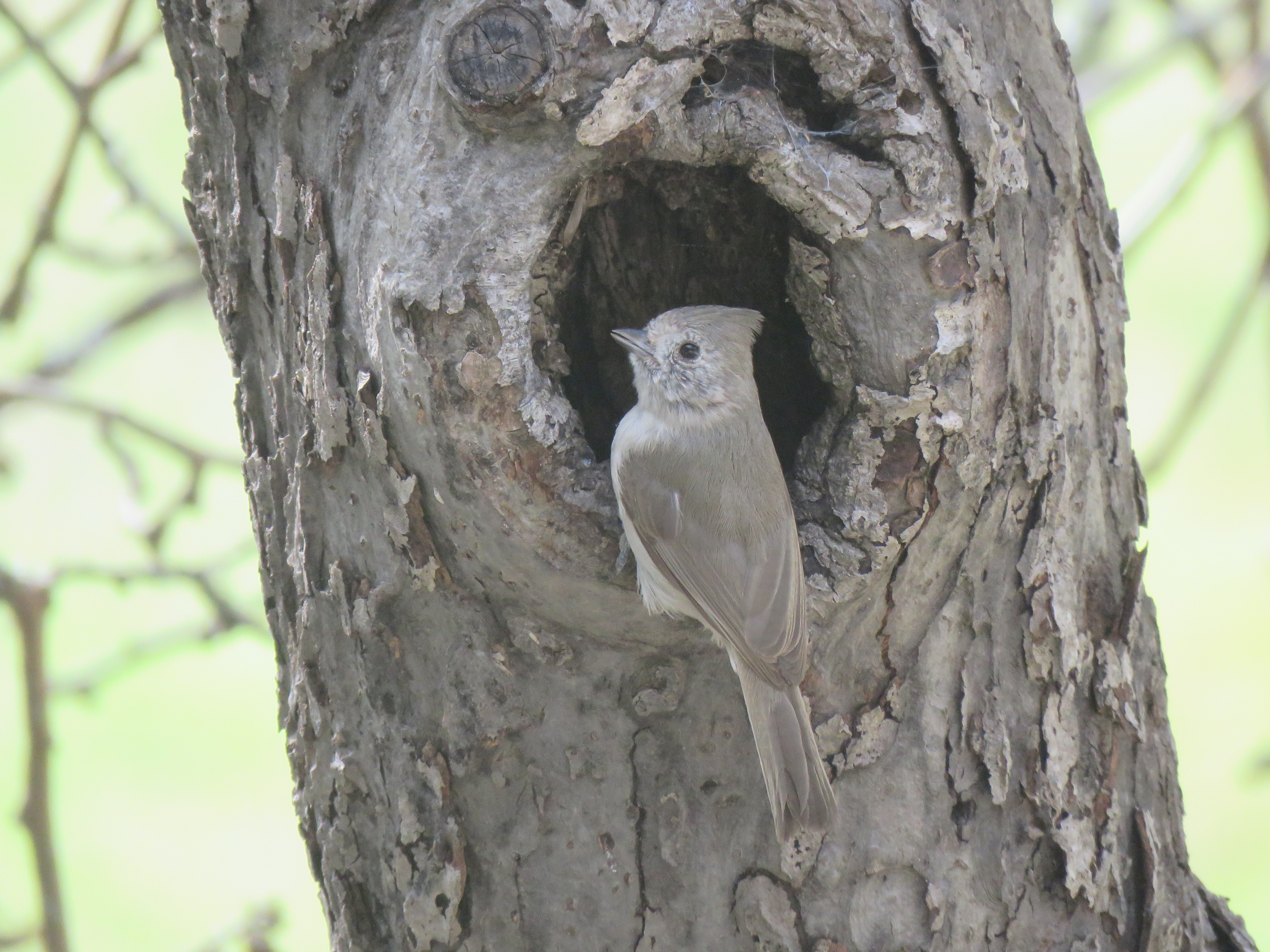
This stretch of Trout Gulch was very birdy, with expansive views of the skies above. Red-tailed hawks circled above and a pileated woodpecker called from the trees across the road. A merlin hightailed it to the south and five high flying swifts moved south. As I waited for the red-naped sapsucker to appeared I became immersed with the micro avifauna. The Anna’s hummingbird had his feeding route and returned to the prominent percent in front of the house. A pair of Oak titmice flew in to investigate a possible nesting nook.

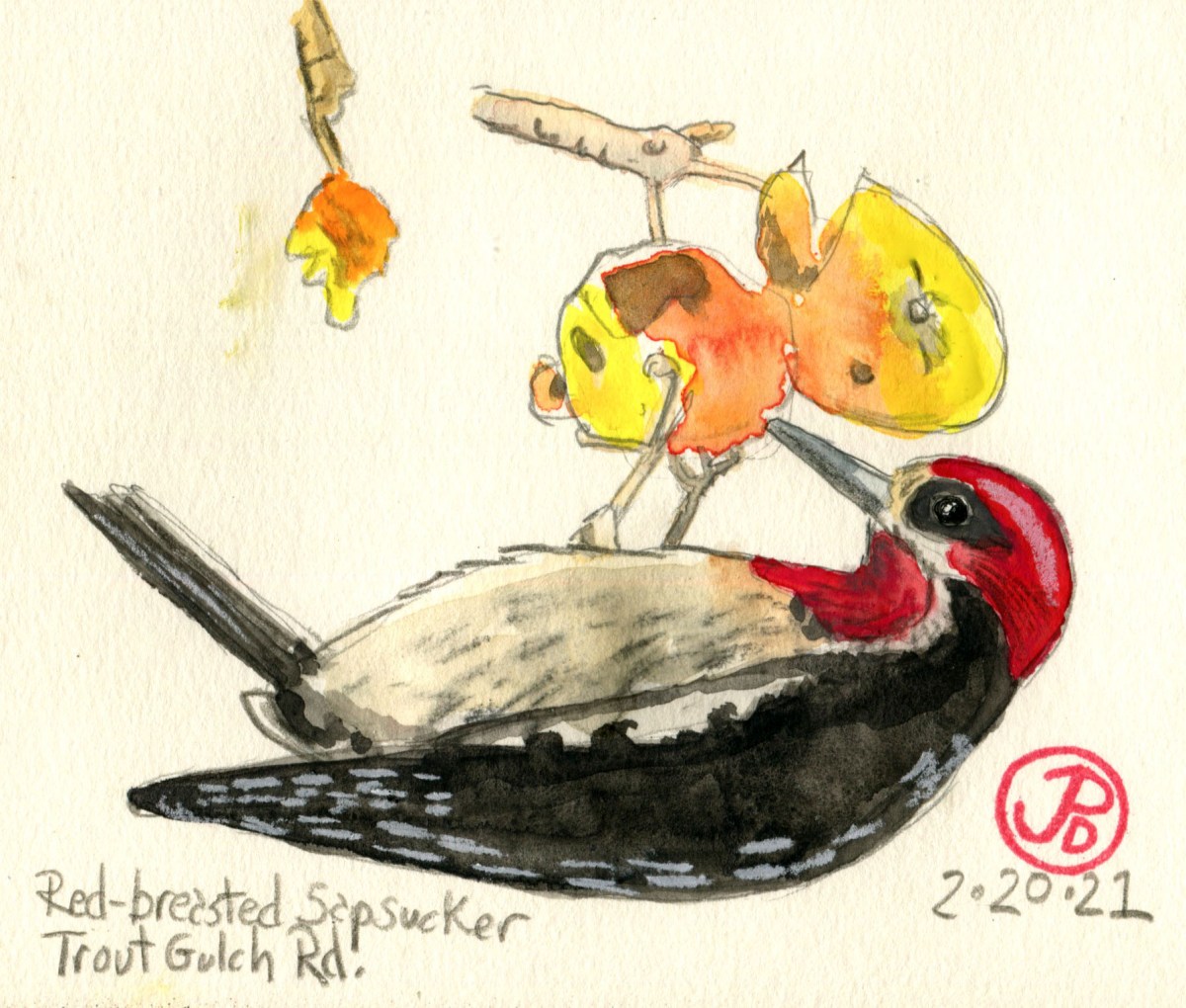
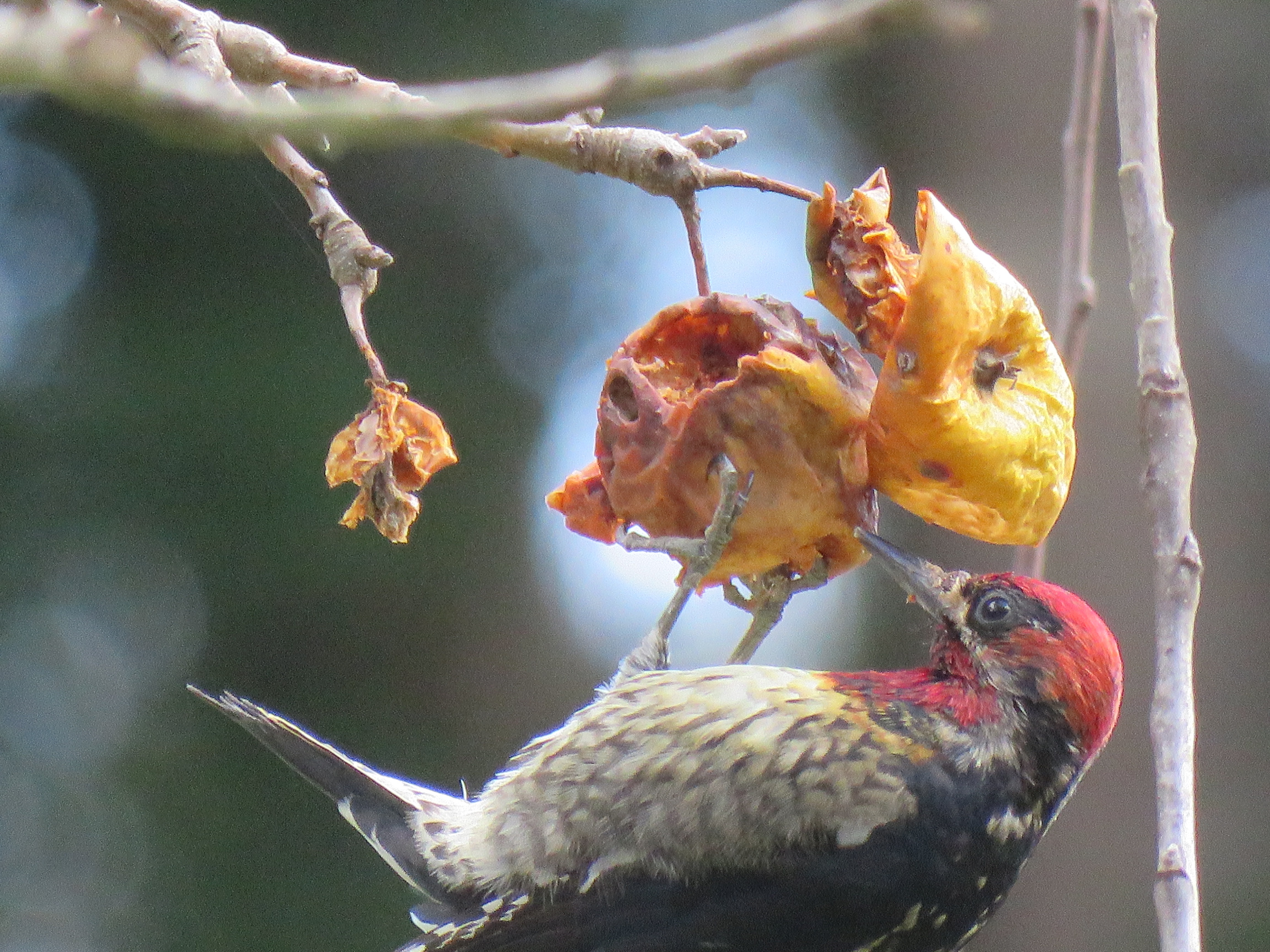
Within the first 30 minutes of my wait, I had a sapsucker! This was a new county bird but but it was the more common red-breasted sapsucker and not the desired red-naped. It flew into the old apple tree and perched on an apple and pecked at it from below. This was a promising sign because the two sapsuckers fed at this tree.

The red-breasted sapsucker having an apple lunch.

This gave me hope that the red-naped was still in the area and it was only a matter of time before the bird would return to the apple tree. So I sat down in the camp chair and sketched to pass then time.

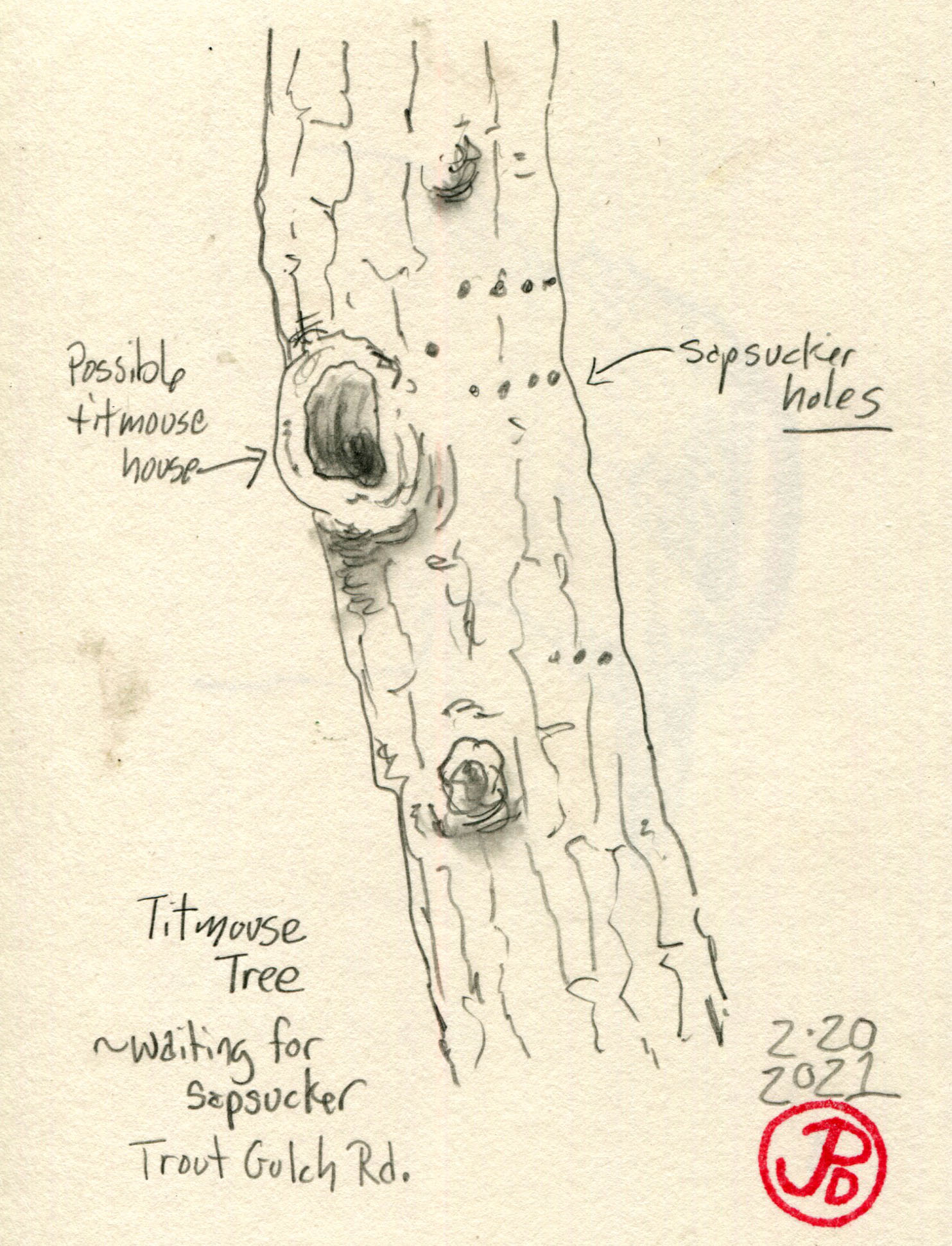
A pencil sketch of the “titmouse” tree. I love to sketch with pencil. It is such a basic tool and the foundation of so much work.

I first sketched the bole of the tree to my right. it was riddled with sapsucker holes. This was the tree that the two oak titmice investigated and I added the potential nesting cavity into my sketch. I next sketched the twisted old apple tree that the sapsuckers favored (but so did the chickadees and juncos.)

I waited for three hours and I decided to end my wait, knowing full well that the red-naped would appear just after I left, with no one to witness it’s continuing existence.

But the experience was so much more that adding a sapsucker to a county list. It was about being in a moment in a beautiful yard, watching the yardbirds and talking with a bat biologist. And it was all made possible by the red-naped sapsucker that refused to show itself in the old apple tree on Trout Gulch Road.

Image

Santa Cruz County Beach Birding

A towhee had taken up winter quarters on Laguna Creek Beach. This beach is close to Davenport on Highway One and 10.2 miles from my cabin (I checked).

Two towhees, a large, sparrow-type bird, are common on the California Coast. The appropriately named California towhee and the spotted towhee. Neither of these two species were the reason I headed north on Highway One on a Saturday morning.

I was here, hiking into a headwind on a sunny but blustery winter’s morning, to see a rare towhee on the coast. It is said that every bird is rare somewhere and the green-tailed towhee is rare here on the California coast. I have seen many green-tailed towhees at elevation in the Sierra Nevada Mountains but I was going to attempt to add this species to my Santa Cruz County list. I wanted a green-tailed towhee at sea level!

Who knows how long this wayward towhee had been on the Santa Cruz Coast but on January 12, 2021, two birders happened to be birding this beach and also happened to know that this towhee was out of place in this location. They reported it and other birders searched for it, some getting momentary looks of this sulky towhee. There where even less quality photos of this ever-moving and scrub-loving bird.

So the bar was low for a quality sighting and capturing great photos was an even lower bar. That’s if I didn’t whiff on this towhee altogether, for any sighting is never guaranteed. As one birder noted, “Ducked into a bush and never reappeared.”

The bird was seen on the northern part of the beach, north of the creek and just left of an “AREA CLOSED” sign. The sight was described as being where the sand meets a six foot high cliff. So here I was, peering into the bushes. Flanked by two nude male sunbathers.

The first bird I saw was a blue-grey gnatcatcher as is foraged and called at eye level in the coyote brush.

I turned on my bluetooth speaker and selected a recording of the towhee’s “cat-like ‘mew'” call. I hit play and after a single call, the green-tailed towhee shot out of a bush in front of me and stood before me on the sand. Sometimes birding is just this easy.

I had amazing views of the towhee as it foraged on the sand and I was able to get great photos in amazing light. The towhee stayed out in the open for about two minutes before disappearing into the coastal brush.

This photo proves just how elusive the green-tailed towhee can be! Now you see it, now you don’t. You have to be quick to photograph this bird.
The green-tailed towhee with it’s rufous crest, white throat, and greenish wings. This bird almost seems to be posing for me.
The profile view would have made Roger Tory Peterson proud. Here you can see the greenish tail.