In late May, something interesting washed up on Rio Del Mar Beach in Aptos on the shore of Monterey Bay. It was not your standard bit of driftwood, a dead marine mammal, or a piece of flotsam from Japan.
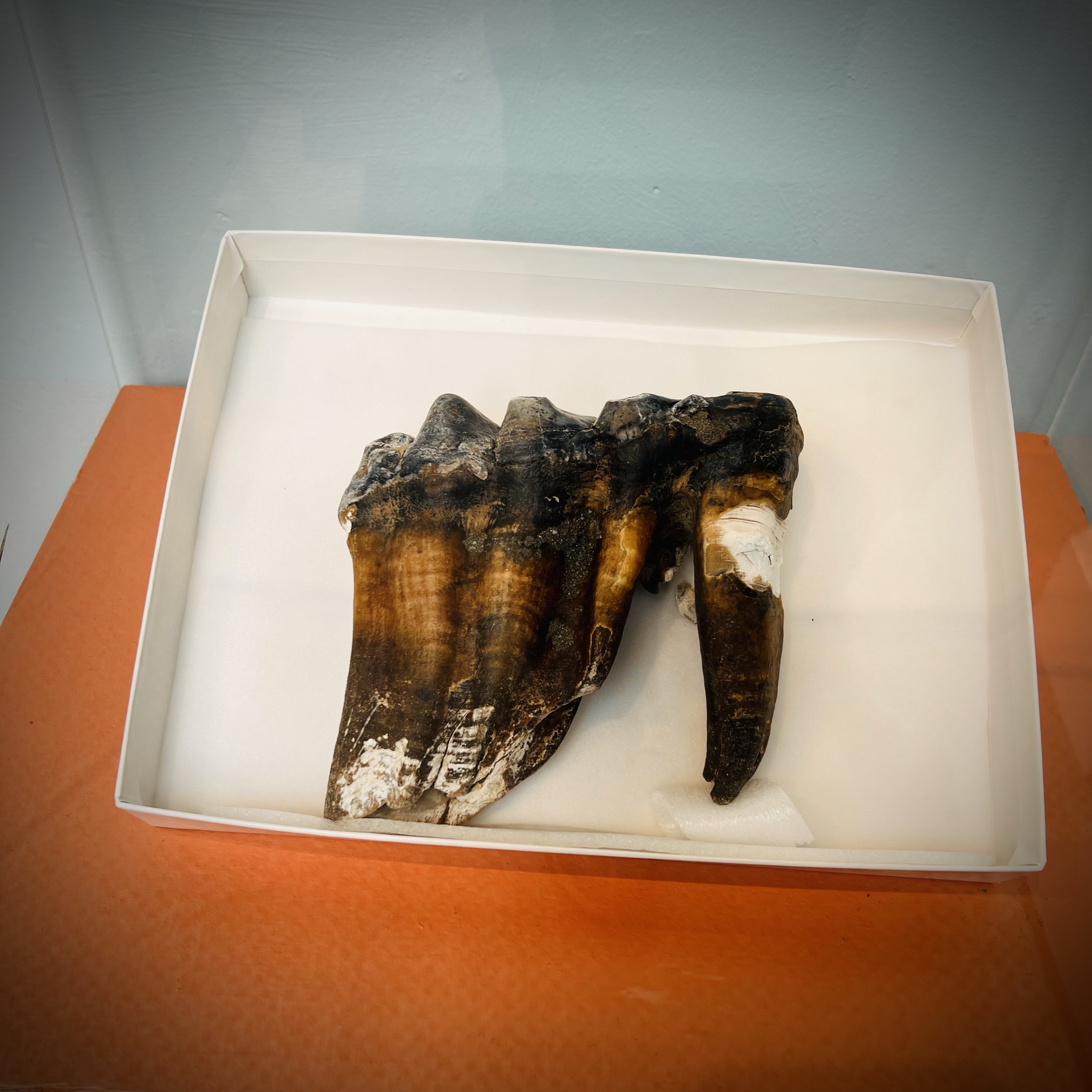
In fact the jogger who found it did not know what she found, so she took a picture of it and did what most of us seem to do nowadays: she posted the picture on social media. Someone who did know what it was saw the post and that person was Wayne Thompson, the Paleontology Advisor for the Santa Cruz Museum of Natural History. He identified the object as a tooth from an extinct mastodon!
When they returned to the beach the tooth was gone. So a search was begun to find where the molar tooth has gone through national and even international media. The efforts soon turned up the tooth. A local man saw the tooth on the beach and took it home. He saw that this was being sought after and he called the Santa Cruz Museum of Natural History.
The tooth was put on display at the museum for three days on the first weekend in June. And that is where I saw the tooth and sketched it.
The recently found mastodon molar in a box, on display for three days at the Santa Cruz Museum of Natural History. I sketched it on the second day.
When I first stepped into the museum, it was much busier than usual. In front of the mastodon display stood the man himself, Wayne Thompson, being interviewed by a local news station. He told the reporter that the tooth was probably washed down Aptos Creek during the record rains of 2023 and then washed up onto the beach. This was a big story. I was told that NPR would be visiting the museum on Monday.
Mastodons are related to the wooly mammoth and the modern elephant. The Pacific mastodon (Mammut pacificus) once roamed the land that became California between five million to 10,000 years ago. So the tooth was an incredible and rare find. In fact the name mastodon comes from ancient Greek meaning “breast tooth”, referring to the nipple-like appearance on the crown of the molars.
Mastodons disappeared from North and Central America about 10,500 years ago. It believed that the mastodon was driven to extinction by early human hunters.
It was a good omen to see a large raptor perched on a snag just after I crossed into Santa Cruz County on Highway 1.
I was not sure what the raptor was (hard to identify at 70 miles per hour) but it certainly was not a red-tailed hawk, it was much bigger. I was thinking more eagle-like.
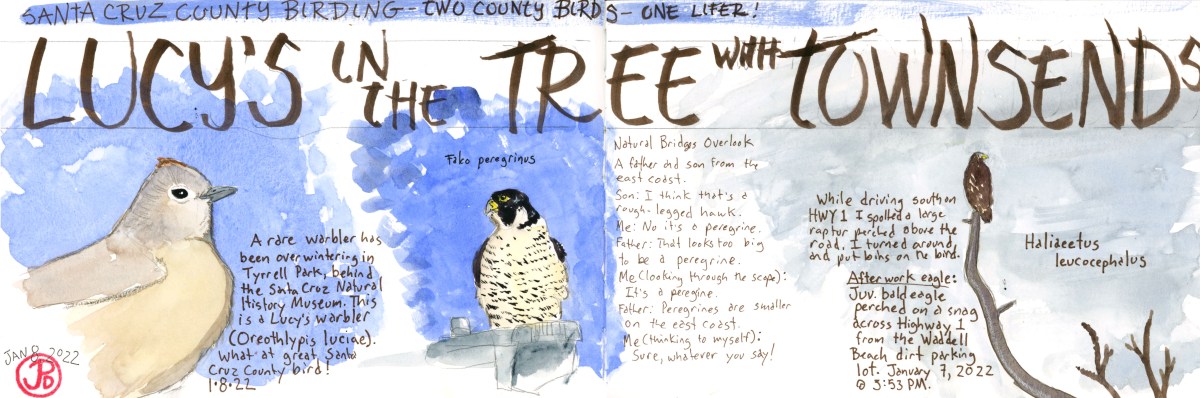
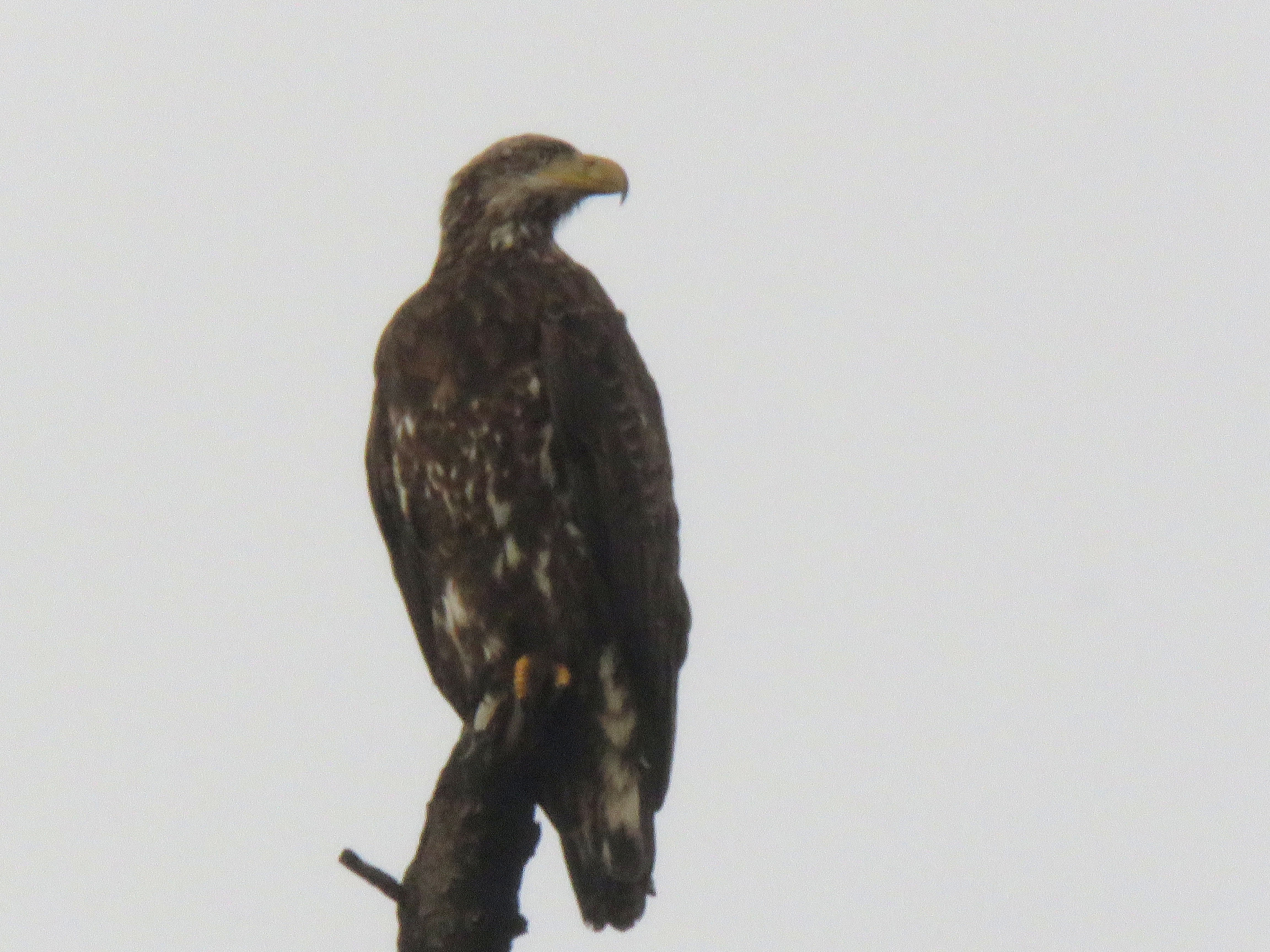
I passed Waddell Beach and turned around at the soonest point. I headed back and pulled into the dirt parking lot at Waddell State Beach. Once I got bins on the bird, I had no doubt that I was looking at an eagle. Not a golden but a juvenile bald eagle. Perhaps a second or third year bird. Welcome to Santa Cruz County! What a great afterwork bird!
That large yellow bill screams: bald eagle!! This is a juvenile bird and the first I have seen at Waddell Beach.
The next morning, Saturday, I headed to Tryrrell Park, just behind the Santa Cruz Museum of Natural History to look for a wayward warbler that had recently been spending the winter among the oaks and willows. Within about ten minutes I had the small, grey warbler, foraging in the willows with a Townsend’s warbler. A Lucy’s warbler. What a rarity and what a great county bird!
I then headed across town to the Natural Brides Overlook just off Westcliff Drive, to looked for a reported ruddy turnstone. It was not there but a local fellow Santa Cruz Bird Club member was there looking for the same bird with a scope. Together we found some nice birds: whimbrel, black turnstone, black oystercatcher, back-bellied plover, Heerman’s gull, and a close female white-winged scoter on the water.
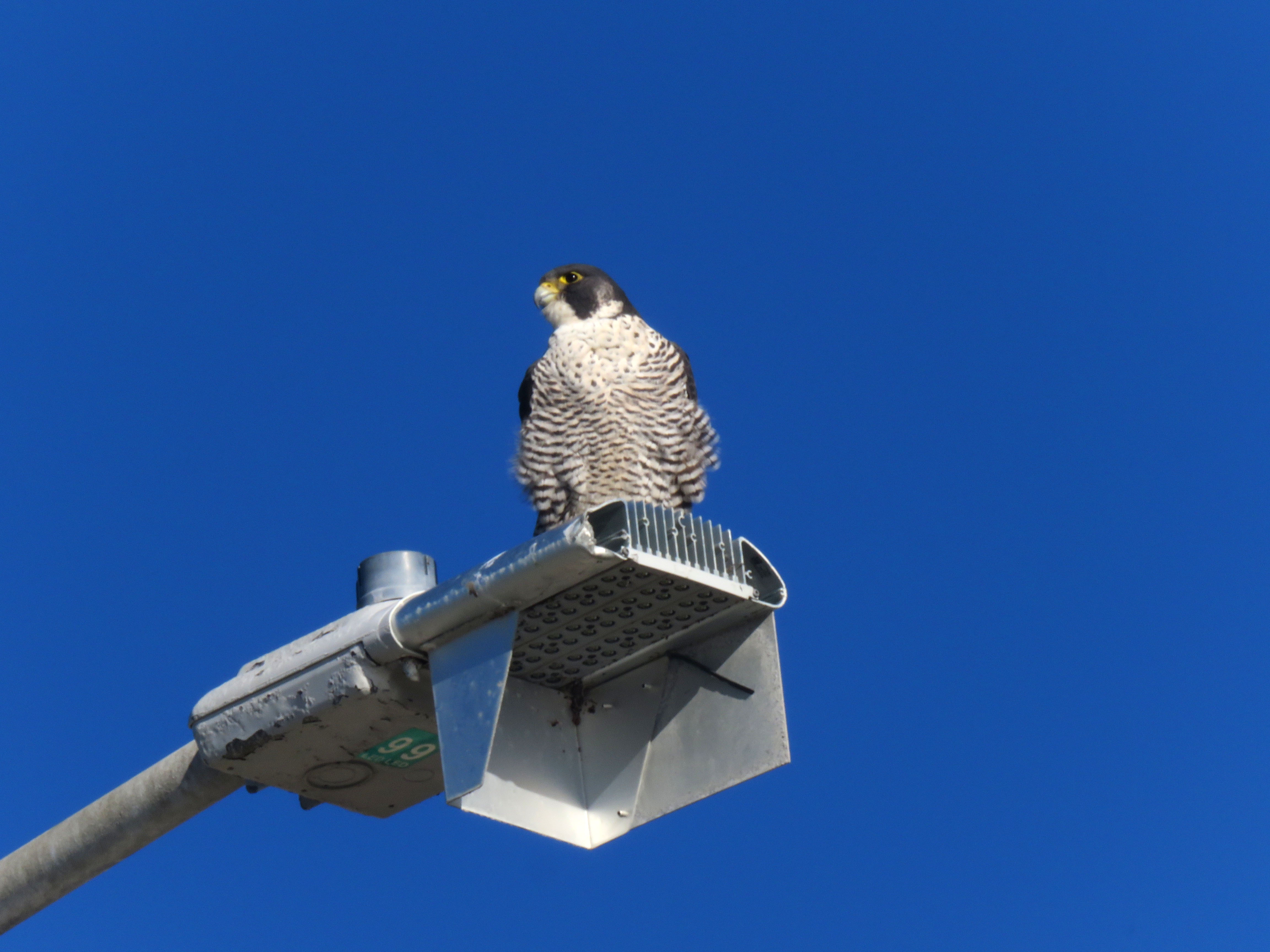
We met a man with a large lens from Sacramento, our state capital, and he was photographing some birds on the rock. He was excited at adding Brandt’s cormorant and Heerman’s gull to his life list (these birds are not seen in the Central Valley). A father and son from the east coast walked up, telling use there was a hawk perched on a light post on Westcliff. What follows is the conversation:
Son: I think it’s a rough-legged hawk.
Me: Now that would be a great bird to see here. (I put the raptor in my bins) Peregrine.
Father: It’s too big to be a peregrine.
In the meantime my club member compatriot has put his scope on the bird in question. And he asks me to take a look. I looked.
Me: Peregrine.
Dad: They are smaller on the east coast.
Size is not a great measure for field identification because birds can often seem larger when they fluff up their feathers and in raptors occurs reverse sexual dimorphism, which simply means that females are larger than males.
A rough-legged hawk, no err, a peregrine, no, too big to be a peregrine. . . okay a peregrine! A nickname for this bird on Hawk Hill is “Elvis” because of it’s dark head and “sideburns”.
I got some beta from the club member about a bird in the county that I needed to add to my lifelist. I had lackadaisically searched for the Santa Cruz County resident with no luck. Why? First I was searching in the wrong place and secondly, the bird was an exotic species which had been introduced to California.
Exotic species are an odd one when it comes to listing. They could be escapees and normally you cannot count them but if they have a established and sustained breeding population, such as the European starling or the Himalayan snowcock, then they can be counted. With the ABA’s approval of course.
So I headed down Highway One towards Watsonville. My destination: Pinto Lake City Park. The bird in question, according to my beta, was to be found in the reeds near the picnic area, just to the right of the dock.
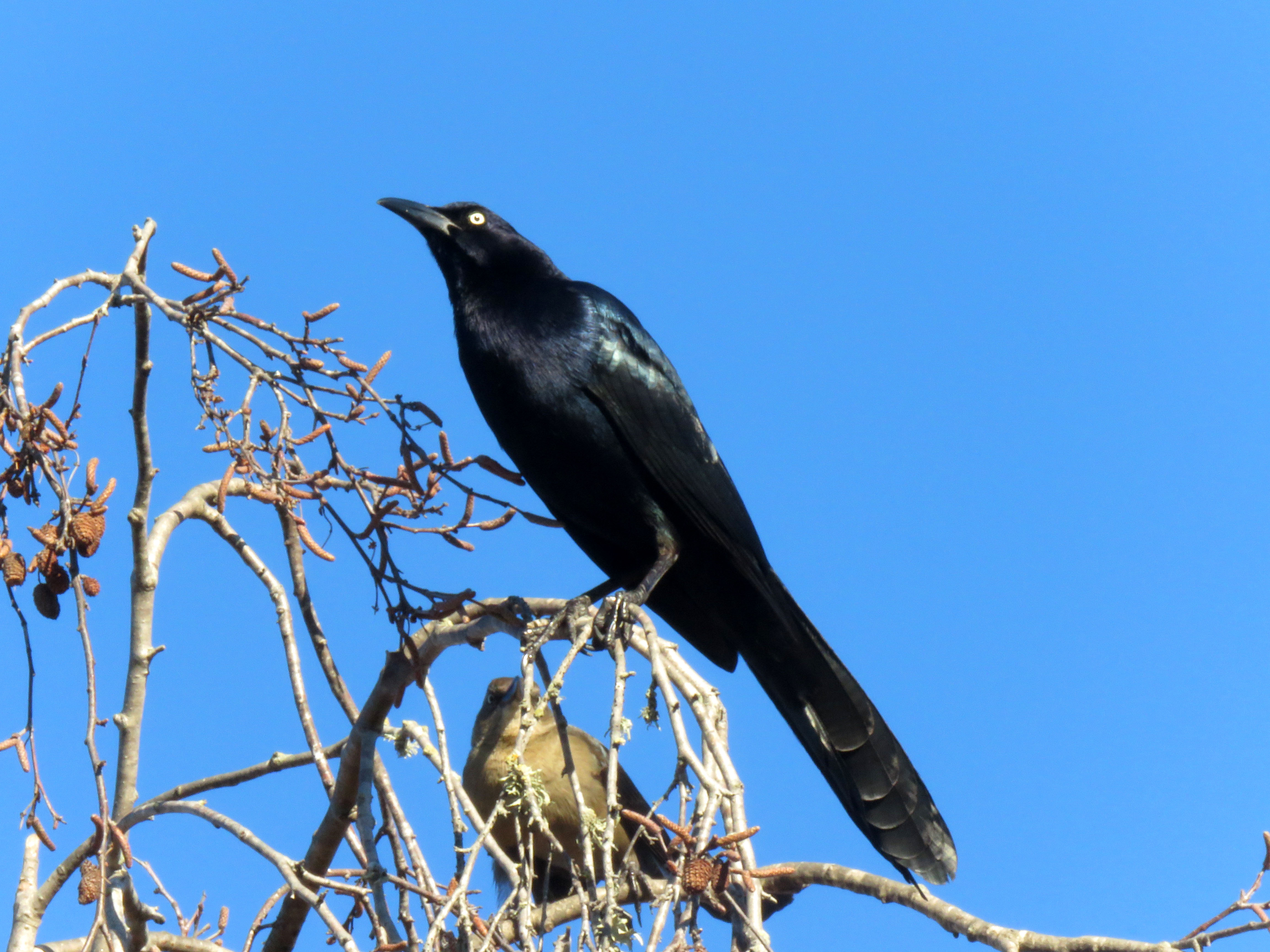
At the moment the dock was inundated with the Devil’s Bird: great-tailed grackle. There must have been about 30. I searched the reeds and got a brief view of my quarry before a flock flew to the other side of the dock.
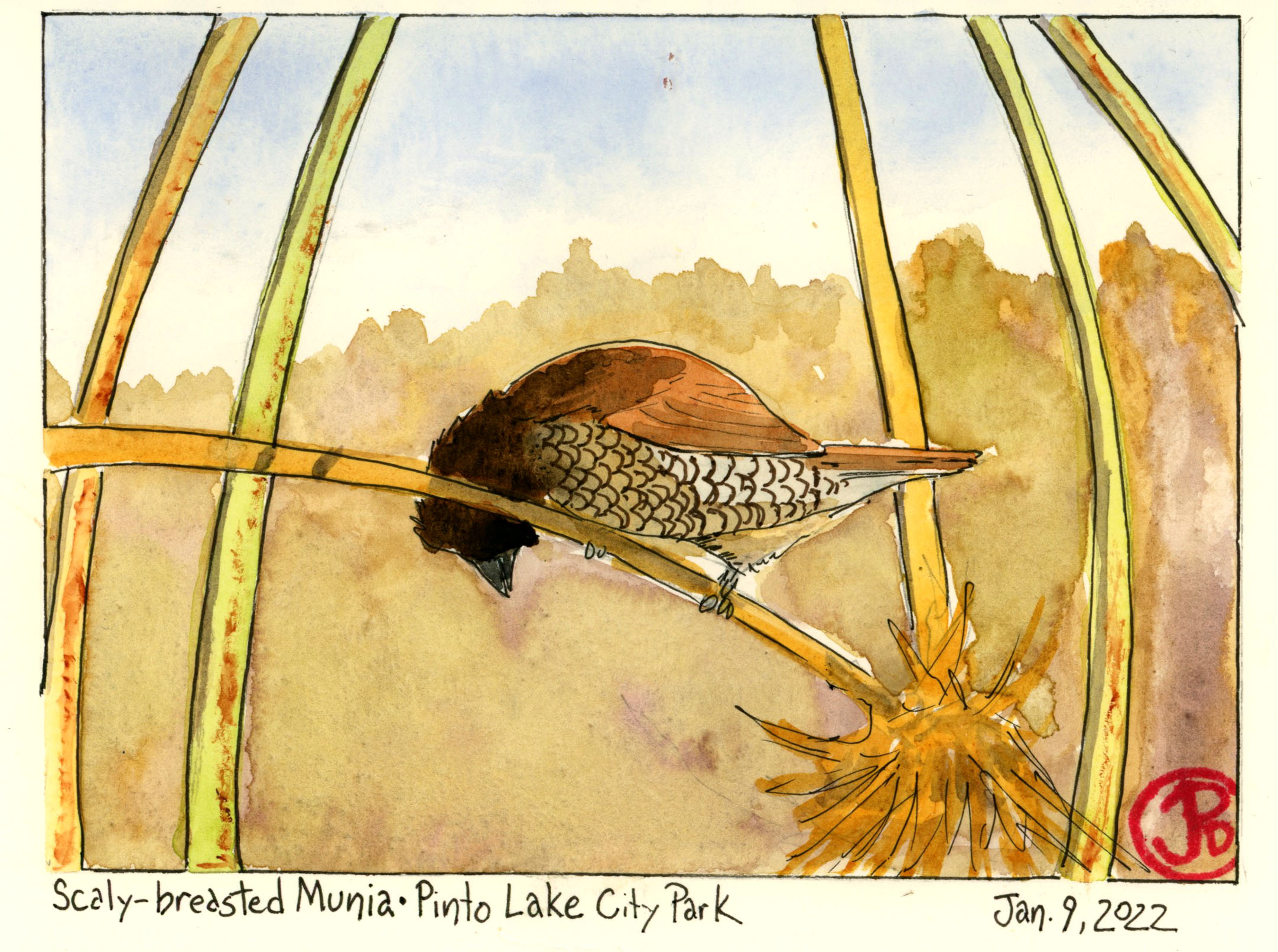
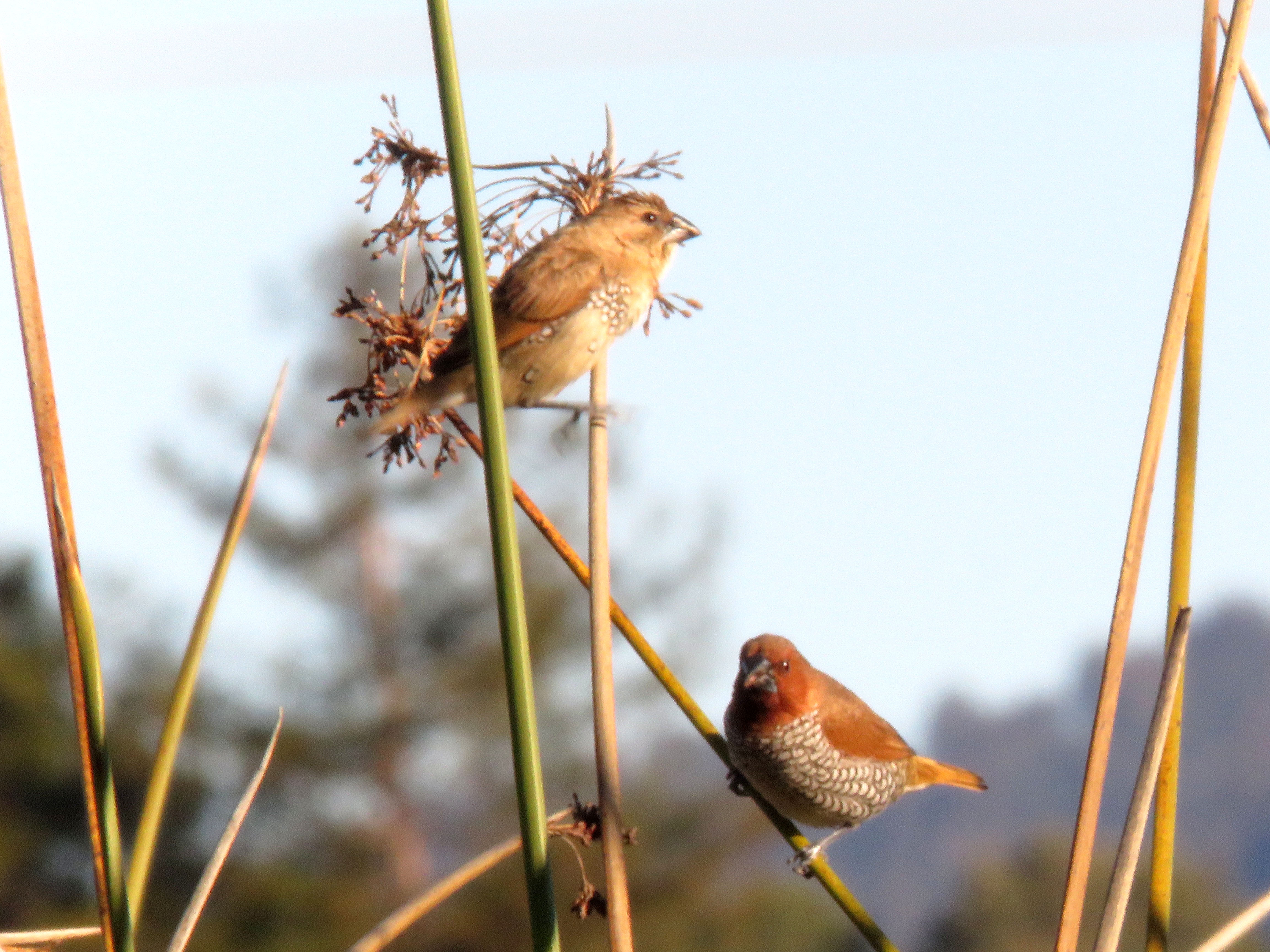
I walked over and followed the sounds of the flock moving through the reeds. I final got great views of lifebird # 1,666 (a global pandemic really spoils a world life list). Here was a flock of 12 scale-breasted munias. This small sparrow-like birds are native to Asia and India. How they got here, no one really knows.
Last week there was proof that the city and county of San Francisco has not been fully tamed. Living in San Francisco’s “wild” west side, I have seen raccoon and skunks threading their way through the Sunset’s twilight streets. I have even seen coyotes in Golden Gate Park. One at the intersection of Lincoln and Great Highway and a whole family at Middle Lake. Seeing a family with healthy coyote pups, thriving in the midst of such a vast urban area restored my faith in the power of nature to survive in the absence of a “traditional” habitat and speaks to me about the resilience of nature in the face of compromised or destroyed ecosystems. And now an even bigger mammal has crossed into the southern border of San Francisco.
An adult mountain lion was captured on a home security camera in the Seacliff neighborhood, sometime on the evening of June 30th. The lion was spotted on two other occasions making it’s way south, the last sighting, on July 3, was at Lake Merced in the southwestern part of the city.
The real question I ask myself is: are mountain lions creeping into our habitat or have we been creeping into their’s? I will let you answer that question for yourself, I know I have an answer.
The anchor for this sketch was a lion mount at the Santa Cruz Museum of Natural History. I was told the lion was shot in the Carmel Valley in the 1970s because it was preying on livestock.
I have been lucky enough to see a live mountain lion in the Bay Area. It was on a backpacking trip in Pt. Reyes in April of 2011. I was just heading back from Arch Rock when I saw the large reddish cat with a long tail cross my path about 20 yards away. It was a brief look but I later found out that a motion camera about a mile a way from Arch Rock capture an image of a lion about once a week.




 Corvid Sketcher