Sonoma Bits & Bobs

These are a collection of sketches that are related in their location, the Sonoma Coast.

From Mammoth Rock to Fort Ross to the north and into the Russian River Valley to the former lumber town of Duncans Mills.

Fort Ross
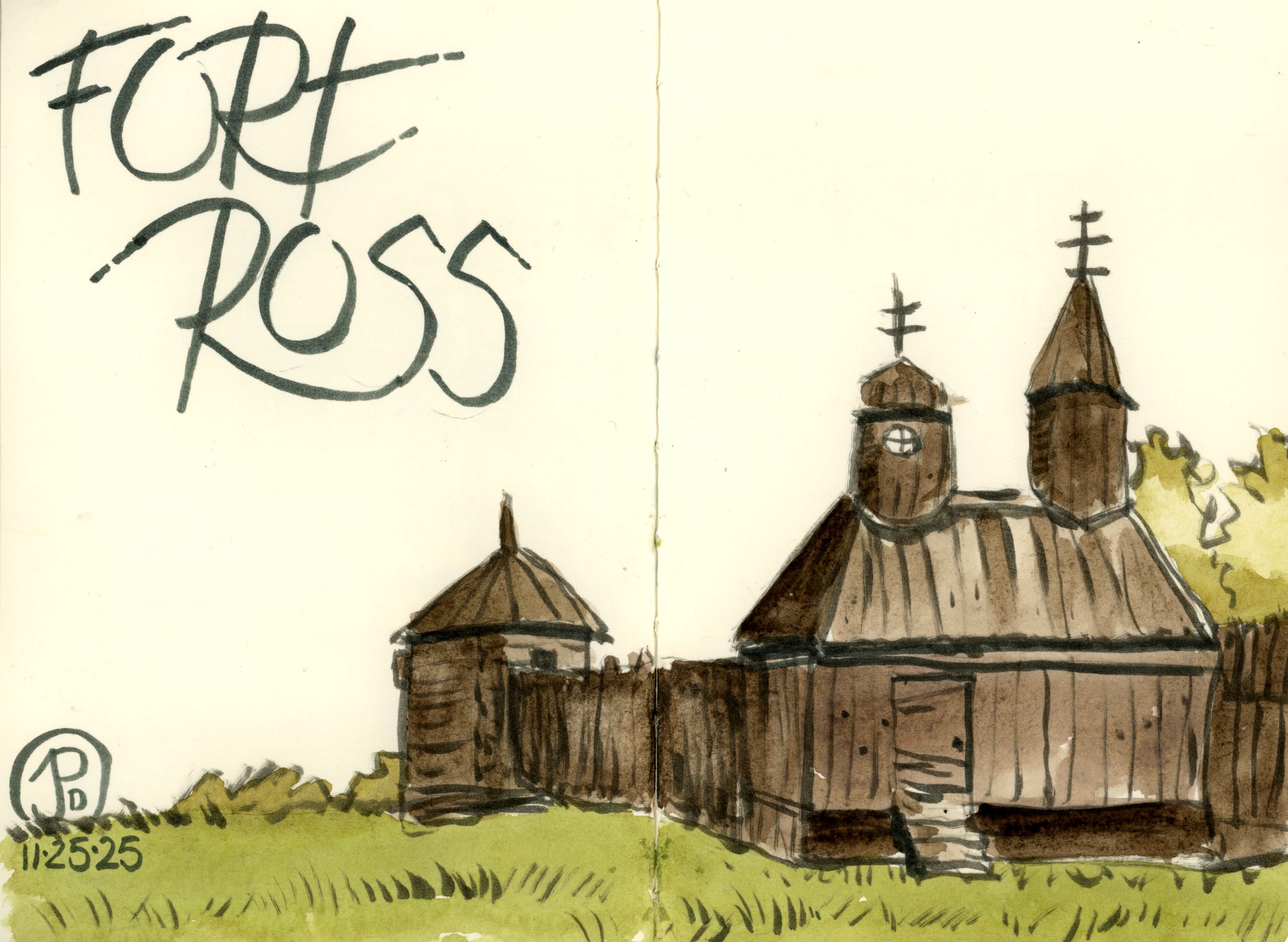
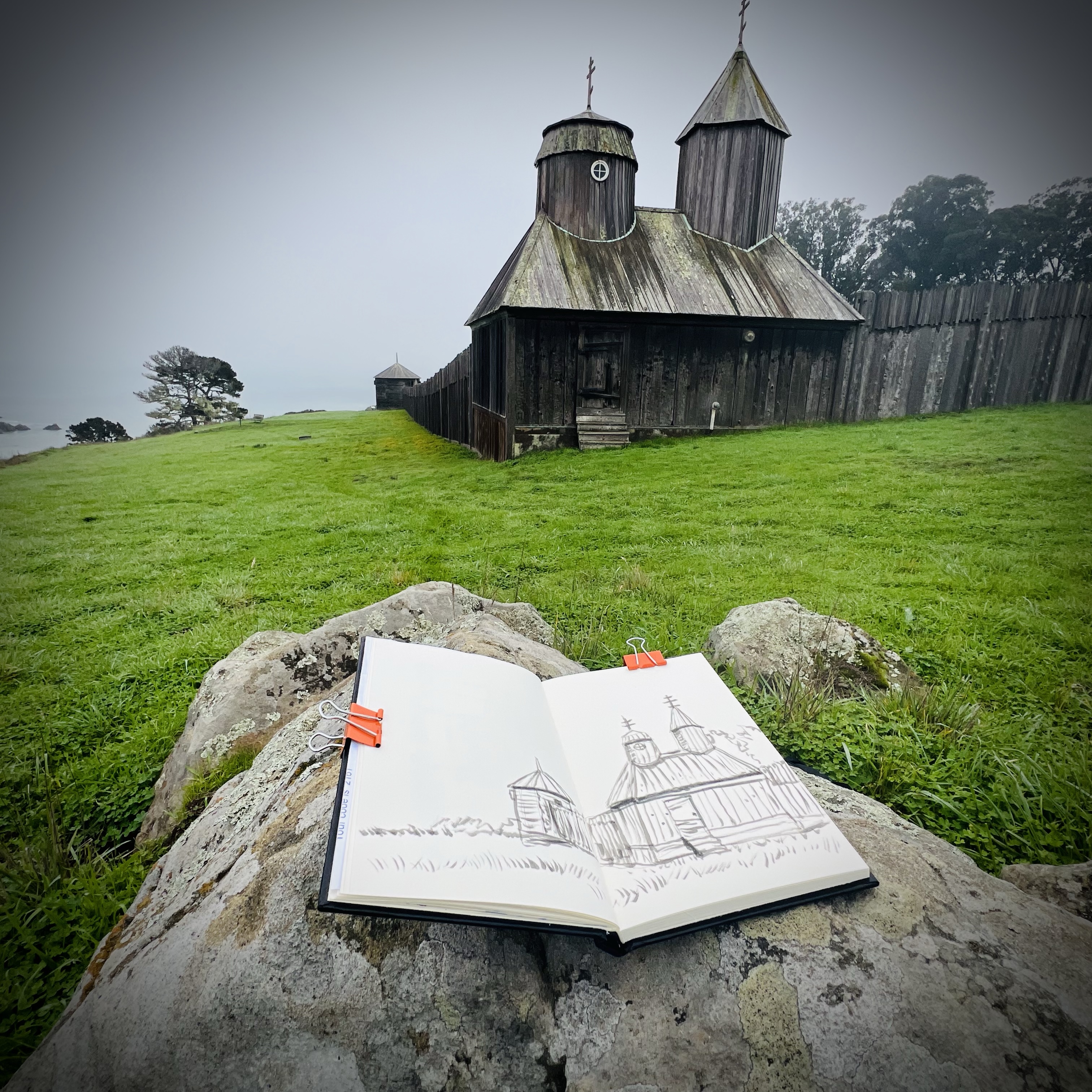
One morning I drove half an hour north from my digs to Fort Ross State Historic Park. Fort Ross is a sketching touchstone for me and I have returned here with my sketchbook many times. This time I chose a different angle sitting on a rock outside the fort looking towards the Russian Church. I had wanted to sketch from a similar perspective on a previous visit, but I was foiled by rainy conditions.
Duncans Mills
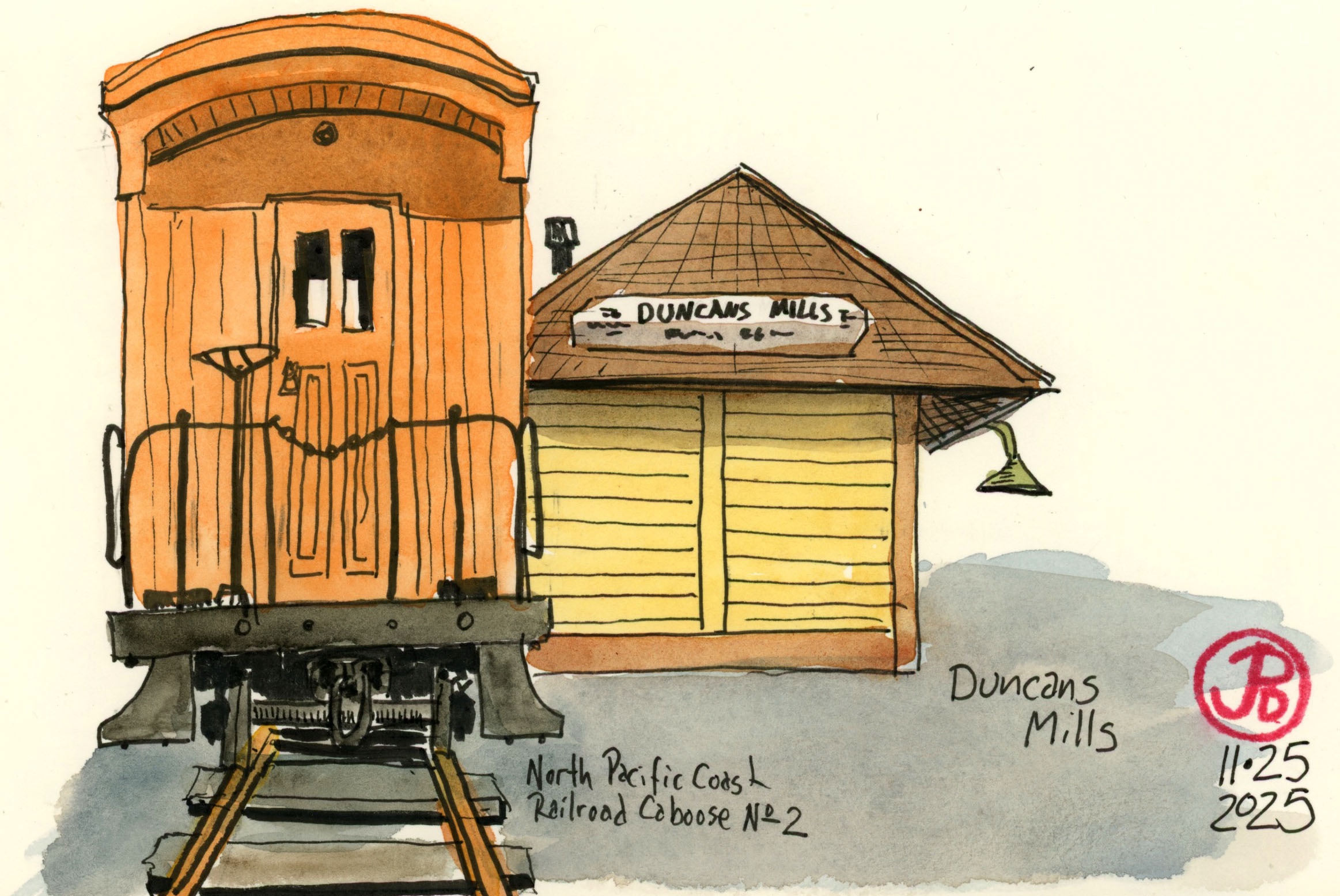
I have wanted to sketch the train station and caboose at Duncans Mills for a while but I had not found the right perspective. There were always cars parked in front and around the station so I sat on the end of the caboose with the back of the station in the background. The narrow gauge line was to the right but is name a paved parking lot.

The narrow gauge railroad came to the lumber town of Duncans Mills in the 1870s and rail, both passenger and freight, until train service was discontinued in 1935.
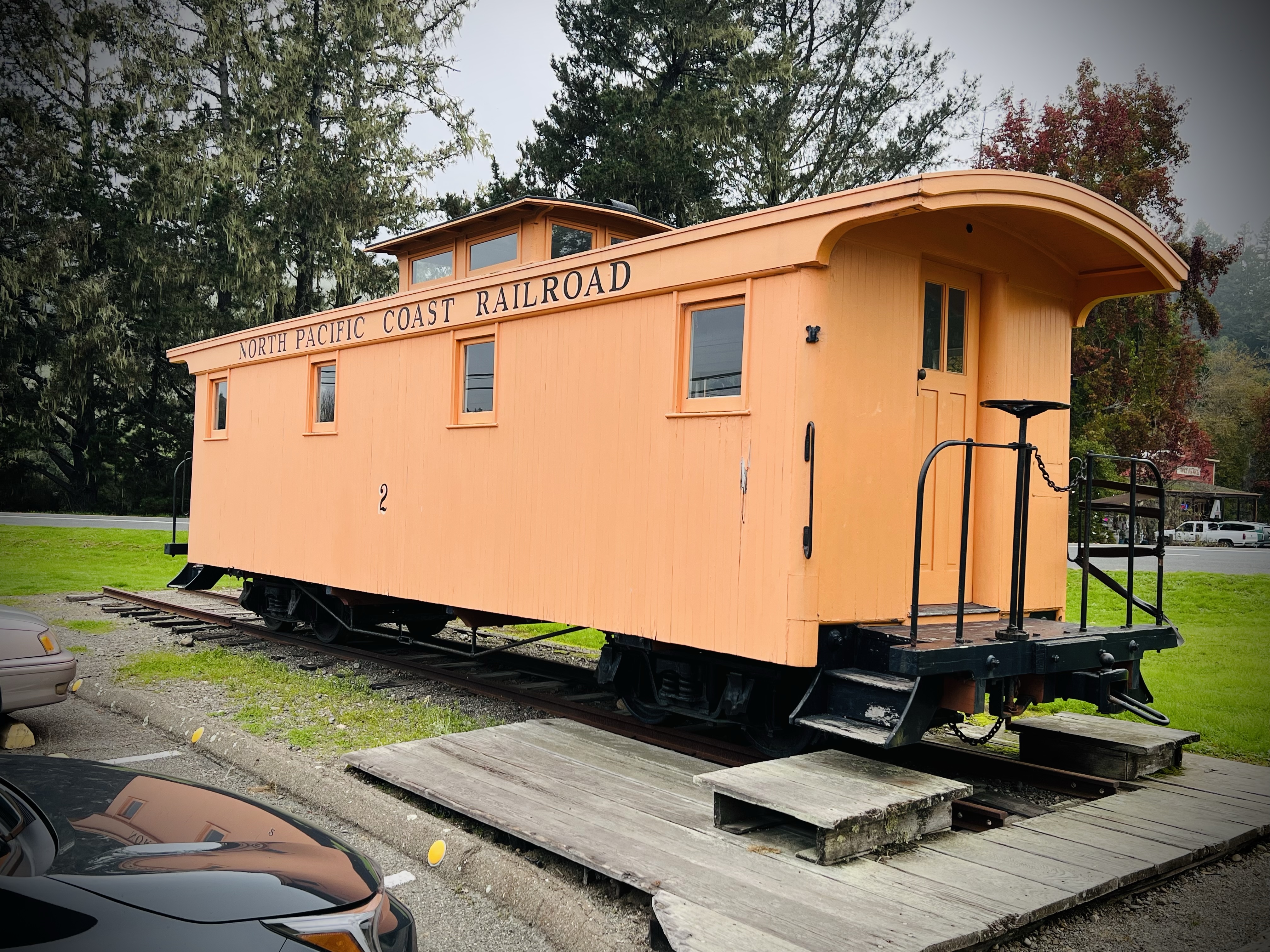
North Pacific Coast Railroad Caboose No. 2. This narrow gauge caboose was built in 1877.

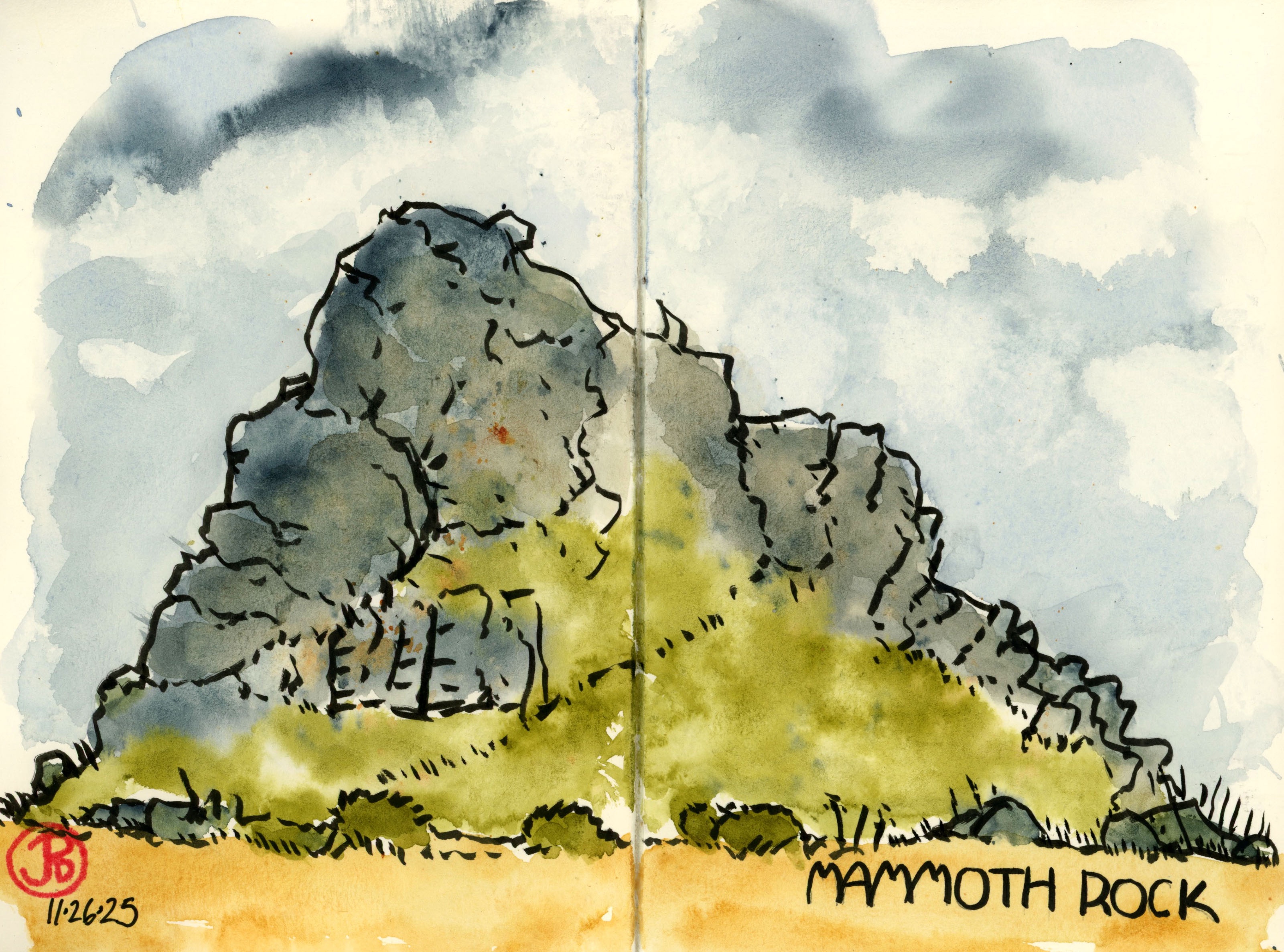
Sonoma Coast SP: Mammoth Rock

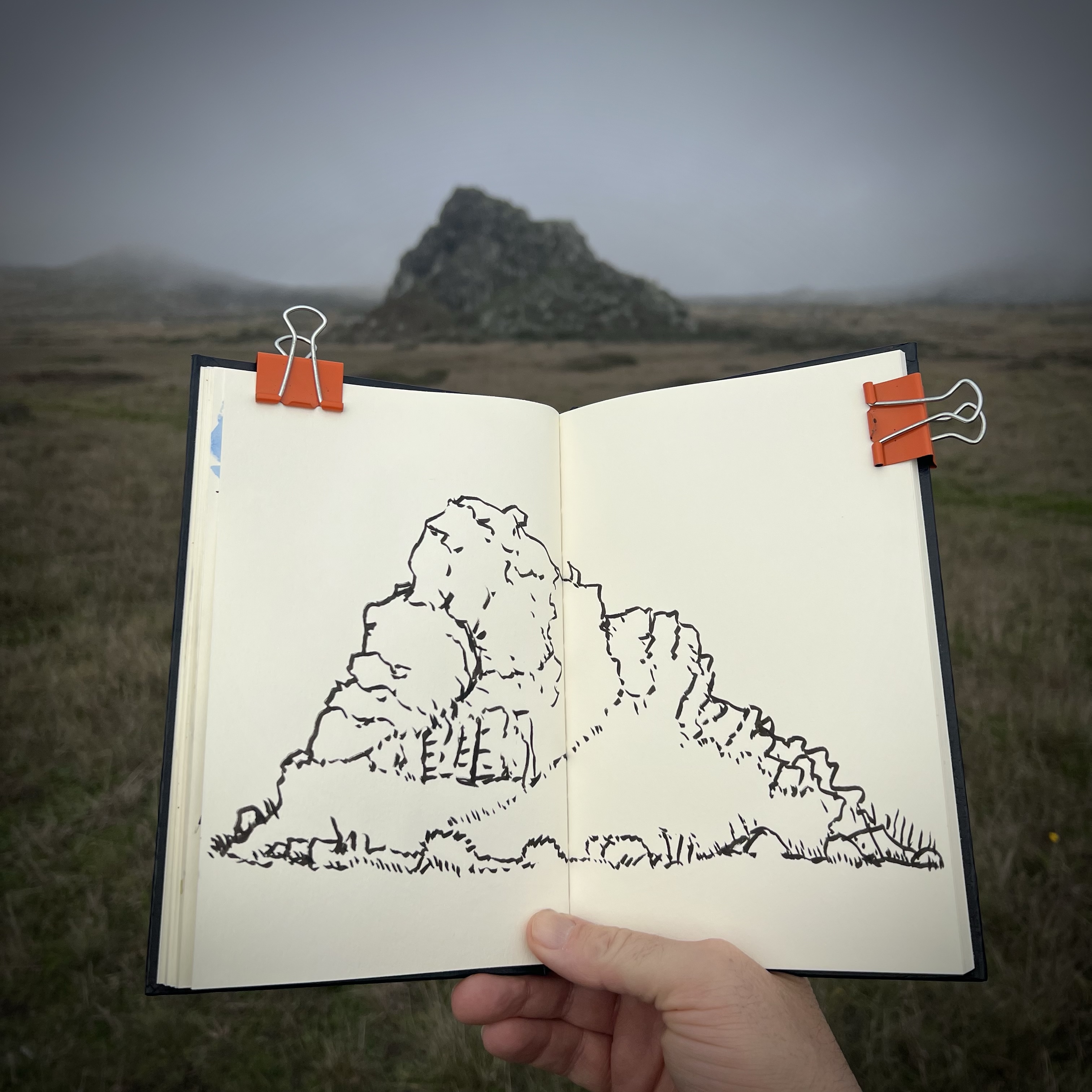
From my digs it was a short drive north to Goat Rock State Beach- Sonoma Coast State Park. My hiking/ sketching destination was Mammoth Rock. It was a blustery 30 minute hike to the large Mammoth Rock.

Wintery and windy weather is never an impediment to a good sketching experience. Driving, windy rain is another monster.

I found a perspective and started my sketch.
Image

Gualala Point

After three days of rain, the sky cleared and the wind let up.

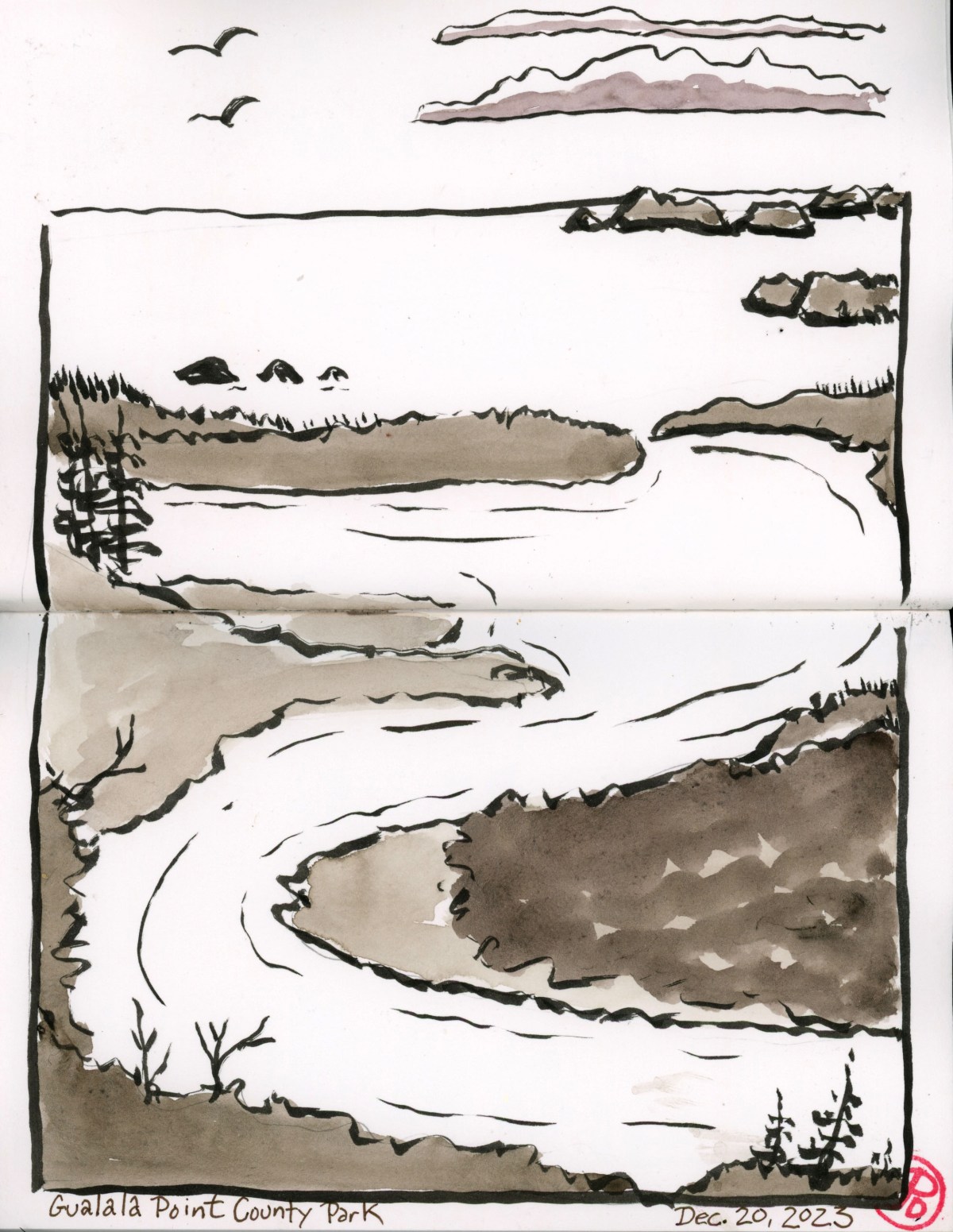
It was time to do a little hiker-sketching at Gualala Point Regional Park in the very northwestern corner of Sonoma County. Once you head north over the Gualala River, you are in Mendocino County.

This is a great place to whale watch but at this time of the season the grays were not migrating. So I found a dry bench and sketched the vista looking northwest with the serpentine Gualala River in the foreground and the Pacific behind (featured sketch).

I choose to paint the scene in sepia, leaving the Gualala River unpainted to highlight the form and path of the river.

The rugged coast of Gualala Point.
Image

Recreating at The Sea Ranch

While hiking, fishing, biking, boating, birding, and nature loafing are a popular recreation activities for early Sea Ranchers, they also needed a center to swim and play tennis (and currently, pickle ball).

To this end, three recreation centers were designed and built. The three centers are: Moonraker (1965), the Ohlson (1971), and the Del Mar (1996) Recreation Centers. All the centers where designed in the Sea Ranch style: sloping roofs, barn-sided, and harmonizing with the natural landscape.

There was also function to their forms as the constant prevailing northwestern winds were an environmental impediment to recreating. To this end the architects use of berms and wind-breaks were used to shield the cold winds from the wet, bathing-suited Sea Ranchers.

I wanted to sketch them and I started with the first rec center ever built at Sea Ranch: Moonraker.

It was raining rather vigorously so I sketched the exterior from the shelter of my waterproof sketching blind aka my car (featured sketch).

The Moonraker is an innovative design. The changing rooms are a long, henge-like building which shelters Sea Ranchers from the northwestern winds. The pool and tennis courts are sunk into the landscape, providing an oasis from the prevailing Pacific gales.

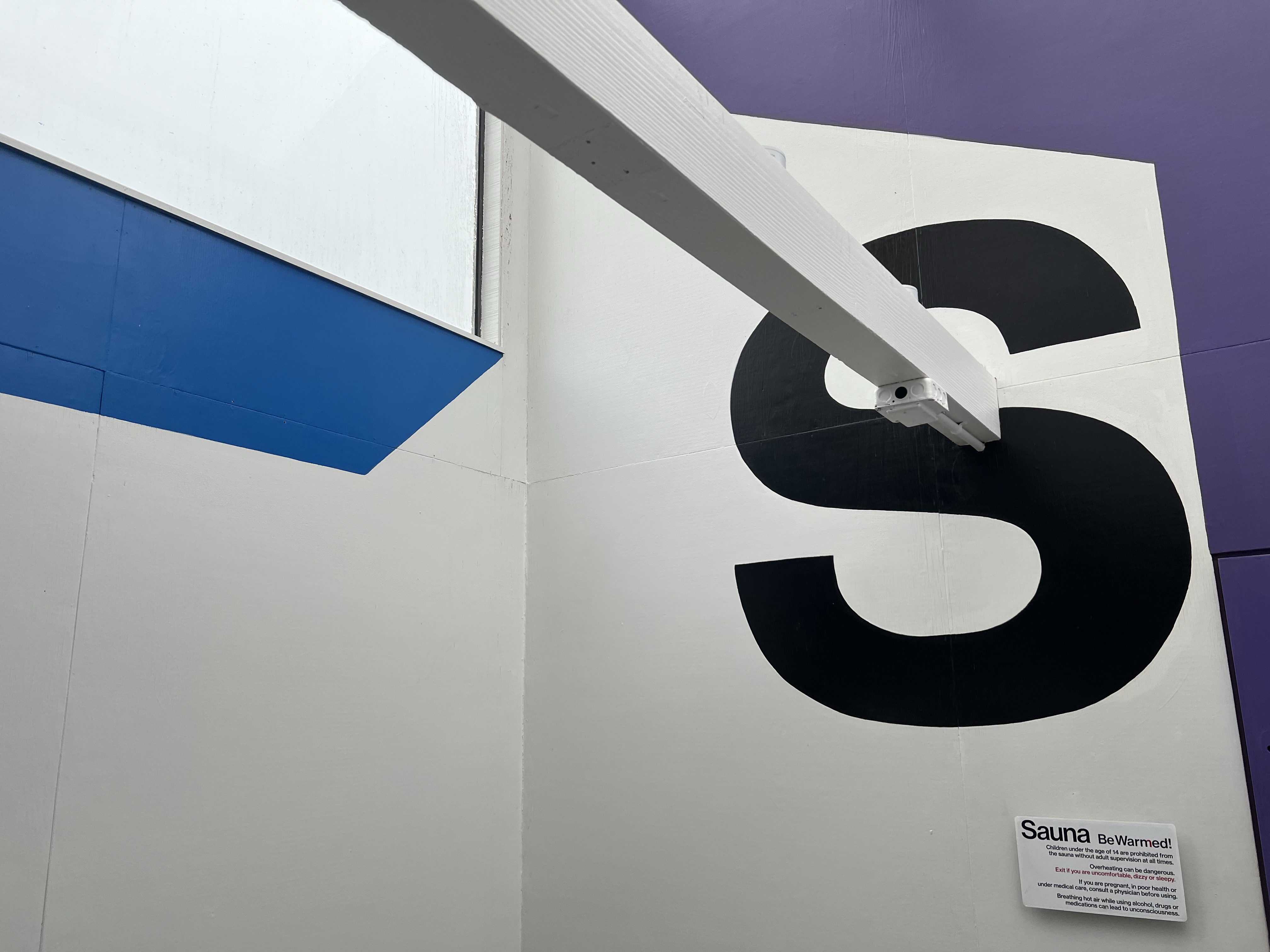
The men’s changing rooms at Moonraker. The graphics were designed by Barbara Stauffacher Solomon. The work that she did at Moonraker are considered to be the genesis of the Supergraphics movement.

My next experience with a rec center was more immersive. This was at the second rec center built at Sea Ranch: Ohlson Recreation Center.

With my rental I had access to all three rec centers and I wanted to take a dip at my favorite.

Wow, what a face this presents to the wind. To the right are the tennis courts and as at Moonraker, the structure provides a wind break.

This is the Ohlson Recreation Center. I have always appreciated the design of this center since the first time I saw photographs of it, I’ve loved it. It looks like a futuristic barn that has been on the land for centuries.

I checking in, headed to the door marked “M” and converted into bathing attire. On this cold winter’s day, the heated waters of the wallowing end was perfect.

I thought doing the back waddle in the wallowing side of the pool was a perfect way to enjoy the lines, angles, and surfaces of this iconic Sea Ranch structure. Too bad my sketch book was back in the changing room (and not entirely waterproof!).

A little presoak sketch of the fabulous recreational barn that is the Ohlson Recreation Center, completed in 1971.
Image

Sea Ranch and Lawrence Halprin

One of the leading lights of the development of The Sea Ranch on the northern Sonoma County Coast was Lawrence Halrprin (1916-2009).

A ten mile stretch of coast (formally a sheep ranch) was purchased with the intention of building a community that did not fight against its location but became part of it. The placement of houses and the design of the architecture was intended to mimic the shape of the hills, meadows, and tree lines of the location.

Halprin was hired on to develop the master plan for The Sea Ranch. This was a tall task to develop a new cultural utopia, even a blueprint for all future development. This was a chance to create a new architectural language that could be translated to other locations.

I connect with the works of Halprin in many ways.

I love the way the land becomes the centerpiece of The Sea Ranch. I can’t wait to sketch it, again!

I also love to look at the sketches of Halprin. He thought in sketches of pencil, ink, and watercolor. Halprin captured the landscape in his sketches. He spent a lot of time at Sea Ranch and he had a house here.

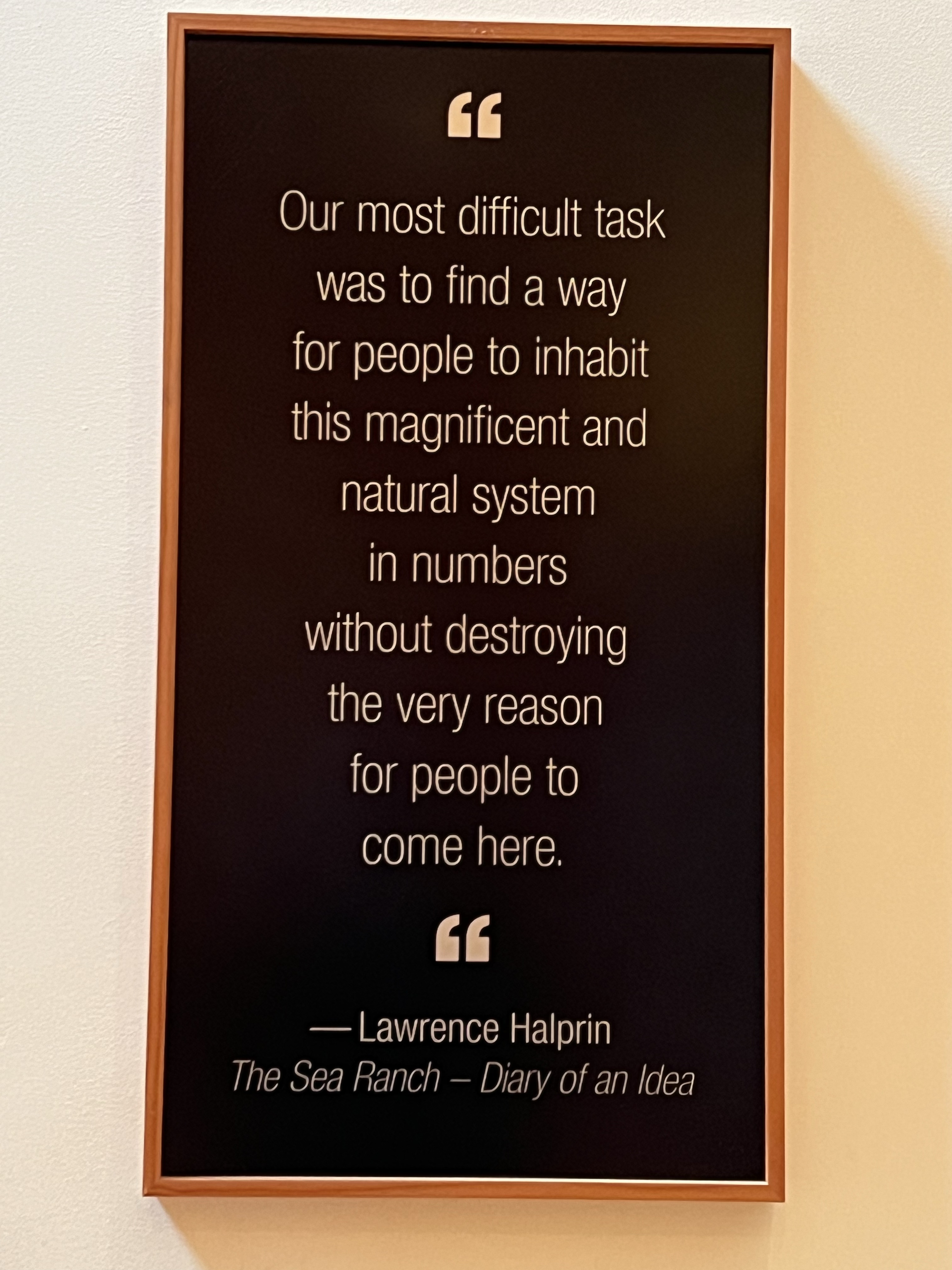
Halprin’s words live on in the Sea Ranch Lodge.

The Sea Ranch is a touchstone that I return to for inspiration, quiet, and sustenance. I love being here and sketching here.

When my father died I retreated to the Sea Ranch Lodge to have some quiet time and write my comments for his celebration of life ceremony.

For the feature sketch I attempted a mild, if not failed, caricature of Halprin donning a barn-sided suit. In the background is his studio at The Sea Ranch where he worked while he was on his land at The Sea Ranch.

The above sketch of the house next to my Sea Ranch rental demonstrates some of the Sea Ranch principles in design. The sloped roof, facing into the wind provides a wind-break on the lee-side of the structure (to the right). The house is also sided in natural vertical wood, reflecting the barn influences of some of the first structures on the land. There is also the influence of nearby Fort Ross and it’s chapel.

What is not reflected in the Utopian plans of Sea Ranch was the view from my front room. The original design called for open views across a common meadow to the ocean. From my wall of windows I could see a golf links, a road, a line of house and finally, just beyond the houses, the Pacific Ocean.

Like the name implies, Utopias don’t always live up to their founder’s vision.

And there are always more people with more money than sense to come along and screw it up!

Image

The Sea Ranch

I recently spent a few days at The Sea Ranch on the Sonoma Coast. This is a place to recharge your batteries, write, sketch, hike, and do report cards. The Sea Ranch is about two and a half hours (100 miles) north of San Francisco and runs ten miles south from the Mendocino County border at the Gualala River in a narrow strip in between the rocky-coved coastline and the San Andreas Fault.

It was developed in the 1960’s and it is renowned around the world for its innovative and influential architecture. The original concept was to create buildings that worked with and not against the rugged Sonoma coast landscape. The design and style was influenced from it’s setting and the existing farm buildings on the former sheep ranch. As founding landscape architect Lawerence Halprin expressed it:

I was convinced that Sea Ranch could become a place where nature and human habitation could intersect in a kind of intense symbiosis that would allow people to become part of the ecosystem

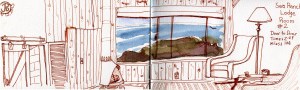
I stayed in the iconic Sea Ranch Lodge ( featured sketch) which was among the first four buildings erected on the site to be a place where the community meets, picks up their mail and has a cocktail and a meal. This building is bookended by the iconic stylized rams heads that is Sea Ranch’s logo, designed by Barabara Stauffacher.

Room #2

I stayed in room number 2. The room had the feeling of being in an elegant coastal barn but with an expansive view out to the west of Big Blue and the lines of pelican and cormorant that passed over Bihler Point.

Sea Ranch Chapel

I headed north on Highway One to sketch one of the touchstones of my sketching universe, the Sea Ranch Chapel. I sat on a stone bench in front of the chapel, which was created without a blueprint. I started to sketch, using a Micron “Brown” pen. A visitor wandered out of her way to see what I was doing. She asked knowingly, ‘Doing a sketch?” Then she looked toward the uneven, shingled lines of this odd aquatic sea slug and offered, “Good luck.” But I thought, finally I get to sketch a building, without using a single straight line.

My father once paid me a compliment as he looked over the architectural sketches in one of my journals. He said, “You draw really good straight lines.” This coming from my father who was an engineer and always thought in straight lines. This has always been the best compliment I have every had about my sketching.

So I went into the chapel  and said a few words to close and holy golden light, a message to my departed dad.