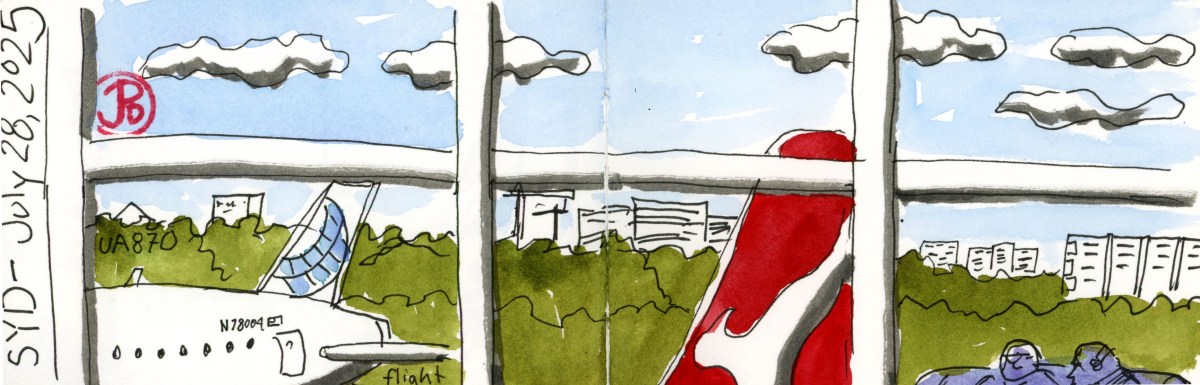
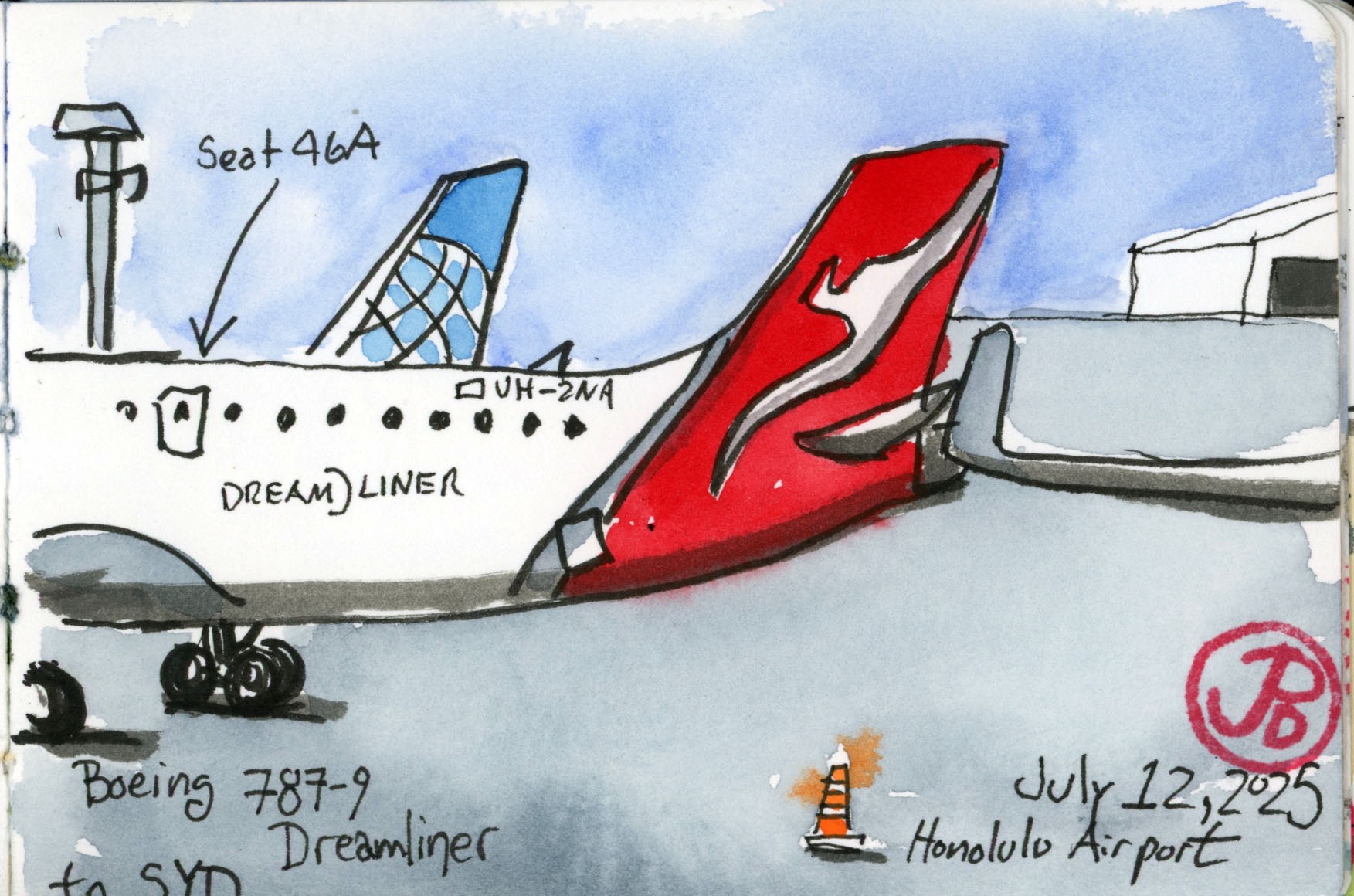
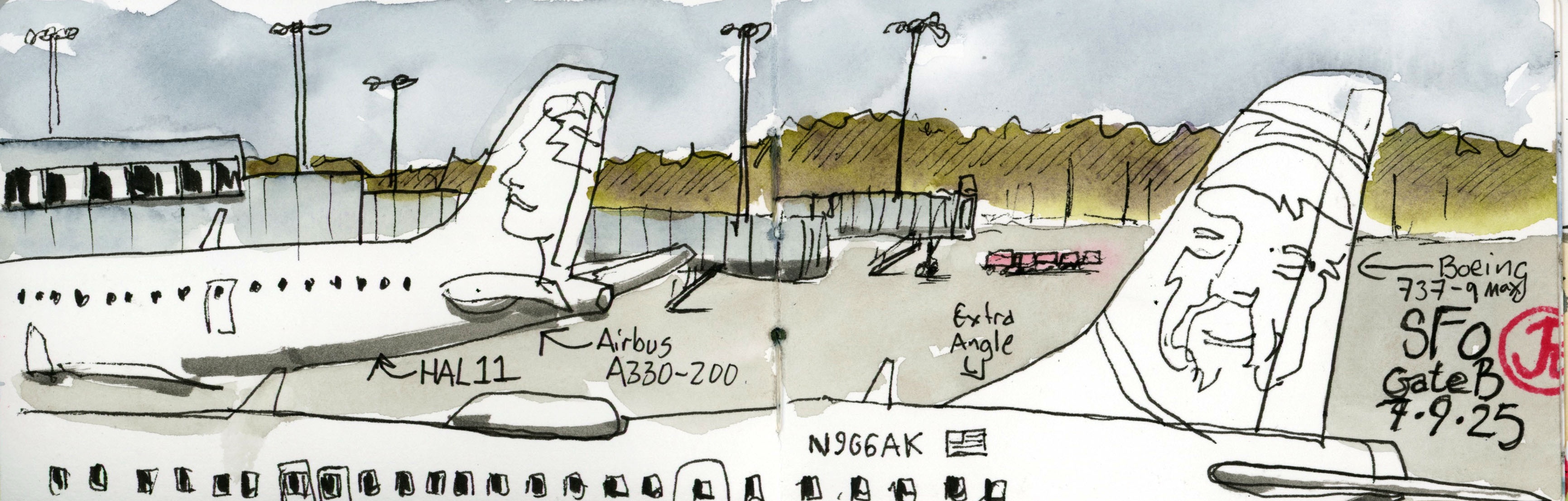
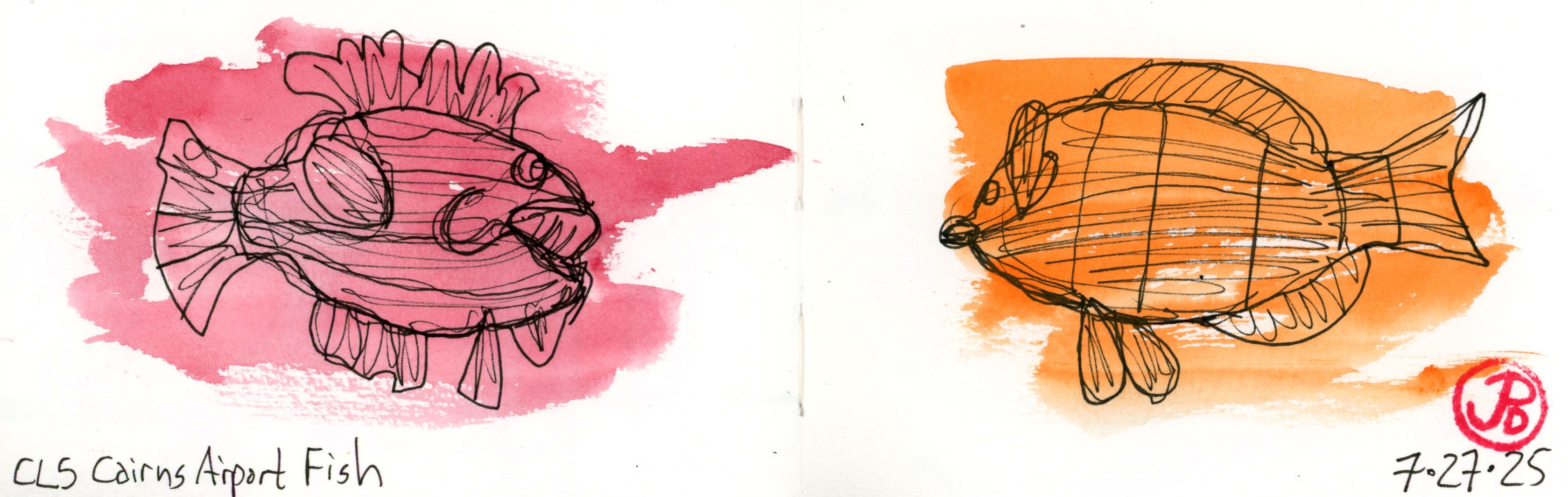
On my Hawaii/Australia adventure I took a total of six flights so it left me with plenty of time to do some airport sketching. A perfect way to spend time while waiting to board. Or a perfect way to spend time if you’re really bored!
I did a total of nine sketches, some of which I have included here.
I always enjoy the art in airports. My home airport, SFO, frequently changes what’s on show.
Most of the time I focus on the scene outside the window of planes parked at the gates. But at the airport in Cairns (Gateway to the Great Barrier Reef) I sketched some of the fish sculptures hanging from the ceiling (all rendered in a continuous-line sketch).
Circular Quay is the epicenter of Sydney. This is where the First Fleet landed in 1788 and established first settlements at the Rocks.
Today it is a bustling transit hub bringing together trams, trains, and ferries. And bookended by two iconic architectural masterpieces: the Sydney Harbour Bridge and Opera House.
I first became aware of the quay in Eric Bogle’s antiwar song, “And the Band Plays Waltzing Matilda”. The song is narrated by an Australian man who fights in World War I in the battle of Galipoli, where he loses both legs. Here are a few verses:
And when the ship pulled into Circular Quay I looked at the place where me legs used to be And thank Christ there was no one there waiting for me To grieve and to mourn and to pity
And the Band played Waltzing Matilda When they carried us down the gangway Oh nobody cheered, they just stood there and stared Then they turned all their faces away
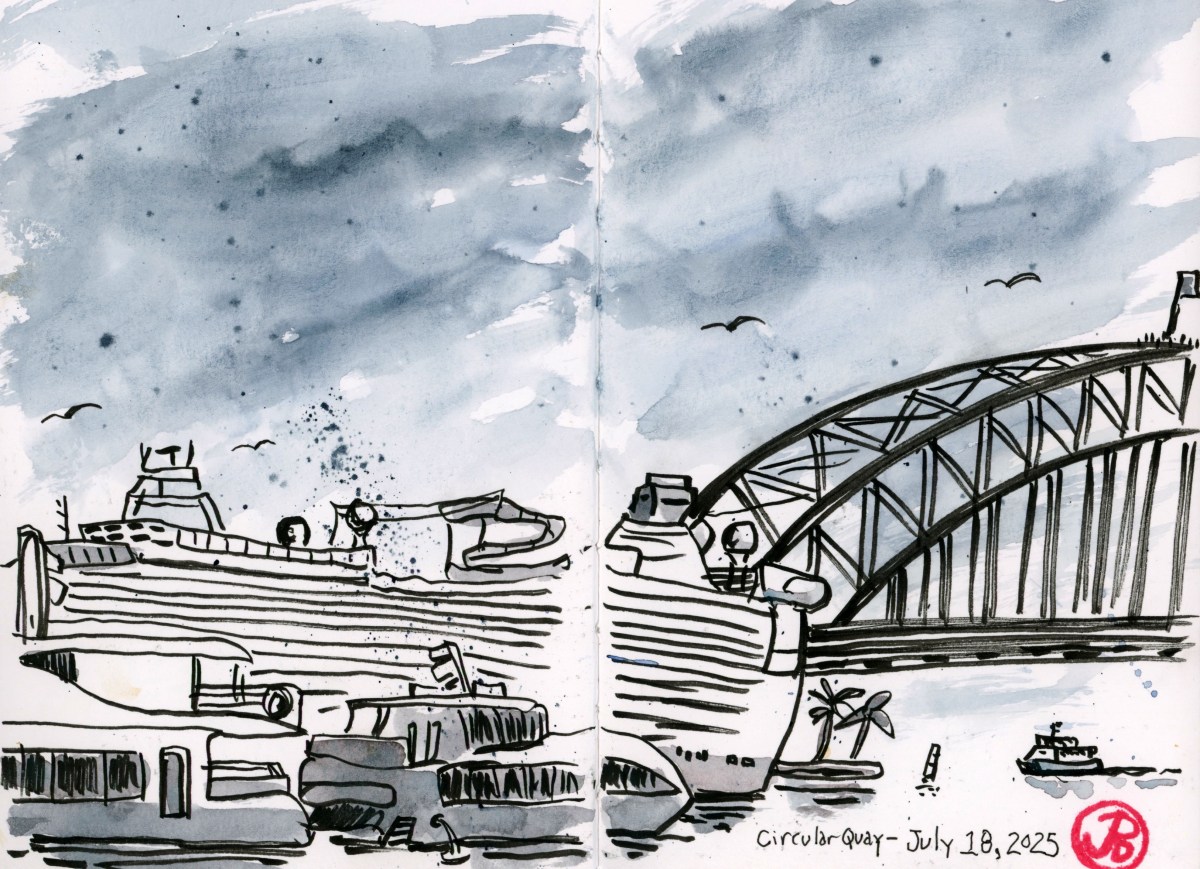
On some days a massive cruise ship is docked in the Quay. On my visit there was a Princess Cruise ship disgorging its many passengers and their equally massive bits of luggage.
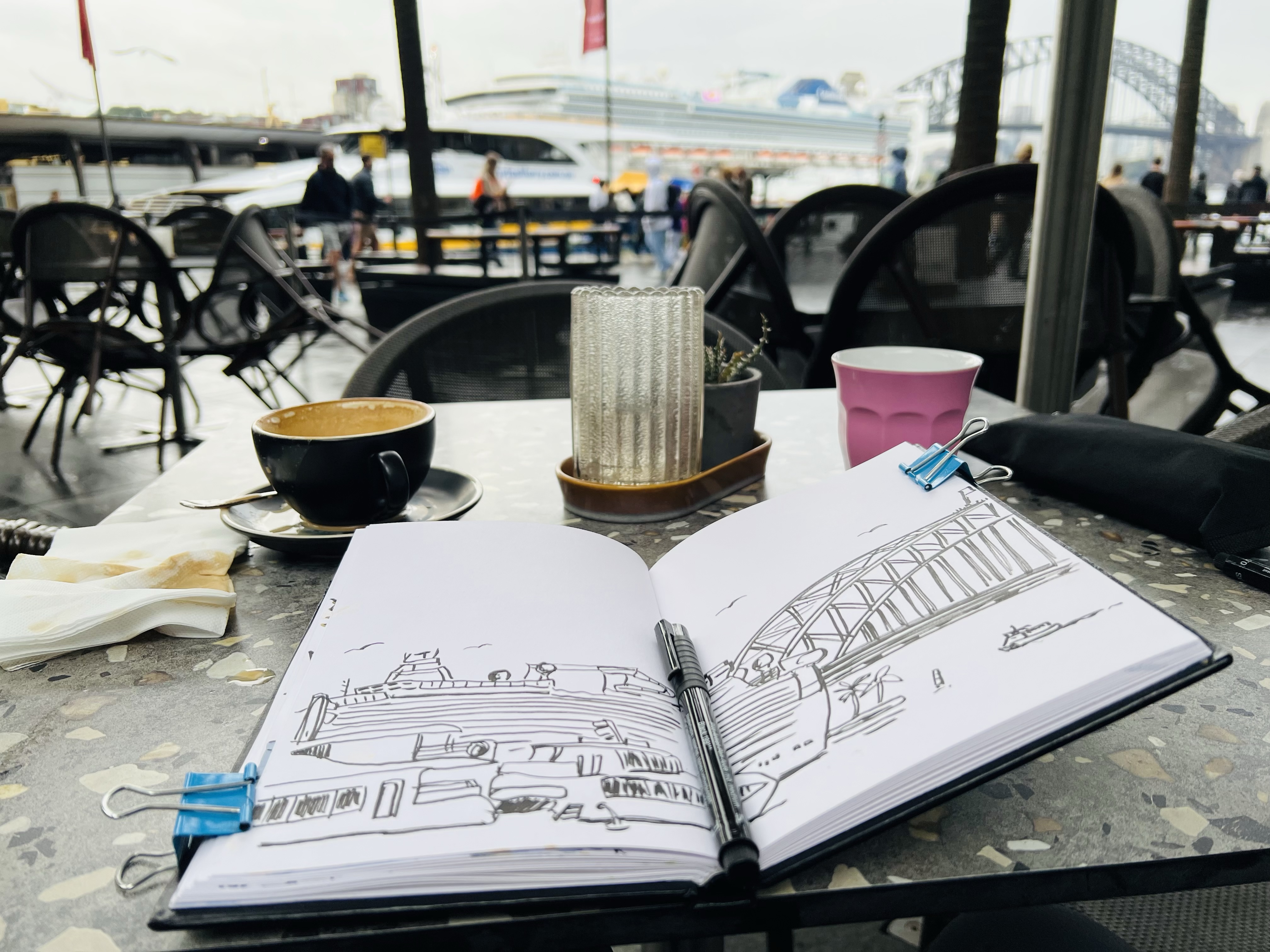
I was going to take the ferry to Manly after my Opera House tour. Before the tour, as a light drizzle puddled the pavement (it is winter after all), I sat under an umbrella at a cafe and sipped a cappuccino and started to sketch the view of the Quay before me (featured sketch).
The size of the cruise ship almost blots out the Sidney Harbour Bridge. When you are on the starboard side of the ship while it is at the terminal, the size of the floating city completely blots out the Opera House. I somehow wanted to convene it’s massive, eclipsing size in my sketch.
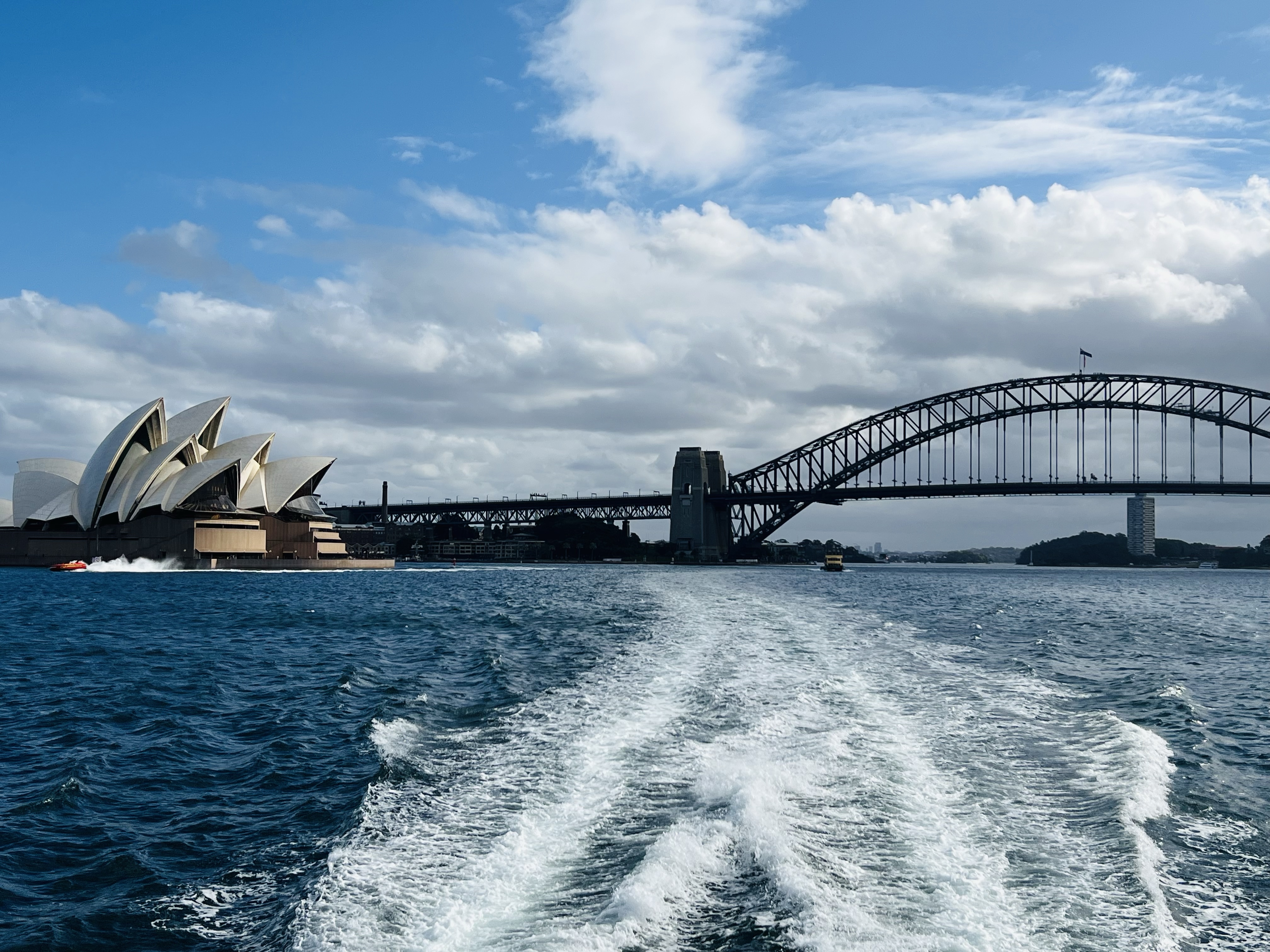
The view from the stern of the ferry leaving Circular Quay to Manly is hard to beat.
Sydney is known as the Emerald City because it has so many parks and there is none bigger than Centennial Park (founded in 1888, one hundred years after the First Fleet entered Sydney Harbour.)
This park had been on my birding list for months before my arrival. It is an urban birding Mecca.
While I was birding in the massive park between the Duck Pond and Lachlan Swamp I heard an unworldly racket coming from the gum trees.
I saw what I took to be a large bird flying from one tree to another. I had to get a closer look. Perhaps another lifer!
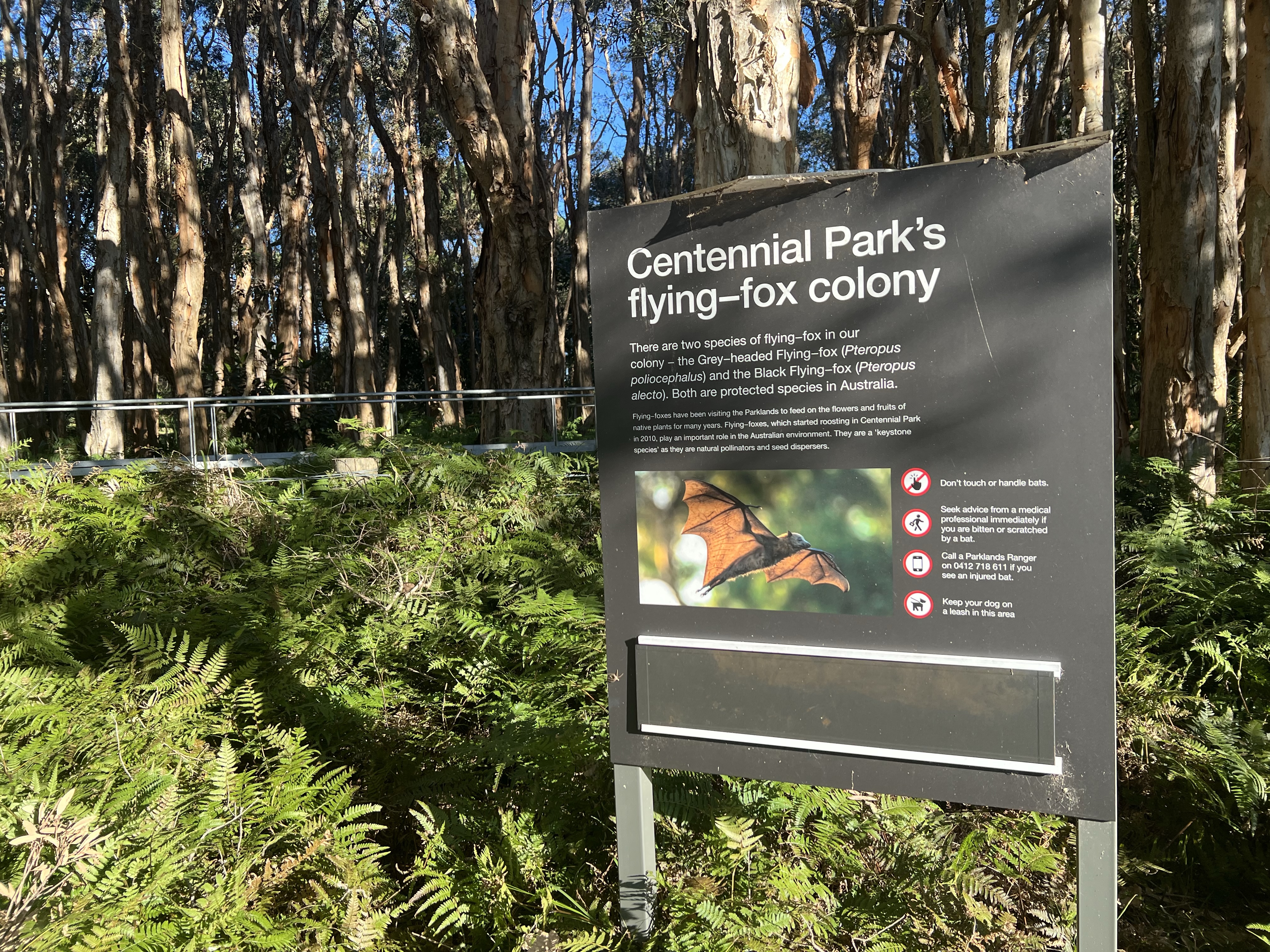
What I stumbled upon was Centennial Park’s flying-fox colony!
The gum trees were adorned with these mega bats, all making a cacophonous symphony with individuals switching trees and other resting.
This is Sydney’s largest flying fox colony with numbers between 5,000 to 45,000 individuals.
This was another “I’m not in Kansas anymore!” experiences as we only have microbats in the Northern Hemisphere. I figured anything that I saw flying in the Australian skies would be feathered.
The bats that roost in Centennial Park are grey-faced and black flying-foxes.
I pulled out my sketchbook and drew the roosting bats in the gum trees, the result looked like a very odd Christmas tree. My sketching was in the presence of an observant perched kookaburra.
There is one Sydney building that I wanted to add to my sketchbooks more than any other: Sydney Opera House.
There are few structures in the world that are instantly recognizable whether you’ve seen then in person or not: Stonehenge, Eiffel Tower, Machu Pichu, the Golden Gate Bridge, the Pyramids of Giza, the Taj Mahal, and the Sydney Opera House.
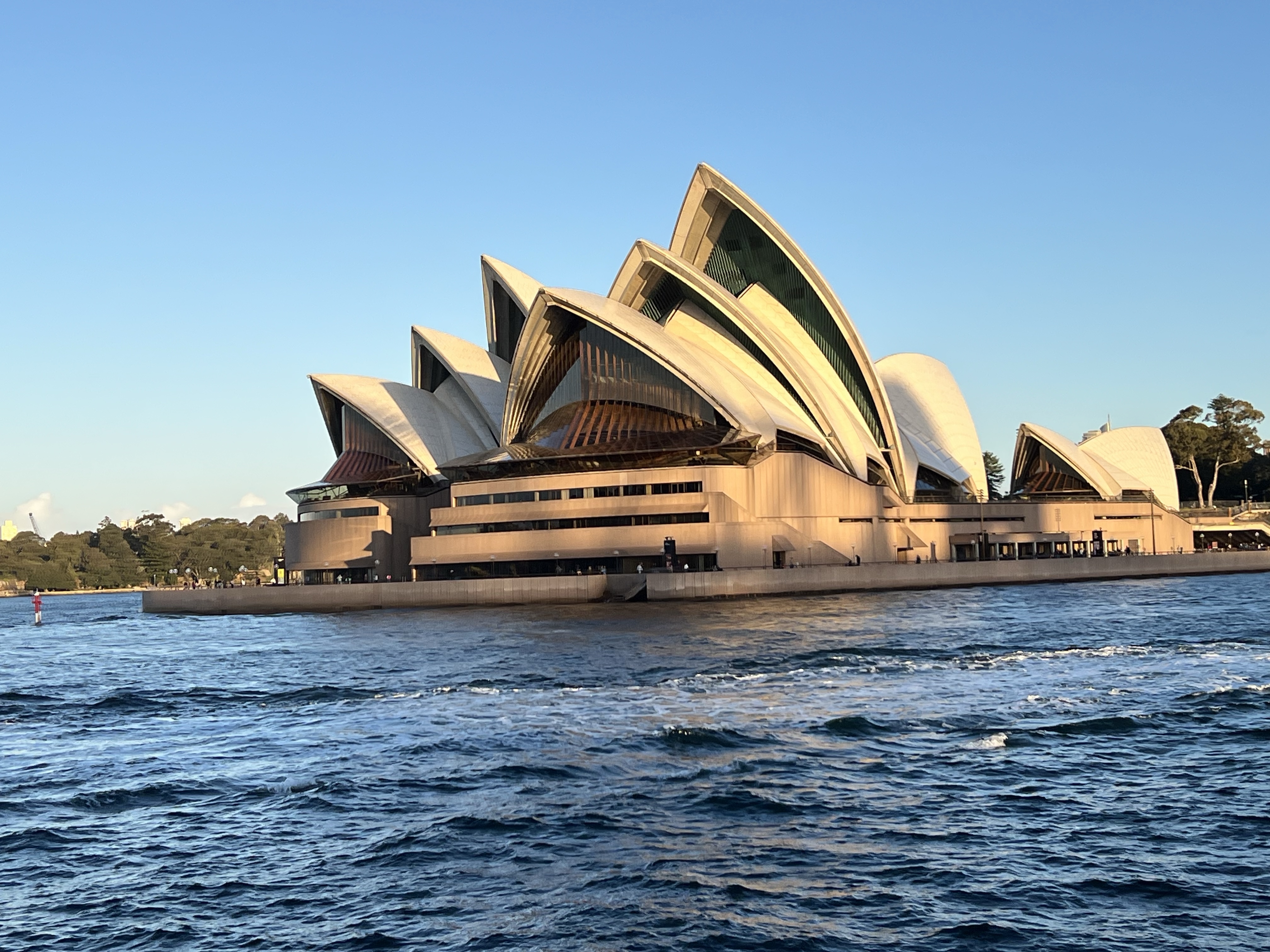
One of the best views of the Opera House is from the Harbour itself, in this case aboard the Manly Ferry.
The opera house was designed by Danish architect Jorn Utzon after a 1955 completion with 233 entries. Utzon’s innovative design was chosen and construction started on March 1, 1959. After many set backs, budget overruns, and redesigns, including the firing of Utzon, the opera house was inaugurated by Queen Elizabeth II on October 20, 1973.
After his firing Utzon never returned to Sydney to see his completed masterpiece.
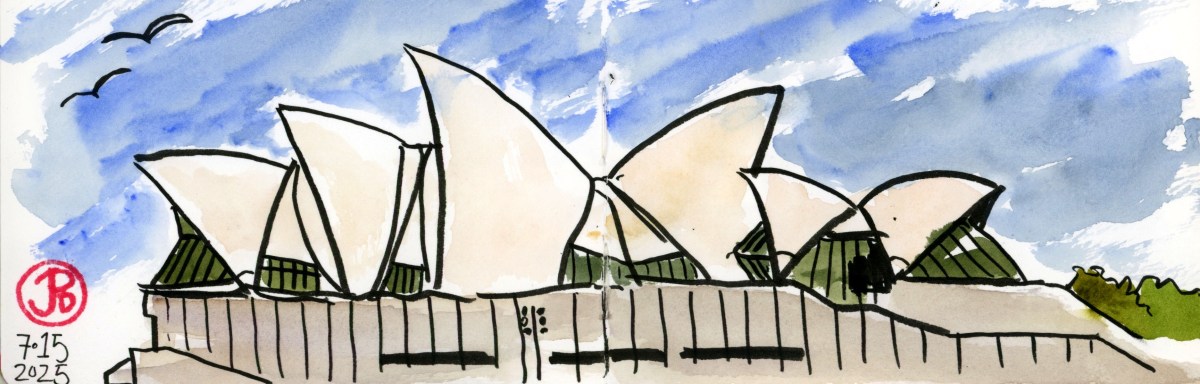
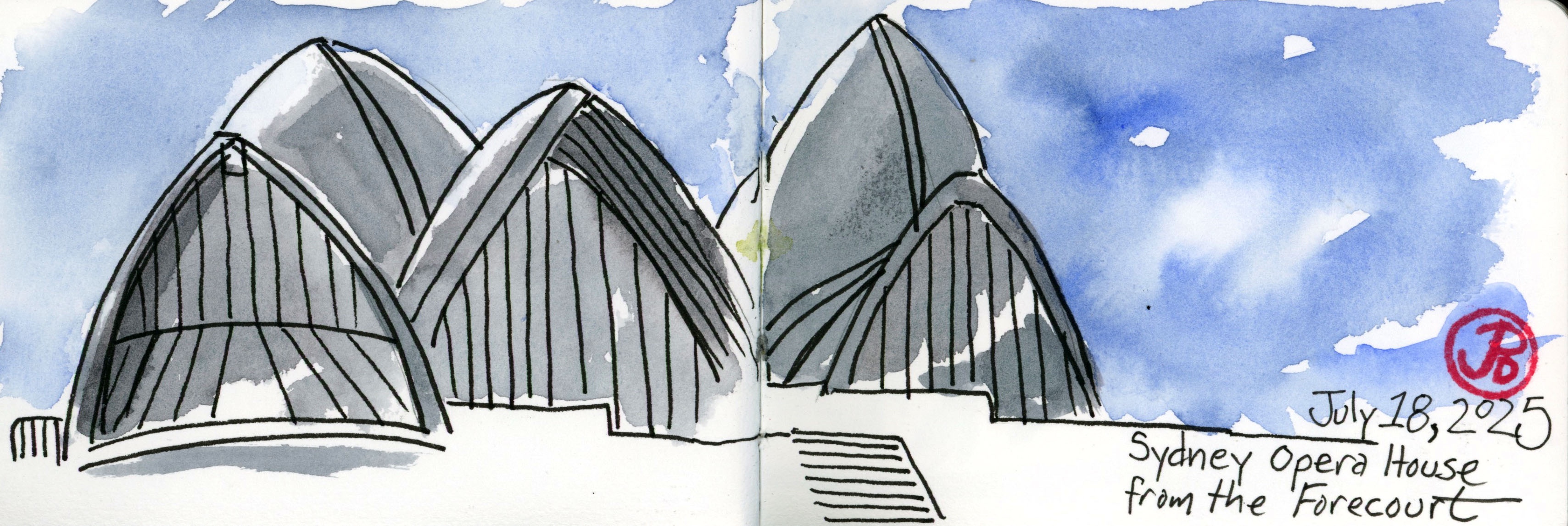
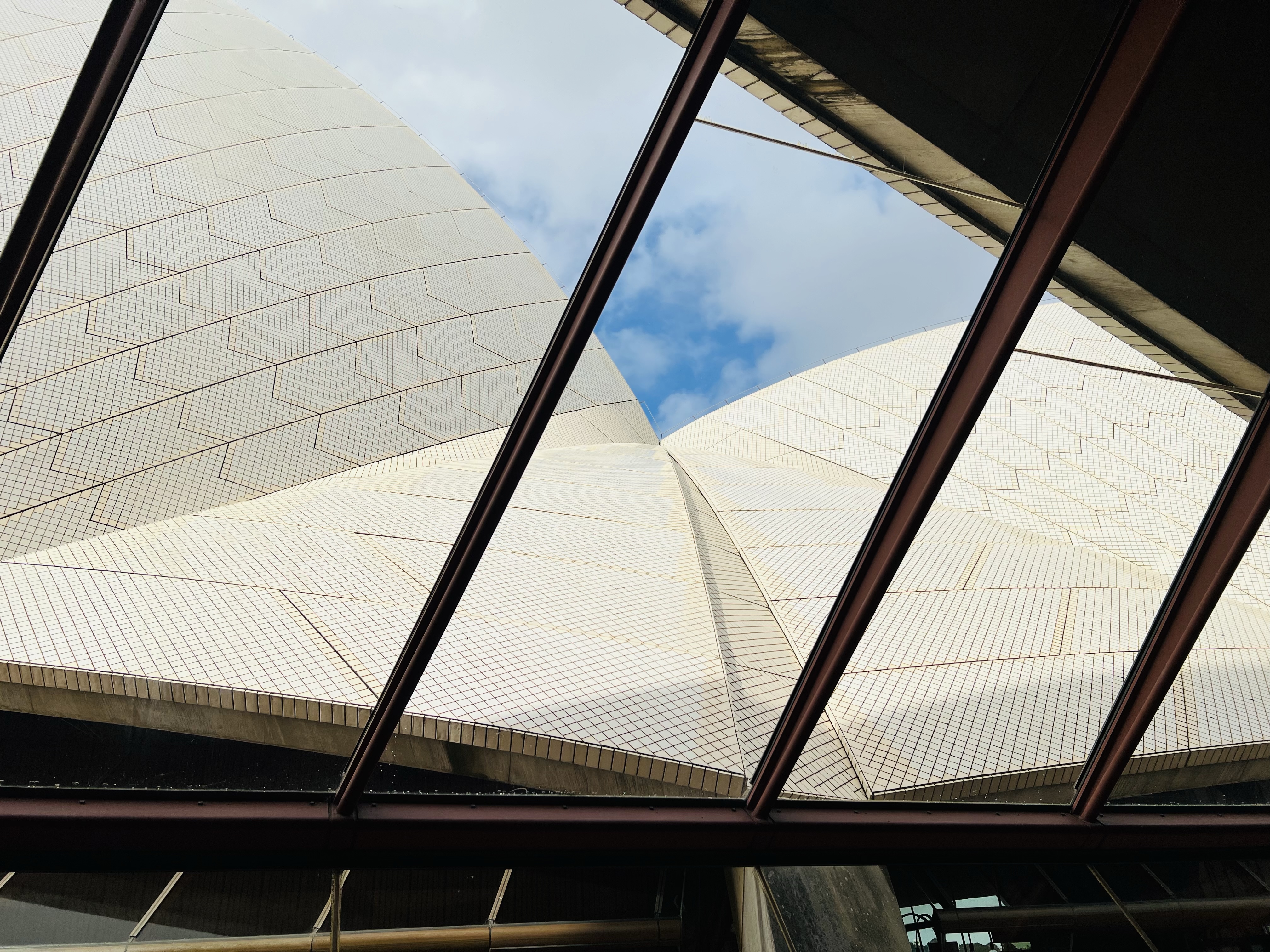
I was captivated by the Opera House and I did a total of six sketches of the masterpiece and with each sketch, I began to understand the structure a little more.
A sketch from the forecourt. Many concerts have been held in the forecourt perhaps none more famous than Crowded House’s last concert on November 24, 1996. The free concert was attended by about 250,000, which was way more than the forecourt could hold. A look at the tiled sails of the opera house from the inside while on a tour of the building.
On my first morning in Sydney I left my digs in Surry Hills and took the L2 tram line towards Circular Quay.
Circular Quay is a very famous spot in Australian history because it was here that the First Fleet landed with its first batch of convict colonizers in 1788.
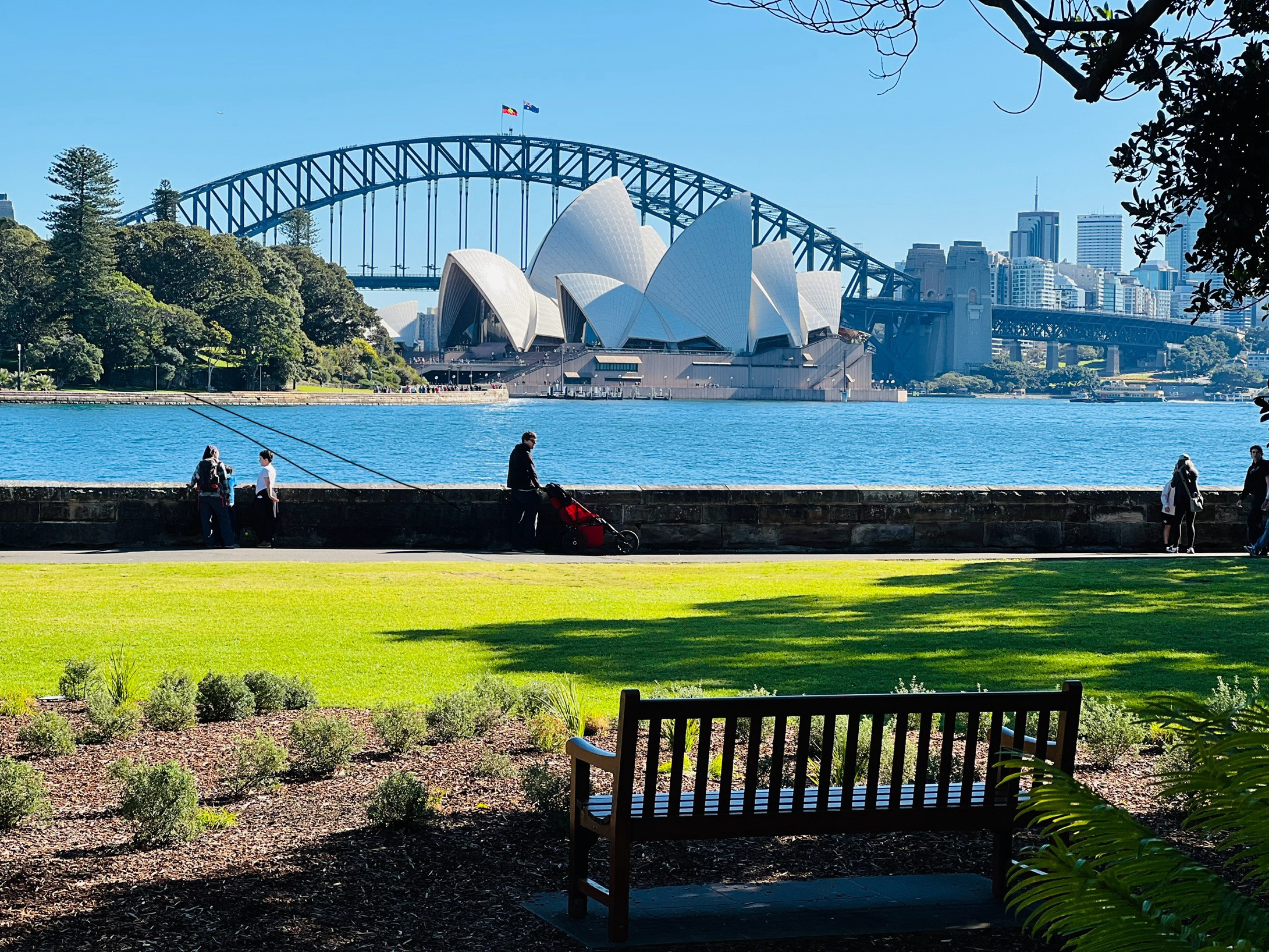
Two of Australia’s most famous sites bookend Circular Quay: Sidney Harbour Bridge and the Opera House. This is the epicenter of Sydney.
I picked a bench in the shade of the iconic sails of the Opera House and sketched the equally iconic Harbour Bridge.
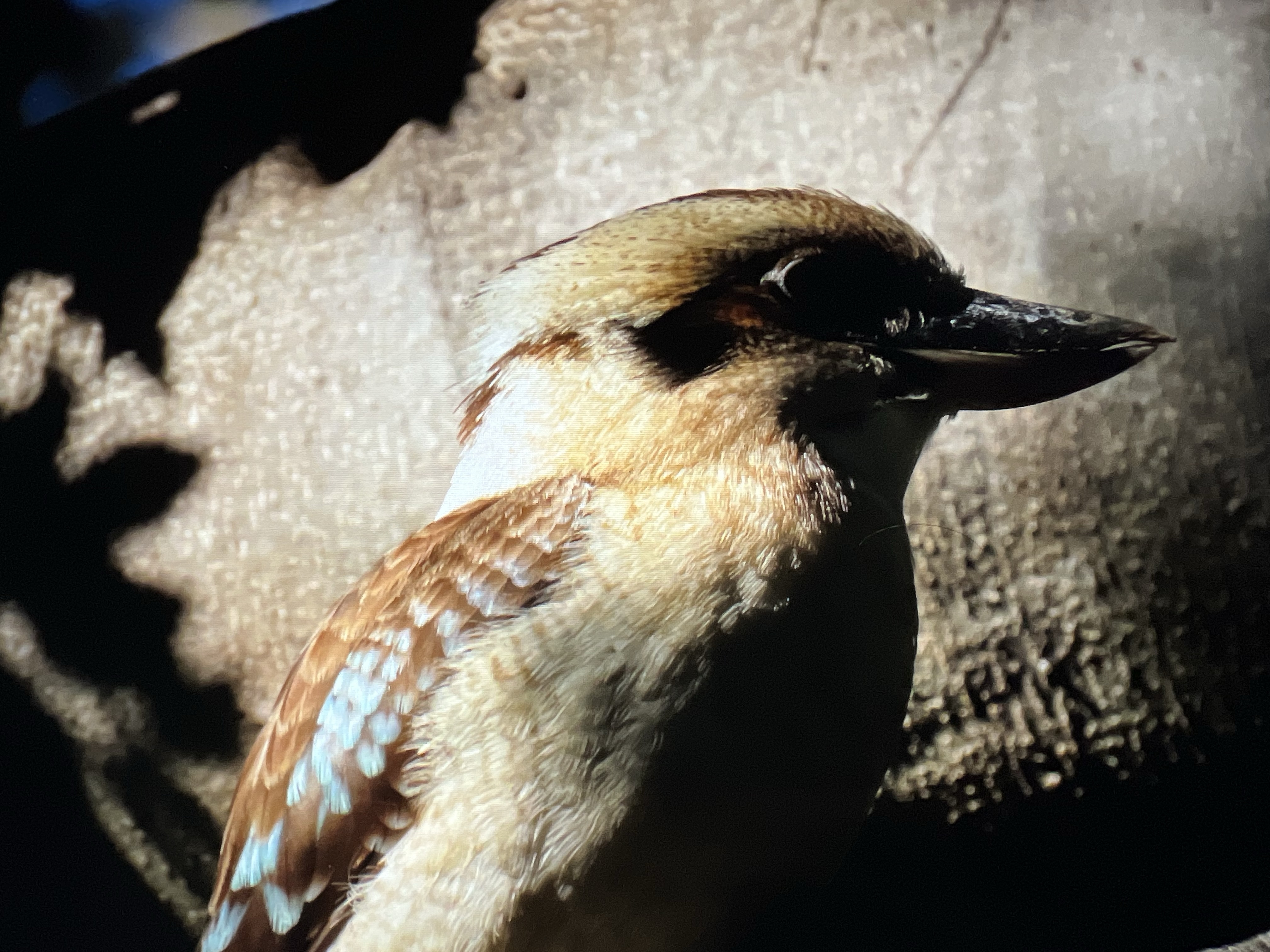
I then walked around the Opera House wondering how on earth I was going to fit this architectural masterpiece into the pages of my journal. (Maybe I needed a bigger journal!) First I needed to get a further perspective so I headed into the Royal Botanic Gardens, picking up life birds along the way like such iconic Aussie species as sulphur-crested cockatoo and the laughing kookaburra.
It was thrilling to get a first look at a kookaburra!
I found a bench and attempted a first sketch. Capturing the sails was going to be a challenge and I figured I’d needed a few attempts from different perspectives.
In the meantime I continued to bird.
One of those “I’m not in Kansas” moments. These are not escaped cockatoos but wild sulphur-crested cockatoos feeding on seed like pigeons in a park!
I headed out to Mrs. Macquarie’s Point, after picking up more lifers, to get a further perspective of the Opera House and Bridge.
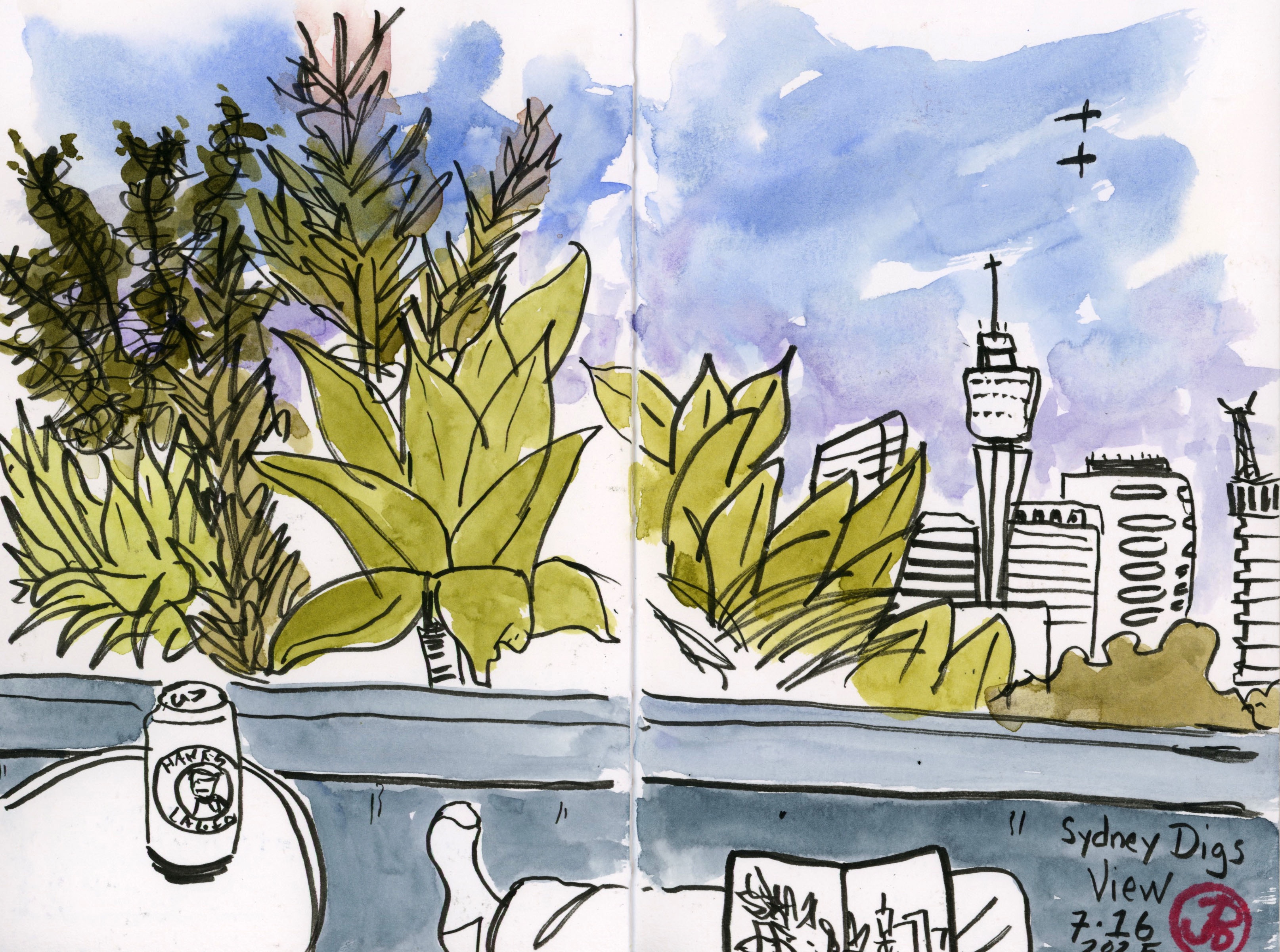
My sketching bench with a view of two of Sydney’s most iconic structures produced the featured sketch. A self portrait view from the deck of my Surry Hills fifth floor flat looking toward downtown Sydney. A frequent morning visitor to the trees in the foreground and my first Aussie lifer was the beautiful rainbow lorikeet.
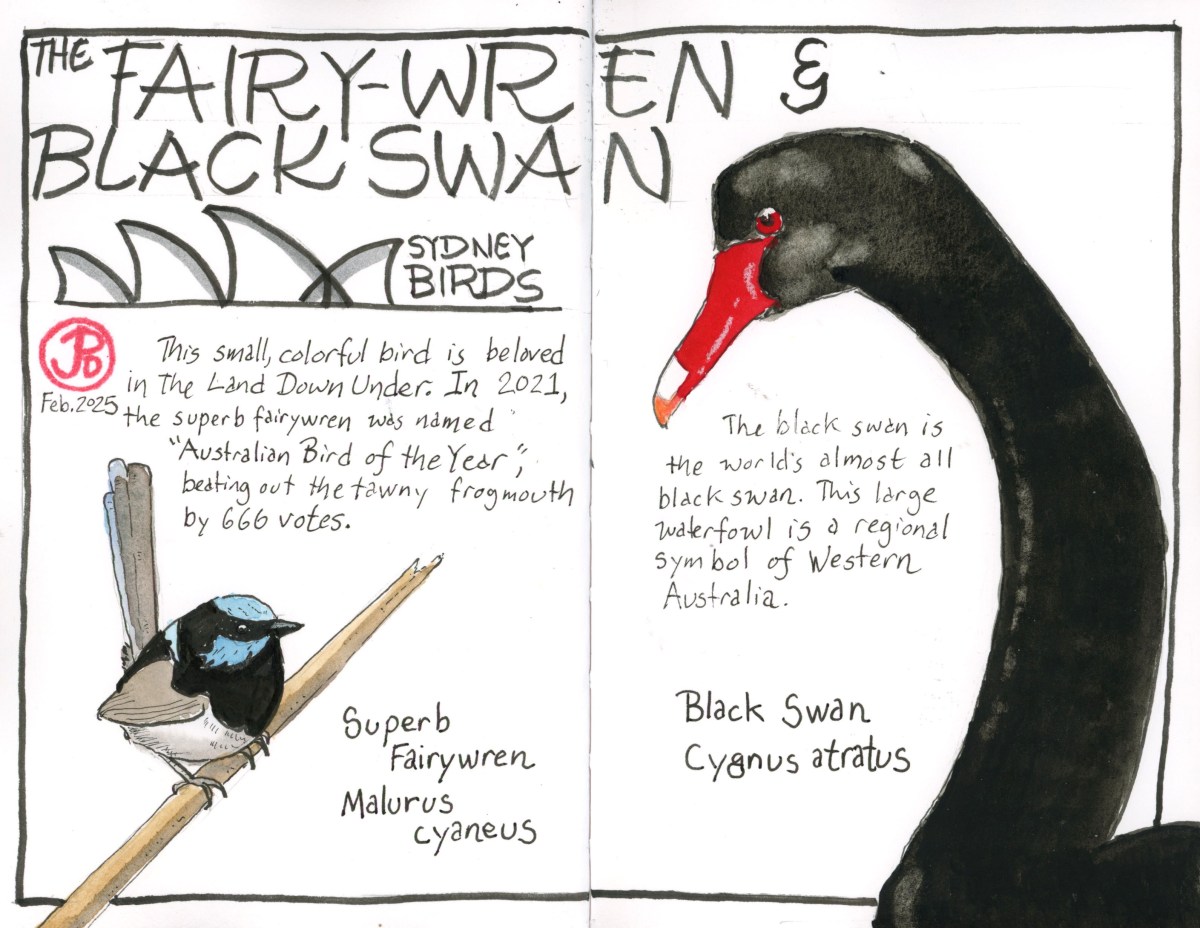
Some of the birds on my Australian trip would be fairly easy to find in Sydney’s parks. Especially a big black swan. The other is a diminutive little bird with a wonderful name of superb fairywren. (This bird is a species featured in The 100 Birds to See Before you Die). Challenge accepted!
The swan can be found in the ponds of Centennial Park. Having seen these all back swans at the San Francisco’s Zoo’s Australian exhibit, I wanted to see this bird in the wild. Or the quasi-wild of an urban park.
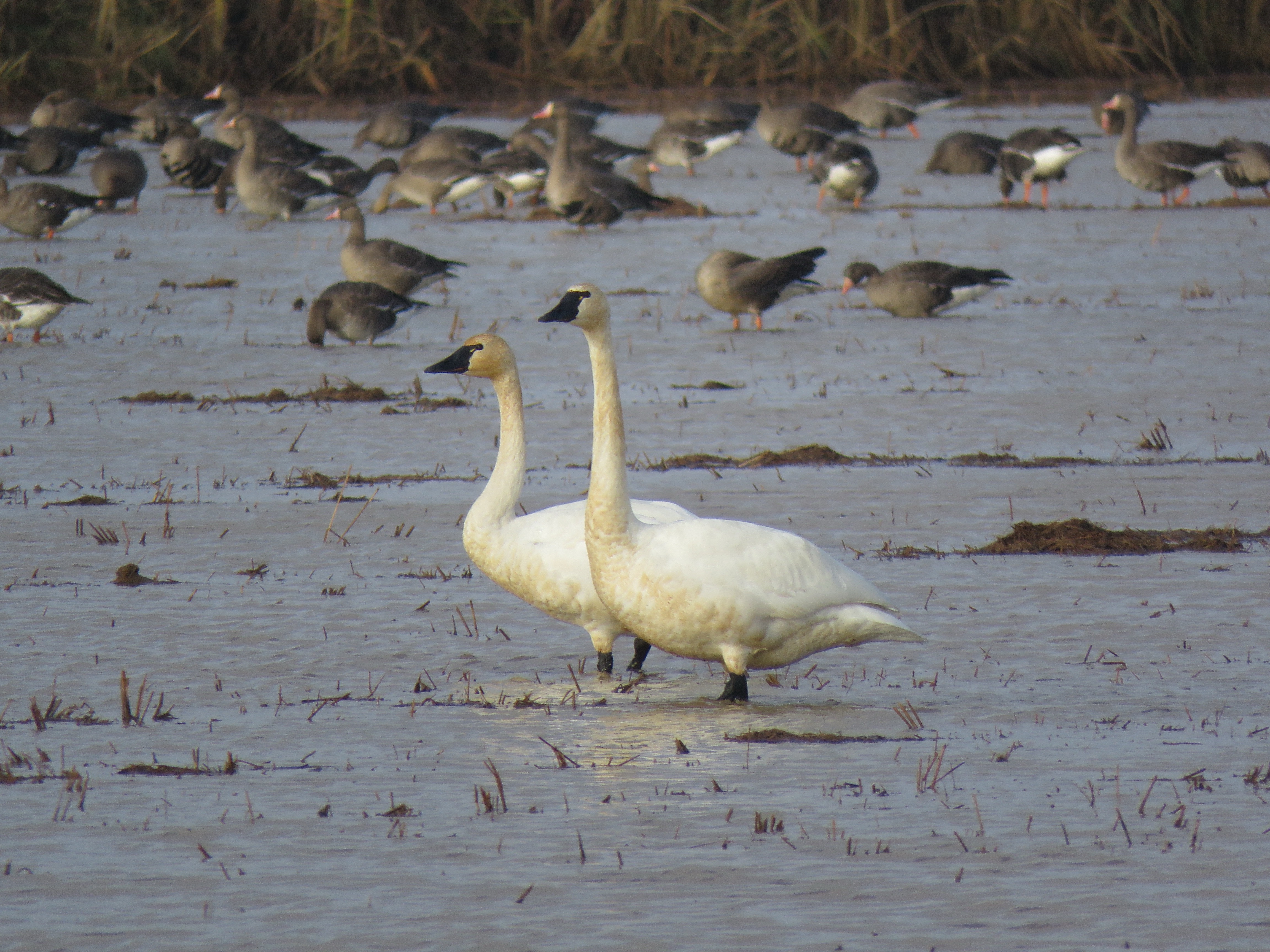
All of the swans found in North America are all white, such as this pair of wintering tundra swans in Yuba County.
The superb fairywren is a member of the Australian wren family. The male and female, like most ducks, are sexually dimorphic. The male is a stunning mixture of black, brown, and an electric blue. The female is a drab brown with a blue tail held erect.
In 2021, the superb fairywren was voted Australian Bird of the Year, beating out the tawny frogmouth.
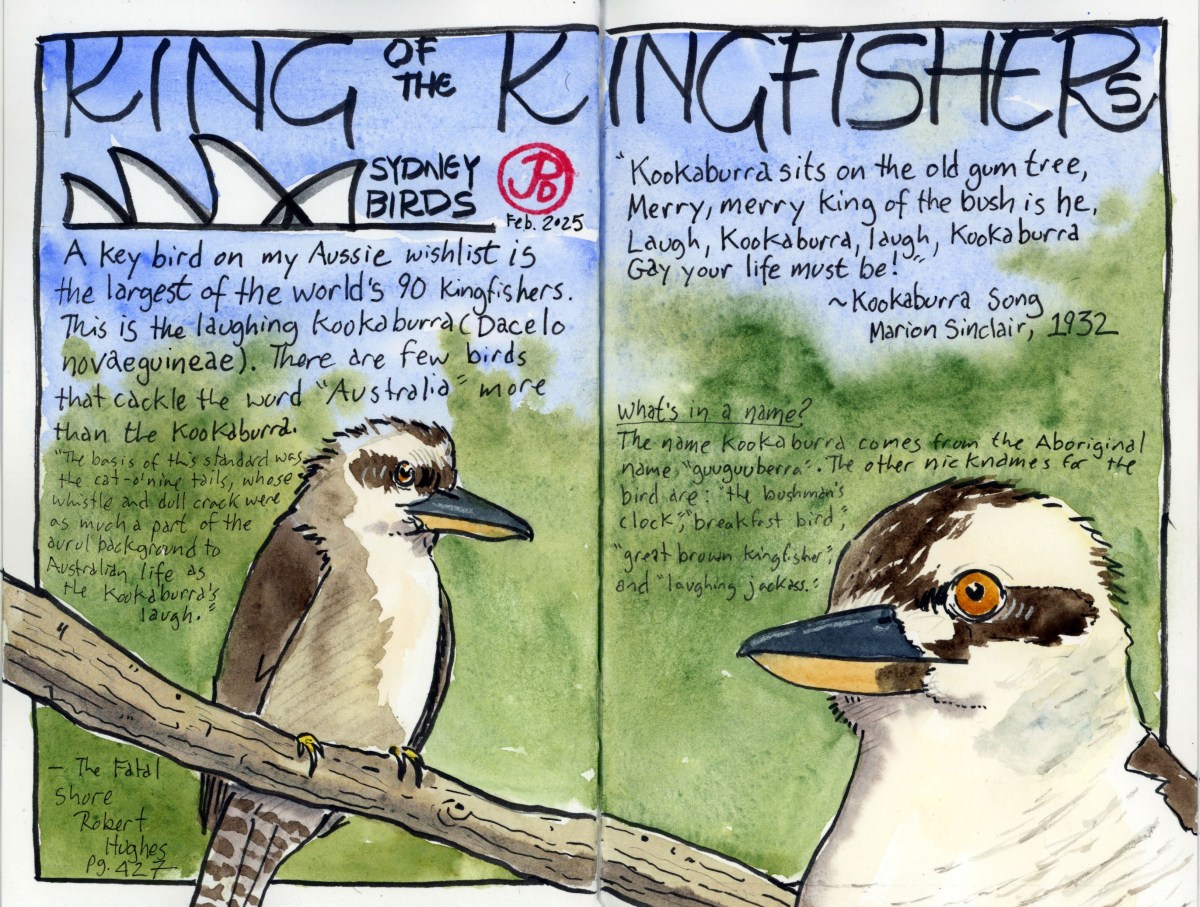
“Kookaburra sits in the old gum tree, / Merry, merry king of the bush is he, / Laugh, Kookaburra, laugh. . .”
When it comes to a list of Australian birds that anyone from around the world can list, I bet the laughing kookaburra is in the top two.
This is a species that is commonly held in zoo’s collections. And then there is the song we sing in music class, quoted above.
Of course I have seen a real kookaburra at the San Francisco Zoo but I have never seen one free flying in the wild.
Oddly enough the kookaburra is a kingfisher. Out of the world’s 118 kingfishers, the kookaburra is the world’s largest and heaviest kingfisher, yet fish are a very small part of their diet. The “Bushman’s Clock” mainly eats rodents, insects, worms, snakes, and lizards.
The kookaburra’s laughing calls have been made famous as it is often used as jungle foley in films such as Tarzan, Wizard of Oz, The Treasure of Sierra Madre, and The Lost World: Jurassic Park.
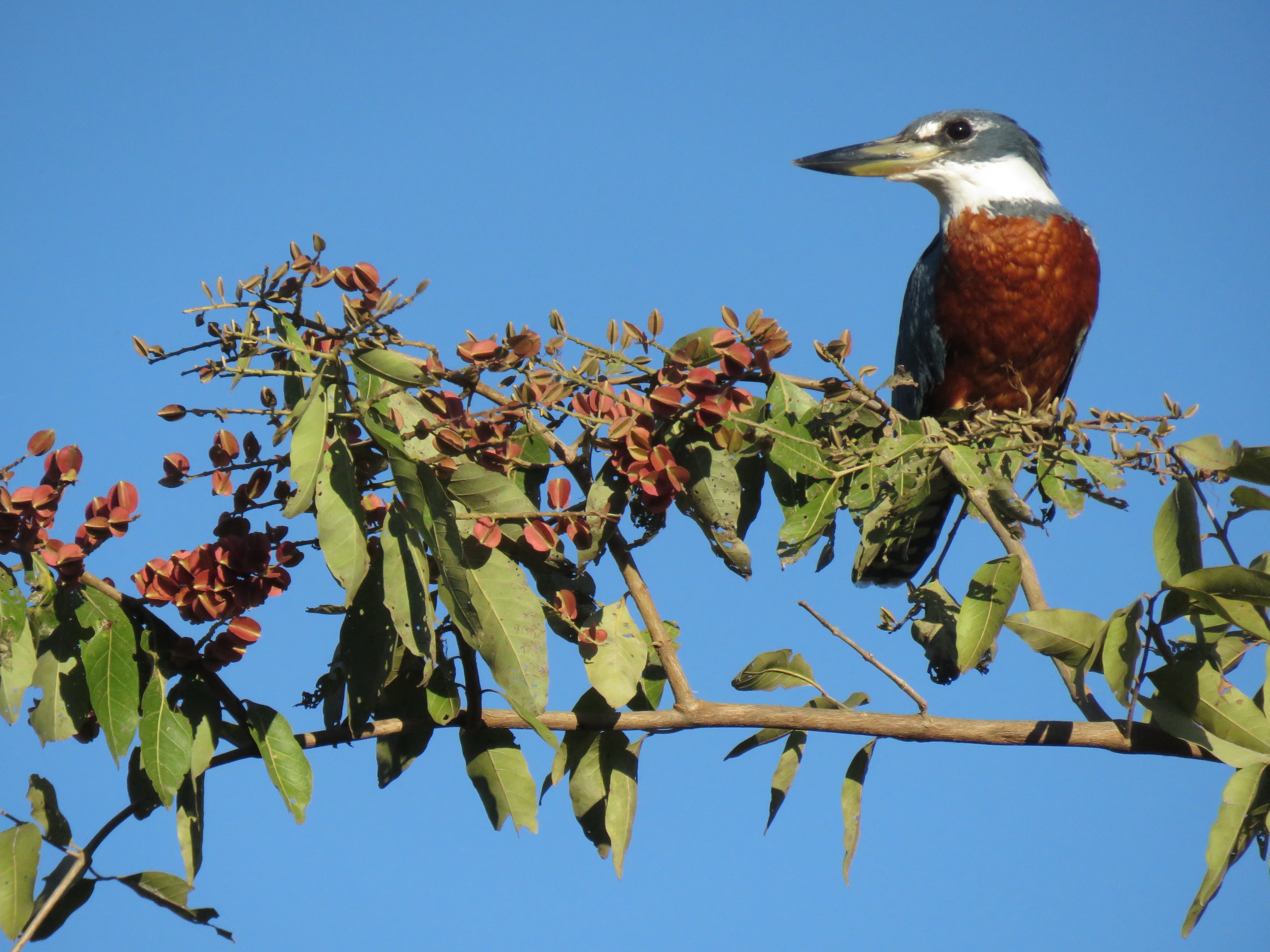
The ringed kingfisher is the largest kingfisher in the Americas. This female was photographed in Brazil’s Pantanal.
For my kookaburra spread I included the first verse of the Kookaburra Song by Marion Sinclair. The song was composed in 1932 and is sung by children all around the world.
There was some controversy involving the song when the flute riff from Men At Work’s hit “Down Under” was deemed to plagiarize the melody of Sinclair’s ditty.
Now all I need is a Vegemite sandwich!
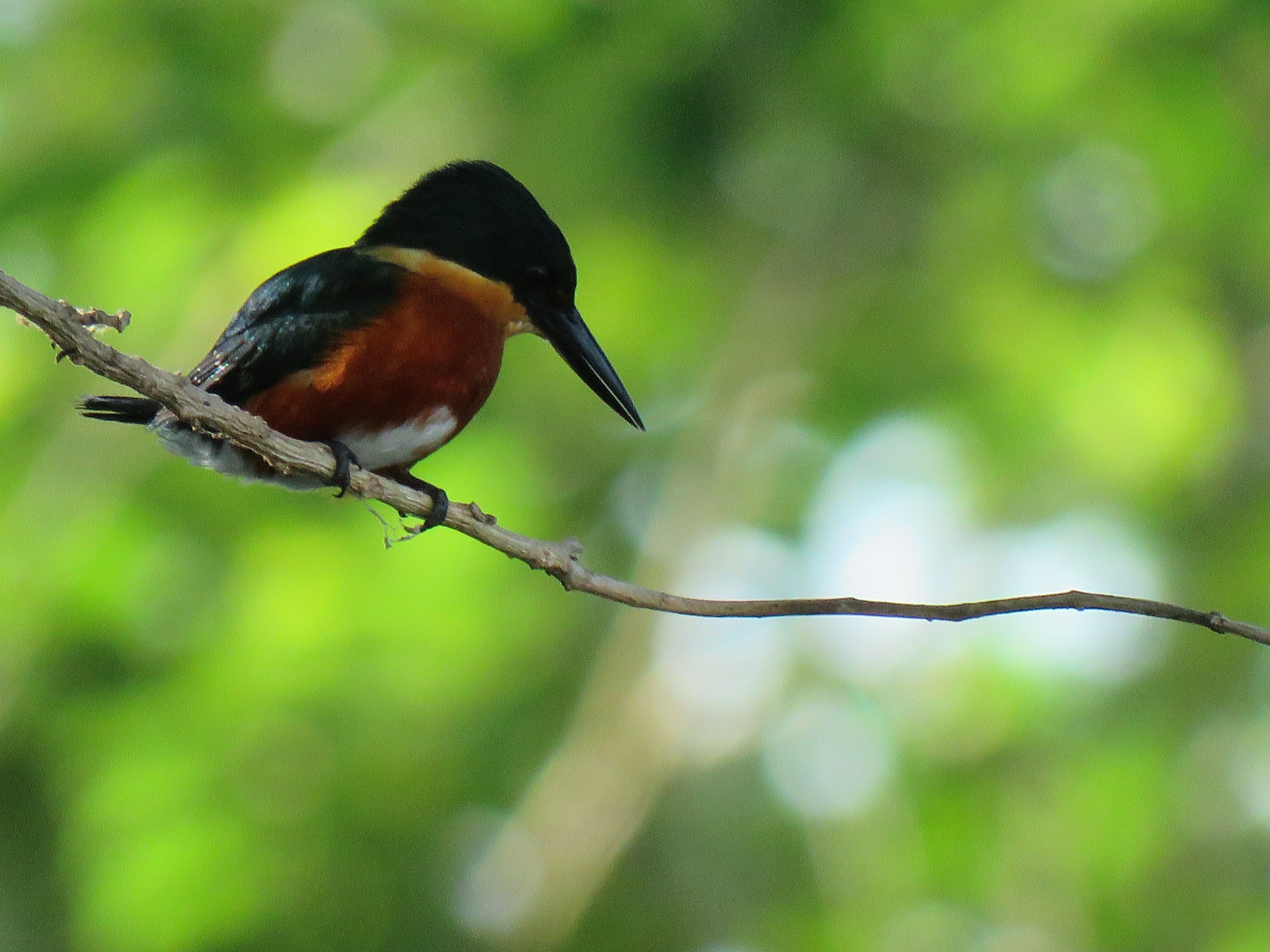
One of the smallest kingfishers in the Americas: a Pygmy kingfisher in Panama.
On my Aussie adventures I hope to add a few other kingfishers to my lifelist: azure, little, forest, red-backed, sacred, and collared kingfisher. And I aimed to add the other kookaburra of Australia to my wishlist: the blue-winged kookaburra. This would more than double my current number of kingfishers (7).
In anticipation of my Aussie Adventure I wanted to do an individual species spread about some of the iconic Australian birds that can be found in the urban environs in the Emerald City: Sydney, Australia.
One reason that Sydney’s moniker is the Emerald City is because of its many green parks, over 400, in fact. It’s in these many parks such as the Royal Botanic Gardens and Centennial Park, that these birds can be found.
Some of the birds of Australia seem to come out of the realm of fantasy and fiction like some creature that was designed on an artist’s drafting board, that can only be found in the pages of a book not perched in that tree in Centennial Park.
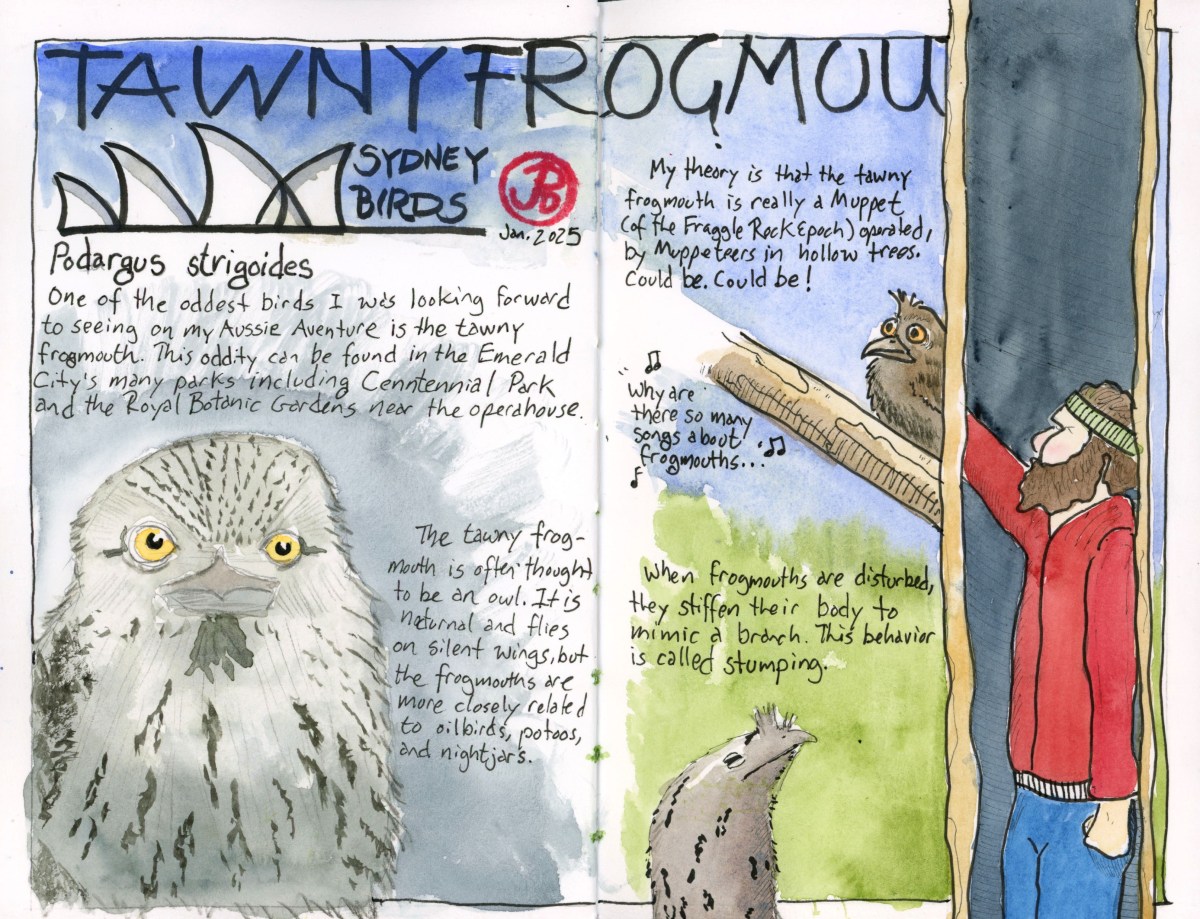
The bird that tops this list has to be the tawny frogmouth (Podargus strigoides). The scientific name roughly translates to gouty (swollen) owl-like bird.
The frogmouth however, is not closely related to owls but related to oilbirds, potoos, and nightjars nor are they suffering from gout.
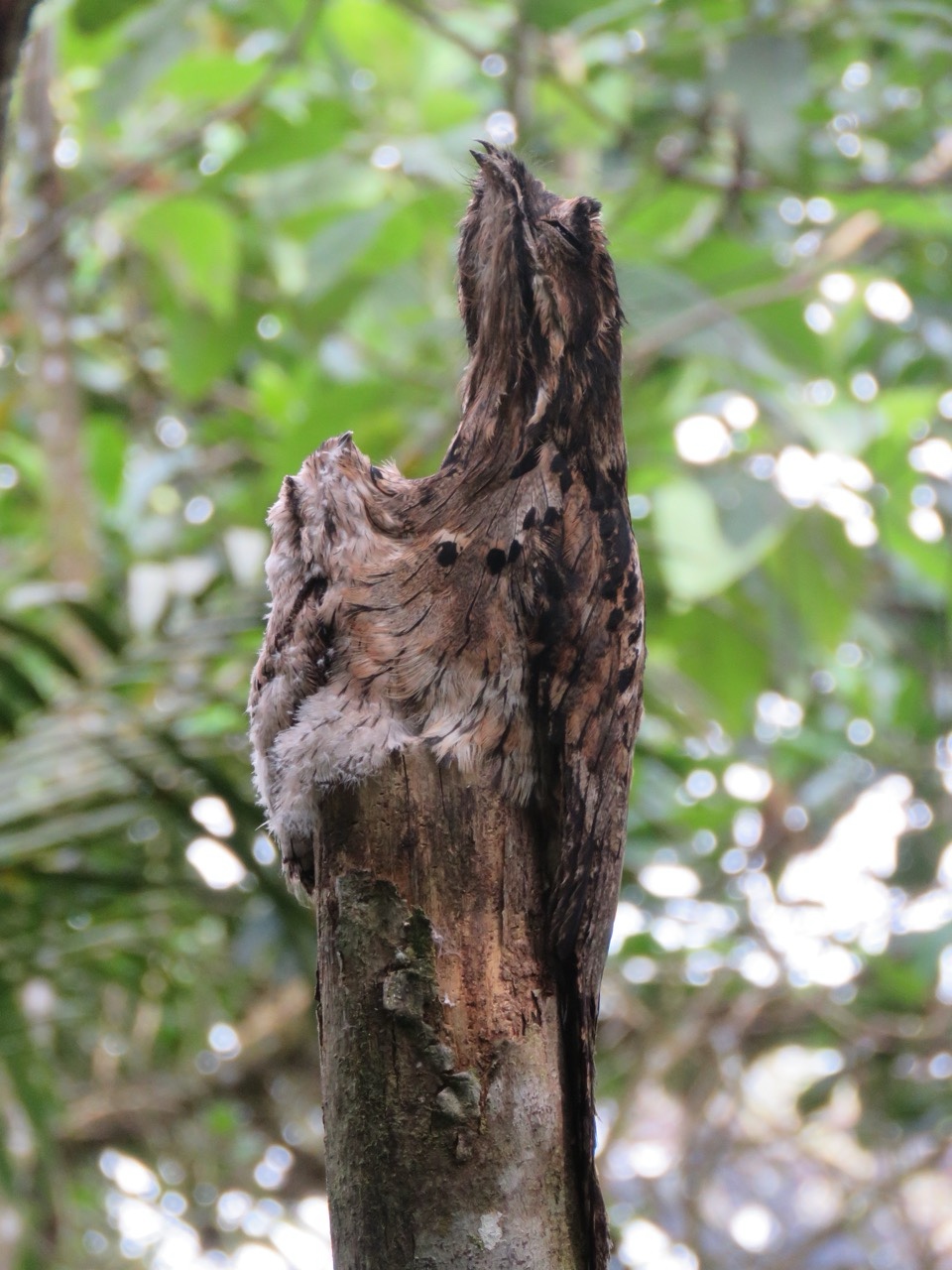
I have previous seen potoos in Central and South America. And they certainly seemed out of this world.
Look closely, this is a common potoo (Nyctibius griseus) and a chick from a trip to Ecuador in 2018. Where does stump end and birds begin? This cryptic behavior is called stumping.
Looking at images of the tawny frogmouth reminds me of a Muppet, perhaps of the Fraggle Rock epoch.
I added this observation to the left side of my spread with a cross section of a gum tree with a puppeteer inside, who bears an uncanny resemblance to Jim Henson.
I’ll admit, I let my mind run free and my artistic license has yet to expire!






 Corvid Sketcher